
You know the drill: one second the cat is lounging on the sofa, the next your dog is off like a rocket, and you're left in the dust. Chasing is a natural instinct for many dogs, but it's stressful for your cat and can even put both pets in danger.
The good news? With the right training, you can dial down that urge and teach your dog to stay calm around your feline friend.
These 11 steps focus on real-world results, so you'll see a difference in how your dog reacts—and how your cat relaxes.
1. Master the 'Leave It' Command
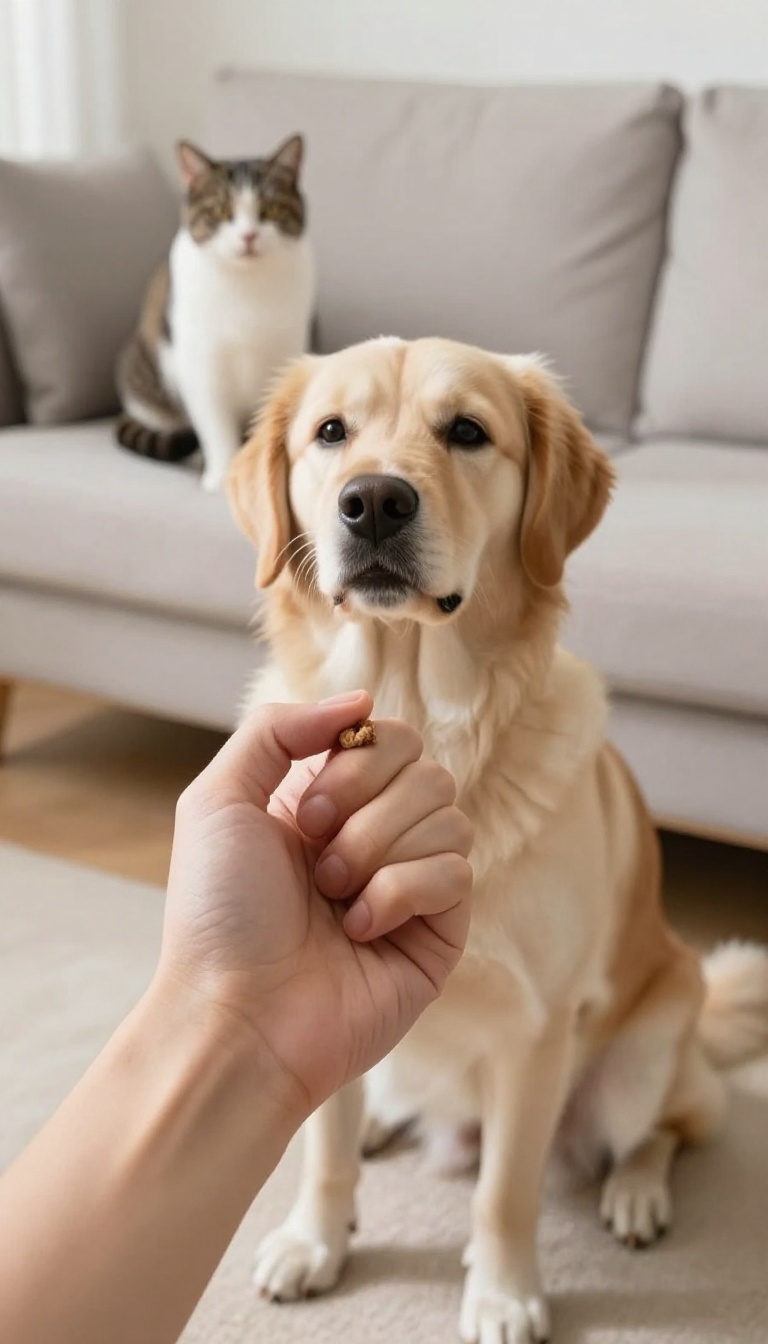
The 'leave it' command is your first line of defense against the chase. It tells your dog to stop focusing on something and look to you instead. When your dog can reliably ignore a tempting treat, you can start using it around your cat.
This step is all about building a rock-solid 'leave it' that works even when your dog's instincts kick in. You'll start with easy setups and gradually increase the difficulty until your dog can ignore the cat on command.
Start With Treats
Hold a treat in your closed fist and let your dog sniff it. Say 'leave it' in a calm, firm voice. When your dog stops sniffing or pulls back, say 'yes' and give a different treat from your other hand.
Repeat until your dog automatically backs off when you say 'leave it'.
Add Distance And Distractions
Once your dog understands the command with treats in your hand, place a treat on the floor and cover it with your foot. Use 'leave it' and reward your dog for not going for it. Then practice with the treat uncovered, and later with the cat in the room but at a safe distance.
Reward Calm Behavior Around The Cat
When your dog can 'leave it' with the cat present, reward heavily for calm behavior. If your dog looks at the cat and then looks at you, that's a win—mark it and give a high-value treat. This teaches your dog that ignoring the cat equals good things.
2. Build a Rock-Solid 'Stay'

A reliable 'stay' is your safety net when the chase instinct kicks in. It gives you a way to pause the action before it even starts. But a stay that only works in the living room won't help you when the cat dashes across the yard.
You need to build one that holds up under real-life distractions, starting with the easiest scenarios and working your way up.
Start training 'stay' in a quiet room with zero distractions. Have your dog sit or lie down, then give the cue 'stay' with a calm, firm voice. Step back just one or two feet, wait a few seconds, then return and reward with a treat and praise.
Repeat this until your dog holds the position without breaking. Gradually increase the distance and duration, but keep it easy enough that your dog succeeds most of the time. Once your dog is solid in a boring room, move to a slightly more distracting area, like the backyard or a hallway.
The key is to raise the bar slowly, so your dog learns to stay even when interesting things happen around them.
Start In Low-distraction Settings
Begin in a room where your dog is already calm, like the bedroom or a quiet corner of the living room. Use a mat or bed to create a clear 'stay zone. ' Practice with you standing close, then moving a few steps away. Keep sessions short—five minutes max—and end on a high note with a big reward.
This builds a strong foundation before you add the cat into the mix.
Gradually Introduce The Cat
Once your dog can hold a stay for 30 seconds in a boring room, it's time to bring in the cat. Have a helper hold the cat on the other side of the room, or use a baby gate to keep them separate. Ask your dog for a down-stay and reward heavily for holding it while the cat is present.
Start with the cat at a distance where your dog notices but doesn't fixate. Over several sessions, slowly decrease the distance, always rewarding calm behavior. If your dog breaks the stay, calmly reset and try again at a greater distance.
Reward Heavily For Holding Position
The moment your dog holds a stay with the cat in view, mark it with a 'yes' and deliver a high-value treat, like chicken or cheese. This teaches your dog that staying put around the cat is more rewarding than chasing. Use a variable reward schedule—sometimes give a treat, sometimes give a toy—to keep your dog guessing and engaged.
The goal is to make the stay so rewarding that your dog chooses it over the chase.
3. Use a Long Leash for Controlled Exposure
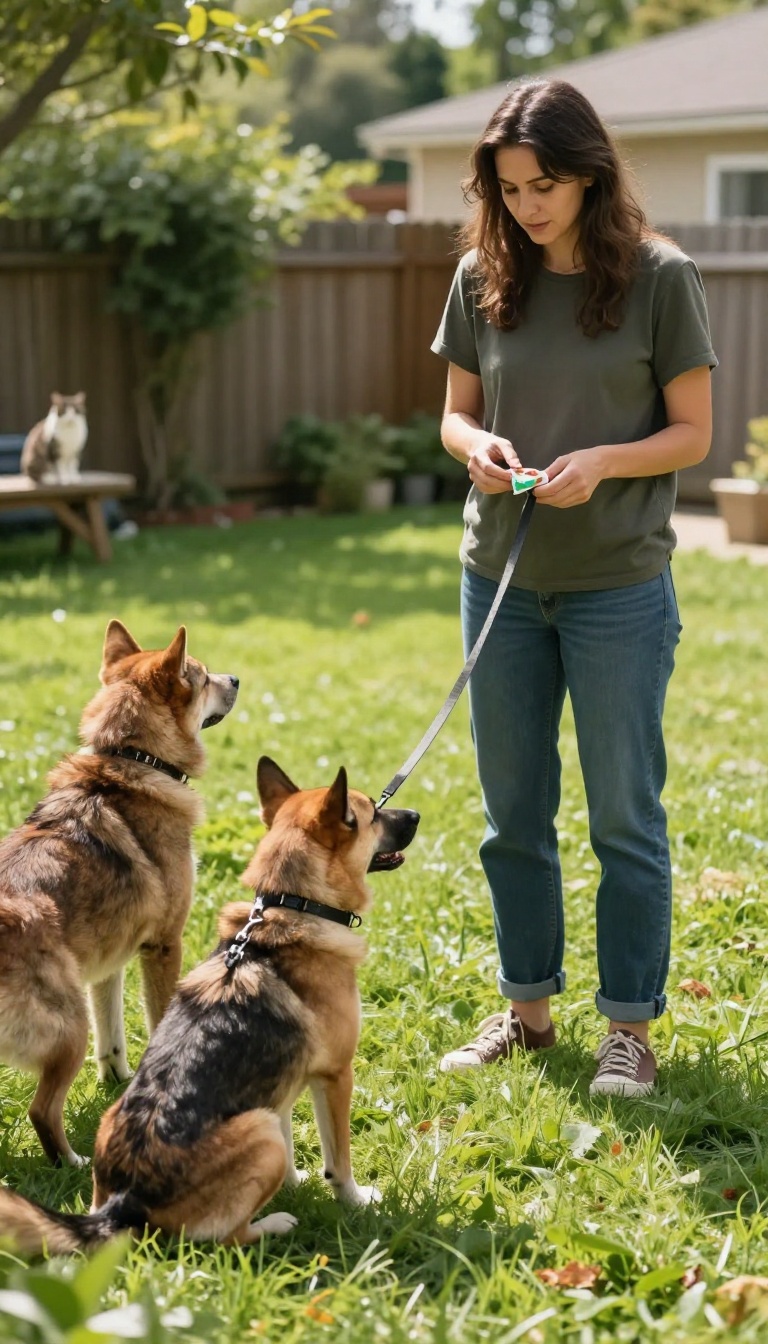
Sometimes the best way to stop a chase is to make it impossible to start. A long leash gives you a physical connection to your dog during those early, unpredictable meetings. It’s not about punishment—it’s about giving you a chance to step in before the instinct takes over.
With a long leash, you can let your dog explore and see the cat from a safe distance, while still having the power to redirect attention back to you. Pair that with a pocket full of high-value treats, and you’re teaching your dog that calm behavior around the cat leads to good things.
A long leash is a simple but powerful tool when you’re working on reducing your dog’s cat-chasing habit. It bridges the gap between total confinement and free-roaming chaos. You get to control the distance and the pace, and your dog gets to practice self-control in a real-world setting.
The key is to set up the environment so that your dog can succeed. Start in a space where the cat has an easy escape route and isn’t cornered. Keep the leash loose but ready, and watch your dog’s body language.
The moment you see that tense posture or a focused stare, calmly shorten the leash and call your dog’s name. Reward the moment they look back at you instead of lunging. This method works because it prevents the chase from ever beginning.
Your dog learns that staying near you and ignoring the cat is more rewarding than the thrill of the chase. Over time, the leash becomes less about restraint and more about a safety net, and you can gradually give more freedom as your dog proves they can handle it.
Set Up A Safe Practice Space
Choose a room where your cat can easily jump to a high spot or leave through a pet door. Keep the long leash attached to your dog’s harness, not a collar, to avoid neck strain. Have treats ready and pick a time when both pets are relatively calm—maybe after a walk or a play session.
Watch For Early Warning Signs
Dogs rarely go from zero to chase in a split second. Look for stiffening, a lowered head, or a fixed stare. That’s your cue to act.
Say your dog’s name in a cheerful tone, gently tug the leash, and guide them away. Reward the moment they disengage from the cat.
Reward Calm, Not Just Obedience
Don’t wait for your dog to ignore the cat completely. Reward any sign of calmness—a relaxed body, a soft gaze, or even a quick look at the cat without tension. The goal is to build a positive association, so every calm moment gets a treat and a quiet 'good dog'.
Gradually Increase Freedom
As your dog becomes more reliable, start letting the leash drag on the floor, but keep a hand near it. Then try letting it go completely in controlled sessions. If your dog messes up, simply go back a step—attach the leash again and practice more.
Patience is your best friend here.
4. Practice Impulse Control Games
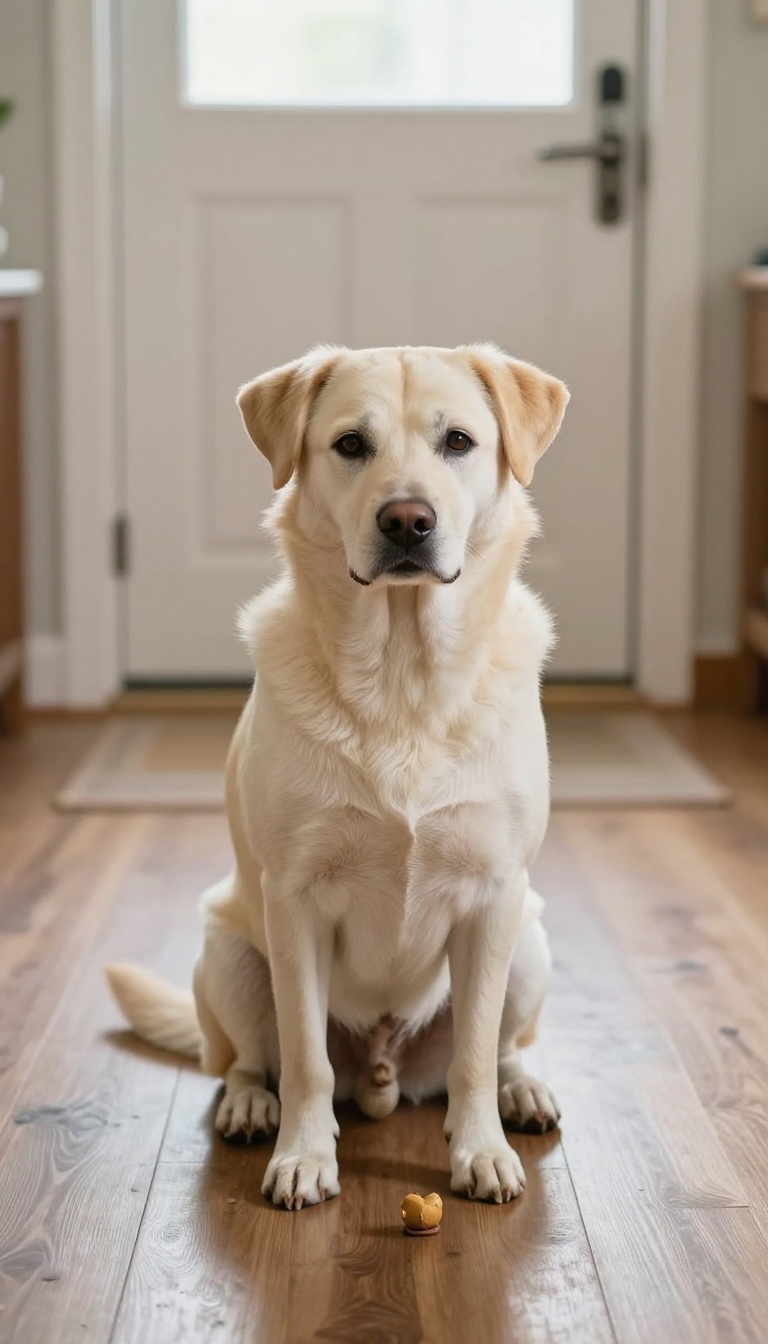
Impulse control is the secret weapon in the battle against cat-chasing. When your dog can pause and think before reacting, you've already won half the fight. These games make that skill second nature, so your dog learns to choose calm over chaos.
Start With 'wait At The Door'
This game is a classic for a reason. It teaches your dog that patience pays off. Have your dog sit and wait while you open the door just a crack.
If they stay, reward and release. If they lunge, close the door and try again. Over time, your dog will learn that staying put leads to good things, and that same self-control will kick in when they see the cat.
Try 'leave A Treat On The Paw'
This is a fun and challenging game that builds serious focus. Have your dog sit and place a treat on their paw. They'll want to eat it immediately, but they need to wait for your release cue.
Start with a few seconds and build up. This game teaches your dog to override their impulses, which is exactly what you need when the cat dashes past.
Use 'tug With Rules'
Tug-of-war is a great outlet for energy, but it's also a perfect impulse control exercise. Teach your dog to 'drop it' and 'wait' before you throw the toy again. This reinforces that they can't just grab and go.
When your dog learns to control their excitement during play, they'll be better equipped to control their chase instinct around the cat.
5. Desensitize to the Cat's Presence
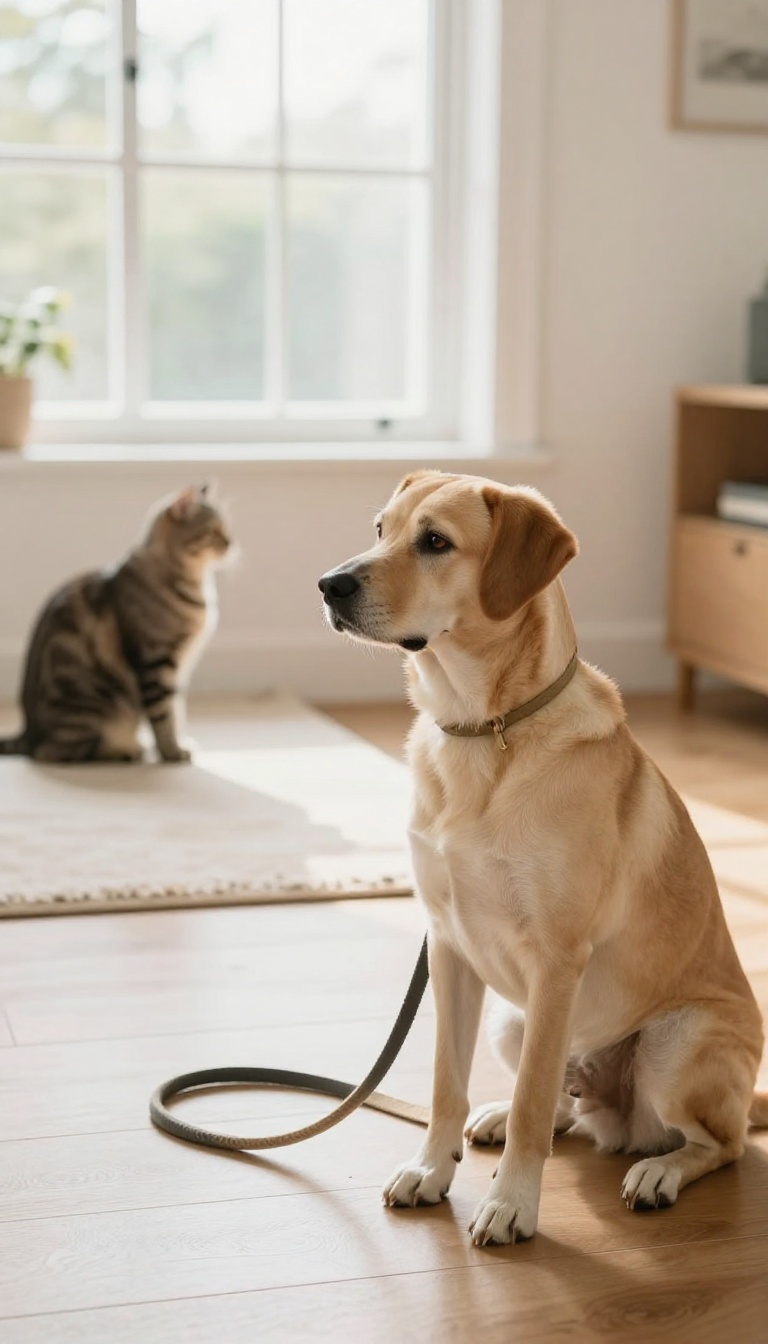
Desensitization is about changing your dog's emotional response to the cat, not just suppressing the chase. The goal is to help your dog see the cat as a neutral part of the environment, not a trigger for excitement. This takes time and patience, but it's one of the most effective ways to reduce that instinctive urge.
Start by finding a distance where your dog notices the cat but doesn't react—no stiffening, no staring, no whining. That's your starting point. Reward calm behavior with treats and praise, then gradually close the gap over multiple sessions.
The key is to move slowly; if your dog gets too excited, you've gone too far, so back up and try again.
Find The Threshold Distance
The threshold distance is the point where your dog can see the cat but still stays relaxed. For some dogs, that might be across the room; for others, it could be from another room entirely. Once you find that spot, keep your dog on a loose leash and let them observe.
Every time they look at the cat without reacting, drop a treat. This builds a positive association.
Use High-value Rewards
The treats you use matter. Save something extra special—like small pieces of chicken or cheese—for these training sessions. Your dog needs to be more interested in the reward than in the cat.
If they're not taking treats, you're too close. Move farther away until they're comfortable enough to eat again.
Gradually Decrease The Distance
Over several sessions, slowly move a step or two closer, always watching for signs of stress. If your dog stays relaxed, reward and end the session on a positive note. If they start to fixate or lunge, you've moved too fast.
Take a step back and work at that distance for a few more sessions before trying again. Patience is everything here.
Keep Sessions Short And Positive
Short, frequent sessions work better than long, stressful ones. Aim for five to ten minutes at a time, and always end before your dog gets tired or frustrated. The goal is to leave your dog wanting more, not feeling overwhelmed.
Over time, your dog will learn that the cat's presence means good things—and the chase instinct will fade.
6. Counter-Condition with High-Value Treats

Changing how your dog feels about the cat can work wonders. Instead of seeing the cat as a moving target, your dog can learn to see it as a signal for something delicious. This is where counter-conditioning comes in—a simple but powerful technique that pairs the sight of the cat with a treat your dog absolutely loves.
Pick The Right Treat
Not all treats are created equal. You need something your dog finds irresistible—something they don't get every day. Think small pieces of cooked chicken, cheese, or hot dog slices.
The key is that the treat is so good, your dog's focus shifts from the cat to you the moment they spot it.
Start At A Distance
Begin training when the cat is far enough away that your dog notices but doesn't go into full chase mode. This might mean having the cat in another room or across the yard. As soon as your dog looks at the cat, say 'yes' or click and give a treat.
The goal is to create a positive association before the excitement escalates.
Gradually Decrease The Distance
Over several sessions, slowly bring the cat closer while continuing to reward your dog for calm behavior. If your dog starts to lunge or bark, you've moved too fast—back up a few steps and try again. Patience is key.
You want your dog to learn that staying calm around the cat earns them the good stuff.
Stay Consistent
Consistency makes counter-conditioning work. Practice a few times a day, even if it's just for a couple of minutes. The more your dog rehearses the new behavior, the stronger the association becomes.
Before you know it, your dog will look at the cat and then look at you, expecting a treat instead of tearing off.
7. Teach a Strong Recall for Emergencies
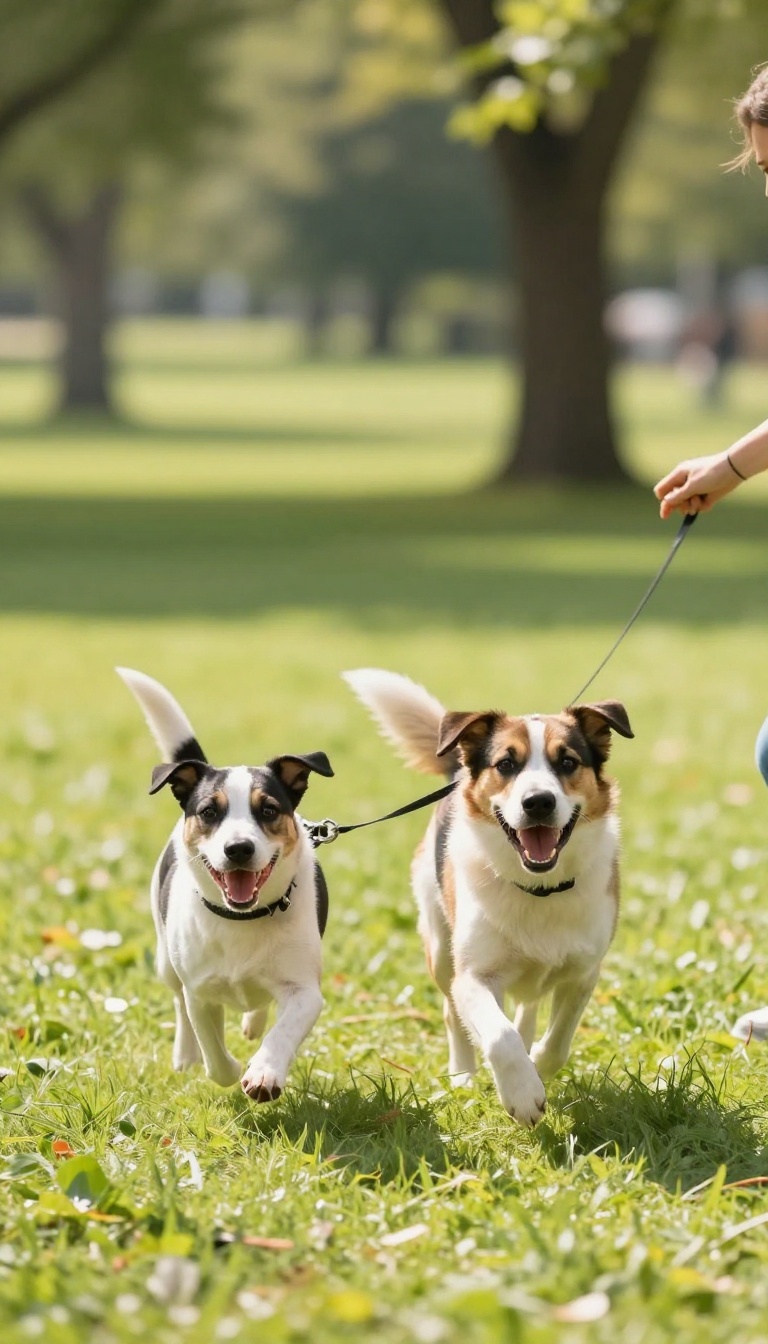
Picture this: your dog spots a squirrel and bolts, but instead of shouting uselessly, you call their name and they turn on a dime. That's the power of a rock-solid recall. It's your emergency brake for any chase situation, giving you a way to interrupt the behavior before it escalates.
Training a reliable 'come' takes time, but it's a lifesaver—literally.
Start Indoors, Then Add Distractions
Begin in a quiet room with no distractions. Say your dog's name in a happy tone, then 'come' and reward with a high-value treat the instant they reach you. Practice in short bursts throughout the day.
Once they're nailing it indoors, gradually move to the backyard, then to a park with a long leash. Each time you add a new distraction, lower your expectations and reward generously.
Use A Long Leash For Safety
When you're ready to practice outside, use a 15-30 foot training leash. This gives your dog freedom while keeping them safe. If they ignore your recall, give a gentle tug to guide them back, then reward.
Never chase your dog—that turns it into a game. Instead, run the other way and call them; most dogs will follow.
Reward With A Jackpot
When your dog returns to you after a distraction, make it rain treats. Give them a handful of something irresistible—chicken, cheese, or hot dogs. This teaches them that coming back is always worth it, especially when there's a cat nearby.
The more exciting the reward, the stronger the recall.
8. Create Safe Zones for Your Cat
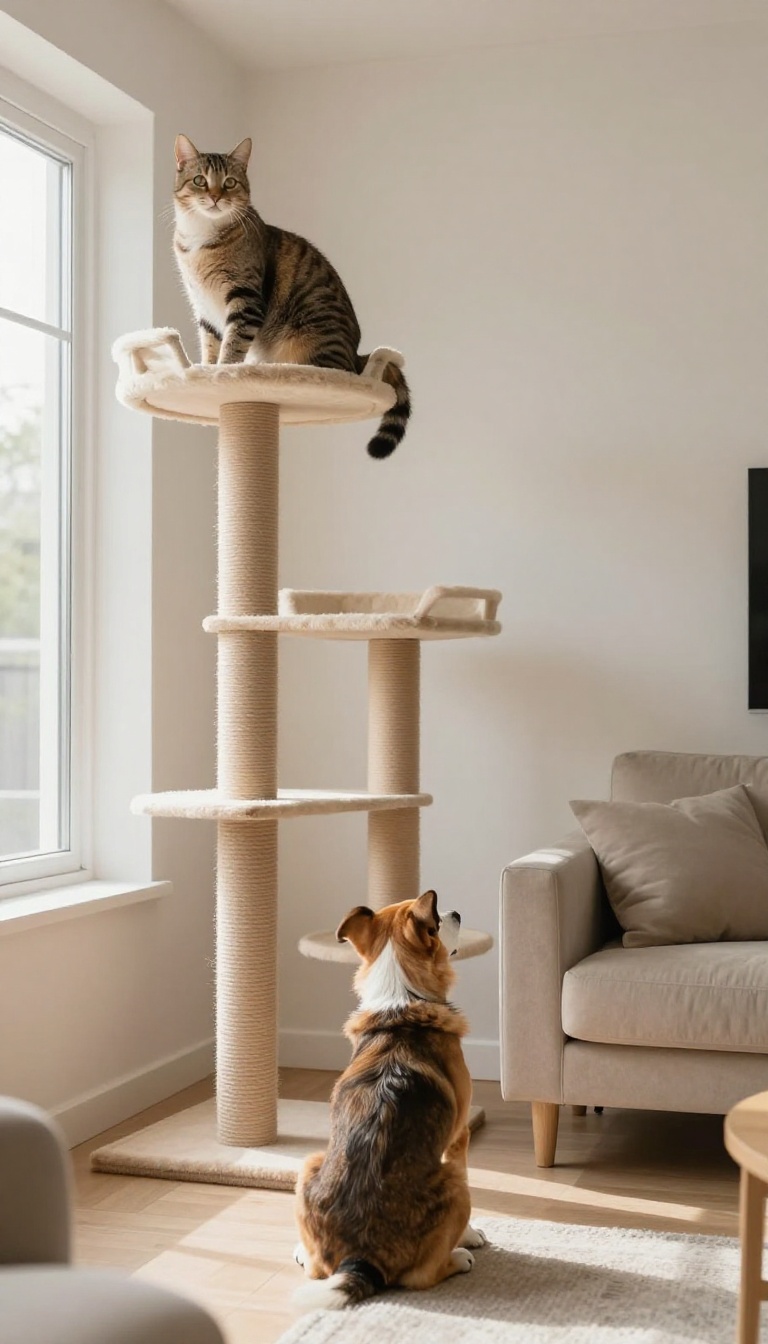
When your dog gets that laser-focused look, the best defense is a good escape route. Safe zones give your cat a place to retreat to where the chase simply ends. This isn't about locking your dog away—it's about giving your cat control over the situation.
Setting up safe zones is one of the quickest wins in reducing cat-chasing. Cats feel more confident when they have vertical space and clear exits, and dogs learn that the chase has a boundary. Here's how to make it work in your home.
Why Vertical Space Matters
Cats naturally seek height when they feel threatened. A tall cat tree, shelves, or a window perch gives your cat a bird's-eye view and a place to relax without fear. Dogs usually can't follow, so the chase ends before it starts.
Place these perches in rooms where your dog spends time, so your cat always has an escape.
Create Clear Escape Routes
Make sure your cat can move freely between rooms without being cornered. Use baby gates with cat doors, or leave doors slightly ajar so your cat can slip through. The goal is to give your cat a path that your dog can't access.
This reduces the chance of a chase escalating into a dangerous confrontation.
Make Safe Zones Inviting
A safe zone isn't just a perch—it should be a place your cat wants to be. Add a soft blanket, a favorite toy, or even a treat dispenser. If your cat associates these spots with positive experiences, they'll retreat there more often, and your dog will learn that chasing leads to nowhere.
Train Your Dog To Respect The Zones
Teach your dog that the safe zone is off-limits. Use a 'leave it' command and reward them for staying away. When your dog ignores the cat in a safe zone, give them a treat.
Over time, your dog will understand that the cat's space is not a playground.
9. Manage the Environment to Prevent Rehearsal
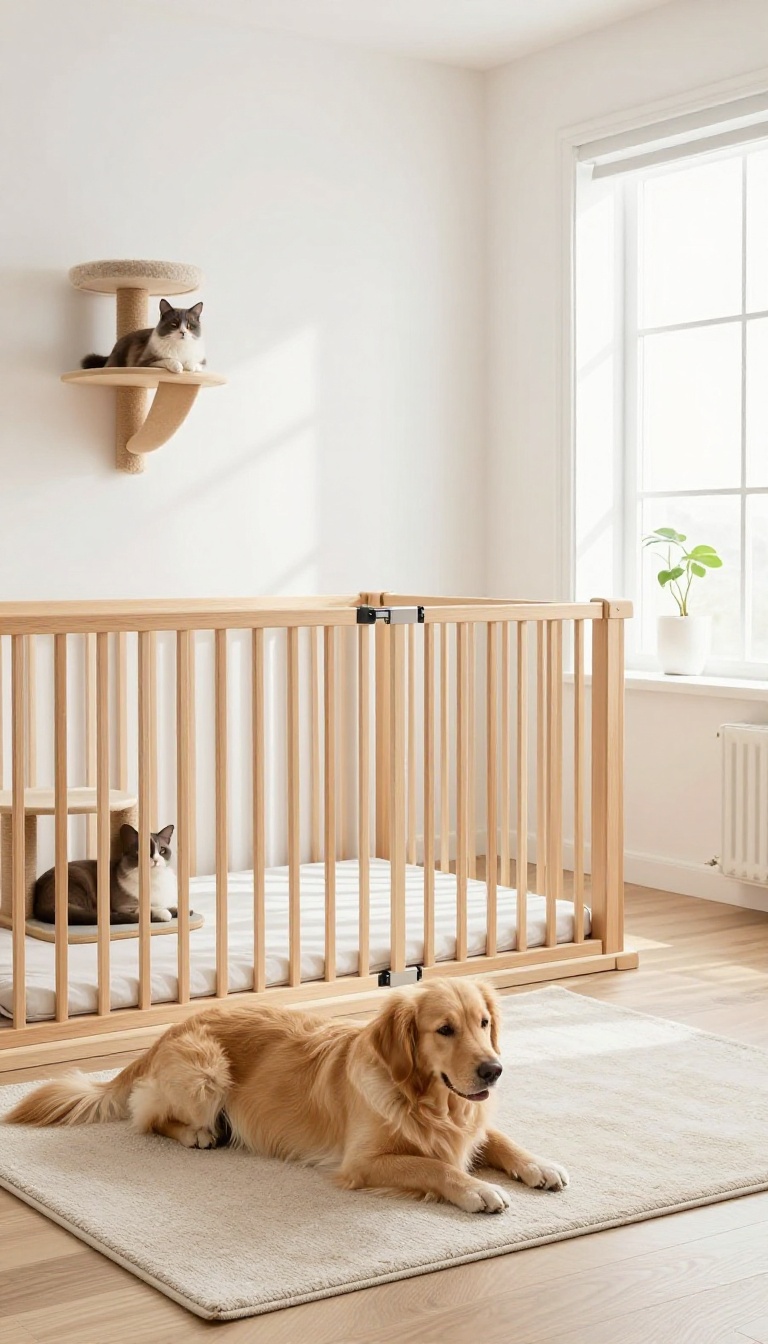
Sometimes the smartest training move isn't a command—it's a baby gate. When you can't be actively supervising, setting up your home so your dog can't practice chasing is a game-changer. Every time your dog rehearses the chase, that behavior gets stronger, so cutting off those opportunities speeds up your progress.
Think of it like this: every chase is a repetition, and repetitions build habits. The more your dog practices chasing, the more ingrained it becomes. By managing the environment, you're preventing those reps from happening, which makes your training sessions far more effective.
It's not about punishment; it's about setting your dog up for success.
Use Baby Gates And Closed Doors
Set up baby gates in doorways to create separate zones for your cat and dog. Give your cat a safe room with food, water, litter box, and a cozy bed, and keep the door closed or gated. This gives your cat a stress-free retreat and stops your dog from rehearsing the chase.
Rotate which areas they have access to so both pets get plenty of space and stimulation.
Crate Training As A Management Tool
A crate can be your best friend when you're busy or away. Make it a positive place with treats, toys, and a soft blanket. When you can't supervise, pop your dog in the crate with a long-lasting chew or a puzzle toy.
This prevents chasing and gives your dog a calm, structured break. Just make sure the crate is never used as punishment—it should always be a happy spot.
Supervise And Interrupt
When you're home and both pets are loose, keep a close eye on them. Keep your dog on a leash attached to your belt or hold the leash while you move around. If you see that intense stare or a sudden shift in body language, calmly redirect your dog's attention with a treat or a toy before the chase even starts.
This proactive approach stops the behavior before it becomes a habit.
10. Increase Physical and Mental Exercise
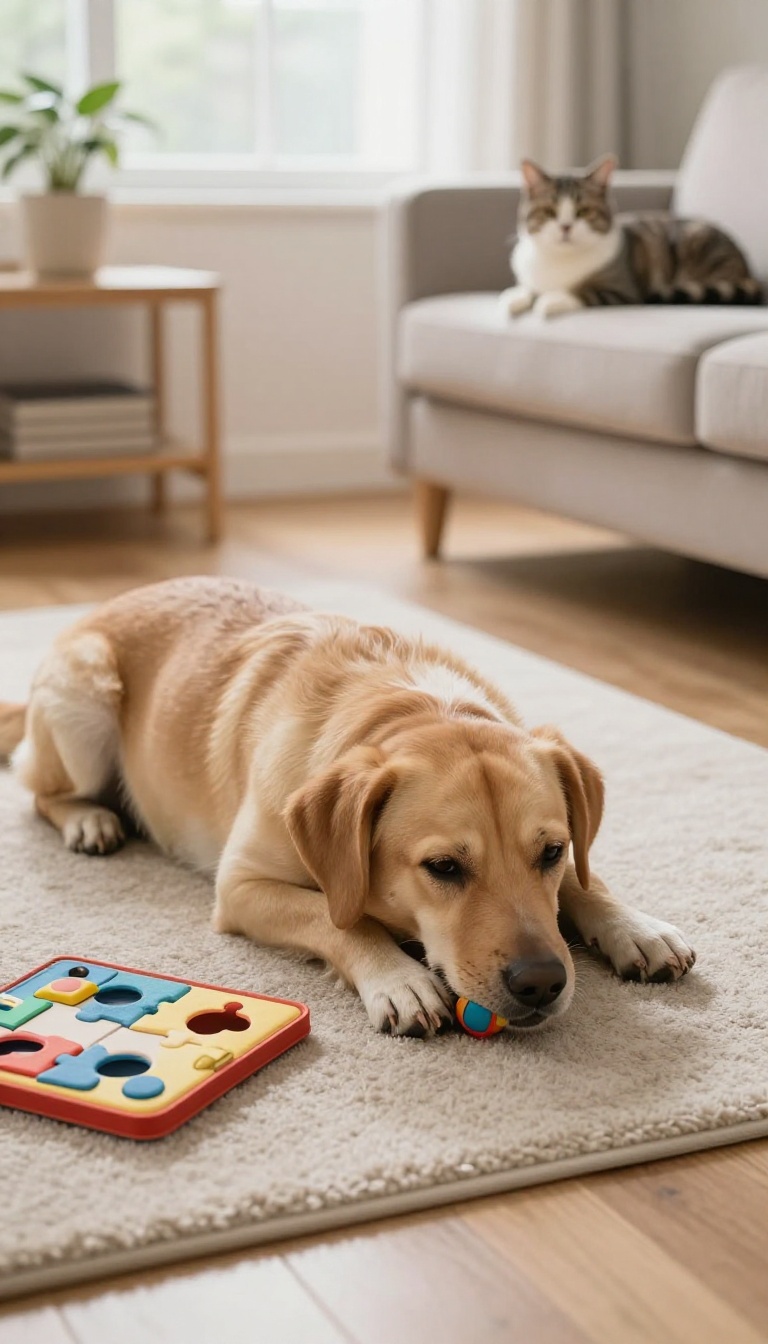
A tired dog is a well-behaved dog, and that old saying holds true when it comes to curbing the chase. When your pup has pent-up energy, that burst of zoomies often targets the nearest moving thing—usually your cat. By boosting both physical and mental activity, you give your dog a healthy outlet for their instincts, making the cat far less tempting as a plaything or prey.
Start by adding an extra walk or extending your current ones. Aim for at least 30 to 60 minutes of brisk walking or running, depending on your dog's breed and age. This isn't just about tiring them out—it's about meeting their natural need to explore and sniff.
A dog that's had a good workout is more likely to nap than to stalk the cat.
Puzzle Toys That Tire The Brain
Mental fatigue works wonders. Puzzle toys that dispense treats or require problem-solving can keep your dog occupied for 20 to 30 minutes. Start with easy ones and gradually increase difficulty.
This kind of brain work taps into their foraging instincts, leaving them satisfied and less interested in chasing the cat.
Nose Work For Natural Instincts
Dogs have incredible noses, and using them is exhausting in a good way. Set up simple scent games at home: hide treats or a favorite toy around the house and let your dog find them. You can also try a snuffle mat or scatter food in the grass.
These activities channel their prey drive into a productive, non-chasing behavior.
Structured Play Sessions
Interactive play like fetch or tug-of-war burns energy and strengthens your bond. Schedule short, focused sessions twice a day. Use a flirt pole to mimic prey movement without involving the cat—it lets your dog chase something appropriate.
Just be sure to end play before your dog gets overexcited.
11. Seek Professional Help if Needed
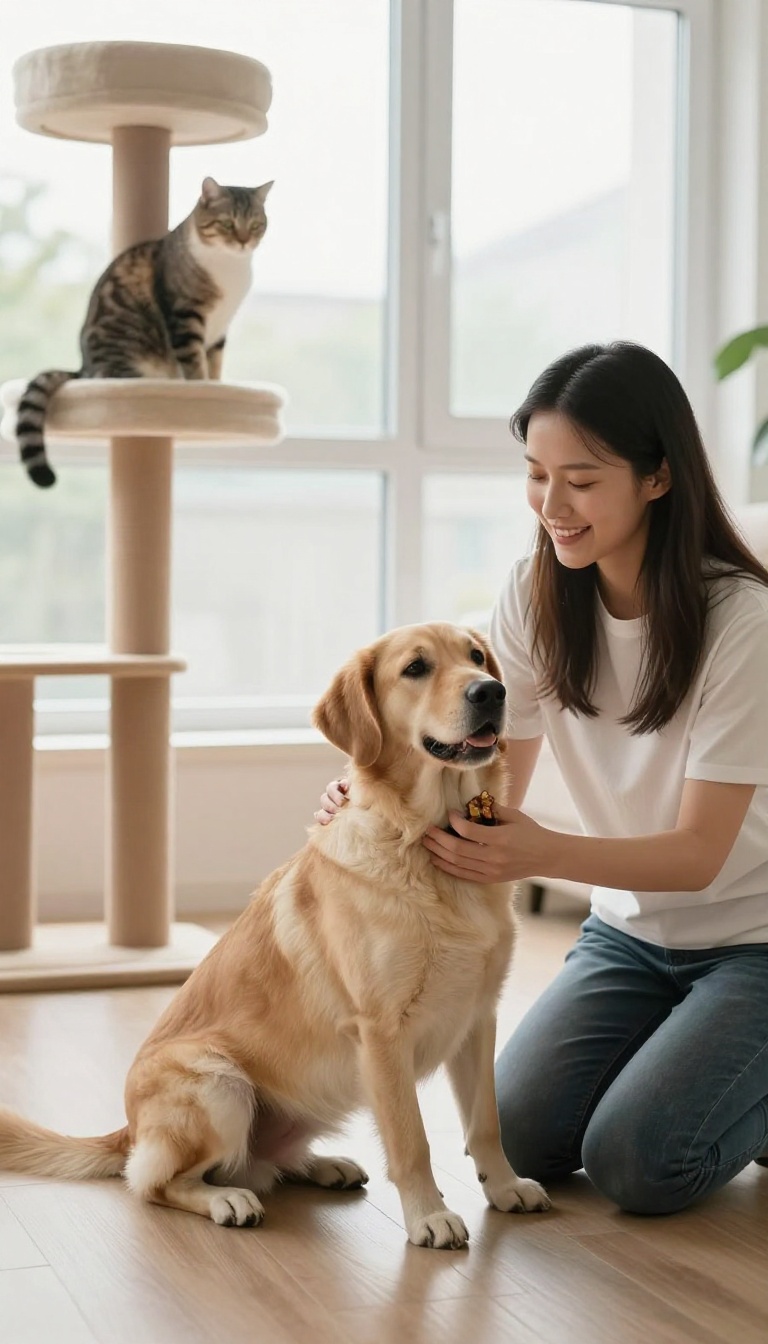
Not every chase habit fades with at-home training alone. If your dog's reactions are intense, or if you feel overwhelmed, a professional can step in with a fresh perspective and a plan that fits your exact situation. There's no shame in asking for help—it often makes the difference between frustration and real progress.
Sometimes the chase is more than a bad habit—it's a deeply rooted behavior that needs expert guidance. A certified dog trainer or a veterinary behaviorist can assess your dog's triggers, body language, and history to create a tailored approach. They'll also help you spot subtle signs of aggression or anxiety that you might miss, keeping both your dog and cat safer during training.
Find The Right Expert
Look for a certified professional dog trainer (CPDT) or a veterinary behaviorist (DACVB) with experience in prey drive and multi-pet households. Ask your vet for a referral, or check directories like the CCPDT or the American College of Veterinary Behaviorists. Read reviews and ask about their methods—positive reinforcement should be the core, not punishment.
What To Expect In A Session
A professional will likely observe your dog around the cat from a safe distance, then design exercises to build calm responses. They might use desensitization, counter-conditioning, or management strategies like crate training. You'll get clear homework to practice between sessions, so progress continues at home.
When To Seek Help Immediately
If your dog has ever bitten or injured a cat, or if they ignore high-value treats when chasing, don't wait. Also, if the chasing seems more like stalking or includes growling or snapping, professional support is essential. Acting early prevents escalation and protects both animals.
FAQ
How long does it take to stop a dog from chasing the cat?
It varies by dog and consistency. With daily training, you may see improvement in a few weeks, but full reliability can take months. Patience and regular practice are essential.
Can I train my dog to stop chasing if the cat is also scared?
Yes, but you'll need to work slowly and ensure the cat feels safe. Provide escape routes and use positive reinforcement for both pets. If the cat is extremely stressed, consult a professional.
Is it okay to use a shock collar to stop chasing?
We don't recommend aversive tools like shock collars. They can increase anxiety and worsen the behavior. Positive reinforcement and management are safer and more effective.
What if my dog chases the cat only when I'm not looking?
That means the behavior is self-reinforcing. Manage the environment with barriers or supervision, and increase training sessions to build a stronger habit of calm behavior.
Will my dog ever be completely trustworthy around the cat?
Many dogs can learn to coexist peacefully, but it depends on the dog's prey drive and the cat's behavior. Even with training, always supervise initial interactions and maintain safety measures.
Conclusion
Cutting the cat-chase habit isn't about erasing your dog's prey drive—it's about channeling it into calmer, more controlled behaviors. Pick one or two steps from this list that fit your dog's energy and your daily routine, then practice them consistently. Over time, you'll see that instinct turn into a glance, a sit, or a look back at you instead of a sprint.
Start with the easiest fix today, and let each small win build momentum. Before long, your cat will move freely, and your dog will earn treats for staying cool.

I’m Pallab Kishore, the owner of Little Pets Realm — an animal lover and pet care enthusiast sharing easy tips, healthy recipes, and honest advice to help every small pet live a happy, healthy, tail-wagging life.