
Last updated on August 19th, 2026 at 04:14 pm
You're playing tug with your new puppy, and suddenly those needle-sharp teeth find your hand. It's a familiar sting for any new dog owner. Puppy biting is normal, but that doesn't make it pleasant.
Left unchecked, it can turn every interaction into a battle of wills. The good news is that you can teach your puppy to be gentle. With a mix of management, training, and patience, you'll see real progress.
These 11 fixes are practical, everyday solutions that fit into your routine. No harsh corrections or complicated methods—just simple, effective strategies to help your puppy learn bite inhibition. Let's dive in and reclaim your playtime.
1. The Yelp-and-Pause Technique
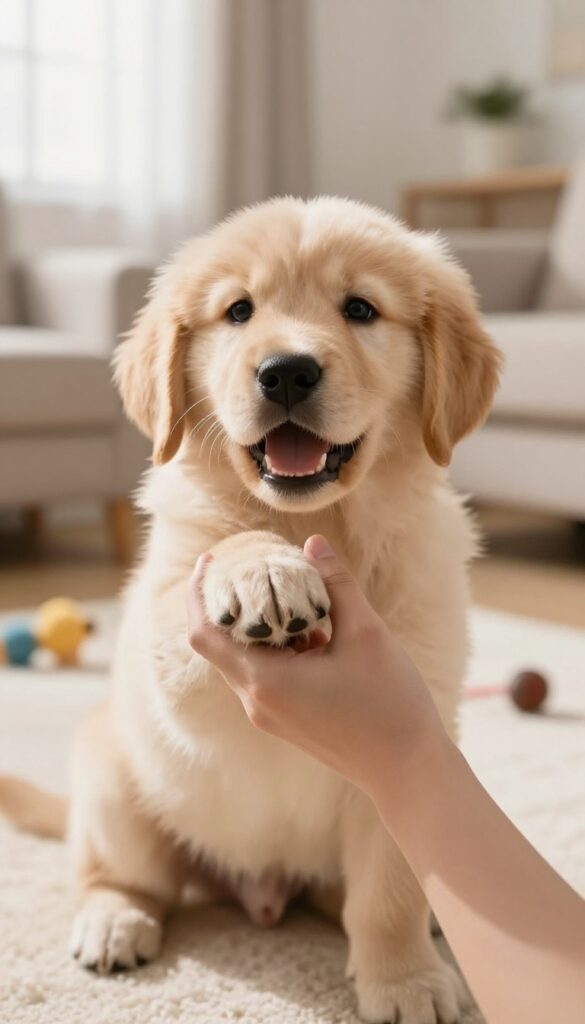
When your puppy bites too hard, a sharp, high-pitched yelp—like a littermate's—can stop them mid-action. It's a natural signal that says, "Ouch, that hurt! " The key is to follow it with a brief pause in play, which teaches cause and effect in a language your puppy already knows.
This technique is simple: the moment your puppy's teeth make contact with your skin, let out a short, high-pitched yelp (think "yip! "). Then, immediately withdraw your hand and turn away, ignoring your puppy for 10–15 seconds.
This mimics what happens when puppies play too rough with each other—the hurt pup yelps and stops playing. Your puppy learns that hard biting ends the fun, while gentle play continues.
Why It Works
Puppies are born with a natural instinct to inhibit their bite. When they yelp and stop, they learn to control their jaw pressure. This is how they communicate with their littermates.
By using the same signal, you're tapping into an innate behavior that makes sense to your puppy.
Getting The Timing Right
The yelp must come at the exact moment of the bite—not a second later. If you're too slow, your puppy won't connect the sound to their action. Also, keep your yelp consistent: a sharp, short sound, not a scream.
You want to startle, not scare.
What To Do After The Pause
After the brief pause, calmly resume play. If your puppy bites hard again, repeat the process. Consistency is key.
Over time, your puppy will learn to soften their bite. If they're overly excited, the pause might need to be longer—just ensure it's not a punishment, but a natural consequence.
2. Redirection to Chew Toys
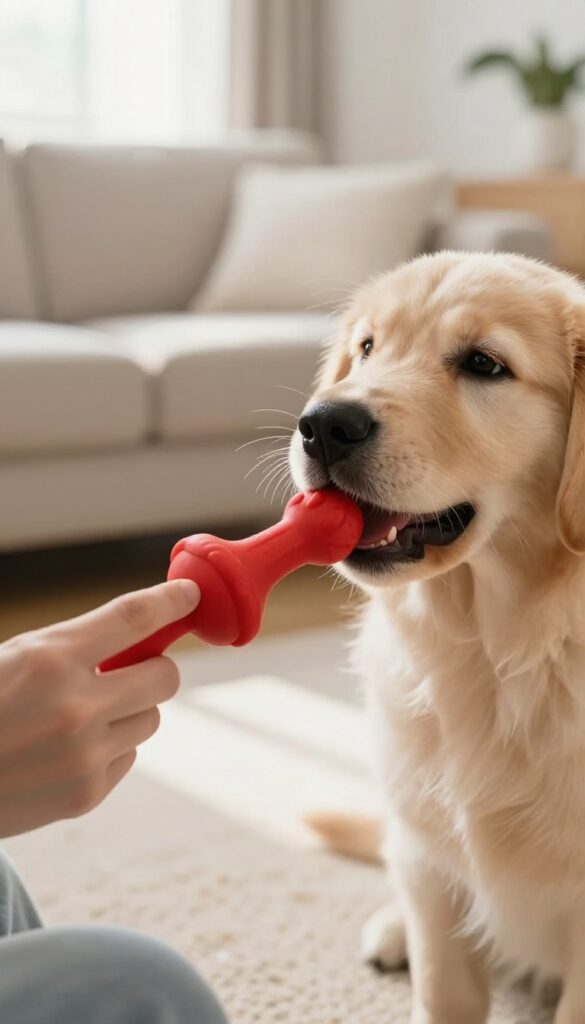
One of the simplest ways to curb puppy biting is to have a toy ready at all times. When your puppy's mouth heads toward your hand, swap in a chew toy instead. This teaches them that biting people isn't rewarding, but chewing on appropriate items is.
Redirection works because puppies naturally explore with their mouths. By offering a toy, you're not punishing the behavior—you're guiding it toward something acceptable. The key is to be consistent and quick, so your puppy makes the connection between mouthing and getting a toy.
Keep Toys Within Reach
Stash chew toys in every room you spend time with your puppy. That way, you can grab one instantly when play gets mouthy. If you have to search for a toy, your puppy learns that biting gets attention (even if it's you fumbling around).
Make The Toy More Exciting
If your puppy ignores the toy and goes for your hand, try making the toy irresistible. Wiggle it, squeak it, or roll it on the floor. You're not just offering an alternative—you're making it more fun than your hand.
This helps your puppy choose the toy on their own.
Praise The Right Choice
When your puppy takes the toy, give them enthusiastic praise. A cheerful 'good boy! ' or a quick game of tug reinforces that chewing on toys is a great decision. Over time, your puppy will start grabbing toys on their own when they feel the urge to bite.
3. Time-Outs That Teach
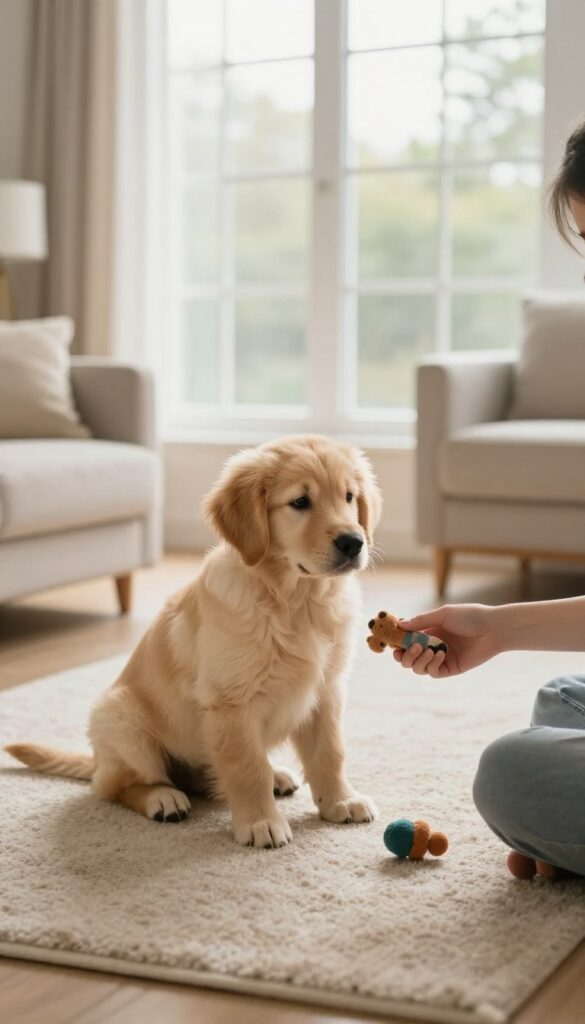
Sometimes the best way to teach your puppy that biting ends the fun is to simply stop the fun. A time-out isn't a punishment—it's a clear, calm consequence that helps your pup connect their teeth with the end of playtime. When done consistently, it's one of the most effective tools you have.
When your puppy bites too hard or too often, it's time for a short break. The goal is to remove all attention and play for a brief period, so your puppy learns that biting leads to nothing good. This works because puppies crave interaction, and losing it is a powerful lesson.
Know When To Call It
Watch for the signs that your puppy is overexcited or overtired—those are the moments when biting gets worse. If your puppy is zooming around, nipping at your clothes, or ignoring your cues, it's time for a break. Don't wait until you're frustrated; step in early.
How To Do A Time-out
When your puppy bites, say a calm 'time-out' and immediately stand up, turn away, or leave the room. If you're in a playpen or a safe area, you can also gently place your puppy in a separate space for 30 to 60 seconds. Keep it boring—no talking, eye contact, or petting.
After the break, resume play, but if the biting continues, repeat the process.
Make It Consistent
Consistency is key. Every time your puppy bites during play, follow through with the same time-out. If you let it slide sometimes, your puppy will get mixed signals and the behavior may stick around longer.
With repetition, your puppy will learn that gentle play keeps the game going.
4. The Power of a Consistent 'No'
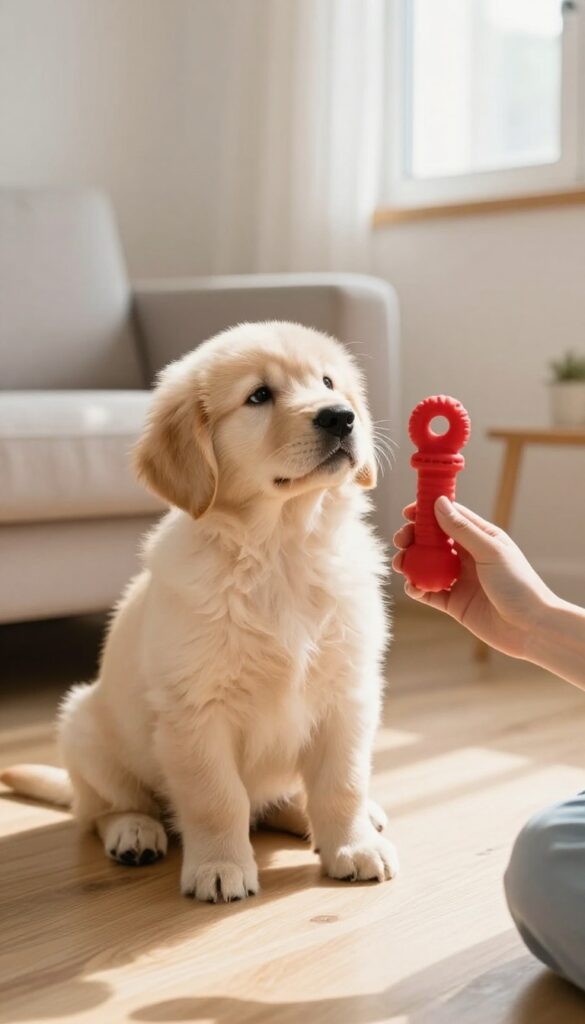
A simple word can become a powerful training tool when you use it the same way every time. Your puppy doesn't understand English, but they're brilliant at picking up patterns. If 'no' always means the same thing, they'll learn to stop mid-bite.
This isn't about scaring your puppy or raising your voice. It's about being clear and calm. When you pair a consistent 'no' with a better option, you're teaching your puppy what to do instead of just what to stop doing.
The trick is to make 'no' a marker, not a punishment. Say it firmly, then immediately redirect to a toy or a sit. Over time, your puppy will connect the word with the action and start to pause on their own.
Choose Your Word And Stick With It
Pick a word like 'no' or 'ah-ah' and use it every single time. If you switch between 'no', 'stop', and 'don't', your puppy will get confused. Keep it short and sharp, not angry.
Say it the same way each time—firm but neutral. Your tone matters more than volume. A calm, steady 'no' is more effective than a yell.
Follow Up With A Positive Alternative
After you say 'no', immediately show your puppy what they should do instead. Offer a chew toy, ask for a sit, or start a quick training game. This turns a correction into a lesson.
Your puppy learns that 'no' means 'stop that, do this'. The positive follow-up is what actually teaches them the right behavior.
Be Consistent Every Single Time
Consistency is the secret sauce. If you let some bites slide and correct others, your puppy won't understand the rule. Use 'no' every time those teeth touch skin, no matter how small the bite.
Everyone in the household needs to be on the same page. If one person allows biting and another doesn't, your puppy will get mixed signals. Agree on the word and the response, and stick to it.
Stay Calm And Keep It Short
Keep your 'no' brief and emotionless. If you get frustrated or excited, your puppy might think it's part of the game. Say the word, redirect, and move on.
Don't launch into a lecture or a long time-out. A quick, clear correction followed by positive guidance is all your puppy needs to start making the connection.
5. Managing Your Energy

Ever notice how a wild play session can turn into a biting frenzy in seconds? That's because puppies often bite when they're overexcited. The key is to keep play calm and structured.
Watch for signs of overstimulation—like frantic movements or growling—and step in before the biting starts. By managing the energy in the room, you're setting your puppy up for success.
Set The Tone For Calm Play
Start every play session with a calm attitude. If you're all hyped up, your puppy will match your energy. Use a quiet, happy voice and move slowly.
Let your puppy approach you first. This sets a relaxed mood that makes biting less likely.
Watch For Overstimulation Cues
Puppies give clear signals when they've had enough. Look for signs like frantic tail wagging, growling, or a sudden burst of zoomies. When you see these, it's time to pause.
Take a deep breath, stand still, and wait for your puppy to calm down before continuing.
Build In Calm Breaks
Short play sessions with breaks work wonders. After a few minutes of play, call a timeout. Have your puppy sit or lie down for a moment.
This teaches them that calm behavior brings play back. It also gives them a chance to reset their excitement level.
6. Teaching 'Leave It' Early
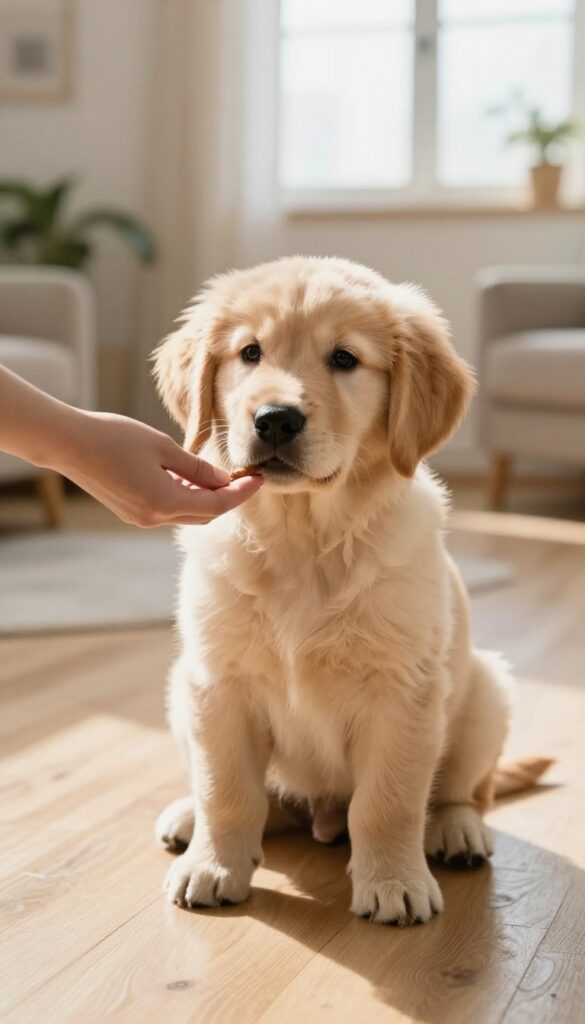
A solid 'leave it' cue is like a pause button for your puppy's impulses. Instead of wrestling your hand away from those sharp teeth, you can redirect their focus with a word they already understand. This isn't just about toys or treats—it's about building a habit of checking in with you before acting on instinct.
Teaching 'leave it' early gives your puppy a clear alternative to biting. It's a simple skill that pays off in countless everyday moments, from ignoring dropped food to resisting the urge to nip at your sleeves. The best part?
It's easy to start at home with minimal setup.
Start with a treat in your closed fist. Let your puppy sniff, lick, and paw at it, but keep your hand shut. The moment they pull back or look away, say 'yes' and reward them from your other hand.
Repeat this a few times until they understand that backing off earns the treat. Once they've got the basics, move to an open palm with the treat visible. If they lunge for it, close your hand quickly.
Wait for them to disengage, then mark and reward. Gradually increase the difficulty by using more tempting items, like a toy or a piece of food on the floor. The key is to practice in short, calm sessions.
Puppies learn best when they're not already overexcited. Start in a quiet room, then slowly add distractions as they improve. Before long, you'll have a cue that works even during a heated play session.
Why 'leave It' Works For Biting
Biting often happens because your puppy is overstimulated and doesn't know what else to do. 'Leave it' gives them a clear, positive action to take instead. It's not about punishment—it's about teaching them to make a better choice. When your puppy learns that ignoring your hand leads to a reward, they'll start offering that behavior on their own.
Over time, this impulse control carries over to other situations, like not grabbing at your clothes or jumping on guests. It's a foundation for good manners.
Step-by-step Training In 3 Easy Stages
Stage one: closed fist. Hold a treat in your closed hand and wait for your puppy to stop trying to get it. As soon as they pull back, say 'yes' and give them a treat from the other hand.
Repeat until they consistently back off. Stage two: open palm. Place a treat on your open palm.
If your puppy goes for it, close your hand quickly. Wait for them to look away, then mark and reward. This teaches them to ignore something tempting until you give the cue.
Stage three: real-world items. Practice with toys, food on the floor, or even your hand during play. Use the cue 'leave it' just before they make contact, then reward them for turning away.
Keep sessions short and always end on a success.
Using 'leave It' During Playtime
When your puppy starts mouthing your hand, say 'leave it' in a cheerful tone. The moment they stop, even for a second, praise them and offer a toy as a replacement. This teaches them that gentle play is rewarded.
If they're too wound up to listen, take a brief break. Step away or ignore them for a few seconds, then resume. Consistency is key—every time you use the cue, you're reinforcing the idea that biting ends the fun, but 'leave it' keeps it going.
7. Exercise and Mental Stimulation
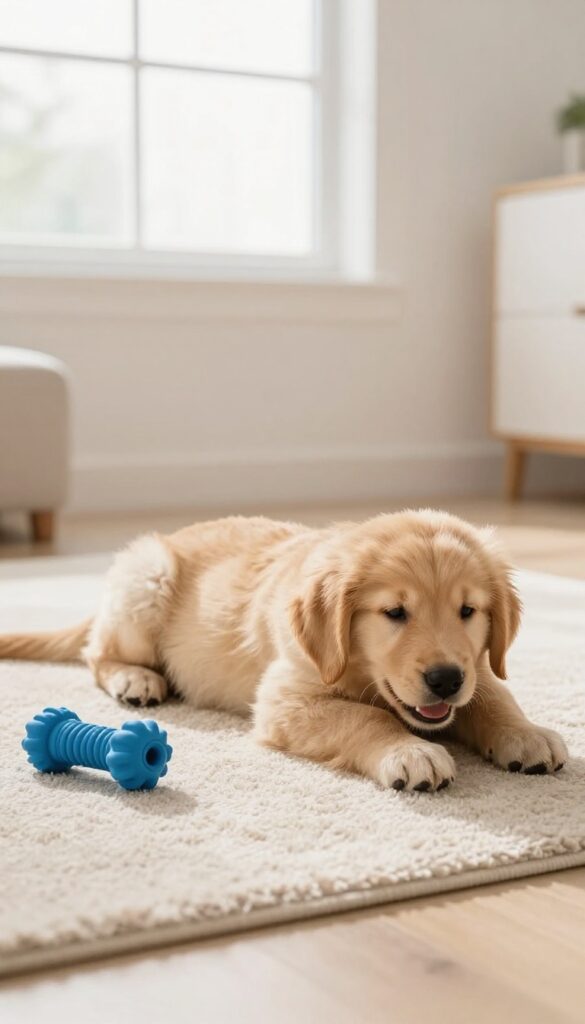
A tired puppy is a well-behaved puppy. When your pup has pent-up energy, biting often becomes their go-to outlet. Physical activity and mental challenges can channel that energy into something positive, reducing the urge to nip.
Incorporating regular exercise and brain games into your daily routine can make a big difference. Not only does it tire them out, but it also satisfies their natural instincts. Here are a few ways to keep your puppy engaged and less likely to bite.
Daily Walks And Play Sessions
Aim for at least two walks a day, adjusting the length to your puppy's age and breed. Add short play sessions like fetch or tug-of-war to burn off extra energy. The goal is to help them release energy in a constructive way, so they don't resort to biting.
Puzzle Toys And Treat Dispensers
Puzzle toys that require your puppy to figure out how to get a treat are perfect for mental stimulation. They keep your pup occupied and focused, giving you a break and reducing boredom-driven biting. Rotate the toys to keep the challenge fresh.
Training As A Workout
Short training sessions are another form of mental exercise. Teaching new commands or practicing old ones engages your puppy's brain and reinforces good behavior. Use treats as rewards to keep it positive and fun.
8. The 'Bite Inhibition' Game
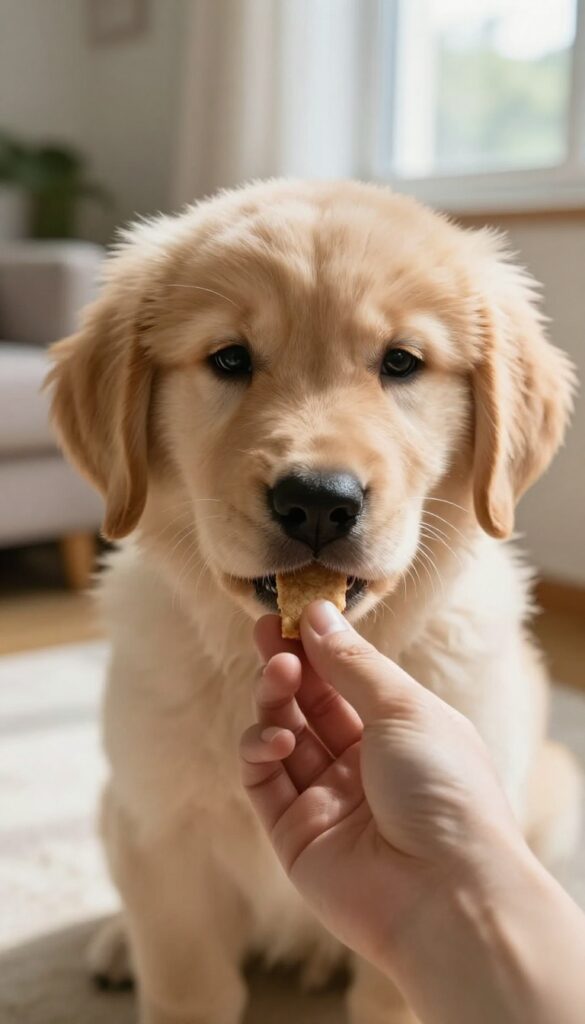
This one feels more like a game than a training session, and that's exactly why it works. Instead of punishing every nip, you're teaching your puppy how to control the pressure of their mouth. It's a skill that takes time, but the payoff is a dog who knows how to be gentle even when excited.
Start by letting your puppy mouth your hand during play, but the moment you feel any pressure that's too hard, let out a high-pitched yelp and go limp. That mimics how another puppy would react. Then, offer your hand again.
If they come back softer, keep playing. If they bite hard again, yelp and walk away for a few seconds. This teaches them that hard bites end the fun, while gentle mouthing keeps it going.
Why It Works
Puppies learn bite inhibition from their littermates, who yelp and stop playing when bitten too hard. You're simply translating that lesson into a language your puppy already understands. Over time, they learn to moderate their bite force, which is crucial for when they're older and stronger.
Getting The Timing Right
The yelp needs to happen within half a second of the hard bite, or your puppy won't connect it to their action. Also, keep your voice calm and your body still. If you jerk away, they might think it's a game and get more excited.
Consistency is key—everyone in the family should use the same signal.
Gradually Raising The Bar
As your puppy gets better at soft mouthing, start rewarding only the gentlest touches. You can even use a cue like 'gentle' when they lick or softly mouth. Over a few weeks, they'll learn that the softest contact is what keeps the game going.
This builds a solid foundation for a dog that never bites down hard, even when startled.
9. Using Positive Reinforcement
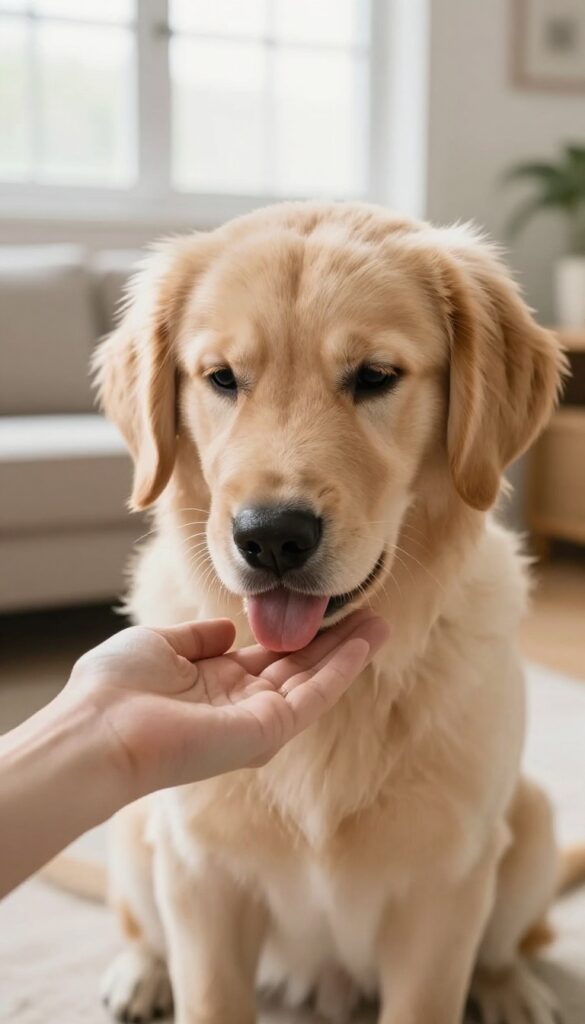
Rewards speak louder than corrections, especially for a puppy still figuring out the rules. When you consistently praise the gentle choices, your pup starts to repeat them. This approach turns training into a game rather than a struggle, and it builds trust along the way.
Positive reinforcement is about catching your puppy being good. Every time they lick your hand instead of biting, or play with a toy rather than your arm, mark it with a cheerful "Yes! " and offer a treat.
Over time, your puppy learns that gentle behavior earns the good stuff, so they're more likely to choose it on their own.
Timing Is Everything
Rewards need to come within a second or two of the behavior you want to encourage. If you wait too long, your puppy might connect the treat to something else entirely. Keep treats handy during play sessions so you can react instantly when those tiny teeth stay off your skin.
Make The Good Stuff Easy To See
Use treats that are extra special—small, soft, and smelly—so your puppy knows this reward is worth working for. You can also use a favorite toy as a reward if your pup is more toy-motivated. The key is to make the positive consequence obvious and exciting.
Mix It Up
Don't rely on the same treat every time. Rotate between a few high-value options to keep your puppy interested. You can also vary the pace: sometimes reward with a quick play session, other times with a tasty bite.
This unpredictability keeps your pup engaged and eager to learn.
10. Avoiding Rough Play
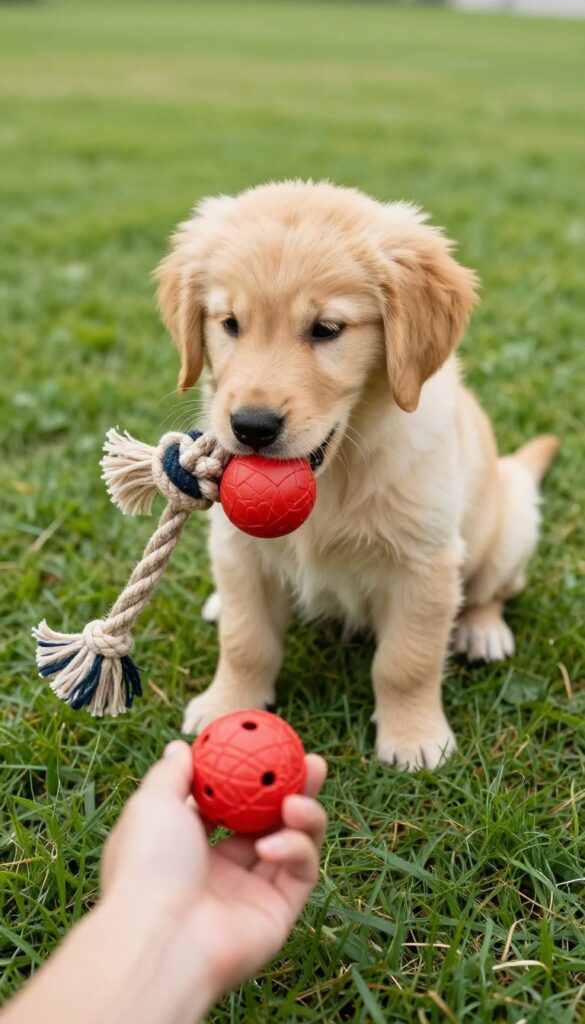
Some games naturally invite biting. Tug-of-war and rough wrestling can turn your puppy into a tiny shark, especially when they're overexcited. The fix isn't to stop playing—it's to switch to games that reward gentleness instead of encouraging mouthing.
By choosing activities like fetch or training games, you redirect that energy into something constructive. Your puppy still gets exercise and fun, but without the biting trigger. Plus, these games build focus and strengthen your bond in ways that rough play can't.
Rough play often feels like a natural way to bond, but it sends the wrong message. When you let your puppy grab your sleeve or hand during a game, you're teaching them that biting is part of the fun. Even if you don't mean it, your puppy learns that mouthing gets your attention and keeps the game going.
Instead, pick games that keep their mouth busy with a toy or their brain busy with a task. Fetch, hide-and-seek, or simple obedience drills are perfect. They satisfy your puppy's need for activity and mental stimulation without turning your hands into chew toys.
If your puppy does get mouthy during play, stop the game immediately. Turn away, cross your arms, and wait for them to calm down. This teaches them that biting ends the fun, while gentle play keeps it going.
Consistency is key—every time you do this, you reinforce the lesson.
Why Tug And Wrestling Backfire
Tug-of-war and wrestling are high-arousal games. They get your puppy's adrenaline pumping, and in that state, they're more likely to lose control and bite. Even if your puppy knows 'drop it' or 'leave it, ' the excitement can override their training.
These games also put your hands and face close to their mouth, which is an invitation to nip. For a puppy, biting is how they explore and play with their littermates. When you engage in rough play, you're mimicking that behavior, so it's no surprise they respond with teeth.
That doesn't mean tug is always bad. Some trainers use it as a reward for older dogs. But for a young puppy who's still learning bite inhibition, it's easier to avoid these games until they have better self-control.
Better Alternatives That Still Burn Energy
Fetch is a classic for a reason. It lets your puppy run, chase, and retrieve without involving your hands. Start with a soft toy or ball, and use a long hallway or fenced yard to keep it simple.
Reward them with praise and a treat when they bring it back. Training games are another great option. Practice 'sit, ' 'down, ' or 'touch' in short bursts.
These exercises tire out your puppy mentally, which is often more effective than physical exercise. You can also try puzzle toys or hide treats around the room for them to sniff out. If you want to keep play interactive, use a flirt pole or a toy on a string.
This lets your puppy chase and pounce without grabbing you. Just make sure the toy stays between their mouth and your skin.
How To Redirect When They Get Mouthy
Even with better games, your puppy might still get excited and try to bite. When that happens, don't yank your hand away—that can make them think it's a game. Instead, calmly say 'oops' or 'no' and offer them a toy they can chew on.
If they keep going, end the play session. Put them in a quiet area for a short time-out, or simply walk away. This teaches them that biting stops all fun.
After a minute or two, you can try again with a calmer activity. Remember, puppies need to learn bite inhibition gradually. Be patient and consistent.
Over time, they'll understand that gentle play is the only kind that gets your attention.
11. Knowing When to Seek Help
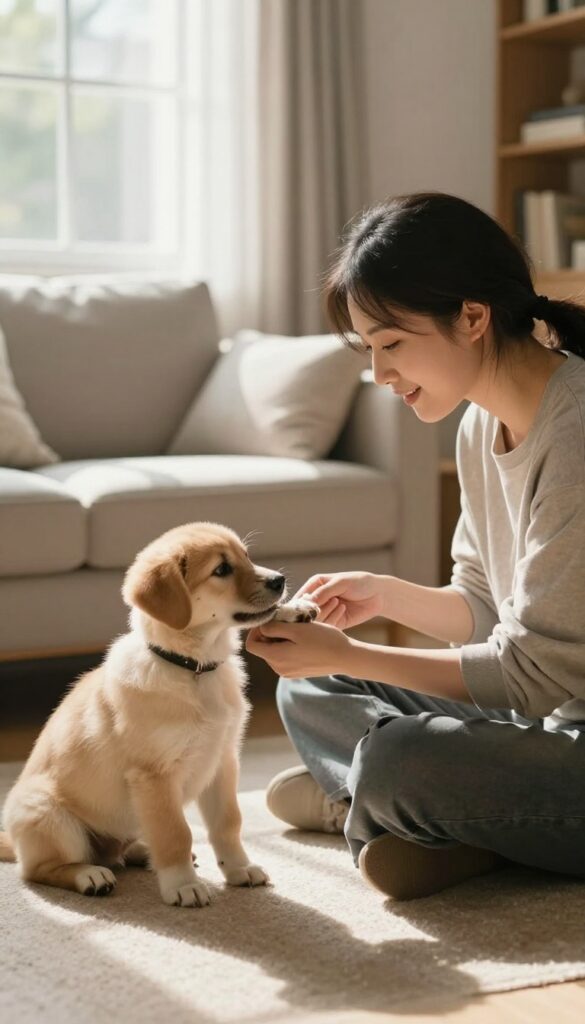
Sometimes, despite your best efforts, the biting doesn't let up. It might even feel like it's getting worse. That's not a failure on your part—it's a sign that something deeper might be going on.
Knowing when to call in a professional is just as important as any training tip. A veterinarian or a certified dog trainer can spot issues you might miss and give you a plan that's tailored to your puppy. There's no shame in asking for help; it's actually a smart move for both of you.
Signs It's Time To Call A Pro
If your puppy's biting breaks the skin often, or if they growl, lunge, or snap when you reach for their food or toys, that's a red flag. Also, watch for biting that seems to come out of nowhere, especially if your puppy is over 6 months old. These behaviors can point to pain, fear, or a deeper behavioral issue that needs a professional eye.
What A Vet Can Rule Out
Sometimes biting is a symptom of a medical problem. Teething pain, ear infections, or even skin allergies can make your puppy irritable and more likely to bite. A quick checkup can rule out these physical causes.
If everything looks fine, your vet might refer you to a trainer or a veterinary behaviorist who can dig deeper.
How A Trainer Can Help
A good trainer will observe your puppy's behavior and your interactions, then give you a custom plan. They can teach you better ways to manage play, set boundaries, and read your puppy's body language. With their guidance, you'll gain confidence and your puppy will learn that gentleness is always rewarded.
Trust Your Gut
You know your puppy better than anyone. If something feels off, don't wait. Early intervention is key.
A professional can help you turn things around before bad habits become ingrained. Reaching out for help is a sign of responsible pet ownership, not weakness.
FAQ
How long does it take to stop puppy biting?
Most puppies show significant improvement within a few weeks of consistent training. Full bite inhibition can take a few months, but with patience, you'll see progress.
Is it normal for puppies to bite a lot?
Yes, mouthing and biting are natural puppy behaviors, especially during teething. It's how they explore the world, but it's important to teach them boundaries.
What should I do if my puppy bites me hard?
Yelp loudly and immediately stop play, turning away for a few seconds. This mimics what a littermate would do and teaches your puppy that hard bites end fun.
Can I use bitter apple spray to stop biting?
Bitter sprays can deter some puppies from chewing on furniture or cords, but they're less effective on hands. They're not a substitute for training and redirection.
When should I worry about puppy biting?
If your puppy is older than 6 months and still biting hard, or if the biting is accompanied by aggression (growling, stiff body), it's time to consult a professional.
Conclusion
Puppy biting is a phase that every owner faces, but it doesn't have to define your playtime. With these 11 fixes, you're equipped to guide your puppy toward gentler habits. Remember, consistency and patience are your best tools.
Every time you redirect a bite or reward a gentle lick, you're building a stronger bond. Soon, those sharp little teeth will be a distant memory, and playtime will be all about fun. Stick with it, and enjoy the journey with your furry friend.

I’m Pallab Kishore, the owner of Little Pets Realm — an animal lover and pet care enthusiast sharing easy tips, healthy recipes, and honest advice to help every small pet live a happy, healthy, tail-wagging life.