
Last updated on August 19th, 2026 at 04:14 pm
Every time the doorbell rings, your puppy launches at your guests like a tiny furry missile. It's embarrassing, a little chaotic, and honestly, not the warm welcome anyone hoped for. But here's the thing: jumping isn't your puppy being naughty—it's just their way of saying hello.
The good news is you can redirect that energy into something calmer and far more polite. These 13 methods are gentle, practical, and built around rewarding the behavior you actually want.
No shouting, no kneeing, no frustration—just clear communication and a lot of treats. By the time you're done, your puppy will greet people with all four paws on the floor and a wagging tail.
1. Ignore the Jump, Reward the Calm
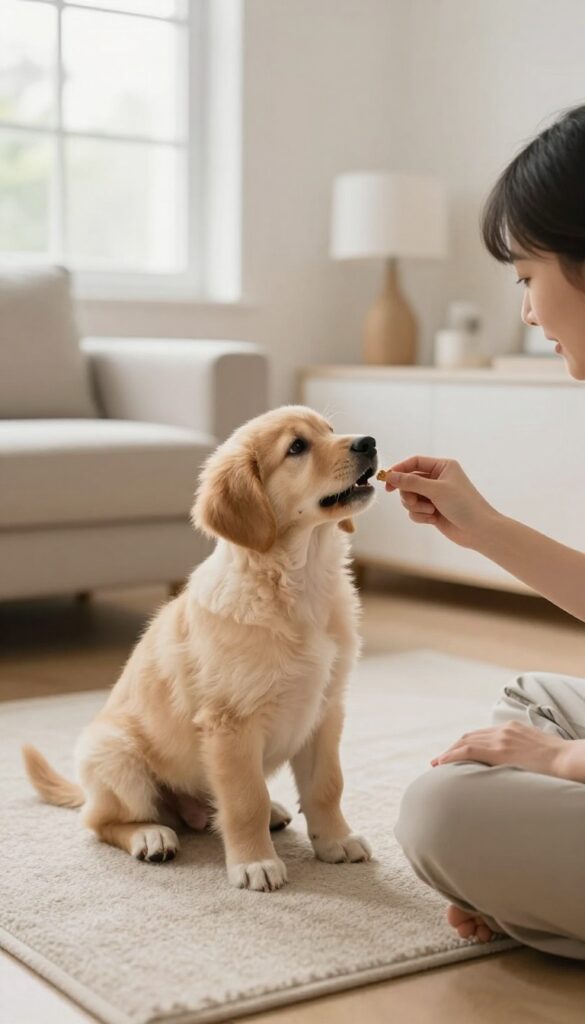
Puppies jump because it works. They leap up, and suddenly they have your hands, your face, or the attention they crave. The fastest way to break that habit is to make jumping completely unrewarding while making calm behavior the best deal in town.
When your puppy jumps, cross your arms, turn away, and give them zero eye contact. No pushing, no saying "down, " no reacting at all. The moment all four paws hit the floor, mark it with a cheerful "yes!
" and drop a treat. Repeat this every single time, and your puppy will start to realize that calm gets the good stuff.
Why Ignoring Works
Dogs repeat behaviors that get them what they want. When jumping earns attention—even negative attention like pushing or scolding—it becomes a habit. Ignoring the jump removes the payoff, and the puppy learns that jumping doesn't work anymore.
Reward The Four-on-the-floor
The instant your puppy has all paws on the ground, reward generously. Use small, high-value treats and a happy tone. You're not just rewarding a behavior; you're teaching your puppy that calm greetings are the path to treats and praise.
Be Consistent With Everyone
If you ignore jumping but your partner gives in with a pat, your puppy will keep trying. Consistency across all family members and guests is crucial. Ask visitors to use the same rule: no attention for jumping, plenty of praise for calm.
2. Teach a Solid 'Sit' as the Default Greeting
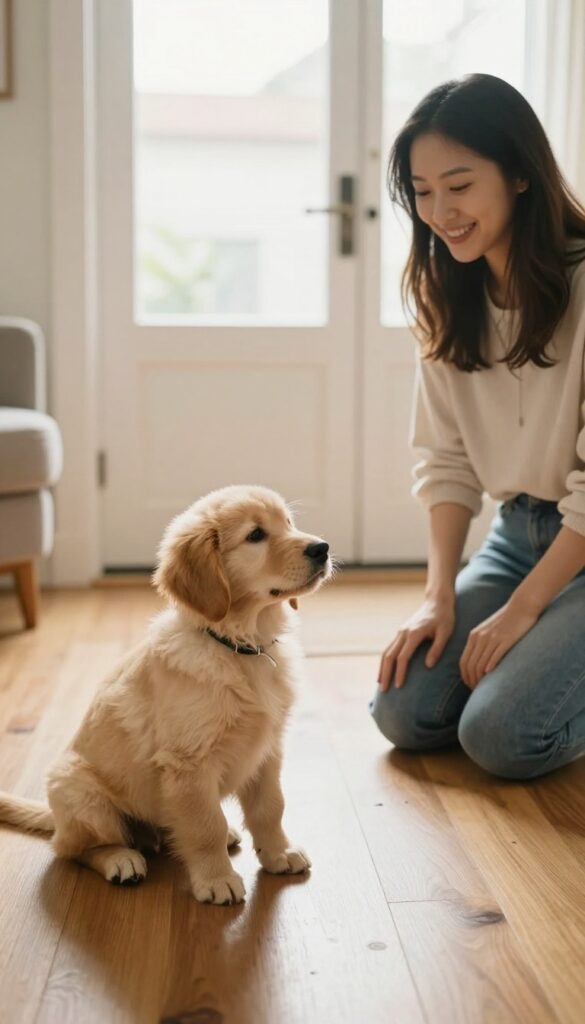
Before your puppy can greet politely, they need a reliable behavior to fall back on. A rock-solid sit is that foundation. When sitting becomes second nature, it’s much easier to ask for it in the heat of the moment—like when someone walks through the door.
Start by practicing sit in calm, low-distraction settings. Then gradually add more exciting elements, like knocking on doors or having a friend approach. The goal is to make sitting so automatic that your puppy offers it without even thinking.
Once that’s solid, you can use it as the default greeting behavior.
Practice In Short, Frequent Sessions
Keep training sessions brief—just a few minutes at a time—and repeat them several times a day. Use high-value treats and plenty of praise. The more reps your puppy gets, the faster the behavior becomes ingrained.
End on a positive note so they’re always eager for the next session.
Add Distractions Gradually
Once your puppy sits reliably in a quiet room, start adding mild distractions. Have a family member walk by, or play a doorbell sound on your phone. Reward any sit that happens even with the distraction.
Slowly increase the difficulty until your puppy can sit even when guests arrive.
Use Sit Before Every Greeting
When someone comes over, ask your puppy to sit before they get any attention. If your puppy jumps, have the guest turn away and ignore them. Only when all four paws are on the floor and the sit is held should the guest greet them.
Consistency is key—every single time.
Reward The Sit, Not The Jump
Make sure the reward—treats, petting, or kind words—only comes when your puppy is sitting. If they jump, no reward and no eye contact. Over time, your puppy will learn that sitting is what gets them the good stuff, and jumping gets them nothing.
3. Use the 'Four on the Floor' Rule
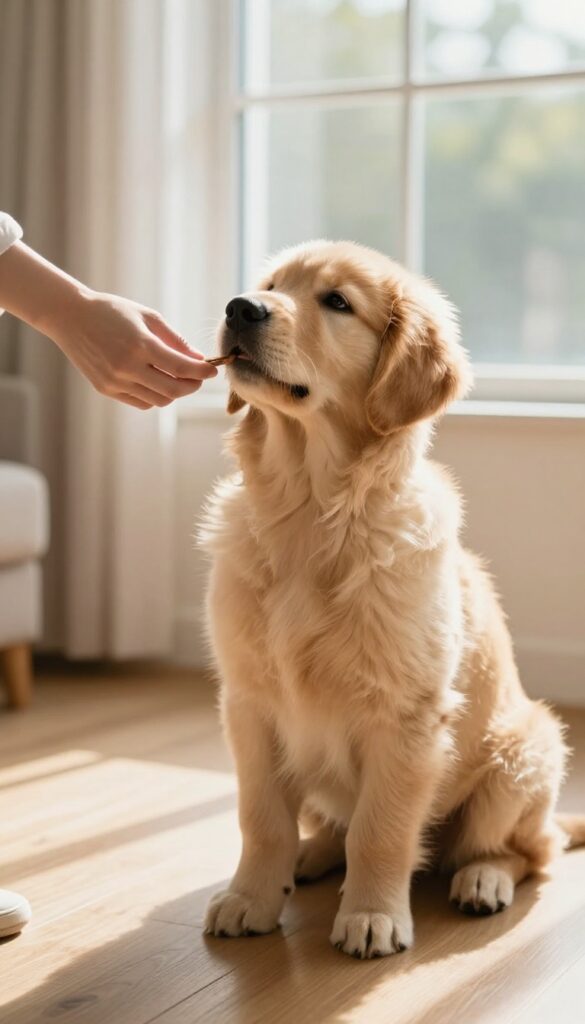
This one is simple but surprisingly powerful. The idea is to make it crystal clear that attention, treats, and greetings only happen when all four paws are touching the ground. Any time a paw leaves the floor, you calmly turn away and pause the interaction.
The 'Four on the Floor' rule works because it removes the payoff for jumping. Puppies jump to get attention, even if that attention is a gentle push or a scolding. By turning away, you're saying, "Jumping gets you nothing.
" When they settle, you reward them with pets or a treat. Consistency is key—everyone in the house and all your guests need to follow the same rule, or your puppy will learn that jumping works sometimes.
How To Start The Rule
Begin in a calm setting with no distractions. Have treats ready and stand in front of your puppy. If they keep all four paws on the floor, say "yes" and give a treat.
If they jump, immediately turn your back and cross your arms. Wait a few seconds, then turn back and try again. Repeat until your puppy realizes that staying grounded is what earns the good stuff.
Involving Guests And Family
Your puppy needs to learn that the rule applies to everyone. Before guests arrive, explain what to do: if the puppy jumps, they should turn away and not engage. You can even practice with a friend who's willing to help.
Over time, your puppy will generalize the behavior—polite greetings become the default, no matter who walks through the door.
Troubleshooting Common Setbacks
If your puppy keeps jumping, check for hidden rewards. Maybe they're getting eye contact or a verbal reaction before you turn away. Also, make sure you're rewarding quickly enough—the treat should come within a second of all four paws being on the floor.
If your puppy is extra excited, try asking for a sit before giving attention, then reward that calm behavior.
4. Manage the Environment with Leashes and Gates
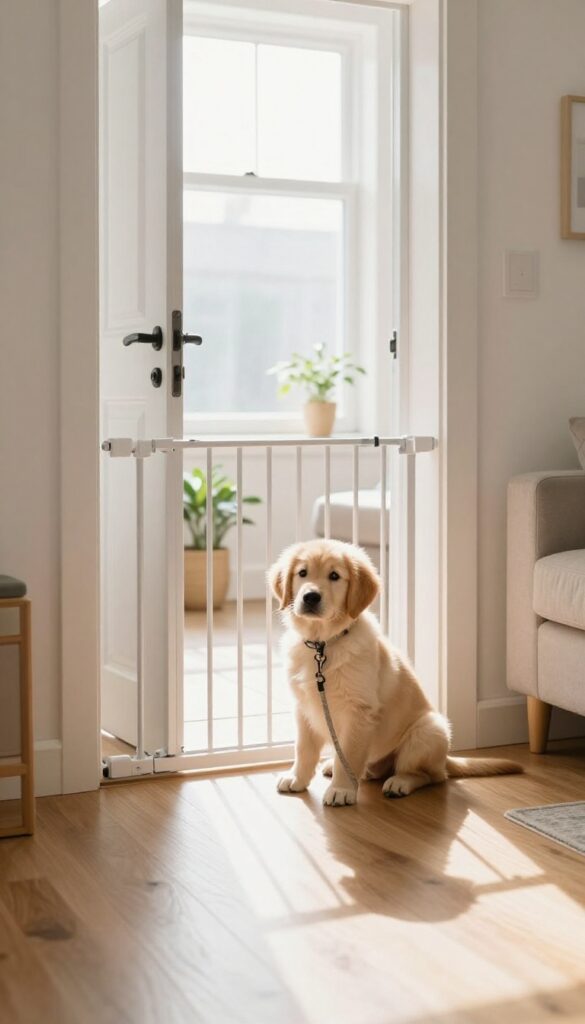
Sometimes the best way to teach your puppy not to jump is to simply make it impossible for them to practice the behavior. Setting up your space with a few simple tools gives you a chance to pause, redirect, and reward the calm behavior you want to see. It’s not about restricting your pup—it’s about giving them a clear path to success.
Using a house line or baby gate is a game-changer, especially during busy times like when guests arrive. These tools let you control the situation without having to wrestle with your puppy or raise your voice. You’ll be amazed at how much easier it is to teach polite greetings when your pup physically can’t jump up.
Why A House Line Works
A house line is simply a lightweight leash that stays attached to your puppy’s collar or harness while they’re indoors. It drags behind them, giving you a way to gently step on it or pick it up when they’re about to jump. This lets you interrupt the behavior calmly and guide them back to a sit or a down without grabbing their collar or pushing them away.
The key is to use it consistently, so your puppy learns that jumping leads to a gentle redirection, not attention.
Setting Up A Gate Zone
Baby gates are perfect for creating a safe space where your puppy can’t reach visitors at the door. Set up a gate a few feet from the entrance, and keep your puppy behind it when guests arrive. This gives you a moment to greet your guests calmly, then let your puppy out on a leash once everyone is settled.
You can also use the gate to practice polite greetings by having your puppy sit behind it before you release them to say hello.
Preventing Rehearsal
Every time your puppy jumps and gets attention—even negative attention—they’re rehearsing the behavior. By managing the environment, you stop that rehearsal in its tracks. Over time, your puppy learns that jumping simply isn’t an option, and they’ll start offering calmer behaviors instead.
This proactive approach is far more effective than trying to correct jumping after it happens.
5. Practice with Mock Greetings
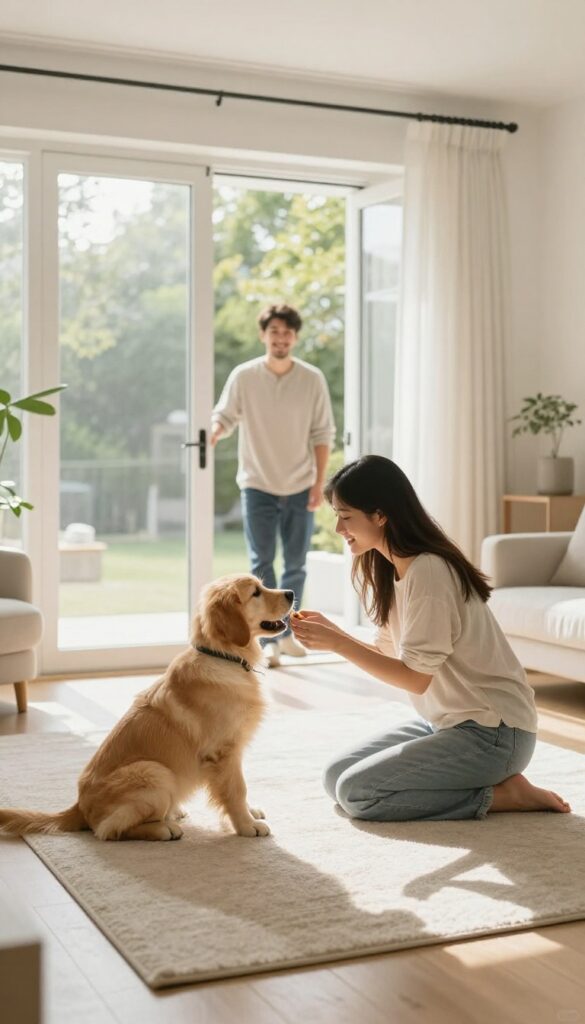
Real-life greetings can be unpredictable, so why not rehearse them first? Setting up mock greetings with family or friends gives your puppy a safe space to learn the routine without the chaos of an actual visitor. It's like a dress rehearsal for good manners, and it works wonders.
Start by having a family member step outside and ring the doorbell or knock. Before you open the door, grab a few high-value treats and ask your puppy to sit. As you open the door, keep your focus on rewarding your puppy for staying seated.
If they jump, calmly close the door and try again. The key is to make the door opening a cue for sitting, not for jumping.
Set Up The Scenario
Choose a quiet time when your puppy isn't overly excited. Have a helper stand outside while you prepare treats. Use a cue like 'sit' or 'wait' before opening the door.
Keep the sessions short—just a few minutes—so your puppy doesn't get overwhelmed or bored.
Reward The Calm
The moment your puppy stays seated while the door opens, mark it with a 'yes' and give a treat. If they jump, simply close the door and wait a few seconds before trying again. Consistency is key.
Over time, your puppy will learn that sitting leads to rewards, and jumping leads to the door closing.
Add Realistic Distractions
Once your puppy gets the hang of it, add small distractions. Have your helper wear a hat or carry a bag, or have them talk in a cheerful voice. This helps your puppy generalize the behavior to real-world situations.
Gradually increase the difficulty as your puppy succeeds.
6. Teach an Incompatible Behavior like 'Go to Mat'
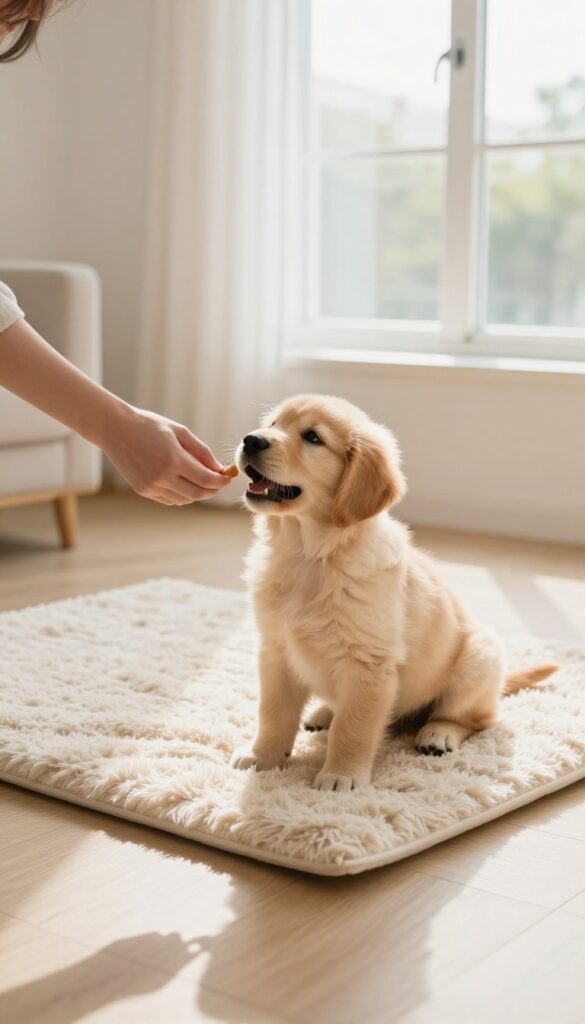
When your puppy is bouncing off everyone who walks in, the simplest fix is to give them a different job. Teaching a solid 'go to mat' cue turns the chaos into a calm, predictable routine. Instead of trying to stop the jump, you're replacing it with something that simply can't happen at the same time.
A mat gives your puppy a clear spot to be when guests arrive. It's not about punishment—it's about giving them a purpose. Once they learn that the mat equals good things, they'll head there on their own, tail wagging, waiting for their reward.
Why A Mat Works So Well
Jumping is a greeting behavior, and your puppy wants attention. A mat gives them a structured way to get it. When they're on the mat, they're not jumping, and you can reward that calm choice.
Over time, the mat becomes a safe zone where good things happen, and your puppy will choose it automatically.
Step-by-step Training
Start by placing a mat in a quiet area. Lure your puppy onto it with a treat, say 'mat', and reward. Repeat until they go to it on their own.
Then add distance and distractions, like having a friend knock on the door. Always reward them for staying until you release them. Keep sessions short and fun—five minutes a few times a day is plenty.
Using It During Real Greetings
When the doorbell rings, send your puppy to their mat before you open the door. Have a treat ready to reward them for staying. If they get up, calmly guide them back without scolding.
With practice, they'll learn that the mat is where they get attention, not at the door. Be consistent, and soon it'll be second nature.
7. Use High-Value Treats for Self-Control
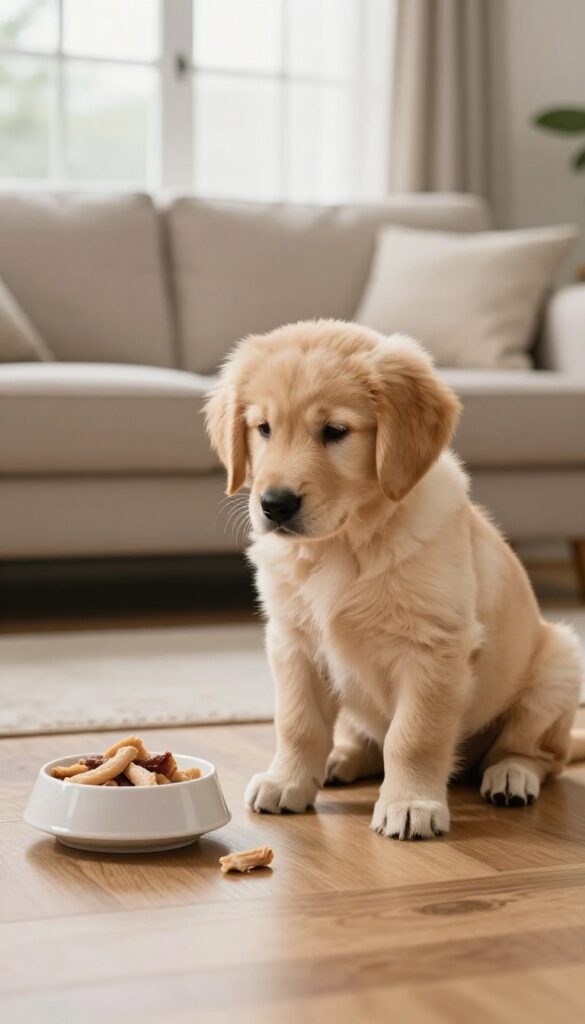
Not all treats are created equal, especially when you're trying to teach your puppy self-control. High-value treats—think tiny pieces of chicken, cheese, or freeze-dried liver—are the secret weapon for capturing your puppy's attention in exciting moments. When your puppy jumps, simply toss a treat on the floor.
This simple action redirects their focus from the person to the ground, giving you a chance to reward calm behavior.
The key is to use treats that your puppy absolutely loves, so they're more compelling than the excitement of greeting. Keep a stash of these special treats in a pouch or bowl near the door. When guests arrive, be ready to toss a treat the moment your puppy's paws leave the ground.
The motion of the treat hitting the floor naturally draws their nose down, and as soon as all four paws are down, you can praise them softly and offer another treat. This turns a chaotic greeting into a simple game of 'find it. '
Why High-value Treats Work
Regular kibble might not cut it when your puppy is super excited. High-value treats are like a secret weapon—they're so delicious that they snap your puppy out of the jumping mindset. The goal is to make the treat more interesting than the person, which is a tall order, but with the right reward, it's totally doable.
How To Toss Treats Effectively
Toss the treat a few feet away from your puppy, not right at their feet. This gives them a moment to move, sniff, and calm down. As they eat the treat, they're not jumping.
After they finish, they may look back at you, and if they stay calm, reward them again. This reinforces the idea that calm behavior earns treats.
Timing Is Everything
The treat must be tossed at the exact moment your puppy jumps. If you wait even a second, you might accidentally reward the jump. Practice with a friend or family member as a 'guest' to get the timing down.
With repetition, your puppy will learn that jumping makes the treat appear, but only when they're on the floor do they get to eat it.
8. Turn Your Back and Withdraw Attention
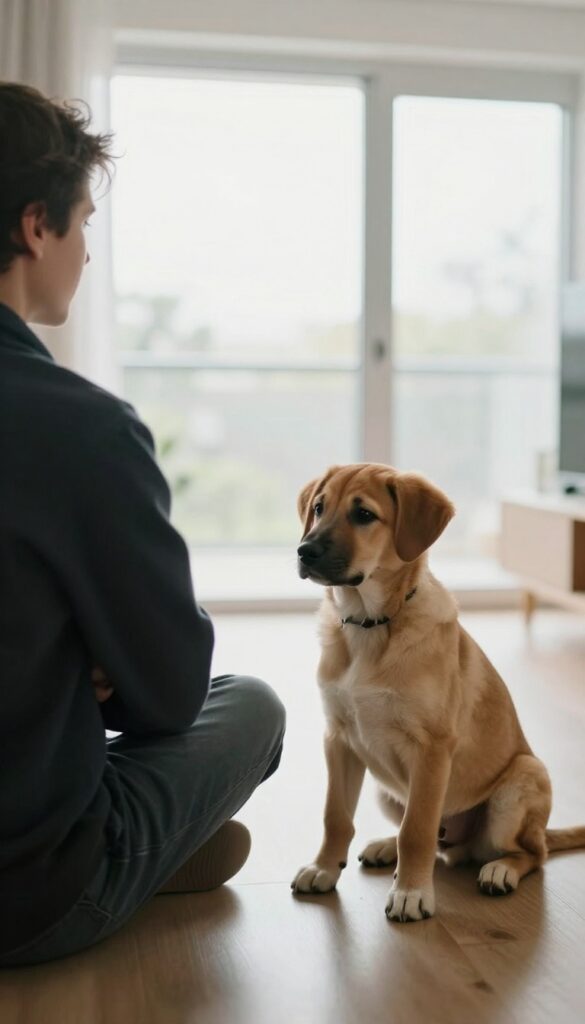
When your puppy jumps, the most powerful tool you have is your attention. They crave it, and when you give it to them mid-leap, you accidentally reinforce the behavior. Turning away and crossing your arms sends a clear message: jumping makes you disappear.
This method works because it removes the reward—your face, your voice, and your energy. It’s not about being mean; it’s about being consistent. Once your puppy has all four paws on the floor, you can turn back and offer the attention they wanted all along.
The key is to act like a statue. The moment your puppy’s paws leave the ground, turn your body away, cross your arms, and look up or to the side. Don’t say a word, don’t make eye contact, and don’t push them off.
Just become completely uninteresting. When your puppy settles—even for a split second—turn back, say “good, ” and give them a treat or a gentle pet. If they jump again, repeat the turn.
This teaches them that calmness is what brings you back, not jumping.
Why This Works So Well
Dogs are social creatures, and your attention is one of their biggest rewards. When you give them a reaction—even a negative one like shouting or pushing—they still get what they want: your focus. Turning away removes that completely, so jumping becomes pointless.
It also helps your puppy learn impulse control. They start to realize that staying calm gets them closer to you, while jumping pushes you away. Over time, they’ll choose the behavior that works.
How To Do It Right
Timing matters. Turn away the instant your puppy jumps, not after they’ve already landed. Stay turned until they stop jumping and are calm.
If they circle around and jump again, just turn the other way. Stay consistent. Once they’re calm, reward them quickly.
If they jump again, repeat the process. It might feel repetitive, but that’s how they learn. Keep sessions short and positive, and always end on a calm note.
Common Mistakes To Avoid
One big mistake is turning back too soon. If you reward your puppy while they’re still bouncing, they’ll think jumping sometimes works. Wait for that moment of calm—even if it’s just a second.
Another mistake is using this method inconsistently. If you sometimes push them down or talk to them when they jump, they’ll get confused. Everyone in the family needs to follow the same rule: no attention for jumping, full attention for calm paws.
9. Keep Greetings Low-Key and Calm
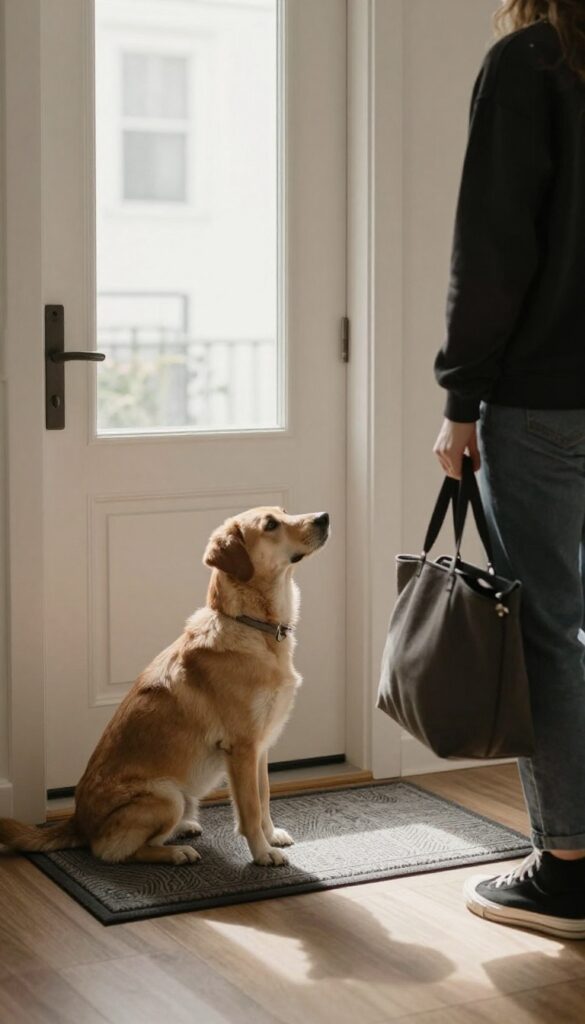
Think about how you feel when someone walks in the door shouting your name with arms wide open. Exciting, right? Now imagine that energy times ten—that's what your puppy experiences when you and your guests make a big fuss at the door.
High-energy greetings send a clear signal: this is party time, and jumping is the dance move. The fix is simpler than you might think. Dial down the drama.
When you or your guests arrive, keep your voice low, your movements slow, and your attention on the puppy only when they're calm. This sets a tone that says, "Hello is a quiet moment, not a wrestling match. "
A calm greeting doesn't mean ignoring your puppy—it means changing the energy of the interaction. Puppies are masters at reading our body language and tone, so if you act like a tornado, they'll spin like one. By staying relaxed, you give your puppy a clear example of how to behave.
Here's how to put this into practice without making greetings feel cold or awkward.
Lower Your Voice, Not Your Expectations
When you walk in, resist the urge to squeal or talk in a high-pitched, excited tone. Instead, speak in a soft, low, matter-of-fact voice. Say something like "Hey, pup" without making eye contact or reaching for them.
This might feel unnatural at first, but it works wonders. Your puppy will quickly learn that calm behavior gets your attention, while wild antics get nothing. If your puppy starts jumping, turn away and stay quiet.
Only when all four paws are on the floor do you give them a gentle pat or a treat. This consistency helps them connect the dots: calm = reward, jumping = no reaction.
Keep Your Body Language Neutral
Your body language speaks louder than words. When you greet your puppy, avoid leaning over them, making direct eye contact, or waving your hands—these all read as invitations to play. Instead, stand up straight, keep your hands at your sides, and look slightly away.
This neutral posture signals that you're not ready to engage until they're composed. If your puppy still jumps, simply take a step back. This removes the attention they're seeking and gives them a chance to reset.
Once they sit or stand quietly, you can reward them with a calm "good" and a treat.
Coach Your Guests To Do The Same
Your family and friends might not know your rules, so give them a quick heads-up before they arrive. A simple text like, "Hey, when you come in, please ignore the puppy until she's calm. We're working on no jumping!
" works great. You can even post a small note by the door as a reminder. When guests arrive, greet them yourself first, then guide them to ignore the puppy if they jump.
If your puppy stays calm, have the guest offer a treat from a closed fist or a gentle scratch under the chin. This way, your puppy learns that polite greetings are the only way to get attention from anyone who comes in.
10. Exercise and Mental Stimulation Before Visitors
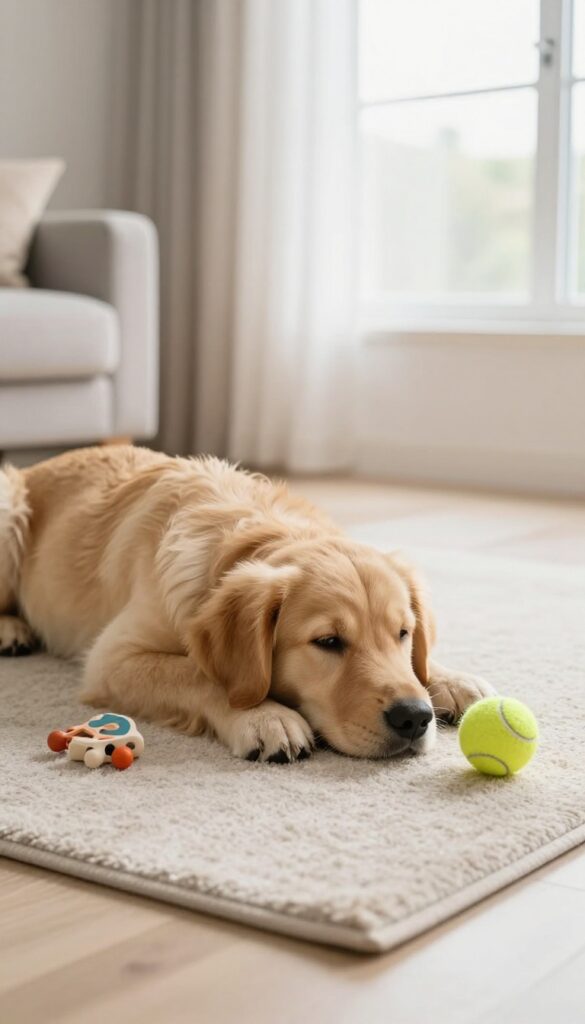
A tired puppy is a polite puppy. When your pup has already burned off that extra zoomies energy, they're far less likely to launch themselves at your guests. It's a simple equation: less pent-up energy equals calmer greetings.
Why A Tired Puppy Behave Better
Puppies are bundles of energy, and if they don't get an outlet, that energy comes out in the most enthusiastic (and sometimes annoying) ways—like jumping. A good workout before visitors arrive helps them feel more relaxed and less reactive. When they're physically tired, they're more likely to greet guests with a sniff and a wag instead of a leap.
The Right Kind Of Exercise
Not all exercise is equal. A gentle stroll around the block might not be enough for a high-energy breed. Instead, aim for activities that really tire them out: a game of fetch in the yard, a brisk walk, or even a short run if your puppy is old enough.
The goal is to get them panting and ready for a nap, not just slightly less bouncy.
Mental Stimulation: The Secret Weapon
Physical exercise is great, but mental challenges can be even more exhausting. Try a puzzle toy stuffed with treats, a short training session, or a game of hide-and-seek with their favorite toy. These activities engage their brain, which tires them out just as effectively as a long walk.
When your puppy's mind is busy, they're less focused on greeting guests with a jump.
Timing It Right
The key is to exercise your puppy about 15–20 minutes before your guests arrive. This gives them time to cool down and settle. If you do it too early, they might bounce back; too late, and they'll be overstimulated.
A quick potty break after the exercise is also a good idea, so they're comfortable and ready to greet without any accidents.
11. Use a 'Touch' Cue to Redirect
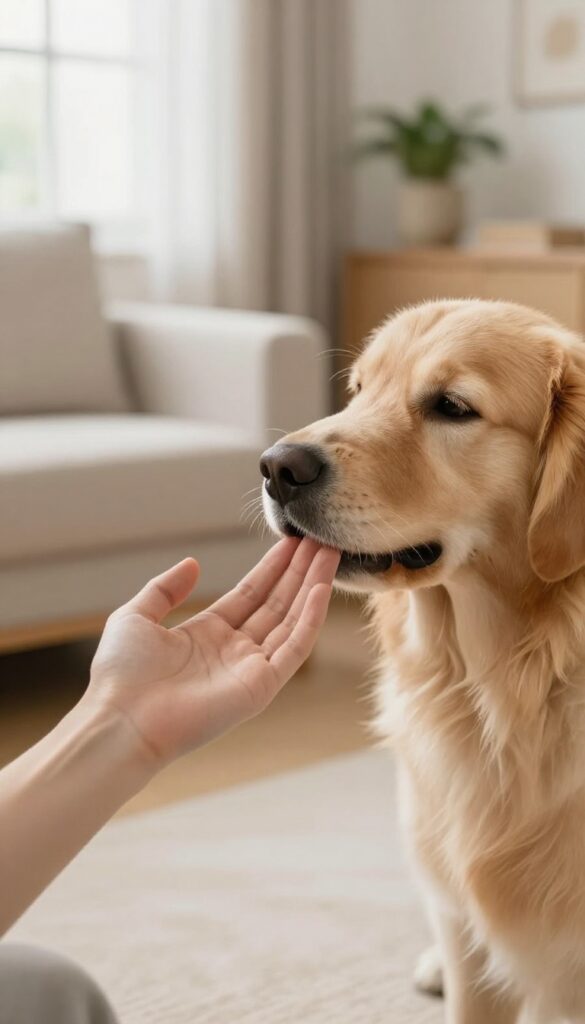
Sometimes the best way to stop a behavior isn't to fight it—it's to give your puppy something better to do. A simple nose-to-hand touch can become your secret weapon for redirecting that jumpy energy. Once your puppy learns this cue, you can use it in the heat of the moment to guide them into a calmer, more focused state.
Teaching your puppy to touch your hand with their nose is one of the most versatile cues you can have. It's easy to teach, fun for your puppy, and instantly useful in real-life situations. When your puppy starts to jump, you can present your hand and ask for a touch.
This shifts their attention away from the person they're greeting and onto a simple, rewarding action. The beauty of the touch cue is that it's a positive, gentle way to interrupt jumping without any harsh corrections. It gives your puppy a clear job to do, and it's nearly impossible to jump and touch your hand at the same time.
How To Teach The Touch Cue
Start by holding a treat in your closed fist and let your puppy sniff it. The moment their nose bumps your hand, say 'yes' and open your hand to give them the treat. Repeat this a few times until they're eagerly bumping your hand.
Then, present your open palm without a treat and say 'touch. ' When they nose your hand, mark and reward. Practice in short, fun sessions until your puppy reliably touches your hand on cue.
Using Touch In Real-life Moments
Once your puppy knows the cue, you can use it whenever they're about to jump. When the doorbell rings or a guest walks in, calmly present your hand and ask for a touch. Your puppy will focus on your hand instead of launching at the person.
Reward them with a treat and gentle praise. Over time, your puppy will learn that touching your hand is a more rewarding way to greet than jumping.
Tips For Success
Keep training sessions short and positive. Use high-value treats that your puppy loves. Be consistent—use the touch cue every time your puppy starts to jump.
And remember to reward even small efforts. If your puppy is too excited to focus, practice the touch cue in calmer settings first, then gradually add distractions. With patience, this simple cue can become a reliable way to keep all four paws on the floor.
12. Enlist Guests to Help with Training
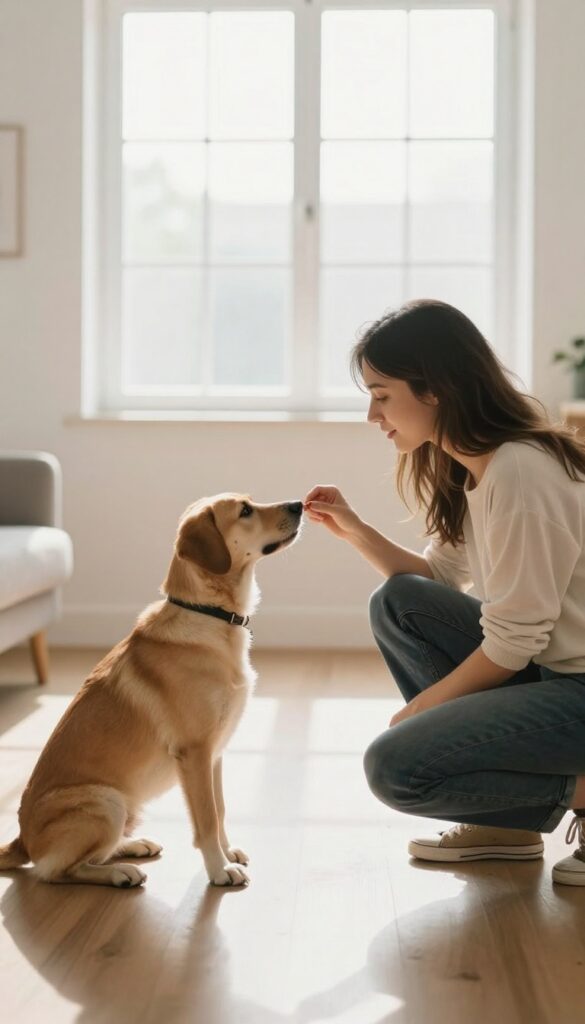
Training your puppy to greet politely isn't a solo mission—it takes a village, or at least a few cooperative visitors. When guests understand the rules and play their part, your puppy gets consistent feedback instead of mixed signals. That's where real progress happens.
The key is making your guests part of the solution, not the problem. Most people naturally want to pet a bouncing puppy, but that just rewards the jump. By giving them clear instructions and a few treats, you turn every visitor into a training partner who reinforces calm behavior.
Set Guests Up For Success
Before anyone rings the bell, have a quick chat about the game plan. Let them know you're teaching your puppy to keep all four paws on the floor, and that the best response is to ignore jumping completely. It helps to keep a small bowl of treats near the door so guests can grab one without fumbling.
If your puppy is extra excited, ask guests to step outside or turn their back until the wiggling stops.
Reward The Calm, Not The Chaos
When your puppy finally settles—even for a second—that's the moment for a treat and gentle praise. Have guests drop a treat on the floor or offer it from a lowered hand so your puppy stays grounded. The timing matters: the reward should happen while all four paws are down, not after a jump.
This teaches your puppy that calm greetings are what earn attention and goodies.
Make It A Team Effort
Consistency is everything, so ask guests to follow the same routine every time they visit. If your puppy jumps, they should turn away and ignore until the paws hit the floor again. Over time, your puppy will learn that jumping gets zero reaction, while sitting or standing calmly gets all the love.
Don't forget to thank your helpers—training is easier when everyone's on the same page.
13. Be Patient and Consistent
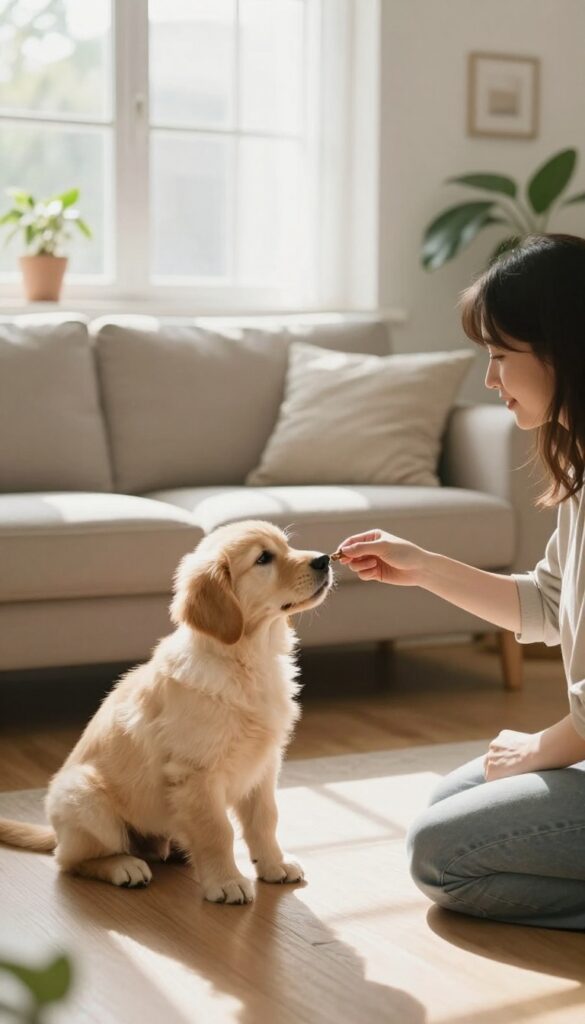
Training your puppy to stop jumping isn't a one-time fix—it's a gradual process that requires patience and consistency from everyone in the household. If you're feeling frustrated, remember that your puppy isn't trying to be difficult; they're just learning. Celebrate the small wins, like when they sit instead of jump, and keep each training session short and positive.
With time, your puppy will understand what you expect, and the jumping will fade away.
Consistency is the secret ingredient in any training plan. If one person lets your puppy jump up for a cuddle and another scolds them, your puppy gets mixed signals. To make real progress, everyone who interacts with your puppy needs to follow the same rules.
That means the whole family, and even regular visitors, should respond to jumping the same way—by turning away, ignoring the behavior, and rewarding calm greetings. It might feel repetitive, but repetition is exactly what helps your puppy learn.
Why Consistency Matters
Dogs thrive on predictable routines. When your puppy gets the same reaction every time they jump, they quickly learn that jumping doesn't get them attention. But if one person gives in and pets them, it reinforces the behavior.
Consistency also builds trust—your puppy knows what to expect, which reduces their anxiety and makes them more confident. So, gather your household and agree on a simple plan: no attention for jumping, plenty of praise for four paws on the floor.
How To Stay Patient During Setbacks
There will be days when your puppy seems to forget everything they've learned. That's normal. Instead of getting frustrated, take a deep breath and remind yourself that training is a marathon, not a sprint.
Short, frequent sessions work better than long, stressful ones. If you feel your patience wearing thin, end the session on a positive note with a simple command your puppy knows well, like 'sit. ' This way, you both finish feeling successful.
Celebrating Small Wins
Every time your puppy chooses to sit instead of jump, that's a victory worth celebrating. A happy 'yes! ' and a treat go a long way in reinforcing the behavior you want. Keep a mental note of their progress—maybe they jumped less today than yesterday, or they waited a few seconds longer before launching.
These small steps add up, and recognizing them keeps you motivated and your puppy eager to learn.
FAQ
Why does my puppy jump on everyone?
Puppies jump to greet and get attention. It's a natural behavior, but with consistent training, they can learn more polite ways to say hello.
How long does it take to stop puppy jumping?
It varies, but with consistent training, most puppies show improvement within a few weeks. Some may take longer, especially if the behavior has been reinforced.
Is it okay to use a spray bottle or physical punishment?
No. Punishment can increase anxiety and damage trust. Positive reinforcement and management are more effective and kind.
What should I do if my puppy jumps on a child?
Supervise interactions and teach children to turn away and ignore jumping. Reward your puppy for calm behavior around kids.
Can older dogs learn to stop jumping too?
Yes, older dogs can learn new behaviors, but it may take more patience. The same positive training methods work for dogs of any age.
Conclusion
Jumping is often your puppy's way of saying hello, so the goal isn't to stop the excitement—it's to channel it. By consistently rewarding four-on-the-floor greetings and calmly removing attention when paws leave the ground, you're teaching your pup that politeness pays off. Every family member and guest who follows the same rules helps your puppy learn faster.
Don't expect perfection overnight; celebrate the small wins and keep practice sessions relaxed. With time and patience, you'll have a dog who greets everyone with a wagging tail instead of a leap.

I’m Pallab Kishore, the owner of Little Pets Realm — an animal lover and pet care enthusiast sharing easy tips, healthy recipes, and honest advice to help every small pet live a happy, healthy, tail-wagging life.