
Last updated on August 19th, 2026 at 04:14 pm
A mat can be more than just a spot for down-stays—it can become your dog's favorite place to unwind. If your pup struggles to settle, these 15 games turn the mat into a calm, rewarding zone.
Each activity is simple, positive, and builds relaxation step by step. You'll find playful ways to teach quiet behavior without turning training into a battle.
Whether you're dealing with a hyper puppy or an anxious adult, these games offer a gentle path to peace. Grab some treats, lay out the mat, and let the calm begin.
1. Treat Toss and Settle
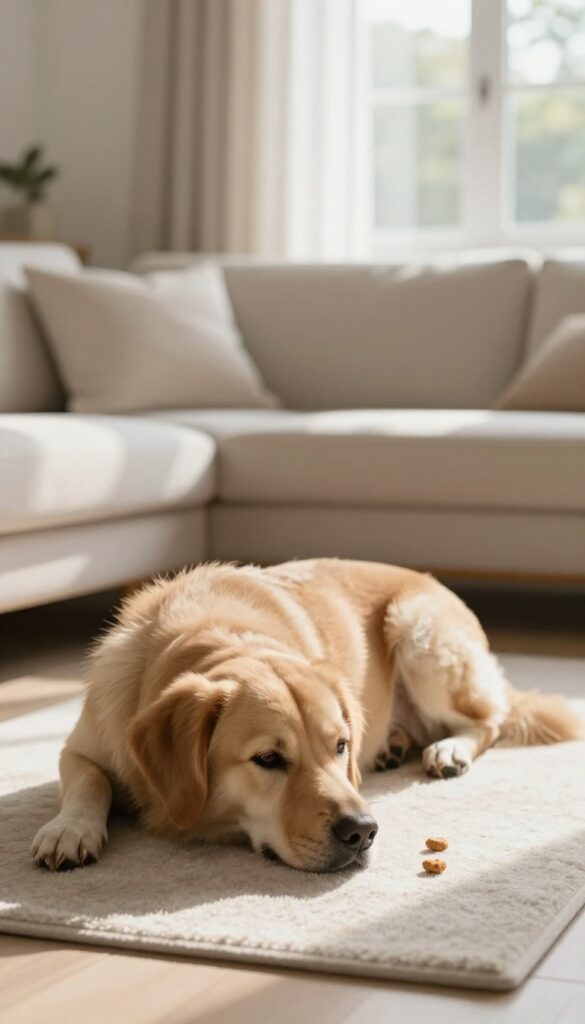
This game turns the mat into a magnet. You toss a treat a few feet away, let your dog grab it, then lure them back with another treat. The moment their paws hit the mat, reward and encourage a settle.
It's simple, but it teaches your dog that the mat is a place for good things and calm behavior.
Start with your dog on a leash or just nearby. Toss a treat a short distance away, letting your dog chase and eat it. As they turn back, show another treat and guide them onto the mat.
The instant they step on, say 'yes' and give the treat. Then, with a slow hand motion, lure them into a down or sit on the mat. Reward that settled position with a few more treats, one at a time, to build duration.
Repeat this sequence several times, gradually increasing the time your dog stays on the mat before the next toss. This game reinforces the mat as a rewarding base, making it a natural spot for relaxation.
Why It Works
The toss-and-return pattern creates a fun loop that keeps your dog engaged. Each return to the mat is rewarded, so the mat becomes associated with positive outcomes. Over time, your dog will start to settle on their own because they learn that calm behavior on the mat leads to good things.
Pro Tips For Success
Use high-value treats that your dog loves, and keep sessions short—just a few minutes at a time. If your dog is too excited, toss the treat farther away to burn off energy before returning. Always reward the settle, not just the step onto the mat, to encourage relaxation.
2. The Name Game on the Mat
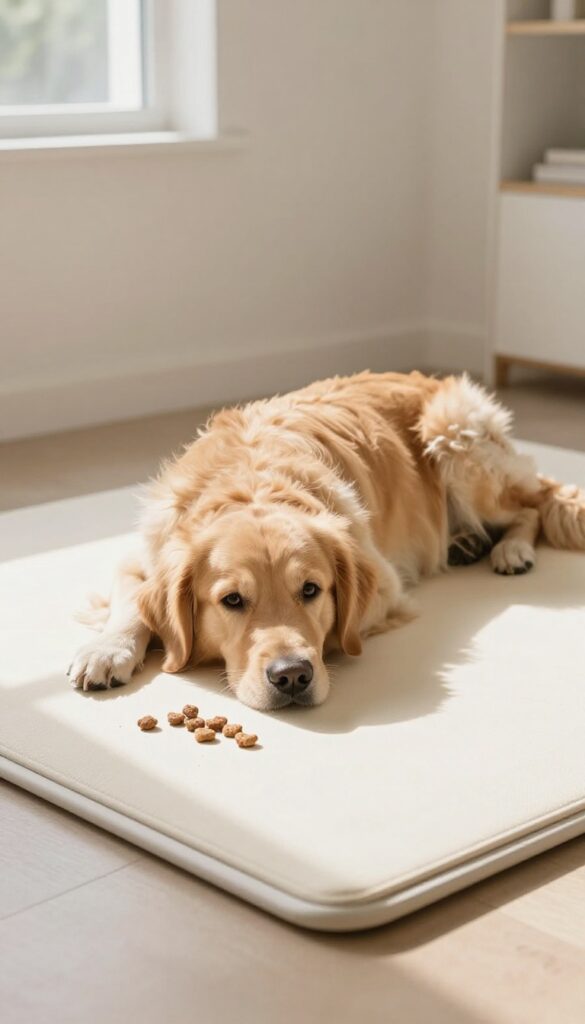
This simple game uses your dog's name as a cue to check in with you, turning the mat into a place of positive connection. It's a gentle way to build attention and calm, perfect for dogs that get distracted or anxious.
Start with your dog on or near the mat. Say their name in a happy, upbeat tone. The moment they look at you, mark with a click or a word like "yes" and toss a treat onto the mat.
Repeat this several times, then gradually increase the distance between you and the mat.
Why It Works
This game pairs your dog's name with a rewarding outcome, making them more likely to respond calmly. It also reinforces the mat as a safe, positive space, which helps with relaxation.
Progression Tips
Start close to the mat, then move a few steps away. Use a variety of treats to keep it exciting. If your dog ignores you, try a more enthusiastic tone or a higher-value treat.
Troubleshooting
If your dog doesn't look at you, try saying their name when they're already looking your way. If they're too excited, practice after a short walk or play session to help them settle.
3. Mat Zen with a Chew
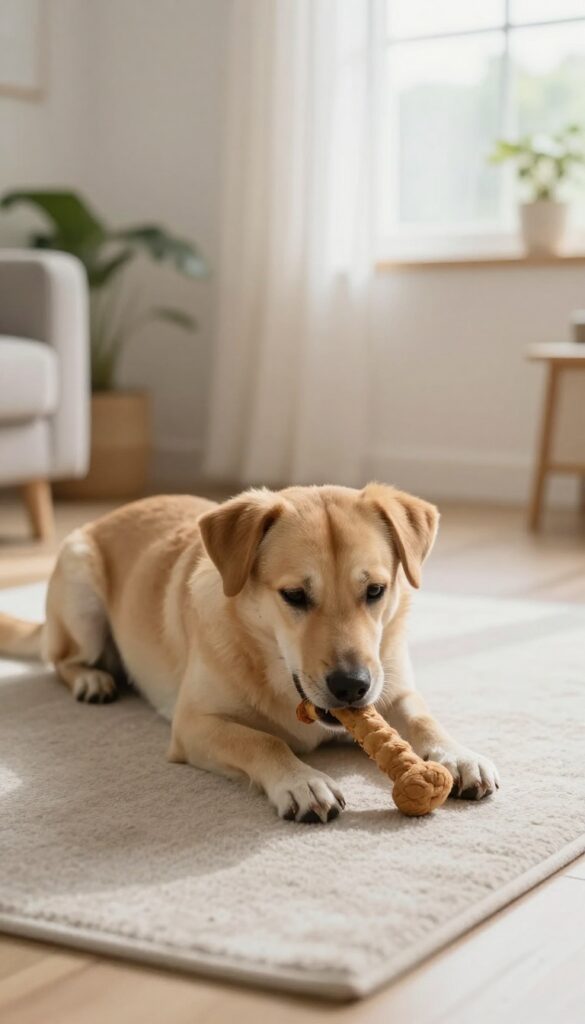
Some dogs need a little extra help to switch off. Giving them something to chew can be the perfect anchor. This game pairs the mat with a long-lasting chew or stuffed Kong, turning it into a spot for deep, quiet focus.
When your dog chews, their brain releases feel-good hormones that naturally promote calm. By offering a chew only on the mat, you're teaching them that this spot equals relaxation. Over time, just lying on the mat can trigger that same peaceful state, even without the treat.
Choose The Right Chew
Pick something that lasts a while but isn't too hard. A stuffed Kong, a bully stick, or a frozen carrot works well. Avoid anything that could break into sharp pieces.
The goal is to keep your dog engaged and content, not frustrated.
Set The Scene
Lay out the mat in a quiet corner away from distractions. Have your dog lie down, then place the chew in front of them. Let them enjoy it without any interruptions.
This is their special time to unwind.
Gradually Phase It Out
After a few weeks, start offering the chew less often. Sometimes give an empty mat instead. Your dog will begin to associate the mat itself with calmness, so they'll settle even without a treat.
Keep it positive and never force it.
4. The Calm Greeting Game
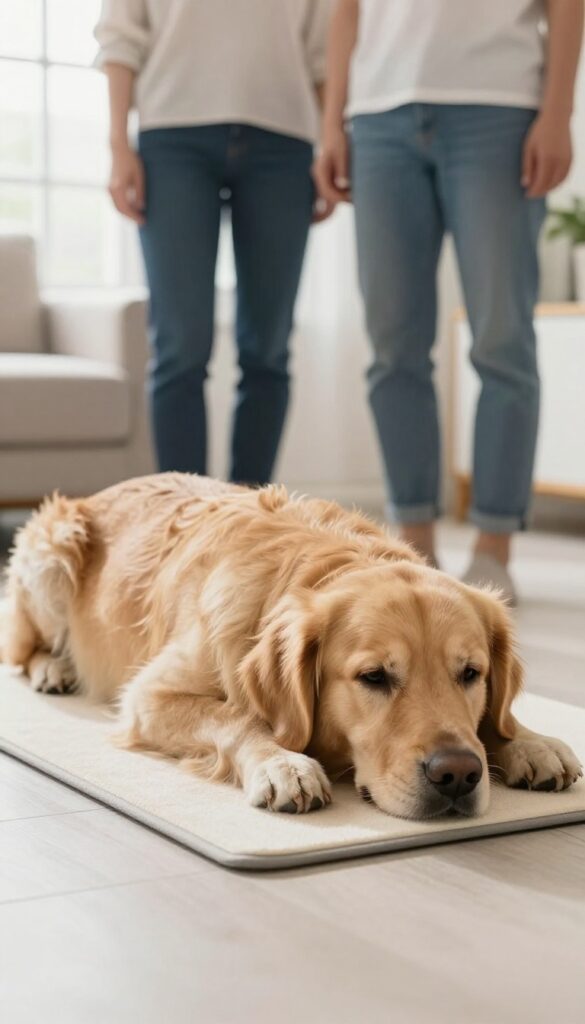
Dogs often get excited when visitors arrive, which can make it hard for them to stay relaxed on their mat. This game flips that excitement into a chance for calm. By practicing with a friend, your dog learns that staying put leads to good things—like treats and attention—while getting up sends the fun away.
The Calm Greeting Game is a simple but powerful way to teach your dog that remaining relaxed on the mat is the best way to make good things happen. It uses real-life scenarios to build impulse control and helps your dog associate visitors with calm behavior rather than chaos.
Set Up For Success
Start with your dog on the mat and your friend at a distance. Have a handful of treats ready. Ask your friend to approach slowly.
The moment your dog stays relaxed—even for a second—mark it with a treat. If your dog gets up, your friend turns and walks away. This teaches your dog that calm keeps the visitor close, while excitement sends them away.
Gradually Increase The Challenge
Once your dog stays relaxed as your friend approaches, you can make the game harder. Have your friend walk closer, talk softly, or even knock on the door. Each time, reward calm behavior.
If your dog breaks the stay, your friend retreats. This step-by-step approach builds a strong foundation without overwhelming your pup.
Make It A Real-life Habit
The real magic happens when you use this game during actual visits. Ask friends to follow the same rule: if your dog stays on the mat, they get a treat and gentle attention. If they get up, the friend ignores them and walks away.
Over time, your dog will learn that staying on the mat is the fastest way to earn greetings and treats.
5. Mat Stay with a Twist
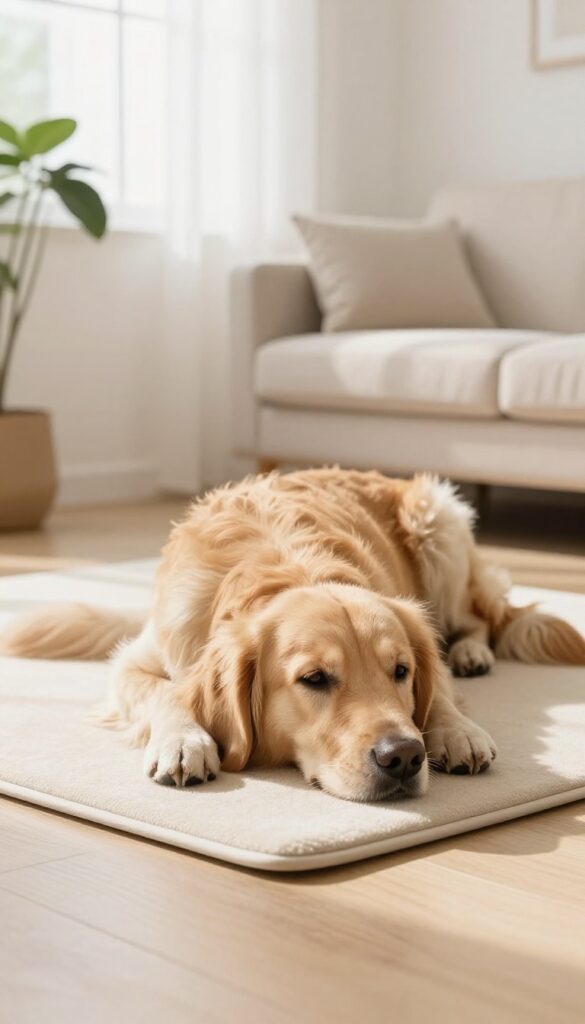
Once your dog has the basics of a mat stay, it's time to add a little movement. This game builds impulse control by teaching your pup to hold still even when you step away. The twist?
You'll gradually increase the challenge, turning a simple stay into a powerful relaxation exercise.
Start with your dog on a down-stay on the mat. Take one small step back, then immediately return and reward. Repeat this several times, then gradually increase the distance and the time you're away.
The key is to keep sessions short and successful, so your dog learns that staying put leads to good things.
Why This Works
This game directly targets impulse control. By asking your dog to remain on the mat while you move, you're teaching them to resist the urge to follow you. This builds mental calm and reinforces that the mat is a safe, rewarding place to be.
How To Increase Difficulty
Once your dog is comfortable with a few steps, try moving to different spots in the room, or even stepping out of sight for a second. You can also vary the duration, asking for longer stays before you return. Always return before your dog breaks the stay, so they succeed more often than they fail.
Troubleshooting Common Issues
If your dog gets up before you return, you've moved too far or waited too long. Go back to an easier step and build up more gradually. If your dog seems anxious, keep the game short and upbeat, ending on a high note with a big reward.
6. The Mat Is a Magic Carpet
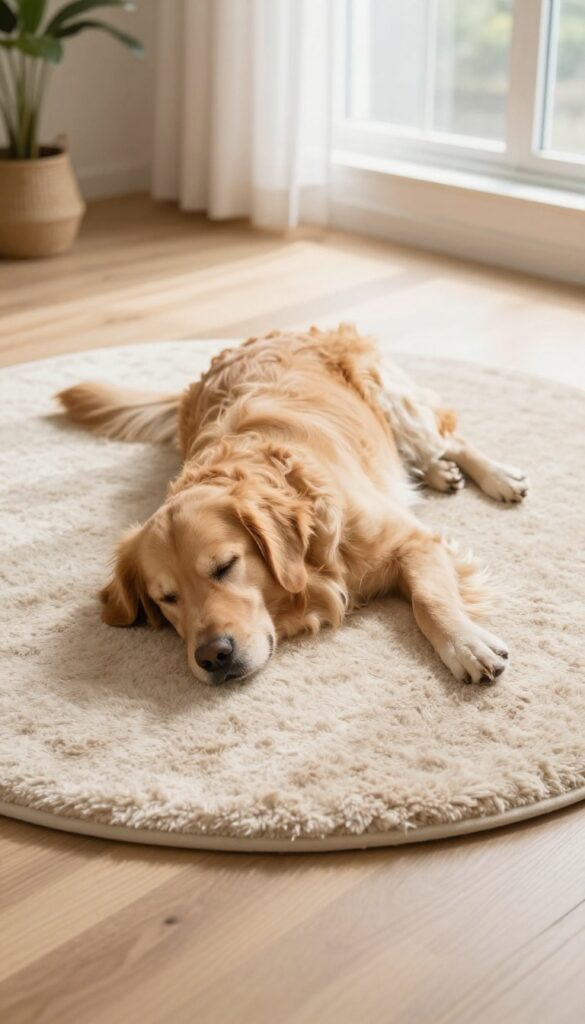
What if your dog's mat could work anywhere, not just in the living room? This game turns the mat into a portable calm zone that your pup can rely on no matter where you are. By moving the mat to different spots, you teach your dog that the mat itself is the cue to relax—not the location.
Start in a familiar room with your dog on the mat. Once they're settled, give a treat. Then, pick up the mat and move it a few feet away.
Invite your dog to follow and sit on it again. Reward each calm stay. Gradually increase the distance and change rooms.
The goal is for your dog to see the mat as their own magic carpet—wherever it lands, calm follows.
Why Moving The Mat Works
Dogs learn by association. If the mat only appears in one spot, they might think that spot is what triggers calm. By moving the mat, you help your dog understand that the mat itself is the safe space.
This is especially useful for travel or visits to the vet—your dog can settle anywhere the mat goes.
How To Make The Moves Fun
Keep the game light and positive. Use a cheerful voice and treat every time your dog steps onto the mat in a new location. You can even make a little ceremony of it—say 'magic carpet' and glide the mat across the floor.
Your dog will start to look forward to the adventure of finding their calm spot.
Taking It On The Road
Once your dog is comfortable with moves inside the house, try taking the mat outside. Start with a quiet backyard, then move to a park bench or a friend's porch. Each new environment is a chance to reinforce that the mat is a reliable place to relax.
Always reward calm behavior, even if it's just for a few seconds at first.
7. Treat Scatter on the Mat
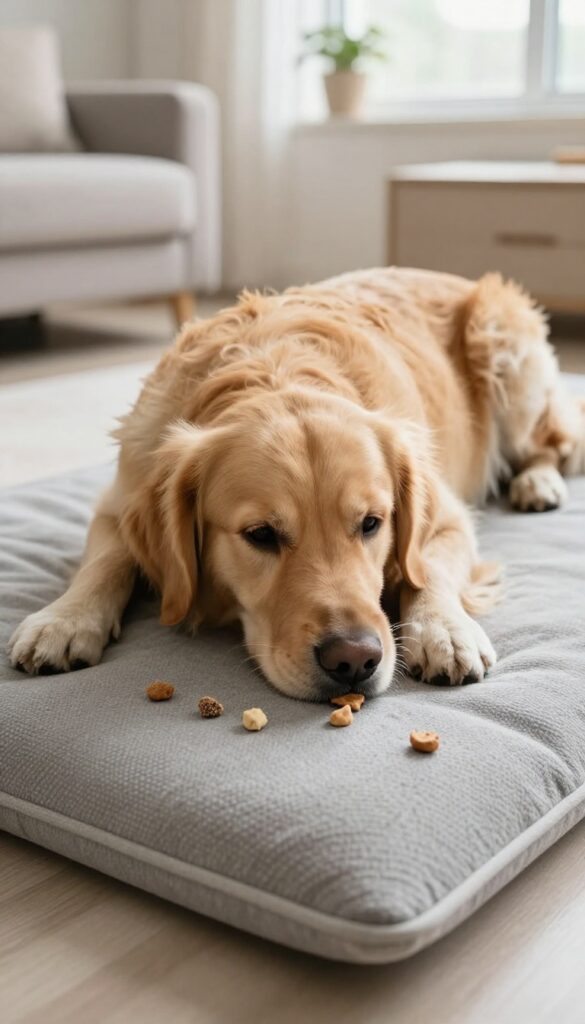
Scatter a handful of small, smelly treats on the mat and let your dog sniff them out. This simple activity turns the mat into a treasure hunt, encouraging slow, focused sniffing that naturally lowers heart rate and promotes calm. It's a great way to tire out a busy brain without physical exertion.
Sniffing is a natural stress reliever for dogs. It engages their brain in a soothing, repetitive way, similar to how a puzzle might relax a human. By scattering treats, you invite your dog to use their nose in a controlled, mat-specific context, which helps them associate the mat with peaceful, rewarding work.
Why Sniffing Calms
When dogs sniff, their breathing slows and their heart rate drops. This physiological response triggers a relaxation response, making sniffing an excellent tool for anxious or hyperactive dogs. By pairing sniffing with the mat, you're teaching your dog that the mat is a place to unwind.
How To Scatter Treats
Start with a few high-value treats like small pieces of cheese or liver. Scatter them loosely on the mat, letting your dog watch. Encourage them to find each piece with a cheerful 'find it! ' As they get the hang of it, you can hide treats in the mat's folds or under a light towel to increase the challenge.
Make It A Game
Turn treat scattering into a mini-game by tossing a handful of treats onto the mat and letting your dog sniff them out. You can gradually increase the number of treats or use a snuffle mat for more complexity. This game is perfect for rainy days or when you need a few minutes of quiet.
8. The Mat Puzzle
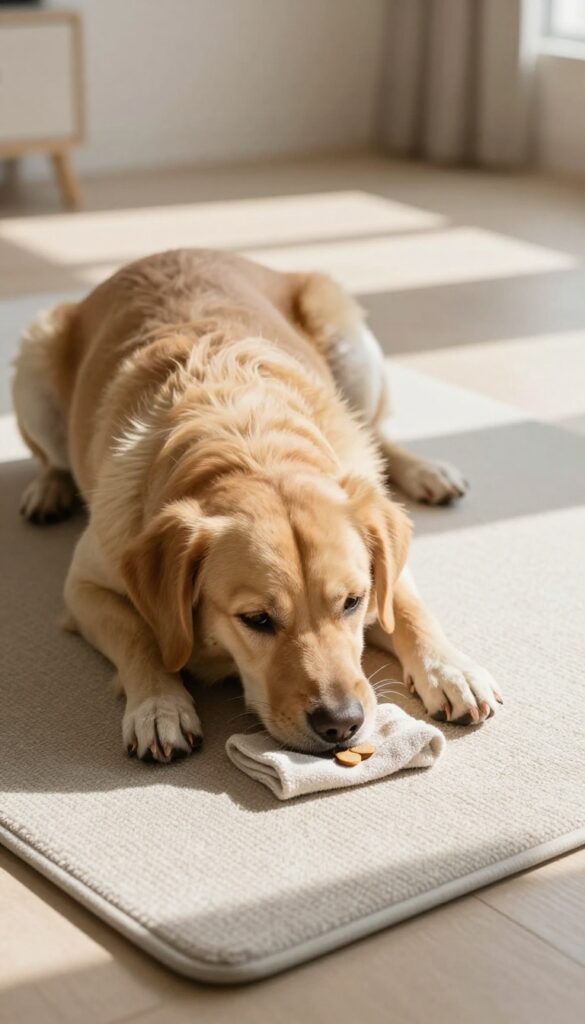
When your dog needs a mental workout that also keeps them physically still, the Mat Puzzle is a winner. It combines the calm of the mat with the focus of a food puzzle, giving your pup a job that requires patience and problem-solving. The result?
A tired, content dog who's happy to relax.
The Mat Puzzle turns your dog's mat into a mini treasure hunt. By hiding treats or kibble under a towel, inside a rolled-up blanket, or in a puzzle toy, you encourage your dog to use their nose and paws to find the goodies. This engages their brain, which is just as tiring as physical exercise, and because the mat is the designated puzzle zone, they'll start to associate it with calm, focused activity.
Getting Started
Start simple. Place a few high-value treats on the mat and let your dog find them easily. Then, cover the treats with a lightweight towel and encourage your dog to nudge or paw at it to reveal the treats.
Keep sessions short and positive, and always supervise to ensure your dog doesn't ingest any fabric or toy parts.
Leveling Up The Challenge
Once your dog gets the hang of it, increase the difficulty. You can fold the towel into layers, roll it up like a burrito, or use a puzzle toy designed for dogs. You can also scatter treats in a snuffle mat, which is a mat with fabric strips designed for hiding treats.
The key is to make the puzzle challenging but not frustrating, so your dog stays engaged and relaxed.
Why It Works For Relaxation
Mental stimulation is a powerful tool for calming a hyperactive dog. When your dog focuses on solving a puzzle, their heart rate slows, and they become more settled. The mat becomes a place of concentration and reward, which naturally encourages them to lie down and stay put.
Plus, the effort of sniffing and problem-solving releases endorphins, promoting a sense of well-being.
9. Mat and Down Combo
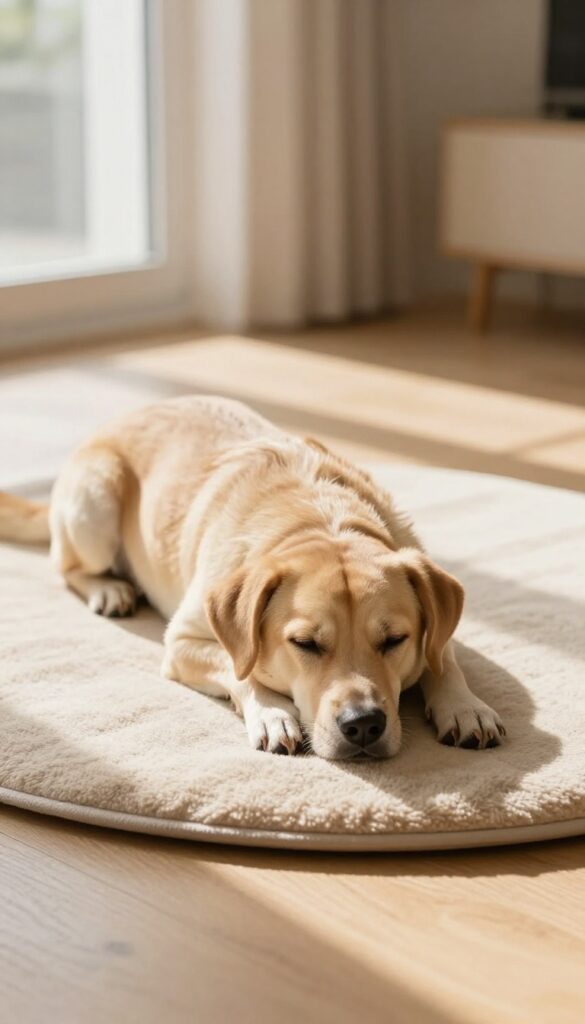
Pairing the mat with a down position can work wonders for building calm, especially if your dog tends to stay on their feet. The simple act of lowering their body often signals the brain to relax. This game makes that connection automatic and rewarding.
The Mat and Down Combo is all about linking the mat with a relaxed, down posture. Instead of asking for a down and then treating anywhere, you'll specifically reward the down that happens on the mat. This teaches your dog that the mat is where good things happen when they're lying down quietly.
Over time, they'll start offering the down on their own, which is the ultimate goal.
Start With The Mat
Begin by having your dog stand or sit on the mat. Use a treat to lure them into a down position, or simply wait for them to lie down naturally. The moment their elbows touch the mat, mark it with a 'yes' and give a treat at nose level.
This keeps their head low and encourages a relaxed posture.
Add Duration Gradually
Once your dog is consistently lying down on the mat, start delaying the treat by a second or two. This builds patience. If they pop up, just restart and try again with a shorter delay.
The key is to reward before they break the down, so they learn that staying down is what earns the treat.
Use A Release Cue
To make the behavior clear, add a release cue like 'free' or 'okay' when you want them to get up. This teaches them that the down is a choice, not a trap. Always release them before they get restless, and keep sessions short and positive.
10. The Mat as a Cue
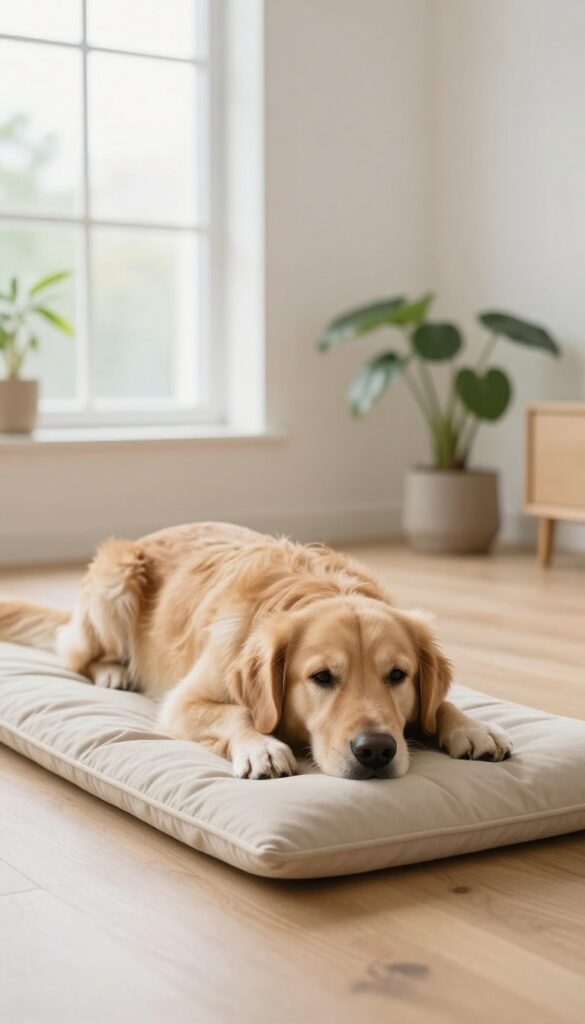
Your dog already knows that the mat is a place for good things. Now it's time to make the mat itself a signal. When your pup hears the word 'mat' and steps on it, they get a reward.
Soon, they'll associate that word with calm, and the mat will become their go-to spot for relaxation.
Start by saying 'mat' in a cheerful tone right before your dog steps onto it. The instant their paws touch the mat, mark with a 'yes' and give a treat. Repeat this several times, and your dog will begin to connect the word with the action.
As they get the hang of it, you can say 'mat' from a few steps away and reward them when they go to it. Eventually, they'll run to the mat the moment they hear the cue, ready to settle down.
Why This Works
Dogs learn by association. When the word 'mat' consistently leads to a reward and a calm state, it becomes a powerful cue. The mat itself becomes a visual and physical anchor that tells your dog it's time to relax.
Over time, just seeing the mat can help your pup wind down, even without the verbal cue.
How To Practice
Keep sessions short and sweet. Practice a few times a day, gradually increasing the distance and duration. Use high-value treats at first, then phase them out as your dog becomes reliable.
Remember to always end on a positive note, and never force your dog onto the mat—let them choose to go there.
Adding A Relaxation Cue
Once your dog is consistently going to the mat on the word 'mat', you can pair it with a relaxation cue like 'settle' or 'calm'. Say 'mat', then 'settle' as they lie down. Reward them for staying.
This builds a chain of behaviors that leads to deep calm, making the mat a powerful tool for quiet time.
11. Mat Relaxation with Massage
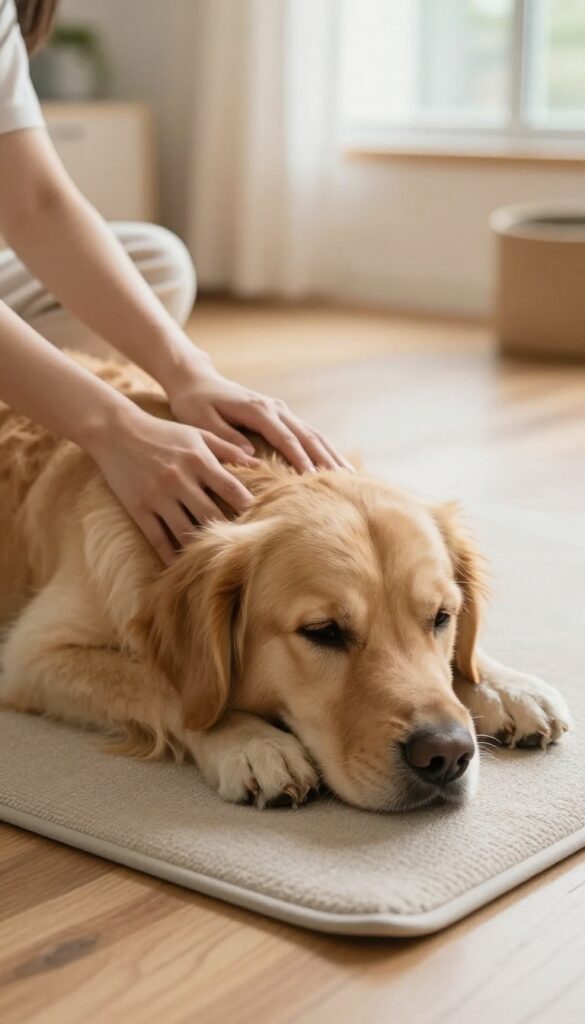
Touch is one of the quickest ways to help a dog let go of tension. When you combine a familiar mat with gentle massage, you're telling your pup's body it's safe to relax. This game is especially helpful for dogs that struggle to switch off after exercise or excitement.
Start with your dog already settled on the mat, either lying down or sitting. Use slow, firm strokes along their shoulders and back, and watch for signs of enjoyment like a soft eye or a deep sigh. The goal isn't to groom—it's to create a soothing ritual that your dog starts to associate with the mat.
Massage works because it activates the parasympathetic nervous system, which is responsible for rest and digestion. When your dog feels your hands moving calmly over their body, their heart rate slows and their muscles release. Over time, the mat itself becomes a cue for this deep relaxation, even before you start the massage.
Keep sessions short at first—just a few minutes—and always let your dog choose to stay. If they get up, that's okay; simply end the game and try again later. You're building a positive association, not forcing stillness.
Where To Massage For Maximum Calm
Focus on areas where dogs commonly hold tension: the base of the neck, the shoulders, and along the spine. Use the flat of your hand or your fingertips, and move in slow, circular motions. Avoid the tail and paws unless your dog is very comfortable, as some dogs are sensitive there.
Pay attention to your dog's reactions. A soft blink, a yawn, or a shift into a deeper lying position are all good signs. If your dog stiffens or moves away, lighten your touch or move to a different spot.
Adding Verbal Cues And A Calm Voice
Pair your massage with a quiet, reassuring word like "easy" or "relax. " Say it in a low, drawn-out tone as you stroke. Over time, your dog will learn that this word, combined with the mat and your touch, signals a time to unwind.
You can also use a long, slow exhale—dogs often mirror our breathing. If you're calm, your dog is more likely to stay calm. This becomes a two-way relaxation loop.
Turning Massage Into A Mat Ritual
Once your dog enjoys massage on the mat, you can use it as a reset button during busy days. After a walk or a play session, invite your dog to the mat and spend a few minutes massaging. This helps them transition from high energy to a settled state, making it easier for them to nap or just be still.
You can also use this time to check for any sore spots or unusual lumps, which is a bonus for their health. Keep the routine consistent, and your dog may start heading to the mat on their own when they want a little pampering.
12. The Mat and Look Game
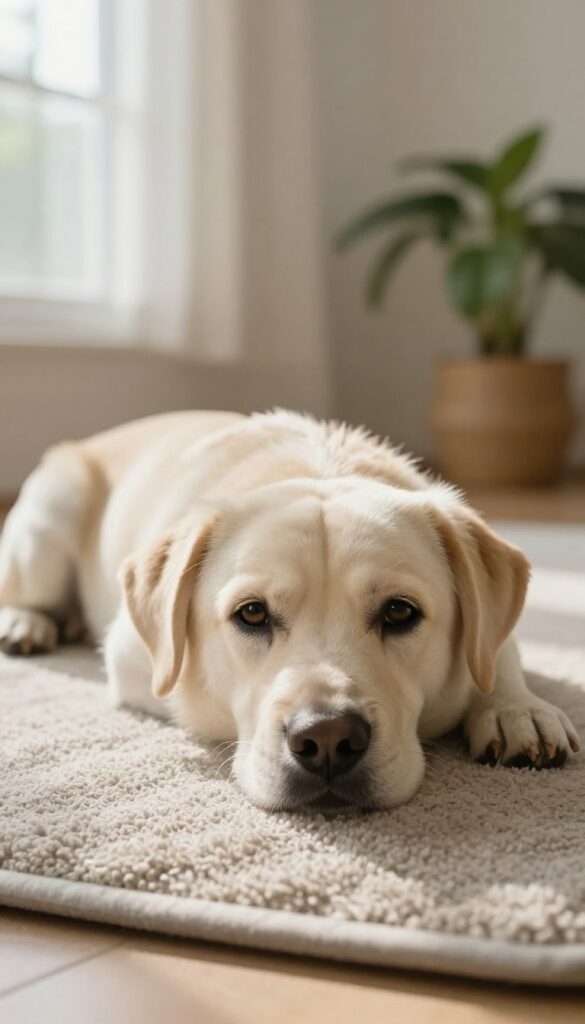
Eye contact is a powerful tool for calming a busy mind. When your dog chooses to look at you while on the mat, they're not just being polite—they're actively engaging in a moment of connection. This game turns that natural focus into a relaxation ritual.
Why Eye Contact Calms
Eye contact releases oxytocin, the bonding hormone, in both you and your dog. It shifts their attention away from distractions and onto you, which naturally lowers arousal. Over time, your dog learns that looking at you on the mat leads to good things, making the mat a place of safety and calm.
How To Play
Start with your dog on the mat, either sitting or lying down. Hold a treat near your eye and say your dog's name or a cue like 'look. ' The moment their eyes meet yours, mark with a 'yes' and give the treat. Repeat several times, then gradually phase out the treat near your eye, using only a hand signal or verbal cue.
Building Duration
Once your dog is reliably offering eye contact, start delaying the reward by a second or two. This teaches them to hold focus. You can also vary the rewards—sometimes a treat, sometimes praise, sometimes a quick game of tug—to keep it interesting.
The goal is a calm, steady gaze that lasts several seconds.
Troubleshooting
If your dog won't look at you, try luring with a treat from their nose to your eyes. If they're too excited, practice after a walk or play session. Keep sessions short—two to three minutes max—and always end on a positive note.
If your dog looks away, just wait patiently; they'll learn that looking brings rewards.
13. Mat with a View
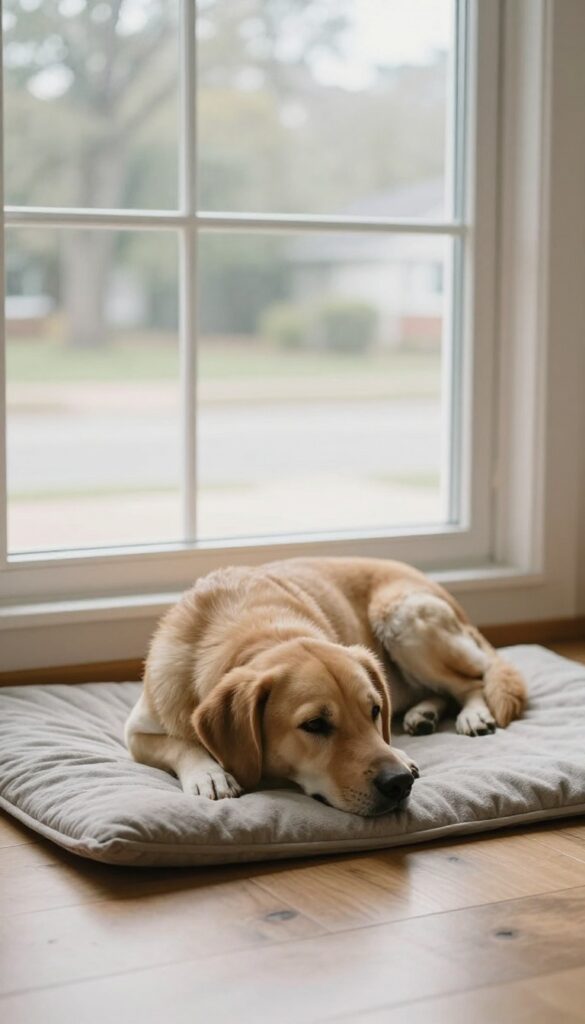
Sometimes the best way to teach calm is to let the world come to you. By placing the mat near a window or door, your dog gets a front-row seat to everyday life—and learns that staying relaxed is more rewarding than reacting. This game turns real-world distractions into training opportunities, all from the comfort of the mat.
Set up the mat in a spot with a view, but not so close that your dog can lunge or bark at passersby. Start with a low-traffic time, like early morning, and gradually work up to busier moments. The goal is simple: when your dog chooses to stay on the mat and stay calm, they earn treats.
If they get up or react, gently guide them back and wait for a calmer moment before rewarding.
Pick The Right Spot
Choose a window or door where your dog can see activity but still feel safe. Avoid spots that are too close to the action, like right next to a busy sidewalk. A couch near a window or a mat a few feet from a glass door works well.
The key is to make the mat a comfortable observation point, not a launching pad.
Start With Quiet Hours
Begin training when the street is quiet—early morning or late evening. This lets your dog succeed right away. As they get the hang of staying relaxed, gradually move to busier times.
You can also use a friend or family member to walk by at a distance, making the distraction more controllable.
Reward The Calm, Not The Reaction
Watch your dog closely. The moment they glance at a distraction but stay on the mat, mark it with a treat. If they start to get up or whine, calmly redirect them back to the mat.
You're teaching them that calm behavior, not excitement, is what earns the good stuff. Over time, they'll learn to watch the world without losing their cool.
14. The Mat and Settle Command
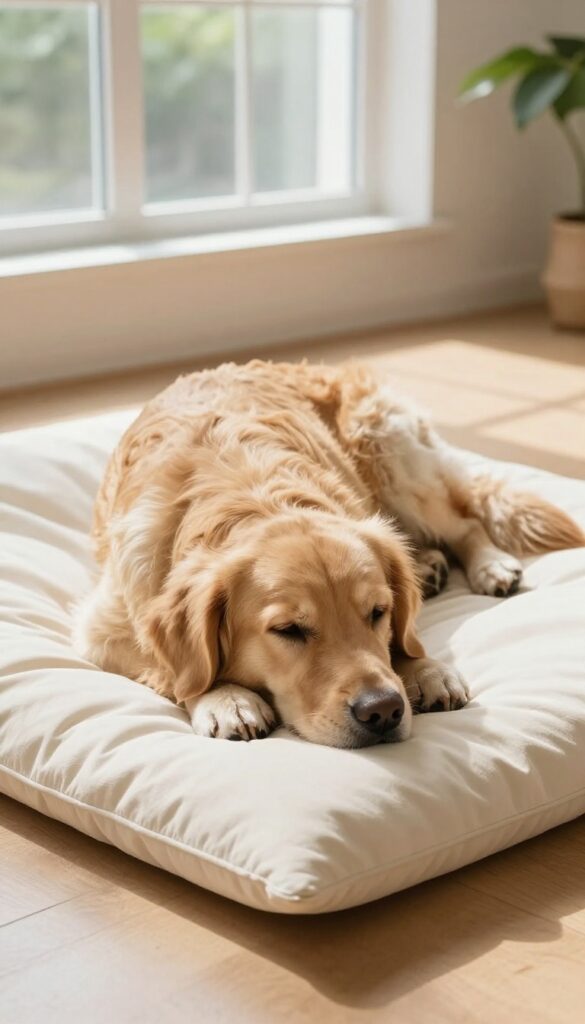
A simple word can become a powerful cue for calm. The Mat and Settle Command teaches your dog that a specific phrase means it's time to relax on their mat. This game builds a strong verbal association that you can use anywhere, anytime.
Choose a word like 'settle' or 'chill' and use it consistently. Say it in a soft, low tone as your dog lies down on the mat. Reward any relaxed posture—a down, a sigh, even a loose body.
Over time, your dog will link the word with the feeling of calm.
Picking The Right Cue
Pick a word you'll remember and use only for settling. Avoid common words like 'down' or 'relax' that might already have other meanings. Short, unique words work best.
Say it once, then guide your dog gently onto the mat if needed.
Rewarding Relaxation
Watch for signs of true calm: a soft eye, a relaxed jaw, or a heavy sigh. Reward those moments with a quiet treat and a gentle 'yes. ' Timing matters—reward while your dog is still relaxed, not when they pop up. This teaches them that stillness pays off.
Building Duration And Generalizing
Start with a few seconds of calm, then gradually increase the time. Practice in different rooms and with mild distractions. Use the cue before meals or after play to create a routine.
With patience, your dog will settle on command, even in busy places.
15. Mat Time with Music
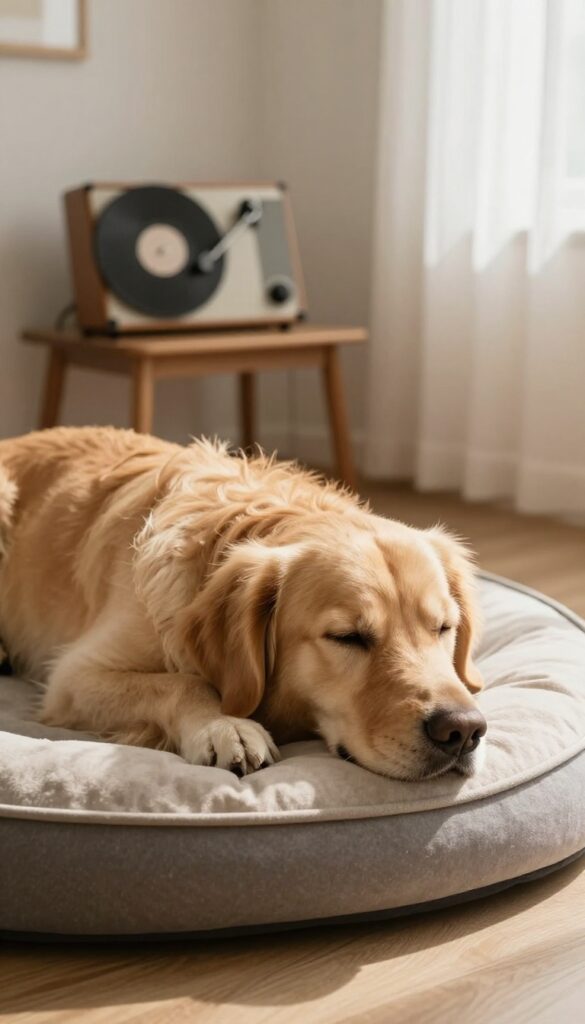
Music has a way of shifting moods—for humans and dogs alike. When you pair soft, calming tunes with mat time, you're creating a sensory cue that says, "It's time to chill. " The right playlist can turn a restless pup into a relaxed one, and with repetition, the music alone becomes a signal for calm.
Start by playing gentle music during your dog's mat sessions, and soon they'll associate those sounds with safety and comfort. It's a simple, enjoyable way to deepen their relaxation response.
Playing music during mat time is more than just background noise—it's a tool that can help your dog settle faster and stay relaxed longer. The key is consistency and pairing the music with positive experiences. Over time, your dog will learn that when the music starts, good things happen, and their body naturally begins to unwind.
Choose music that is slow, soft, and steady. Classical, ambient, or specially designed dog-calming tracks work well. Avoid anything with sudden loud sounds or fast beats.
The volume should be low enough to be soothing, not startling. Start by playing the music while you do your regular mat training—treats, praise, and calm interactions. Keep sessions short at first, gradually increasing the duration as your dog becomes more comfortable.
Eventually, you can play the music on its own as a cue for your dog to go to their mat and relax.
Choosing The Right Tunes
Not all music is created equal when it comes to calming dogs. Look for tracks with a slow tempo, around 50-60 beats per minute, which mimics a resting heart rate. Classical music, especially pieces with simple melodies, is a popular choice.
There are also playlists specifically designed for dogs, often featuring soft piano or ambient sounds. Experiment to see what your dog responds to best—some dogs prefer silence, but many enjoy the gentle hum of music.
Pairing Music With Treats
To build a strong association, play the music every time you give your dog treats on the mat. As the music plays, drop treats slowly, one at a time, encouraging your dog to stay in a relaxed position. The treats reinforce the calm behavior, and the music becomes a predictor of good things.
Over time, your dog will start to relax as soon as they hear the music, even before the treats appear.
Using Music As A Cue
Once your dog is used to the music, you can use it as a cue for relaxation. Play the music when you want your dog to settle, such as in the evening or during quiet time. You can even play it during stressful situations, like thunderstorms or vet visits, to help your dog stay calm.
The key is to start with the mat, then gradually use the music in other contexts once your dog has made the connection.
FAQ
How long should each mat training session last?
Keep sessions short and sweet—5 to 10 minutes is plenty. The goal is to end on a positive note before your dog gets bored or frustrated.
What type of mat is best for training?
Any comfortable, washable mat works. A yoga mat, bath mat, or dog bed are all good options. The key is that it's distinct from other surfaces so your dog knows it's their special spot.
Can I use these games for a hyperactive dog?
Absolutely. These games are designed to channel energy into calm behavior. Start with short sessions and gradually increase difficulty as your dog learns to settle.
What if my dog won't stay on the mat?
If your dog gets up, simply guide them back without scolding. Keep sessions easy and reward every small success. Patience is key—mat training takes time.
How do I know when my dog is truly relaxed?
Look for soft body language: a relaxed mouth, loose ears, and a deep sigh. If your dog is lying down with their head on their paws, they're getting the hang of it.
Conclusion
Mat training doesn't have to be a chore. With these 15 games, you're turning relaxation into a fun, rewarding experience for both of you. The more your dog enjoys the mat, the more they'll choose calm on their own.
Start with a few games that fit your dog's personality, and build from there. Consistency and patience will pay off with a pup who knows how to switch off. Happy training!

I’m Pallab Kishore, the owner of Little Pets Realm — an animal lover and pet care enthusiast sharing easy tips, healthy recipes, and honest advice to help every small pet live a happy, healthy, tail-wagging life.