
Last updated on August 19th, 2026 at 04:14 pm
Guests shouldn't feel like they're entering a wrestling match with your dog. But without clear boundaries, that's exactly what happens—jumping, barking, and chaos at the door.
The fix isn't about stifling your pup's excitement; it's about giving them a job to do when the bell rings. These 10 greeting manners turn a whirlwind welcome into a calm, controlled moment.
You'll teach your dog to sit, stay, and settle, so visitors actually enjoy stepping through your door. Start with a couple of these, and you'll both feel the difference right away.
1. Teach a Solid 'Sit' Before the Door Opens
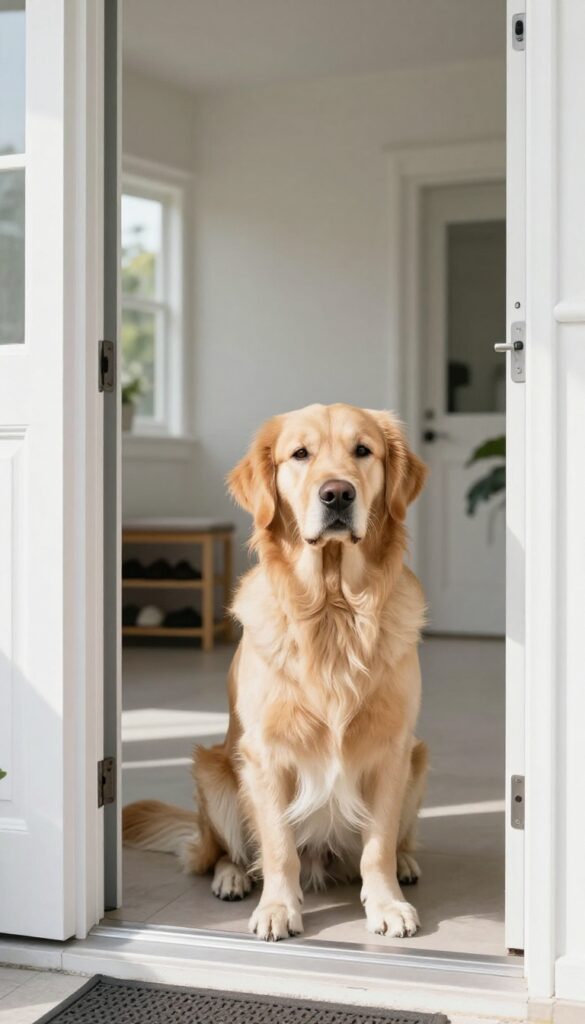
The doorbell rings, and your dog launches into full chaos mode. That's a sign they don't have a clear job to do when visitors arrive. The simplest fix is to teach a rock-solid sit before anyone even steps inside.
A calm sit is the foundation of polite greetings. Once your dog masters this, everything else—staying, settling, and not jumping—becomes much easier. Let's break down how to build this habit step by step.
Start by training in a quiet room with no distractions. Ask your dog to sit and reward them immediately. Repeat until they respond quickly and consistently.
Then, move closer to the door and practice the same command. The goal is to make sitting automatic, even when excitement levels rise. Once your dog can sit reliably near the door, add realistic triggers.
Have a friend knock or ring the doorbell while you ask your dog to sit. Reward them for staying seated, not for reacting. If they break the sit, calmly reset and try again.
Consistency is key—every time the door opens, your dog should sit first. Remember, this isn't about being harsh. It's about giving your dog a clear way to earn attention and treats.
With patience and repetition, your dog will learn that sitting politely is the best way to get what they want.
Start In A Quiet Space
Begin training in a room with zero distractions. Have your dog sit and immediately reward with a treat or praise. Practice this until your dog sits quickly every time.
Then, gradually move closer to the door, still rewarding the sit. This builds a strong foundation before adding real-world excitement.
Add Realistic Distractions
Once your dog sits reliably near the door, introduce distractions. Have a friend knock or ring the bell. Ask your dog to sit and reward them for staying calm.
If they jump up or break the sit, quietly reset. Keep sessions short and positive, so your dog learns that sitting leads to good things.
Make It A Routine
Practice the sit every time you enter or leave your home, not just when guests arrive. This reinforces the behavior in everyday situations. Over time, your dog will automatically sit when the door opens, because it's become a habit.
Reward generously at first, then gradually reduce treats as the behavior becomes reliable.
2. Use a Mat or Bed as a 'Go to Place'
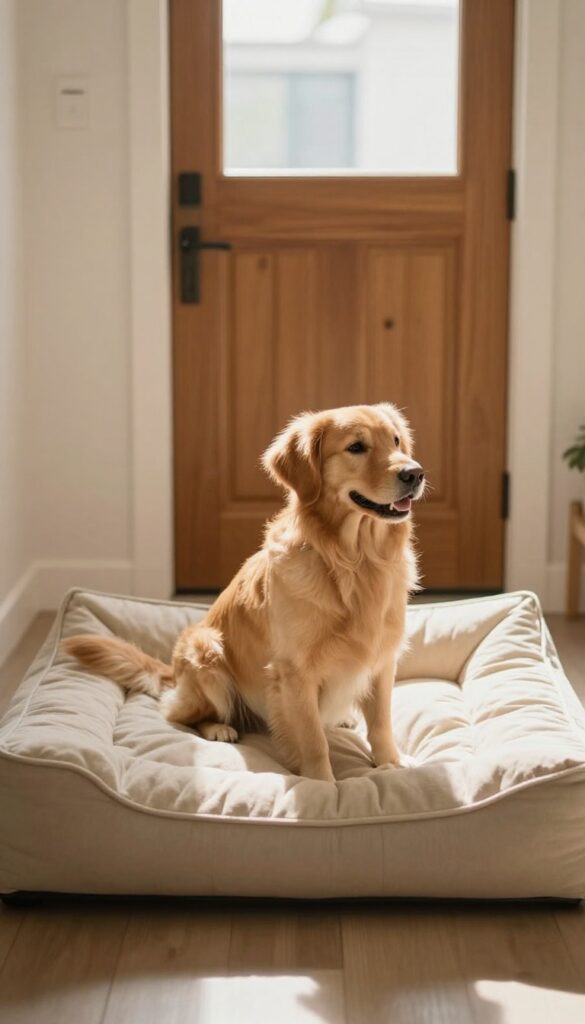
A mat or bed placed near the entryway can become your dog's personal 'office' during greetings. This simple tool gives your pup a clear, positive job to do when guests arrive, replacing chaotic jumping with a calm, settled behavior. With consistent training, your dog will learn to head to their spot automatically, making door greetings far more manageable.
Start by choosing a comfortable mat or bed that's easy to move and clean. Place it a few feet away from the door, where your dog can still see guests but isn't directly in the path. This spot becomes their 'place'—a safe zone they associate with good things, like treats and praise.
Teaching The 'go To Place' Cue
Begin by tossing a treat onto the mat and saying 'go to place' as your dog steps on it. Reward them for staying, then gradually increase the distance and duration. Practice with the door closed, then with a friend knocking, until your dog reliably heads to their spot when guests arrive.
Making The Mat A Happy Zone
Give your dog a special treat or toy that they only get when they're on their mat. This creates a strong positive association, making the mat more appealing than the chaos at the door. Over time, your dog will eagerly run to their spot, knowing something good is coming.
Adding A Release Cue
Teach your dog to stay on the mat until you give a release cue like 'okay' or 'free. ' This gives you control over when they interact with guests. Start with short stays, then gradually increase the time and distractions, always rewarding calm behavior.
3. Practice with Fake Guests
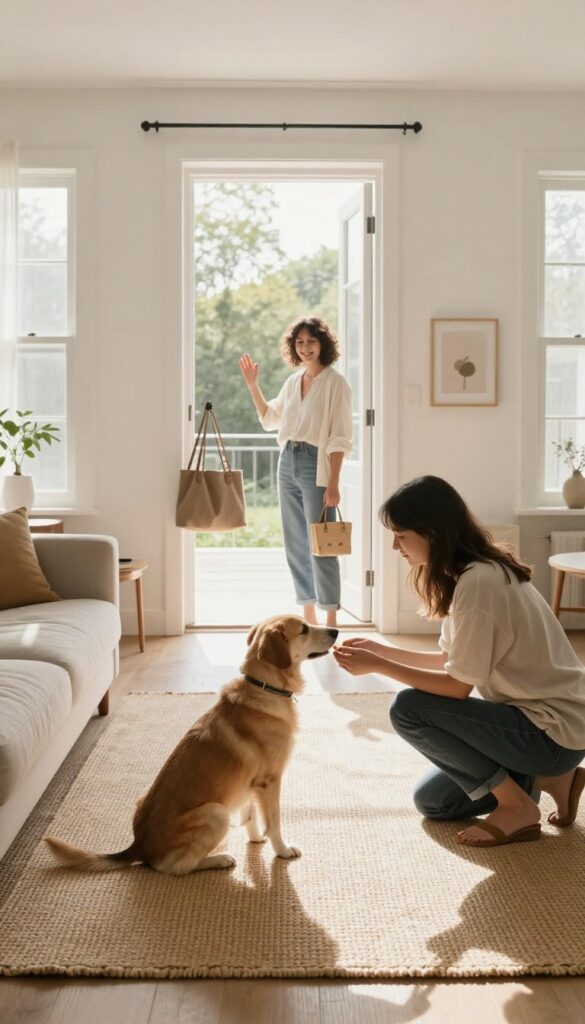
One of the best ways to prep your dog for real visitors is to rehearse the whole scenario with people they already know. By turning greetings into a predictable game, you take the surprise out of the equation and give your pup a clear script to follow. This kind of practice is low-pressure for everyone, and it works wonders for building calm, polite behavior.
Start by asking a friend or family member to play the role of a guest. Have them knock or ring the bell, then wait for your dog to settle before you even open the door. Reward any calm behavior—like sitting or staying quiet—with a treat or quiet praise.
Repeat this a few times in one session, then switch up the actors and the scenarios so your dog learns that the rules apply no matter who shows up.
Start With The Basics
Begin with a familiar person and a low-key entrance. Have them walk in slowly, avoid direct eye contact with your dog, and ignore any jumping. The moment your dog keeps all four paws on the floor, mark it with a treat or a click.
This teaches your dog that calmness is what earns attention, not wild antics.
Add Realistic Distractions
Once your dog nails the simple version, make it harder. Have your fake guest carry a bag, wear a hat, or even knock loudly. You can also practice with the door left slightly open or have the guest ring the bell twice.
These small tweaks prepare your dog for the unpredictable nature of real visitors.
Mix Up The People And Places
Use different friends, neighbors, or family members so your dog doesn't just behave for one person. Try practicing at different times of day and in different entryways—front door, back door, even a garage entrance. The more variety you introduce, the more your dog learns that polite greetings are expected everywhere, not just at home.
4. Manage the Leash for Better Control
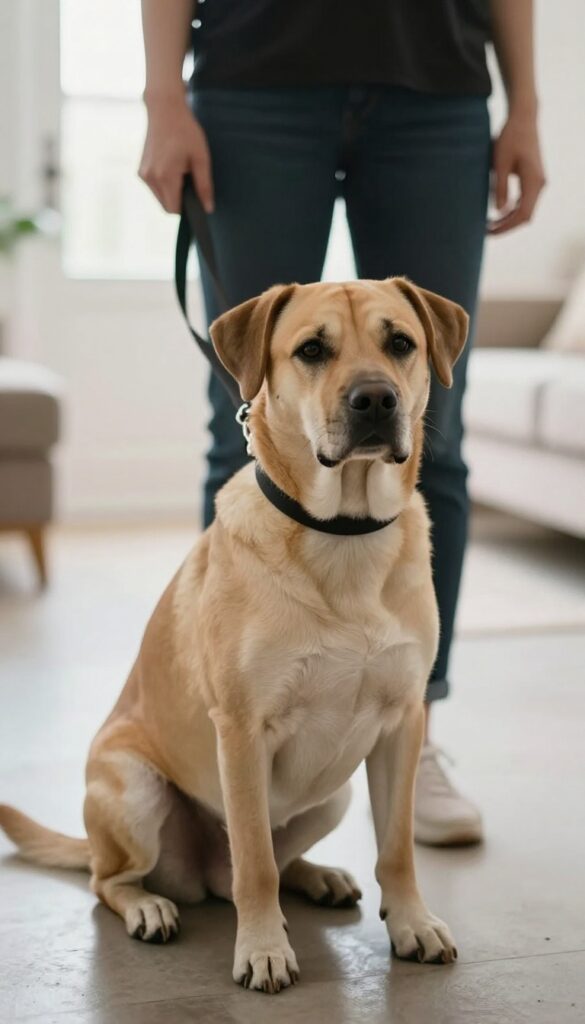
Holding the leash doesn't have to mean holding your dog back from fun. It's your communication tool, letting you guide your pup through the greeting without pulling or yanking. When you keep the leash on during hellos, you're setting the stage for a calm interaction instead of a chaotic one.
With a leash in hand, you can quietly redirect your dog's energy. If they start to lunge or jump, you can gently guide them back to a sit or toward their mat. The goal isn't to restrain—it's to give clear signals about what behavior works.
Over time, your dog learns that calm gets them closer to the guest, while wild behavior means a step back.
Set The Stage Before The Door Opens
Clip on the leash a few minutes before guests arrive, and keep it loose. Walk your dog to their spot or ask for a sit. This pre-emptive move helps your pup understand that the leash means 'time to focus. ' You're not waiting for chaos to start—you're preventing it.
Use Gentle Guidance, Not Tension
When your dog gets excited, resist the urge to yank. Instead, use a soft, steady pressure to guide them into a sit or away from the guest. Pair this with a calm 'good' when they comply.
The leash becomes a gentle steering wheel, not a brake.
Keep The Leash Short Enough To Manage, Long Enough To Be Comfortable
A 4- to 6-foot leash works best for greetings. Hold it with some slack so your dog doesn't feel trapped, but keep it short enough to prevent a full-on sprint to the door. You want control without making your pup feel like they're on a tightrope.
Reward The Calm Moments
The second your dog offers a sit or a relaxed posture, drop a treat or offer quiet praise. This reinforces that staying chill around guests is a good move. Over time, your dog will start offering calm behavior on their own, because it's what earns them the good stuff.
5. Reward Calm Behavior, Ignore the Chaos
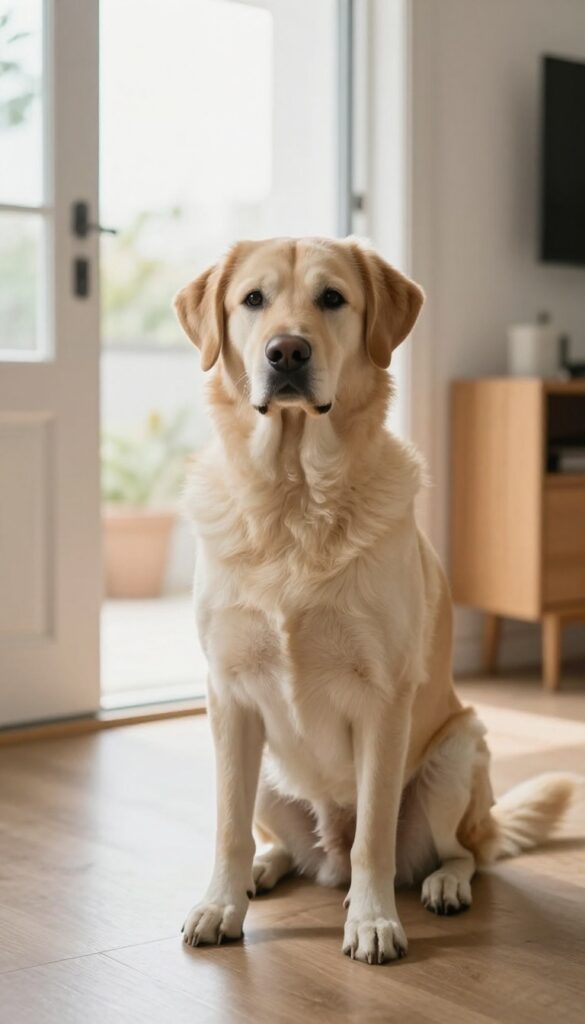
When your dog goes wild at the door, the instinct is to yell or push them away—but that actually feeds the frenzy. The smarter move is to flip the script: calm gets attention, chaos gets nothing. This simple rule turns every greeting into a lesson in self-control, and it works faster than you'd think.
Start by deciding what you want your dog to do when guests arrive—usually sitting or staying calm. Then, make that the only way they get your attention or a treat. If they jump, bark, or spin, turn your back and ignore them completely.
The moment they settle, even for a second, mark it with a calm 'yes' and a reward. Consistency is key: every visitor, every time, same rule.
Set The Rule Before The Doorbell Rings
Don't wait for chaos to start teaching. Practice with friends or family when you're not expecting anyone. Have them knock or ring the bell, then ask for a sit before you open the door.
Reward the sit with a treat and calm praise. Repeat until your dog associates the doorbell with sitting, not sprinting.
Turn Away, Don't Push Or Yell
When your dog jumps or barks, the worst thing you can do is push them or raise your voice—that's attention, and attention is the reward they crave. Instead, cross your arms, turn your back, and become a boring statue. No eye contact, no talking.
As soon as they stop, turn back and calmly reward. This teaches that calm behavior makes you engage, while chaos makes you disappear.
Use A Treat Lure To Reset
If your dog is too amped to even think, use a treat to guide them into a sit or a down. Hold the treat at their nose, slowly lift it up and back so their butt hits the floor. Say 'yes' and give the treat.
This isn't bribery—it's a way to break the cycle of excitement and redirect their focus. Over time, they'll sit without the lure because they know it's the fastest way to earn a reward.
Be Patient And Consistent
This method works, but not overnight. Your dog might test you by jumping again right after settling—that's normal. Stay calm, repeat the ignore-and-reward cycle, and don't give in.
Consistency from every family member is crucial. If one person lets them jump for attention, the lesson gets muddy. Stick with it, and you'll see calmer greetings within a few weeks.
6. Teach a Reliable 'Leave It' for Doorway Distractions
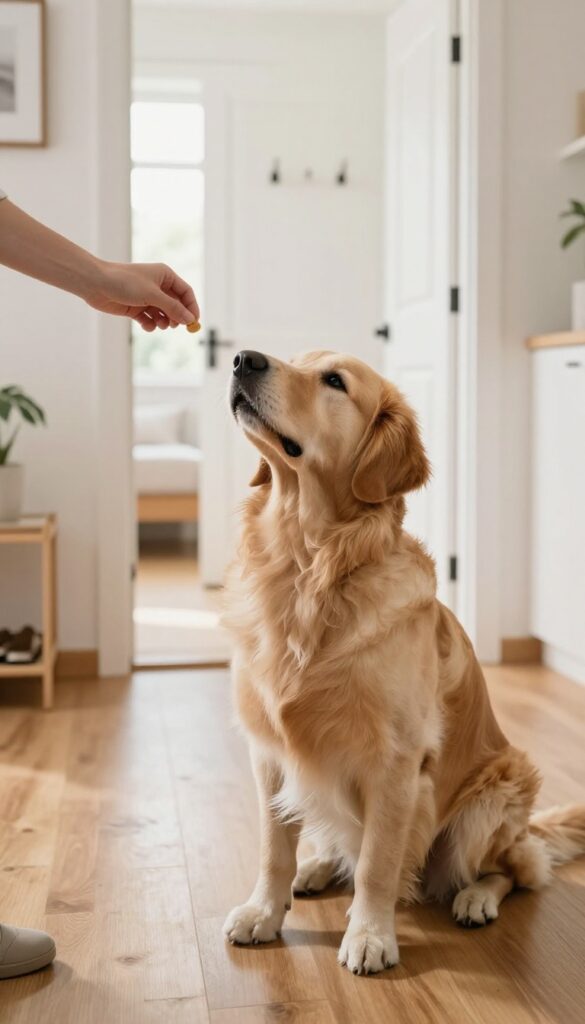
The doorbell is a magnet for your dog's attention, pulling them toward the chaos before you even open the door. That's where 'leave it' becomes your secret weapon—a cue that tells your dog to ignore the trigger and look to you instead. It's not about suppressing their excitement; it's about redirecting their focus to something rewarding: you.
Training 'leave it' takes patience and a pocket full of high-value treats, but the payoff is huge. Start in a quiet room with no distractions. Hold a treat in your closed fist, let your dog sniff and paw at it, and the moment they pull back, say 'yes' and reward them with a different treat.
Repeat until they understand that backing off earns the good stuff. Then, gradually add more tempting distractions—like a toy or a piece of kibble on the floor—and practice in busier environments. Once your dog reliably looks away from the trigger, you can start using 'leave it' near the door.
Start With The Basics
Begin in a quiet room with no distractions. Hold a treat in your closed fist, and when your dog stops sniffing or pawing at it, mark with 'yes' and reward them with a different treat. Repeat until they understand that backing off earns the good stuff.
This builds the foundation for a solid 'leave it' cue.
Add Door-related Distractions
Once your dog has the hang of 'leave it' in calm settings, start practicing near the door. Have a friend knock or ring the bell, then cue 'leave it' before your dog reacts. Reward them for looking at you instead of the door.
Gradually increase the intensity—like having the guest enter—while keeping the cue strong.
Use High-value Rewards
When it comes to doorway chaos, your dog needs a reason to choose you over the excitement. Use treats that are extra special—like small pieces of chicken, cheese, or hot dog—that they don't get at other times. This makes the 'leave it' cue more rewarding than the doorbell.
7. Create a Barrier with Baby Gates or X-Pens
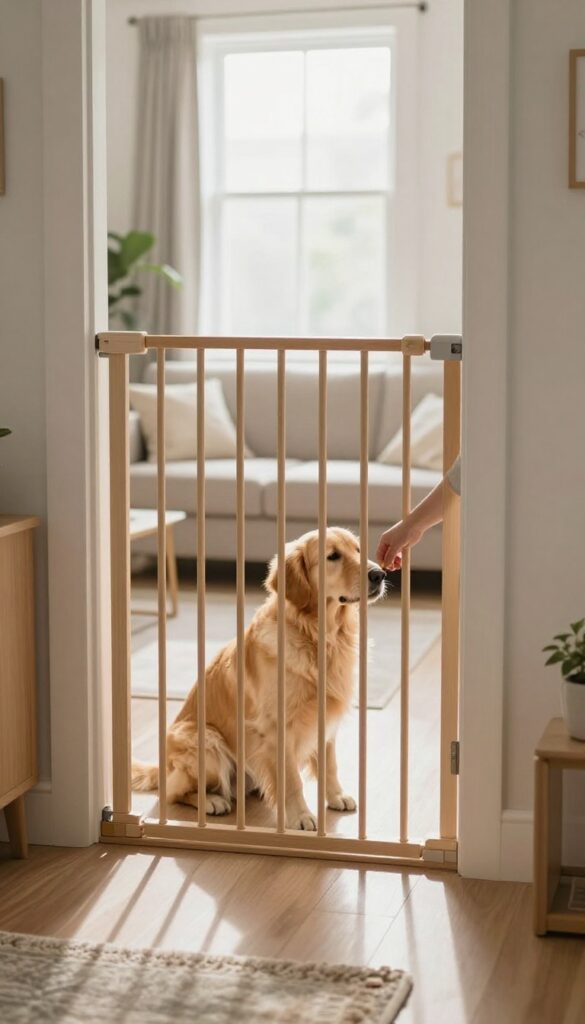
Sometimes the fastest way to calm a chaotic greeting is to put a little space between your dog and the door. A baby gate or exercise pen gives your pup a clear boundary while still letting them see and sniff visitors from a safe distance. It's not a punishment—it's a management tool that buys you time to work on training without the stress of a full-on doggy tackle.
Set up a baby gate or exercise pen to create a physical barrier between your dog and the door. This allows your dog to see guests without overwhelming them. Use it as a management tool while you work on training.
A barrier does more than just stop the jumping. It also helps your dog learn to regulate their own excitement. When they can't rush the door, they have a chance to settle and observe.
Over time, that calm behavior becomes a habit, even when the gate comes down.
Where To Place The Gate
Put the gate across a hallway or doorway between your dog and the entryway. Make sure it's far enough back that your dog can't reach guests, but close enough to still see and hear what's happening. If you use an x-pen, set it up a few feet from the door so your dog has room to move without feeling trapped.
How To Make The Barrier Positive
Toss treats or a favorite toy into the gated area before guests arrive. This helps your dog associate the barrier with good things. You can also give them a stuffed Kong or a chew to keep them busy while you greet visitors.
The goal is to make the barrier a calm, rewarding spot, not a place of exile.
Using The Barrier For Training
Once the gate is up, practice asking your dog to sit or stay before you open the door. If they stay calm, reward them. If they get too excited, wait until they settle before moving forward.
Over time, your dog will learn that calm behavior gets them closer to the door—and eventually, to the guests.
8. Practice the 'Wait' at the Threshold
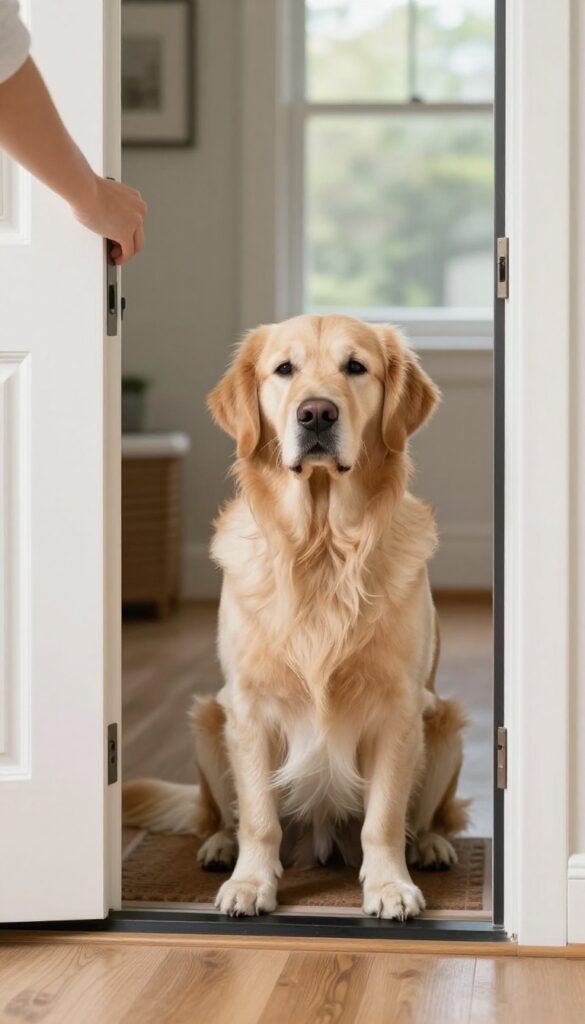
The front door is a pressure cooker for your dog's excitement. Every time you open it, they're already halfway out, ready to launch at whoever's on the other side. That's why teaching a solid 'wait' at the threshold is a game-changer.
This isn't about making your dog freeze like a statue. It's about giving them a clear signal that the door opens only when they're calm. With a little patience, you'll turn that explosive rush into a polite pause.
Start with the door closed. Ask your dog to sit or stay, then say 'wait' in a calm, steady voice. Open the door just a crack—just enough to peek outside.
If your dog moves, close the door and try again. The moment they stay put, praise them and give a release word like 'okay' so they know it's safe to move. Gradually increase the opening: a few inches, then halfway, then all the way.
Keep the release cue consistent. Over time, your dog learns that the door opening isn't the signal to bolt—your word is. This builds impulse control that carries over to real guests, so when someone actually rings the bell, your dog's first instinct is to look to you for direction.
Why 'wait' Works Better Than 'stay'
'Stay' often means 'don't move until I come back. ' 'Wait' is more flexible—it means 'hold on, I'll release you. ' That flexibility is perfect for doorways, where you need your dog to pause just long enough for you to open the door and greet the visitor. Plus, 'wait' is easier for dogs to understand in dynamic situations, because it doesn't require a specific position or distance.
Step-by-step Threshold Training
- Practice with the door closed. Have your dog sit, then say 'wait' and open the door a crack.
- If they stay, close the door, mark with a treat, and release them. If they move, close the door and try again.
- Gradually open the door wider, and eventually step outside yourself while your dog waits. 4.
Add distractions—knock on the door, have a friend walk by—but only after your dog is solid on the basics. Keep sessions short and end on a positive note.
Troubleshooting Common Hiccups
If your dog bolts the second the door opens, you're moving too fast. Go back to a tiny crack and build up again. If they seem confused, make sure you're using a clear release word every time.
And if they're too excited to focus, practice when they're calmer, like after a walk. Consistency is key—every time you open the door, use the same routine. Eventually, it'll become second nature.
9. Use High-Value Treats to Reinforce Good Choices
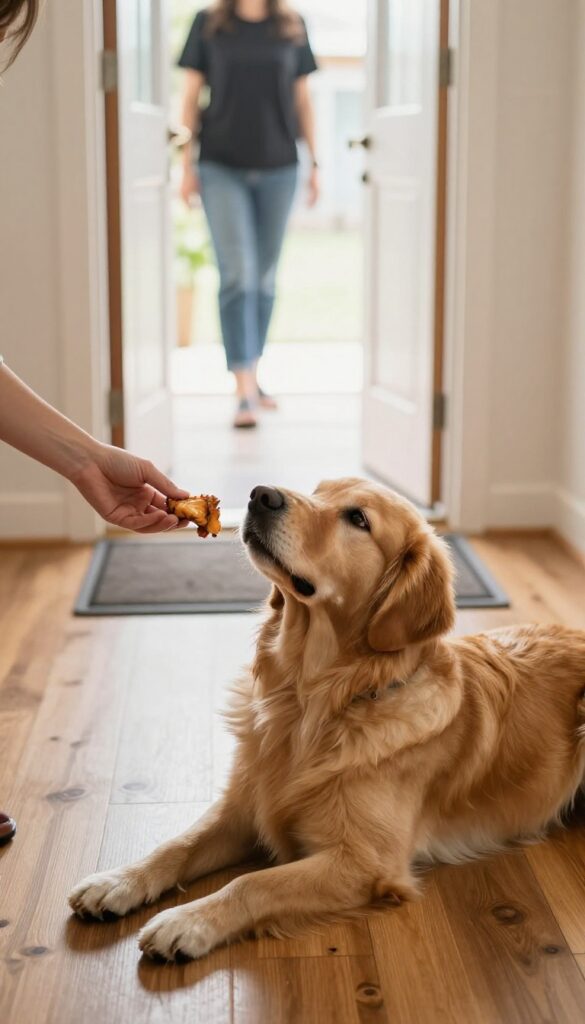
Most dogs will do almost anything for a piece of chicken or cheese. That's exactly why keeping a stash of these special treats near the door can transform how your dog greets guests. When your dog chooses calm behavior—like sitting or going to their mat—you can reward them instantly, making the arrival of visitors a positive experience.
The key is to use treats that are extra special, not the everyday kibble. These high-value rewards create a strong association: guests arriving means something amazing is about to happen. This simple shift in your dog's mindset can make a world of difference.
Choose Treats That Matter
Pick treats your dog doesn't get any other time. Small pieces of boiled chicken, string cheese, or freeze-dried liver are great options. Keep them cut into tiny, pea-sized bits so you can give multiple rewards without overfeeding.
Store them in a small container or pouch right by the door, so they're always within reach when guests arrive.
Reward The Behavior You Want
As soon as your dog shows any sign of calm—like a relaxed posture, a sit, or even just a pause in their excitement—toss a treat. Timing is everything. You want your dog to connect the treat with the calm behavior, not the chaos.
If your dog is jumping or barking, don't reward that. Wait for a moment of quiet, then treat.
Make It A Game
You can also turn treat-giving into a fun game. Toss treats away from the door to give your dog a job to do. This not only rewards calmness but also redirects their energy.
For example, toss a treat to their mat, and when they go there, give another. This creates a positive chain of behaviors that keeps your dog busy and happy while you greet your guests.
10. Consistency Is Key: Practice Every Day
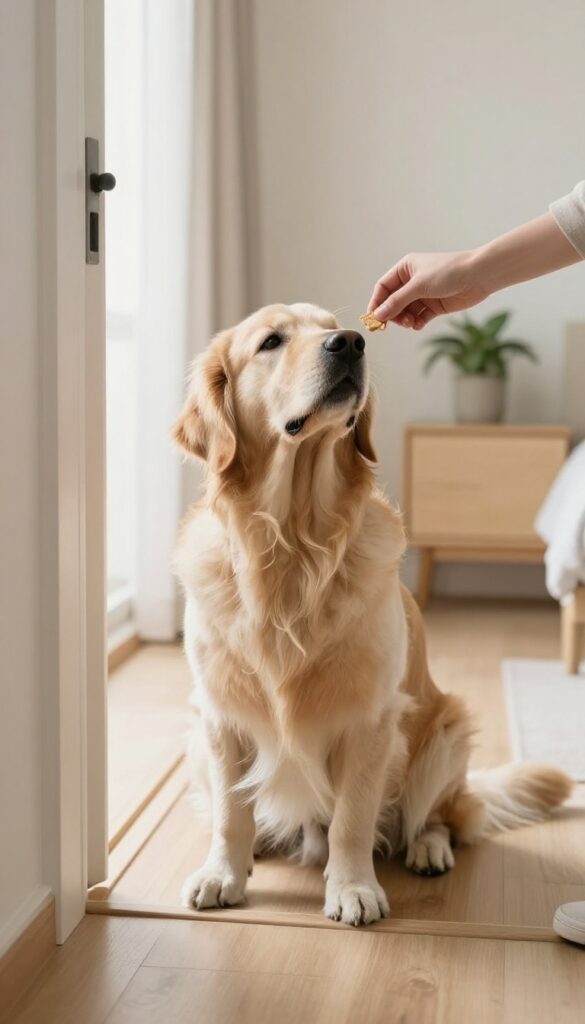
Training your dog to greet guests politely isn't a one-time thing—it's a daily habit. Just like you wouldn't expect to nail a new skill without practice, your dog needs regular repetition to make good manners second nature. The good news?
You don't need a crowd to practice; you can do it anytime, right at your front door.
Set aside a few minutes each day to work on greeting manners, even when no one is coming over. This could be as simple as practicing a sit-stay near the door, having a friend ring the bell, or using a cue like 'go to your spot' before you open the door. The more your dog rehearses the calm behavior, the more automatic it becomes.
Make It A Daily Ritual
Incorporate training into your everyday routine. Every time you leave or come home, ask your dog to sit and wait before you open the door. This reinforces the idea that calm behavior is expected, not just when guests arrive.
Over time, your dog will associate the door with a chance to earn a treat, not a trigger for chaos.
Use Real-life Triggers
Don't limit practice to scheduled sessions. Use the doorbell or a knock on the door as a cue for training. If you live in an apartment, you can simulate a knock on your own door.
The more you practice with real-life triggers, the better your dog will generalize the behavior to actual visits.
Keep Sessions Short And Positive
Short, frequent sessions work better than long, infrequent ones. Aim for 5–10 minutes a day, and always end on a positive note. If your dog struggles, go back a step and reward smaller successes.
Consistency doesn't mean drilling until frustration—it means regular, gentle reinforcement of the behavior you want.
FAQ
How long does it take to teach a dog to greet guests calmly?
It varies by dog, but with consistent practice, you can see improvement in a few weeks. Some dogs may take longer, especially if they have a strong habit of jumping or barking. Patience and regular training sessions are key.
What should I do if my dog is too excited to focus on treats?
If your dog is over threshold, they may not take treats. In that case, increase distance from the door or use a barrier. Practice at a lower intensity level where your dog can still focus, and gradually build up.
Can I use a spray bottle to stop my dog from jumping?
Using a spray bottle is not recommended. It can create fear and anxiety, which may worsen behavior. Positive reinforcement methods are more effective and build a stronger bond with your dog.
Is it okay to let my dog greet guests if they're calm?
Yes, once your dog consistently stays calm, you can allow them to greet guests politely. Start with a calm sit or a brief sniff, then reward. Always supervise to ensure your dog remains calm.
What if my dog is reactive or fearful of guests?
If your dog shows fear or aggression, consult a professional trainer or behaviorist. They can create a tailored plan to help your dog feel safe and learn appropriate greetings. Never force interactions.
Conclusion
Every calm greeting starts with small, repeatable habits—both yours and your dog's. Pick one or two manners from this list to practice first, then build from there as your pup gets the hang of it. Over time, those doorway moments will feel less like damage control and more like a warm welcome.
Remember, consistency beats perfection. Your dog will learn fastest when the rules stay the same for every guest, every time. Stick with it, and soon your front door will be a place of relaxed hellos instead of excited chaos.

I’m Pallab Kishore, the owner of Little Pets Realm — an animal lover and pet care enthusiast sharing easy tips, healthy recipes, and honest advice to help every small pet live a happy, healthy, tail-wagging life.