
Last updated on August 19th, 2026 at 04:15 pm
The doorbell rings, and your dog launches into a frenzy—barking, spinning, and nearly knocking over the candy bowl. Halloween turns your front door into a revolving door of strangers, and without a plan, that chaos can get overwhelming. The good news?
A little training goes a long way. These 11 tips focus on building calm, polite behavior around the door, so you can actually enjoy the night.
From setting up a candy station to practicing with costumed friends, each idea is simple to implement and makes a real difference. Let's get your pup ready for the big night.
1. Practice the 'Place' Command Before the Big Night
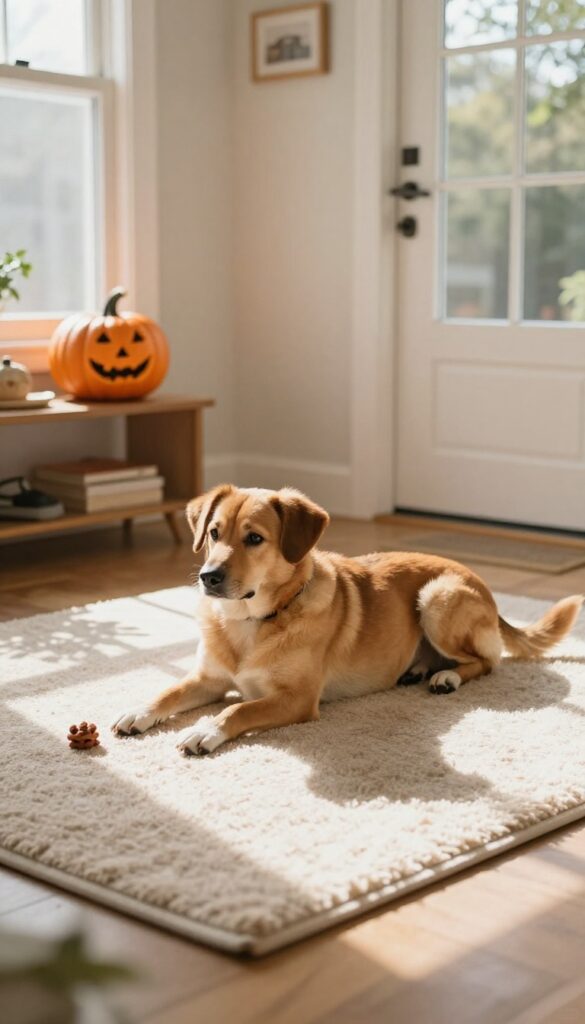
The 'place' command is a game-changer for doorbell chaos. It gives your dog a clear job when the door opens, which beats barking and door-dashing every time. Start practicing now, so it feels like second nature by Halloween.
Teaching your dog to go to a designated mat or bed and stay there when the doorbell rings is a lifesaver. It gives them a clear job and a safe spot, which beats barking and door-dashing. Start with practice sessions before Halloween, using high-value treats to make the mat a rewarding spot.
Why 'place' Works So Well
Dogs thrive on structure. When they know exactly what to do, they feel more relaxed. The 'place' command channels their energy into a positive behavior, turning a stressful moment into a routine.
Plus, it's a great way to keep them out from underfoot when you're juggling candy and guests.
Step-by-step Training
Start by luring your dog onto the mat with a treat, then say 'place' as they step on. Reward them and gradually increase the duration. Practice with the doorbell sound, then move to real doorbell rings.
Keep sessions short and fun, and always end on a positive note.
Making The Mat Irresistible
Use special treats you only give during 'place' training, like small pieces of chicken or cheese. You can also add a stuffed Kong or a puzzle toy to keep them busy. The more they love being on the mat, the more they'll want to stay there when the door opens.
2. Desensitize Your Dog to the Doorbell Sound
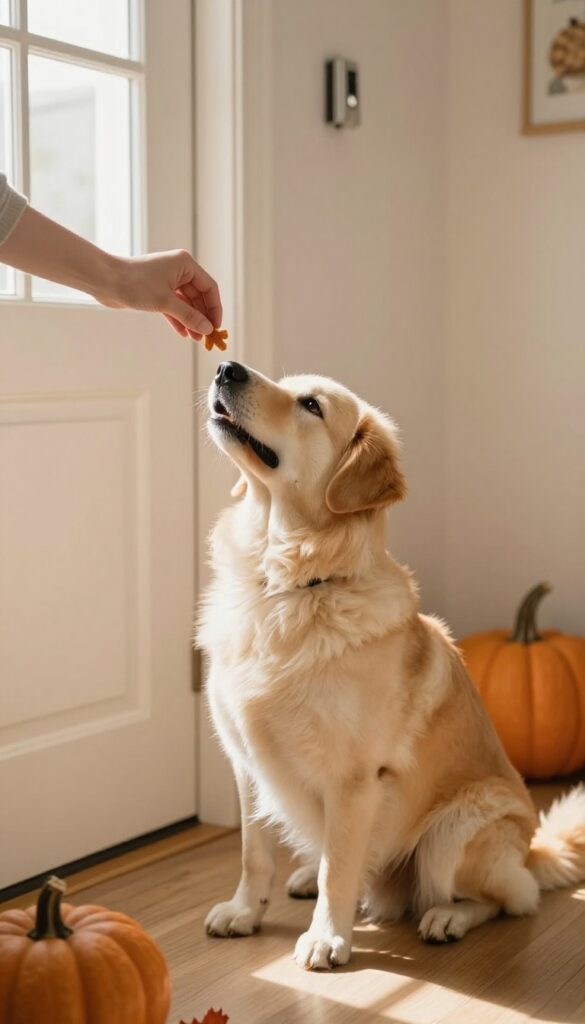
The doorbell is often the first trigger for chaos. Your dog hears it and instantly thinks, 'Someone's here! Time to go wild! ' But you can change that reaction by teaching your pup that the doorbell sound means good things are coming—like treats and praise.
This process is called desensitization, and it's simpler than it sounds. All you need is a recording of your doorbell and a handful of tasty treats.
Start by playing the doorbell sound at a very low volume, just barely audible. The moment your dog hears it, drop a treat. Repeat this a few times, keeping the volume low so your dog stays relaxed.
Over several sessions, gradually increase the volume, always pairing the sound with something positive. The goal is to rewire your dog's emotional response from excitement or alarm to calm anticipation. Before you know it, the doorbell will become a cue for your dog to look at you for a treat, not to bark and spin.
Start Low And Slow
Begin with the volume so low that your dog barely notices. Play the sound for a second or two, then immediately give a high-value treat. Repeat this 5-10 times per session.
Keep sessions short and positive. If your dog seems stressed or overly excited, lower the volume and take a break. The key is to keep your dog under threshold—meaning they stay calm and focused on you.
Mix It Up
Once your dog is comfortable with the sound at a moderate volume, start varying the timing and the volume. Sometimes play it once, sometimes twice, sometimes louder, sometimes softer. This prevents your dog from predicting exactly when the sound will happen, which helps build a more resilient response.
Always reward calm behavior, and if your dog gets too worked up, dial it back a notch.
Add Real-world Practice
After your dog handles the recording well, it's time for the real thing. Have a friend or family member ring the actual doorbell while you're ready with treats. Start with just one ring, reward your dog for staying calm, and gradually increase the number of rings.
This bridges the gap between the recording and reality, so your dog is prepared for the real Halloween doorbell marathon.
3. Use a Leash or Tether as a Safety Net
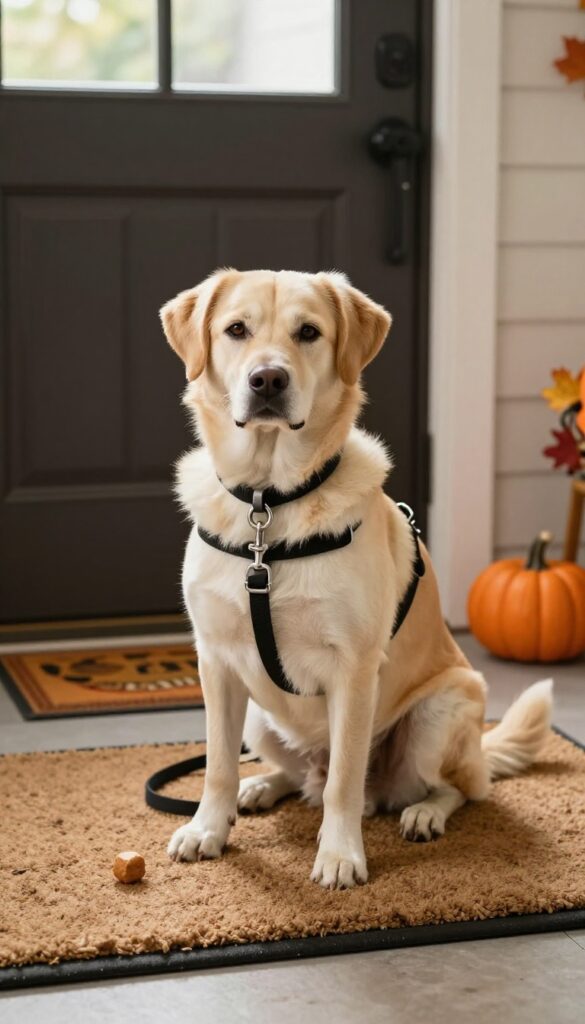
Even the best-trained dog can get caught up in the excitement of Halloween night. A leash or tether gives you a physical backup plan, so you don't have to rely solely on impulse control when the doorbell rings. It's a simple, low-stress way to keep everyone safe and calm.
Keeping your dog on a leash or tethered near the door isn't about punishment—it's about prevention. It gives you a way to manage the situation without raising your voice or chasing after a fast-moving pup. Think of it as a seatbelt for your dog's manners.
Why A Leash Works
A leash gives you immediate control. If your dog starts to lunge or bolt, you can gently redirect them before they get too excited. It also sends a signal that this is a structured moment, not a free-for-all.
Plus, it keeps your hands free to hand out candy without worrying about a surprise escape.
How To Set Up A Tether Station
Pick a sturdy piece of furniture—like a heavy couch leg or a solid table—and attach a short leash or tether. Make sure it's out of the direct path of the door but close enough for your dog to see what's happening. Add a comfy bed or mat underneath so they have a designated spot to settle.
Practice Before The Big Night
Don't wait until Halloween to introduce the leash or tether. Practice with it during the week leading up to the holiday. Have friends ring the doorbell while you reward calm behavior.
This way, your dog gets used to the setup and knows what's expected when the real chaos begins.
4. Reward Calm Behavior Around the Door
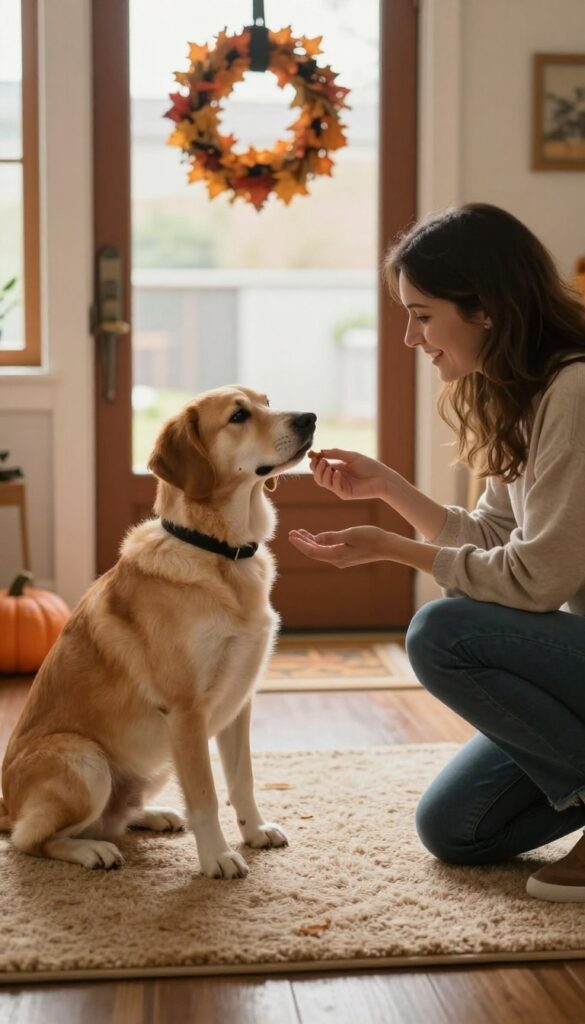
Dogs repeat what pays off. If barking and lunging at the door gets them attention or a reaction, they’ll keep doing it. But when you consistently reward calm, quiet behavior near the entryway, your pup starts to realize that being relaxed is the real win.
Start before Halloween chaos begins. Practice when it’s quiet, then gradually add distractions. The more you reinforce calmness, the more your dog will choose it naturally when the doorbell rings.
Rewarding calm behavior around the door is about timing and consistency. You want your dog to associate the doorway with good things, not just excitement. This means having treats ready and watching for moments when your dog is relaxed—maybe sitting, lying down, or simply not reacting to a knock.
When you catch that calm moment, mark it with a treat and praise. Over time, your dog learns that being chill near the door is what earns the good stuff. It’s also important to avoid rewarding the crazy behavior.
If your dog is jumping and barking, don’t give treats or attention. Wait for a pause, even a brief one, and then reward. This teaches your dog that calmness is the key to getting what they want.
With practice, you’ll see your dog offering calm behaviors on their own, especially when they know the doorbell might ring.
Catch The Calm Moments
Keep treats in a bowl near the door so you’re always ready. Watch for any calm behavior—sitting, lying down, or even just a relaxed posture. When you see it, say “yes” or use a clicker, then give a treat.
Timing matters: reward within a second or two so your dog connects the behavior with the reward. Even a few seconds of calm is worth reinforcing.
Use A Mat Or Bed
Place a mat or bed near the door and teach your dog to go there on cue. This gives them a clear spot to settle. Start by luring them to the mat with a treat, then reward for staying.
Once they’re comfortable, practice with the doorbell or a knock. The mat becomes a safe zone where calm behavior is expected and rewarded.
Practice With Fake Doorbells
Simulate doorbell rings and knocks during training sessions. Have a friend ring the bell or knock while you ask your dog to go to their mat or sit calmly. Reward them for staying calm, not for reacting.
Start with low-intensity sounds and gradually increase. This helps your dog generalize the calm behavior to the real event.
5. Set Up a 'Candy Station' Away from the Door
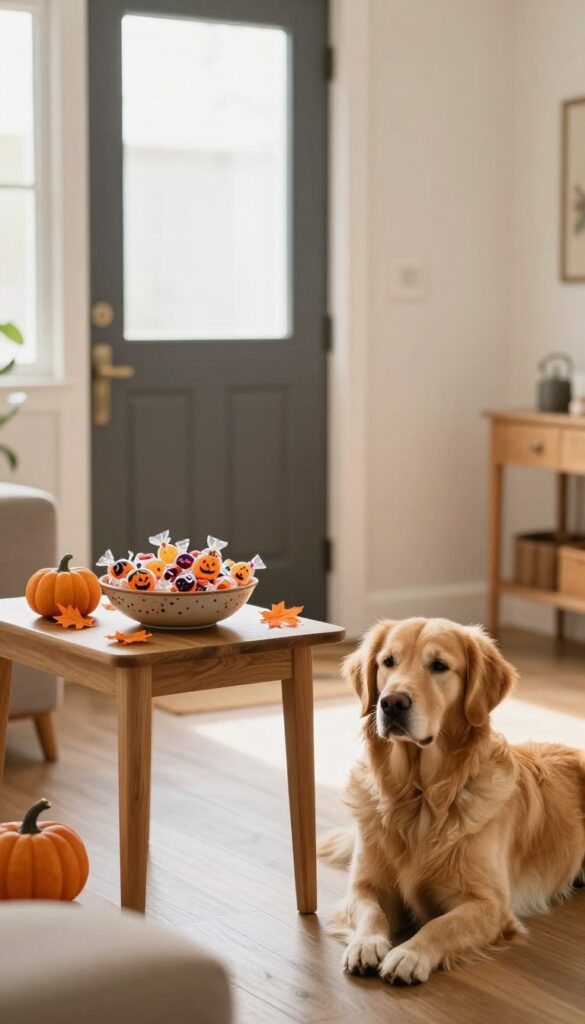
Moving the candy bowl even a few feet from the door can change the whole energy of Halloween night. Instead of hovering right at the entrance, you create a little buffer zone between your dog and the constant stream of visitors. That distance gives you a chance to reward calm behavior before your pup even thinks about reacting.
When you're right at the door, your dog sees every trick-or-treater as an intruder. By setting up a candy station a few feet back—say, on a small table in the entryway or just inside the living room—you shift the focus. You're no longer standing in the 'danger zone, ' and your dog has a better chance of staying relaxed.
Why Distance Helps
The closer you are to the door, the more your dog feels like they need to protect it. Moving even five or six feet away reduces that pressure. Your dog can still see what's happening, but they're not right in the middle of the action.
That little bit of space makes it easier for them to stay calm and for you to reward them for it.
How To Set It Up
Grab a small table or even a sturdy stool and place it a few feet from the door—maybe in the hallway or just inside the living room. Put the candy bowl there, along with a few festive decorations if you like. Make sure you have a clear path to the door so you can still greet visitors easily.
The goal is to have a spot that feels natural, not awkward.
Rewarding Calm Behavior
With the station in place, you can focus on your dog. When they stay calm as you answer the door, give them a treat or a quiet 'good boy. ' If they start to get excited, calmly walk them back to their mat or ask for a 'sit' before you hand out candy. The station gives you a moment to pause and reinforce the behavior you want, instead of rushing to the door every time the bell rings.
6. Enlist a Helper to Manage the Door
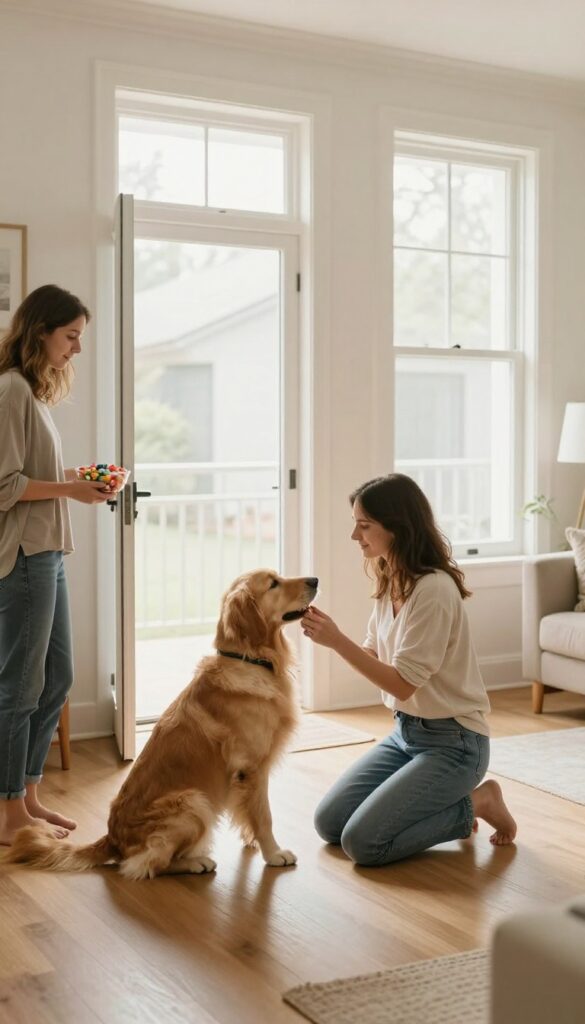
You can't be everywhere at once, especially when the doorbell is ringing nonstop. That's where a second pair of hands comes in handy. Having someone else handle the door lets you stay focused on your dog, rewarding the calm and redirecting the chaos.
When you're the one juggling candy, greetings, and your pup, training takes a backseat. A helper changes the game. They can answer the door, chat with visitors, and keep the flow moving while you give your dog your full attention.
This setup makes it easier to reinforce good behavior consistently, which is key for lasting change.
Set Clear Roles Before The First Knock
Decide who does what before the fun begins. Your helper handles the door, takes the candy, and manages small talk. You focus on your dog, rewarding calm sits and quietly correcting any lunges or barks.
A quick huddle before the first trick-or-treater arrives makes everything smoother.
Use Hand Signals To Stay In Sync
Agree on simple signals so you can communicate without shouting across the room. A thumbs-up can mean 'all clear, ' while a raised palm might mean 'wait. ' This keeps the vibe calm and prevents your dog from picking up on any tension or confusion.
Let Your Helper Handle Distractions
If your dog gets overly excited, your helper can step in. They can keep visitors at the door while you move your pup to a quiet spot for a quick reset. This prevents a full-blown meltdown and teaches your dog that calm behavior gets them back to the fun.
7. Practice with Costumed Friends
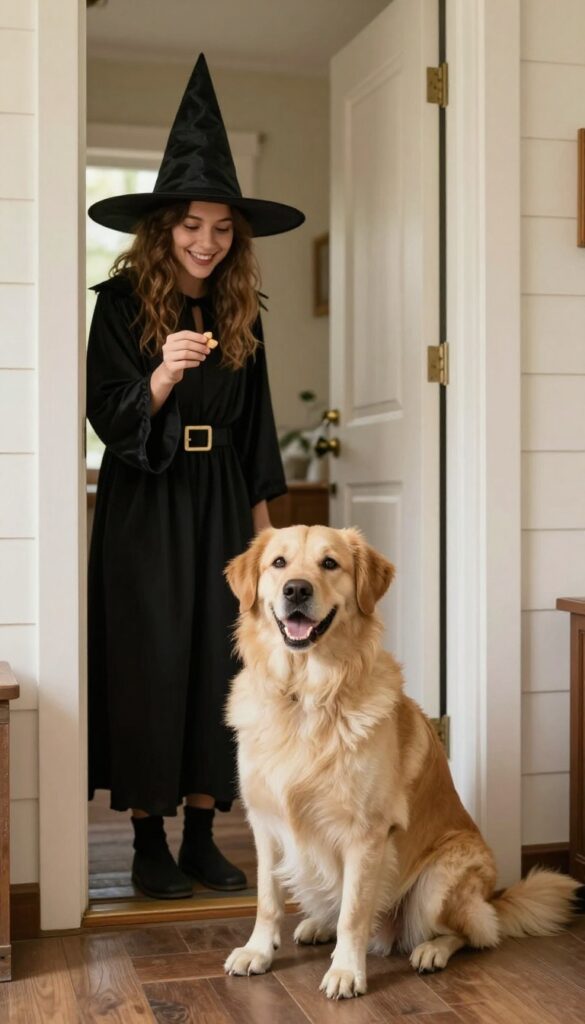
Your dog might be fine with the mailman, but a witch at the door? That's a whole different story. Costumes change how people look, smell, and move, which can confuse even the most confident pup.
Practicing with friends in costume is the safest way to bridge that gap before the real thing.
Invite a few friends over for a mock trick-or-treat session. Have them ring the bell, knock, and stand at the door in full costume. Reward your dog for staying calm and sitting politely.
Start with one friend, then add more, and gradually increase the chaos—maybe have them laugh loudly or shuffle their feet. The goal is to make the unusual feel normal.
Start With One Friend
Begin with a single friend in a simple costume, like a hat or mask. Have them approach the door slowly and ring the bell. Keep your dog on a leash and reward calm behavior with treats.
Repeat until your dog seems relaxed, then move on to the next step.
Add Distractions Gradually
Once your dog is comfortable with one costumed friend, add more. Have friends talk loudly, carry props like a broom or a fake pumpkin, or even knock in a funny rhythm. Each new distraction builds your dog's tolerance.
Remember to keep sessions short and positive—five to ten minutes is plenty.
Use High-value Rewards
During practice, use treats your dog doesn't get every day, like small pieces of chicken or cheese. This makes the training more exciting and helps your dog focus on you instead of the costumed visitors. Reward every calm sit, even if it lasts only a second, and gradually increase the time before treating.
8. Use High-Value Treats for Doorway Training
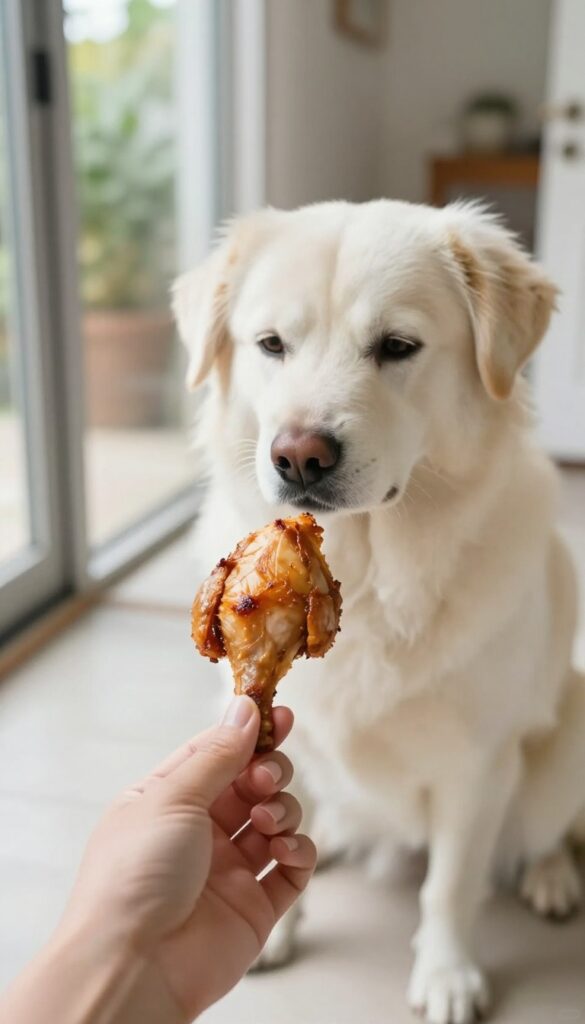
When the doorbell rings, your dog faces a tough choice: investigate the exciting stranger or listen to you. Regular kibble might not tip the scales in your favor, but a tiny piece of roasted chicken or cheese just might. High-value treats make staying calm and looking at you far more rewarding than bolting for the door.
Save these special snacks exclusively for door training so they keep their magic.
High-value treats are small, smelly, and delicious—things your dog rarely gets. Think boiled chicken, string cheese, or hot dog slices. The key is to reserve them for doorway practice only.
If your pup gets these treats at other times, they lose their power. Use them during training sessions and on Halloween night to reinforce calm behavior when the doorbell rings.
Why Regular Treats Fall Short
Everyday treats are fine for basic obedience, but they don't compete with the thrill of a stranger at the door. High-value treats create a stronger motivation to focus on you instead of the chaos. The smell and taste are so compelling that your dog will start to associate the doorbell with something amazing—and that's exactly what you want.
How To Use Them Effectively
Start by practicing with a friend ringing the bell or knocking. Have your dog on a leash and a handful of high-value treats ready. The moment the bell rings, ask for a simple behavior like 'sit' or 'look at me. ' As soon as your dog complies, deliver a treat immediately.
Repeat this until your dog automatically looks to you when the bell sounds. Keep sessions short—five minutes max—so your dog stays excited.
Timing And Delivery Tips
Timing matters. Deliver the treat the instant your dog makes the right choice, even if it's just a quick glance your way. Use a happy, encouraging tone to keep the mood positive.
If your dog is too worked up, move farther from the door or have a helper ring from a distance. The goal is to set your pup up for success, not to overwhelm them.
9. Teach a Solid 'Wait' at the Door
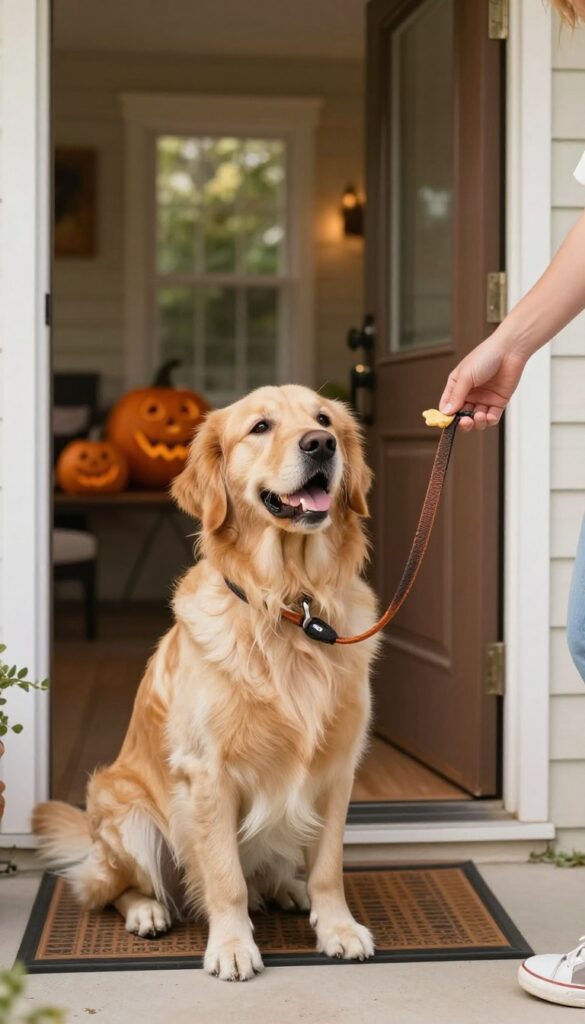
Before Halloween night, you can turn the front door into a training opportunity. Teaching your dog to wait at the door isn't just about good manners—it's about safety. When the door opens for trick-or-treaters, a dog that bolts can end up lost or injured.
Start practicing now, and you'll build a habit that holds up even when the doorbell is ringing nonstop. The goal is simple: your dog learns that the door opening is not an invitation to charge forward.
The key to a solid 'wait' is consistency and gradual progression. You'll start with the door closed, then move to opening it a crack, and finally practice with real distractions. This step-by-step approach helps your dog succeed at each level, building confidence and impulse control.
Remember, the 'wait' command is different from 'stay. ' 'Wait' is a temporary pause—you're asking your dog to hold still until you release them. This is perfect for doorways because you can release them when it's safe to greet or go out.
Start With The Door Closed
Begin by standing near the door with your dog on a leash. Ask for a 'sit' or 'down, ' then say 'wait' in a calm, firm voice. Open the door just a few inches.
If your dog stays put, close it and reward with a treat. If they move, close the door and try again. Repeat until your dog holds the position consistently.
Practice this several times a day. The goal is to make 'wait' a default response when the door starts to open.
Add Distractions Gradually
Once your dog waits reliably with the door closed, it's time to add distractions. Have a friend knock or ring the doorbell while you practice. Start with the door closed, then move to opening it with your friend on the other side.
Reward your dog for staying put. You can also practice with the door fully open, but keep your dog on a leash for safety. This simulates the real Halloween scenario where the door is open and there are people outside.
Apply It To Greeting Visitors
Now it's time to use 'wait' when actual visitors arrive. Have a friend come to the door. Ask your dog to 'wait' before you open the door.
Open it, and if your dog stays, give a release cue like 'okay' and allow a polite greeting. If your dog breaks the wait, close the door and try again. With consistent practice, your dog will learn that waiting leads to good things—treats, attention, and the chance to greet calmly.
This makes Halloween night much more peaceful for everyone.
10. Keep Your Dog's Energy in Check with Exercise
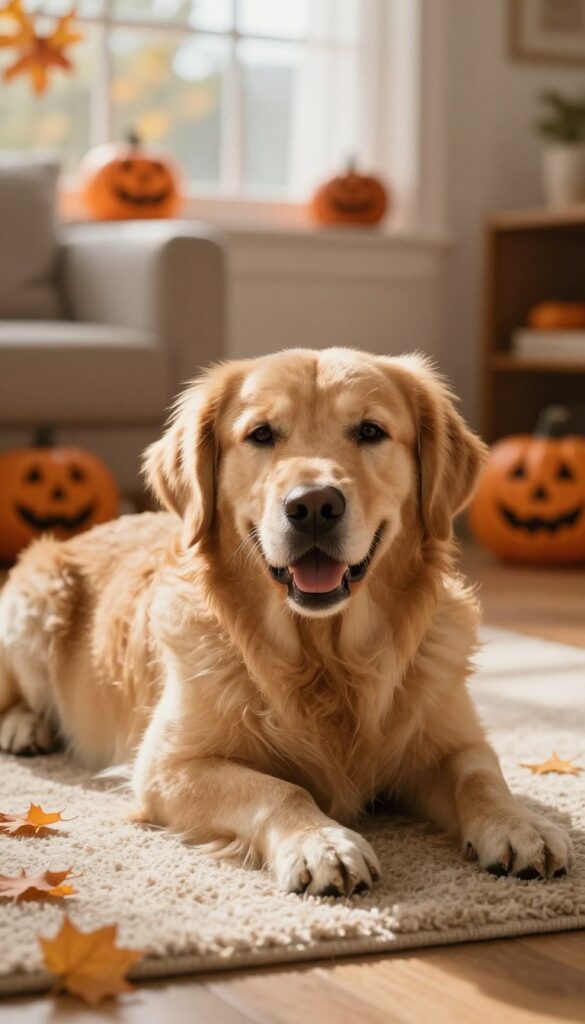
A tired dog is a good dog—especially on Halloween. When your pup has already burned off that extra zoom, the doorbell isn't as thrilling, and staying calm comes more naturally. Exercise is your secret weapon for a peaceful evening.
Plan a solid workout earlier in the day, like a long walk, a game of fetch, or even a short jog. The goal is to tire out both body and mind, so your dog is more interested in napping than in barking at every visitor.
Why Exercise Calms The Chaos
Dogs with pent-up energy are more reactive. A good workout releases endorphins, which help reduce stress and anxiety. When your dog is physically tired, they're less likely to jump, bark, or lunge at the door.
It's a simple equation: more exercise, less chaos.
Best Workouts For Halloween Eve
Think about what your dog loves most. A long sniffy walk lets them explore and burn mental energy. A game of fetch or tug in the backyard works off physical steam.
If you're short on time, even 15 minutes of focused play can make a difference.
Timing Matters: When To Exercise
Aim to finish the workout about an hour before the first trick-or-treaters arrive. This gives your dog time to cool down, hydrate, and settle into a relaxed state. You want them tired but not overly exhausted, so they can still enjoy the evening without being on high alert.
Don't Forget Mental Stimulation
Physical exercise is great, but mental challenges can be just as tiring. Try a puzzle toy, a short training session, or a game of hide-and-seek with treats. A mentally tired dog is often calmer than one who's just physically worn out.
11. Create a Quiet Zone for Your Dog
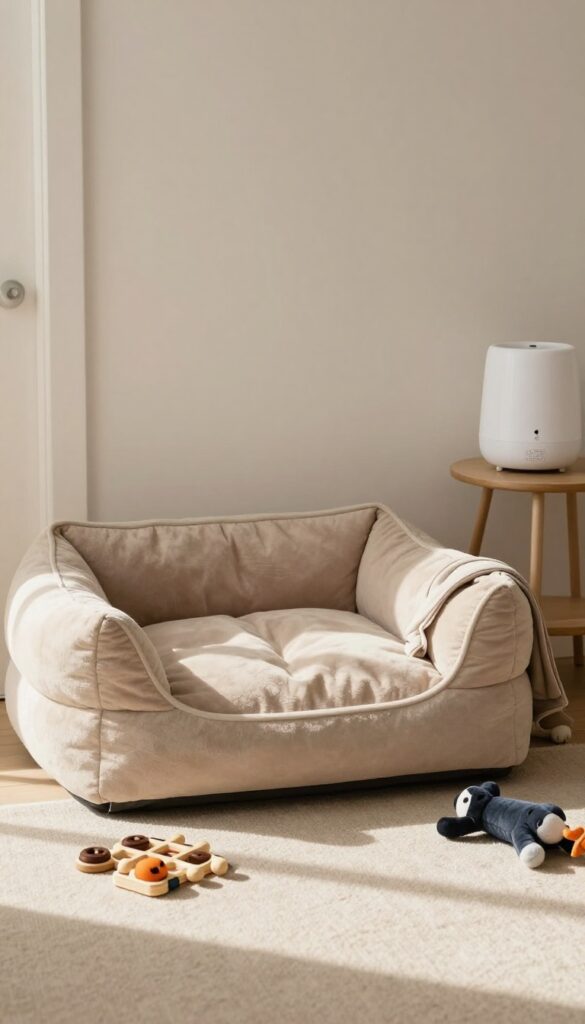
Not every dog thrives on Halloween chaos, and that's okay. If your pup gets anxious or overstimulated by constant doorbell rings, giving them a safe, quiet spot can be a game-changer. It's not about locking them away—it's about offering a calm retreat where they can relax on their own terms.
Setting up a quiet zone doesn't require a lot of space or fancy equipment. Choose a room away from the front door—like a bedroom or a back office—and make it inviting. Add a comfy bed, a few favorite toys, and a treat puzzle to keep their mind busy.
You can even toss in an item of clothing that smells like you for extra comfort. The goal is to create a space your dog actually wants to be in, not a punishment corner. Start introducing your dog to this area a few days before Halloween, so it feels familiar and positive.
On the big night, if your dog seems stressed—pacing, whining, or hiding—gently guide them there with a treat. Keep the door closed or use a baby gate to keep them inside, but check on them regularly. This way, they can decompress while you handle the candy distribution.
It's a simple step that makes a huge difference for sensitive pups.
Choosing The Right Spot
Pick a room that's naturally quieter and away from the front door. Avoid areas with large windows facing the street, as seeing strangers can still trigger barking. A space where your dog already feels safe—like where they sleep—is ideal.
If possible, add some soundproofing like a white noise machine or soft music to muffle doorbell sounds.
Making It Inviting
Stock the zone with things your dog loves: a plush bed, a chew toy, and a treat-dispensing puzzle. You can also include a worn t-shirt of yours for a calming scent. The idea is to make this spot so appealing that your dog chooses it over the front door chaos.
Practice sending them there with a cue like 'go to your spot' and reward them generously.
Introducing It Before Halloween
Don't wait until October 31st to spring this on your dog. Start a few days in advance by guiding them to the quiet zone during normal downtime. Give them treats and praise when they settle there.
This builds a positive association, so when Halloween arrives, your dog will see the space as a safe haven rather than a strange new area.
FAQ
How can I stop my dog from barking at the doorbell?
Desensitize your dog to the doorbell sound by playing it at low volume while giving treats. Gradually increase the volume over several days. Also, teach a 'quiet' command and reward calm behavior near the door.
What should I do if my dog dashes out the door on Halloween?
Keep your dog on a leash or tethered during trick-or-treat hours. Practice a solid 'wait' or 'stay' at the door, and reward your dog for staying put. If your dog does dash, avoid chasing; instead, call them back with a happy tone and offer a treat.
Can I train my dog to ignore visitors at the door?
Yes, you can teach your dog to go to a 'place' mat when the doorbell rings. Start by practicing with friends and gradually increase distractions. Reward your dog for staying on the mat until you release them.
What are the best treats to use for door training?
Use high-value treats like small pieces of cooked chicken, cheese, or hot dogs. These are more motivating than regular kibble and help your dog focus during high-distraction moments.
Is it okay to keep my dog in another room during Halloween?
Absolutely. If your dog is stressed or overly excited, it's perfectly fine to give them a quiet space away from the door. Provide a comfortable bed, toys, and a treat puzzle to keep them occupied.
Conclusion
Halloween can be a whirlwind of sights, sounds, and doorbell chaos, but a little prep goes a long way. Pick one or two of these tips to practice before the big night, and you’ll already see calmer reactions at the front door.
Remember, consistency matters more than perfection—your dog will learn best when you keep sessions short and positive. With a few rehearsals and the right treats, you can actually enjoy the holiday without worrying about frantic barking or door dashing.

I’m Pallab Kishore, the owner of Little Pets Realm — an animal lover and pet care enthusiast sharing easy tips, healthy recipes, and honest advice to help every small pet live a happy, healthy, tail-wagging life.