
Last updated on August 19th, 2026 at 04:15 pm
Rainy days can turn your energetic pup into a couch potato with a side of mischief. But instead of letting the drizzle dictate the day, you can flip the script. Indoor training isn't just a backup plan—it's a chance to build skills that pay off when the sun returns.
Think of it as a mini staycation for your dog's brain. You'll both come out of it more relaxed, more connected, and maybe even with a few new tricks up your sleeve.
The best part? You don't need a gym-sized living room or fancy gear—just a little creativity and a pocketful of treats.
1. Master the 'Settle' Command for Calm Indoor Energy
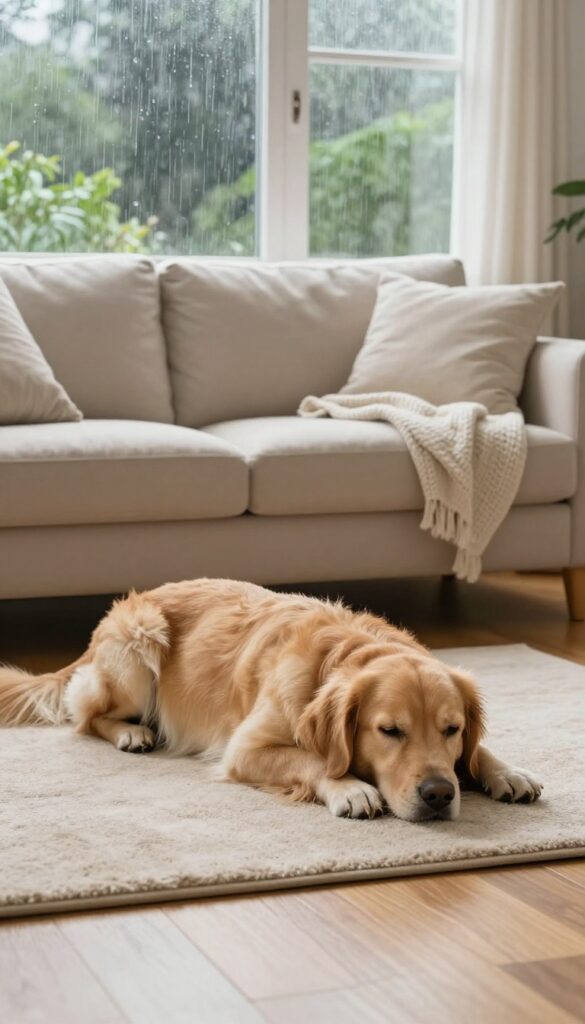
Rainy days often mean your dog is bouncing off the walls, but the 'settle' command can be your secret weapon. This cue teaches your pup to relax on a mat or bed, giving them an off-switch for all that pent-up energy. It's not just about getting a moment of peace—it's about building a skill that helps your dog stay calm in any situation, from a thunderstorm to a busy household.
Start by choosing a comfortable mat or bed that your dog associates with relaxation. Use high-value treats to lure them onto it, then reward any calm behavior like sitting or lying down. Gradually add a verbal cue like 'settle' or 'relax' as they get the hang of it.
The key is to reward the calm, not just the position, so your dog learns to switch off their brain, not just their body.
Why 'settle' Works On Rainy Days
When the weather keeps you indoors, your dog's usual exercise routine goes out the window. That's when 'settle' becomes a lifesaver. It gives your dog a clear job: relax.
This mental engagement is just as tiring as a long walk, but it happens in the comfort of your living room. Plus, it helps prevent the destructive behaviors that often come with boredom, like chewing or barking.
Step-by-step Training Tips
Start with short sessions—just a few minutes at a time. Lure your dog onto the mat with a treat, then mark the moment they lie down with a calm 'yes' or a click. Reward them for staying put, gradually increasing the duration.
If they pop up, simply reset and try again. Keep it positive and end on a good note, so your dog looks forward to training time.
Making It Stick For Real-life Situations
Once your dog has the basics, practice in different rooms and with distractions, like the TV on or a family member walking by. You can also use 'settle' during mealtimes or when visitors come over. The more you practice in real-life scenarios, the more reliable it becomes.
Before you know it, your dog will automatically head to their mat when they need to chill out.
2. Build a Mini Obstacle Course with Household Items
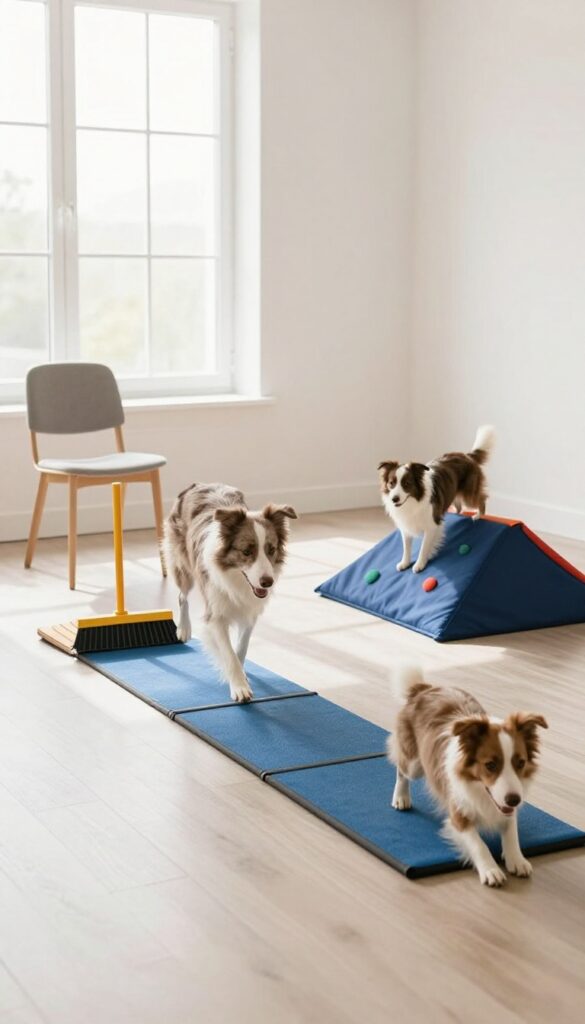
Turn your living room into a mini agility arena using everyday items you already own. This is a great way to burn off pent-up energy while sharpening your dog's coordination and listening skills. Plus, it's a blast for both of you.
Creating an indoor obstacle course doesn't require expensive equipment. With a few cushions, chairs, and a broom handle, you can set up a course that challenges your dog physically and mentally. Start with simple obstacles and gradually increase the difficulty as your dog gets the hang of it.
Always use positive reinforcement and keep sessions short and fun.
Setting Up Safe And Simple Obstacles
Begin with low-impact obstacles like a cushion 'mountain' to climb over or a broom handle resting on two stacks of books for a low jump. Make sure everything is stable and won't topple over. Use a clear path and guide your dog with treats or a toy.
Keep the layout simple so your dog doesn't get overwhelmed.
Teaching Each Obstacle Step By Step
Introduce one obstacle at a time. Lure your dog over or through it with a treat, using a cheerful voice. Repeat until your dog seems comfortable, then add the next obstacle.
Practice each piece separately before combining them into a sequence. This builds confidence and prevents frustration.
Putting It All Together: A Fun Sequence
Once your dog masters a few obstacles, link them into a short course. For example, weave between chair legs, jump over the broom handle, and then crawl under a table. Use a command like 'go' or 'through' to signal each transition.
Finish with a big reward and lots of praise. You can time your dog or just enjoy the process.
3. Play the 'Find It' Nose Work Game
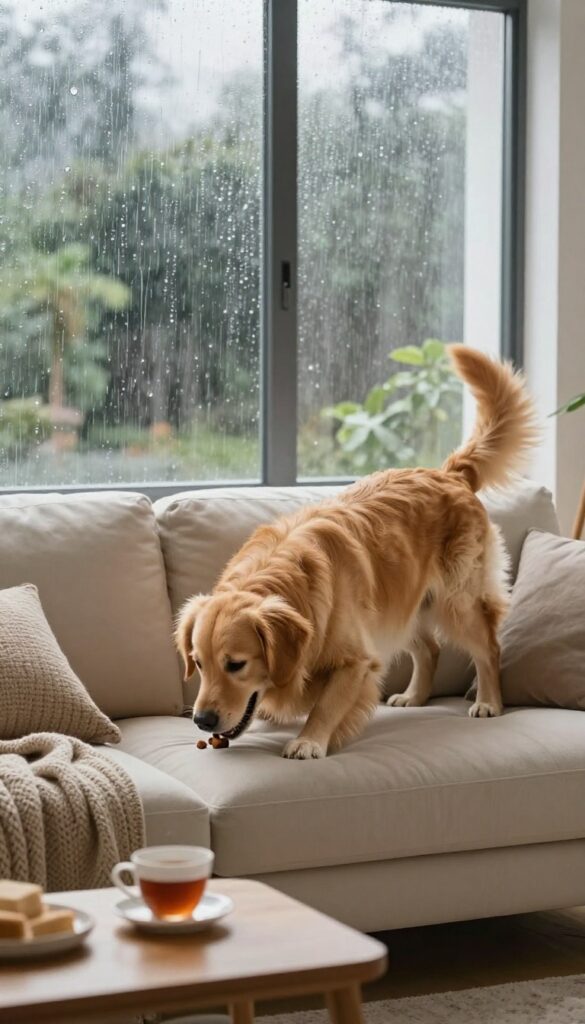
Dogs experience the world mostly through their noses, so tapping into that natural superpower is both fun and exhausting in the best way. The 'Find It' game turns your living room into a treasure hunt that engages your pup's brain far more than a simple game of fetch. It's a fantastic rainy-day activity that builds confidence and strengthens your bond, all while burning mental energy that helps them settle down afterward.
Start easy by letting your dog watch you place a treat on the floor a few feet away, then say 'Find it! ' with excitement. As they catch on, progress to hiding treats under cushions, behind chair legs, or in plain sight but slightly out of reach. The key is to celebrate every success with praise and a small reward, keeping the game positive and encouraging.
You'll soon see your dog's natural hunting instincts kick in, and they'll start using their nose with focused determination.
Getting Started Indoors
Begin in a small, clutter-free area so your dog can succeed easily. Use high-value treats like tiny pieces of chicken or cheese, and keep sessions short—five minutes is plenty for a beginner. Always say a clear cue like 'Find it! ' before releasing your dog, and let them see you hide the treat at first.
This builds their understanding of the game and sets them up for success.
Leveling Up The Challenge
Once your dog gets the hang of it, ramp up the difficulty. Hide treats in more challenging spots, like under a rug edge, inside a cardboard box, or between couch cushions. You can also hide a favorite toy instead of food, or use a special 'scent' object like a cotton ball with a drop of essential oil (safe for dogs) to make it more complex.
Another fun twist is to hide three treats at once and let your dog find them all, turning it into a mini scavenger hunt.
Why It's Great For Rainy Days
This game provides serious mental stimulation, which is just as tiring as physical exercise. A 15-minute nose work session can leave your dog more relaxed than a long walk, making it perfect for days when you're stuck inside. It also builds your dog's problem-solving skills and boosts their confidence, especially for shy or anxious pups.
Plus, it's a quiet, low-impact activity that won't disturb neighbors or ruin your floors.
4. Practice Loose-Leash Walking Indoors
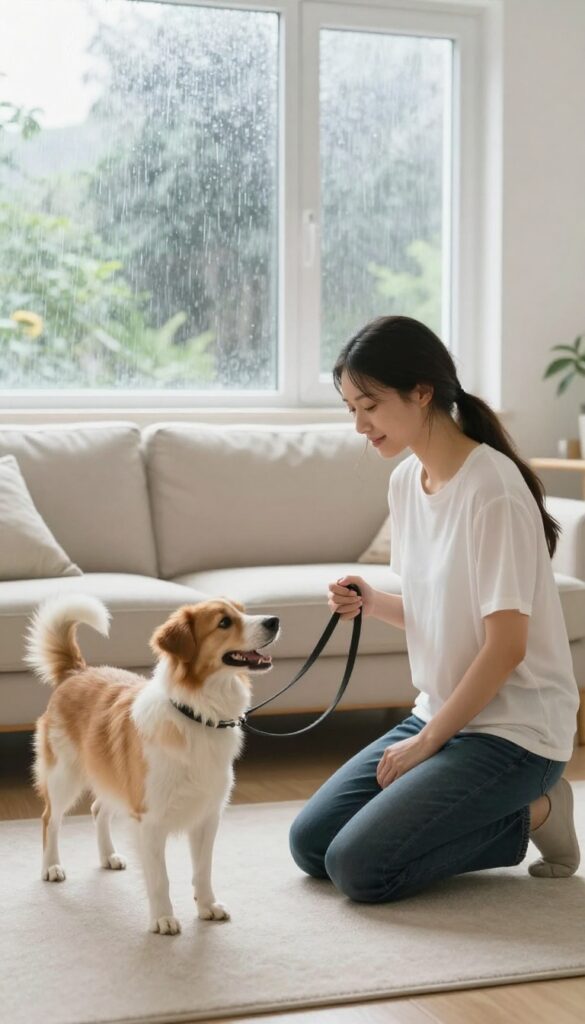
Who says leash manners can only be polished on the sidewalk? The living room can be your training ground, especially when the weather keeps you cooped up. Practicing loose-leash walking indoors helps your dog understand that staying close to you is rewarding, no matter the setting.
This isn't about pacing back and forth like a drill sergeant. It's a low-pressure way to reinforce the habit of checking in with you and keeping slack on the leash. Plus, it's a great way to burn off some of that restless energy without getting wet.
Start in a clear area of your living room, with minimal distractions. Have treats ready and your dog on a leash. Begin walking at a normal pace, and the moment your dog walks beside you with a slack leash, mark it with a “yes” and reward.
If they pull ahead or lag behind, stop moving and wait for them to come back to your side. This teaches them that pulling gets them nowhere, while staying with you earns good things. Keep sessions short—five to ten minutes is plenty.
You can make it more interesting by changing direction frequently or weaving between furniture. The key is to keep your dog engaged and focused on you, not just on the treats. Over time, they'll learn that paying attention to you is the best way to get what they want.
Why It Works
Indoor practice strips away the chaos of the outdoors, allowing your dog to focus purely on your movements and cues. It reinforces the fundamental skill of walking politely, which translates directly to real-world walks. Plus, it's a mental workout—your dog has to think about where you're going and what you're asking, which is just as tiring as physical exercise.
Tips For Success
Use high-value treats that your dog doesn't get every day, like small pieces of chicken or cheese. Keep your movements unpredictable to hold their interest. If your dog gets too excited, take a break and let them settle before trying again.
Remember to end on a positive note, with a successful lap or a fun game of tug, so they're eager to do it again tomorrow.
Adding Distractions
Once your dog masters the basics, up the ante. Have a family member walk through the room, or toss a toy nearby. Practice in different rooms or with the TV on.
These mini-distractions mimic real-world scenarios and help your dog generalize the behavior. Before you know it, your rainy-day sessions will make sunny-day walks a breeze.
5. Teach a New Trick: 'Spin' or 'Twist'
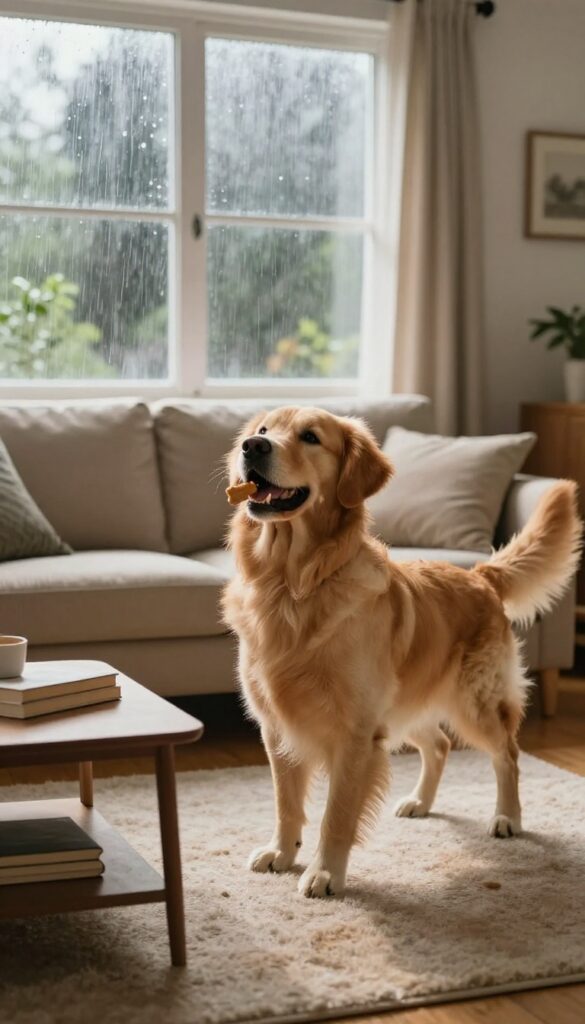
Rainy days are perfect for teaching tricks that are just for fun. 'Spin' and 'twist' are easy to learn, look impressive, and give your dog a great mental workout. Plus, they're a fantastic way to bond without leaving the living room.
Teaching your dog to spin is simpler than you might think. Start by holding a treat close to their nose and slowly luring them in a circle. Once they catch on, add the verbal cue 'spin' or 'twist' right before the motion.
With a few short sessions, they'll be twirling on command in no time.
Why Spin And Twist Are Great Rainy-day Tricks
These tricks are more than just cute party pieces. They engage your dog's brain, helping to tire them out mentally. Since they involve movement, they also provide a bit of physical exercise, which is a bonus on days when walks are cut short.
Step-by-step: Luring Your Dog Into A Spin
Hold a treat close to your dog's nose and slowly move it in a circular motion. As they follow, say 'spin' or 'twist' clearly. Reward them the moment they complete the circle.
Repeat a few times, then gradually fade the treat lure, using just your hand signal and the verbal cue.
Adding Direction And Variations
Once your dog masters one direction, teach the opposite. Use 'spin' for one way and 'twist' for the other. You can also add a hand signal that matches each direction.
This keeps the trick fresh and challenges your dog to think.
Troubleshooting Common Challenges
If your dog seems confused, break the move into smaller steps. Reward any partial turn, then gradually expect more. Keep sessions short and upbeat.
If they lose interest, end on a positive note and try again later.
6. Work on Impulse Control with 'Leave It'
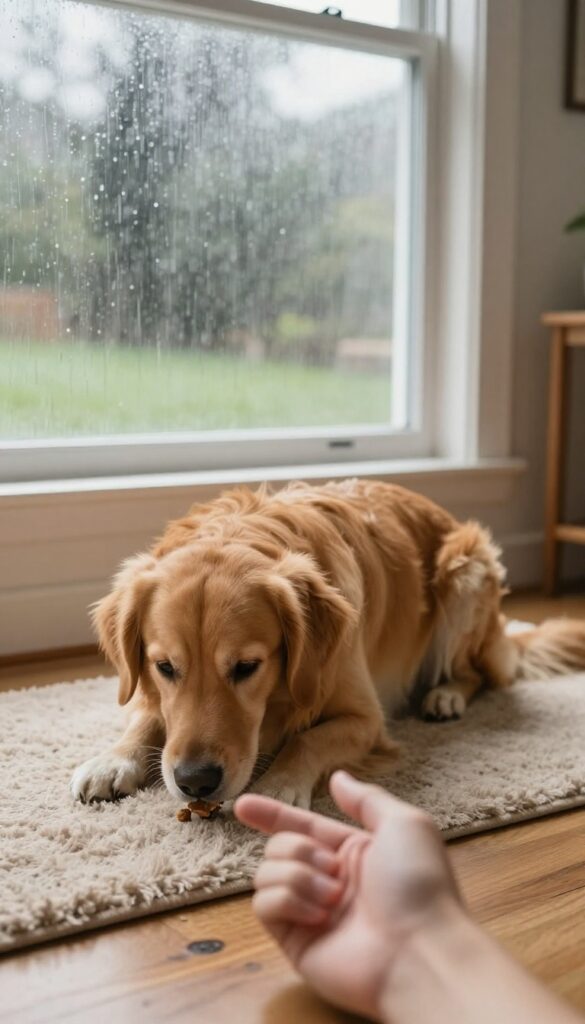
Impulse control is one of those skills that pays off in countless ways, from not chasing a squirrel to waiting politely for dinner. Rainy days give you the perfect excuse to practice it in a controlled, low-distraction environment. The 'leave it' cue is a classic for a reason—it teaches your dog to pause and think before reacting, which is a mental workout in itself.
Set up a few tempting distractions around the room—maybe a treat on the floor, a favorite toy, or even a piece of kibble. Start with something easy and gradually increase the difficulty as your dog gets the hang of it. The goal isn't just to get a 'leave it' in one session; it's to build a habit that carries over to real-world situations.
Start Simple With A Treat In Your Hand
Begin by holding a treat in your closed fist. Let your dog sniff, lick, and paw at it, but don't open your hand until they back off. The moment they pull away, say 'yes' and reward them with a different treat from your other hand.
This teaches them that ignoring the temptation earns something even better.
Move To The Floor For Real-life Practice
Once your dog understands the concept with your hand, place a treat on the floor and cover it with your foot or hand. Use the same cue and reward when they turn away. Gradually remove your cover and let them see the treat clearly, but keep your hand ready to cover it if they lunge.
This step mimics real-world distractions like dropped food or tempting objects on walks.
Add Distance And Duration
As your dog gets more reliable, increase the distance between them and the distraction, and ask them to hold the 'leave it' for longer before you release them. You can also toss a treat a few feet away and cue 'leave it' before they even move. This builds patience and self-control, which are exactly what you need when the sun comes out and the squirrels return.
7. Try a Puzzle Toy or DIY Snuffle Mat
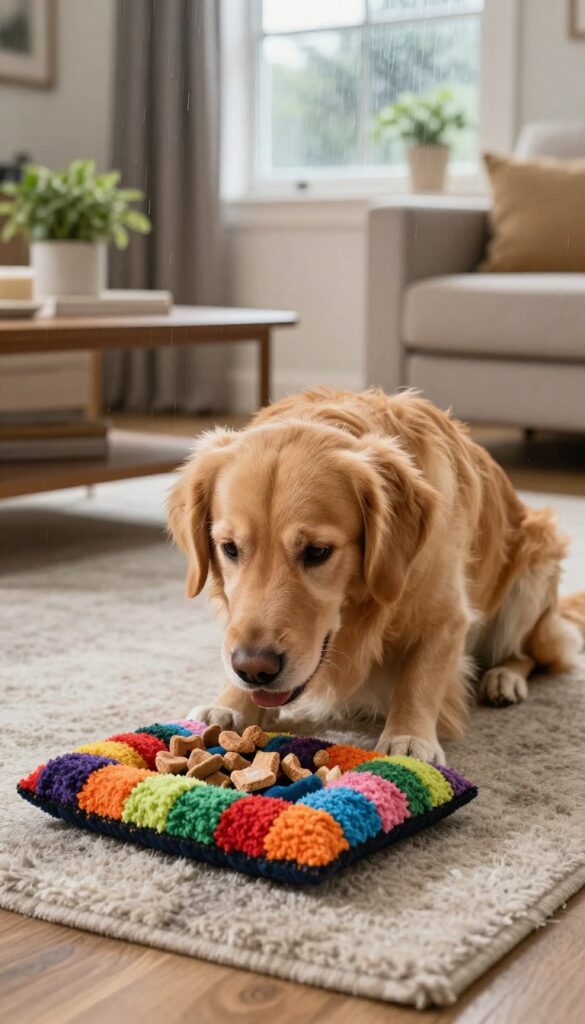
When the rain keeps you inside, a puzzle toy or snuffle mat can turn a boring afternoon into a mental workout. These tools tap into your dog's natural foraging instincts, making them work for their treats. The result?
A tired, happy pup without a single lap around the block.
Puzzle toys and snuffle mats are more than just distractions—they're brain games that build confidence and problem-solving skills. Store-bought options range from simple treat-dispensing balls to complex sliding puzzles. If you're crafty, a DIY snuffle mat from old towels or fleece strips is just as effective and budget-friendly.
Either way, you're giving your dog a job to do, and that's exactly what they need when cabin fever hits.
Why Brain Games Matter
Mental stimulation is just as tiring as physical exercise. A 15-minute puzzle session can leave your dog more relaxed than a 30-minute walk. It also helps reduce anxiety and destructive behaviors that often come with being cooped up indoors.
Choosing The Right Puzzle
Start with something easy, like a treat-dispensing ball or a simple flip board. Watch how your dog interacts and gradually increase the difficulty. Some dogs get frustrated if it's too hard, so always supervise and offer hints if needed.
The goal is to challenge, not frustrate.
Diy Snuffle Mat In 10 Minutes
Grab a rubber mat with holes (like a sink mat) and cut fleece strips. Push each strip through a hole and tie it off. Fill the mat with kibble or treats and let your dog sniff them out.
It's washable, reusable, and a great rainy-day project you can do together.
Safety And Supervision
Always supervise your dog with any puzzle toy. Check for loose parts or chewed-off pieces that could be swallowed. Rotate toys to keep them exciting, and store them out of reach when not in use.
A safe, supervised session is the best way to keep the fun going.
8. Practice 'Stay' with Increasing Distractions
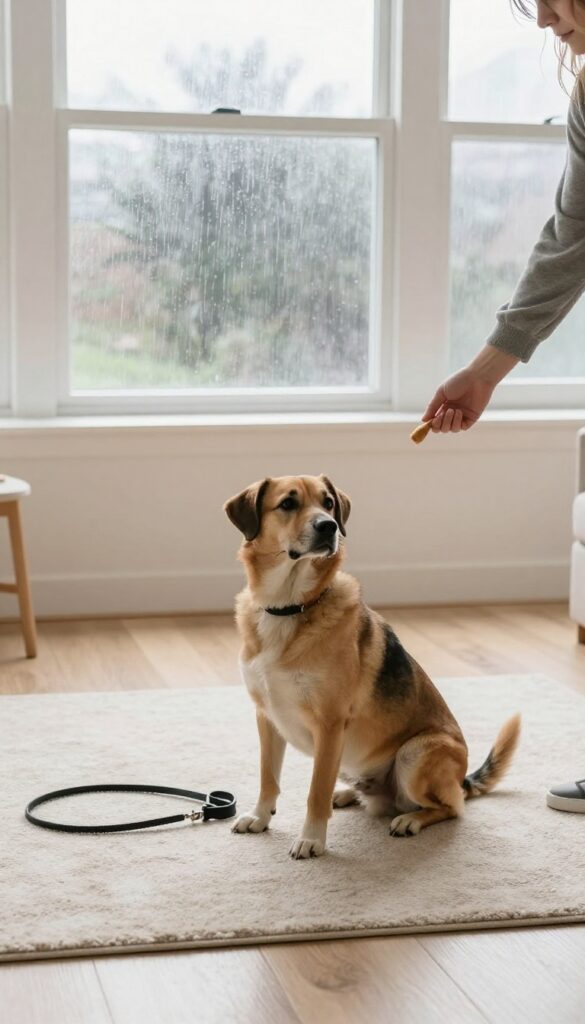
A reliable 'stay' is a lifesaver, but it’s only as strong as the distractions you’ve trained through. Rainy days give you the perfect excuse to proof this behavior without the chaos of a dog park. You’ll start easy, then slowly add challenges that mimic real-life temptations, all from the comfort of your living room.
This isn’t about drilling the same boring sit-stay over and over. It’s about teaching your dog to hold their position even when life gets interesting. By building up difficulty in small steps, you’ll turn 'stay' from a party trick into a dependable habit—one that keeps them safe and makes your life easier.
Start With The Basics
Before you add any distractions, make sure your dog has a solid 'stay' in a quiet room. Ask for a sit or down, say 'stay, ' and take one step back. If they hold, return and reward.
If they break, calmly reset and try again. Keep sessions short—just a few minutes—and always end on a success.
Add Movement And Noise
Once your dog can hold a stay while you move around, it’s time to introduce mild distractions. Drop a treat on the floor a few feet away, toss a toy gently, or jingle your keys. The goal is to make them want to break, but they don’t.
Reward them for staying, and gradually increase the temptation.
Use Doorways And Real-life Triggers
Doorways are prime spots for 'stay' practice. Ask your dog to stay while you open the door a crack, then close it without letting them bolt. If they hold, reward.
You can also practice with the front door when the mail arrives or during a knock. This builds impulse control that transfers to the real world.
Mix Up Duration And Distance
Now that distractions are less of a problem, start increasing the duration and distance. Ask for a stay, then walk across the room and back. Then try stepping out of sight for a few seconds, returning before they break.
Always reward generously for staying put, and if they fail, just make it easier for a few reps.
9. Do Some Crate Training Games
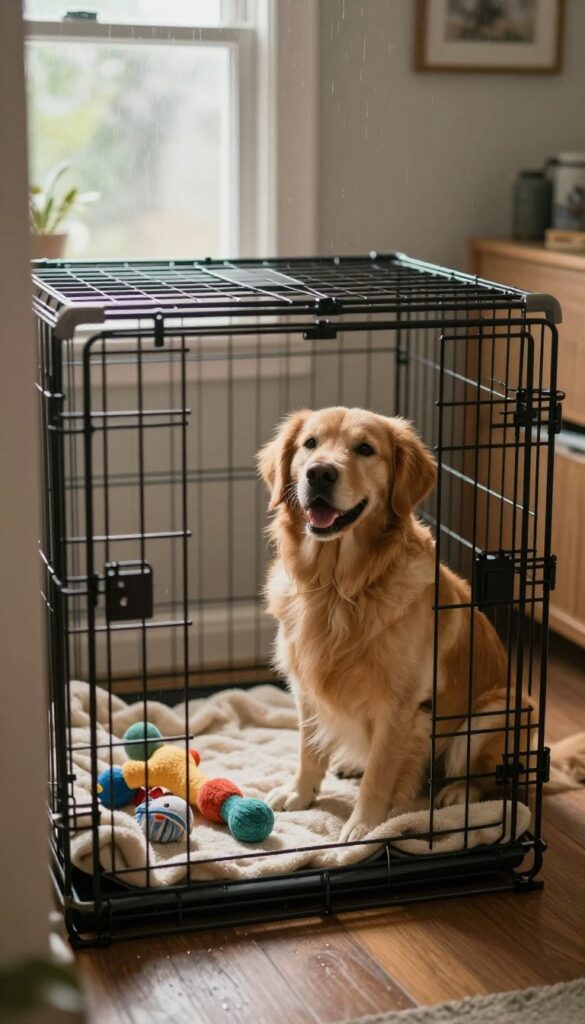
Crate training isn't just about confinement—it's about creating a safe haven your dog chooses. On a rainy day, you can turn the crate into the centerpiece of fun, reinforcing that it's a positive place to be. These games build a rock-solid foundation for future calmness and independence.
Start with the basics: toss a treat inside and let your dog follow. Say a cheerful 'crate! ' as they enter, then reward. Practice this until they dash in eagerly.
Then, add a release cue like 'out' and reward them for coming out. This back-and-forth builds a positive loop. Gradually increase the time they stay inside, always keeping sessions short and upbeat.
The goal is to make the crate a place they choose, not a place they're forced into.
Treat Toss And Recall
Stand a few feet away and toss a high-value treat into the crate. When your dog goes in, say 'yes! ' and give another treat. Then, call them out with a happy 'come! ' and reward.
This game reinforces the in-and-out pattern and makes the crate a rewarding spot. Mix up the distance and treat types to keep it exciting.
The Name Game
Teach your dog that their name means 'look at me' and then 'go to your crate. ' Say their name, and when they look, point to the crate and say 'crate! ' Reward them for entering. This builds a strong recall-to-crate behavior that's useful in real-life situations, like when guests arrive or during storms.
Crate Hide And Seek
Hide a few treats or a favorite toy inside the crate and let your dog find them. Start with the door open, then gradually close it for a few seconds while they're inside. This game turns the crate into a treasure hunt, making it a place of discovery and fun.
Always supervise and keep sessions short to avoid frustration.
Progressive Stay
Ask your dog to sit or lie down inside the crate. Open the door, give a 'stay' cue, and take one step back. Return immediately and reward.
Gradually increase the distance and duration. This builds impulse control and comfort with the crate door open, which is perfect for rainy-day practice.
10. Teach a Reliable Recall with a Long Line
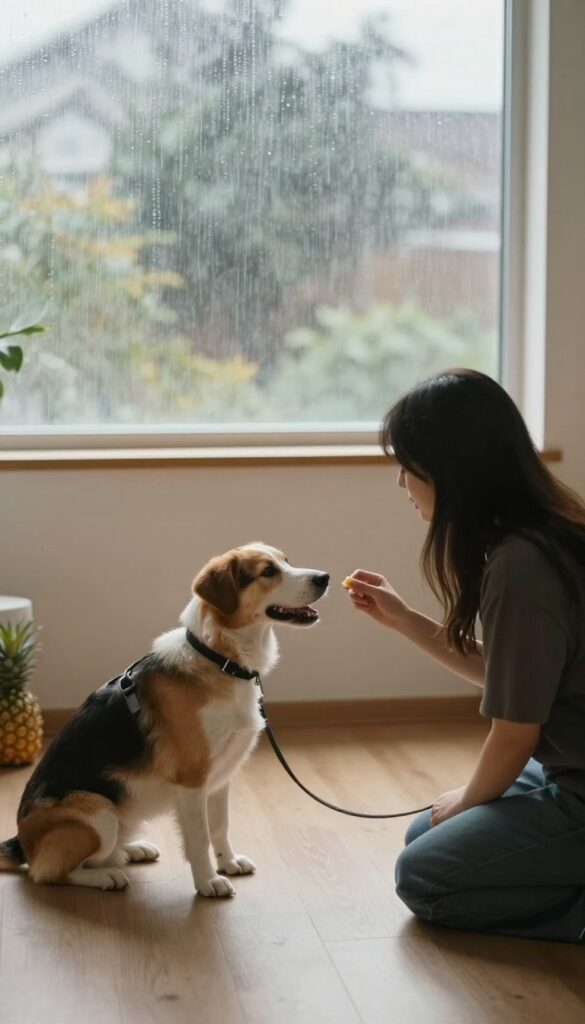
A rock-solid recall is one of the most important safety skills your dog can have. Rainy days give you a perfect excuse to practice it in a controlled, distraction-free environment. All you need is a long leash and a few high-value treats.
Start in a small space like a hallway or a single room. Let your dog wander a bit, then call their name in a happy, excited tone. The moment they come to you, reward with treats and praise.
Repeat several times, gradually increasing the distance and adding mild distractions like a toy on the floor.
Why Indoor Recall Training Works
Indoor training removes the chaos of the outdoors, so your dog can focus entirely on you. It also lets you control the environment, making it easier to set up successful repetitions. Plus, practicing in different rooms helps your dog generalize the cue—they'll learn that 'come' means the same thing no matter where they are.
How To Set Up The Long Line Indoors
Attach a long line (10-15 feet) to your dog's harness. Let them drag it as they explore, but keep a hand on the end to prevent tangling. When you call, give a gentle tug if needed, then reel them in with praise.
The line is a safety net, not a tool for correction—always keep the experience positive.
Turning It Into A Game
Make recall fun by playing 'ping-pong' between two family members. Take turns calling the dog from one person to the other, rewarding each arrival. You can also hide and call your dog to find you, turning the training into a game of hide-and-seek.
This builds enthusiasm and reinforces that coming to you is always a good thing.
Progressive Challenges For Rainy Days
Once your dog is reliable in one room, add challenges. Call them from another room while you're busy, or when they're sniffing a treat hidden on the floor. Use a different tone of voice occasionally to keep them guessing.
Each success builds their confidence and your trust in them.
11. Play the 'Name Game' to Boost Vocabulary
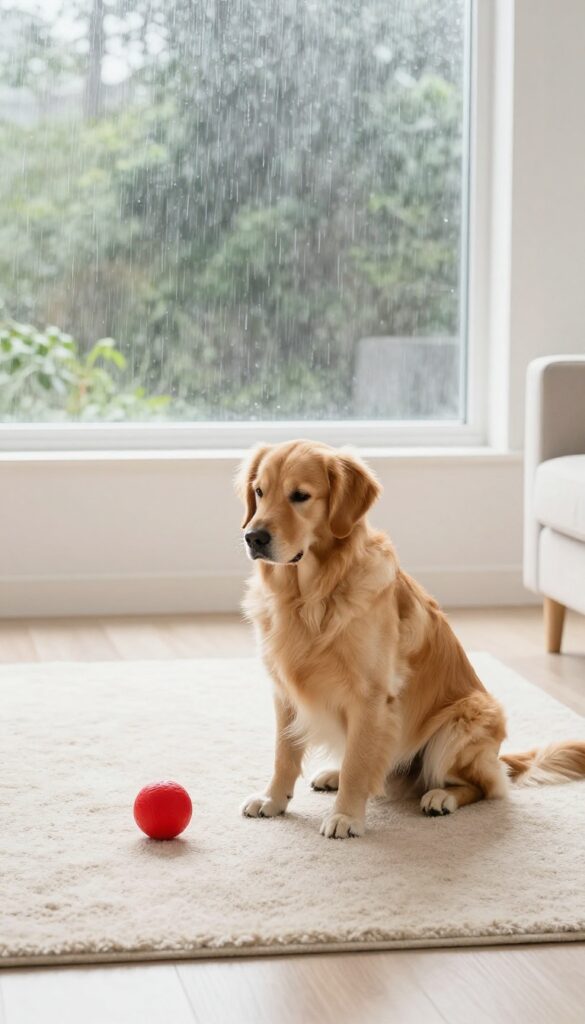
Dogs are capable of learning far more than 'sit' and 'stay. ' The 'Name Game' taps into their natural ability to associate words with objects, turning your living room into a fun vocabulary lesson. It's a simple, low-energy activity that sharpens their listening skills and gives their brain a satisfying workout.
Start with a toy your dog already loves. Say the toy's name clearly, then hold it out and encourage them to touch or pick it up. When they do, mark the moment with a click or a cheerful 'yes! ' and reward them with a treat.
Repeat this several times until they seem to connect the word with the object. Then, place the toy on the floor and ask them to 'get [toy name]. ' If they look at it or move toward it, reward generously. Over time, increase the number of toys and the distance between them.
Start Simple And Build Up
Begin with one or two toys that have distinct names, like 'Ducky' and 'Ball. ' Keep sessions short—five minutes is plenty—and always end on a positive note. Once your dog reliably picks the right toy when asked, add a third. This gradual progression prevents confusion and keeps the game exciting.
Turn It Into A Fun Retrieval Game
Once your dog knows a few names, you can turn the game into a mini retrieval challenge. Line up three toys on the floor, then ask for one by name. If they grab the correct one, celebrate with a treat and a quick game of tug.
This adds a physical element that makes the game even more rewarding, and it's a great way to burn off energy on a rainy day.
Why This Works
This game strengthens your dog's listening skills and memory, but it also deepens your bond. Your dog learns to focus on your words and look to you for guidance, which builds trust and communication. Plus, it's a fantastic confidence booster—every correct choice earns praise, making your dog more eager to learn and interact.
12. Practice Grooming Handling with Treats
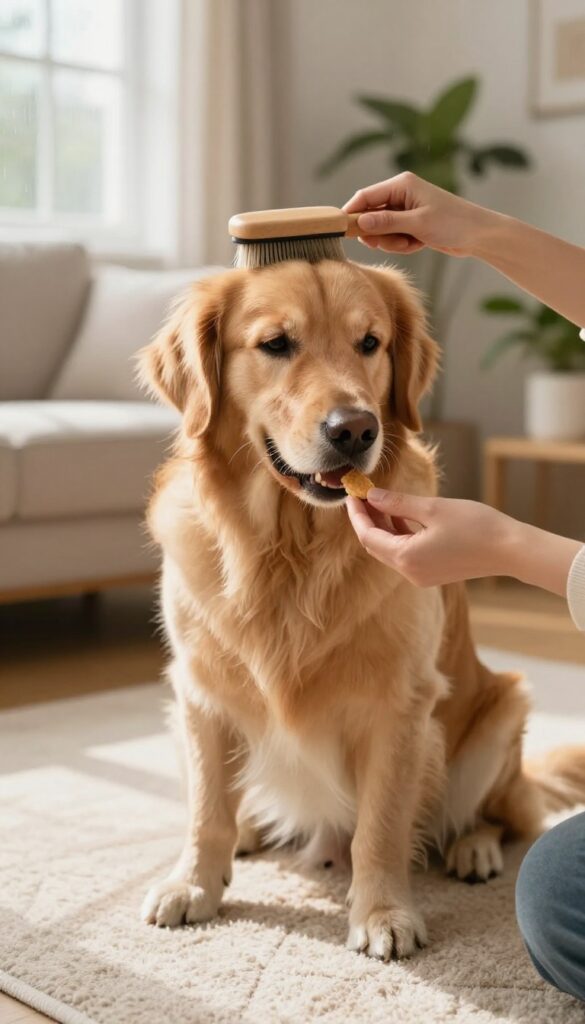
Rainy days are perfect for turning grooming into a positive experience. Many dogs squirm or bolt at the sight of a brush, but with a little patience and a handful of treats, you can change that. This isn't just about looking good—it's about building trust and making vet visits easier.
Start slow and let your dog set the pace. Show the brush, let them sniff it, and reward any calm behavior. Then, touch them gently with the brush without actually brushing, and treat.
Gradually increase the duration and pressure as your dog relaxes. The goal is to associate the brush with good things, not stress.
Start With Short Sessions
Keep initial sessions to just a few minutes. A tired or anxious dog won't learn well, so stop before they get restless. Use high-value treats like small pieces of chicken or cheese.
Reward every step—looking at the brush, sniffing it, and accepting a touch. This builds a positive chain of behaviors.
Work On Paw Handling
Paw handling is a common struggle, especially for nail trims. Begin by touching your dog's paw while giving a treat. Then, hold the paw for a second or two, and treat.
Gradually increase the hold time. If your dog pulls away, don't force it—just go back a step. With patience, they'll learn that paw handling means snacks.
Make Ear Checks A Habit
Ear infections can be painful, so getting your dog used to ear checks is smart. Gently lift an ear flap, peek inside, and reward. Do this for both ears.
You can also practice touching around the ears and head. This desensitization makes vet exams less stressful and helps you spot problems early.
13. Set Up a 'Go to Your Bed' Station
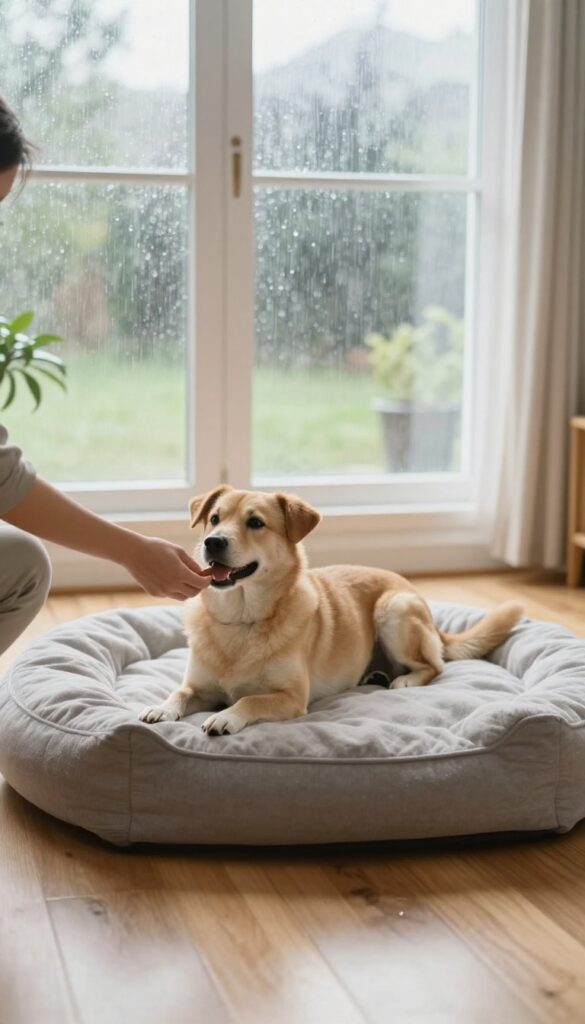
Does your dog turn into a furry tornado when the doorbell rings or when you're chopping veggies? A 'go to your bed' cue gives them a clear job to do instead of hovering underfoot. It's a simple behavior with huge payoff for rainy-day calm.
Teaching this cue is straightforward and doesn't require much space. You'll need a comfy mat or dog bed and a handful of treats. The goal is to build a strong, automatic response that works even when life gets exciting.
Start With The Mat
Place the bed in a quiet spot and lure your dog onto it with a treat. Say 'bed' as they step on, then reward. Repeat a few times, then start adding a hand signal.
Soon, they'll connect the word with the action.
Add Duration And Distance
Once your dog reliably goes to the bed, begin asking for a 'down' or 'settle' before rewarding. Then, take a step back and reward them for staying. Gradually increase the distance and time, always returning to reward before they get up.
Practice With Real-life Distractions
Rainy days are perfect for this. Have a family member ring the doorbell, or pretend to chop veggies while your dog stays on their bed. Start with small distractions and build up.
Reward generously for staying put.
Make It Part Of The Routine
Use the cue during meal prep, when guests arrive, or whenever you need a calm moment. The more you practice, the more automatic it becomes. Before long, your dog will head to their bed on their own when things get busy.
14. Do Some Trick Training: 'Shake' or 'High Five'
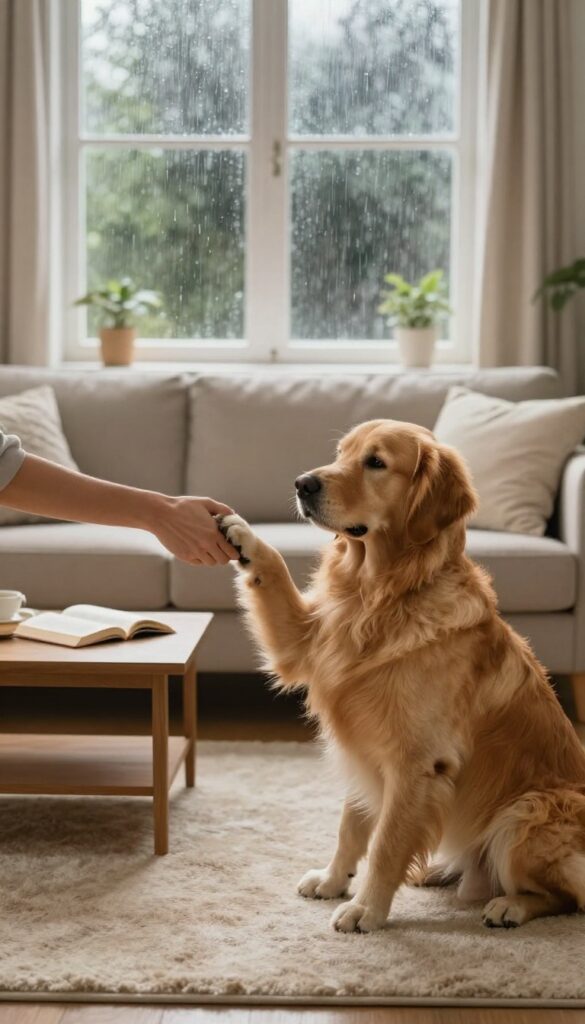
When the rain keeps you indoors, turning your living room into a mini training ring can be a game-changer. Teaching your dog a classic trick like 'shake' or 'high five' is not only fun but also strengthens your bond. These tricks are simple to break down, require minimal space, and give your pup a mental workout that tires them out just as much as a physical one.
Start with the basics: get your dog into a sit position, then gently lift their paw while saying 'shake' and reward them. Repeat until they offer the paw on their own. For 'high five', hold a treat in your closed fist at nose level, and when your dog paws at it, mark and reward.
Once they reliably touch your hand, raise it slightly and add the cue 'high five'.
Why Tricks Beat Boredom
Trick training engages your dog's brain, which is often more exhausting than physical exercise. A 10-minute session of learning a new trick can leave your dog satisfied and calm, reducing the likelihood of destructive behaviors born from boredom. Plus, the one-on-one attention strengthens your connection and builds trust.
Step-by-step: Shake
Begin with your dog in a sit. Hold a treat in your closed hand and let them sniff it. As they get curious, they may paw at your hand.
The moment their paw touches, say 'yes' and give the treat. Gradually add the verbal cue 'shake' just before they paw. With repetition, they'll learn to offer their paw on command, and you can transition to an open hand.
Step-by-step: High Five
Similar to shake, but with a raised hand. Start with your hand at your dog's chest level, palm facing them. When they touch it with their paw, reward.
Slowly raise your hand higher until it's at your shoulder level. Add the cue 'high five' once they consistently touch your palm. Keep sessions short and positive, ending with a big reward and praise.
Troubleshooting Tips
If your dog is hesitant to use their paws, you can gently guide them by lifting a paw yourself and rewarding. Always use high-value treats for new tricks. If your dog gets frustrated, take a break and try again later.
Consistency is key, but keep it fun—never force the behavior.
15. Have a 'Calm Cuddle' Session with Massage
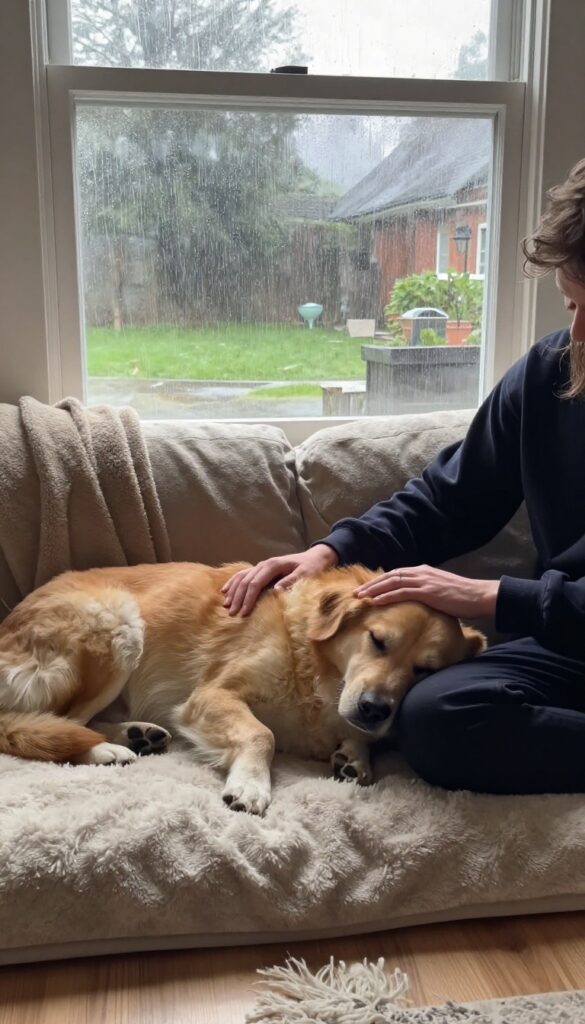
After a day of mental and physical activity, winding down is just as important as the training itself. A calm cuddle session with a gentle massage isn't just a cozy way to end the day—it's a powerful tool for reinforcing relaxation and deepening your bond. When your dog learns to associate being calm with positive touch, they become more comfortable settling down, even when the rain keeps you both indoors.
Massage isn't just a luxury for dogs; it's a form of communication. By using slow, deliberate strokes, you're telling your dog that it's okay to let their guard down. This is especially valuable on rainy days when pent-up energy can make it hard for them to switch off.
A massage session helps lower their heart rate, reduces stress hormones, and promotes a sense of security.
Why Massage Works
Massage triggers the release of oxytocin, the 'bonding hormone, ' in both you and your dog. It also activates the parasympathetic nervous system, which is responsible for rest and digestion. This helps your dog physically and mentally recover from a day of training, making them more receptive to future learning sessions.
How To Massage Your Dog
Start in a quiet, comfortable spot where your dog already feels safe. Use the flat of your hand and apply gentle, even pressure. Move from the neck down to the shoulders, then along the back, using long, sweeping strokes.
Avoid the joints and any sensitive areas. Watch your dog's body language—if they lean into your touch, they're enjoying it; if they pull away, ease off or stop.
Making It A Routine
Incorporate this into your rainy-day routine as the final activity. After training or play, invite your dog to lie down next to you. Use a calm, soothing voice and maybe play some soft music.
Over time, your dog will start to associate this time with relaxation, making it easier for them to settle down on their own when you're busy.
FAQ
How long should a training session be on a rainy day?
Keep sessions short and sweet—5 to 10 minutes per activity is plenty. Multiple short sessions throughout the day work better than one long one.
What if my dog gets frustrated with a new trick?
Break the trick into smaller steps and go back to something they know. Always end on a positive note to keep their confidence up.
Can I use regular kibble as treats for training?
Absolutely! If your dog is food-motivated, use their regular kibble or a portion of their meal for training to avoid overfeeding.
How do I keep my dog from getting bored with the same activities?
Rotate the activities and introduce new ones regularly. You can also combine two ideas, like doing a mini obstacle course followed by a nose work game.
Is it okay to train my dog on a rainy day if they seem restless?
Yes, training is a great way to channel that restlessness. Start with a high-energy game like fetch in the hallway, then move to calmer exercises.
Conclusion
Rainy days don’t have to mean couch-bound boredom for you or your dog. Pick two or three ideas from this list that match your pup’s energy and attention span, then build a little routine around them.
You’ll both come out of the storm with a stronger bond, a sharper mind, and maybe even a new favorite game. The best part is that none of this requires perfect weather or a big backyard—just a few treats, a bit of patience, and a willingness to try something new.

I’m Pallab Kishore, the owner of Little Pets Realm — an animal lover and pet care enthusiast sharing easy tips, healthy recipes, and honest advice to help every small pet live a happy, healthy, tail-wagging life.