
Last updated on August 19th, 2026 at 04:14 pm
The doorbell rings, and your dog goes wild—barking, spinning, maybe even bolting for the door. Halloween makes that worse with a constant stream of strangers in costumes. But you can turn the chaos into a calm routine with a few simple drills.
These exercises focus on teaching your dog that the doorbell means "go to your spot and wait, " not "bark at the unknown. " They're practical, easy to practice, and they build good habits that last beyond Halloween. Start a few weeks before the big night, and you'll see a noticeable difference.
Even a few days of practice can help. Let's get your pup ready for a stress-free Halloween.
1. Desensitize to the Doorbell Sound
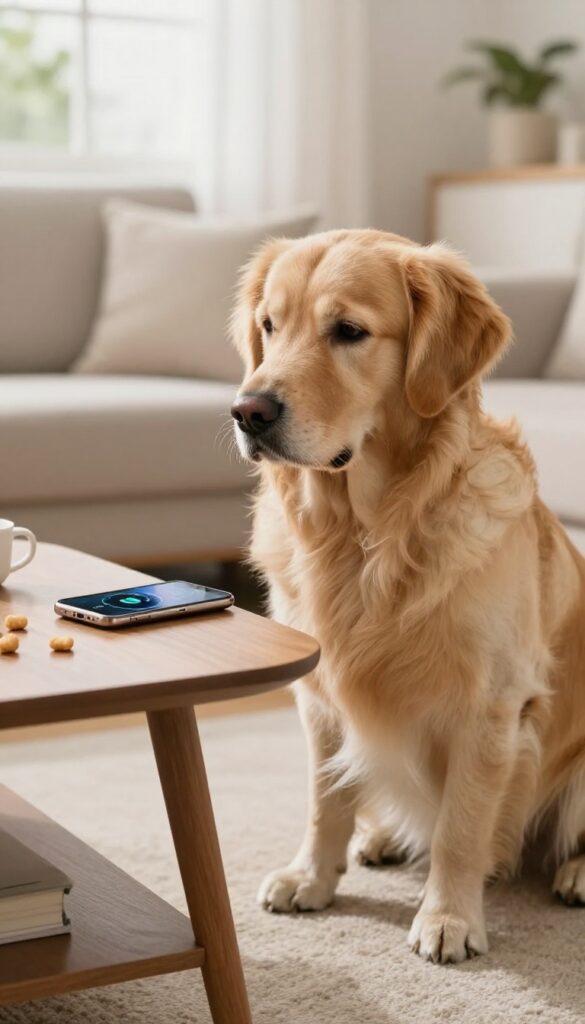
The doorbell itself is often the first trigger for a barking frenzy. Your dog hears that chime and immediately associates it with something exciting or alarming. By playing the sound at a low volume and pairing it with treats, you can change that association from chaos to calm.
Start by finding a recording of a doorbell (or use your actual doorbell if it's not too startling). Play it at a very low volume while your dog is relaxed, then immediately give a high-value treat. Repeat this several times, gradually increasing the volume over multiple sessions.
The goal is to teach your dog that the sound predicts good things, not a flood of strangers. Keep sessions short—just a few minutes each—and always end on a positive note.
Start Low And Slow
Begin with the volume so low that your dog barely notices it. Toss a treat or feed a small piece of chicken the moment the sound plays. Do this 5-10 times in a row, then take a break.
Over several days, increase the volume by a small margin each time. If your dog ever seems nervous, drop the volume back down and proceed more gradually.
Use High-value Treats
The treats you use should be extra special—something your dog only gets during training. Think small pieces of cooked chicken, cheese, or freeze-dried liver. This makes the doorbell sound strongly positive.
If your dog is not food-motivated, use a favorite toy or a game of tug as the reward instead.
Practice At Random Times
Don't just practice in one session. Randomly play the doorbell sound at different times of the day—during play, while your dog is chewing a bone, or when they're calm. This helps your dog generalize that the sound is always a good thing, not just during training.
Keep the volume at a comfortable level and always reward the calm response.
2. Teach a Solid 'Go to Mat' Cue

A reliable 'go to mat' cue gives your dog a clear job when the doorbell rings. Instead of reacting to the noise, they head to their bed and wait for a treat. This drill is simple to teach and pays off big on Halloween night.
Start With The Mat
Choose a mat or bed that's easy to spot and comfortable. Place it in a quiet corner away from the front door. Show your dog the mat, toss a treat onto it, and say 'go to mat' as they step on.
Repeat this a few times so they associate the mat with good things.
Add The Doorbell Sound
Once your dog reliably goes to the mat on command, introduce the doorbell sound. Use a recording or a friend to ring the actual bell. Right after the ring, give the cue and reward them for going to the mat.
Start with a low volume and gradually increase it as they get better.
Practice With Distractions
Halloween brings costumes and strangers, so practice with distractions. Have a friend in a hat or mask ring the bell while you send your dog to the mat. Reward calm behavior and gradually add more realistic distractions.
Keep sessions short and fun, ending on a positive note.
3. Practice with a Real Ring and Treats
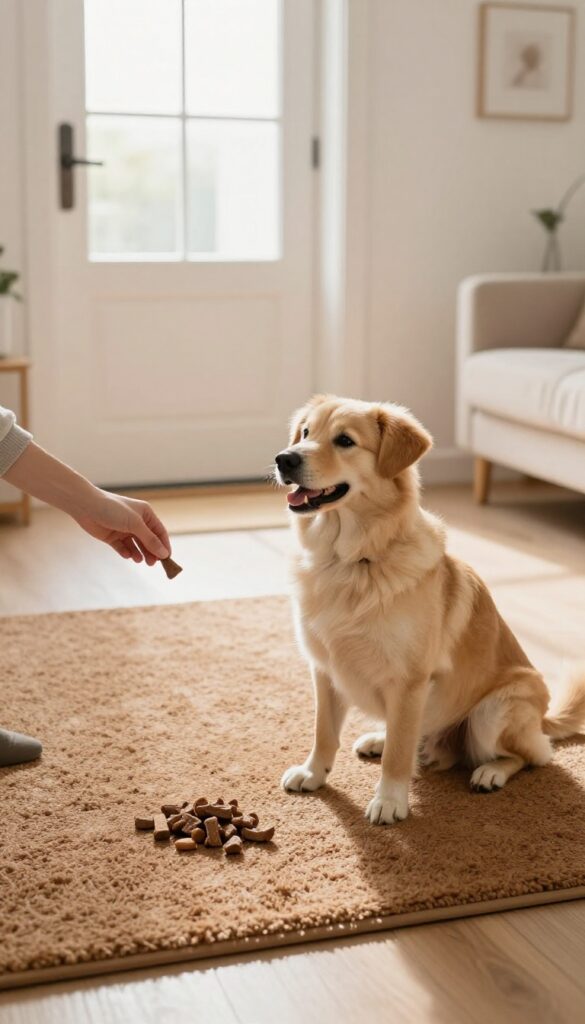
Once your dog has the basics down, it's time to test the real thing. A friend or family member can help you simulate the actual doorbell sound, which is often sharper and more startling than a recorded version. This drill pairs the real ring with something your dog loves—treats—so the sound becomes a signal for good things.
Start by having your friend ring the doorbell from outside while you stand ready with a handful of high-value treats. The moment the bell rings, calmly toss a treat onto your dog's mat or designated spot. Repeat this several times, gradually increasing the time between the ring and the treat toss, so your dog learns to go to the mat and wait for the reward.
This builds a positive association with the sound itself, reducing the urge to bark or rush the door.
Why The Real Ring Matters
Recorded doorbell sounds are helpful, but they lack the suddenness and volume of the real thing. Practicing with an actual ring helps your dog generalize the behavior to the real-world trigger. It also lets you work on your own timing, ensuring you reward your dog before the excitement escalates.
Set Up For Success
Choose a time when your dog is already calm, and keep the session short—five to ten minutes max. Use treats that are extra special, like small pieces of chicken or cheese, to make the association strong. Have your friend vary the number of rings and the pauses between them, so your dog stays engaged and doesn't predict the pattern.
Gradually Add Distractions
Once your dog consistently heads to the mat when the bell rings, add a layer of realism. Have your friend wear a hat or a simple costume, or open the door slightly after the ring. This mimics Halloween conditions without overwhelming your dog.
Keep rewarding calm behavior at the mat, and if your dog breaks position, simply reset and try again.
4. Use a 'Wait' at the Door
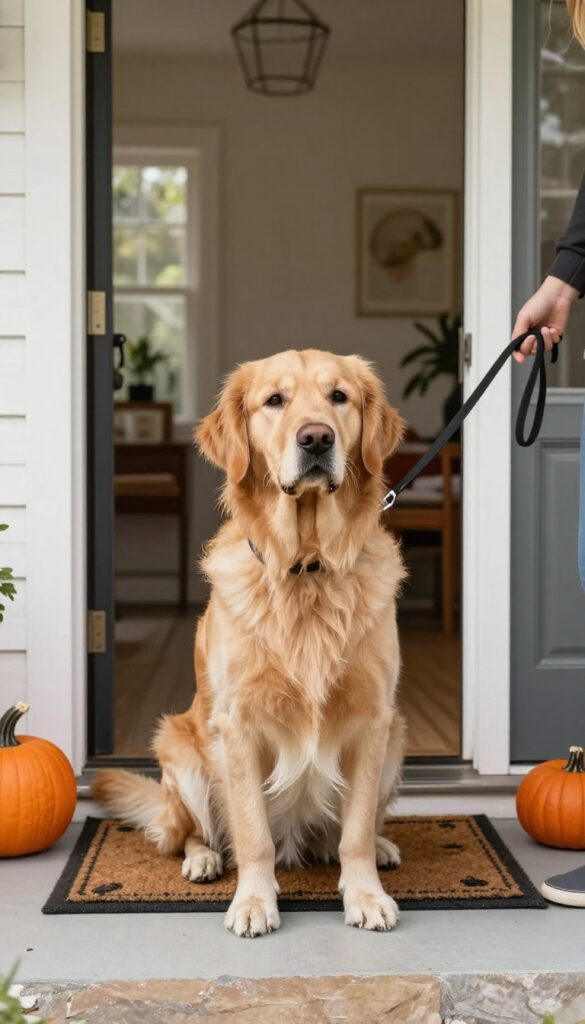
Teaching your dog to wait at a safe distance before greeting anyone is a game-changer during Halloween. It stops door-dashing and gives you a moment to manage the situation. This drill builds impulse control, so your dog learns that the doorway isn't a launching pad.
Start by practicing when it's quiet. Put your dog on a leash and walk toward the door. Stop a few feet away, ask for a 'wait, ' and reward calm behavior.
Gradually increase the challenge by having someone knock or ring the bell while you hold your dog in the wait position. Once your dog holds steady, you can open the door slightly and reward them for staying put. The goal is to make waiting more rewarding than rushing.
Pick A Safe Spot
Choose a spot a few feet from the door where your dog can see who's arriving but isn't in the way. A mat or a small rug can mark the spot. Practice sending your dog there before you even touch the doorknob, so it becomes a routine.
Add Distractions Gradually
Once your dog is solid at the door, add distractions. Have a friend ring the bell, then toss a treat to your dog while they wait. Increase the excitement by having your friend wear a hat or carry a prop.
This helps your dog generalize the behavior to real Halloween guests.
Reward The Wait, Not The Greeting
When you release your dog, make sure the reward is for waiting, not for rushing. Use a release word like 'okay' and then give a treat or praise. If your dog breaks the wait, calmly guide them back without scolding.
Consistency is key.
5. Reward Calm Behavior Around the Door
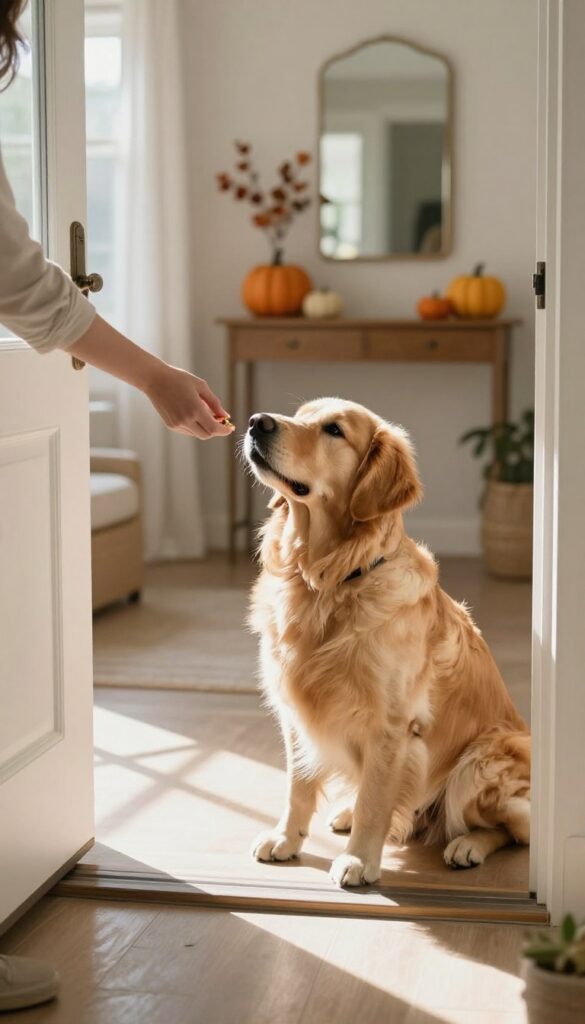
Positive reinforcement is one of the most powerful tools in dog training. When your dog stays calm near the door—no barking, no jumping—reward them with treats and praise. This teaches them that quiet behavior earns good things, making them more likely to repeat it when the doorbell rings on Halloween.
Rewarding calm behavior around the door is all about timing and consistency. You want your dog to associate the front door area with relaxed, quiet behavior, not excitement. Start by practicing during low-stress times, and gradually build up to more realistic scenarios.
Here’s how to make it work.
Start With The Door Closed
Begin by simply standing near the door with your dog on a leash or at your side. Wait for a moment of calm—maybe they sit or lie down, or even just stop pulling. The instant they relax, say “yes” or click, and give a treat.
Repeat this several times, rewarding any calm behavior, no matter how brief. This builds the foundation: the door area equals good things when calm.
Add The Doorbell Sound
Once your dog is calm near the door, introduce the doorbell sound at a low volume. You can use your phone or a doorbell app. Play the sound, and if your dog stays calm (no barking, no rushing), reward immediately.
If they react, wait for them to settle, then reward. Gradually increase the volume over several sessions, always rewarding the calm response.
Practice With A Helper
Enlist a friend or family member to ring the actual doorbell while you’re inside. Have your dog on a leash and treats ready. When the bell rings, the moment your dog looks at you or stays calm, mark and reward.
If they bark, ignore the barking and wait for a pause, then reward. This helps your dog learn that the doorbell doesn’t mean chaos—it means treats for staying chill.
Use High-value Treats
During Halloween, use extra-special treats that your dog doesn’t get every day—like small pieces of chicken, cheese, or hot dogs. This makes the calm behavior more rewarding and competes with the excitement of strangers at the door. Keep these treats handy near the door so you can reward instantly when your dog chooses calmness over barking.
6. Simulate Trick-or-Treaters with Costumed Helpers
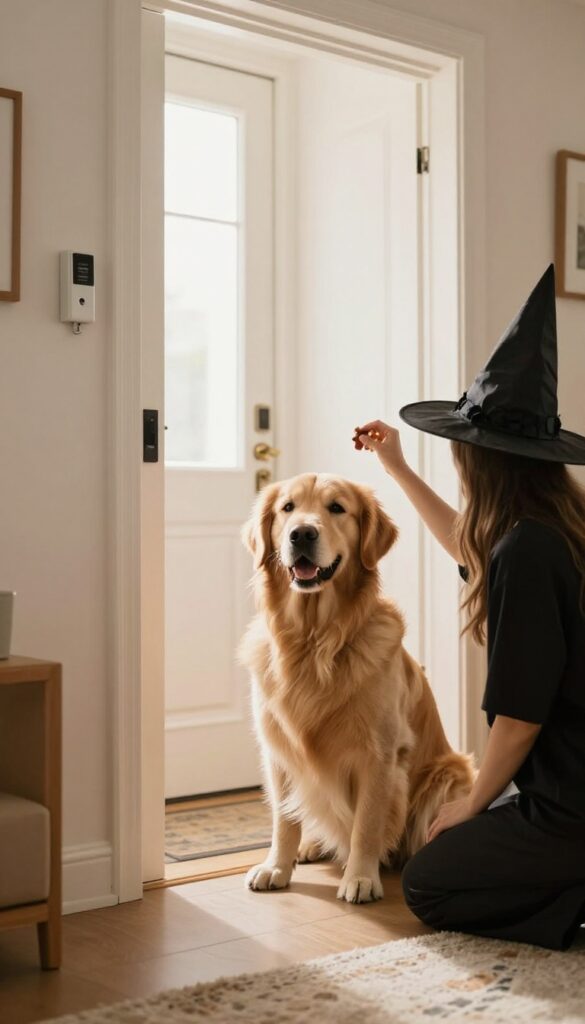
A ringing doorbell is one thing, but a ringing doorbell accompanied by a witch or a ghost is a whole other story. Your dog needs to learn that costumes are just part of the fun, not a threat. That's where your friends come in—they can be your secret weapon for a stress-free Halloween.
Enlist a few friends or family members to help you practice. Have them approach your door wearing different hats, masks, or full costumes. This gives your dog a chance to see that unusual appearances are no big deal.
Start with simple accessories like a hat, then gradually work up to more elaborate costumes. Reward calm behavior with treats and praise. This drill builds your dog's confidence and reduces the chance of a fearful or overexcited reaction on the big night.
Start Simple, Then Add Layers
Begin with a friend wearing just a hat or a scarf. Once your dog is comfortable with that, move on to sunglasses, a mask, or a full costume. The key is to go at your dog's pace.
If they seem uneasy, take a step back and give them time to adjust. Always pair the new sight with high-value treats so your dog associates costumes with good things.
Practice The Full Routine
Have your friend ring the doorbell or knock, then go through your usual routine—send your dog to their spot, wait for the cue, then greet. This helps your dog understand that the doorbell still means the same thing, even when someone looks different. Repeat this several times with different helpers so your dog gets used to a variety of appearances.
Mix Up The Scenarios
Don't just practice with one friend. Use different people, different costumes, and different times of day. Try having a helper walk up the driveway, stand on the porch, or even talk in a funny voice.
The more varied the practice, the better prepared your dog will be for the unpredictable nature of Halloween night.
7. Create a 'Halloween Station' with Treats and Toys
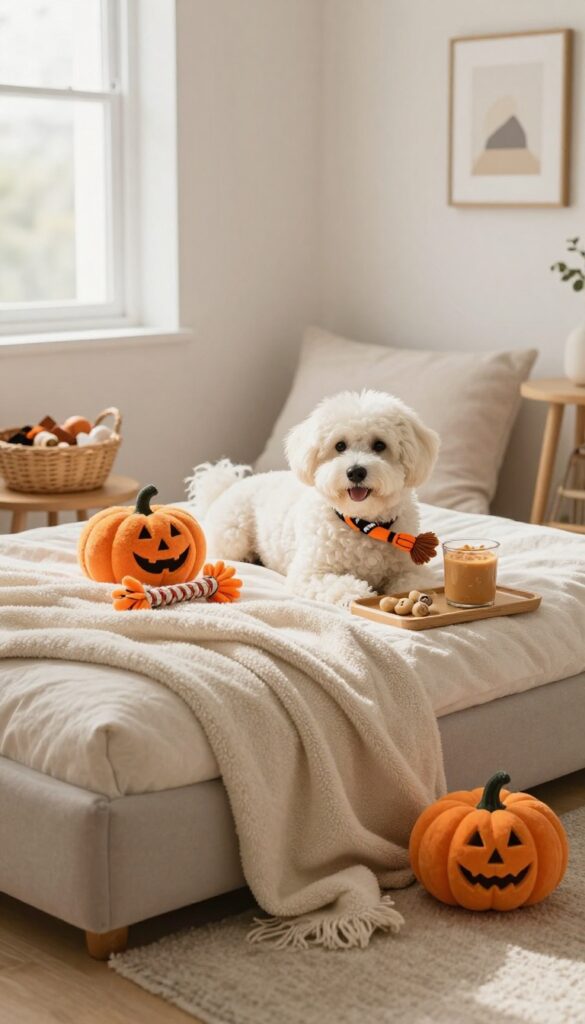
A designated spot stocked with engaging goodies can work wonders. When the doorbell rings, your dog learns to head there instead of the door. This turns a stressful moment into a positive ritual.
Set up a special area with a puzzle toy or long-lasting chew. When the doorbell rings, send your dog there to focus on something positive instead of the door.
Pick The Right Spot
Choose a quiet corner away from the front door, like a living room nook or a bedroom. Make sure your dog can't see the door from there. A spot near a window might be too distracting if trick-or-treaters walk by.
Stock It With High-value Goodies
Use treats that your dog doesn't get every day. Frozen stuffed Kongs, bully sticks, or puzzle toys filled with peanut butter work great. The goal is to make this spot irresistible, so your dog looks forward to going there.
Practice Before Halloween
Start by ringing the doorbell and guiding your dog to the station with a treat. Reward them for staying there. Repeat this daily, gradually increasing the time they stay.
By Halloween, your dog will associate the doorbell with a tasty reward.
8. Practice Doorbell Etiquette with a Leash
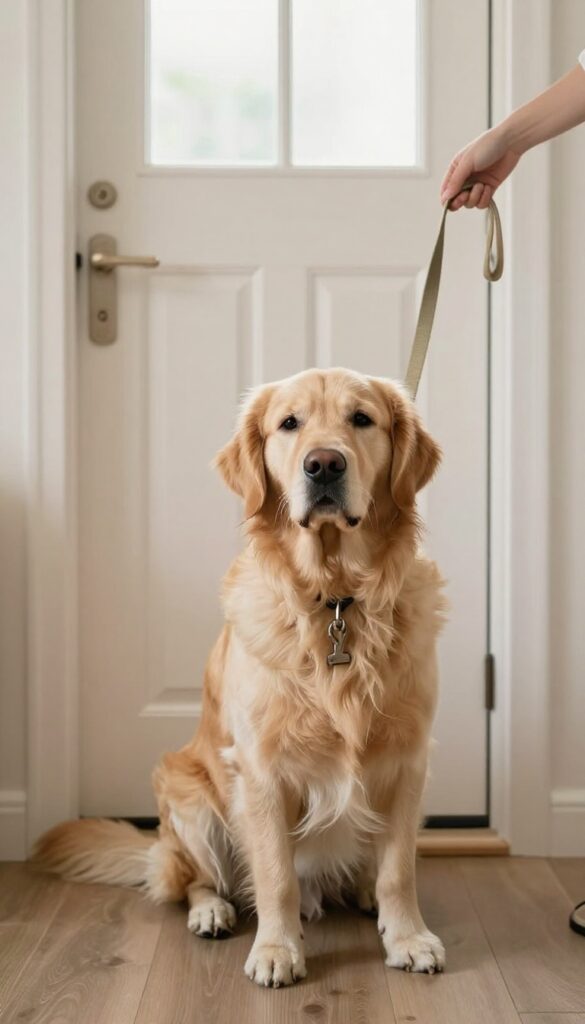
Keeping your dog on a leash near the door during practice might feel a bit awkward at first, but it’s a game-changer. It gives you instant control if your pup decides to lunge or bolt, and it sends a clear signal that calm behavior is expected. Plus, it’s a simple way to build a reliable routine before the Halloween chaos begins.
Leash work isn’t just for walks—it’s a brilliant training aid for doorbell manners. When your dog is leashed, you can guide them gently back to their spot without grabbing their collar or raising your voice. Over time, they learn that the doorbell means “stay put, ” not “charge the door. ” This drill is especially helpful for dogs that are strong or easily overexcited.
Start With A Loose Leash
Clip the leash to your dog’s collar or harness, but keep it loose. The goal isn’t to restrain them—it’s to have a safety net. Stand near the door with your dog beside you, and have a helper ring the bell.
When your dog reacts, calmly say “let’s go” and guide them back to their spot. Reward them with a treat the moment they relax.
Use The Leash To Redirect, Not Yank
The leash should be a gentle guide, not a punishment. If your dog pulls toward the door, turn and walk them a few steps away, then bring them back. This teaches them that lunging ends the excitement.
Keep your voice upbeat and your movements smooth—you want your dog to see you as a calm leader, not a source of tension.
Practice With Distractions
Once your dog gets the hang of it with a quiet helper, crank up the challenge. Have someone ring the bell while wearing a hat or carrying a prop. Keep the leash on, and reward your dog for staying focused on you instead of the door.
This builds their self-control in realistic Halloween-like situations.
Gradually Fade The Leash
After several successful sessions, try practicing without the leash in a safe, enclosed area. Start with the doorbell ringing softly, and keep treats handy for good behavior. If your dog regresses, simply clip the leash back on and go back a step.
There’s no rush—consistency beats speed.
9. Use a 'Place' Command with Distractions
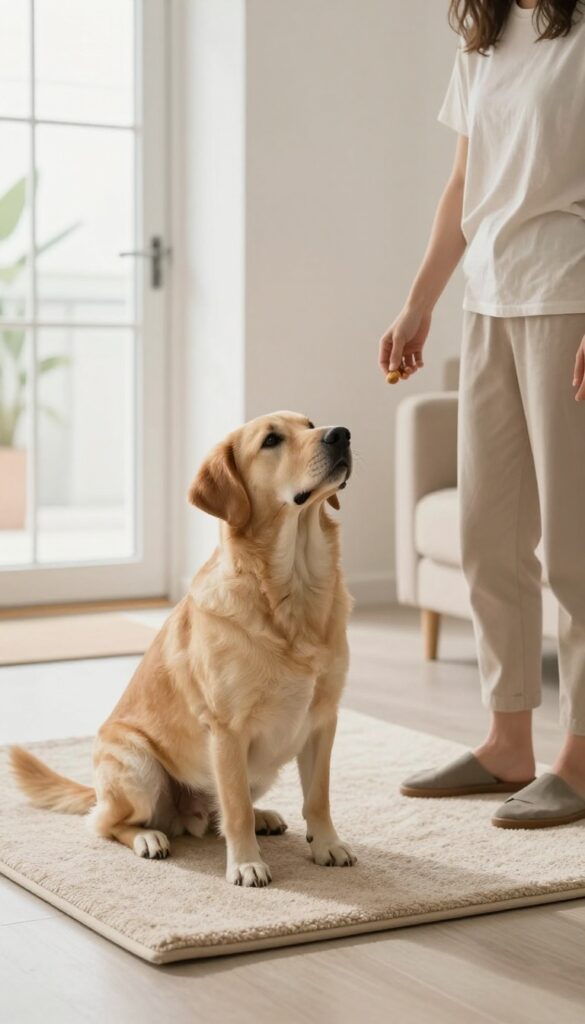
Once your dog reliably heads to their mat, it’s time to spice things up. The 'place' command becomes a superpower when you add real-world distractions like knocks and doorbell chimes. This drill teaches your dog to stay put even when their instincts scream otherwise.
Start by having your dog on their mat while you stand nearby. Have a friend or family member knock on the door or ring a doorbell sound from your phone. The moment your dog looks like they’re about to break, calmly say 'place' again and reward them for staying.
Keep sessions short and end on a high note.
Start With Low-level Distractions
Begin with a soft knock or a doorbell sound played at low volume. Your goal is to keep your dog’s focus without overwhelming them. Reward heavily for staying put, and gradually increase the volume or intensity as your dog becomes more confident.
Add Movement And Costumes
Once your dog handles sounds, introduce movement. Have a friend walk past the door or wear a hat or a simple costume. This mimics Halloween conditions without the full chaos.
Keep your dog on the mat and reward them for staying relaxed.
Practice With Real Doorbell Rings
When your dog is solid with simulated sounds, practice with the actual doorbell. Have someone ring it while you’re in another room, then call your dog to their mat. This builds a strong association: doorbell equals place, not frenzy.
10. Teach an Alternative Behavior to Barking
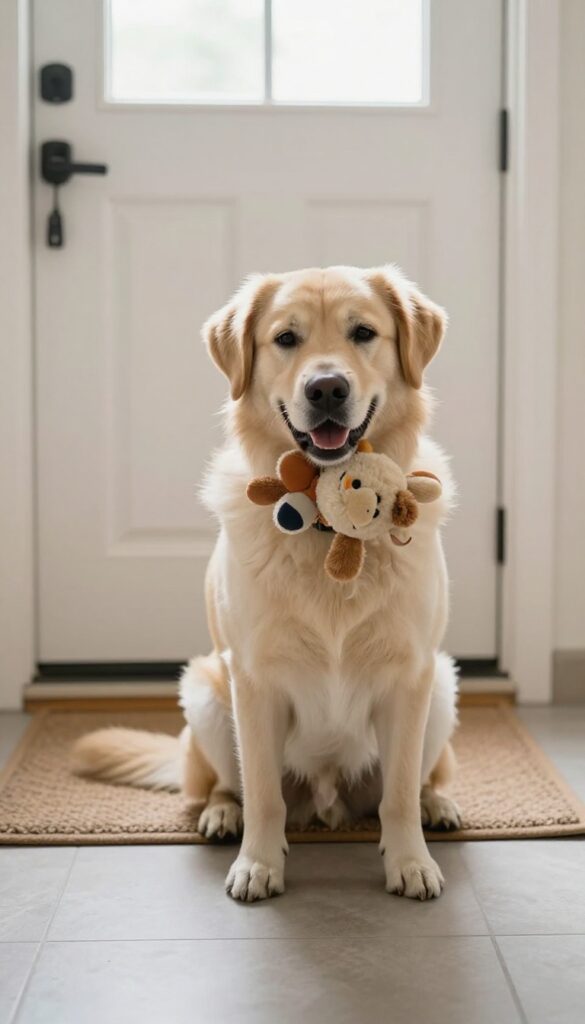
Barking at the doorbell is often a default reaction, but you can give your dog a different job that’s incompatible with barking. Teaching an alternative behavior, like going to a mat or grabbing a toy, redirects their energy into something positive and gives them a clear task when the doorbell rings. This drill turns a stressful moment into a structured routine.
Start by choosing a behavior you want your dog to do instead of barking. The most practical options are going to a designated mat or picking up a favorite toy. Both are easy to cue and reward, and they physically separate your dog from the door, which reduces the urge to bark.
The key is to practice this behavior repeatedly until it becomes automatic, so when the doorbell rings, your dog’s first thought is the new job, not barking.
Pick A Mat Or A Toy
Decide which alternative behavior suits your dog best. A mat or bed gives them a clear spot to settle, which is great for dogs who need to stay calm. A toy works well for dogs who need to carry something in their mouth to stay quiet.
Choose one and stick with it so the cue becomes consistent. For example, if you use a mat, train them to go there and lie down. If you use a toy, teach them to pick it up and hold it when they hear the cue.
Practice The New Behavior Separately
Before you connect the behavior to the doorbell, practice it on its own. Give the cue, like “go to mat” or “get your toy, ” and reward them enthusiastically when they do it. Repeat this in different rooms and at random times so it becomes a solid, reliable response.
Don’t rush this step—your dog needs to know the behavior well before you add the doorbell distraction. Aim for at least a week of daily practice.
Pair The Cue With The Doorbell
Once your dog reliably performs the alternative behavior on cue, start pairing it with the doorbell. Have a friend ring the doorbell or use a recording, then immediately give your cue. Reward your dog for doing the new behavior instead of barking.
Start with the doorbell at a low volume or from a distance, then gradually make it more realistic. If your dog barks, go back a step and practice more. Consistency is key, so practice several times a day.
Reward The Calm, Not Just The Action
When your dog goes to the mat or picks up a toy after the doorbell, reward them for staying calm, not just for doing the action. Use treats or praise to reinforce the quiet, relaxed state. This teaches them that being calm near the door is what earns the reward.
Over time, they’ll learn that the doorbell means “do this calm thing, ” not “bark at the visitor. ” Keep sessions short and positive, and always end on a good note.
11. Practice with Door Knocks and Doorbell Variations
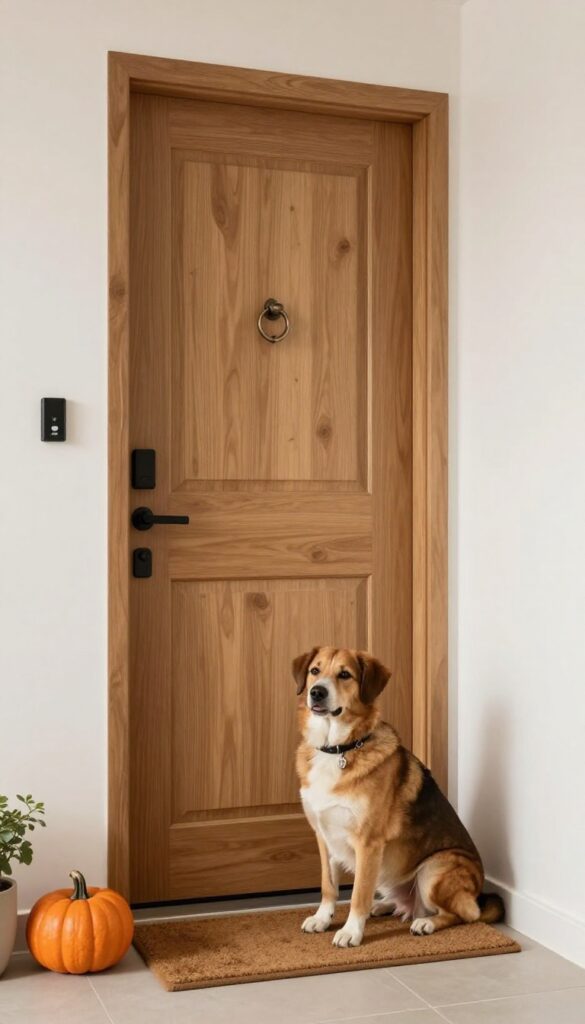
Door sounds aren't one-size-fits-all. A knock, a chime, a buzz, or the ding-dong from a phone app can all set your dog off in different ways. If you only practice with your actual doorbell, your pup might not generalize the calm behavior to other sounds.
That's why mixing it up is a smart move.
By exposing your dog to a variety of door-related noises, you're teaching them that the response is always the same: go to their spot and wait. This reduces surprise on Halloween night when knocks and doorbells come from all directions. Plus, it's a simple way to build a more reliable habit.
Start With The Sounds You Have
Begin with your own doorbell and a few different knock patterns. Have a friend or family member ring the bell, then knock three times, then try a rapid knock. Each time, cue your dog to their mat and reward them for staying calm.
Repeat until your dog responds consistently to each sound.
Add Phone Apps And Doorbell Cameras
If you have a video doorbell or a smartphone app that mimics door sounds, use those too. The tone might be slightly different, which is perfect for generalization. Practice with the app while you're inside, and even have someone trigger it from outside.
This helps your dog learn that any door-related sound means the same thing.
Mix Up The Sequence
Dogs are great at picking up patterns, so don't let them predict what's coming. Alternate between knocks, the doorbell, and the app sound in a random order. Sometimes ring twice, sometimes knock once.
This keeps your dog engaged and teaches them to respond to the sound itself, not the routine.
12. Build Impulse Control with 'Leave It'
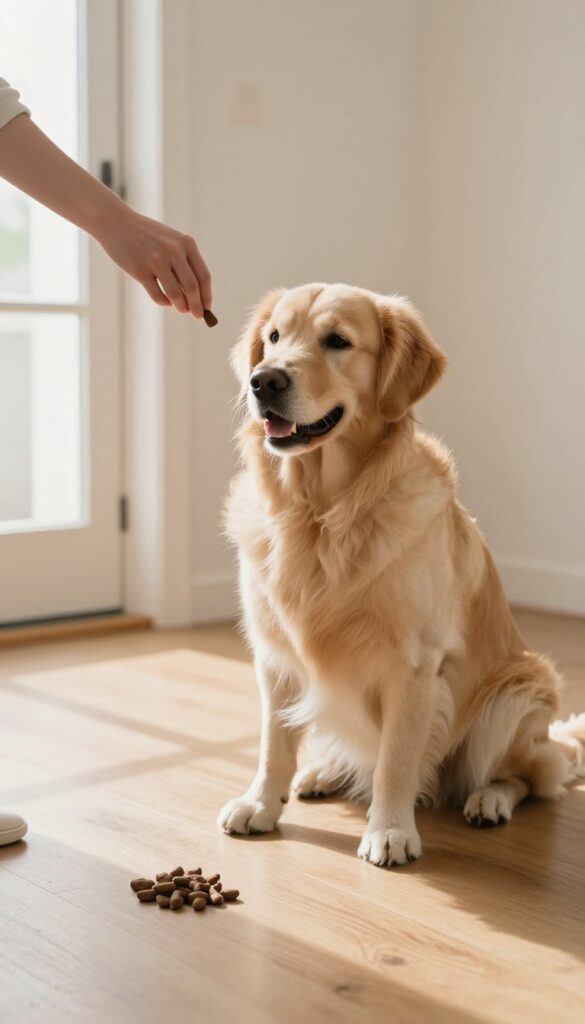
Impulse control is the secret sauce for a calm dog at the door. The 'leave it' cue teaches your pup to pause and check in with you instead of reacting on autopilot. It's a simple drill that pays off big when a witch or a superhero knocks.
Start in a quiet room with a treat in your closed fist. Let your dog sniff, lick, and paw at your hand, but wait for them to back off. The instant they do, say 'yes' and reward from the other hand.
Repeat until they pull away quickly. Then, add the cue 'leave it' just before they back off. Once they've got it, level up by placing a treat on the floor under your foot and then on the floor uncovered.
Always reward with a different, higher-value treat. This builds a habit of choosing you over the distraction.
Why 'leave It' Works For Doorbell Chaos
When your dog hears the doorbell, their instinct is to charge. 'Leave it' gives them a clear alternative: ignore the trigger and focus on you. It's not about suppressing their excitement—it's about redirecting it into a behavior you approve of. Over time, they learn that the doorbell isn't a signal to react, but a cue to look to you for guidance.
Step-by-step Practice Routine
Practice 'leave it' in short sessions, twice a day, for a few minutes each. Start with easy distractions, then gradually add more tempting ones. Once your dog is solid with treats, try it near the door with a friend ringing the bell.
Keep sessions positive and end on a win. Consistency matters more than duration.
Turning 'leave It' Into A Doorbell Game
Make it fun by turning practice into a game. Have a helper ring the bell, then immediately ask your dog to 'leave it' and reward them for staying calm. Gradually increase the difficulty by having the helper enter or by adding Halloween props.
This turns a stressful situation into a chance for treats and praise, which your dog will love.
13. Have a Backup Plan for the Big Night
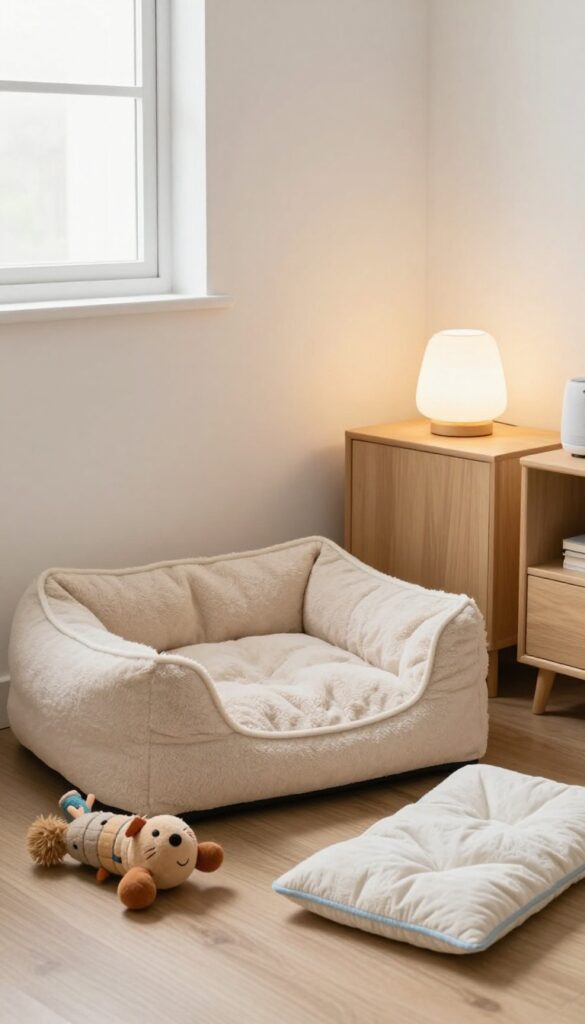
Even with all the practice in the world, Halloween night can still be overwhelming. That’s okay. A backup plan isn’t a failure—it’s smart preparation.
Giving your dog a quiet escape hatch ensures they stay calm and safe, no matter how many ghosts and goblins show up at your door.
Set up a cozy corner in a bedroom or bathroom, away from the front door. Add their bed, a favorite blanket, and a treat-stuffed toy to keep them busy. The goal is to create a space where your dog feels completely at ease, with no pressure to interact with visitors.
Pick The Right Room
Choose a room that’s far from the doorbell and foot traffic. A bathroom or spare bedroom works well. Make sure it’s quiet and has no windows facing the street, so your dog isn’t tempted by passing costumes.
Add a white noise machine or calming music to muffle outside sounds.
Make It A Happy Place
Don’t just lock your dog in—make the room feel like a treat. Scatter a few kibble or treats on the floor, add a snuffle mat, or give them a long-lasting chew. You want them to associate this space with good things, not punishment.
Spend a few minutes with them there before the chaos starts.
Practice Ahead Of Time
Introduce the room a few days before Halloween. Let your dog explore it on their own, and give them treats while they’re inside. On the big night, guide them there calmly before the first trick-or-treater arrives.
If they’re already settled, the doorbell won’t trigger a panic.
Check In Without Interrupting
You’ll want to peek in on your dog, but avoid making a big deal when you do. Slip in quietly, drop a treat, and leave. If they’re resting, let them be.
Constant check-ins can actually raise anxiety, so trust that they’re okay and only intervene if they seem truly distressed.
FAQ
How long before Halloween should I start these drills?
Ideally, start 2-3 weeks ahead. Short daily sessions (5-10 minutes) are more effective than long, infrequent practices.
What if my dog is already scared of the doorbell?
Go very slowly. Start with the sound at a barely audible volume and pair it with high-value treats. If your dog shows stress, lower the volume and take a step back.
Can I use these drills for other holidays or events?
Absolutely. The same principles work for any situation with guests or doorbell rings, like parties or deliveries.
What treats work best for training?
Use small, soft, high-value treats like chicken, cheese, or commercial training treats. They should be extra special to keep your dog motivated.
What if my dog is too excited to focus on training?
Practice when your dog is calm, like after a walk. If they're too worked up, try tiring them out first or practice in a quiet room with fewer distractions.
Conclusion
Halloween doesn't have to be a stressful blur of barking and doorbell chaos. With these 13 drills, you're not just prepping your dog for one night—you're building a calmer, more confident pup for every knock that comes your way. Start with the easiest drill and work up at your dog's pace.
Consistency beats perfection, so even a few minutes a day makes a real difference. Pair each session with treats and plenty of praise, and soon your dog will see the doorbell as a cue for good things, not panic. You've got this—and so does your furry friend.

I’m Pallab Kishore, the owner of Little Pets Realm — an animal lover and pet care enthusiast sharing easy tips, healthy recipes, and honest advice to help every small pet live a happy, healthy, tail-wagging life.