
Last updated on August 19th, 2026 at 04:14 pm
Autumn walks turn familiar streets into a kaleidoscope of color and sound, but they also bring a fresh set of distractions for your pup. Squirrels rustle through leaves, the wind carries new scents, and every pile of foliage looks like an invitation to dive.
That's why recall training needs a seasonal upgrade. These eleven games turn your daily stroll into a focused, fun session that strengthens your bond and sharpens your dog's response—no matter how many leaves are flying.
Lace up your boots, grab some treats, and let's make this fall your most reliable walking season yet.
1. The Leaf Pile Hide-and-Seek
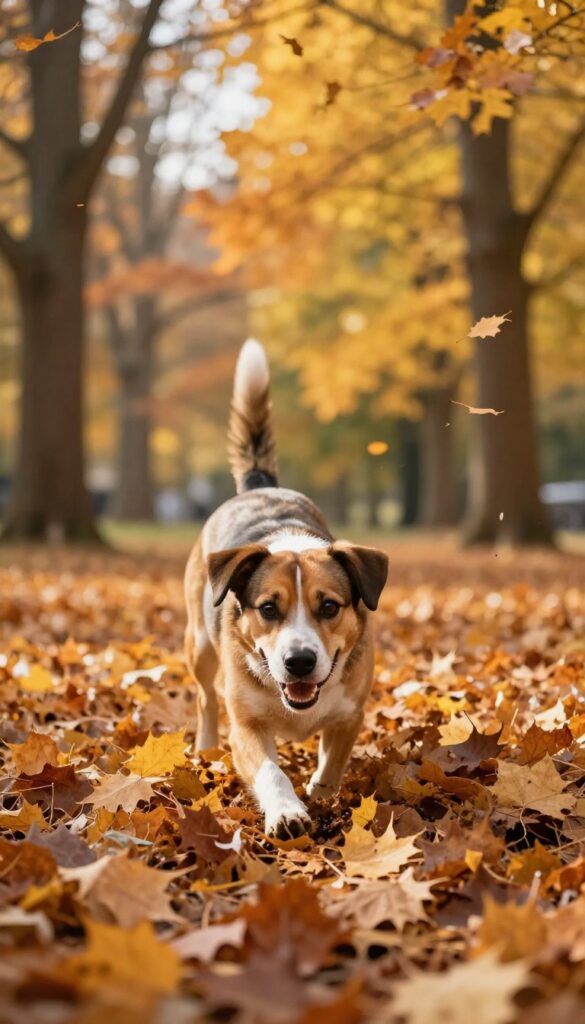
This game turns a classic childhood pastime into a powerful recall drill. When your dog loses sight of you, they have to rely on their ears and nose to track you down. It's a playful way to reinforce that coming when called is always a good thing, even when the world is full of crunchy distractions.
Start by having your dog wait with a friend or family member while you duck behind a large pile of leaves. Once you're hidden, call your dog in your happiest, most excited voice. When they find you, celebrate with a jackpot of treats and praise.
This builds a strong association between finding you and getting a reward.
Why It Works
This game strengthens your dog's recall by making it a fun, rewarding game. It also builds their confidence in using their nose to locate you, which is a valuable skill for any dog. Plus, it's a great way to burn off energy on a crisp autumn day.
Tips For Success
Start with easy hiding spots and gradually increase the difficulty. Use a high-value treat that your dog doesn't get every day. Always make sure the leaves are safe and free of debris before hiding.
2. The Crunchy Trail Game
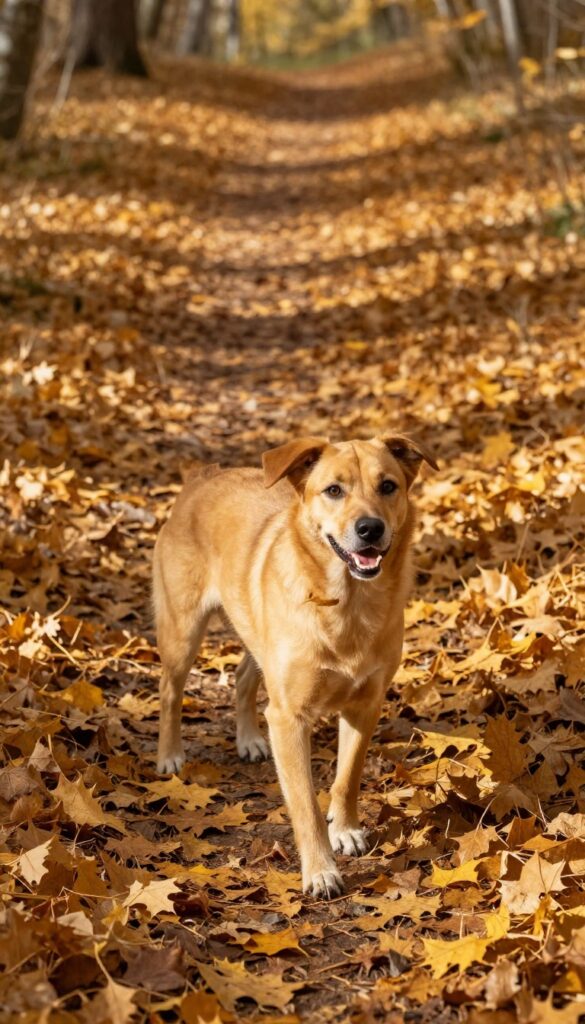
Leaves aren't just for diving into—they make a natural sound track for a recall game that rewards your dog for following you. The Crunchy Trail Game turns a simple walk into a treasure hunt where every step toward you means a crunchy treat and a happy crunch underfoot. This game is perfect for days when the ground is carpeted with dry leaves, and it works whether you're in a park, a forest trail, or just your own backyard.
The key is to use the leaves as a cue: the sound of your footsteps (or the treat toss) tells your dog that good things happen when they come your way.
Start by finding a spot with a good layer of dry, crunchy leaves. Have a handful of small, high-value treats ready. Toss a treat a few feet ahead of you, letting it land with a soft rustle.
As your dog moves to eat it, take a few steps backward and call their name in a happy, excited tone. The moment they turn and head toward you, mark with a “yes! ” and toss another treat right at your feet, so they connect coming to you with the reward. As your dog gets the hang of it, you can make the trail longer and more winding.
Toss a treat, then walk a few steps in a new direction before calling. The crunching sound of your own footsteps becomes a cue that you're moving, and your dog learns to keep an eye on you even when they're focused on the next tasty morsel. The game builds a strong recall because it turns the act of returning to you into a fun, rewarding pattern.
Instead of a boring “come” command, it becomes a game of follow-the-leader with delicious payoffs. Plus, the sensory feedback of the leaves—both sight and sound—makes the experience memorable for your pup.
Why It Works
The Crunchy Trail Game works because it uses positive reinforcement and natural cues. The sound of leaves rustling under your feet or when you toss a treat creates an auditory marker that signals “good things happen here. ” Dogs are quick to associate this sound with rewards, so they become more attentive to your movements and calls. It also builds a strong foundation for recall by making coming to you the most exciting part of the walk.
Setting It Up
Choose a safe, leaf-covered area away from busy roads. Have a pouch or pocket full of small, soft treats that are easy to chew quickly. Start with a short trail of just a few steps, and keep the game fast-paced to hold your dog's interest.
Use a happy, high-pitched voice when calling, and always reward the moment they turn toward you, even if they don't come all the way at first.
Leveling Up The Challenge
Once your dog is confidently following the trail, increase the distance and add distractions. Toss a treat, then walk behind a tree or a bush before calling—this teaches your dog to find you even when you're out of sight. You can also vary the direction of your steps or use a whistle instead of your voice.
The goal is to make recall reliable, even when the leaves are flying and the squirrels are tempting.
3. The Windy Whistle Recall
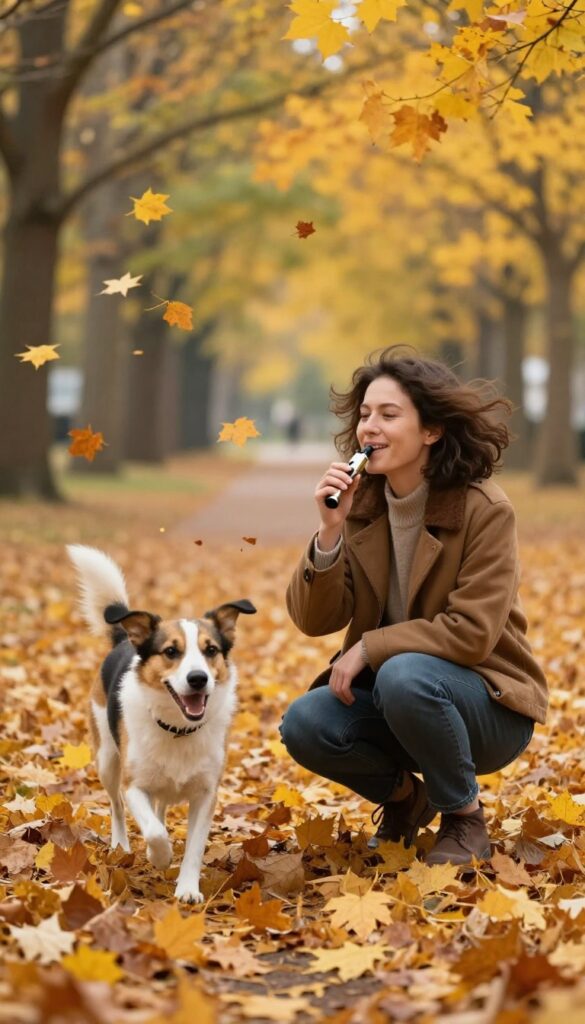
When the wind picks up, your voice can get lost in the rustling leaves. A whistle cuts through that noise and gives your dog a clear, consistent signal that means 'come here now. ' This game turns blustery days into a training opportunity.
Start by choosing a unique whistle or sound—something you don't use for any other command. Practice in a quiet spot first, rewarding your dog every time they respond. Then gradually move to windier areas, increasing the distance and distractions.
The key is to make the whistle always predict something great, so your dog learns to come running even when the world is loud.
Pick Your Signal
Decide on a whistle or a specific sound like a kissy noise or a clicker. Make sure it's distinct from your everyday voice commands. You want it to stand out from the noise of the wind and leaves.
Start Calm, Then Add Wind
Begin in your backyard or a quiet park. Blow the whistle, then immediately reward your dog with a high-value treat or a favorite toy. Once they're reliably responding, move to an open field where the wind is stronger.
Keep sessions short and always end on a success.
Reward Generously
Every time your dog comes to you after the whistle, make it a party. Use extra-special treats, lots of praise, and maybe a quick game of tug. The more rewarding the response, the more likely your dog will choose to come back, even when a squirrel is tempting them.
4. The Tree Trunk Peek-a-Boo
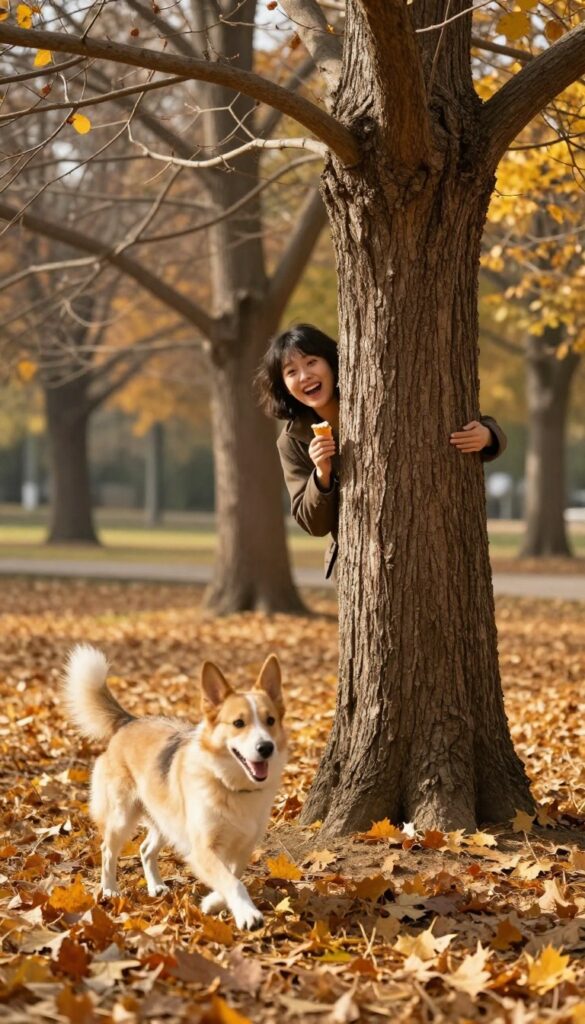
This game adds a playful twist to recall by using the environment as a hiding spot. It's perfect for autumn when trees are bare and easy to duck behind. Your dog learns that coming to you is always rewarding, even when you're not in plain sight.
Start by letting your dog sniff around a safe, open area with a few trees. When they're distracted, slip behind a thick trunk and call their name in a happy, excited voice. The moment they find you, celebrate with treats and praise.
Gradually increase the challenge by hiding behind trees that are farther away or by staying hidden a bit longer.
Why It Works
This game taps into your dog's natural curiosity and desire to be with you. When they successfully find you, they get a rewarding payoff, which reinforces the behavior. Over time, they'll learn that even when you're out of sight, coming when called leads to good things.
How To Play
Begin with easy hides where your dog can see you partially. Then progress to full concealment. Always use a cheerful, high-pitched call to keep it fun.
If your dog struggles, pop out quickly and make a big deal when they arrive. Keep sessions short and end on a high note.
Safety And Tips
Choose a location free of hazards like roots or holes. Avoid hiding too far away at first—build up distance gradually. Make sure your dog is comfortable being alone for a few seconds before trying this game.
Always reward generously with their favorite treats.
5. The Scent Trail Treasure Hunt
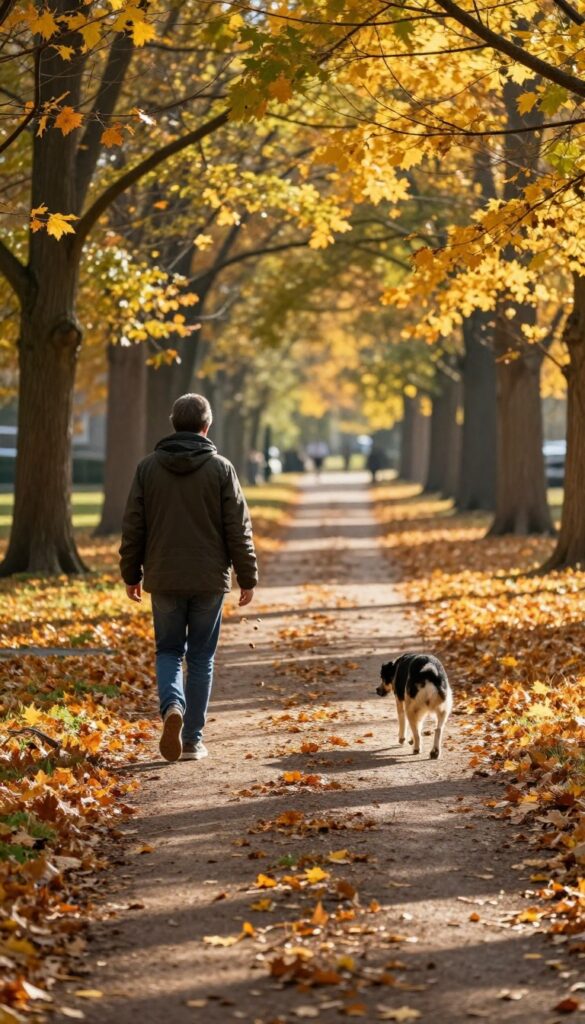
Imagine your dog's nose as a superhero cape, ready to save the day—or at least find you. This game turns that superpower into a recall drill that's perfect for leaf-covered paths. You'll lay a scent trail with a high-value treat or a favorite toy, then call your dog from the end.
It's a win-win: they get to use their nose, and you get a reliable recall even when the ground is a confusing carpet of fallen leaves.
This game is all about teaching your dog that following your scent leads to good things. It's especially useful in autumn because the leaf litter can mask or mix scents, making it a real challenge for your pup. But with practice, they'll learn to lock onto your specific trail and come running, even when the world smells like a giant potpourri.
Setting Up The Trail
Start in a quiet area with low distraction. Have a helper hold your dog while you walk a short, straight line about 10-15 feet away. As you walk, drop a few tiny, smelly treats (like liver or cheese) along the path.
At the end, place a small pile of treats or a squeaky toy. Then, have your helper release your dog and give a cheerful recall cue like 'Find me! ' or 'Come! '
Building The Challenge
Once your dog gets the hang of it, make the trail longer and add turns. You can also start dragging a treat pouch or a piece of fabric along the ground to create a stronger scent line. Gradually reduce the number of treats along the path, so your dog learns to rely on your scent alone.
The goal is for them to follow the trail to you, not just the treats.
Making It A Recall Game
The real magic happens when you turn this into a recall exercise. Instead of dropping treats, simply walk a short distance, hide behind a tree or bush, and call your dog. They'll use their nose to find you, which reinforces the idea that coming when called is a fun treasure hunt.
Over time, this builds a rock-solid recall that works even when leaves are swirling and scents are jumbled.
6. The Leaf Toss Recall
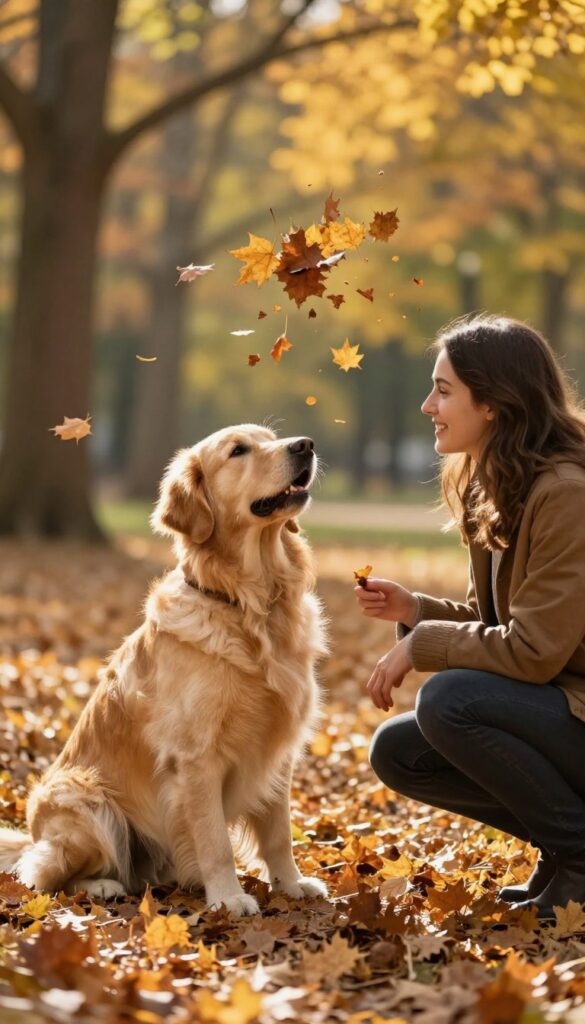
This game harnesses the very thing that distracts your dog—falling leaves—and turns it into a training tool. By tossing a handful of leaves into the air, you create a visual and auditory distraction that mimics the chaos of a windy autumn day. The goal is to teach your dog to keep their eyes on you and respond to your recall cue, even when the world around them is swirling with movement.
Start in a low-distraction area, like your backyard or a quiet park. With your dog on a long leash, toss a small handful of dry leaves straight up so they flutter down around you. As the leaves fall, call your dog's name and use your recall cue, like "come" or "here.
" Reward them enthusiastically with a high-value treat the moment they reach you. Repeat this several times, gradually increasing the amount of leaves you toss or the distance between you and your dog.
Why It Works
Falling leaves are a visual magnet for most dogs—they trigger the prey drive and the instinct to chase. By pairing the leaf shower with a recall cue, you're teaching your dog that focusing on you is more rewarding than chasing the leaves. This builds a strong "check-in" behavior that transfers to real-world distractions like squirrels or blowing trash.
Leveling Up The Challenge
Once your dog is nailing the basic game, add more difficulty. Toss leaves while walking, or have a friend toss leaves from a distance. You can also practice in an area with more natural leaf litter, like a wooded trail.
The key is to gradually increase the intensity of the distraction while keeping your dog successful. If they struggle, go back to smaller tosses or a shorter distance.
Safety And Setup Tips
Use dry, clean leaves that are free of mold or debris. Avoid tossing leaves that might hide sharp sticks or rocks. Keep sessions short—5 to 10 minutes is plenty—and always end on a positive note.
If your dog gets overly excited and starts ignoring you, take a break and try again later. Remember, the goal is to build focus, not frustration.
7. The Buddy System Recall
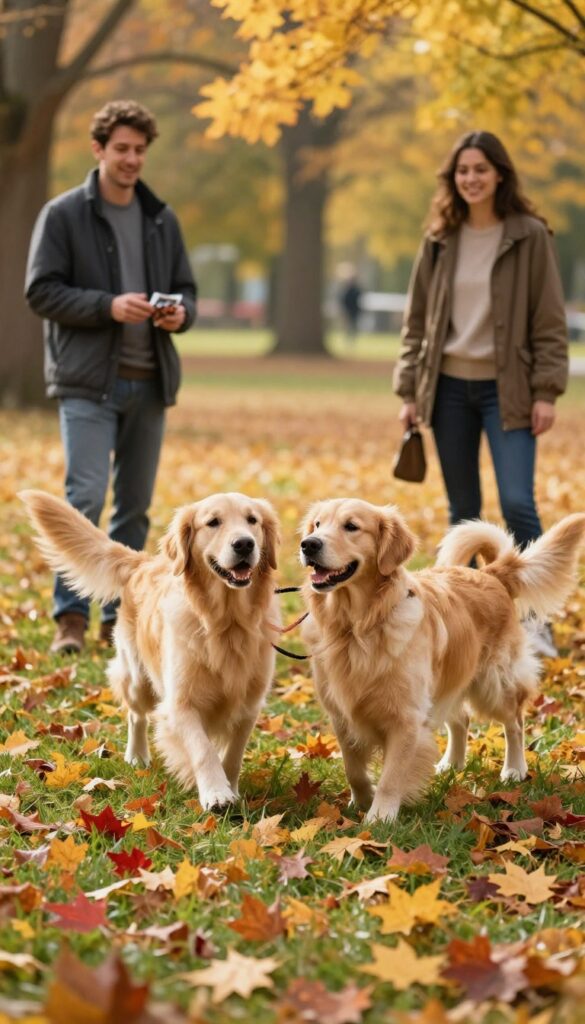
Two dogs are better than one when it comes to recall practice. Grab a friend with a well-socialized pup and head to a safe, enclosed space like a fenced yard or a quiet park. This game turns recall into a social event, teaching your dog that coming to you is more rewarding than staying in the play.
Start with both dogs on leashes and have each owner hold a handful of high-value treats. Take turns calling the other dog by name, rewarding them enthusiastically when they arrive. As your dogs get the hang of it, you can gradually increase the distance and add more distractions.
The key is to make coming to you the best thing that happens in the middle of play.
Why It Works
Dogs are social creatures, and the presence of another dog makes this game extra motivating. Your pup learns that leaving a fun playmate to come to you doesn't mean the fun ends—it means treats and praise happen instead. This builds a strong recall response even when temptation is high.
Setting Up For Success
Choose a friend whose dog is friendly and similar in energy level. Keep the first sessions short and controlled, with both dogs on long leashes if needed. Use a clear, happy tone when calling, and always reward with something extra special, like chicken or cheese, so your dog remembers why coming is worth it.
Leveling Up The Game
Once your dog reliably comes when called around their buddy, add a twist. Have the friend gently hold your dog's collar while you walk away, then call your dog from a distance. This mimics real-life situations where your dog might be distracted by another dog and tests their focus on you.
8. The Distance Game
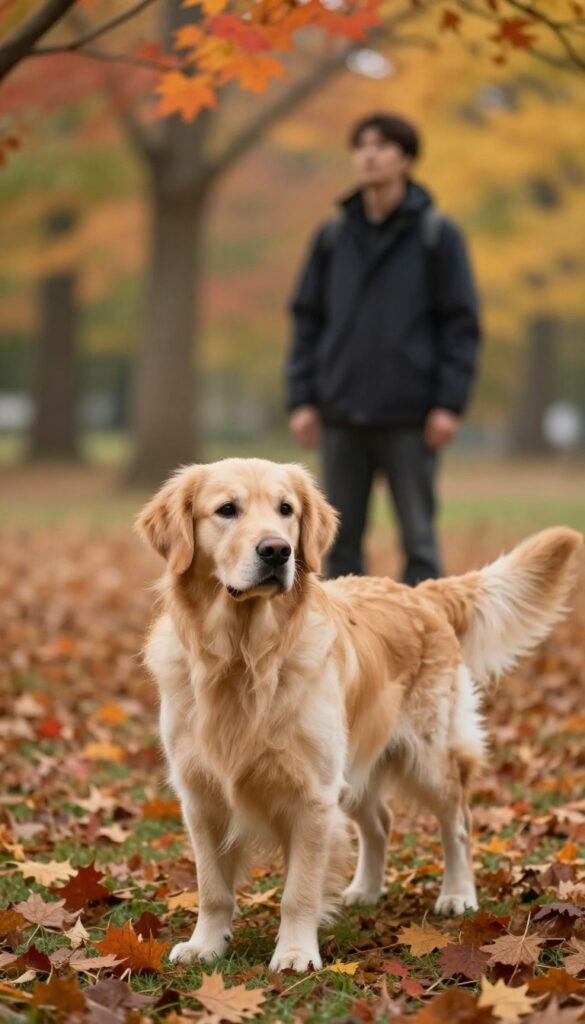
This one’s all about stretching your dog’s recall muscles. Start close, then gradually increase the gap between you and your pup before giving the cue. The goal is a rock-solid response even when you’re far apart—something that comes in handy when they’ve wandered off to investigate a particularly interesting leaf pile.
The Distance Game is a simple but powerful way to build a recall that works from afar. By slowly adding distance, you teach your dog that coming back is always rewarding, no matter how far away they are. It’s especially useful in autumn when the wind and rustling leaves can make it harder for your dog to hear you—or when they’re just too absorbed in the season’s smells to notice you’re calling.
Why Distance Matters
A recall that only works when you’re three feet away isn’t much help on a walk. The Distance Game pushes your dog’s reliability further, so you can trust them even when they’re at the far end of a long line or exploring ahead. It also builds their confidence—they learn that returning to you is always a good choice, no matter the distance.
Set Up For Success
Start in a quiet area with minimal distractions. Use a long line (15–30 feet) to keep your dog safe while allowing them to roam. Have high-value treats ready—something extra special like chicken or cheese.
Begin with your dog just a few feet away, call them, and reward generously when they come. Then, gradually increase the distance by a few steps each time.
Progressive Practice
As your dog gets the hang of it, increase the distance in small increments. You can also add mild distractions, like a few scattered leaves or a gentle breeze. If your dog struggles, shorten the distance again and build back up.
The key is to keep it fun and rewarding—every successful recall should be a party.
Safety First
Always use a long line unless you’re in a fully enclosed area. Even with a reliable recall, unexpected distractions can happen, and a long line gives you a backup. Also, be mindful of the terrain—uneven ground or hidden obstacles can be tricky in autumn.
Keep your training sessions short and positive, and always end on a high note.
9. The Treat Shower Recall
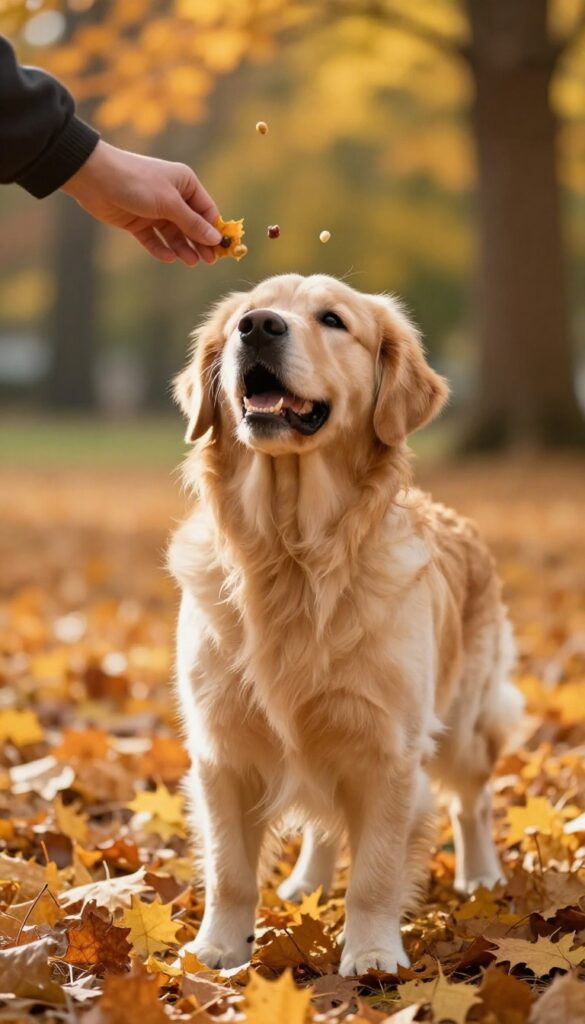
This game is all about making your arrival the best moment of your dog's walk. When you call and they come, you celebrate with a shower of treats, not just one. It's a simple but powerful way to teach your dog that checking in with you is always worth it, even when autumn is at its most distracting.
The Treat Shower Recall turns a simple recall into a jackpot moment. Instead of a single treat, your dog gets a handful scattered around them. This creates a positive explosion that reinforces the behavior strongly, especially in high-distraction environments like a leaf-covered park.
Why A Shower Beats A Single Treat
One treat is nice, but a shower is unforgettable. When your dog arrives and gets a burst of treats, their brain releases a flood of dopamine. This makes the act of coming to you feel amazing, and they'll be more likely to repeat it.
It's especially effective when there are competing distractions like squirrels or rustling leaves.
How To Set It Up
Start in a low-distraction area. Call your dog in a happy, excited voice. The moment they reach you, toss a small handful of treats on the ground around them.
Let them sniff and eat for a few seconds. Then, release them to explore again. Repeat this several times, gradually increasing the level of distraction as your dog gets better.
Pro Tips For Maximum Impact
Use high-value treats that your dog doesn't get every day, like bits of chicken or cheese. Keep your voice upbeat and celebratory. Don't reach for your dog or grab their collar—just let the treats rain down.
This keeps the experience positive and stress-free.
10. The Stop-and-Go Game
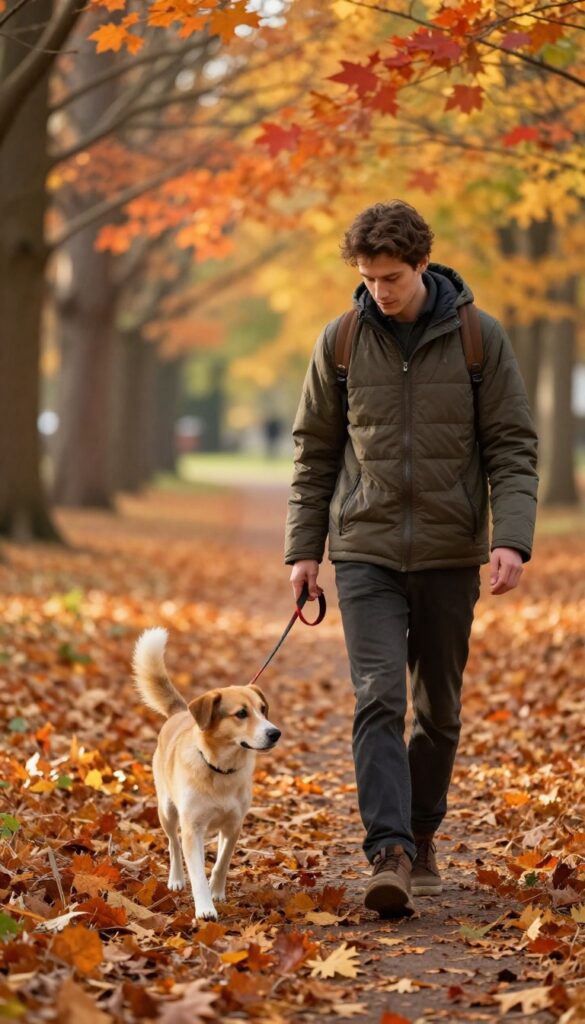
This one turns a regular walk into a game of red light, green light. You walk, then suddenly stop and call your dog back to you. It's a simple way to build a habit of checking in, so recall becomes second nature.
The Stop-and-Go Game is perfect for dogs that get easily distracted by all the autumn smells and sounds. By randomly pausing and calling your dog, you teach them that paying attention to you is rewarding, even when there's a pile of leaves calling their name.
Why It Works
This game reinforces the idea that you are the most interesting thing on the walk. Every time your dog returns to you, they get a treat and praise. Over time, they learn to keep one eye on you, waiting for the next stop signal.
It's not about interrupting their fun—it's about making you part of it.
How To Play
Start with your dog on a leash or long line. Walk at a normal pace, then suddenly stop. Say your dog's name or a cue like 'come' in a happy voice.
When they turn and come to you, give them a high-value treat and a quick 'yes! ' Then continue walking. Repeat every few minutes, keeping the sessions short and upbeat.
Pro Tips For Success
Vary the time between stops—sometimes after a few steps, sometimes after a minute. This keeps your dog guessing and engaged. Use treats that are extra special, like small pieces of chicken or cheese.
If your dog is slow to respond, try a little jog backward or a happy whistle to get their attention. Always end on a positive note, with a big reward and a 'good dog! '
11. The Autumn Obstacle Course
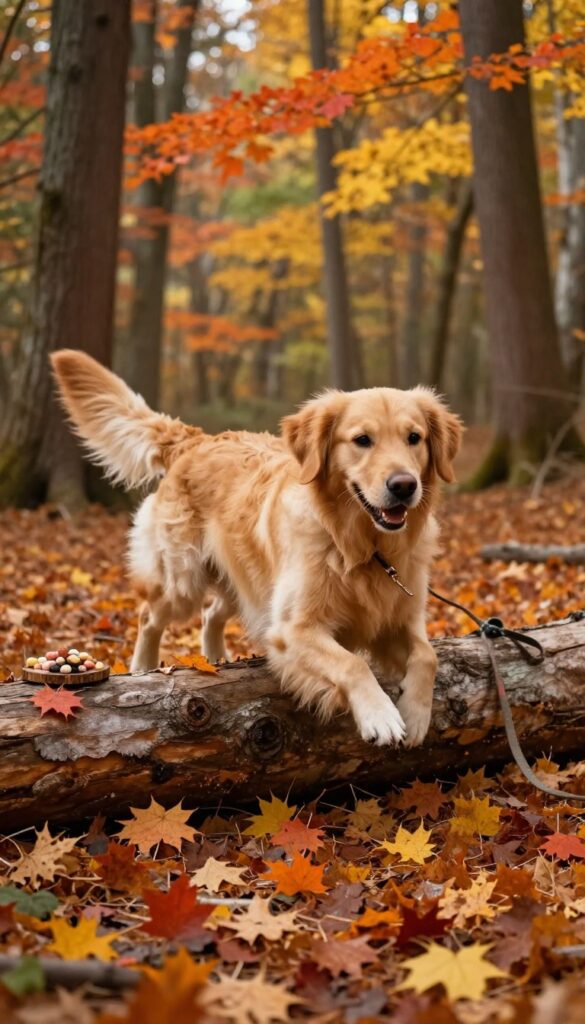
Turn a fallen log or a cluster of crunchy leaves into a mini agility course that makes recall a game. This one’s perfect for burning extra energy while sharpening your dog’s response to your call. You don’t need fancy equipment—nature’s playground is already set up.
Set up a short course using whatever you find: a low log to hop over, a pile of leaves to weave through, or a gap between trees to run around. Start with your dog on a leash, then release them and call them through the course, rewarding with high-value treats at the end. The key is to keep it fun and fast, so your dog sees recall as the start of an exciting challenge.
Why It Works
This game combines physical activity with mental focus. Your dog has to listen to your cue while navigating obstacles, which strengthens their recall in distracting environments. The novelty of the course keeps them engaged, and the reward at the end reinforces that coming to you is always worth it.
How To Set It Up
Pick a safe, open area with natural features. You can use a log for a jump, a cluster of leaves for a weave, or a tree to circle. Place a treat or toy at the end as a target.
Start with simple obstacles and gradually add more as your dog gets the hang of it. Always check for hidden hazards like sticks or holes.
Progression Tips
Once your dog masters the basic course, increase the distance between obstacles or add a distraction like a tossed leaf pile. You can also vary the route each time to keep it unpredictable. The goal is to make recall so rewarding that your dog forgets about everything else and focuses on you.
FAQ
What if my dog ignores me during recall games?
Start in a low-distraction area and use high-value treats. If your dog ignores you, you're too close to the distraction—move farther away and try again.
How often should I practice recall games?
Short, frequent sessions work best. Aim for 5-10 minutes a day, 3-4 times a week. Consistency beats marathon training.
Are these games safe for puppies?
Yes, but keep sessions short and avoid overexertion. Use gentle games like hide-and-seek and treat showers, and always supervise.
Do I need special equipment?
No, most games use treats, a leash, or natural objects like leaves and trees. A long line is helpful for distance games but not required.
What if my dog is too distracted by leaves?
Use high-value treats like chicken or cheese, and start in a less distracting area. Gradually increase the leafiness as your dog succeeds.
Conclusion
Autumn walks are the perfect time to sharpen recall, and these games turn leaf-strewn paths into a natural training arena. Pick one or two that fit your dog’s energy level and your local park layout, then build up the distractions gradually.
The payoff is a dog who checks in with you even when the world smells amazing. Grab a few treats, head out before the leaves get crunchy, and enjoy the season with a pup who listens—rain or shine.

I’m Pallab Kishore, the owner of Little Pets Realm — an animal lover and pet care enthusiast sharing easy tips, healthy recipes, and honest advice to help every small pet live a happy, healthy, tail-wagging life.