
Last updated on August 19th, 2026 at 04:14 pm
The doorbell rings, and your dog launches into a frenzy of barking, spinning, and jumping. It's a common scene for many pet parents, but it doesn't have to be that way. With a little patience and the right training techniques, you can teach your dog to greet visitors politely.
Door manners aren't just about convenience—they're about safety and calm. An excited dog can easily slip out the door or knock someone over.
The good news is that these behaviors are trainable, and the payoff is a more peaceful home. In this guide, we'll walk through 11 practical door manners that will help your dog stay composed when the door opens.
1. Teach a Solid 'Sit' Before Opening the Door
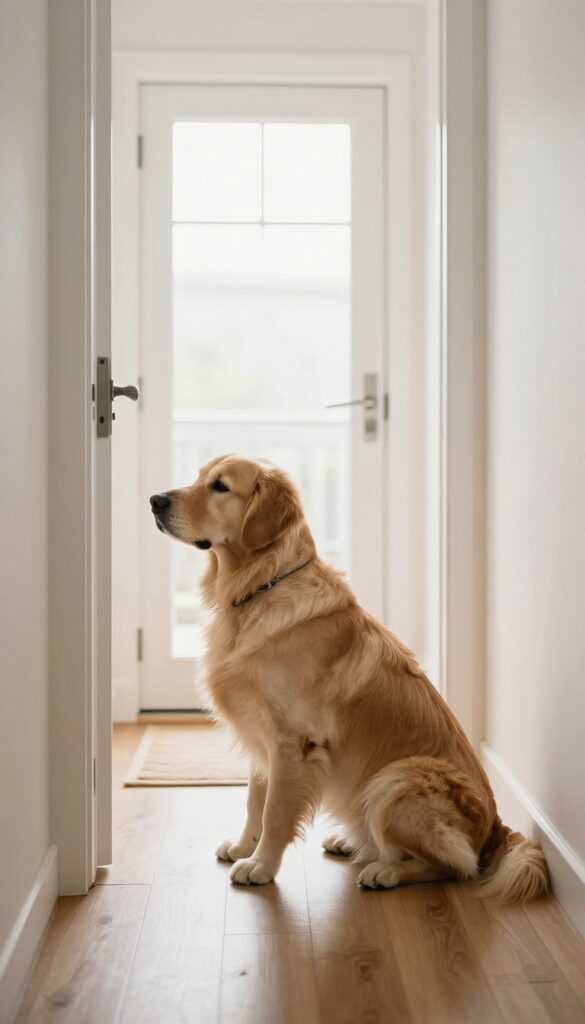
The magic starts before the door even moves. If your dog can hold a calm sit while you reach for the knob, you're already halfway to polite greetings. This simple cue becomes the foundation for everything else, because it replaces chaos with focus.
Start by practicing when there's no excitement at all. Ask for a sit, then reward with a treat. Repeat until it's automatic.
Then, add the door: approach it, ask for a sit, and only open if your dog stays put. If they break, close the door and try again. Consistency is key—every time you open the door, the sit is the price of admission.
Why 'sit' Works
A sitting dog is a grounded dog. It's physically harder to lunge or jump from a sit, and it gives your dog a clear job to do. Plus, it signals to your dog that calm behavior is what gets them what they want—whether that's going outside or meeting a guest.
Practice Without Pressure
Don't wait for the doorbell to test this. Practice several times a day with no one on the other side. Approach the door, ask for a sit, then reward.
Gradually build up to more exciting scenarios, like having a friend knock or ring the bell. The more you practice in calm moments, the stronger the habit becomes.
Add A Release Word
Teach your dog that 'sit' means 'stay until I say otherwise. ' Use a release word like 'okay' or 'free' to let them know they can move. This gives you control over when they greet, and it prevents them from bolting the second the door cracks open.
2. Use a Mat or Bed as a 'Go to Place' Command
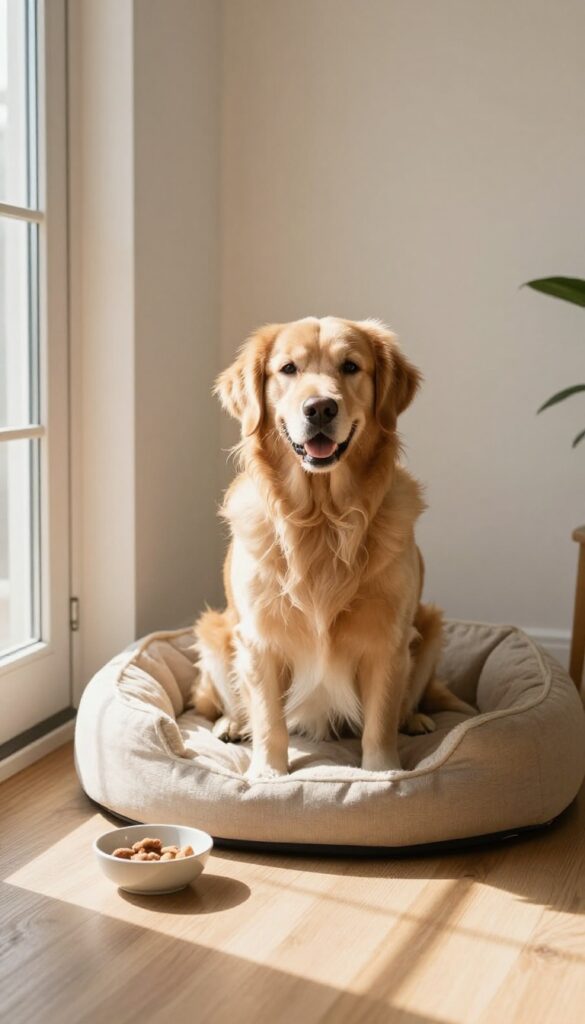
Training your dog to head to a designated spot when the doorbell rings gives them a clear job and a safe place to settle. Instead of rushing the door, they learn to focus on a specific behavior that earns them praise and treats. This simple cue can transform chaotic greetings into calm, controlled moments.
Start by choosing a mat, bed, or even a towel that's easy to carry and clean. Place it in a spot where your dog can still see the door but isn't right in the path of incoming guests. The goal is to make this spot their 'happy place'—a spot where good things happen, like treats and attention.
Why A Mat Works
A mat gives your dog a physical anchor. When they're on it, they know what's expected of them. It's easier for them to understand 'go to your mat' than 'stop jumping' because it's a concrete action.
Plus, it gives them a sense of security—they have a job to do, which reduces anxiety and excitement.
How To Teach The Command
Start without the doorbell. Toss a treat onto the mat and say 'go to your place' as they step on it. Repeat this until they consistently go to the mat on cue.
Then, add a hand signal, like pointing to the mat. Practice in short sessions, gradually increasing the distance from the mat. Once they're reliable, introduce the doorbell sound at a low volume, then increase it slowly.
Making It Stick
Consistency is key. Use the same command and reward every time they go to their mat. If they leave before you release them, gently guide them back and reward again.
Over time, they'll learn that staying on the mat until you say 'okay' is the best way to earn treats. Also, make sure everyone in the household uses the same cue so your dog doesn't get confused.
Troubleshooting Common Issues
If your dog ignores the mat, go back to basics and practice without distractions. If they seem anxious, make the mat extra comfy with a favorite blanket or toy. And if they dash off the mat when the door opens, have a helper practice opening the door while you reward them for staying.
Patience and repetition will pay off.
3. Practice with a Helper to Simulate Doorbell Rings
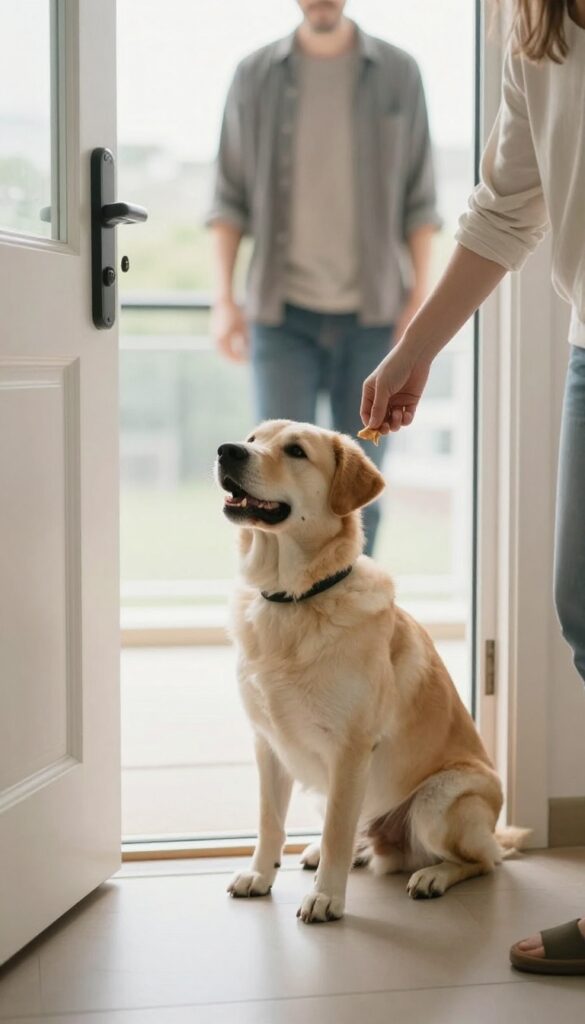
Real-world doorbell rings are unpredictable, but you can create a controlled version at home. Enlist a friend or family member to act as a guest and ring the bell or knock at set times. This rehearsal lets you practice the training steps without the chaos of an actual visitor.
The more your dog rehearses calm behavior, the more automatic it becomes. By simulating doorbell rings, you're giving your pup a chance to succeed in a low-stress setting. You can repeat the scenario as many times as needed, gradually increasing difficulty as your dog improves.
Set Up A Training Schedule
Pick a few times a day when you and your dog are relaxed. Have your helper ring the bell or knock, then immediately guide your dog to their designated spot and reward them for staying calm. Keep sessions short—five to ten minutes—to avoid overwhelming your dog.
Vary The Sounds And Timing
Dogs can get used to the same bell sound, so mix it up. Ask your helper to knock softly, then loudly, or ring a doorbell app on a phone. Also vary the time between rings—sometimes two quick rings, sometimes one long one.
This helps your dog generalize the behavior to any door sound.
Gradually Increase Distractions
Once your dog is staying calm with a single ring, add more realism. Have your helper talk outside the door, jingle keys, or even open the door a crack. Each time, reward your dog for staying in place.
This step-by-step approach builds a rock-solid habit.
4. Reward Calm Behavior, Not Excitement
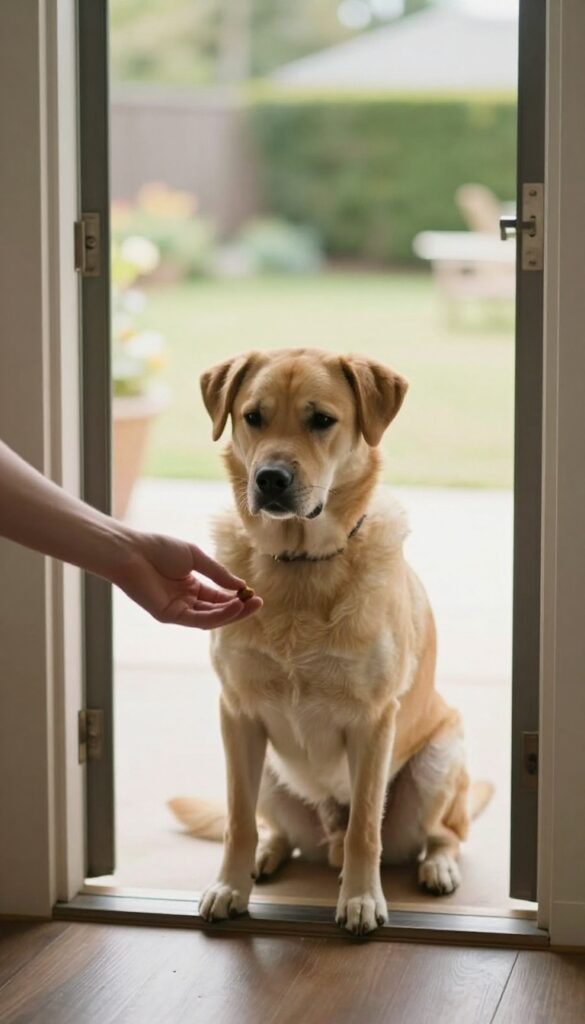
Your dog learns from what gets your attention. If jumping and barking earn a reaction, they'll keep doing it. Flip that around: reward the calm moments, and your dog will start offering them more often.
This is the core of training a relaxed door greeting.
When your dog stays calm as the door opens, that's the behavior you want to reinforce. Give them a treat, a gentle word, or a quick scratch behind the ears. If they start jumping or barking, turn away and ignore them completely.
No eye contact, no talking, no pushing—just silence. The moment they settle, even for a second, reward that. This teaches your dog that calmness is what earns your attention.
Why Ignoring Works
Dogs repeat behaviors that get them what they want. If jumping gets you to look at them or push them down, that's still attention. Ignoring means the behavior fails to produce a reward, so it eventually fades.
It's not about being mean—it's about making excitement unrewarding.
Timing Is Everything
Reward within a second or two of the calm behavior. If you wait too long, your dog might connect the treat with something else. Keep treats handy near the door so you can mark the calm moment instantly.
A clicker or a simple 'yes' works well to pinpoint the exact behavior you like.
Practice Without Visitors
You don't need real guests to work on this. Practice by approaching the door yourself, or ask a friend to ring the bell and then wait. Start with easy situations and gradually add more excitement.
The more you repeat the calm-reward cycle, the more your dog will default to it.
5. Desensitize Your Dog to the Doorbell Sound
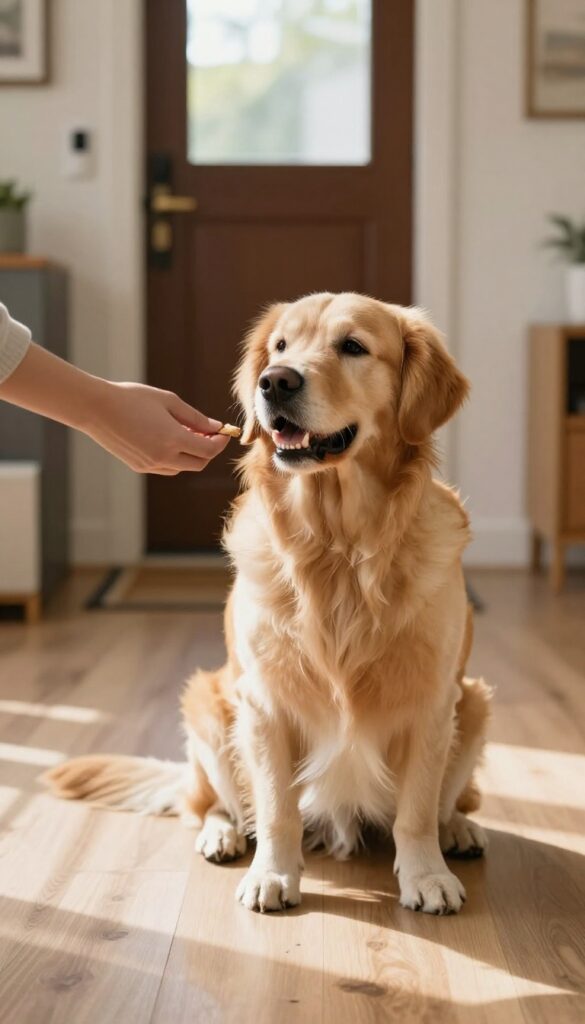
The doorbell itself is often the trigger that sets off your dog's excitement. Before you can work on door manners, you need to change how your dog feels about that sound. Desensitization is a gentle, effective way to do that.
Start by playing a recording of the doorbell at a very low volume, barely audible. While it plays, give your dog treats and praise for staying calm. The goal is to associate the sound with good things, not chaos.
Over time, you'll gradually increase the volume, always keeping your dog relaxed and rewarded.
Start Low And Slow
Begin with the volume so low that your dog doesn't even react. This might mean the sound is just a whisper. While it plays, toss treats or feed your dog their favorite snacks.
Keep sessions short—just a few minutes at a time—so your dog doesn't get bored or stressed.
Gradually Increase The Volume
Once your dog is comfortable with the quiet doorbell, turn it up just a notch. If they stay calm, reward them generously. If they start to react, lower the volume and try again.
The key is to move at your dog's pace. You might spend several days at one level before progressing.
Add Real-life Cues
After your dog is comfortable with the recorded sound, start pairing it with other door-related cues. For example, have a friend ring the actual doorbell while you practice. Or, play the recording while you reach for the doorknob.
This helps your dog connect the sound to the real event without the full excitement.
6. Use a Leash or Tether for Extra Control
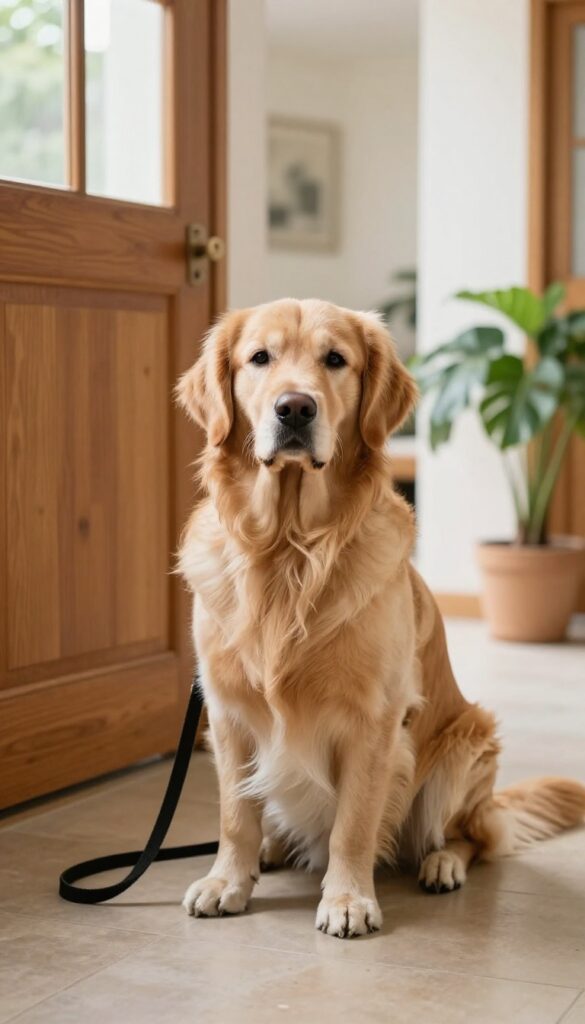
Sometimes, training takes time, and you need a safety net in the moment. That's where a leash or tether comes in handy. It gives you physical control while you're working on the long-term goal of calm greetings.
Think of it as a temporary measure, not a crutch. You're not relying on the leash forever, but you are using it to keep everyone safe and prevent your dog from rehearsing the wrong behavior. It's a practical tool that buys you peace of mind.
When guests arrive, clip a leash onto your dog's collar or harness before you open the door. This simple step gives you immediate control. If your dog tries to bolt, you can gently hold them back.
It also sends a signal that this is a structured situation, not a free-for-all. A tether works similarly. You can attach your dog to a sturdy piece of furniture or a door anchor, giving them a limited range of movement.
This is especially useful if you need both hands free to greet guests or if your dog is particularly strong. Just make sure the tether is secure and your dog can't reach the door or trip anyone. Using a leash or tether isn't about punishment.
It's about management. It allows you to focus on rewarding calm behavior without worrying about a sudden escape. Over time, as your dog learns to stay calm, you can gradually phase out the physical restraint.
Position Yourself Strategically
Stand between your dog and the door, holding the leash with a relaxed grip. This puts you in a position to block any sudden moves. Keep your body language calm and confident.
You're not tense, but you're ready. This simple positioning can prevent most attempts to rush the door.
Reward The Calm, Not The Chaos
As you open the door, keep your attention on your dog. The moment they show any sign of calm—a pause, a sit, even just a relaxed posture—give them a treat and quiet praise. If they lunge or bark, simply stand still and wait.
The leash prevents them from getting what they want (going outside), so they'll eventually learn that calm gets rewards, and chaos gets nothing.
Practice With A Helper
To make this more effective, have a friend or family member play the role of a guest. Start with easy scenarios: they knock, you open, and you reward your dog for staying calm. Gradually increase the difficulty by having them step inside or act more excited.
This controlled practice helps your dog generalize the behavior to real-world situations.
7. Teach a 'Wait' at the Threshold
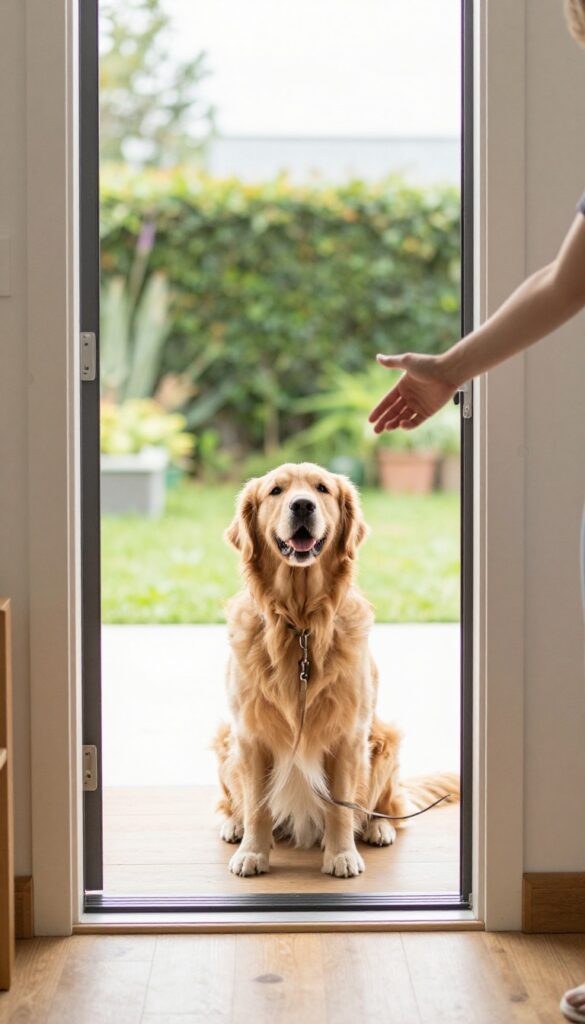
The moment the front door opens, some dogs act like it's the starting line of a race. They bolt, they lunge, and they're gone before you can blink. Teaching a solid 'wait' at the threshold turns that chaos into a calm, controlled exit.
This isn't about holding your dog back—it's about giving them a choice. When your dog learns to pause and look to you for permission, the doorway becomes a place of teamwork instead of a free-for-all. The result is a safer dog and a less stressful life for you.
Start by practicing when there's no real door involved. Use a doorway inside your home, like between rooms, to build the foundation. With your dog on a leash, approach the threshold and say 'wait' in a calm, clear voice.
Stop moving and hold your ground. If your dog stays put, even for a second, mark it with a treat and praise. Then release with a word like 'okay' and step through together.
Gradually increase the difficulty. Add distance, then practice at the actual front door, and finally try it without the leash. The key is to keep sessions short and rewarding.
You want your dog to think 'wait' is the best game ever, not a boring chore. Once your dog understands the basics, start adding real-world distractions. Have a friend knock or ring the bell while you practice.
Keep your dog on a leash for safety at first. If they break the wait, calmly guide them back to the starting spot and try again. Consistency matters more than perfection.
Start With A Simple Step
Begin in a low-distraction area, like a hallway inside your home. With your dog on a leash, approach the doorway and give the 'wait' cue. Stop and stand still.
If your dog stays put, reward with a treat and a release word like 'okay. ' Repeat until your dog anticipates the pause.
Add Distance And Distractions
Once your dog masters the indoor threshold, move to the front door. Practice with the door closed, then slightly open. Gradually increase the time your dog must wait.
Then add distractions like a knock or a tossed toy. Always keep your dog on a leash until they're reliable.
Make It A Game
Turn wait into a fun challenge. Use a favorite toy or treat as a reward. Practice at different doors, and sometimes release your dog to run outside as a reward.
This builds excitement and reinforces that waiting leads to good things.
8. Create a Routine for Arrivals and Departures
Dogs thrive on predictability. When your comings and goings feel chaotic, your dog's excitement level spikes because they never know what to expect. By building a simple, consistent routine around arrivals and departures, you give your dog a clear script to follow—and that alone can dial down the door drama.
Start by making departures boring. Grab your keys, put on your shoes, and head out the door without making eye contact or saying goodbye in a sing-song voice. The goal is to teach your dog that you leaving is no big deal.
When you return, keep the greeting equally low-key. Walk in, set down your stuff, and only acknowledge your dog once they're sitting quietly. This might feel cold at first, but it's actually reassuring—your calm energy tells your dog there's nothing to get worked up about.
Make Departures A Non-event
Practice short, boring departures throughout the day, not just when you're actually leaving. Put on your coat, pick up your keys, and sit back down. Repeat until your dog stops reacting.
Then, step outside for a few seconds, come back in, and act like nothing happened. Gradually increase the time you're gone. This desensitizes your dog to the cues that usually signal you're leaving, so they don't get revved up.
Keep Greetings Calm And Brief
When you come home, ignore your dog until they're calm. That means no talking, no petting, and no eye contact—even if they're jumping or whining. Wait for a sit or even just a moment of stillness, then offer a quiet hello.
If they get excited again, turn away and wait. Consistency is key. Over time, your dog will learn that calm behavior is what gets your attention, not frantic bouncing.
Use A Cue To Signal The Transition
Give your dog a clear cue that you're leaving, like a specific word or a treat-dispensing toy. For example, you might say 'be right back' and hand them a stuffed Kong as you walk out. This gives them something positive to focus on and helps them associate your departure with a good thing.
On the return side, use a phrase like 'all calm' to mark the moment they settle, then reward with a treat or a gentle scratch behind the ears.
Stick To The Same Script Every Time
Consistency is the secret sauce. If you sometimes make a big fuss when you leave and other times slip out silently, your dog will stay on high alert. Pick a routine and stick with it—same actions, same cues, same level of calm.
Even on days when you're running late, resist the urge to rush or get emotional. Your dog is watching your every move, and a steady routine helps them feel secure.
9. Manage the Environment with Baby Gates or Barriers
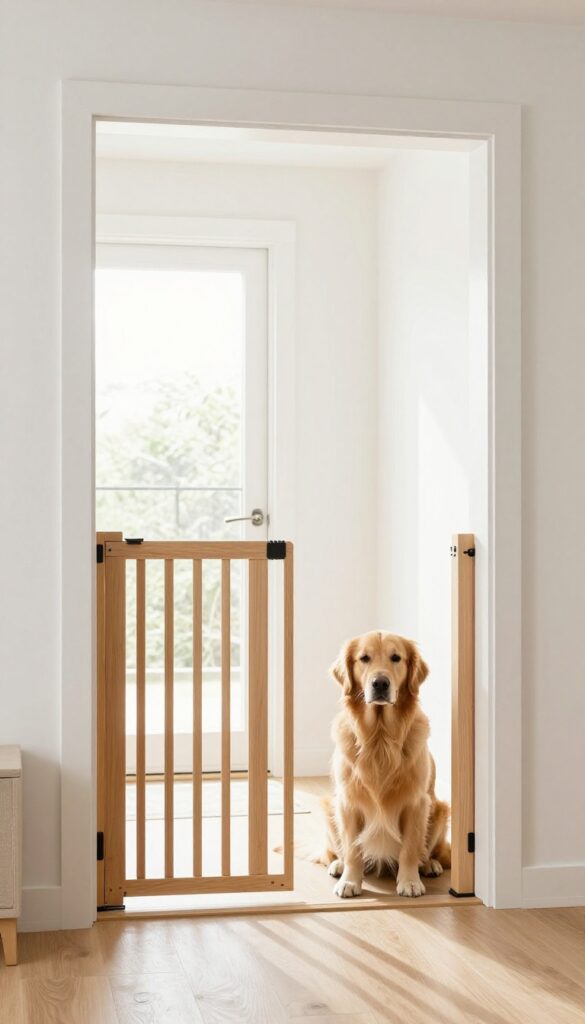
Training takes time, and sometimes you need a little extra help to set your dog up for success. That's where baby gates or exercise pens come in. By physically blocking access to the front door, you create a safe buffer zone that prevents your dog from rehearsing the very behaviors you're trying to stop.
Think of it as giving your dog a clear boundary without having to say a word. Instead of rushing the door, your dog learns to stay behind the gate, and you get a moment to answer the door calmly. It's a simple, practical tool that works wonders, especially during the early stages of training or when you have guests over.
Setting up a barrier isn't about punishment—it's about management. It removes the temptation and gives your dog a chance to practice calm behavior. Here's how to make it work effectively.
Choose The Right Barrier
Baby gates come in many styles, from pressure-mounted to hardware-mounted, and some even have pet doors built in. For most homes, a pressure-mounted gate is easy to install and doesn't damage doorframes. If your dog is a jumper or a climber, opt for a taller gate or one with vertical bars that are hard to grip.
Exercise pens are another option, especially if you need to create a larger enclosed area near the door. Just make sure the barrier is sturdy enough to withstand an excited dog's push.
Place It Strategically
The goal is to block access to the door while still giving your dog a view of what's happening. Place the gate a few feet back from the door, creating a hallway or entryway buffer zone. This way, your dog can see visitors but can't rush them.
If your front door opens directly into a living room, position the gate across the doorway to that room. You want your dog to be able to see you and the door, but not be underfoot.
Pair It With Training
A barrier is not a replacement for training—it's a support tool. Use the gate to practice controlled greetings. Have a friend ring the doorbell while your dog is behind the gate.
Reward calm behavior with treats and praise. Over time, your dog will learn that staying behind the gate leads to good things. Gradually, you can move the gate farther away or remove it entirely as your dog's manners improve.
10. Practice 'Leave It' and 'Drop It' for Door-Related Items
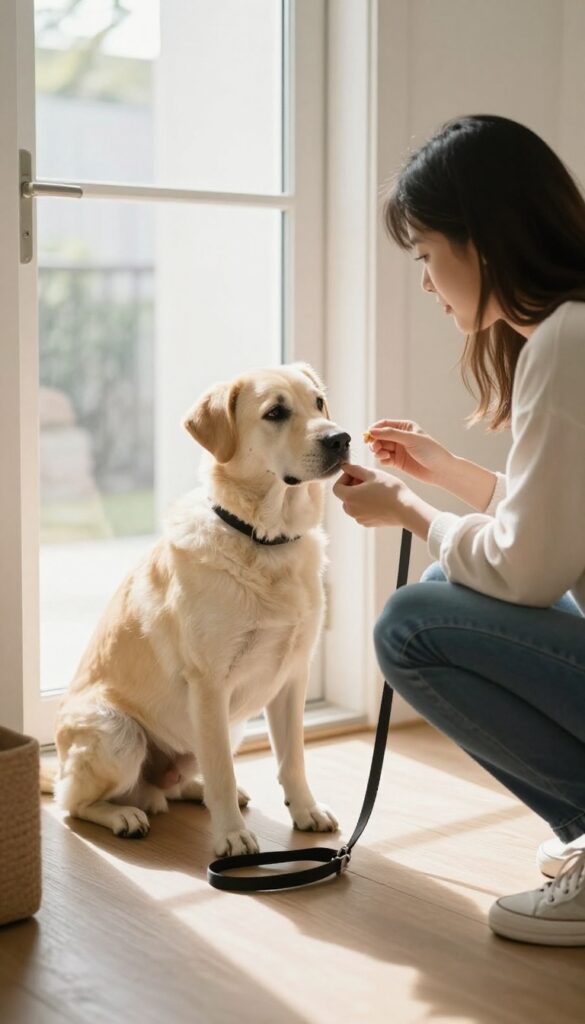
The area near your front door is like a treasure chest for a dog—shoes, leashes, mail, and bags all scream 'playtime' or 'walk time. ' That's why many dogs go bonkers the second you reach for the doorknob. They're not just excited about the door; they're excited about everything associated with it. Teaching 'leave it' and 'drop it' can shift that focus back to you, making door time a lot calmer.
These two commands are the ultimate impulse-control tools. 'Leave it' tells your dog to ignore something they want, while 'drop it' tells them to release something they've already grabbed. When practiced near the door, they become a powerful way to prevent your dog from snatching a shoe or bolting after a tossed toy when the door opens. The key is to practice in low-stakes situations first, then gradually add more excitement.
Start With Easy Distractions
Begin training in a quiet room with a boring item like a paper clip or a piece of kibble. Hold it in your closed fist, say 'leave it, ' and wait. The moment your dog stops sniffing or licking your hand, mark it with a click or a 'yes' and reward them with a treat from your other hand.
Repeat until they instantly look away when you say the cue. Then, move to items that are more tempting, like a favorite toy or a smelly shoe.
Practice Near The Door
Once your dog has the basics down, take the training to the front door. Place a shoe or a leash on the floor, and walk your dog on a loose leash toward it. Say 'leave it' before they get too close.
If they ignore it, reward them with a high-value treat. If they lunge for it, calmly pull them back and try again. The goal is to make ignoring the item more rewarding than grabbing it.
Add The Door-opening Element
Now, combine the command with the actual door. Have a helper stand outside, and get your dog on a leash. As you reach for the doorknob, say 'leave it' and reward your dog for staying focused on you.
Open the door a crack, and if your dog stays calm, reward them. Gradually increase the door opening and the distraction level. This teaches your dog that the door opening is not a signal to bolt—it's a chance to earn a treat.
Use 'drop It' For Real-life Moments
Despite your best efforts, there will be times when your dog grabs something they shouldn't. That's where 'drop it' comes in. Practice by offering your dog a toy, then holding a treat near their nose and saying 'drop it. ' When they release the toy, give them the treat and praise.
Repeat until they drop on command. Then, practice with items near the door, like a glove or a piece of mail, so your dog learns to let go even when excited.
11. Stay Consistent and Patient with Training
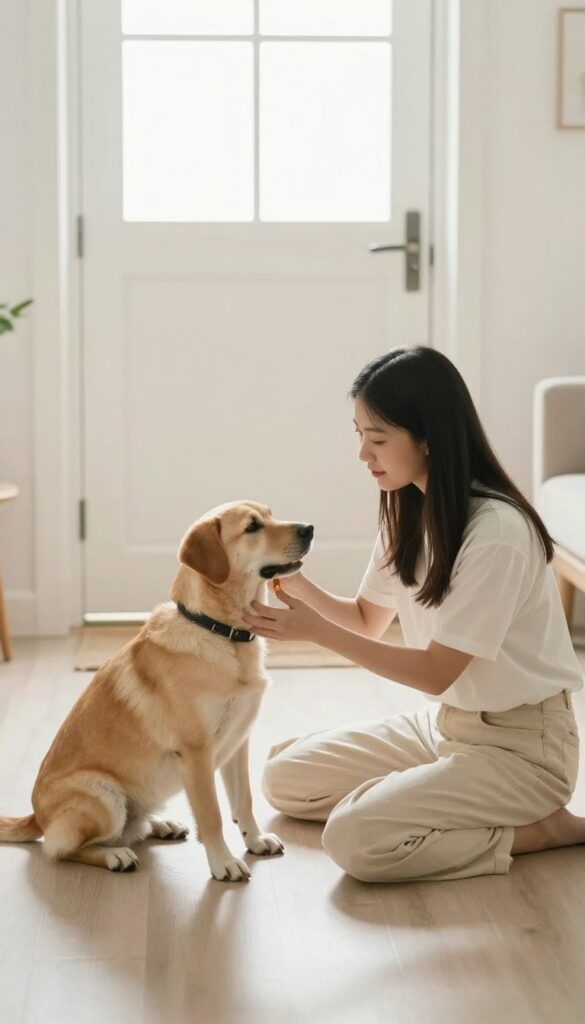
Training your dog to have good door manners isn't a one-time fix—it's a habit you build together. Consistency and patience are the real game-changers here. If you're inconsistent, your dog gets mixed signals, and that only slows progress.
But when you stick with it, day after day, the lessons start to stick.
Consistency means using the same commands, the same rewards, and the same rules every single time. Whether it's 'sit' before opening the door or waiting for your release word, keep it predictable. Dogs learn through repetition, so the more you practice, the faster they'll catch on.
Patience is just as important. Your dog isn't going to master this overnight, and that's okay. Every dog learns at their own pace, and setbacks are part of the process.
The key is to stay calm, keep sessions short and positive, and celebrate the small wins along the way.
Set A Daily Practice Routine
Make door manners a part of your everyday routine, not just when you have guests. Practice a few minutes each day, even if it's just you coming and going. Use the same cues and rewards each time, so your dog knows what to expect.
Short, frequent sessions work better than long, sporadic ones.
Keep Training Sessions Positive
Always end on a good note. If your dog is struggling, take a break and try again later. Use treats, praise, and play to reward good behavior.
Avoid scolding or punishment—it can create anxiety and make things worse. A positive experience makes your dog more eager to learn.
Track Progress And Adjust
Notice the small improvements, like a quicker sit or a calmer wait. If something isn't working, tweak your approach. Maybe your dog needs a different reward or a quieter practice spot.
Adjusting your method shows patience and helps your dog succeed.
FAQ
How long does it take to teach a dog door manners?
It varies by dog, but with consistent daily practice, you can see noticeable improvement in 2-4 weeks. Some dogs may take longer, especially if they have a strong habit of door dashing.
What if my dog is too excited to focus on training?
Start training in a low-distraction environment and gradually add more excitement. Use high-value treats and keep sessions short. If your dog is over threshold, take a break and try again later.
Can I train an older dog to have better door manners?
Absolutely! Older dogs can learn new behaviors, but it may take more time and patience. Use positive reinforcement and be consistent with your expectations.
Should I punish my dog for jumping at the door?
No. Punishment can increase anxiety and make the behavior worse. Instead, ignore the jumping and reward calm behavior.
This teaches your dog what you want them to do.
What if my dog still bolts out the door despite training?
If door dashing is a safety issue, use a leash or baby gate as a management tool while you continue training. You can also consult a professional dog trainer for personalized help.
Conclusion
Door greetings don't have to be a daily wrestling match. Pick a couple of these manners that fit your dog's energy and your routine, then practice them consistently. The key is repetition—dogs learn through predictable patterns, so the more you reinforce calm behavior at the threshold, the quicker it becomes second nature.
You'll still get the occasional excited bounce or a paw that slips past the doorframe. That's part of living with a dog who loves you. What matters is that you're showing them a better way to greet, one that keeps everyone safe and happy.

I’m Pallab Kishore, the owner of Little Pets Realm — an animal lover and pet care enthusiast sharing easy tips, healthy recipes, and honest advice to help every small pet live a happy, healthy, tail-wagging life.