
Last updated on August 19th, 2026 at 04:14 pm
Leash pulling can turn a simple walk into a constant tug-of-war, but it doesn't have to stay that way. With a few smart adjustments, you can teach your dog to walk calmly by your side—and actually enjoy the stroll.
These 13 fixes are practical, easy to implement, and designed to work in the real world, not just in theory. Whether you're dealing with a strong puller or a distracted sniffer, you'll find a solution that fits.
Pick a few to start, and you'll notice the difference right away.
1. Choose the Right Harness or Collar
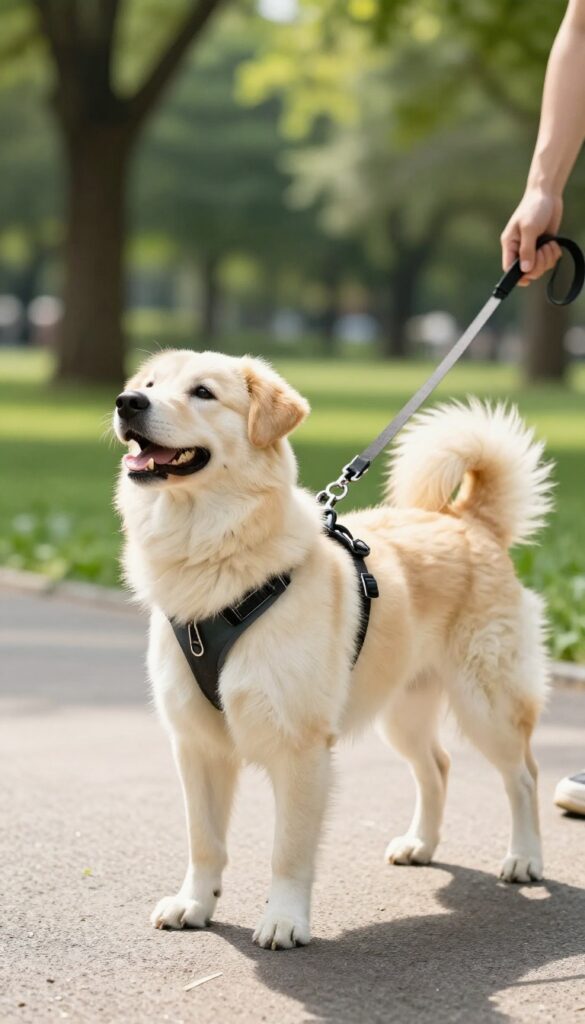
The gear you choose can make or break your walks. A standard collar can strain your dog's neck and actually encourage pulling. Switching to the right harness or head halter gives you more control and gently redirects your dog's attention back to you.
When your dog pulls, a flat collar puts pressure on the throat, which can cause coughing or even injury. A front-clip harness is a game-changer because the leash attaches at the chest, so when your dog pulls, they naturally turn back toward you. This simple redirection teaches them that pulling doesn't get them where they want to go.
Front-clip Harness Benefits
Front-clip harnesses discourage pulling by turning your dog's body sideways when they lunge. This makes it harder for them to pull and easier for you to guide them. Look for one with padded straps for comfort and a sturdy clip that won't break during excited moments.
When To Use A Head Halter
For strong, persistent pullers, a head halter offers more control with less effort. It works like a horse halter, steering your dog's head, which naturally guides their body. It takes some getting used to, so introduce it slowly with treats and short sessions.
Never yank on it—gentle guidance is key.
Fit And Safety Tips
A poorly fitted harness can cause chafing or even allow your dog to slip out. Make sure it's snug but not tight—you should be able to fit two fingers between the harness and your dog's body. Check the fit regularly, especially for growing puppies or dogs with thick coats.
2. Master the 'Stop and Wait' Technique
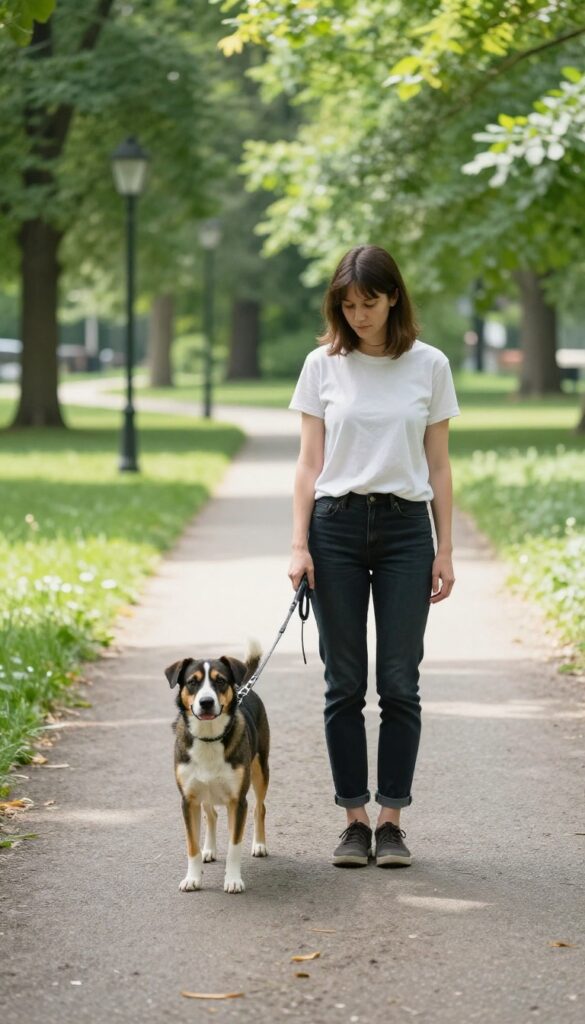
Sometimes the simplest fix is the most effective. The 'stop and wait' method is exactly what it sounds like: the moment your dog pulls, you freeze in your tracks. No yanking, no scolding—just a quiet pause until your dog figures out that pulling doesn't get them anywhere.
This technique works because it removes the reward of forward movement. Dogs pull because they want to get to something—a smell, a squirrel, a friendly face. When you stop, you're saying, "Pulling gets you nothing.
" The instant the leash goes slack, you start walking again. It's a clear, consistent message that even the most stubborn puller can learn.
Why It Works
Dogs are quick to learn cause and effect. If pulling leads to a dead stop, they'll start experimenting with other behaviors. The moment they step back or loosen the leash, you move forward—that's the reward.
Over time, they realize that a loose leash is what keeps the walk going.
How To Do It Right
Start in a low-distraction area. When your dog pulls, plant your feet and stand still. Don't say anything—just wait.
It might take a few seconds or a few minutes. The second the leash slackens, mark it with a cheerful "Yes! " and resume walking.
Be patient and consistent; every pull gets the same response.
Common Mistakes To Avoid
The biggest mistake is giving in after a few seconds. If you only stop sometimes, your dog learns that pulling might work if they just keep trying. Another pitfall is pulling back on the leash—that turns it into a tug-of-war.
Stay calm, stay still, and let your dog figure out the answer.
3. Use High-Value Treats to Reward Loose Leash Walking
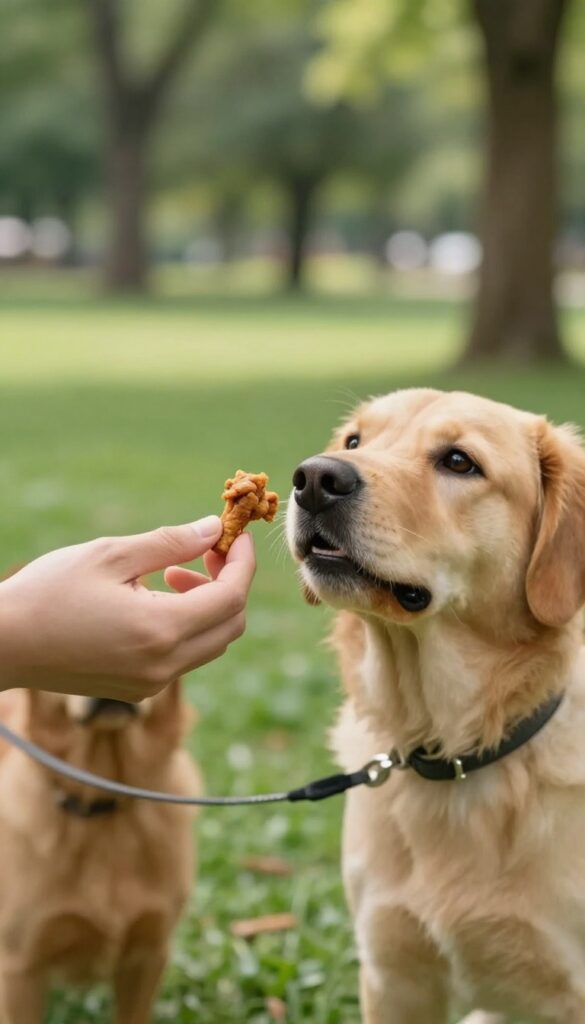
Treats aren't just for tricks—they're your secret weapon for better walks. When your dog chooses to walk nicely beside you, a quick reward makes that choice more likely to happen again. The trick is using treats that are truly special, not the same boring kibble they get at home.
High-value treats are small, smelly, and delicious—think tiny pieces of chicken, cheese, or hot dog. These are reserved only for walks, so your dog associates loose leash walking with something amazing. Keep them in a treat pouch within easy reach, and be ready to reward the moment your dog checks in with you or walks without tension on the leash.
Why High-value Treats Work
Dogs repeat behaviors that pay off. When you reward your dog for walking by your side, they learn that staying close brings good things. High-value treats are especially motivating because they're rare and delicious, making your dog more focused on you than on distractions like squirrels or smells.
How To Time Your Rewards
Timing matters. Reward your dog the instant they walk with a loose leash, even if it's just for a few steps. Then gradually increase the distance they need to walk before getting a treat.
This builds a strong association between loose leash walking and rewards, helping your dog understand exactly what you want.
Choosing The Right Treats
Pick treats that are soft, smelly, and easy to chew quickly. Cut them into pea-sized pieces so you can give multiple rewards without overfeeding. You might also rotate treats to keep things interesting—one day chicken, another day cheese.
The key is to make the treat more exciting than anything else on the walk.
4. Practice the 'Look at Me' Command
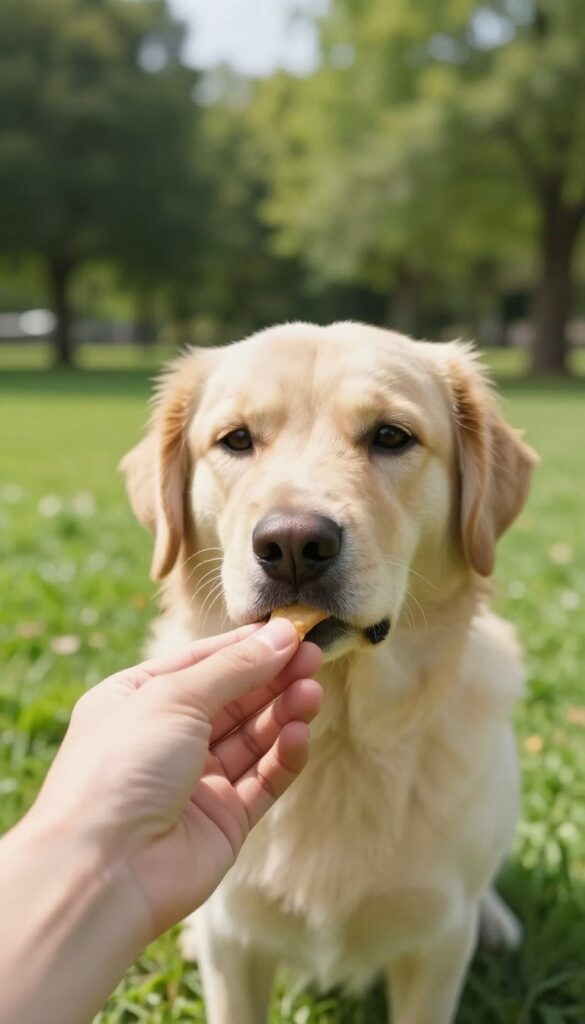
Eye contact isn't just a friendly gesture—it's a powerful training tool. When your dog locks eyes with you, they're mentally checking in, which makes it much harder for them to lunge after a squirrel or drag you toward a fire hydrant. Teaching 'look at me' gives you a way to redirect their attention before pulling even starts.
Why Eye Contact Works
Dogs naturally look to us for guidance, but distractions can override that instinct. By reinforcing eye contact, you're strengthening the bond and making yourself more interesting than the environment. It's a simple way to build focus, and it's a foundation for other loose-leash skills.
How To Teach It
Start in a quiet room with high-value treats. Hold a treat near your face and say 'look at me. ' The moment your dog makes eye contact, mark it with a 'yes' and reward. Repeat in short sessions, then gradually add distance and mild distractions like a squeaky toy or a door opening.
Using It On Walks
Once your dog has the basics down, use 'look at me' proactively. When you spot a potential trigger—another dog, a cyclist, a tempting smell—ask for eye contact before they react. Reward generously.
Over time, your dog will learn to check in with you automatically, which means fewer pulls and more relaxed strolls.
5. Change Direction Frequently
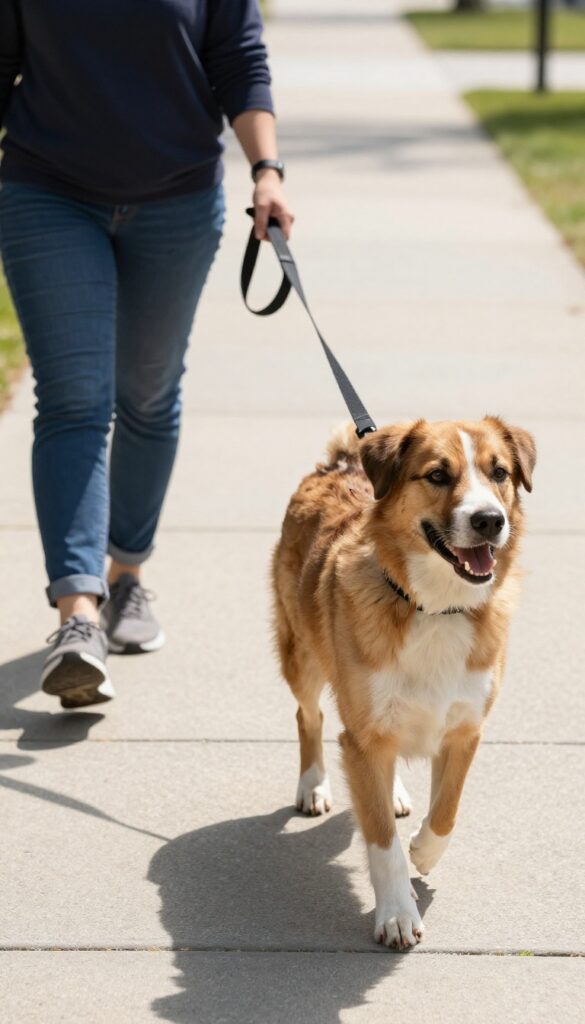
This trick turns your walk into a game of follow the leader. When your dog pulls ahead, simply pivot and walk the other way. It sounds simple, but it's surprisingly effective at teaching your dog to keep an eye on you.
Changing direction works because it interrupts the pulling behavior and shifts your dog's focus back to you. Instead of letting them drag you down the sidewalk, you become the one setting the pace and direction. The key is to be consistent and do it every time they pull, not just occasionally.
Why It Works
Dogs pull because they're excited and want to get somewhere. By turning around, you're saying, 'Pulling gets us nowhere. ' It also breaks their forward momentum, which makes them stop and reassess. Over time, they learn that staying close to you means they get to keep moving forward.
How To Do It Right
The moment you feel tension on the leash, say 'Let's go' in a cheerful tone and turn 180 degrees. Walk the other way for a few steps, then continue in your original direction if they're walking nicely. You can also add a treat reward when they catch up to you, reinforcing the behavior you want.
Make It A Fun Game
Don't make it a punishment—make it a game. Use a happy voice and vary your turns to keep your dog engaged. You can even do sudden zigzags or circles to make it more interesting.
The more fun you make it, the more your dog will want to stay tuned in to your movements.
6. Start with a Warm-Up Walk
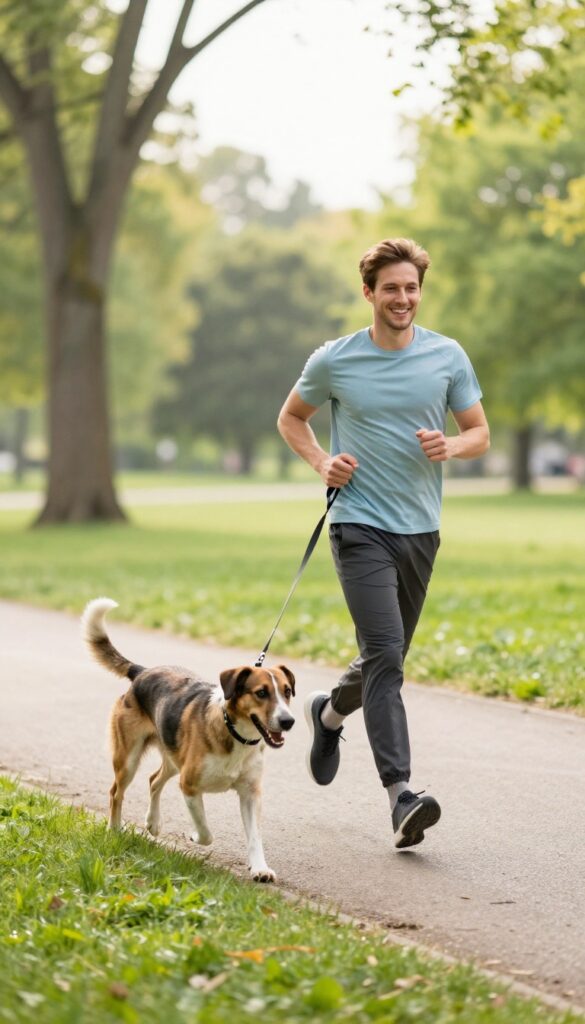
Before you even think about a loose leash, let your dog shake off that excess energy. A quick jog or a few minutes of play can make a world of difference. A calmer dog is less likely to pull, and you'll both enjoy the walk more.
Warm-ups aren't just for humans. Dogs have pent-up energy, especially after being indoors. By letting them burn some of it off first, you set the stage for a more relaxed walk.
It's a simple change that pays off in a big way.
Why Warm-ups Work
When your dog is bursting with energy, every little distraction becomes a reason to pull. A warm-up helps release that initial excitement, so your dog can focus on walking calmly. Think of it as a pressure valve—once the steam is out, the walk becomes easier.
Quick Warm-up Ideas
You don't need a huge yard or a lot of time. Try a fast-paced game of fetch, a few minutes of tug-of-war, or even a brisk jog around the block. The goal is to get your dog moving and slightly tired, not exhausted.
Five to ten minutes is usually enough.
Making It A Routine
Consistency helps your dog learn the pattern. If you always do a warm-up before a walk, your dog will start to understand that the walk is for calm walking, not wild pulling. Over time, this becomes a habit, and you'll notice fewer pulling incidents.
7. Use a Short Leash for Better Control
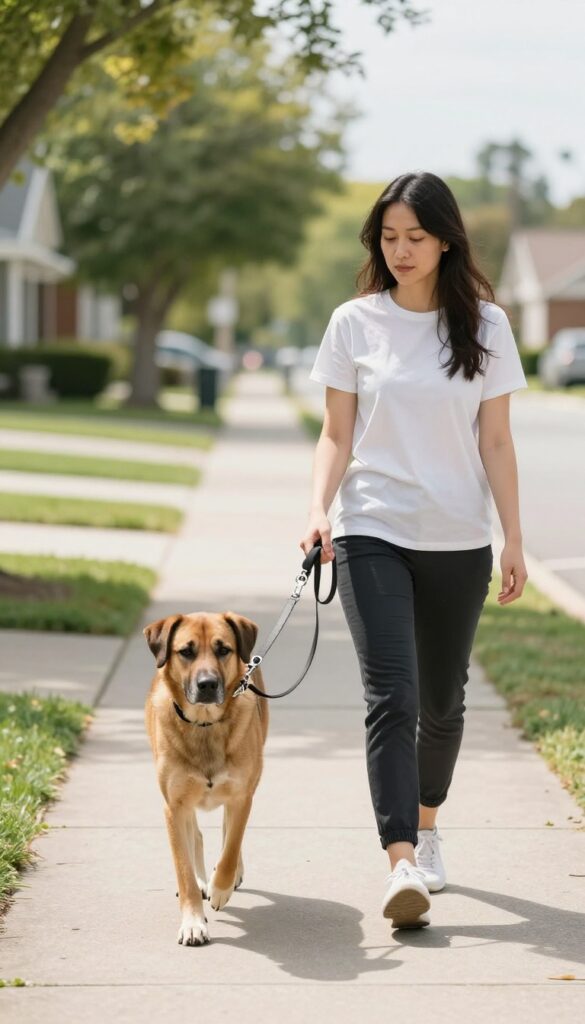
A longer leash gives your dog more room to roam, but that extra length can also give them more leverage to pull. Switching to a shorter leash—around 4 to 6 feet—puts you in a better position to manage their movements and keep them close. It’s a simple swap that can make a big difference in your control and your dog’s focus.
When your dog pulls on a long leash, they gain momentum and distance, making it harder for you to correct the behavior. A shorter leash reduces the space they have to build up speed and gives you quicker feedback. Plus, it keeps your dog physically closer to you, which naturally encourages them to pay more attention to your pace and direction.
The Right Length
Aim for a leash that’s about 4 to 6 feet long. This gives your dog enough room to sniff and explore comfortably, but not so much that they can get a running start. Avoid retractable leashes for training—they encourage pulling by giving your dog constant tension and freedom.
A standard, non-retractable leash is your best bet.
How To Hold It
Hold the leash with your hand near the clip, so the effective length is even shorter. This gives you more leverage and reduces the amount of slack your dog can use to pull. Keep your hand at your side or slightly in front, and avoid wrapping the leash around your wrist—it can be dangerous if your dog lunges.
Keep It Loose (but Not Too Loose)
A short leash doesn’t mean a tight leash. The goal is to have a little slack when your dog is walking nicely, but be ready to shorten it instantly if they start to pull. Think of it as a relaxed but alert hold—enough to guide, but not to choke.
This helps your dog learn that a loose leash is the comfortable position.
8. Practice in a Low-Distraction Environment First
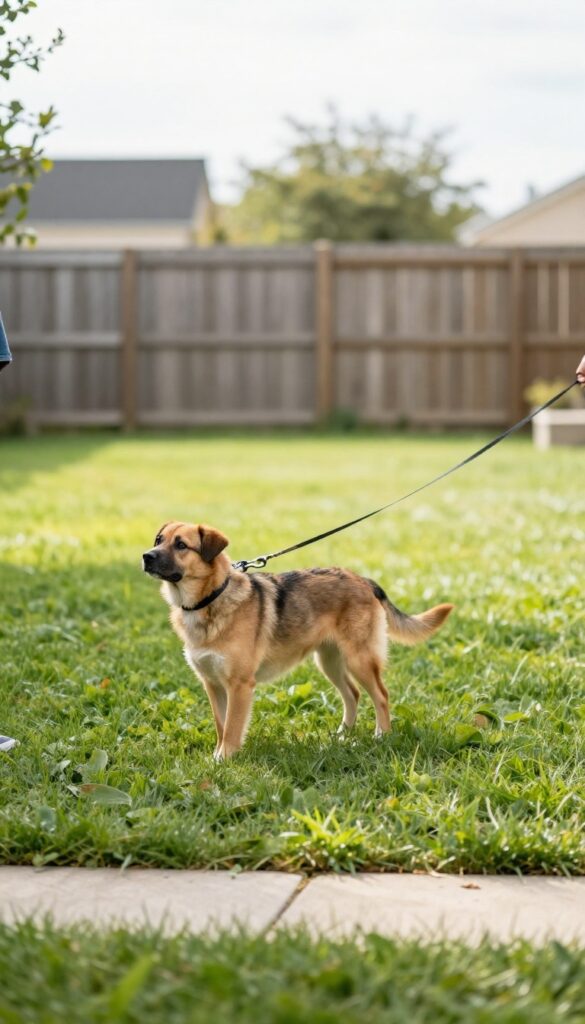
Trying to train loose-leash walking on a busy sidewalk is like studying for a test in a rock concert. Your dog's brain is flooded with sights, sounds, and smells, making it nearly impossible to focus on your cues. That's why starting in a quiet, familiar space is a game-changer.
When you practice in a low-distraction environment, you set your dog up for success. They can actually hear you, see your treats, and understand what you're asking. This builds a strong foundation of the behavior before you add real-world chaos.
Think of it as rehearsing in a quiet studio before performing on stage.
Why Start In The Backyard?
Your backyard is the perfect classroom. There are no other dogs, no cars, and no strangers to compete for your pup's attention. Your dog already feels safe and comfortable there, which means they're more likely to engage with you.
Use this space to practice basic loose-leash walking: stop when the leash tightens, reward when it's slack, and change directions frequently to keep your dog focused on you.
Progress To A Quiet Park
Once your dog has the hang of it at home, move to a quiet park or an empty parking lot. These spots have slightly more distractions—like new smells or distant noises—but still manageable. Start by walking in circles or figure-eights, rewarding every step with a loose leash.
If your dog starts pulling, simply stop and wait. This teaches them that pulling gets them nowhere, while walking politely keeps the fun going.
Use High-value Treats
In a low-distraction environment, you can use lower-value treats like kibble. But as you move to more distracting places, upgrade to something irresistible—think tiny pieces of chicken or cheese. This keeps your dog's attention on you even when the world gets interesting.
Remember to keep treats small and easy to chew so your dog doesn't stop to savor them.
Keep Sessions Short And Positive
Training in a new environment can be tiring for your dog, so keep sessions brief—5 to 10 minutes max. End on a high note with a fun game or a few minutes of free sniffing. This leaves your dog wanting more and builds positive associations with training.
Over time, you'll gradually increase the difficulty, and your dog will learn to walk loosely even on the busiest streets.
9. Teach 'Leave It' to Manage Distractions
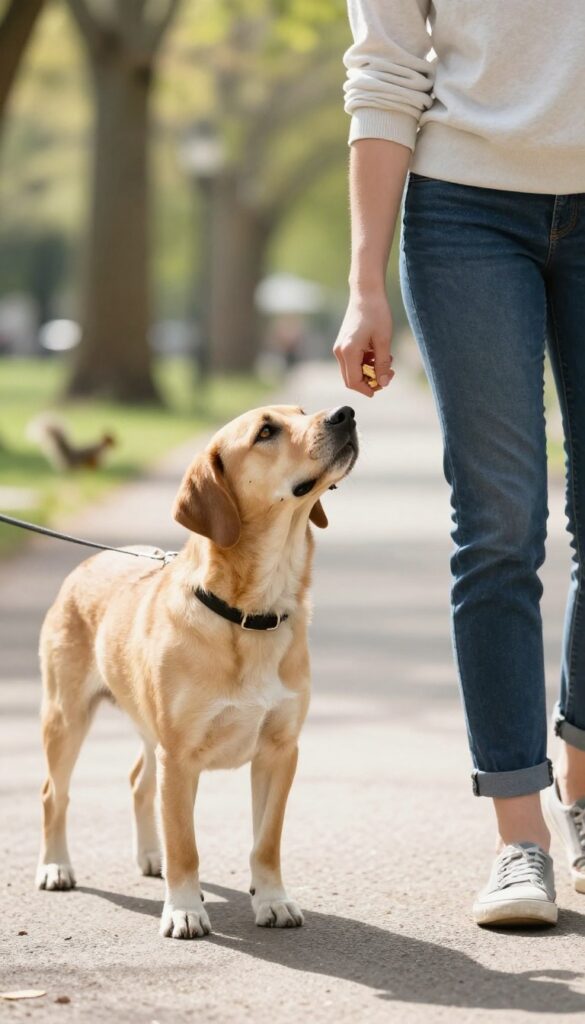
A squirrel darts across the path, and suddenly your dog’s brain switches off. That’s the moment pulling starts. Teaching a reliable 'leave it' gives you a way to interrupt that reaction before it turns into a full-blown lunge.
It’s not just a party trick—it’s a practical tool for keeping walks calm and controlled.
The key is to practice 'leave it' in low-stakes situations first, then gradually increase the difficulty. Start with a treat in your closed fist, and reward your dog for backing away. Once that’s solid, move to treats on the floor, then to real-world distractions.
The goal is to build a default response that happens automatically, even when something exciting appears.
Start With Easy Temptations
Begin indoors with a treat in your closed hand. Let your dog sniff, lick, or paw at it, but don’t open your hand until they pull back. The moment they back off, say 'yes' and give them the treat from your other hand.
Repeat until they understand that ignoring the closed hand earns a reward. This builds the foundation without overwhelming them.
Practice With Movement
Once your dog gets the idea with a still hand, add movement. Toss a treat a few feet away and cover it with your foot. If your dog goes for it, block access and say 'leave it. ' When they look at you instead, reward them.
This mimics the sudden motion of a squirrel or a falling leaf, helping your dog learn to check in with you even when things move.
Use It On Walks
Now take it outside. When you see a distraction approaching—another dog, a bicycle, a tempting pile of trash—give your 'leave it' cue before your dog fixates. Reward them for looking at you instead of the trigger.
Timing matters: you want to catch their attention early, before they’re already pulling. With practice, your dog will start to look to you automatically when something exciting appears.
10. Try a No-Pull Training Aid
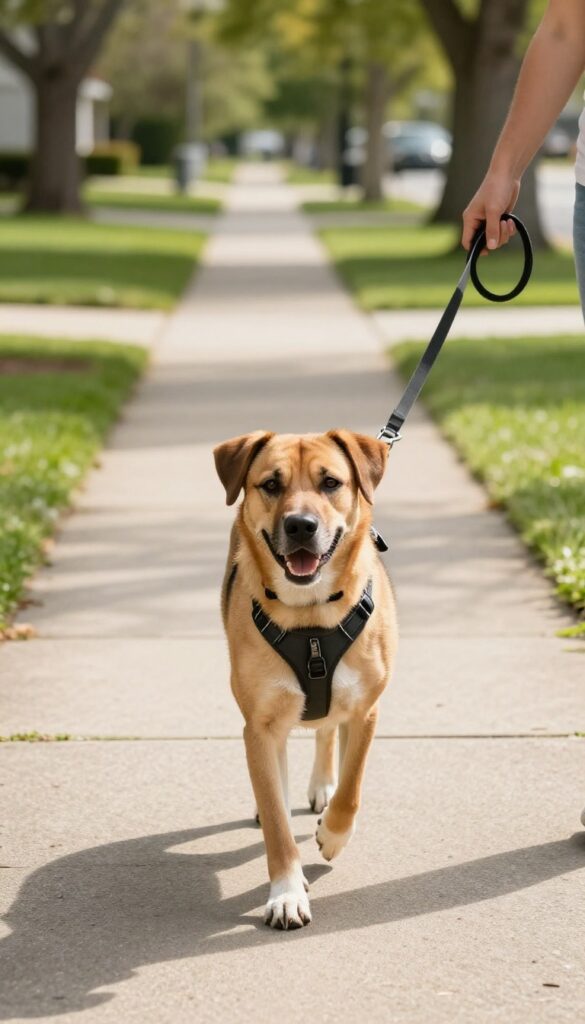
Sometimes you need a little extra help while you're working on training. No-pull harnesses and head collars can give you that breathing room, making walks more manageable from the first step. They're not a permanent fix, but they can break the pulling habit and set you both up for success.
No-pull gear works by gently discouraging pulling, either by redirecting your dog's forward motion or by making pulling uncomfortable. The goal is to use them as a training tool, not a lifelong crutch. Here's how to choose and use them effectively.
Front-clip Harnesses: Steering, Not Straining
A front-clip harness has the leash attachment on your dog's chest, so when they pull, they get turned back toward you. This makes it harder to pull and gives you more control without choking. Look for a harness with a padded chest plate and a front ring that sits low on the sternum.
When fitting, make sure it's snug but not tight—you should be able to slide two fingers under the straps. Start with short, low-distraction walks to let your dog adjust.
Head Collars: Gentle Direction Control
Head collars loop around your dog's muzzle and behind their ears, similar to a horse halter. They give you control over your dog's head, which naturally guides their body. This is especially helpful for strong pullers.
However, some dogs find them uncomfortable at first, so introduce it gradually with treats and praise. Never yank or jerk the leash—use steady pressure. If your dog paws at it or tries to rub it off, take it slow and pair it with positive reinforcement.
Using Aids As A Stepping Stone
The real value of these aids is that they let you practice loose-leash walking without the constant frustration. As your dog gets better, gradually switch to a regular collar or harness during low-distraction walks. Keep the no-pull gear for challenging environments.
The goal is to phase it out entirely once your dog understands what you want. Remember, these tools are not a substitute for training—they just make the training process smoother.
11. Keep Walks Short and Positive
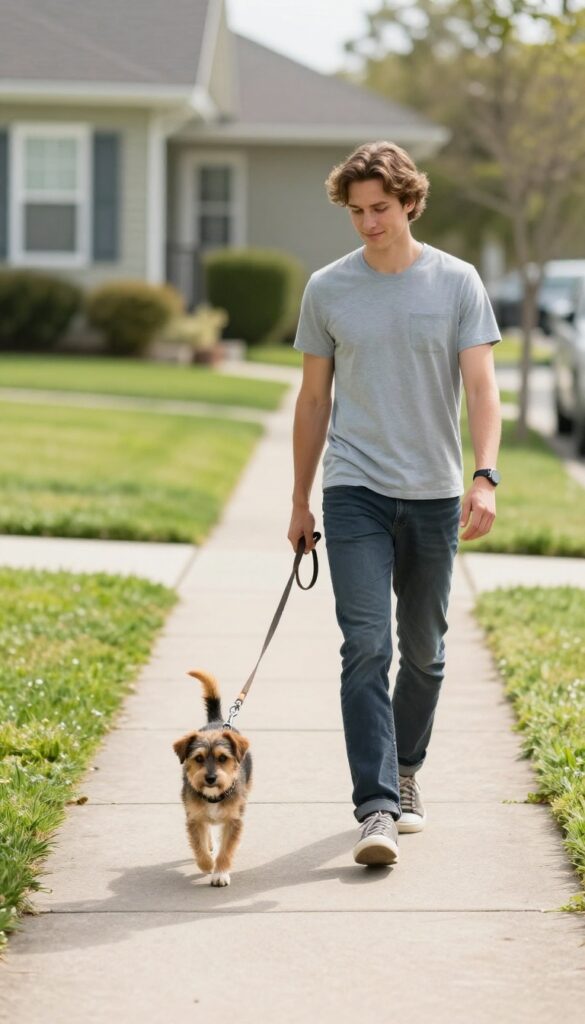
Sometimes the best way to fix a problem is to stop pushing through it. If your dog pulls, ending the walk early isn't giving up—it's smart training. Short, successful walks build confidence and reinforce good behavior without frustration.
Why Short Walks Work
When you keep walks short, you set your dog up to succeed. A 10-minute walk with loose leash is far more valuable than a 30-minute tug-of-war. Your dog learns that calm walking leads to more walking, while pulling ends the fun.
This positive association makes them more likely to walk nicely next time.
How To End A Walk Early
The moment your dog pulls, stop and stand still. Wait for them to relax the leash, then turn around and head home. If they pull again, repeat the process.
This might mean the walk ends after just a few minutes—that's okay. You're teaching them that pulling doesn't get them where they want to go.
Building Up Gradually
Start with very short walks around your yard or quiet street. As your dog gets the hang of it, slowly increase the distance. Keep a mental note of how long they can walk without pulling, and end before that point.
This way, every walk ends on a positive note, and your dog looks forward to the next one.
12. Use a Verbal Cue Like 'Easy' or 'Slow'
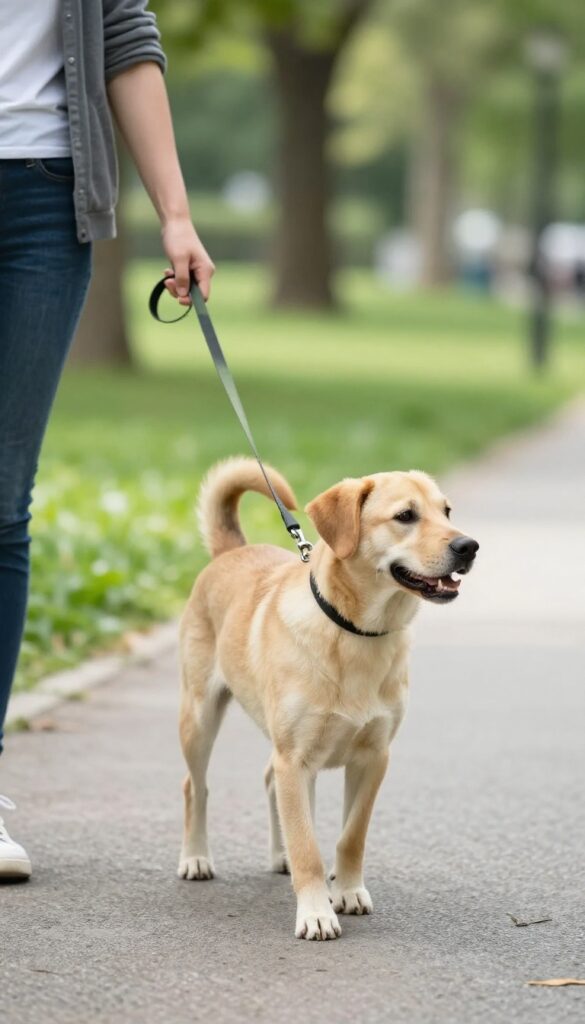
Sometimes the simplest tools are the ones we overlook. A single word, said consistently, can become a powerful signal that tells your dog it's time to ease off the gas pedal. Verbal cues work because they give your dog a clear, repeatable instruction that they can learn to associate with a specific behavior.
Pick a word like "easy" or "slow" and use it every time your dog starts to pull. Say it in a calm, firm tone—not a shout, not a whine—so your dog learns to listen for that sound. When they respond by slowing down or checking in with you, reward them immediately with a treat or praise.
Over time, the cue becomes a habit, and you'll need it less and less.
Choose A Word And Stick To It
Consistency is everything. If you use "easy" one day and "slow down" the next, your dog won't know what you want. Pick one short word that's easy to say and doesn't sound like other commands you use.
Say it the same way every time, and pair it with a gentle tug on the leash if needed. Your dog will start to connect the sound with the action.
Reward The Right Response
When your dog hears the cue and actually slows down, make it worth their while. Give them a treat, a scratch behind the ears, or a happy "good dog! " The more they realize that slowing down leads to good things, the more likely they'll do it again.
Timing matters—reward within a second or two so they know exactly what they're being praised for.
Phase Out The Cue Over Time
Once your dog reliably responds to the verbal cue, start using it less often. You want them to walk calmly without needing a reminder every few steps. Try waiting a little longer before saying anything, and only use the cue when they start to pull.
Eventually, your dog will learn that calm walking is the default, and the word becomes a backup plan rather than a constant command.
13. Stay Consistent and Patient
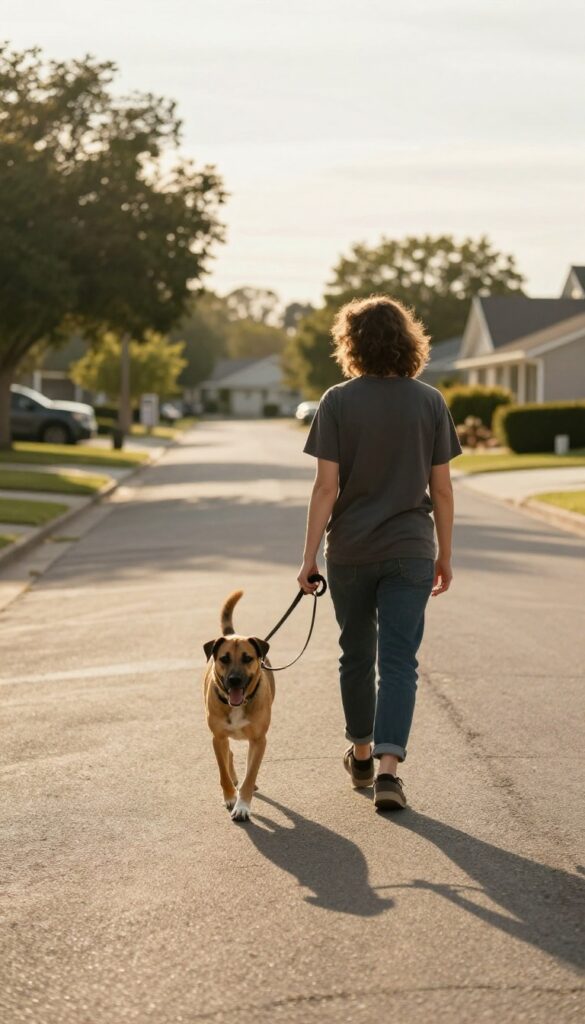
You've tried the techniques, bought the gear, and practiced in the backyard. But if your dog still pulls on the street, don't throw in the towel just yet. The real secret to loose-leash walking isn't a magic trick—it's showing up day after day with the same approach and a whole lot of patience.
Consistency and patience are the glue that holds all the other fixes together.
The Power Of Repetition
Dogs learn through repetition. Every time you stop when the leash tightens, you're sending a clear message: pulling gets you nowhere. But if you only enforce that rule on weekends, your dog gets mixed signals.
Use the same cues, the same rewards, and the same consequences on every walk, whether it's a quick pee break or a long hike. Over time, the pattern becomes second nature.
Set Realistic Expectations
Rome wasn't built in a day, and neither is a reliable loose-leash walk. Some dogs pick it up in a week; others take months. If you expect perfection after a few sessions, you'll only frustrate yourself and your pup.
Instead, celebrate small wins—a few steps without pulling, a check-in when you call their name. Progress is progress, no matter how small.
Keep Training Sessions Short And Sweet
Long, grueling training sessions can tire out both of you and make walks feel like chores. Short, focused sessions—even just 10 minutes a day—are often more effective than an hour of frustration. End on a positive note, with a successful moment, so your dog associates walks with good things.
You'll both look forward to the next one.
Don't Give Up
There will be days when your dog seems to forget everything they've learned. That's normal. Maybe they're overexcited, or the neighbor's cat is on the prowl.
Instead of getting angry, take a deep breath and calmly reset. Remember why you started this journey: to enjoy walks together. Patience isn't just about waiting—it's about staying calm and consistent even when it's tough.
FAQ
Why does my dog pull on the leash?
Dogs pull because they are excited, want to explore, or have learned that pulling gets them where they want to go. It's a natural behavior, but with training, you can teach them to walk politely.
How long does it take to stop leash pulling?
It varies by dog and consistency. Some dogs improve in a few days, while others take weeks. The key is to be patient and use positive reinforcement consistently.
Is a harness better than a collar for pulling?
A front-clip harness can be more effective for pulling because it redirects your dog's forward motion. A collar can put pressure on the neck, so a harness is often safer and more comfortable.
Can older dogs learn to stop pulling?
Absolutely. While it may take a bit more time, older dogs can learn new behaviors with consistent training and positive reinforcement.
What if my dog pulls because of excitement?
Excitement is common. Try to calm your dog before the walk with a few minutes of play or training. Also, reward calm behavior during the walk to reinforce a relaxed state.
Conclusion
Walking your dog should feel like a shared adventure, not a tug-of-war. By trying a few of these fixes, you'll turn every stroll into a smoother, more relaxed experience for both of you.
Start with the one that matches your dog's biggest struggle, then add more as you see progress. Small changes add up fast, and soon you'll both be looking forward to that next walk—no pulling required.

I’m Pallab Kishore, the owner of Little Pets Realm — an animal lover and pet care enthusiast sharing easy tips, healthy recipes, and honest advice to help every small pet live a happy, healthy, tail-wagging life.