
That frantic bark-fest every time someone knocks can turn a cozy home into a stress zone. You love your dog's protective instincts, but the noise is wearing you down—and your visitors. The good news?
Door-barking is a habit you can reshape with patience and the right techniques. These ten ideas focus on changing your dog's emotional response, not just silencing the noise. Each one builds self-control and confidence, so your entrance becomes calm and welcoming instead of chaotic.
Pick a few that fit your dog's personality, grab some treats, and start practicing when things are quiet. Consistency matters more than perfection, and small wins add up fast.
1. Desensitize the Doorbell Sound
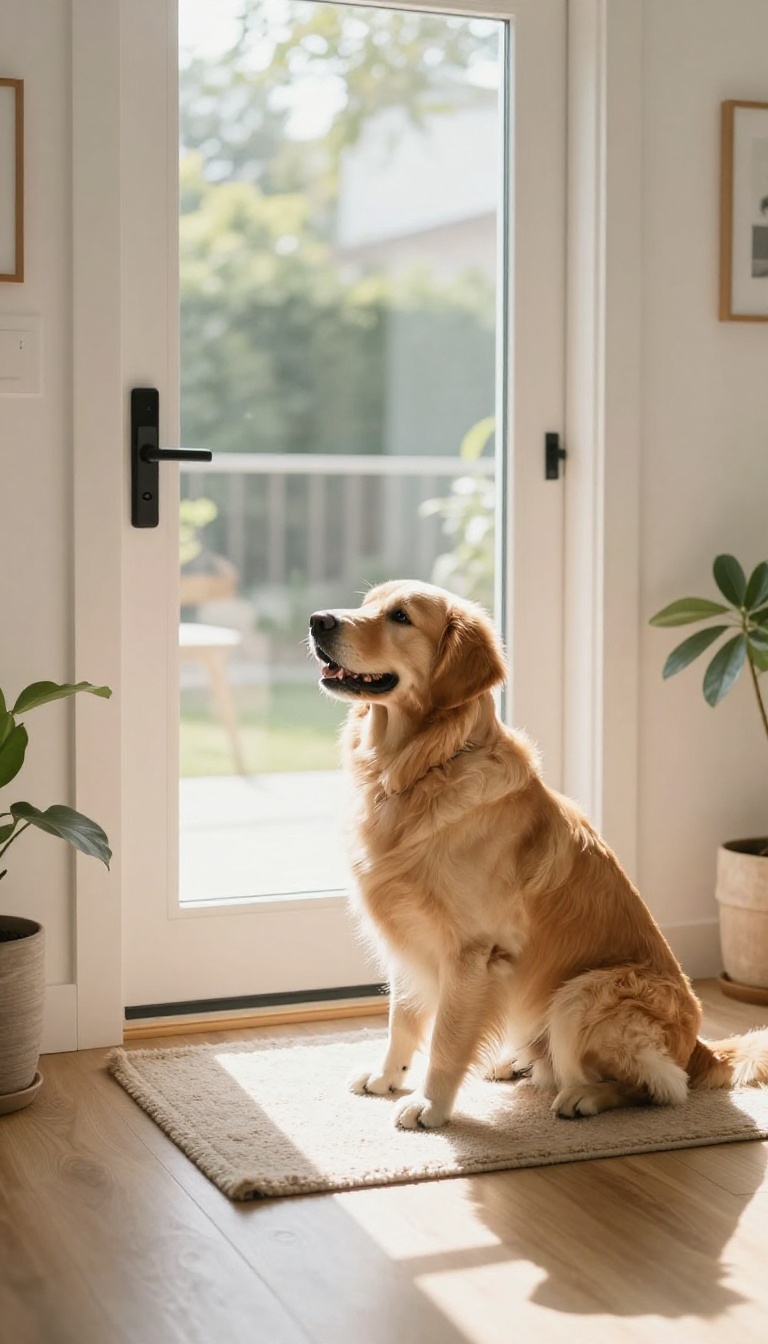
That first ring sets off a chain reaction—barking, jumping, and chaos. The doorbell itself becomes a trigger, not just the visitor behind it. By changing how your dog perceives that sound, you can short-circuit the whole frenzy before it starts.
This method is gentle, effective, and works best when you practice in short, positive sessions.
Desensitization is about teaching your dog that the doorbell means nothing scary or exciting—just good things happen when it rings. Start by playing the doorbell sound at a very low volume, barely audible, while you toss high-value treats. Your dog learns that the sound predicts treats, not intruders.
Over several sessions, gradually increase the volume, always keeping your dog's comfort in mind. If they show signs of stress, back off and slow down.
Start Small And Stay Positive
Begin with the volume so low your dog barely notices. Pair each ring with a treat, and keep sessions short—just a few minutes at a time. The goal is to create a positive association, so never force your dog to endure a louder sound than they can handle.
Watch for relaxed body language: soft ears, a wagging tail, or a calm sit.
Gradually Increase The Challenge
Once your dog stays calm at a low volume, bump it up a notch. You can also add variety by using different doorbell tones or even knocking sounds. Practice at random times during the day, not just when you're expecting guests.
This randomness helps your dog generalize the calm response to any unexpected sound at the door.
Use Real-life Repetition
After your dog handles recorded sounds well, it's time for real-world practice. Have a friend ring the actual doorbell while you reward calm behavior. Start with just one ring, then gradually extend the duration of the interaction.
Keep the first few real visits brief and low-key, so your dog learns that visitors are no big deal.
2. Teach a 'Go to Mat' Cue
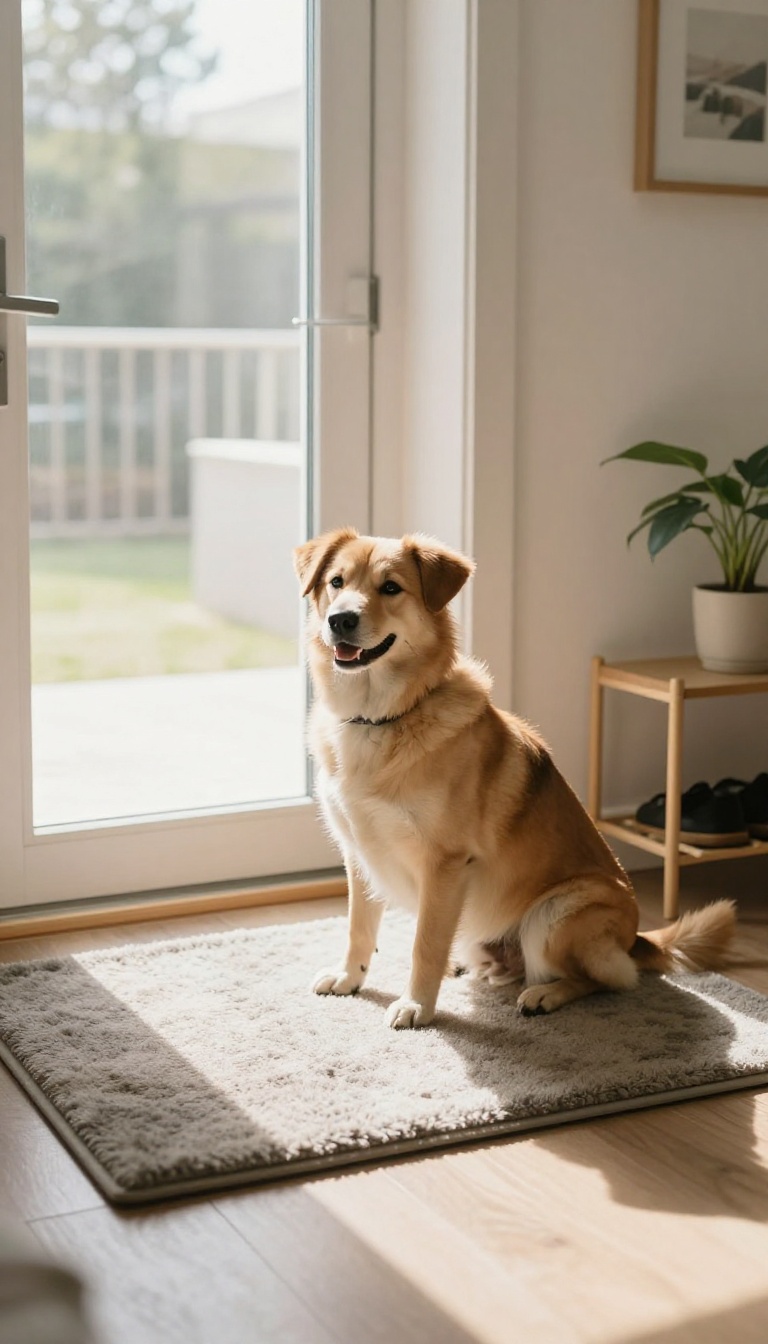
A mat can become your dog's calm zone, a place they associate with good things and quiet time. The 'go to mat' cue is a simple way to redirect their energy the moment the doorbell rings, giving them a clear job that replaces barking. Start training when things are calm so your dog learns the behavior before adding the excitement of visitors.
Once they know the cue, you can use it at the door to create a peaceful routine.
Training your dog to go to a mat on command is a practical way to manage door-barking. This cue gives them a specific place to settle, and with practice, they'll head there automatically when someone arrives. The key is to build a strong positive association with the mat and reward calm behavior consistently.
Choose a mat that's comfortable and portable, so you can move it near the door when needed. Use high-value treats and make the mat a special spot—your dog will learn that being on it leads to good things. Over time, the mat becomes a cue for relaxation, not excitement.
Pick A Mat And Build Positive Associations
Select a mat or bed that's easy to grab and place near the door. Make it inviting by adding a favorite toy or a soft blanket. Feed your dog treats while they're on the mat, and use a cheerful marker like 'yes' to reinforce the behavior.
Repeat this several times a day so the mat becomes a happy place.
Train The Cue Step By Step
Start by tossing a treat onto the mat and saying 'go to mat' as your dog steps on it. Reward them for all four paws on the mat, then gradually increase the duration they stay. Use a release word like 'okay' to let them know they can leave.
Practice in short sessions, keeping it fun and rewarding.
Use It At The Door With Real Visitors
Once your dog reliably goes to the mat on cue, practice with a helper who rings the doorbell or knocks. Ask your dog to 'go to mat' before opening the door, and reward them for staying while you greet the visitor. If they get up, calmly guide them back without scolding.
With repetition, they'll learn that staying on the mat earns treats and praise.
3. Practice Door-Approach Drills
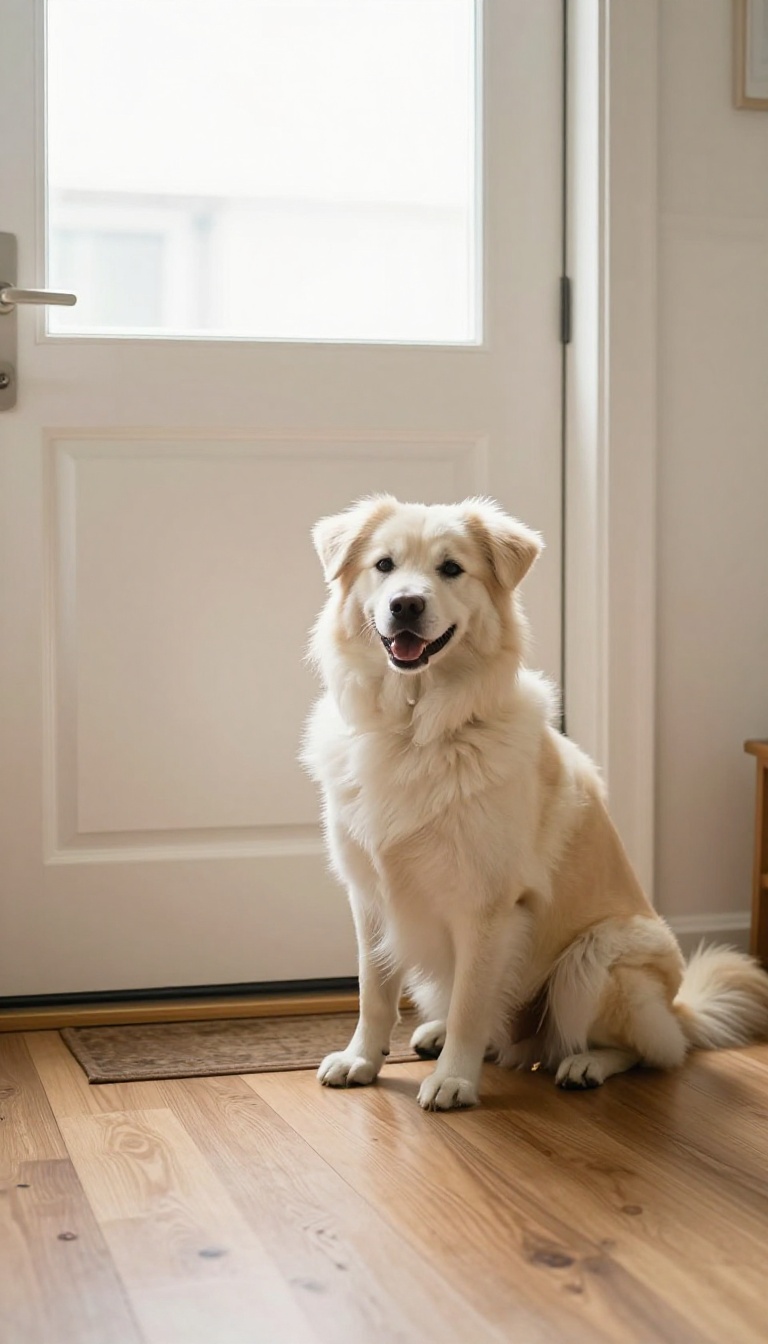
Practicing door approaches in a controlled setting helps your dog learn that calm behavior gets rewarded. Start by walking toward the door yourself, without any knocking or ringing, and reward your pup for staying quiet. This builds a positive association with the door area and sets the stage for real-life situations.
Simulate arrivals by approaching the door yourself, rewarding your dog for staying calm. Repeat with different triggers like knocking or ringing, always rewarding quiet behavior. This drill teaches your dog that the door is not a threat, but a place where good things happen when they remain composed.
Start With Simple Approaches
Begin by simply walking toward the door while your dog is relaxed. If they stay quiet, toss a treat. If they start to bark, stop and wait for a pause before rewarding.
This step builds a foundation of calmness near the door.
Add Realistic Sounds Gradually
Once your dog is comfortable with your approach, introduce sounds like a soft knock or a gentle ring. Start at a low volume and gradually increase it. Reward your dog for staying quiet even when they hear the trigger.
This desensitizes them to the sounds that usually cause barking.
Use A Helper For Realistic Practice
Have a friend or family member knock or ring while you work with your dog. Practice at random times so your dog doesn't predict when it will happen. Keep sessions short and positive, ending with a calm dog and a treat.
4. Use a 'Quiet' Command with Positive Reinforcement
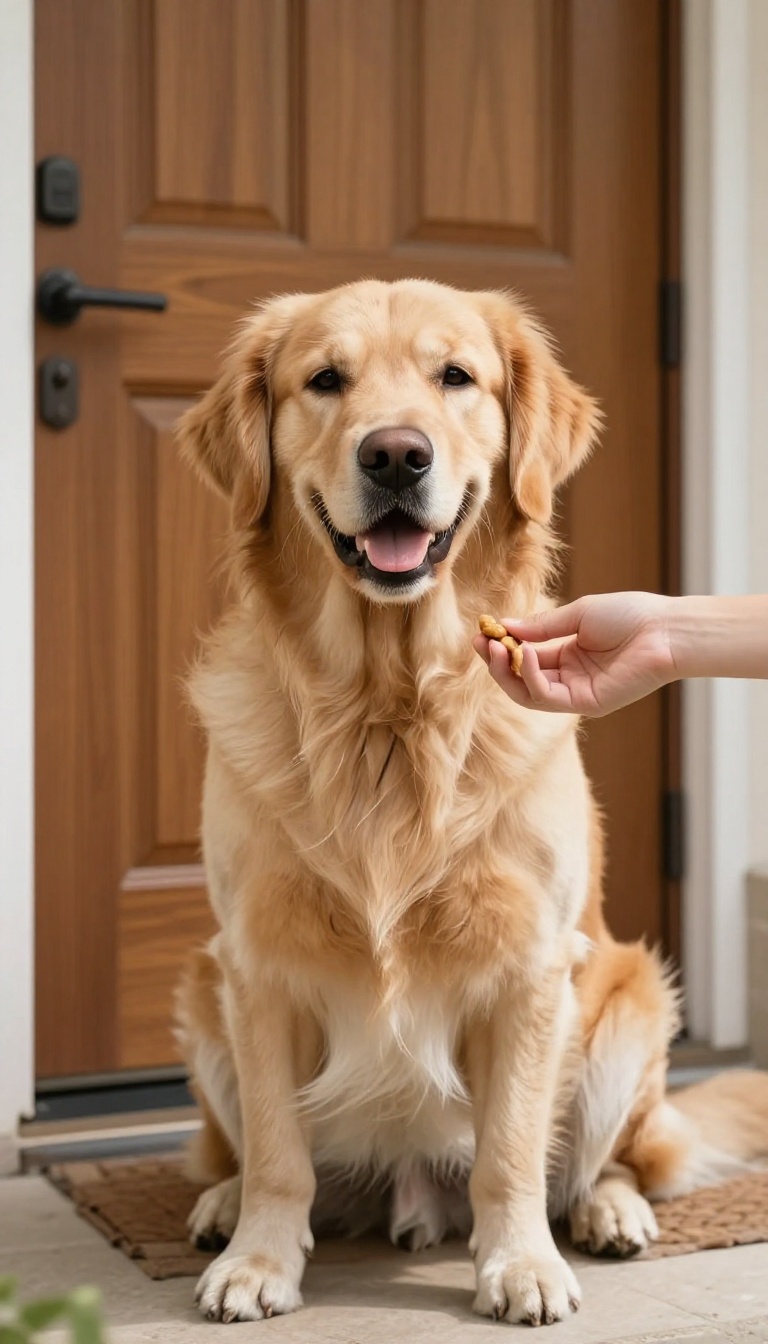
Teaching your dog a specific cue for silence can be a game-changer. Instead of just yelling over the noise, you give them a clear signal that stops the barking and earns a reward. The key is to time it perfectly and build up gradually, so your dog learns that quiet truly pays off.
Start in a calm environment, not at the front door. Once your dog understands the cue in a quiet room, you can move closer to the door and eventually practice during real knocks. This step-by-step approach sets everyone up for success.
The 'quiet' command works best when paired with positive reinforcement. You're not punishing the bark; you're rewarding the silence. This builds a positive association and makes your dog more likely to repeat the behavior.
With patience and consistency, your dog will learn that being quiet at the door is more rewarding than barking. The goal is to create a default calm response, not just a temporary pause.
Timing The Treat
Watch for the split second your dog stops barking, even if it's just to take a breath. Immediately say 'quiet' in a cheerful tone and pop a treat in their mouth. This marks the exact behavior you want.
If you wait too long, they might associate the treat with something else.
Increasing The Duration
Once your dog reliably stops on cue, start delaying the treat by a second or two. Gradually extend this time, so they learn to stay quiet for longer stretches. Use a release word like 'okay' if you want them to bark again, but most of the time you'll want to keep the calm going.
Moving To The Door
Practice near the door with a helper. Have them knock or ring the bell while you're ready with treats. When your dog barks, give the 'quiet' cue and reward the silence.
Start with just one knock, then build up to more realistic scenarios. Keep sessions short and positive.
5. Manage the Environment with Baby Gates or Barriers
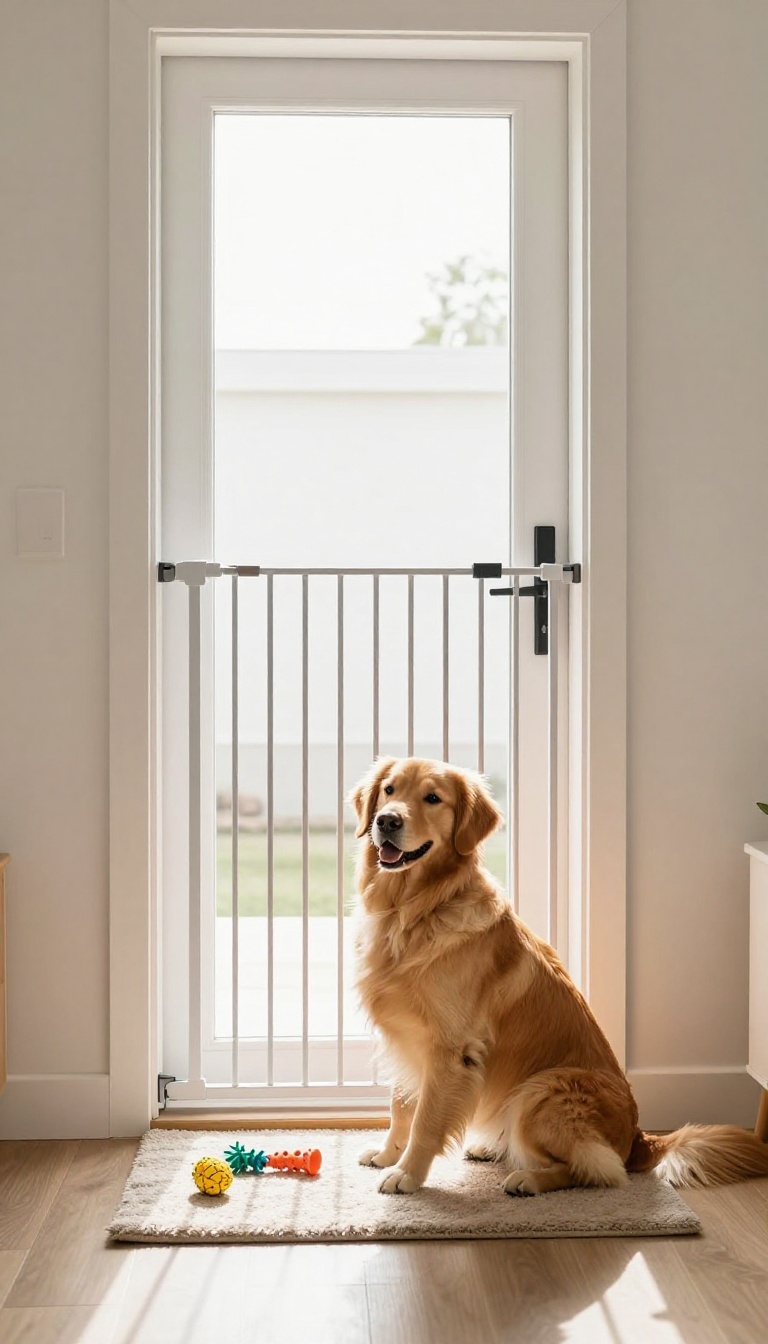
Sometimes the simplest fix is a physical one. Placing a baby gate or exercise pen a few feet from the door gives your dog a clear boundary without feeling trapped. It’s not about punishment—it’s about creating a safe space where they can still see what’s happening without the urge to rush the entrance.
This setup works because it reduces the visual and physical stimulation that triggers barking. Your dog can watch visitors arrive from a comfortable distance, which helps them feel more in control. Over time, they learn that staying behind the gate is a normal part of the routine, and the door becomes less of a big deal.
Pick The Right Barrier
Choose a baby gate that’s sturdy and tall enough to discourage jumping. Pressure-mounted gates work well for doorways, while freestanding exercise pens are great for creating a larger zone in an open area. Make sure it’s set up securely so your dog can’t knock it over.
Set It Up For Success
Place the barrier a few feet back from the door, so your dog has room to move but can’t reach the entryway. Add a comfy bed or mat, a few toys, and maybe a frozen treat to make the space inviting. The goal is to make being behind the barrier a positive experience.
Pair It With Training
A barrier alone won’t stop barking, but it gives you a chance to reward calm behavior. When your dog stays quiet behind the gate, praise them and give a treat. If they bark, wait for a pause, then reward.
This teaches them that quietness earns good things, and the gate becomes a cue for calmness.
6. Provide a Distraction: Treat-Stuffed Toys
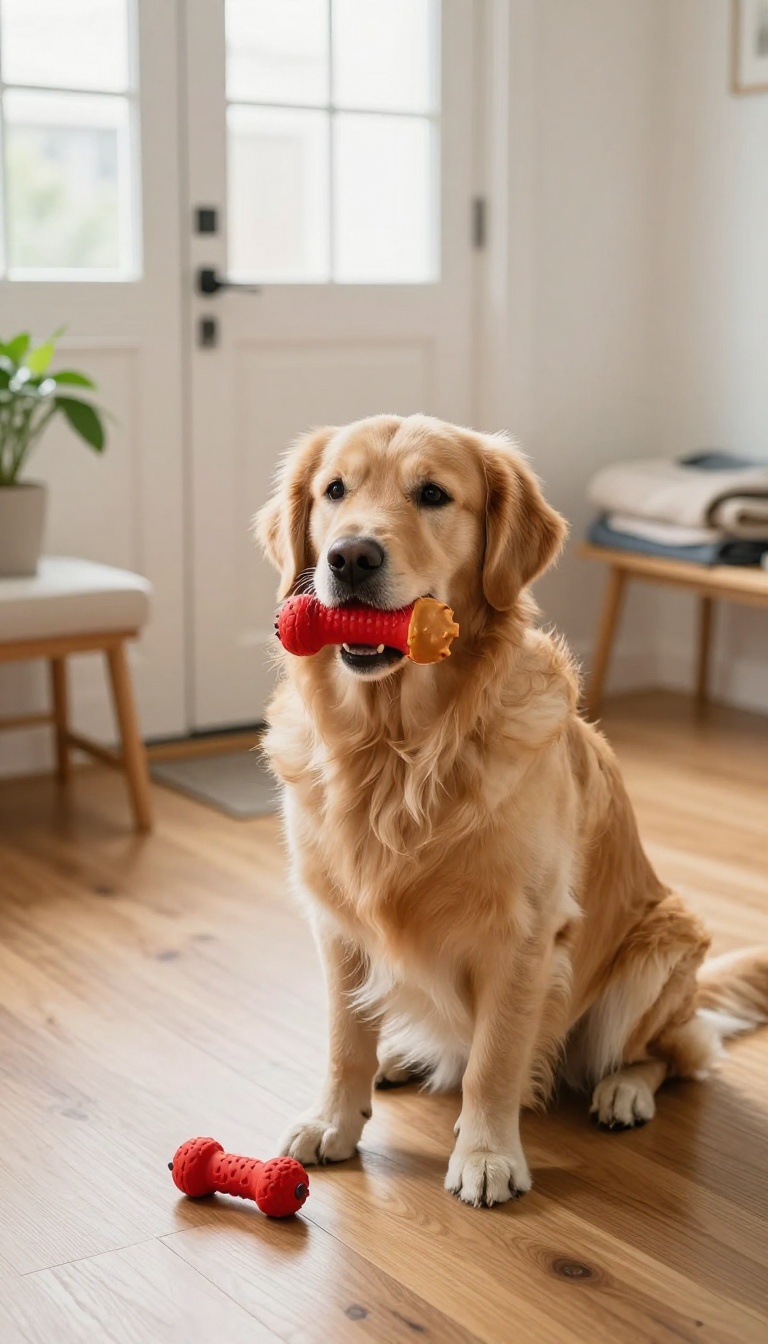
Sometimes the easiest way to stop a bark is to give your dog something better to do. A treat-stuffed toy can turn the moment the doorbell rings into a rewarding puzzle instead of a barking contest. This works especially well for dogs who are food-motivated or get overly excited by visitors.
Keep a special toy filled with treats or peanut butter near the door. When someone arrives, direct your dog to the toy, rewarding them for focusing on it instead of barking. This not only distracts them but also creates a positive association with the doorbell.
Choosing The Right Toy
Pick a toy that's durable and can hold treats securely. Kong-style toys are a classic choice, but you can also use puzzle toys or a simple hollow bone. The key is to make it special—reserve it only for door arrivals so it stays exciting.
Prep Ahead For Success
Fill a few toys in advance and keep them in the freezer or a container near the door. When the doorbell rings, grab one and hand it to your dog. Having them ready means you won't be fumbling with peanut butter while your dog is already barking.
Teaching The Routine
Start by practicing when there's no actual visitor. Ring the doorbell yourself, then immediately give your dog the toy. Repeat this until your dog starts looking for the toy when they hear the bell.
Then, gradually introduce real arrivals, always rewarding calm behavior with the toy.
7. Teach an Incompatible Behavior: 'Sit' or 'Down'
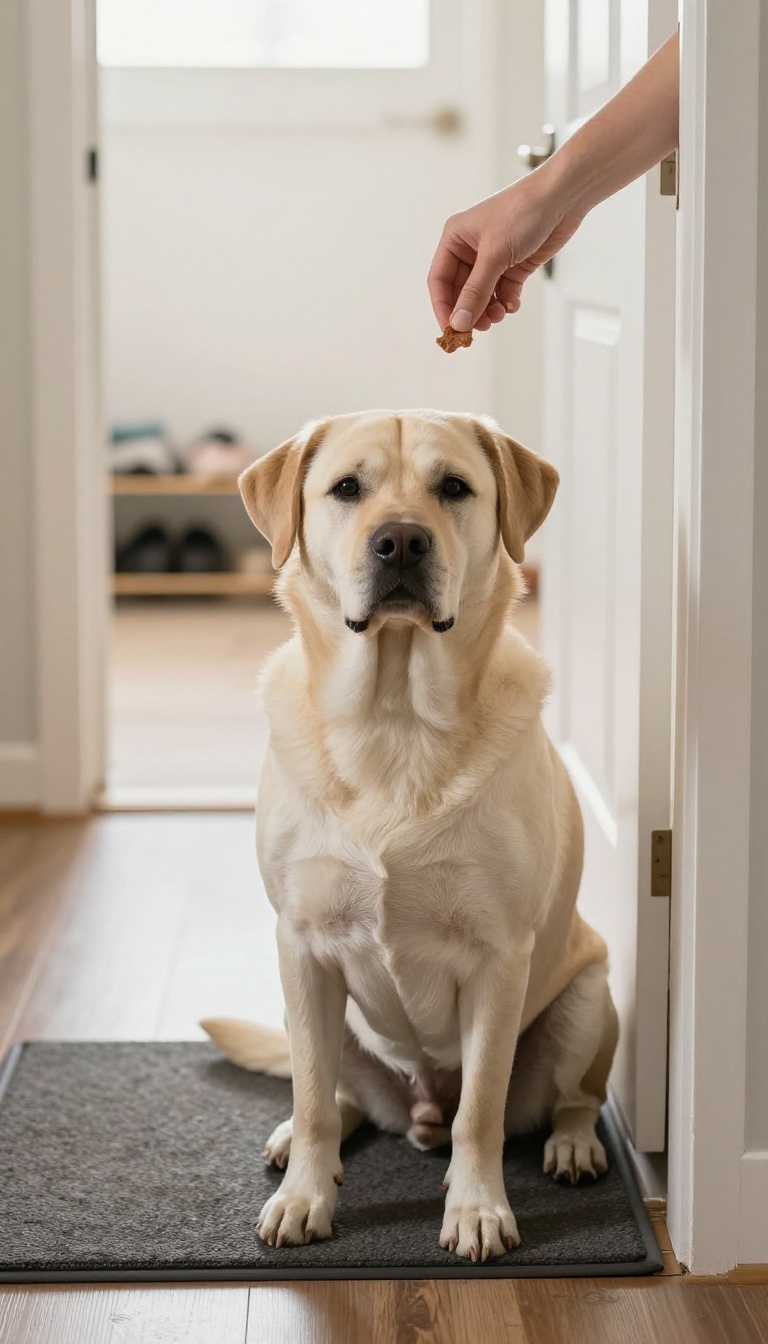
Dogs can’t bark and lie down at the same time—it’s physically impossible. That’s the simple logic behind this training trick. Instead of trying to stop the bark, you give your dog a different job to do when the doorbell rings.
A solid sit or down becomes their default response, and the barking naturally fades away.
This method works because it replaces an unwanted behavior with a wanted one. When your dog is focused on holding a sit or down, their brain is busy following your cue, not reacting to the door. Over time, the doorbell becomes a signal to settle, not to sound the alarm.
It’s a calm, clear way to communicate what you expect.
Start With A Solid Sit Or Down
Before you can use this at the door, your dog needs to nail the basics in a quiet room. Practice sit or down with treats and praise until they respond quickly without hesitation. If they struggle, break it down: reward any attempt, then gradually raise your criteria.
The goal is a reliable position they can hold for at least a few seconds.
Add The Doorbell Sound Gradually
Don’t jump straight to the real doorbell. Play a recording of a doorbell at a low volume while asking for a sit or down. Reward them for staying in position.
Slowly increase the volume over several sessions. This helps your dog connect the sound with the calm behavior before you ever practice with a real visitor.
Practice With Real Door Knocks
Once your dog is solid with the recording, it’s time for the real thing. Have a friend knock or ring the bell while you cue your dog to sit or down. Reward them generously for holding the position.
Keep sessions short and positive—just a few repetitions per day. If your dog breaks position, calmly reset and try again.
Reward The Calm, Not Just The Position
The position alone isn’t enough—you want your dog to be relaxed, not tense. Watch for signs of calm: soft eyes, relaxed ears, a loose body. Reward those moments with treats and quiet praise.
If your dog is shaking or staring at the door, they’re still worked up. Go back to a quieter step and build up more slowly.
8. Use a Head Halter or Front-Clip Harness for Control
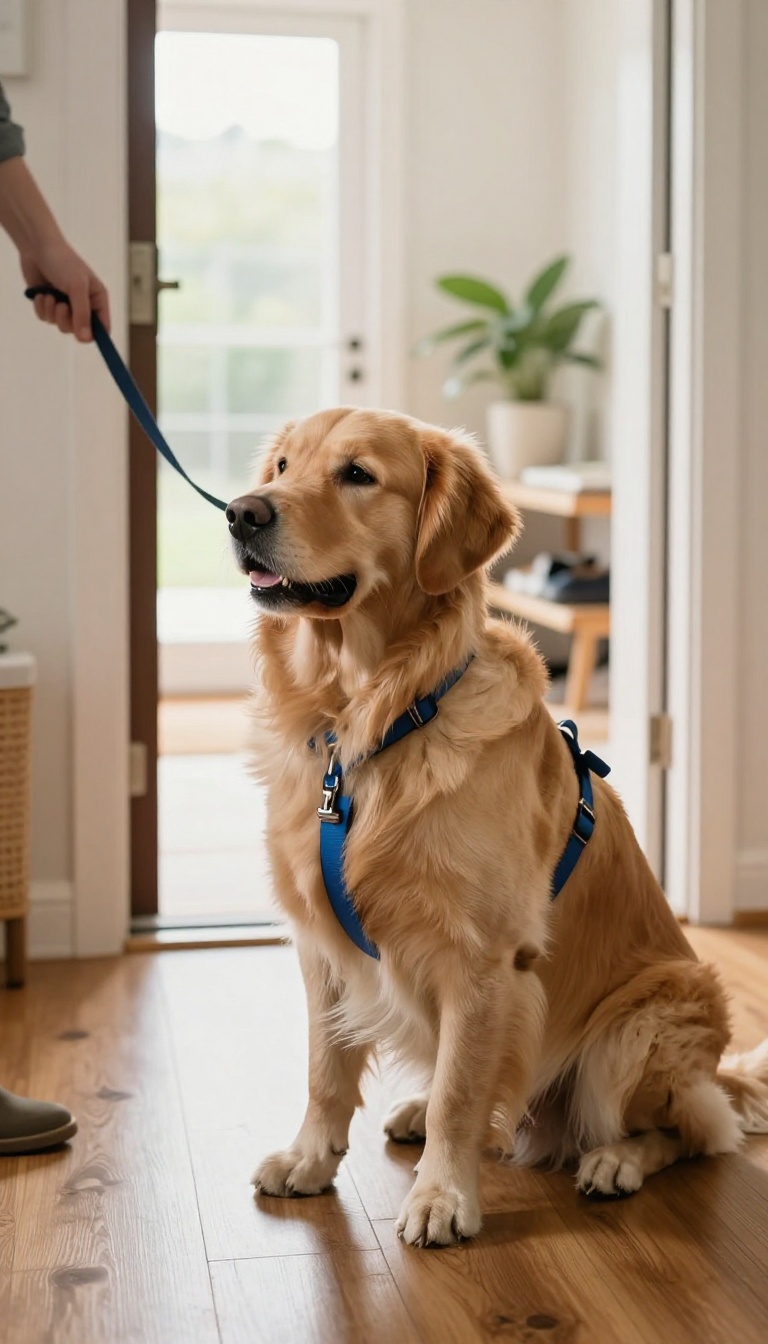
Some dogs get so worked up at the door that treats and cues just don't cut it. Their excitement overrides everything, and you're left holding a barking, lunging whirlwind. That's where a head halter or front-clip harness can make a real difference.
These tools give you gentle but firm control over your dog's head or chest, so you can guide them away from the door and redirect their focus. They're not magic fixes, but they create the physical space you need to teach calm behavior.
Why These Tools Work
A head halter works like a horse's halter—when your dog pulls or lunges, their head turns back toward you, breaking their focus. A front-clip harness attaches at the chest, so pulling spins them around. Both prevent your dog from dragging you toward the door and let you steer them into a sit or a turn away.
They also give you more control without causing pain. The pressure is gentle, and when your dog relaxes, the pressure releases, which reinforces calm behavior.
Getting Your Dog Used To It
Don't just strap it on and head to the door. Let your dog sniff it, then put it on for a few minutes at a time while giving treats. Practice walking around the house, and reward any loose-leash walking.
The goal is for your dog to associate the tool with good things, not stress. Start using it during door practice only after your dog is comfortable. Keep sessions short and positive, and always pair the tool with treats for calm behavior.
Using It In Door Training
When someone knocks, clip on the harness or halter, then calmly walk your dog to a designated spot like a mat or crate. Use the tool to guide them, not yank or correct. Once they're in place, reward them for staying calm.
If they start to bark, gently turn them away from the door and ask for a sit. Over time, your dog learns that the door doesn't mean chaos—it means coming to you for a treat. The tool simply helps you communicate that faster.
A Few Safety Notes
Never leave a head halter on when unsupervised, as it can snag on something. And don't use a retractable leash with a head halter—a standard 6-foot leash gives you better control. Also, introduce the tool gradually, and if your dog shows signs of fear or discomfort, slow down or consult a trainer.
These tools are training aids, not permanent fixes. Pair them with consistent practice, and you'll eventually need them less and less.
9. Practice 'Wait' at the Door
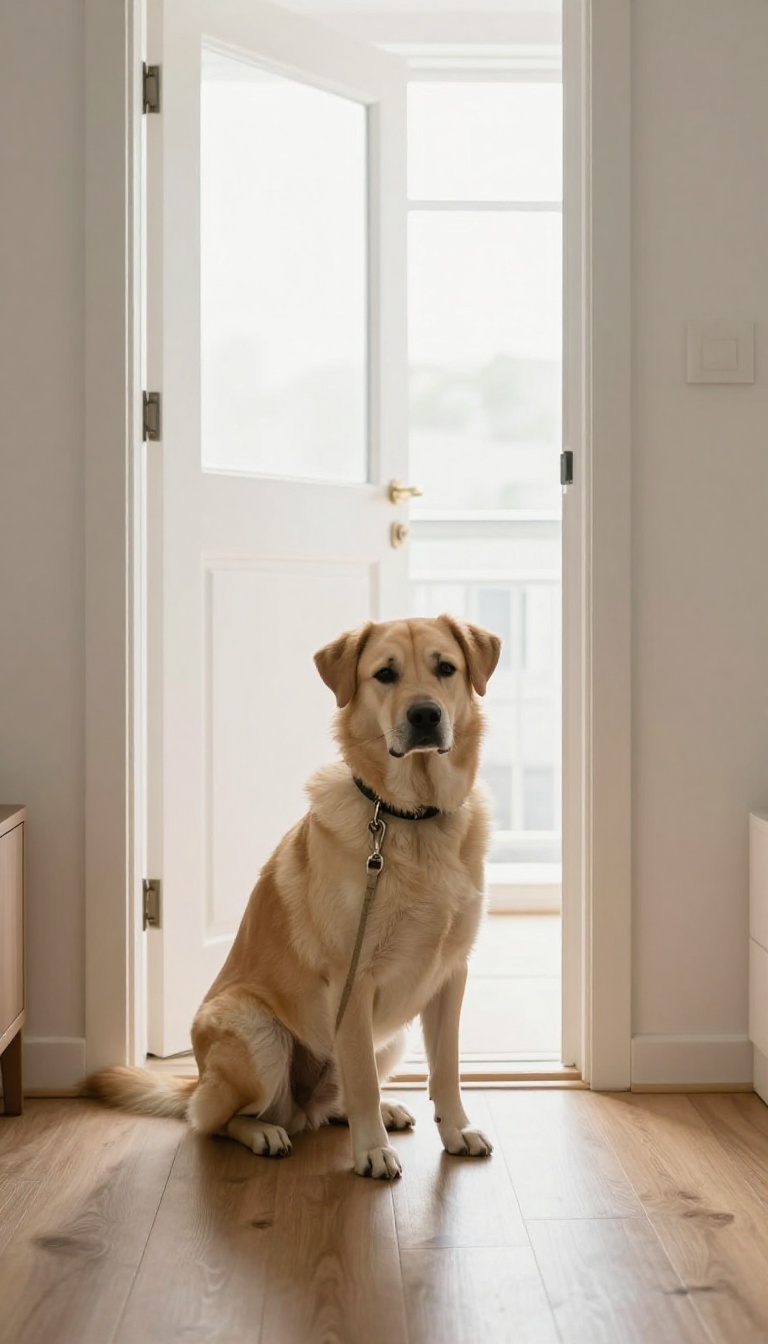
Teaching your dog to pause before charging through the doorway is like giving them a mental pause button. That split second of hesitation can completely change the energy at the front door, turning a frantic rush into a calm, controlled moment. And the best part?
It’s a skill that grows with practice, so you can start small and build up to full-on guest arrivals.
The 'wait' cue is a classic impulse-control exercise that works wonders for door-barkers. It’s not just about stopping the bark; it’s about teaching your dog that the door opens only when they’re calm. Here’s how to make it stick.
Start With The Basics
Begin in a low-distraction spot, like your living room, with your dog on a leash. Ask them to sit, then open the door a few inches. If they move, close it and start again.
The moment they stay put, say 'yes' and reward. Repeat until they reliably hold the sit before you even touch the knob.
Add Real-world Layers
Once your dog understands 'wait' indoors, move to the actual front door. Practice with the door closed, then slightly open, then fully open—but always with a leash on so they can’t bolt. Gradually increase the time they hold the wait, from one second to ten, and mix in distractions like knocking or a friend jiggling the handle.
Turn It Into A Greeting Routine
When your dog can wait at the door with you alone, it’s time to involve guests. Have a helper ring the bell or knock, then cue 'wait' before you open. If your dog lunges or barks, close the door and reset.
Over time, they’ll learn that calm waiting earns them the reward of greeting—and that rushing just delays the fun.
10. Enlist a Helper for Real-Life Practice
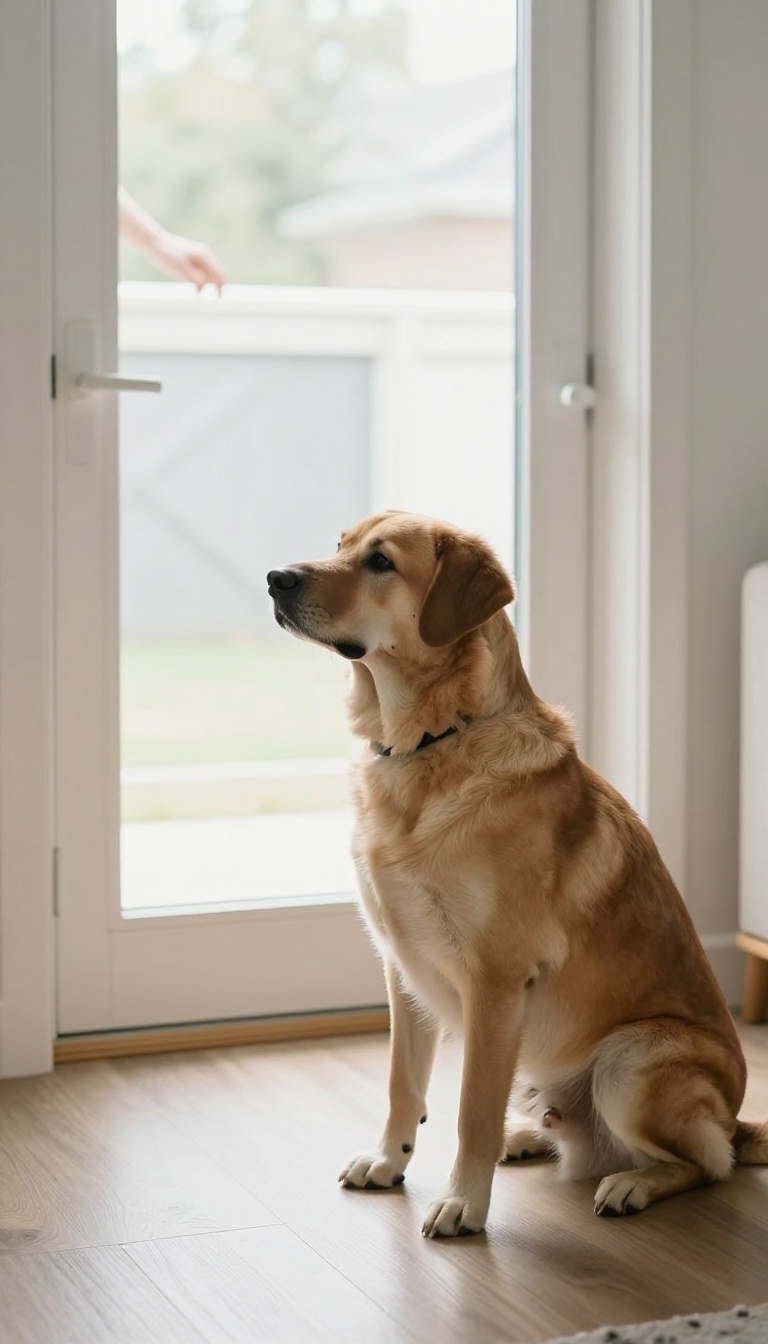
Training in the living room is one thing, but the real test happens when an actual person stands on your porch. That's where a helper comes in. By simulating real visits, you give your dog the chance to practice calm behavior in the exact situation that triggers the barking.
This step bridges the gap between theory and reality, making your training stick.
Start by choosing a helper your dog doesn't see every day—a neighbor, friend, or family member. Before the session, agree on a simple signal so you can communicate when to knock or ring. Begin with a low-intensity approach: have the helper approach slowly, pause a few feet from the door, and wait for your cue.
Keep your dog on a leash if needed, and have treats ready. The goal is to reward quiet, relaxed behavior before the door even opens. As your dog gets the hang of it, gradually increase the realism—more knocking, longer waits, or even a quick conversation outside.
Each successful repetition builds your dog's confidence that visitors aren't a threat, just a routine part of life.
Set Up For Success
Pick a quiet time when your dog is already calm. Have your helper start far away, maybe at the sidewalk, and only move closer when your dog is quiet. Use a high-value treat that only appears during these sessions.
Keep the first few tries short—just a few minutes—so your dog doesn't get overwhelmed. If your dog barks, have the helper step back and wait for silence before trying again. This teaches your dog that barking makes the visitor go away, while quiet brings them closer.
Gradually Increase The Challenge
Once your dog stays calm with a simple knock, mix it up. Have your helper ring the doorbell, then knock, then do both. Change the time of day, the helper's appearance (hat, sunglasses, umbrella), and the approach path.
You can also have the helper talk or laugh outside the door. The more varied the practice, the better your dog generalizes the calm behavior to real-world situations. Remember to reward every moment of quiet, even if it's just a second or two at first.
Turn It Into A Game
Make practice fun for both you and your dog. After a few successful reps, have the helper come inside and give your dog a treat or play a quick game of tug. This creates a positive association with visitors.
You can also use a cue like 'quiet' or 'settle' right before the door opens, so your dog learns what to do. Over time, your dog will look forward to the doorbell because it means good things happen—not just a burst of excitement.
FAQ
How long does it take to stop door-barking?
It varies by dog and consistency. Some dogs improve within a few weeks, while others may take a couple of months. The key is to practice regularly and keep sessions short and positive.
Is it okay to use a bark collar to stop door-barking?
Bark collars (shock, citronella, or ultrasonic) are generally not recommended because they can increase anxiety and don't address the root cause. Positive reinforcement methods are safer and more effective in the long run.
What if my dog barks at the door even when no one is there?
This could be due to territorial behavior or boredom. Ensure your dog gets enough exercise and mental stimulation. You can also use white noise or music to mask outside sounds that trigger barking.
Should I punish my dog for barking at the door?
Punishment can increase anxiety and make the barking worse. Instead, focus on rewarding calm behavior and teaching alternative responses like going to a mat or sitting quietly.
Can I train an older dog to stop door-barking?
Absolutely. Older dogs can learn new behaviors, though it may take a bit more patience. The same positive reinforcement techniques work well for dogs of any age.
Conclusion
Door-barking can be a frustrating habit, but with these 10 training ideas, you're well on your way to a calmer entrance. Remember, consistency and patience are your best tools. Pick one or two methods that resonate with your dog's personality and stick with them.
Every dog is different, so don't be afraid to mix and match techniques. Celebrate small victories along the way—soon, the doorbell will ring without a single bark. Your ears (and your visitors) will thank you.

I’m Pallab Kishore, the owner of Little Pets Realm — an animal lover and pet care enthusiast sharing easy tips, healthy recipes, and honest advice to help every small pet live a happy, healthy, tail-wagging life.