
Last updated on August 19th, 2026 at 04:14 pm
Teaching a puppy to sit sounds simple, but getting a reliable response every single time takes more than a few treats. You might find your pup sits perfectly in the kitchen, then ignores you completely at the park.
That gap is normal—and fixable. These 11 steps break down the process into clear, manageable pieces that build on each other.
You'll learn how to shape the behavior, add the cue, and proof it against real-world distractions. By the end, you'll have a sit that holds up anywhere, not just in your living room.
1. Start with High-Value Treats
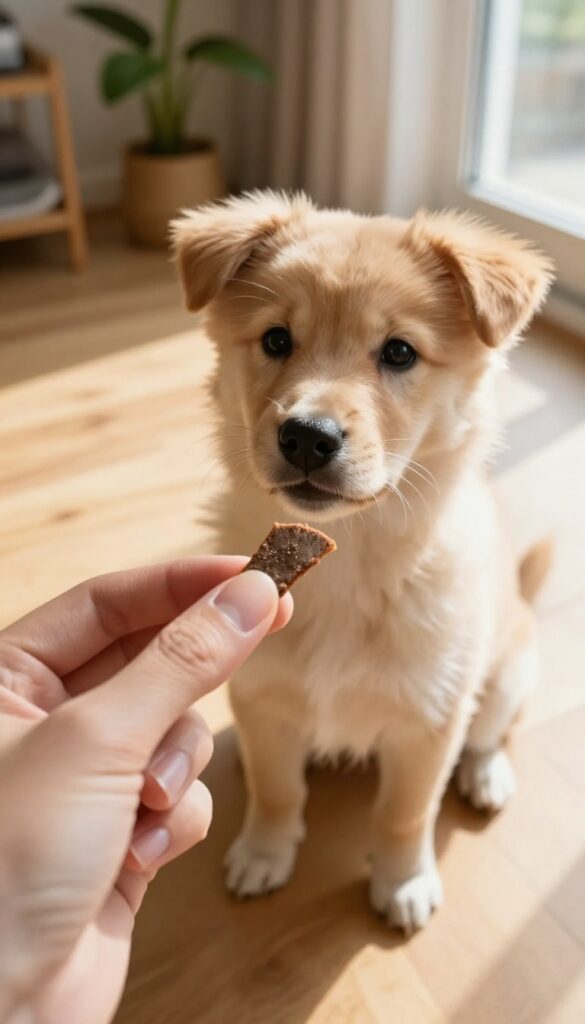
The secret to a rock-solid sit often comes down to what you're offering as a reward. If your puppy isn't motivated, they'll tune you out fast. High-value treats are the difference between a dog who sits because they have to and one who sits because they really, really want to.
Think of it this way: would you work for a stale cracker or a warm, gooey cookie? Your puppy feels the same way. By using treats that are small, soft, and smelly, you're making training irresistible.
Save them exclusively for training sessions, and your pup will learn to associate the sit with something amazing.
Let's talk about what makes a treat truly high-value. It's not just about flavor—it's about texture, aroma, and novelty. A treat that your puppy goes crazy for at home might not compete with the smells at the park.
That's why you need to choose wisely and keep them special. Here are the three pillars of a high-value treat: – Small: Tiny pieces (pea-sized or smaller) keep your puppy focused and prevent them from getting full too quickly. – Soft: Soft treats are easy to chew quickly, so your puppy can get back to training without a long snack break. – Smelly: Strong-smelling treats (like freeze-dried liver or stinky cheese) cut through distractions and grab your puppy's attention instantly. Remember, the treat is a tool, not a meal.
You're not feeding your puppy dinner here—you're paying them for a job well done. The more valuable the payment, the harder they'll work.
Why High-value Treats Matter More Than You Think
Puppies are easily distracted, especially when they're young. A treat that's just 'okay' won't hold their interest when there's a leaf blowing by or a bird chirping. High-value treats create a strong anchor that keeps their focus on you.
They also speed up learning because your puppy is more willing to try new behaviors when the payoff is worth it. Think of it as the difference between a minimum-wage job and a high-paying gig. Your puppy will show up with more enthusiasm when the reward is worth their effort.
Choosing The Right Treats For Your Puppy
Not all treats are created equal. Some puppies go wild for cheese, others prefer chicken, and some will do anything for a piece of hot dog. Start with a few options and see which one makes your puppy's tail wag the hardest.
Cut them into tiny, uniform pieces so you can deliver them quickly without fumbling. Avoid treats that are hard or crunchy—they take too long to chew and break your training flow. Also, skip anything with artificial additives or too much sugar.
You want something your puppy loves but that's still healthy enough for frequent use.
Keeping The Value High
The key to maintaining high value is scarcity. If your puppy gets these special treats all day long, they'll lose their magic. Reserve them exclusively for training sessions.
This way, your puppy learns that when the training pouch comes out, something amazing is about to happen. You can also rotate treats to keep things interesting. One week use chicken, the next use cheese.
This prevents your puppy from getting bored and keeps their motivation levels up. The goal is to make the sit a behavior they want to repeat, not just something they do for a snack.
2. Choose a Quiet Training Spot
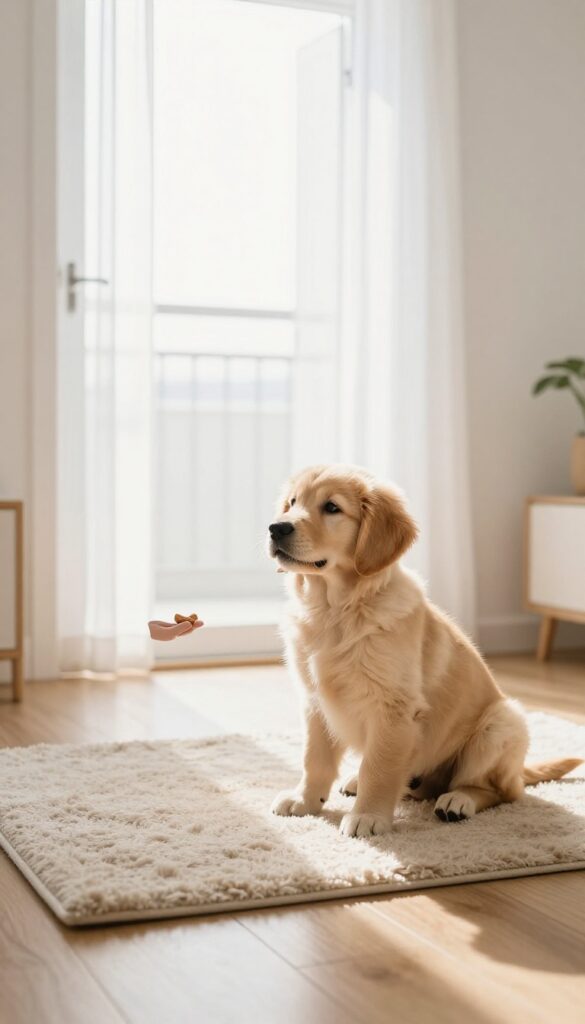
Where you train matters just as much as how you train. A busy kitchen or a living room full of toys can pull your puppy's attention in a dozen directions before you even say a word. Starting in a calm, low-distraction space gives your pup the best chance to focus on you and the task at hand.
Once the sit is solid there, you can gradually add more challenging environments.
Pick a room where your puppy won't be bombarded by noise, movement, or tempting smells. Close the door, shut the windows, and ask family members to give you a few minutes of quiet. A bathroom, a spare bedroom, or a quiet corner of the hallway can work well.
Keep the session short—five minutes is plenty for a young puppy. End on a high note with a successful sit and a treat, so your pup associates training with positivity.
Why A Quiet Spot Matters
Puppies are naturally curious and easily distracted. If there's a cat wandering by or kids playing in the next room, your pup's brain is already elsewhere. A quiet space helps your puppy tune into your voice and your treats, building a stronger connection between the cue and the action.
It also reduces frustration for you. When you're not competing with the TV or the doorbell, you can focus on timing and reward delivery, which speeds up learning.
How To Set Up Your Training Area
You don't need much—just enough room for you and your puppy to move comfortably. Clear the floor of toys, chews, and other distractions. Have a small bowl of treats ready, or keep a treat pouch on your waist so you can reward instantly.
Consider using a mat or a designated spot on the floor. That visual cue helps your puppy understand that training time is different from playtime. Keep the area consistent for now—you can change it later once the sit is reliable.
When To Upgrade The Environment
Once your puppy sits reliably in the quiet room, start adding mild distractions. Move to a slightly busier room, or train while someone sits quietly nearby. Then try the backyard, a quiet park, or a sidewalk with occasional passersby.
Increase difficulty gradually. If your puppy stops responding, you've moved too fast—step back to an easier setting and build up again. This way, your puppy learns that 'sit' means 'sit' no matter where you are.
3. Lure the Sit with a Treat
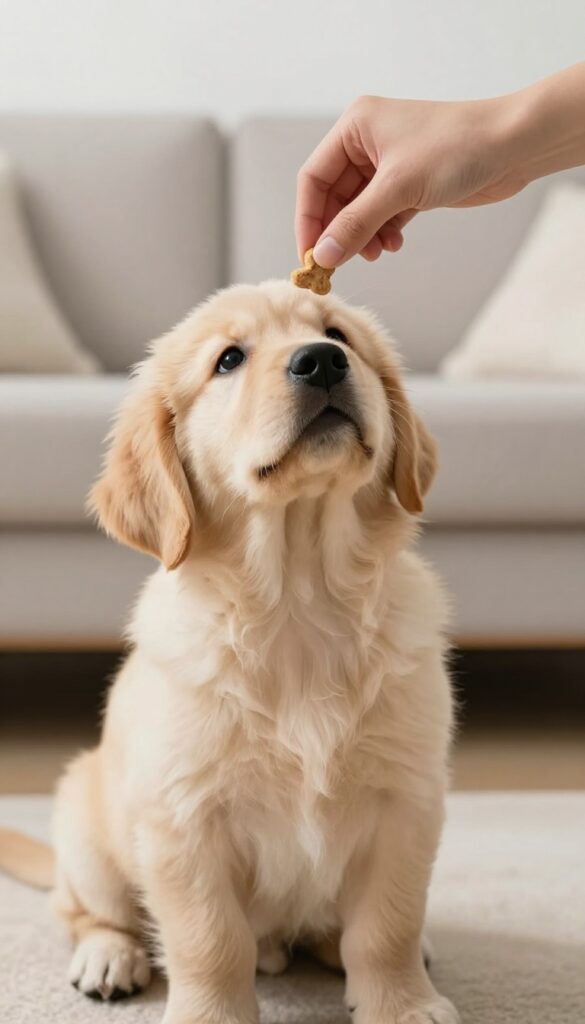
Gravity is your friend here. When a puppy tips their nose up to follow a treat, their rear end naturally sinks down. This isn't a trick—it's simple physics, and it's the fastest way to show your pup exactly what 'sit' feels like.
The lure is the first real conversation you'll have with your puppy about sitting. It's not about forcing or pushing—it's about guiding their body into the position so they can learn the feeling. Once they understand that, the verbal cue and hand signal will start to make sense.
Position The Treat Correctly
Hold a small, soft treat between your thumb and index finger, right at your puppy's nose level. Let them sniff it for a second so they know it's there. Then, slowly lift the treat up and back over their head, toward their tail.
The key is to move it just above their eye line—too high and they'll jump, too low and they'll just back up.
Let Their Bottom Hit The Floor
As their head tracks the treat, their front legs will stay put and their back legs will start to fold. The moment their rear touches the ground, say 'Yes! ' or click, and give them the treat. Don't rush this step.
Let them discover the sit on their own, even if it takes a few tries. You're not just teaching a position—you're teaching them that sitting earns rewards.
Keep Sessions Short And Sweet
Puppies have short attention spans, so keep each session to about five minutes. End on a high note with a successful sit, then let them play or sniff around. If they lose interest or get frustrated, stop and try again later.
The goal is to build a positive association, not to drill them until they're bored.
4. Mark the Exact Moment
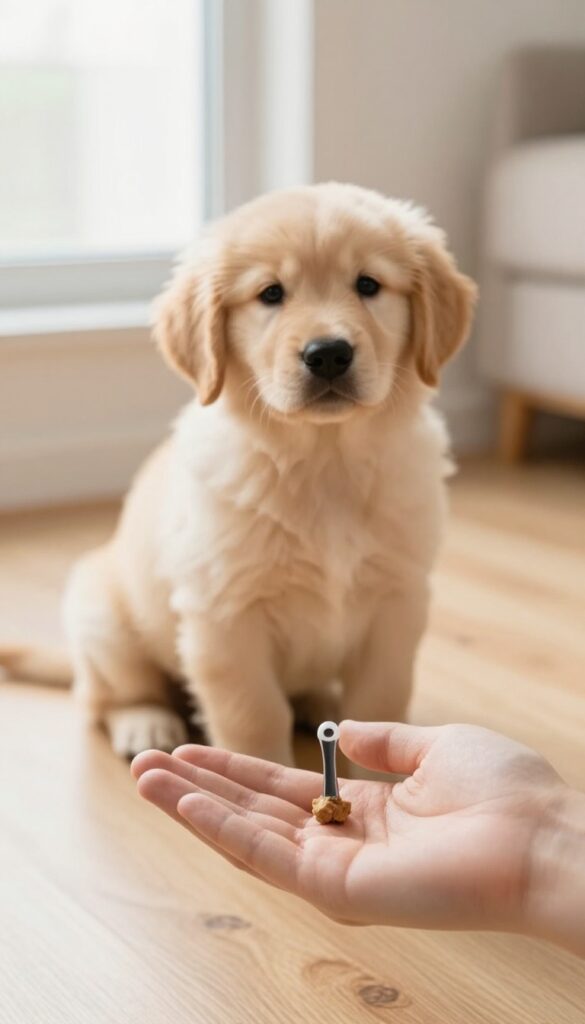
Timing is everything when you're training a puppy. If your marker comes a second too late, your pup might think the treat is for standing up again, not for sitting. That tiny delay can slow down your whole training process.
A clicker or a consistent word like "yes" solves this. It gives you a way to mark the exact instant your puppy's bottom touches the floor. This precise marker tells them exactly what earned the reward.
When you mark the exact moment, you're building a clear line of communication. Your puppy learns that the sound means "that's it, good job, " and the treat comes as a bonus. This makes the sit behavior much more likely to stick.
The best part? You don't need fancy equipment. A clicker works great, but a simple word works just as well if you're consistent.
The key is to use the same marker every single time and pair it with a treat immediately after.
Why Timing Beats Treats Alone
Treats are great, but they're slow. By the time you reach into your pocket and grab one, your puppy might already be moving. A click or "yes" happens instantly, so it captures the exact second the sit happens.
That's why marker-based training is so effective.
How To Choose Your Marker
You have two solid options: a clicker or a word. Clickers are crisp and consistent, which makes them great for precise timing. A word like "yes" is portable and always available.
Pick one and stick with it. Consistency matters more than which one you choose.
Practice Your Own Timing First
Before you train your puppy, practice marking the moment. Watch your pup and click or say "yes" the instant their bottom hits the floor. You can even practice without your puppy, using a toy or just imagining the motion.
Good timing is a skill, and it gets easier with practice.
5. Reward Immediately and Generously
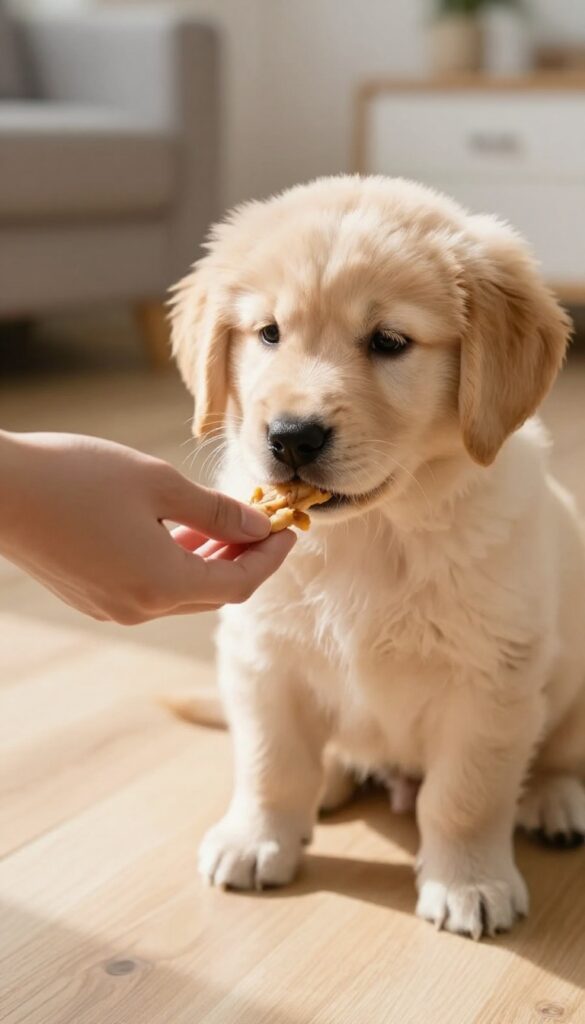
When your puppy's butt hits the floor, that's your cue to spring into action. The treat needs to appear within a split second, not after you fumble through your pocket. A fast reward creates a clear connection between the sit and the good stuff.
Generosity matters too. A tiny, boring kibble might not cut it when there are squirrels to chase. Use something your puppy truly loves—small pieces of chicken, cheese, or hot dog—and watch the motivation skyrocket.
Mark The Moment
Use a clicker or a consistent word like "yes" to mark the exact second your puppy sits. This bridges the gap between the behavior and the treat, especially if you're not quick enough with the reward. Practice the mark separately first, so your puppy knows that sound always means a treat is coming.
Treat Size And Quality
Keep treats pea-sized to avoid filling your puppy up too quickly. High-value rewards—like boiled chicken or freeze-dried liver—work best for training sessions. Save these special treats for training time, so they stay exciting and your puppy stays eager to learn.
Speed Over Fancy Delivery
You don't need to do anything fancy with your hand. Just get the treat to your puppy's mouth quickly and calmly. The faster the reward, the stronger the association.
If you fumble, your puppy might lose focus or start offering other behaviors to get the treat.
6. Add the Verbal Cue 'Sit'
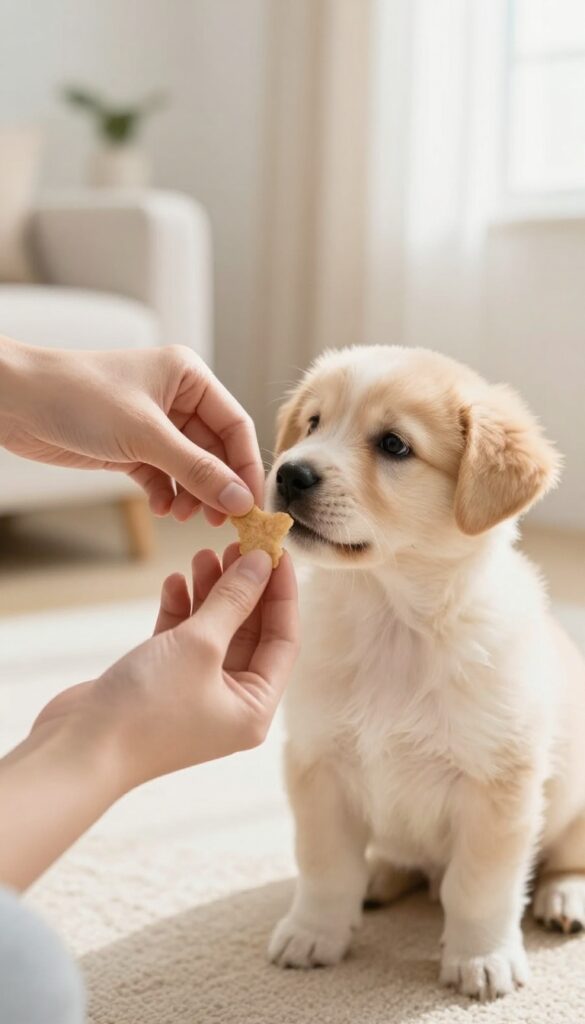
Your puppy has mastered the lure—now it's time to give that action a name. Adding a verbal cue is about timing and consistency: say the word just before your pup's butt hits the floor, not after. This way, they link the sound with the movement, not the other way around.
Think of it like teaching a dance move: the music starts, and then the move happens. If you say 'sit' too early or too late, your puppy might get confused. Keep it simple and use the same word every time—'sit' works great—and avoid adding extra words like 'sit down' or 'sit, boy. '
Once your puppy is reliably sitting from the lure, it's time to add the verbal cue. The goal is to pair the word with the action so your puppy starts to associate 'sit' with the behavior. Here's how to do it smoothly: 1.
Start with your puppy in front of you, treat in hand. 2. Say 'sit' in a clear, friendly tone just as you begin to lure.
- As soon as your puppy's rear touches the ground, mark and reward. 4.
Repeat this several times, always saying 'sit' before the lure. After a few sessions, try saying 'sit' without the lure. If your puppy responds, great!
If not, go back to the lure for a bit longer. The key is patience—don't rush the process.
Why Timing Matters
Timing is everything when you're adding a verbal cue. Say 'sit' just before your puppy starts to sit, not after they're already down. If you say it too late, they might think 'sit' means 'stay' or 'you're already sitting. ' Use a happy, upbeat tone—puppies respond better to cheerful sounds.
And always say the word once, not repeatedly. Repeating 'sit, sit, sit' teaches them to ignore you until you've said it multiple times.
Pairing The Word With The Action
The whole idea is to create a strong association between the word and the behavior. So, every time you lure your puppy into a sit, say 'sit' right before they move. This repeated pairing helps them connect the dots.
You can also use a hand signal at the same time, like an open palm. Many dogs learn hand signals faster than verbal cues, so combining both gives your puppy two ways to understand what you want.
What To Avoid
Don't say 'sit' after your puppy is already sitting—that teaches them the word means 'stay' or 'good job. ' Also, avoid using different words like 'sit down' or 'take a seat. ' Consistency is key. Another common mistake is saying 'sit' and then pushing your puppy's rear down. That can make them uncomfortable and hesitant.
Stick to the lure and treat method—it's positive and effective.
7. Phase Out the Lure Gradually
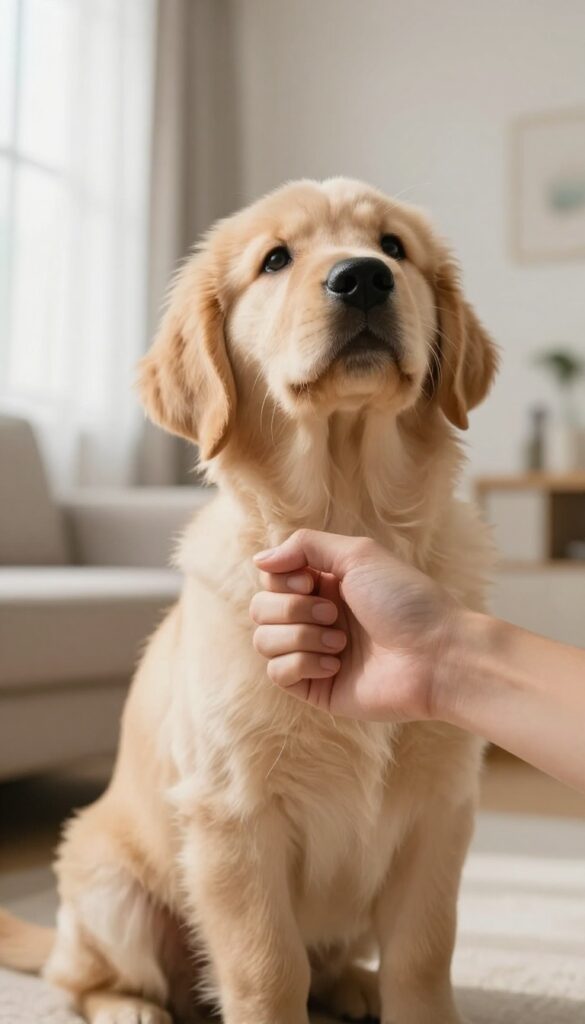
Once your puppy reliably follows a treat into a sit, it's tempting to keep using that treat forever. But if you want a sit that happens on cue—not just when food appears—you need to wean them off the lure. The trick is to do it slowly so your puppy never notices the change.
Think of the lure as training wheels. It's perfect for teaching the movement, but you wouldn't leave them on forever. Start by using an empty hand with the same motion, then reward from your pocket or a nearby bowl.
Your puppy will learn that the hand signal means sit, and the treat is just a bonus.
Switch To An Empty Hand
Begin by holding a treat in your closed fist, just like before. After a few successful sits, do the exact same motion but with an empty hand. Your puppy might look confused at first, but they'll still follow the familiar movement.
When they sit, immediately reward with a treat from your other hand or a pouch. This teaches them that the gesture, not the visible treat, is what matters.
Make The Gesture Subtle
Once your puppy is comfortable with the empty hand, start making the motion smaller. Instead of bringing your hand all the way to the floor, just move it slightly downward. You can also add a small hand signal, like a flat palm facing up, to accompany the motion.
The goal is to have a clear, simple cue that doesn't rely on food at all.
Reward From A Bowl Or Pouch
Keep a small bowl of treats nearby or use a treat pouch. After your puppy sits on your hand signal, reach for a treat and give it to them. This breaks the connection between the treat in your hand and the sit.
Your puppy will learn that sitting earns a reward, but the reward doesn't have to be visible beforehand.
Practice In Short, Frequent Sessions
Change can be confusing, so keep training sessions short—just a few minutes at a time. Do several mini-sessions throughout the day, always ending on a success. If your puppy seems frustrated, go back to the lure for a few reps, then try again.
Patience here builds a solid foundation for the next step: adding a verbal cue.
8. Practice in Short, Fun Sessions
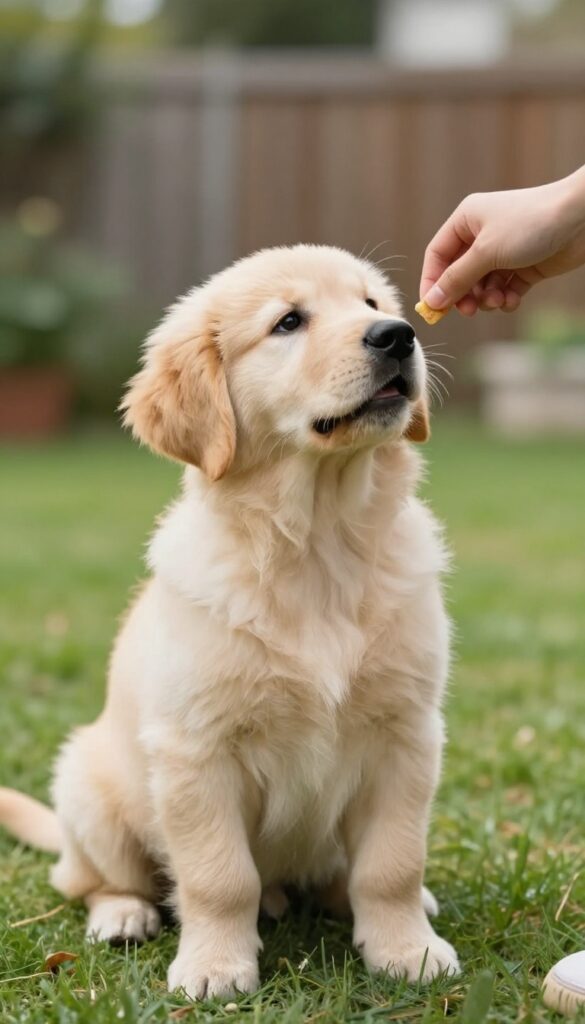
Puppies have tiny attention spans, and long drills can turn training into a chore. Short, playful sessions keep your pup engaged and eager to learn. Aim for three to five minutes, several times a day, and always end on a high note.
Why Short Sessions Work
A puppy's brain is like a sponge, but it gets saturated quickly. After a few minutes, focus fades and frustration creeps in. By keeping sessions brief, you capture peak attention and build positive associations.
Plus, frequent short sessions fit naturally into your day—before meals, after naps, or during play breaks.
End On A Win
Always stop while your puppy is still enthusiastic. If they nail a sit, celebrate and walk away. Ending on a success leaves your pup wanting more, so the next session starts with excitement.
If things aren't going well, simplify the task or take a break. Better to quit early than to end on a failed attempt.
Mix It Up
Variety keeps training fresh and prevents boredom. Alternate between sit, other tricks, and play. Use different locations, treats, and tones of voice.
This not only maintains interest but also helps your puppy generalize the sit cue across different situations—a key step toward reliability.
9. Increase Distractions Slowly
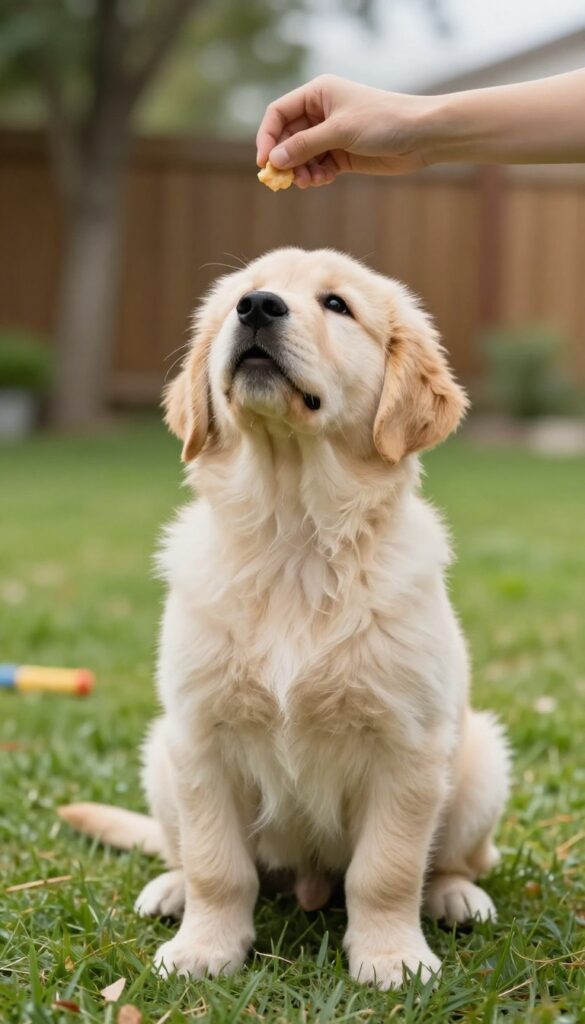
Your puppy has nailed the sit in your living room, but that doesn't mean the lesson is over. The real test comes when the world around them gets interesting. By gradually adding distractions, you'll teach your pup that “sit” means sit, no matter what's happening nearby.
Start by practicing in slightly busier spots, like your backyard or a quiet park. Then, build up to more challenging environments as your puppy succeeds. The key is to move at their pace—if they're struggling, step back and simplify.
Start In Familiar Territory
Begin by moving your training sessions to a place your puppy already knows but that has a few more distractions than your living room. Your backyard is a perfect next step. The smells and sounds are familiar, but there's more going on.
Ask for a sit a few times, and reward generously. If your puppy responds well, you're ready to move on.
Add Mild Distractions
Once your puppy is solid in the backyard, try a quiet park or a friend's yard. Keep the session short and upbeat. Have a friend walk by at a distance, or toss a toy nearby.
The goal is to have your puppy notice the distraction but still choose to sit. Use high-value treats to keep their focus.
Work Up To Busier Settings
Gradually increase the level of distraction as your puppy succeeds. Try a park with more people, or a sidewalk with occasional traffic. Always set your puppy up for success by keeping the distance from distractions far enough that they can still focus.
If they fail, don't scold—just move farther away and try again.
Proof The Behavior Over Time
Proofing means practicing in many different places and situations. The more varied your practice, the more reliable the sit becomes. Over time, your puppy will learn that the cue works everywhere, not just in the kitchen.
Be patient and keep sessions positive, and you'll have a sit that holds up anywhere.
10. Use Real-Life Opportunities
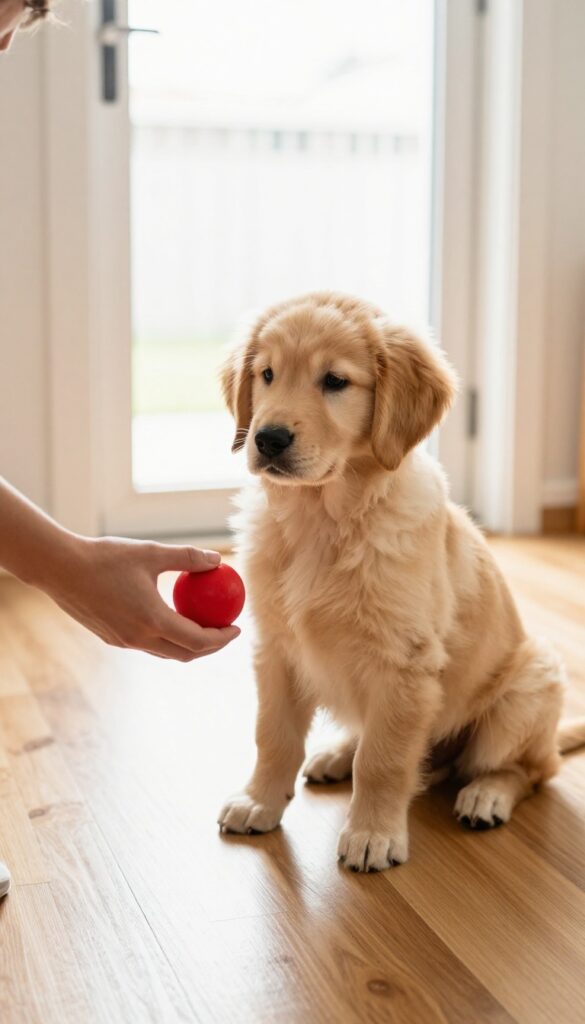
Your puppy already knows how to sit in the kitchen, but does he do it when you're about to open the front door? Real-life moments are the best training chances you'll ever get. Every time you ask for a sit before something exciting, you're teaching your pup that good things happen when he listens—no matter where you are.
Training doesn't have to happen in formal sessions. The most powerful lessons happen naturally throughout the day. When you weave sits into your daily routine, your puppy learns that the behavior isn't just for treats—it's a way to communicate with you.
This makes the sit more reliable because it becomes part of his everyday life, not just a trick he performs in the living room.
Before Meals: The Magic Of The Food Bowl
Mealtime is a golden opportunity. Your puppy is already excited, so use that energy. Ask for a sit before you put the bowl down.
If he pops up, just wait. When he sits again, say 'yes' and place the bowl down. This teaches patience and reinforces that sitting gets him what he wants.
It's simple, but it works every single day.
At The Door: Calm Exits Start With A Sit
Going outside is another high-value moment. Before you open the door, ask for a sit. If he's bouncing around, close the door and wait.
When he sits, open it again. This not only reinforces the sit but also teaches impulse control. Soon, he'll automatically sit at the door, waiting for your signal to go out.
Playtime: Sit To Start The Fun
Playtime is a reward in itself. Before you throw the ball or start a tug game, ask for a sit. It only takes a second, and it reminds your puppy that good behavior leads to fun.
This also helps prevent overly excited behavior during play, making the whole experience more enjoyable for both of you.
Random Moments: Keep It Fresh
Don't limit sits to obvious moments. Ask for a sit when you're watching TV, before you put on his leash, or when you're about to give him a new toy. The more variety, the stronger the behavior.
Your puppy will learn to listen anywhere, anytime, because he never knows when a sit might lead to something great.
11. Troubleshoot Common Problems
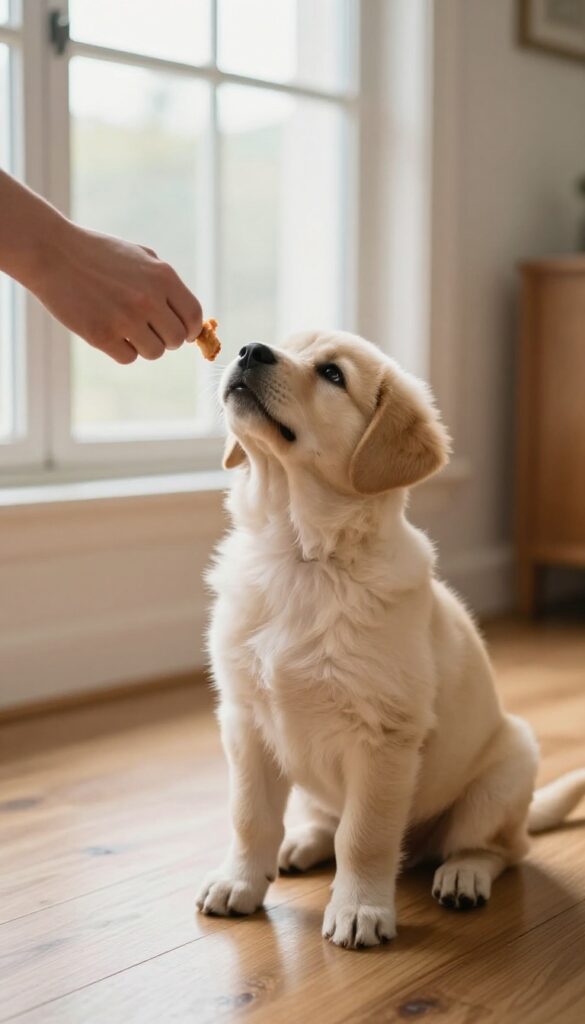
Even with the best plan, training hiccups happen. Maybe your pup suddenly won't sit, or he sits only when you have the good treats. Don't worry—these issues are common and usually easy to fix.
Let's look at the usual suspects and how to get back on track fast.
When your puppy stops responding, it's easy to get frustrated. But most problems boil down to a few simple causes: treat value, lure speed, or distractions. Check those first, and you'll often solve the issue in minutes.
If not, a short break or a different reward can work wonders.
Check Your Treat Value
If your puppy sniffs the treat and walks away, it's not rewarding enough. Try something smellier or tastier, like small pieces of chicken or cheese. You can also mix up rewards—sometimes a toy or praise works better than food.
The key is to find what makes your pup's tail wag and use that during training.
Slow Down Your Lure
Moving the treat too fast can cause your puppy to jump or back up instead of sitting. Slow your hand movement and keep the treat close to his nose. Guide him into a sit gently, and let him see the treat the whole time.
If he still doesn't sit, try luring from a slightly different angle—sometimes a straight back motion works better than an arc.
Minimize Distractions
A noisy room or a window with squirrels can steal your puppy's attention. Move to a quiet area with fewer distractions, like a bathroom or a closed bedroom. Once he's reliable there, gradually add distractions.
You can also use a higher-value treat when training in a busier spot to help him focus.
Take A Break And Reset
If your puppy is frustrated or just not getting it, pushing harder won't help. Take a short break, play a quick game, or do a different trick he knows well. Then come back to the sit with fresh energy.
Sometimes a few minutes of play is all it takes to reset his mood and get back on track.
FAQ
How long does it take to teach a puppy to sit?
Most puppies learn to sit within a few short training sessions, but it can take a week or two of consistent practice for them to respond reliably in different environments.
What if my puppy won't sit?
If your puppy isn't sitting, try using a higher-value treat, moving the lure more slowly, or practicing in a quieter space. Also, make sure your puppy isn't too tired or overstimulated.
Should I use a clicker or a verbal marker?
Both work well. A clicker provides a consistent, unique sound, while a word like 'yes' is always handy. Choose what feels comfortable and stick with it.
Can I teach an older dog to sit?
Absolutely. The same steps work for adult dogs, though they may take a bit longer if they've learned different habits. Patience and consistency are key.
How often should I practice sit with my puppy?
Short, frequent sessions are best—aim for 3-5 minutes, 2-3 times a day. This keeps your puppy engaged and prevents boredom.
Conclusion
Teaching your puppy to sit isn’t about perfect timing or fancy tricks—it’s about building a habit you both enjoy. Try starting with one or two steps from this list that feel easy to fit into your day, then layer in the rest as your pup gets the hang of it. Short, happy sessions beat long, frustrating ones every time.
Before long, that sit will happen automatically, whether you’ve got a treat in hand or not. Keep it light, stay patient, and celebrate every little win along the way.

I’m Pallab Kishore, the owner of Little Pets Realm — an animal lover and pet care enthusiast sharing easy tips, healthy recipes, and honest advice to help every small pet live a happy, healthy, tail-wagging life.