
A goofy photo of your dog mid-yawn or wearing a tiny hat is the kind of picture you look at a hundred times. The good news is you don't need a studio, a fancy camera, or a patient model to get one. Most of these ideas take ten minutes and a handful of treats.
Your phone camera is plenty. A window, a favorite toy, and a dog who's a little bit tired or a little bit hungry do most of the work.
The trick is setting up fast and shooting before your pup loses interest. Below are twelve setups that reliably get a laugh.
1. The Mid-Shake Action Shot
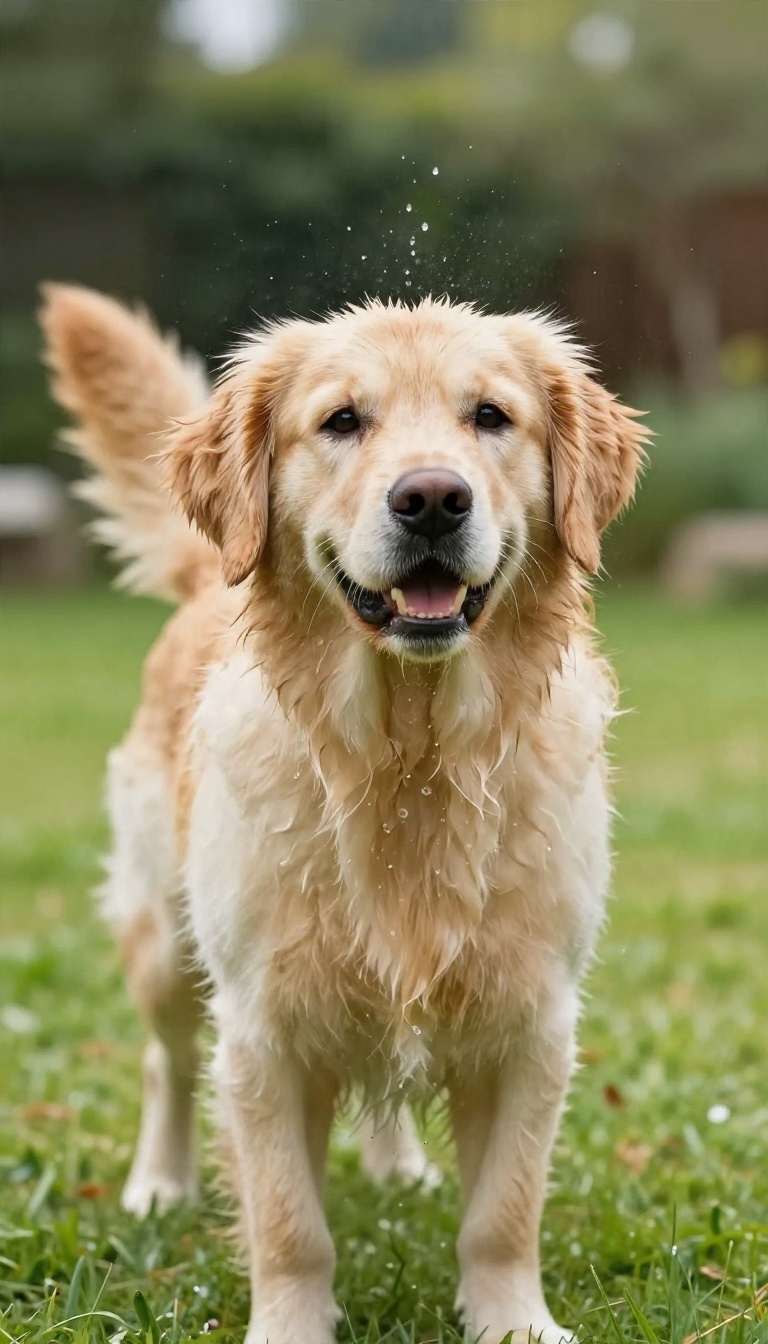
Every dog does it after a bath, a swim, or a solid ear scratch. The head whips side to side, the ears go full helicopter, and the jowls flap in directions that shouldn't be possible. Catch that split second and you get a blurry, wild-eyed photo that looks like your pup just saw a ghost.
It's chaotic, it's free, and it almost always gets a laugh.
The magic lives in a window of maybe a quarter of a second. You won't get it by guessing, so plan the shake instead of hoping for one. A wet dog is your best bet, because water gives them a reason to go full tornado.
Set your phone to burst mode or hold the shutter down for a rapid series. You'll end up with dozens of frames, and one or two will land right in the sweet spot. Delete the rest without guilt.
Set Up For The Shake
Give your dog a bath, a towel rub, or a quick spritz from a spray bottle. Step back a few feet so the whole body fits in the frame, including the ears. Good light helps a lot here, so face a window or shoot outside on a bright day.
Nail The Timing
Watch for the tell: a little crouch, a head dip, or a full-body shiver right before the shake kicks off. Start shooting the instant you see it. Keep your finger down through the whole thing rather than tapping once.
Get The Funniest Frame
The best shots usually land mid-rotation, when the ears are horizontal and the eyes go wide. Don't worry about a little motion blur, because that's the whole joke. Crop tight on the face if the background is messy, and keep the goofiest one even if it's technically imperfect.
2. Tiny Hat, Big Personality
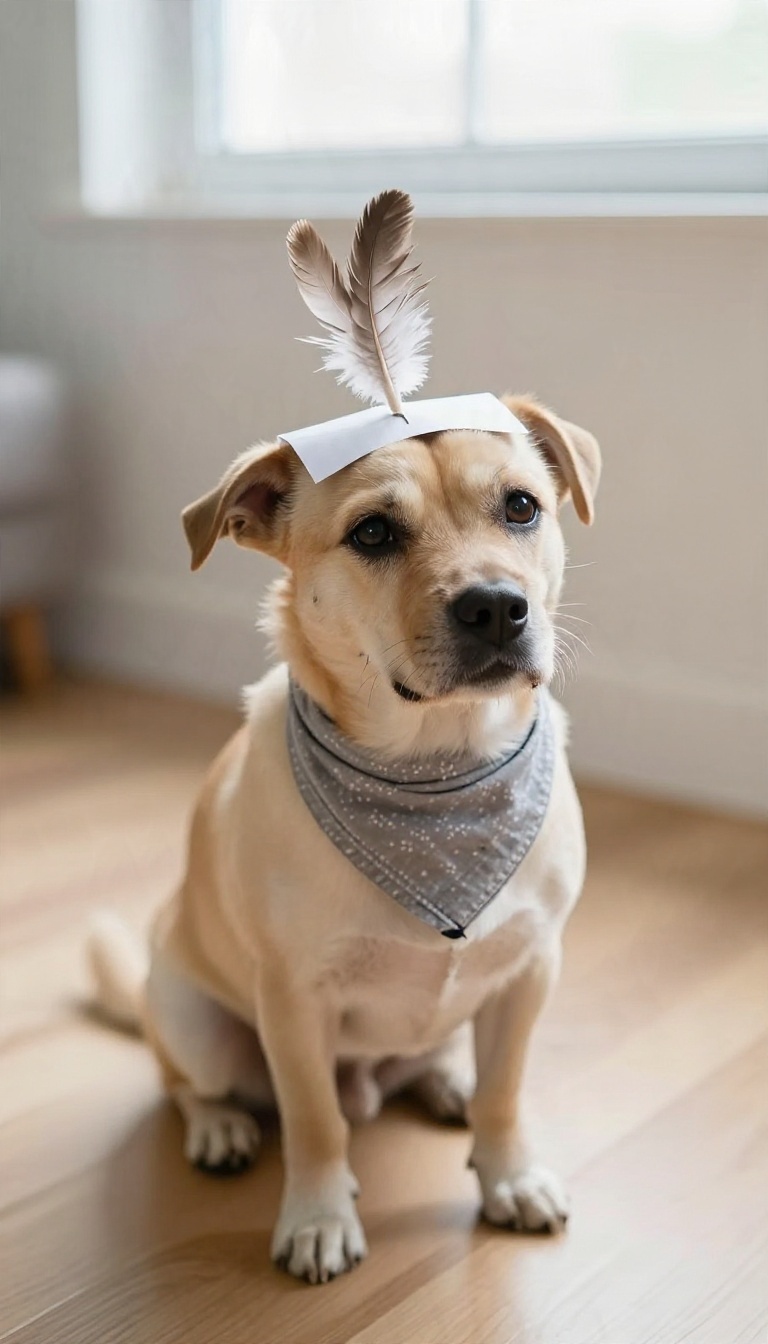
A hat on a dog is funny for one simple reason: the dog has no idea it's wearing one. That calm, slightly confused dignity does all the comedic work for you. You just need to balance something small on their head and shoot before they shake it off.
The setup takes seconds. The window for the shot is even shorter. Treat it like a quick prank, not a photoshoot, and you'll get the good stuff.
Pick a tiny hat, a folded bandana, or a paper crown you can make in under a minute. The smaller and sillier the better, because a big floppy hat just looks like a costume. A little one perched on top reads as accidental, and accidental is where the laughs live.
Work near a window so you get soft, even light. Sit your dog on the floor or a low couch, set the hat down gently, and start tapping the shutter right away. The awkward half-second before they react is the money shot.
Keep The Hat Light And Loose
Heavy or tight-fitting hats make dogs uncomfortable, and uncomfortable dogs don't sit still. Go for something feather-light that rests on top of the head instead of pressing down. A paper crown, a tiny party hat with the elastic removed, or a bandana folded into a triangle all work well.
If your dog wears a collar, tuck one corner of the bandana under it for a little grip. That buys you an extra second before gravity wins.
Shoot The Reaction, Not The Pose
You're not after a perfect portrait. The best frame is usually the one right after the hat lands, when your dog freezes with a look that says "what is on my head. " Keep your finger on the shutter and fire off a quick burst.
A treat held just above the camera keeps their eyes forward and their expression curious. Hold it low enough that they don't tip their head back and dump the hat.
Make It A Two-second Game
Don't chase the shot. Place the hat, snap a few frames, then take it off and reward your dog. Repeat two or three times max, and stop while they're still having fun.
If your pup flattens their ears or backs away, call it. Some dogs love the attention, some just tolerate it, and both are fine. The joke only works if everyone's comfortable.
3. The Dramatic Side-Eye
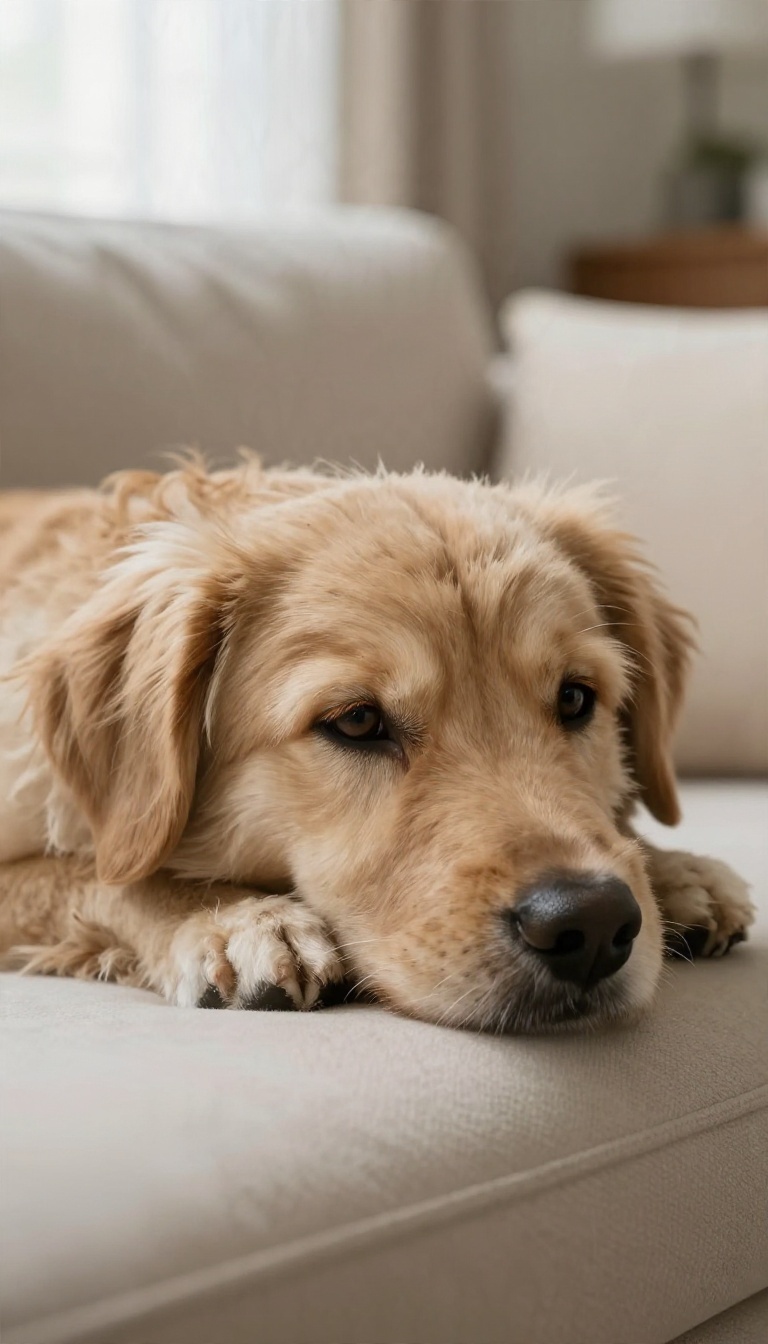
Dogs have a way of looking at you like you've just canceled their birthday. That slow turn of the head, the half-lidded glare, the little huff of air through the nose. It's pure judgment, and it's hilarious.
The best part is you don't have to stage a thing. The side-eye shows up on its own, usually the moment you interrupt a nap or dare to touch the good spot on the couch. Your job is just to be ready with the camera.
Catch it at the right angle and frame it tight, and you've got a photo that reads like a moody portrait of a very unimpressed celebrity.
The side-eye works because it's a real expression, not a trick. Your dog isn't performing, which is exactly why it lands. Set yourself up to catch it and you'll get a shot that feels genuine every time.
Set The Scene For Maximum Judgment
Pick a moment when your dog is already settled. A dog sprawled on the couch, tucked into a bed, or half-asleep on the rug is a dog with opinions. Approach quietly and get low.
The angle matters here. If you're standing over your pup, you'll get a top-down shot of a sleepy face. Kneel down to eye level instead, and the glance comes straight at the lens.
One small disruption does the trick. Say their name softly, shift a blanket, or reach for the toy they were resting on. You want the look, not a full wake-up.
Frame It Tight
The expression is the whole photo, so don't give it room to get lost. Fill the frame with your dog's head and shoulders. Cropping out the body keeps the focus on that one eye cutting toward you.
Tap to focus on the eye closest to the camera. Then drag the brightness slider down just a touch. A slightly darker exposure brings out the whites of the eye and makes the look feel more dramatic.
If your dog is lying on a plain blanket or against a wall, even better. A simple background means nothing competes with the face.
Shoot In A Burst
The side-eye lasts about a second, sometimes less. Switch your phone to burst mode or hold the shutter down so you're capturing a run of frames. You'll end up with a dozen near-identical shots, and one of them will have the exact eyebrow tilt you want.
Sort through them right away while the moment is fresh. Keep the ones where the eye is sharp. A little motion blur in the ear or fur is fine, but the eye needs to be crisp or the joke falls flat.
Add A Little Caption Energy
This shot begs for a caption, and you don't need to overthink it. Something plain and deadpan works best, like "I was sleeping" or "noted. " Skip the long paragraphs.
The face is doing the talking, and a short line lets it breathe. If you post it, a simple two-word caption often gets more laughs than a clever one. Save a few of your favorites in a folder.
Side-eye photos stack up nicely as a series, and a row of them together is its own running joke.
4. Snoot Close-Up With a Wide Lens
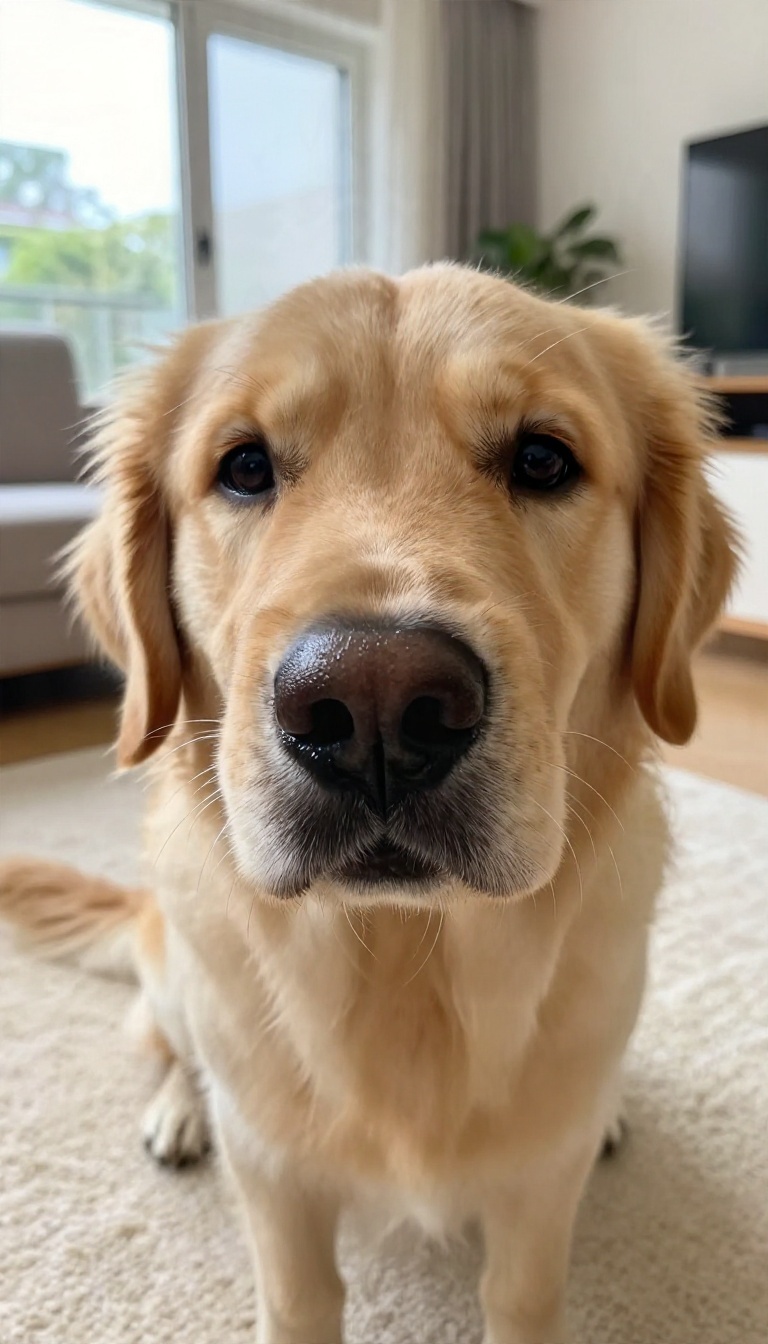
Push your phone right up to your dog's nose and let the wide lens do the exaggerating. The nose balloons to comical proportions while the rest of the body shrinks into a tiny afterthought behind it. It's the kind of portrait that makes people laugh before they even register what they're looking at.
The physics here are simple. Wide lenses stretch whatever sits closest to the glass, so a nose a few inches from the camera turns into a boulder. Your dog's eyes peek out behind it, slightly worried, slightly curious.
That's the whole joke, and it lands every time. You don't need a special lens, either. Most phone cameras default to a wide angle already, and the ultrawide option exaggerates it even more.
The trick is getting low enough to shoot straight into the snout instead of down at the top of the head.
Get Down To Their Level
Kneel, sit on the floor, or lie on your stomach so the lens sits at nose height. Shooting from above flattens the effect and turns it into a normal, boring portrait. From below, the nose dominates the frame the way you want.
If your dog won't hold still, try this while they're lying down and relaxed. A tired pup on a rug gives you a steady target and a soft background.
Bait The Snoot Gently
Hold a treat just behind your phone so your dog leans toward the lens. They'll stretch their neck out and press that nose right where you need it. Keep the treat close to the camera, not in your other hand across the room.
A smear of peanut butter on the lens edge works too, if you're brave. Just wipe it off before the next shot.
Nail The Focus
Tap the screen on your dog's nose to lock focus before you fire. Autofocus loves to grab the background when something is this close. Once it locks, take a burst of shots and sort through them later.
A little light helps more than you'd think. Face a window or step outside, and the wet texture of the nose catches the light in a way that sells the shot.
5. Peekaboo From Behind the Couch

Dogs are nosy by nature, and that nosiness makes for great photos. Hide behind a couch, a door, or a wall, then wait for your pup to peek around the edge. The result is a sneaky, curious face that looks like it's up to something.
It's one of the easiest setups because your dog does the work.
The key is to make your dog curious enough to look but not so excited that they come running. Start by hiding just out of sight and making a small noise—a soft whistle, a treat bag rustle, or a gentle tap on the floor. When your dog leans around the corner, you'll get that classic wide-eyed, ears-forward peek.
Set The Scene
Pick a spot where your dog can only see part of you. A couch back, a half-open door, or the edge of a hallway works well. Crouch low so you're at your dog's eye level.
Have your phone ready in one hand and a treat in the other to reward the peek.
Get The Peek
Call your dog's name softly or make a kissy sound. Don't overdo it—too much noise and they'll break cover. As soon as you see their nose or eye appear around the edge, snap the photo.
The best expressions come from that split second of curiosity.
Keep It Quick
Dogs lose interest fast, so limit each attempt to a few seconds. If your pup walks away, reset and try again later. A couple of short sessions beat one long one.
And if they catch on and stop peeking, switch to a different hiding spot.
6. Treat-on-the-Nose Balance Trick
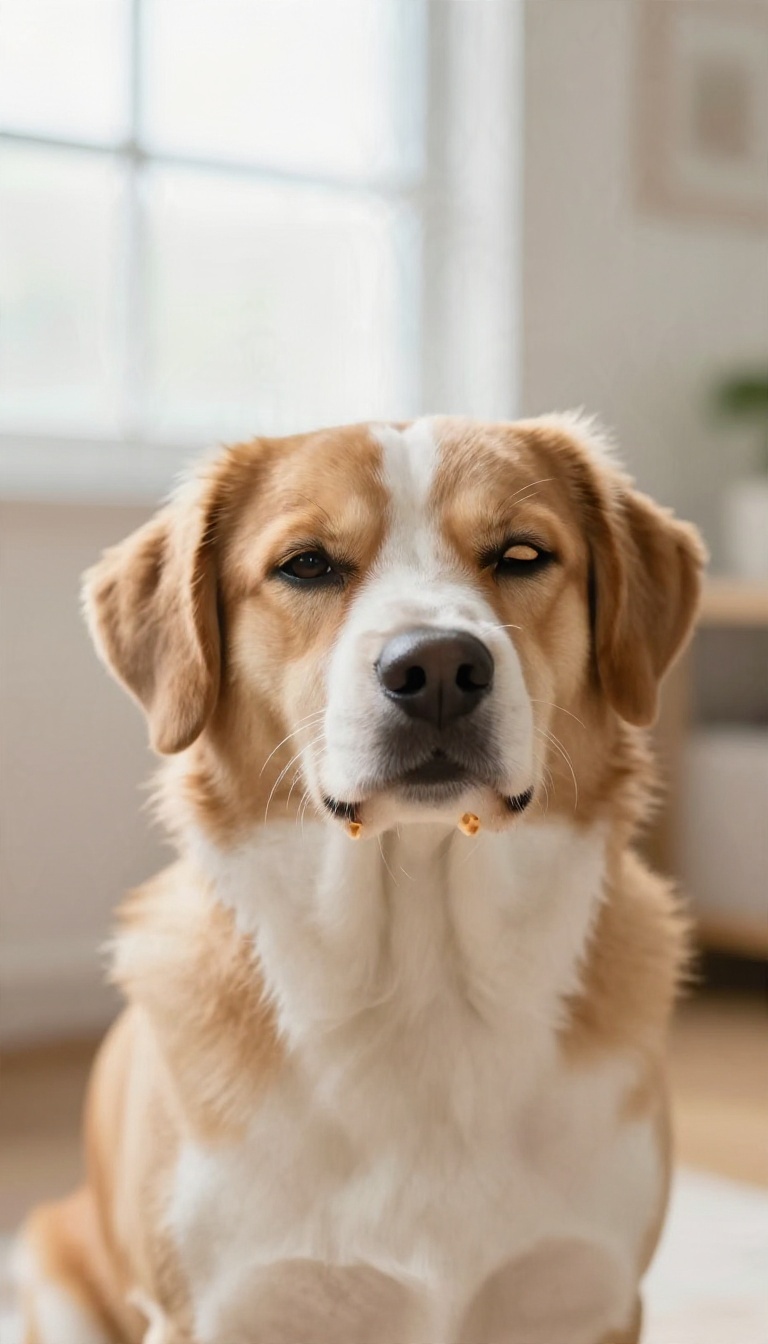
Balance a treat on your dog's nose and you get a free front-row seat to their internal struggle. The eyes go cross-eyed, the eyebrows twitch, and the whole face screams "do not move, do not move. " Then the flip happens, and you either caught it or you didn't.
The photo you want lives in that frozen second before the catch. It's pure comedy in one frame, and it costs you exactly one treat per attempt. Most dogs figure out the game in a few tries, which means you get plenty of chances to nail the shot.
Start with your dog sitting and facing a window or a bright doorway. You want light on their face, not behind them, or you'll end up with a dark blob and a glowing treat. Hold the treat steady on the bridge of the nose for a beat, then pull your phone back.
Get low so you're shooting at eye level rather than looking down. That angle makes the concentration look ten times funnier. ## Nail the Focus Before the Flip Tap and hold on your dog's nose to lock focus and exposure, then slide your finger down slightly to brighten the shot. Treats are usually lighter than fur, so letting the camera expose for the treat can darken your dog's face.
Use burst mode if your phone has it. The flip lasts a fraction of a second, and burst gives you a fighting chance at catching the treat mid-air with the mouth wide open. ## Pick a Treat That Sits Still Small, flat treats work best. A round kibble rolls off the nose before you can even raise the camera, and a soft treat smears and slides.
A piece of freeze-dried meat or a flat biscuit balances nicely and stays put. Keep it small enough that your dog isn't straining to hold the weight. ## Know When to Call It Some dogs hold the pose like pros. Others sneeze it off immediately or give up and eat it.
Either reaction is funny, so don't fight it. Keep sessions to three or four tries, then let them have the treat and call it a win. A dog who's bored won't balance anything, and you'll get better photos from a pup who's still excited to play.
Nail The Focus Before The Flip
Tap and hold on your dog's nose to lock focus and exposure, then slide your finger down slightly to brighten the shot. Treats are usually lighter than fur, so letting the camera expose for the treat can darken your dog's face. Use burst mode if your phone has it.
The flip lasts a fraction of a second, and burst gives you a fighting chance at catching the treat mid-air with the mouth wide open.
Pick A Treat That Sits Still
Small, flat treats work best. A round kibble rolls off the nose before you can even raise the camera, and a soft treat smears and slides. A piece of freeze-dried meat or a flat biscuit balances nicely and stays put.
Keep it small enough that your dog isn't straining to hold the weight.
Know When To Call It
Some dogs hold the pose like pros. Others sneeze it off immediately or give up and eat it. Either reaction is funny, so don't fight it.
Keep sessions to three or four tries, then let them have the treat and call it a win. A dog who's bored won't balance anything, and you'll get better photos from a pup who's still excited to play.
7. The Zoomies Blur
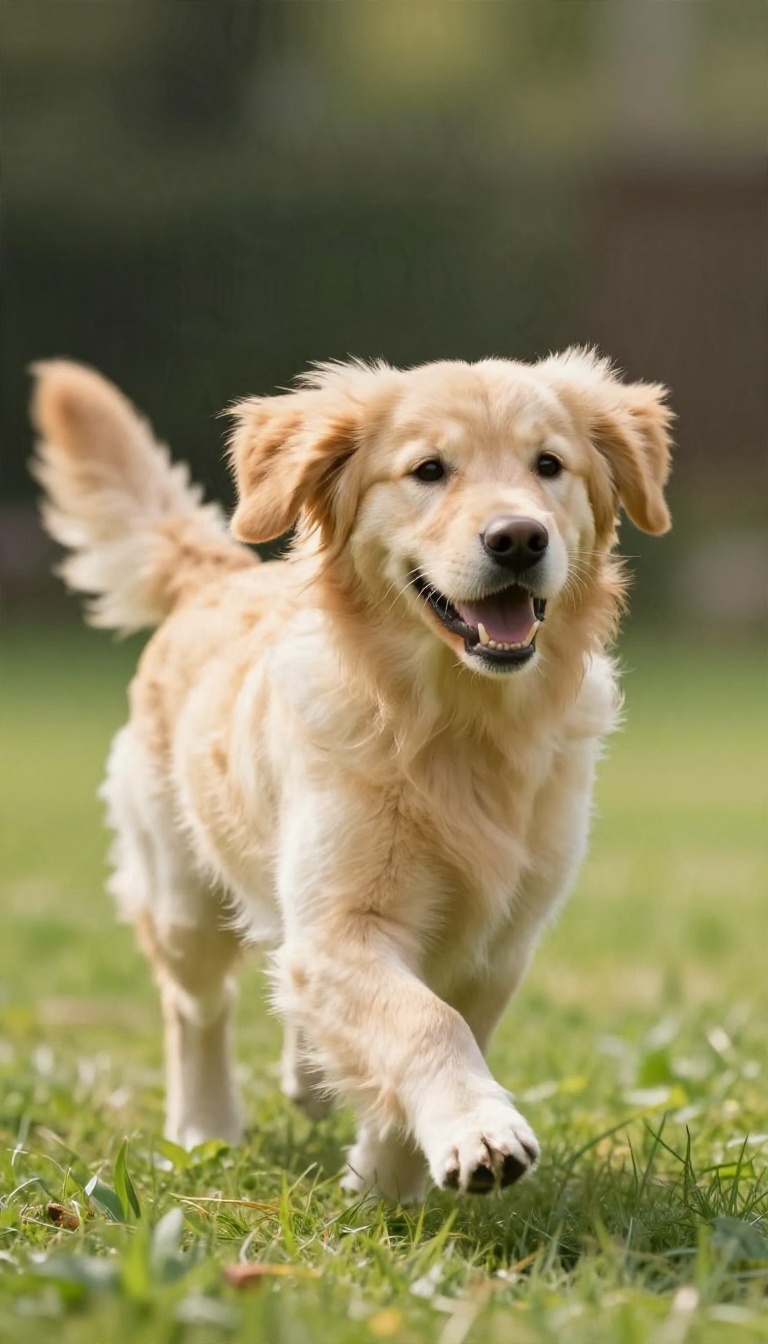
Zoomies are pure dog joy — a sudden burst of speed that turns your pup into a furry rocket. Capturing that energy in a photo can be tricky, but the blur actually makes it funnier. Instead of freezing the action, lean into the chaos and let your dog become a joyful streak.
The result is a picture that feels alive and a little ridiculous, just like the moment itself.
The key is to work with the blur, not against it. A slow shutter speed or burst mode will give you different flavors of chaos, so pick the one that matches your dog's speed and your sense of humor. Either way, you'll end up with a shot that makes people smile because it captures the uncontainable energy of a dog mid-zoom.
Slow Shutter, Big Streak
Drop your shutter speed to around 1/30 or 1/15 of a second and pan with your dog as they run. The background will blur into streaks and your dog becomes a soft, furry comet. It helps to shoot in shutter priority mode if your camera has it, or use a slow-motion video and grab a frame.
The messier the result, the better — this is about energy, not perfection.
Burst Mode For Maximum Derp
If you want to catch a specific ridiculous expression, switch to burst mode and hold down the shutter as your dog tears past. You'll get a series of frames, and somewhere in there is usually a gem: ears flopping, tongue out, eyes wild. Sort through them later and pick the one that makes you laugh the hardest.
It's like a flipbook of pure dog chaos.
Set The Stage For Speed
Zoomies often happen in the same spots — the backyard, the hallway, the living room rug. Pick a spot with good light and a simple background so the blur stands out. A patch of grass or a plain wall works great.
Then just wait for the mood to strike, or give your dog a little encouragement with a toy or a fake sneeze. When they take off, you'll be ready.
8. Dress-Up With Human Clothes

A hoodie, sunglasses, or a scarf sized for a person turns your dog into a tiny confused human — keep it brief and reward generously. The humor comes from the mismatch: your dog's serious expression paired with a garment that clearly wasn't designed for them. You don't need a full outfit; one human item is enough to get the joke across.
The key is to keep the session short and positive. Most dogs will tolerate a piece of clothing for a minute or two, especially if treats are involved. Have your phone ready before you start, and don't force anything if your pup seems uncomfortable.
The best shots happen when you move quickly and reward often.
Pick The Right Human Item
Choose something easy to slip on and off, like a loose hoodie or a scarf. Avoid anything that restricts movement or covers the eyes. Sunglasses can work if they sit lightly on the nose, but test them for a second first.
The goal is a quick visual gag, not a full costume.
Keep It Short And Sweet
Put the item on, snap a few photos, and take it off. Thirty seconds is plenty. If your dog freezes or looks miserable, that's your cue to stop.
A confused expression is funny, but a stressed one isn't. Watch their body language and call it quits while they're still relaxed.
Reward Generously
Treats are your best friend here. Reward your dog before, during, and after the dress-up attempt. Toss a treat on the floor to encourage natural movement, which can lead to candid shots.
The more positive the experience, the more likely your dog will tolerate a repeat performance later.
9. The Yawn That Looks Like a Scream
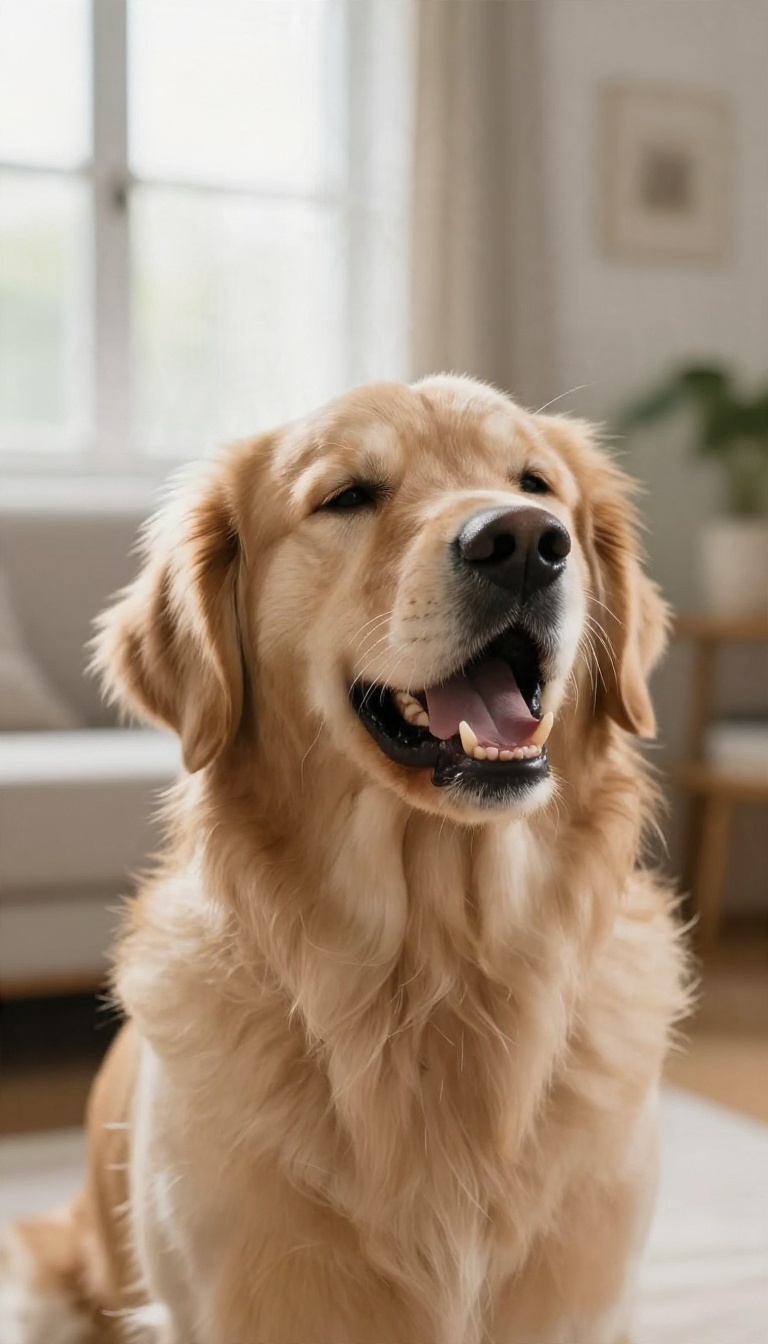
Dogs yawn constantly, and most of the time you barely notice. Catch one at the right second, though, and your sweet pup suddenly looks like they're belting the final note of an opera. Mouth wide, eyes squinted, head tilted back — the drama is completely free.
The trick is that a yawn only lasts a second or two, so you can't wait for it and then grab your phone. You have to be ready before it happens. Once you learn the little signs, this becomes one of the easiest funny shots on the list.
The best part about this idea is that you don't have to make your dog do anything. Yawns happen on their own, usually when they're relaxed, tired, or just waking up. Your job is to be there with the camera already up.
Shoot from a slight angle rather than straight on. A three-quarter view gives you the open mouth and the stretched neck in one frame, which is what sells the whole opera-singer look.
Watch For The Wind-up
Dogs usually give you a tell before they yawn. The mouth opens slowly, the tongue curls, and the head tips back a little. Keep your phone unlocked and your camera app open so you can tap and shoot the moment it starts.
Morning and right before bed are prime time. So is the moment your dog flops down after a walk. Those are the sleepy windows when a yawn is most likely.
Get Low And Stay Close
Kneel down to your dog's eye level before the yawn shows up. Shooting from above flattens the expression, while a low angle makes the open mouth look bigger and more theatrical. Stay close enough to fill the frame but not so close that you cut off the ears.
A little headroom above the tilted-back head keeps the shot from feeling cramped.
Shoot A Burst, Pick The Winner
A single tap often lands on the wrong half of the yawn. Use burst mode or hold the shutter and let it fire several frames in a row. You'll get a few blurry ones and a few where the mouth is only half open.
Somewhere in the middle is the frame that looks like your dog is screaming at the sky. Delete the rest.
10. Photo Booth With a Cardboard Frame
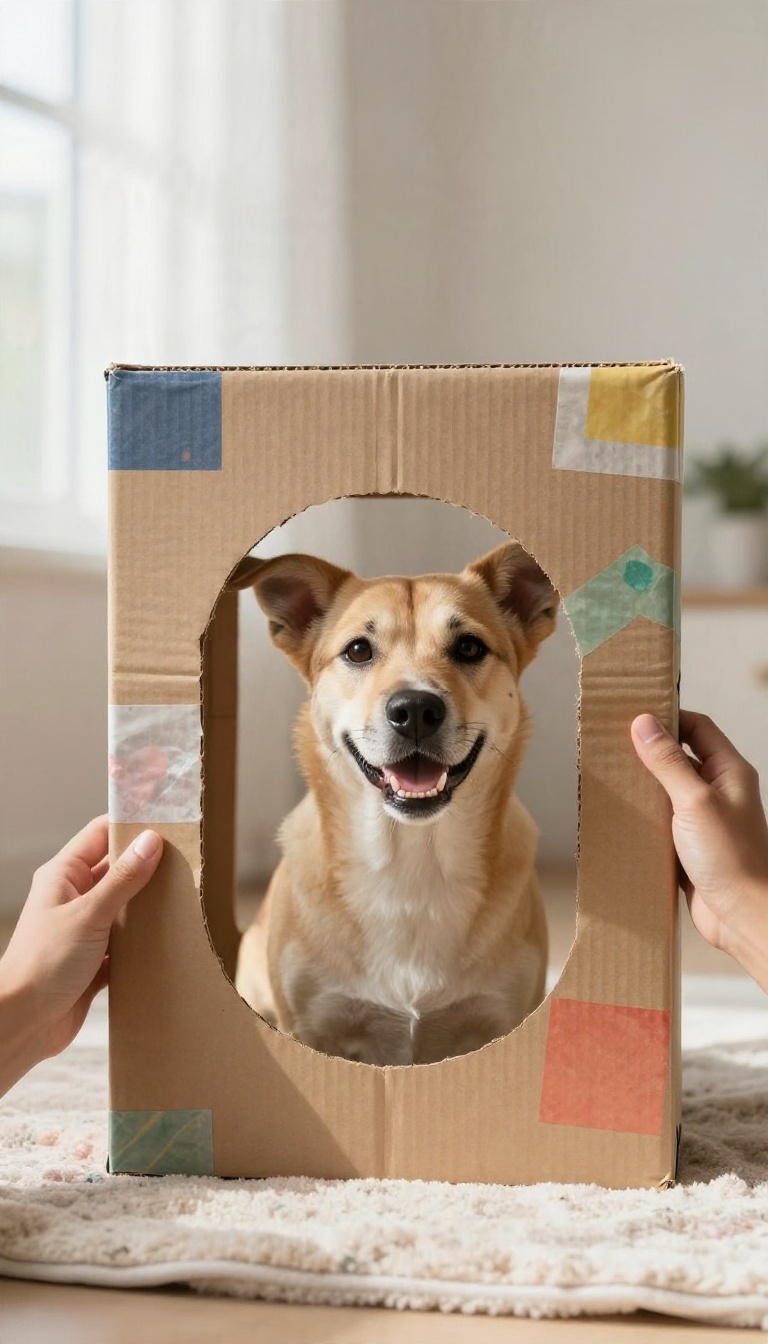
A cardboard frame turns your living room into a photo booth with almost no effort. You cut a hole in a box, hold it up, and let your dog poke their head through for a silly, polished-looking shot. The best part is you can swap out props and backgrounds to get a whole series of pictures in one sitting.
Start with a sturdy box—a shipping box or moving box works well. Cut a hole big enough for your dog's head and shoulders, then wrap the frame in wrapping paper, paint, or washi tape. Keep the edges smooth so nothing scratches your pup.
Once the frame is ready, grab a friend to hold it steady while you take the photo.
Setting Up The Frame
Choose a box that's large enough to frame your dog's head without feeling cramped. A hole about the size of your dog's head plus a couple of inches on each side works well. Cover the raw edges with tape or fabric so it's comfortable.
Decorate the frame with markers, stickers, or a coat of paint—just let it dry completely before your dog goes near it.
Getting Your Dog To Pose
Hold a treat just behind the frame so your dog naturally pokes their head through. Keep the frame low and steady, and have a helper ready with the camera. Start with short sessions and reward generously.
If your dog seems unsure, let them sniff the frame first and give treats for any interaction.
Swapping Props For Variety
Once your dog is comfortable with the frame, add small props like a bow tie, a flower crown, or a tiny hat. You can also change the background by moving to a different wall or hanging a blanket. Take a few shots with each prop, then switch to keep things fresh.
The frame stays the same, but each photo feels new.
11. The Guilty Look by the Trash
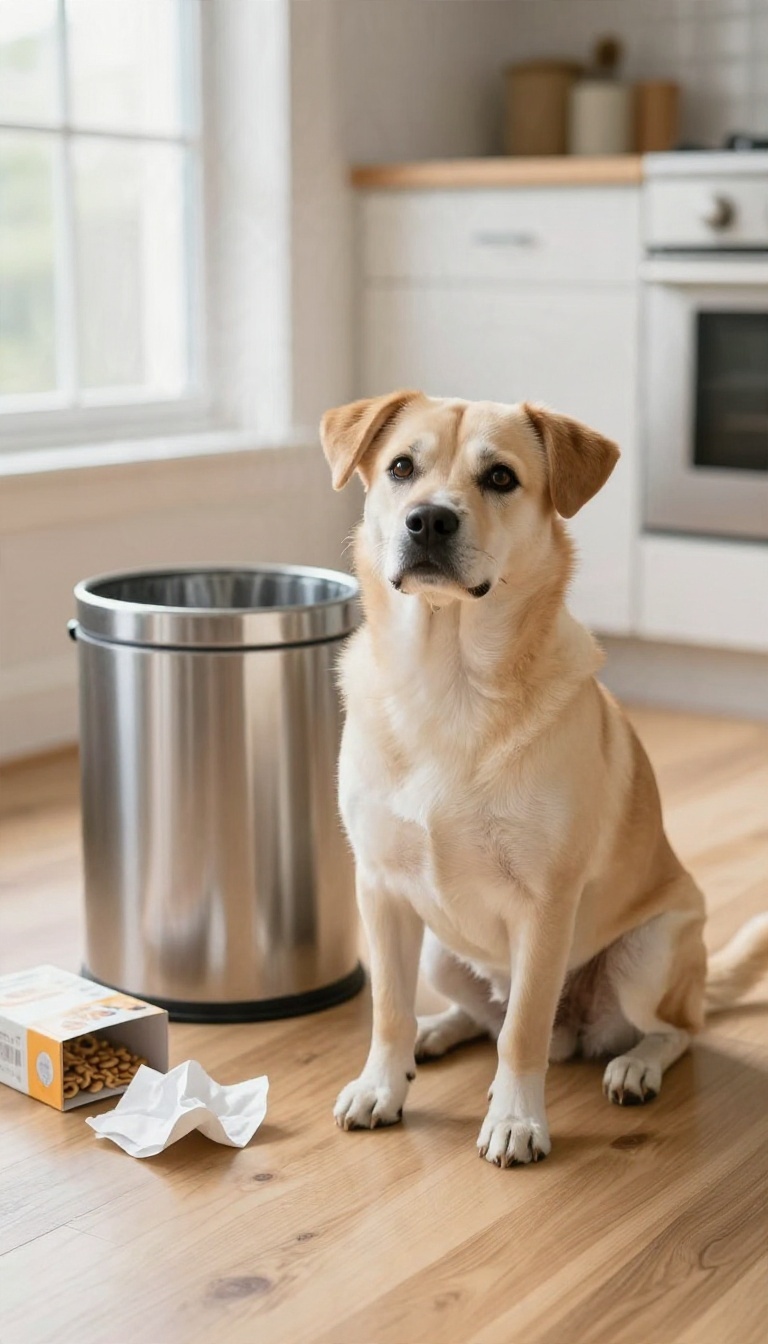
Every dog owner knows the look. Ears pinned back, eyes wide, head dipped low, like they're already drafting an apology. The trash can is the perfect backdrop for that face, because it's the one spot in the house where a dog's guilt feels completely believable.
Set up a harmless mess nearby, grab your phone, and let your pup do the acting.
The beauty of this shot is that it tells a whole story in one frame. A knocked-over bin, a few crumpled napkins, and a dog sitting nearby with the world's most innocent expression. Viewers fill in the rest, and that's what makes it funny.
You're not actually catching your dog in the act. You're staging a scene, and the punchline is that face. Keep it light, keep it quick, and reward your pup for being such a good sport about the whole thing.
Set A Safe, Silly Scene
Use items your dog can't choke on or actually eat. Crumpled paper, an empty cereal box, or a few clean wrappers work great. Skip anything sharp, greasy, or truly tempting.
Place the mess just outside the bin rather than inside it. A couple of tipped-over items reads as chaos without turning into a real cleanup. Keep the bin itself upright so the scene stays controlled.
Get The Face, Not The Action
Position yourself low, near your dog's eye level. Call their name softly and shoot the moment they look up at you. That's usually when the wide eyes and dipped head show up on their own.
A treat held just above the camera gets their attention without breaking the mood. Take a burst of shots, because the best guilty face rarely lasts more than a second or two.
Add A Little Storytelling
Try a few angles: one wide shot showing the bin and the mess, then a close-up of just your dog's face. Together they read like a tiny crime-scene report. A slightly tilted camera or a lower vantage point adds drama without any editing.
If your dog offers a head tilt, take it. That's comedy gold.
12. Seasonal Prop Chaos

Seasonal props are basically comedy bait. A pumpkin, a Santa hat, a pair of bunny ears — your dog has no idea what it means, and that confusion shows up on their face in the best way. The trick is to pick one prop, shoot fast, and let whatever happens be the punchline.
You don't need a full holiday setup. One prop is enough to signal the season, and honestly, one prop is all most dogs will tolerate before they start giving you the side-eye. The funniest shots usually come from the moment right before your dog shakes the hat off or nudges the pumpkin with their nose.
That's the frame you want.
Pick One Prop And Commit
Choose a single seasonal item that fits your dog's size and patience level. A mini pumpkin on the floor, a Santa hat balanced on their head, or bunny ears clipped to a collar all work. Keep it lightweight and safe, and skip anything that dangles near their eyes or blocks their vision.
Shoot In The First Thirty Seconds
Set up your prop, put your dog in place, and start shooting immediately. The first few seconds give you the wide-eyed, what-is-this look that makes the photo. After that, they either settle in or walk off, and both endings are fine.
Have treats in one hand and your phone in the other so you can reward and reset fast.
Let The Chaos Be The Joke
Don't fight the shake-off, the prop sliding sideways, or the dramatic flop onto the floor. Those messy frames often beat the posed ones because they show your dog's real reaction. Shoot a burst, then pick the shot where the prop is crooked and the expression is peak confused.
That's your keeper.
FAQ
Do I need a real camera for funny dog pictures?
No. A modern phone camera handles all of these ideas well. Good light near a window matters more than the gear.
How do I keep my dog still long enough to shoot?
Keep sessions short, use high-value treats, and shoot in burst mode. A tired dog after a walk is usually the easiest model.
Are props safe for dogs?
Use props that are too big to swallow, avoid anything with loose small parts, and never leave a dressed-up dog unattended.
What's the best time of day for these photos?
Soft daylight from a window or open shade works best. Avoid harsh midday sun, which makes dogs squint and washes out fur detail.
How many photos should I take per setup?
Take a burst of ten to twenty and expect one or two keepers. Funny faces are fleeting, so volume is your friend.
Conclusion
The best funny dog picture often comes from a ten-second setup, not a big production. Grab a treat, pick one idea from this list, and let your pup be a little ridiculous. You'll end up with a photo worth keeping and a story worth telling.
Start with whatever you have on hand today, whether that's a party hat or a pile of leaves. Try one, laugh at the results, and move to the next when you're ready. Your dog doesn't need to be a star, and neither do you.
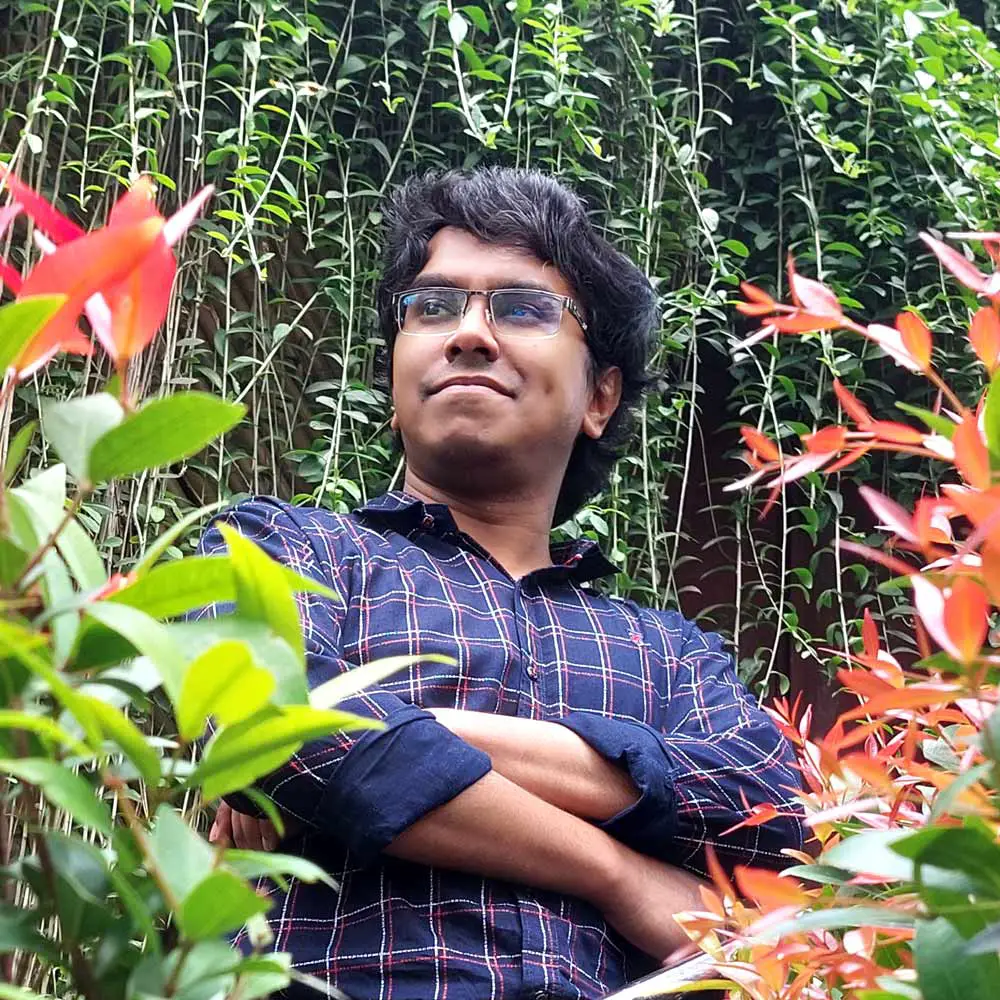
I’m Pallab Kishore, the owner of Little Pets Realm — an animal lover and pet care enthusiast sharing easy tips, healthy recipes, and honest advice to help every small pet live a happy, healthy, tail-wagging life.