
A good dog portrait does more than capture fur and floppy ears. It freezes a version of your dog that someone loves, and turns it into something they can hold onto for years.
The tricky part is picking the right style. A painted canvas suits one person, while a stitched patch or a simple pencil sketch suits another, and the difference usually comes down to budget, timeline, and taste.
Below are nine approaches worth considering. Each one works as a gift for a dog owner, a memorial piece, or a small surprise for yourself.
1. Hand-Painted Canvas Portrait
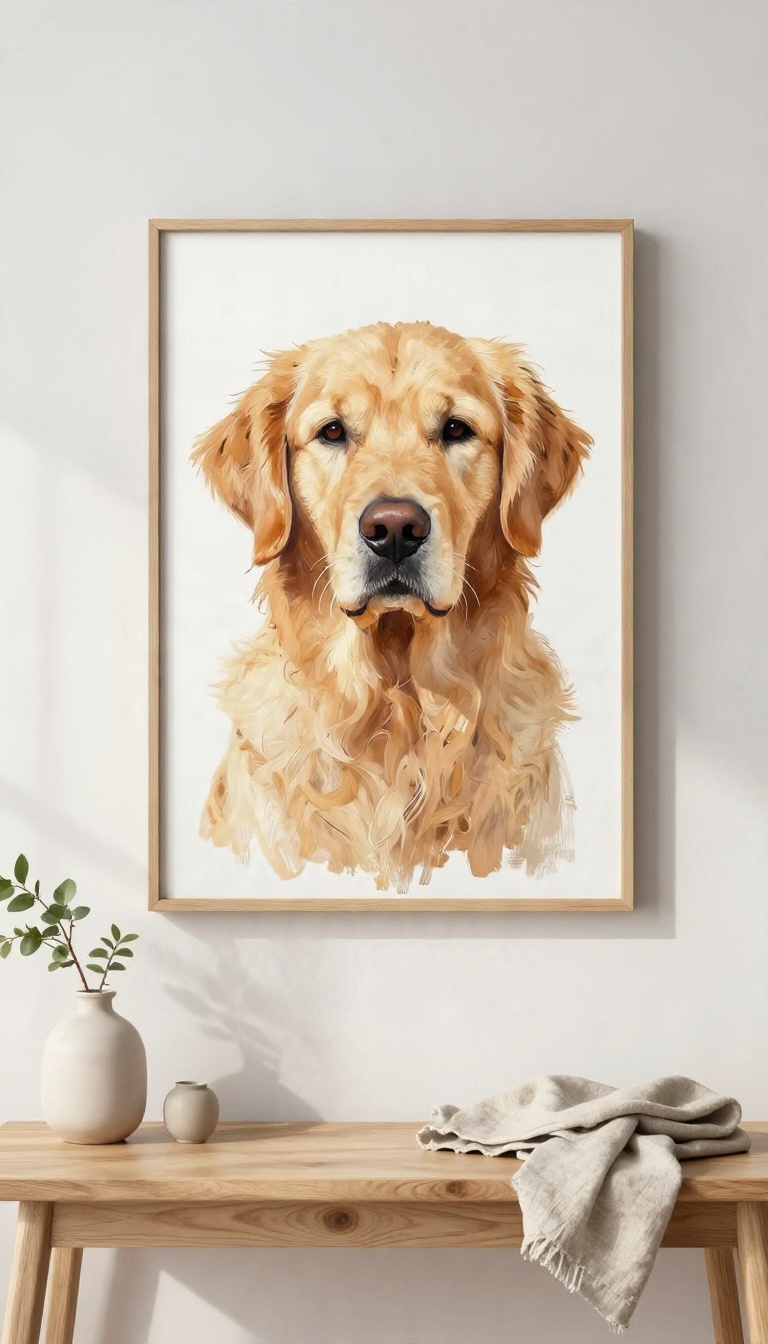
A hand-painted canvas portrait turns your dog into a piece of art you can hang on the wall. It has a timeless, gallery-like quality that makes it feel special. This option works well for a milestone gift or a memorial piece.
A hand-painted portrait is exactly what it sounds like: an artist paints your dog on canvas, usually from a photo you provide. You get a one-of-a-kind piece that captures your dog's personality in a way a photo can't. It's a classic choice that never feels outdated.
Choosing A Paint Style
Artists work in different styles, from realistic to impressionistic. Realistic portraits focus on fine details like fur texture and eye color. Impressionistic styles use looser brushstrokes and bolder colors for a more artistic feel.
Think about the recipient's taste and the room where the portrait will hang. A realistic piece suits a traditional space, while a colorful impressionistic style might fit a modern home.
Picking The Right Reference Photo
The quality of the reference photo makes a big difference. Choose a clear, well-lit photo where your dog's face is in focus. Avoid photos with harsh shadows or blurry details.
If possible, provide a few options so the artist can choose the best one. A good photo helps the artist capture your dog's unique features and expression.
Turnaround Time And Price
Hand-painted portraits take time. Depending on the artist, expect a turnaround of 2 to 8 weeks. Some artists offer rush options for an extra fee.
Prices vary widely based on size, style, and the artist's experience. Small canvases might start around $150, while larger, detailed pieces can cost $500 or more. Always ask for a timeline and a quote before committing.
2. Custom Pencil or Charcoal Sketch
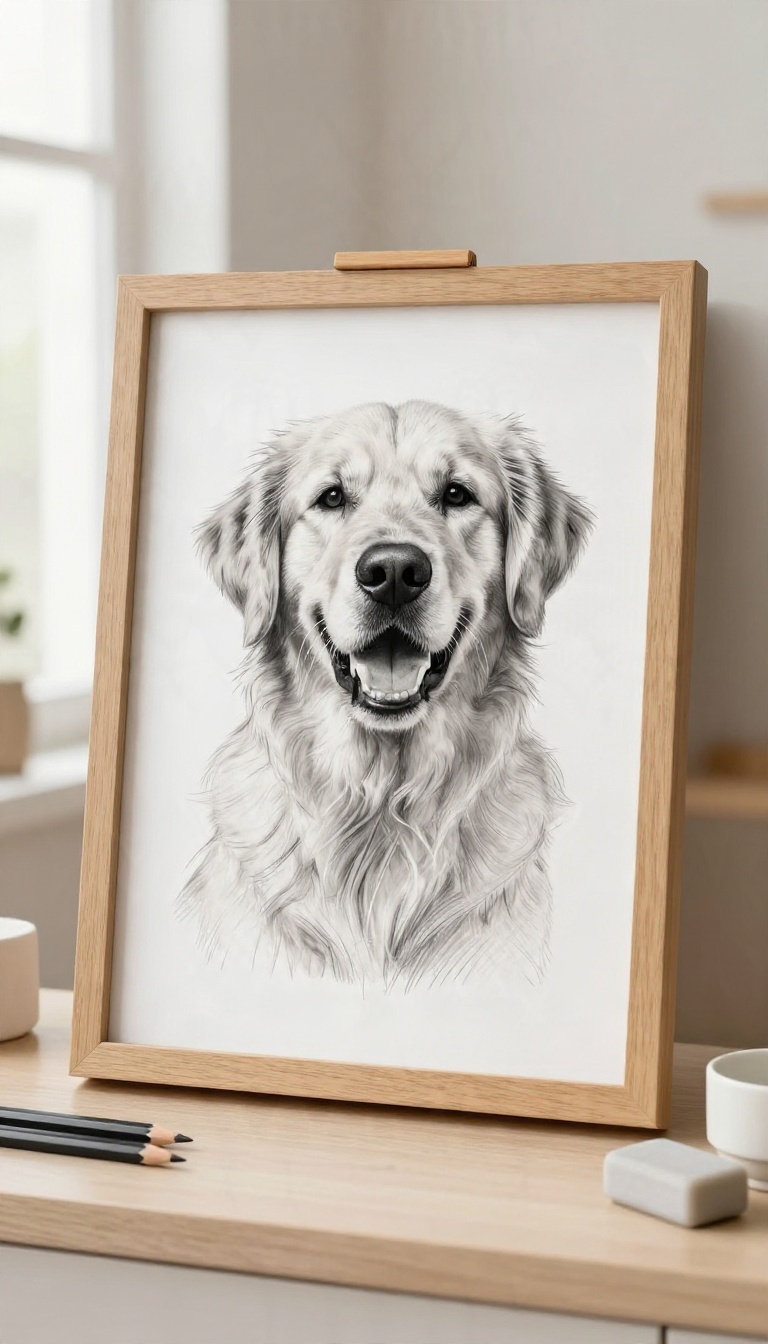
A sketch gives you the warmth of handmade art without the price tag of a full painting. It feels personal, looks timeless, and works in almost any room. For a lot of people, that balance of affordable and thoughtful is exactly right.
Pencil and charcoal portraits sit in a sweet spot. You still get an artist's hand in the work, but the materials cost less and the turnaround is usually faster than oils or acrylics. That makes a sketch a realistic gift for a birthday, a housewarming, or a quiet memorial.
The style also ages well. Black-and-white linework doesn't clash with anyone's color scheme, so it fits a modern apartment or a farmhouse living room just as easily.
How To Brief The Artist
Good sketches start with clear instructions. Tell the artist the dog's name, breed, and the size you want, then describe the mood you're after, like playful, calm, or dignified. Send several photos from different angles, and point out the details that matter most.
Maybe it's the white patch on one ear or the way the dog tilts its head. A quick note about the dog's personality helps the artist capture more than just the shape. Ask about revisions up front.
Many artists include one round of small tweaks, and knowing that ahead of time saves awkward back-and-forth later.
Why Black-and-white Photos Work Best
Color photos can actually make a sketch harder to plan. Shading, contrast, and texture read more clearly in black and white, so the artist can judge the light and form without color distracting them. If you only have color photos, that's fine.
Most artists can convert them, but a sharp, well-lit grayscale shot gives the cleanest starting point. Avoid blurry phone pics taken at night, since detail gets lost fast.
Framing Changes Everything
The same drawing can look casual or formal depending on the frame. A thin black frame with a wide white mat feels clean and modern, while a warm wood frame softens the piece and suits a cozy room. Match the frame to where it will hang.
A hallway wall can handle something bolder, but a bedroom shelf usually wants something simple. Non-glare glass is worth the small upgrade if the portrait will sit near a window.
3. Digital Illustration With a Playful Twist
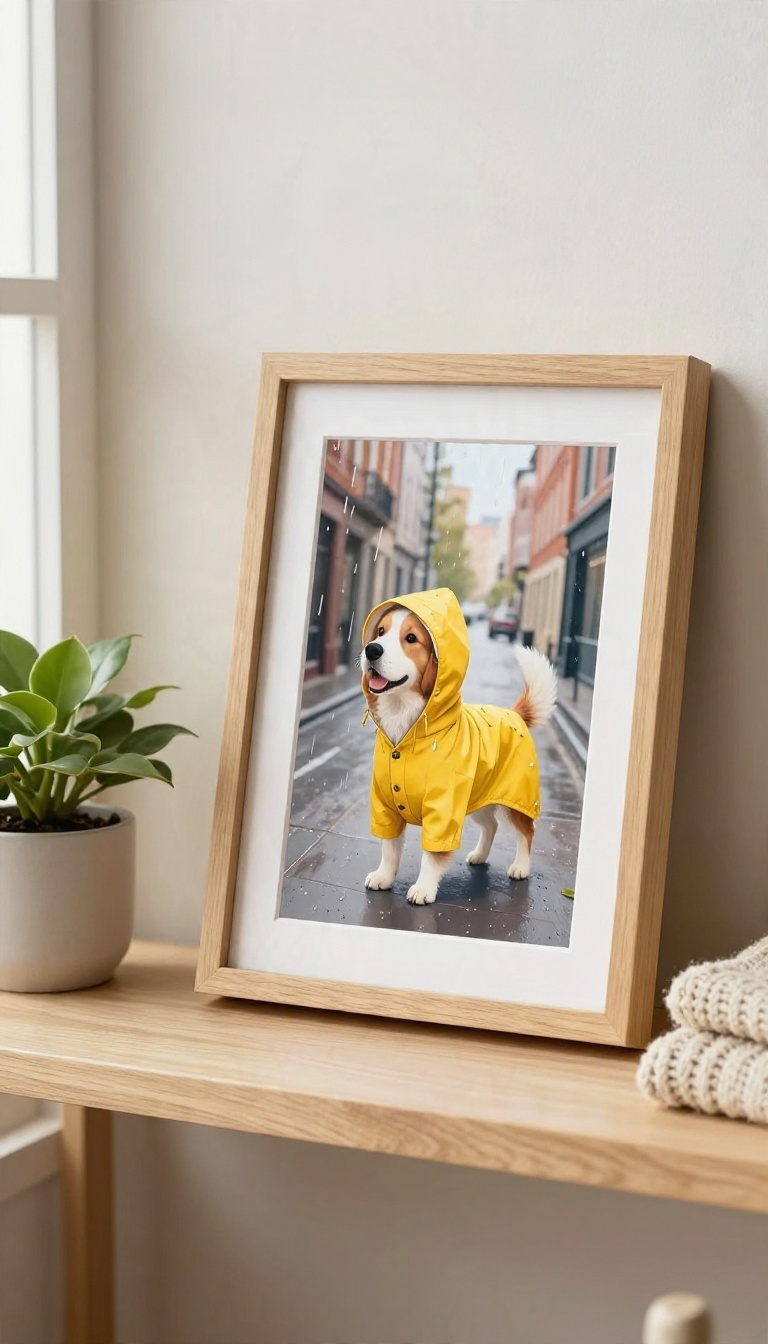
Digital illustration lets you bend reality a little. Your dog can wear a tiny raincoat, ride shotgun in a vintage convertible, or lounge on a beach they've never actually visited. That playful freedom is what makes this option stand out, especially for a gift that should get a laugh before it gets a happy sigh.
The tradeoff is that the artist can only draw what you describe, so the concept matters as much as the skill. Get the idea clear up front and the rest is mostly about printing it well.
The best digital pieces feel personal, not random. A dog in a chef's hat only lands if the recipient actually loves cooking, or if the dog has a habit of hovering near the stove. So start with the story, then hand it to the artist.
Most illustrators work in a style you can preview ahead of time, whether that's flat and cartoonish, soft and storybook, or bold and graphic. Pick the style first, then layer in the scenario.
Describing The Scene So The Artist Gets It
Write a short brief instead of a long one. Name the outfit, the setting, and the mood in a sentence or two, then attach three or four clear photos of your dog from different angles. Mention the details that make your dog recognizable: the crooked ear, the white patch on the chest, the permanently worried eyebrows.
Those small things are what turn a cute illustration into a portrait of your actual dog. If you have a reference image for the setting, like a photo of a favorite hiking trail or a grandparent's kitchen, send it along. Artists translate references far more accurately than they guess from a description.
File Formats And Resolution For Printing
Ask for a high-resolution PNG or TIFF at 300 DPI, sized to the print dimensions you plan to use. A file built for a phone screen will look soft and blurry once it hits paper. Request a transparent background version too, even if you don't think you need it.
It makes stickers, mugs, and tote bags much easier later, and it costs the artist almost nothing to include. If the artist works in vector format, ask for a PDF or SVG as well. Vectors scale cleanly to any size, which is handy if you decide to go big with a poster after seeing the final piece.
Where To Print It Yourself
Local print shops handle fine art paper and canvas wraps well, and you can often see a proof before committing. Big online printers are cheaper and easier for standard sizes like 8×10 or 11×14. For cards, stickers, and small gifts, a home inkjet on matte cardstock works surprisingly well.
Just use the highest quality setting and let the ink dry fully before handling. Order one small test print before you commit to a large canvas or a batch of cards. Colors can shift between screens and paper, and a five-dollar proof saves you from a fifty-dollar disappointment.
4. Watercolor Portrait From a Phone Photo
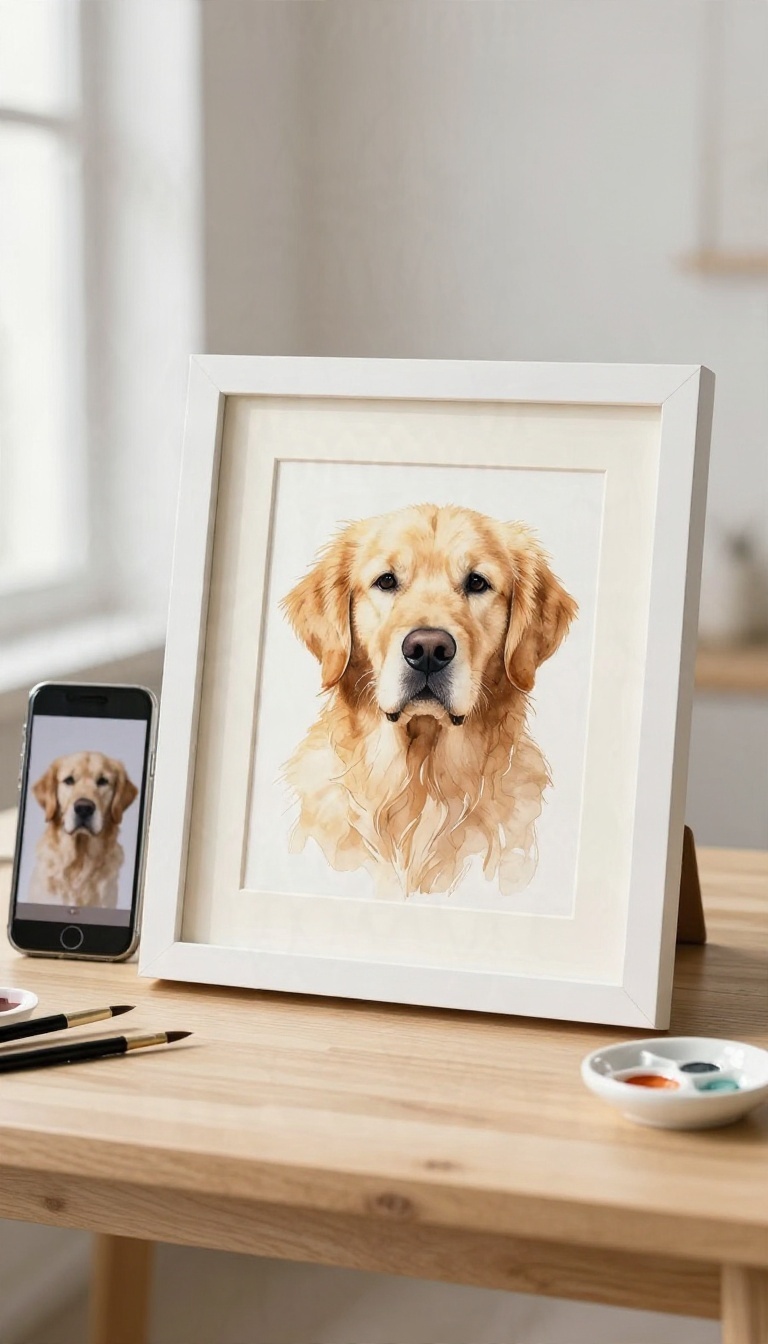
Watercolor has a softness that makes it feel like a memory you can hold. That quality suits memorial gifts especially well, but it also works for birthdays, adoptions, or just because. The best part?
You can start with a photo you already have on your phone.
Most of us have hundreds of dog photos and maybe one or two that really capture their spirit. Watercolor artists can work from those everyday shots, turning a casual snapshot into a tender keepsake. The key is knowing what makes a good reference and what to expect from the style.
What Makes A Good Reference Photo
You don't need a professional camera, but a few details help. Look for a photo where your dog's face is clear, well-lit, and in focus. Avoid heavy shadows or blurry action shots—those details get lost in translation.
A simple background is fine; the artist can soften or remove it. If you're unsure, send two or three options and let the artist pick the one with the best expression.
Loose Vs. Detailed Watercolor Styles
Watercolor can go two ways: loose and expressive, or tight and detailed. Loose styles use flowing washes and leave some edges soft, which feels dreamy and artistic. Detailed styles focus on precise markings and fur texture, closer to a realistic painting.
Think about the recipient's taste—some people love the airy look, while others want every whisker just right. Ask the artist for examples of both before you decide.
Protecting The Paper For The Long Haul
Watercolor paper is delicate. To keep the portrait safe, frame it behind glass with a mat that keeps the paper from touching the glass. UV-protective glass helps prevent fading if it hangs in a bright room.
Avoid damp spots like bathrooms or kitchens. With proper framing, a watercolor portrait can last for decades.
5. Embroidered Hoop or Patch Portrait
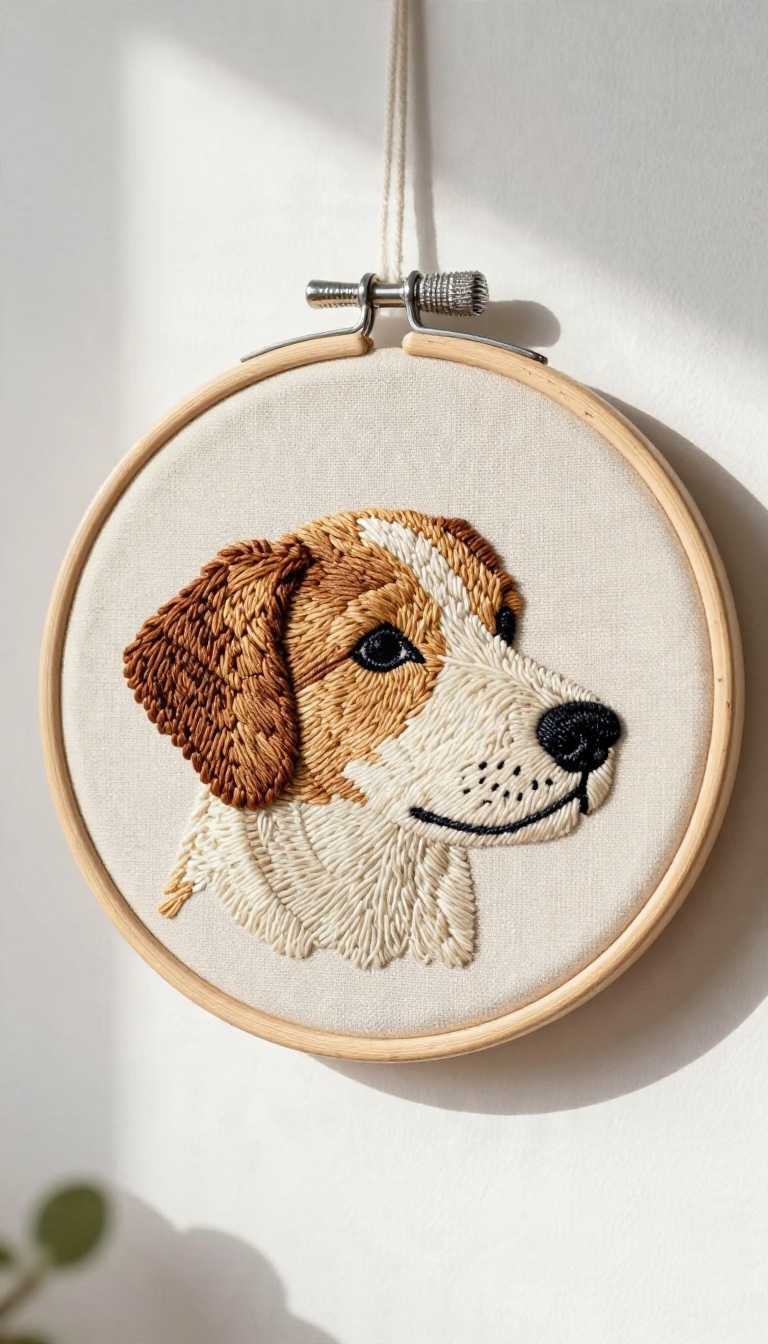
Thread adds a texture you can actually feel, and that's what makes an embroidered portrait stand out from a print or a painting. A stitched version of your dog can live in a hoop on the wall, get sewn onto a denim jacket, or ride along on a tote bag. It's a gift that feels handmade without being fragile, which is a useful combination for something people carry around.
The appeal here is partly practical. Embroidery holds up to daily wear far better than paper or canvas, so a patch portrait can go on a backpack and survive a few years of real life. It also gives you a level of detail that surprises people, from the tilt of an ear to the exact shade of a nose.
The main thing to sort out before you order is where the piece will end up. A wall hoop and a jacket patch have different needs, and knowing the destination early saves a lot of back-and-forth later.
Hoop Or Patch?
A hoop portrait is the classic choice for display. It comes framed in a wooden ring, ready to hang, and it suits a memorial piece or a gift for someone who likes a cozy, handmade look. Sizes usually run from about 4 inches up to 10 or 12, and a 6 to 8 inch hoop tends to be the sweet spot for showing off facial detail without turning into a giant project.
Patches are the move if the gift needs to be worn or used. They can be ironed or sewn onto jackets, caps, aprons, and bags. Keep the design a bit simpler for patches, since smaller scale means less room for fine shading.
A patch around 3 to 4 inches works well on a jacket sleeve or chest.
Choosing Thread Colors
Thread color is where the portrait either clicks or looks a little off. Send the artist clear, well-lit photos of your dog, ideally in natural light and from a few angles. That helps them match coat tones instead of guessing from one shadowy phone pic.
Good embroiderers layer several shades rather than using one flat color for the fur. Ask whether they blend threads for things like brindle or merle patterns, because those coats need more than a single brown or gray. If your dog has a distinctive marking, call it out so it doesn't get smoothed over.
How Long It Lasts
Stitched work is durable, but it isn't indestructible. A hoop kept indoors and out of direct sun will hold its color for years. A patch on a jacket that gets washed regularly will fade and fuzz a little faster, so wash those items inside out on a gentle cycle and skip the dryer.
Hand washing or spot cleaning is the safest bet for anything heavily stitched. If the piece is going on a bag that gets tossed around, ask the maker to secure the edges well and back the patch with a sturdy fabric.
Realistic Timelines
Custom embroidery is slower than it looks. A detailed portrait can take anywhere from a couple of weeks to over a month depending on the artist's queue and the complexity of the design. Small patches usually move faster than large hoops with lots of shading.
If you're shopping for a birthday or holiday, order early and ask about turnaround before you pay. Many makers book out during gift season, so a little planning keeps you from scrambling. Rush options exist, but expect to pay more for them.
6. Pop Art or Comic-Style Dog Print
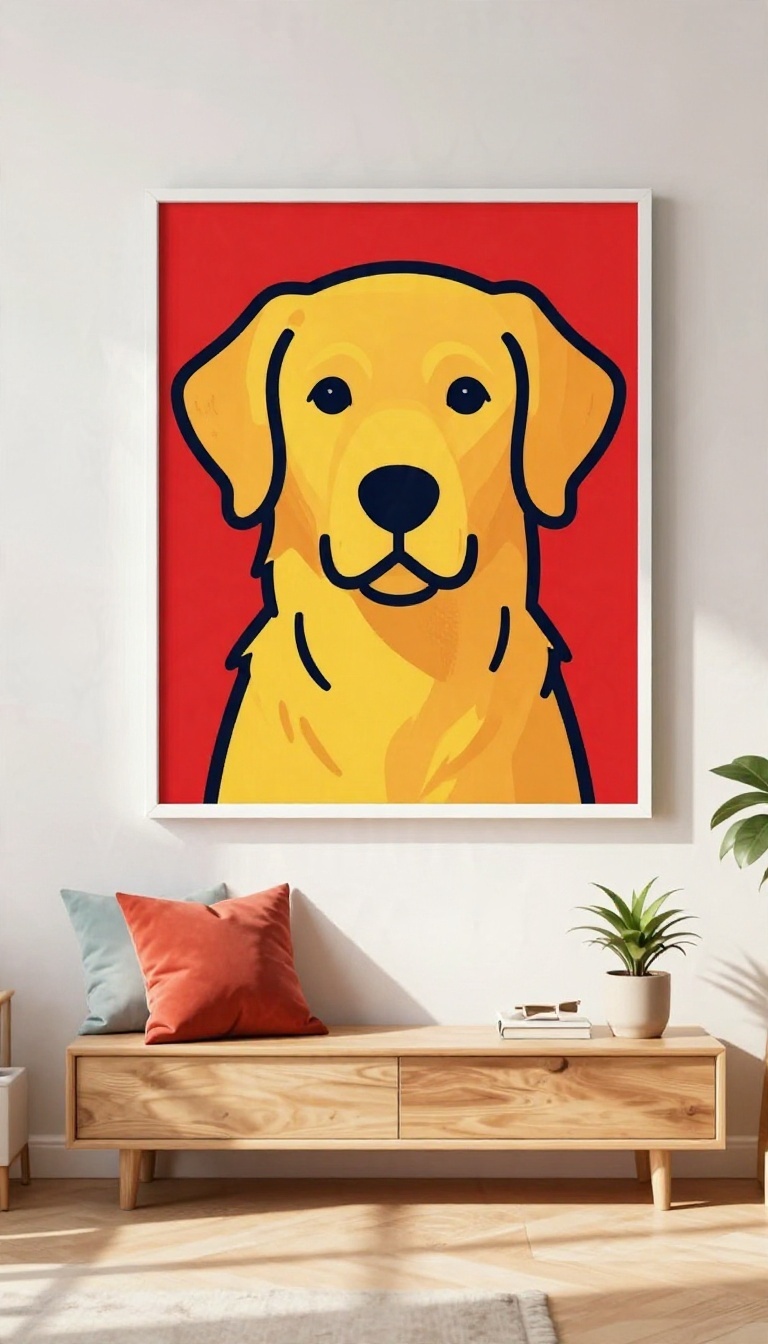
Pop art and comic styles take your dog's portrait in a louder, more playful direction. Instead of soft brushstrokes, you get bold outlines, flat color blocks, and a graphic punch that feels like it jumped off a screen. This style works best for people who like modern, energetic spaces and want a portrait that makes them smile every time they walk by.
It's also a smart choice if you're shopping for someone with a quirky sense of humor or a home full of color. The key is knowing what to ask for so the final piece feels intentional, not like a filter was slapped on a photo.
Pop art dog portraits borrow from comic books, vintage advertisements, and artists like Roy Lichtenstein and Andy Warhol. The idea is to simplify the image into strong shapes and saturated colors while keeping your dog's likeness recognizable. A good artist will exaggerate the eyes, the tilt of the head, or the shape of the ears to bring out personality.
You don't need a fine art degree to commission one, but a little direction helps. Below are the main things to decide before you send a photo to an artist, plus tips on where this style looks best once it's framed.
Style References To Send
Start by gathering two or three reference images that capture the vibe you want. Classic comic book panels, vintage cereal boxes, or even album covers can help the artist understand your taste. If you want a specific artist's influence, say so—mentioning Lichtenstein's Ben-Day dots or Warhol's repeating color blocks gives clear direction.
Also decide how much realism you want. Some pop art portraits keep the dog's natural markings and just amp up the colors, while others go full graphic with simplified shapes. A quick note like "keep the spots but make them electric blue" can save a lot of back-and-forth.
How Many Colors To Request
Most pop art portraits use three to five colors plus black and white. Fewer colors create a cleaner, more graphic look, while more colors add energy but can get busy. For a gift, three or four colors usually strike a good balance—enough to feel vibrant without overwhelming the dog's features.
Think about the room where it'll hang. A palette that picks up one or two colors from the space will feel cohesive, while a bold complementary scheme makes the portrait a standalone statement. Ask the artist for a color mockup before they start painting so you can tweak the palette early.
Where This Style Fits Best
Pop art portraits look right at home in modern, eclectic, or industrial spaces. They pair well with mid-century furniture, exposed brick, and rooms that already have a playful edge. A gallery wall of comic-style prints can be a fun focal point in a hallway or home office.
Avoid hanging one in a formal dining room or a quiet, neutral bedroom—the bold colors will fight the calm vibe. Instead, consider a mudroom, a kid's room, or a casual living area where the portrait can be a conversation starter. If you're giving it as a gift, a quick note about placement can help the recipient find the perfect spot.
7. Portrait on a Functional Object
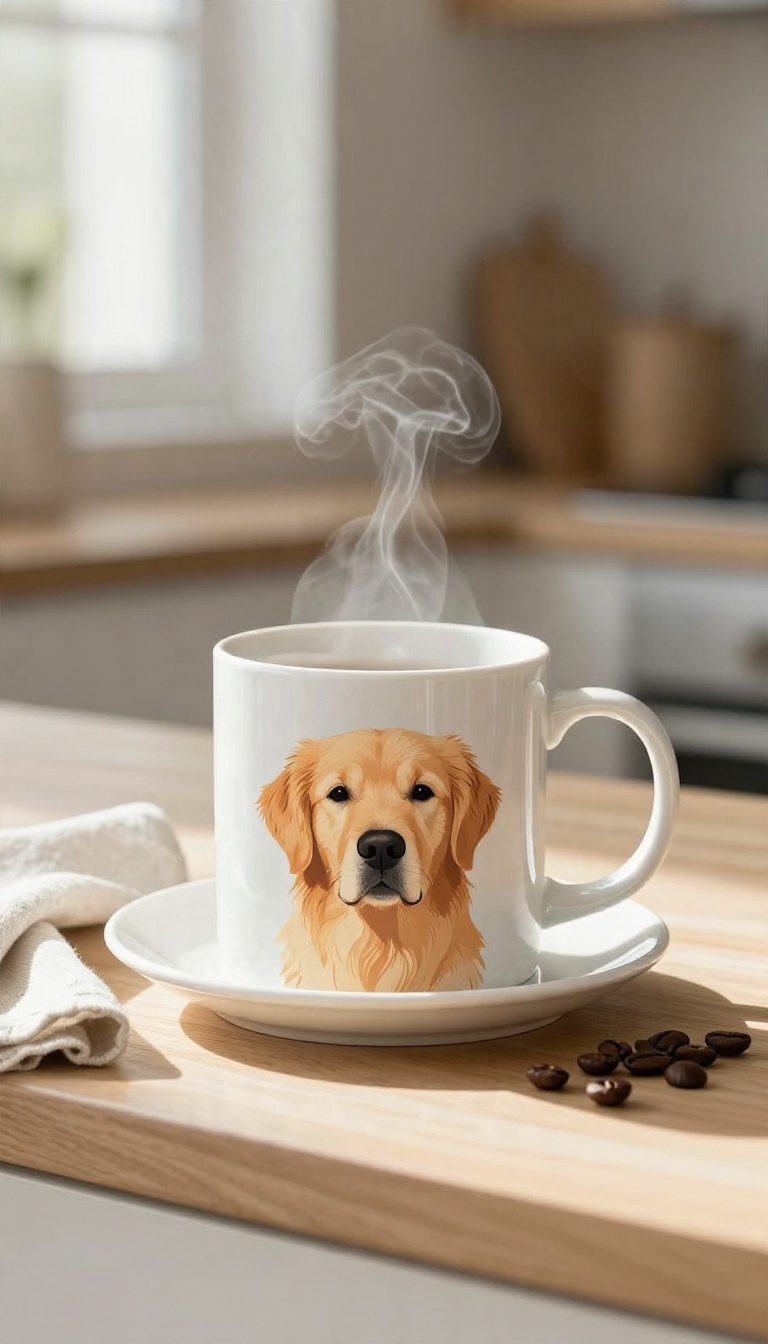
A portrait that lives on a mug gets used every morning. That's the quiet magic of putting your dog's face on something practical — it turns a keepsake into part of the daily routine instead of something that gathers dust on a shelf. Mugs, ornaments, phone cases, and blankets all work, and each one has its own rules for getting a clean result.
The trick is matching the artwork to the surface and the printing method, because a design that looks sharp on a canvas can turn muddy on fabric. Get those details right and you end up with a gift that's genuinely handy and personal at the same time.
Pick The Object To Match The Habit
Start with how the person actually lives. A coffee drinker will reach for a mug every day, while someone who travels might get more mileage out of a phone case or a tote. Ornaments suit the holidays and make a sweet yearly tradition, especially for a dog who's no longer around.
Blankets land best with people who curl up on the couch a lot, and they double as a comfort item during rough weeks. The object should feel like a natural fit for the recipient, not a random pick off a catalog page.
Print Quality And Materials Matter
Cheap printing shows up fast. On mugs, look for dye-sublimation, which fuses the image into the ceramic coating so it won't peel or fade in the dishwasher. For phone cases, a hard shell with a printed insert or UV printing holds detail better than a flimsy sticker slapped on top.
Blankets do best with woven or sublimated fleece, where the image sits in the fabric rather than cracking off the surface. Ask what method the seller uses before you order. A quick question saves you from a gift that looks great in the preview and rough in real life.
Avoiding Blurry, Washed-out Results
The number one cause of a bad functional print is a low-resolution photo. Small objects like ornaments and phone cases need crisp source images, so dig up the highest-quality shot you have. Good lighting and a clear view of your dog's face make the biggest difference.
Blurry action shots or dark indoor photos rarely survive the printing process, no matter how cute they are. Also think about contrast. A black dog against a dark background can turn into a shadowy blob, so a lighter backdrop or a simple illustrated version often prints cleaner.
When in doubt, ask for a proof before the final run.
8. Multi-Pet Group Portrait

Some houses don't have a dog. They have a pack. Two, three, sometimes four sets of paws that all share the same couch, and a portrait of just one of them would feel incomplete.
A group piece solves that, but it comes with its own set of puzzles. The dogs rarely sit still together, and the photos you have probably weren't taken on the same day or in the same light. That's fine.
A good artist can pull separate shots into one scene, as long as you know what to send and what to expect.
The trick with group portraits is treating each dog as its own small project, then stitching them into a single composition. Start by gathering the best photo of every pet, even if the backgrounds are a mess or the lighting is all wrong. Clear, sharp shots matter more than pretty ones.
A crisp photo in bad light gives the artist more to work with than a blurry one taken in golden hour. From there, the artist arranges the group, matches the tones, and builds a scene that reads as one moment. It won't look like a snapshot, and that's usually the point.
Arranging Dogs From Separate Photos
You'll almost never have a single photo where every dog looks great. One blinks, another turns away, and the third is a blur of tail. That's normal.
Send one strong photo per dog and let the artist handle placement. They'll decide who sits front and center, who stands behind, and how the sizes relate so nobody looks like a floating head. Give them a little direction if you have preferences.
Maybe the oldest dog goes in the middle, or the smallest one sits up front. Small notes like that help the final piece feel personal.
Matching Light Across The Images
Photos from different days carry different light. One might be warm and indoor, another cool and outdoors, and pasting them together without adjustments looks off. A skilled artist balances the shadows, warms or cools each dog to match, and unifies the background so the group feels like it belongs in one room or one yard.
You can help by mentioning where each photo was taken. It gives the artist a starting point for blending the tones instead of guessing.
Setting Realistic Expectations
Group portraits take longer and cost more than single-pet pieces, and that's worth knowing upfront. More dogs means more detail work and more back-and-forth on the layout. Ask about turnaround time and whether you'll see a rough sketch before the final version.
Most artists welcome one round of feedback on positioning. Also expect some creative license. A group portrait is a composed scene, not a documentary photo, so small changes in pose or setting are part of the deal.
9. DIY Portrait Using a Photo and Simple Tools
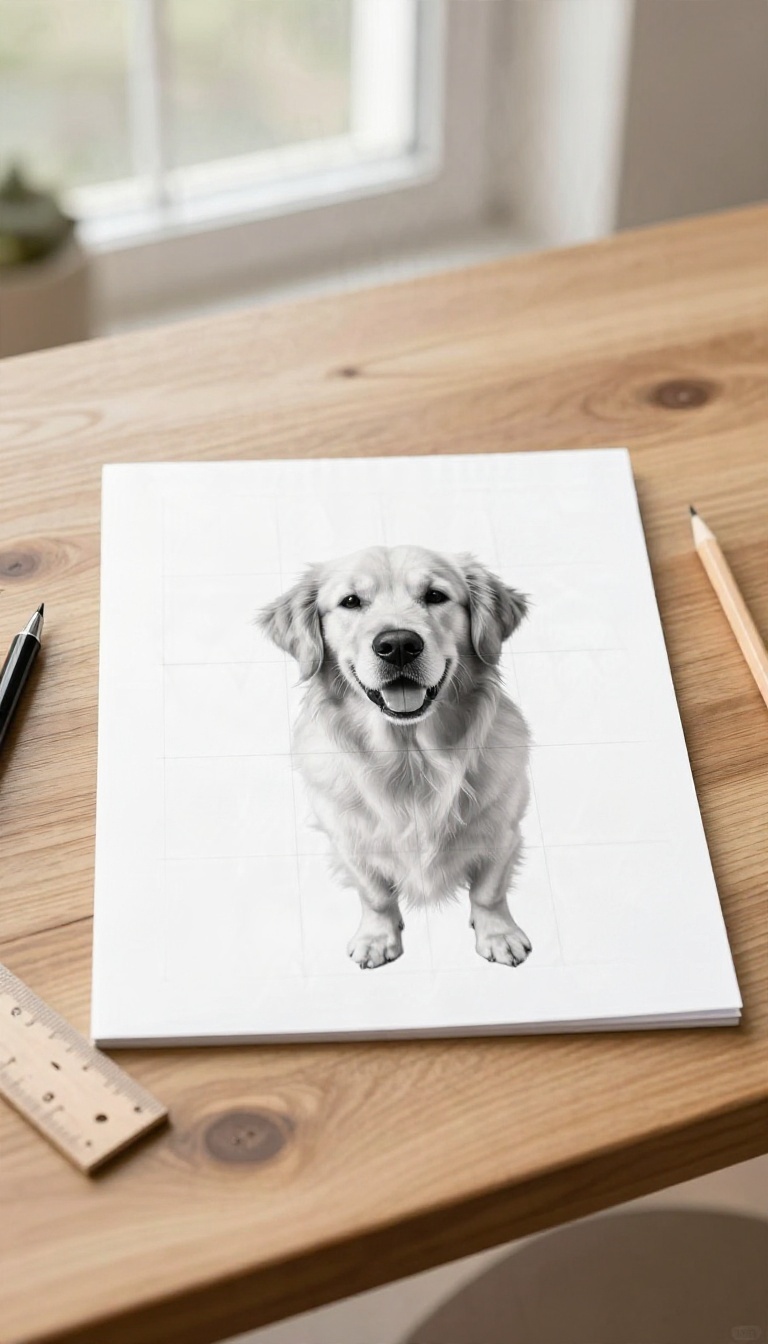
Not every great dog portrait needs a commission or a big budget. If you have a favorite photo and a little patience, you can turn that picture into a gift that feels personal and handmade. The tools are cheap, the process is forgiving, and the result carries a different kind of meaning because you made it yourself.
The key is picking a method that matches your skill level and how much time you want to spend. Some approaches take an afternoon, others stretch across a few cozy evenings. None of them require you to be an artist, which is the whole point.
Trace It With A Grid
The grid method is the oldest trick in the book, and it still works. Print your photo, draw a grid over it, then draw a matching grid on your blank paper or canvas. Copy one square at a time instead of staring down the whole dog at once.
Keep the grids small for detailed areas like the eyes and nose, and larger for the body. Pencil first, then go over your lines with a pen or paint. It's slow, but it's nearly foolproof.
Try A Paint-by-number Kit
These kits take your photo and break it into numbered color sections, so you just fill in the shapes. You send in the picture, and a kit arrives with a canvas, paints, and a guide. It's a nice fit for someone who wants a painted look without any drawing stress.
Order early, since custom kits take a week or two to ship. Stick to a clear, well-lit photo with your dog's face filling most of the frame. Busy backgrounds turn into a mess of tiny sections.
Use A Free App To Make A Printable
Plenty of free and low-cost apps turn a photo into a sketch, watercolor, or line-art look in a few taps. Export the result at the highest resolution you can, then print it on good paper or send it to a local print shop. A simple frame finishes it off.
This route takes maybe twenty minutes, which makes it a solid last-minute option that still looks thoughtful.
FAQ
What makes a good photo for a dog portrait?
Pick a sharp, well-lit shot where your dog's face is clear and in focus. Natural daylight helps, and a photo taken at eye level usually translates best into any style.
How far in advance should I order a custom dog portrait?
Give yourself at least three to six weeks for hand-painted or hand-stitched work, and longer around holidays. Digital portraits and print-on-demand items usually move faster.
How much do custom dog portraits usually cost?
Prices range widely. Simple sketches and digital pieces often start lower, while original paintings and detailed embroidery cost more. Always confirm what's included, like framing or shipping.
Can I combine several dogs into one portrait?
Yes, many artists work from multiple photos and compose the pets together. Send clear images of each dog and ask how the artist handles lighting and scale across the group.
Is a dog portrait a good memorial gift?
It can be a thoughtful one, especially in a soft style like watercolor or pencil. Keep the tone gentle, and consider whether the recipient would prefer a framed piece or something smaller.
Conclusion
A blank wall or a bare shelf turns into something personal the moment a dog portrait lands there. Start with one idea that matches your budget and the supplies you already own, then give it a try on a small scale first. Once you finish that first piece, you'll know what to tweak and which style suits the recipient best.
From there, branch out into a second or third idea for birthdays and holidays. The gift that gets remembered is the one you actually complete and hand over.
I’m Pallab Kishore, the owner of Little Pets Realm — an animal lover and pet care enthusiast sharing easy tips, healthy recipes, and honest advice to help every small pet live a happy, healthy, tail-wagging life.