
Christmas shopping for a dog is dangerously easy to overspend on. Half the toys in the pet aisle look fun for about ten minutes, then end up shredded under the couch. The trick is matching the toy to how your pup actually plays, not how cute it looks on the shelf.
This list sticks to gifts that hold up and earn their price. Some are cheap stocking stuffers, some are worth the splurge, and a few work double duty for training or mealtime.
Every pick comes with a note on which dogs it suits best. You do not need to buy all thirteen.
1. A Classic Rubber Chew Toy That Survives Real Chewing
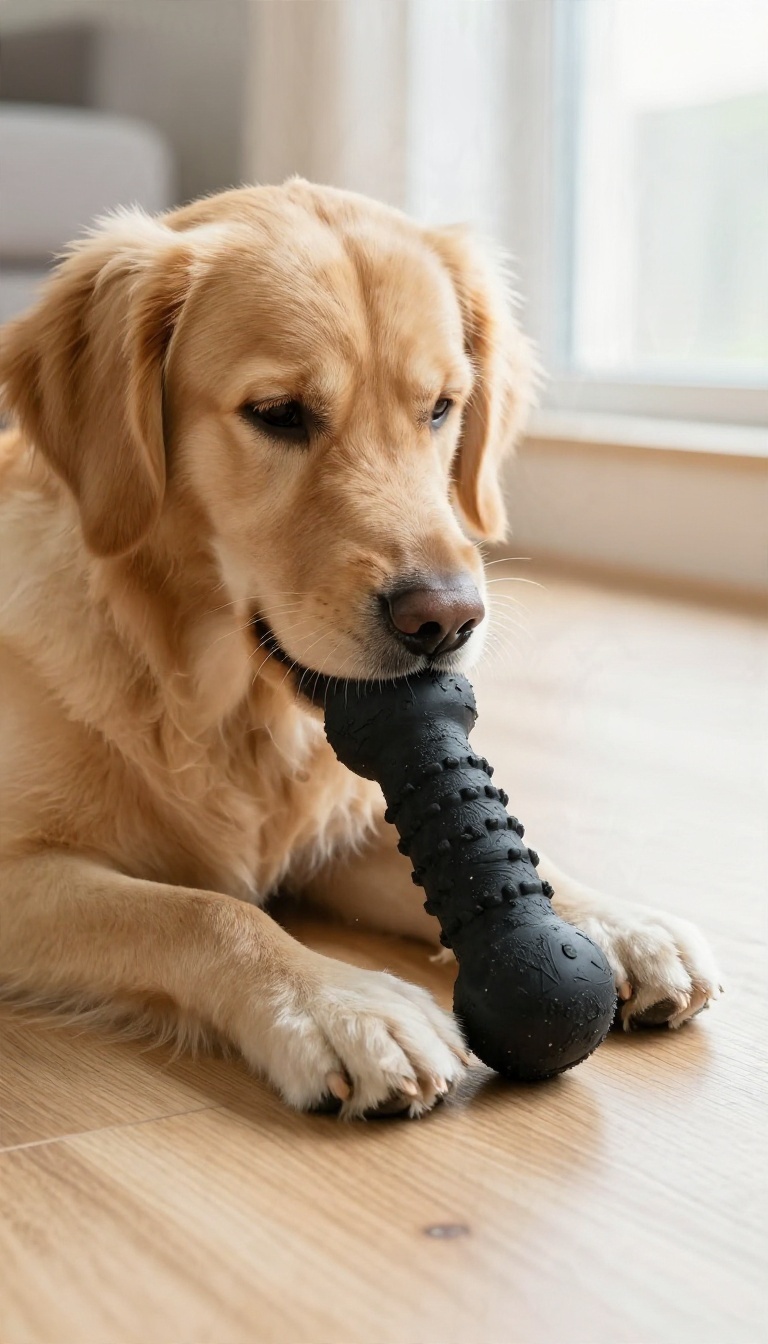
Every dog owner eventually learns the hard way that not all chew toys are built the same. A flimsy toy that lasts a day with a mild-mannered pup can vanish in minutes with a determined chewer. That is why a heavy-duty rubber chew stays at the top of the gift list.
It is boring to look at, maybe, but it does its job better than almost anything else under the tree.
A solid rubber chew is the quiet workhorse of any toy collection. It gives your dog something to sink their teeth into without turning into a pile of stuffing and plastic squeakers. For dogs that treat every toy like a personal challenge, that reliability matters more than any gimmick.
It also doubles as a delivery system. Stuff it with peanut butter, kibble, or a frozen treat and it becomes a slow feeder that keeps a busy dog occupied for a good stretch. That makes it a practical gift for the owner too, not just the pup.
One thing to get right is size. Too small and it becomes a choking risk, especially for bigger dogs. Too large and a small dog will lose interest or struggle to get a grip.
Match the toy to your dog's mouth, not their body weight alone.
Why Rubber Beats The Fancy Stuff
Plush toys and rope toys have their place, but they rarely survive a serious chewer. Rubber flexes instead of tearing, so it absorbs the pressure without falling apart. It also rinses clean, which is more than you can say for anything fabric-based after a week of slobber.
A good rubber chew just keeps showing up, day after day.
Sizing It For Your Dog's Mouth
Pick a chew that is big enough that your dog cannot fit the whole thing in their mouth and swallow it. For strong chewers, go a size up from what looks right. Small dogs do better with a smaller, softer rubber so they can actually get their teeth into it.
When in doubt, err on the larger side and watch how your dog handles it.
Getting More Mileage Out Of One Toy
Freeze a stuffed rubber toy overnight and you have a treat that lasts far longer than a plain biscuit. You can also rotate it in and out of the toy bin so it feels new again. A single well-chosen chew can cover playtime, mealtime, and quiet-time boredom all at once.
2. A Treat-Dispensing Puzzle Ball for Busy Brains
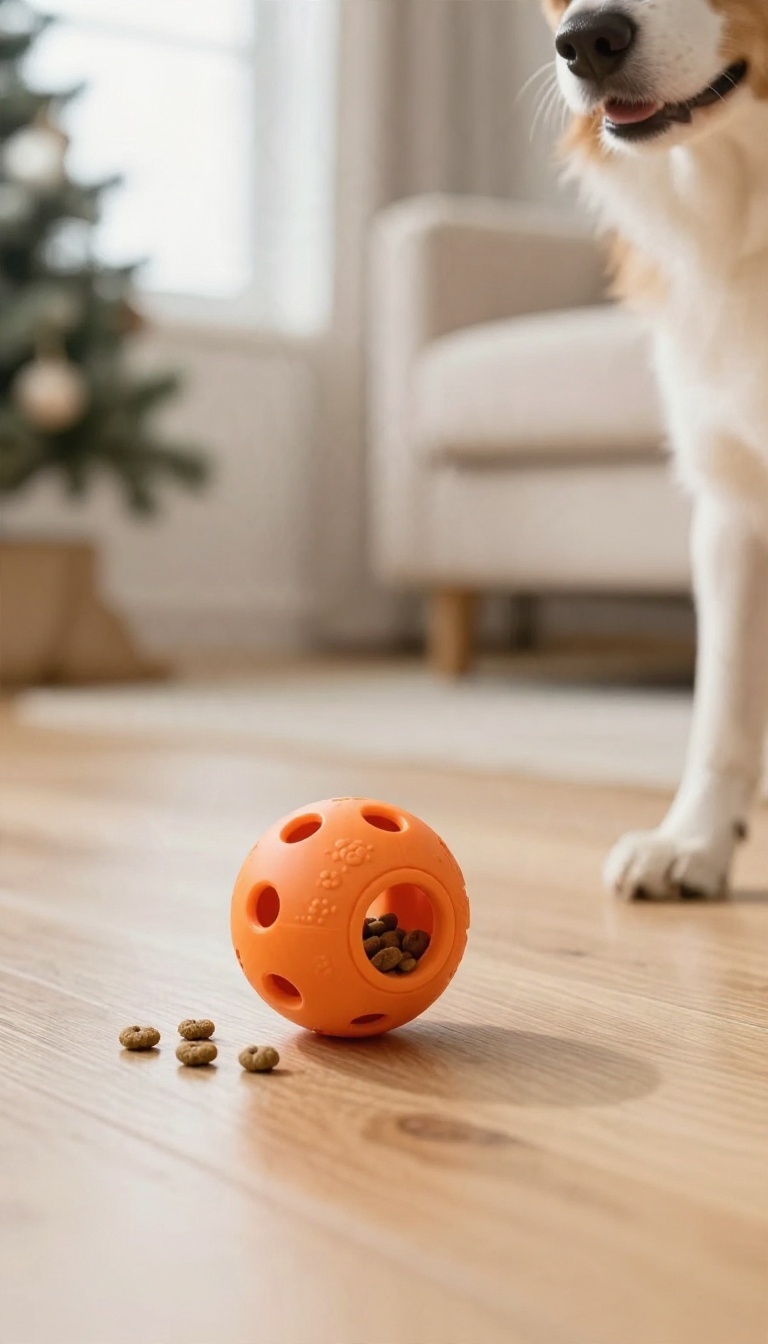
Some dogs eat their dinner in forty-five seconds flat, then stare at you like the bowl personally wronged them. A treat-dispensing puzzle ball fixes that problem by making food something to chase, nudge, and figure out. You drop kibble or small treats inside, and the ball spills a little out as it rolls, so snack time becomes a slow, satisfying game.
It is one of the simplest gifts on this list, and for the right dog, one of the most valuable.
The appeal is that it works with your dog's natural instincts. Herding breeds, terriers, and retrievers were bred to work for their food, not have it handed over. A rolling ball taps into that drive without asking much of you beyond filling it and setting it on the floor.
It also earns its keep beyond the holidays. Use it during the chaotic hour before guests arrive, on rainy days, or any time your pup needs to burn off mental energy without a long walk. A tired brain tends to mean a calmer dog.
How The Ball Actually Works
Most puzzle balls have an adjustable opening, so you can control how easily treats fall out. Start wide open for a beginner, then narrow it as your dog gets the hang of it. That small tweak turns one toy into several difficulty levels, which stretches its usefulness well past Christmas morning.
Size matters more than people expect. Pick a ball too small and a determined chewer will crack it, too large and a small dog will lose interest. Check the weight rating on the packaging and size up if your dog is a serious chomper.
Which Dogs Get The Most Out Of It
High-energy breeds top the list: border collies, Australian shepherds, Jack Russell terriers, and most working dogs. Dogs that inhale their food also benefit, since the ball forces them to slow down and actually chew. It works well for puppies learning to focus and for senior dogs that still want a challenge but cannot handle long runs.
Shy or anxious dogs often relax once they have a job to do, and a puzzle ball gives them one that does not involve you hovering.
A Few Things To Keep In Mind
No toy is indestructible, so supervise the first few sessions and check the ball for cracks after heavy use. Wash it regularly, because treats leave residue that gets stale and gross fast. If your dog gives up after a minute, try easier treats or a wider opening before writing it off.
Some dogs need one win to get hooked, and after that they will chase that ball around the kitchen like it owes them money.
3. A Snuffle Mat for Dogs That Eat Too Fast
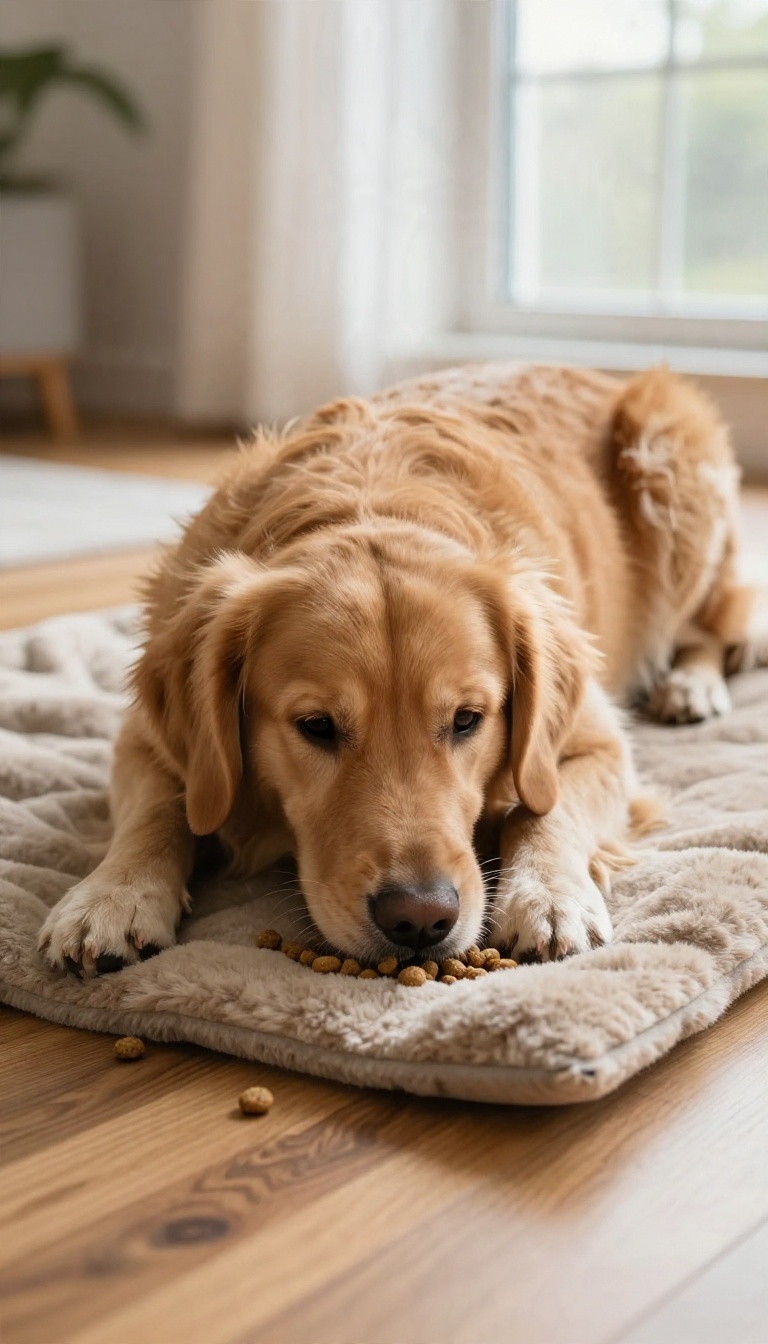
Dinner disappears before you've set down your own plate, and then the begging starts. A snuffle mat turns that whole routine into a slow, sniffing scavenger hunt. You scatter kibble or treats into the fabric strips, and your dog has to work for every bite.
The mat slows gulping naturally because the food isn't sitting in a pile. Your dog noses through the fleece, digs out pieces one at a time, and burns off energy in the process. It's a simple fix for fast eaters and a solid indoor activity when the weather keeps everyone inside.
Most mats cost less than a mid-range chew toy, which makes them an easy add-on gift. They also fold or roll up for storage, so they don't take over a closet. Pair one with a bag of your dog's favorite treats and you've got a practical present that gets used daily.
Why It Helps Fast Eaters
Wolfing down food can lead to bloating and upset stomachs, especially in bigger breeds. Spreading meals across a snuffle mat forces a slower pace without you standing there coaching. Dogs that inhale their bowl often settle better afterward too, since the meal took actual effort.
Great For Rainy Days And Nose Work
Scent-driven dogs get bored fast when walks get skipped. Hiding treats in the mat gives them a job that uses their strongest sense. Ten minutes of sniffing tires a lot of pups out more than a quick loop around the block.
Picking A Good One
Look for machine-washable fabric and a non-slip base so the mat stays put. Skip anything with loose strings or tiny glued-on pieces that a determined chewer could pull off. Size matters too, so match the mat to your dog's snout and appetite.
A Quick Safety Note
Snuffle mats are for supervised sniffing, not chewing. Put it away once the food is gone, especially if your dog likes to shred fabric. That one habit keeps the mat in rotation for years instead of one messy afternoon.
4. A Long-Lasting Rope Tug Toy for Two-Dog Households
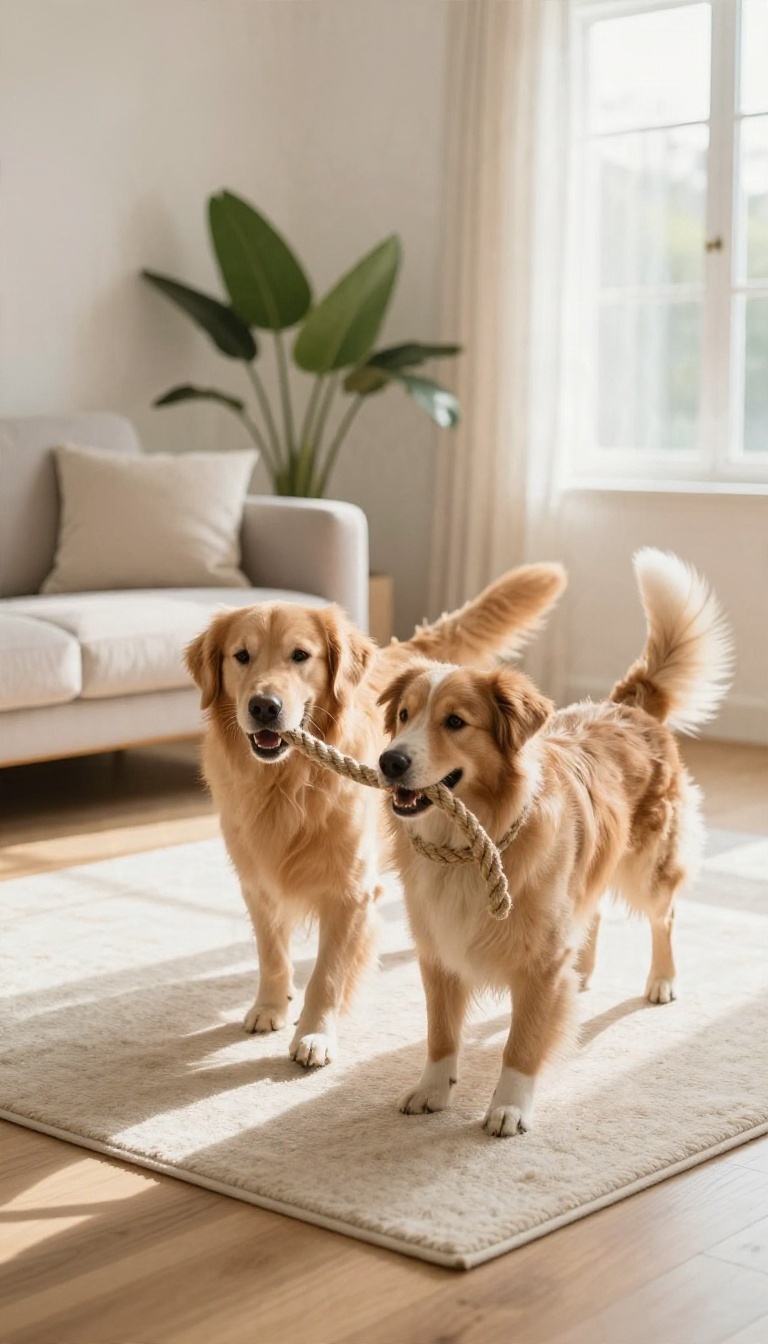
Two dogs mean twice the fun, but also twice the potential for toy destruction. A sturdy rope tug toy can handle the chaos, giving your pups a safe outlet for their competitive energy. It's a simple gift that keeps them engaged and saves your furniture from becoming collateral damage.
Rope toys are a classic for a reason: they're tough, versatile, and perfect for interactive play. In a multi-dog home, they can be a game-changer for redirecting roughhousing into structured fun.
Why Rope Toys Work For Tug And Fetch
Rope toys are built for pulling, and that's exactly what two dogs love to do. The braided texture gives them a good grip, so they can tug without slipping. Plus, the rope's weight makes it fly well for fetch, turning a simple game into a chase that tires them out.
And when they're done, the rope flosses their teeth—a nice bonus for their dental health.
How To Pick A Sturdy Braid
Not all ropes are created equal. Look for tight, thick braids made from natural fibers like cotton or hemp—they're durable and safe if a strand comes loose. Avoid ropes with loose knots or frayed ends that can unravel quickly.
A good rule: if it feels flimsy in your hand, it won't survive two determined dogs. Also, consider the size—thicker ropes are harder to chew through and easier for dogs to grip.
Supervision Rules For Safe Rope Play
Rope toys are generally safe, but they're not indestructible. Always supervise playtime, especially with two dogs, to prevent them from chewing off and swallowing strands. Inspect the rope regularly for fraying or loose threads, and replace it at the first sign of wear.
And remember: tug is a two-way game, so teach them to drop it on command to avoid tension.
5. A Squeaky Plush With a Reinforced Seam
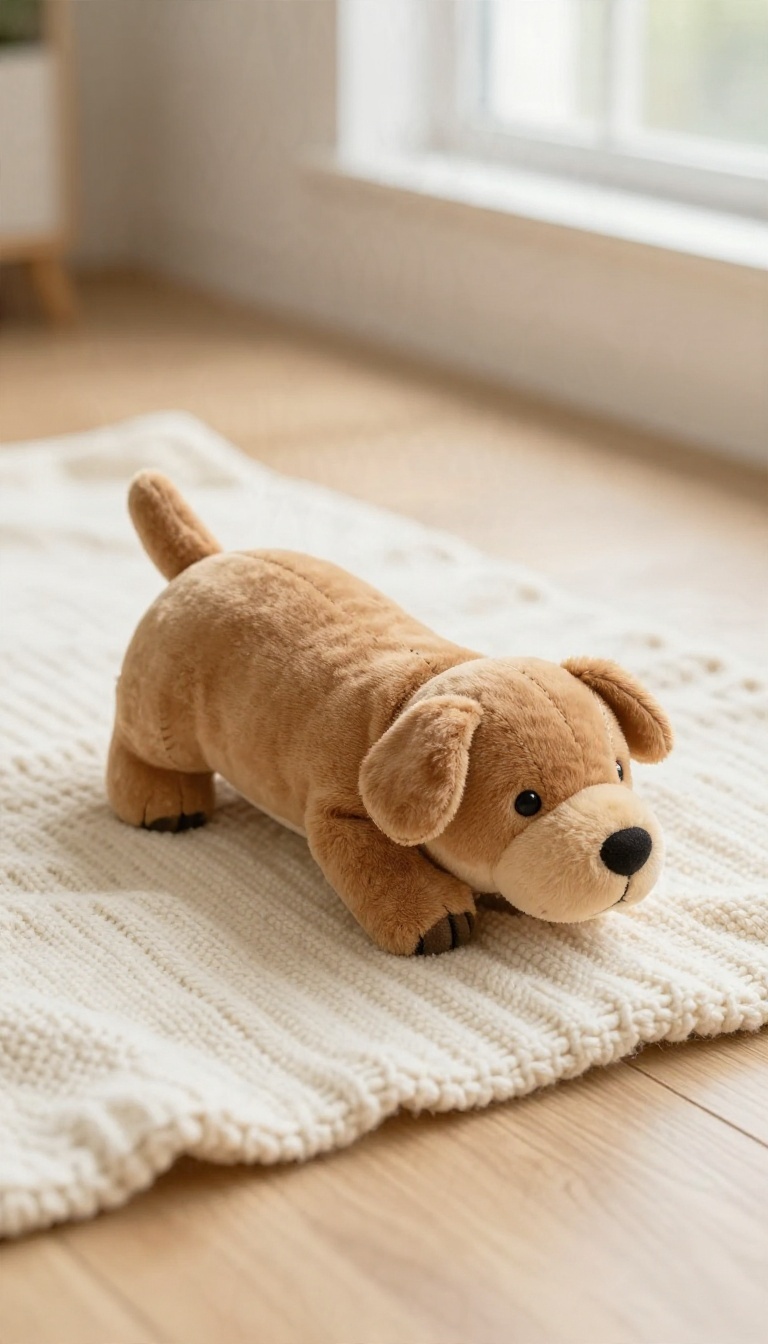
Plush toys get written off as stuffing waiting to happen, and honestly, some of them deserve that reputation. But a well-made plush is a real comfort item for a lot of dogs. Gentle players carry them around, sleep next to them, and greet you at the door with one dangling from their mouth.
The difference between a plush that lasts a week and one that lasts a year comes down to construction. A reinforced seam, decent stitching, and a squeaker your dog can't reach in five minutes matter more than the design on the outside.
A good plush gives a soft-mouthed dog something to nurture, not just destroy. That's a different kind of play than tugging or chewing, and it's worth having in the toy rotation even if your dog isn't a power chewer. Look for double-stitched seams along the belly and limbs, since those take the most stress.
Flat seams hide better and snag less than bulky ones. If the stitching looks thin or uneven in the store, it'll fail fast at home. Squeakers are the other weak point.
A plush with a squeaker tucked into a sewn-in pouch is harder to rip out than one floating loose in the stuffing. Some toys now use a squeaker sewn into a fabric tab, which keeps it in place but still lets it work.
Which Dogs This Suits
Gentle players, senior dogs, and puppies still learning bite control get the most from a plush. Dogs that like to carry something around or snuggle at nap time tend to bond with one specific toy. Heavy chewers will still find a way through most plush fabric, so don't hand one to a dog that destroys everything in minutes.
If your pup falls somewhere in between, watch the first few sessions and see how they treat it.
What To Check Before You Buy
Give the toy a quick squeeze and listen for a muffled squeak rather than a loud one, which usually means the squeaker sits deeper inside. Run a thumb along the seams and check for doubled thread. Skip anything with plastic eyes or small glued-on pieces, since those come off first.
Embroidered faces hold up better and give your dog nothing to pick at. Washable fabric is a bonus if your dog is a drooler.
Making It Last
Rotate the plush in and out rather than leaving it on the floor all day. Novelty keeps a dog interested, and less floor time means less wear. Check seams after each play session and stitch small openings before they spread.
A five-minute repair beats buying a replacement, and most plush toys fail at one weak spot rather than all over.
6. A Freezable Teething Toy for Puppies

Puppies explore the world with their mouths, and during teething those gums ache something fierce. A freezable chew gives them a safe, soothing outlet that beats gnawing on your slippers. Plus, it usually costs less than a fancy holiday candle.
Teething typically starts around three to four months and can last until six or seven months. During that window, your puppy's mouth is sore, and chewing helps relieve the pressure. A toy you can chill in the freezer offers instant relief and keeps your pup busy.
Why Freezing Helps
Cold numbs sore gums and reduces inflammation. A frozen toy also takes longer to destroy, so it doubles as a boredom buster. Just avoid freezing solid rock-hard items that could hurt tiny teeth.
Picking The Right One
Look for toys made from flexible, non-toxic materials like silicone or rubber. They should be easy to fill with water or treats and have a textured surface for gnawing. Avoid anything with small parts that could break off.
How To Use It
Fill the toy with water or low-sodium broth and freeze overnight. Give it to your puppy during peak chewing times, like after meals or before bed. Always supervise, and replace the toy if it gets damaged.
7. A Fetch Ball Launcher for High-Energy Pups
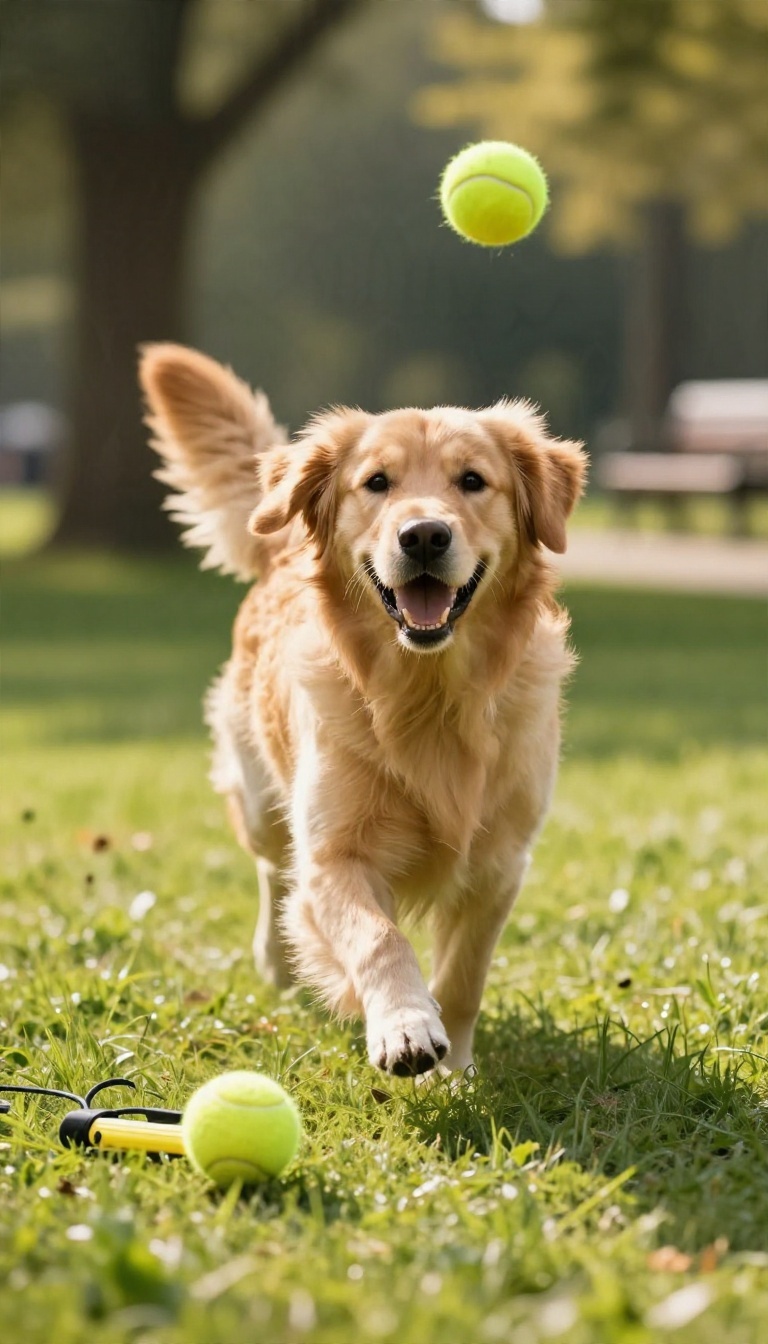
Some dogs treat fetch like a full-time job, and your arm pays the price. A ball launcher lets you throw farther with less effort, turning a quick game into a real workout for your pup. It's a gift that keeps on giving for both of you.
If your dog's idea of a perfect afternoon is endless retrieves, a ball launcher is a game-changer. It saves your shoulder from repetitive strain and sends the ball flying farther than you ever could by hand. That extra distance means more sprinting, more jumping, and a happier, more tired dog at the end of the day.
These launchers come in a few styles, from simple handheld models to ones that pick up the ball without you bending over. They're especially handy for owners who want to keep up with a high-energy dog without wearing themselves out. Plus, many are compatible with standard tennis balls, so you won't need to buy special ammo.
Why Your Shoulder Will Thank You
Throwing ball after ball can lead to sore muscles and even injury over time. A launcher adds leverage, so you get more distance with less effort. That means you can play longer without feeling it the next day.
Picks That Go The Distance
Look for launchers with a comfortable grip and a design that securely holds the ball. Some models have a scoop end to pick up balls without touching slobbery slime. Others are compact enough to clip to your belt or toss in a bag for park trips.
Safety Tips For Fetch Fanatics
Avoid launching balls too high or too hard, especially on hard surfaces, to prevent joint strain. Use softer balls for indoor play and always supervise to prevent chewing on the launcher itself. And remember to give your dog water breaks during intense sessions.
8. A Durable Floating Toy for Water-Loving Dogs
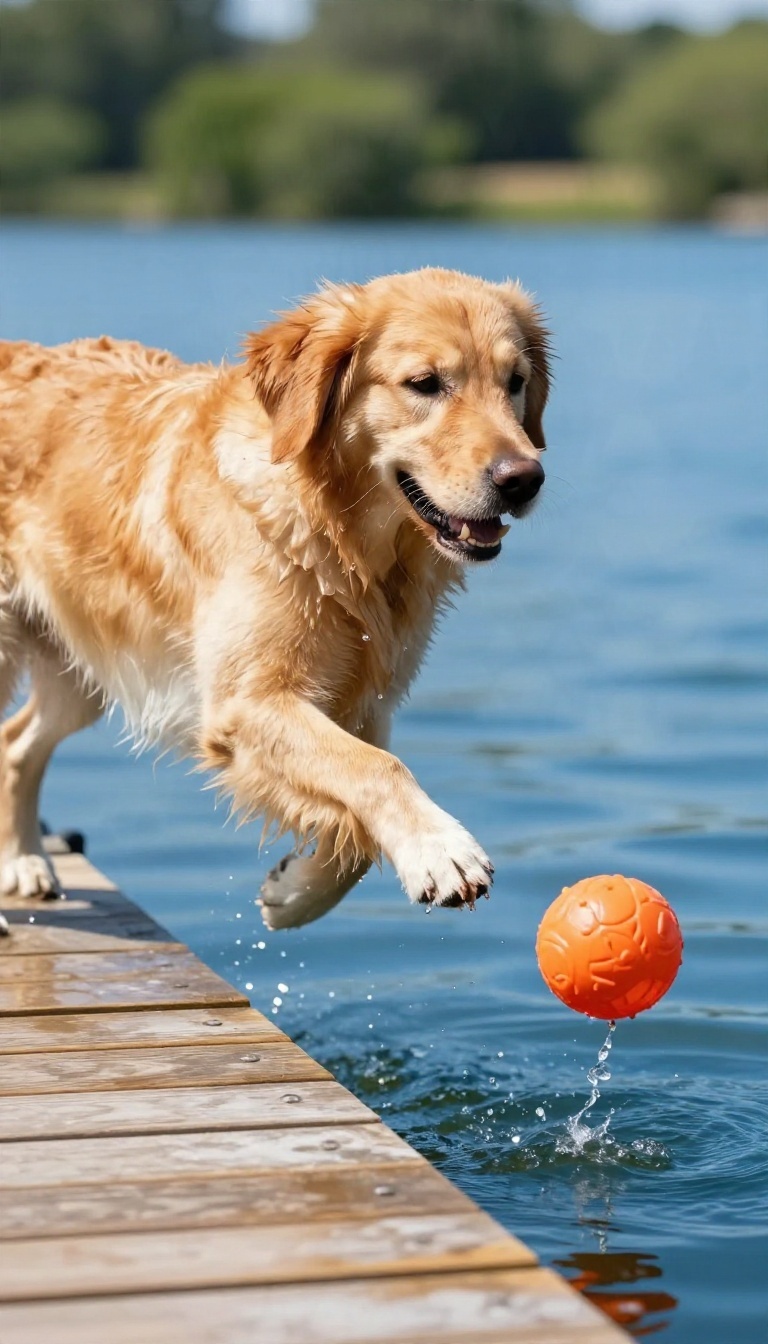
Some dogs treat every puddle, pool, and sprinkler like a personal invitation. If yours is the type who launches off the dock without a second thought, a regular fetch toy just sinks and disappears. A floating toy keeps the game going and gives you something you can actually throw again.
The catch is durability. Water toys take a beating between the soaking, the sun, and the chewing that happens once your dog finally catches up to it. The right pick handles all three without falling apart by August.
Look for a toy that floats on its own and holds up to repeated trips in and out of the water. Rubber and foam designs tend to win here, since they shed water instead of soaking it up like fabric.
Why Floating Matters
A toy that sinks turns fetch into a diving contest your dog probably can't win. Floating toys stay visible, easy to spot, and simple to scoop back up for the next throw. That keeps the game moving and saves you from wading in after every toss.
It also helps older or less confident swimmers. They can track the toy on the surface without dunking their heads, which makes water play a lot less stressful for them.
Materials That Survive The Soak
Solid rubber and closed-cell foam hold up best around water. They resist absorbing moisture, so they don't get heavy, smelly, or waterlogged after a few sessions. Rinse them after pool days to wash off chlorine and salt.
Skip fabric-covered toys and anything with a rope attached if your dog is a strong chewer. Those soak up water, dry slowly, and turn into a soggy mess that falls apart fast. A simple molded design with no seams to split is your safest bet.
Matching It To Your Swimmer
Strong swimmers who love a long retrieve do well with a slightly larger toy that's easy to spot mid-lake. Smaller or nervous dogs may prefer something lighter they can grab without struggling. Either way, check that it floats before you commit.
Size matters for safety too. Pick a toy big enough that your dog can't swallow it, but not so bulky that carrying it gets awkward. A good test is whether they can hold it comfortably while swimming back to shore.
9. A Puzzle Feeder Board for Mealtime Enrichment

Dinner doesn't have to be a race to the bottom of a bowl. A puzzle feeder board turns mealtime into a brain game, with sliding panels and flip lids that hide kibble or treats. It's a simple swap that keeps dogs busy long after the bowl would be empty.
Most dogs inhale their food in under a minute, then stare at you like nothing happened. A puzzle board stretches that out, making them work for every bite. The result is a calmer, more satisfied dog—especially on days when walks are short or the weather keeps you inside.
How Puzzle Boards Work
These boards have compartments covered by sliders, flaps, or spinning discs. You load them with kibble or small treats, and your dog has to nose, paw, or flip each one open to get the food. It's not complicated for you, but it's a real challenge for them.
The best boards have adjustable difficulty, so you can start easy and make it harder as your dog figures it out.
Why It Helps Bored Dogs
A bored dog often finds his own entertainment—chewing furniture, digging, or barking at nothing. Puzzle feeders give him a job to do. Ten minutes of problem-solving can tire a dog out mentally as much as a walk around the block.
It's especially handy for high-energy breeds that need more than physical exercise.
Picking The Right Board
Look for boards with non-slip bases and dishwasher-safe parts. Size matters too: small dogs need shallower compartments, while big dogs can handle sturdier pieces. If your dog is a chewer, choose a board made from tough plastic or wood rather than thin silicone.
And always supervise the first few sessions until you know your dog won't try to eat the board itself.
10. A Crinkle and Hide-and-Seek Toy for Curious Noses
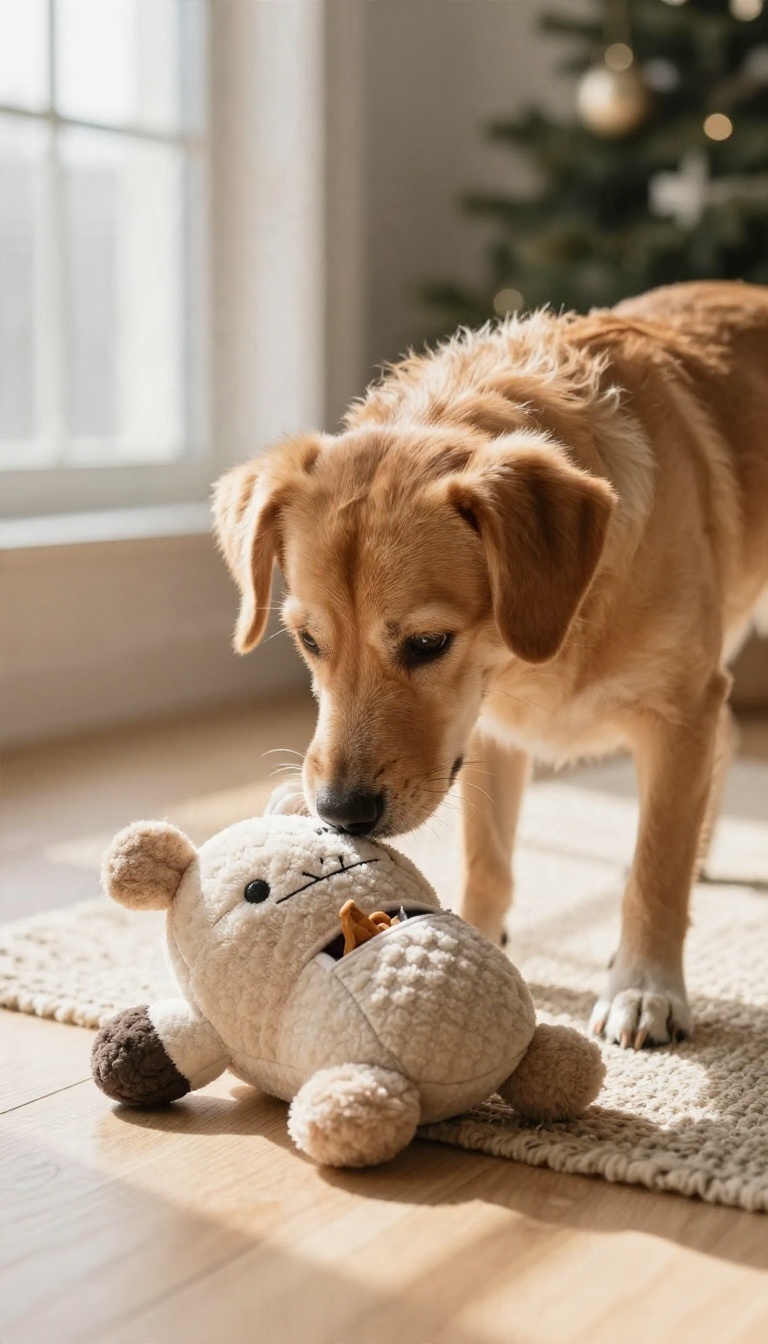
Some dogs do not want to chase a ball across the yard. They want a mystery. A crinkle toy with hidden squeakers or little pockets gives that nose something to solve, and it turns a boring evening into a small adventure.
It is also one of the quietest gifts on this list, which matters when the weather keeps everyone inside.
The appeal here is simple. Dogs are wired to search, sniff, and investigate, and a plush with surprises tucked inside lets them do exactly that without tearing up your house. You hide a treat, they work it out, and the crinkle sound keeps the game going.
Not every hide-and-seek toy is built the same, though. Some are soft and gentle, others have more structure and tougher stitching. Pick based on how your dog plays, not just how the toy looks in the photo.
Why The Crinkle Matters
That soft crackle sound mimics the rustle of leaves and small prey, which is why so many dogs light up when they hear it. It adds a sensory layer that plain plush toys lack. For older dogs or pups who get bored fast, the sound keeps attention on the toy longer.
It is a small detail that makes a big difference in how much play you actually get out of it.
Hiding Treats Without The Mess
Pocket-style toys let you tuck a kibble or small treat inside, then let your dog dig it out. Start easy by leaving the treat half-exposed, then make it trickier as your dog catches on. This works well as a calm indoor game.
It burns mental energy without turning the living room into a wrestling match, and it gives a food-motivated dog a job to do.
Matching It To Your Dog
Heavy chewers will destroy a soft crinkle toy in minutes, so look for reinforced seams or skip this one entirely. Gentle mouths and curious sniffers get the most out of it. Anxious dogs often settle with a toy like this too, since searching gives them something to focus on.
Just supervise the first few sessions and check for loose stuffing or torn pockets.
11. A Tug-and-Train Toy That Doubles as a Reward
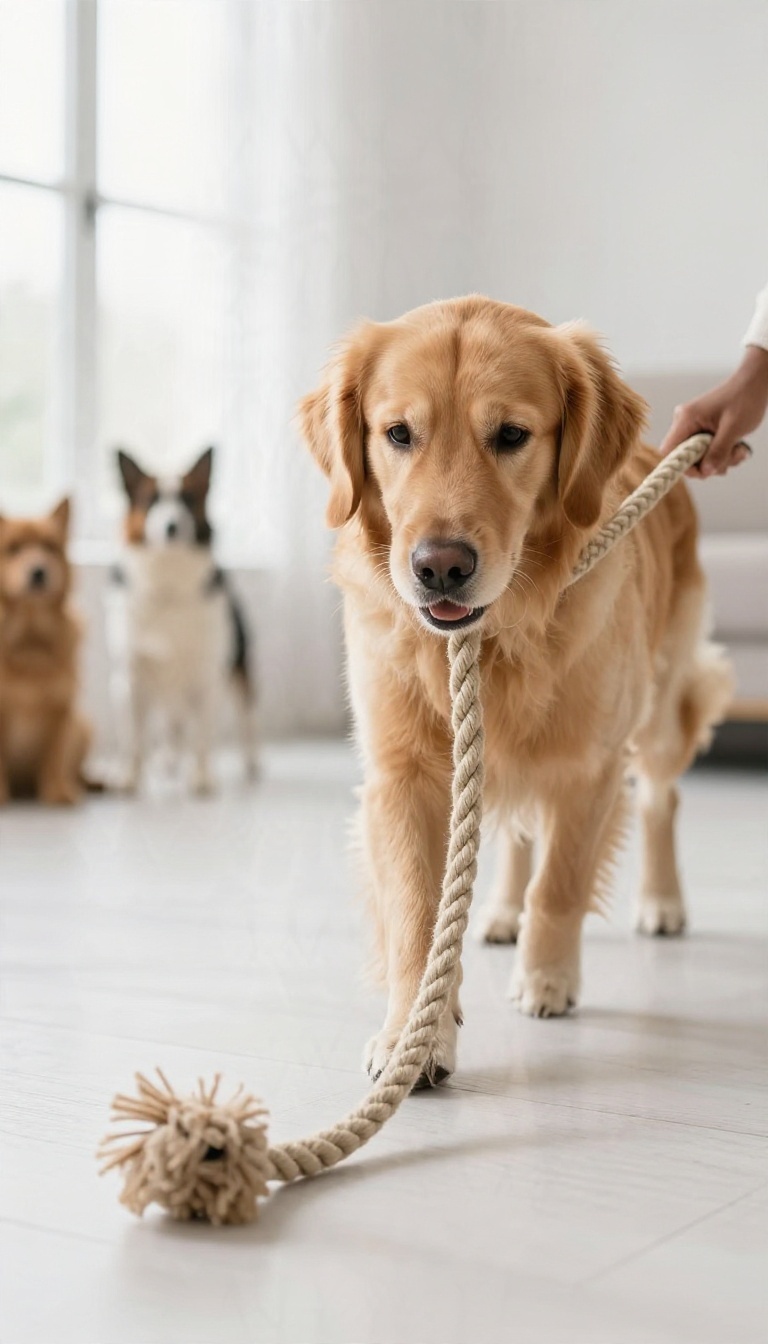
Training treats add up fast, and for some dogs they are the wrong currency anyway. A dog on a diet cannot afford a pocket full of liver bites, and a pup who would rather play than eat will tune out a biscuit every time. A tug toy you reserve for training solves both problems.
It becomes the reward itself, so the fun is the payment.
The trick is picking a tug that feels special and stays under control. A long-handled tug keeps your hands clear of teeth, and a sturdy fleece or rope build survives real pulling. Keep it out of the toy basket and bring it out only for training sessions.
That scarcity is what makes it feel like a prize instead of just another thing on the floor. Use it as a jackpot. When your dog nails a sit, a recall, or a new cue, reward with a quick ten-second game of tug, then ask for a drop and put it away.
The play becomes the paycheck, and the lesson sticks because the payoff is exciting. It also wears a dog out in a way treats never will. Short bursts of tug build focus and burn energy, which is a nice bonus on rainy days when a walk is not happening.
Why Play Beats Treats For Some Dogs
Not every dog is food motivated, and forcing treats on a play-driven pup slows training down. Toy rewards tap into what the dog already loves, so focus comes easier and sessions stay short and sharp. For dogs watching their weight, it also means zero extra calories.
Just check with your vet if your dog has joint issues before adding hard tugging to the routine.
Picking One That Lasts
Look for reinforced stitching, a handle long enough to protect your knuckles, and a size that suits your dog's mouth. Skip anything with loose squeakers or flimsy seams, since a training tug gets pulled hard and often. Washable is a plus, because this toy will see a lot of action.
Teaching The Drop First
A tug toy only works as a reward if your dog gives it back on cue. Practice a simple drop at home before you rely on it in training. Trade a treat for the toy at first, reward the release, then build up to using tug as the reward itself.
12. A Tough Chew for Power Chewers Who Destroy Everything
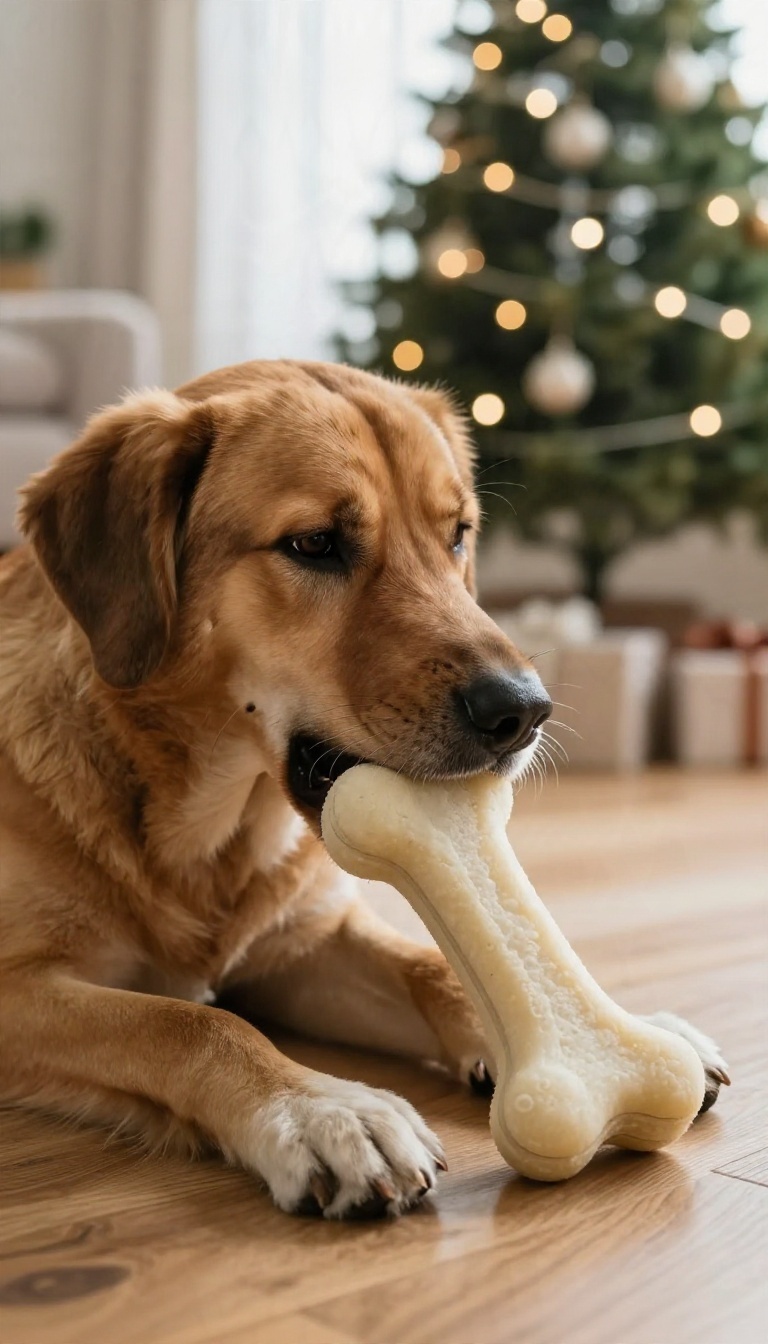
You know the dog. The one who unwraps a "durable" toy on Christmas morning and has it gutted before the coffee is cold. Buying for a power chewer is less about finding something cute and more about finding something that survives the week.
The good news is that the right chew can last months instead of minutes. The trick is knowing what actually holds up and what just markets itself as tough. Here is how to pick one that earns its spot under the tree.
Power chewers do not chew to be naughty. They chew because it feels good, relieves stress, and burns energy. That jaw power is real, though, and it will find the weak point of almost anything soft.
So the goal is not to outsmart your dog. It is to hand over something built for the job, then stay smart about how and when they use it.
What Actually Holds Up
Look for dense, natural rubber or nylon made specifically for heavy chewers. These materials flex or wear down gradually instead of cracking into sharp pieces. Size matters more than most people think.
A chew that is too small can be a choking risk, so go up a size for a strong chewer. A toy they can barely get their back teeth around lasts longer and is safer.
What To Skip
Skip anything with squeakers, plush seams, or thin rope arms if your dog destroys toys fast. Those parts come off first and end up in the wrong place. Also be careful with very hard bones and antlers.
They can chip teeth, especially in older dogs or heavy chewers who really go at it. Tough does not have to mean rock hard.
Safety And Supervised Chewing
No chew is truly indestructible, so swap it out once it gets chewed down or starts to split. Check it every few days and toss it when the edges get rough. Give tough chews during calm downtime, not as a replacement for exercise.
A tired dog chews less aggressively, and a supervised chew session keeps things safe.
13. A Stocking-Stuffer Set of Small, Cheap Toys

Not every gift needs to be a big-ticket item. A bundle of small, inexpensive toys gives your dog plenty to dig into on Christmas morning without stretching your budget. Think of it as variety over volume: a few cheap pieces your pup can rotate through, so the fun lasts well past the wrapping paper.
It also takes the pressure off. If one toy gets destroyed by New Year's, you are out a couple of bucks, not a small fortune.
The appeal here is simple. Small toys are cheap, easy to replace, and perfect for dogs who lose interest fast. You can mix textures and sounds in one bundle, then hand them out over a few days instead of dumping everything at once.
Just because a toy is small does not mean it is flimsy. Look for tight stitching, sturdy squeakers, and materials that match your dog's chewing style. A cheap toy that lasts a week still beats a pricey one that falls apart in an afternoon.
What To Put In The Bundle
A good starter mix covers a few bases: a couple of small rubber balls, a plush squeaker or two, and a few chew sticks. Add one wildcard like a crinkle toy or a tiny tug rope. That spread keeps your dog guessing and covers different kinds of play.
Keep sizes sensible. Tiny toys suit small breeds and gentle players, but heavy chewers can swallow pieces that are too small. If your dog is a power chewer, lean toward firmer rubber and skip the flimsy plush.
Why Rotation Works
Dogs get bored with the same toy sitting on the floor day after day. Rotating a small stash keeps things feeling new. Put half the bundle away and swap it out every week or two.
This trick stretches the value of a cheap set further than you would expect. A ten-dollar bundle can feel like a fresh gift several times over. It also cuts down on clutter, since only a few toys are out at once.
Keeping Costs Low Without Cutting Corners
Buy multipacks where you can, and check clearance bins after the holidays. Small toys often go on deep discount in January, which is a good time to stock up for the rest of the year. Skip anything with loose parts, exposed squeakers, or strong chemical smells.
Cheap does not have to mean sketchy. A quick squeeze and a look at the seams tells you most of what you need to know before you buy.
FAQ
How much should I spend on a Christmas toy for my dog?
There is no right number, but most owners land between ten and thirty dollars for a single quality toy. Spend more on durable chews and puzzle toys that last, and less on plush toys your dog will likely destroy.
Are squeaky toys safe for dogs?
They are safe under supervision, but the squeaker itself is a choking hazard once a dog tears the toy open. Check seams regularly and take the toy away as soon as stuffing or the squeaker starts showing.
What toy is best for a puppy's first Christmas?
A soft, freezable teething toy plus a small plush usually works well. Puppies explore with their mouths, so keep toys sized for their mouth and avoid anything with small parts that can come loose.
How do I pick a toy for a very strong chewer?
Look for solid rubber or nylon rated for tough chewers, size up so it cannot be swallowed, and skip thin plastic or fabric. Rotate toys so your dog does not get bored and start working harder on one.
Should I rotate my dog's toys instead of giving them all at once?
Yes, rotating helps. Keep a few toys out at a time and swap them every week or so. It makes old toys feel new again and stretches the value of your Christmas haul.
Conclusion
You don't need to buy all thirteen. Pick two or three toys that match your dog's play style and your budget, then watch which one gets the most attention. A sturdy chew and a puzzle feeder cover most pups without emptying your wallet.
Wrap them up, let your dog tear into the paper, and keep the receipt for anything that flops. The best gift is the one your pup actually plays with long after the tree comes down.

I’m Pallab Kishore, the owner of Little Pets Realm — an animal lover and pet care enthusiast sharing easy tips, healthy recipes, and honest advice to help every small pet live a happy, healthy, tail-wagging life.