
Cold-weather walks stop being a battle once your sausage dog is actually dressed for the job. The right coat keeps that low belly off frozen pavement, and the right layers mean you both get home happy instead of shivering.
Dachshunds run warm on top and cold underneath, so their outfits need to solve a specific problem, not just look cute. Below are eleven ideas that cover the whole winter routine, from a fleece-lined coat to a towel-dry robe for the trip home.
A few are quick fixes, a few are worth the splurge, and every one earns its place on a frosty morning.
1. Fleece-Lined Coat With a Belly Panel

A dachshund's belly hovers just a couple of inches above the pavement, which means every cold walk sends a direct chill straight up into their core. A fleece-lined coat with an extended belly panel solves that problem by adding a soft, warm layer right where your dog needs it most. It's not just about keeping them cozy—it's about protecting that low-slung underside from frozen ground, slush, and salt.
Most dog coats stop at the ribcage, leaving the belly exposed. For a sausage dog, that's like wearing a jacket that ends at your sternum. A belly panel extends the coat's coverage underneath, creating a barrier between cold surfaces and bare skin.
Look for fleece or sherpa lining that traps warmth without bulk, and make sure the panel is wide enough to cover the full length of the belly without restricting movement.
Why Belly Coverage Matters
Dachshunds have a large surface area relative to their body mass, and their underside is close to the ground where temperatures drop fastest. A belly panel keeps that critical zone insulated, reducing the risk of chills and discomfort. It also protects against splashes from puddles and wet pavement, which can quickly soak through a regular coat and chill your dog.
Checking The Chest And Leg Fit
A good fit starts at the chest. The coat should wrap snugly around the ribcage without squeezing, and you should be able to slide two fingers under the straps. For the front legs, check that the armholes don't rub or restrict movement—dachshunds need full range to trot comfortably.
Adjustable straps and Velcro closures help you fine-tune the fit for different layers underneath.
Materials And Easy On/off
Fleece lining is warm and soft, but it should be paired with a water-resistant outer layer for wet days. Look for coats with a leash opening on the back and simple closures that you can manage with cold fingers. A belly panel that attaches with snaps or Velcro makes bathroom breaks quicker, which your dog will appreciate.
2. Waterproof Rain Jacket for Wet Morning Walks
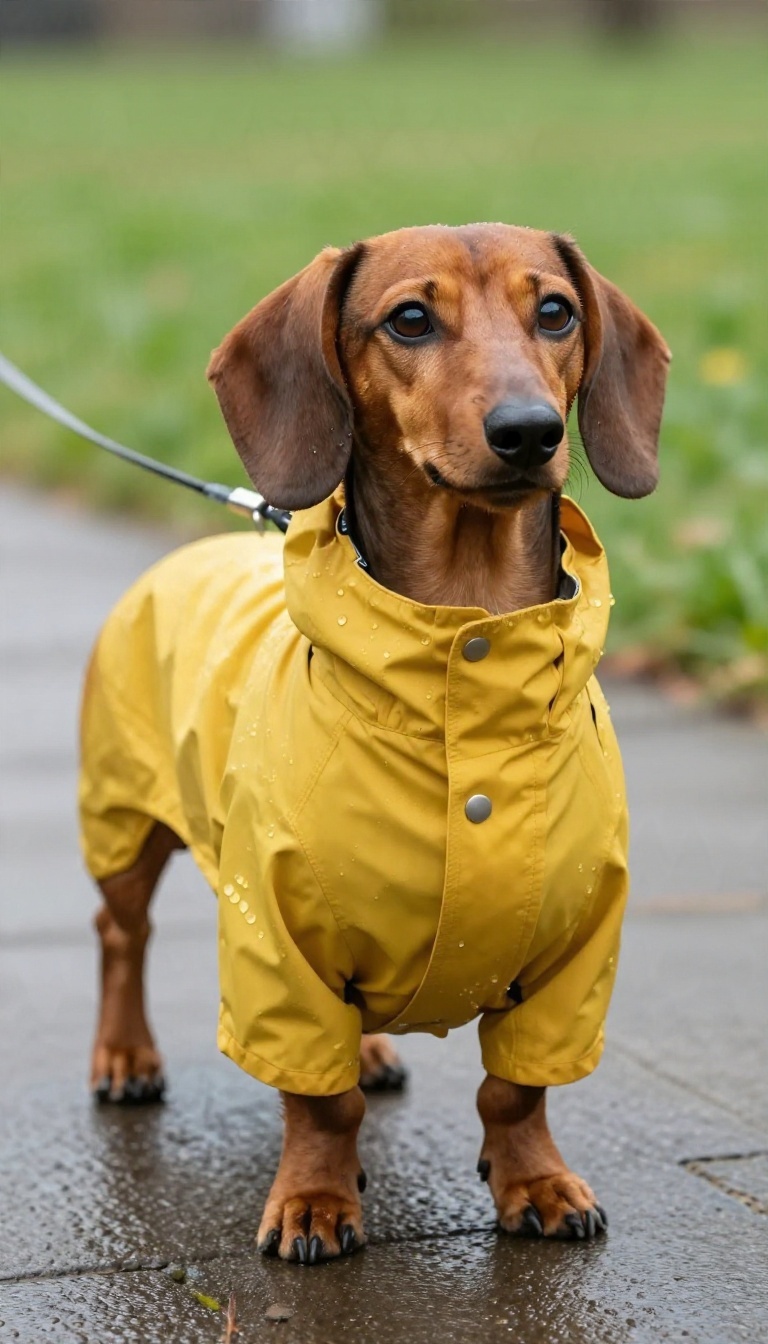
Drizzle doesn't look like much until you've walked twenty minutes in it and your dachshund's back is soaked through. A lightweight waterproof shell solves that problem without adding bulk, and it's the piece you'll reach for more than any other on grey mornings. The trick is getting the fit right around the neck and hood so water stays out but trapped heat doesn't stay in.
A good rain jacket for a sausage dog sits close to the body but never restricts that long spine. Look for a shell that covers from the base of the neck down past the tail, because a short cut leaves the rear end exposed to drips from wet grass. Thin, packable fabrics work best here.
They fold into a pocket, dry fast, and don't weigh your dog down on a quick loop around the block. The other thing that matters is the belly. Dachshunds pick up splashes and wet ground right along their underside, so a jacket with a slightly longer drop underneath keeps that low-slung body drier than a standard cut.
Pair it with a quick towel-off at the door and you've handled most of the mess before it reaches your floor.
Picking A Shell That Fits The Dachshund Shape
Standard dog coats are cut for deeper-chested breeds, so check the length measurement first and the chest girth second. A jacket built for long-bodied dogs will cover the hips without gaping at the shoulders. Adjustable straps at the chest and belly let you snug it down without squeezing, and a leash hole at the back means you're not fighting with the harness every time.
Hood, Collar, And The Moisture Gap
A hood sounds useful but often traps damp air right behind the ears, which is exactly where you don't want it. If your jacket has one, make sure it's loose enough to sit back or fold down when your dog warms up. A stand-up collar with a soft lining works better for most walks, since it blocks wind and rain from running down the neck without sealing in sweat.
Check the gap between collar and hood after a few minutes of walking. If the fur underneath feels clammy, loosen the fit or swap to a collar-only style.
Layering Under The Rain Shell
A waterproof shell does almost nothing for warmth on its own, so on genuinely cold mornings slip a thin fleece underneath. Keep the base layer close-fitting and the rain jacket slightly roomier so the two don't bunch along the back. Skip heavy knits under a shell, since they soak up moisture and take hours to dry once you're home.
3. Knit Sweater as a Base Layer

On the days when the wind bites and the pavement feels like ice, a knit sweater does more than look charming. It traps a layer of warm air against your dachshund's chest and back, giving them a cozy buffer under a coat. The trick is getting the fit right so it helps instead of hinders.
A sweater alone won't cut it in serious cold, but as a base layer it's a game changer. It adds warmth without bulk, and it keeps the coat from rubbing against bare skin. Just make sure it's snug enough to stay put but not so tight that it restricts movement.
Why A Sweater Under A Coat Works
Dachshunds have a long, low body that loses heat fast, especially along the belly. A knit sweater hugs that shape and creates a microclimate that a coat alone can't match. It also means you can use a lighter coat on milder days and still keep your dog comfortable.
Avoiding Bunching Along The Spine
The biggest issue with sweaters on long dogs is bunching. Look for styles with a longer back and a bit of stretch, so the fabric follows the spine without riding up. A sweater with a leash hole or a higher cut at the neck can also help it stay in place.
If it bunches, size up or try a different cut—your dog will move more freely.
Choosing Low-pill Yarn
Nothing ruins a walk faster than a sweater that pills and sheds all over your coat. Go for tightly knit yarns like acrylic blends or merino wool, which resist pilling. Avoid loose, fuzzy knits that catch on everything.
A quick hand-wash and air-dry keeps the sweater looking fresh and the fibers smooth.
4. Padded Harness That Doubles as a Warm Layer
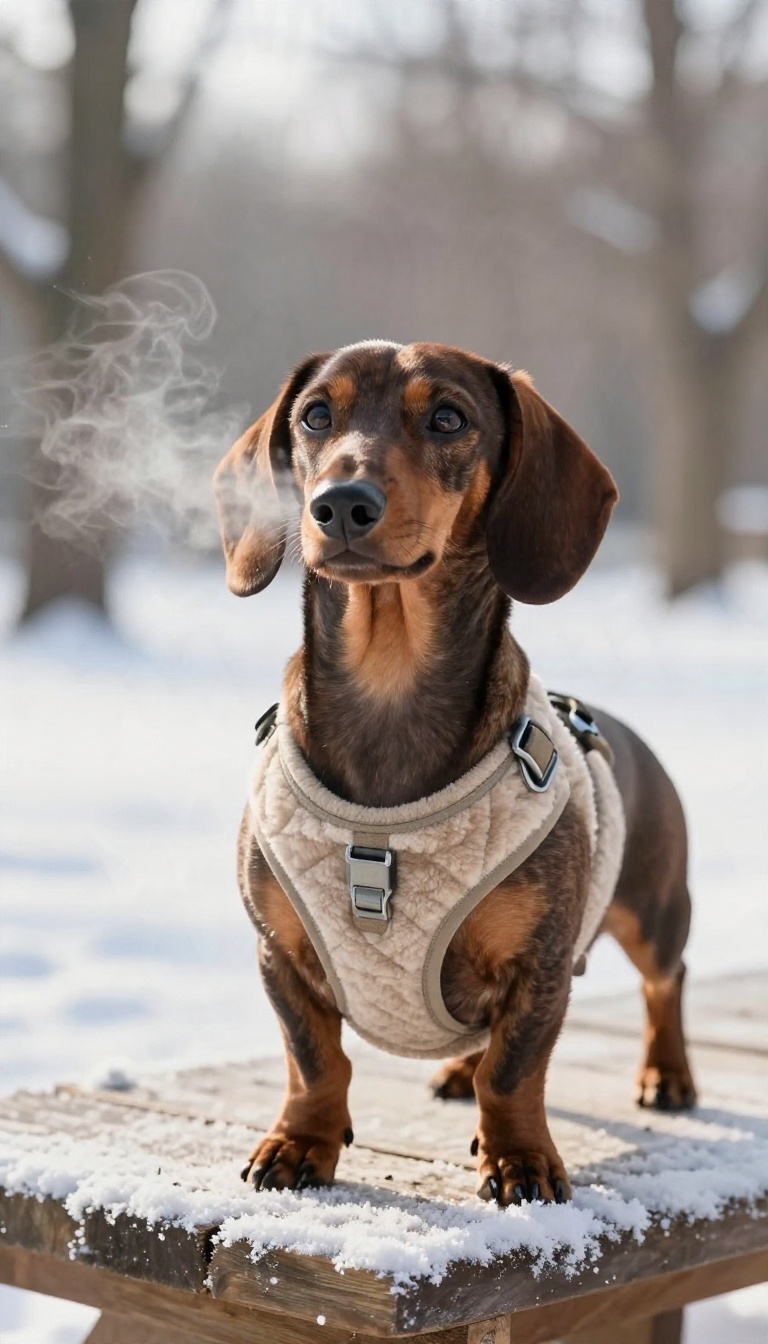
Most harnesses do one job: they hold the leash. A padded, fleece-lined version does that and throws in a bit of warmth across the chest, which is exactly where a dachshund loses heat fastest. It's the rare piece of gear that pulls double duty without adding bulk or fuss.
The appeal here is simple. A regular harness straps over a thin coat and leaves the chest exposed to wind. A quilted or fleece-lined harness sits closer to the body and traps a little warmth right where the cold hits hardest.
You still get the main benefit of any good harness: leash pressure spreads across the chest instead of pulling on that delicate dachshund neck. That matters on icy mornings when your dog lunges at a squirrel and you'd rather not feel the tug in their throat. Just don't expect it to replace a coat.
Think of it as a base layer with a job, not a full winter suit.
What To Look For
Go for fleece lining or a quilted panel over the chest, not just padding on the straps. Check that the fit hugs the ribcage without rubbing under the front legs, since dachshunds have that deep, narrow chest. Adjustable straps at the neck and girth let you layer it over a thin sweater on the coldest days.
Layering It Right
On mild cold snaps, the padded harness works on its own. When the temperature drops, slide it over a lightweight fleece and under a waterproof shell so the warm layer stays dry. Make sure the harness sits on the outside of the coat, not buried underneath, so the leash clips stay easy to reach.
A Quick Fit Check
Two fingers should slide under the girth strap, no more. Watch your dog walk a few steps and look for any chafing behind the front legs or bunching at the chest. If the harness shifts sideways when they trot, size down or tighten the adjusters before you head out.
5. Snood or Neck Warmer for Drafty Days
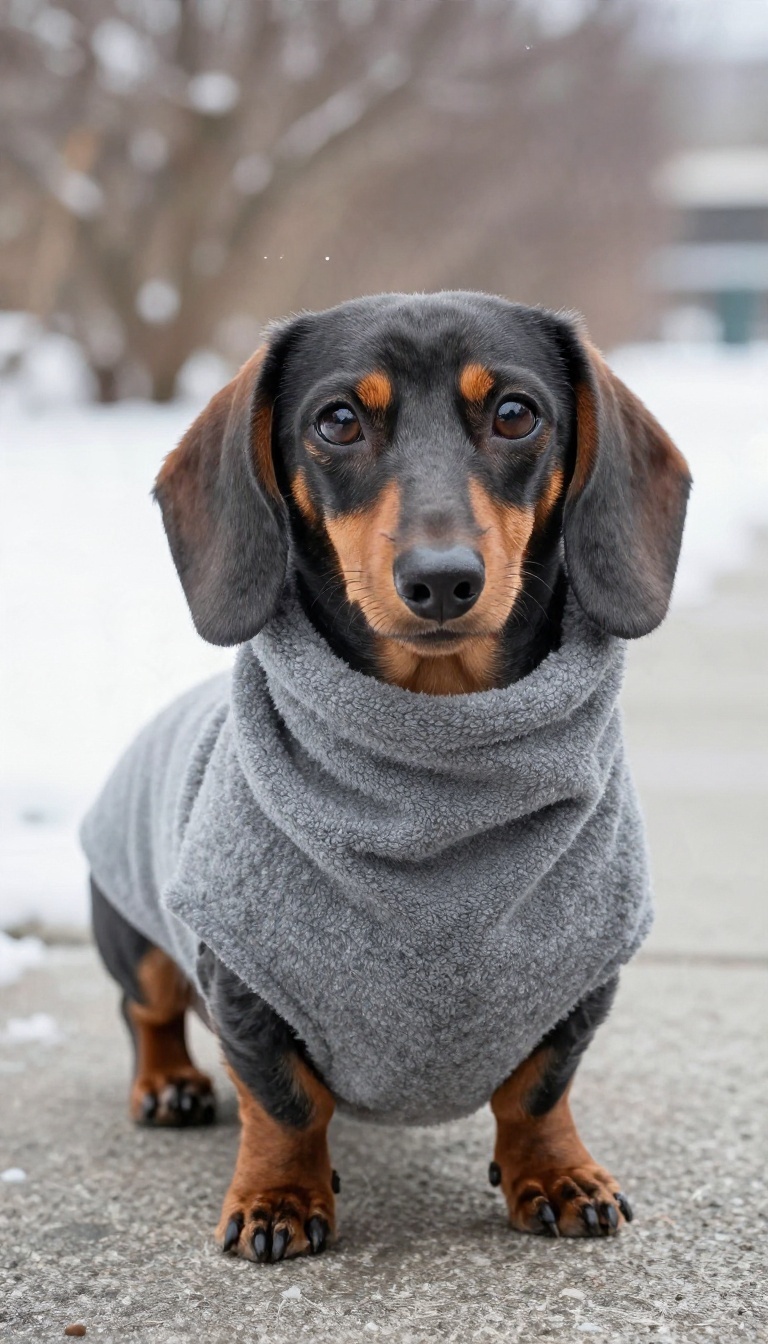
Wind is the sneaky part of winter. It slides under coat collars and finds that thin patch of skin behind the ears, and a dachshund feels it fast because there's not much body mass between the breeze and the bone. A soft snood handles that gap.
It's a simple tube of fabric that covers the neck, tucks under the ears, and closes off the draft before it reaches the chest.
Think of a snood as the scarf your dog can't trip over. It pulls on over the head, sits snug around the neck, and stays there while your sausage dog sniffs every lamppost on the block. Unlike a dangling scarf, there's nothing to drag on the ground or catch in a paw.
It also does quiet work you might not notice until you skip it. The neck and chest are where a lot of heat escapes on a small dog, so blocking wind there keeps the whole walk more comfortable.
What A Snood Actually Protects
A good snood covers three zones at once: the throat, the back of the neck, and the base of the ears. That last part matters most on gusty days, since thin ear leather loses heat quickly. Fleece and soft knit work best because they trap a little warm air without feeling heavy.
Skip anything stiff or scratchy, since a dachshund will spend the whole walk trying to shake it off.
Getting The Fit Right
The snood should sit close enough that wind can't sneak underneath, but loose enough that you can slide two fingers between the fabric and the fur. If it bunches up around the eyes, it's too long or too big. Measure around the widest part of the neck and add a small margin.
A snood that creeps forward during sniffing needs a shorter length, not a tighter one. Check the fit before you head out, not halfway down the street.
Pairing It With The Rest Of The Outfit
A snood layers neatly under a coat collar or over a thin sweater, and it fills the gap where harness straps tend to sit. Just make sure the harness clips stay reachable and nothing bunches under the chest strap. On milder days, the snood can go on alone for a quick trip outside.
On bitter mornings, it's the layer that makes the difference between a brisk walk and a rushed one.
6. Booties or Paw Wax for Frosty Pavement

Pavement gets the last word on winter walks, and it's usually a cold one. Salt, ice, and frozen grit do a number on paw pads, and a dachshund's short legs put those paws in close contact with every rough patch. You've got two good options here: slip-on booties for full protection, or paw wax for a lighter touch.
Both work, but they suit different dogs and different mornings.
Booties are the heavy-duty choice. They block salt, ice, and chemical de-icer from ever touching the pad, and they keep snow from balling up between the toes. The catch is that most dachshunds don't love them at first, and a dog that refuses to walk defeats the purpose.
Paw wax is the low-friction option. You rub a thin layer onto the pads and it forms a protective barrier that also adds a little grip. It takes seconds to apply, and most dogs barely notice it.
The trade-off is that wax wears off on long walks and won't protect against sharp ice chunks the way a rubber sole will. A lot of owners end up using both, and that's a smart routine. Wax for quick trips and mild cold, booties for the deep-freeze days and salted sidewalks.
When Booties Win
Reach for booties on the days when salt is visible on the sidewalk or the temperature drops below freezing. A good set has a flexible rubber sole and a snug strap above the ankle so they stay on through a dachshund's quick little stride. Check the fit at the back paws too, since that low stance means the rear boots take a lot of drag.
When Wax Makes More Sense
Paw wax shines for short neighborhood loops and dogs that flat-out refuse footwear. Warm the tin in your pocket so it spreads easily, then work a thin layer into each pad before you head out. Reapply on longer walks, and wipe the paws clean when you get home so your dog isn't licking off road salt.
Breaking In First-time Booties
Skip the full walk for the first few tries. Put the booties on indoors and let your dog wander around for a minute or two, then take them off and offer a treat. Repeat over a few days, then try one bootie on a short outdoor trip before going for all four.
Patience here saves you from a dog that plants its feet and refuses to move.
7. Reflective Vest for Dark Winter Evenings
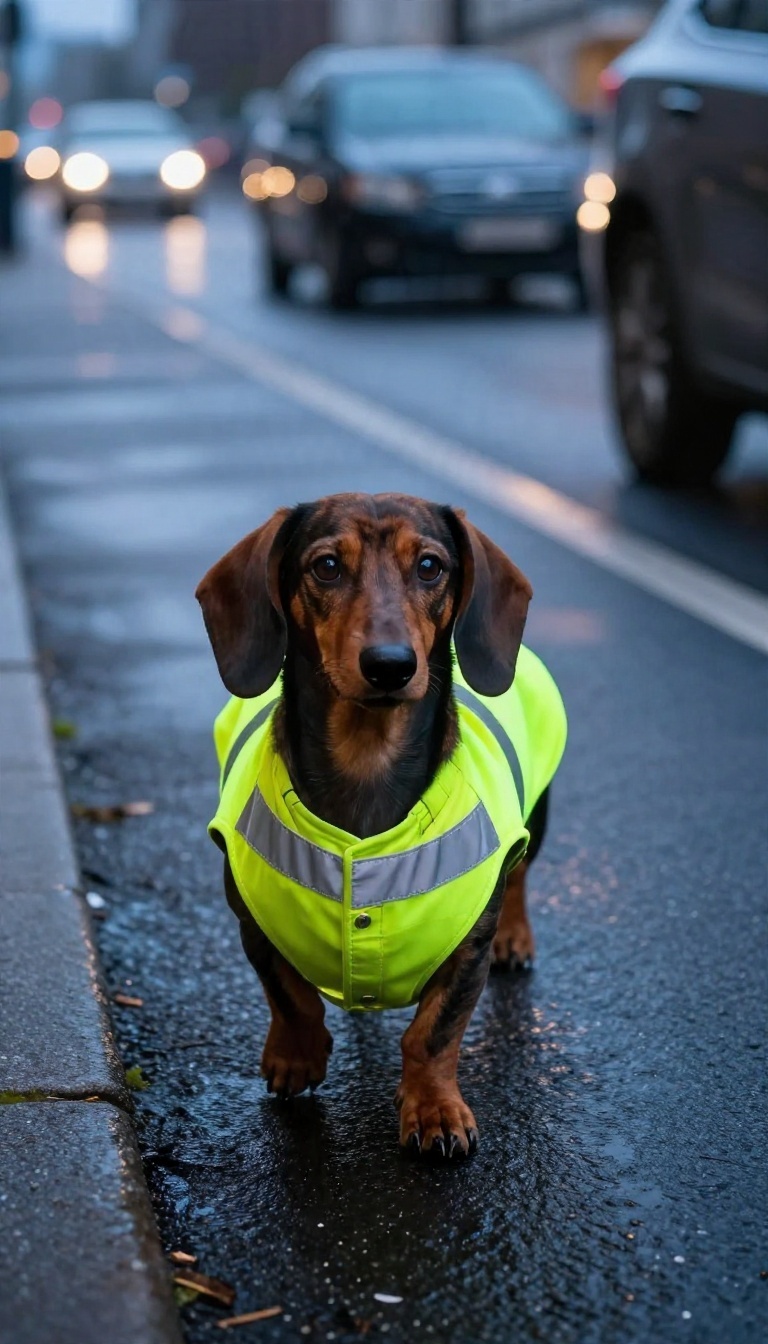
Winter daylight clocks out early, and a lot of dachshund walks happen in that grey stretch between work and dinner. A reflective vest solves the visibility problem without adding much bulk. It's the layer that makes your dog findable in a car's headlights, not just fashionable on the pavement.
The catch is that most reflectors are designed for human height. A sausage dog sits about six inches off the ground, so where the strips land matters more than how bright they are.
A good vest wraps the chest and back with high-vis fabric and adds reflective piping along the sides. Look for something that slips over a coat or harness rather than fighting with it. The fit should be snug enough that it doesn't flap, but loose enough to layer over a sweater on the coldest nights.
Color matters less than contrast. Neon yellow and orange both pop against dark asphalt, but the reflective strips are what actually catch light. If the vest is high-vis but has no reflectors, it only helps in daylight — which defeats the purpose of an evening walk.
Where The Reflectors Need To Sit
Think about the angle a driver sees your dog from. Headlights hit low and flat, so reflective strips on the chest, sides, and lower back do the most work. A single strip across the shoulders looks tidy but sits too high to catch a low beam.
Side strips are the underrated part. They keep your dog visible when a car approaches from the side at a junction, which is exactly when a short-legged dog disappears behind a curb or parked wheel.
Layering Without Losing The Glow
Reflective vests work best as an outer layer. If your dachshund wears a coat underneath, choose a vest with adjustable straps so it sits flat over the fabric instead of bunching at the chest. Avoid covering the strips with a harness or a long coat tail.
If your harness clips over the vest, check that the reflective bands still show from the front and sides. A quick phone-torch test in the hallway tells you in seconds whether the strips actually catch light.
The Extras That Help After Dark
A reflective vest is the base layer of a dark-walk kit. Add a small clip-on light to the collar or harness for extra presence at crossings, and consider a light-up collar if your route has unlit stretches. Keep the vest near the leash so it becomes automatic on late walks.
The best visibility gear is the gear you actually remember to put on when it's cold and you're rushing out the door.
8. Cozy Pajama-Style Suit for Very Cold Days

When the forecast says it's too cold for a quick pee break, a full-body fleece suit becomes your secret weapon. These pajama-style outfits cover legs and belly, turning your sausage dog into a walking sleeping bag. But fit matters more than fabric here—a saggy rear or bunched legs can turn a cozy walk into a tripping hazard.
A pajama suit isn't just a onesie for dogs—it's a functional layer that traps warmth close to the body. For dachshunds, the challenge is their unique shape: long back, short legs, and a belly that hangs low. The best suits are cut to accommodate that geometry without restricting movement.
Why Full Coverage Works
Cold pavement pulls heat from the belly and paws fast. A fleece suit that covers all four legs and the underside keeps the core warm and the extremities protected. Look for suits with a high collar and a snug fit around the chest to seal in heat.
Fit Checks That Matter
Start with the rear: the suit should not sag below the tail or drag on the ground. Check the leg openings—they need to be wide enough for free movement but not so loose that they slip over the paws. Finally, test the belly panel: it should cover the entire underside without bunching when your dog walks.
Materials And Extras
Fleece is warm but can pill; consider a suit with a smooth outer layer to repel light snow. Reflective piping is a bonus for dark walks, and a leash opening at the back lets you use a harness without removing the suit. Easy on-and-off matters too—velcro or snaps beat wrestling with a zipper.
9. Layered Combo for Freezing Wind and Sleet

Sleet is the kind of weather that finds every gap in a coat. A single layer rarely cuts it when the wind picks up and the sky starts spitting ice, so this is where a two-piece setup earns its keep. Pair a snug base sweater with a waterproof shell and your dachshund gets warmth close to the skin plus a shield against the wet.
The trick is knowing when to stop adding. Two layers handle most freezing, windy mornings, but stack on a third and you can cook a dog that was already running warm under all that fur. Here's how to build the combo and read the signs that it's time to shed a layer.
Think of the base sweater as the furnace and the shell as the storm door. The sweater traps body heat against that thin belly, while the shell blocks wind and sleet from soaking through. Neither works nearly as well alone on a nasty day.
Start with a fitted fleece or knit sweater that covers the chest and reaches down toward the belly without dragging. Then add a waterproof shell sized to sit over it, not squeeze it. If the shell pinches at the shoulders or rides up, size up so both layers can do their jobs.
Picking A Base That Fits Under A Shell
The base layer needs to be slim enough that the shell slides over it without bunching. Look for a sweater with a smooth outer face rather than a chunky cable knit that grabs at the lining. Sleeveless or short-sleeve bases work well for dachshunds because they leave the legs free to move.
Check that the belly panel still covers that low underside, since that's the part most exposed to cold and splash. A base that rides up defeats the whole point.
Signs Two Layers Are Too Much
A brisk walk should leave your dog comfortably warm, not panting. If you see heavy panting, a lot of pulling to get home, or frantic scratching at the coat, you've probably overdressed them. Feel behind the front legs and along the belly after a few minutes of walking.
Damp heat or a dog that keeps trying to lie down in the cold are both clues to peel off the shell and let the base breathe. On milder windy days, the sweater alone often does the job.
Handling Sleet And Wet Transitions
Sleet soaks through fabric fast, so the shell needs a real waterproof coating, not just water resistance. A shell with a covered belly and a snug neck closure keeps the wet off the parts that matter. When you get home, take the shell off first and check the base for damp patches around the chest and legs.
Hang both layers to dry fully before the next walk, because a soggy sweater worn again the next morning pulls heat away instead of holding it.
10. Towel-Dry Robe for the Trip Home
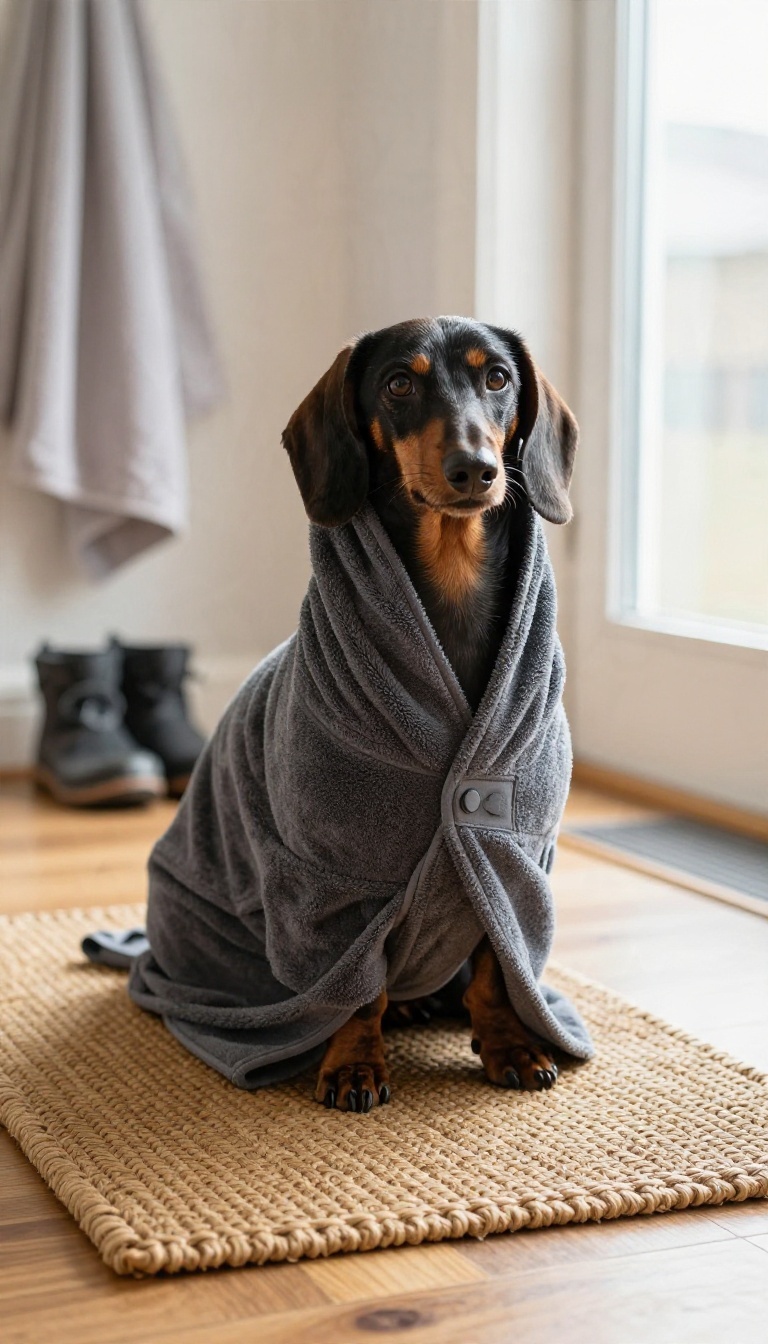
The walk ends, the coat comes off, and your dachshund is still damp underneath. That's the moment a towel-dry robe earns its keep. It's a fleece drying coat that soaks up moisture and holds body heat while your dog airs out indoors.
Think of it as the last layer of the winter routine. Not a fashion piece, not a substitute for a proper coat outside, just a simple way to stop a wet sausage dog from getting chilled in a cold hallway.
A drying robe works because wet fur loses heat fast, and a low-slung dog carries that damp belly right above the floor. Fleece pulls water off the coat and traps warmth at the same time, so your dog dries without shivering on the doormat. Most versions wrap around the chest and belly with a Velcro or belt closure and cover the back and hindquarters.
Look for one with a snug neck and an adjustable middle, since dachshunds are long and narrow and a generic fit will gap at the waist.
What To Look For
Pick a quick-dry fleece or microfiber blend that feels soft against the skin. A wide belly panel matters most for this breed, because that's where the cold and wet settle. Adjustable closures beat fixed sizing, and a small leash hole is handy if you want to keep it on for a quick garden trip.
How To Use It
Towel your dog down first to lift the worst of the wet, then slip the robe on before they cool off. Leave it on for fifteen to twenty minutes while they settle, and check underneath now and then. Once the fur feels dry to the touch, take it off so they don't overheat indoors.
Keeping It Fresh
Wet dog smell lives in the robe, so wash it regularly on a gentle cycle and hang it to dry. Many fleece drying coats air out fast, which means you can rotate one while the other dries. A second robe is a small luxury that saves you on back-to-back rainy days.
11. Matching Set for Photos and Everyday Wear
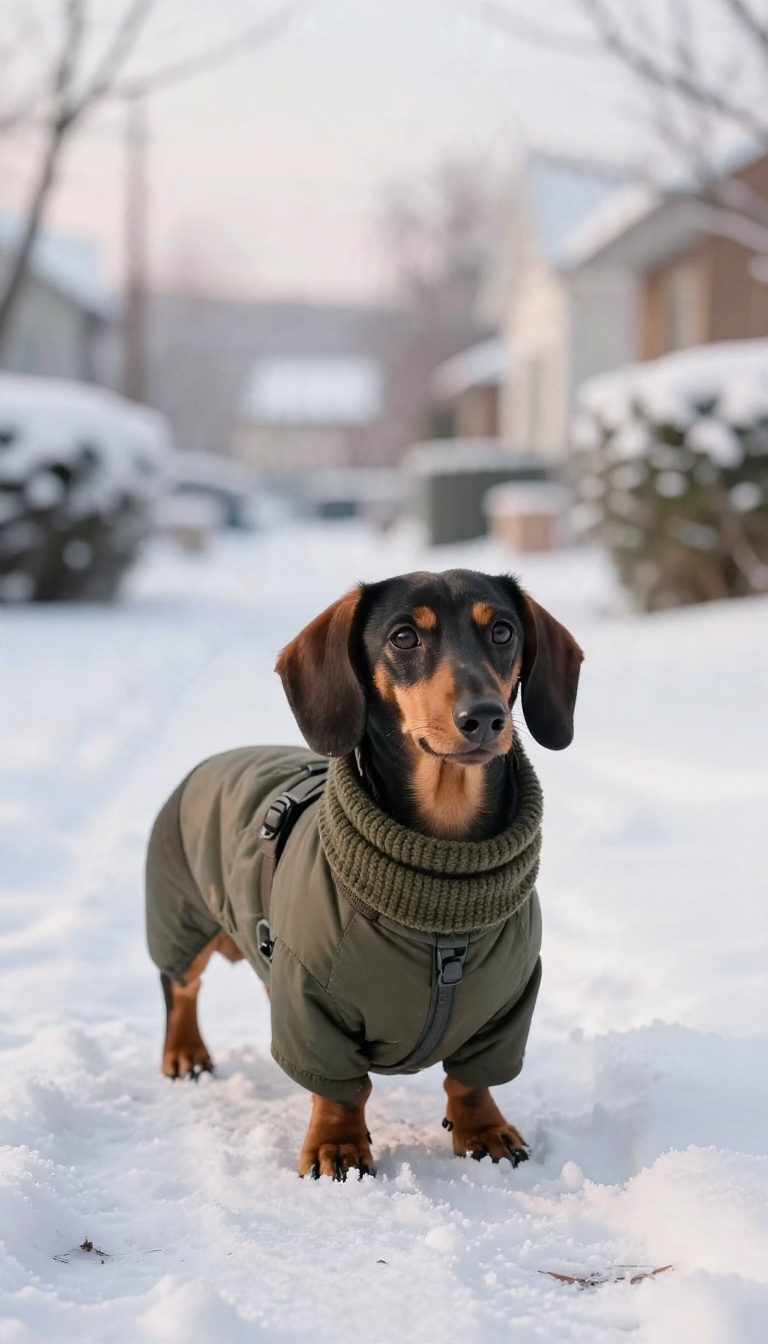
Some outfits are strictly for the camera, and some are strictly for the mud. A matching coat-and-snood set is the rare pick that handles both without looking like you tried too hard. The coat does the serious work, covering the chest and wrapping that low belly in warmth.
The snood adds a cozy neck layer and pulls the whole look together, so your dachshund looks put-together in photos and stays comfortable on the actual walk. It's a fun choice, but it's a practical one first. The set earns its spot because it keeps your dog warm where it counts.
A matching set makes mornings easier because there's no guessing. Grab the coat, slip on the snood, and you're out the door. The coordination is a bonus, not the whole point.
The key is choosing a set built for a long-bodied dog. A standard coat cut for a Labrador will ride up and leave the belly exposed. Look for dachshund-specific sizing or adjustable straps that let you dial in the fit.
Think of it as your go-to outfit for the walks you actually take every day, with a little extra polish for the ones you photograph.
Why The Snood Earns Its Place
A snood covers the neck and chest, which is exactly where cold air sneaks in on a short-legged dog. It also stops snow and wind from hitting the throat on gusty walks. Unlike a scarf, a snood stays put.
There's nothing to retie and nothing dragging on the ground. Slip it over the head, adjust once, and it stays through the whole walk. It's a small piece, but it makes the coat feel complete and keeps your dog warmer on the really cold days.
Getting The Fit Right On A Long Body
Measure from the base of the neck to the tail before you buy, and check the chest girth too. Dachshunds are long and deep-chested, so generic sizing rarely works. Look for adjustable belly straps and a coat that reaches the tail without tripping the back legs.
A set that fits properly won't twist or slide when your dog trots. If you're between sizes, size up on the coat and keep the snood snug. A little room in the body is better than a coat that pulls at the shoulders.
Making It Photo-ready Without Fuss
Pick a color that pops against winter greys and browns. Deep red, mustard, or forest green all read well in photos and look sharp on a walk. Brush the coat and snood before you head out, and keep a towel handy for muddy paws.
A quick wipe at the door keeps the set looking fresh for the shot you actually want. You don't need a full photoshoot. A matching set already does most of the work, so a quick snap on the doorstep is usually enough.
FAQ
Do sausage dogs actually need coats in winter?
Most do once temperatures drop, especially short-haired dachshunds. Their low bellies and thin coats make cold ground and wind harder to handle than for taller breeds.
How do I measure a dachshund for a coat?
Measure from the base of the neck to the tail for length, then around the widest part of the chest. Check belly coverage too, since standard coats often run short on a long body.
Are booties safe for short legs?
Yes, if they fit snugly and don't twist. Start with short indoor sessions so your dog adjusts, and check the paws after walks for rubbing.
What about salt on winter sidewalks?
Rinse or wipe paws after every walk and consider paw balm before heading out. Booties offer the most protection on heavily salted routes.
Can my dachshund overheat in winter gear?
It happens on milder days or during brisk walks. Watch for panting or fussing, and remove a layer if your dog seems uncomfortable.
Conclusion
Cold weather walks don't have to mean a shivering sausage dog or a stressful scramble into layers. Pick two or three outfits from this list that fit your dog's build and your local weather, then test them on a short walk before the real cold hits. A quick trial run shows you where a coat rubs or a strap slips.
Once you've found what works, stick with it and rotate as the temperature drops. Your dachshund stays warm, dry, and comfortable, and you both get to enjoy the walk instead of rushing home. That's really the whole goal here.

I’m Pallab Kishore, the owner of Little Pets Realm — an animal lover and pet care enthusiast sharing easy tips, healthy recipes, and honest advice to help every small pet live a happy, healthy, tail-wagging life.