
Last updated on August 19th, 2026 at 04:15 pm
Shorter autumn days mean your usual walking route can shift from bright and breezy to dark and tricky in what feels like minutes. That doesn't mean you have to cut your strolls short—it just means adjusting how you move through the world after sunset.
From smarter gear choices to simple awareness tricks, these ten low-light skills help you stay visible, steady, and confident on every walk. Whether you're heading out for a quick loop or a longer evening trek, each tip tackles a real challenge of walking in the dark.
Ready to make your fall walks safer and more enjoyable? Let's get started.
1. Wear Reflective Gear That Actually Works
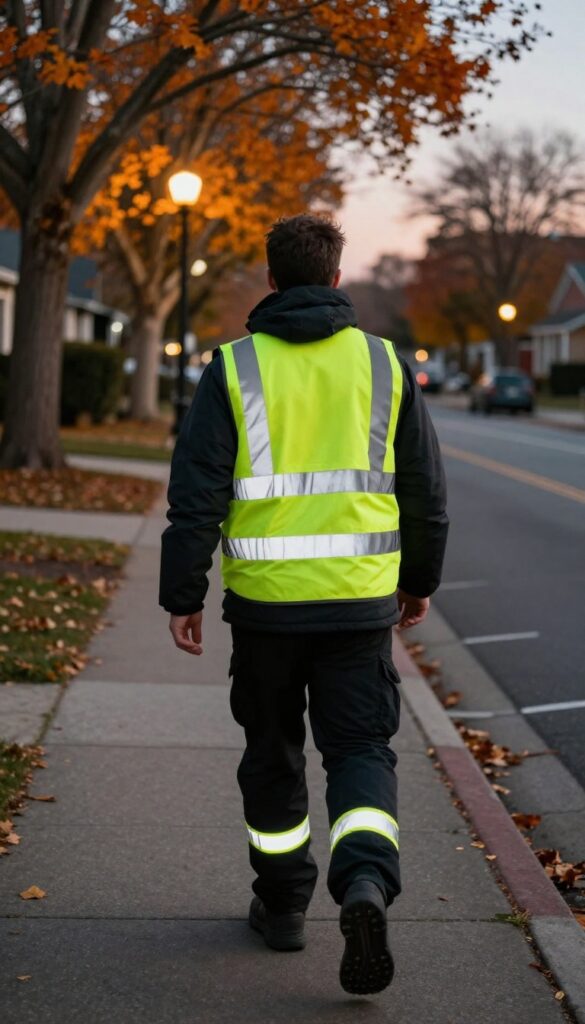
When daylight fades, dark clothing blends into the shadows. Reflective materials are different—they bounce light back to drivers and cyclists, making you visible from a distance. The key is choosing gear that moves with you and covers the right spots.
Not all reflective gear is created equal. A small logo on a jacket might look cool, but it won't do much when a car's headlights hit you from the side. You need items that reflect light from multiple angles and stay visible as you walk.
Think vests, armbands, and shoes with reflective strips—these are the pieces that actually make a difference.
Why Bright Colors Aren't Enough
Bright colors like neon yellow or orange work well in daylight, but they lose their punch after sunset. In low light, they appear dull and gray. Reflective materials, on the other hand, contain tiny glass beads or prism-like surfaces that catch light and send it back to the source.
This makes you shine even when it's pitch black.
Choose The Right Gear For Your Walk
For a quick stroll around the block, a reflective vest or a simple armband might be enough. If you're walking on a busy road or a trail with no sidewalks, go for a full reflective jacket or a sash that wraps around your torso. Shoes with reflective piping are also great because they move with your feet, catching light from headlights pointing down.
Make Yourself Visible From All Sides
Drivers approach from different directions, so your reflective gear should cover more than just your front. Look for items with 360-degree reflectivity—vests that wrap around, armbands that go on both arms, or a cap with reflective details. This way, you're visible whether someone is coming toward you, from behind, or from a side street.
2. Use a Headlamp or Flashlight Strategically
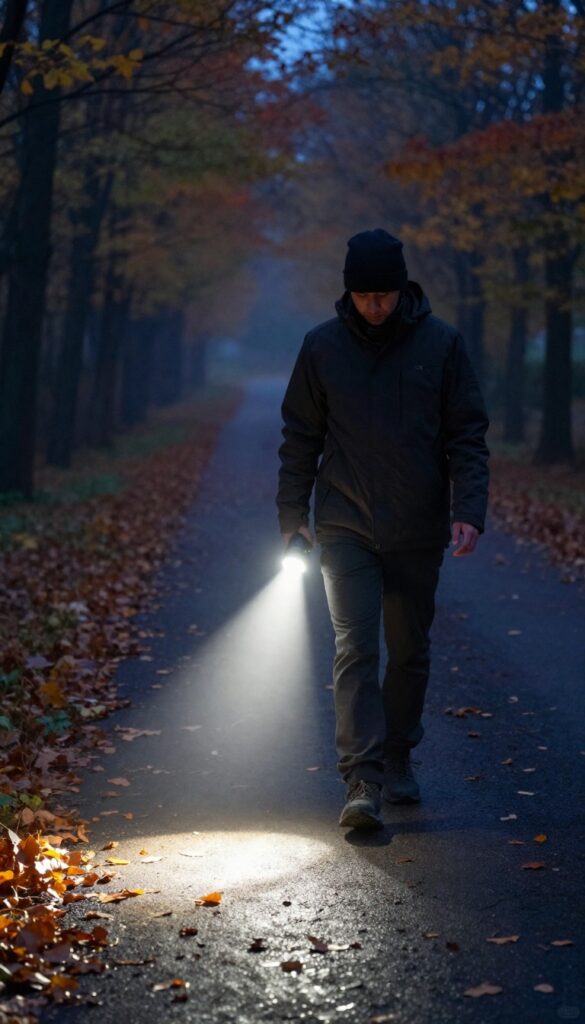
A good light source is non-negotiable when the sun clocks out early. But how you use it matters just as much as having it. The goal isn't to turn night into day—it's to see where you're stepping and make sure others see you.
A headlamp is a walker's best friend because it frees your hands for balance, a phone, or a dog leash. The trick is to angle the beam downward, about 10 to 15 feet ahead of you. This lights up the path without blinding oncoming walkers or drivers.
If you're on a road with traffic, switch to a flashlight and hold it at hip level, waving it slightly at intersections to signal your presence. This simple move makes you visible without causing glare.
Pick The Right Beam For The Job
Not all lights are created equal. For walking, you want a beam that's wide enough to cover the path but not so broad that it washes out in fog. A headlamp with adjustable brightness is ideal—use a lower setting on well-lit streets and a brighter one on unlit trails.
Look for a red light mode too, which preserves your night vision and is less glaring to others.
Aim Low, Stay Visible
Angling your headlamp downward isn't just polite—it's practical. It reduces glare and lets you see obstacles like roots or cracks sooner. When you need to check a map or your phone, tilt your head down or use the lamp's dimmer setting.
For flashlights, hold them at waist level and sweep slowly from side to side. This creates a moving beam that catches drivers' eyes without blinding them.
Use Light To Communicate
Your light can also be a signal. At a crosswalk, point your flashlight toward oncoming traffic and flick it up and down a few times. This simple gesture tells drivers you're there and waiting to cross.
On shared paths, a quick shine toward the ground ahead of you warns other walkers or cyclists of your approach without being aggressive.
3. Plan Routes with Lighting and Sidewalks in Mind
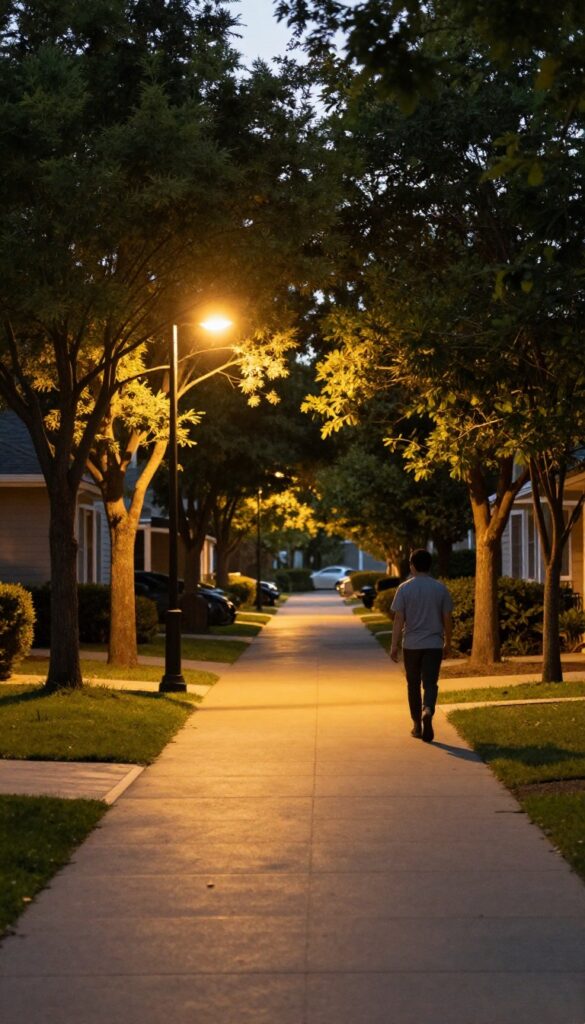
The path you choose before sunset can make or break your walk after dark. A route that feels fine in daylight might hide tricky curbs, unlit stretches, or heavy traffic once the sun goes down. A little planning goes a long way toward keeping your evening stroll smooth and stress-free.
Start by mapping out a few go-to routes that work well in low light. Look for streets with consistent streetlights, clear sidewalks, and minimal construction or overgrown areas. Familiarity matters too—when you know where the cracks and slopes are, you can navigate them without thinking.
If you're trying a new path, do a test walk in daylight first, then note any spots that could be tricky after dark.
Check Streetlight Coverage
Not all streets are created equal when it comes to lighting. Some blocks have bright, evenly spaced lamps, while others have dark gaps or flickering bulbs. Before you head out, take a look at your usual route and see where the light is consistent.
If a stretch feels too dark, consider swapping it for a side street with better coverage or adjusting your timing to catch the brighter early evening hours.
Prioritize Sidewalk Quality
Uneven pavement, tree roots, and cracked concrete become real hazards when you can't see them clearly. Stick to routes with well-maintained sidewalks that you know are clear of obstacles. If you have to walk on a road shoulder, choose streets with wide, smooth shoulders and a low speed limit.
Avoid paths that force you to dodge parked cars or step into traffic.
Know Your Route By Heart
There's comfort in knowing exactly what's coming next. When you walk the same route regularly, you remember where the curb dips, where the driveway slopes, and where that one tree branch hangs low. This mental map lets you relax and enjoy the walk instead of scanning every shadow.
If you like variety, pick two or three familiar loops and rotate them—just make sure you've walked each one in daylight enough to feel confident.
4. Walk Against Traffic to See Approaching Cars
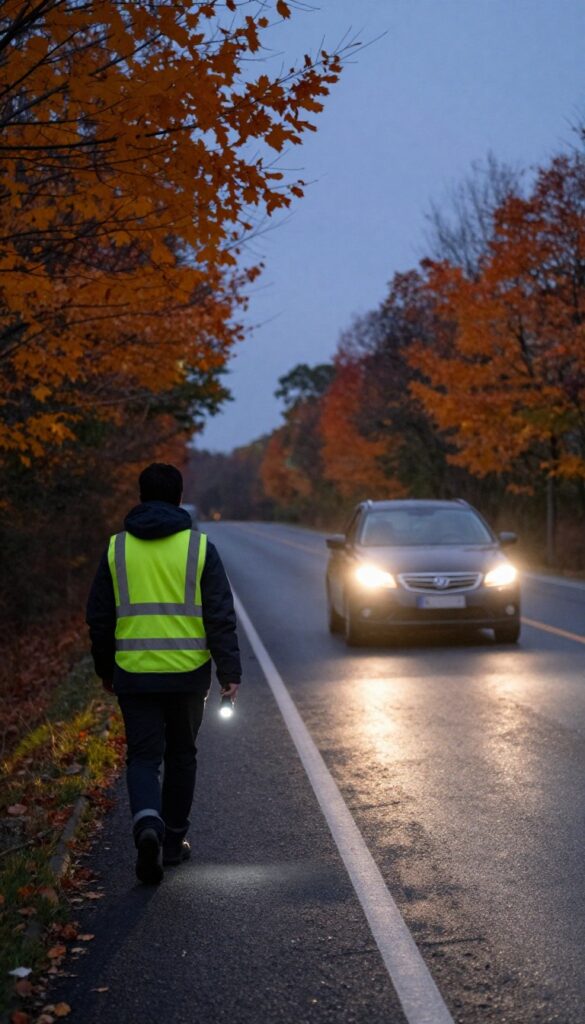
When the light drops, your eyes need all the help they can get. Walking against traffic puts you face-to-face with oncoming vehicles, so you spot headlights early and have time to step aside. It also makes you far more visible to drivers, especially on roads without sidewalks or streetlights.
The rule is simple: if there's no sidewalk, walk on the side of the road where you can see cars coming toward you. That's usually the left side in countries where drivers stay on the right. This isn't just about your vision—it's about your safety and the driver's ability to see you too.
Why It Matters After Dark
At night, your peripheral vision narrows and depth perception gets tricky. When cars come from behind, you hear them but can't judge their speed or distance. Facing traffic gives you a clear view of headlights and lets you react instantly if a vehicle drifts too close.
How To Position Yourself
Stay on the edge of the road, as far from traffic as possible. If there's a shoulder, use it. Keep your light pointed ahead but angled slightly down so it doesn't blind drivers.
When you see a car approaching, pause or step further off the road until it passes.
Extra Visibility Tricks
Wear reflective gear on your front and back, not just your back. A reflective vest or clip-on light on your chest catches headlights directly. If you're walking with a friend, walk single file on narrow roads so drivers have more room to pass safely.
5. Make Eye Contact with Drivers at Crossings
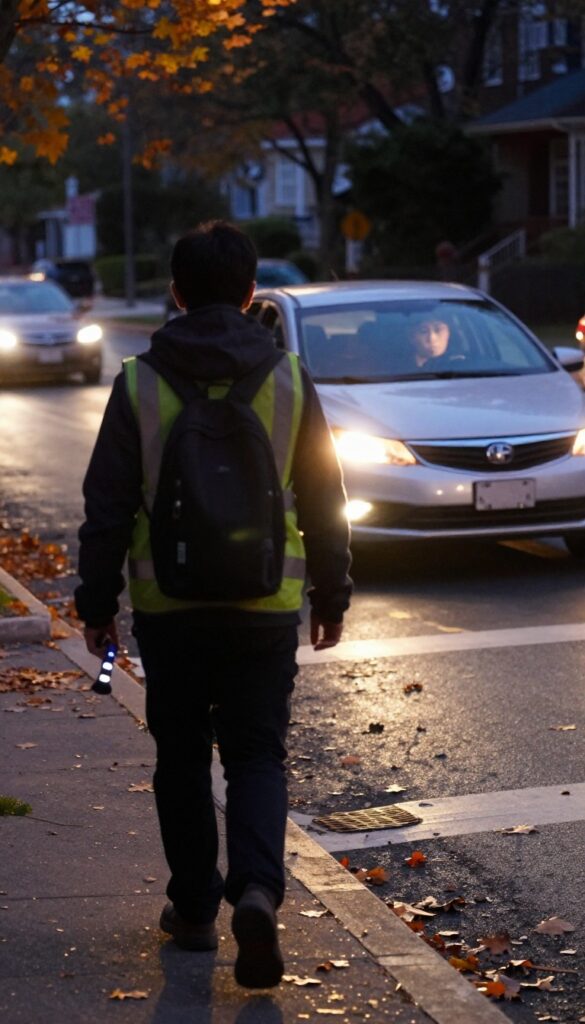
Crosswalks feel like a safe zone, but they only work if both sides are paying attention. In low light, a driver's view gets cluttered with reflections, shadows, and the glare of oncoming headlights. Your dark jacket and quick step can easily slip past their notice until it's too late.
That's why the simple act of making eye contact matters so much. It's not about staring anyone down—it's about confirming that the person behind the wheel has actually seen you. A quick nod or a raised hand can turn a risky crossing into a calm, mutual agreement.
Before you step off the curb, pause for a beat. Look directly at the driver's face, not just the car. If you can't see their eyes, they probably can't see you either.
Wait until you get that visual confirmation, then move. This habit takes less than two seconds but can prevent a lifetime of regret. In darker conditions, eye contact becomes even more critical.
A driver might see a shape but not register it as a person. Your face, lit by streetlights or your own headlamp, makes that distinction clear. If the driver is looking down at a phone or fiddling with the radio, don't assume they'll look up in time.
Wait for the nod or the wave that says, 'I've got you. '
Why Eye Contact Works
Eye contact creates a shared moment of awareness. When you lock eyes with a driver, you're not just a moving object—you're a person they've acknowledged. This mutual recognition triggers a psychological response that makes them more likely to yield and wait for you to cross.
It also gives you the confidence to step out without hesitation, knowing you've been seen.
What To Do When You Can't See The Driver
Sometimes you can't make eye contact—tinted windows, glare, or a high vehicle can block your view. In those cases, don't assume. Treat the crossing like a yield situation: wait until the car comes to a complete stop, then make your move.
You can also use a hand signal or a small wave to draw attention to yourself, but never step out until you're sure the vehicle is stationary.
Extra Tips For Busy Intersections
At multi-lane crossings, don't just check the first car. A driver in the next lane might not see you because the car beside them blocks their view. Make eye contact with each driver as you move, and if someone stops but the next lane is still rolling, stay put.
Also, keep your head up and your phone away—you need to be as alert as they are.
6. Keep Your Phone Away and Stay Alert
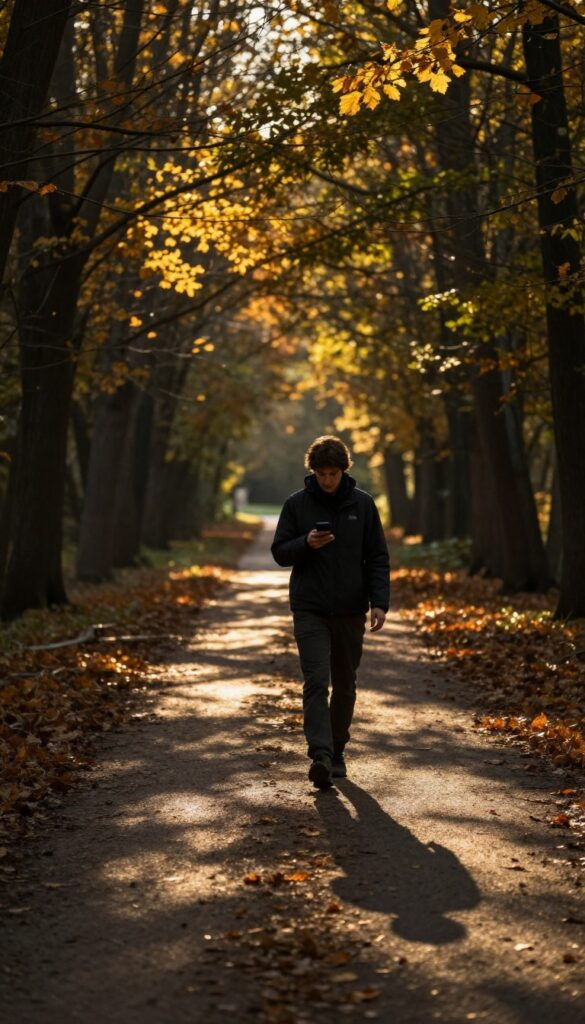
When the sun sets early, your phone becomes a bigger hazard than any uneven sidewalk. A quick glance at a notification can pull your attention away from the road, the traffic, and the subtle sounds that keep you safe. In low light, distraction isn't just annoying—it's dangerous.
Your eyes are already working overtime in dim conditions, so don't make them compete with a bright screen. Tucking your phone away frees up your senses to catch what's happening around you. Your ears become your best tool for detecting approaching bikes, cars, or even other walkers before you see them.
Why Distraction Hits Harder After Dark
In daylight, you can glance at a text and still spot a curb or a car. At night, your pupils are dilated, and your depth perception drops. A lit screen forces your eyes to adjust from bright to dark again, leaving you momentarily blind.
That split-second of lost vision is enough to miss a root or a turning vehicle.
Let Your Ears Do The Watching
Without your phone, your hearing sharpens naturally. You'll pick up the hum of an approaching car, the whir of a bicycle, or the rustle of leaves behind you. These cues give you extra seconds to react.
If you must listen to music, keep one earbud out or use bone-conduction headphones that leave your ears open.
Simple Ways To Break The Habit
Start by putting your phone in a zipped pocket or a bag where it's not easy to grab. You can also set a 'walking focus' mode that silences non-essential alerts. Tell yourself that the walk is your time to disconnect—it's not just safer, it's more relaxing.
If you're worried about emergencies, a smartwatch can handle calls and texts without pulling out your phone.
7. Dress in Layers for Changing Temperatures
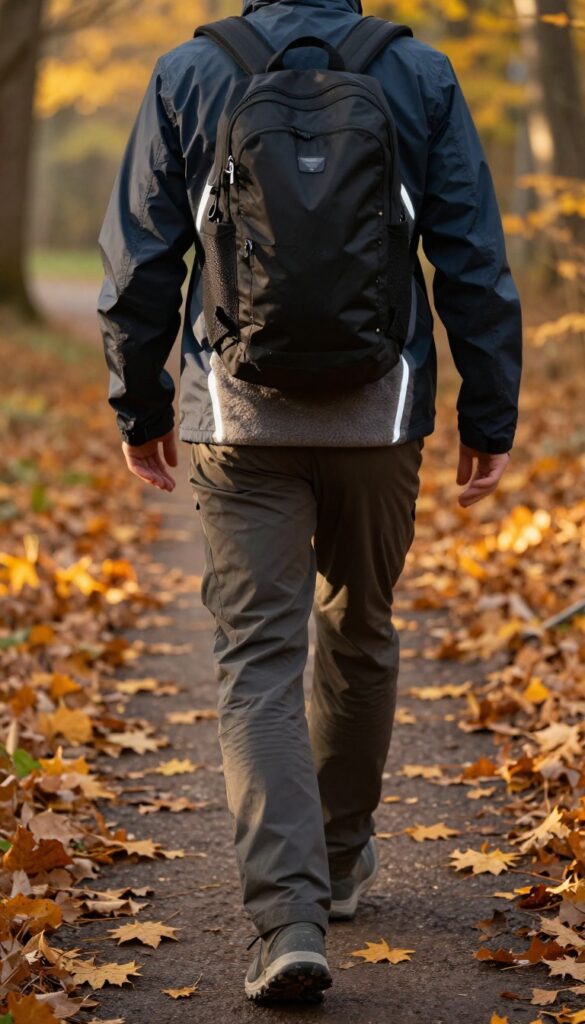
Autumn evenings can feel like a game of temperature roulette. One moment you're warm from the day's last sun, and the next a breeze cuts through your jacket. Dressing in layers is the simplest way to stay comfortable from start to finish.
Start with a moisture-wicking base layer to keep sweat off your skin, then add an insulating mid-layer like a fleece or light sweater. Finish with a breathable, water-resistant jacket that blocks wind without trapping heat. Avoid bulky coats that restrict movement or make it hard to notice your reflective gear.
Choose The Right Fabrics
Cotton absorbs sweat and stays damp, which can chill you quickly. Instead, pick synthetic fabrics or merino wool for your base and mid layers. They dry fast and keep you warm even if you start to perspire.
Keep Reflective Gear Visible
Layering can accidentally cover your reflective vest or armband. Make sure your outer layer has its own reflective strips, or wear a high-visibility belt over your jacket. If you add or remove layers during the walk, double-check that your visibility gear is still in place.
Adjust As You Move
Your body heats up as you walk, so you might start feeling too warm after ten minutes. Plan to shed a layer and tie it around your waist or stash it in a small backpack. This keeps you comfortable without stopping for long.
8. Carry a Whistle or Personal Alarm
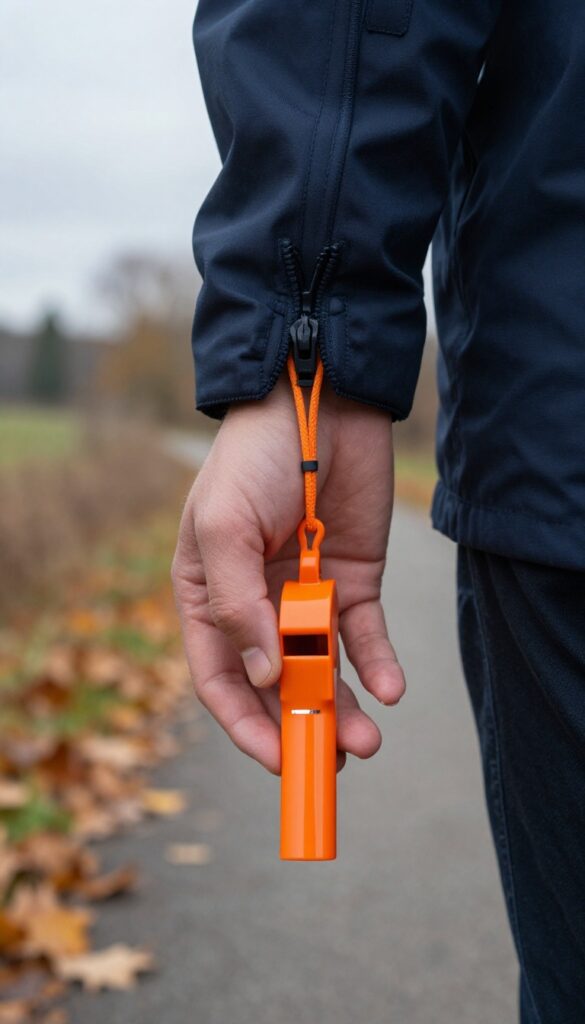
A whistle or personal alarm is one of those small items that can make a big difference when you're out walking in the dark. It's not about expecting trouble—it's about being ready if something unexpected happens. Having a loud, attention-grabbing tool within reach adds a layer of confidence that lets you enjoy your walk without constantly looking over your shoulder.
The key is to keep it accessible. If it's buried at the bottom of your bag, it's not going to help when you need it. Clip it to a jacket zipper, loop it around your wrist, or attach it to a keychain that you can grab in a second.
Practice using it once or twice so you know exactly how it works and how loud it is. That way, it becomes second nature.
Why It Works
A sharp, loud sound can startle an animal or draw attention from a distance. In an emergency, every second counts, and a whistle or alarm can signal for help without requiring you to shout yourself hoarse. It's a simple, effective tool that works in most situations, whether you're on a quiet trail or a busy street.
Choosing The Right One
Look for a whistle that's loud and durable, or a personal alarm that emits a high-decibel sound. Some alarms come with a pull pin or a button that's easy to activate even with gloves on. Test it to make sure it's loud enough for your needs.
A bright color or reflective coating can also make it easier to spot in low light.
Where To Keep It
The best spot is somewhere you can reach without fumbling. A jacket chest pocket, a belt loop, or a wrist strap all work well. Avoid deep pockets or the bottom of a backpack.
If you're carrying a walking stick or umbrella, you can even attach it to the handle. The goal is to have it ready in a split second, not after a frantic search.
Using It Effectively
If you need to use it, blow in short, sharp bursts or press the alarm button repeatedly. This creates a pattern that's more likely to grab attention than a continuous sound. Keep walking toward a well-lit area or a place with people if you can.
The whistle or alarm is a tool to buy you time and get help, not a substitute for staying aware of your surroundings.
9. Walk with a Buddy or Tell Someone Your Route
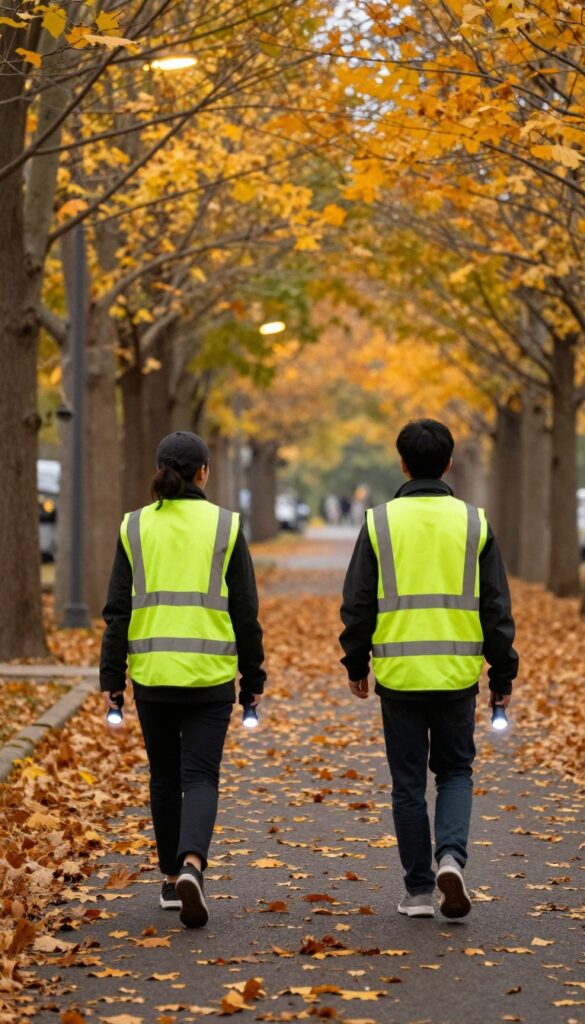
There's a simple reason why walking with a friend feels better in the dark—it just does. You've got someone to chat with, someone to watch your back, and someone who makes the miles fly by. But if you're going solo, that doesn't mean you're on your own.
A quick text to a friend or family member with your route and expected return time can be a game-changer. It's a small step that adds a big layer of safety, and it's one of those habits that becomes second nature once you start.
Walking with a buddy isn't just about company—it's about safety in numbers. When you're with someone else, you're more visible to drivers and less likely to be targeted by anyone looking for an easy mark. Plus, if one of you trips or twists an ankle, the other is right there to help.
If you prefer going solo, that's fine too. Just make it a rule to check in before you head out and after you get back. It's a simple system that gives you peace of mind and gives your loved ones a heads-up.
The Buddy System Works
Walking with a partner in low light is a win-win. You're more visible to traffic because two people take up more space and catch headlights better. You're also less likely to be bothered—most folks looking for trouble avoid groups.
And let's be honest, the conversation makes the time fly. If you can't find a walking buddy, consider joining a local walking group or asking a neighbor if they'd like to join you. Many communities have evening walking clubs, especially in the fall.
Solo Walkers: Set A Check-in
If you walk alone, make a habit of telling someone where you're going and when you expect to be back. You can text a friend, call a family member, or use a safety app that shares your location in real time. Pick a specific time to check in when you get home—like 30 minutes after your usual finish.
That way, if something goes wrong, someone will notice. It's not about being paranoid; it's about being prepared. A little planning goes a long way.
Use Tech To Stay Connected
Your phone can be a powerful safety tool. Share your live location with a trusted contact through apps like Find My or WhatsApp. Set a timer on your phone to remind you to check in.
Some apps even have a 'walk safely' feature that lets a friend follow your route virtually and alerts them if you stop moving for too long. Just remember to keep your phone accessible—not buried in your pocket—so you can reach it quickly if needed.
10. Adjust Your Pace and Stride for Uneven Terrain
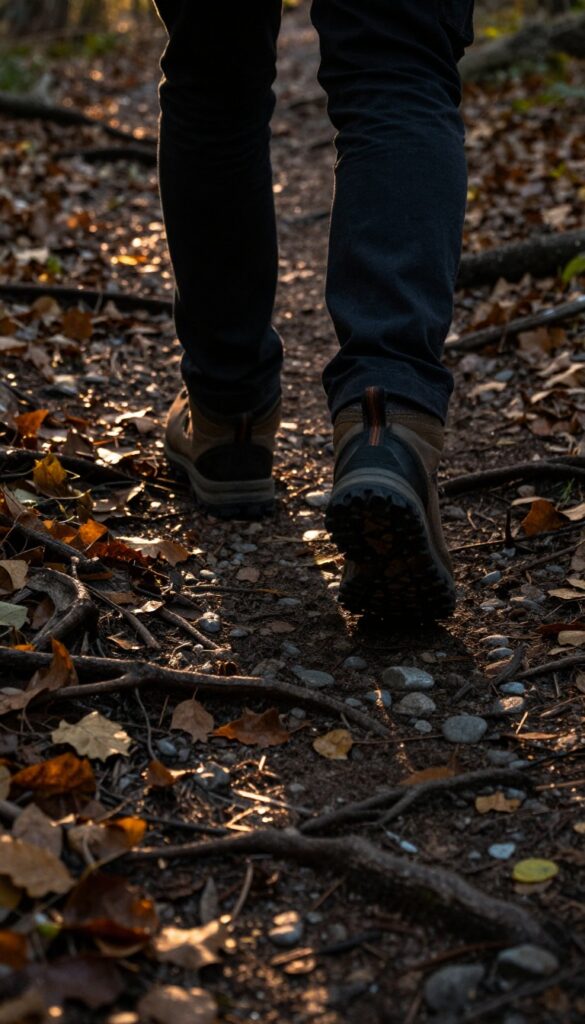
When daylight fades, the ground becomes a guessing game. Shadows hide dips, roots, and loose stones that are easy to spot in the sun. Your usual brisk pace might feel fine on a clear afternoon, but in low light, it's a recipe for a stumble.
Slowing down and shortening your stride gives your feet more time to find solid footing. It's not about being timid—it's about being smart. A little extra caution now means you can keep walking all season without a twisted ankle or a muddy surprise.
Think of your stride as your suspension system. In the dark, a longer step means more time in the air and less control when you land. Shortening your stride keeps your center of gravity lower and more stable.
On uneven paths, that stability is gold. Also, pay attention to the surface underfoot. Wet leaves can be as slippery as ice, especially on slopes or wooden bridges.
If you're not sure about traction, take smaller steps and test the ground before committing your full weight. Your shoes matter too—look for soles with deep treads or lugs that grip well on damp surfaces.
Shorten Your Stride On Unfamiliar Paths
New routes are exciting, but they're also unpredictable. Even familiar trails can look different in the dark. When you're not sure what's ahead, shorten your stride and walk with a slight bend in your knees.
This lowers your center of gravity and makes it easier to react if you hit a surprise dip or root. It's a simple adjustment that can prevent a lot of pain.
Let Your Feet Feel The Ground
Your feet have nerves that sense the ground, but thick-soled shoes can dull that feedback. Try to walk with a lighter step, letting your feet 'see' the terrain. If you're on a rocky path, place your foot down heel-first and roll through the step.
This gives you more time to adjust if the ground shifts. Plus, it's quieter—which is nice if you're trying to enjoy the sounds of the evening.
Choose Shoes With Real Traction
Not all sneakers are created equal. For low-light walks, you want shoes with a lugged outsole—think trail runners or hiking shoes. The deep grooves grip wet leaves and mud better than flat street shoes.
If you only have smooth soles, consider adding a pair of traction cleats that slip over your shoes. They're cheap, easy to carry, and make a huge difference on slick autumn mornings.
FAQ
What is the best color to wear for low-light walking?
Reflective materials are best, but if you choose colors, go for bright yellow, orange, or white. These stand out more than dark colors in twilight.
How can I make my dog visible during evening walks?
Use a reflective leash and collar, and consider a clip-on LED light for your dog's collar. This keeps both of you visible to drivers.
Is it safer to walk on the sidewalk or the road in low light?
Sidewalks are safer, but if you must walk on the road, walk facing traffic and stay as far to the side as possible. Wear reflective gear.
What should I do if I encounter a car that doesn't see me?
Stop and wait. Make yourself as visible as possible by waving your arms or using your flashlight. Never assume the driver will stop.
Can I use my phone's flashlight instead of a dedicated flashlight?
Yes, but it's not ideal. A phone flashlight is dim and drains your battery. A dedicated flashlight or headlamp is brighter and more reliable.
Conclusion
Shorter days don’t have to mean cutting your walks short or losing confidence on the trail. These low-light skills are simple to practice, and each one builds on the last—so you can start with something as easy as adjusting your pace and work up to navigating tricky terrain after sunset. Pick two or three that fit your usual route, and make them part of your routine.
A little preparation goes a long way when daylight fades. You’ll feel steadier on your feet, more aware of your surroundings, and ready to enjoy those crisp autumn evenings without hesitation.

I’m Pallab Kishore, the owner of Little Pets Realm — an animal lover and pet care enthusiast sharing easy tips, healthy recipes, and honest advice to help every small pet live a happy, healthy, tail-wagging life.