
Last updated on August 19th, 2026 at 04:15 pm
Housing multiple dogs outdoors can quickly turn chaotic without the right setup. You need a kennel that balances durability, space, and comfort for every pup. The best designs solve real problems: mud, aggression, weather, and cleaning.
These 10 ideas range from budget-friendly DIY builds to luxury custom enclosures. Each one prioritizes safety and ease of use for both you and your dogs.
Whether you're starting from scratch or upgrading an existing run, there's a practical solution here. Let's explore kennels that actually work for multi-dog households.
1. Heavy-Duty Chain Link with Concrete Base
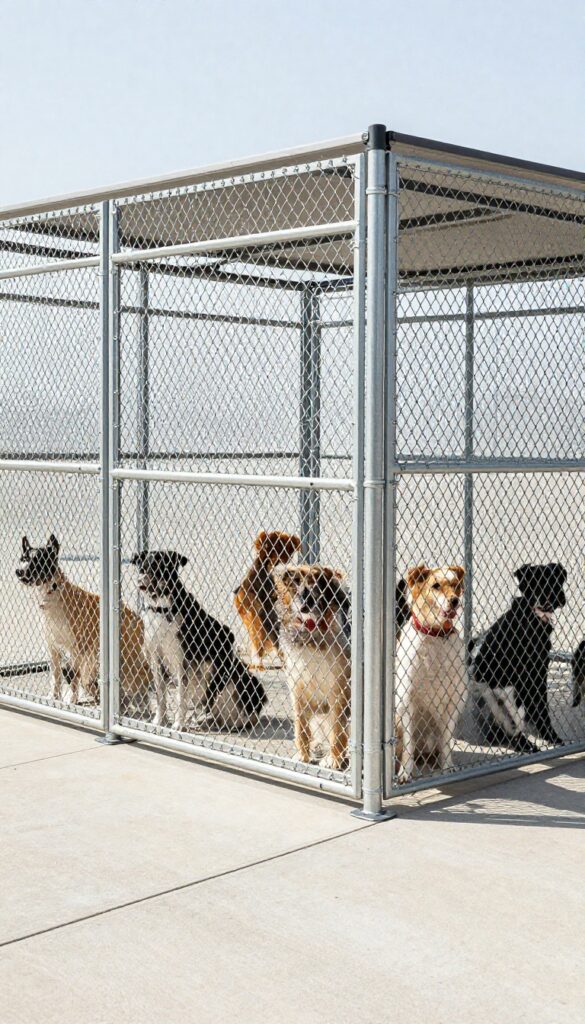
A classic choice that never goes out of style. Chain link panels combined with a poured concrete base give you a kennel that's tough enough for the rowdiest pack. The concrete floor stops digging escapes cold, and the open mesh lets you see every interaction at a glance.
It's a no-nonsense setup that prioritizes safety and easy maintenance.
Chain link kennels have been around forever because they work. The key upgrade here is the concrete base. Instead of letting dogs dig their way to freedom, you pour a solid slab that anchors the entire structure.
This also makes cleaning a breeze—just hose it down. For multi-dog households, the transparency of chain link helps you monitor for any signs of tension or injury without entering the kennel.
Why Concrete Matters
Dirt or grass floors turn into mud pits fast with multiple dogs. Concrete stays solid, drains well if sloped slightly, and eliminates the risk of dogs tunneling out. It also discourages chewing on fence edges since there's no exposed dirt to paw at.
Panel Height And Gauge
For multiple dogs, go with at least 6-foot panels. A heavier gauge, like 11 or 9, resists bending and rust better over time. If you have jumpers, a covered top or inward-angled extensions can prevent escapes.
Adding A Shade Canopy
Chain link offers zero sun protection. Attach a shade cloth or corrugated roof over part of the kennel. Dogs need a cool spot to retreat, especially in summer.
A simple tarp stretched over the top works in a pinch.
2. Custom Wooden Privacy Kennel
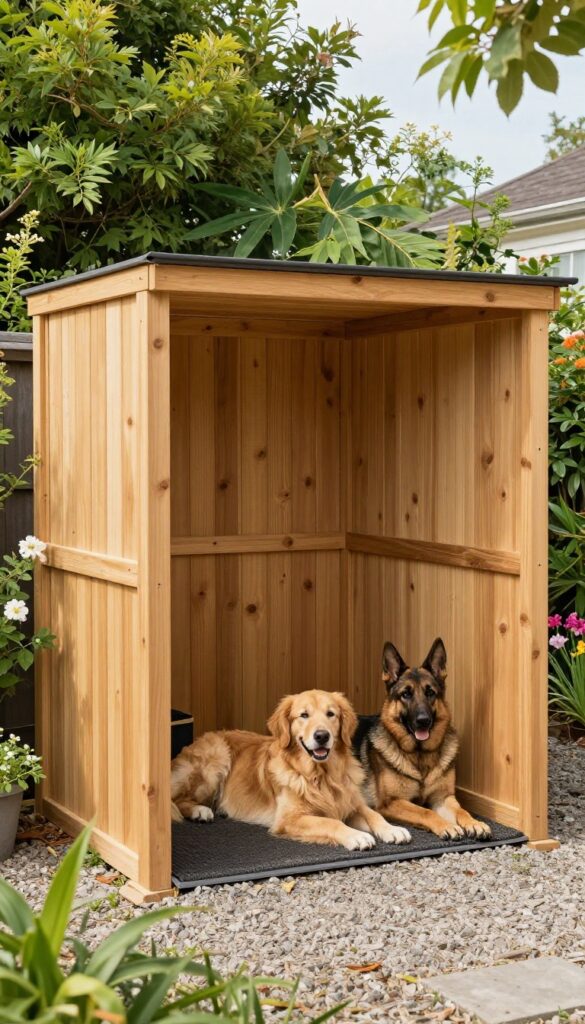
Wood fencing creates a kennel that feels more like a natural extension of your yard than a cage. The solid panels block visual triggers that often set off barking fits, making this a smart choice for dogs that react to every passerby. A wooden privacy kennel also blends into landscaping better than chain link or wire.
Building with wood gives you flexibility in size and shape, so you can customize the run to fit your yard and your pack. Pressure-treated lumber or cedar resists rot and holds up to weather, while a sealed surface makes cleaning easier. For the base, gravel or grass provides good drainage and keeps the area from turning into mud after rain.
Choosing The Right Wood
Cedar and redwood naturally repel insects and decay, so they last longer without chemical treatments. Pressure-treated pine is more affordable but needs a pet-safe sealant to prevent splinters. Avoid softwoods like untreated fir, which can warp and crack within a season.
Privacy Panel Height And Spacing
For large dogs, panels should be at least 6 feet tall to prevent jumping. Space the boards close together—no more than an inch apart—so smaller dogs can't squeeze through or get their heads stuck. Solid panels also reduce wind chill in winter and provide shade in summer.
Drainage And Flooring Options
A gravel base with a slight slope directs water away from the kennel and keeps the surface from getting swampy. Grass works well in dry climates but can turn into mud with heavy use. For easy cleaning, consider a concrete pad with a drain, then top it with rubber mats for comfort.
3. Modular Wire Panel System
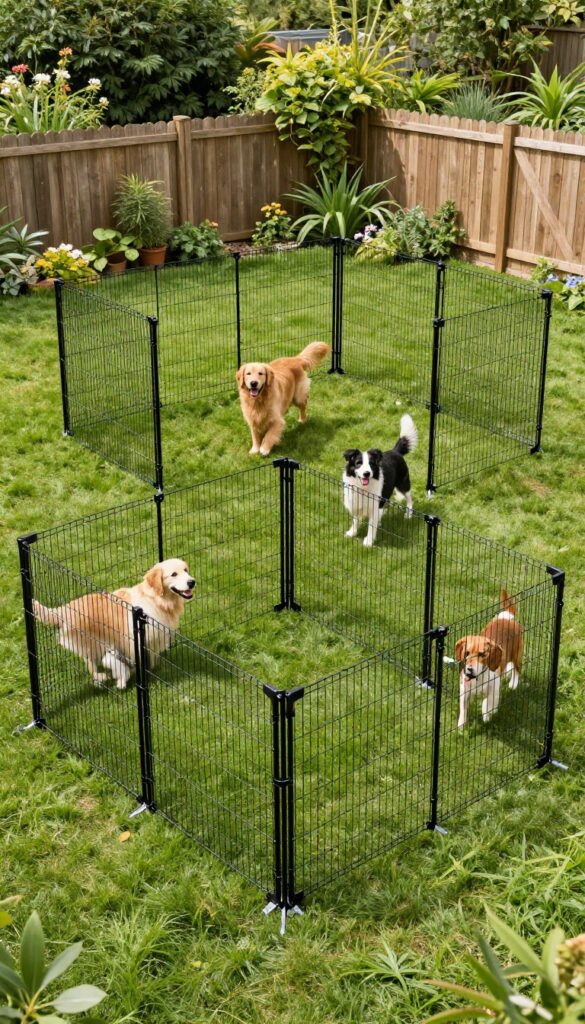
Modular wire panels are a lifesaver when you need flexibility without a permanent commitment. These interlocking panels let you build a kennel that fits your exact space, then reconfigure it as your pack grows or your yard changes. Perfect for renters or anyone who might move, they're also one of the most affordable ways to create a secure enclosure for multiple dogs.
The beauty of modular wire panels is their simplicity. You buy a set of panels and connectors, then snap them together in any shape you want—square, rectangle, L-shape, or even a run with a covered top. Most panels are made of coated wire that's tough enough to contain large breeds but lightweight enough to move by yourself.
If a panel gets damaged, you replace just that one, not the whole kennel. And when it's time to pack up, everything disassembles flat for easy storage or transport.
Easy Expansion
Adding more dogs? Just buy extra panels and extend the run. No demolition, no rebuilding.
You can double the size in minutes by attaching new sections to the existing ones. This modular approach also lets you create separate zones—a sleeping area, a play area, and a potty zone—all within one connected system.
Renter-approved Setup
Since modular wire panels don't require digging or permanent posts, they're ideal for rented homes. You can set them up on grass, concrete, or gravel without damaging the ground. When you move, the entire kennel comes down and goes with you.
Just be sure to anchor the panels with ground stakes or sandbags to prevent tipping, especially with energetic dogs.
Customization Options
Many brands offer add-ons like doors, roof panels, and shade covers. You can also mix panel heights to create a tiered effect or use shorter panels for small breeds. For multi-dog homes, consider adding a divider panel that lets you separate dogs during feeding or when introducing new pack members.
4. In-Ground Fenced Run with Shelter
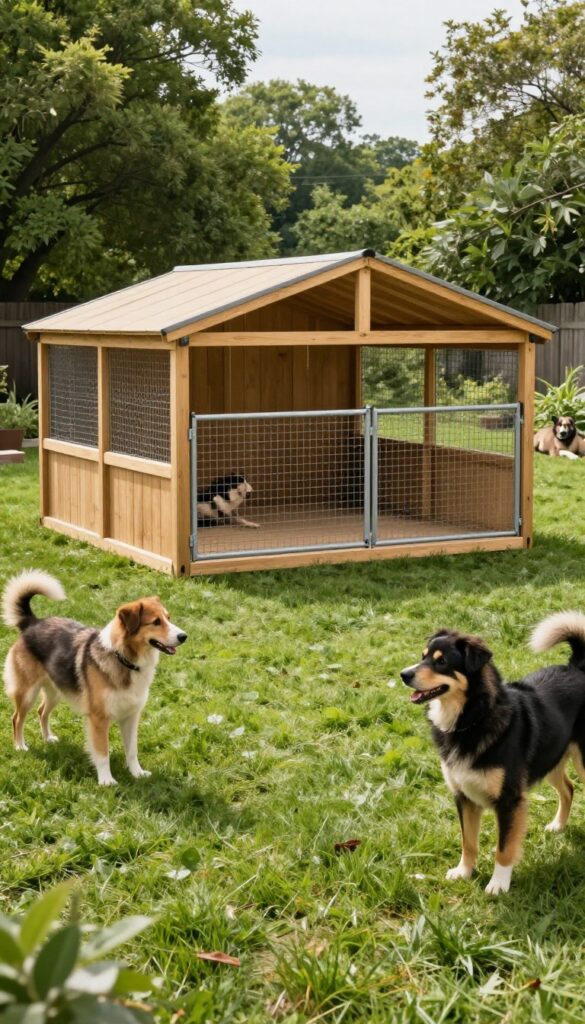
A permanent in-ground run gives your dogs the freedom to zoom around while staying safe and contained. By combining a sturdy fence with a dedicated shelter, you create a setup that handles both exercise and rest without compromise. This is a solid choice for owners who want a long-term solution that stands up to weather and daily wear.
An in-ground fenced run is exactly what it sounds like: a fully enclosed area with a built-in dog house or insulated shelter. The fence keeps dogs in and wildlife out, while the shelter provides a cozy retreat from rain, wind, or sun. Because the run is fixed in place, you can build it to fit your yard perfectly and add features like drainage, shade, and secure gates.
Why It Works For Multiple Dogs
Multiple dogs need space to move without feeling crowded. A well-sized run (at least 200 square feet for two medium dogs, more for larger packs) lets them play, stretch, and establish their own spots. The shelter gives each dog a place to retreat if they want alone time, reducing tension.
Plus, a permanent structure means you don't have to move or adjust panels every day.
Choosing The Right Shelter
The shelter is the heart of this setup. Look for an insulated dog house with a raised floor to keep it dry and warm. For multiple dogs, consider a larger model with a divider or separate entrances so dogs can choose their own space.
Materials like heavy-duty plastic or treated wood hold up better outdoors. Make sure the roof is sloped for rain runoff and the door is positioned away from prevailing winds.
Fencing And Flooring Tips
Use chain-link or welded wire fencing at least 5 feet tall to prevent jumping. Bury the bottom edge 12 inches deep or use a concrete footer to stop digging. For flooring, gravel or concrete with good drainage works best—it stays clean and prevents mud.
Add a layer of rubber mats or artificial turf in the shelter area for comfort. Always include a secure double-gate entry for safety.
5. Covered PVC or Vinyl Kennel
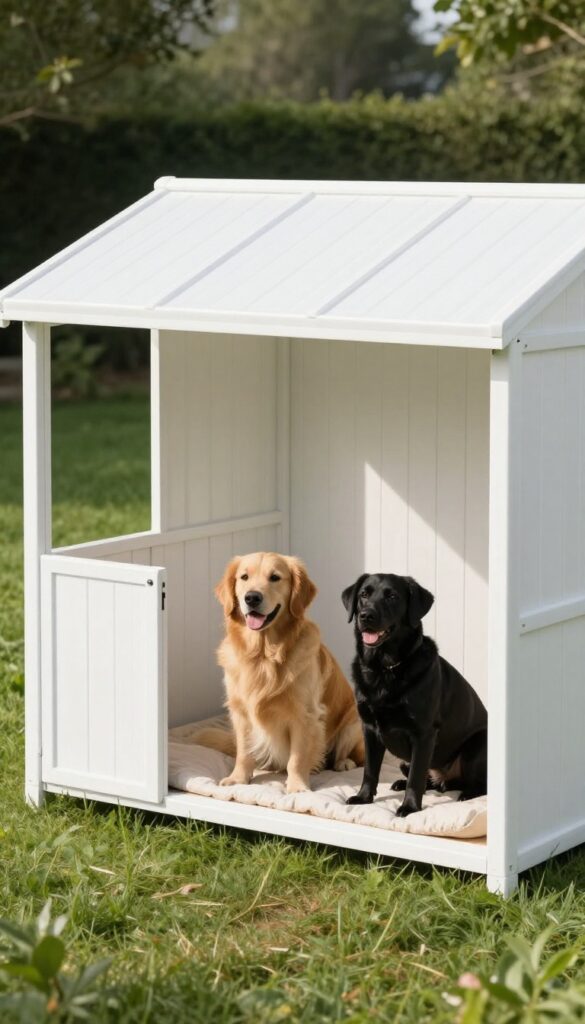
If you're tired of scrubbing mud and mildew off wood or metal, a PVC or vinyl kennel might be your low-maintenance dream. These materials resist rot, rust, and chewing, so they stay looking good for years. Plus, the smooth surface is gentle on paws and easy to hose down after a muddy play session.
Adding a solid roof or shade cover transforms a basic PVC kennel into a climate-controlled retreat. Dogs stay cooler in summer because the vinyl reflects heat better than metal or dark wood. In rainy climates, a covered run keeps the interior dry and reduces the mud your dogs track into the house.
Many owners also install a vinyl curtain on one side to block wind and create a cozy den-like feel. Cleaning is a breeze—just spray off dirt and drool, and the non-porous surface won't harbor bacteria or odors. For multi-dog households, this means less time scrubbing and more time enjoying your pups.
Why Pvc Works For Multiple Dogs
PVC kennels can be built in modular sections, so you can expand the run as your pack grows. The panels are lightweight but sturdy, and they won't splinter or rust even with constant exposure to urine and weather. Dogs that like to dig or chew will have a harder time damaging vinyl than wood or chain-link.
Roofing Options That Make A Difference
A solid polycarbonate or metal roof provides full shade and rain protection. For extra ventilation, consider a slatted roof that lets air circulate while blocking direct sun. Some owners use shade cloth stretched over a PVC frame—cheap, replaceable, and effective at lowering temperatures by 10–15°F.
Installation Tips For Durability
Anchor the kennel to a concrete slab or use ground spikes to prevent tipping in high winds. Leave a slight slope in the flooring so water drains away. If you live in a snowy area, choose a roof pitch that sheds snow easily—flat roofs can collapse under heavy loads.
6. Multi-Compartment Kennel with Shared Run
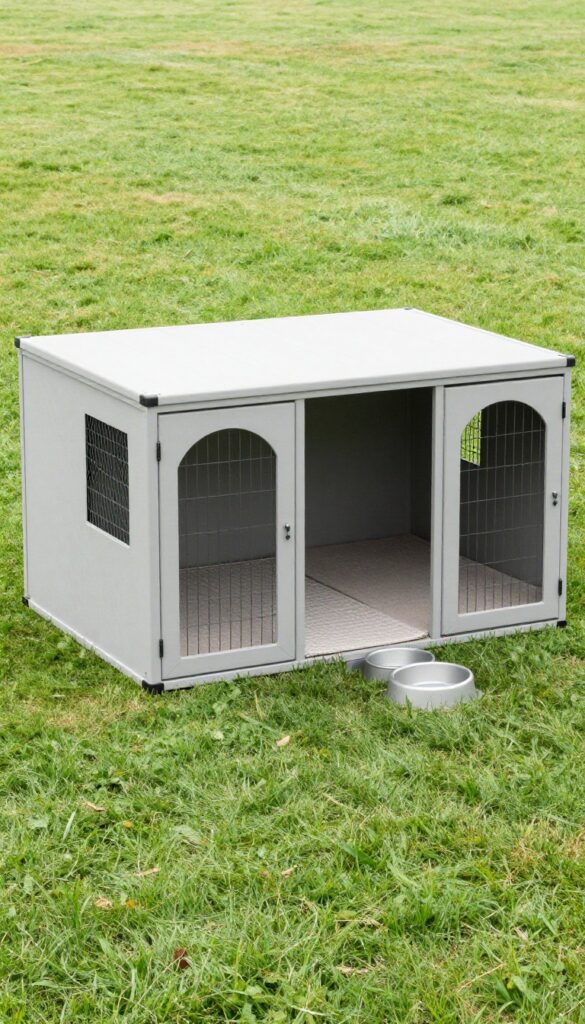
Managing multiple dogs often means juggling their individual needs while still letting them enjoy time together. A multi-compartment kennel with a shared run gives you the best of both worlds: private spaces for feeding or rest, plus a common area for supervised play. This setup works especially well for dogs that get along but have different temperaments or dietary requirements.
Each dog gets its own compartment, typically 4×6 feet or larger, with a door that opens into a larger shared run. The compartments prevent food stealing and give shy dogs a retreat. The shared run should be at least double the size of a single compartment to allow room for exercise.
Use durable materials like coated chain-link or welded wire for the run, and solid walls or partial dividers between compartments to reduce visual triggers.
Designing The Compartments
Each compartment needs its own weatherproof shelter, raised bed, and food/water station. Position the compartments side by side or in a U-shape around the run. Include guillotine doors or sliding gates so you can control access to the shared area.
Make sure the compartments are easy to clean—sloped concrete floors with drains work great.
Shared Run Features
The run should have multiple exits in case of scuffles, and plenty of shade and water stations. Add agility equipment or digging pits to keep the dogs entertained. A central drainage system prevents muddy puddles.
Consider a roof or partial cover to protect from rain and sun.
Safety And Management Tips
Introduce dogs to the setup gradually, starting with short supervised sessions in the shared run. Use separate feeding schedules to avoid conflict. Install secure latches and double-gate entries to prevent escapes.
Regularly inspect for wear and tear, especially around gates and hinges.
7. Portable Exercise Pen Setup
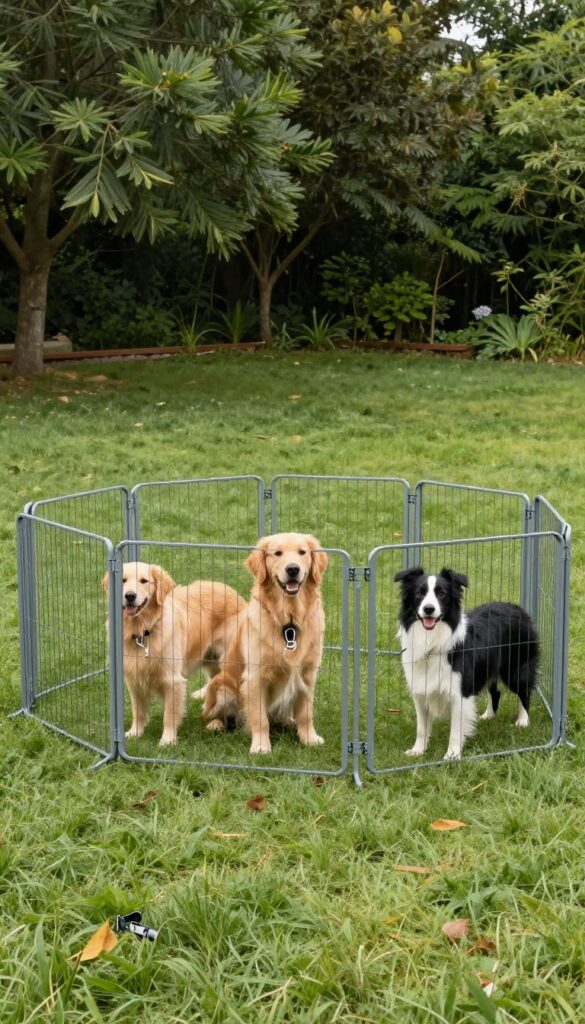
Lightweight metal or plastic exercise pens can be linked together to create a large temporary kennel. Great for travel or rotating dogs in and out.
Portable exercise pens are a game-changer for multi-dog households that need flexibility. These lightweight panels—typically made of metal or heavy-duty plastic—can be configured into custom shapes and sizes. You can link multiple pens to create a spacious temporary kennel, perfect for camping trips, vet visits, or simply giving your dogs a change of scenery in the yard.
They're also ideal for rotating dogs in and out of the main run, allowing you to separate pups during feeding or give one-on-one attention without a permanent structure.
Linking Panels For More Space
Most exercise pens come with connector pins that let you attach multiple units together. For example, two 48-inch pens can form a 96-inch run. This modularity means you can scale up or down as needed.
Just ensure the connections are secure—dogs can be clever about pushing panels apart. Use carabiners or zip ties for extra reinforcement if your dogs are escape artists.
Anchor Options For Stability
Lightweight pens can tip if dogs lean or jump on them. Many models include ground stakes for soft surfaces like grass. For hard ground, use sandbags or heavy-duty weights on the base.
Alternatively, set up the pen in a corner or against a wall for added stability. If you're using it indoors, non-slip mats under the panels help prevent sliding.
Best Materials For Multi-dog Use
Metal pens (usually wire or tubular steel) are more durable and harder to chew through than plastic. Look for rust-resistant coatings if left outside. Plastic pens are lighter and easier to clean, but may not hold up to determined chewers.
For multiple dogs, opt for panels with narrow bar spacing (under 2 inches) to prevent paws or heads from getting stuck.
8. Elevated Deck Kennel
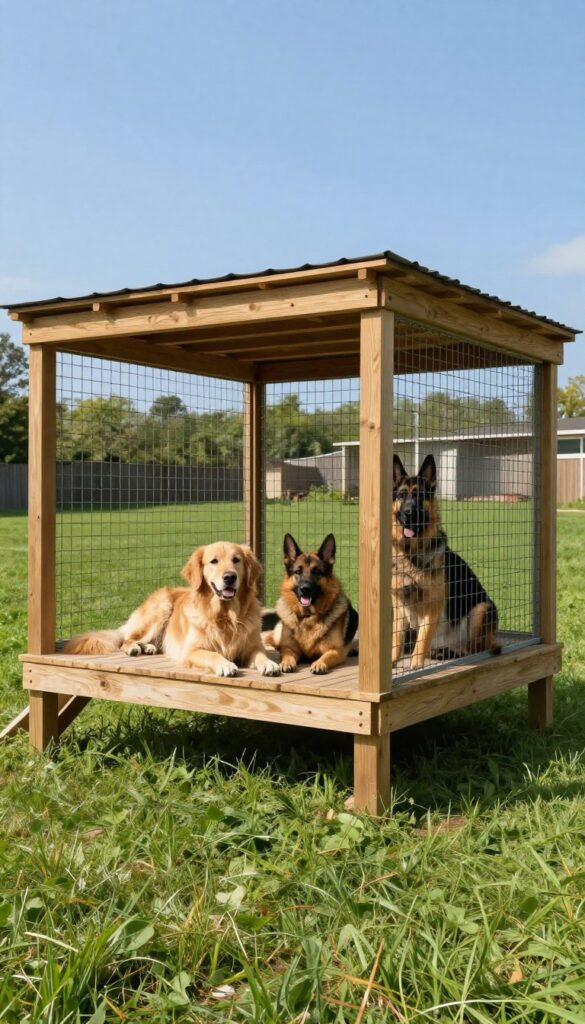
A raised deck kennel is a smart solution for sloped yards or areas that stay wet after rain. By lifting the kennel off the ground, you create a dry, airy space that keeps dogs comfortable and clean. The deck can double as a shaded lounging area on top, with the kennel built underneath for efficient use of vertical space.
This design works especially well if you have a hillside property where flat ground is scarce. Build a sturdy wooden deck with the kennel enclosure beneath it, or place the kennel on top if you prefer easier access. Either way, the elevation improves drainage and airflow, reducing odors and mud tracking.
Why Elevation Matters
Dogs stay drier and cleaner when they're off the damp ground. Elevated kennels also discourage digging and make it harder for pests like fleas and ticks to take hold. The open space underneath can be used for storage or as a cool retreat on hot days.
Building Considerations
Use pressure-treated lumber or composite decking for longevity. Ensure the deck is strong enough to support the weight of multiple dogs and any snow load in winter. Include a ramp or stairs so dogs can access the deck safely, and add a roof or shade cloth on top to protect against sun and rain.
Multi-level Options
For extra space, consider a two-story design with the kennel on the lower level and a shaded run on the upper deck. This gives dogs separate areas for sleeping and playing. Add a dog door between levels so they can move freely between the two zones.
9. Tractor Supply Co.-Style Cattle Panel Kennel
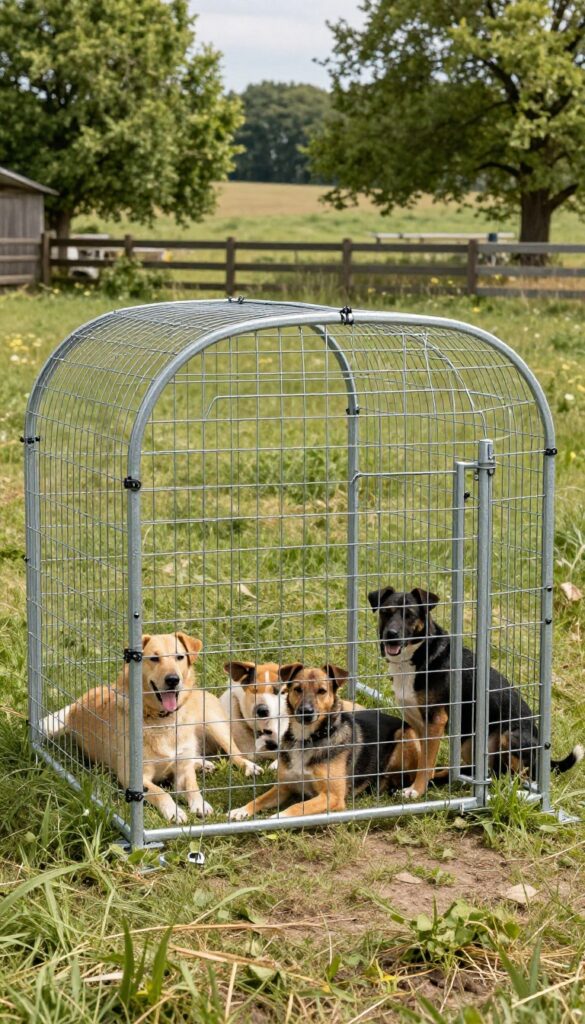
Cattle panels aren't just for livestock. Bend a few of those heavy-duty wire panels into a hoop shape, anchor them to T-posts, and you've got a kennel that's tough, airy, and surprisingly easy to build. The curved top makes it nearly impossible for dogs to climb out, and the open grid keeps air moving on hot days.
This is a favorite among rural dog owners who need something that can handle rough play and weather without breaking the bank.
The cattle panel kennel is a DIY project that delivers professional-grade durability at a fraction of the cost. Each panel is typically 16 feet long and 50 inches tall, so two panels joined end-to-end create a spacious 10-foot diameter circle. The arch shape adds headroom and eliminates corners where dogs might get trapped or bullied.
Because the panels are galvanized, they resist rust far better than standard welded wire. You'll need a few T-posts and some zip ties or wire clips to secure everything. Total cost often comes in under $200 for a kennel that comfortably houses three medium dogs.
Why The Curved Top Works
Dogs that like to climb—or launch themselves at fences—find the curved top confusing. There's no flat edge to grip, and the arch forces them to slide back down. This design is especially effective for agile breeds like hounds or herding dogs.
Plus, the open top means you can easily reach inside to break up scuffles or clean up without unclipping panels.
Installation Tips For Multi-dog Yards
Set the kennel on a level spot and sink T-posts at least 18 inches deep every 4 feet around the perimeter. Overlap panel ends by one rib and secure them with heavy-duty zip ties or fencing wire. For extra stability, run a length of rebar through the bottom loops and stake it down.
If your dogs are diggers, bury the bottom edge 6 inches underground or lay a ring of concrete pavers around the base.
Adding A Roof Or Shade
The open top is great for airflow, but direct sun can be harsh. You can drape a shade cloth over the arch or attach corrugated metal panels to a few crossbars. Another option is to park the kennel under a tree or beside a building that provides afternoon shade.
Just make sure whatever you add doesn't create a ladder for escape artists.
10. Luxury Custom Kennel with Climate Control
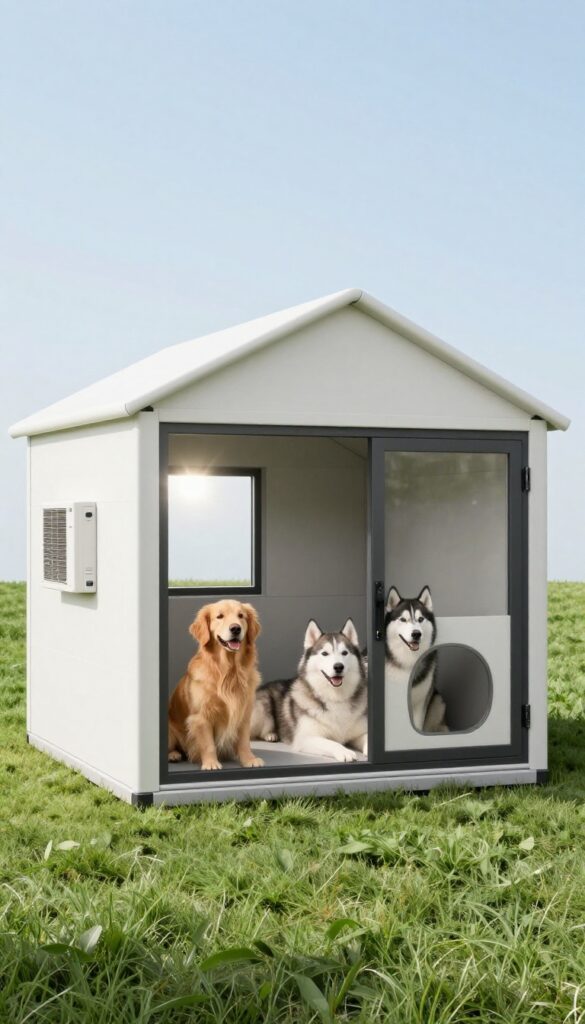
When you're ready to invest in the absolute best for your pack, a custom-built kennel with full climate control is the gold standard. These aren't just dog houses—they're tiny homes designed to keep every pup comfortable no matter what the weather throws at them. Think insulation, heating, cooling, and smart features that make management effortless.
It's the ultimate solution for extreme climates and multiple dogs.
Why Climate Control Matters For Multiple Dogs
When you have several dogs, body heat alone can turn a kennel into an oven in summer or leave it freezing in winter. Climate control ensures each dog stays safe and comfortable, reducing stress and health risks. It also means you can house breeds with different temperature tolerances together without worry.
Key Features To Include
Start with proper insulation in walls and roof. Add a wall-mounted heater or radiant floor heating for cold months, and a ceiling fan or mini-split AC for summer. A small dog door connecting to an attached run gives dogs freedom while keeping the interior climate stable.
Durable, easy-to-clean materials like sealed concrete floors and fiberglass panels make maintenance a breeze.
Designing For Multiple Dogs
Custom kennels can include separate sleeping areas or individual crates within the same structure, each with its own climate zone if needed. An attached run with both shaded and sunny spots lets dogs choose their comfort. Add a wash-down area with a drain for easy cleaning after muddy days.
FAQ
How much space do multiple dogs need in an outdoor kennel?
A good rule is at least 100 square feet for two medium dogs, plus 50 square feet for each additional dog. More space reduces conflict and allows exercise.
What is the best flooring for a multi-dog kennel?
Concrete is durable and easy to clean, but can be hard on joints. Rubber mats or pea gravel over concrete provide cushioning and drainage.
Can I leave my dogs in an outdoor kennel overnight?
Only if the kennel provides adequate shelter from weather, and the temperature is safe. Always provide fresh water and a comfortable bed. Check local laws.
How do I prevent dogs from digging out of a kennel?
Extend fencing underground (at least 12 inches) or lay concrete pavers along the perimeter. A concrete base is the most effective solution.
What is the most affordable kennel option for multiple dogs?
A DIY cattle panel kennel using T-posts and wire panels is very cost-effective. Chain link kits are also relatively inexpensive and easy to install.
Conclusion
Choosing the right outdoor kennel for multiple dogs comes down to your space, budget, and your dogs' personalities. Whether you go with a simple chain link run or a fully customized luxury setup, the goal is the same: a safe, comfortable place where your dogs can enjoy the outdoors without worry.
Take your time planning the layout, and don't forget to add shade, water, and a cozy spot to rest. Your pack will thank you.

I’m Pallab Kishore, the owner of Little Pets Realm — an animal lover and pet care enthusiast sharing easy tips, healthy recipes, and honest advice to help every small pet live a happy, healthy, tail-wagging life.