
Last updated on August 19th, 2026 at 04:15 pm
Your dog's crate doesn't have to be an eyesore tucked in the corner. These nine end table designs prove a kennel can double as stylish furniture while giving your pup a cozy den.
From rustic wood crates to sleek modern boxes, each idea blends function with living-room-ready looks. Whether you're into farmhouse charm or mid-century lines, there's a build here that hides the crate in plain sight—and actually enhances your space.
Ready to turn that wire cage into a conversation piece?
1. Rustic Wood Crate with a Live-Edge Top
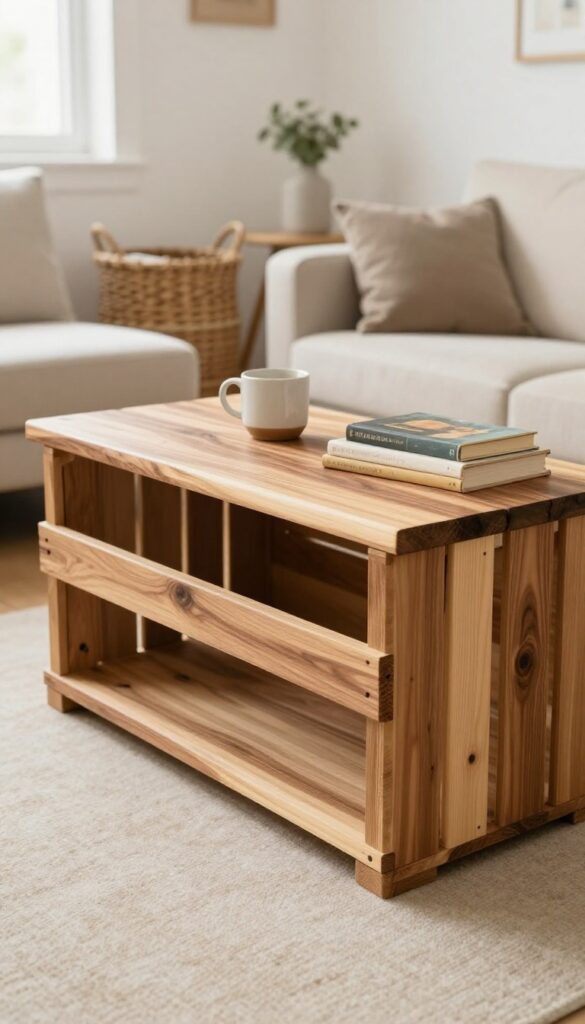
A wooden crate doesn't have to look like shipping material. Dress it up with a live-edge slab, and you've got a piece that feels like it was plucked from a mountain cabin. The natural wood tones warm up the room, while the uneven edge adds organic texture that factory-made furniture can't replicate.
This build is as straightforward as it gets. Find a sturdy wooden crate—either new or reclaimed—that fits your dog's kennel dimensions. Top it with a live-edge slab of walnut, oak, or acacia.
The slab should overhang slightly on all sides to create a table-like silhouette. Secure it with L-brackets from underneath so the top stays removable for crate access. The result is a surface strong enough for a lamp, a stack of books, or a morning coffee mug.
Choosing The Right Crate
Look for a crate with solid wood construction, not particleboard. Pine or fir crates are affordable and take stain well. Measure your dog's crate dimensions first—the wood crate should be at least 2 inches wider and deeper so the top slab sits comfortably.
Avoid crates with large gaps between slats; you want the kennel to feel enclosed and cozy.
Finishing The Live-edge Top
Sand the slab with 120-grit, then 220-grit sandpaper until smooth. Apply a food-safe mineral oil or a matte polyurethane to protect against spills. If you want a darker tone, use a wood stain before sealing.
Let it dry fully—at least 24 hours—before placing anything on it.
Styling Tips For A Farmhouse Vibe
Pair the crate table with neutral-toned cushions inside the kennel. Add a woven basket on the bottom shelf (if the crate has one) for storing dog toys. On top, a ceramic lamp with a linen shade or a stack of vintage books completes the look without cluttering the surface.
2. Modern Minimalist with a White Enclosed Base
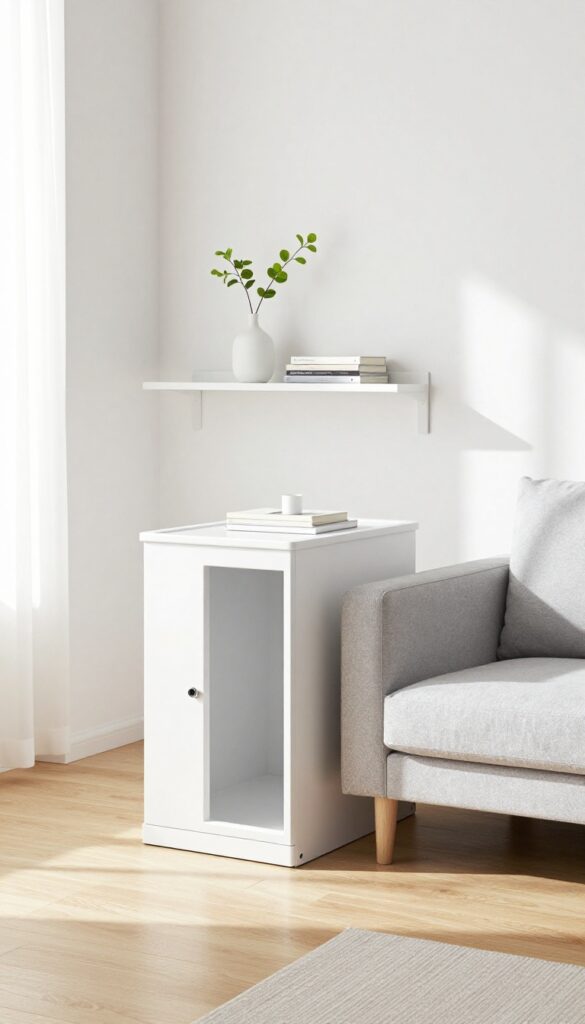
A white kennel end table can disappear into a light, airy room. The key is to keep lines clean and the finish matte. Pair it with a floating shelf above to create a balanced, functional setup that doesn't scream "dog crate.
"
This design works best in spaces with neutral walls and simple furniture. The white crate blends in, while the shelf provides a spot for a lamp or decor. It's a subtle way to give your dog a den without sacrificing style.
Choosing The Right Crate
Look for an enclosed crate with a solid white finish. Avoid wire cages—they ruin the minimalist look. Wood or MDF with a smooth painted surface is ideal.
Make sure the door can be removed or hidden, or choose a side-entry model.
Floating Shelf Placement
Mount the shelf directly above the crate, about 6 to 12 inches higher. This creates a visual unit. Use a shelf that's slightly wider than the crate for balance.
Keep it clutter-free—one plant or a small lamp is enough.
Decorating The Top
Since the crate itself is plain, the top surface is your canvas. A stack of coffee table books, a minimalist vase, or a framed photo works well. Avoid too many items—minimalism is about restraint.
3. Industrial Pipe Frame with a Wooden Top
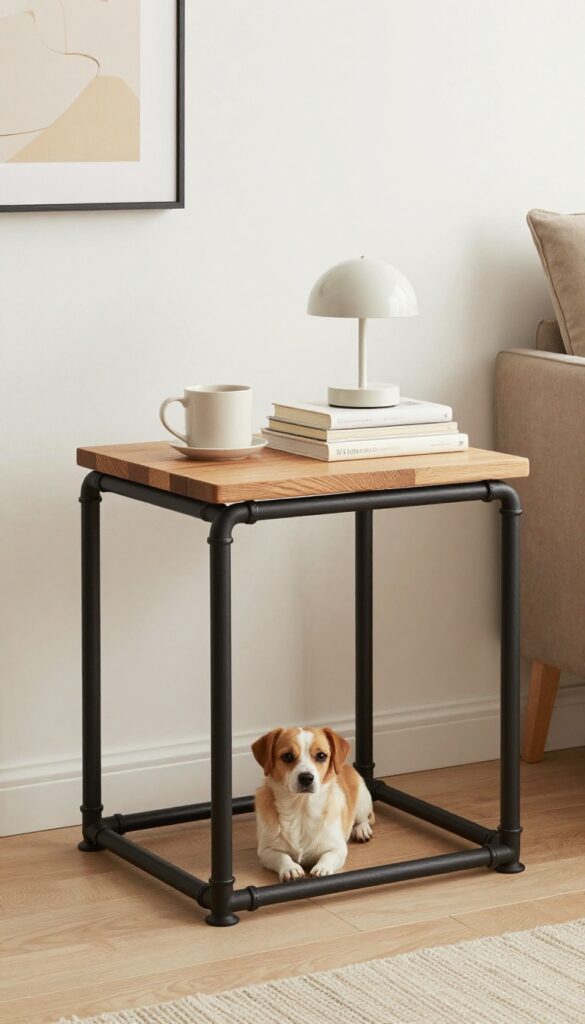
Black iron pipes and fittings bring a raw, urban edge to any room. This design wraps your dog's crate in a sturdy metal frame that doubles as an end table. The thick wooden plank on top provides a solid surface for drinks, books, or a lamp, while the open shelving below keeps the crate accessible.
It's a bold look that works especially well in lofts, modern apartments, or any space that leans industrial.
To build this, you'll need black iron pipes, floor flanges, elbows, and tees from the hardware store. Assemble a rectangular frame that sits flush against the crate's sides, then secure it to the floor or wall for stability. The wooden top can be reclaimed lumber, butcher block, or a stained pine board—anything with heft.
Sand and seal it to withstand daily use. The result is a piece that looks like it came from a boutique furniture store, but costs a fraction of the price.
Materials And Tools
You'll need: black iron pipes (1/2-inch or 3/4-inch diameter), floor flanges, elbows, tees, a wooden plank (at least 1 inch thick), wood stain or sealant, pipe cutter or hacksaw, drill, and screws. Optional: casters for mobility or a shelf bracket for extra support.
Assembly Tips
Measure your crate's height and width first. Cut pipes to size, then dry-fit the frame before tightening. Use a level to ensure the top plank sits flat.
Attach the frame to the crate with zip ties or small brackets—avoid drilling into the crate if you want to keep it removable. Apply a clear matte sealant to the wood to protect against spills.
Styling The End Table
Keep the industrial vibe going with a metal lamp, a leather-bound book stack, or a small succulent in a concrete pot. The open pipe structure pairs well with neutral tones and raw textures. Add a basket on the lower shelf for dog toys or remotes.
4. Mid-Century Modern with Tapered Legs
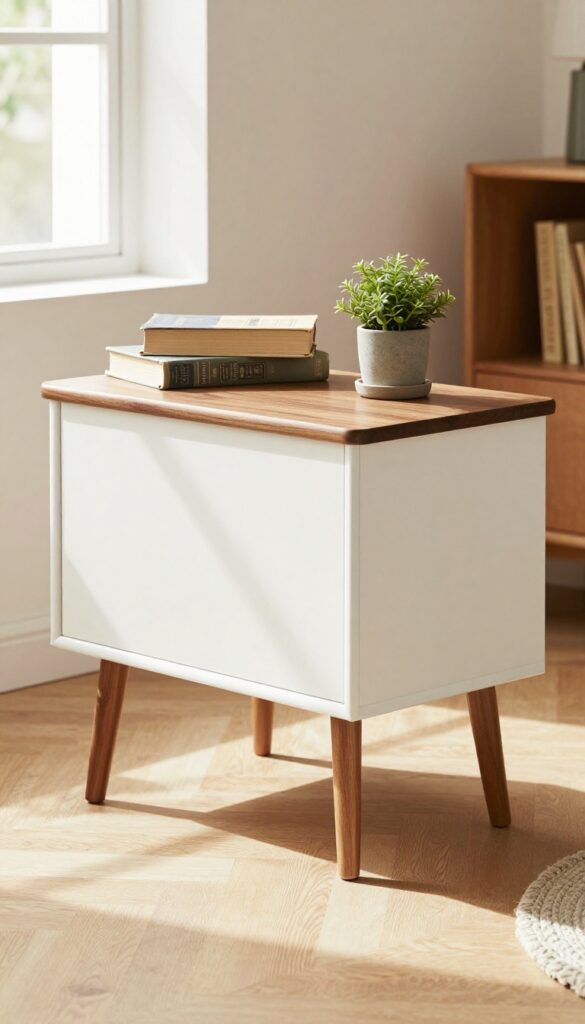
Mid-century modern never goes out of style, and your dog's crate can join the trend. By attaching tapered wooden legs and a walnut-stained top, you transform a basic kennel into a retro showpiece. This design works especially well in living rooms with clean lines, warm wood tones, and a hint of Mad Men-era flair.
The key to this look is the legs—thin, angled, and wooden. They lift the crate off the floor, making it feel lighter and more furniture-like. Pair them with a solid wood top that extends slightly beyond the crate's edges, stained in a rich walnut or teak.
The result is a piece that could pass for a vintage credenza, but with a cozy den inside.
Choosing The Right Legs
Look for pre-made tapered legs at hardware stores or online. Hairpin legs are a popular alternative, but for true mid-century authenticity, go with solid wood. Measure the crate's base and attach the legs with strong brackets so they can support the weight of the top and any items you place on it.
Staining And Finishing
Walnut or teak stain gives that iconic mid-century warmth. Sand the wood top and legs before staining, then apply a clear polyurethane coat for durability. If you want a two-tone effect, paint the crate white or leave it natural wood, but keep the top and legs consistent.
Styling The Top
Use the tabletop to display a retro lamp, a stack of books, or a small plant. Keep it minimal to let the wood grain shine. A woven basket on the side can hold dog toys, tying the whole look together.
5. Farmhouse Style with a Barn Door Front
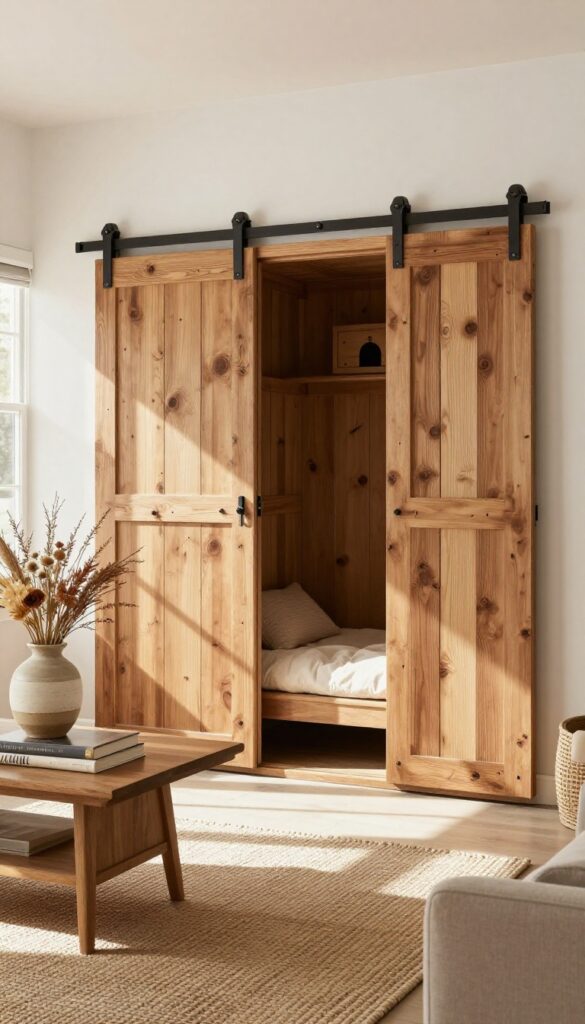
Nothing says farmhouse charm quite like a sliding barn door. By swapping out the standard wire crate door for a reclaimed wood barn door, you instantly upgrade your dog's kennel into a rustic end table that feels intentional and warm. The sliding mechanism is surprisingly easy to install, and the door glides open for quick access to your pup.
When closed, the barn door hides the crate completely, making it look like a piece of furniture rather than a cage. This idea works especially well in living rooms with farmhouse, cottage, or rustic decor. The natural wood tones add texture and warmth, and you can customize the stain or paint to match your existing furniture.
The beauty of a barn door front is that it solves two problems at once: it conceals the kennel and adds a functional tabletop. You can build this yourself with basic tools, or find a pre-made barn door kit that fits your crate's dimensions. The key is using reclaimed wood for that authentic, weathered look, but new wood with a distressed finish works too.
Choosing The Right Wood
Reclaimed wood is ideal for that rustic farmhouse feel. Look for old barn wood, pallet wood, or salvaged planks with character—knots, nail holes, and varied grain add charm. If reclaimed isn't available, new pine or cedar can be stained or whitewashed to mimic aged wood.
Avoid pressure-treated lumber, as the chemicals can be harmful to pets.
Hardware And Installation Tips
A sliding barn door needs a rail system that can support the weight of the door. Choose a heavy-duty track with a stopper to prevent the door from sliding too far. Mount the track securely to the top of the crate frame or a header board.
For the door itself, attach rollers to the top edge and a guide at the bottom to keep it from swinging. Test the slide before adding the handle.
Styling The Tabletop
The top of the crate becomes your end table surface. Add a wood plank or a piece of butcher block that overhangs slightly for a finished look. Style it with a lamp, a stack of books, or a small plant.
Keep it simple to maintain the farmhouse aesthetic. A galvanized metal tray or a woven basket can hold remote controls or coasters.
6. Built-In Bookshelf Surround
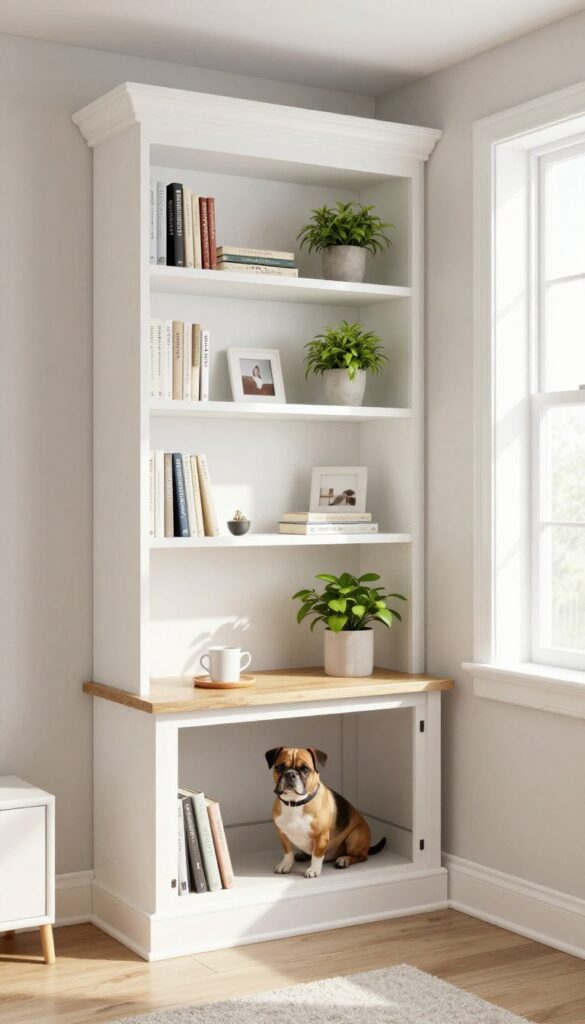
If you have a wall that can handle a bit of built-in treatment, this idea turns your dog's crate into a permanent, polished feature. By building a low bookshelf that wraps around the kennel, the crate becomes just another compartment in a larger storage unit. The shelves above and beside it hold books, plants, and framed photos, making the whole setup feel intentional rather than improvised.
This approach works especially well in living rooms where floor space is tight but wall space is available. The crate sits at the base, often with a wooden top that doubles as an end table surface. The surrounding shelves can be open or have cabinet doors for hidden storage.
You can match the wood and trim to your existing baseboards and molding, so the unit looks like it was always part of the room.
Planning The Layout
Measure your crate first, then plan the shelf dimensions around it. Leave a few inches of clearance on each side for airflow and easy crate removal. The top of the crate should be at standard end table height—around 24 to 28 inches—so the shelf above it doesn't feel awkward.
Sketch out a simple frame that includes vertical supports and horizontal shelves.
Material And Finish Choices
Plywood and MDF are budget-friendly options that paint well. For a more upscale look, use solid wood like pine or oak and stain it to match your floor or other furniture. Add crown molding or trim to the top edge for a custom built-in feel.
If you want the crate door accessible, leave the front open or install a hinged panel that swings open.
Styling The Shelves
Keep the shelves from looking cluttered by mixing books with a few decorative objects. Stack books horizontally and vertically, and add a small plant or two for greenery. A framed photo or a ceramic vase can break up the rows.
The goal is to make the crate area feel like a deliberate design choice, not just a dog bed with shelves around it.
7. Marble or Faux Marble Top for Elegance
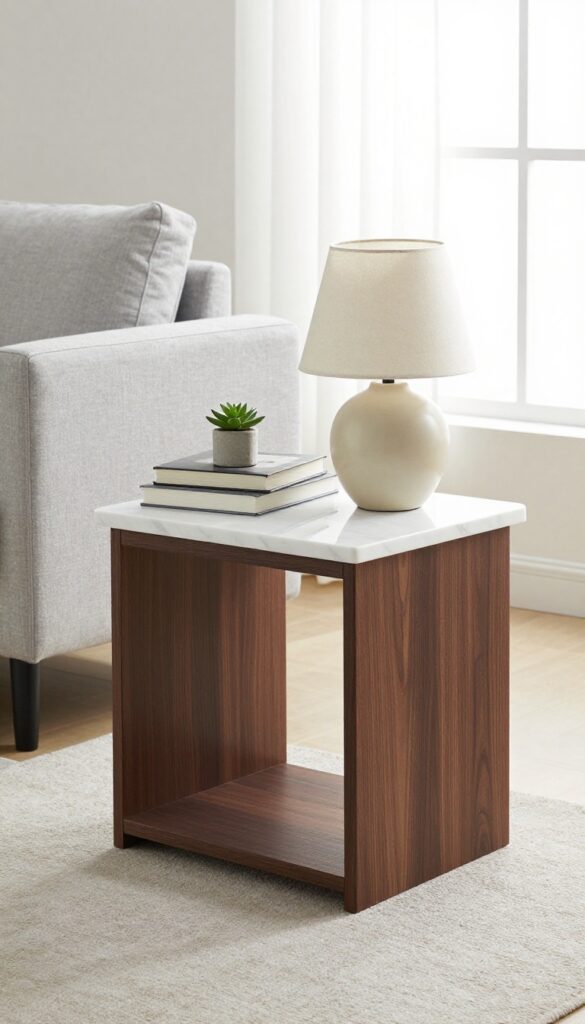
A marble top instantly elevates a dog crate from purely functional to a piece of furniture you'd actually want in your living room. The cool, polished surface contrasts beautifully with the simpler materials of the crate below, creating a sophisticated look that feels intentional rather than makeshift. Whether you opt for real marble or a high-quality faux version, this idea adds a touch of luxury without overwhelming the space.
To make this work, you'll need a sturdy crate that can support the weight of a marble slab. Wire crates are fine, but wooden ones provide a more solid base. Measure the top of the crate and have a piece of marble cut to size, with a slight overhang for a finished look.
Alternatively, a thick faux marble countertop remnant can be cut and polished at a local stone yard for a fraction of the cost. Secure the slab with a few dabs of clear silicone adhesive so it stays put but can be removed if needed. The result is a surface that's perfect for a lamp, a stack of books, or a coffee cup—and your dog gets a cool, quiet den underneath.
Choosing The Right Marble Look
Real marble comes in classic whites and grays with subtle veining, but it's porous and can stain. Faux marble options like quartz or solid surface materials offer the same elegance with better durability and lower maintenance. If you go faux, look for a pattern with soft, natural veining rather than bold, artificial streaks.
A honed finish (matte) is more forgiving than a high-gloss polish, which shows every fingerprint.
Pairing With The Crate Material
A white marble top looks crisp on a black wire crate, while a darker marble like Nero Marquina pops against a light wood crate. For a seamless look, match the undertones of the marble to the crate's finish—warm marble with walnut wood, cool marble with gray or white. Don't be afraid to mix textures: a smooth marble top on a rough-hewn wooden crate creates an interesting contrast.
Styling The Top
Keep the surface uncluttered to let the marble shine. A single sculptural lamp, a small plant in a ceramic pot, or a stack of coffee table books works well. Avoid placing anything too heavy or sharp that could scratch the stone.
A coaster under a hot mug is a good idea, even with faux marble. The goal is to make the crate look like a deliberate design choice, not a covered-up cage.
8. Two-Tone Painted Crate with Brass Accents
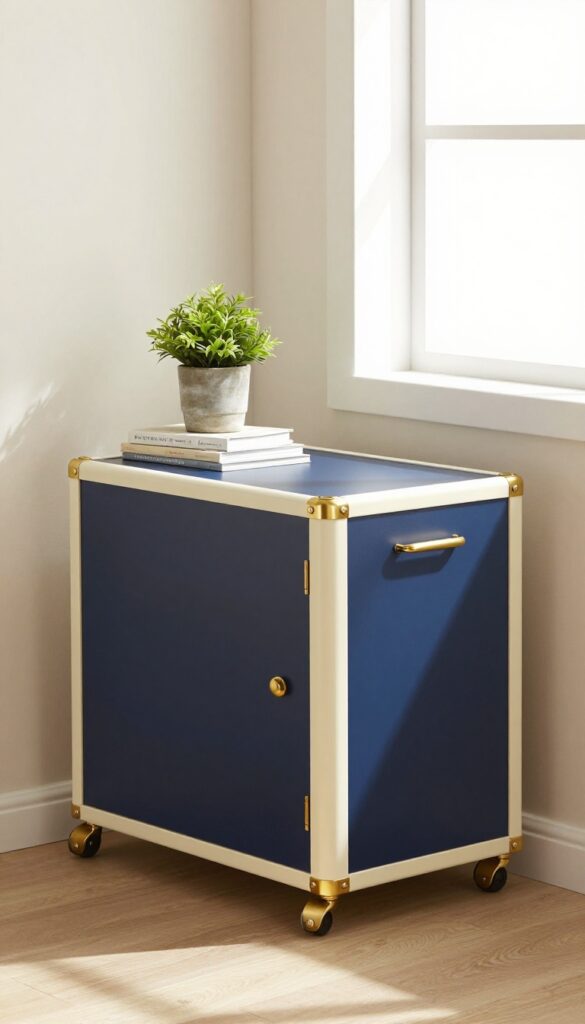
A two-tone paint job instantly makes a dog crate look like a custom furniture piece. Pairing a deep navy with warm gold accents creates a classic, sophisticated palette that feels both modern and timeless. The contrast draws the eye, turning the crate into a deliberate design choice rather than a compromise.
Start with a standard wooden crate and sand it smooth. Apply a primer, then paint the main body in a rich navy or charcoal. Use painter's tape to create clean lines for a second color—try a soft cream or matte gold on the trim or legs.
Once dry, attach brass handles to the sides and brass corner brackets to the edges. These small metallic details add a refined, furniture-grade finish. The result is a piece that looks like it came from a high-end boutique, not a pet supply store.
Choosing Your Colors
Navy and gold is a foolproof combo, but don't stop there. Deep green with brass, charcoal with copper, or even blush pink with rose gold can work depending on your living room's palette. Stick to one dark base and one lighter accent for balance.
Test paint samples on scrap wood first to see how they look in your lighting.
Hardware That Makes It Pop
The brass accents are what elevate this project. Look for cabinet handles, drawer pulls, or corner brackets at hardware stores or online. Brushed brass has a subtle sheen, while polished brass is more reflective.
For a cohesive look, use the same finish on all hardware. You can also add brass caster wheels for mobility and an extra touch of elegance.
Sealing For Durability
Since this is a functional piece, protect the paint with a clear polyurethane topcoat. Apply two thin coats, sanding lightly between them. This guards against scratches from your dog's nails and everyday wear.
Choose a satin or matte finish to keep the look sophisticated rather than glossy.
9. Converted Vintage Trunk or Suitcase
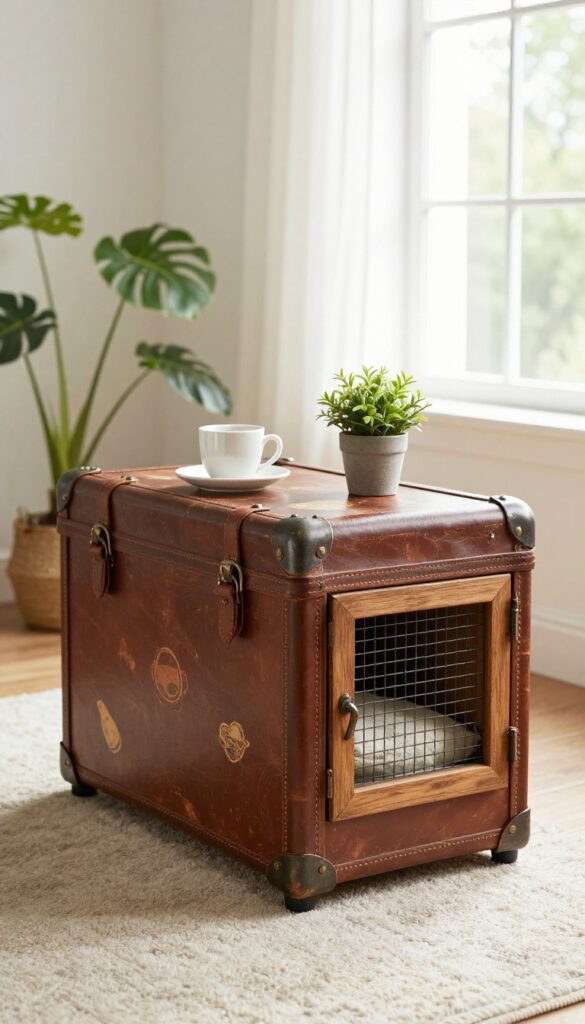
A vintage trunk or hard-sided suitcase brings instant character to any room. With a little DIY, it becomes a one-of-a-kind dog kennel that doubles as an end table. The worn leather, metal corners, and old travel stickers tell a story—and your pup gets a cozy hideaway.
Start with a trunk large enough for your dog to stand and turn around. Cut a door opening in one side, add ventilation holes or a small window, and install a hinged or sliding door. The trunk's interior can store leashes, toys, and blankets, while the top serves as a sturdy table for drinks or decor.
Choosing The Right Trunk
Look for a trunk at least 24 inches tall for a small dog, bigger for larger breeds. Check that the wood or metal frame is solid. Avoid trunks with strong chemical smells or mold.
A slightly beat-up trunk adds charm—just make sure it's structurally sound.
Cutting The Door And Adding Ventilation
Use a jigsaw to cut a door opening on one side. Sand the edges smooth. For ventilation, drill a pattern of 1-inch holes near the top or cut a small window covered with wire mesh.
Attach a door using hinges and a latch that your dog can't nudge open.
Finishing Touches And Safety
Line the inside with a washable cushion or mat. If the trunk has sharp metal edges, cover them with trim or rubber edging. Add felt pads to the bottom to protect your floors.
A coat of clear polyurethane can preserve the patina while making it easier to clean.
FAQ
Can any dog crate be turned into an end table?
Yes, most wire or plastic crates can be modified with a sturdy top. Just ensure the crate is structurally sound and the top is securely attached.
How do I make sure the end table is stable?
Use heavy-duty materials for the top and attach it firmly to the crate. Adding rubber feet or a base can prevent sliding.
Will my dog still feel comfortable inside?
Absolutely. The crate remains a den-like space. Just ensure the top doesn't block ventilation and that the door is still accessible.
What size should the end table top be?
The top should extend at least 2 inches beyond the crate on all sides for stability and a finished look. Measure your crate first.
Can I use a plastic crate for these ideas?
Yes, but plastic crates may need extra reinforcement for heavier tops. Consider using a lightweight top or adding a wooden frame.
Conclusion
Your dog's kennel can double as a stylish side table without sacrificing function. Pick the idea that fits your space and your pup's personality, then enjoy a living room that works for everyone.
A little creativity goes a long way toward making your home both pet-friendly and beautifully put together.

I’m Pallab Kishore, the owner of Little Pets Realm — an animal lover and pet care enthusiast sharing easy tips, healthy recipes, and honest advice to help every small pet live a happy, healthy, tail-wagging life.