
Last updated on August 19th, 2026 at 04:14 pm
Training your dog doesn't have to feel like a chore—it can be the best part of your family's day. These 15 games turn everyday moments into teamwork challenges that kids and dogs both love.
From simple name recognition to full obstacle courses, each activity builds focus, obedience, and a whole lot of bonding. You'll find clear steps and easy variations to keep things fresh, no matter your dog's age or skill level.
Ready to make learning fun for everyone? Let's play.
1. The Name Game
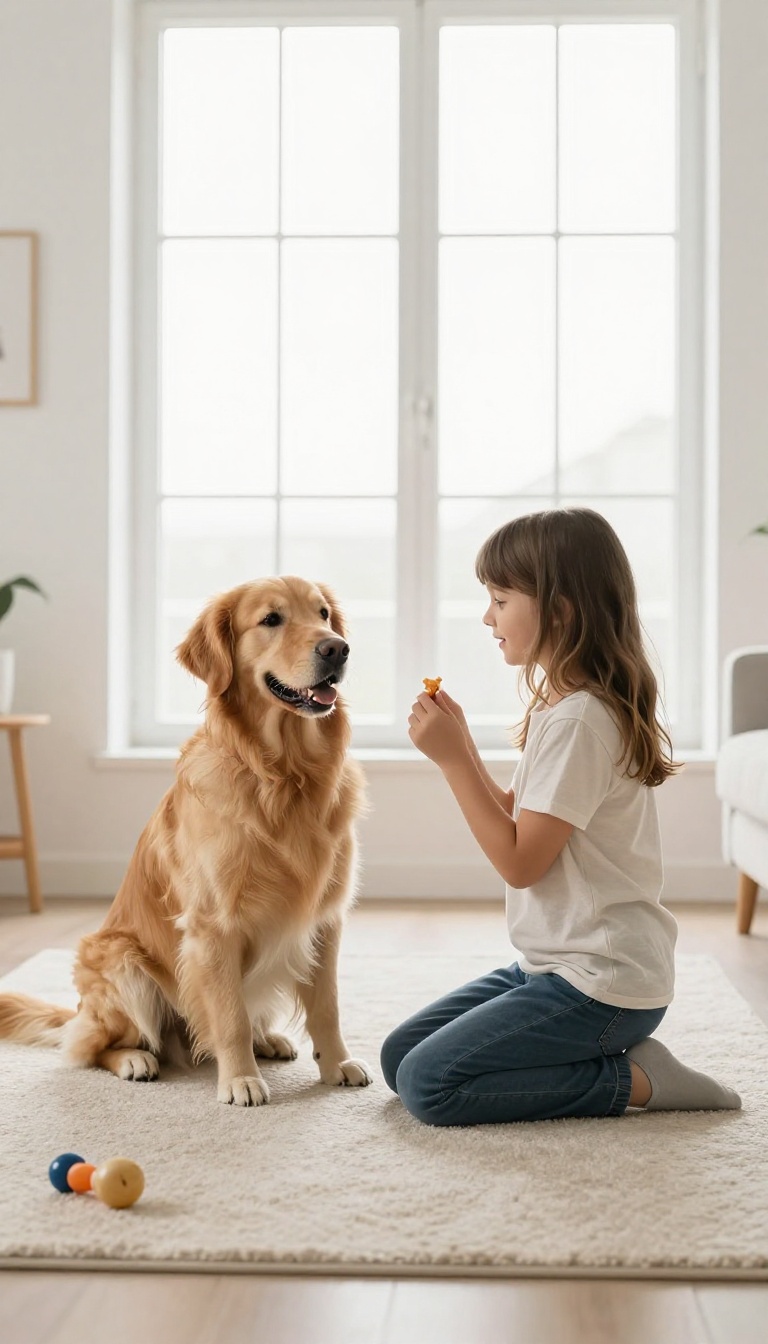
A dog that ignores their name is a dog that misses out on fun—and safety. The Name Game turns basic name recognition into a lively family activity that sharpens your dog's listening skills. Kids take turns calling the dog, and each correct response earns a treat and a cheer.
It's simple, fast, and builds a rock-solid foundation for every other training game.
Start in a quiet room with minimal distractions. Have each child hold a small handful of treats, then take turns saying the dog's name in a bright, happy voice. The moment your dog looks at the child who called them, that child says 'Yes! ' and gives a treat.
This teaches your dog that their name means 'pay attention to me'—not just 'run over. ' As your dog gets the hang of it, increase the distance between the caller and the dog, or add a gentle distraction like a toy on the floor.
Why It Works
Dogs learn best when they connect a word with a positive outcome. By rewarding your dog for looking at the person who says their name, you're building a reliable check-in behavior. That's the same skill you'll need for recall, loose-leash walking, and keeping your dog safe in busy places.
Plus, it's a game that even the youngest kids can join, which makes everyone feel like part of the team.
How To Play
Gather the family in a circle with your dog in the middle. One person calls the dog's name, and if the dog looks at them, that person rewards with a treat and lots of praise. Then the next person takes a turn.
Keep sessions short—five minutes is plenty. If your dog gets confused, go back to having the caller be closer or use a higher-value treat like cheese or chicken.
Level Up The Challenge
Once your dog is a pro at responding to their name, add a twist. Have the caller sit or kneel, then call the dog from another room. Or try playing in the backyard with a few toys scattered around.
You can also take turns calling the dog from different spots, so they learn to find the person who called them. This keeps the game fresh and reinforces that their name always means good things.
2. Red Light, Green Light
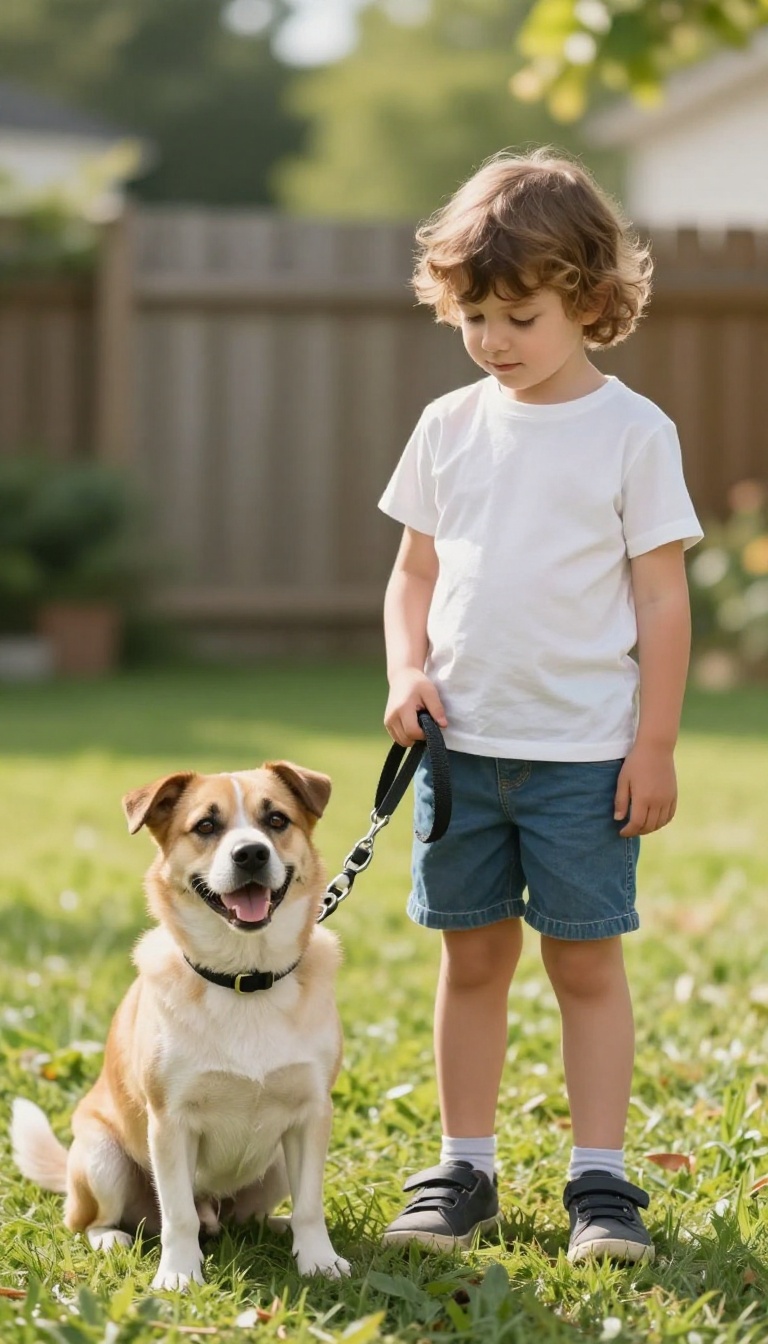
This classic playground game works wonders for dogs, too. It's a playful way to teach your pup impulse control and polite leash walking—all while the kids get to be the 'traffic lights. '
Start by having your child hold the leash (with an adult nearby for safety) and say 'green light' to walk. When they say 'red light, ' everyone stops. The dog quickly learns that stopping means treats and praise.
It's simple, but it builds a strong foundation for listening.
How To Play
Pick a quiet area with few distractions. Have your child stand with the dog on a leash. Say 'green light' and start walking slowly.
After a few steps, say 'red light' and stop. Reward the dog the instant they stop. Repeat, gradually increasing the time between commands.
Why It Works
The game teaches your dog to watch your child for cues, not just pull ahead. It's also great for building focus—your dog learns that stopping earns a treat, so they're more likely to pay attention. Plus, it's a fun way for kids to practice giving clear commands.
Fun Variations
Once your dog gets the hang of it, mix it up. Use 'yellow light' for slow walking, or let your child call out the commands without a leash in a fenced yard. You can also turn it into a race by seeing who can stop the fastest—just keep it positive and treat-heavy.
3. Hide and Seek
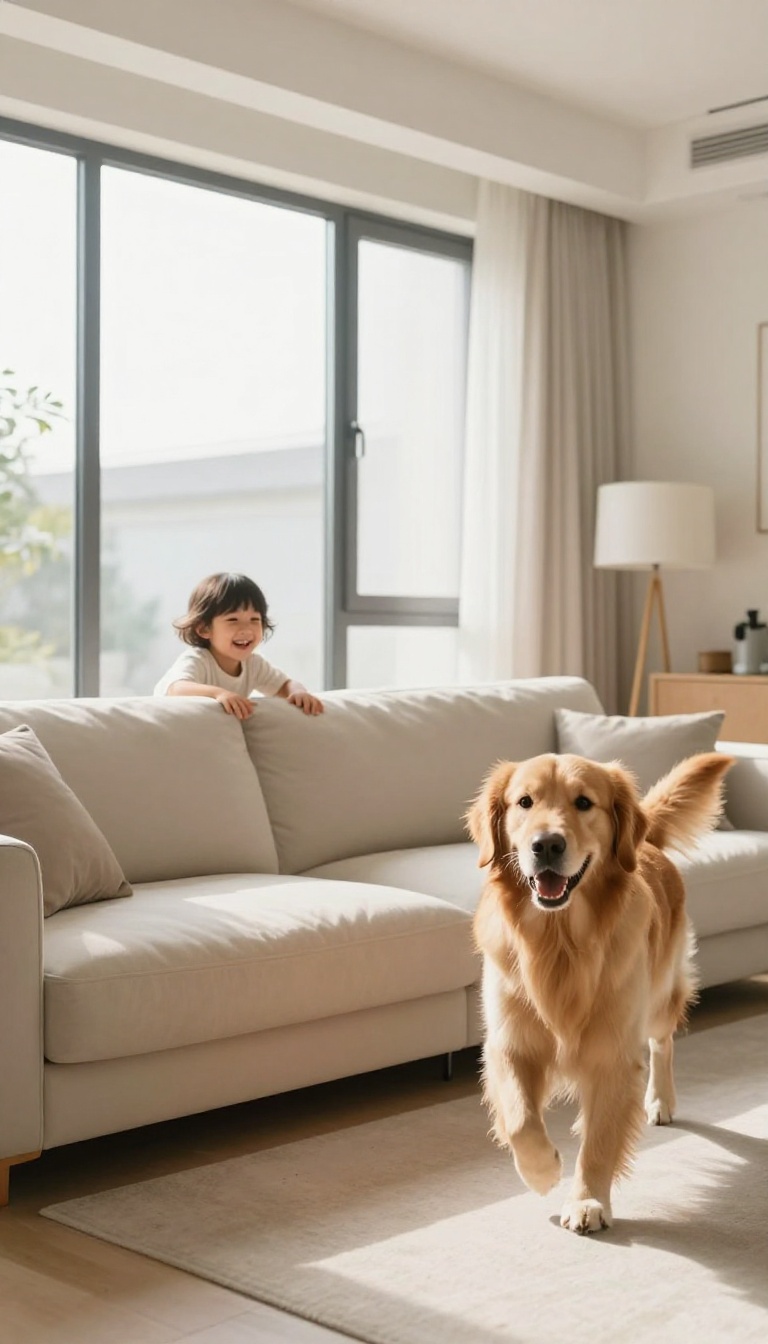
This isn't just a fun game—it's a sneaky way to build a rock-solid recall. When your dog learns to find their favorite person, they're also learning that coming when called leads to great things. Plus, the excitement of the hunt makes the whole family giggle.
Why It Works
Dogs are natural hunters, and this game taps into that instinct. It turns recall into a game of discovery, so your dog wants to come to you. The payoff is a stronger bond and a more reliable response when you call them in real life.
How To Play
Start with one person holding the dog while the child hides in an easy spot, like behind a door or under a blanket. The child calls the dog's name in a happy, excited voice. When the dog finds them, reward with a treat and lots of praise.
As your dog gets better, make the hiding spots trickier and add more distance.
Safety And Tips
Always keep the first few rounds simple so your dog succeeds. If your dog seems confused, have the child peek out and call again. Also, make sure the dog knows the child's name or a special cue like 'Find [child's name]' so they understand what to do.
Keep sessions short—five minutes is plenty—and end on a high note.
4. The Treat Toss
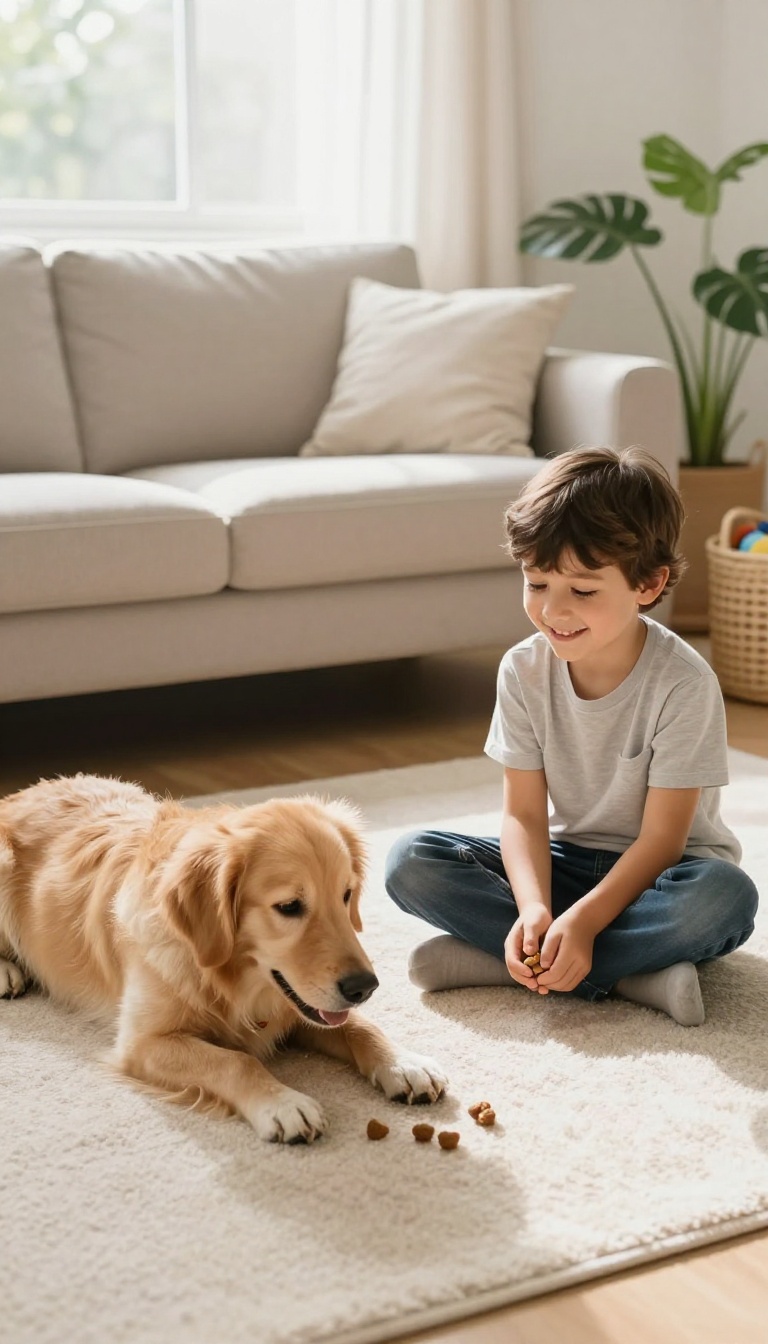
A game of fetch meets hide-and-seek, The Treat Toss turns snack time into a scavenger hunt that sharpens your dog's nose and your kid's aim. It's simple, messy, and absolutely perfect for rainy afternoons or when you need a quick indoor activity. Kids get a kick out of flinging treats and watching their pup zero in on the spot, and dogs love the mental workout that comes with sniffing out each tasty morsel.
The Treat Toss is a fantastic way to channel your dog's natural foraging instincts into a fun, structured game. It’s also a sneaky form of nose work, which is mentally tiring and can help calm an overly energetic pup. Plus, it’s a great way to practice impulse control as your dog learns to wait for the go-ahead before diving in.
With just a few treats and a little space, you can turn a dull moment into a rewarding challenge for the whole family.
Why It Works
Dogs experience the world largely through their noses, so engaging their sense of smell is incredibly satisfying. This game provides mental stimulation that can be just as tiring as a long walk, making it perfect for high-energy dogs or those who need a bit more focus. It also strengthens the bond between your child and dog as they work together, with the kid as the treat launcher and the dog as the enthusiastic detective.
How To Play
Start in a small, clear area like a hallway or a corner of the living room. Have your child sit with a handful of small, soft treats (like cut-up hot dogs or cheese). Show the dog a treat, then toss it a short distance away, saying 'Find it! ' in an encouraging voice.
As the dog sniffs it out, your child can toss another treat in a different direction. Keep the game going for a few minutes, letting the dog 'win' each time. Gradually increase the distance or toss treats behind furniture to make it more challenging.
Make It Easier Or Harder
For beginners, toss treats in plain sight on the floor so the dog can see exactly where they land. For more advanced players, hide treats under a towel or behind a chair leg. You can also use a treat-dispensing toy or scatter a handful of kibble in the grass for an outdoor version.
To add a training element, have your child ask the dog to 'sit' or 'stay' before each toss, turning it into a patience exercise.
5. The Cup Game
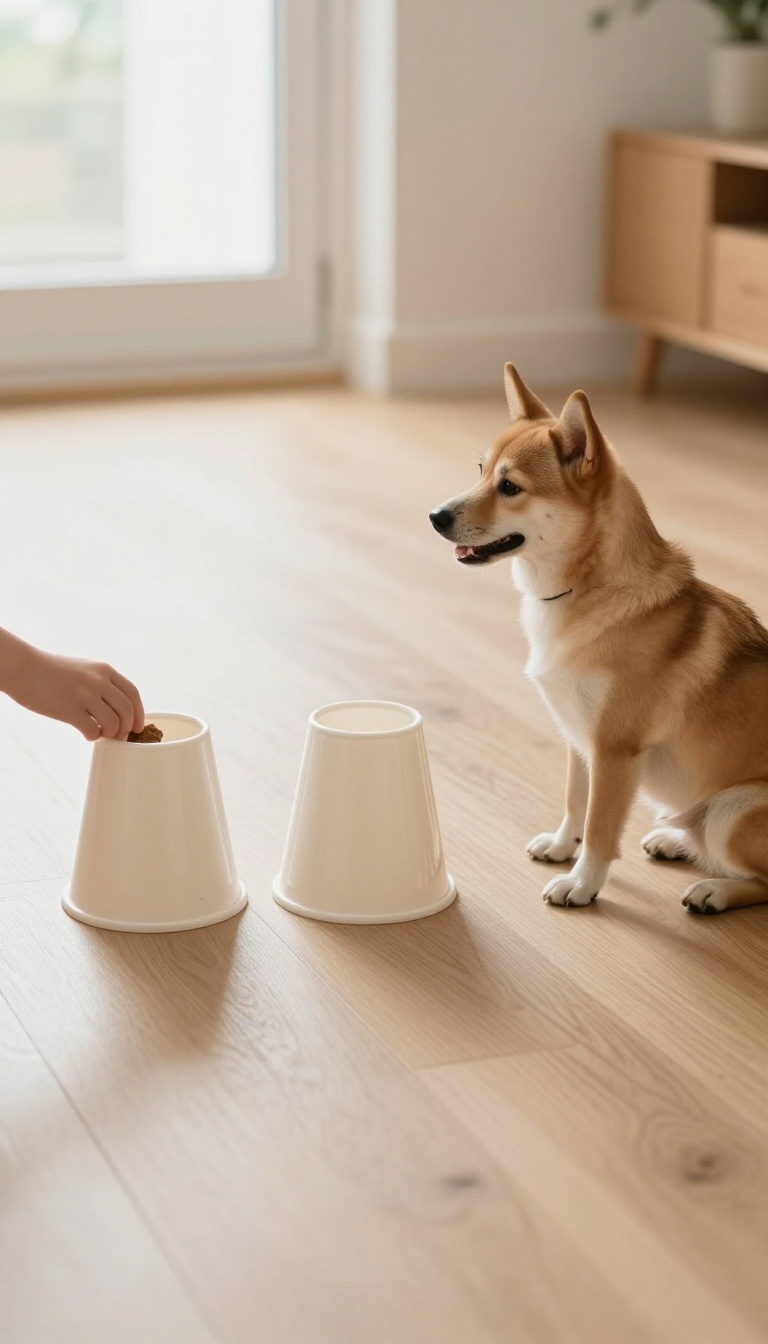
This one starts simple but can grow into a real brain workout. You hide a treat under one of three cups, and your dog sniffs it out. Kids get to be the cup shufflers, which makes them feel like magicians—and your dog gets a satisfying puzzle.
The Cup Game is a fantastic way to boost your dog's problem-solving skills while giving kids a hands-on role. It's easy to set up, requires almost nothing, and adapts to any skill level. Plus, it's a game that rewards patience and sharpens your dog's natural nose-work abilities.
Getting Started
Grab three identical plastic cups (or paper cups) and some small, smelly treats. Place the cups upside down on the floor. Show your dog a treat, then place it under one cup while they're watching.
Encourage them to sniff and nudge the correct cup. When they do, lift the cup, let them grab the treat, and celebrate.
Leveling Up
Once your dog gets the hang of it, have your kid shuffle the cups around. Start slow—move the cups in a clear pattern—then speed up or add a spin. You can also hide the treat while your dog isn't looking, making them rely purely on scent.
This raises the challenge and keeps the game fresh.
Why It Works
This game taps into your dog's natural foraging instincts. It also teaches impulse control, because they have to wait for the go-ahead before flipping a cup. And for kids, it's a chance to practice clear communication and positive reinforcement—both key to good teamwork.
6. The Obstacle Course
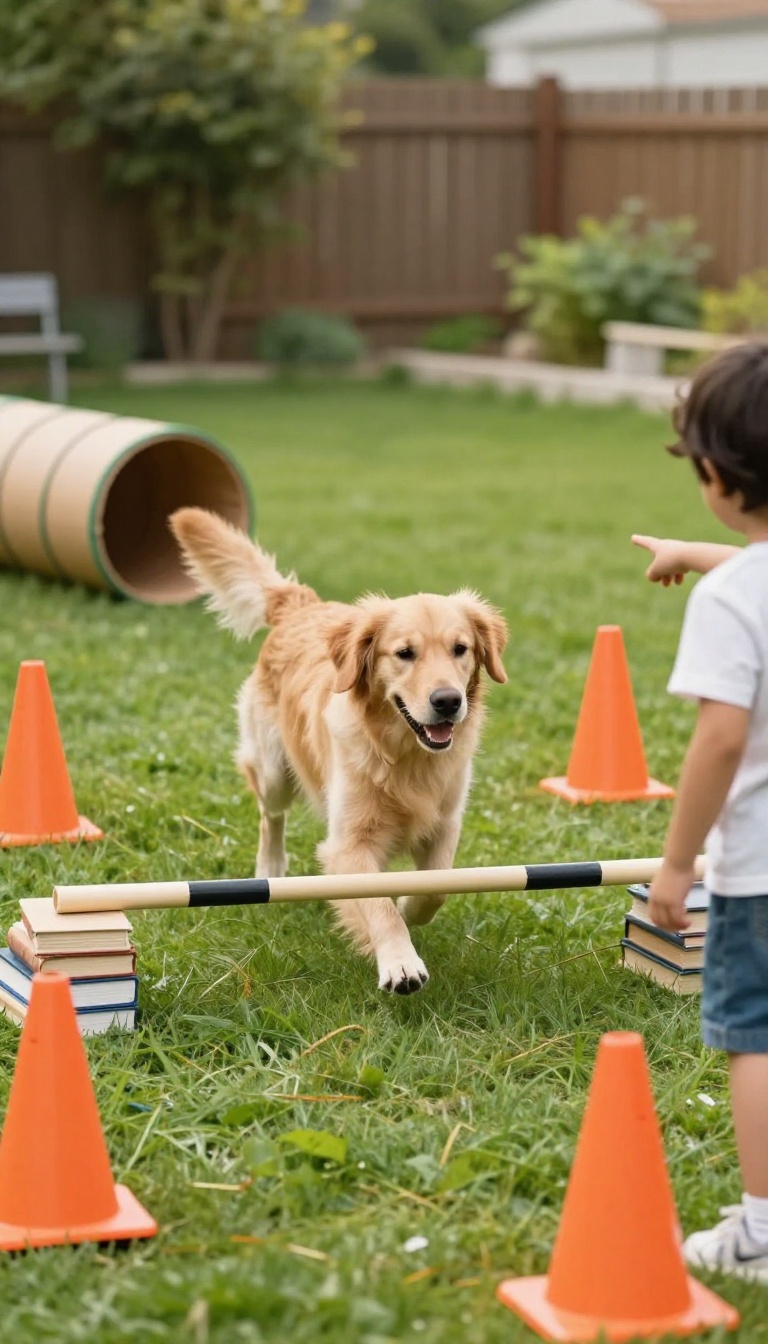
An obstacle course is a brilliant way to combine physical activity with mental focus. It’s like a playground for your dog, and your kids get to be the coaches. Setting up a simple course at home or in the yard is easier than you think, and it’s a fantastic way to practice commands like 'sit', 'stay', and 'come' in a fun, dynamic setting.
Start with a simple layout using items you already have: cones (or plastic cups), a tunnel (a cardboard box with ends open), and a low jump (a broomstick resting on books). Have your child lead the dog through the course, giving a command at each station. For example, at the cone, ask for a 'sit'; at the tunnel, encourage a 'come' through; at the jump, use 'over'.
This game builds confidence in your dog and teaches kids to be clear and patient leaders.
Setting Up The Course
You don’t need fancy equipment. Use household items to create a course that’s safe and fun. For a tunnel, tape two cardboard boxes together.
For a jump, place a broomstick across two low stools. For cones, use plastic cups or empty water bottles. Arrange them in a loop or straight line, leaving enough space between each station.
Keep the course short at first—maybe five or six stations—so it’s not overwhelming.
How Kids Can Guide The Dog
Each station is a chance to practice a command. At the cone, your child says 'sit' and waits for the dog to obey before moving to the next. At the tunnel, they say 'come' and encourage the dog to crawl through.
At the jump, they say 'over' and guide the dog with a treat. The key is to keep the energy positive and use treats or praise as rewards. Kids should always walk beside the dog, never pull or force.
Adding Fun Variations
Once your dog gets the hang of it, switch things up. Change the order of stations, add a 'stay' at the end, or time each run to see if they can beat their best. You can also make it a relay race with two kids and two dogs if you have them.
The goal is to keep it playful, so your dog stays excited to run the course again and again.
7. The 'Sit' and 'Stay' Relay
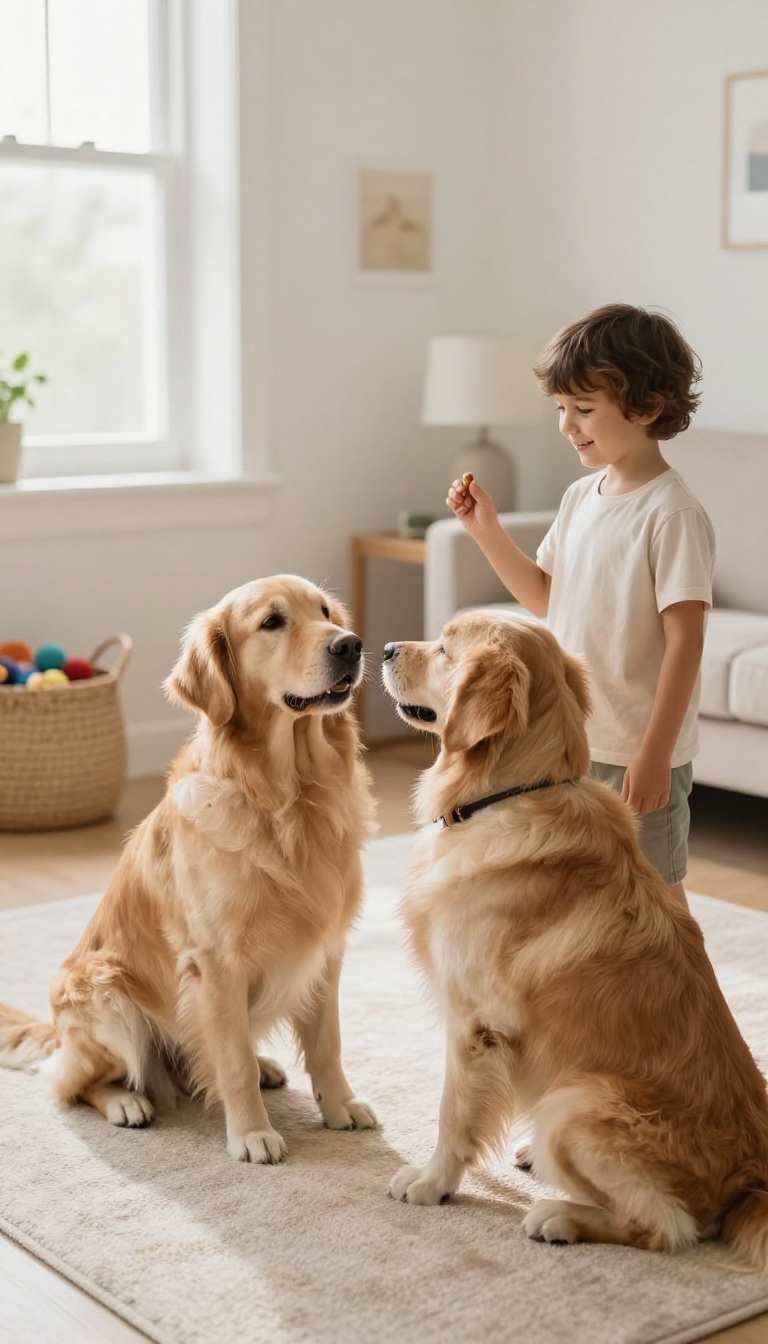
This game turns the basics into a team sport. Kids get to practice giving clear cues, and your dog gets to practice holding still—even when exciting things are happening around them. It's a fantastic way to build patience and self-control in both dog and child.
Set up a simple relay where each kid takes a turn asking the dog to sit and stay, then gives a release cue like 'okay! ' or 'free! ' before the next kid steps in. The goal isn't speed—it's consistency. Every time your dog holds the stay, they earn a treat and a little praise.
This game also teaches kids to be calm and patient, because rushing the dog only makes the stay harder.
Why It Works
Stay is one of those commands that takes practice in real-life situations. This relay gives your dog repeated chances to succeed in a controlled, fun setting. Kids learn to read their dog's body language and adjust their cues, which builds a stronger bond and better communication.
How To Set It Up
Start with your dog on a leash for safety, especially if you're indoors. Have the first kid ask for a sit, then give a clear stay cue with a hand signal. The kid takes a step back, waits a few seconds, then releases with a cheerful 'okay! ' and gives a treat.
Then the next kid takes a turn. Keep sessions short—five to ten minutes is plenty.
Level Up The Challenge
Once your dog has the hang of it, add distractions. Have another family member bounce a ball or make silly noises while the dog is staying. You can also increase the distance or the duration of the stay.
The key is to reward success and keep it fun, so your dog never feels stressed.
8. The Fetch and Return
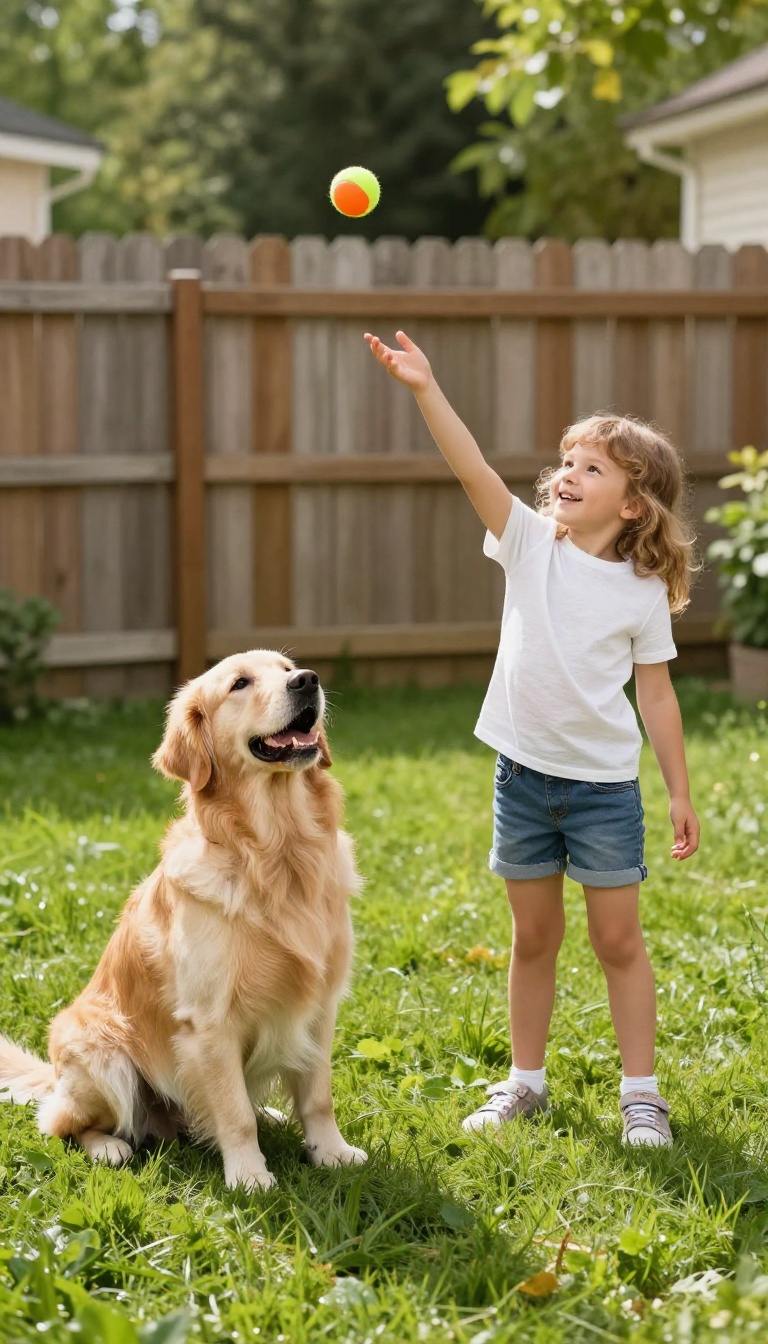
Fetch is a classic, but this version adds a polite twist. Instead of dropping the toy anywhere, your dog learns to bring it back to the child who threw it. It's a simple change that teaches good manners and reinforces the idea of returning things gently.
This game is perfect for teaching impulse control and patience. Kids get to practice clear communication, and dogs learn that coming back with the toy leads to more fun. Plus, it's a great way to build a reliable recall in a playful setting.
Start with a favorite toy and a quiet space. Have your child toss the toy a short distance. When your dog picks it up, your child calls them back using a cheerful voice and a cue like "Bring it here!
" As soon as your dog comes close, your child offers a treat or another toy to encourage dropping the item. Reward the moment your dog releases it into your child's hand or at their feet. If your dog tends to run off with the toy, use a long leash to gently guide them back.
Keep sessions short and upbeat, and always end on a success. Over time, increase the distance and add gentle distractions so your dog learns to return even when things get exciting.
Why It Works
This game turns a natural retrieving instinct into a polite behavior. By rewarding the return, you're teaching your dog that coming back to the child is the best part of the game. It also strengthens the bond between child and dog, as the dog learns to look to the child for direction and rewards.
Step-by-step Instructions
- Choose a toy your dog loves but isn't obsessed with. 2.
Have your child toss the toy a few feet away. 3. When your dog grabs it, your child calls them back with a happy tone.
- As your dog approaches, your child shows a treat or a second toy to encourage a drop. 5.
The moment your dog releases the toy, your child says "Yes! " and gives the reward. 6.
Repeat, gradually increasing the distance and adding mild distractions.
Troubleshooting Common Issues
If your dog won't come back, try using a long leash and gently reel them in. If they drop the toy too early, don't reward that—wait until they bring it closer. If your dog is possessive, trade the toy for a high-value treat.
Keep practice sessions positive and short to avoid frustration.
9. The 'Leave It' Temptation
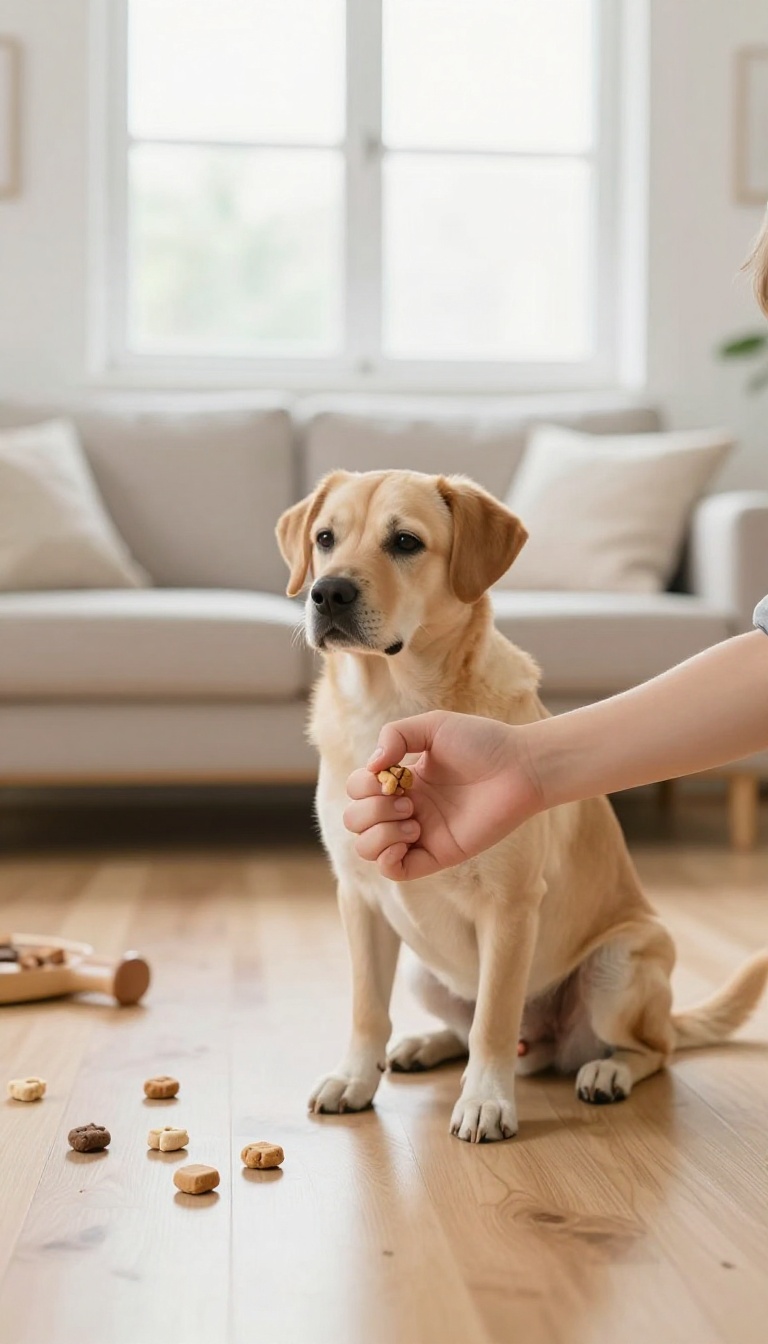
This game is all about teaching your dog that ignoring something tempting earns a reward. It's a fantastic way to build impulse control, and kids can take the lead with a little guidance. The best part?
You only need a few treats and a quiet spot to start.
Start by having your child hold a treat in a closed fist and let the dog sniff it. When the dog backs off or looks away, your child says "yes! " and gives a different treat from their other hand.
Once that's solid, place a treat on the floor under your foot or hand, and repeat the same steps. Over time, your dog will learn that leaving the treat alone is the fastest way to get something even better.
Why It Works
This game taps into your dog's natural instincts while building self-control. It also gives kids a clear, simple job that feels empowering. Plus, it's a skill that translates directly to real-life situations, like ignoring food dropped on the ground or resisting a tempting squirrel.
How To Play Step By Step
- Have your child show a treat in their open palm, then close their hand. 2.
Wait for the dog to stop sniffing or licking, even for a second. 3. Say "yes!
" and reward with a different treat from the other hand. 4. Gradually increase the difficulty by placing the treat on the floor and covering it with a foot or hand.
- Eventually, try it without covering, but keep the dog on a leash if needed. Always end on a positive note.
Kid-friendly Variations
For younger kids, use a high-value treat like cheese or chicken to keep it exciting. Older kids can add a verbal cue like "leave it" before showing the treat. You can also turn it into a game by having kids hide treats around the room and practice "leave it" before allowing the dog to find them.
This keeps the game fresh and challenging.
10. The 'Touch' Target
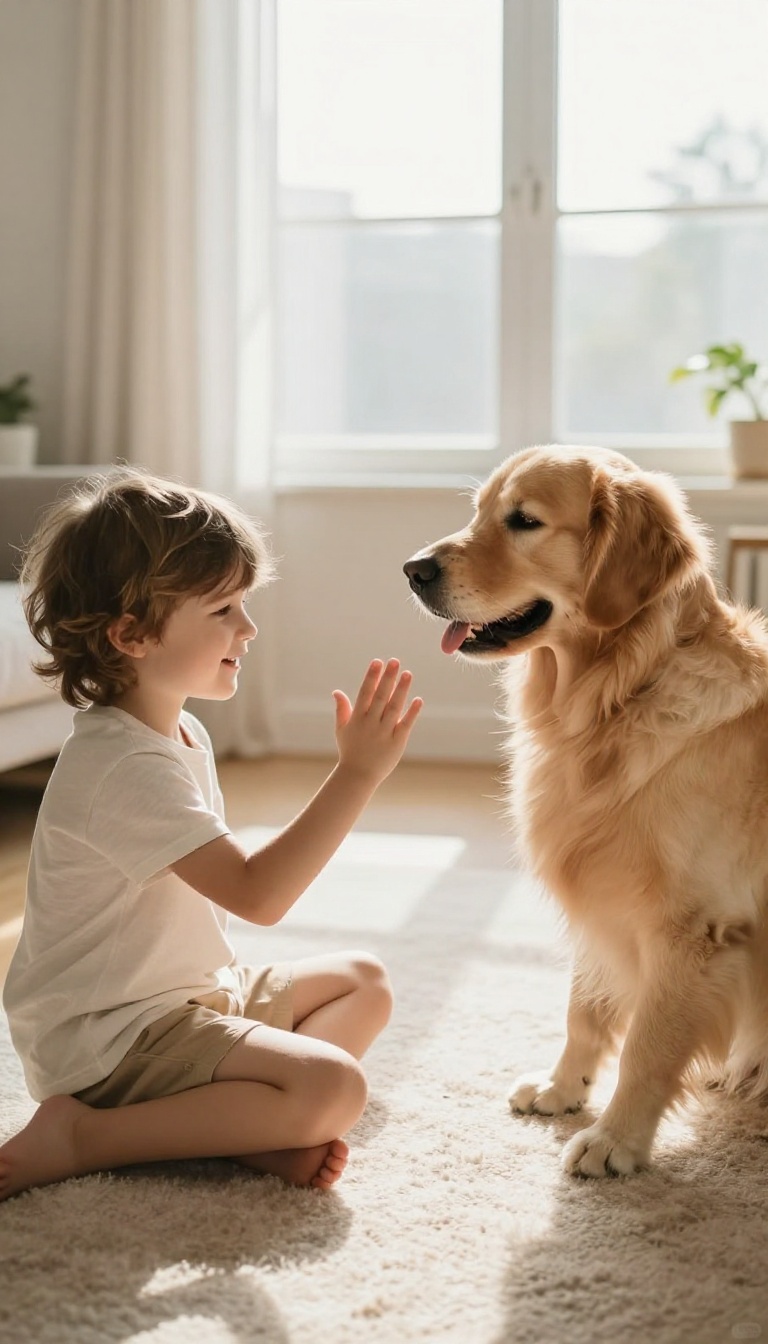
This game is a quiet powerhouse. It teaches your dog to focus on a specific target—your child's hand or a small stick—and touch it with their nose on cue. It's simple, but it builds the kind of attention that makes other training easier.
The 'Touch' target game is all about precision and focus. Your dog learns to boop their nose to a designated spot, which strengthens their ability to concentrate on a single task. It's also a fantastic way to build trust and communication between your child and their furry friend.
Why It Works
When a dog learns to touch a target, they're learning to direct their energy into a specific action. This game channels their natural curiosity into a controlled behavior. It also gives your child a clear, non-verbal way to communicate with the dog, which is great for building a strong bond.
How To Play
Start with your child holding out a flat hand, palm facing the dog. Say 'touch' in a happy voice. The moment the dog's nose touches the hand, mark it with a 'yes! ' and give a treat.
Repeat a few times, then gradually add a target stick or a small object. Keep sessions short and always end on a positive note.
Fun Variations
Once your dog gets the hang of it, you can make the game more challenging. Move the target around—high, low, left, right—so the dog has to reach and stretch. You can also play 'touch' as a recall game: have your child call 'touch' from across the yard, and the dog runs over to boop their hand.
This turns a simple trick into a fun, active game.
11. The 'Go to Bed' Game
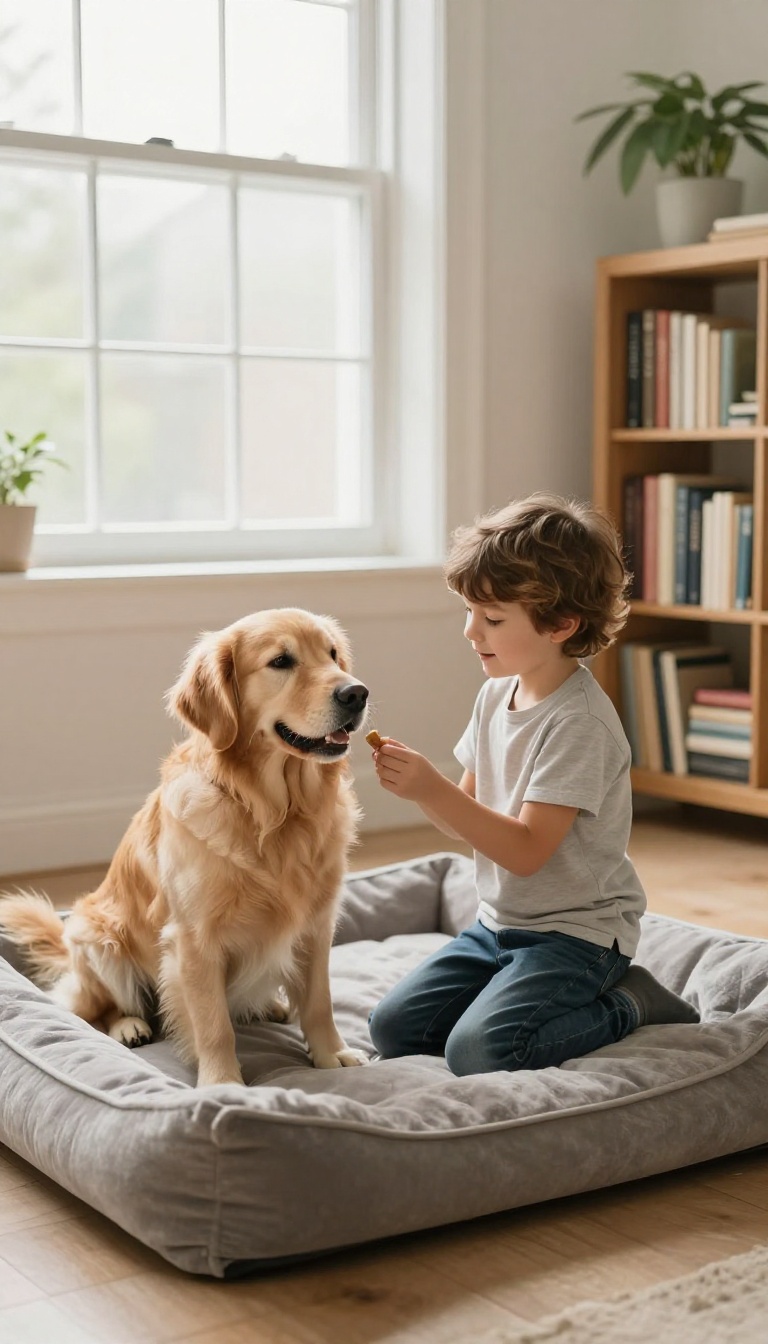
Teaching your dog to go to their bed on command is more than just a handy trick—it's a calm-down cue that gives everyone a break. For kids, it becomes a fun race: who can get the dog to their bed first? This game builds impulse control and gives your dog a safe spot to relax when things get busy.
Start by making the bed the best place in the house. Toss treats onto it so your dog learns to love being there. Then, add the command 'Go to bed' as they step onto the mat.
Practice in short bursts, and soon your dog will race to their spot when they hear the cue. For kids, turn it into a game: each child takes a turn saying the command and rewarding the dog with a treat or a toy. The first one to get the dog settled wins a point.
Keep it light and fun—no pressure, just happy teamwork.
Why It Works
This game teaches your dog to settle on command, which is super useful during family movie nights or when guests come over. It also gives kids a clear job and a sense of accomplishment when the dog listens. Plus, it's a great way to practice patience and consistency—two things that make training stick.
How To Play
Each child picks a spot a few feet away from the bed. On 'go, ' they call their dog and give the 'Go to bed' cue. The first one to get the dog on the bed and lying down wins.
To keep it fair, rotate who goes first, and use a timer for extra excitement. For younger kids, you can hold the dog's leash to help guide them.
Make It Harder
Once your dog is a pro, add distractions—like dropping a toy or having another family member walk by. You can also increase the distance or have your dog stay on the bed for a few seconds before releasing. This builds self-control and makes the game more challenging for older kids.
12. The 'Spin' and 'Twist'
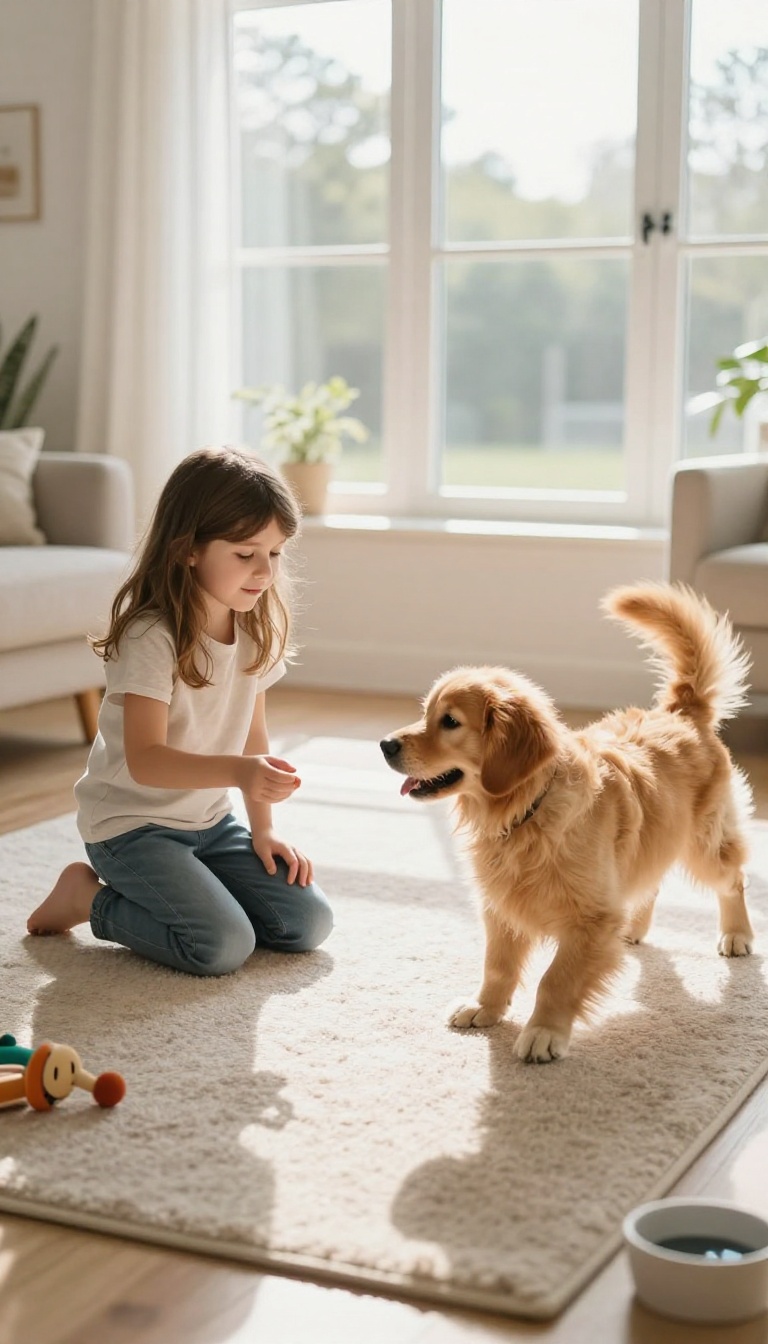
Here’s a trick that makes your dog look like a furry ballerina. Spin and twist are simple directional turns that are surprisingly easy to teach—and kids pick them up in no time. It’s a great way to burn a little energy indoors while sharpening your dog’s listening skills.
Start by holding a treat close to your dog’s nose and slowly luring them in a circle. As they follow, say “spin” and reward them when they complete the turn. Then teach the opposite direction with “twist. ” Once your dog gets the hang of it, your child can take over the luring and eventually use just a hand signal.
It’s a fun party trick that also builds coordination and focus.
Why It Works
This game isn’t just about looking cute. It teaches your dog to pay attention to body language and follow cues, which strengthens their overall obedience. For kids, it’s a confidence booster—they get to be the leader and see their dog respond to their commands.
Step-by-step For Kids
Have your child hold a treat in a closed fist and let the dog sniff it. Then, slowly move their hand in a circle, saying “spin” as the dog follows. Reward with the treat and lots of praise.
Repeat a few times, then switch directions for “twist. ” Practice a few minutes a day, and soon your dog will spin on a hand signal alone.
Make It A Game
Turn it into a fun routine: have your child call out “spin” or “twist” and see if the dog can follow the right direction. You can even add a little dance party—play some music and have the dog spin to the beat. It’s a silly, joyful way to bond and burn off some zoomies.
13. The 'Wait' at the Door
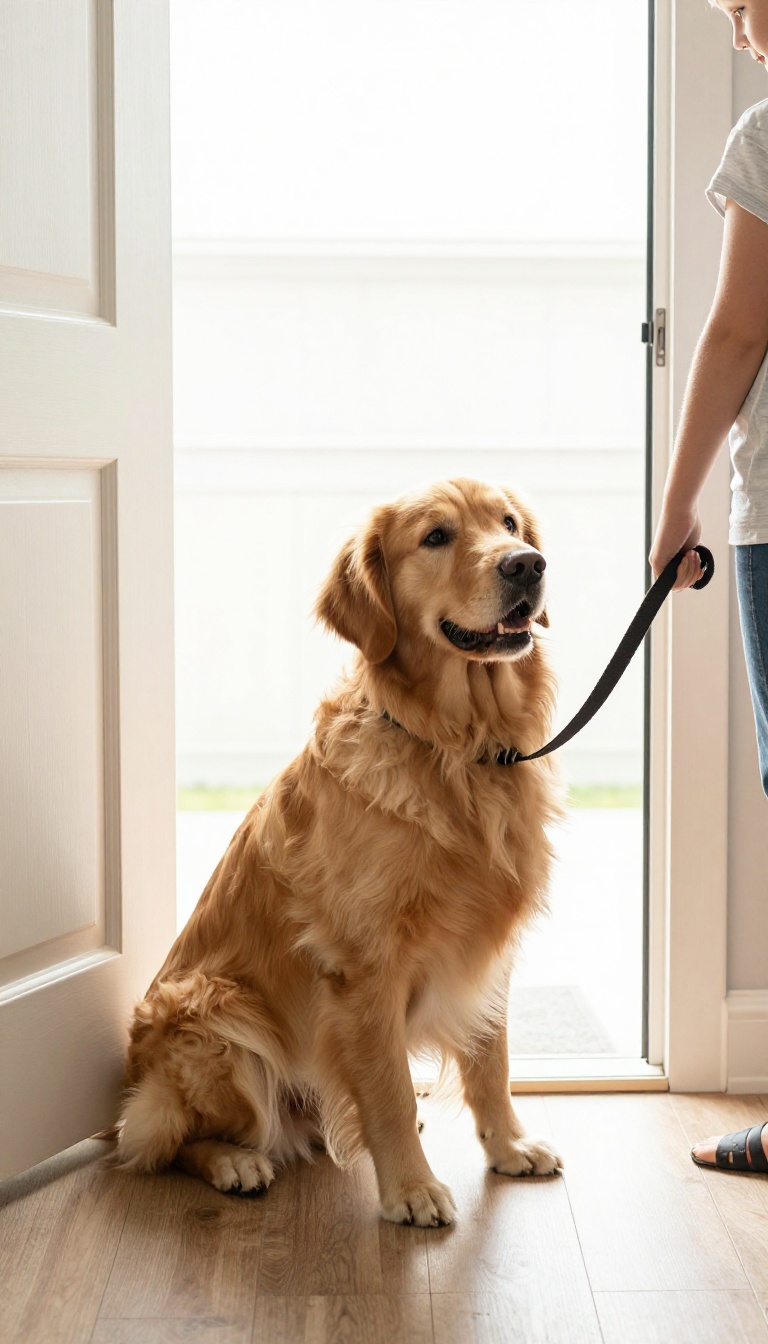
Doors are like magic portals to dogs—they lead to walks, car rides, and squirrel chases. That's why a dog who bolts out the door can be a real headache. This game turns that chaos into a calm, controlled routine that even the youngest kids can lead.
Start by having your dog on a leash near the door, but not too close. Ask them to sit or stay, then slowly open the door a crack. If they move, close it and try again.
The moment they hold still, say 'yes' and reward with a treat. Gradually increase the door opening and the time they wait.
Why It Works
This game teaches impulse control, which is a life skill for dogs. It also builds trust—your dog learns that waiting leads to good things. Plus, it gives kids a safe way to manage the door, turning a potential escape artist into a polite family member.
Kid-friendly Steps
Let your child hold the leash while you stand behind them for backup. Have them say 'wait' in a calm voice, then open the door a few inches. If the dog stays, they can toss a treat.
If the dog moves, they simply close the door and try again. Keep sessions short and positive.
Level Up
Once your dog masters the door, try the same game at the car door or the gate. You can also add a release word like 'okay' so your dog knows when it's safe to go. This turns a simple wait into a reliable recall cue.
14. The 'Find It' Game
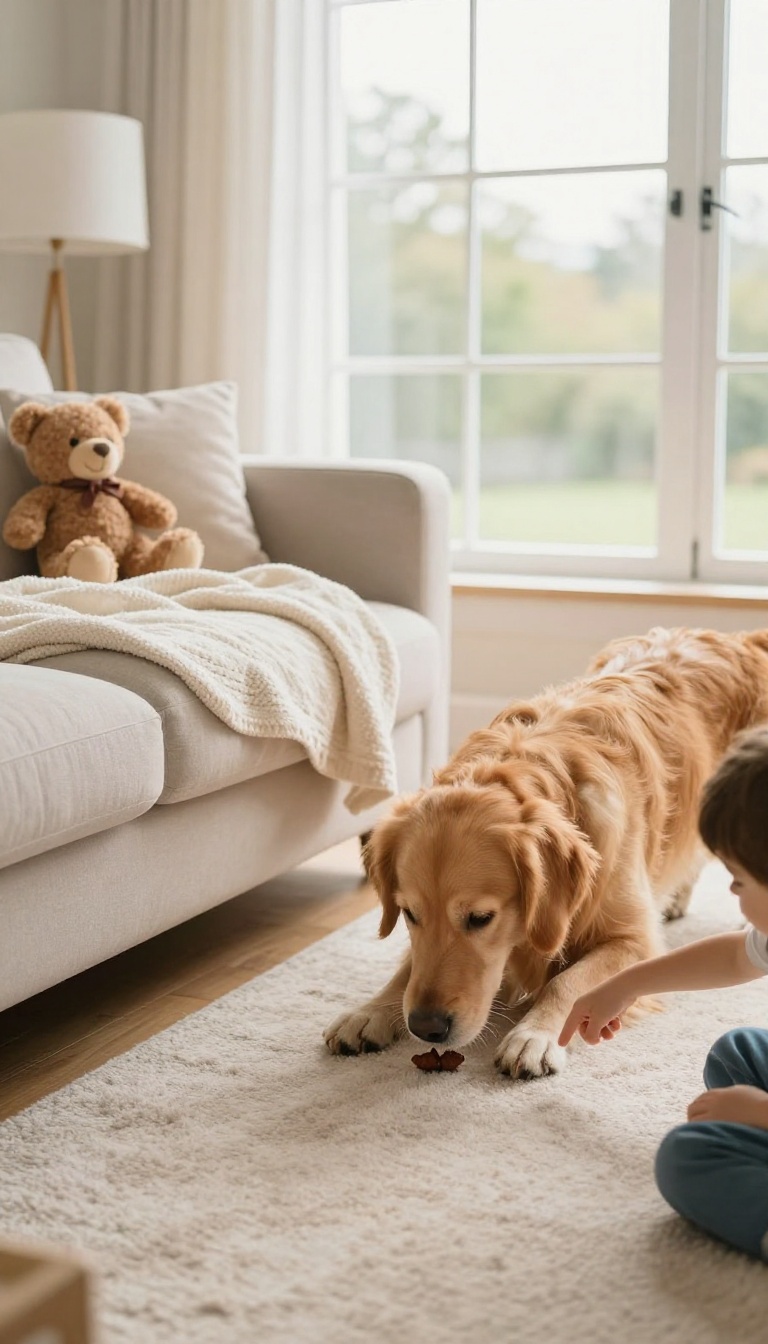
Dogs are natural-born scavengers, and this game lets them put those instincts to work. Instead of just tossing a treat, you hide it and let your dog's nose do the exploring. It's a fantastic way to burn mental energy and build your dog's confidence.
Start with easy hides so your dog gets the hang of it. Have your kids say 'find it' as they point to the treat, then gradually make the hiding spots trickier. This game is perfect for rainy days or when you need a quick indoor activity that tires out a busy pup.
Getting Started With Easy Hides
Begin by letting your dog see you place a treat on the floor a few feet away. Say 'find it' in an excited voice and encourage them to go get it. Once they understand the cue, you can start hiding treats under cups, behind furniture, or in plain sight but slightly out of reach.
Turning Up The Difficulty
As your dog gets better, make the game more challenging. Hide treats in different rooms, under pillows, or outside in the grass. You can also use a favorite toy instead of food.
This keeps the game exciting and prevents your dog from getting bored.
Making It A Team Effort
Let each family member take turns hiding treats. This teaches your dog to listen to everyone's cue, not just one person. It also gives kids a sense of responsibility and makes the game a true family activity.
Why It Works
Using their nose is mentally tiring for dogs, so even a short session can leave them happily worn out. It also strengthens the bond between your dog and your kids, as they learn to work together toward a common goal.
15. The 'Tug' and 'Drop'
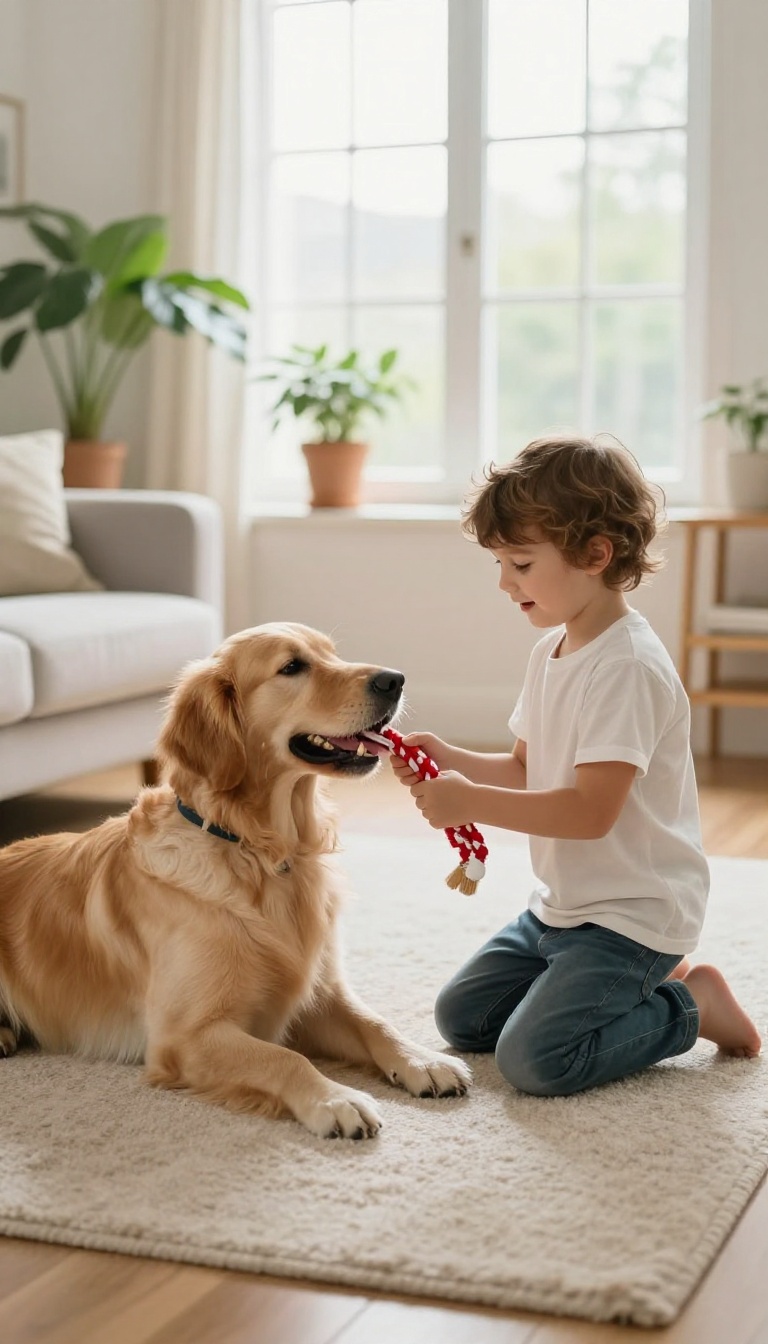
Tug-of-war often gets a bad rap, but when played with rules, it's a fantastic way to teach impulse control. This structured version puts the kid in charge, turning a wild game into a lesson in boundaries. The dog learns that play continues only when they listen, and kids learn to lead with calm confidence.
Start with a designated tug toy—something soft but durable, like a rope or fleece tug. Have your child hold the toy and offer it to the dog with a clear 'take it' cue. Let the dog pull for a few seconds, then have your child freeze and say 'drop. ' The moment the dog releases, the child says 'yes! ' and immediately re-engages with the toy.
This back-and-forth builds a solid drop command while keeping the game fun.
Why It Works
The game naturally rewards the dog for listening—dropping the toy leads to more play. It also gives kids a safe way to manage a high-energy activity. The structured stop-and-start pattern teaches the dog that patience and obedience are part of the fun, not the end of it.
Setting Up The Rules
Before you start, agree on the rules: the game only begins when the dog is sitting calmly, and it ends if teeth touch skin. Use a clear 'take it' and 'drop' cue, and keep sessions short—around five minutes. This prevents overexcitement and keeps the game positive.
Troubleshooting Common Issues
If the dog won't drop, trade the toy for a high-value treat or another toy, then praise as they release. If the dog gets too mouthy, have the child stop and turn away for a few seconds. This teaches that rough play pauses the game.
Always supervise and step in if things get too intense.
Making It A Family Routine
Rotate which child gets to play each round, so everyone gets a turn. You can also set a timer and let the dog 'win' sometimes by letting them keep the toy for a few seconds before asking for a drop. This keeps the game balanced and fun for both kid and dog.
FAQ
Are these games suitable for all dog breeds?
Yes, these games are designed to be adaptable for any breed or size. Just adjust the difficulty and physical demands to match your dog's age, health, and energy level.
What age should kids be to participate?
Kids as young as 3 can join in with supervision. For younger children, focus on simple games like 'The Name Game' or 'The Treat Toss'. Older kids can handle more complex tasks like 'The Obstacle Course'.
How long should each training session last?
Keep sessions short and fun—about 5 to 10 minutes for puppies and 10 to 15 minutes for adult dogs. Always end on a positive note to keep your dog eager for more.
What if my dog doesn't seem interested in the games?
If your dog loses interest, try using higher-value treats or toys, and make sure the environment is free from distractions. Also, check that the game isn't too difficult—simplify it and gradually increase the challenge.
Can these games help with behavioral issues?
Absolutely. Many of these games reinforce impulse control, recall, and focus, which can address common issues like jumping, pulling, or ignoring commands. However, for severe behavioral problems, consult a professional trainer.
Conclusion
Training games work best when they feel like play, not chores. Try a few that match your family’s energy and your dog’s personality, then rotate them to keep things fresh. Short, happy sessions beat long, serious ones every time.
The real win is watching your dog learn while everyone’s laughing together. Start with one game this weekend, and let the teamwork grow from there. You’ll build skills and memories that stick far beyond the training session.

I’m Pallab Kishore, the owner of Little Pets Realm — an animal lover and pet care enthusiast sharing easy tips, healthy recipes, and honest advice to help every small pet live a happy, healthy, tail-wagging life.