
Last updated on August 19th, 2026 at 04:15 pm
Managing multiple dogs indoors often means juggling space, noise, and individual needs. A well-chosen kennel setup can turn chaos into calm, giving each dog a personal retreat. The right solution also keeps your home organized and your sanity intact.
Whether you have two dogs or five, the key is finding a system that fits your floor plan and your dogs' temperaments. Some pups love cozy, enclosed spaces, while others prefer open visibility. The ideas below cover a range of styles, budgets, and room layouts.
From stackable crates that save floor space to custom built-ins that blend with your decor, these nine options are designed for real multi-dog households. Let's explore what works best for your pack.
1. Stackable Wire Crates
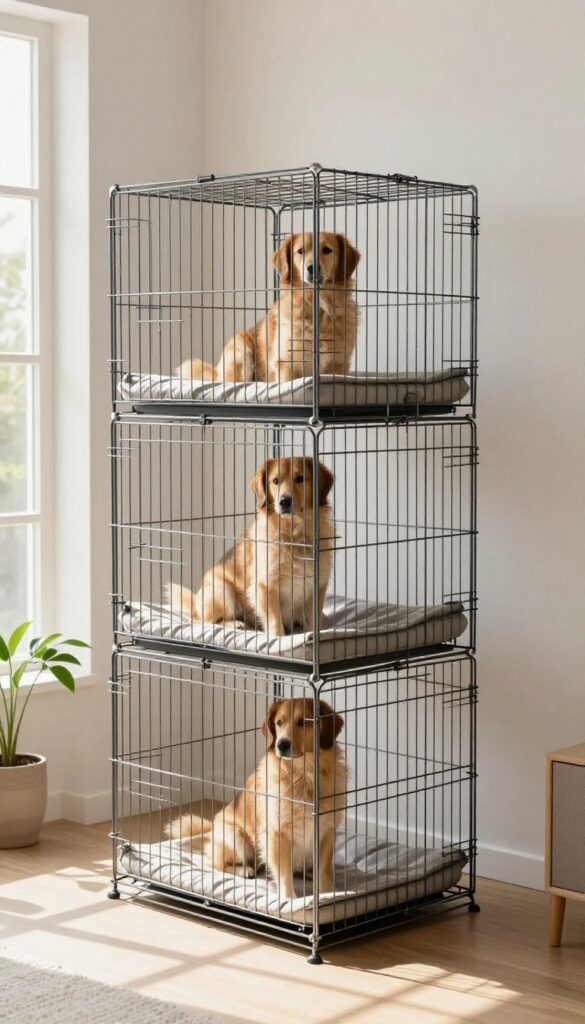
Stackable wire crates are a game-changer when floor space is tight. By building upward, you give each dog their own crate without sacrificing valuable square footage. This setup works especially well in apartments or homes with limited room for multiple single crates.
Stackable wire crates let you create a vertical kennel bank that fits two, three, or even four dogs in the footprint of a single crate. Most systems come with interlocking frames and divider panels, so you can customize the height for different dog sizes. The open wire design promotes airflow and visibility, which many dogs find less confining.
Plus, you can easily add a tray or mat inside each level for comfort. Assembly is usually straightforward, and many models fold flat for storage when not in use.
Choosing The Right Size
Measure your dogs' height and length before buying. Each crate should be tall enough for them to stand without hitting their head and long enough to stretch out. For mixed-size packs, consider adjustable-height systems that let you vary the space per level.
Stability And Safety Tips
Always secure stacked crates to a wall or use a manufacturer-approved stacking kit to prevent tipping. Place heavier dogs on the bottom level for a lower center of gravity. Check that latches are dog-proof and that no sharp edges are exposed.
Adding Privacy And Comfort
Some dogs feel more secure with a crate cover. Use breathable fabric covers on individual levels, or leave the front open if your dog prefers to see the room. Add a crate mat or bed to each level, and consider placing a towel over the top to reduce noise from above.
2. Custom Built-In Kennel Wall
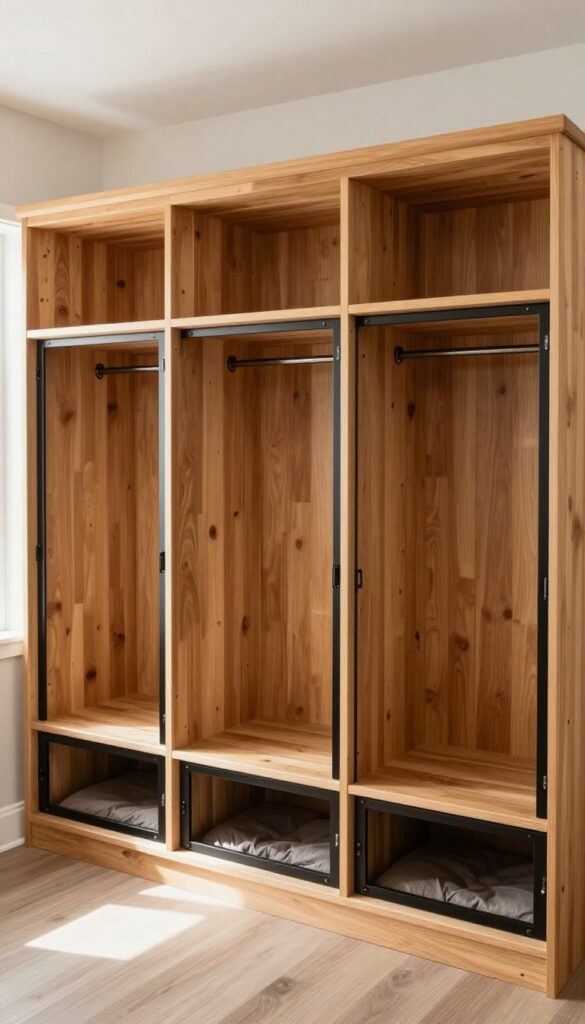
If you have a dedicated room or a large wall in your mudroom or laundry area, a custom built-in kennel wall can be a stunning and practical solution. This isn't just a row of crates; it's a piece of furniture designed around your dogs and your space. The unified look keeps the room tidy, and you can customize each kennel to fit your dogs' exact sizes, from a Great Dane to a Chihuahua.
A custom built-in kennel wall is a permanent installation that turns dog crates into an integrated part of your home. You work with a carpenter or use a modular system to create a bank of kennels that share walls, a common top, and often a bench or storage above. Each kennel can have its own door, latch, and bedding, but the overall design is cohesive.
This setup is ideal for homes where dogs are crated during the day or overnight, as it creates a calm, den-like environment. Plus, you can add features like soundproofing, ventilation fans, or individual lighting to make each kennel a comfortable retreat.
Design Considerations
Before building, measure your dogs from nose to tail and from floor to shoulder. Add a few inches for comfort. Plan for easy cleaning: removable trays, washable floors, and smooth surfaces.
Think about airflow – a small fan or vents between kennels can prevent stuffiness. Also consider security: strong latches that dogs can't open, especially if you have escape artists.
Materials And Finish
Plywood is common for the frame, but you can use melamine, MDF, or even solid wood for a furniture look. Paint or stain to match your trim. For the doors, choose between wire panels (good visibility) or solid doors with a window (more den-like).
Hardware should be heavy-duty and pet-safe. Add a clear coat to protect against scratches and drool.
Multi-function Add-ons
Use the space above the kennels for storage bins, a countertop for folding laundry, or a pet supply station. You can also incorporate a pull-out ramp for older dogs or a built-in feeding station. Some owners add a shared water line with a drip tray, making hydration automatic.
These extras turn a simple kennel wall into a command center for your pets.
3. Heavy-Duty Plastic Crates for Chewers
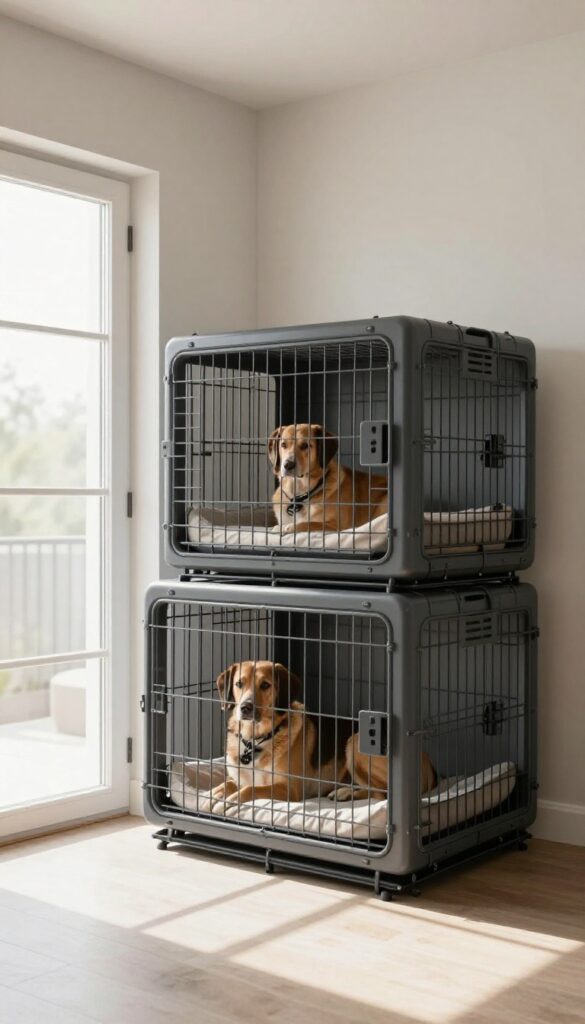
Some dogs treat wire crates like a chew toy. If you've got a determined chewer, heavy-duty plastic crates are the way to go. They're tough, easy to clean, and give dogs that cozy den-like vibe that anxious pups love.
Why Plastic Wins Against Destructive Dogs
Plastic crates are molded from high-impact materials that resist bending and breaking. Unlike wire crates, there are no bars to gnaw on or welds to pop. The solid walls also block visual stimuli, which can help reactive dogs settle down faster.
Easy Cleanup For Accidents And Messes
Accidents happen, especially with multiple dogs. Plastic crates have smooth, non-porous surfaces that wipe down in seconds. Many models come with removable trays, but even without them, you can hose the whole crate down without worrying about rust.
Ventilation And Visibility Considerations
Good airflow is crucial. Look for crates with large side windows and front doors that have sturdy bars or mesh. Some dogs feel trapped if they can't see out, so choose a model with a mix of solid walls and open areas.
The best plastic crates balance security with comfort.
Stacking And Storage For Multiple Dogs
Many plastic crates are designed to stack securely on top of each other. This saves floor space and creates a neat, uniform look. Just make sure each crate is properly latched and the stack is stable.
Some brands even sell stacking kits for extra safety.
4. Furniture-Style Kennel Cabinets
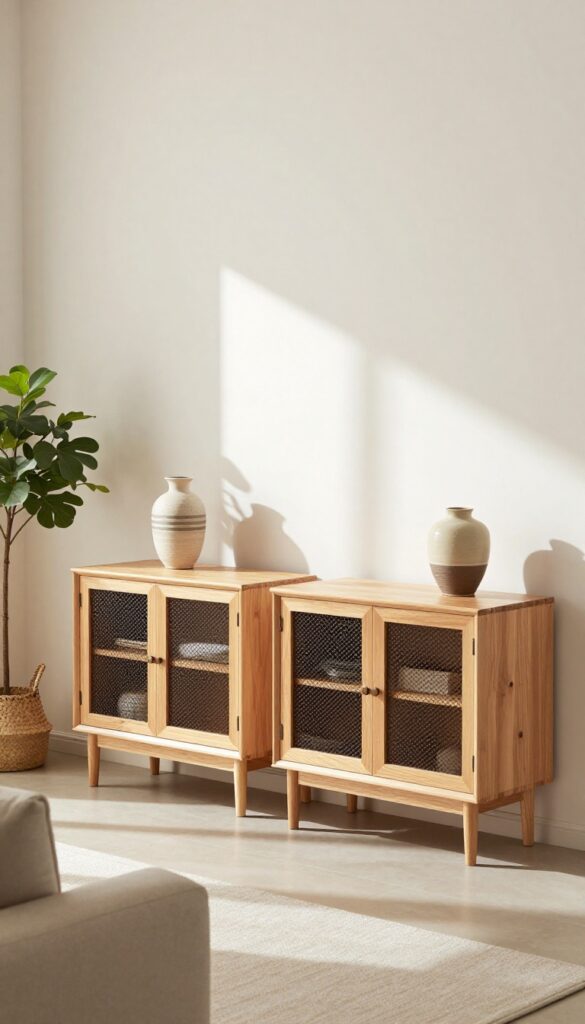
Not every dog kennel has to scream “pet store. ” Furniture-style kennel cabinets blend seamlessly with your living room or home office, giving each dog a private space that looks like a high-end sideboard. These dual-purpose pieces are especially popular in open-concept homes where visible crates can disrupt the flow of a room. With a cabinet-style kennel, you get the function of a crate without sacrificing style.
Why They Work For Multi-dog Homes
Each cabinet typically holds one crate, so you can line them up or place them symmetrically for a clean, built-in look. Many designs feature two or three compartments in a single unit, saving floor space while giving each dog its own den. The solid wood construction also muffles noise and keeps the room visually calm.
Choosing The Right Size And Ventilation
Measure your dogs before buying—cabinets often come in standard crate sizes, but some brands offer custom dimensions. Look for units with mesh doors or ventilation panels on the sides and back to ensure airflow. Avoid fully enclosed cabinets that can trap heat or feel stuffy.
Styling Tips For A Seamless Look
Place matching cabinets on either side of a sofa or console table for symmetry. Use the top surface for lamps, plants, or books to reinforce the furniture illusion. If your unit has a solid front, consider adding a decal or chalkboard label for each dog’s name—it adds personality without cluttering.
5. Room Divider Kennel System
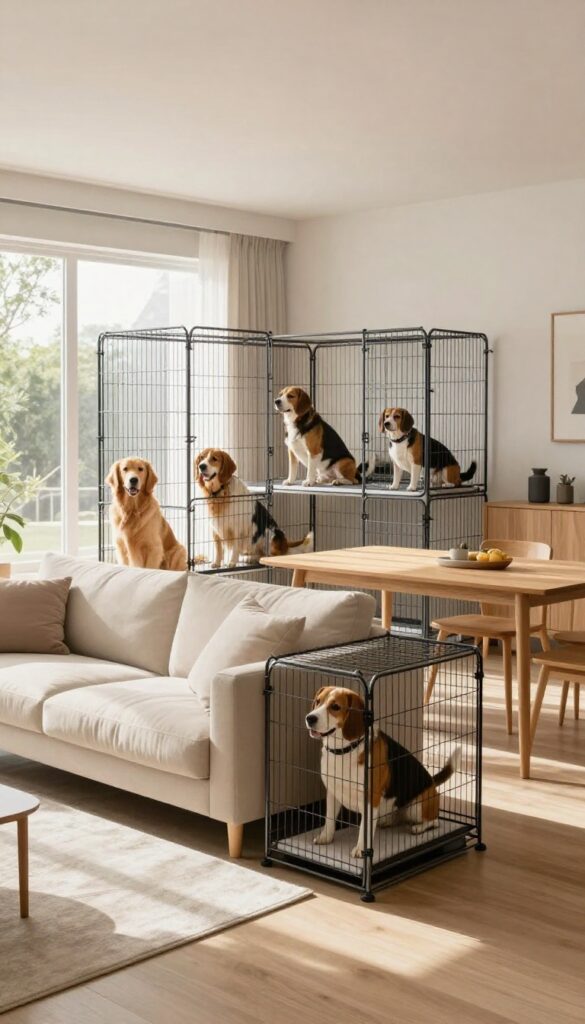
A modular kennel system can pull double duty as a room divider, especially in open-concept homes. Instead of blocking off a corner, you can use the kennel to separate the living area from the dining space while giving each dog their own compartment. It’s a smart way to carve out defined zones without sacrificing square footage.
Modular kennel systems come in panels that you can arrange in various configurations. Some are designed specifically as room dividers, with doors on both sides so you can access each kennel from different rooms. Others are more like freestanding units that you can place in the middle of a large room.
Either way, you get a functional barrier that keeps dogs separated when needed and allows you to supervise them easily.
Choosing The Right Panels
Look for heavy-duty wire or metal panels that are tall enough to prevent jumping. Some systems come with solid panels for the bottom half to reduce visual stimulation between dogs. If you have chewers, avoid plastic connectors and opt for welded metal joints.
Measure the height of your room’s furniture to ensure the divider fits naturally without looking like an afterthought.
Placement And Flow
Position the kennel system where it makes sense for traffic flow—like between a sofa and a dining table. Leave enough clearance on both sides for humans to walk comfortably. If you have multiple dogs, assign each a compartment based on their size and temperament.
Calmer dogs can go on the ends, while more excitable ones stay in the middle where they feel more enclosed.
Adding Comfort And Style
Since this kennel doubles as a room divider, aesthetics matter. Choose a finish that complements your decor—black or silver wire blends with most styles. Add matching crate covers or fabric panels to soften the look.
Place a small rug or mat inside each compartment to make it cozy. You can even top the unit with plants or decorative bins to make it feel like intentional furniture.
6. Under-Stair Kennel Nook
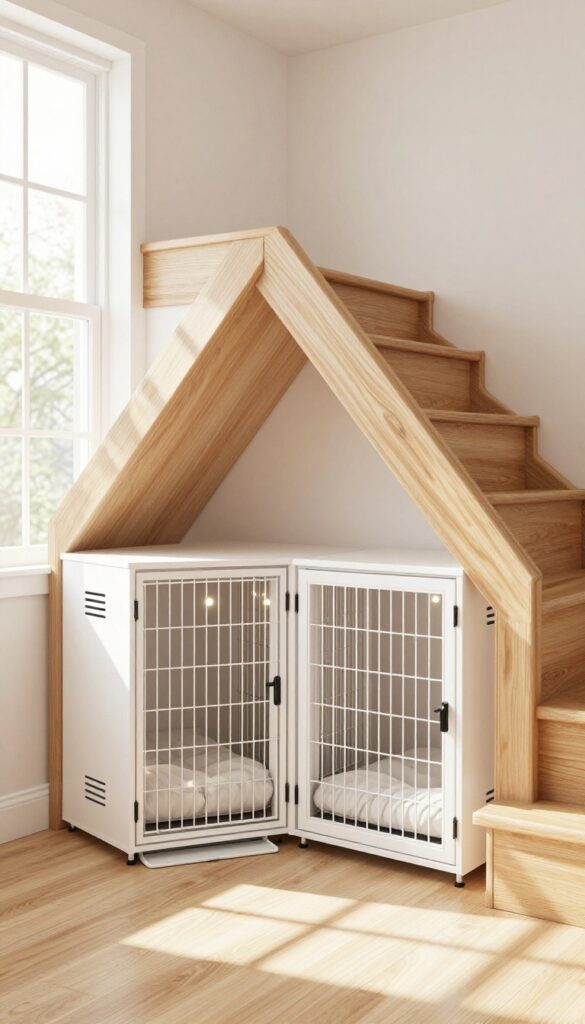
That awkward triangular void under your staircase can finally earn its keep. Instead of collecting dust bunnies, turn it into a custom kennel nook that fits multiple dogs snugly. The angled walls naturally create separate zones, and because it's tucked out of the main living area, the kennel stays discreet.
Under-stair spaces are notoriously tricky to furnish, but for kennels, the odd angles work in your favor. You can build or order a tiered system that follows the slope, giving each dog a den-like crate. The nook keeps crates out of sight, reduces visual clutter, and makes use of square footage that would otherwise go to waste.
Measure And Plan The Layout
Start by mapping the exact dimensions under your stairs. Note the lowest and highest points, and decide how many crates you need. A common setup is two large crates side by side at the tall end, with smaller crates or a storage bench filling the shorter side.
Leave enough clearance for doors to swing open fully.
Build Or Buy A Custom Insert
You can hire a carpenter to build a fitted kennel unit, or buy modular crate panels and cut them to size. If you're handy, a DIY plywood frame with wire doors works well. Paint or stain it to match your trim so the nook blends into the staircase.
Add a pull-out tray under each crate for easy cleaning.
Add Lighting And Ventilation
Under-stair spaces can feel dark and stuffy. Install a small LED puck light or a battery-operated strip light inside each crate. For airflow, consider a vent grille in the stair riser or a small fan near the opening.
Your dogs will appreciate the fresh air and soft glow.
7. Walk-In Kennel Room
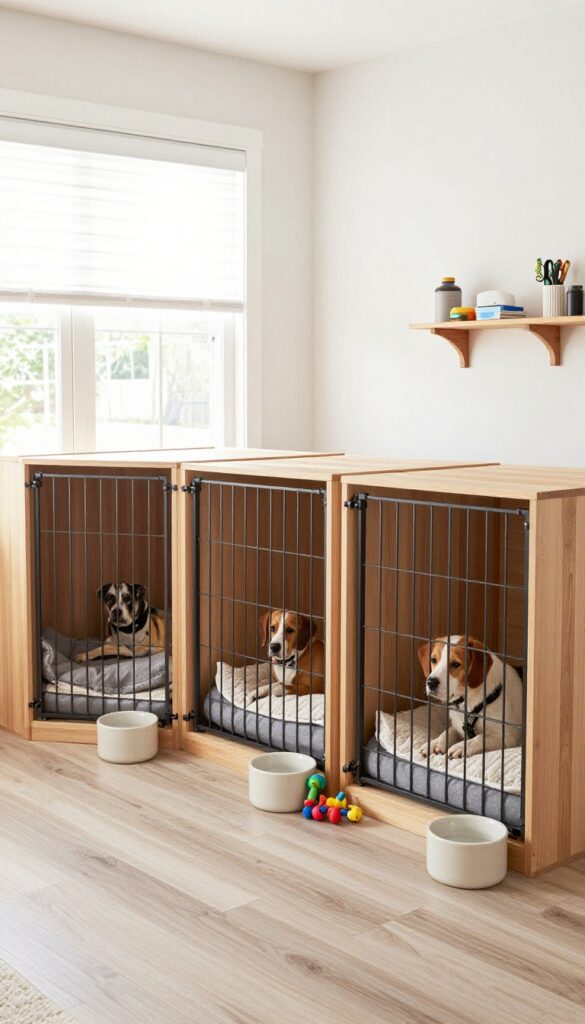
A walk-in kennel room is the ultimate upgrade for multi-dog homes with a bit of extra space. Think of it as a dedicated dog suite where your pups can hang out together or have their own zones. It works especially well if you have a spare bedroom, a large walk-in closet, or even a sectioned-off part of the garage.
Turning a small room into a kennel room gives you the flexibility to keep multiple dogs safely contained while they're unsupervised. You can install internal gates or low walls to create separate areas for dogs that need their own space. The room itself becomes a comfortable, climate-controlled den that's easy to clean and maintain.
Choosing The Right Room
Look for a room with good ventilation, easy-to-clean flooring (like tile or vinyl), and enough square footage for each dog to have a bed and move around. A spare bedroom, a large laundry room, or even a finished basement corner can work. Avoid rooms with fragile furniture or wall-to-wall carpet that will trap odors.
Setting Up Zones
Use heavy-duty pet gates or custom-built partitions to divide the room into separate zones. This is ideal for dogs that don't get along, need to eat separately, or require different bed types. You can also leave one large open area for group playtime and close off sections at night or during feeding.
Adding Comfort And Function
Outfit the room with washable dog beds, water stations, and maybe a few toys. Install hooks for leashes and a small shelf for supplies. Good lighting and a non-slip floor mat will make the space feel more like a cozy den than a kennel.
Consider a baby monitor or camera to keep an eye on things when you're not in the room.
8. Crate with Attached Run
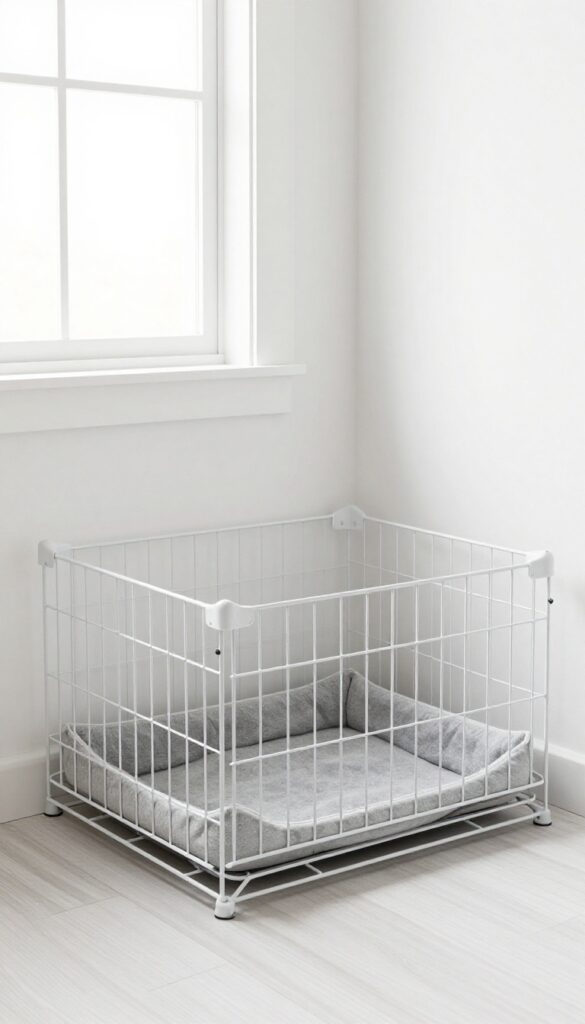
Sometimes a standard crate just doesn't cut it for a dog that needs extra room to stretch. A crate with an attached run gives them the security of a den plus the freedom to move a few steps. It's a smart middle ground between a full kennel run and a basic crate, especially for puppies or high-energy breeds that get restless in tight spaces.
This setup works best when you have a dedicated corner or wall in a mudroom, laundry room, or garage. The crate portion serves as the sleeping and relaxation zone, while the run area attaches to the front or side, giving your dog room to stand, turn, and take a few steps. Many models come with a removable divider so you can adjust the run size as your dog grows or as needed.
For multi-dog homes, you can stack or line up multiple units, each with its own run, to give every dog personal space without taking up a whole room.
Perfect For Puppies And High-energy Dogs
Puppies need more room to play and move than a standard crate allows, but they aren't ready for full house freedom. A crate with an attached run gives them a safe space to burn off energy while you're away. High-energy breeds like border collies or huskies also benefit from the extra movement room, which can reduce anxiety and destructive behaviors.
Easy To Clean And Maintain
Most crate-and-run combos have a removable plastic tray or grate floor that makes cleanup simple. You can line the run area with puppy pads or artificial turf for easy waste management. The crate portion stays clean and dry, so your dog always has a comfortable spot to sleep.
Space-saving For Multi-dog Homes
Instead of dedicating a whole room to a kennel run, you can install a crate with attached run against a wall. Some models fold flat for storage when not in use. For multiple dogs, you can buy stackable units or side-by-side runs that share walls, maximizing floor space while giving each dog their own zone.
9. Elevated Cot-Style Kennel Beds
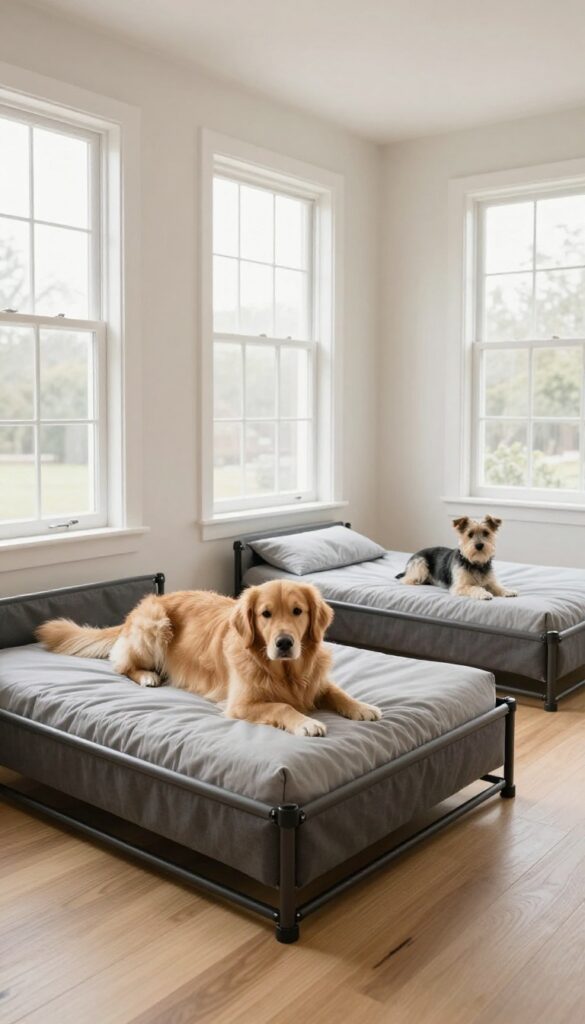
Some dogs just don't like feeling boxed in. If your pup prefers to see what's happening around them, an elevated cot-style kennel bed might be the perfect middle ground. It offers the structure of a kennel without the closed-in walls, giving dogs fresh airflow and a sense of openness.
Elevated cots with built-in sides or low rails create a designated space that feels like a kennel but stays airy. They're especially popular in warm climates where ventilation matters. Many models fold for easy storage and travel, making them versatile for multi-dog homes where flexibility is key.
Why Dogs Love Elevated Beds
Dogs naturally seek high ground for security and temperature control. Elevated beds keep them off cold floors in winter and allow air to circulate underneath in summer. The slight bounce of the fabric is also gentle on joints, which is a bonus for older dogs.
Adding Kennel-like Boundaries
To give an elevated cot a true kennel feel, look for models with removable side panels or low railings. These create visual boundaries without blocking the view. You can also place the cot inside a playpen or against a wall to define the space further.
Best Uses In Multi-dog Homes
Elevated cots work well as supplemental resting spots in common areas where dogs can relax together but still have their own space. They're also great for dogs that need to be separated during feeding or for those recovering from surgery who need limited movement.
FAQ
How much space do I need for multiple dog kennels?
It depends on your dogs' sizes and the kennel type. Stackable crates need about 2 feet of floor space per crate, while built-ins require a wall section. Measure your dogs' length and height, then add a few inches for comfort.
Can I use one large kennel for multiple dogs?
Yes, but only if the dogs get along and you have enough room. A single large kennel can work for two small dogs, but separate crates are safer for feeding and sleeping.
What material is best for indoor dog kennels?
Wire is breathable and visible, plastic is durable and den-like, and wood furniture-style blends with decor. Choose based on your dog's chewing habits and your aesthetic.
How do I clean a multi-dog kennel setup?
Use removable trays or washable pads. For wire crates, vacuum regularly and wipe with pet-safe cleaner. Built-ins may need a shop vac for deep cleaning.
Should I cover the crates at night?
Covering can help anxious dogs feel secure, but ensure airflow. Some dogs prefer open visibility. Test with a light blanket first and watch for signs of stress.
Conclusion
Finding the right indoor kennel setup for multiple dogs doesn't have to be overwhelming. Start by assessing your space, your dogs' personalities, and your budget. The nine ideas above offer something for every home and every pack.
Remember that a good kennel is a safe haven, not a prison. With the right choice, your dogs will have their own cozy spots, and you'll enjoy a more peaceful, organized home. Happy kennel hunting!

I’m Pallab Kishore, the owner of Little Pets Realm — an animal lover and pet care enthusiast sharing easy tips, healthy recipes, and honest advice to help every small pet live a happy, healthy, tail-wagging life.