Last updated on August 19th, 2026 at 04:19 pm
Guinea pigs are intelligent, curious creatures that need mental and physical stimulation to thrive. Without enrichment, they can become bored, stressed, or develop health issues.
This list of 12 toy ideas will help you create a fun, engaging daily environment in your guinea pig's cage.
Each idea is safe, easy to implement, and designed to encourage natural behaviors like foraging, exploring, and chewing.
Tunnel Systems for Exploration
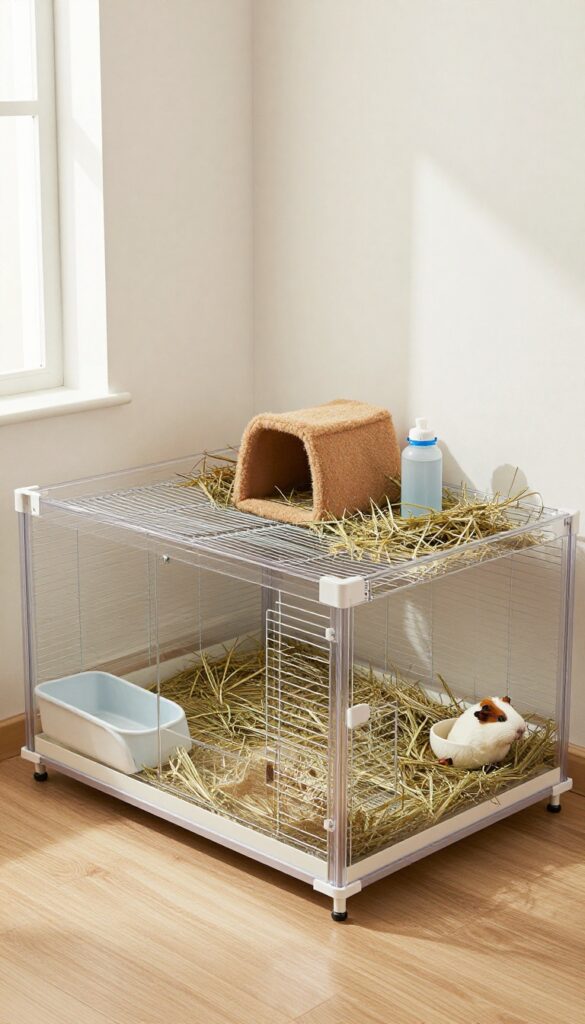
Guinea pigs are natural explorers who love to dart through tunnels. Adding a tunnel system to their cage taps into this instinct and provides hours of fun, exercise, and mental stimulation.
Choose tunnels made from chew-safe materials like fleece or sturdy plastic. Avoid wire or mesh tunnels that can injure delicate feet. Connect multiple tunnels together to create a maze-like network that encourages your guinea pigs to roam and explore.
Make sure each tunnel is wide enough (at least 8 inches in diameter) for adult guinea pigs to pass through comfortably.
Practical tips for tunnel placement in the cage
- Position tunnels near hideouts or hay racks to create a natural exploration route.
- Use tunnels to connect different areas of the cage, such as the sleeping zone and the feeding area.
- Ensure ventilation by not blocking airflow; tunnels should not obstruct cage vents.
- Clean tunnels regularly with pet-safe disinfectant to prevent odor buildup.
- Monitor for chewing; replace any tunnel that shows signs of damage.
Why tunnels work for daily enrichment
Tunnels satisfy guinea pigs' need to hide and explore, reducing stress and preventing boredom. They also encourage exercise, which is important for maintaining a healthy weight. By integrating tunnels into the cage layout, you create a dynamic environment that keeps your pets engaged throughout the day.
Hay Dispensers and Foraging Toys
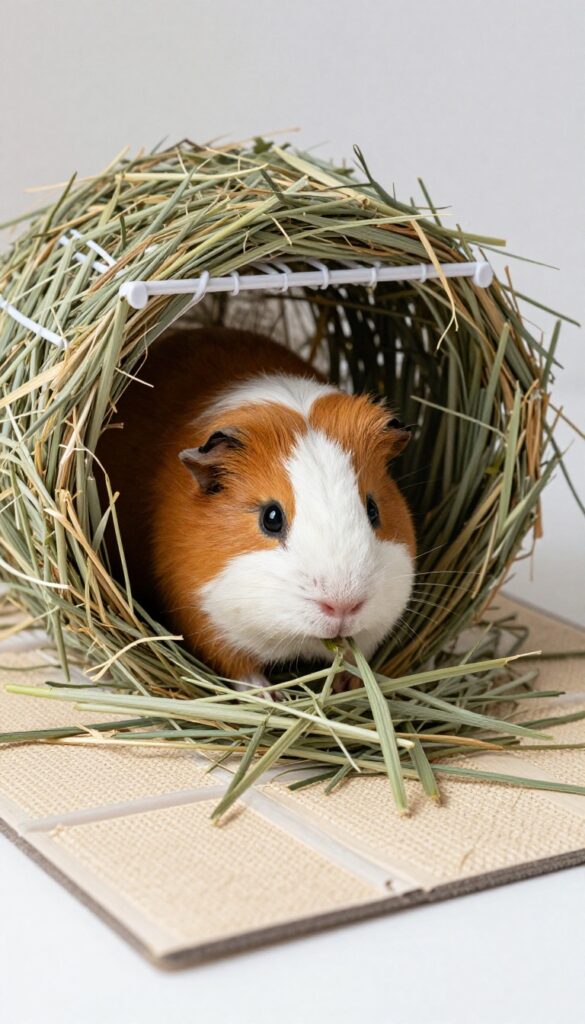
Hay is the cornerstone of a guinea pig's diet, but it can be more than just food—it can be a source of entertainment. By using hay dispensers and foraging toys, you encourage natural grazing and problem-solving behaviors while keeping the cage tidy.
Engaging Hay Dispenser Ideas
- Hay balls: These woven balls hold hay and roll as your guinea pig nibbles, adding movement and challenge.
- Hanging hay racks: Mounted on the cage bars, they keep hay off the bedding and reduce waste.
- DIY toilet paper rolls: Stuff a cardboard tube with hay and fold the ends. Your guinea pig will love unrolling it to get the hay inside.
- Foraging mats: Hide hay and treats in a fleece or fabric mat with pockets for a fun scavenger hunt.
Practical Cage Integration
Place hay dispensers near a hideout or water bottle to create a feeding zone. Ensure the dispenser is securely attached to avoid tipping. Use chew-safe materials like untreated wood or pet-safe plastic.
Avoid any small parts that could be swallowed or sharp edges that might injure your pet.
Create a Cozy Hideout Zone for Guinea Pigs
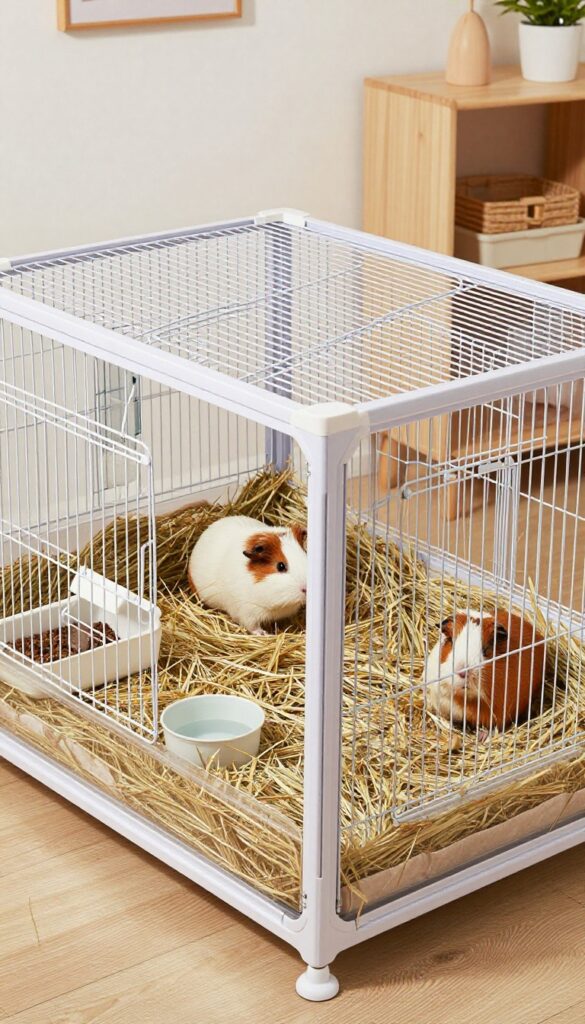
Guinea pigs are prey animals that feel safest when they have a place to retreat. A dedicated hideout zone in their cage gives them security and a spot to nap or relax. Here’s how to set one up with practical cage details.
Choose a hideout that is large enough for your guinea pig to turn around in, with at least two exits so they never feel trapped. Place it in a quiet corner of the cage, away from the main traffic area and direct drafts. Bed the hideout with soft fleece or paper-based bedding for comfort.
Ensure the hideout is stable and won’t tip over if your pig climbs on top.
Key points for a cozy hideout zone
- Use a wooden or fleece hideout – avoid plastic if your pig chews it.
- Provide a hideout per pig to prevent resource guarding.
- Keep the hideout clean by spot-cleaning daily and washing fleece weekly.
- Position the hideout near a hay rack and water bottle so your pig can eat and drink without leaving cover.
- Ensure the cage has proper ventilation around the hideout to prevent ammonia buildup.
For extra coziness, add a small piece of fleece or a soft bed inside the hideout. You can also create a DIY hideout from a cardboard box with multiple holes – just replace it when it gets soiled. Remember, the hideout zone is part of the overall cage layout, so leave enough floor space for running and playing outside the hideout.
Hideouts and Cozy Caves
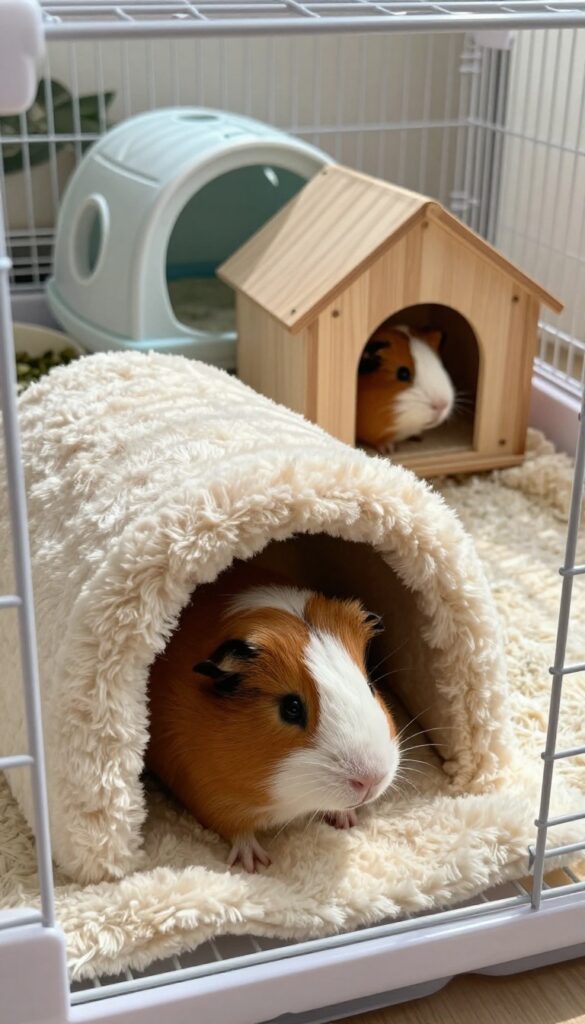
Guinea pigs are prey animals, so having secure places to retreat to is essential for their sense of safety. Hideouts and cozy caves give them a private spot to rest, sleep, or escape from household noise. A good hideout also helps reduce stress and can prevent territorial disputes when you have multiple piggies.
Choose hideouts with at least two exits so your guinea pig never feels trapped. Fleece caves, wooden houses, and plastic igloos are popular options. Place them in different areas of the cage to give each piggy a choice of where to hang out.
Rotating the hideouts every few weeks keeps the environment novel and interesting.
- Fleece caves are soft and machine-washable; wooden houses are sturdy and chewable; igloos offer a clear view out.
- Multiple hideouts reduce competition and allow shy piggies to have their own space.
- Rotate hideouts to maintain novelty and prevent boredom.
- Ensure hideouts are placed on a soft bedding or fleece liner for comfort.
- Check that hideouts are easy to access for cleaning and do not block ventilation.
Keep Food and Water Easy to Reach in the Enclosure
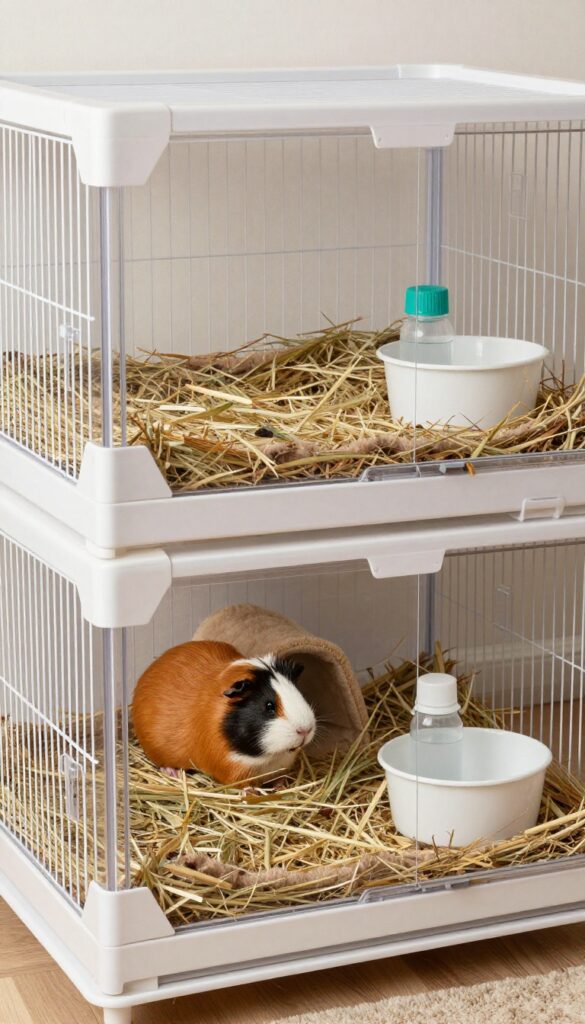
While toys are important, your guinea pig’s daily essentials—food and water—should always be easy to access. Clever placement and simple enrichment can turn mealtime into a fun activity without causing frustration.
Start with the basics: place a heavy ceramic food bowl in a quiet corner of the cage, away from the litter area. Attach a water bottle securely to the cage bars at a height your guinea pig can comfortably reach. For a touch of enrichment, try these easy ideas:
Enrichment Ideas for Food and Water
- Use treat balls or simple puzzle boxes that dispense pellets or chopped veggies when rolled or nudged.
- Hide small vegetable pieces under overturned plastic cups or inside plain paper bags for a foraging challenge.
- Start with very easy puzzles—like a single cup over a treat—and gradually increase difficulty as your pet learns.
- Ensure all puzzle toys are easy to clean and have no small parts that could be chewed off or swallowed.
Remember, the goal is mental stimulation, not stress. If your guinea pig seems frustrated, simplify the puzzle. Keep food and water stations away from hideouts to prevent soiling, and always provide fresh hay nearby.
A well-placed hay rack next to the food bowl encourages natural grazing behavior.
Add a Soft Bedding Section in the Cage
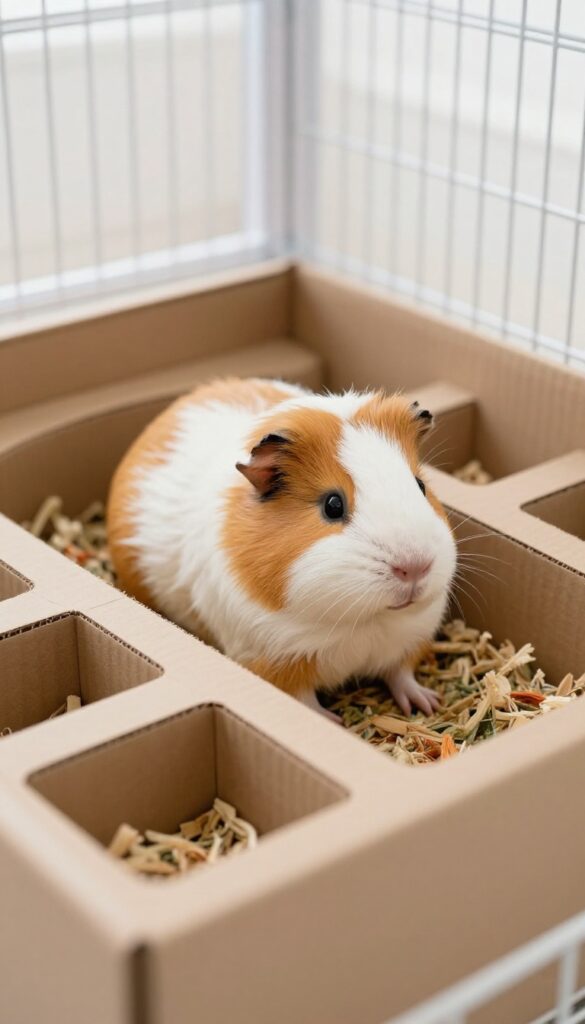
Guinea pigs love to burrow and nest in soft materials. Creating a cozy bedding area within their cage mimics their natural habitat and provides comfort. A great way to do this is by adding a cardboard box maze filled with safe bedding.
Cardboard boxes are inexpensive and easy to replace. Cut holes in the sides to create a simple maze that encourages exploration. Place the maze in a corner of the cage with soft fleece or paper bedding inside.
This gives your guinea pigs a fun hideout and a place to nap.
Key Tips for a Safe Cardboard Maze
- Remove all tape, staples, and labels before giving boxes to your guinea pigs.
- Avoid boxes with colored ink or heavy print, as the dyes may be toxic.
- Use non-toxic glue if you need to assemble multiple boxes.
- Replace boxes as soon as they become soiled or chewed up.
- Ensure the maze still allows easy access to food, water, and hideouts.
This enrichment idea stays within the cage and adds variety to your guinea pig's daily environment. It encourages natural behaviors like foraging and tunneling, while also providing a soft, comfortable spot to rest. Just remember to keep the maze clean and replace it regularly to maintain hygiene.
Leave Cage Floor Space for Daily Movement
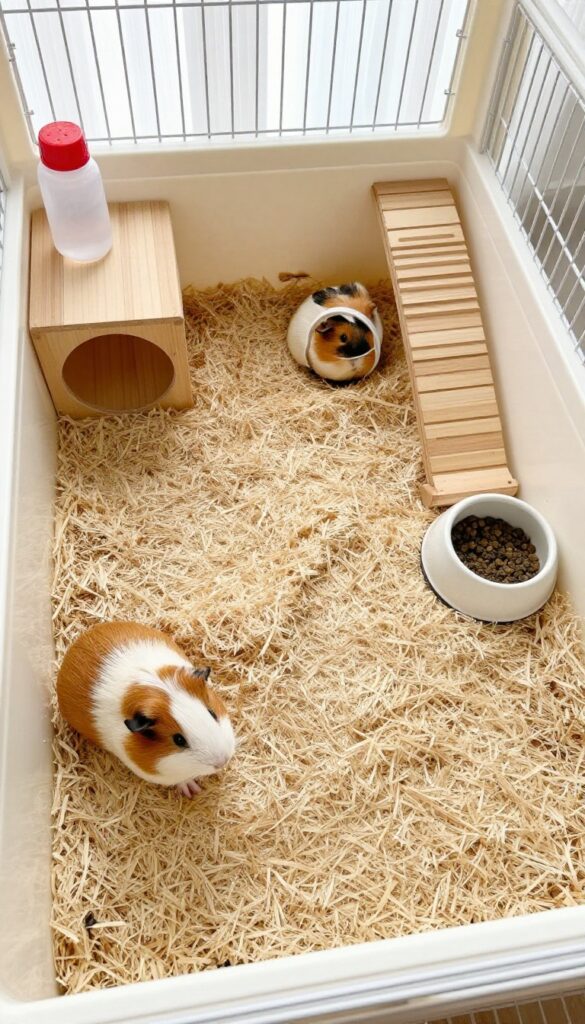
While adding toys and accessories is important, leaving open floor space is just as essential for your guinea pig's daily exercise and natural roaming behavior. A cluttered cage can limit movement and cause stress, so plan your layout to include a clear area where your pet can run, popcorn, and explore freely.
Guinea pigs need at least 7.5 square feet of floor space per pair, but more is always better. When arranging the cage, keep a central or side zone completely free of objects. This open area becomes a safe runway for zoomies and a place to scatter hay or treats for foraging.
- Use low ramps and platforms to utilize vertical space without taking up floor area. Secure ramps with a gentle slope and non-slip surface to prevent falls.
- Place hideouts and tunnels along the cage edges so the center stays open. This mimics their natural habitat where they can dash between cover.
- Ensure water bottles and food bowls are accessible from the open area, so your guinea pig can easily eat and drink after exercise.
- Regularly rearrange the layout to prevent boredom—keeping the floor space clear makes this simple.
Remember, a spacious floor zone isn't wasted space—it's the most important enrichment you can provide. Your guinea pig will use it daily for running, stretching, and playing, which supports healthy weight and muscle tone.
Digging Boxes with Safe Substrates
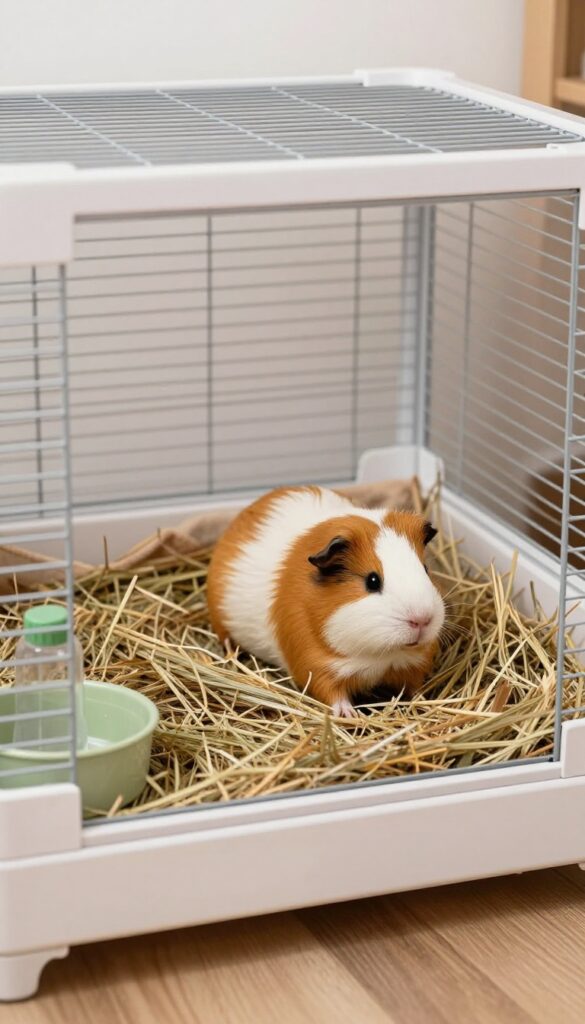
Guinea pigs love to dig and burrow. A digging box inside the cage lets them express this natural behavior safely.
Fill a shallow, sturdy box (like a small plastic storage bin or cardboard box) with safe substrates. Good options include dust-free hay, paper-based bedding, or fleece strips. Avoid cat litter, clay-based products, or anything with sharp particles.
- Hide small treats or pellets in the substrate to encourage foraging.
- Monitor your guinea pig to ensure they aren't eating large amounts of bedding.
- Place the digging box in a corner of the cage where it won't block access to food, water, or hideouts.
- Replace or clean the substrate regularly to keep it fresh and hygienic.
A digging box adds variety to the enclosure and satisfies your guinea pig's instinct to tunnel. It also helps keep their nails naturally worn down. Just be sure the box is low enough for easy entry and exit.
Hanging Toys and Swings
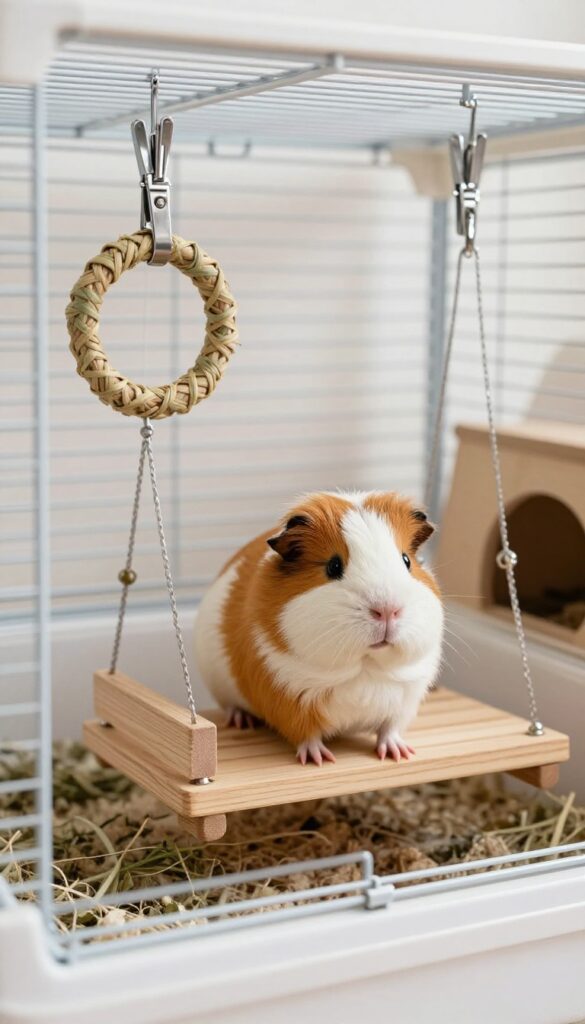
Hanging toys and swings add vertical interest and gentle motion to your guinea pig's cage, encouraging natural climbing and exploration behaviors. These enrichment items are easy to install and can be rotated to maintain novelty.
Choose hanging toys made from untreated wood or hard, chew-safe plastic. Attach them securely to the cage top using stainless steel clips or carabiners that cannot be chewed off. Avoid any hanging elements that could entangle your guinea pig's legs or head.
- Hang wooden blocks, plastic balls, or woven grass rings from the cage ceiling.
- Swings with a flat, solid platform provide gentle rocking motion; ensure the swing is low enough for easy mounting.
- Position hanging toys away from water bottles and food bowls to prevent contamination.
- Check attachments regularly for wear and replace any damaged parts immediately.
When installing swings, use a sturdy base that supports your guinea pig's weight without tipping. The swing should hang no more than a few inches above the cage floor so your pet can step on and off safely. Combine hanging toys with other cage elements like hideouts and tunnels to create a varied enrichment zone.
Treat Balls and Rolling Toys
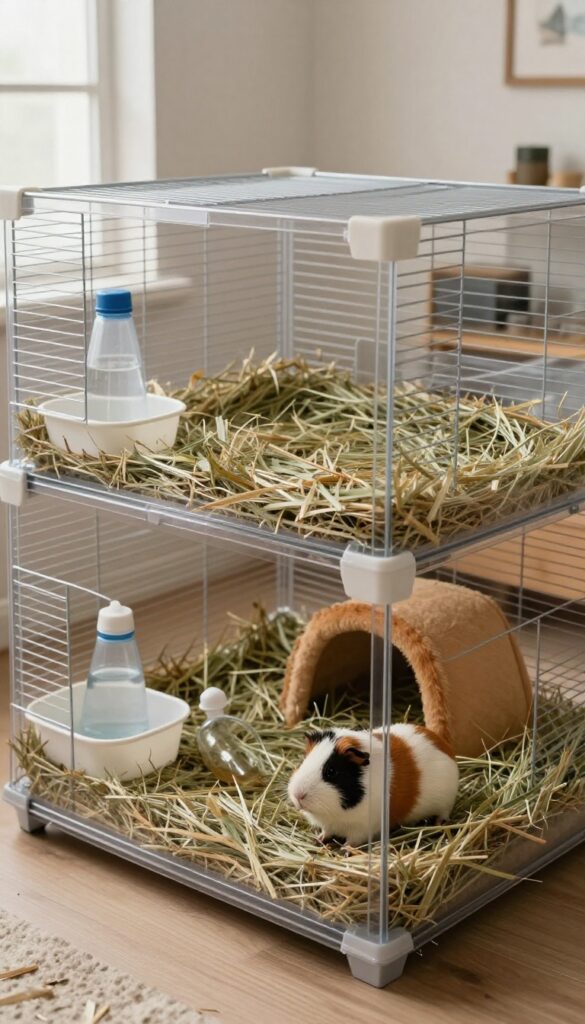
Treat balls are a fantastic way to combine feeding time with exercise. These rolling toys dispense small amounts of food as your guinea pig pushes them around the cage, encouraging natural foraging behavior and keeping them active.
When choosing a treat ball, look for one made specifically for small animals, with openings large enough for pellets or hay pieces to fall out but small enough to prevent your guinea pig from getting stuck. Avoid balls with small parts that could be chewed off and swallowed.
- Fill with a small amount of pellets or hay to encourage movement.
- Supervise the first few uses to ensure the ball is not too heavy or difficult to roll.
- Place the treat ball on a flat, solid surface within the cage (not on deep bedding where it might get stuck).
- Clean the ball regularly to prevent buildup of old food and bacteria.
Keep the treat ball in the main floor area of the enclosure, where your guinea pig has plenty of room to push it around. Ensure the cage has a solid-bottom base (not wire) to protect their feet. This toy works best in a cage with ample floor space—at least 7.5 square feet for one guinea pig, more for pairs.
Always provide fresh water and a hideout nearby so your pet can retreat if they feel overwhelmed.
Add a Compact Hay Rack Area in the Cage
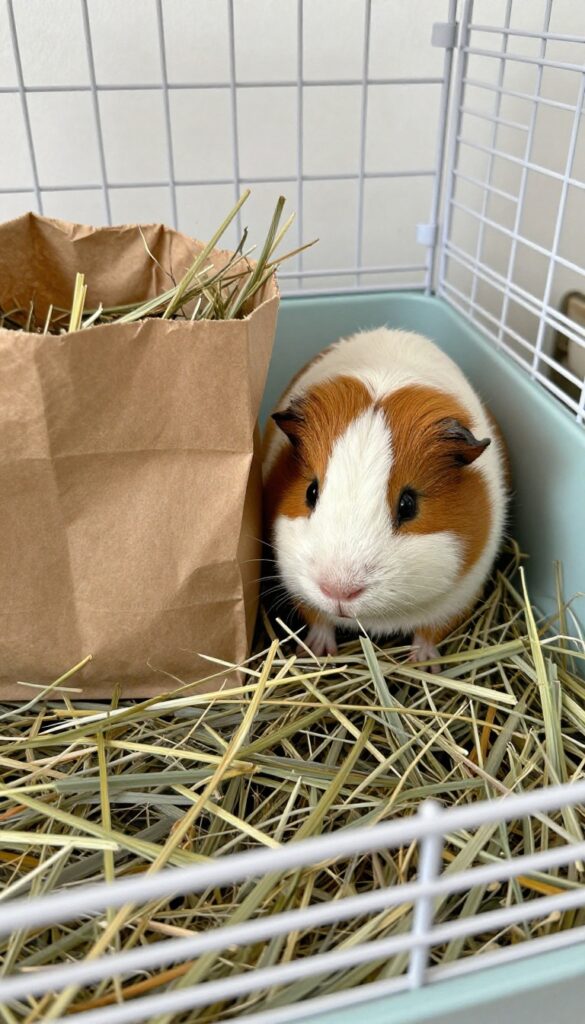
A hay rack area keeps hay clean and encourages natural foraging. Adding a plain paper bag as a hay dispenser turns feeding into a fun puzzle.
Place a handful of hay inside a plain brown paper bag, then crumple the top. Your guinea pig will enjoy shredding the bag to reach the hay. This simple toy satisfies their urge to forage and gnaw.
Key tips for using paper bags in the cage
- Use only plain brown paper bags without any printed logos, colored ink, or glue.
- Remove any handles or metal staples before giving the bag to your pet.
- Position the bag near the hay rack or in a quiet corner of the cage.
- Replace the bag once it becomes soiled or torn to maintain hygiene.
- Monitor your guinea pig to ensure they don't ingest large pieces of paper.
This enrichment works well in any guinea pig cage setup. Place the paper bag on a fleece liner or bedding, and ensure there's easy access to water and a hideout nearby. The compact hay rack area adds variety to daily feeding and keeps your pet mentally stimulated.
Keep Chew Toys in One Small Cage Activity Corner
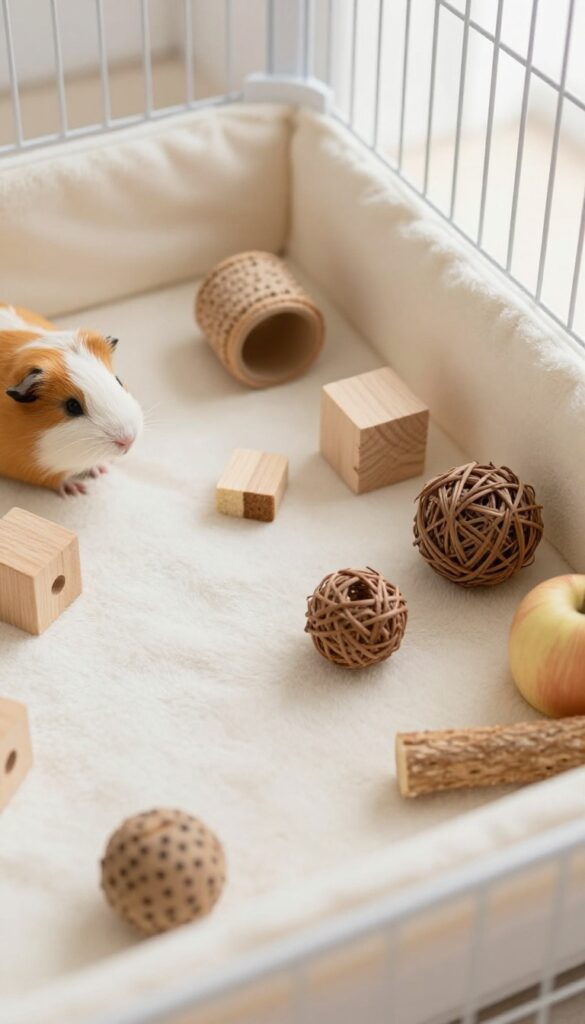
Designate a specific corner of the cage as an activity zone where you place a variety of chew toys. This helps your guinea pigs know where to go for entertainment and makes it easy for you to rotate and clean toys regularly.
Choose a corner away from the main hideout and food area to avoid crowding. Use a small fleece mat or a shallow tray to corral the toys and contain any mess. Include a mix of wooden chews, willow balls, apple sticks, and cardboard tubes.
Rotate toys every few days to maintain interest; keep a stash of 15–20 toys and swap them out. Observe which toys your guinea pigs prefer and adjust the selection accordingly.
- Clean toys between rotations to prevent bacteria buildup – wash wooden toys with mild soap and water, rinse thoroughly, and dry completely before returning to the cage.
- Ensure the activity corner does not block access to the water bottle or food bowl.
- Place the corner on a solid part of the cage floor (not over a wire grate) so toys stay clean and easy to pick up.
- Avoid leaving the same toys for weeks; stale toys lead to boredom.
FAQ
How often should I change my guinea pig's toys?
Rotate toys every 2-3 days to keep your guinea pig interested. Having a variety of toys and swapping them out prevents boredom.
Are plastic toys safe for guinea pigs?
Only use hard, non-toxic plastic toys designed for small animals. Avoid soft plastic that can be chewed and swallowed. Always supervise.
Can guinea pigs have too many toys?
Yes, overcrowding the cage can cause stress. Ensure your guinea pig has enough open space to run and rest. A few well-chosen toys are better than many.
What materials are safe for guinea pig toys?
Safe materials include untreated wood (apple, willow), cardboard, paper, fleece, and hard plastic. Avoid cedar, pine, painted wood, and anything with small parts.
Do guinea pigs need toys if they have a companion?
Yes, even with a companion, guinea pigs benefit from environmental enrichment. Toys provide mental stimulation and encourage activity.
Conclusion
Enriching your guinea pig's cage with these 12 toy ideas will keep your pets happy, healthy, and engaged. Remember to prioritize safety, rotate toys regularly, and observe your guinea pigs' preferences.
A little effort goes a long way in providing a stimulating environment that mimics their natural habitat.

I’m Pallab Kishore, the owner of Little Pets Realm — an animal lover and pet care enthusiast sharing easy tips, healthy recipes, and honest advice to help every small pet live a happy, healthy, tail-wagging life.