Last updated on August 19th, 2026 at 04:19 pm
Guinea pigs are curious and active pets that need mental and physical stimulation.
Store-bought toys can be expensive, but you can easily make safe and fun toys from items around your home.
Here are 10 DIY guinea pig toy ideas that are simple, cheap, and enriching.
Toilet Paper Roll Tunnel
Start with the simplest toy: a toilet paper roll tunnel. Guinea pigs love to run through, chew, and explore these cardboard tubes. With a quick safety modification, you can turn an everyday item into an engaging enrichment activity.
Empty toilet paper rolls are perfect for this DIY toy. They are lightweight, easy to find, and safe for guinea pigs to chew. The key is to cut the roll lengthwise before giving it to your pet.
This prevents the roll from wrapping around your guinea pig's head or body, which could cause panic or injury. Simply use scissors to make a single cut from one end to the other, creating a slit that allows the tube to open flat if needed.
- Use only plain cardboard rolls without glue, tape, or labels. Remove any sticky residue.
- Cut the roll lengthwise to prevent trapping your guinea pig's head.
- Stuff the roll with hay to encourage foraging and chewing.
- Replace the roll once it becomes soiled or overly chewed.
To add extra fun, stuff the tunnel with fresh hay. Guinea pigs will enjoy pulling the hay out and nibbling on the cardboard. Place the tunnel in different spots in the cage to keep things interesting.
You can also connect multiple rolls together (using hay or paper to join them) to create a longer tunnel system. Always supervise your guinea pig with new toys and remove any pieces that become small enough to swallow.
Cardboard Box Hideout
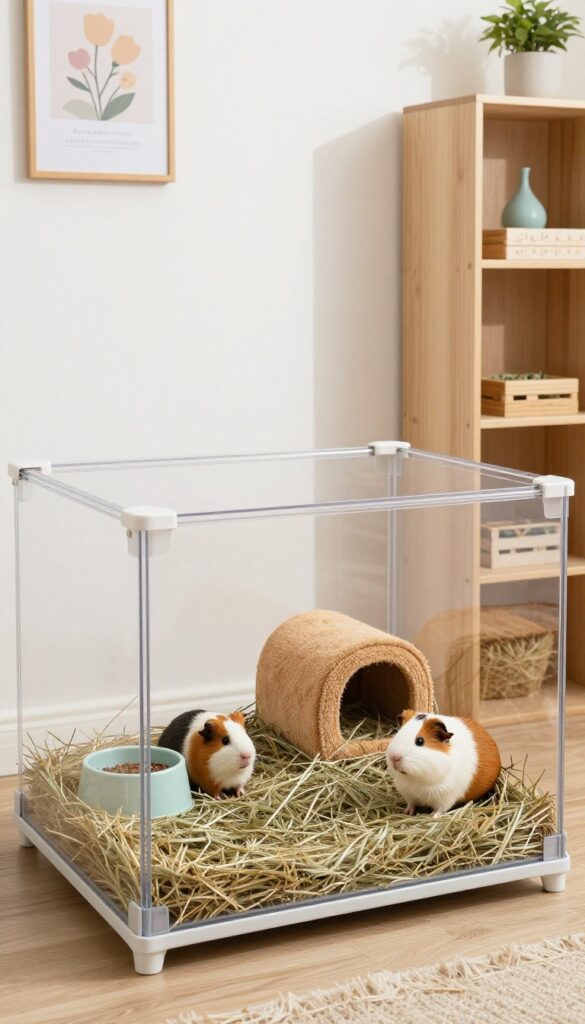
A simple cardboard box can become a favorite hideout for your guinea pig. They love having a cozy, dark space to retreat to, and you can easily customize it with just a few cuts.
Start with a small cardboard box—about the size of a shoebox or slightly larger. Remove any tape, staples, or labels, and avoid boxes with heavy printed ink that could be toxic. Use a box cutter or scissors to cut a door on one side, and add a couple of small windows for extra ventilation and peeking opportunities.
Make sure the edges are smooth so your guinea pig won't get scratched.
- Cut a door and windows in a small cardboard box.
- Guinea pigs love to hide and explore.
- Replace when soiled or chewed up.
Place the hideout in a quiet corner of the cage. Your guinea pig will likely use it for napping, hiding, or just hanging out. Because cardboard absorbs urine and can get chewed, check it regularly and swap it out for a fresh box when it becomes soiled or too tattered.
This toy costs nothing and provides endless enrichment.
Paper Bag Foraging Toy
A simple paper bag can become an engaging foraging toy that taps into your guinea pig's natural instinct to search for food. This easy DIY project uses items you already have at home and provides mental stimulation.
Foraging is a natural behavior for guinea pigs, and this toy encourages them to root around and explore. Here's how to make it:
- Use a plain brown paper bag without glue, ink, or tape. Avoid plastic or glossy bags.
- Crumple the bag loosely and place a few small treats or hay inside.
- Twist the top of the bag closed, but not too tight, so your guinea pig can still get in.
- Place the bag in their enclosure and watch them investigate.
Always supervise your guinea pig while they play with the paper bag. Remove any large pieces that they might try to eat. This toy is best used for short play sessions and then discarded or recycled.
Sock Snuffle Mat
Turn an old sock into a snuffle mat that lets your guinea pig forage for treats just like they would in the wild. This simple toy taps into their natural instinct to search for food, keeping them busy and mentally stimulated.
Start with a clean, worn sock that has no holes or loose threads. Cut the sock into strips about 1 inch wide and 6 inches long. Take a piece of cardboard (like from a cereal box) and cut it into a rectangle roughly 4×6 inches.
Poke small holes around the edges of the cardboard, then thread each sock strip through a hole and tie a knot on the underside to secure it. Repeat until the cardboard is covered with a shaggy surface of fabric strips. Now you can hide small pieces of hay, dried herbs, or a few pellets deep in the strips.
Your guinea pig will love nosing through the fabric to find the treats.
Important safety tips
- Avoid socks with elastic bands, small buttons, or decorative elements that could be chewed off and swallowed.
- Trim any loose threads after cutting the sock to prevent them from wrapping around your pet's feet or toes.
- Supervise the first few uses to make sure your guinea pig doesn't try to eat the fabric strips.
PVC Pipe Maze
A PVC pipe maze is a fantastic way to give your guinea pig an exciting tunnel system to explore. It's durable, easy to clean, and can be rearranged for endless fun.
To build a safe maze, use wide PVC pipes with a diameter of at least 4 inches. This ensures your guinea pig can move through comfortably without getting stuck. Connect the pipes with elbow joints to create turns and longer tunnels.
You can also add T-joints for branching paths.
- Smooth all cut edges with sandpaper or a file to prevent sharp edges that could cut your pet.
- Avoid pipes narrower than 4 inches in diameter, as they may be too tight and cause distress.
- Place the maze on a flat surface and supervise your guinea pig during first use to ensure they enjoy it.
- Clean the pipes regularly with mild soap and water to maintain hygiene.
Guinea pigs naturally love to burrow and explore, so a PVC maze satisfies that instinct. You can even hide treats inside to encourage foraging. This toy is a simple, homemade enrichment that will keep your guinea pig active and engaged.
Hay-Stuffed Egg Carton
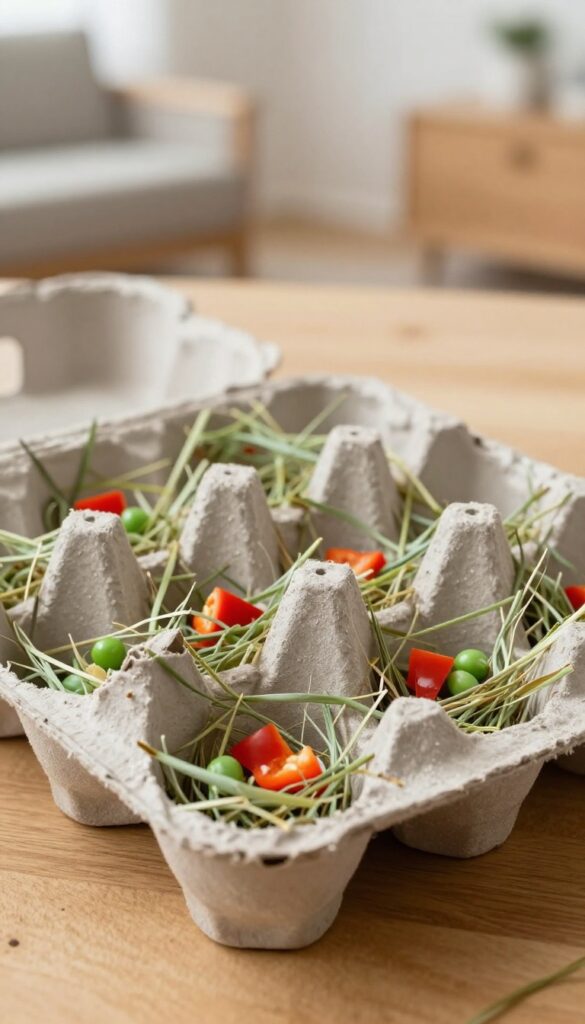
Turn a simple cardboard egg carton into a fun foraging toy that encourages your guinea pig’s natural digging and foraging instincts.
Start with a clean, empty cardboard egg carton. Remove any labels or stickers, and tear off the lid if you prefer an open design. Fill each cup with fresh hay, and tuck a few small treats like a piece of bell pepper or a single pea flake deep inside the hay.
Your guinea pig will love digging through the cups to find the hidden goodies.
- Use only cardboard egg cartons – never plastic or foam, which can be dangerous if chewed or ingested.
- Remove all labels, stickers, or glue residue before giving the carton to your pet.
- Fill each cup loosely with hay to allow easy digging, and hide treats for extra motivation.
- This toy provides mental stimulation and encourages natural foraging behavior.
Place the stuffed egg carton in your guinea pig’s enclosure and watch them explore. They’ll push the carton around, pull out hay, and nibble on the cardboard. Once the carton becomes soiled or chewed beyond use, simply recycle it and make a new one.
Crumpled Paper Balls
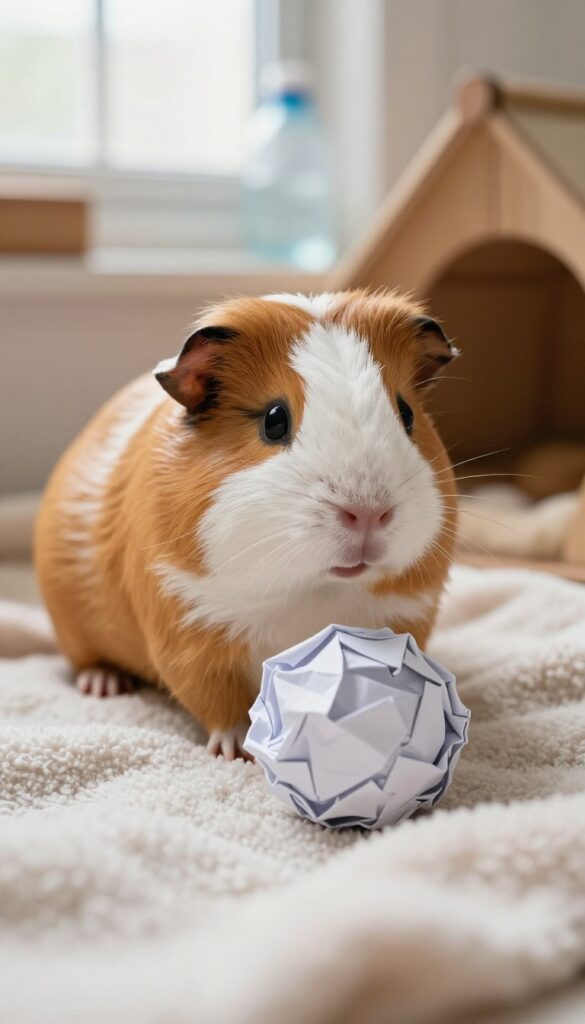
Sometimes the simplest toys bring the most joy. Crumpled paper balls are a zero-cost, engaging toy that your guinea pig can push, toss, and chew to its heart's content.
Plain printer paper is all you need. Take a single sheet, scrunch it into a loose ball about the size of a tennis ball, and offer it to your guinea pig. The crinkling sound and unpredictable rolling motion will spark their curiosity.
Safety tips
- Use only non-toxic, ink-free paper. Avoid glossy, colored, or printed paper as the inks can be harmful.
- Supervise playtime and remove the paper ball once it becomes torn or soggy to prevent ingestion of large pieces.
- Offer one ball at a time and replace it regularly to keep the toy fresh.
This toy is perfect for encouraging natural foraging and play behaviors. Your guinea pig will bat the ball around their enclosure, and the lightweight paper is easy for them to carry. Just remember to keep an eye on them and swap out the ball when it starts to fall apart.
Towel Tug Toy
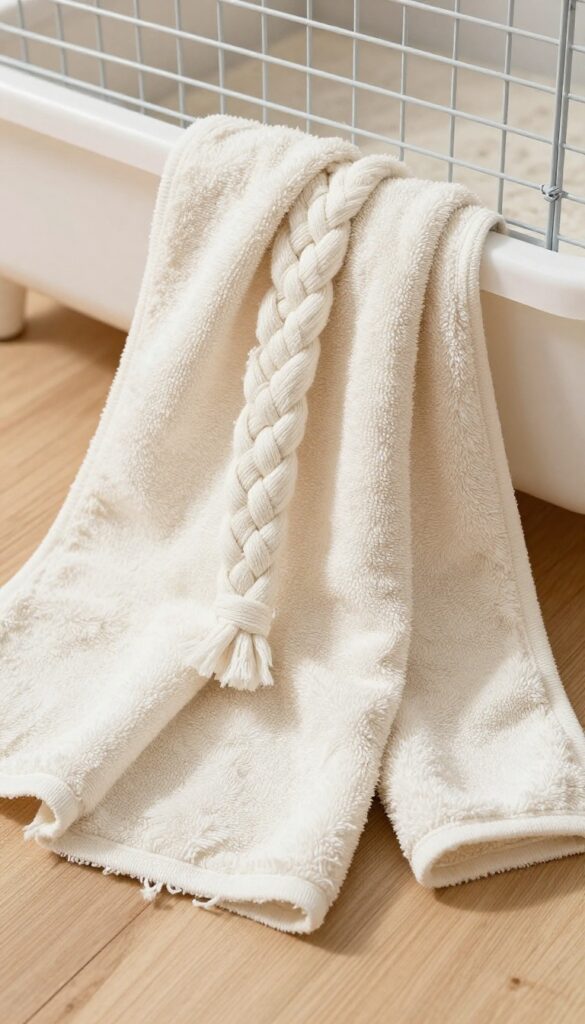
An old towel can be transformed into a fun tug toy that satisfies your guinea pig's natural chewing and pulling instincts. This simple DIY project takes just a few minutes and uses materials you already have.
Start by cutting an old towel into three long strips, each about 2 inches wide. Braid the strips together tightly, then tie a knot at each end to secure the braid. The resulting rope-like toy is perfect for guinea pigs to grab, tug, and chew.
Key Tips
- Ensure no loose threads are left hanging, as they can be ingested or cause injury.
- Use only cotton or natural fiber towels; avoid synthetic fibers that may be harmful if chewed and swallowed.
- Wash the toy regularly with mild soap and water to keep it clean and free of bacteria.
- Supervise your guinea pig during play and replace the toy if it becomes frayed or damaged.
This toy is especially great for active guinea pigs that enjoy a good tug-of-war. You can drape it over the cage bars or simply place it on the floor for them to discover. The texture of the towel is gentle on their teeth and gums, making it a safe and satisfying chew option.
Apple Stick Chew Toy
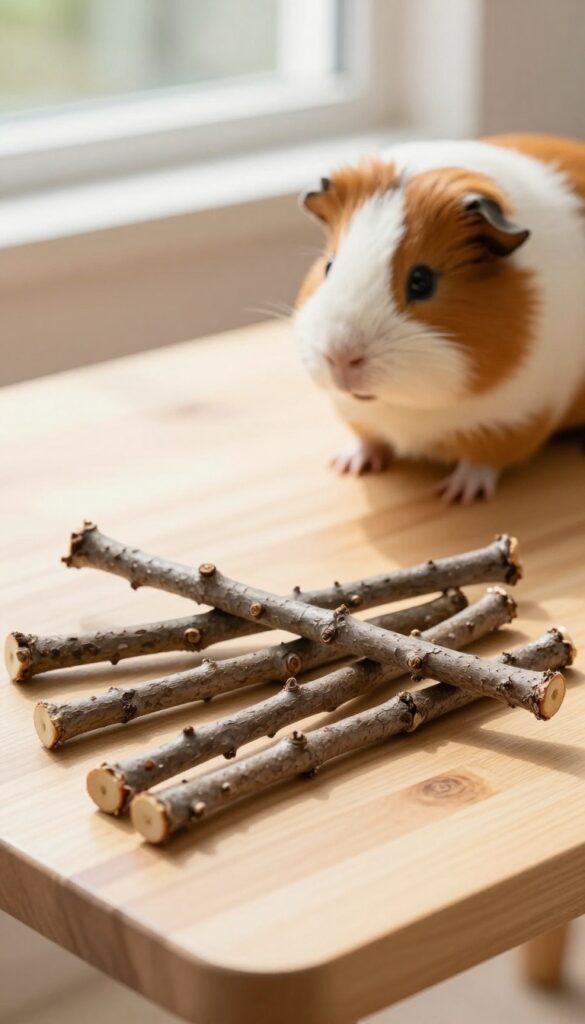
Guinea pigs have open-rooted teeth that grow continuously, so they need safe items to chew on to keep them at a healthy length. Apple tree branches are a perfect natural chew toy you can easily prepare at home.
Start by collecting branches from apple, pear, or willow trees that have not been treated with pesticides or chemicals. Avoid branches from cherry, apricot, peach, or other stone fruit trees, as these can be toxic to guinea pigs. Also stay away from evergreen trees like pine or cedar, which contain harmful oils.
Wash the branches thoroughly with water and a scrub brush to remove dirt and any residue. Cut them into small sticks about 3 to 5 inches long and roughly the thickness of a pencil. You can leave a bit of bark on, as many guinea pigs enjoy peeling it off.
Let the sticks dry completely before giving them to your pet.
- Only use branches from apple, pear, or willow trees.
- Ensure branches are from untreated, pesticide-free trees.
- Avoid all stone fruit trees (cherry, apricot, peach, plum).
- Wash and dry sticks before offering them to your guinea pig.
- Replace sticks once they become soiled or too small.
Place a few sticks in your guinea pig's enclosure each day. They will gnaw on them, which helps wear down their teeth naturally. This simple toy is free, easy to make, and provides both dental health benefits and enrichment.
Ice Cube Treat Puzzle
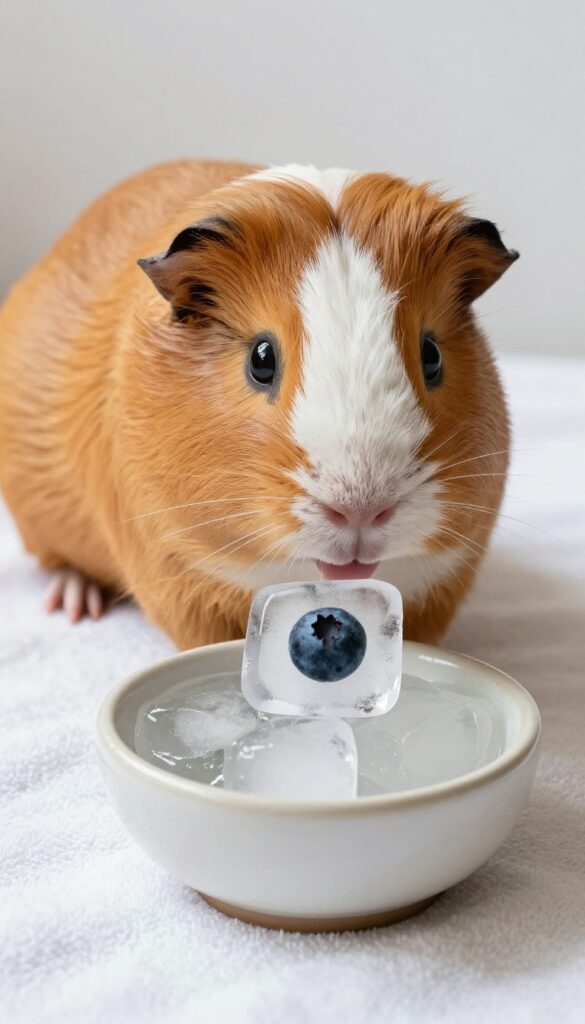
On warm days, give your guinea pig a refreshing challenge with this simple frozen puzzle. The ice cube treat combines enrichment with a cooling effect, making it a perfect summer activity.
To make this toy, you only need an ice cube tray, water, and small pieces of guinea pig-safe fruits or vegetables. Good choices include a few tiny blueberries, a small slice of cucumber, or a bit of bell pepper. Avoid high-sugar fruits like grapes or bananas.
- Fill each ice cube compartment halfway with water, add a small piece of fruit or veggie, then top off with water.
- Freeze until solid, then pop out the cubes.
- Place one or two cubes in a shallow bowl or on a towel in your guinea pig's play area.
Your guinea pig will lick and push the ice cube around, working to get to the treat inside. This not only keeps them cool but also provides mental stimulation. Supervise the first few times to ensure they don't try to chew the ice aggressively—most guinea pigs will lick it, but it's good to watch.
Use this toy sparingly, perhaps once or twice a week, to avoid any digestive upset from too much cold.
FAQ
Are DIY toys safe for guinea pigs?
Yes, as long as you use non-toxic materials and supervise play. Avoid small parts, sharp edges, and any items that could be ingested.
How often should I rotate toys?
Rotate toys every few days to keep your guinea pig interested. Replace any toy that becomes soiled or damaged.
Can I use any cardboard?
Use plain, unprinted cardboard without tape, glue, or staples. Avoid cardboard with glossy coatings or colored inks.
Conclusion
DIY guinea pig toys are a great way to provide enrichment without breaking the bank. Always prioritize safety by using non-toxic materials and supervising play.
Rotate toys regularly to keep your guinea pig engaged and happy.

I’m Pallab Kishore, the owner of Little Pets Realm — an animal lover and pet care enthusiast sharing easy tips, healthy recipes, and honest advice to help every small pet live a happy, healthy, tail-wagging life.