Last updated on August 19th, 2026 at 04:19 pm
Creating a dedicated room or corner for your guinea pig can enhance their quality of life and add charm to your home.
Whether you’re setting up a new cage or revamping an existing one, these 11 design ideas will help you build a safe, comfortable, and adorable habitat.
From spacious enclosures to cozy hideouts, each tip focuses on your pet’s well-being while keeping aesthetics in mind.
Choose a Spacious Cage with a Solid Floor
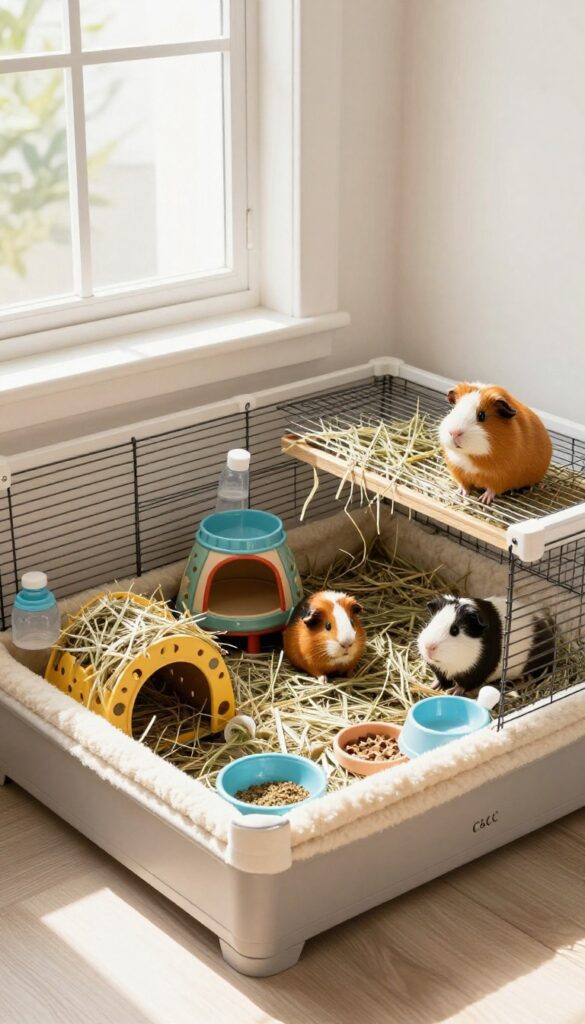
The foundation of any great guinea pig habitat is the cage itself. A spacious enclosure with a solid floor is essential for your pet’s health and happiness.
Guinea pigs need room to run, popcorning, and explore. The minimum recommended floor space for one guinea pig is 7.5 square feet, but bigger is always better. A larger cage reduces stress and encourages natural behaviors.
Key Considerations
- Solid floors are non-negotiable: wire floors can cause painful foot injuries and bumblefoot. Opt for a solid plastic base or a C&C (cube and coroplast) cage with a smooth coroplast tray.
- C&C cages are popular because they are customizable, easy to expand, and allow for creative layouts. You can add extra levels or connect multiple cages.
- Ensure the cage has good ventilation, easy access for cleaning, and enough space for hideouts, hay racks, water bottles, and food bowls.
When choosing a cage, also consider the bedding. Fleece liners are a popular choice over loose bedding because they are soft, absorbent, and easy to clean. Pair them with an absorbent layer like U-Haul pads or towels underneath.
Avoid cedar or pine shavings as they can cause respiratory issues.
Use Soft, Absorbent Bedding or Fleece Liners
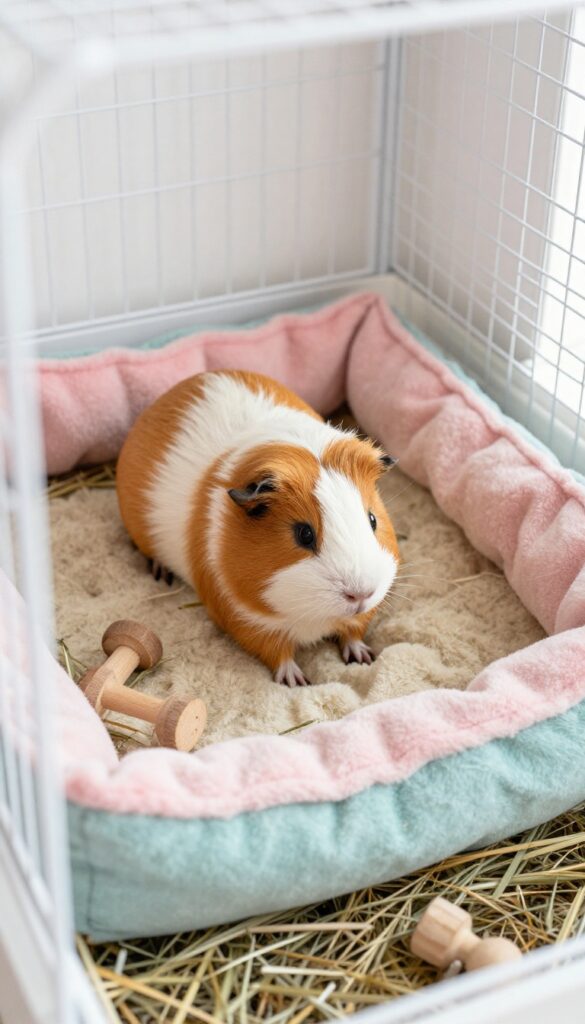
Choosing the right bedding is crucial for your guinea pig’s comfort and health. The best options are soft, absorbent, and dust-free, keeping the cage clean and your pet happy.
Fleece liners are a popular choice among guinea pig owners. They are reusable, soft on little feet, and easy to clean—simply shake off hay and wash. Pair them with an absorbent layer underneath, like towel or u-haul pads, to wick away moisture.
Safe Bedding Options
- Paper-based bedding: Highly absorbent, dust-free, and comfortable. Look for brands like Carefresh or Kaytee Clean & Cozy.
- Aspen shavings: A safe wood option that is absorbent and low in dust. Avoid cedar and pine—they contain oils that can cause respiratory issues.
- Fleece liners: Reusable, soft, and easy to spot-clean daily. Great for a cute, colorful cage look.
What to Avoid
Never use cat litter, clay-based bedding, or cedar/pine shavings. These can harm your guinea pig’s respiratory system and are not designed for small pets.
Practical Tips
Layer bedding at least 2-3 inches deep for burrowing. Spot-clean daily and do a full change weekly. If using fleece, have a spare set so you can swap during laundry.
Provide Multiple Hideouts and Tunnels
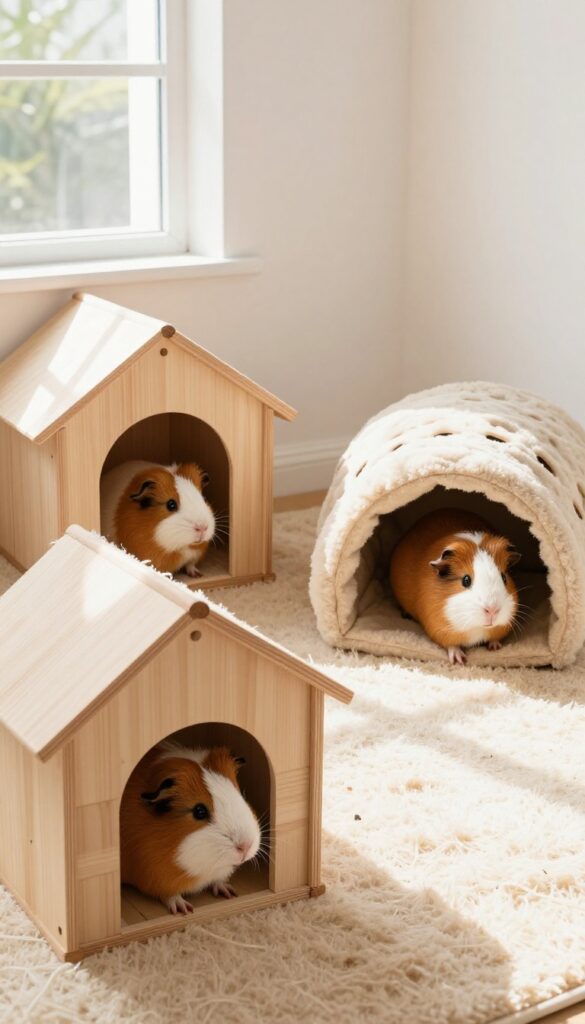
Guinea pigs are prey animals, so they feel safest when they have plenty of places to hide. A well-designed enclosure includes multiple hideouts and tunnels to reduce stress and encourage natural behaviors.
Aim for at least one hideout per guinea pig, plus extra tunnels for exploration. This prevents competition and gives each pig a chance to retreat when needed.
- Fleece tunnels are soft, washable, and great for burrowing.
- Wooden houses provide a sturdy, chew-safe option that also helps keep nails trimmed.
- Igloos or plastic hideouts should be used with caution—plastic can trap heat, so choose well-ventilated designs or avoid them in warm climates.
- Every hideout should have at least two exits so your pig can escape if startled, preventing fights or injuries.
Place hideouts in different areas of the cage to create distinct zones—one near the hay rack, another near the water source. This encourages movement and enriches their environment. Avoid blocking access to food or water, and ensure tunnels are wide enough for even the largest guinea pig to pass through comfortably.
Incorporate a Hay Rack and Food Station
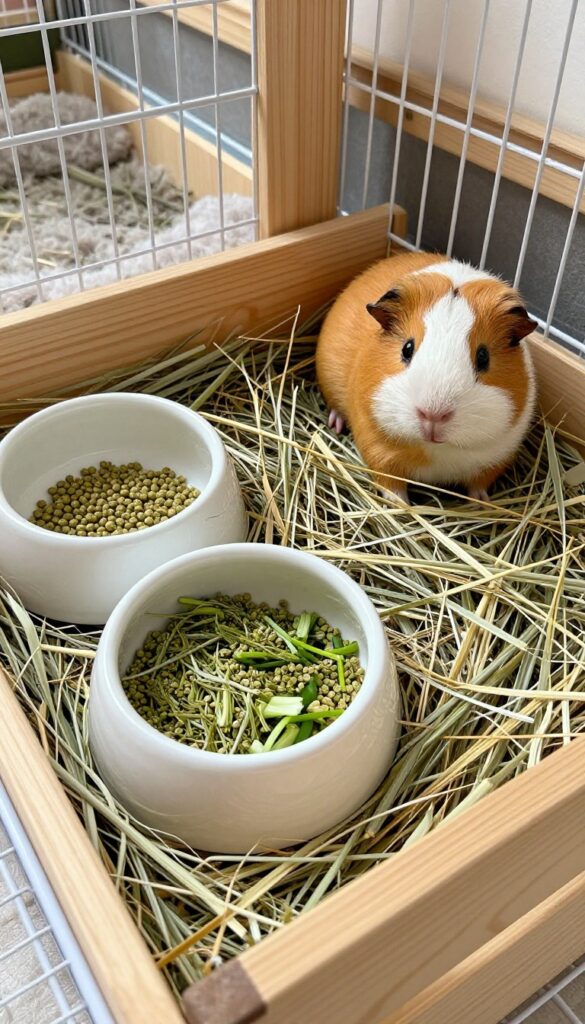
A well-organized feeding area keeps your guinea pig’s food clean and accessible while encouraging natural grazing behavior.
Hay is the cornerstone of a guinea pig’s diet and should be available 24/7. A hay rack mounted inside the cage or attached to the side keeps hay off the bedding, reducing waste and mess. Choose a rack with wide openings so your guinea pig can easily pull out hay without getting stuck.
- Use heavy ceramic bowls for pellets and fresh vegetables—they are tip-proof and cannot be chewed like plastic bowls.
- Position the food station away from the bathroom area (where your guinea pig tends to urinate) to keep food clean and dry.
- Ensure the hay rack is placed at a comfortable height, low enough for your guinea pig to reach without straining.
By keeping hay and food separate from the sleeping and bathroom zones, you maintain better hygiene and reduce the risk of contamination. This setup also mimics natural feeding patterns, encouraging your guinea pig to graze throughout the day.
Set Up a Water Bottle or Bowl System
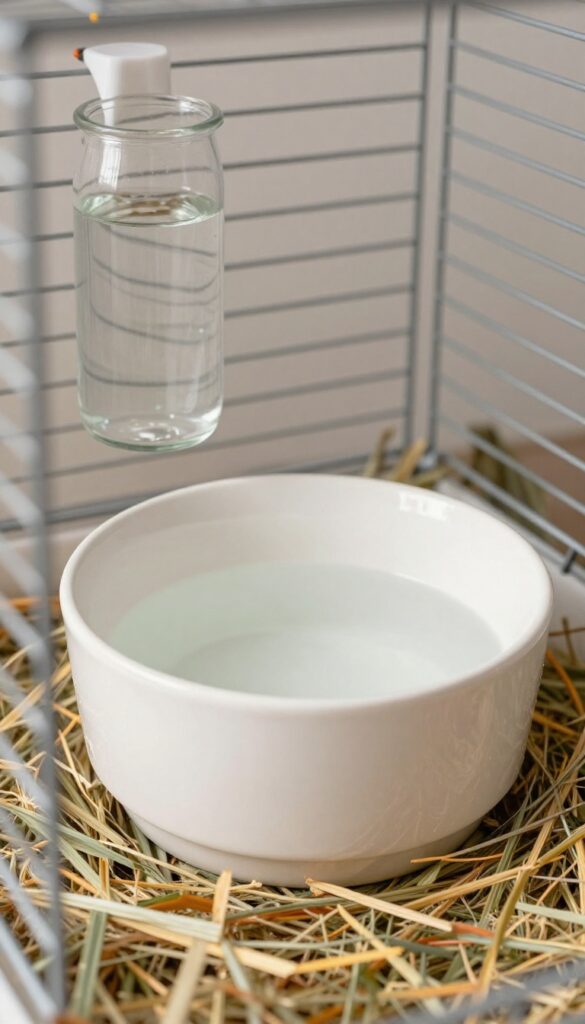
Keeping your guinea pigs hydrated is essential, and the right water delivery system makes it easy and hygienic. Here are the key considerations for choosing between bottles and bowls.
Water bottles with sipper tubes are a popular choice because they keep the water clean and prevent spills. Look for bottles that attach securely to the cage bars and have a ball-bearing tip for smooth water flow. Check daily for leaks or clogs, and clean the bottle and tube weekly with a bottle brush and mild soap to prevent algae or bacteria buildup.
- Water bottles: hygienic, easy to monitor, but require regular cleaning and leak checks.
- Heavy ceramic bowls: natural drinking position, but can get soiled with bedding or hay; change water daily.
- Place bowls away from bedding areas to reduce contamination.
- Always provide fresh, filtered water and ensure access at all times.
Some guinea pigs prefer bowls because they can drink in a more natural head-down position. If you use a bowl, choose a heavy ceramic one that is tip-proof. Position it on a solid floor or a low platform to keep it stable.
Whichever system you choose, make sure it is easily accessible and part of a well-designed habitat that includes ample floor space, soft bedding, hay, hideouts, and chew-safe enrichment.
Avoid Common Problems
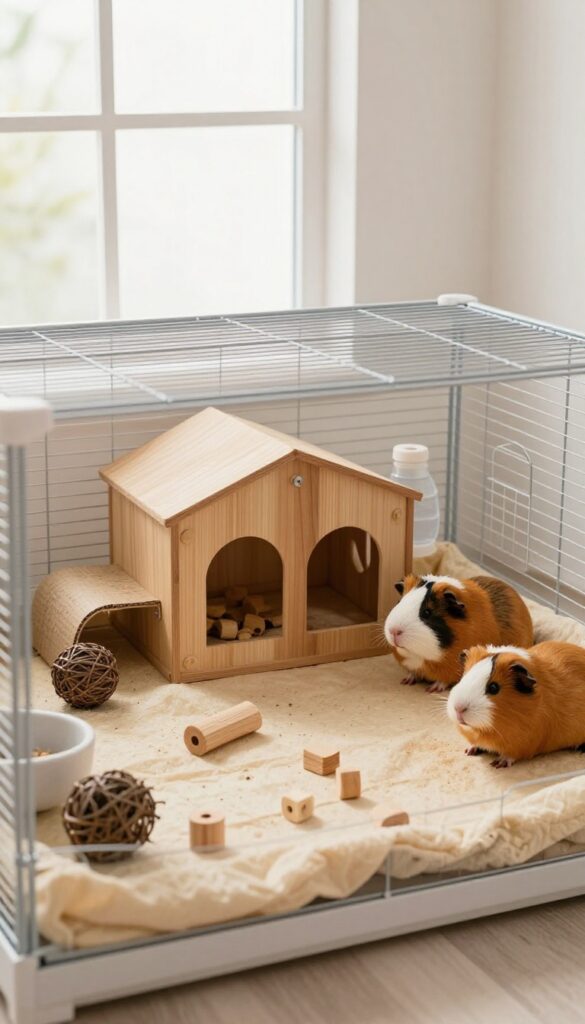
Even the cutest guinea pig setup can turn stressful if you overlook a few common pitfalls. Keep your enclosure safe and your pets happy by steering clear of these frequent mistakes.
Guinea pigs love to chew, so choosing the wrong toys or accessories can lead to injury or boredom. Stick with safe materials and rotate items regularly to keep things interesting.
- Wooden chews, willow balls, and cardboard tunnels are excellent chew-safe options.
- Rotate toys every few days to prevent boredom and encourage exploration.
- Avoid plastic toys with small parts that can break off and be swallowed.
- Ensure all hideouts have multiple exits so one pig can’t trap another.
- Check water bottles daily for leaks or blockages to keep your pets hydrated.
Also, watch out for bedding that’s too dusty or scented, which can irritate guinea pigs’ sensitive respiratory systems. Stick with paper-based or fleece liners and clean regularly to prevent ammonia buildup.
Ensure Proper Ventilation and Temperature Control
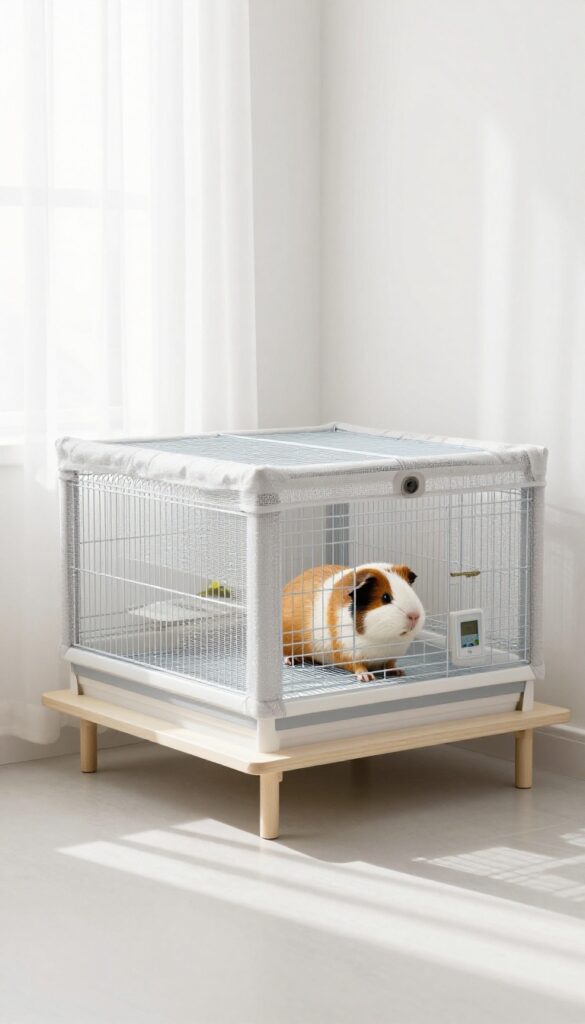
Your guinea pig’s health depends on consistent airflow and a stable temperature. Poor ventilation can lead to ammonia buildup from urine, while extreme temperatures can cause heat stress or respiratory issues. Here’s how to set up the ideal environment.
Place the cage in a well-ventilated area away from drafts, direct sunlight, and heat sources like radiators or vents. A room with good airflow—such as a living room or home office—helps keep the air fresh without exposing your pet to sudden temperature changes.
- Ideal temperature range: 65–75°F (18–24°C). Avoid letting the room drop below 60°F or rise above 80°F.
- Use a thermometer near the cage to monitor conditions, especially during seasonal changes.
- Ensure the cage has open sides or mesh panels to promote airflow; solid glass tanks or aquariums trap humidity and ammonia.
- If you use a cage cover, choose a breathable fabric and only cover part of the enclosure to maintain ventilation.
- Clean the cage regularly to prevent ammonia buildup—good airflow alone isn’t enough if bedding is soiled.
Remember: a guinea pig’s respiratory system is sensitive. Avoid placing the cage in a closed closet, damp basement, or stuffy corner. A living room or dedicated pet area with moderate foot traffic works best—just keep it out of direct drafts from windows or air conditioning.
Adjust It to Your Routine
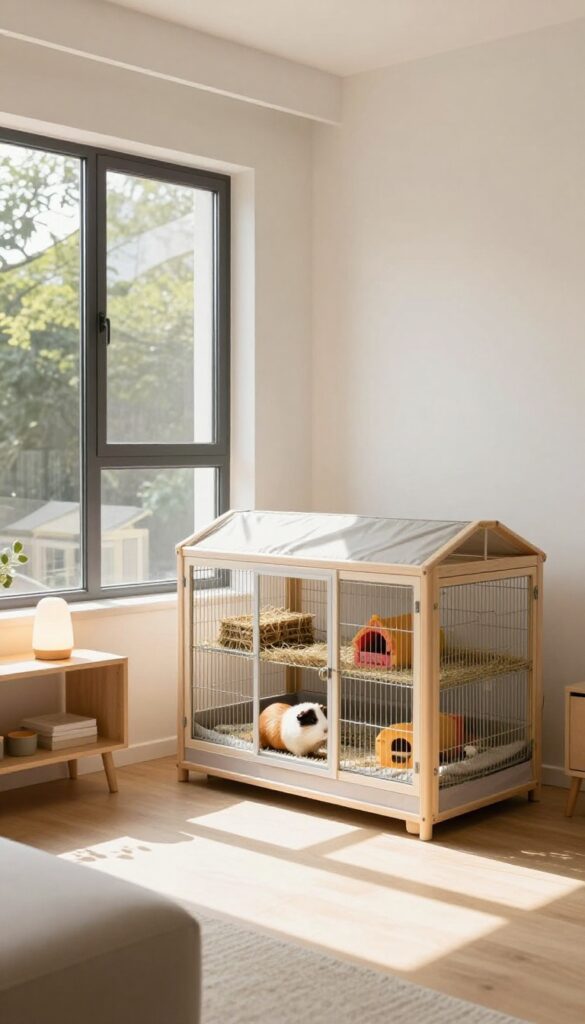
Your guinea pig’s habitat should fit seamlessly into your daily life, not the other way around. By tailoring the cage setup to your schedule, you ensure consistent care and a stress-free environment for your pets.
Start by considering when you’re most active. If you’re a morning person, place the cage where you can easily spot-clean and refill hay before work. Night owls might prefer a setup with dimmable lighting for evening bonding without disturbing the pigs’ sleep cycle.
Key Adjustments for Your Routine
- Use a small, dimmable lamp or fairy lights (out of reach) to create a cozy evening atmosphere without harsh overhead lights that can stress guinea pigs.
- Position the cage near your high-traffic areas (like the kitchen or living room) so you remember to check water bottles, hay levels, and bedding daily.
- Keep a cleaning caddy stocked with supplies next to the cage to make spot-cleaning quick during busy days.
- If you have multiple pigs, ensure the cage layout allows easy access to all hideouts and food stations for quick health checks.
A cozy corner with soft lighting not only helps guinea pigs feel secure but also makes it easier for you to interact with them at convenient times. Remember, the cage should be the centerpiece—not human decor. Prioritize practical details like floor space, ventilation, and chew-safe enrichment that align with your daily care routine.
Incorporate a Fleece Forest or Foraging Area
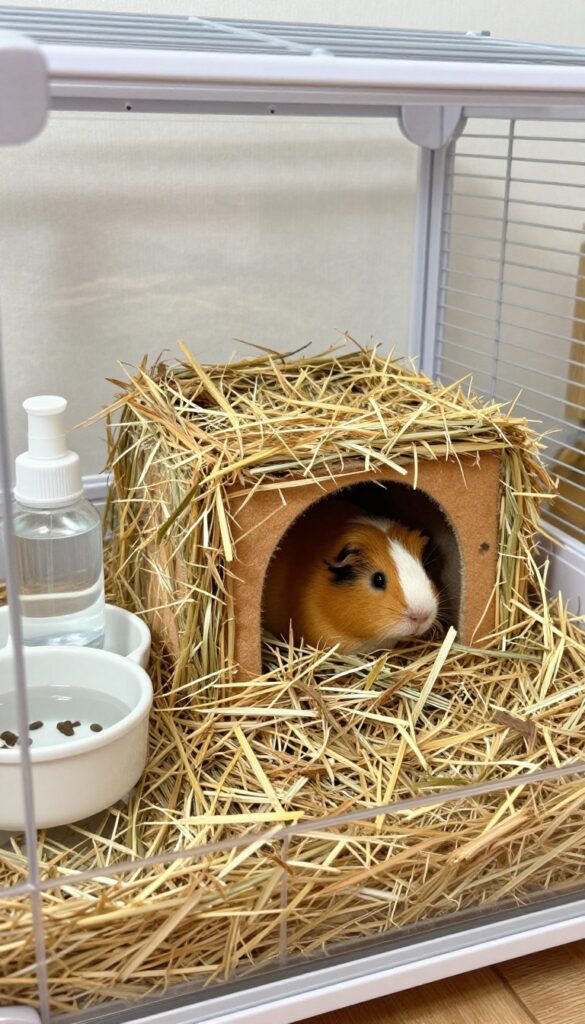
A fleece forest is a simple DIY enrichment feature that mimics tall grass, giving your guinea pigs a fun place to hide, explore, and forage. It’s easy to set up inside the cage and adds both visual interest and mental stimulation.
To create a fleece forest, cut fleece fabric into strips about 1–2 inches wide and 12–18 inches long. Attach the strips to a small wooden frame or a tension rod that fits across part of the cage. Hang the strips so they dangle down, creating a curtain-like effect.
Your guinea pigs will love running through the strips, hiding behind them, and nibbling on the soft fabric.
Key Tips for a Safe and Effective Fleece Forest
- Use anti-pill fleece, which doesn’t fray and is safe if chewed.
- Avoid materials that fray or have loose threads that could cause digestive issues.
- Scatter a small handful of hay or a few treats among the strips to encourage natural foraging behavior.
- Make sure the fleece forest doesn’t block access to food bowls, water bottles, or hideouts.
- Wash the strips regularly with unscented detergent to keep the cage hygienic.
Place the fleece forest in a corner or along one side of the cage where it won’t interfere with floor space or cleaning. This enrichment feature works well with fleece bedding or paper-based bedding and adds a cozy, playful element to the habitat. Always supervise new enrichment to ensure your guinea pigs interact with it safely.
Design a Cleaning-Friendly Layout
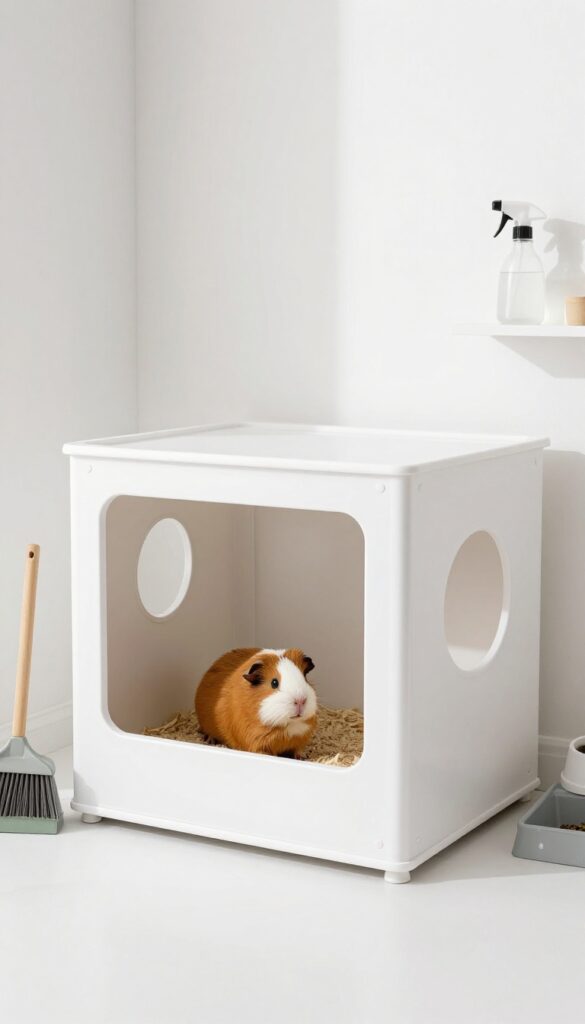
A clean habitat is essential for your guinea pigs’ health, and a layout that makes cleaning easy will save you time and effort. By designing with maintenance in mind from the start, you can keep the enclosure fresh without daily struggles.
Choose a cage with easy access doors or a removable top so you can reach every corner without straining. A cage that opens fully from the front or top allows you to scoop out soiled bedding, wipe down surfaces, and replace hay quickly.
- Place a litter tray in a corner where your guinea pigs naturally eliminate – many can be litter trained, making spot cleaning a breeze.
- Keep cleaning supplies like a small broom, dustpan, and vinegar spray nearby but out of your pets’ reach for quick touch-ups.
- Opt for a smooth, waterproof base (like Coroplast or a solid plastic tray) that wipes clean easily and prevents urine from seeping into flooring.
Avoid complex layouts with multiple levels or hard-to-reach nooks that trap debris. Instead, use removable ramps and platforms that can be taken out for thorough cleaning. A simple, open floor plan with designated zones for eating, sleeping, and playing makes daily upkeep manageable and keeps your guinea pigs happy.
Add Personal Touches with Themed Decor
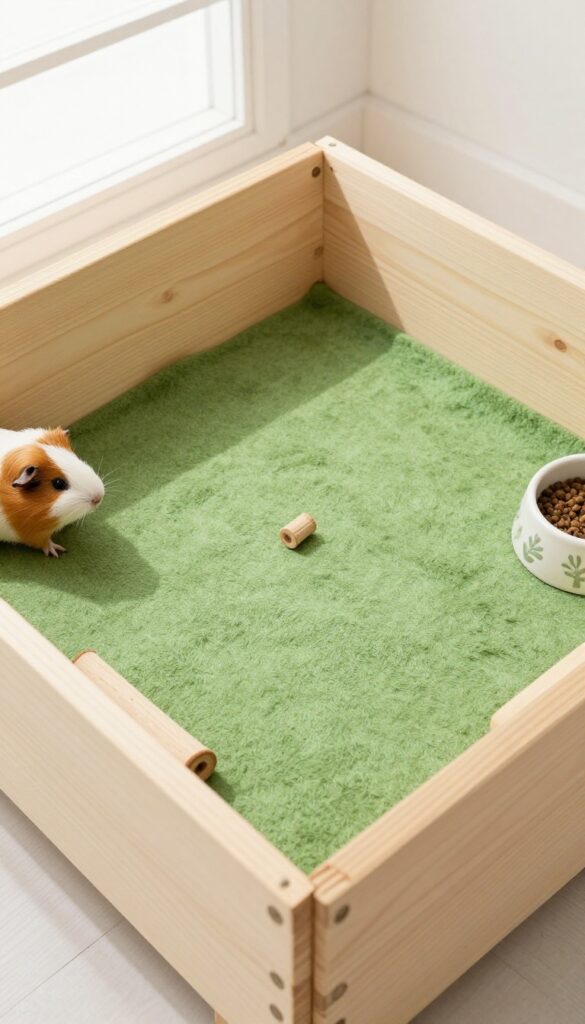
Themed decor makes your guinea pig’s habitat feel extra special without sacrificing safety or practicality. By choosing cage-appropriate accessories and keeping clutter minimal, you can create a visually appealing space that’s still fully functional for your pets.
Start with themed fleece patterns or cage liners that match a color scheme or motif you love—such as woodland, floral, or geometric designs. These are safe, washable, and add instant personality to the enclosure. You can also add non-toxic wooden signs or small, chew-safe decorations that attach to the cage bars or sit on the fleece.
Avoid anything with small parts that could be swallowed or sharp edges that might cause injury.
Key points to remember
- Use themed fleece patterns or cage accessories to create a cohesive look.
- Incorporate safe, non-toxic decorations like wooden signs or chew toys.
- Keep decor minimal to avoid clutter and hazards; prioritize open floor space.
- Ensure all decorations are securely placed and cannot be chewed into small pieces.
- Remember that the cage must still meet practical needs: ample floor space, proper ventilation, easy access to hay, water, and hideouts.
A themed setup can be as simple as coordinating your fleece colors with a few safe hideouts and tunnels. For example, a “garden” theme might include green fleece, a wooden tunnel shaped like a log, and a small ceramic food bowl with a floral pattern. The key is to keep the cage functional first—every decorative item should serve a purpose or be easily removable for cleaning.
Avoid overloading the space, as guinea pigs need room to run and explore.
FAQ
What is the minimum cage size for two guinea pigs?
For two guinea pigs, the minimum recommended cage size is 10.5 square feet (e.g., 2×4 C&C grids), but larger is always better.
Can I use cat beds or dog beds in a guinea pig cage?
It’s not recommended as they may contain materials unsafe for chewing or cause overheating. Stick to guinea pig-specific hideouts.
How often should I clean the guinea pig cage?
Spot clean daily, change fleece liners every 3-5 days, and do a deep clean weekly.
Is it safe to use essential oils near guinea pigs?
No, essential oils can be toxic to guinea pigs. Avoid any scented products near their habitat.
Conclusion
Designing a guinea pig room is about balancing cuteness with functionality. By focusing on spaciousness, safety, and enrichment, you can create a habitat that both you and your pets will love.
Remember to prioritize your guinea pig’s needs over decor trends, and always choose materials that are safe for chewing and easy to clean. Happy decorating!

I’m Pallab Kishore, the owner of Little Pets Realm — an animal lover and pet care enthusiast sharing easy tips, healthy recipes, and honest advice to help every small pet live a happy, healthy, tail-wagging life.