Last updated on August 19th, 2026 at 04:19 pm
A well-designed cage is essential for your guinea pig’s health and happiness.
From spacious flooring to engaging toys, every element matters.
Here are 12 ideas to create the perfect habitat.
Choose a Spacious Cage with Solid Flooring
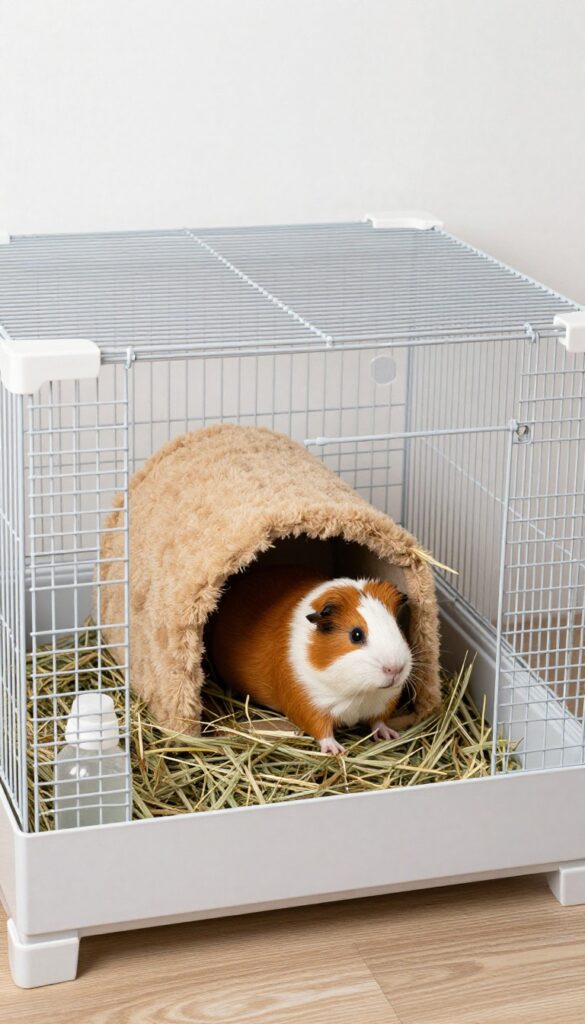
The foundation of a happy guinea pig habitat starts with the right cage. These social animals need room to roam, play, and exercise, so size and floor type are critical.
Guinea pigs require a minimum of 7.5 square feet for one pig, but bigger is always better. A larger cage allows for separate areas for eating, sleeping, and playing, which reduces stress and encourages natural behaviors.
Key considerations for a healthy cage
- Avoid wire-bottom cages: they can cause foot injuries and bumblefoot. Opt for a solid plastic or metal tray.
- C&C (cube and coroplast) cages are a popular choice because they are customizable, affordable, and easy to clean.
- Ensure the cage has good ventilation, easy access for cleaning, and enough space for hideouts, hay, and water.
A solid floor is not only safer for your guinea pig’s feet but also makes cleaning simpler. Line the base with absorbent bedding or fleece liners, and provide plenty of hay for foraging. Remember, the cage is your pet’s entire world—so make it spacious, safe, and stimulating.
Use Absorbent Bedding or Fleece Liners
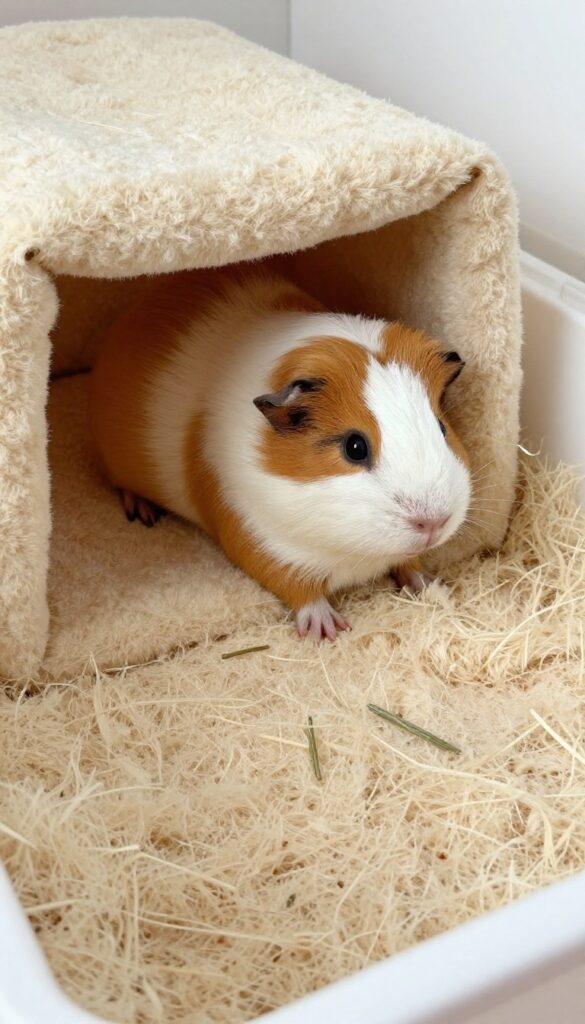
The right bedding keeps your guinea pig comfortable and your cage fresh. Choose materials that are soft, absorbent, and safe for your pet’s respiratory system.
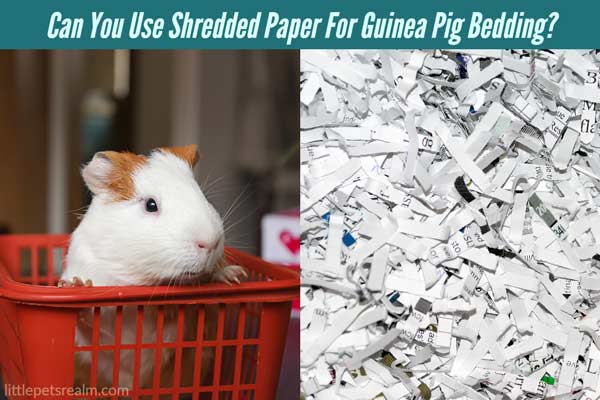
Paper-based bedding is a top choice because it’s dust-free and highly absorbent, trapping odors effectively. Look for recycled paper pellets or crumbles that clump for easy spot-cleaning.
- Fleece liners with an absorbent core (like u-haul padding or towel layers) are reusable, soft, and reduce waste. They wick moisture away from the surface, keeping your pig dry.
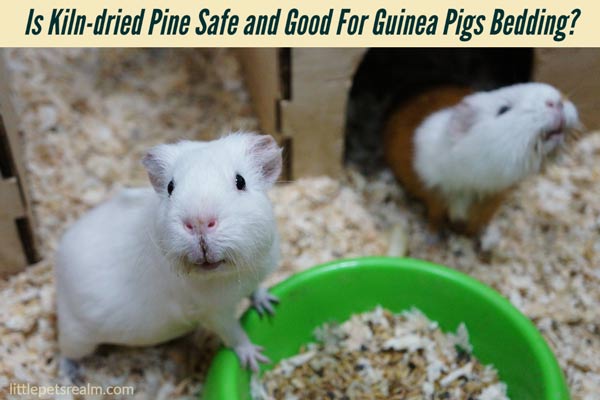
- Avoid cedar or pine shavings: the aromatic oils can cause respiratory issues and liver damage. Stick to aspen shavings if you prefer wood-based options.
- Layer hay on top of bedding for foraging, but change it daily to prevent ammonia buildup.
Whichever option you choose, ensure the bedding is deep enough (at least 2–3 inches) to absorb urine and provide cushioning. Spot-clean daily and do a full change weekly to maintain a healthy habitat.
Provide a Cozy Hideout for Security
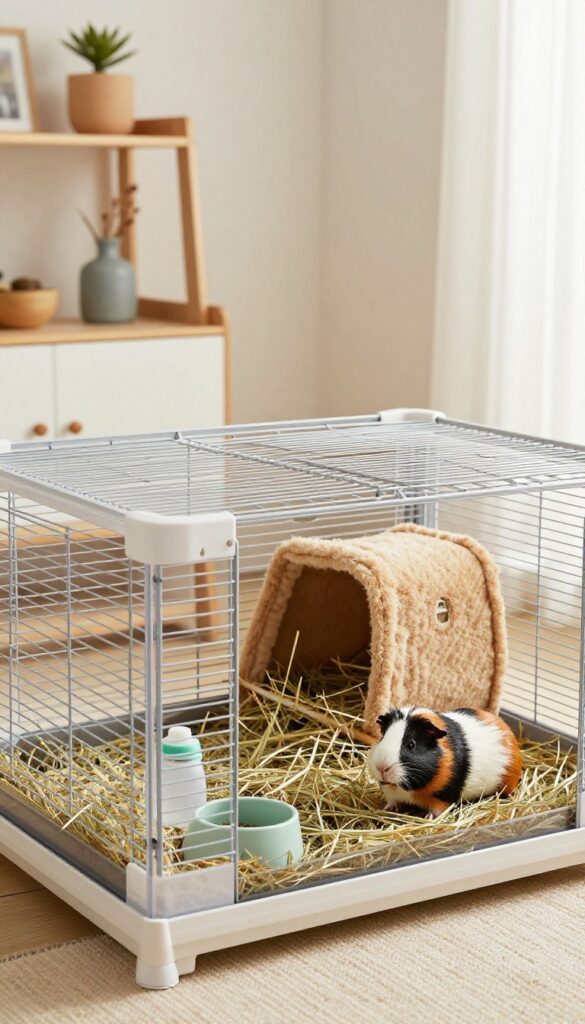
Guinea pigs are prey animals, so they need a safe place to retreat when they feel scared or just want some quiet time. A hideout reduces stress and helps your pig feel secure in its cage.
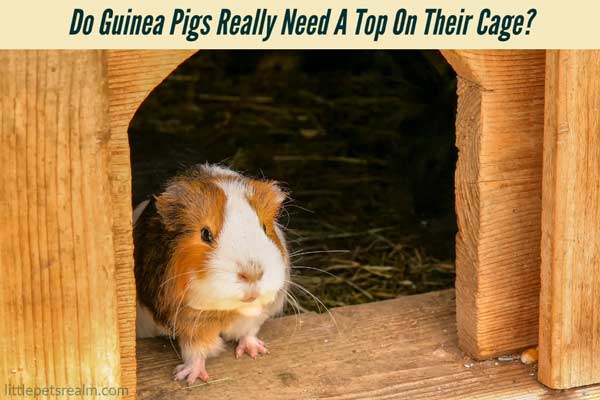
Every guinea pig should have at least one hideout, and if you have multiple pigs, provide one per pig to prevent competition. Choose hideouts made from safe, chewable materials like untreated wood, fleece, or plastic with no sharp edges. Avoid small, enclosed spaces without ventilation—guinea pigs need airflow even in their hideouts.
Popular hideout options
- Wooden houses with multiple exits (to prevent trapping)
- Fleece tunnels that can be washed easily
- Igloos or plastic huts with a wide opening
Place hideouts on a soft bedding or fleece liner, and make sure they don’t block access to hay, water, or food. A hideout with a flat roof can double as a lookout spot, but ensure it’s sturdy enough to support a guinea pig climbing on top.
Add a Hay Rack for Constant Foraging
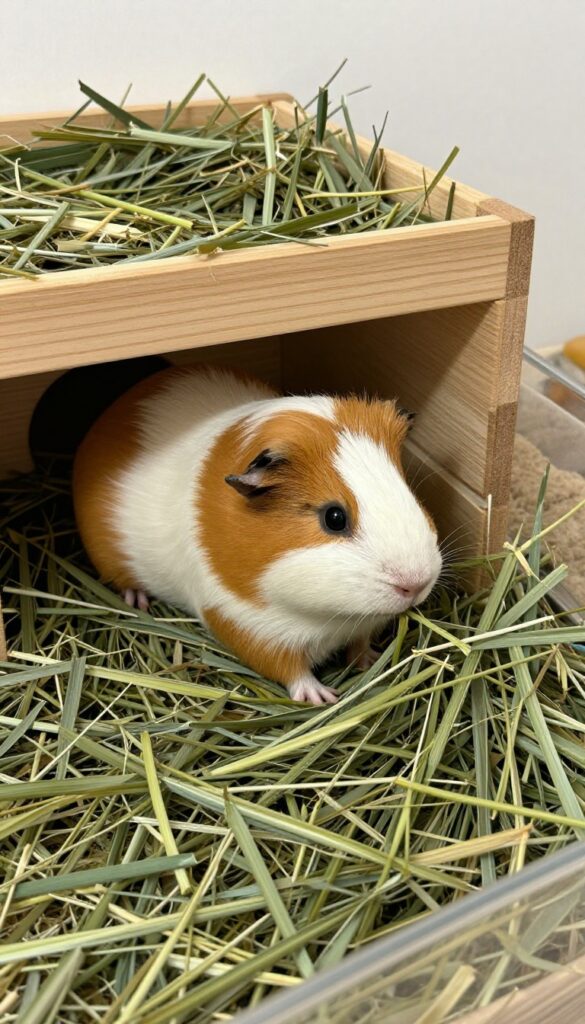
Hay is the cornerstone of a guinea pig’s diet, providing essential fiber for dental and digestive health. A hay rack keeps the hay clean and accessible, encouraging natural foraging behavior.
Place the hay rack near a hideout or litter area to encourage your guinea pig to eat and rest in the same spot. This also makes cleanup easier by containing hay mess. Choose a rack that attaches securely to the cage bars or sits on the floor, ensuring it’s easy for your pet to reach without risk of injury.
Key Tips for Hay Rack Setup
- Always have hay available 24/7 – guinea pigs need constant access for healthy digestion and tooth wear.
- Use a hay rack or hay bag to keep hay off the bedding, reducing waste and keeping it clean.
- Position the rack at a comfortable height so your guinea pig can pull hay out easily without straining.
- Avoid hay on the floor, as it quickly becomes soiled with urine and droppings, leading to waste and potential health issues.
Install a Water Bottle and a Heavy Food Bowl
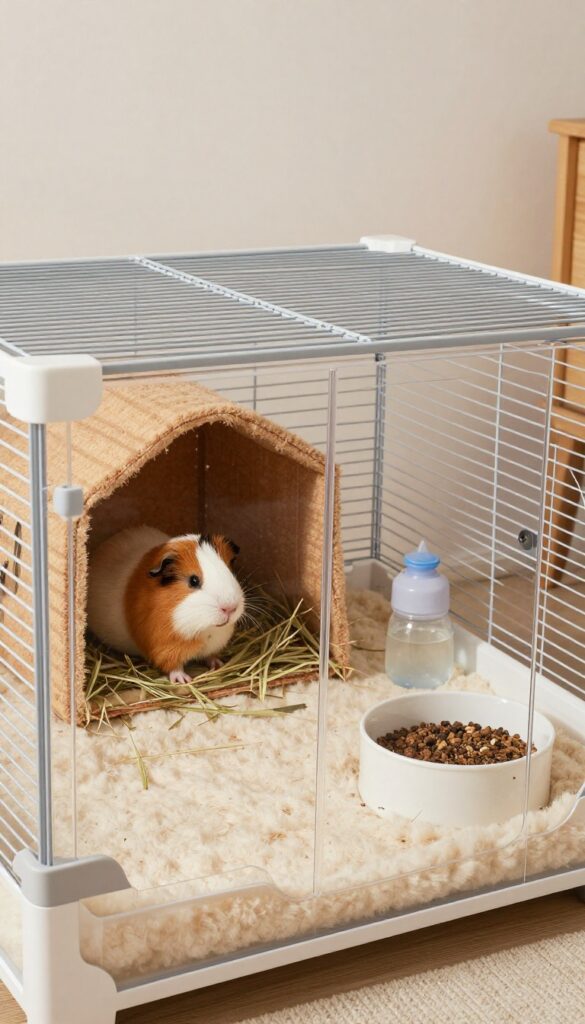
Proper hydration and feeding equipment are essential for a healthy guinea pig habitat. The right setup prevents spills, keeps food clean, and reduces daily maintenance.
A water bottle with a sipper tube is the best choice for guinea pigs. It prevents bedding and debris from contaminating the water, and it avoids spills that can wet the cage floor. Attach the bottle securely to the cage bars at a height your guinea pig can easily reach, and check the sipper tube daily to ensure it isn’t clogged.
For dry food, use a heavy ceramic bowl that resists tipping. Guinea pigs love to push and climb on their bowls, so a lightweight plastic bowl will be tipped over constantly, spilling pellets onto the bedding. A ceramic bowl with a wide, flat base stays put and is easy to clean.
Place the bowl away from the water bottle to prevent wet food.
Key Points
- Choose a water bottle with a ball-bearing sipper tube to minimize leaks.
- Use a heavy ceramic bowl (not plastic) for pellets to avoid tipping.
- Clean and refill both water bottle and food bowl daily to maintain hygiene.
- Position the water bottle and bowl in separate areas of the cage to encourage movement.
Create a Litter Area for Easy Cleaning
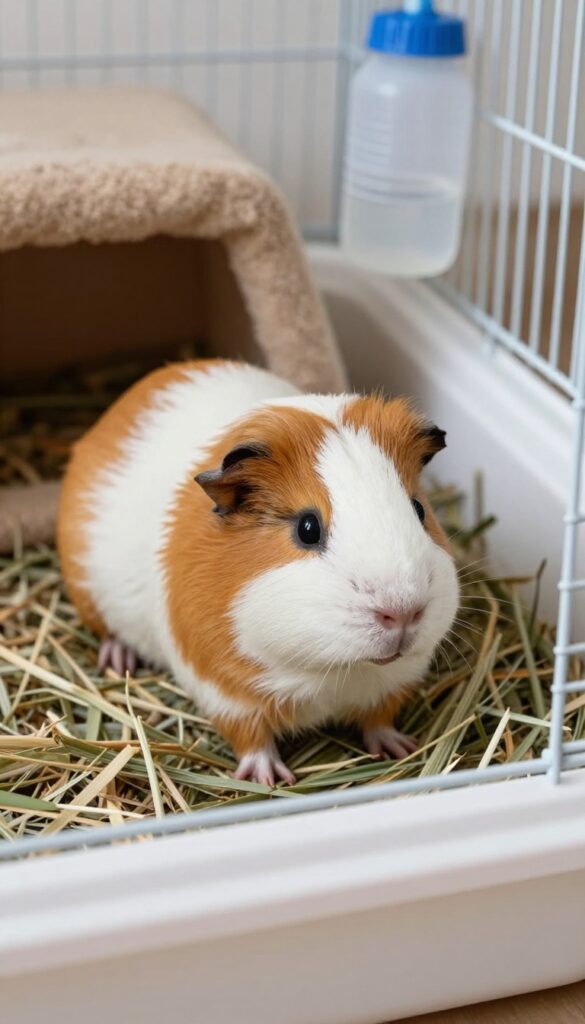
Guinea pigs often choose a specific corner for their bathroom habits. By placing a litter tray in that spot, you can simplify daily cleaning and keep the rest of the cage fresh longer.
Observe your guinea pigs for a day or two to see which corner they naturally prefer for urinating. Once you identify the spot, place a small, shallow litter tray there—just large enough for one or two guinea pigs to sit in. Fill the tray with paper-based bedding or a layer of hay, avoiding clumping cat litter, which can be dangerous if ingested.
The tray should be low enough for easy entry and exit.
Cleaning Routine
- Spot-clean the litter tray daily by removing soiled bedding and hay.
- Replace all litter in the tray every two to three days, or more often if needed.
- Wash the tray with mild, pet-safe soap and water during full cage cleanings.
- Keep the rest of the cage bedding clean by focusing daily spot-cleaning on the litter area.
This simple addition reduces the spread of waste across the entire cage, making your cleaning routine faster and more efficient. It also helps maintain a healthier environment by concentrating moisture in one easy-to-clean spot. Remember to always provide fresh hay and water nearby, and ensure the litter tray does not block access to hideouts or other essentials.
Include Tunnels and Bridges for Enrichment
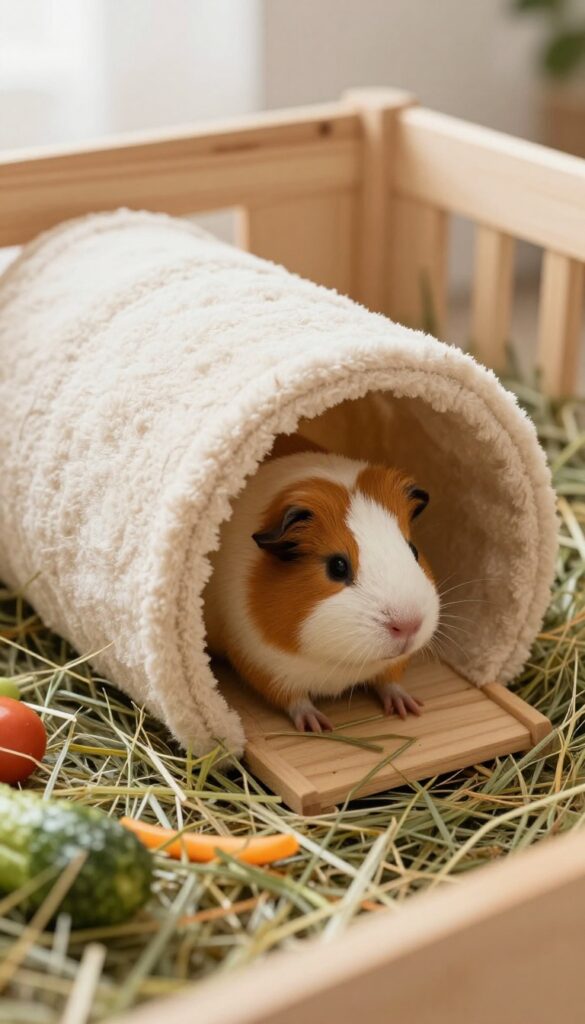
Guinea pigs are natural explorers who love to burrow and move through enclosed spaces. Adding tunnels and bridges to their cage mimics their wild instincts and provides essential mental stimulation. This simple addition can turn a basic enclosure into an engaging habitat that keeps your pets active and happy.
Tunnels satisfy your guinea pig’s urge to hide and explore, reducing stress and preventing boredom. They also encourage exercise as pigs run through them, which is especially important in a cage environment. Choose tunnels that are wide enough for your guinea pig to pass through comfortably—at least 6 inches in diameter to avoid trapping or frightening them.
Safe Tunnel Materials
- Fleece tunnels: Soft, washable, and cozy; great for burrowing and napping.
- Cardboard tubes: Inexpensive and replaceable; use large mailing tubes or paper towel rolls cut lengthwise for safety.
- Plastic tunnels: Durable and easy to clean; ensure they are chew-resistant and have no sharp edges.
- Wooden bridges: Provide a flat, chew-safe surface that can also serve as a hideout when placed over a tunnel.
Placement and Rotation Tips
Position tunnels and bridges in areas of the cage where your guinea pigs already travel, such as between hideouts or near the hay rack. Rotate the toys every week to maintain novelty—swap a fleece tunnel for a cardboard tube or rearrange the bridge to a new spot. This prevents habituation and keeps your pets curious.
Cage Integration
Ensure tunnels and bridges do not block access to food, water, or hideouts. Leave enough floor space for running and popcorning. In a standard 2×4 C&C cage, you can place one tunnel along the back wall and a bridge over the litter area.
Always check that the cage lid or top is secure if you add a tall bridge.
Add Chew Toys for Dental Health
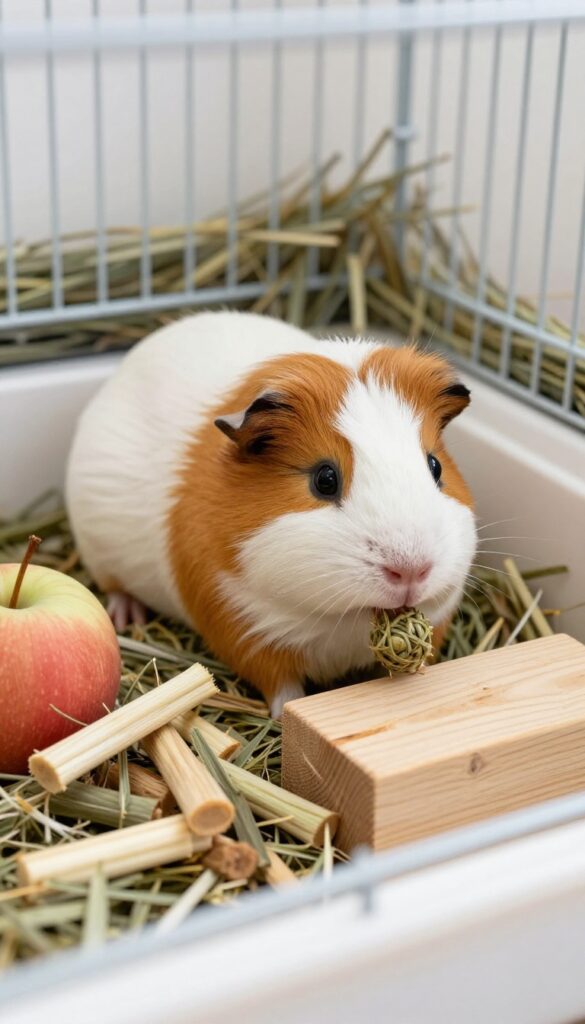
Guinea pigs have open-rooted teeth that grow continuously, so they need to chew constantly to keep them at a healthy length. Without appropriate chew toys, their teeth can become overgrown, leading to pain, difficulty eating, and other health issues.
Inside the cage, provide a variety of safe, chewable items. Good options include untreated wooden blocks, apple sticks, willow balls, and hay-based toys. These materials are tough enough to wear down teeth but safe if ingested.
Avoid plastic toys, which can break into sharp pieces or be swallowed, causing blockages.
- Untreated wooden blocks or chew sticks (e.g., apple, willow, aspen)
- Hay balls or woven hay tunnels that double as enrichment
- Cardboard tubes (from toilet paper rolls) without glue or labels
- Avoid cedar or pine wood, which contain toxic oils
Place chew toys near the hay rack, hideout, or in a dedicated small activity corner within the cage. Rotate toys regularly to maintain interest. Remember, chew toys are not just extras—they are essential for dental health and overall well-being in a guinea pig habitat.
Ensure Proper Ventilation and Temperature Control
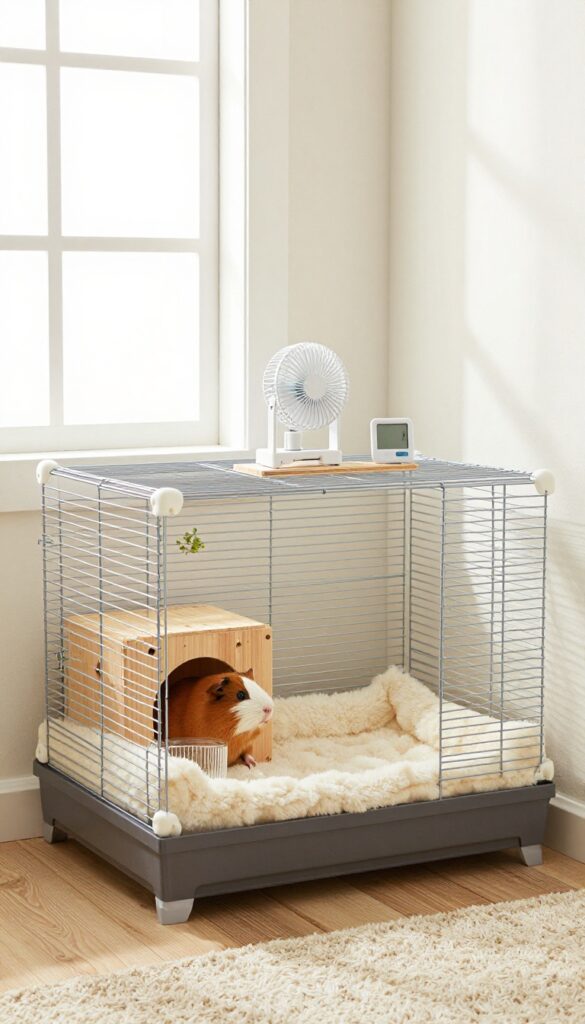
Guinea pigs are sensitive to temperature extremes and poor air quality. A well-ventilated cage placed in a stable environment keeps your pets healthy and comfortable.
Choose a location for the cage that is away from drafty windows, doors, and air conditioning or heating vents. Good airflow is important to prevent ammonia buildup from urine, but direct drafts can cause respiratory issues. The ideal temperature range for guinea pigs is 65–75°F (18–24°C).
Avoid placing the cage in direct sunlight, which can overheat the habitat, or in damp basements that may promote mold.
Key tips for ventilation and temperature
- Keep the cage in a room with consistent temperature, away from radiators, space heaters, and air conditioners.
- Use a cage with at least one mesh or wire side for airflow; avoid fully enclosed glass or plastic aquariums.
- Monitor temperature with a simple thermometer placed near the cage.
- In hot weather, provide frozen water bottles wrapped in a towel for your guinea pigs to lean against.
- In cold weather, add extra fleece bedding or a cozy hideout, but never use heat lamps or heated pads (burn risk).
Proper ventilation also helps keep bedding dry and reduces odors. If you use a cage with a solid front, ensure there is ample mesh on the sides or top. A small fan placed nearby (not blowing directly on the cage) can improve air circulation during warm months.
Always prioritize your guinea pig’s comfort and safety when choosing a cage location.
Place the Cage in a Quiet, Social Area
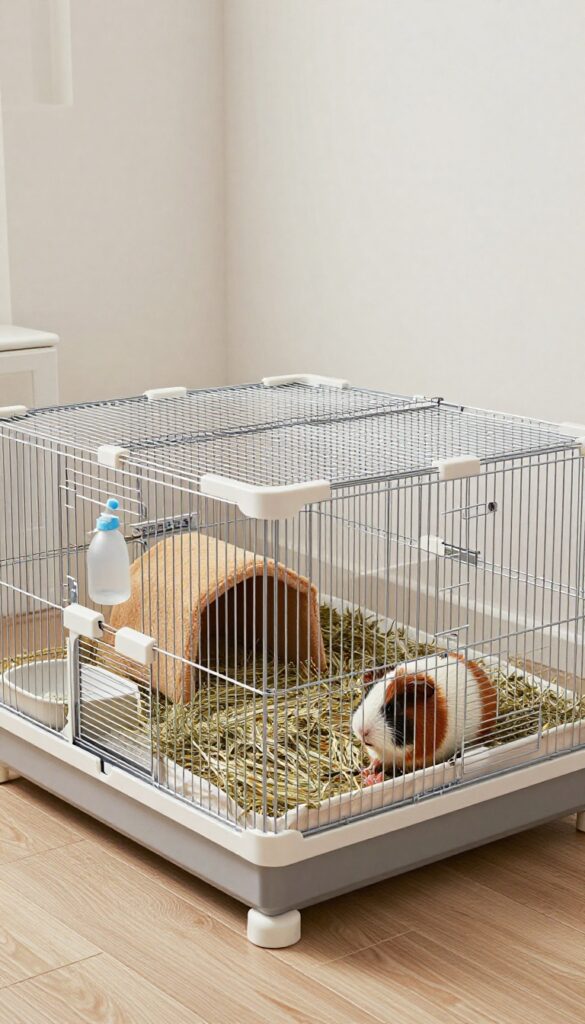
Where you put the cage matters almost as much as what goes inside it. Guinea pigs are social animals that thrive on interaction, but they also need calm to feel secure. The right location balances family activity with peace and quiet.
Choose a spot in a family room or living area where your guinea pigs can see and hear people without being in the middle of constant traffic. This lets them feel part of the household while still having a predictable routine.
- Avoid placing the cage near loud appliances (TV, stereo, washing machine) or in a hallway with heavy foot traffic.
- Keep the cage away from drafty windows, direct sunlight, and heating or cooling vents to maintain stable temperature.
- Make sure the cage is on a sturdy, level surface and is easily accessible for daily cleaning and interaction.
A well-placed cage should also have good ventilation and be near an electrical outlet if you use a water bottle heater or a small fan in summer. Remember, the cage itself is the focus: include plenty of floor space, soft bedding or fleece, a hay rack, hideouts, and a water bottle. A calm corner of a social room gives your guinea pigs the best of both worlds.
Use Safe, Non-Toxic Cleaning Products
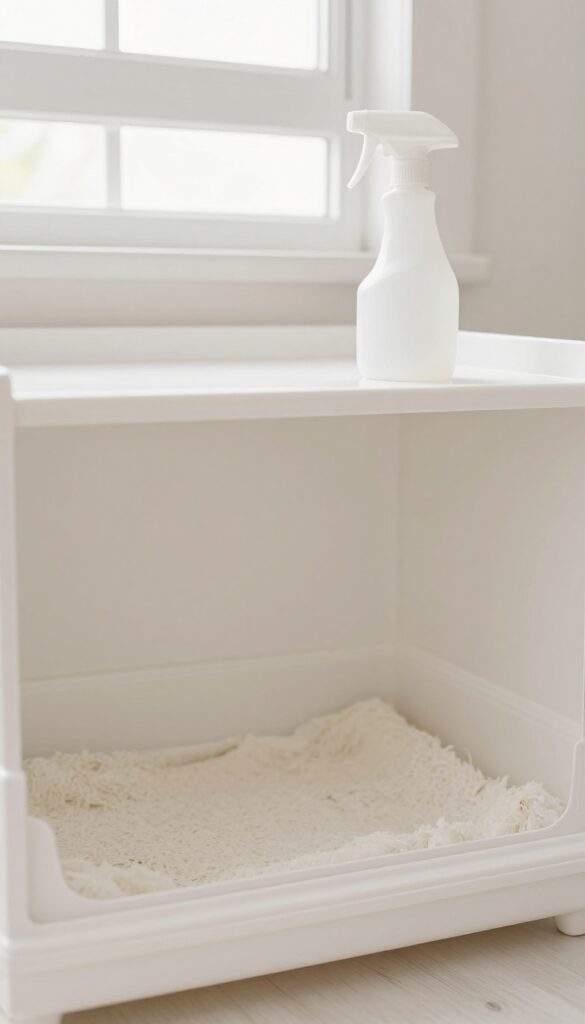
Regular cleaning is essential for a healthy guinea pig habitat, but harsh chemicals can harm your pets. Stick to safe, non-toxic products to keep the cage fresh without risking their respiratory health.
Guinea pigs have sensitive respiratory systems, so it’s crucial to avoid bleach, ammonia, or any strong-smelling cleaners. Instead, use a simple vinegar-water solution (1 part white vinegar to 3 parts water) for weekly cage cleaning. Vinegar is effective at neutralizing odors and breaking down urine residue without leaving toxic fumes.
Safe cleaning tips for your guinea pig cage
- Clean the entire cage weekly with a vinegar-water solution.
- Avoid bleach, ammonia, or any scented cleaning products.
- Rinse all surfaces thoroughly with water after cleaning.
- Dry the cage completely before reintroducing your guinea pigs to prevent moisture-related issues.
- Use a separate sponge or cloth for cage cleaning to avoid cross-contamination from other household cleaners.
For spot cleaning between deep cleans, remove soiled bedding and wipe down plastic or glass surfaces with a damp cloth. Keeping the cage clean not only prevents odors but also reduces the risk of respiratory infections and skin problems. Always ensure the cage is well-ventilated during and after cleaning, and wait until it’s completely dry before adding fresh bedding and returning your guinea pigs.
Keep Chew Toys in One Small Cage Activity Corner
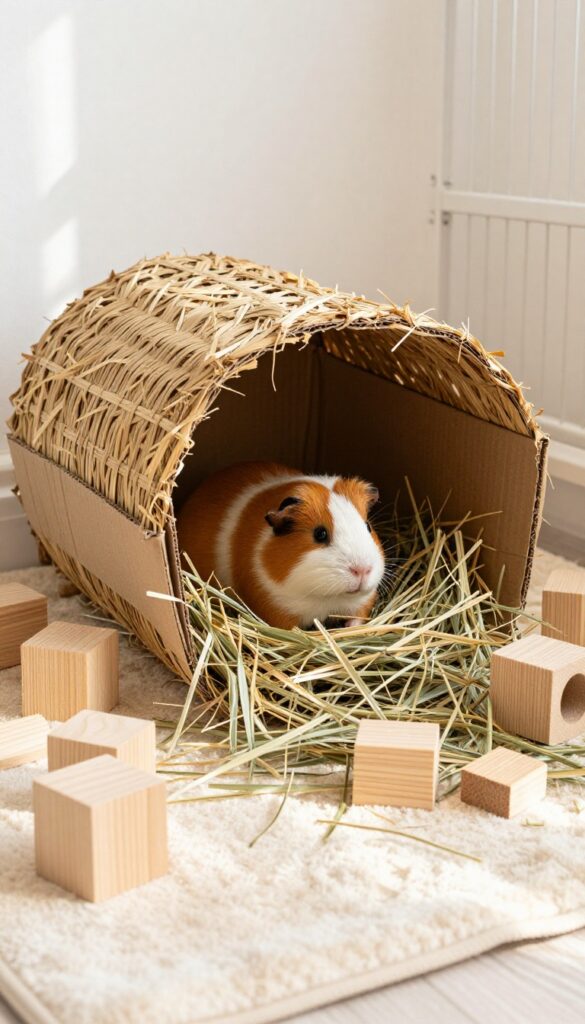
To keep your guinea pig engaged and prevent boredom, dedicate a small corner of the cage as an activity zone where you regularly rotate chew toys and enrichment items. This focused area makes it easy to swap out old items for new ones, encouraging natural foraging and exploration.
Change hideouts, tunnels, and toys every week. Guinea pigs are curious creatures that quickly lose interest in the same objects. By rotating items weekly, you keep the environment fresh and stimulating.
Ideas for Rotation
- Introduce new items like cardboard boxes, paper bags, or untreated wooden blocks.
- Add a small tunnel or a fleece forest for hiding and exploring.
- Place a hay-filled toilet paper roll for a fun foraging challenge.
Observe your pig’s behavior to see what they enjoy. Some guinea pigs love digging, while others prefer chewing or hiding. Tailor the activity corner to their preferences to maximize enrichment.
Always ensure the items are safe, non-toxic, and free of sharp edges or small parts that could be ingested.
Keep this activity corner within the cage, not in a separate room. Use a small section of the enclosure—perhaps near a hideout or hay rack—to create a dedicated enrichment zone. This setup encourages natural behaviors without overcrowding the cage.
Remember to maintain easy access for cleaning and to ensure the cage still has adequate floor space for running and resting.
FAQ
What is the minimum cage size for two guinea pigs?
For two guinea pigs, the minimum recommended cage size is 10.5 square feet, but larger is always better. A 2×4 C&C cage (about 13 sq ft) is ideal.
Can I use pine shavings for bedding?
Avoid pine and cedar shavings as they contain phenols that can cause respiratory issues. Use paper-based bedding or fleece liners instead.
How often should I clean the cage?
Spot-clean daily and do a full cage clean weekly. Replace bedding or wash fleece liners weekly, and disinfect the cage with a vinegar-water solution.
Do guinea pigs need a hideout?
Yes, hideouts are crucial for security. Provide at least one per pig, with multiple exits to prevent trapping.
What toys are safe for guinea pigs?
Safe toys include wooden chew blocks, apple sticks, hay balls, fleece tunnels, and cardboard tubes. Avoid plastic toys that can be chewed and ingested.
Conclusion
Setting up a guinea pig cage with these 12 ideas will create a stimulating, safe, and comfortable home. Remember to prioritize space, safety, and enrichment.
Your pig will thank you with happy wheeks!

I’m Pallab Kishore, the owner of Little Pets Realm — an animal lover and pet care enthusiast sharing easy tips, healthy recipes, and honest advice to help every small pet live a happy, healthy, tail-wagging life.