Last updated on August 19th, 2026 at 04:19 pm
Creating a dedicated room for your guinea pigs can be a game-changer for both you and your pets. The key is to blend efficient storage for all their supplies with engaging play zones that keep them active and happy.
Whether you have a small corner or a whole room, these 13 ideas will help you design a functional and fun space.
From multi-level cages to vertical gardens, each idea focuses on maximizing space while keeping your guinea pigs’ needs front and center.
Multi-Level C&C Cage with Under-Bed Storage
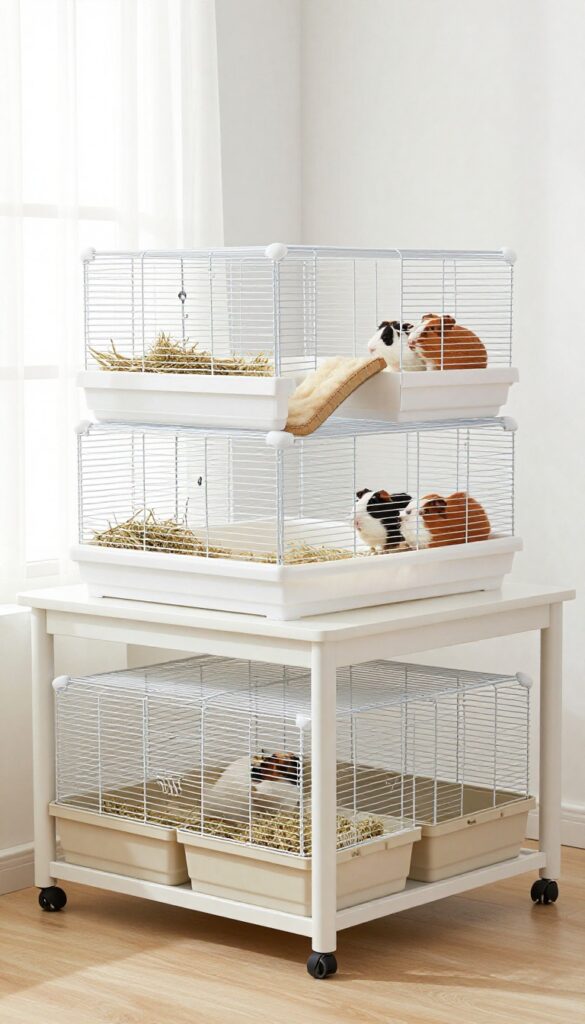
Maximize vertical space in your guinea pig room with a multi-level C&C (Cube and Coroplast) cage. This setup not only gives your piggies more room to explore but also cleverly incorporates storage underneath for all their essentials.
A multi-level C&C cage uses wire grid cubes to create different levels connected by ramps. This design allows you to stack storage bins directly under the cage, keeping hay, bedding, and toys neatly tucked away yet easily accessible. Choose bins on casters for effortless sliding in and out.
- Use sturdy C&C grids to build the cage frame; add a coroplast base for easy cleaning.
- Place shallow storage bins (e.g., 6–8 inches tall) under the cage to hold hay, fleece liners, and toys.
- Ensure the cage is elevated on a secure table or custom stand so bins fit snugly underneath.
- Add ramps with solid flooring to prevent foot injuries; cover with fleece or non-slip material.
This setup keeps the floor clear of clutter and makes daily care more efficient. Your guinea pigs enjoy extra vertical territory while you gain organized storage—a win-win for any guinea pig room.
Wall-Mounted Shelves for Supplies
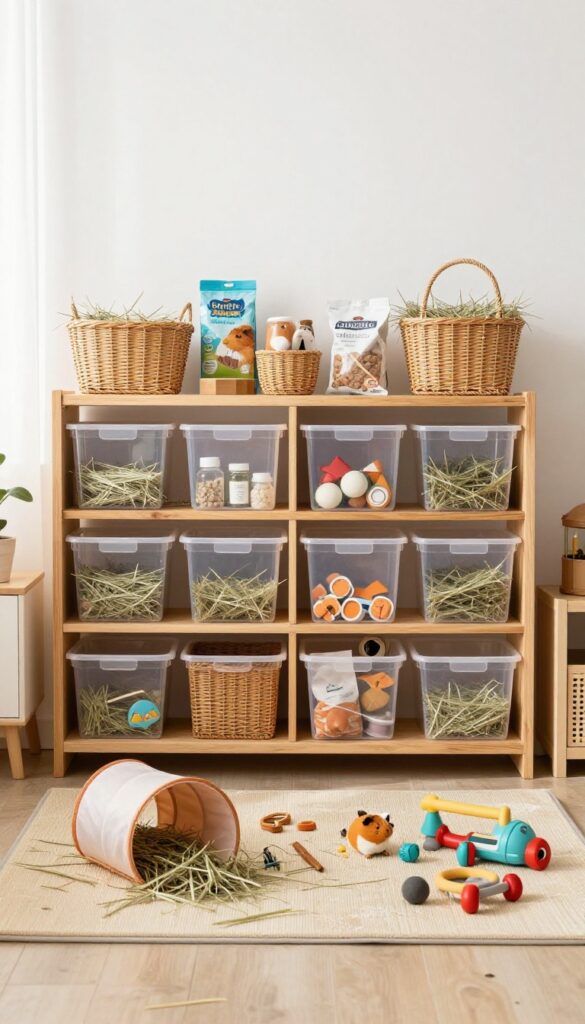
Make use of vertical wall space by installing sturdy shelves above the cage. This keeps food, hay, and accessories organized and within easy reach while freeing up floor area for play zones.
Key Tips
- Choose shelves rated for at least 20 lbs to safely hold hay bales and supply bins.
- Use clear bins or labeled baskets so you can quickly grab what you need without rummaging.
- Keep heavier items like pellet bags on lower shelves to prevent tipping and ensure safety.
DIY Fleece Liner Storage Drawers
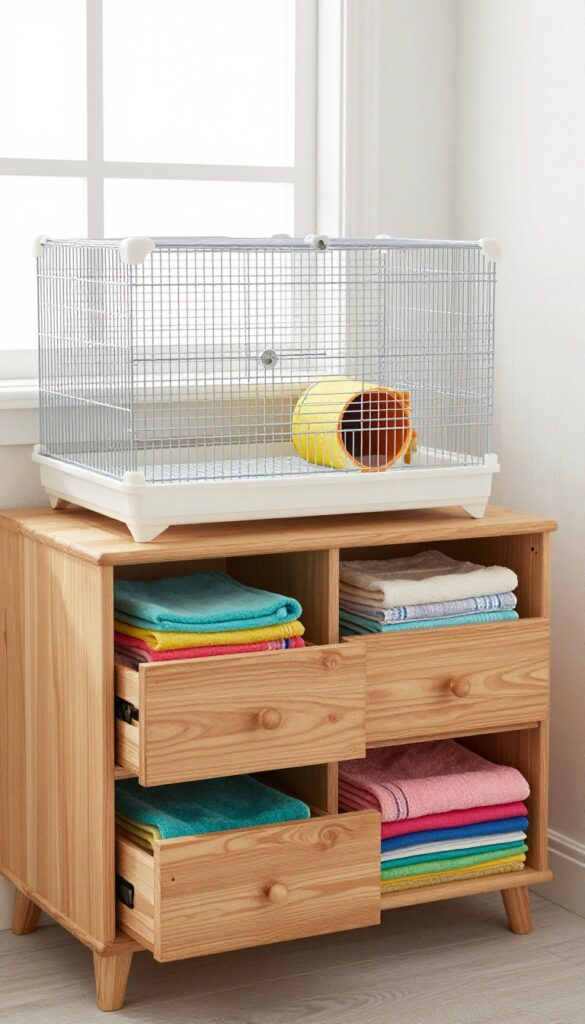
Keep your fleece liners organized and within arm’s reach with a low dresser repurposed into dedicated storage. This simple DIY project saves time during cage changes and keeps your guinea pig room tidy.
Look for a used low dresser at thrift stores or garage sales, or build a simple plywood drawer unit on casters. The key is to have shallow, wide drawers that can hold folded fleece liners, towels, and bedding without stacking too high.
- Label each drawer by size (e.g., 2×4 C&C, 2×3 C&C) or type (fleece, towels, pee pads) for quick identification.
- Place the dresser next to or under the cage so you can grab a fresh liner without walking across the room.
- Add drawer dividers or small bins to separate accessories like bonding pads or tunnel liners.
- Use drawer liners to protect the wood from moisture and make cleaning easier.
This setup not only streamlines your cage maintenance routine but also keeps the play zone clutter-free, giving your guinea pigs more space to explore.
Corner Playpen with Built-In Toy Storage
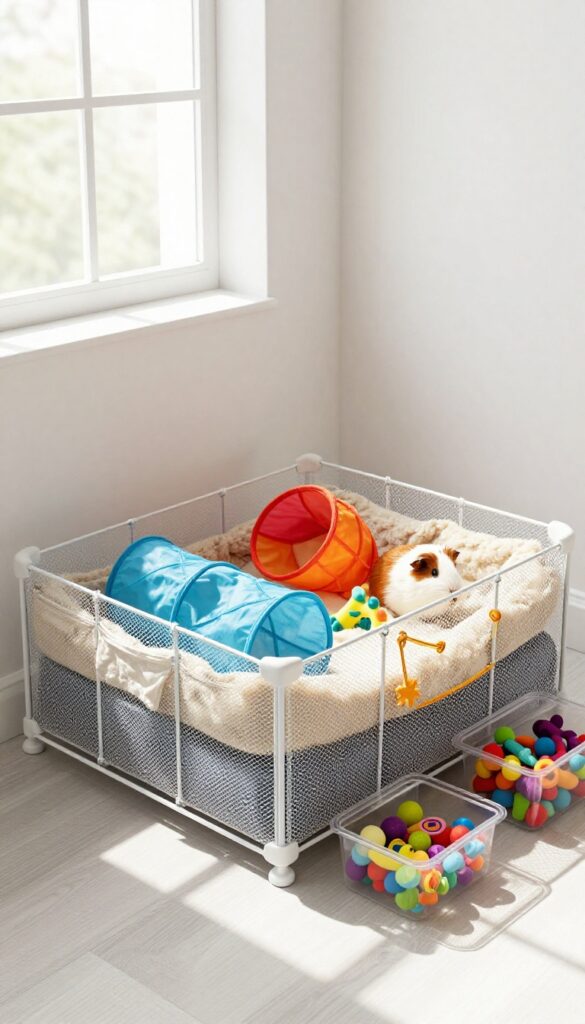
Maximize an unused corner by setting up a modular playpen that doubles as a toy storage hub. This setup keeps your guinea pig’s play zone tidy and engaging.
Use modular wire or plastic panels to create a corner playpen. Attach small bins, mesh pouches, or adhesive hooks to the outside or inside of the pen to hold tunnels, balls, and chew toys. Rotating toys every few days prevents boredom and keeps the space fresh.
- Choose panels that are easy to reconfigure and clean.
- Attach storage pouches with zip ties or Velcro for quick swaps.
- Rotate toys weekly to maintain your guinea pig’s interest.
Over-the-Door Organizer for Small Items
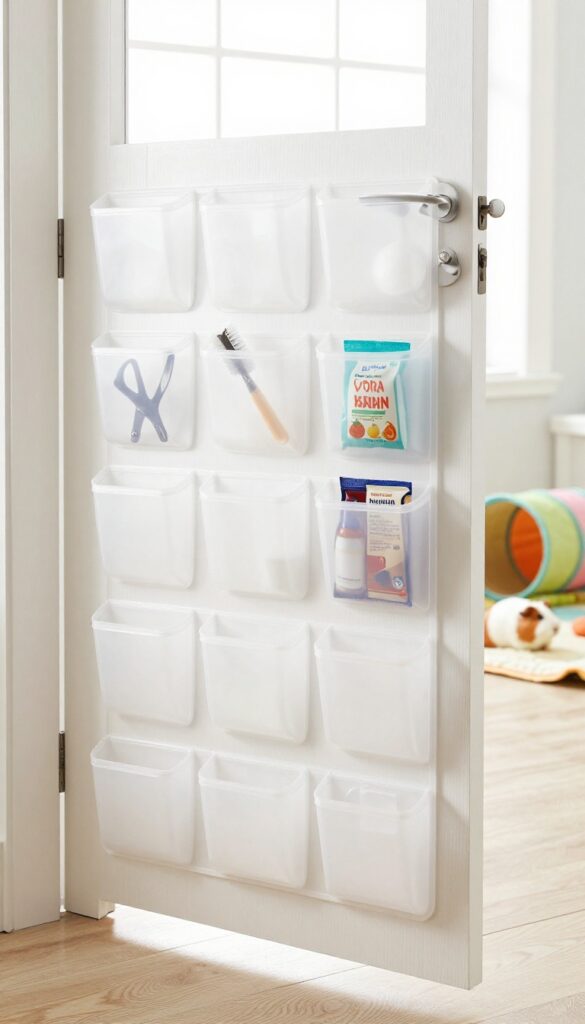
Maximize vertical space by hanging a clear over-the-door shoe organizer on the room door. It’s perfect for keeping small guinea pig care items tidy and within easy reach.
Choose a clear organizer with multiple pockets so you can see contents at a glance. Hang it on the inside or outside of the door, depending on your room layout. Make sure it’s mounted securely and out of your guinea pigs’ reach to prevent chewing or pulling.
- Use pockets for nail clippers, brushes, vitamins, and treats.
- Label pockets for quick access during daily care routines.
- Keep heavier items in lower pockets to maintain stability.
This simple solution keeps clutter off surfaces and makes it easy to grab what you need. Just be sure the organizer doesn’t block the door’s operation or create a hazard.
Rolling Cart for Daily Essentials
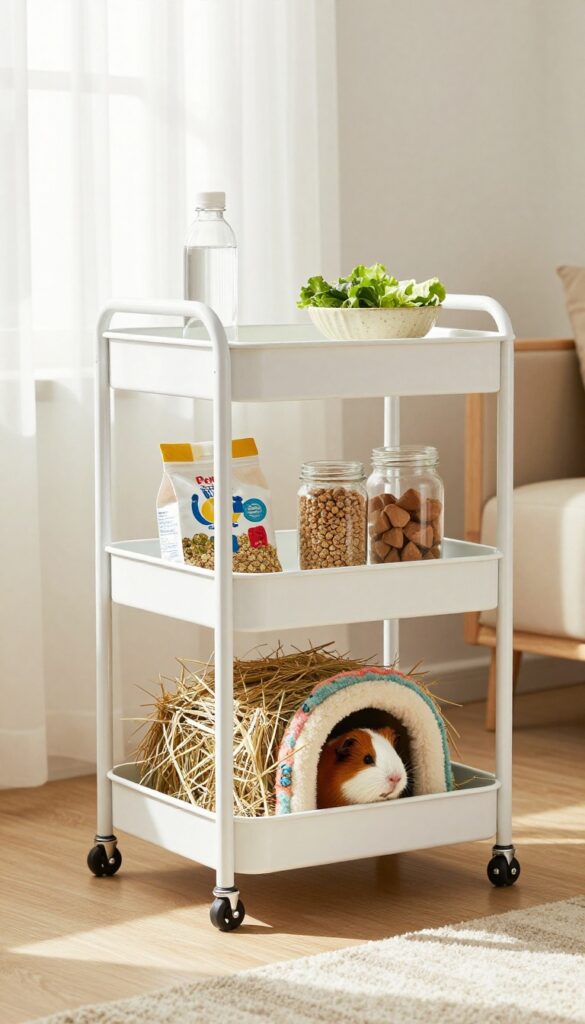
A three-tier rolling cart keeps all your guinea pig’s daily supplies organized and mobile. You can wheel it right next to the cage during feeding and tuck it away when not in use.
Choose a sturdy metal or plastic cart with three tiers. Use the bottom shelf for hay, the middle for pellets, and the top for fresh veggies. This keeps food separate and easy to grab.
Key Features
- Bottom tier: store hay bales or loose hay
- Middle tier: hold pellet bags and treats
- Top tier: place a water bottle and a small bowl for veggies
- Roll the cart to the cage at feeding time, then back to its spot
Why It Works
A rolling cart consolidates all feeding items in one place, reduces clutter, and makes daily care faster. It also frees up floor space for play zones.
Under-Window Hay Rack and Storage Bench
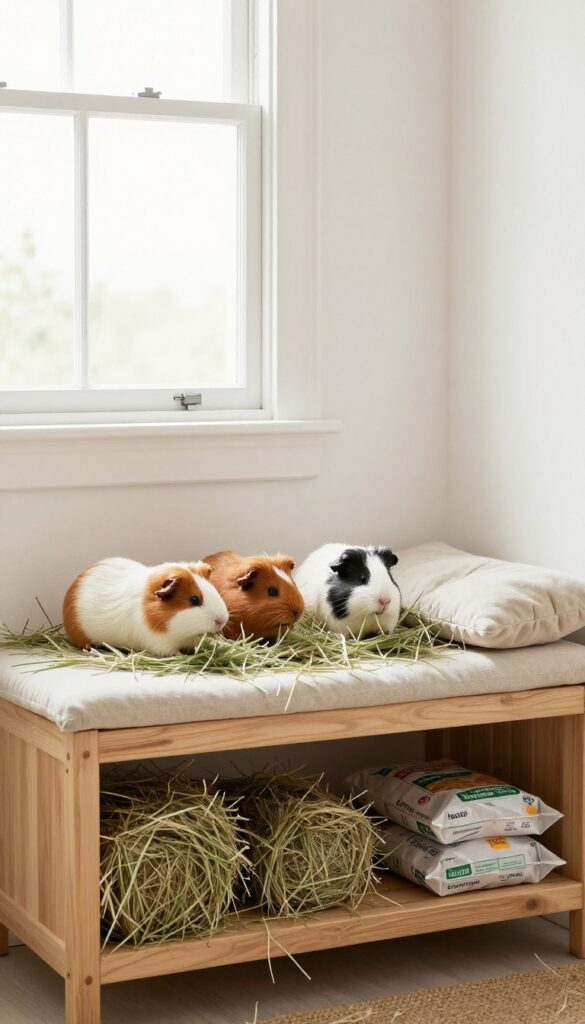
Maximize the space under a window by building a low bench that serves as both a hay rack and a storage unit. This clever setup keeps hay accessible for your guinea pigs while hiding away bulky supplies.
A window area often goes unused in a guinea pig room, but it’s prime real estate for a multifunctional bench. The top of the bench holds a built-in hay rack—a simple wooden box with a cutout opening—so your pigs can munch comfortably. Inside the bench, store hay bales, bedding bags, or extra fleece liners.
Add a cushion on top, and you have a cozy spot to sit while interacting with your pets.
- Build a low bench under a window with a built-in hay rack on top.
- Use the bench interior for hay bales or bedding bags.
- Add a cushion for seating while interacting with pigs.
Pegboard Wall for Tools and Accessories
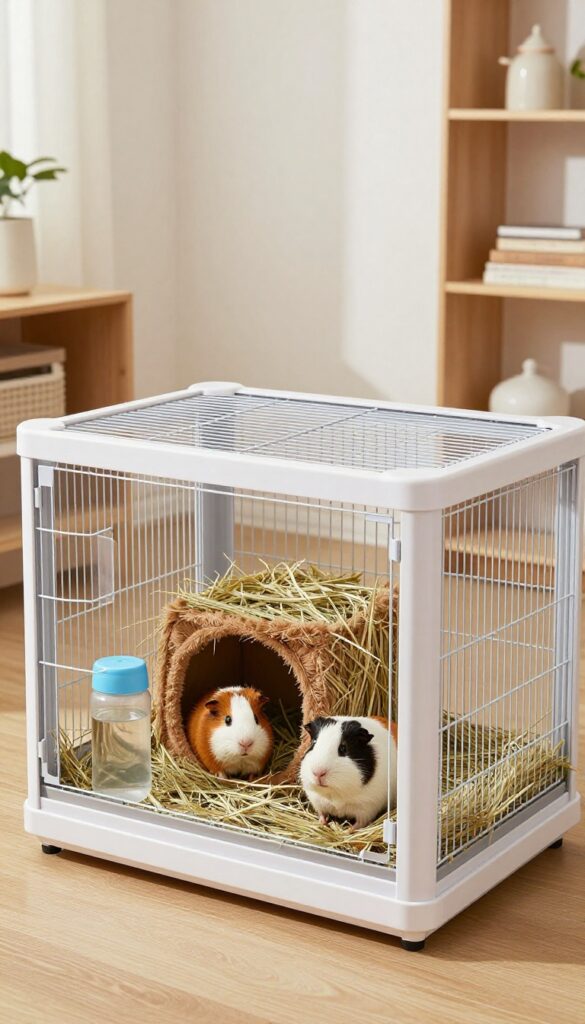
A pegboard wall turns an empty vertical surface into a highly organized storage hub for all your guinea pig care tools and accessories. This system keeps everything visible and within easy reach, making daily maintenance faster and more efficient.
Install a sturdy pegboard on an empty wall near your guinea pig’s enclosure. Use a variety of hooks, pegs, and small baskets to hang cleaning brushes, scoops, tunnels, hammocks, and even extra water bottles. Arrange items by frequency of use: keep daily tools like hay tongs and spot-cleaning supplies at eye level, while storing seasonal or rarely used accessories higher up.
Key points
- Mount the pegboard securely with wall anchors to support heavier items like tunnels.
- Use small baskets or bins on the pegboard for loose items such as nail clippers, treats, or small toys.
- Add labels or outline shapes behind frequently used tools to make put-away easy for everyone in the household.
Stackable Storage Bins for Seasonal Items
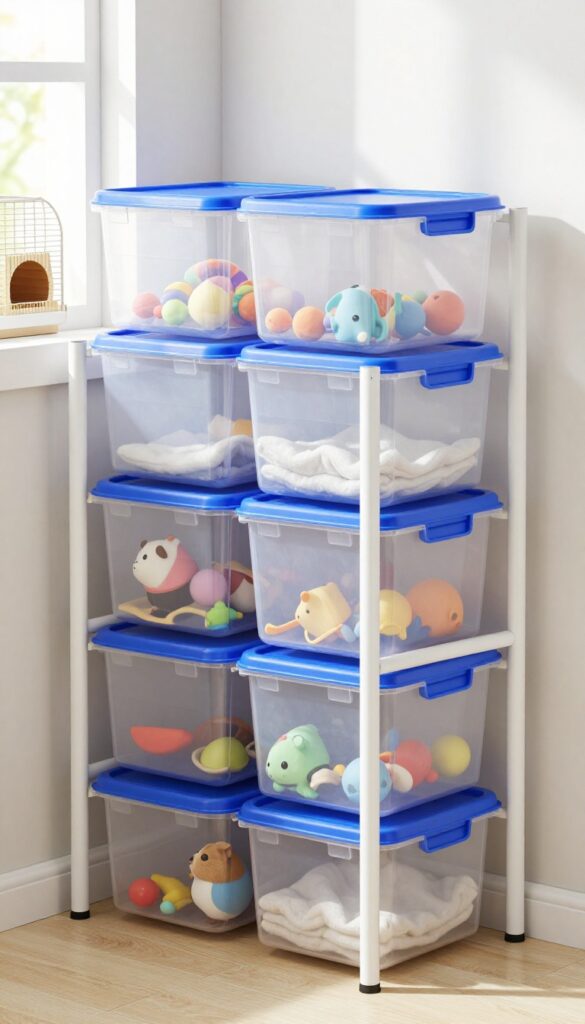
Keep your guinea pig room clutter-free by using clear stackable bins to store out-of-season supplies. This system maximizes vertical space and makes it easy to rotate items as needed.
Clear bins let you see contents at a glance, so you can quickly grab what you need. Label each bin with the contents and season (e.g., “Winter Fleece,” “Summer Toys”) to stay organized. Store bins in a closet, under the cage, or on sturdy shelving.
Key Tips
- Choose bins with tight-fitting lids to keep out dust and moisture.
- Use uniform bin sizes for stable stacking.
- Rotate seasonal items every few months to keep your guinea pig’s environment fresh.
Tunnel Play System with Hidden Storage
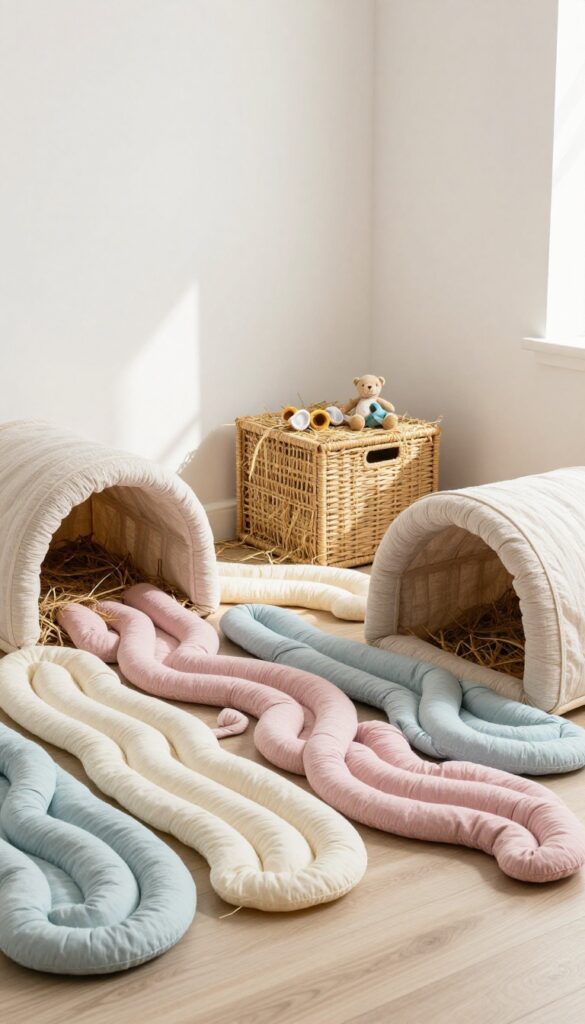
A tunnel play system satisfies your guinea pigs’ natural instinct to explore while cleverly hiding storage for toys and supplies. By integrating storage cubes or boxes as connectors, you can keep the room tidy and the fun flowing.
Start with a network of tunnels made from flexible fabric tubes or rigid PVC pipes. Guinea pigs love darting through these passages, and you can arrange them in loops or figure-eights for extra interest.
- Use storage cubes or small boxes as tunnel connectors—they double as hideaways and hold toys, hay, or bedding.
- Choose tunnels that are easy to detach for cleaning; fabric tunnels can be machine-washed, while PVC pipes can be wiped down.
- Place the system along a wall or in a corner to save floor space and create a dedicated play zone.
This setup keeps playthings organized and within reach while giving your guinea pigs an engaging environment. Just ensure all materials are pet-safe and free of sharp edges.
Floating Cubby Shelves for Hay and Bedding
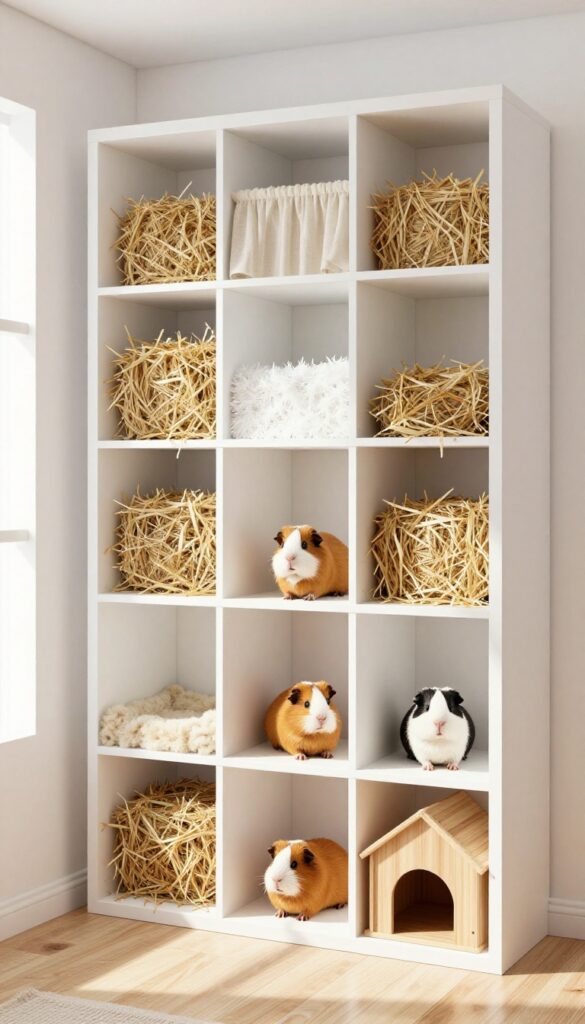
Keep hay and bedding organized and easily accessible with floating cubby shelves mounted at various heights. This system not only saves floor space but also allows you to separate different types of hay and bedding for quick grab-and-go refills.
Floating cubby shelves are a stylish and practical storage solution for any guinea pig room. Install them at different heights to accommodate bags of hay, bedding, and other supplies. Each cubby can hold a different type of hay—such as timothy, orchard, or oat hay—or different bedding materials like paper, fleece, or aspen shavings.
Key Tips
- Use small doors or curtains to keep the cubbies neat and hide clutter.
- Label each cubby for easy identification of hay or bedding type.
- Mount cubbies above the cage or play area for convenient access during cleaning.
Convertible Ottoman with Toy Storage
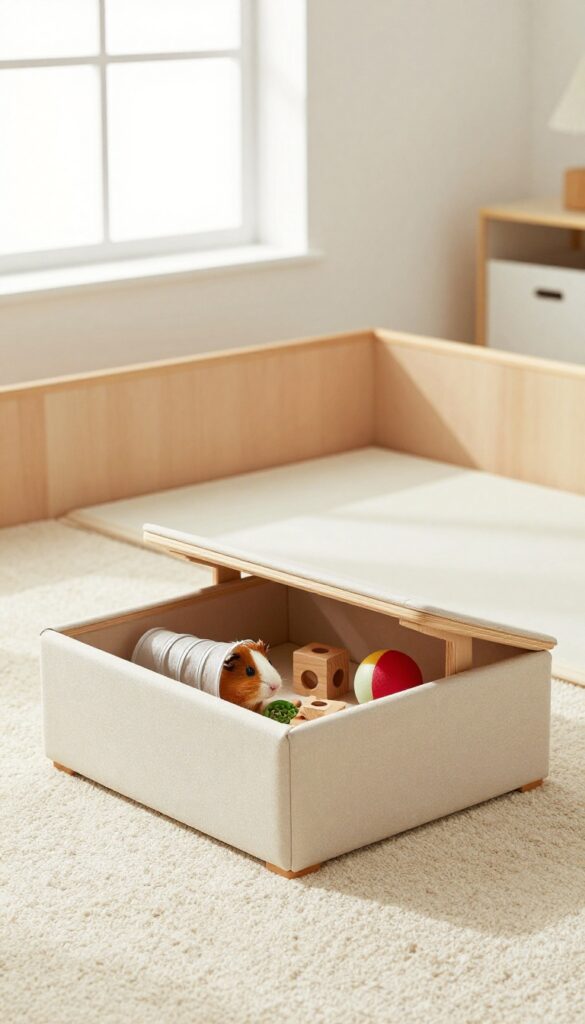
A storage ottoman is a smart, space-saving solution that serves double duty as seating or a side table while hiding your guinea pig’s playthings inside.
Choose a sturdy ottoman with a removable lid and enough room to stash tunnels, balls, chew toys, and hideaways. When playtime ends, simply toss everything inside and close the lid for a tidy room.
- Look for an ottoman with a washable or slipcover for easy cleaning.
- Fill it with a variety of toys like crinkle tunnels, wooden blocks, and foraging balls.
- Place it near the play zone so you can quickly grab toys and return them.
This dual-purpose piece keeps clutter out of sight while providing extra seating for you during bonding time. It’s a practical addition to any guinea pig room that needs both storage and a play-ready setup.
Vertical Garden Wall for Fresh Greens
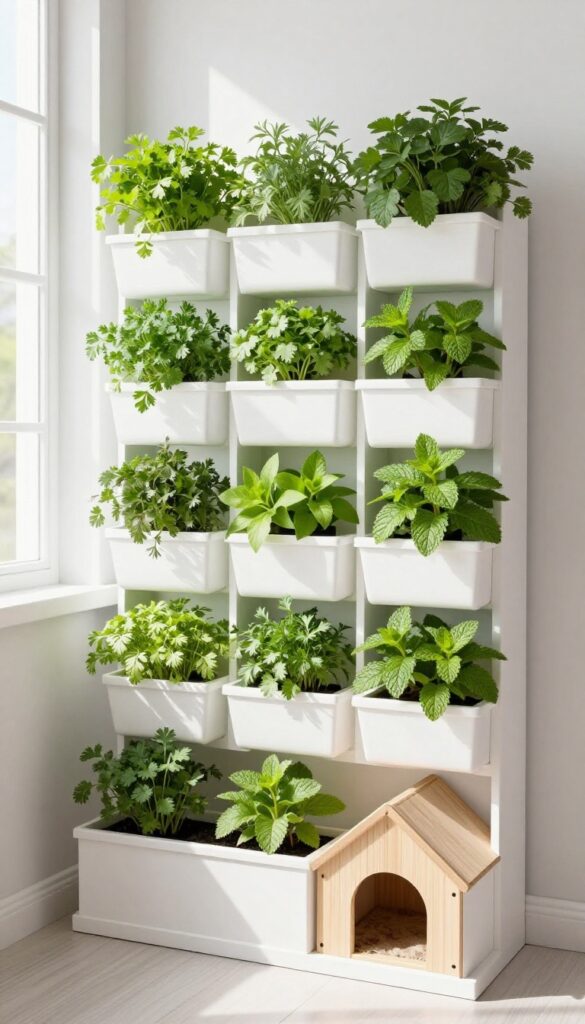
A vertical garden wall is a brilliant way to combine fresh food storage with a living play zone. By growing safe herbs and greens right on the wall, you provide your guinea pigs with a constant supply of treats while adding a lush, natural element to the room.
Install a vertical planter system with multiple pockets or tiers. Choose plants that are safe for guinea pigs, such as parsley, cilantro, basil, mint, and dandelion greens. Ensure the plants are grown without pesticides or fertilizers.
Position the garden at a height where you can easily harvest leaves, but out of reach of curious chewers. The wall itself can be a focal point, and the greens can be used as daily treats, reducing the need for store-bought produce.
Key Points
- Use a vertical planter wall with pockets for herbs like parsley and cilantro.
- Offer fresh greens as treats for guinea pigs.
- Only use safe, pesticide-free plants.
FAQ
What is the best flooring for a guinea pig room?
The best flooring is easy to clean and safe for guinea pigs. Options include linoleum, vinyl, or sealed concrete. Avoid carpet as it absorbs odors and is hard to sanitize.
Use washable rugs or fleece liners in play areas.
Conclusion
Use these ideas as a flexible starting point, then adjust the details to fit your needs, space, schedule, or goals.

I’m Pallab Kishore, the owner of Little Pets Realm — an animal lover and pet care enthusiast sharing easy tips, healthy recipes, and honest advice to help every small pet live a happy, healthy, tail-wagging life.