Last updated on August 19th, 2026 at 04:19 pm
Guinea pigs love having cozy hideouts where they can feel safe and snug. DIY hideouts are not only budget-friendly but also allow you to customize the size, shape, and materials to suit your guinea pig’s needs.
In this article, we’ll explore 12 creative DIY guinea pig house ideas that are safe, comfortable, and easy to make.
Always prioritize non-toxic materials and ensure proper ventilation in every hideout.
Fleece Tunnel Hideout
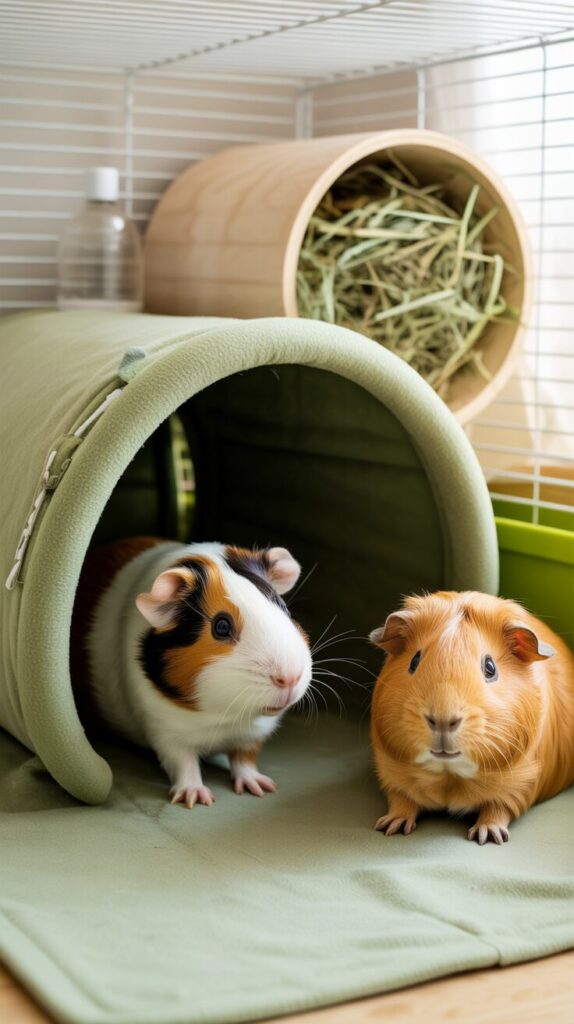
A fleece tunnel is one of the easiest DIY hideouts you can add to your guinea pig cage. It gives your pigs a cozy, dark space to nap and hide, while being simple to clean and replace.
Start with a PVC pipe or a wire grid frame bent into a tunnel shape. The key is to cover the frame with soft fleece fabric that’s safe for guinea pigs. Fleece is breathable, soft, and doesn’t have loose threads that could catch on tiny nails.
Make sure the fleece is wrapped tightly and secured with pet-safe Velcro or stitching so your pigs can’t pull it off and chew the frame underneath.
Practical tips for a cage-safe tunnel
- Use PVC pipe at least 6 inches in diameter so guinea pigs can turn around easily.
- Cut small ventilation holes in the fleece if the tunnel is fully enclosed.
- Seal any raw edges of fleece with a simple hem to prevent fraying.
- Place the tunnel in a corner of the cage near a hay rack or water bottle for convenience.
This hideout is easy to remove for washing—just take off the fleece cover and toss it in the laundry. A fleece tunnel works well with fleece cage liners, as both are machine washable. Always check that the frame has no sharp edges or exposed wires, and that the tunnel is stable so it won’t tip over when your guinea pigs run through it.
Make It Practical for Daily Use
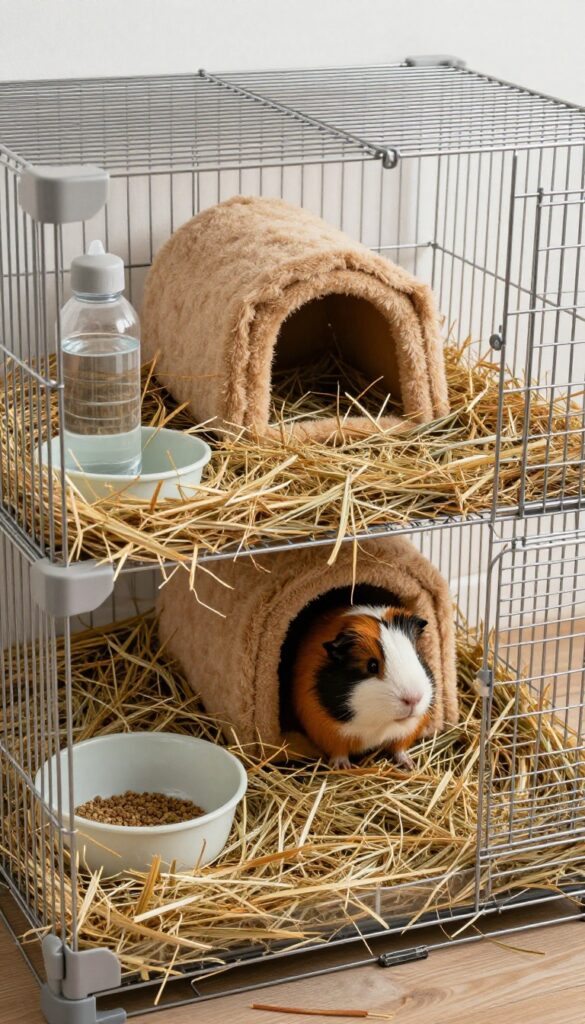
A cozy hideout is great, but it also needs to be practical for everyday care. This cardboard castle idea is perfect for guinea pigs and easy to maintain.
Use sturdy cardboard boxes (like moving boxes) to build a multi-room castle inside your guinea pig’s cage. Cut doorways and windows for connectivity and ventilation. Place it on a fleece liner or bedding for easy cleanup.
When soiled, simply replace the cardboard—it’s compostable and cheap.
- No tape or staples: use non-toxic glue if needed, but folding tabs work well.
- Supervise chewing: cardboard is safe, but remove if your guinea pig eats too much.
- Keep it cage-relevant: ensure the castle fits within the minimum floor space (7.5 sq ft for two guinea pigs) and doesn’t block access to hay, water, or hideouts.
- Add enrichment: stuff tunnels with hay or place a small fleece pad inside for extra coziness.
Wooden Hideout with Ramp
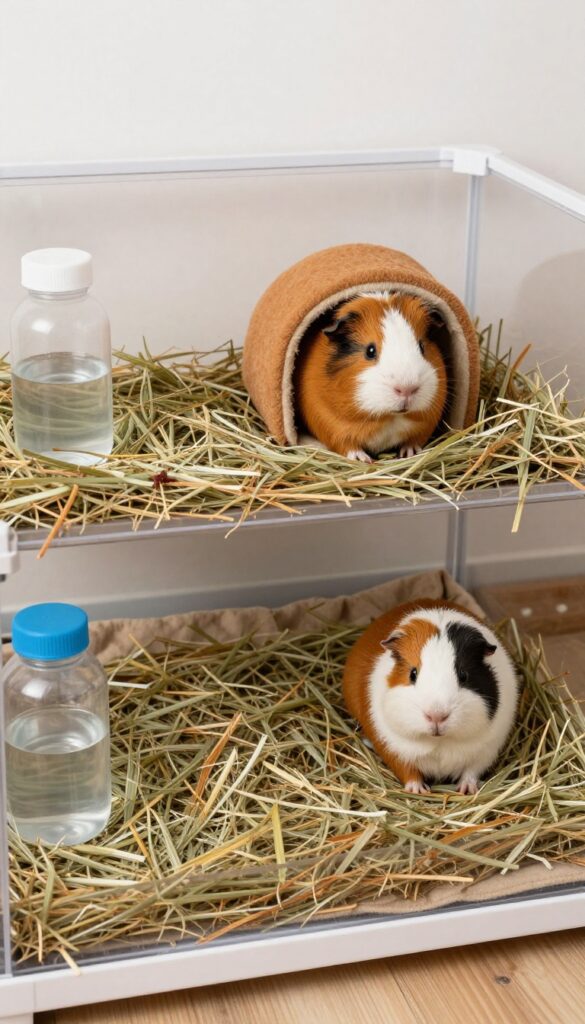
A wooden hideout with a ramp adds vertical fun and a cozy retreat to your guinea pig cage. This DIY project is sturdy, safe, and easy to customize for your small pets.
Use untreated pine or plywood to build the base and ramp. Avoid toxic woods like cedar or pressure-treated lumber, which can harm guinea pigs. Seal the wood with a pet-safe, non-toxic sealant to protect against moisture and urine.
Sand all edges smooth to prevent splinters and sharp corners.
Attach the ramp at a gentle angle so guinea pigs can easily climb. Cover the ramp with a strip of fleece or a small piece of carpet for traction. Place the hideout on a solid section of the cage floor, with soft bedding or a fleece liner underneath.
Add a hay rack nearby and ensure easy access to water and food.
Practical Tips
- Make the entrance large enough for two guinea pigs to pass comfortably.
- Include a removable roof for easy cleaning access.
- Check for good ventilation inside the hideout.
- Use chew-safe enrichment like applewood sticks or willow balls nearby.
Fabric Cube with Fleece Lining
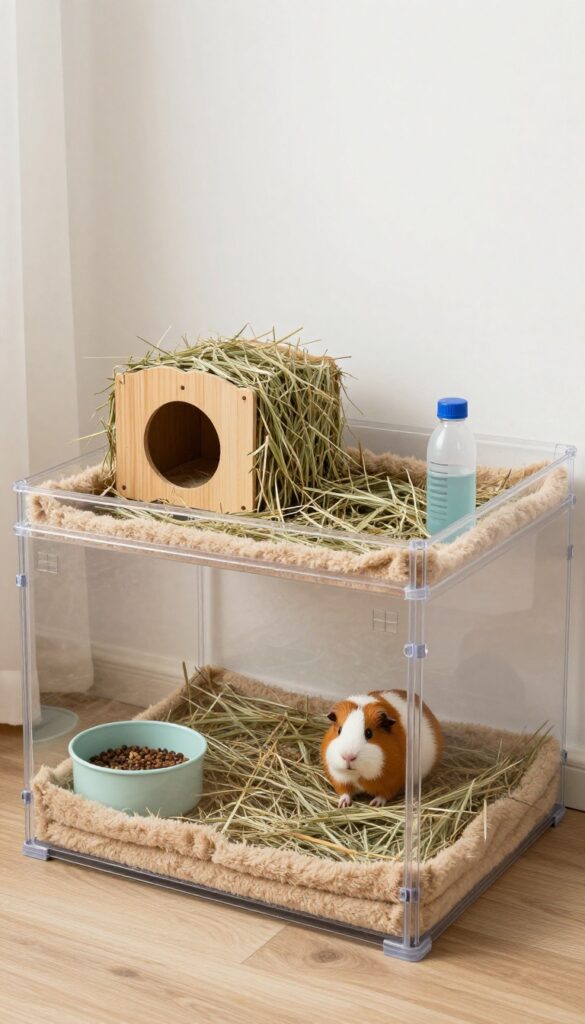
A fabric cube hideout combines softness with structure, giving guinea pigs a cozy den that’s easy to clean and safe for daily use.
Sew a fleece cover over a lightweight cube frame (like a wire grid or plastic frame) to create a breathable, washable hideout. The fleece lining is gentle on guinea pig feet and can be removed and machine washed regularly. Ensure the fabric is 100% cotton or fleece to avoid ingestion hazards.
- Use a sturdy base that won’t tip over when guinea pigs climb on top.
- Cut multiple entry points (at least two) for easy access and ventilation.
- Check for loose threads or small parts that could be chewed off and swallowed.
- Place the cube inside the cage on top of fleece liner or bedding, near a hay rack and water bottle for convenience.
This hideout works well in a guinea pig cage because it provides a dark, secure space while remaining open enough for air circulation. The washable design helps maintain hygiene, and the cube shape fits neatly into most cage layouts without taking up too much floor space.
Hay-Stuffed Paper Bag Hideout
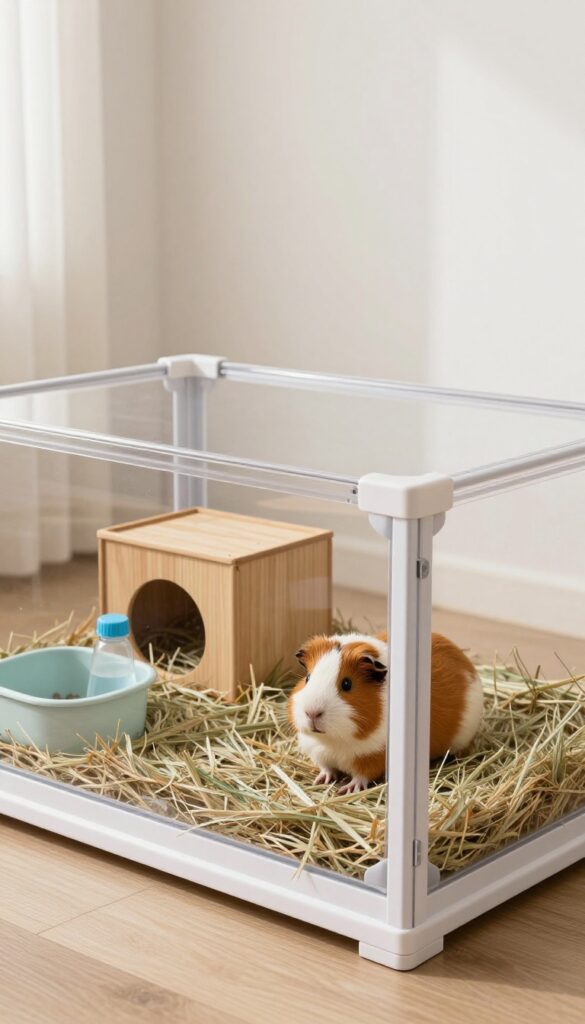
A simple brown paper bag stuffed with hay makes an irresistible, disposable hideout that satisfies your guinea pig’s natural foraging instincts. It’s cheap, easy to replace, and adds a fun enrichment element to the cage.
Grab a large brown paper bag (the kind from grocery stores works perfectly) and check that it has no ink, glue, or plastic handles. Remove any plastic handles if present. Crumple the bag slightly to create an opening, then fill it generously with fresh hay.
Place the bag in a corner of the cage where your guinea pigs can easily access it. They’ll love burrowing inside, nibbling the hay, and tossing the bag around.
- Use only plain, uncoated brown paper bags—avoid glossy or coated paper that could be harmful if chewed.
- Remove any plastic handles or metal staples before giving the bag to your pets.
- Stuff the bag loosely with hay to encourage foraging and nesting behavior.
- Replace the bag every few days or when it becomes soiled or shredded.
- Place the hideout on a fleece liner or bedding area for easy cleanup.
This hideout adds a temporary, engaging element to the guinea pig cage without taking up permanent floor space. It’s perfect for a mid-week enrichment boost and encourages natural digging and hiding behaviors. Just be sure to monitor the bag for any signs of excessive chewing or ingestion of paper, and remove it if your guinea pigs start eating large amounts.
Coroplast and Grid Cage Divider Hideout
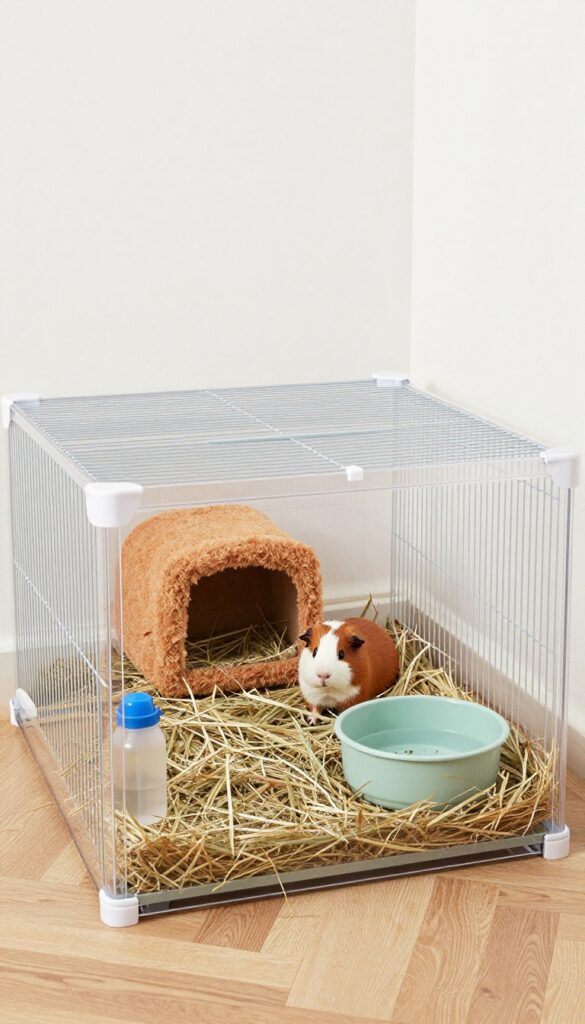
A coroplast and grid divider does double duty: it separates cage zones and creates a private hideout. This DIY is perfect for multi-pig homes or for giving a single guinea pig its own cozy corner.
Using coroplast sheets and grid cubes, you can build a sturdy divider that also functions as a hideout. Cut a coroplast panel to fit the width of your cage and attach it securely to the grids with zip ties. Leave a small opening (about 6–8 inches wide) for your guinea pig to enter.
Inside the hideout, place soft fleece bedding, a hay pile, and a small hidey house for extra security.
Key Tips
- Smooth all cut edges of coroplast with sandpaper or cover them with duct tape to prevent injury.
- Secure the divider to the cage grids with at least four zip ties on each side to ensure stability.
- Ensure the hideout area has good ventilation by leaving the top open or using grid panels for the roof.
- Place a water bottle and food bowl on the opposite side of the hideout to encourage exercise and exploration.
Fleece Hammock with Privacy Hood
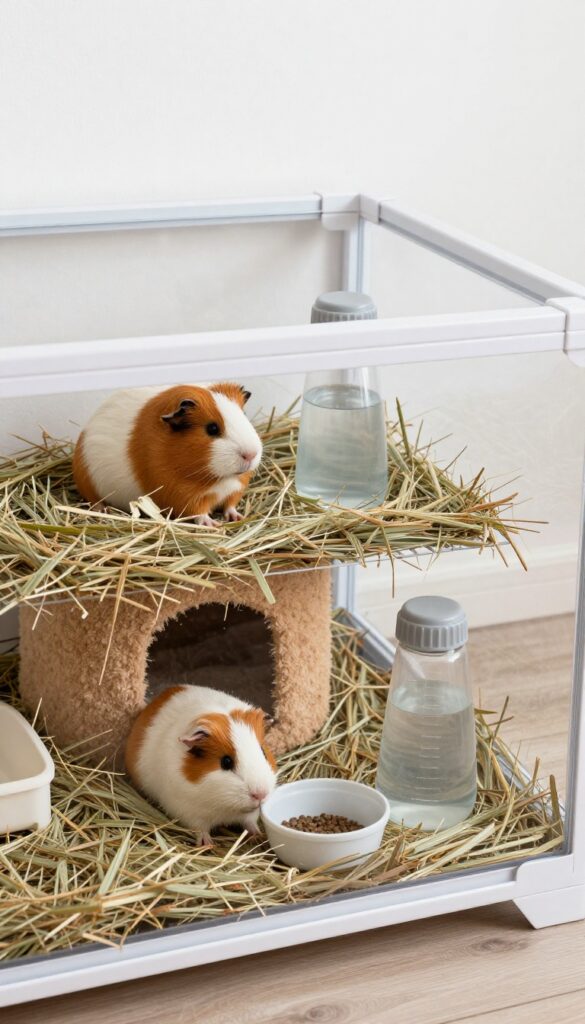
A fleece hammock with a built-in privacy hood gives your guinea pigs a cozy spot to nap, hide, and feel secure. The soft fleece is gentle on feet and easy to wash, making it a practical addition to any cage.
To make one, sew a rectangular piece of fleece into a hammock shape with a top cover that forms a hood. Attach strong clips or hooks to each corner so you can hang it securely from the cage grid or lid. The hood provides a dark, enclosed space that guinea pigs love for retreating from noise or bright light.
Key practical details
- Use two layers of fleece or add a washable absorbent layer inside to catch droppings.
- Attach with carabiners or sturdy shower-curtain hooks that won’t come loose.
- Check for loose threads or frayed edges and trim them to prevent paw injuries.
- Hang the hammock low enough that guinea pigs can climb in easily—no higher than 4–6 inches above the cage floor.
- Remove and machine-wash weekly; have a spare to swap out for quick cleaning.
Place the hammock in a quiet corner of the cage, away from drafts and direct sunlight. Make sure there’s still plenty of floor space for running and access to hay, water, and hideouts. This DIY project adds vertical enrichment without taking up valuable ground area.
PVC Pipe Tunnel System
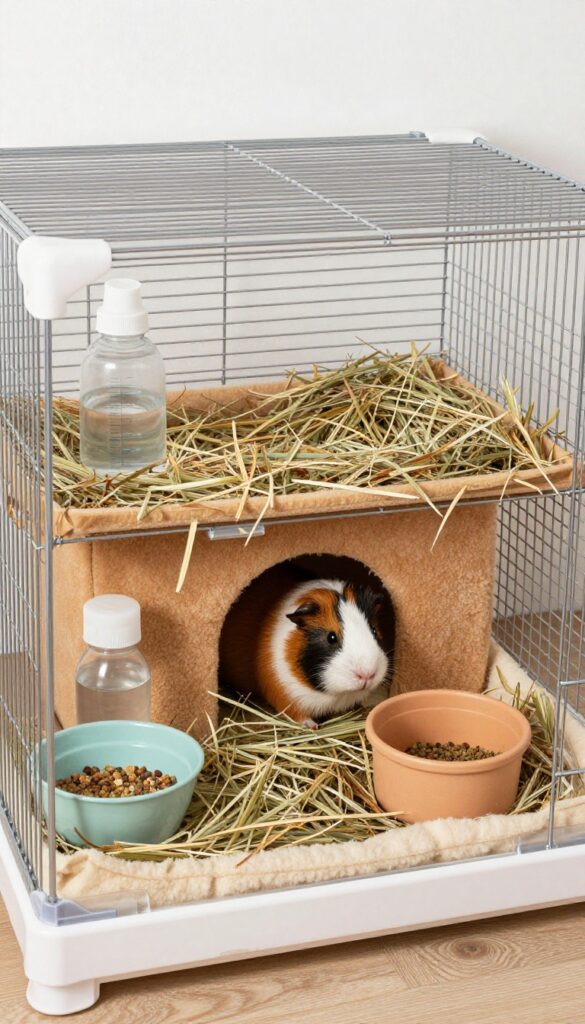
A PVC pipe tunnel system adds fun and exercise to your guinea pig’s cage, encouraging natural burrowing and exploration. When built correctly, it’s safe, easy to clean, and a cozy hideout.
Use large diameter PVC pipes (at least 4 inches) so your guinea pigs can move through comfortably. Connect sections with elbows and T-joints to create a maze. Avoid small pipes that could trap or stress your pets.
- Choose non-toxic PVC and sand any sharp edges before assembly.
- Line the bottom with fleece for comfort and easy cleaning—remove and wash regularly.
- Place hay inside the tunnels to encourage foraging and chewing.
- Ensure the tunnel system fits within your cage layout, leaving ample floor space for running and other hideouts.
Keep the tunnels accessible for cleaning by using removable joints or leaving one end open. Avoid using glue that may be toxic; friction-fit joints work well. This DIY project adds enrichment and a cozy burrow-like hideout your guinea pigs will love.
Wicker Basket Hideout
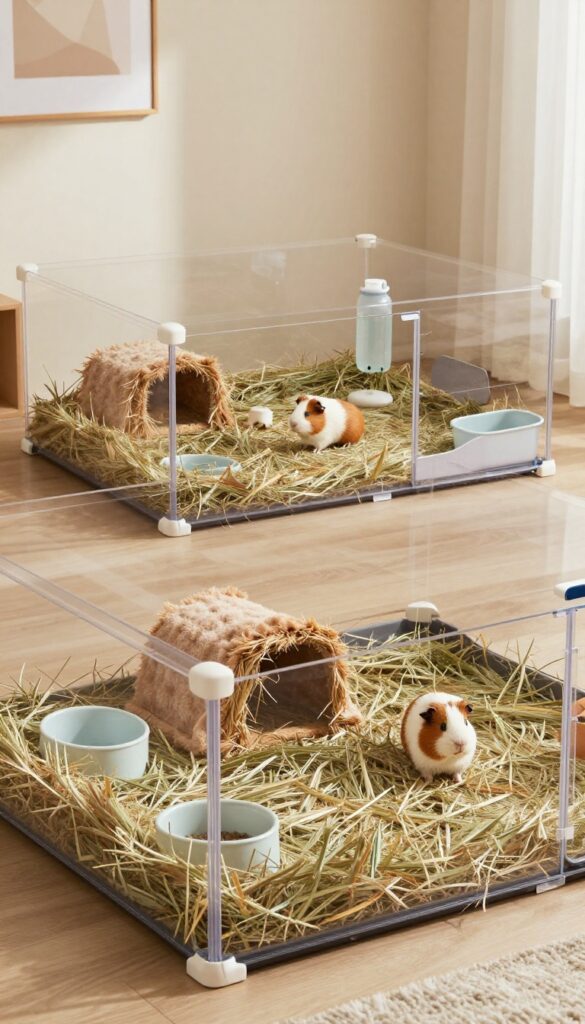
A wicker basket makes a natural, breathable hideout that fits right into a guinea pig cage. Choose an untreated basket with no paint or varnish, and cut a doorway large enough for easy access.
Wicker is safe for guinea pigs to chew, but you must check for splinters or sharp edges before placing it in the cage. Line the bottom with a soft fleece pad or bedding for comfort. Avoid plastic wicker or baskets with small decorative parts that could be ingested.
Practical tips for cage use
- Cut a doorway about 4–5 inches wide so your guinea pig can enter easily.
- Sand any rough edges after cutting to prevent injury.
- Place the basket on a flat, stable area of the cage, away from water bottles to avoid mold.
- Replace the basket if it becomes excessively chewed or soiled.
This hideout works well in a standard 2×4 C&C cage or a large store-bought enclosure. It provides a cozy, dark retreat that also allows airflow, reducing humidity inside. Check daily for urine buildup and clean or swap as needed.
Felt Cave with Removable Roof
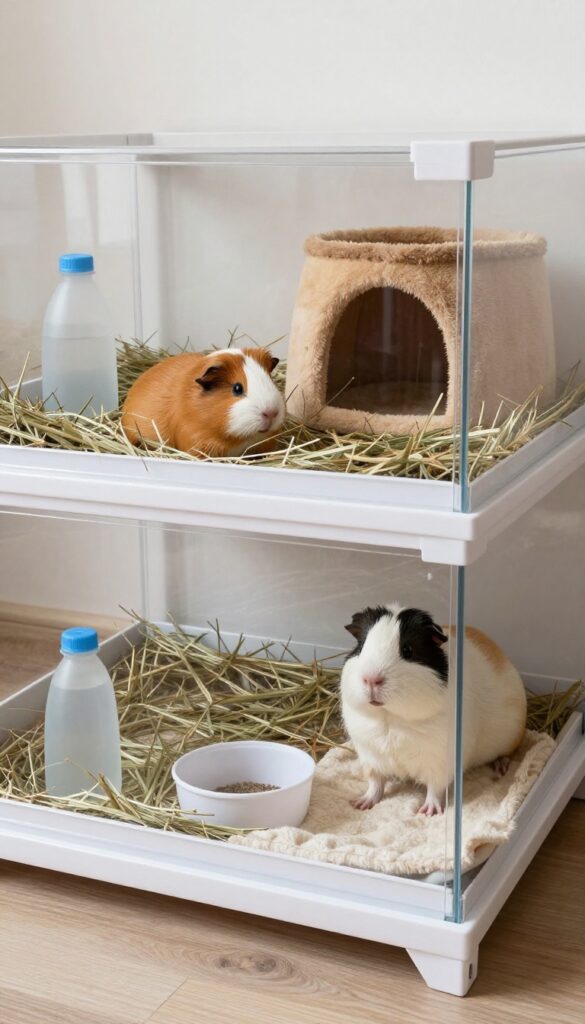
A felt cave offers your guinea pigs a cozy, enclosed hideout that feels soft and warm. The removable roof makes cleaning straightforward, which is essential for maintaining a hygienic cage.
To make this hideout, sew pet-safe felt into a simple cave shape. The removable roof can be attached with Velcro strips or snap buttons, allowing you to take it off for washing and spot-cleaning. Place the cave in a quiet corner of the cage, away from high-traffic areas, and ensure your guinea pigs can easily enter and exit.
Practical tips for this hideout
- Use only pet-safe felt that does not shed fibers or cause respiratory irritation.
- Avoid adding small buttons, beads, or decorations that could be chewed off and swallowed.
- Line the inside with a soft fleece pad for extra comfort and easy removal.
- Position the cave near a hay rack and water bottle so your guinea pigs have everything they need.
- Check the felt regularly for signs of chewing or wear, and replace if needed.
This hideout is perfect for guinea pigs that enjoy burrowing and feeling enclosed. The soft felt provides warmth without trapping moisture, and the removable roof allows you to quickly freshen up the interior. Keep the cave clean by washing the felt pieces weekly in mild detergent and air-drying them completely before returning them to the cage.
Repurposed Plastic Storage Bin Hideout
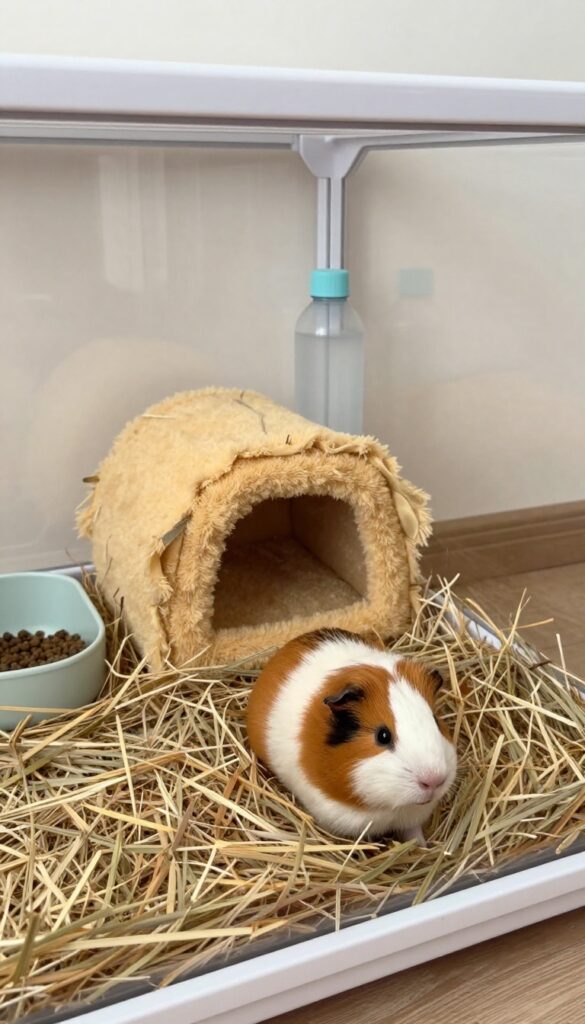
A large clear plastic storage bin can become a spacious, cozy hideout for your guinea pigs with just a few simple modifications. This budget-friendly option is easy to clean and offers great visibility.
Choose a bin that is at least as long as your guinea pig’s body and tall enough for them to stand up. Avoid bins with a strong chemical smell, as these can be harmful. Wash the bin thoroughly with mild soap and water before use.
- Cut a large doorway on one side using a utility knife or jigsaw, making sure edges are smooth. Sand any rough spots and cover cut edges with duct tape or edge trim to prevent injuries.
- Drill several ventilation holes on the sides and top, spaced about 2 inches apart. Ensure holes are large enough for airflow but not big enough for a guinea pig to get stuck.
- Line the bottom with fleece or a soft towel for comfort. Add a layer of hay or paper bedding for burrowing.
- Place the hideout inside the guinea pig cage on a flat, stable surface. Ensure it does not block access to food bowls, water bottles, or hay racks.
- Clean the bin regularly by wiping with a pet-safe disinfectant and replacing the bedding.
This hideout provides a secure, enclosed space where guinea pigs can retreat and relax. The clear plastic allows you to check on them easily, while the ventilation keeps the interior fresh. Always use non-toxic plastic and avoid bins that have held chemicals or strong odors.
Fleece-Lined Igloo from Pet Store Base
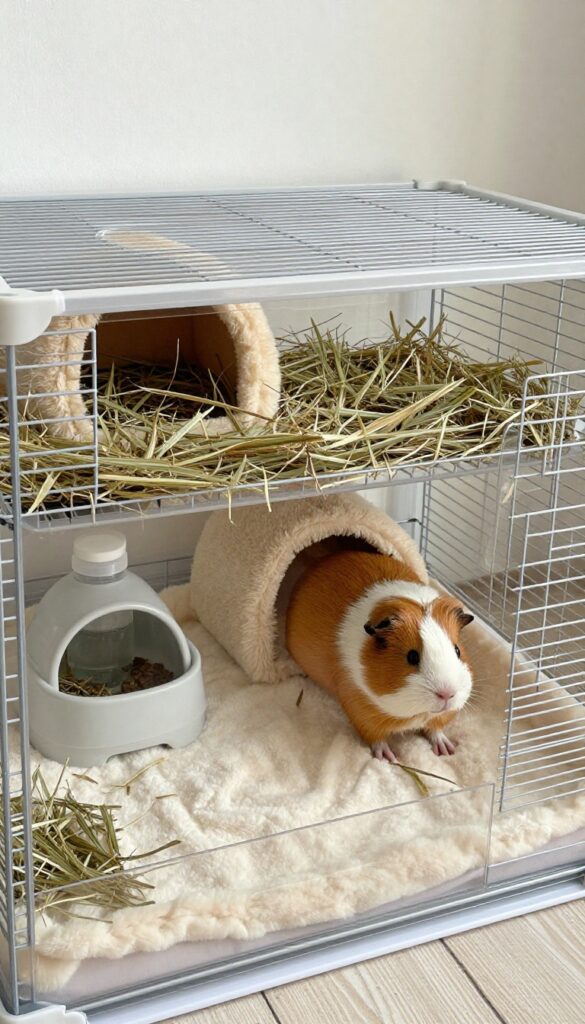
A plain plastic igloo from the pet store becomes a warm, cozy hideout with a few simple modifications. This DIY adds comfort and privacy while keeping the structure easy to clean.
Start with a standard plastic igloo hideout designed for small pets. Before lining it, check for any sharp edges or small openings that could trap a guinea pig’s foot. Remove any non-safe parts like thin plastic loops or hanging toys that might break off.
- Line the interior with soft fleece, cutting it to fit the floor and walls. Fleece wicks moisture away and keeps your guinea pig warm without loose threads.
- Attach a fleece curtain over the entrance to create a dark, cozy den. Use Velcro or fabric-safe clips so you can remove it for washing.
- Ensure the igloo has good ventilation: the entrance should be large enough for air to circulate, and the plastic should have small vent holes if not already present.
Wash the fleece lining and curtain regularly to keep the hideout fresh. Place the igloo on a flat, stable part of the cage, away from water bottles or food bowls to keep the fleece dry. This hideout works well in a guinea pig enclosure with plenty of floor space and other enrichment like tunnels or hay piles.
FAQ
What materials are safe for DIY guinea pig hideouts?
Safe materials include untreated wood (pine, plywood), cardboard, fleece, felt, wicker, and pet-safe plastics. Avoid cedar, pressure-treated wood, toxic glues, paints, and small parts that can be ingested.
How often should I clean DIY guinea pig hideouts?
Spot clean daily and deep clean weekly. Fabric items should be washed in pet-safe detergent. Cardboard and paper items should be replaced when soiled.
Can guinea pigs have multiple hideouts?
Yes, providing multiple hideouts allows guinea pigs to choose their preferred spot and reduces stress. Ensure each hideout has at least two exits to prevent trapping.
How do I ensure proper ventilation in a DIY hideout?
Cut multiple large openings or use mesh panels. Avoid completely enclosed spaces. For fabric hideouts, use breathable materials like fleece.
Conclusion
Creating DIY hideouts for your guinea pigs is a fun and rewarding way to enhance their environment. Remember to always use safe materials, provide proper ventilation, and clean regularly.
With these 12 ideas, you can offer your guinea pigs a variety of cozy spots to explore and relax in.

I’m Pallab Kishore, the owner of Little Pets Realm — an animal lover and pet care enthusiast sharing easy tips, healthy recipes, and honest advice to help every small pet live a happy, healthy, tail-wagging life.