Last updated on August 19th, 2026 at 04:19 pm
Guinea pigs thrive in environments that offer comfort, enrichment, and safety. Creating a cute cage corner doesn’t have to be expensive.
With a few DIY projects, you can transform your guinea pig’s habitat into a cozy and stimulating space.
Here are 11 easy and adorable ideas to get you started.
1. Cozy Fleece Forest Hideout
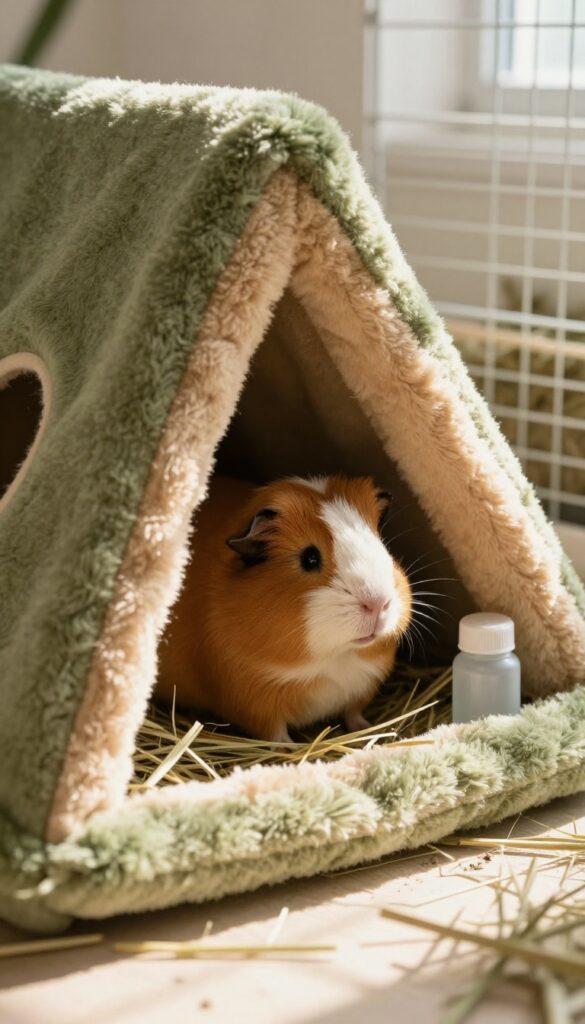
Transform a quiet cage corner into a soft, burrow-like retreat with a fleece forest hideout. This DIY project uses anti-pill fleece to create a tent with multiple entrances, giving your guinea pigs a secure spot to nap and hide. The fabric is gentle on paws and easy to wash, keeping the habitat fresh and hygienic.
Key Details for a Safe and Cozy Hideout
- Choose anti-pill fleece and trim any loose threads to prevent ingestion.
- Sew or knot the fabric into a tent shape with at least two openings for easy escape.
- Place the hideout in a quiet corner away from high-traffic areas to reduce stress.
- Wash the fleece weekly with pet-safe detergent to maintain cleanliness and odor control.
- Ensure the hideout is securely anchored or weighted so it doesn’t tip over during play.
Practical Cage Integration
Position the fleece forest near a hay rack and water bottle so your guinea pigs can access essentials without leaving their safe zone. The soft fabric also doubles as a cozy bedding area, reducing the need for additional fleece pads in that corner. This hideout works best in a cage with solid flooring or a fleece liner, as it absorbs urine and can be easily removed for cleaning.
2. Add a Raised Hay Area Inside the Cage
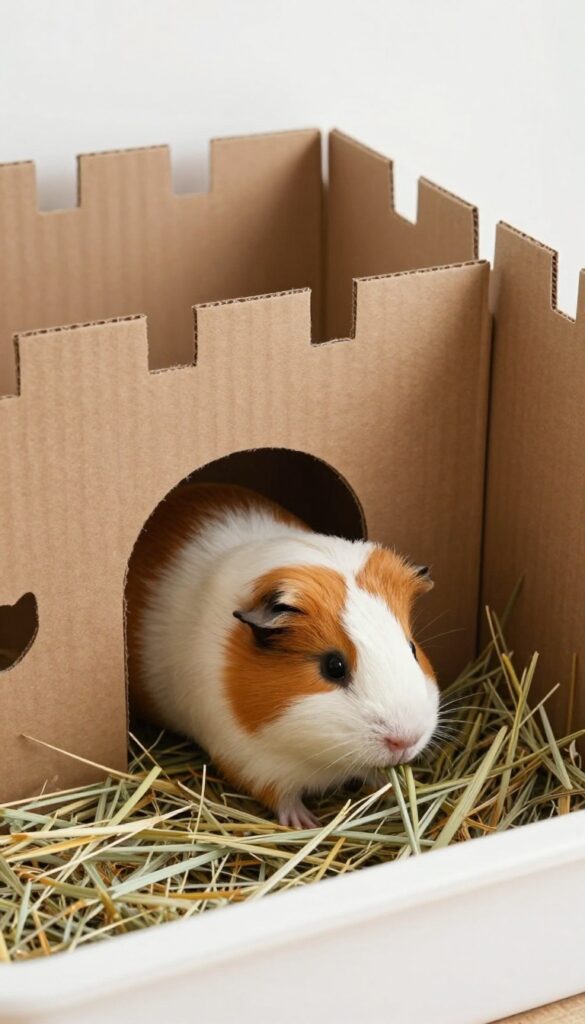
A raised hay area keeps hay clean, reduces waste, and adds a fun level change inside the cage. Using safe cardboard boxes, you can build a simple multi-room castle that doubles as a hay feeder and hideout.
Start by collecting sturdy cardboard boxes from shipping or food packaging. Cut and assemble them into a multi-room structure with tunnels connecting different compartments. Remove all tape, staples, and labels before introducing the boxes to the cage.
Use only pet-safe glue if you need to secure pieces together.
Key considerations for a cardboard hay area
- Avoid printed or glossy cardboard, as inks and coatings can be harmful if chewed.
- Choose plain, brown cardboard that is safe for guinea pigs to gnaw on.
- Place the structure on a fleece liner or in a corner with extra bedding to catch hay and droppings.
- Include a low entrance so guinea pigs can easily climb in and out.
- Add a small hideout or tunnel inside the castle for extra enrichment.
Because guinea pigs chew and soil cardboard quickly, plan to replace the entire structure every 2–3 weeks. Monitor for signs of excessive chewing or wet spots and swap it out sooner if needed. This DIY project is budget-friendly, easy to customize, and gives your pets a fun, functional space to munch hay and explore.
3. Create a Cozy Hideout Zone for Guinea Pigs
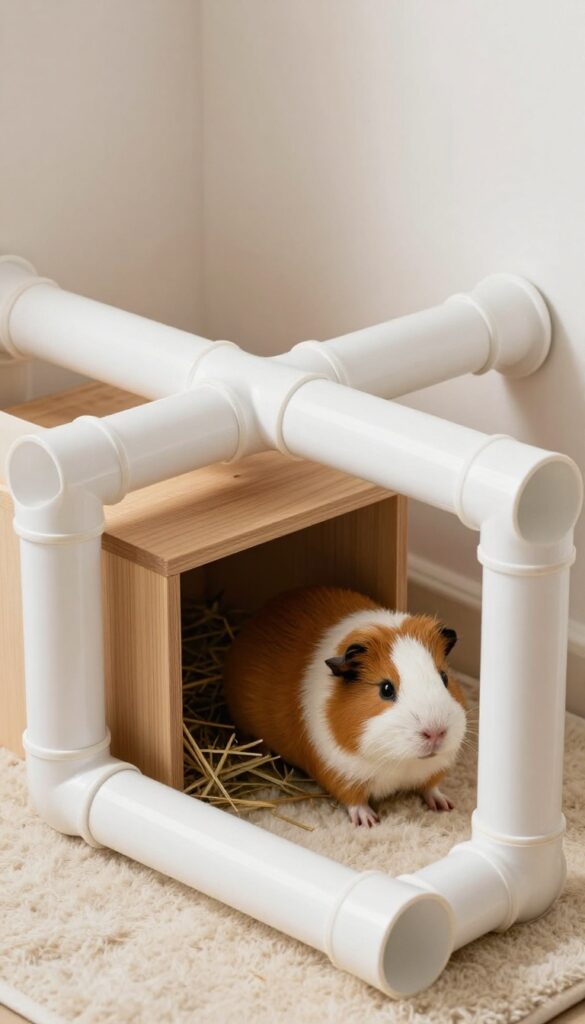
Guinea pigs feel most secure when they have a dark, enclosed space to retreat to. A tunnel network made from PVC pipes is a safe, durable, and easy-to-clean option that also adds a fun element to their cage.
To build a tunnel system, use 4-inch diameter PVC pipes and connectors. This size allows even adult guinea pigs to pass through comfortably and turn around inside. Cut the pipes to your desired lengths with a hacksaw, then sand all cut edges thoroughly with fine-grit sandpaper to remove any sharp burrs.
Rinse the pipes with warm water and mild soap to remove dust before placing them in the cage.
Key considerations for a safe PVC hideout
- Always use 4-inch diameter or larger pipes to prevent your guinea pig from getting stuck.
- Smooth every cut edge with sandpaper to avoid cuts or abrasions.
- Choose PVC connectors (elbows, T-joints) to create corners and branching tunnels for exploration.
- Place the tunnel network in a quiet corner of the cage, away from high-traffic areas.
- Add a soft fleece pad or a small hideout at one end of the tunnel for extra coziness.
- Ensure the tunnels do not block access to food bowls, water bottles, or hay racks.
- Clean the pipes regularly by wiping with a pet-safe disinfectant and rinsing well.
This hideout zone not only provides security but also encourages natural burrowing behavior. Combine the PVC tunnels with a fleece-lined corner, a small wooden house, or a hay-filled nook to create a complete retreat. The smooth interior of PVC is easy to wipe down, making it a hygienic choice for your guinea pig’s habitat.
4. Hanging Hay Feeder from a Tin Can
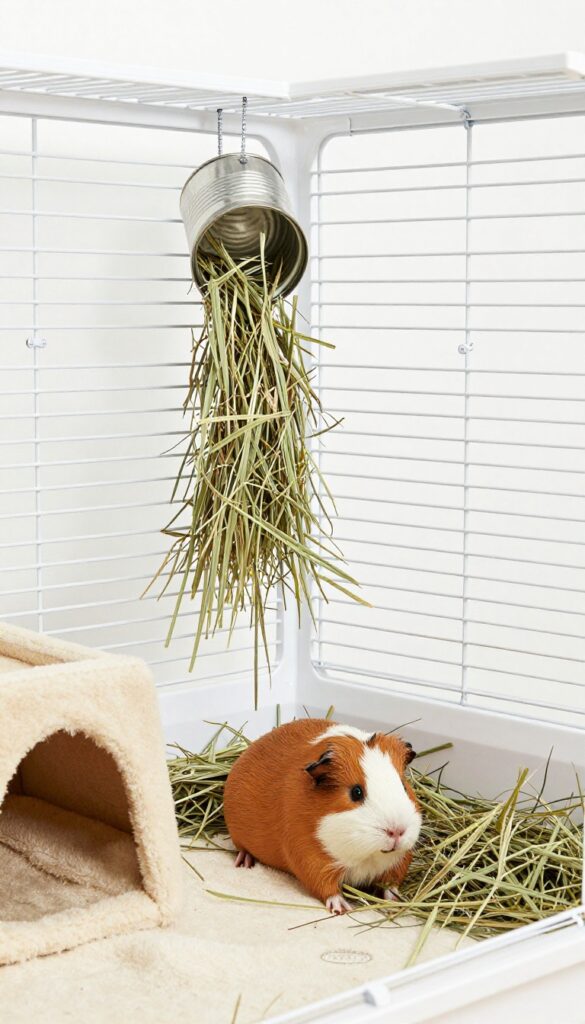
A hanging hay feeder made from a tin can is a simple, budget-friendly way to keep hay clean and accessible. This project repurposes a common household item into a functional cage accessory that adds vertical interest to your guinea pig’s corner.
Start with a large tin can (like a coffee or tomato can) that is thoroughly cleaned and dried. Remove both ends with a can opener, then carefully cover all sharp edges with duct tape or electrical tape. This step is crucial to prevent cuts to your guinea pigs’ sensitive noses and mouths.
- Attach the can securely to the cage bars using zip ties or sturdy wire, positioning it at a height where guinea pigs can easily pull hay through the open ends.
- Fill the can loosely with fresh hay, allowing it to protrude slightly so your pets can grab it. Avoid packing it too tightly.
- Place the feeder near a hideout or over a fleece pad to catch fallen hay, making cleanup easier.
- Check the can regularly for sharp edges or damage, and replace if needed.
This feeder works well in a guinea pig cage because it keeps hay off the floor, reducing waste and contamination. It also encourages natural foraging behavior as guinea pigs tug hay through the openings. For best results, position it in a quiet corner where your pets feel safe to eat.
5. Fleece Liner with Absorbent Core
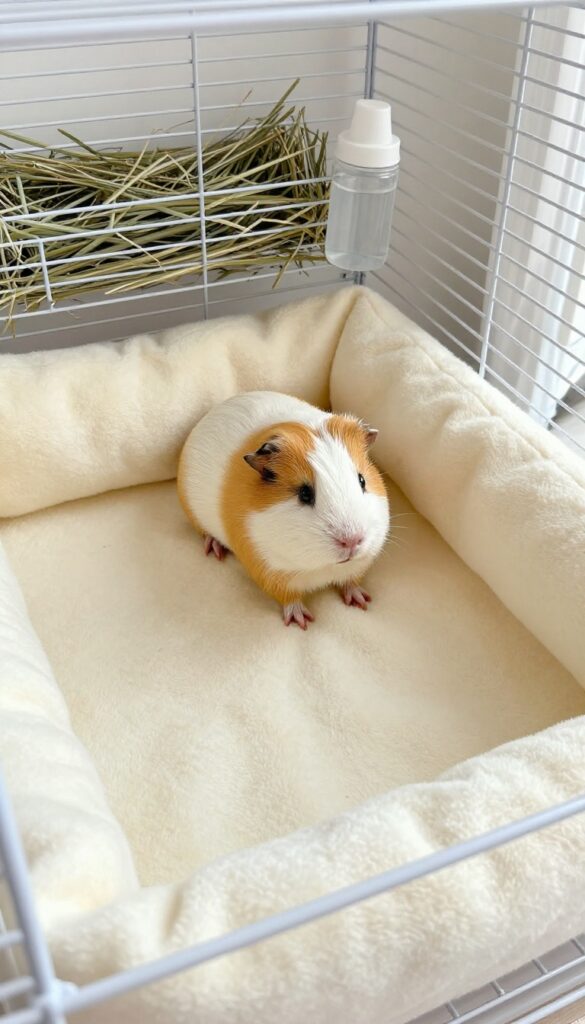
A fleece liner with an absorbent core is a game-changer for guinea pig cage maintenance. It wicks moisture away from the surface, keeping your pets dry and comfortable, while the absorbent layer traps urine and odors. Here’s how to make one that fits your cage perfectly.
Start with a layer of anti-pill fleece on top—this fabric wicks moisture through to the absorbent layer below. For the core, use a U-Haul moving pad or thick towel; both are highly absorbent and washable. Cut both layers to the exact dimensions of your cage floor, leaving a few inches extra for seam allowance.
Sew the fleece and core together along the edges, turning it right-side out, and topstitch around the perimeter to keep the layers flat. You can also sew channels or quilt the pad to prevent shifting.
Daily and Weekly Care
- Shake off hay and spot-clean poop daily to keep the liner fresh.
- Wash weekly in unscented detergent—never use fabric softener or dryer sheets, as they reduce absorbency and can harm guinea pigs.
- Line dry or tumble dry on low; avoid high heat to preserve the fleece’s wicking ability.
This liner replaces loose bedding, saving money and reducing dust. It’s ideal for C&C cages or any open-floor habitat. Pair it with a hideout, hay rack, and water bottle for a complete, cozy cage corner.
The soft surface is gentle on guinea pig feet and easy to clean, making it a practical, long-lasting solution.
6. Wooden Bridge with Hideout Space
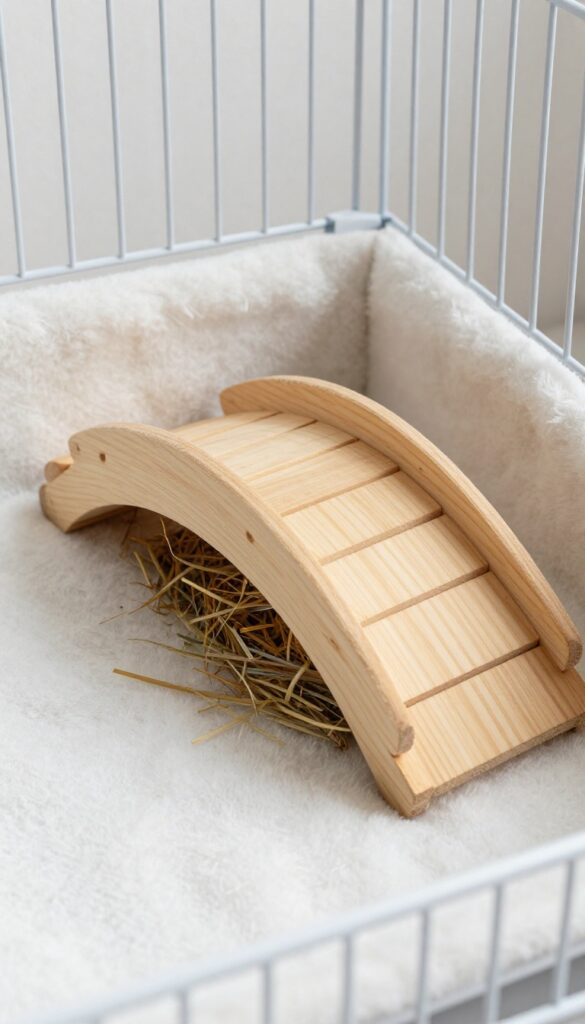
A small wooden bridge adds a charming architectural element to the cage while giving guinea pigs a place to run over or hide beneath. This dual-purpose DIY project is simple to build with safe materials and fits perfectly into a cage corner.
Start with untreated pine or poplar slats—these woods are safe for guinea pigs and free of toxic chemicals. Cut the slats to create a low arch, about 4–6 inches high at the peak, so guinea pigs can easily pass under or hide in the shaded space. Sand every surface thoroughly to remove splinters, then seal with a pet-safe wax or leave unfinished if the wood is smooth enough.
Place the bridge over a soft fleece liner or bedding, and tuck a small hideout or hay pile underneath to encourage use.
Key Construction Tips
- Use untreated, kiln-dried pine or poplar to avoid harmful chemicals.
- Sand all edges and surfaces until silky smooth to prevent injuries.
- Apply a pet-safe wax (like beeswax) for moisture resistance if needed.
- Ensure the bridge is stable and won’t wobble when guinea pigs climb on it.
- Position the bridge over a soft landing area (fleece or bedding) in case of falls.
Practical Habitat Details
Add a small fleece pad or a shallow litter box under the bridge to create a cozy hideout corner. Keep a hay pile nearby to encourage foraging, and make sure the bridge doesn’t block access to food bowls or water bottles. The open design allows good ventilation and easy cleaning—just lift the bridge to spot-clean underneath.
This simple addition enriches the cage without taking up much floor space.
7. DIY Hay Rack from a Wire Basket
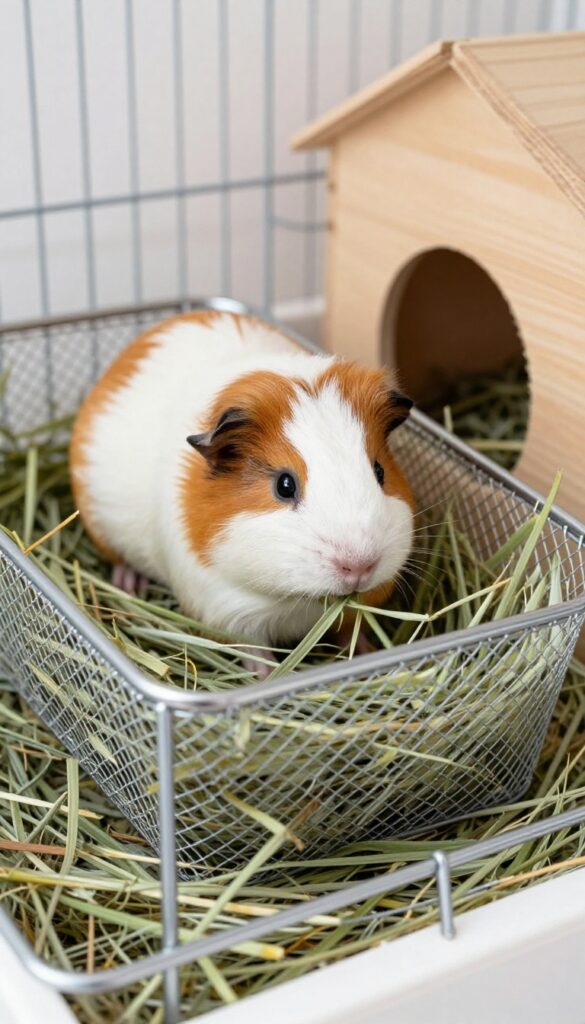
A small wire mesh basket, like a desk organizer, can be repurposed into a neat hay rack that attaches directly to the cage bars. This keeps hay clean, reduces waste, and adds a tidy corner for your guinea pigs to munch.
Choosing the Right Basket
Select a basket with openings large enough for guinea pigs to pull hay through but small enough to prevent heads or paws from getting stuck. A mesh size of about 1 inch works well. Avoid baskets with sharp wire ends—file down any rough spots or cover them with duct tape.
Attachment and Setup Tips
- Use zip ties or small carabiners to secure the basket to the cage bars at a height your guinea pigs can easily reach.
- Line the bottom of the basket with a piece of cardboard to catch hay dust and small pieces, making cleanup easier.
- Place the hay rack near a hideout or over a fleece pad to catch fallen hay, which can double as nesting material.
Practical Benefits for the Cage
This hay rack keeps hay off the bedding, reducing mess and waste. It also encourages natural foraging behavior as guinea pigs pull hay through the mesh. The wire basket allows good airflow, keeping hay fresh longer.
For a guinea pig cage, this is a simple, cost-effective enrichment that supports a clean and engaging habitat.
8. Fabric Tunnels with Wire Frame
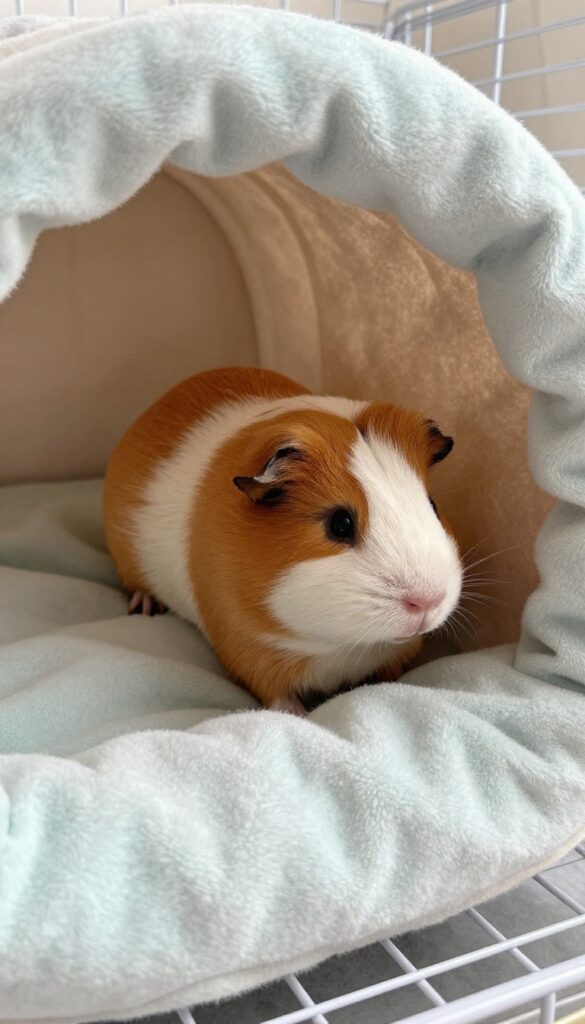
Fabric tunnels are a favorite enrichment item for guinea pigs, offering both a hiding spot and a fun run-through. By sewing fleece over a wire frame, you can create a bendable tunnel that fits perfectly into your cage corner.
Start with a tomato cage or similar wire structure that is sturdy yet flexible. Cut the fleece into a tube shape that will slide over the wire, then sew the edges together, leaving the ends open. Ensure the fleece is snug so it doesn’t bunch up and create loose fabric that could be chewed or cause entanglement.
Safety and Practical Tips
- Cover or file down any sharp wire ends to prevent injury. Use electrical tape or hot glue to secure the fleece over the cut ends.
- Make the tunnel at least 12 inches long and 8 inches in diameter so guinea pigs can easily run through and turn around.
- Place the tunnel in a corner of the cage with soft bedding underneath. Add a small hideout or hay pile near the entrance to encourage exploration.
- Wash the fleece regularly to keep the tunnel hygienic. You can make it removable by using Velcro or ties.
This DIY tunnel adds a cozy, cave-like element to the cage while taking up minimal floor space. It works well in multi-pig setups, as they can use it as a shared hideout or a quick escape route. For extra fun, slightly bend the wire frame to create a gentle curve that fits around other cage furniture.
9. Corner Litter Box with Fleece Pad
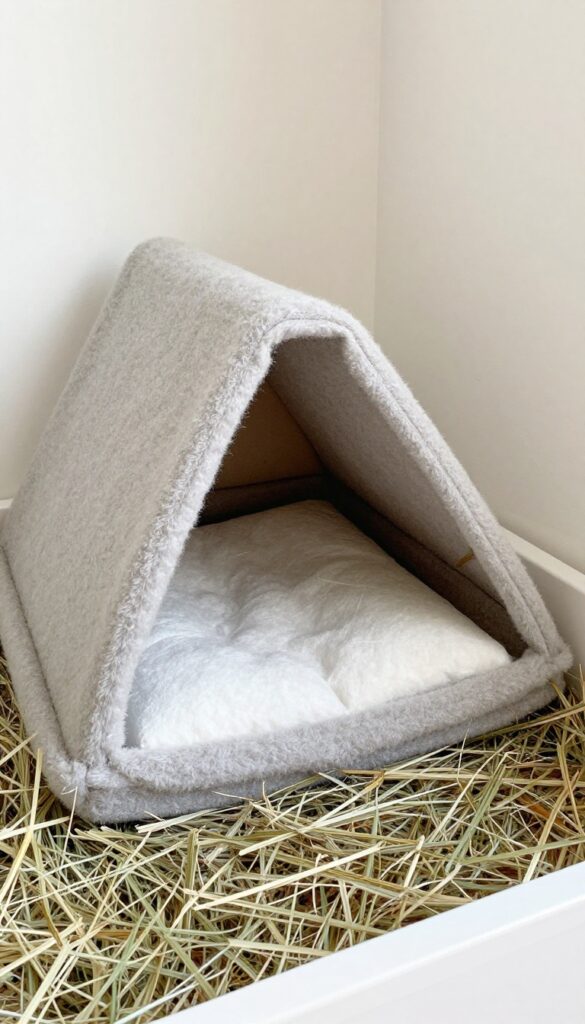
A designated potty corner makes cage cleaning much easier and helps keep the rest of the habitat fresh. Guinea pigs often choose a favorite bathroom spot, so placing a litter box in that corner encourages consistent use.
Choose a triangular litter box that fits snugly into a cage corner where your guinea pigs already tend to eliminate. Line it with a soft fleece pad or a layer of paper-based litter—never clay or clumping cat litter, which can cause respiratory issues or blockages if ingested. The fleece pad wicks moisture away, keeping the surface dry and comfortable.
- Place the box in a corner where guinea pigs naturally go to the bathroom.
- Use fleece pads or paper-based litter; avoid pine, cedar, clay, or clumping litter.
- Spot clean daily and replace the pad or litter completely once a week.
- Ensure the box is low enough for easy entry—no high sides that might be difficult for older or smaller pigs.
- Add a small handful of hay on one side to encourage them to sit and snack while using the box.
Keep the litter box in a quiet part of the cage, away from heavy traffic areas, and provide a hideout nearby so your guinea pigs feel secure. Regular cleaning reinforces the habit, making your daily maintenance routine faster and more hygienic.
10. Hanging Veggie Ball from a Water Bottle Hook
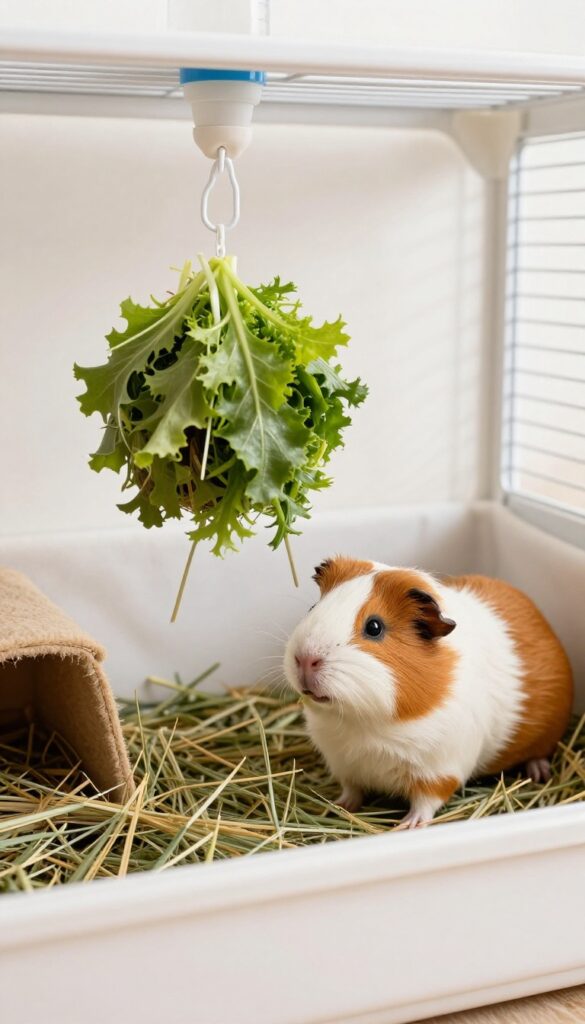
Turn a simple water bottle hook into a foraging station by hanging a veggie ball filled with leafy greens or hay. This DIY adds vertical enrichment without taking up floor space.
Attach a small wire treat ball to a sturdy hook on the cage top, ensuring the ball hangs at guinea pig nose level. Fill it with fresh greens or hay to encourage natural foraging behavior.
- Use a ball with openings large enough to prevent head entrapment (at least 2 inches across).
- Secure the hook tightly to avoid swinging that could startle your pets.
- Place the ball away from water bottles and hideouts to keep the area clean.
- Check daily for stuck food or debris to maintain hygiene.
This enrichment works best in a cage with solid flooring or fleece liner, as dropped pieces are easy to sweep up. Pair with a hay rack and hideout to create a complete corner that keeps guinea pigs active and engaged.
11. Cozy Corner Bed from a Fleece Blanket
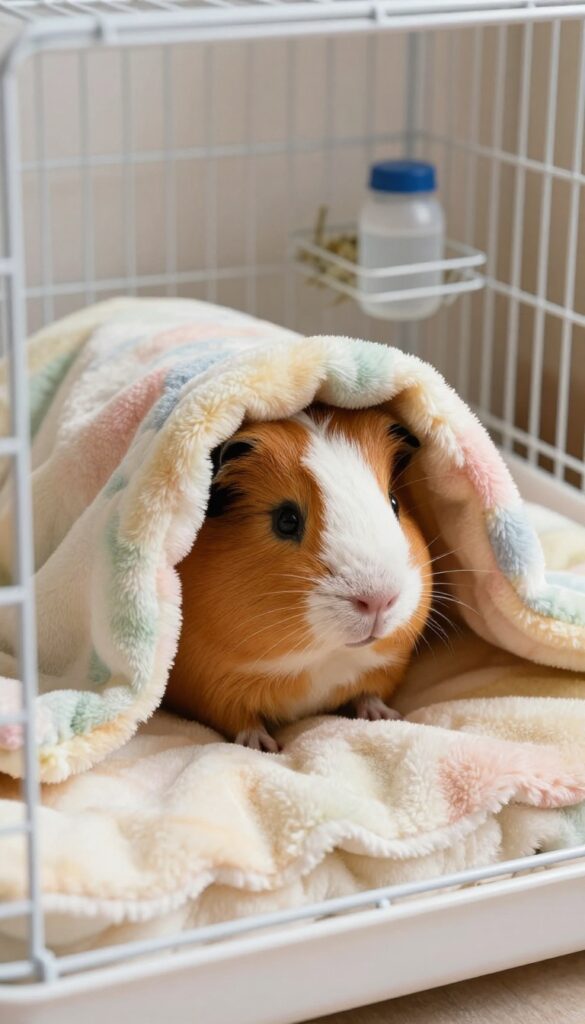
A soft, washable fleece bed tucked into a quiet corner of the cage gives your guinea pigs a warm, secure spot to rest. This simple DIY project takes minutes and uses materials you probably already have.
Start with a large fleece blanket—at least 24 by 24 inches—and fold it into a thick pad that fits snugly in a corner. Leave one edge loose to create a small pocket or cave where your guinea pig can burrow. Fleece is safe because it wicks moisture away and has no loose threads or embellishments that could be chewed off and swallowed.
Place the bed in a low-traffic area of the cage, away from water bottles and hay racks to keep it dry. Wash the bed at least once a week in hot water with unscented detergent to prevent odors and maintain hygiene. Avoid using blankets with fringe, buttons, or other decorations that pose a choking hazard.
Key Points
- Use only plain fleece without loose threads, buttons, or embellishments.
- Fold the blanket into a thick pad and place it in a quiet corner of the cage.
- Create a small pocket or cave by folding one edge up for burrowing.
- Wash regularly with unscented detergent to keep it fresh.
- Ensure the bed does not block ventilation or access to food and water.
FAQ
What materials are safe for DIY guinea pig cage accessories?
Safe materials include untreated wood (pine, poplar), cardboard (no tape or staples), fleece (anti-pill), PVC pipes (smooth edges), and paper-based litter. Avoid toxic woods like cedar, pine shavings with strong phenols, and any materials with sharp edges or small parts that could be ingested.
How often should I clean DIY cage items?
Fabric items like fleece liners and beds should be washed weekly. Cardboard and wood items should be replaced or cleaned when soiled or chewed excessively. Hay feeders and tunnels should be spot-cleaned daily and deep-cleaned weekly.
Can I use hot glue for DIY guinea pig projects?
Hot glue is generally safe once cooled and dried, but it’s best to avoid it if guinea pigs can chew it off. Use pet-safe non-toxic glue or opt for sewing, zip ties, or wire attachments instead.
How do I ensure my guinea pig doesn’t get stuck in a tunnel?
Use tunnels with a diameter of at least 4 inches (10 cm) and ensure there are no sharp edges. Avoid dead-end tunnels; provide multiple exits. Supervise new items initially to ensure safe use.
Conclusion
With these 11 DIY ideas, you can create a cute and functional cage corner that your guinea pigs will love. Remember to prioritize safety, use pet-friendly materials, and regularly clean all accessories.
Happy crafting!

I’m Pallab Kishore, the owner of Little Pets Realm — an animal lover and pet care enthusiast sharing easy tips, healthy recipes, and honest advice to help every small pet live a happy, healthy, tail-wagging life.