Last updated on August 19th, 2026 at 04:19 pm
Choosing a guinea pig habitat isn't just about keeping them contained—it's about creating a space where they can thrive. From budget-friendly DIY setups to luxurious multi-level condos, the right enclosure makes all the difference in your pet's happiness and health.
Here are 10 practical and creative indoor setups to inspire your next upgrade. Each idea focuses on real-world functionality, whether you're tight on space, working with a small budget, or aiming for a designer look.
You'll find options that prioritize easy cleaning, ample floor space, and your guinea pigs' natural behaviors like running, hiding, and foraging. No matter which style you choose, the key is matching the setup to your home's layout and your pigs' personalities.
1. The Classic C&C Cage with Fleece Bedding
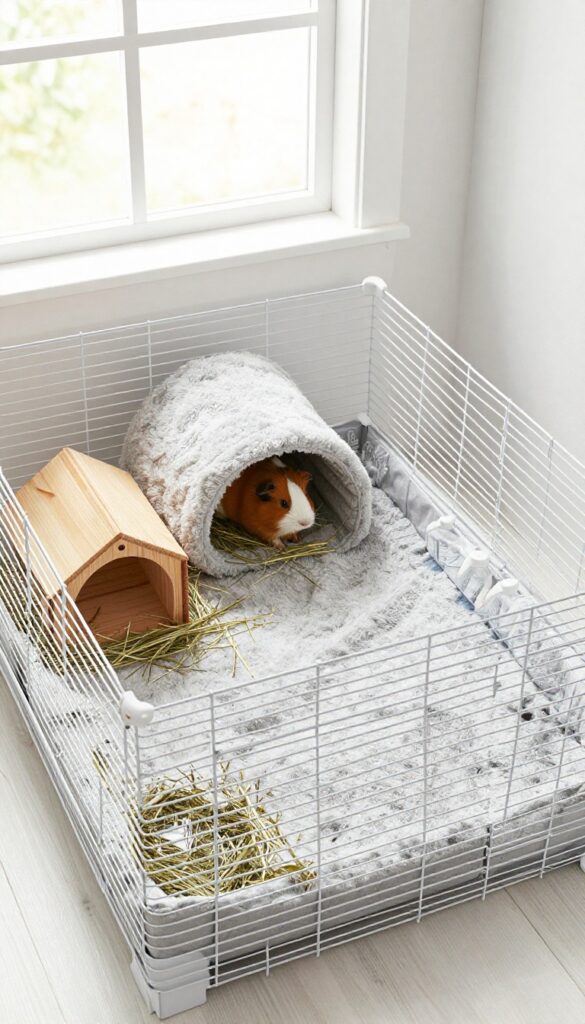
C&C (cube-and-coroplast) cages have been a staple in the guinea pig community for years, and for good reason. They're modular, affordable, and give your pigs the floor space they need to run and popcorn. Pairing them with fleece bedding takes the convenience up a notch—soft on their feet, easy to clean, and reusable.
The beauty of a C&C cage is how customizable it is. You can start with a standard 2×3 grid for one pig or go bigger for a pair. The coroplast base keeps mess contained, and the grids allow for great airflow.
Fleece liners, either store-bought or DIY, replace traditional bedding entirely. Just shake off debris, toss in the wash, and you're done. No dust, no tracking, and your pigs stay cozy.
Why C&c Works So Well
Guinea pigs need horizontal space, not height. A 2×4 C&C cage offers about 8 square feet—well above the minimum for two pigs. The open grid design also lets you attach hay racks, hideouts, and water bottles easily.
Plus, you can expand or reconfigure the cage anytime.
Fleece Care Tips
Fleece wicks moisture away to an absorbent layer underneath. Use a towel or u-haul pad as the core, and wash liners weekly with unscented detergent. Spot-clean daily to keep odors down.
Pro tip: have two sets so you can swap while one is in the laundry.
Setting Up For Success
Place the cage in a quiet, draft-free area away from direct sun. Add a fleece forest, tunnels, and a couple of hideys to make it feel like home. For bedding, skip the paper pellets and go straight for fleece—your pigs will love the softness, and you'll love the simplicity.
2. Multi-Level Loft Cage for Small Spaces
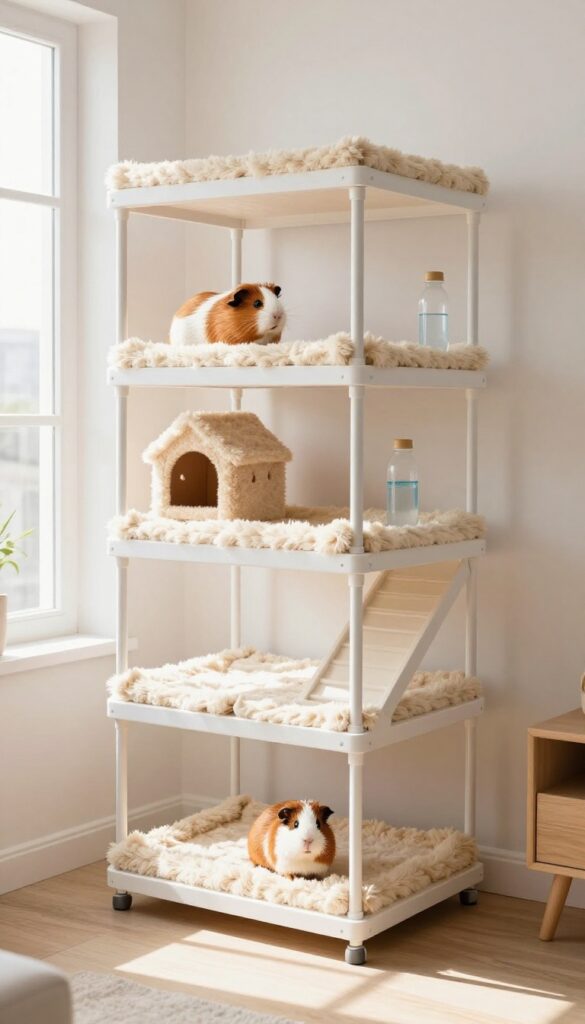
When floor space is tight, going vertical is a smart move. A multi-level loft cage uses ramps and platforms to give your guinea pigs more running room without taking over your apartment. The trick is choosing a design with gentle slopes and solid flooring to keep those tiny feet safe.
Vertical cages are a space-saving hero for small homes. They stack living areas upward, so your pigs get plenty of square footage without spreading out sideways. Look for cages with wide, non-slip ramps and platforms made of solid plastic or coated wire—never bare wire mesh, which can hurt guinea pig paws.
Add soft bedding on each level, and you've got a cozy high-rise your pets will love to explore.
Ramp Safety Matters
Guinea pigs aren't natural climbers, so ramps need to be gentle. Aim for a slope of 30 degrees or less, and cover ramps with fleece or a textured mat for grip. Some owners add small ledges to break up longer climbs.
Always watch your pigs at first to make sure they can navigate comfortably.
Cleaning A Vertical Cage
Multi-level cages can be trickier to clean than single-story ones. Look for designs with removable trays or easy-access doors on each level. Spot-clean daily and do a full deep clean weekly.
Using fleece liners on platforms makes swapping out dirty bedding quick and simple.
Best Cage Brands For Small Spaces
Popular options include the Midwest Guinea Habitat Plus (which can be stacked with add-on levels), the Ferplast Krolik, and custom C&C cages with loft kits. Measure your available floor space before buying—most vertical cages still need a footprint of at least 2×3 feet for two guinea pigs.
3. DIY Storage Bin Cage on a Budget
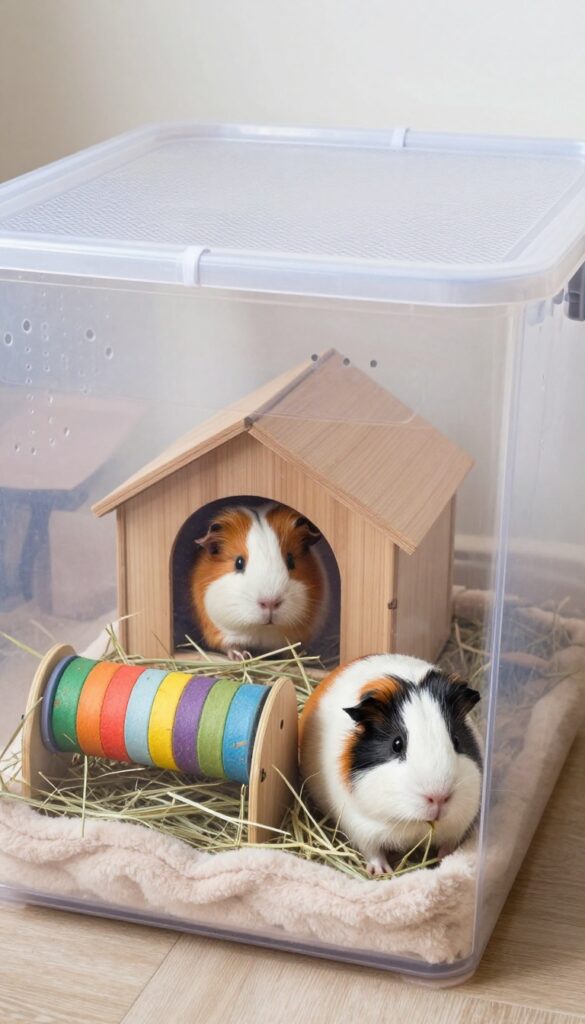
A clear plastic storage bin can become a surprisingly functional guinea pig habitat. This setup is lightweight, portable, and costs a fraction of a standard cage. It works great as a temporary home, a quarantine enclosure, or even a travel carrier for vet visits.
The transparent walls let you watch your pigs while keeping drafts out.
Start with a large clear bin—at least 50 gallons for two guinea pigs. Drill rows of small ventilation holes on all four sides, about an inch apart. Cut a large opening in the lid and replace it with hardware cloth or a mesh panel secured with zip ties.
This gives you a secure, breathable top. Add a soft fleece liner or paper bedding, plus hideys, tunnels, and a hay rack. The smooth plastic walls are easy to wipe down, and the bin's handles make moving the cage simple.
Ventilation Tips
Drill holes on the upper half of each side to avoid drafts at floor level. Use a 1/4-inch drill bit and space holes 1–2 inches apart. If you're worried about sharp edges, lightly sand the inside of the holes.
For even better airflow, cut a large window in the lid and cover it with mesh.
Cleaning And Maintenance
The bin's smooth surfaces make cleaning a breeze. Remove the liner daily for spot cleaning, and do a full wipe-down with vinegar and water weekly. The bin is waterproof, so no worries about urine soaking into the material.
Replace the bin if it gets scratched or chewed.
When To Use This Setup
This is an excellent choice for a quarantine cage when introducing new pigs, or as a temporary home during cage upgrades. It's also handy for travel or as a backup enclosure. Just remember that bins have limited floor space, so they're best for short-term housing or for a single pig.
4. Outdoor-Connected Indoor Run with a Hutch
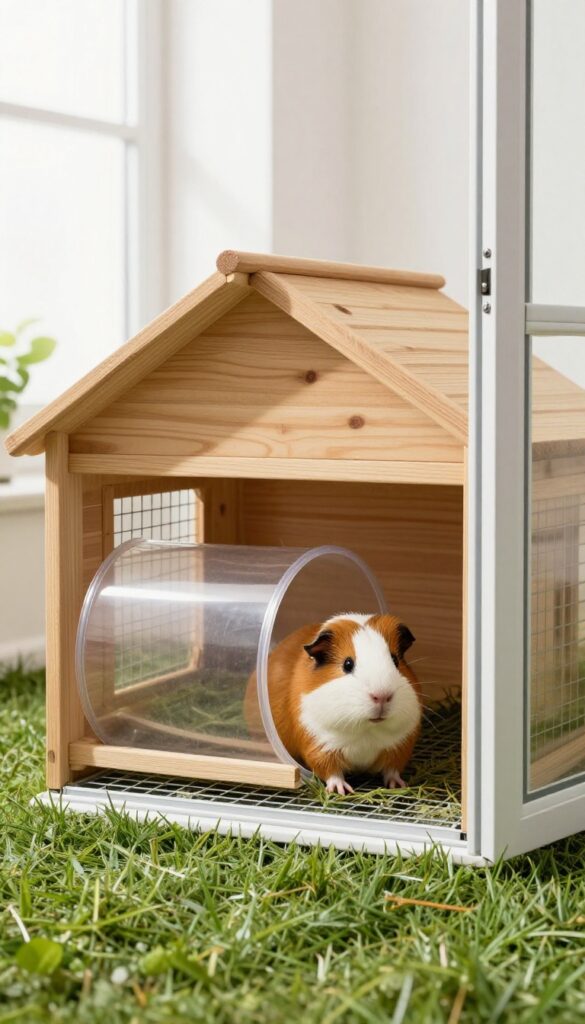
If your guinea pigs love fresh grass and sunshine but you worry about predators or weather, this hybrid setup gives you the best of both worlds. A sturdy indoor hutch connects to a secure outdoor run through a tunnel, letting your pets decide when to explore outside. It's a fantastic way to offer natural grazing and enrichment without compromising safety.
Safe Tunnel Connection
Use a rigid plastic or wire mesh tunnel that attaches firmly to both the hutch and the outdoor run. Make sure the tunnel has a door or latch at each end so you can close it off when needed. The tunnel should be wide enough for a guinea pig to pass comfortably, and the outdoor run must have a solid floor or be buried a few inches into the ground to prevent digging out.
Weather-proofing The Hutch
Since the hutch stays indoors, it doesn't need heavy weather protection, but it should have good ventilation and easy-to-clean surfaces. Place the hutch near a door or window that leads to the outdoor run. If you live in a very hot or cold climate, consider adding a small fan or heater to keep the indoor area comfortable.
Outdoor Run Essentials
The outdoor run should be fully enclosed with a secure lid to keep out hawks, raccoons, and other predators. Use a galvanized wire mesh with small openings (½ inch or less). Provide shade with a cover or tarp, and always supervise your guinea pigs when they are outside.
Fresh grass is a treat, but make sure it hasn't been treated with pesticides or fertilizers.
5. Minimalist Scandinavian-Style Enclosure
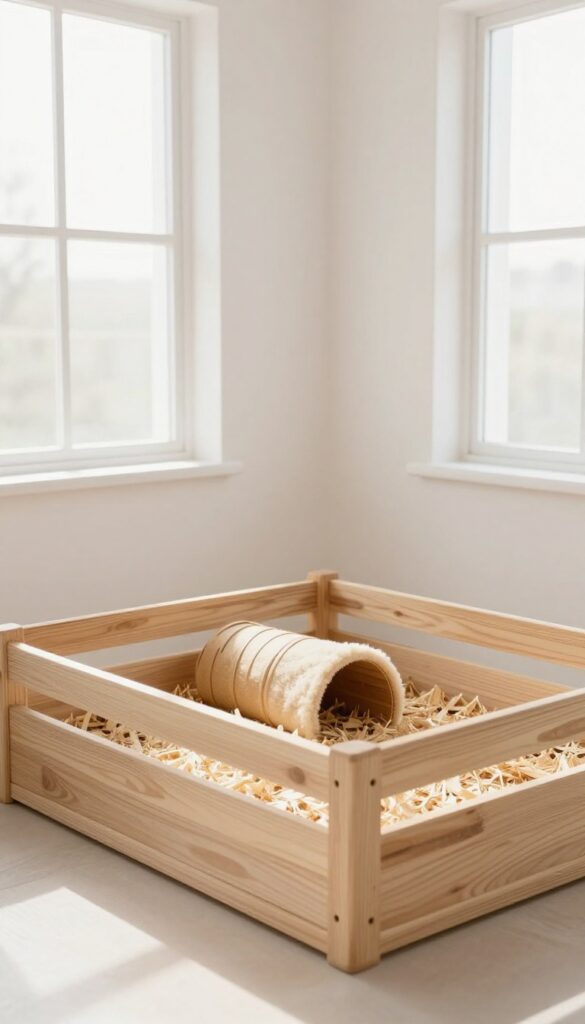
If your home leans toward clean lines and neutral tones, a Scandinavian-inspired guinea pig habitat can blend right in. This setup uses a low-profile wooden pen with natural bedding like aspen shavings, keeping the focus on open space and simple hideouts. It's proof that functional pet furniture can also be stylish.
Why It Works
The minimalist design reduces visual clutter, making the enclosure feel like part of the room rather than an eyesore. Guinea pigs benefit from the open layout, which encourages running and exploring, while the wood construction provides a sturdy, chew-safe border.
Key Elements
Choose a low wooden pen (at least 8 square feet) with a waterproof liner or tray. Use aspen shavings or paper-based bedding for a natural look. Add a few simple hideouts like wooden tunnels or fleece caves, and keep accessories sparse to maintain the clean aesthetic.
Maintenance Tips
Spot-clean daily and replace bedding weekly. Wipe down the wood with a pet-safe cleaner to prevent odors. The open design makes it easy to access all areas, so you can keep the habitat fresh without much hassle.
6. Corner Cage with L-Shaped Design
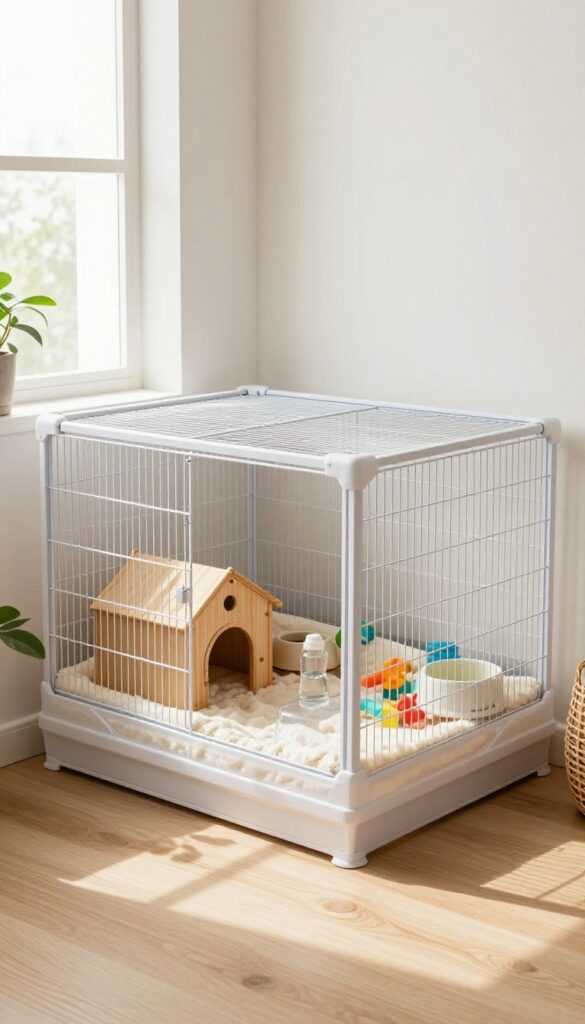
Corners are often dead space in a room, but an L-shaped cage turns that awkward spot into a prime guinea pig real estate. By hugging two walls, this design frees up the center of the room while giving your pets a spacious, multi-zone habitat. It's a clever solution for small apartments or shared spaces where every square foot counts.
An L-shaped cage fits snugly into a corner, using otherwise wasted space. It offers separate zones for sleeping, eating, and playing, and you can easily expand it later by adding more panels. The design also provides your guinea pigs with long sightlines and plenty of running room, which keeps them active and happy.
Why An L-shape Works So Well
The L-shape naturally creates distinct areas without needing dividers. One leg can hold the hidey house and bedding, while the other leg holds the food bowl, water bottle, and a play area. This separation helps keep the cage cleaner and gives your guinea pigs a sense of having different rooms.
Easy To Expand Later
Starting with a small L-shaped cage? No problem. You can add more panels to extend either leg as your herd grows or your budget allows.
Many C&C grid systems are modular, so you can buy extra pieces and reconfigure the layout without starting from scratch.
Tips For Setting Up Your Corner Cage
Measure your corner carefully before buying or building. Leave a few inches of space behind the cage for airflow and easy cleaning. Use a coroplast base that matches the L-shape, or cut and tape two pieces together.
Add a soft fleece liner or bedding, and place the cage away from direct sunlight and drafts.
7. Converted Bookshelf Habitat
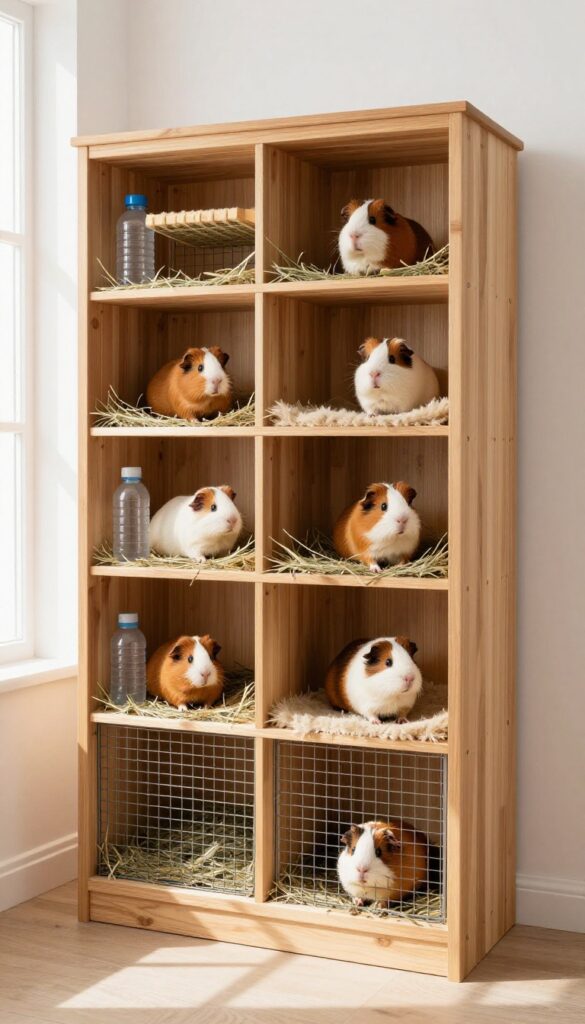
An old bookshelf gathering dust in the corner can become a stunning, multi-level guinea pig home. By removing the shelves and adding a front panel of mesh or plexiglass, you create a vertical habitat that saves floor space and adds a unique furniture piece to your room. This setup works especially well for small apartments or rooms where a traditional cage would feel bulky.
Start with a sturdy bookshelf—particle board is fine, but solid wood lasts longer. Remove all but one or two shelves, which you'll keep as platforms. Attach a mesh or plexiglass door to the front using hinges and a latch.
Make sure the shelves are high enough for your guinea pigs to stand upright underneath. Add ramps or sturdy steps between levels so they can explore safely. Line each level with fleece or bedding, and place hideouts, hay racks, and water bottles on each floor.
The result is a compact, multi-story home that looks like a piece of furniture.
Ventilation And Visibility
Mesh fronts provide excellent airflow and let your guinea pigs see the room, which keeps them engaged. Plexiglass fronts offer better insulation and noise reduction but require more frequent cleaning to prevent fogging. Whichever you choose, ensure there are ventilation gaps on the sides or top to prevent stale air buildup.
Safety And Stability
Secure the bookshelf to the wall to prevent tipping, especially if you have multiple levels. Use non-toxic paint or sealant on raw wood to protect against urine. Cover any sharp edges or staples with duct tape or corner guards.
Check that the platforms are solid and can support the weight of your guinea pigs plus bedding and accessories.
8. Extra-Large Playpen with Soft Flooring
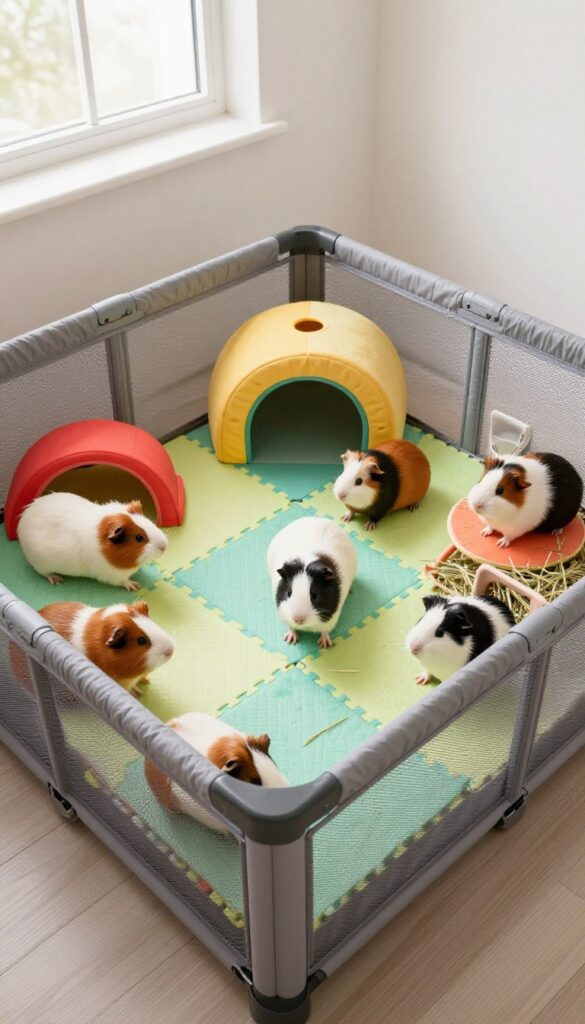
A foldable metal or canvas playpen lined with foam mats and fleece gives your guinea pigs a massive open area to run, popcorn, and explore. It's perfect for supervised playtime or as a permanent setup in a pet-safe room. The soft flooring protects their feet and makes cleanup simple—just swap out the fleece.
This setup is all about space and comfort. The playpen walls keep them contained while the cushioned floor encourages natural movement. You can easily customize the size by connecting multiple pens.
It's ideal for owners who want a flexible habitat that can be moved or stored flat when not in use.
Choosing The Right Playpen
Look for pens with sturdy metal frames or reinforced canvas. Avoid flimsy plastic connectors that can break. A height of at least 12 inches is recommended to prevent escapes.
Many pens come with a removable floor, but you'll still need to add foam mats for padding.
Layering The Flooring
Start with interlocking foam mats for cushion and insulation. Cover them with a washable fleece liner or a waterproof mattress protector topped with fleece. This combo absorbs urine and keeps the surface dry.
Change the fleece every few days to control odor.
Setting Up For Success
Place the playpen in a draft-free area away from direct sunlight. Add hideys, tunnels, and a hay feeder to make it feel like home. Rotate toys and foraging spots to keep your pigs engaged.
If using it permanently, consider a lid or extra tall walls to prevent jumping.
9. Glass Terrarium with Custom Lid
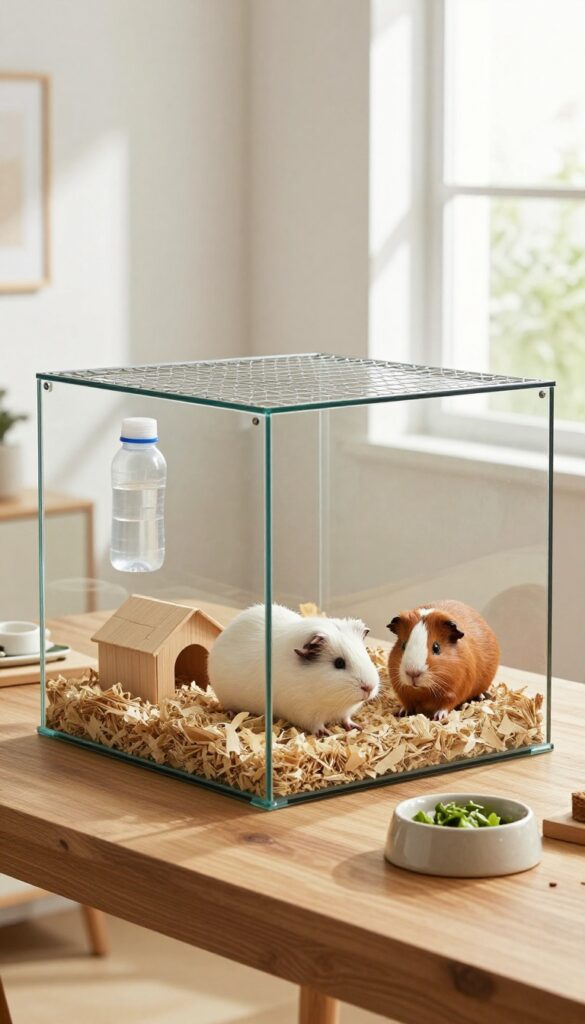
A glass terrarium or aquarium might not be the first thing that comes to mind for guinea pigs, but with a custom wire lid, it becomes a sleek, functional home. The glass walls give you a clear view of your pets while helping hold in humidity—great for maintaining healthy respiratory conditions. Just make sure to use paper-based bedding and prioritize ventilation to prevent moisture buildup.
Start with a large glass tank—at least 8 square feet for two guinea pigs. A 40-gallon breeder tank works well. Replace the original lid with a custom wire mesh frame to allow airflow.
Use paper bedding, not wood shavings, because glass retains more humidity. Spot clean daily and do a full bedding change weekly. Place the tank in a low-traffic area to avoid stressing your pets.
Custom Lid Tips
Build a lid using 1/2-inch hardware cloth and a wooden frame. Hinge one side for easy access. Avoid glass or solid lids—they trap too much moisture and reduce ventilation.
Bedding And Cleaning
Paper-based bedding like Carefresh or kiln-dried pine pellets works best. Because glass doesn't breathe like wire cages, change soiled spots daily and deep clean the tank with vinegar and water weekly.
Placement And Safety
Keep the terrarium away from direct sunlight to avoid overheating. Ensure the room stays between 65-75°F. The glass can amplify heat, so monitor temperature with a thermometer.
10. The Ultimate Luxury Condo with Accessories
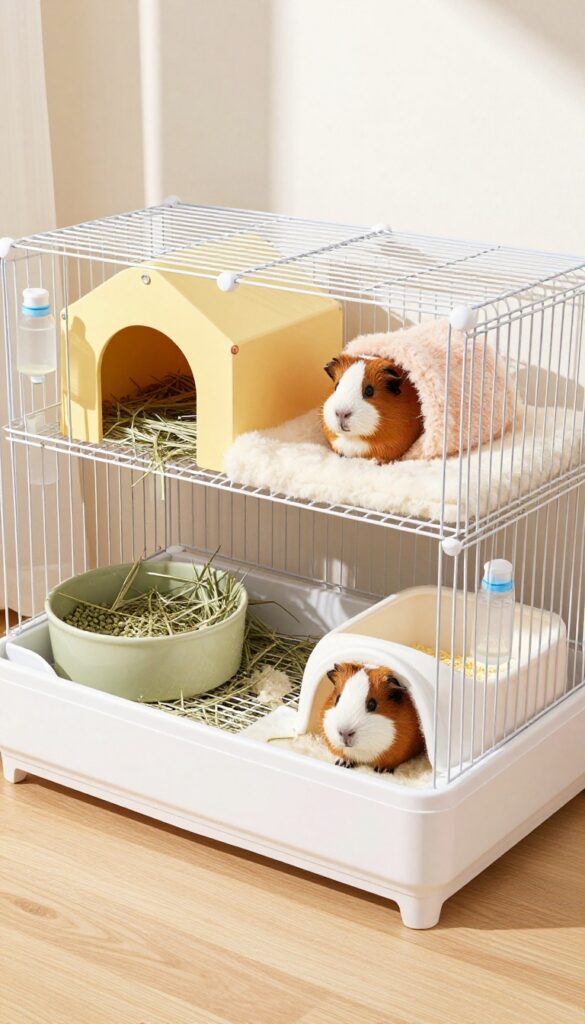
This setup is for the guinea pig owner who wants to go all out. A spacious two-story cage provides plenty of room for running, climbing, and exploring, while thoughtful accessories turn it into a true home. Think hidey houses for privacy, tunnels for adventure, hay racks for foraging, and water bottles that stay clean.
A dedicated kitchen area keeps food organized, and a soft bedding zone ensures cozy naps. It's designed for maximum enrichment and comfort every single day.
The luxury condo starts with a large, multi-level cage—at least 10. 5 square feet of floor space per pair, with ramps connecting the levels. Choose a cage with a solid base to contain mess and a wire top for ventilation.
Add at least two hidey houses (one per pig) with multiple exits to prevent squabbles. Include fleece tunnels and a hay rack that doubles as a foraging toy. Place water bottles on each level so your pigs never have to climb far for a drink.
A corner litter box with paper bedding makes cleanup easier. For the kitchen area, use a shallow ceramic bowl for pellets and a hay feeder that keeps hay fresh. Line the bottom with absorbent fleece or paper bedding, and add a soft fleece pad in the sleeping zone.
Rotate toys and tunnels weekly to keep things interesting.
Why Two Stories Work
Guinea pigs are naturally curious and love to explore vertical space when ramps are gentle and non-slip. Two stories effectively double the usable area without taking up more floor space. Place food and water on the ground level and hay and hideouts upstairs to encourage movement.
Monitor older or less mobile pigs to ensure they can navigate ramps comfortably.
Must-have Accessories
Hidey houses with multiple exits reduce stress and give shy pigs a safe retreat. Tunnels made of fleece or plastic encourage natural burrowing behavior. A hay rack with a wide opening prevents hay from getting soiled and makes it easy for pigs to pull out strands.
A fleece liner or paper bedding in the soft zone adds warmth and comfort. Don't forget a small cuddle cup or fleece pad for naptime.
Keeping It Clean
With a two-story setup, daily spot cleaning is essential. Wipe down ramps and shelves, replace soiled bedding in the kitchen area, and refill hay and water. Once a week, do a deep clean: remove all accessories, wash fleece liners, disinfect the cage with a pet-safe cleaner, and replace bedding.
A dedicated kitchen area with a liner or tray makes mess containment easier.
FAQ
What is the minimum cage size for two guinea pigs?
The recommended minimum is 7. 5 square feet (30" x 36") for two guinea pigs, but bigger is always better. More space reduces stress and encourages exercise.
Can guinea pigs live in a glass aquarium?
Yes, but only if the aquarium is large enough (at least 40 gallons for two) and has a well-ventilated wire lid. Glass can trap humidity, so use absorbent bedding and clean often.
How often should I clean a guinea pig habitat?
Spot clean daily by removing soiled bedding and uneaten food. Do a full bedding change and cage wipe-down once a week. Fleece liners need washing every 3-4 days.
What type of bedding is safest for guinea pigs?
Paper-based bedding, aspen shavings, or fleece liners are safe. Avoid cedar and pine shavings because they release harmful oils. Dust-free options help prevent respiratory issues.
Do guinea pigs need a hideout in their cage?
Absolutely. Guinea pigs are prey animals and need at least one hideout per pig to feel secure. Options include wooden houses, tunnels, or fleece caves.
Conclusion
Choosing the right habitat for your guinea pigs can transform their indoor life. Each setup offers different benefits, from budget-friendly DIY to luxury condos. The key is to prioritize space, safety, and enrichment.
Your guinea pigs will reward you with happy squeaks and healthy energy. Start with one of these ideas and adjust based on your home and your pets' personality. A little planning goes a long way in creating a cozy, stimulating environment they'll love.

I’m Pallab Kishore, the owner of Little Pets Realm — an animal lover and pet care enthusiast sharing easy tips, healthy recipes, and honest advice to help every small pet live a happy, healthy, tail-wagging life.