Last updated on August 19th, 2026 at 04:19 pm
Daily care shouldn't feel like a chore. These 11 habitat designs prioritize easy cleaning and quick access so you spend less time scrubbing and more time bonding.
From open-top C&C cages to modular lofts, each setup tackles the messiest parts of guinea pig ownership—spot cleaning, bedding changes, and hay management—without sacrificing your piggies' comfort.
Whether you're a busy owner or a first-timer, you'll find a practical layout that fits your space and routine.
1. The Open-Top C&C Cage with a Fleece Liner
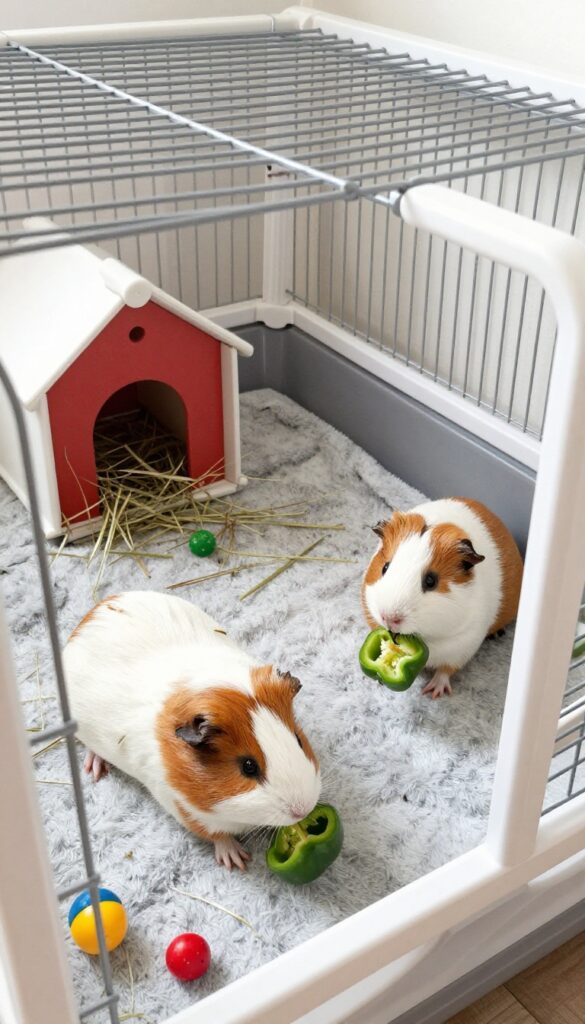
If you want a setup that's both spacious and simple to clean, the open-top C&C cage is a fan favorite. It's essentially a grid frame sitting on a coroplast base, topped with a fleece liner that you can swap out in minutes. No lids, no complicated latches—just easy access for spot cleaning and bonding time.
This design gives your guinea pigs plenty of room to run around while keeping your daily routine fast and fuss-free.
The open-top C&C cage is all about maximizing floor space and minimizing cleaning time. The coroplast base protects your floors from messes, while the washable fleece liner absorbs urine and traps hay debris. You can quickly sweep up poop and change the liner without dismantling anything.
Plus, the open top means you can reach in from any side, making it easy to interact with your pigs or do a quick tidy-up. It's a practical choice for busy owners who want a clean habitat without the hassle.
Why Fleece Liners Work So Well
Fleece liners are a game-changer for daily care. They wick moisture away from the surface, keeping your pigs dry, and they trap hay and poop on top for easy sweeping. Unlike loose bedding, fleece doesn't kick up dust or stick to your pigs' fur.
You can buy pre-made liners or cut your own from fleece fabric. Just shake off the debris, toss in the wash, and reuse. It's a sustainable option that saves money over time.
Setting Up The Base And Grids
Start with a coroplast base cut to your desired size—common dimensions are 2×4 or 2×3 grids. Attach the grid panels using zip ties or connectors, making sure they're sturdy and stable. Place the coroplast inside the grid frame, then lay down the fleece liner on top.
Add a layer of towels or absorbent pads underneath for extra absorption. That's it—no tools required, and you can easily reconfigure the layout later.
Daily Maintenance Tips
Each morning, do a quick spot clean by picking up visible poop and shaking out the fleece liner. Use a small hand broom and dustpan to sweep up hay and debris. If the liner feels damp, swap it out for a fresh one.
Once a week, do a full change: wash the fleece liner with unscented detergent and wipe down the coroplast base with vinegar water. This routine keeps the cage fresh and odor-free with minimal effort.
2. The Modular Loft System
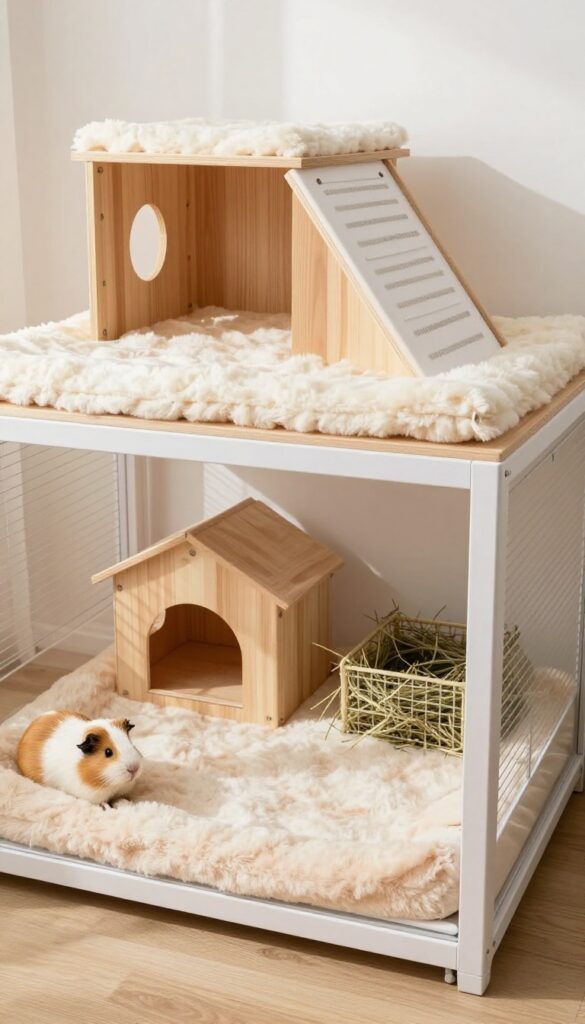
Adding a second level is one of the smartest ways to double your guinea pigs' living space without taking up more floor area. A modular loft system uses removable platforms and ramps so you can change the layout whenever you want. The main floor stays wide open for easy sweeping and spot cleaning, while the loft gives your piggies a cozy hideaway or feeding station.
It's a flexible setup that adapts to your routine, not the other way around.
The key is choosing loft panels that attach securely to the cage walls and support a solid floor—no wire mesh that could hurt little feet. Look for kits with plastic or Coroplast bases that are easy to wipe down. The ramp should have a gentle slope and grip strips so piggies can climb safely.
Keep the loft area simple: a hidey house, a hay rack, or a soft bed. Avoid heavy accessories that make cleaning awkward.
Why Modular Works
Modular lofts let you rearrange without buying a whole new cage. Need more floor space for floor time? Remove the loft.
Want to separate a shy piggie? Add a partial divider. The pieces click together and come apart in minutes.
This flexibility is a lifesaver when you're testing what layout your guinea pigs prefer.
Cleaning Made Simple
With the loft lifted off, you can access every corner of the main floor. No reaching into tight spots or dismantling the whole cage. Sweep soiled bedding straight into a dustpan.
The loft itself only needs a quick wipe-down and a fresh liner once a week. Less hassle means you're more likely to stay on top of daily chores.
Setting Up For Success
Place the loft over a low-traffic area—not right above the food bowl or water bottle. Piggies will track less mess upstairs. Use a shallow litter tray under the loft to catch droppings that fall through the ramp.
This keeps the lower level cleaner longer. And always secure the loft with clips or zip ties to prevent tipping.
3. The Deep-Bedded Bin Cage
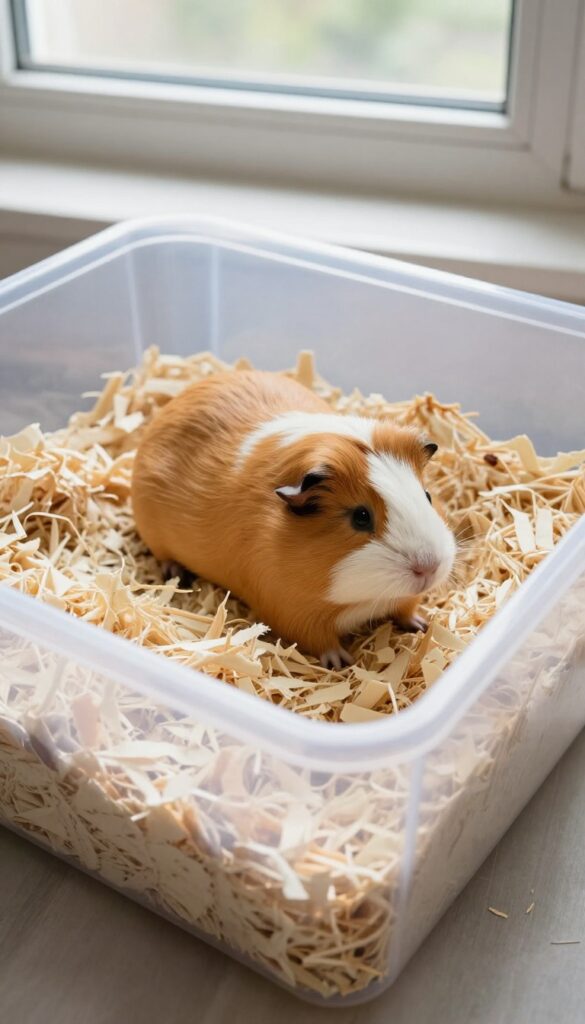
A plastic storage bin with high walls and deep paper bedding reduces dust and contains mess. Perfect for small spaces and quick daily tidying. This setup is a lifesaver for owners who want a tidy habitat without constant sweeping.
The deep-bedded bin cage uses a large plastic storage bin as the base, filled with several inches of paper bedding. The high walls prevent hay and bedding from scattering, and the deep layer absorbs moisture and odors effectively. Daily care involves spot-cleaning soiled areas and fluffing the bedding, which takes just minutes.
This design is especially great for apartments or rooms where you want to keep mess contained.
Choosing The Right Bin
Look for a bin at least 2 feet by 3 feet with walls 8–12 inches high. Clear bins let you see your guinea pigs, while opaque ones offer more privacy. Ensure the plastic is sturdy and BPA-free.
Cut a large opening in the lid and cover it with wire mesh for ventilation.
Bedding Depth Matters
Use 4–6 inches of paper-based bedding. This depth allows burrowing, absorbs urine well, and reduces ammonia smell. Avoid cedar or pine shavings, which can cause respiratory issues.
Spot-clean daily and do a full change every 1–2 weeks.
Quick Daily Maintenance
Each day, scoop out wet spots and visible droppings with a small dustpan. Fluff the remaining bedding to redistribute. A deep layer means less frequent full changes, saving time.
Keep a small trash bin nearby for easy cleanup.
4. The Hutch with a Attached Run
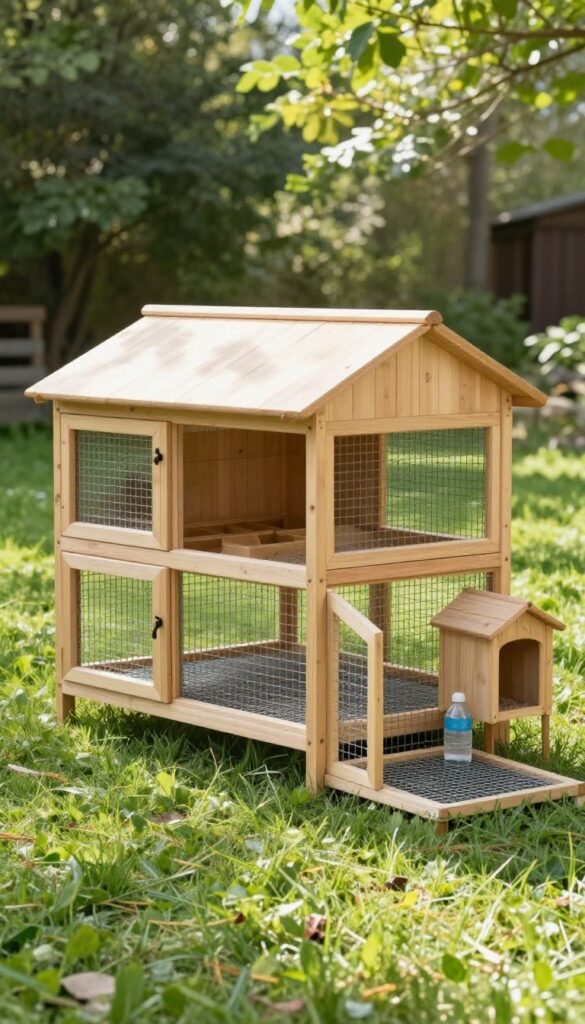
A traditional wooden hutch gets a major upgrade when you attach a secure outdoor run. This combo gives your guinea pigs fresh air, natural sunlight, and room to graze, while keeping the indoor area compact and easy to clean. It's a classic design that works especially well if you have a backyard or patio and want to offer outdoor time without constant supervision.
The hutch itself stays neat with a solid floor and removable trays, so daily spot cleaning is quick. The attached run lets pigs exercise and forage on grass (or safe bedding) while you easily access the hutch for feeding and tidying. Just make sure the run is fully enclosed with wire mesh and a lockable door to protect against predators.
Easy Access For Cleaning
Look for a hutch with a large front door or a pull-out tray. This lets you scoop out soiled bedding and wipe down surfaces without crawling inside. Some models also have a top-opening lid for quick hay refills.
Safe Outdoor Time
The run should have a solid bottom or be placed on grass that's free of pesticides. Provide a shaded area and a hidey house so pigs can retreat if they feel exposed. Always supervise the first few trips to ensure they adjust well.
Weather Protection
Position the hutch so the indoor area stays dry and draft-free. A sloped roof and waterproof coating help. In hot weather, add a cooling pad or frozen water bottle; in cold, insulate the hutch with blankets or hay.
5. The Multi-Pig Mansion with Separate Zones
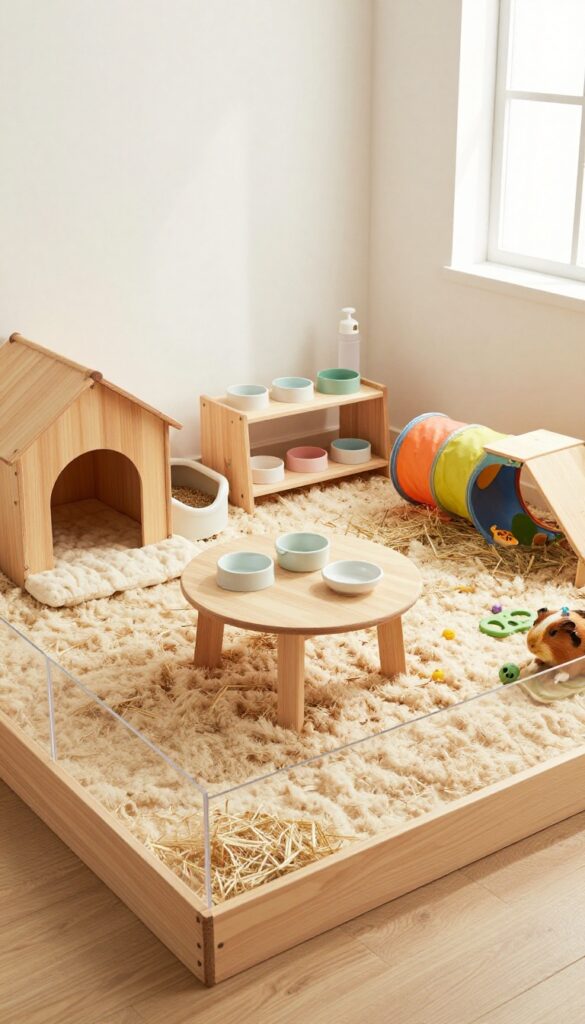
When you have three or more guinea pigs, the dynamics change. More pigs mean more potential for arguments over food, hideys, or prime napping spots. A large enclosure with clearly defined zones—sleeping, eating, and play—keeps the peace and makes your daily routine smoother.
You can feed each group separately, spot-clean targeted areas, and let everyone have their own space without constant supervision.
The key is to create a spacious habitat (at least 10. 5 square feet for three pigs, plus 3 more square feet per additional pig) and then divide it into functional zones using low dividers, tunnels, or strategic furniture placement. This setup minimizes competition and mess, and it makes your daily tasks like refilling hay and water much faster.
Zone 1: The Quiet Sleeping Area
Place multiple hideys and soft bedding in one corner away from the main traffic. Use a large corner litter box or a fleece forest so pigs can burrow and nap without being disturbed. This zone stays cleaner longer because pigs naturally avoid soiling their sleeping spots.
Zone 2: The Dining Hall
Set up a dedicated feeding station with heavy ceramic bowls for pellets and veggies, plus a large hay rack or bin. Position it near the entrance for easy refills. Having one central eating area reduces food guarding—each pig knows where to go, and you can quickly remove uneaten veggies each morning.
Zone 3: The Play & Exploration Zone
Fill this area with tunnels, chew toys, and a few low platforms. Rotate toys weekly to keep things interesting. This zone will get the most mess from scattered hay and kicked bedding, so place a puppy pad or washable liner underneath for fast cleanup.
6. The Minimalist Single-Level with a Hidey Corner
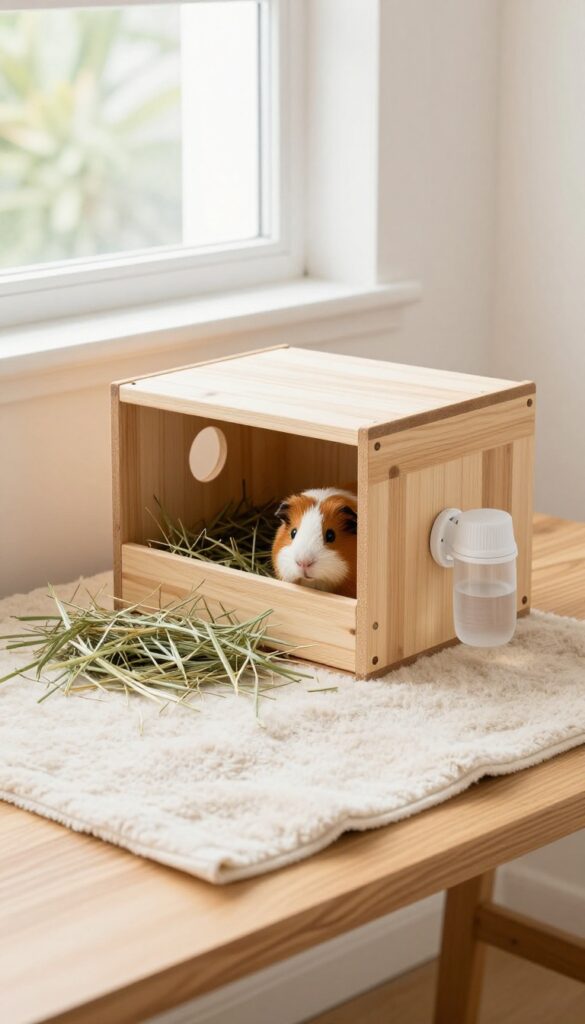
Sometimes less really is more. A single-level cage with one large hidey house and a dedicated hay area keeps things simple and clutter-free. You'll spend less time rearranging accessories and more time enjoying your piggies.
This layout is especially great for small spaces or owners who want a no-fuss daily routine.
The key is to choose one spacious hidey (like a wooden igloo or fleece tunnel) instead of multiple small ones. Place it in a corner, leaving the rest of the cage open for running. The hay area should be opposite the hidey, with a low-sided bin or hay rack to contain mess.
This setup makes spot-cleaning a breeze—just scoop out soiled bedding from the open areas and refresh the hay pile.
Why One Hidey Works
Guinea pigs feel secure with a single, roomy hideout. Multiple small hides can create territorial disputes and make cleaning harder. A large hidey gives everyone space to snuggle and reduces the number of items you need to wipe down.
Hay Area Setup Tips
Use a shallow litter tray or a low-sided box for hay. This contains the mess and makes it easy to dump and refill. Place it near the water bottle so your piggies can munch and drink without tracking hay everywhere.
Daily Care Routine
Each morning, spot-clean the open areas and remove any wet hay. Refill the hay pile and check the water bottle. Once a week, do a full bedding change and wipe down the hidey.
That's it—no complicated disassembly.
7. The DIY Grid-and-Tarp Outdoor Summer Enclosure
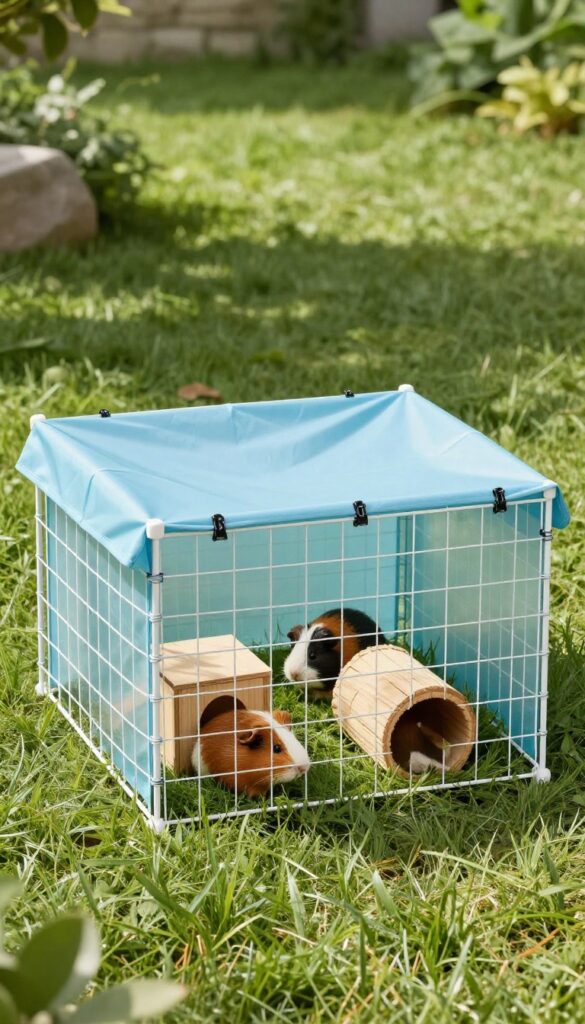
Summer is prime time for outdoor play, but a permanent pen isn't always practical. A lightweight enclosure made from wire grids and a tarp roof gives your guinea pigs supervised fresh-air time without committing to a fixed structure. It's easy to set up, take down, and store—perfect for renters or anyone with limited yard space.
This temporary pen uses modular wire shelving grids (like those from IKEA or storage cubes) connected with zip ties to form walls. A simple tarp or shade cloth draped over the top provides sun protection and a sense of security. The whole thing can be assembled in minutes and flattened for storage when not in use.
Place the pen on grass for natural foraging, or on a patio for cleaner feet. Always supervise your pigs and provide a hidey house or tunnel for comfort. The open-grid design lets you see them easily, and the tarp roof keeps out birds and direct sun.
Materials You'll Need
Grab a set of wire grid cubes (at least 12 panels for a 4×4-foot pen), heavy-duty zip ties, a tarp or shade cloth large enough to cover the top, and tent stakes or bricks to anchor the corners. Optional: fleece blankets or towels for the floor if using on a hard surface.
Assembly Tips
Connect the grids with zip ties at every intersection for stability. Leave one side partially open as a door—just use a few zip ties as hinges. Drape the tarp over the top and secure it with binder clips or additional zip ties.
Weigh down the bottom edges with bricks or stakes to prevent tipping.
Safety And Comfort
Never leave guinea pigs unattended in the outdoor pen. Place it in a shaded area to avoid overheating, and provide a water bottle attached to the grid. Add a cardboard box or tunnel for hiding.
Check for gaps where a piggy could squeeze through—grids with 1. 5-inch spacing are best.
8. The Convertible Bookshelf Cage
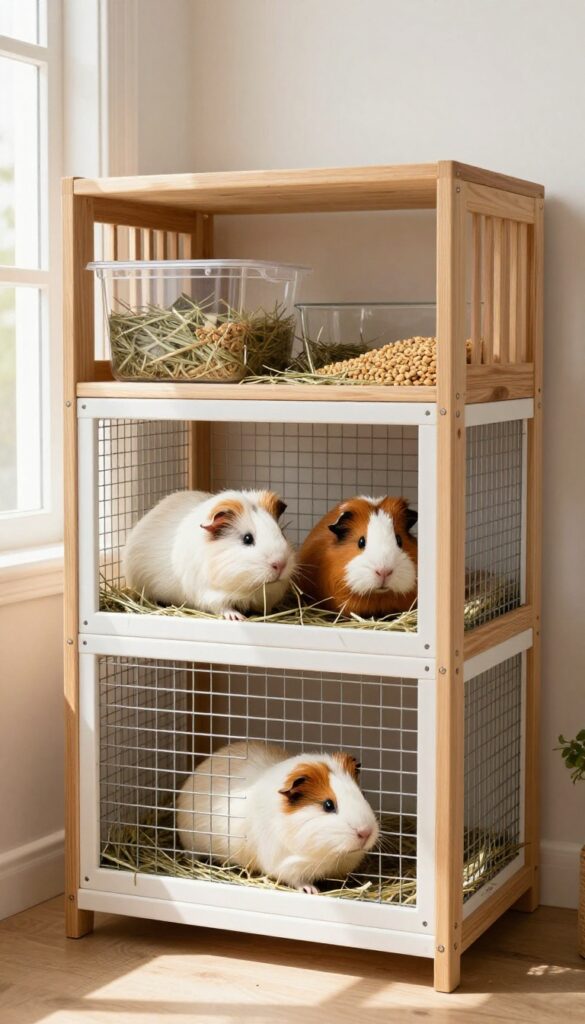
Repurposing a sturdy bookshelf into a guinea pig habitat is a clever way to save floor space and keep everything organized. This vertical design stacks levels upward, so your piggies get room to explore without taking over the room. Plus, you can store hay, bedding, and supplies right on the same unit, making daily care a breeze.
Start with a solid bookshelf—ideally one with adjustable shelves so you can customize the height of each level. Remove the back panel and any doors, then line each shelf with a coroplast base to create a waterproof, easy-to-clean surface. Attach mesh or grid panels to the front and sides for ventilation and visibility.
The result is a multi-level cage that uses vertical space efficiently, perfect for smaller apartments or rooms with limited floor area.
Setting Up The Base And Barriers
Measure each shelf and cut coroplast to fit snugly, folding up the edges to create a 4-6 inch lip to contain bedding and mess. Secure the coroplast with zip ties or small screws. For the front, use wire grid cubes or hardware cloth attached with zip ties to the shelf frame.
Make sure the openings are small enough that guinea pigs can't escape or get their heads stuck.
Organizing Supplies On The Same Unit
Use the top shelves or any unused spaces to store hay, pellets, bedding bags, and cleaning tools. You can even add small bins or baskets that slide in and out. This keeps everything within arm's reach during spot cleaning and feeding, so you're not running back and forth to a closet or cabinet.
Daily Care And Cleaning Tips
Spot clean each level daily by removing soiled bedding and wiping down the coroplast with a pet-safe cleaner. Because the shelves are separate, you can clean one level at a time without disturbing the whole cage. A small handheld vacuum or dustpan makes quick work of stray hay and droppings.
9. The L-Shaped Corner Habitat
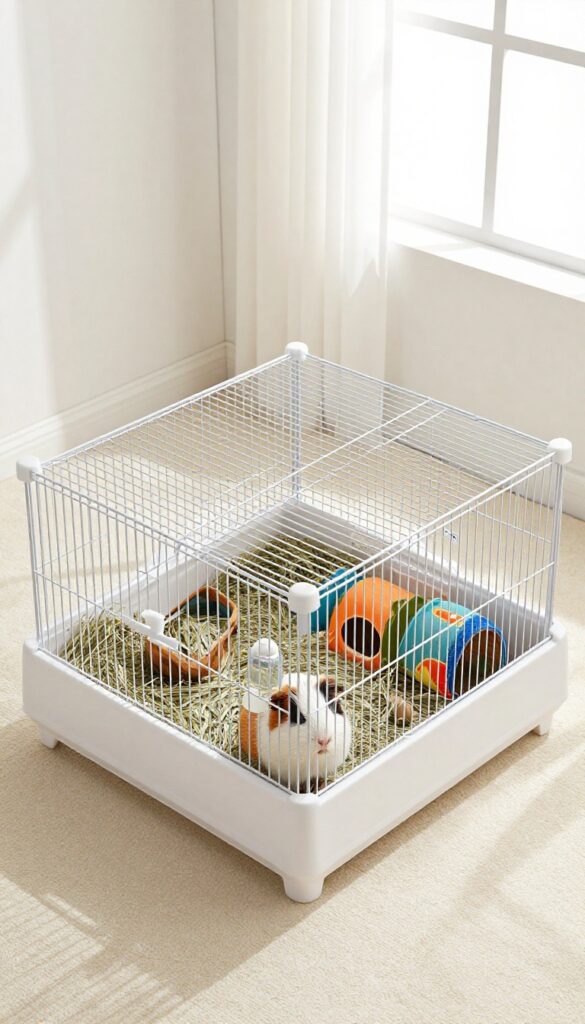
Corners are often wasted space, but an L-shaped C&C cage turns that unused area into a guinea pig paradise. This design fits snugly into a corner, giving your pigs two long sightlines while keeping the center of the room open. It's a smart layout for spot cleaning and feeding because you can reach every corner without stretching.
An L-shaped habitat is essentially two C&C grids joined at a 90-degree angle. The long legs give your guinea pigs room to run and explore, while the corner creates a cozy hideout spot. For you, the open front and sides mean easy access to food bowls, water bottles, and bedding.
No more awkward reaching into a deep cage.
Why It Works For Daily Care
The L-shape naturally separates activity zones. Put hay and water on one leg and hideouts on the other. This keeps mess contained and makes spot cleaning faster.
The corner joint is a great place for a litter tray or a pile of hay, which catches most of the droppings.
Setting Up The Grids
Use standard 14-inch C&C grids. Connect two 2×4 panels at a right angle, then add a 2×2 corner piece to fill the gap. Secure with zip ties.
For the base, use a coroplast liner cut to match the L-shape. You can also use a shower curtain liner underneath for extra waterproofing.
Placement And Floor Protection
Slide the cage into a corner of your living room or bedroom. Put a vinyl rug or office chair mat under the cage to protect the floor from spills and scratches. This also makes sweeping up stray hay a breeze.
Leave a small gap behind the cage for airflow and easy cleaning.
10. The All-in-One Cage with Built-in Storage
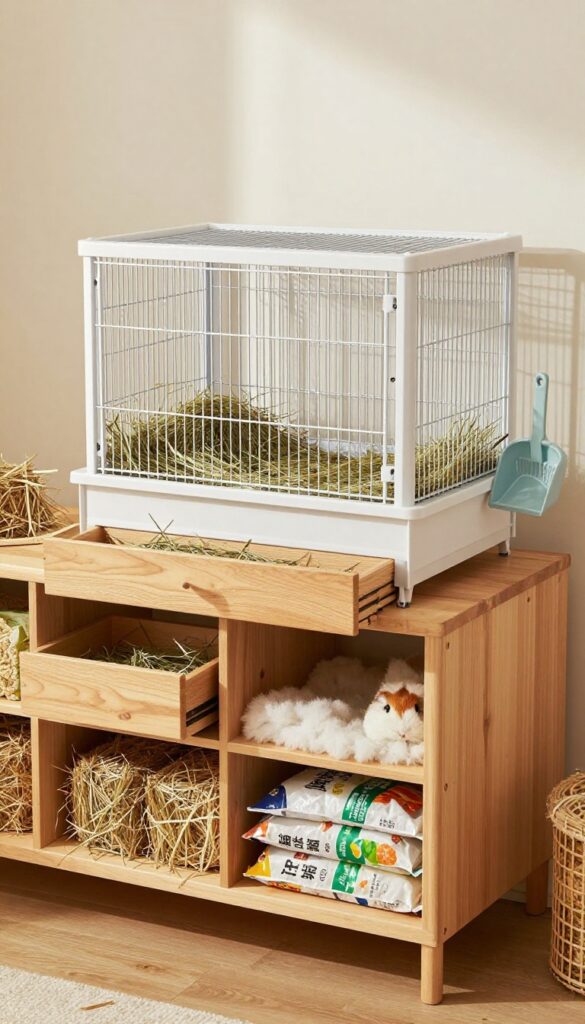
A custom cage with drawers or shelves underneath for hay, bedding, and tools keeps everything within arm's reach and streamlines daily care. No more hunting for supplies or tripping over bags of bedding—everything you need is right there, stored neatly below the habitat. This design is perfect for small spaces where every inch counts, or for anyone who values efficiency and organization.
The all-in-one cage is a game changer for daily maintenance. By integrating storage directly into the cage frame, you cut down on clutter and save time. You can grab fresh hay or swap out soiled bedding in seconds, which means less fuss and more time enjoying your piggies.
Built-in Drawers For Quick Access
Deep, smooth-gliding drawers underneath the main cage can hold hay, fleece liners, and spare water bottles. Label each drawer so you never grab the wrong item. This setup makes spot cleaning and full bedding changes much faster—just pull out what you need and get to work.
Shelving For Bulk Supplies
If you buy bedding and hay in bulk, open shelving beneath the cage is a lifesaver. Stack bales of hay or bags of pellets on sturdy shelves, and keep cleaning tools like a mini dustpan and brush hanging on the side. Everything stays organized and off the floor.
Customizing Your Own
You can build this cage yourself using a sturdy table or repurposed furniture. Look for a solid base that can support the weight of the cage and supplies. Add a C&C or wire top, then install drawers or shelves below.
Many DIY plans are available online, or you can commission a local carpenter for a custom fit.
11. The Split-Level with a Drop-Down Cleaning Tray
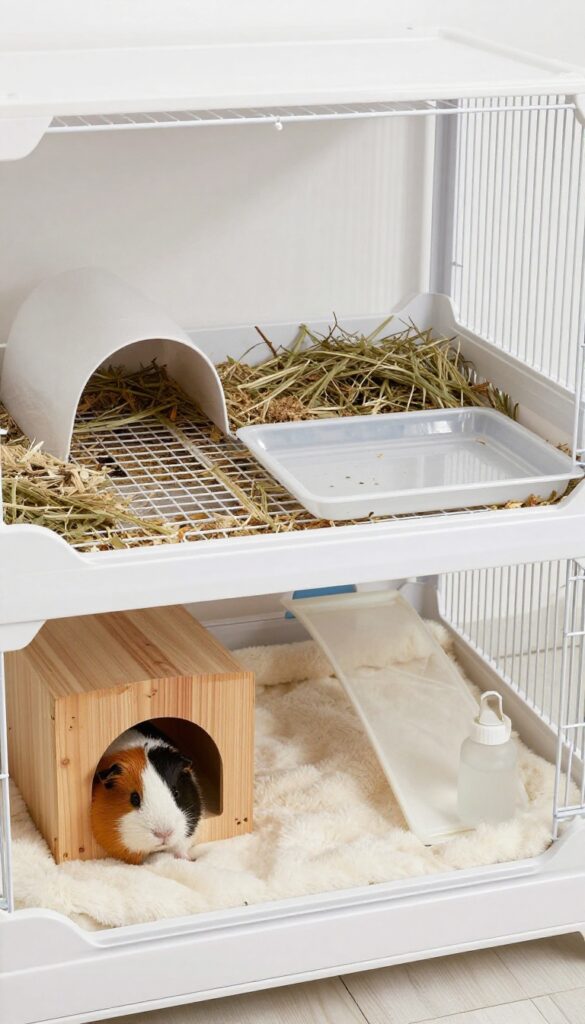
A two-level cage where the upper floor has a removable tray that slides out for quick cleaning. Reduces the need to fully dismantle the habitat. This design is a game-changer for daily spot-cleaning and weekly deep cleans.
The split-level layout gives your piggies extra vertical space while the drop-down tray makes maintenance a breeze.
The split-level design typically features a solid lower floor and a grated upper floor with a tray underneath that catches droppings and hay. The tray slides out from the front or side, so you can dump debris without disturbing your pets. Some models even have a ramp with a built-in poop shelf to minimize mess on the lower level.
This setup works well for two to three guinea pigs and fits into a corner or against a wall.
How The Drop-down Tray Works
The tray is usually made of durable plastic or metal and sits on rails. You pull it out like a drawer, empty it, rinse it off, and slide it back in. No need to remove the guinea pigs or take apart the cage.
This is perfect for busy mornings when you just need to scoop out soiled bedding quickly.
Why Split-levels Are Great For Piggies
Guinea pigs enjoy having separate zones for eating, sleeping, and playing. The upper level can house their hay feeder and water bottle, while the lower level provides a cozy hideout with soft bedding. The ramp between levels gives them gentle exercise and satisfies their natural curiosity.
Tips For Setting One Up
Choose a tray that is at least 2 inches deep to hold enough bedding and prevent spills. Line it with newspaper or puppy pads for easier disposal. Make sure the ramp has a non-slip surface or grip strips so piggies can climb safely.
Place the cage away from drafts and direct sunlight.
FAQ
How often should I clean a guinea pig habitat?
Spot-clean daily by removing soiled bedding and uneaten food. Do a full bedding change and cage wipe-down once a week, or more often if you use fleece.
What is the minimum cage size for two guinea pigs?
The minimum recommended size for two guinea pigs is 7. 5 square feet, but 10. 5 square feet or larger is ideal for their health and happiness.
Can guinea pigs live outdoors year-round?
Guinea pigs are sensitive to temperature extremes. Outdoor housing is only safe in mild climates with protection from predators, direct sun, and drafts. Most experts recommend indoor living.
What bedding is easiest for daily care?
Fleece liners are easiest for daily care because you can sweep up droppings and wash the liner weekly. Paper-based bedding is also low-dust and compostable.
How do I prevent my guinea pig habitat from smelling?
Use a high-quality bedding or fleece, spot-clean daily, provide a dedicated hay area, and ensure good ventilation. A small air purifier nearby can also help.
Conclusion
A well-designed habitat doesn't just make daily care easier—it transforms your guinea pigs' quality of life. Start with one change that fits your space and routine, then build from there.
Your pets will feel more at home, and you'll spend less time cleaning and more time enjoying their company.

I’m Pallab Kishore, the owner of Little Pets Realm — an animal lover and pet care enthusiast sharing easy tips, healthy recipes, and honest advice to help every small pet live a happy, healthy, tail-wagging life.