Last updated on August 19th, 2026 at 04:19 pm
Guinea pigs need plenty of space to explore and play, even indoors.
A safe enclosure is key to their health and happiness.
Here are 12 creative ideas for indoor playtime setups that prioritize safety, comfort, and enrichment.
C&C Cage with Fleece Liner
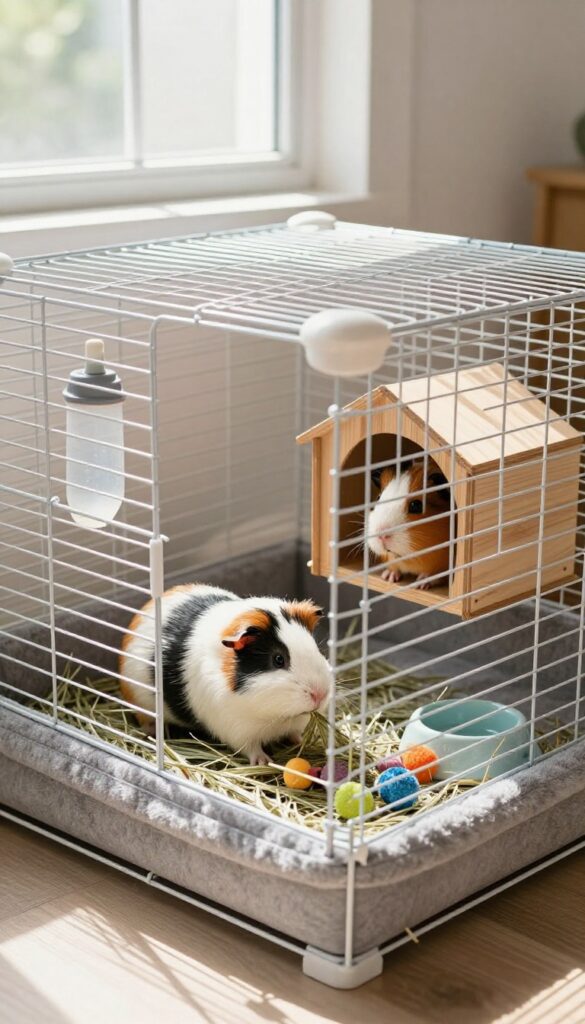
A C&C (cube-and-coroplast) cage is a classic choice for guinea pig owners who want a spacious, customizable enclosure. Paired with a fleece liner, it offers a soft, absorbent surface that’s easy to maintain.
Construction and Customization
Build the frame using wire cube grids (often sold as storage cubes) and connect them with zip ties. The base is a coroplast sheet cut to size, forming a waterproof barrier. This modular system lets you expand the cage easily, add a second level, or create unique shapes to fit your space.
Fleece Liner Benefits
- Soft on guinea pig feet, reducing the risk of bumblefoot.
- Highly absorbent when layered with absorbent padding (like U-Haul pads or towels).
- Easy to clean: shake off hay, spot-clean daily, and wash weekly.
- Cost-effective long-term compared to disposable bedding.
Minimum Space Requirements
For one guinea pig, aim for at least 7.5 square feet (e.g., 2×3 grids). For a pair, 10.5 square feet (2×4 grids) is recommended. Larger is always better for active play and exercise.
Practical Habitat Details
Include essential accessories: a hay rack or hay pile, a hideout (like a wooden house or fleece tunnel), a water bottle, a food bowl, and chew toys. Ensure the cage has good ventilation (grid walls) and easy access for cleaning. Place the cage in a quiet, draft-free area away from direct sunlight and loud noises.
Pop-Up Playpen with Waterproof Base
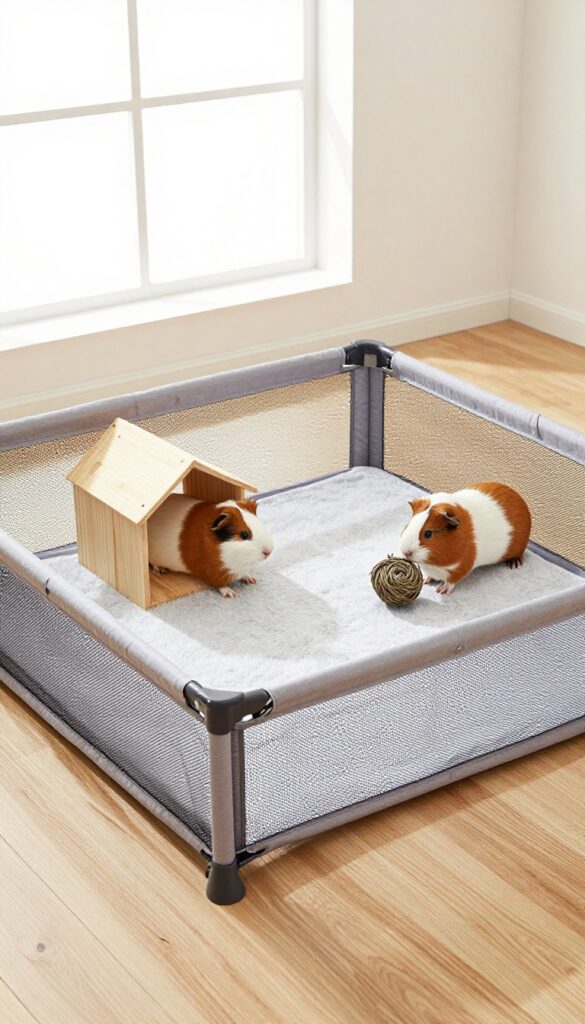
A pop-up playpen with a waterproof base is a versatile and portable option for indoor guinea pig playtime. It sets up in seconds and protects your floors from spills and messes, making cleanup easy.
These playpens are typically made of mesh or fabric walls with a sturdy, waterproof bottom. The enclosed design keeps guinea pigs safe while allowing them plenty of room to run, explore, and exercise. To create a comfortable and engaging environment, add a soft fleece liner or bedding on top of the waterproof base.
Key Features and Enrichment Ideas
- Portable and easy to set up indoors – ideal for supervised floor time.
- Waterproof base protects floors from urine, water spills, or hay debris.
- Add hideouts like small wooden houses or fabric tunnels for security.
- Include chew-safe toys, such as willow balls or cardboard tubes, to encourage natural behaviors.
- Place a hay rack and a water bottle inside for longer play sessions.
Ensure the playpen has adequate ventilation – mesh panels are ideal. Choose a size that offers at least 7.5 square feet of floor space for one guinea pig, and more for multiple pigs. The waterproof base also makes cleaning simple: just wipe it down or remove the liner for washing.
This setup is perfect for rotating enrichment items and giving your guinea pigs a change of scenery.
Multi-Level Cage with Ramps
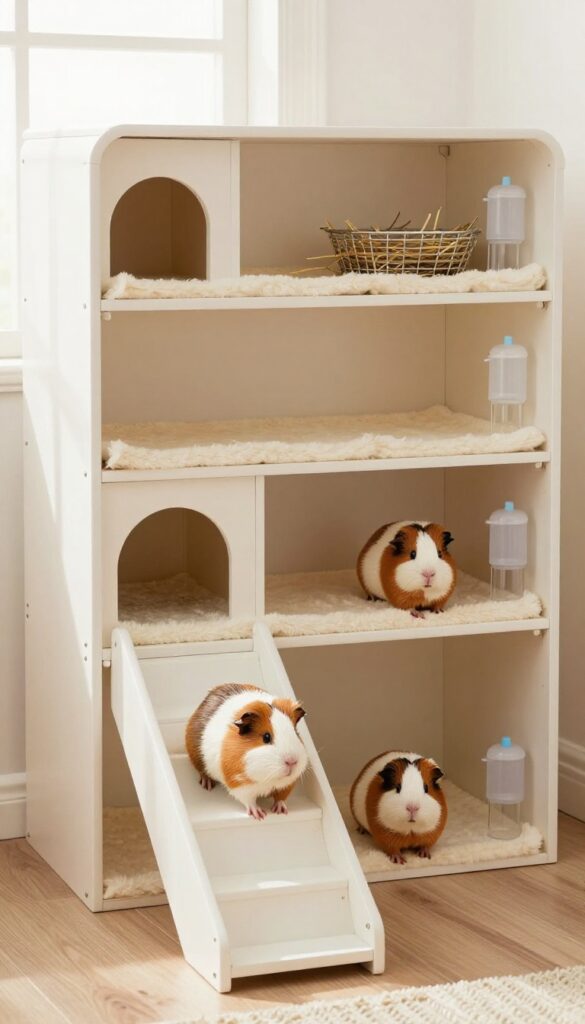
Guinea pigs love exploring vertical spaces, and a multi-level cage gives them room to climb, hide, and play. The key is designing ramps that are safe for their small feet and ensuring each level has everything they need.
When choosing or building a multi-level cage, prioritize gentle, non-slip ramps. Guinea pigs are not natural climbers, so ramps should have a shallow incline and a textured surface—like coroplast with grip tape or a fleece-covered ramp with a rubber mat underneath. Avoid steep ladders or wire ramps that can injure their feet.
- Each level should have a hideout, a water bottle or bowl, and a hay rack so your guinea pig doesn’t have to travel far for essentials.
- Use solid flooring on every level (no wire grates) to prevent foot injuries. Fleece liners or soft bedding work well.
- Ensure the cage has good ventilation and easy access for cleaning. Removable ramps and open-front doors make maintenance simpler.
- Add chew-safe toys, tunnels, or wooden ledges to encourage exercise and mental stimulation.
A multi-level cage is a great way to maximize floor space in a small room while giving your guinea pigs plenty of room to roam. Just remember: the total floor area across all levels should still meet the minimum recommended space (at least 7.5 square feet for one guinea pig, more for pairs).
DIY Wooden Enclosure with Linoleum Flooring
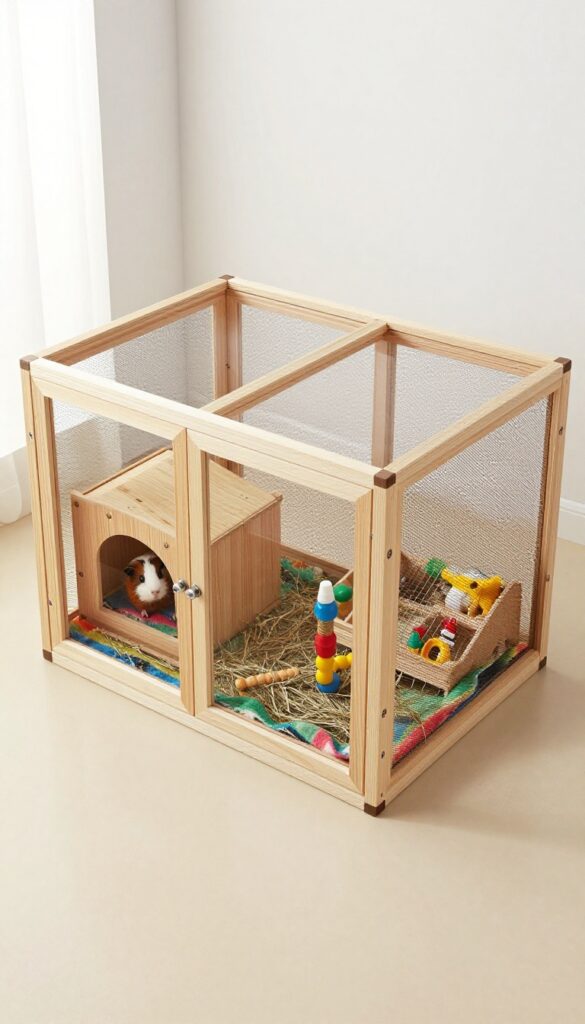
Building a custom wooden enclosure gives you full control over size and layout, and adding a linoleum floor makes cleanup a breeze. This durable, waterproof surface protects the wood from moisture and keeps the habitat hygienic.
Start with plywood sheets cut to your desired dimensions—aim for at least 7.5 square feet for two guinea pigs. Assemble the walls using screws and wood glue, then sand all edges smooth. Apply a pet-safe, non-toxic varnish to seal the wood and prevent urine absorption.
- Linoleum flooring: cut to fit the base, easy to wipe clean, and waterproof.
- Bedding: use fleece liners or paper-based bedding on top of the linoleum.
- Ventilation: leave gaps or add mesh panels to ensure airflow.
- Accessories: include hideouts, a hay rack, a water bottle, and chew-safe toys.
- Cleaning: the linoleum can be easily removed and hosed down if needed.
This design allows for multiple levels or a large single-floor space. Just be sure to use guinea-pig-safe materials and avoid treated wood that may contain harmful chemicals. With proper sealing and linoleum, your enclosure will stay fresh and last for years.
Converted Bookshelf Cage
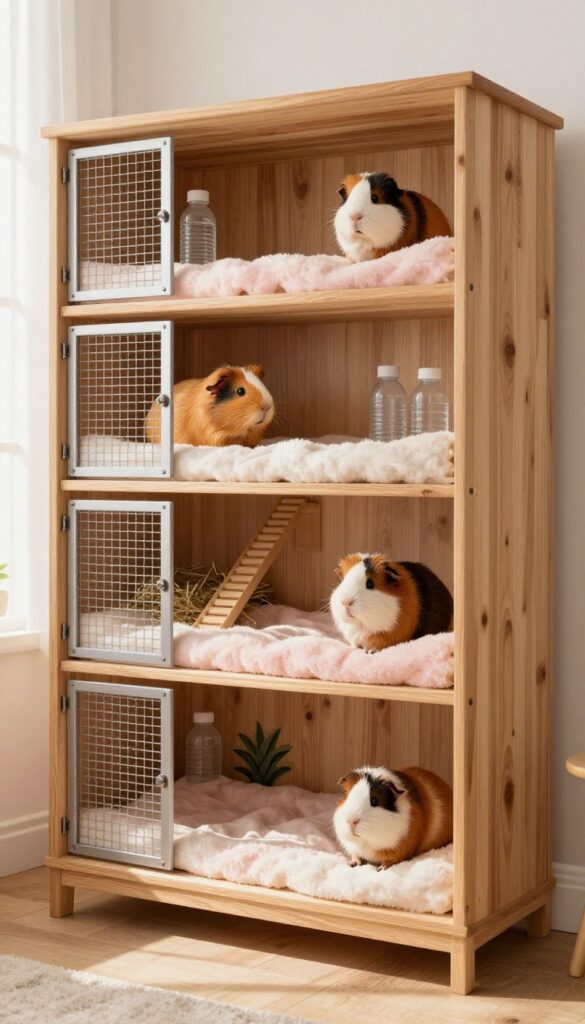
An old bookshelf can become a spacious, multi-level guinea pig enclosure with a few modifications. This DIY project gives your pets plenty of vertical space to explore while keeping them safe and contained.
Start by choosing a sturdy bookshelf with deep shelves (at least 24 inches wide and 18 inches deep) to provide adequate floor space. Remove any backing or leave it in place for stability, but ensure there is ventilation. Add wire mesh doors to the front of each level, hinged for easy access.
Use the existing shelves as platforms, connecting them with ramps made from coroplast or wood with grip strips. Line each level with fleece or disposable bedding, and place hideouts, a hay rack, and water bottles on each floor. Make sure the cage is placed in a quiet, draft-free area away from direct sunlight.
Key considerations
- Ensure the bookshelf is solid enough to support the weight of bedding and guinea pigs.
- Attach wire mesh securely to prevent escapes; use zip ties or staples.
- Provide at least 7.5 square feet of floor space per guinea pig across all levels.
- Include a solid floor on each level to protect feet; avoid wire flooring.
- Use safe, non-toxic paint or sealant if the wood is unfinished.
Large Plastic Storage Bin Cage
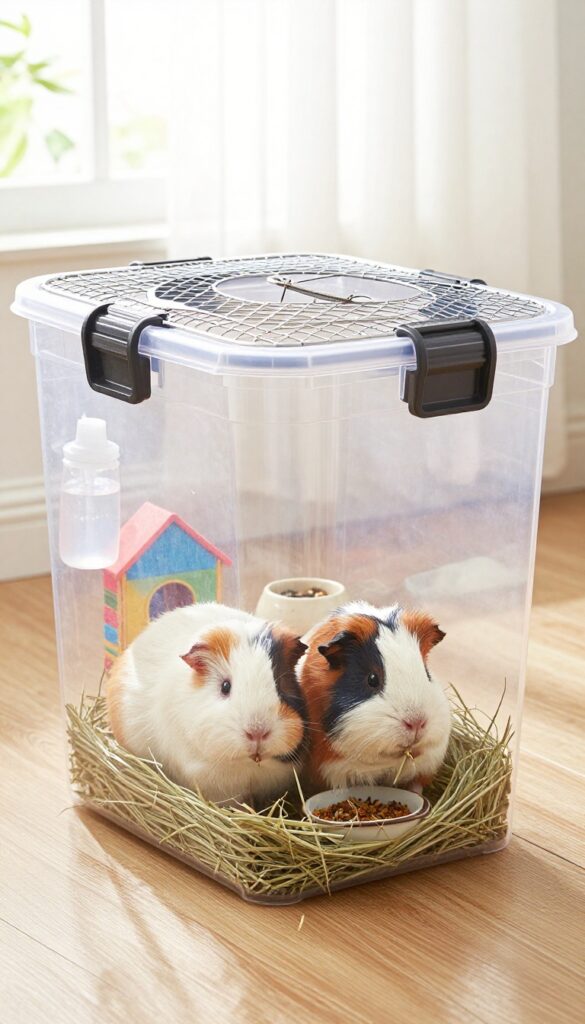
A large plastic storage bin can be transformed into a functional and affordable guinea pig enclosure. This DIY option is lightweight, easy to clean, and offers good visibility when you choose a clear bin.
Start with a clear 50+ gallon storage bin to maximize floor space and visibility. The clear sides let you watch your guinea pigs while they explore. You’ll need to modify the bin for proper ventilation.
Key Steps
- Cut large ventilation holes in the lid and upper sides of the bin.
- Cover all holes with sturdy mesh or hardware cloth, secured with zip ties or glue.
- Add a soft fleece liner or paper-based bedding for comfort.
- Place a hideout, hay rack, water bottle, and food bowl inside.
- The smooth plastic surface makes cleaning simple—just wipe or rinse.
This enclosure is especially handy for temporary setups or quarantine cages. It’s also easy to move around the house. Ensure the bin is large enough to meet guinea pig space requirements (at least 7.5 sq ft for one pig, more for pairs).
Add chew-safe toys and tunnels to keep your pets active.
Enclosure with Hay Rack and Hideout Corner
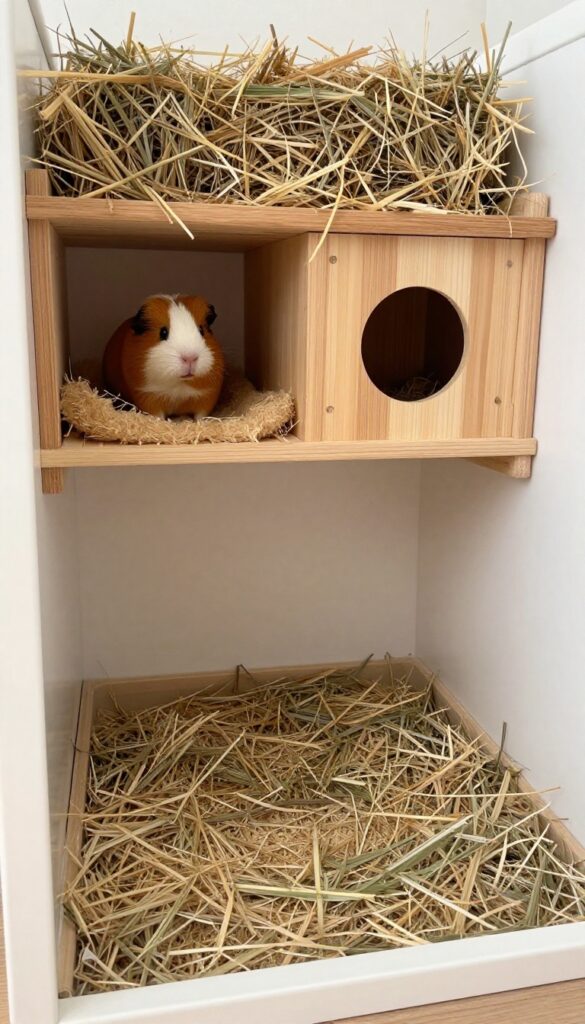
A well-organized corner with a hay rack and hideout keeps your guinea pigs comfortable and reduces mess. This setup is easy to maintain and encourages natural behaviors.
Designate a specific corner of the enclosure for the hay rack and hideout. Place the hideout first, then position the hay rack nearby so guinea pigs can access hay without leaving their safe spot.
Key details for this setup
- Use a wooden or plastic hideout with two exits to prevent trapping and allow quick escape.
- Mount the hay rack above the bedding level to keep hay clean and reduce waste.
- Choose a hay rack with small openings to prevent guinea pigs from climbing inside.
- Place a shallow litter tray under the hay rack to catch loose hay and simplify cleaning.
- Ensure the hideout is spacious enough for all guinea pigs to fit comfortably.
Bedding and maintenance
Use fleece liners or paper bedding in this corner. Spot-clean daily around the hay rack and hideout to remove soiled bedding and leftover hay. Replace the hideout bedding weekly or as needed.
Cage with Fleece Forest and Tunnels
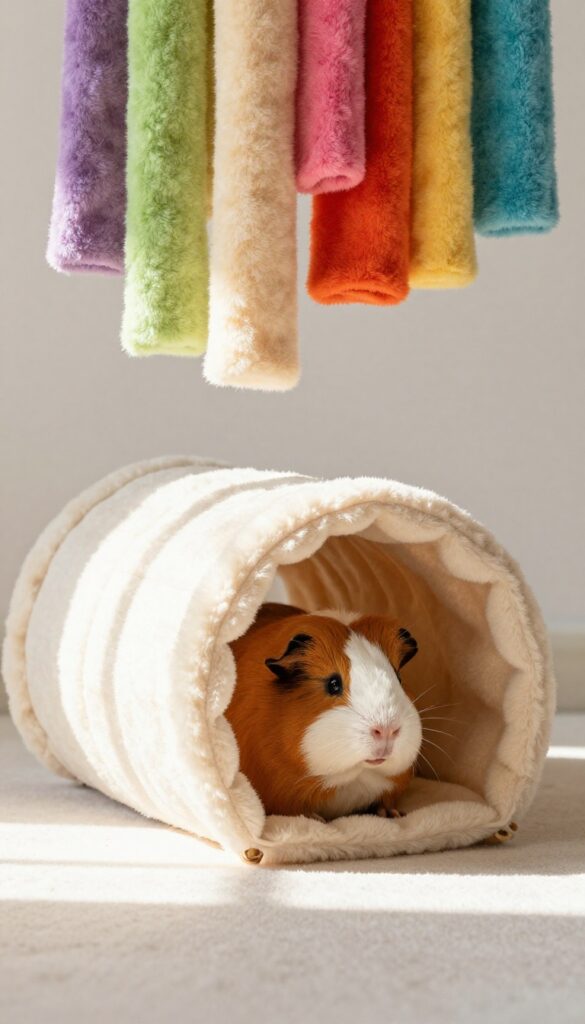
Transform your guinea pig’s cage into an adventurous playground with a fleece forest and tunnels. This setup encourages natural exploration and provides cozy hiding spots, all while keeping safety and cleanliness in mind.
To create a fleece forest, cut strips of fleece fabric and hang them from the top of the cage or a sturdy grid. Guinea pigs love to weave through the soft strips, and it mimics the tall grass of their natural habitat. Ensure the strips are securely attached and long enough to reach near the floor but not so long that they get tangled.
Key Points
- Use only anti-pill fleece, which is safe if nibbled and washes well.
- Add fabric tunnels made specifically for small pets, or DIY from fleece tubes. Avoid tunnels with wire or plastic that could be chewed and cause injury.
- Place tunnels in different areas of the cage to encourage exploration and provide multiple escape routes.
- Wash fleece strips and tunnels regularly with unscented detergent to prevent odor buildup and keep your pets healthy.
- Combine with a fleece liner or washable bedding for easy cleaning. Spot-clean daily and do a full wash weekly.
Practical Habitat Details
A cage with a fleece forest and tunnels should still meet minimum space requirements: at least 7.5 square feet for one guinea pig, more for pairs. Ensure good ventilation, easy access to hay, water, and a hideout. The fleece forest adds enrichment without reducing floor space.
Use a hay rack to keep hay clean, and place a water bottle at a comfortable height. Regularly check that all materials are chew-safe and free of loose threads or small parts that could be ingested.
Quiet Corner Enclosure with Sound Dampening
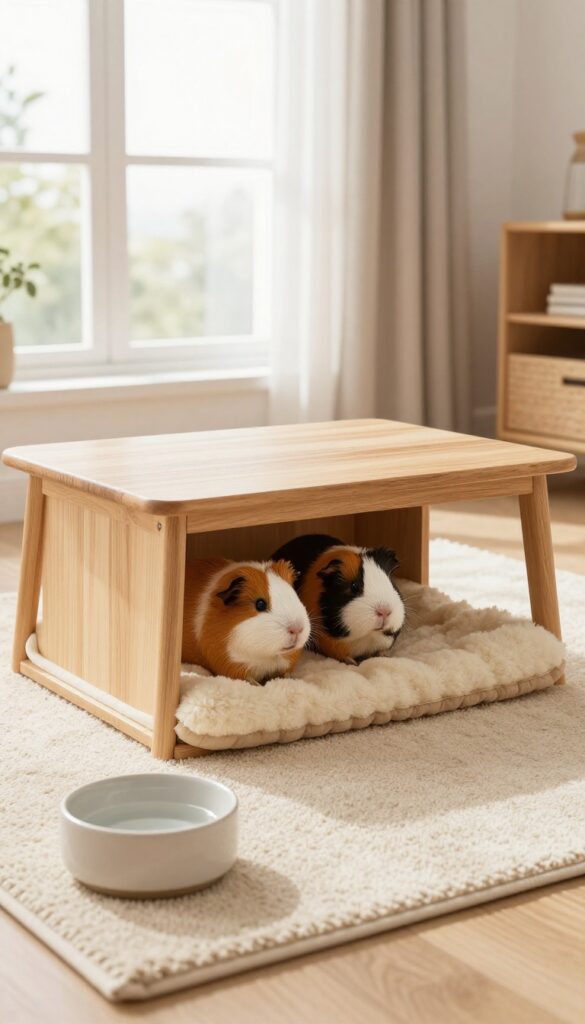
Guinea pigs are sensitive to loud noises and sudden sounds, which can cause stress and health issues. Placing their enclosure in a quiet corner with sound-dampening features creates a calm, secure environment where they can relax and play safely.
Key Placement Considerations
- Choose a low-traffic area away from doors, windows, and household appliances like TVs or washing machines.
- Place a thick rug or foam mat under the cage to absorb vibrations and reduce noise from footsteps.
- Avoid direct sunlight and drafts by keeping the enclosure away from windows and air vents.
- Ensure the area has stable temperature and good ventilation without being drafty.
Enclosure Setup for a Quiet Zone
Use a solid-bottom cage or a C&C cage with a fleece liner over a layer of towels or felt to further dampen sound. Add plenty of soft bedding, such as paper-based bedding or fleece, to absorb noise from movement. Provide at least one hideout on each side of the cage so your guinea pigs can retreat if they feel startled.
A hay rack and water bottle should be easily accessible without creating clanking noises—opt for a silent water bottle or a heavy ceramic bowl.
Practical Habitat Details
- Minimum floor space: 7.5 square feet for one guinea pig, but 10.5+ square feet is recommended for two.
- Use chew-safe wooden toys or tunnels to encourage natural behavior without loud plastic sounds.
- Keep the enclosure off the floor on a sturdy table or stand to reduce perceived noise from human activity.
- Clean the cage regularly to maintain a fresh, quiet environment—dirty cages can cause rustling and odor that stress pets.
Enclosure with Built-In Storage for Supplies
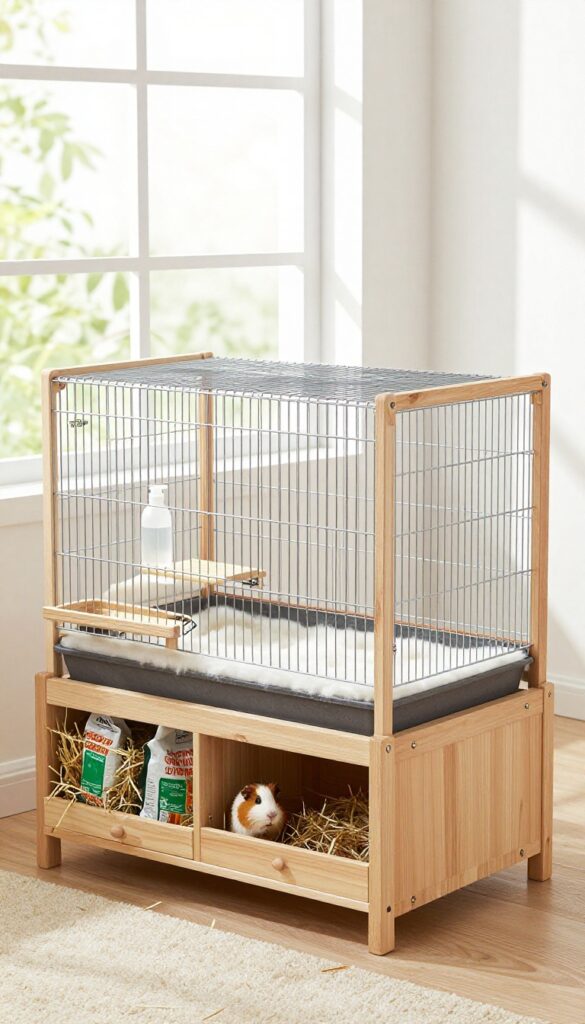
A cage with integrated storage keeps hay, bedding, and food close at hand while saving space in your home. This setup is ideal for small rooms or owners who want a tidy, all-in-one solution.
Look for enclosures that feature shelves or drawers beneath the main living area. These compartments can hold extra fleece liners, hay bales, pellet bags, and cleaning tools. Some DIY builds incorporate pull-out bins or a small cabinet attached to the cage frame.
- Under-cage drawers: Great for storing bedding and hay, keeping them dry and accessible.
- Side shelving: Add a narrow shelf next to the cage for food bowls, water bottles, and small toys.
- Hay storage: A built-in hay rack or bin prevents waste and keeps hay fresh.
- Cleaning access: Ensure the storage doesn’t block ventilation or make it hard to clean the cage floor.
When designing or buying, prioritize the guinea pigs’ needs first. The cage itself must offer at least 7.5 square feet of floor space for one pig (more for pairs), solid flooring or a fleece liner, a hideout, water access, and good ventilation. Storage should be an addition, not a compromise.
For example, a C&C cage with a wooden base that includes drawers can work well, as long as the wire grids provide airflow and the base is waterproof. Avoid storing supplies inside the cage where pigs might chew or soil them.
Cage with Easy-Clean Tray System
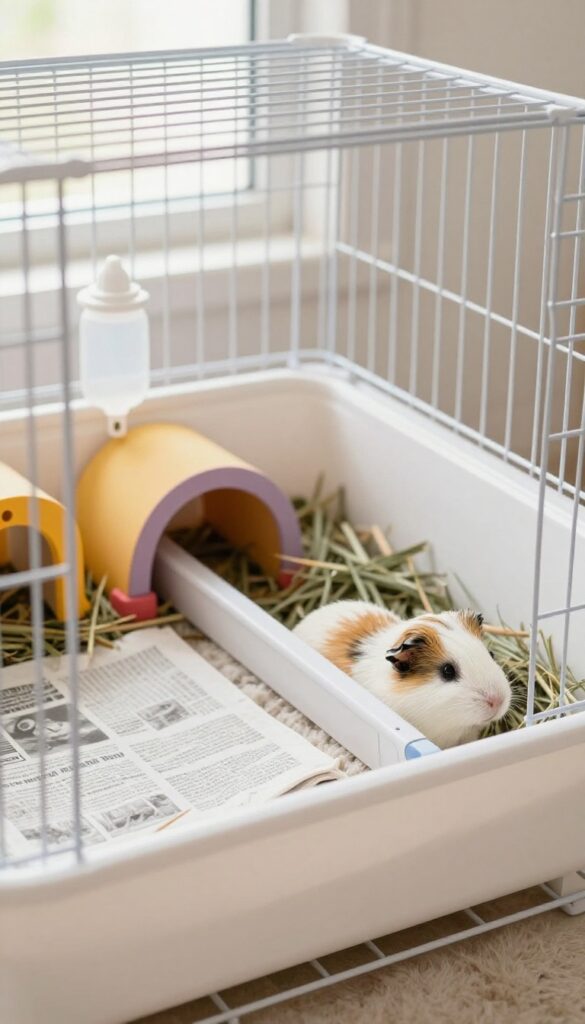
A cage with a removable tray makes daily cleaning quick and hassle-free, keeping your guinea pig’s environment fresh and sanitary.
The tray system typically slides out from the front or side of the cage, allowing you to remove soiled bedding without disturbing your pet. Look for a tray with raised edges to contain mess and a smooth surface that wipes clean easily.
- Line the tray with newspaper or puppy pads for easy disposal, then top with fleece or a layer of paper bedding for comfort.
- Spot-clean daily and do a full tray change every 3–4 days, or more often if needed.
- Ensure the cage itself has good ventilation and enough floor space—minimum 7.5 sq ft for one guinea pig, more for pairs.
- Include hideouts, a hay rack, and a water bottle to create a complete habitat.
This design is especially practical for busy owners who want to maintain cleanliness without a lot of effort. The tray system also helps protect the cage base from moisture damage, extending its lifespan.
Enclosure with Chew-Safe Wooden Toys and Ledges
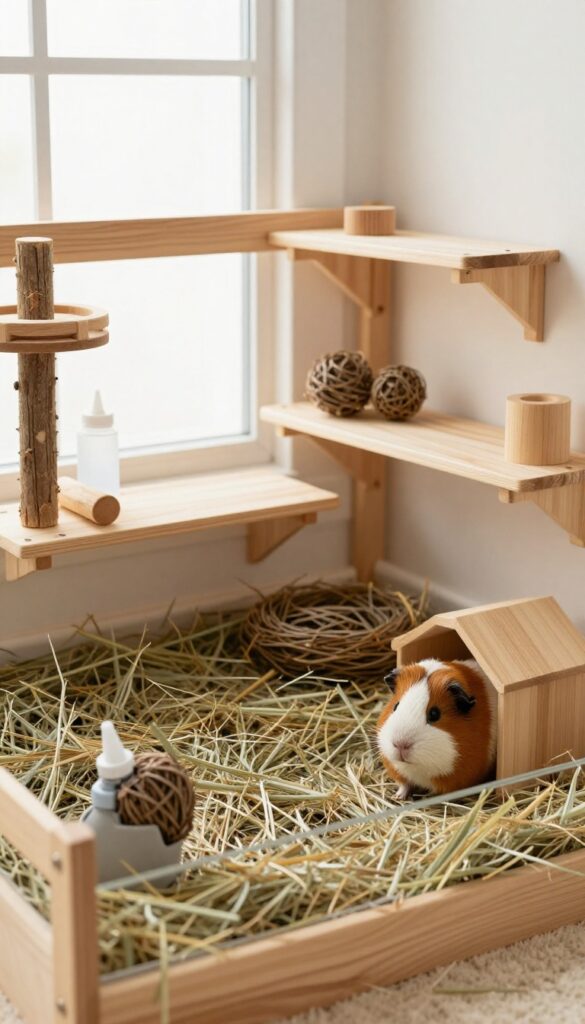
Guinea pigs love to climb, explore, and chew. Adding wooden ledges and chew-safe toys to their enclosure creates a stimulating environment that satisfies these natural instincts while keeping them safe.
Wooden ledges provide vertical space for guinea pigs to climb and rest, making use of the cage’s height. Choose untreated, kiln-dried wood like pine or poplar, and attach ledges securely with brackets or screws to prevent tipping. Place them at varying heights to create a multi-level playground.
Key considerations for wooden ledges and toys
- Use only untreated, chew-safe wood; avoid pressure-treated or painted wood.
- Sand edges smooth to prevent splinters.
- Secure ledges with heavy-duty brackets or zip ties to ensure stability.
- Provide a variety of chew toys, such as apple sticks, willow balls, and wooden blocks.
- Rotate toys regularly to maintain interest.
For the rest of the enclosure, maintain a practical setup: use fleece or paper bedding, provide a hay rack for unlimited hay, include a hideout for security, and ensure easy access to a water bottle and food bowl. The cage should have ample floor space (at least 7.5 square feet for one guinea pig) and good ventilation. Place the enclosure in a quiet, draft-free area away from direct sunlight.
With these elements, your guinea pig will have a safe, engaging home for indoor playtime.
FAQ
What is the minimum cage size for one guinea pig?
The minimum recommended size for one guinea pig is 7.5 square feet, but larger is always better. For two guinea pigs, aim for at least 10.5 square feet.
Can I use a wire-bottom cage for guinea pigs?
No, wire bottoms can hurt guinea pigs’ feet. Always use a solid floor with soft bedding or fleece liner.
How often should I clean the enclosure?
Spot clean daily and do a full bedding change weekly. For fleece liners, wash every 3-4 days.
What should I put inside the enclosure for enrichment?
Include hideouts, tunnels, chew toys, hay racks, and water bottles. Rotate toys to keep them engaged.
Conclusion
Choosing the right enclosure for indoor playtime ensures your guinea pigs stay safe, active, and happy. Whether you opt for a C&C cage, a pop-up playpen, or a DIY setup, always prioritize space, ventilation, and enrichment.
Regularly clean and inspect the enclosure to maintain a healthy environment.

I’m Pallab Kishore, the owner of Little Pets Realm — an animal lover and pet care enthusiast sharing easy tips, healthy recipes, and honest advice to help every small pet live a happy, healthy, tail-wagging life.