Last updated on August 19th, 2026 at 04:19 pm
Keeping a guinea pig enclosure clean is essential for your pet’s health and your sanity. Traditional bedding can be messy and time-consuming to change.
Fortunately, smart design choices can drastically reduce daily cleaning effort.
Here are 11 enclosure design ideas that make spot-cleaning and full cleanouts quick and easy, so you can spend more time enjoying your guinea pigs.
Use a Fleece Liner System Instead of Bedding
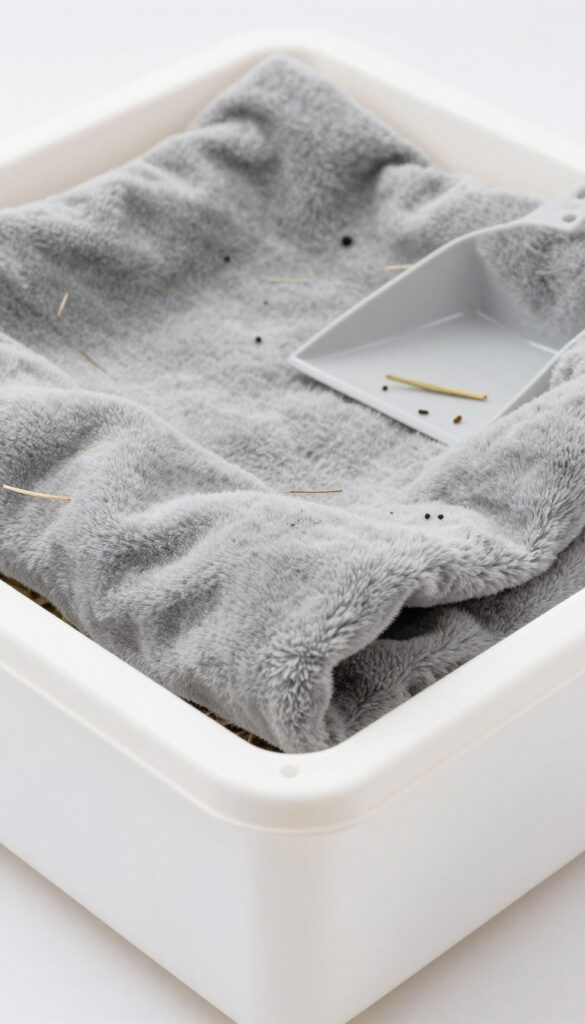
Switching to a fleece liner system is one of the most effective ways to simplify daily cleaning while keeping your guinea pig’s habitat comfortable and odor-free.
Fleece liners work by wicking moisture away from the surface, trapping it in an absorbent layer underneath, while solids stay on top for easy removal. This eliminates the need to scoop soiled bedding daily.
How to set up a fleece liner system
- Place a layer of absorbent padding (such as U-Haul furniture pads or towel layers) on the cage floor.
- Cover the padding with a fleece blanket that is larger than the cage base to tuck edges under or secure with binder clips.
- Shake out hay and droppings into a trash bin each day; spot-clean wet spots with a small vacuum or dustpan.
- Wash the fleece and absorbent layers weekly in hot water with unscented detergent to control odors.
Practical tip
Buy or sew fleece liners with a waterproof backing to protect the cage floor from moisture. This system works best with a cage that has a solid bottom, like a C&C cage with a coroplast base.
Incorporate a Kitchen Area with a Litter Tray
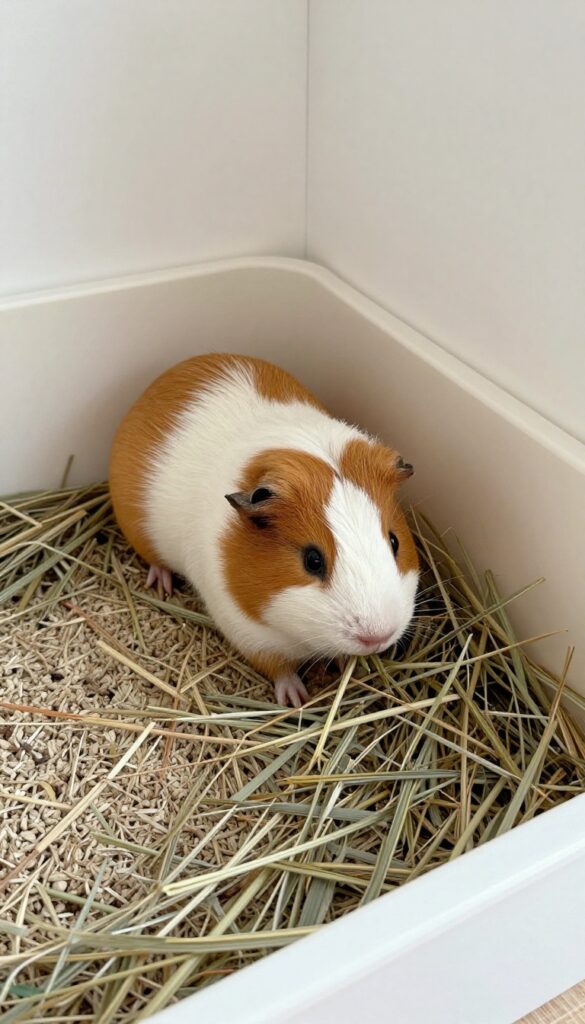
Guinea pigs often pee and poop where they eat, so placing a litter tray right under their hay rack can dramatically reduce mess. This simple setup creates a designated kitchen area that catches most of the waste, making daily cleaning quick and easy.
To set up a kitchen area, choose a corner of the enclosure for the hay rack and water bottle. Place a shallow litter tray directly beneath the hay rack. Guinea pigs tend to eliminate while munching, so the tray will catch the bulk of droppings and urine.
Use a paper-based litter or a fleece pad inside the tray—both are safe, absorbent, and easy to scoop or replace daily.
- Position the litter tray under the hay rack to catch waste where it happens.
- Use paper-based litter (like recycled paper pellets) or a washable fleece pad.
- Scoop solid waste daily and replace soiled litter every few days.
- This keeps the main bedding area cleaner, reducing full cage cleanouts.
- Ensure the tray is low-sided so guinea pigs can step in and out easily.
A kitchen area with a litter tray works best in a cage with solid flooring or a fleece liner. The tray itself should be large enough for one or two guinea pigs to sit comfortably. Pair it with a hideout nearby so they feel secure while eating.
This design is especially practical for busy owners—it cuts down on daily spot-cleaning time and extends the life of the main bedding.
Choose a Cage with a Removable or Drop-Down Front
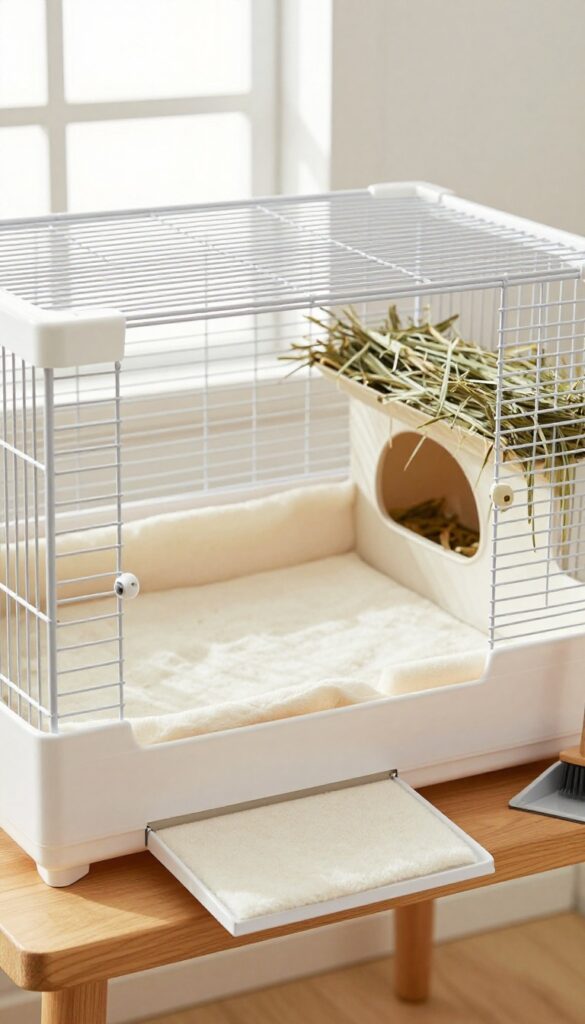
The front of your guinea pig’s cage can make or break your cleaning routine. Cages with removable or drop-down front panels give you unobstructed access to every corner, making it much easier to scrub, sweep, and replace liners.
Removable front panels are a game-changer for deep cleaning. You can take the entire front off to reach the back corners where hay and droppings tend to accumulate. This is especially helpful when you need to replace fleece liners or spot-clean soiled areas.
Look for cages with sturdy clips or sliding mechanisms that allow the panel to be detached without tools.
Drop-down doors, on the other hand, create a convenient ramp for sweeping or vacuuming debris directly out of the cage. When the door is lowered, you can easily brush soiled bedding, hay scraps, and droppings into a dustpan. This design also makes it simple to place fresh liners and arrange hideouts without having to reach through a small opening.
- Removable front panels allow full access to scrub corners and replace liners.
- Drop-down doors create a ramp for easy vacuuming or sweeping debris out.
- Avoid cages with small doors that restrict access and make cleaning a chore.
- Ensure the cage has adequate ventilation and secure latches to prevent escapes.
When shopping for a cage, prioritize those with wide, full-front access. Many popular guinea pig cages, like the Midwest Guinea Pig Habitat or C&C cage options, offer removable or drop-down fronts. Pair the cage with a fleece liner, a hay rack mounted on the side, and a hideout near the back to create a comfortable, easy-to-clean home.
Use a Deep Base or Tray to Contain Mess
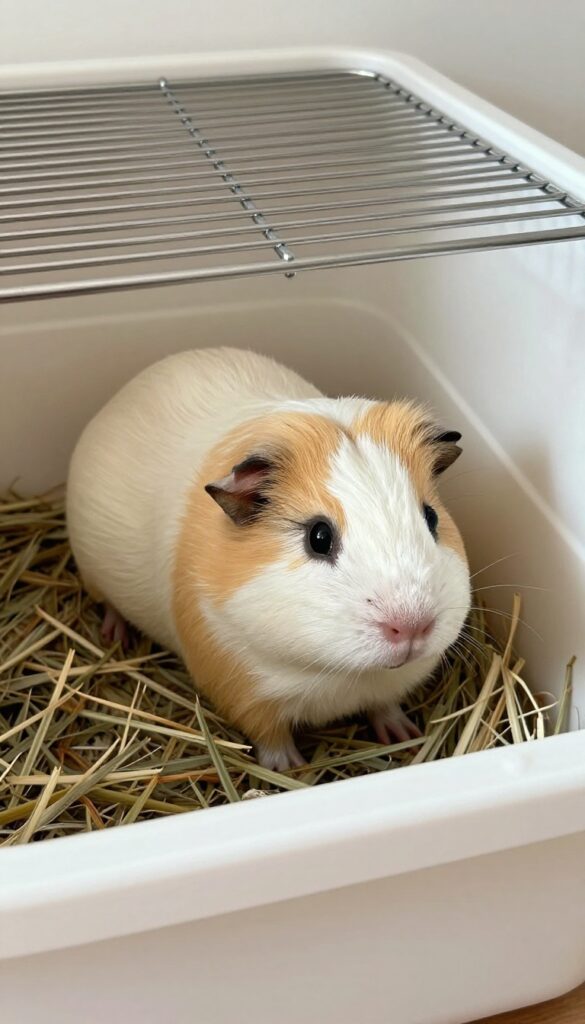
A deep plastic base or tray is one of the simplest ways to keep your guinea pig’s enclosure tidy and reduce daily cleaning effort. By preventing bedding, hay, and droppings from scattering outside the cage, you save time sweeping the floor and keep the habitat more hygienic.
Look for a base that is at least 6 to 8 inches deep. This depth is enough to contain kicked-up bedding and hay, and it also gives your guinea pigs a sense of security. The high sides help block drafts at floor level, which is especially important for small pets prone to respiratory issues.
Why a deep plastic base works best
- Plastic is non-porous and easy to wipe down or disinfect—no corners for debris to hide like in wooden frames.
- It resists moisture and odors better than wood, which can soak up urine and become smelly over time.
- Pair the deep base with a wire or grid top for ventilation and security. The combination gives you a sturdy, easy-to-clean habitat.
When choosing a base, avoid shallow trays (under 4 inches) that allow spillage. Also steer clear of wooden bases, which can harbor bacteria and are harder to sanitize. A simple plastic storage bin or a commercial cage with a deep plastic pan works perfectly.
Just ensure the material is chew-safe and non-toxic, as guinea pigs may nibble the edges.
Install a Hay Rack Outside the Cage
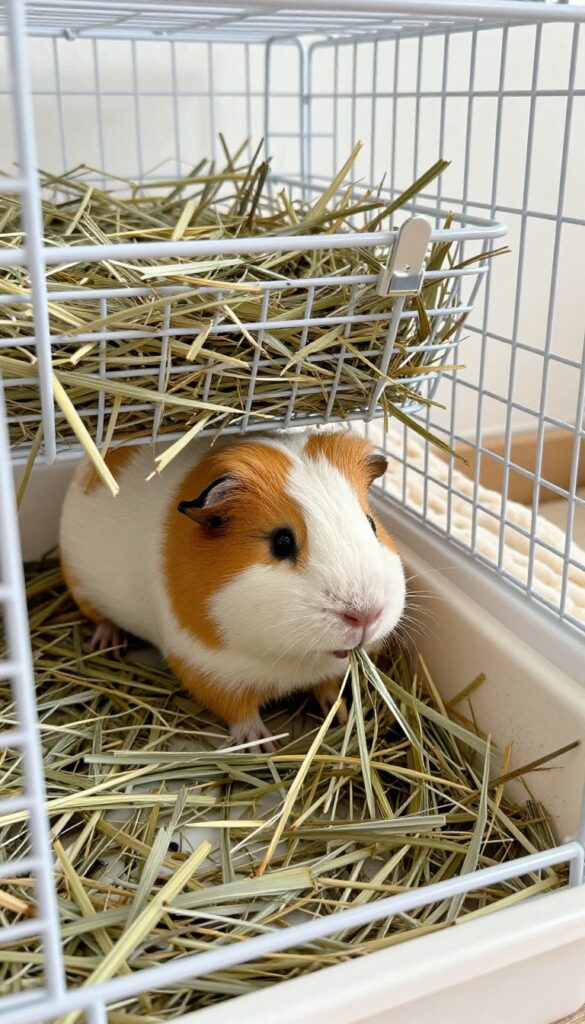
An external hay rack is a simple upgrade that keeps hay accessible to your guinea pigs while dramatically reducing mess inside the cage.
By mounting the hay rack on the outside of the cage, guinea pigs pull hay through the bars as they eat. This means most of the hay stays outside or drops into a tray below, rather than getting trampled into bedding or fleece. Less hay on the floor equals less daily sweeping and fewer soiled spots to spot-clean.
Key considerations for choosing and placing an external hay rack
- Select a rack that attaches securely to the cage grid – wire or grid cages work best. Look for clips or hooks that won’t come loose when guinea pigs tug on the hay.
- Position the rack at a comfortable height for your guinea pigs, usually a few inches above the cage floor, so they can easily reach the hay without straining.
- Place a small tray or mat under the rack to catch falling hay and dust, making cleanup even easier.
- Ensure the rack has wide enough openings for guinea pigs to pull hay but not so wide that they can get their heads stuck.
- Combine the external rack with a hay bag or hay box inside if you have multiple guinea pigs, to ensure everyone has access.
This design not only simplifies cleaning but also encourages natural foraging behavior, as guinea pigs enjoy working to pull hay through the bars. It’s a win-win for hygiene and enrichment.
Avoid Common Problems
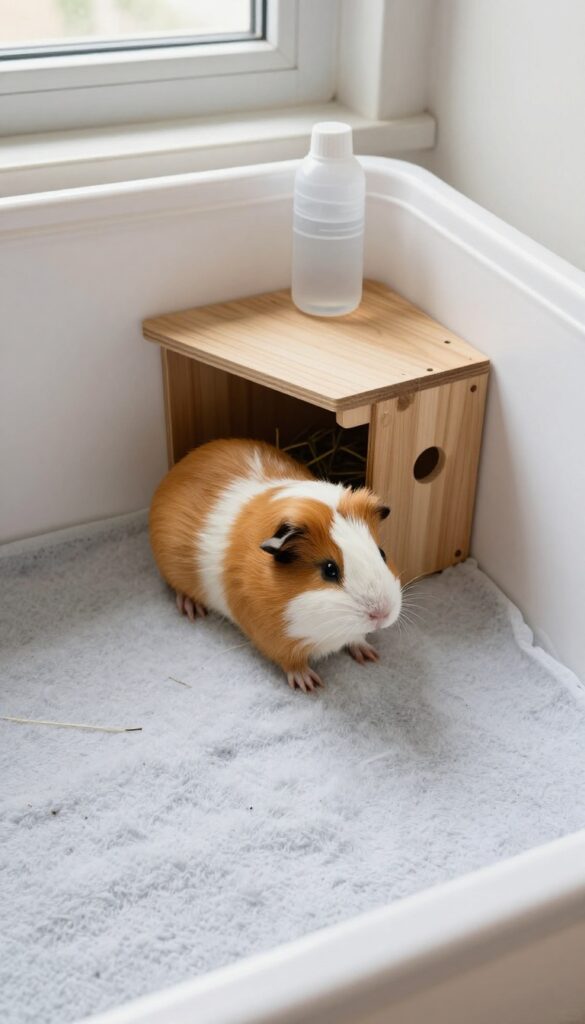
Choosing the right materials for your guinea pig enclosure can make or break your cleaning routine. Porous or absorbent surfaces trap urine and odors, turning daily spot-cleaning into a major chore. Here’s what to use and what to avoid for a habitat that stays fresh and easy to maintain.
Materials to Embrace
- Smooth plastic or coroplast bases: These wipe clean in seconds and don’t absorb moisture.
- Vinyl flooring or linoleum: A great base layer that can be mopped or wiped down quickly.
- Sealed wood or melamine: If you prefer a wooden frame, ensure all surfaces are sealed with a pet-safe, waterproof coating.
Materials to Avoid
- Raw or untreated wood: Absorbs urine, leading to permanent odors and bacterial growth.
- Carpet or fabric: Traps moisture and is nearly impossible to fully sanitize.
- Porous stone or brick: Hard to clean and can harbor bacteria.
Practical Habitat Details
In a well-designed guinea pig enclosure, the base should be non-absorbent and easy to access. Pair your smooth base with a washable fleece liner or a layer of paper bedding. Place hideouts, hay racks, and water bottles on trays or in areas that can be removed for cleaning.
Ensure adequate ventilation and at least 7.5 square feet of floor space for two guinea pigs. Chew-safe enrichment like cardboard tunnels or wooden toys can be wiped down or replaced easily.
Design a Modular Cage with Easy-Access Panels
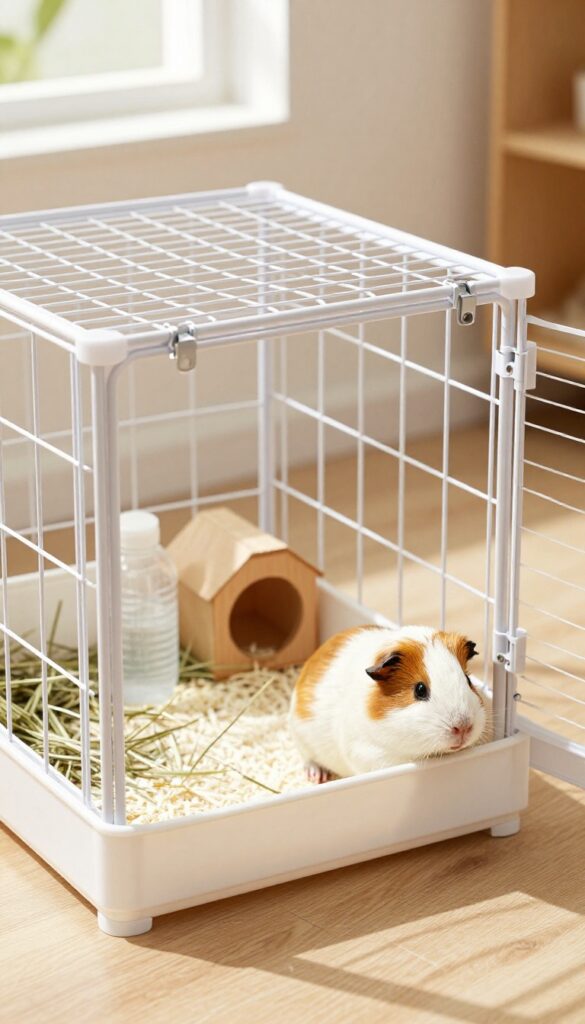
For large enclosures, full disassembly for cleaning is a hassle. A modular cage with removable panels lets you clean one section at a time without disturbing your guinea pigs.
Start with a modular grid system, such as cube grids or wire panels, that can be configured into any shape. Use connectors that are easy to detach and reassemble, like zip ties or quick-release clips. This setup allows you to remove a single panel for spot-cleaning or deep-cleaning a specific area.
- Choose grids with large enough gaps for ventilation but small enough to prevent escapes or head entrapment.
- Attach a removable panel near the feeding area for easy access to hay racks and water bottles.
- Use a solid plastic base or tray under the grids to contain bedding and mess.
- Add a hideout or tunnel in each section so guinea pigs feel secure during partial cleaning.
Place Water Bottles and Food Bowls on a Tray
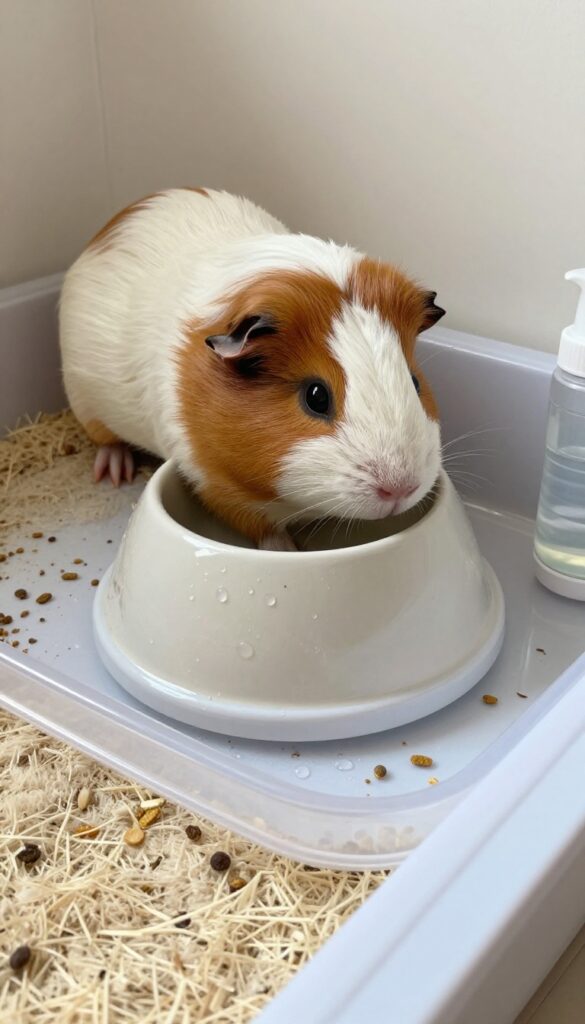
A simple tray under your guinea pig’s water bottle and food bowl can dramatically reduce daily cleanup time. It catches drips, spilled pellets, and stray hay before they reach the cage floor.
Choose a shallow, waterproof tray—such as a boot tray or a plastic cafeteria tray—that fits easily under the bottle and bowl. The tray should have raised edges to contain messes but be low enough for your guinea pig to step onto comfortably. When cleaning, simply slide out the tray, rinse it off, and wipe it dry.
This keeps the main bedding or fleece liner cleaner for longer.
Tray Placement and Material
- Use a plastic or stainless steel tray that is easy to wipe and won’t rust.
- Place the tray directly under the water bottle spout to catch drips.
- Ensure the tray is large enough to also hold a heavy ceramic food bowl.
Bowl Stability
A heavy ceramic bowl prevents tipping and keeps food contained on the tray. Avoid lightweight plastic bowls that guinea pigs can flip, scattering food across the cage. With both bowl and bottle on the tray, you can spot-clean the tray daily and do a deeper clean weekly, making the rest of the enclosure easier to maintain.
Use a Cage Liner with a Built-In Pee Pad Pocket
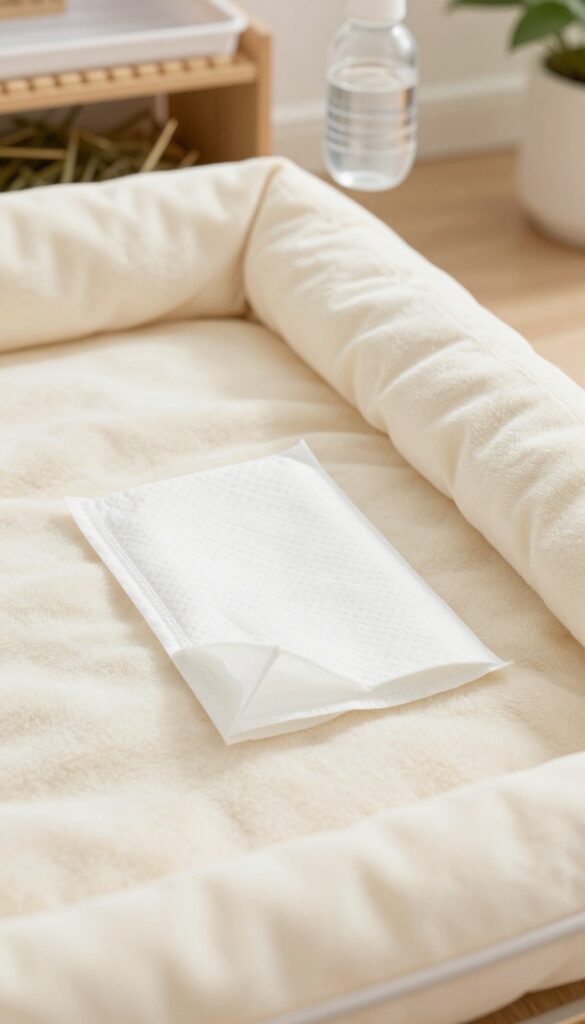
A cage liner with a built-in pocket for disposable pee pads adds an extra layer of absorbency and simplifies daily cleaning. This design lets you replace the soiled pad quickly without stripping the entire liner, keeping the enclosure fresh with minimal effort.
The pocket is typically sewn into one end of the fleece liner, sized to hold a standard pee pad securely. During setup, you simply slide a fresh pad into the pocket, and when it’s soiled, you remove and replace it—usually once a day. The rest of the liner stays in place, reducing laundry frequency and wear.
- Pocket design: The pocket is open on one side, allowing easy insertion and removal of disposable pads. It’s often located where guinea pigs tend to urinate most, such as near the hay rack or water bottle.
- Pad replacement frequency: Replace the pee pad daily or as soon as it becomes saturated. This prevents ammonia buildup and keeps the fleece layer dry longer.
- Guinea pig cage relevance: This liner is designed specifically for small pet habitats. It fits standard cage sizes and works with fleece bedding systems, providing a clean, soft surface for guinea pigs.
- Small pet habitat practicality: The pocket liner reduces the need for full bedding changes, saving time and money. It also minimizes dust and mess compared to loose bedding, and the fleece top is gentle on guinea pig feet.
Create a Poop-Free Zone with a Loft or Second Level
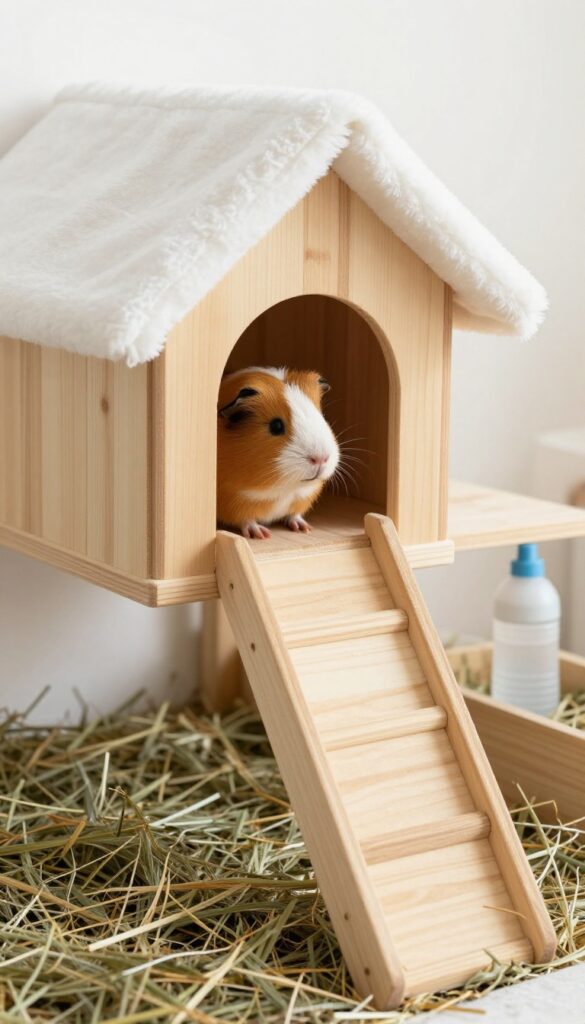
A loft or second level can become a cleaner zone where your guinea pigs spend time without soiling it as much. By design, guinea pigs tend to poop and pee more where they eat and sleep, so separating the loft from the main level helps concentrate mess in one area.
To make this work, use solid flooring in the loft—fleece or a washable liner works well. Avoid wire or grid floors, which can hurt guinea pig feet and let waste fall through. The solid surface stays cleaner because guinea pigs typically don’t eliminate as much in elevated areas they use for lounging or watching their surroundings.
Key points for a successful loft design
- Line the loft with fleece over a u-haul pad or absorbent layer for easy spot cleaning.
- Provide a hideout or tunnel on the loft so guinea pigs feel secure.
- Ensure the ramp is wide, non-slip, and easy to remove for cleaning. A ramp with sides prevents falls.
- Place a hay rack and water bottle on the main level to encourage eating and drinking there, keeping the loft cleaner.
- Clean the loft once or twice a week, while the main level may need daily spot cleaning.
This design not only reduces cleaning time but also enriches your guinea pigs’ environment with vertical space. Just make sure the loft is at least 2–3 square feet per pig and the overall cage meets minimum size requirements.
Use a Cage with a Pull-Out Tray Bottom
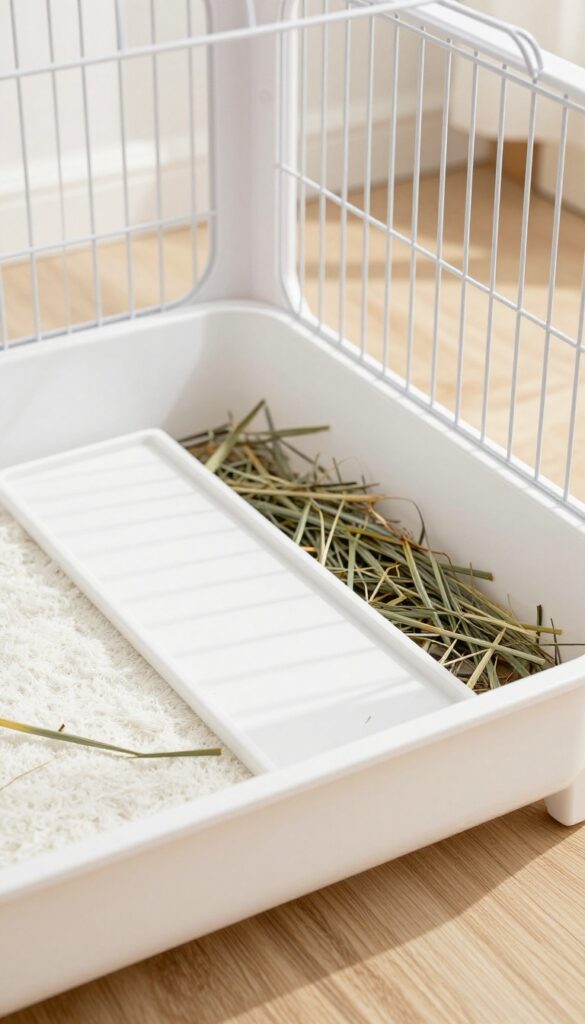
A cage with a pull-out tray bottom is one of the most convenient designs for quick daily cleaning. Instead of reaching into the cage or disassembling parts, you simply slide out the tray, dump the soiled bedding, wipe it down, and slide it back in. This system is especially helpful for heavy or large cages that are difficult to move.
The tray mechanism typically consists of a removable plastic or metal pan that sits beneath the cage floor. Many commercial guinea pig cages, such as the Midwest Guinea Habitat or the Living World Deluxe Habitat, come with a pull-out tray. When shopping, look for trays with high sides (at least 2–3 inches) to contain bedding, hay, and droppings.
Some trays have a smooth surface that is easy to wipe, while others may have a textured bottom to prevent slipping.
Practical tips for pull-out tray cages
- Choose a tray with a waterproof lining to prevent urine from seeping into the cage frame.
- Line the tray with newspaper or a disposable pad before adding fleece or bedding to simplify dumping.
- If the tray is metal, check for rust-resistant coating; plastic trays are lighter and easier to clean.
- Ensure the tray slides out smoothly without catching on cage corners or supports.
- For extra convenience, place a thin layer of baking soda at the bottom of the tray to neutralize odors before adding bedding.
Pull-out tray cages are ideal for guinea pig owners who want to minimize cleaning time without sacrificing habitat quality. They work well with fleece liners, paper bedding, or even a combination of both. Just remember to spot-clean the tray daily and do a full wash weekly to keep the enclosure fresh and hygienic.
FAQ
How often should I clean my guinea pig’s cage?
Spot-clean daily (remove soiled bedding, wipe surfaces) and do a full cleanout weekly (replace all bedding, disinfect cage).
What is the best bedding for easy cleaning?
Fleece liners with an absorbent layer are easiest for daily spot-cleaning. They trap waste on top and can be shaken out and washed weekly.
Can I use a litter box for guinea pigs?
Yes, many guinea pigs can be litter trained. Place a small litter tray with paper-based litter in their favorite elimination spot (often near food).
How do I prevent hay from getting all over the cage?
Use an external hay rack or a hay bag attached outside the cage. Guinea pigs pull hay through bars, reducing waste inside.
What cage size is best for easy cleaning?
Larger cages (at least 7.5 sq ft for one pig, more for two) with removable panels or pull-out trays make cleaning easier. Avoid cages with small doors.
Conclusion
An easy-to-clean enclosure doesn’t have to be expensive or complicated. By incorporating these design ideas—like fleece liners, external hay racks, and modular panels—you can cut daily cleaning time in half.
Your guinea pigs will enjoy a cleaner, healthier environment, and you’ll have more time to bond with them. Start with one or two changes and see the difference!

I’m Pallab Kishore, the owner of Little Pets Realm — an animal lover and pet care enthusiast sharing easy tips, healthy recipes, and honest advice to help every small pet live a happy, healthy, tail-wagging life.