Last updated on August 19th, 2026 at 04:19 pm
Setting up a guinea pig cage isn’t just about throwing in some bedding and a water bottle. A well-planned layout can make your piggies happier, healthier, and your cleaning routine easier.
In this article, we’ll explore 13 smart cage setup ideas that maximize space, comfort, and fun for your furry friends.
From C&C cages to fleece forests, these layout tricks will transform your guinea pig’s home into a palace.
Use a C&C Cage for Maximum Customization
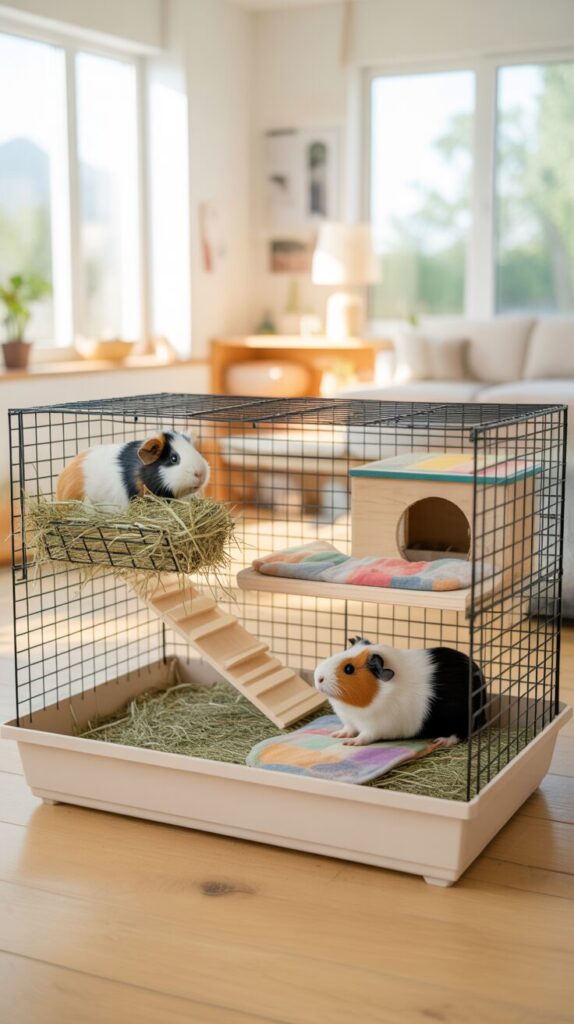
C&C (cube and coroplast) cages are the gold standard for guinea pig enclosures. Their modular design lets you expand, reconfigure, and add features as your herd grows.
The basic C&C cage consists of wire grid cubes and a coroplast base. You can easily connect multiple cages or add a loft for extra floor space. The minimum recommended space for two guinea pigs is 7.5 square feet, but larger is always better.
- Modular grids allow you to create custom shapes (L-shape, rectangle, etc.)
- Coroplast base is waterproof and easy to clean
- Add shelves, ramps, and lofts for vertical enrichment
- Open top provides excellent ventilation
When setting up your C&C cage, place a thick layer of fleece or paper bedding on the coroplast. Add a hay rack, water bottle, and at least one hideout per pig. The open grid walls allow you to attach accessories like tunnels or foraging toys.
With a C&C cage, you can tailor the layout to your guinea pigs’ needs while keeping maintenance simple.
Create a Cozy Hideout Corner
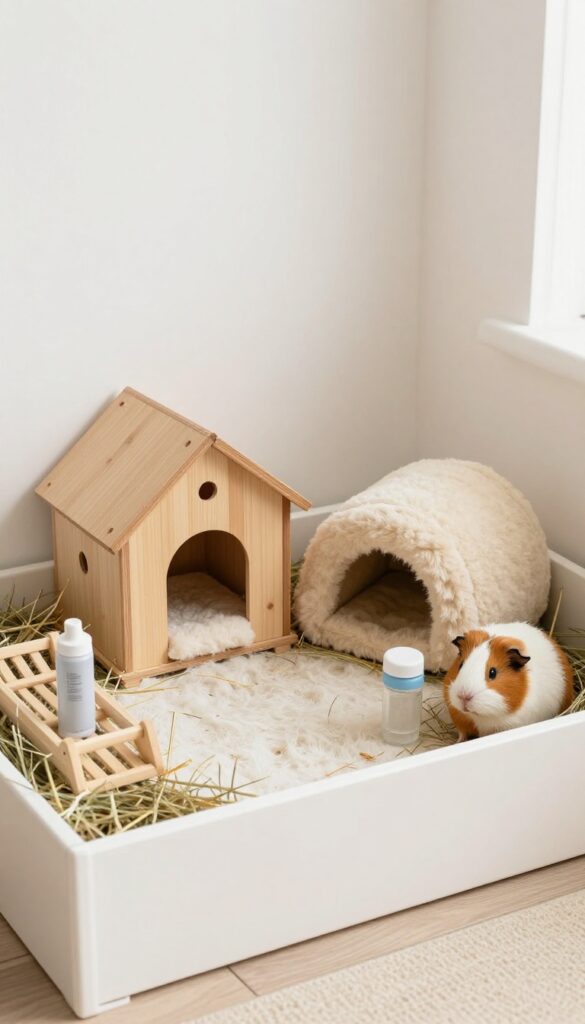
Guinea pigs are prey animals and need secure places to retreat. A dedicated hideout corner in their cage gives them the safety they crave while adding visual interest to the setup.
Place multiple hideouts—such as wooden houses, fleece tunnels, or igloos—in a quiet corner of the cage away from high-traffic areas. This reduces stress and encourages natural hiding behavior.
- Provide at least one hideout per guinea pig to prevent competition and ensure each pig has a safe space.
- Choose hideouts with two exits so your pigs never feel trapped—this is crucial for their sense of security.
- Use soft bedding like fleece or paper-based bedding inside the hideouts for extra comfort and warmth.
- Keep the hideout corner near a hay rack and water bottle so your pigs can eat and drink without leaving their safe zone.
Arrange the hideouts so they create a little village—pigs love to pop in and out of different shelters. Make sure the corner has good ventilation and is easy to access for cleaning. This simple layout trick turns a bare cage into a cozy, pig-friendly home.
Designate a Hay Station
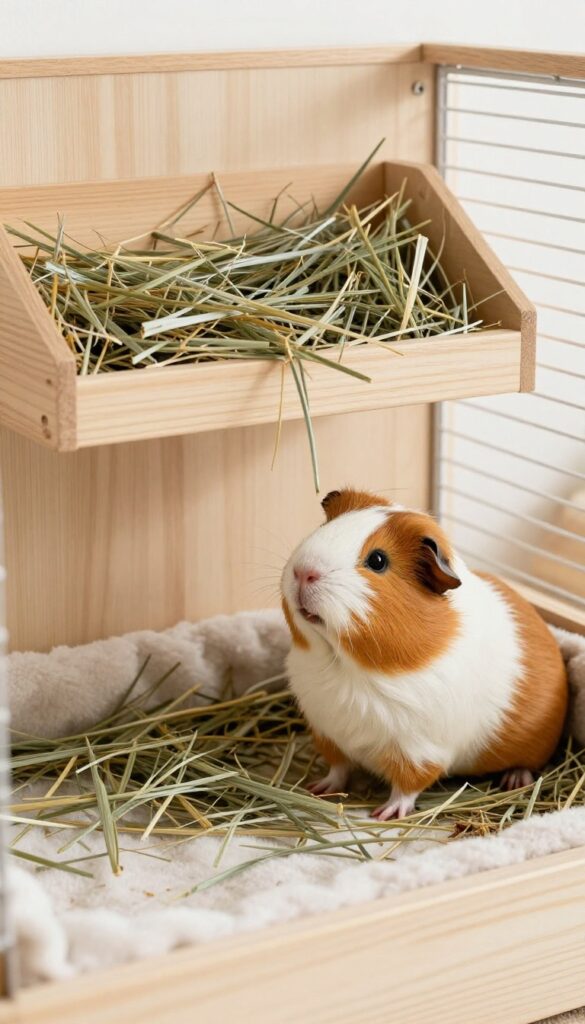
A dedicated hay station keeps the staple food clean, accessible, and reduces waste. It also encourages natural foraging behavior.
Place a hay rack or DIY hay bin on the cage wall near the main activity area so your guinea pigs can munch while exploring. Use a rack with small openings to prevent them from climbing in, or try a wooden hay bin that doubles as a hideout. For floor space savings, consider a hay loft—a raised platform with a hay trough underneath.
- Best hay types: Timothy hay (daily staple), orchard grass (low dust), or oat hay (occasional treat). Avoid alfalfa for adults due to high calcium.
- Position the station away from the litter corner to keep hay dry and clean.
- Use a fleece liner or shallow tray underneath to catch stray hay pieces for easy cleanup.
Set Up a Fleece Liner System
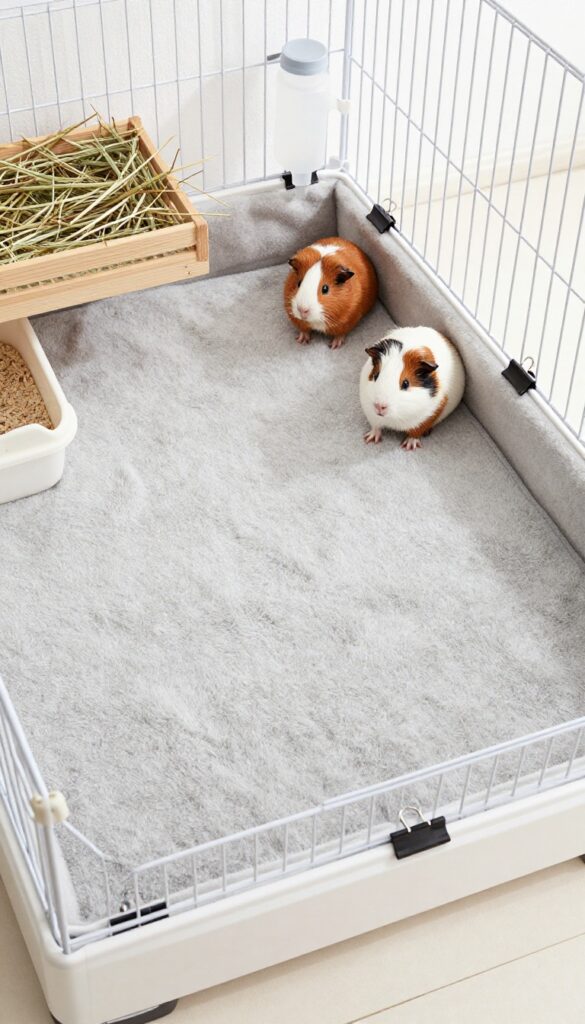
Fleece liners are a game-changer for guinea pig cages. They are reusable, absorbent, and make cleaning much easier than disposable bedding. Here’s how to set one up effectively.
Start by layering absorbent padding, such as U-Haul furniture pads or towel layers, under a soft fleece top. The fleece wicks moisture away from your piggies’ feet, keeping them dry and comfortable. Secure the edges with binder clips or cage grids to prevent burrowing.
Key tips for a successful fleece liner system
- Use at least two layers of absorbent material (e.g., towel + U-Haul pad) for maximum absorption.
- Place a small litter box filled with paper bedding in a corner your guinea pigs already use as a bathroom. This simplifies daily spot cleaning.
- Shake off hay and droppings into a trash bin every day, and wash the fleece liner weekly with unscented detergent.
- Ensure the liner covers the entire cage floor to prevent urine from soaking into the cage base.
A fleece liner system works well with any cage type, from C&C grids to store-bought habitats. It’s especially practical for multi-pig setups because you can quickly swap out soiled liners. Pair it with a hay rack and water bottle mounted on the cage walls to keep the fleece dry and clean.
Incorporate a Loft or Second Level
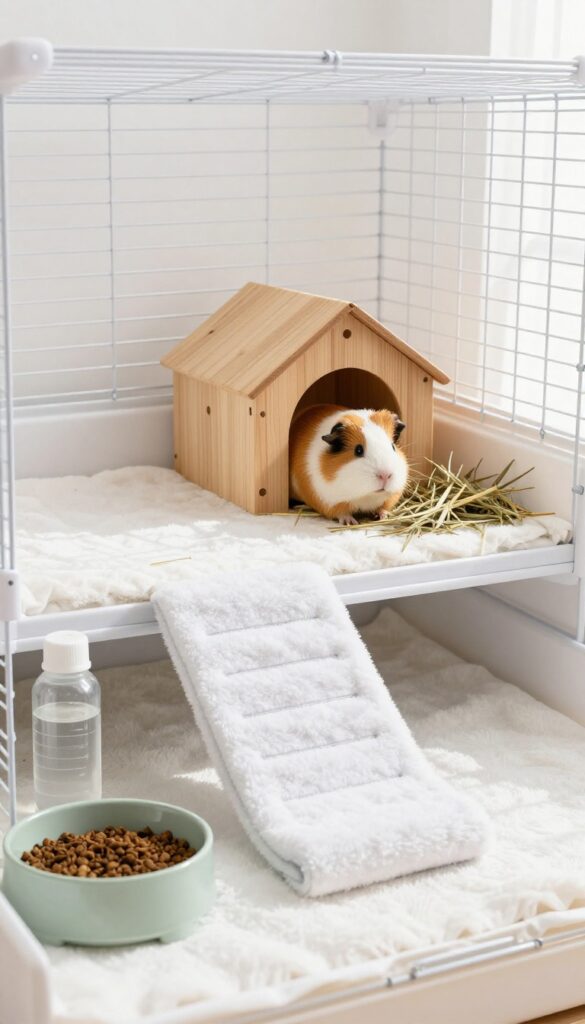
Adding a loft is one of the smartest layout tricks for a guinea pig cage—it instantly doubles usable space without taking up more floor area. Guinea pigs love having a raised area to explore, nap, or munch hay, and it keeps the cage feeling open and spacious.
When planning a loft, safety comes first. Use a ramp with a gentle slope and solid sides to prevent falls. The ramp should be wide enough for your guinea pig to walk comfortably, and the loft itself must be large enough to hold a hideout or a hay feeder.
Always secure the loft so it doesn’t wobble.
- Choose a ramp with a 30-degree angle or less and add grip strips for traction.
- The loft floor should be solid (not wire) and covered with fleece or bedding for comfort.
- Place a hideout or a hay pile on the loft to encourage use.
- Ensure the loft doesn’t block ventilation or access to water bottles and food bowls below.
- For C&C cages, use coroplast shelves and zip-tie them securely to the grid walls.
Add a Soft Bedding Section in the Cage
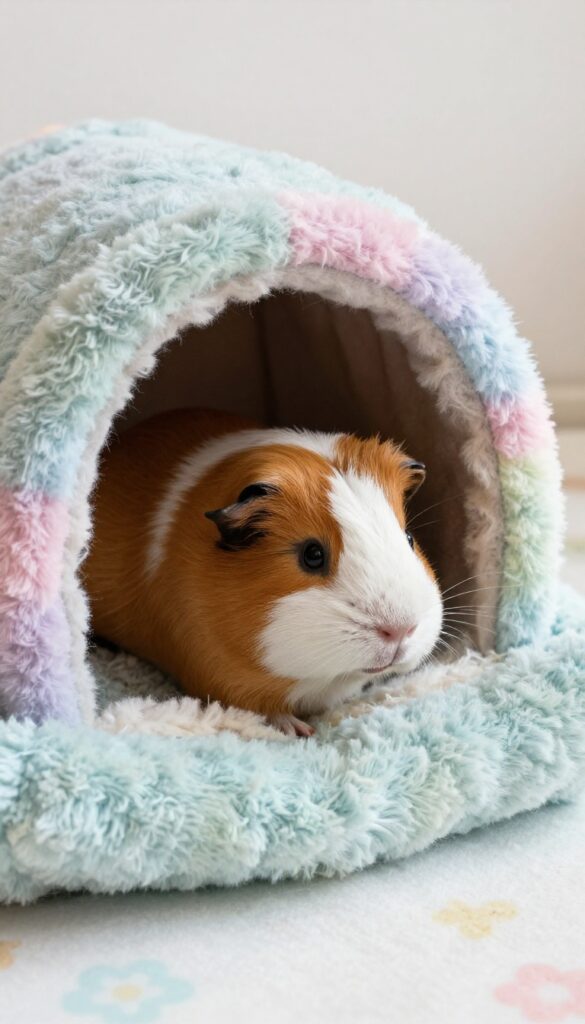
Guinea pigs love to snuggle into soft, cozy areas. Designate a specific corner of the cage with extra plush bedding where they can rest and feel secure.
Choose a fleece liner or a thick layer of soft paper bedding for this section. Avoid cedar or pine shavings, as the oils can irritate their respiratory systems. Place a small hideout or a fleece tunnel in this area to give them a sense of enclosure.
Ensure the bedding is spot-cleaned daily and fully replaced weekly to keep it fresh and dry.
Key Tips
- Use a washable fleece pad or a dedicated bedding tray for easy maintenance.
- Place the soft bedding away from the main traffic path and water bottles to keep it dry.
- Add a small stuffed animal or a cuddle cup for extra comfort—guinea pigs often enjoy leaning against something soft.
Create a Play Area with Tunnels and Toys
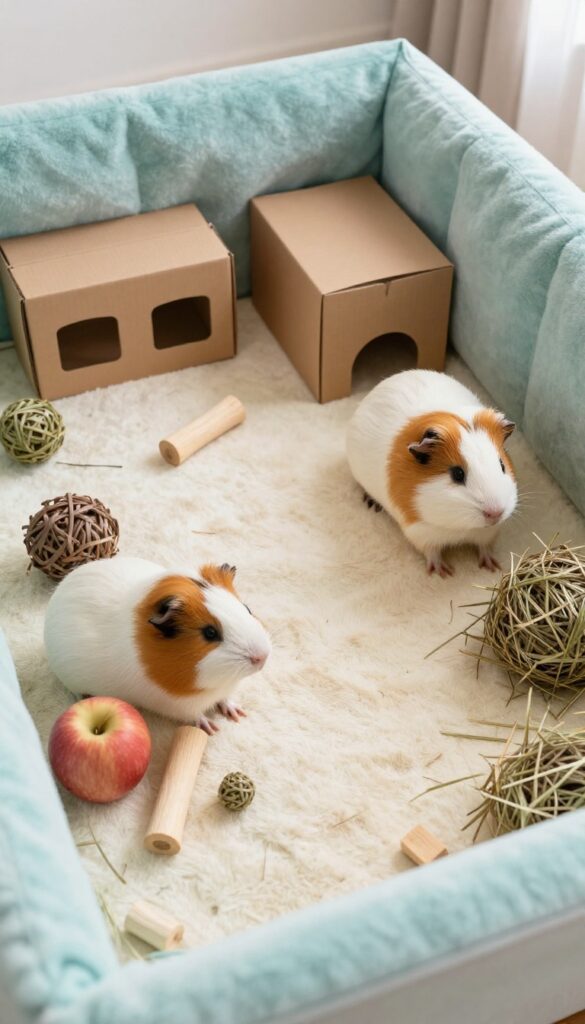
Guinea pigs are active explorers that need mental stimulation and physical exercise. Dedicate a section of the cage as a play zone filled with tunnels, hideouts, and safe chew toys to keep them happy and healthy.
Enrichment Ideas for the Play Area
- Add fleece tunnels or PVC pipes (smooth edges) for burrowing and running through.
- Include cardboard boxes with multiple entrances for hide-and-seek play.
- Provide chew toys like willow balls, apple sticks, or untreated wooden blocks to satisfy natural gnawing instincts.
- Rotate toys weekly to maintain novelty and prevent boredom.
- Place a small pile of hay or a hay ball in the play area to encourage foraging.
Safety First
Always ensure toys are non-toxic and free of small parts, sharp edges, or loose strings that could be ingested. Avoid plastic toys that can break into sharp pieces. Supervise new toys initially to confirm they are guinea-pig-proof.
Practical Layout Tip
Position the play area away from the litter corner and hay station to keep it clean. Use a fleece liner or washable mat underneath for easy cleanup. Ensure the play zone still has access to water and a hideout so your piggy can retreat when tired.
Use a Corner Litter Box for Easy Cleanup
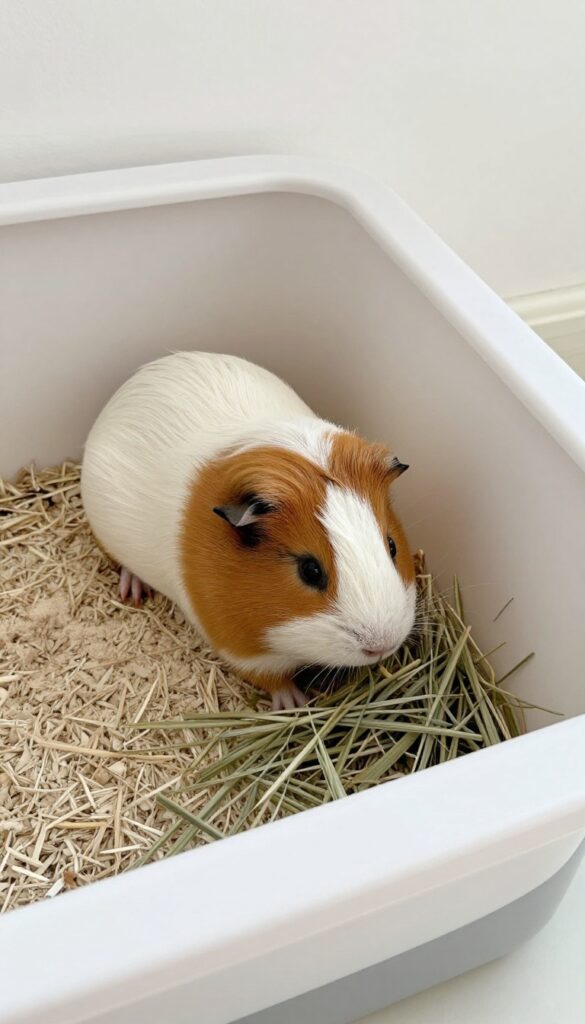
Guinea pigs often choose a specific corner for their bathroom habits, making a corner litter box a smart addition to the cage. Placing a litter box in that spot not only simplifies daily cleaning but also helps keep the rest of the habitat fresher longer.
To set up an effective litter box, choose a corner-sized box that fits snugly into the cage corner. Fill it with paper-based bedding, which is highly absorbent and controls odors better than wood shavings. Avoid clay or clumping cat litters, as they can be harmful if ingested.
Place a small pile of hay in or near the box to encourage your guinea pig to use it while they eat.
Key tips for success
- Observe which corner your guinea pig uses most and place the litter box there.
- Use paper-based bedding for maximum absorption and odor control.
- Clean the litter box daily—scoop out soiled bedding and replace with fresh.
- Ensure the litter box is low enough for easy access and doesn’t block water or food stations.
- Combine with a fleece liner or other bedding to contain messes and simplify full cage cleanings.
Place Hideouts Along the Cage Back Wall
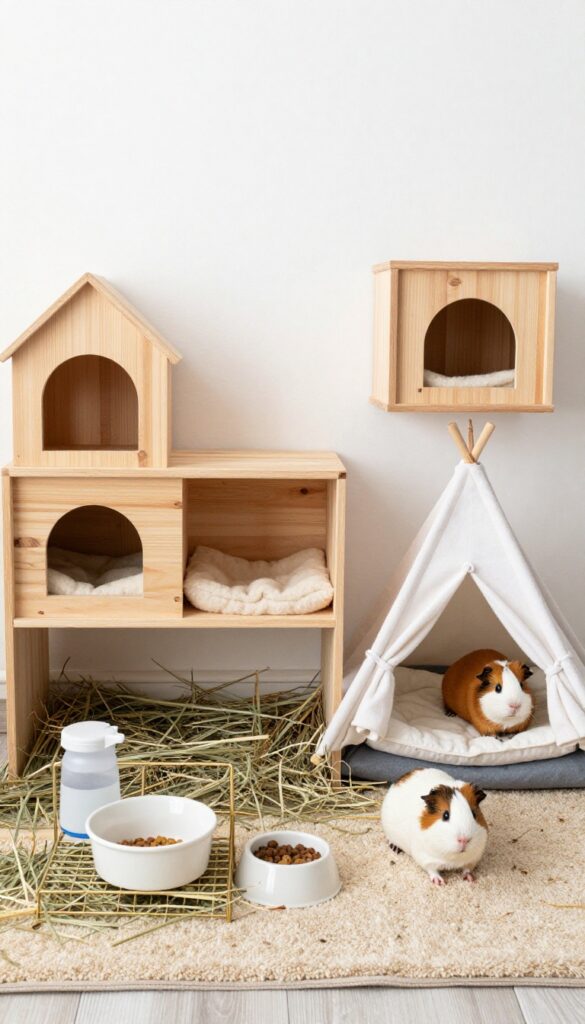
Positioning hideouts along the back wall of the cage creates a secure, low-traffic retreat zone that mimics guinea pigs’ natural preference for cover.
Guinea pigs feel safest when they can access hiding spots without being in the middle of activity. Placing hideouts along the back wall keeps them out of the main flow of the cage while still allowing easy access to food, water, and hay.
Key tips for hideout placement
- Use at least one hideout per pig to reduce competition and stress.
- Choose hideouts with two entrances so pigs can escape if needed.
- Place heavier ceramic or wooden hideouts along the wall to prevent tipping.
- Avoid hideouts with wire or small openings that could trap feet.
- Leave a gap between hideouts and the wall for easy cleaning access.
This layout also helps define separate zones in the cage: the back wall becomes a quiet sleeping area, while the front remains open for feeding and play. Line the hideouts with soft fleece or paper bedding for extra comfort.
Ensure Proper Ventilation and Cage Placement
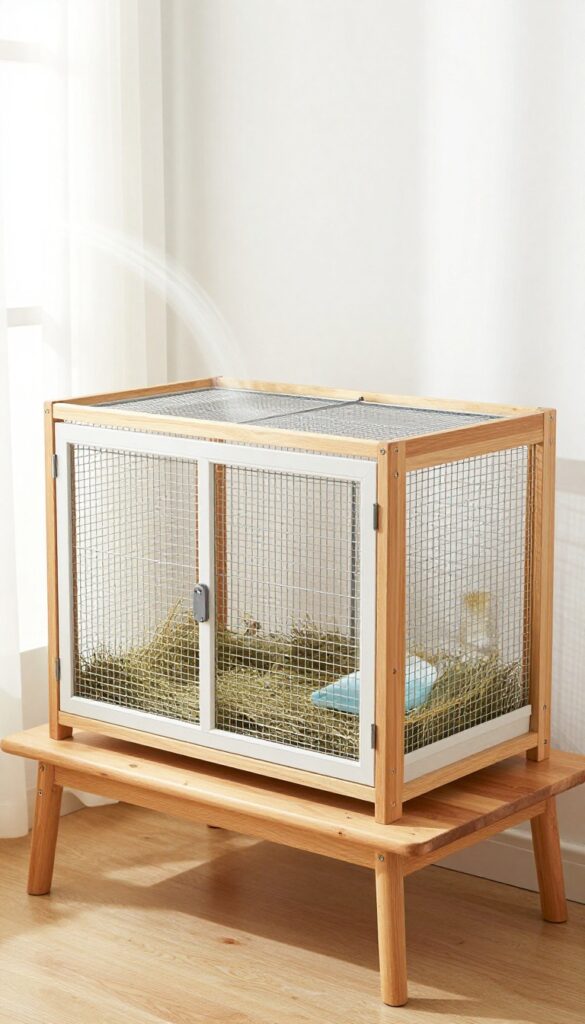
Where you place the cage affects your guinea pigs’ health and comfort. Good ventilation prevents ammonia buildup from urine, while a quiet, draft-free location reduces stress.
Placement Tips
- Choose a room with steady airflow but no direct drafts on the cage. Avoid placing near windows, doors, or air vents.
- Keep the cage out of direct sunlight to prevent overheating and algae growth in water bottles.
- Set the cage in a low-traffic area like a spare bedroom or quiet corner of the living room. Too much noise and movement can stress guinea pigs.
- Elevate the cage on a sturdy table or stand (at least 2 feet off the floor) to improve airflow and reduce dust exposure.
- Ensure the cage has mesh or bar sides for cross-ventilation. If using a solid-sided enclosure, add ventilation panels.
Add a Fleece Forest or Foraging Area
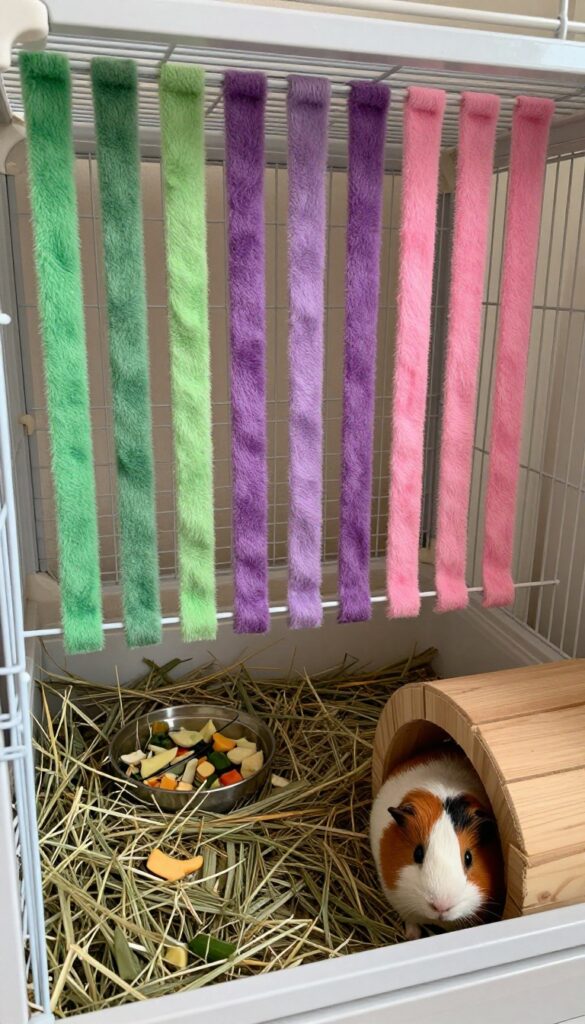
A fleece forest is a simple DIY enrichment that turns a corner of the cage into a fun hiding and foraging zone. Guinea pigs love to burrow through the soft strips and search for hidden treats.
To make a fleece forest, cut strips of fleece fabric (about 1–2 inches wide and 8–12 inches long) and tie them securely to a small grid or piece of coroplast. Hang the grid vertically in the cage so the fleece strips dangle down. Place a shallow dish of hay or a few treats among the strips to encourage natural foraging behavior.
- Use leftover fleece from cage liners or buy inexpensive fabric scraps.
- Ensure the grid is stable and won’t tip over; secure it to the cage bars if needed.
- Hide hay, dried herbs, or small veggie pieces in the strips for your guinea pig to find.
- Spot-clean the fleece strips regularly and wash them when soiled.
- Combine with a hideout or tunnel nearby for a complete enrichment corner.
This setup works well in any guinea pig cage because it takes up minimal floor space while adding vertical interest. It also encourages natural behaviors like burrowing and foraging, which keeps your pet mentally stimulated and active.
Use a Cage Divider for Multi-Pig Harmony
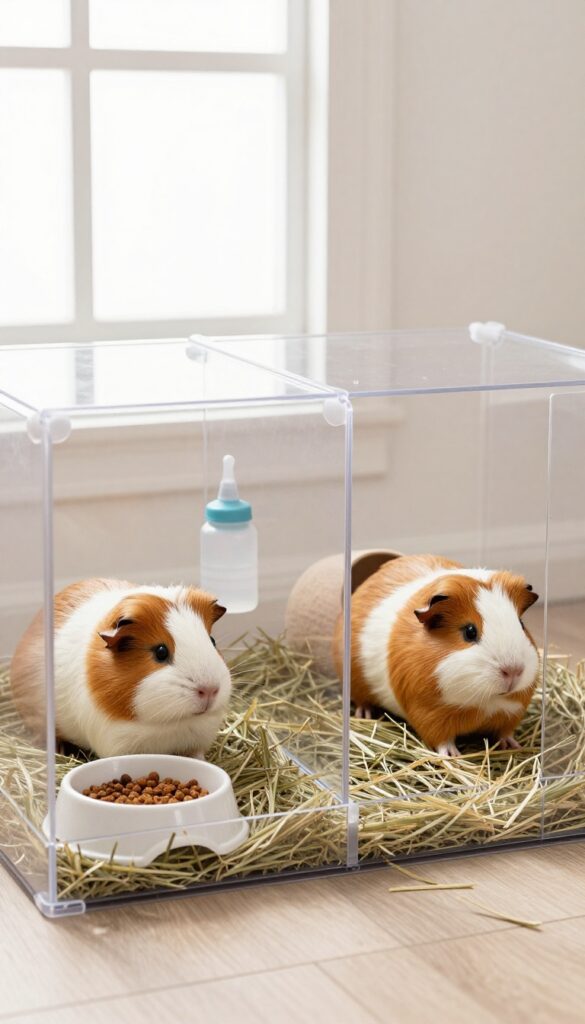
Introducing new guinea pigs or managing temporary conflicts can be stressful. A cage divider lets you keep pigs in the same enclosure while giving each their own space, making introductions smoother and reducing the need for a separate quarantine cage.
A simple divider can be made from a grid panel or a coroplast sheet with holes for airflow and visibility. This allows the pigs to see, hear, and smell each other without physical contact, which is key during the introduction process.
- Use a sturdy divider that reaches the cage floor to prevent escapes.
- Ensure each side has its own food bowl, water bottle, hideout, and hay pile.
- Check that the divider doesn’t block ventilation or cleaning access.
- Monitor interactions daily and remove the divider once pigs are comfortable together.
Keep a Cleaning Caddy Near the Cage
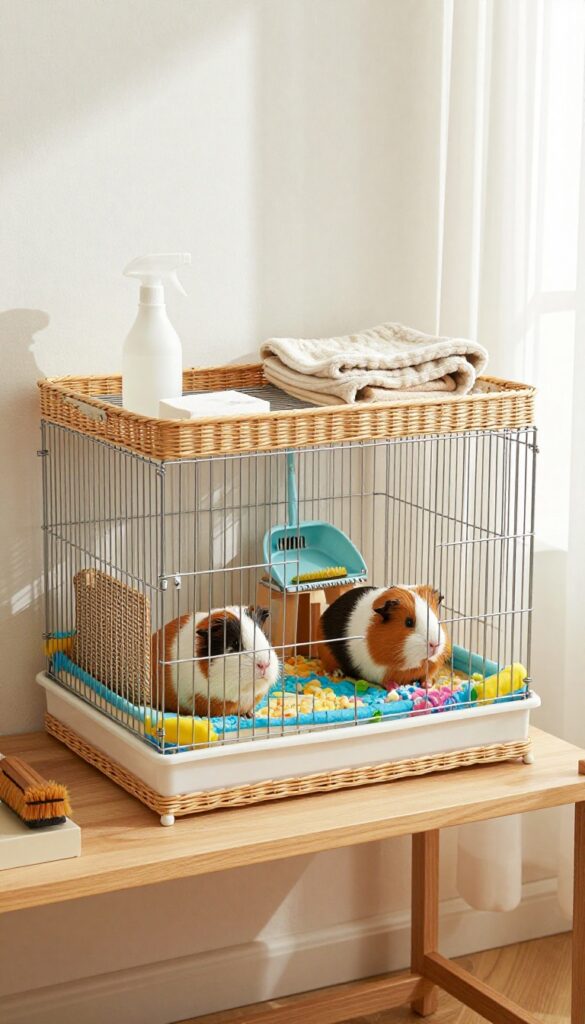
A cleaning caddy stocked with essentials right next to the cage makes daily spot-cleaning effortless and keeps the habitat fresh for your guinea pigs.
Store a small caddy or basket near the cage containing vinegar spray (for safe disinfecting), paper towels, a small dustpan and brush for hay debris, and spare fleece pieces for quick liner swaps. This setup encourages you to tidy up daily, preventing odor buildup and maintaining a healthy environment.
- Keep vinegar spray, paper towels, and a dustpan in a caddy next to the cage.
- Include spare fleece or towels for quick liner changes.
- A small brush helps sweep up hay and poop from the cage floor.
- Store a trash bag or bin nearby for easy disposal.
FAQ
What is the minimum cage size for two guinea pigs?
The minimum recommended size for two guinea pigs is 7.5 square feet (e.g., 30″ x 36″), but larger is always better. A 2×4 C&C grid cage (about 10.5 sq ft) is ideal.
Can I use a wire-bottom cage for guinea pigs?
No, wire-bottom cages can hurt guinea pigs’ feet and cause bumblefoot. Always use a solid floor with soft bedding or fleece liners.
How often should I clean the cage?
Spot clean daily (remove soiled bedding, wipe surfaces). Do a full cage clean (replace all bedding, wash fleece) every 1-2 weeks, depending on the number of pigs.
Conclusion
Use these ideas as a flexible starting point, then adjust the details to fit your needs, space, schedule, or goals.

I’m Pallab Kishore, the owner of Little Pets Realm — an animal lover and pet care enthusiast sharing easy tips, healthy recipes, and honest advice to help every small pet live a happy, healthy, tail-wagging life.