Last updated on August 19th, 2026 at 04:19 pm
Keeping a guinea pig cage clean can feel like a full-time job, but with the right setup, daily care becomes quick and hassle-free.
These 11 ideas focus on reducing mess, simplifying cleaning, and keeping your piggies happy.
From fleece liners to external hay racks, each tip is designed to save you time while maintaining a healthy habitat.
Use Fleece Liners Over Disposable Bedding
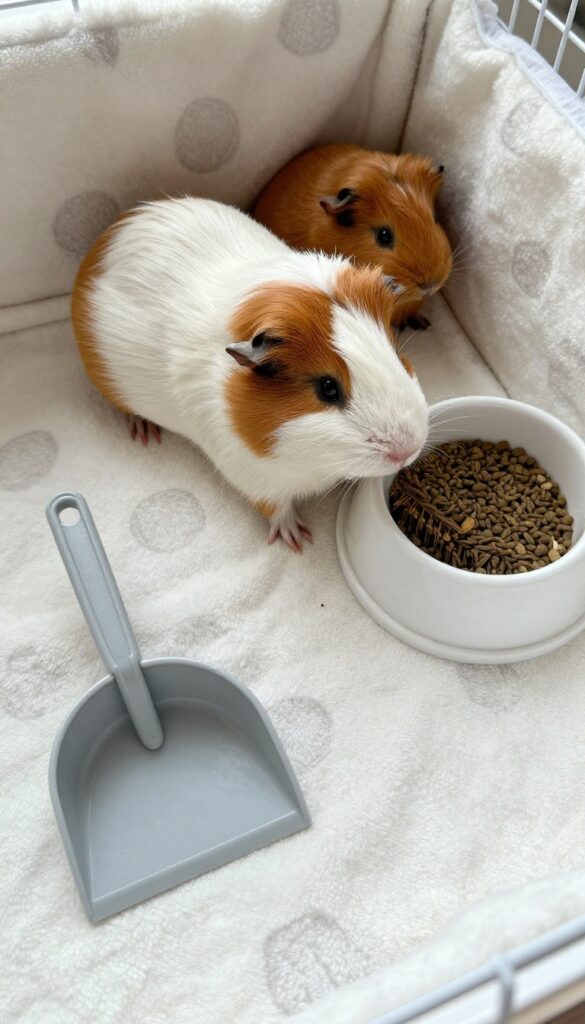
Switching to fleece liners is one of the most effective ways to streamline your daily cage cleaning routine. Unlike disposable bedding, fleece wicks moisture away from the surface, keeping your guinea pigs dry and comfortable while making spot-cleaning a breeze.
Fleece liners consist of an absorbent core (often cotton or microfiber) sandwiched between two layers of fleece. The top layer stays dry to the touch, while urine passes through and is trapped in the core. This design reduces odor and prevents your guinea pigs from sitting in wet bedding.
Here’s how fleece compares to disposable bedding for daily care:
- Cost: Initial investment in fleece liners is higher, but they pay for themselves within months since you wash and reuse them. Disposable bedding requires constant repurchasing.
- Cleaning time: Spot-cleaning fleece takes just a few minutes with a small dustpan and brush. Disposable bedding often needs full changes every few days.
- Waste: Fleece liners produce far less landfill waste. Disposable bedding creates bags of trash weekly.
- Comfort: Fleece is soft and warm, while some disposable beddings (like wood shavings) can be dusty or rough.
To spot-clean fleece liners daily, use a handheld dustpan and brush to sweep up poops and any soiled hay. Focus on high-traffic areas like near the food bowl and hideouts. Once a week, remove the liners, shake off debris outdoors, and machine wash them with a pet-safe detergent.
Avoid fabric softeners, which can reduce absorbency. Hang dry or tumble dry on low.
For best results, place a layer of puppy pads or a washable mattress protector under the fleece liner to protect the cage base. This setup is ideal for C&C cages, Midwest habitats, or any enclosure with a flat, waterproof bottom. Pair with a hay rack, hideouts, and water bottles to create a complete, easy-care habitat.
Place a Hay Rack Outside the Cage
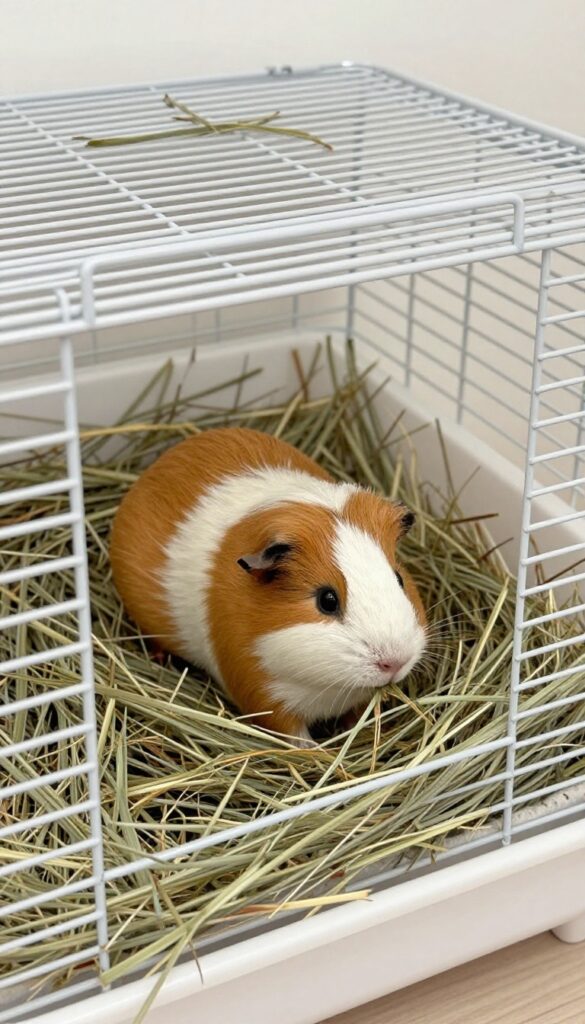
Hay is a staple of a guinea pig’s diet, but it can quickly turn a tidy cage into a mess. An external hay rack is a simple solution that keeps hay contained and reduces daily cleanup.
Instead of placing a hay rack inside the cage, attach one to the outside bars. Guinea pigs pull fresh hay through the bars as they need it, which means less hay gets trampled into the bedding or soaked with urine. This keeps the cage cleaner longer and makes spot-cleaning easier.
- Reduces mess: Hay stays in the rack, not scattered on the floor.
- Easy refill: You can add hay without opening the cage door.
- Less waste: Guinea pigs eat more hay when it’s clean and accessible.
- Better hygiene: Hay stays dry and free from soiled bedding.
Choose a hay rack designed for guinea pigs—avoid small openings meant for rabbits. The bars should be wide enough for your guinea pig to comfortably pull hay through but narrow enough to prevent them from climbing or getting stuck. Place the rack at a height where your guinea pigs can reach it easily, typically just above the bedding line.
This simple change can significantly cut down on daily cage maintenance.
Use a Corner Litter Box for Toilet Training
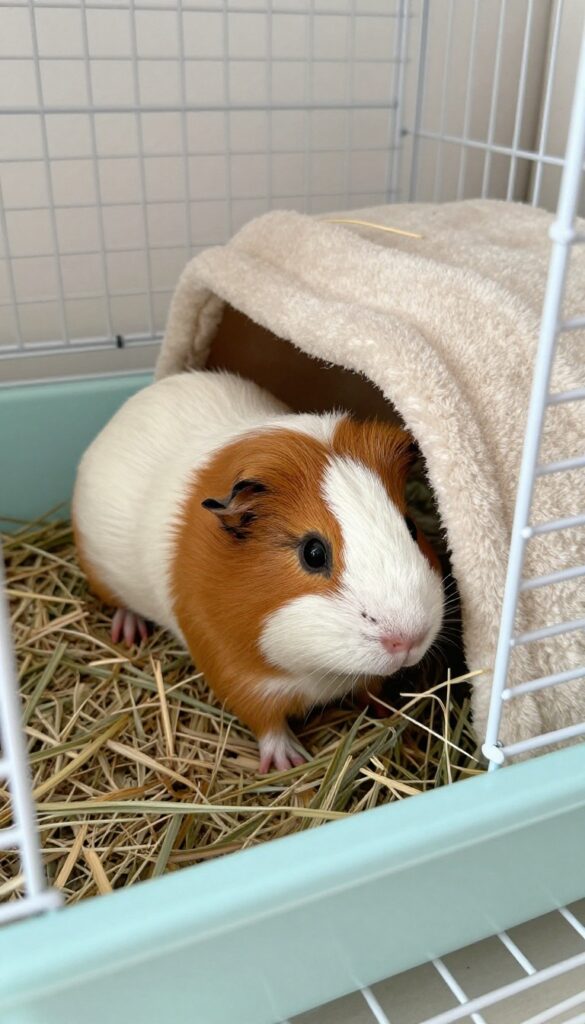
Guinea pigs are naturally clean animals and can be trained to use a litter box, which significantly reduces daily cage cleaning. A corner litter box placed in their preferred bathroom area concentrates waste, making spot-cleaning quick and easy.
Litter Box Training Basics
- Choose a small, low-sided corner litter box that fits snugly in the cage corner.
- Fill with a thin layer of paper-based or aspen bedding—avoid pine or cedar shavings.
- Place a small handful of hay in the box; guinea pigs often poop while eating hay.
- Clean the box daily by emptying soiled bedding and wiping the box with a pet-safe cleaner.
Placement Tips for Success
- Observe where your guinea pigs naturally eliminate most often—usually a corner away from food and sleeping areas.
- Position the litter box in that corner and secure it to prevent tipping.
- If you have multiple guinea pigs, consider two litter boxes in different corners.
- Keep the box accessible but not blocking access to hideouts, water, or main hay rack.
Relevance to Guinea Pig Cage Setup
A corner litter box is a simple addition that keeps the main cage cleaner longer. It reduces the frequency of full bedding changes and makes daily maintenance a breeze. For best results, use a litter box with a high back to prevent messes against the cage wall, and pair it with fleece liners or deep bedding in the rest of the cage.
This setup supports easy daily care by concentrating waste in one spot, so you can quickly scoop and refresh without disturbing the entire habitat.
Choose a Cage with a Deep Base or Guard
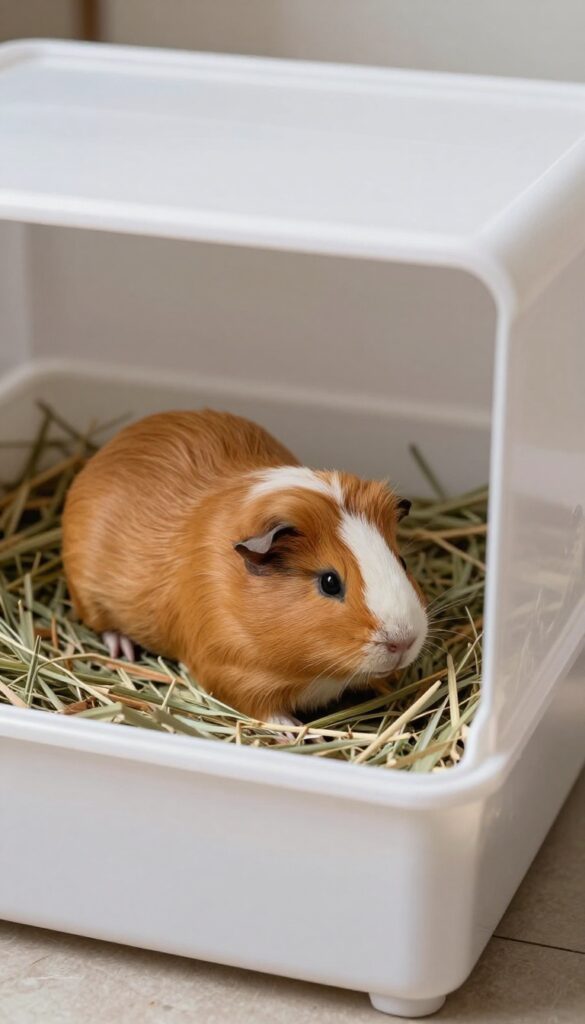
A deep base is one of the simplest ways to cut down on daily mess. When your guinea pig cage has sides that are at least 6 to 8 inches tall, bedding stays inside where it belongs, and you spend less time sweeping up stray hay and pellets from the floor.
Look for a cage with a solid plastic base or a removable guard that wraps around the bottom. Many popular guinea pig cages come with shallow trays, but those allow bedding to be kicked out easily. A deeper base solves that problem and also gives you room to pile up soft bedding for burrowing.
- Base depth of 6-8 inches is ideal for containing bedding and hay.
- Plastic bases are easy to wipe clean and resist moisture.
- Some cages come with a detachable guard that adds height without changing the footprint.
- Avoid cages with wire floors – they are uncomfortable for guinea pigs and hard to clean.
When shopping, check that the base is made from durable, non-toxic plastic. The deeper walls also help when you use loose bedding like paper or aspen shavings, since guinea pigs love to kick and rearrange their environment. A deep base keeps the mess contained, making your daily spot-cleaning faster and your floor cleaner.
Install a Drip-Proof Water Bottle
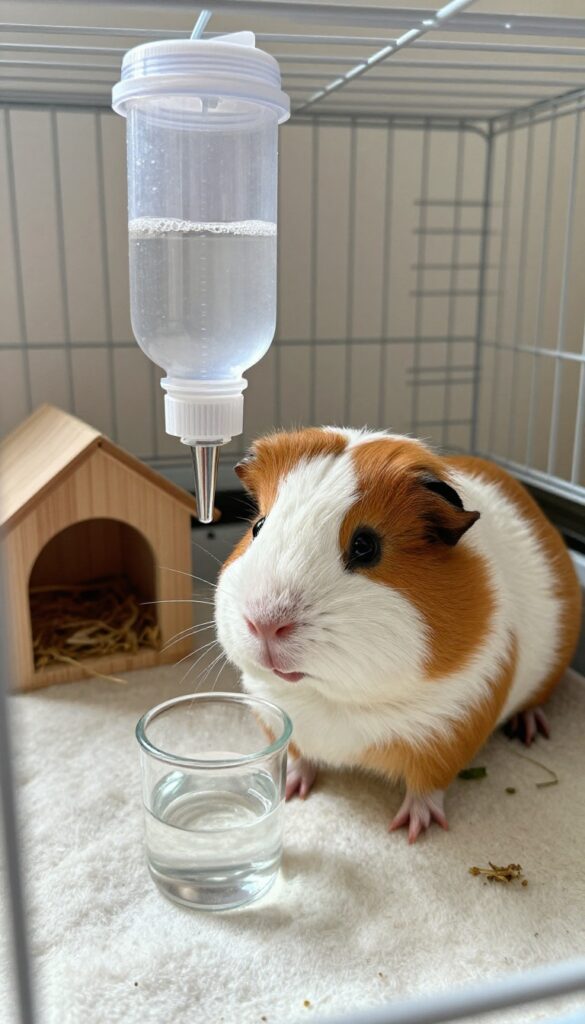
A leaky water bottle can soak bedding, create moldy spots, and add extra cleaning to your daily routine. Choosing a drip-proof design and mounting it correctly keeps the cage dry and your guinea pigs hydrated without mess.
Standard water bottles with ball valves often drip when guinea pigs push the ball or when the seal wears out. Drip-proof bottles use a double-ball or spring-loaded valve that only releases water when your pet licks it, reducing accidental leaks. Look for bottles with a silicone gasket or a no-drip guarantee.
- Check the valve regularly for debris or wear that can cause leaks.
- Mount the bottle at a height where the sipper tube is just above your guinea pig’s head, so they don’t have to stretch or tilt awkwardly.
- Use a sturdy wire or bracket mount that holds the bottle firmly in place to prevent it from shifting and leaking.
- Place the bottle near a hideout or hay area so your guinea pigs can drink easily without trampling wet spots.
A drip-proof water bottle is a small upgrade that makes a big difference in daily cage maintenance. By preventing wet bedding, you reduce the need for spot cleaning and keep the habitat fresher longer. Pair it with a fleece liner or absorbent bedding for even easier cleanup.
Use a Heavy Ceramic Food Bowl
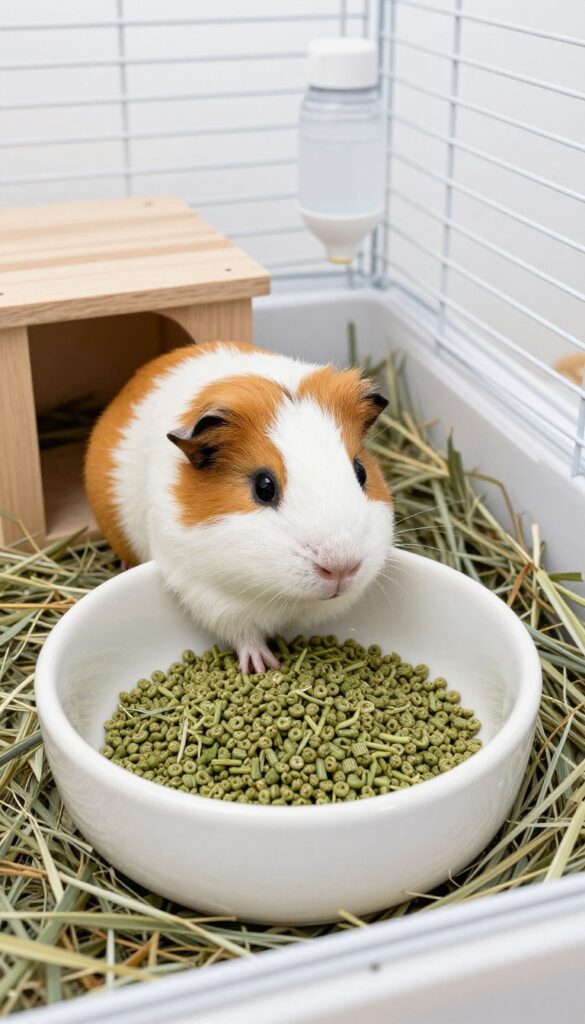
A heavy ceramic food bowl is a small but impactful upgrade for your guinea pig cage. Unlike lightweight plastic bowls that tip over or get chewed, a ceramic bowl stays put and makes daily feeding and cleaning much easier.
Why a ceramic bowl works best
- Tip-proof design: The weight of a ceramic bowl prevents guinea pigs from flipping it over, reducing mess and wasted food.
- Easy to clean: Ceramic surfaces are non-porous and dishwasher-safe, making daily washing simple and hygienic.
- No chewing risk: Unlike plastic, ceramic is too hard for guinea pigs to gnaw, eliminating the risk of ingesting harmful fragments.
- Keeps pellets fresh: A sturdy bowl prevents food from scattering into bedding or hay, so pellets stay clean and appetizing.
Placement tips for your cage setup
Position the bowl away from the litter box to avoid contamination from droppings. Place it near a hideout or along a cage wall to create a clear feeding zone. Ensure the bowl is low enough for easy access but not so shallow that pellets spill out.
For multi-pig setups, use two bowls to prevent competition.
Daily care made simple
Because ceramic bowls are easy to wipe clean, you can quickly remove leftover pellets and wash the bowl during your daily spot-cleaning routine. This prevents old food from attracting pests or molding. Pair the bowl with a hay rack and water bottle for a complete, low-maintenance feeding station.
Add a Hideout with a Removable Roof
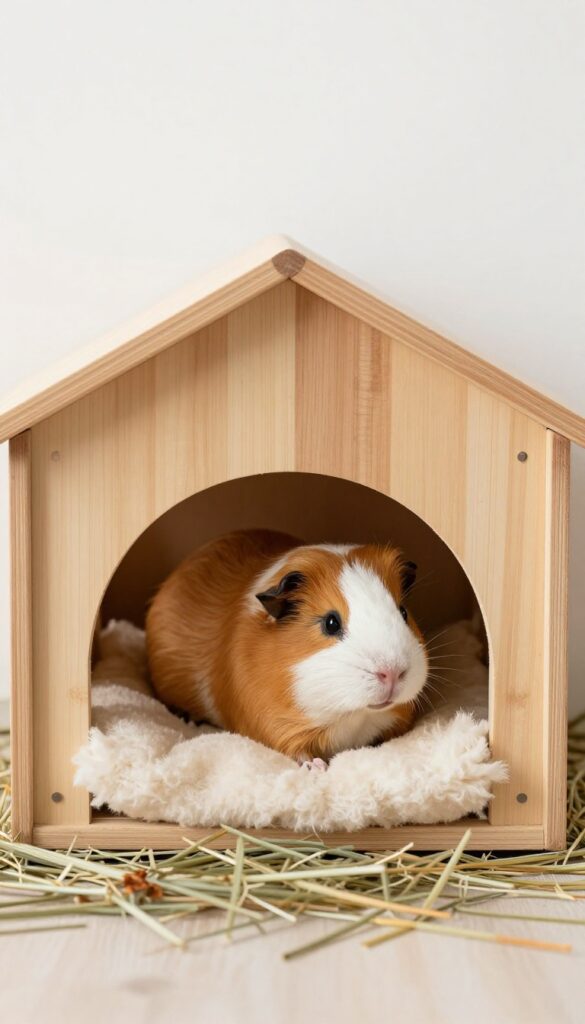
A hideout is essential for your guinea pig’s sense of security, but cleaning inside can be a hassle. Choosing one with a removable roof makes daily spot-cleaning quick and easy without disturbing your pet.
Look for hideouts made from washable materials like plastic or wood. Plastic igloos or wooden houses with a lift-off top let you reach in to remove soiled bedding, wipe down surfaces, and check for hidden messes. Avoid fabric hideouts that trap odors and are difficult to clean thoroughly.
- Removable roof allows easy access for cleaning inside without stressing your guinea pig.
- Pigs feel secure but you can quickly spot-clean and replace bedding.
- Choose washable materials like plastic or wood that can be disinfected.
- Ensure the hideout has at least two exits to prevent trapping and improve ventilation.
- Place it on a flat area of the cage with soft bedding or a fleece liner underneath.
A hideout with a removable roof is a simple upgrade that keeps your guinea pig’s habitat clean and your daily care routine efficient. It’s a practical addition to any cage setup focused on easy maintenance.
Use a Cage Liner or Mattress Protector Under Bedding
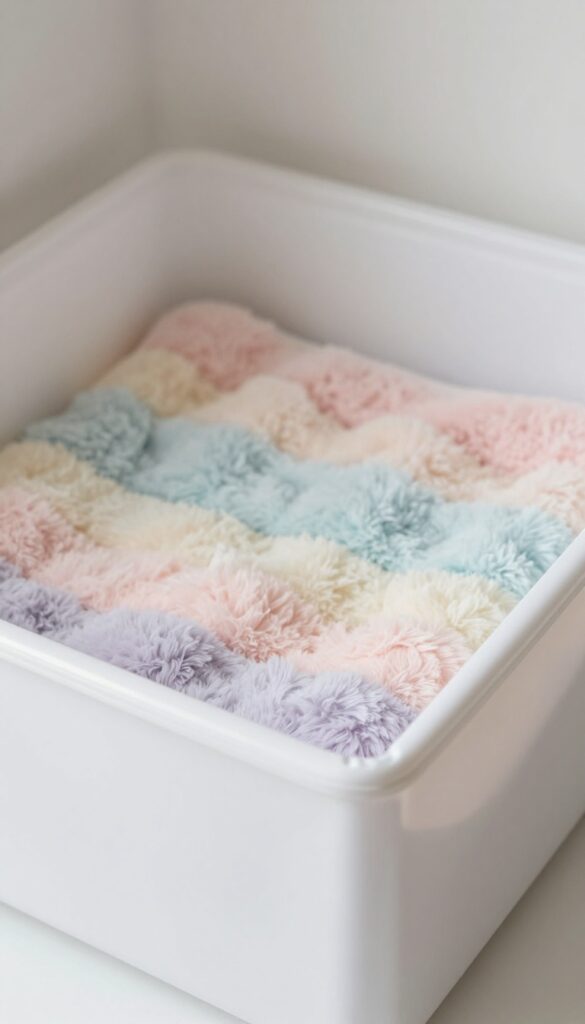
A waterproof layer between your guinea pig cage base and the bedding can save you time during full cleanouts and help control odors. This simple addition protects the cage floor from stains and makes maintenance much easier.
Choose a liner made from waterproof materials like PVC or PUL (polyurethane laminate). These are durable, easy to wipe down, and prevent urine from soaking into the cage base. You can cut them to fit your cage size or buy pre-sized options designed for small pet habitats.
Installation tips
- Lay the liner flat inside the cage base before adding any bedding or fleece.
- Smooth out wrinkles to prevent liquid from pooling in low spots.
- If using a mattress protector style, ensure it has elastic corners that stay in place without bunching.
- Wipe the liner with a mild pet-safe cleaner during weekly cleanouts, and replace it if it develops tears or leaks.
This setup is especially practical for guinea pig cages because it reduces the time spent scrubbing the base and keeps the habitat fresh between deep cleans. Pair it with absorbent bedding or fleece liners on top for a complete easy-care system.
Place the Cage in a Low-Traffic, Well-Ventilated Area
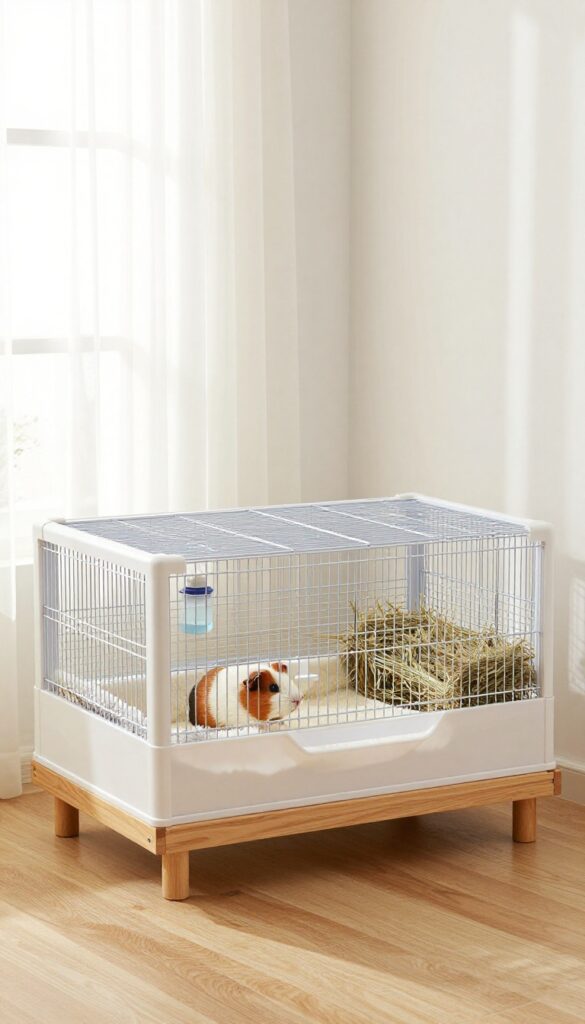
Where you put the cage can make daily care much easier. A low-traffic, well-ventilated spot reduces stress for your guinea pigs and keeps the habitat cleaner with less effort.
Choose a location away from household traffic, such as a quiet corner of the living room or a dedicated pet area. This minimizes dust disturbance and noise, helping your guinea pigs feel secure. Good ventilation is crucial to prevent ammonia buildup from urine, which can cause respiratory issues.
Avoid placing the cage in direct sunlight or near drafts from windows or air vents, as temperature swings stress guinea pigs.
Key placement tips
- Keep the cage off the floor on a sturdy table or stand for better airflow and easier cleaning access.
- Ensure the area has consistent temperature between 65-75°F (18-24°C).
- Position the cage away from doors, hallways, and noisy appliances to reduce stress.
- Check that the spot allows you to easily reach all sides for daily spot-cleaning and full cage refreshes.
Practical habitat detail
A well-placed cage also simplifies hay and bedding management. With good ventilation, hay stays fresher longer, and fleece liners dry faster between changes. Pair this setup with a deep base or guard to contain mess, and you’ll spend less time sweeping around the cage.
Use a Cage Divider to Separate Messy Areas
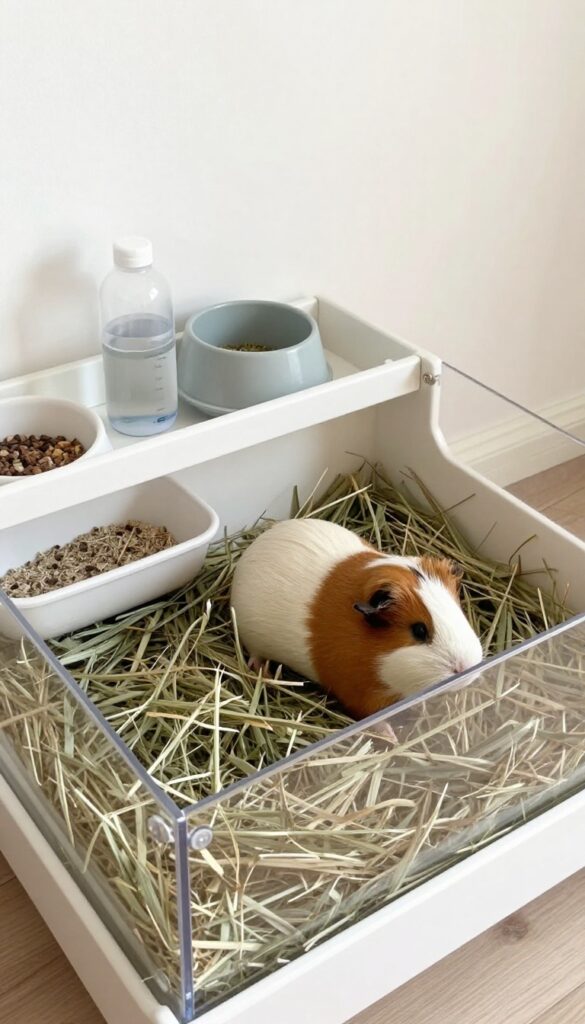
A cage divider can help you confine hay, litter, and mess to one zone, making spot-cleaning faster and more efficient. This setup keeps the rest of the cage cleaner and reduces daily maintenance time.
Choose a divider made from safe, chew-proof materials like coroplast, acrylic, or coated wire mesh. Avoid wood or soft plastics that guinea pigs can gnaw and ingest. The divider should be securely attached to the cage walls or base so it doesn’t shift.
- Place the divider to create a “messy zone” for hay and litter, while the other side stays cleaner for sleeping and playing.
- Ensure both sides meet minimum space requirements: at least 7.5 square feet per pig (ideally 10.5 sq ft), so the divider doesn’t overcrowd either area.
- Provide a hideout, water bottle, and food bowl on both sides if the divider blocks access.
- Use a low divider (6–8 inches tall) so guinea pigs can still see and interact with each other.
This idea works especially well in larger C&C cages or custom enclosures. By concentrating mess, you can quickly scoop waste from one area rather than cleaning the entire cage daily. Just be sure the divider doesn’t restrict movement or create a dead-end corner where pigs feel trapped.
Keep a Dedicated Cleaning Caddy Near the Cage
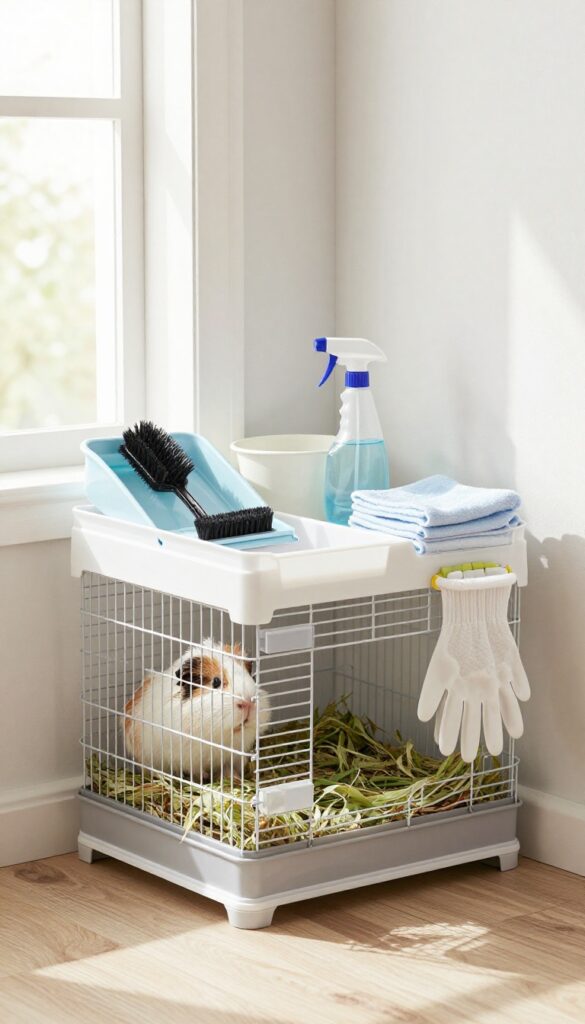
A cleaning caddy stationed right next to the cage makes spot-cleaning a breeze. When everything you need is within arm’s reach, you’re more likely to tidy up daily, keeping the habitat fresh and your guinea pigs healthy.
Caddy Contents
- Small dustpan and brush for sweeping up stray hay and droppings
- Spray bottle filled with pet-safe disinfectant or vinegar-water solution
- Spare fleece liners or washable pee pads for quick swaps
- Gloves and a small trash bag for soiled bedding
Organization Tips
- Use a caddy with compartments or a tool tote to keep items separated and easy to grab.
- Hang the caddy on a nearby hook or place it on a shelf above the cage to save floor space.
- Label bottles clearly to avoid mixing up cleaning solutions.
Why It Helps Daily Care
Having a dedicated caddy eliminates the need to hunt for supplies each time you clean. This small setup encourages quick daily maintenance—like sweeping up messes and refreshing water—so the cage stays pleasant for your guinea pigs and you spend less time on deep cleans.
FAQ
How often should I clean my guinea pig cage?
Spot-clean daily (remove soiled bedding, wipe surfaces) and do a full cleanout weekly. With a good setup, daily spot-cleaning takes only 5-10 minutes.
What is the best bedding for easy daily care?
Fleece liners are popular because they wick moisture and are easy to spot-clean. They require weekly washing but reduce waste and mess compared to disposable bedding.
Can guinea pigs be litter trained?
Yes! Place a small litter box in their preferred bathroom corner. Use paper-based litter and clean it daily.
Many guinea pigs learn quickly.
How do I prevent hay from getting all over the cage?
Use an external hay rack attached to the cage bars. Pigs pull hay through the bars, reducing trampling and mess inside the cage.
What size cage is best for two guinea pigs?
Minimum 7.5 square feet (e.g., 30″ x 36″), but larger is better. More space means less concentration of waste and easier cleaning.
Conclusion
A well-planned guinea pig cage setup can transform daily care from a chore into a quick routine. By incorporating these 11 ideas—like fleece liners, external hay racks, and litter boxes—you’ll spend less time cleaning and more time enjoying your pets.
Start with one or two changes and build from there. Your guinea pigs will thank you with happy wheeks!

I’m Pallab Kishore, the owner of Little Pets Realm — an animal lover and pet care enthusiast sharing easy tips, healthy recipes, and honest advice to help every small pet live a happy, healthy, tail-wagging life.