Last updated on August 19th, 2026 at 04:19 pm
Living in a small bedroom doesn’t mean you have to give up on giving your guinea pigs a spacious and enriching home.
With a little creativity, you can design a cage setup that fits perfectly in a corner, maximizes every inch, and keeps your furry friends happy.
Here are 10 practical ideas to inspire your small-space guinea pig habitat.
Corner C&C Cage with L-Shaped Layout
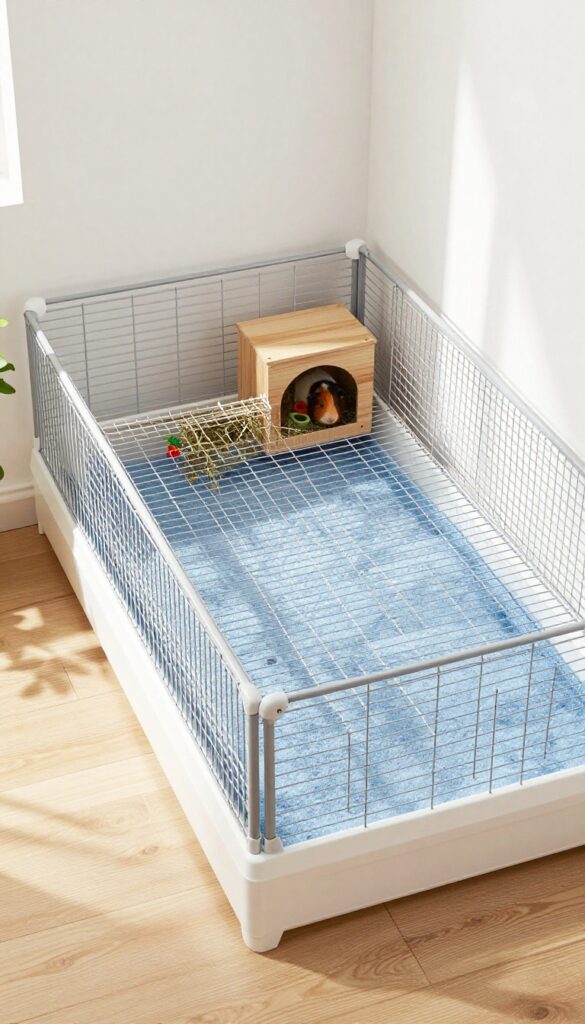
An L-shaped C&C (Cube and Coroplast) cage is one of the most efficient ways to use a corner while giving your guinea pigs plenty of running space. By building the cage into an L shape, you can maximize floor area without blocking the rest of the room.
C&C grids are modular, so you can easily customize the dimensions to fit your corner. A typical L-shaped cage might measure 2×4 grids on one side and 2×2 on the other, creating a spacious 10–12 square feet of floor space. This exceeds the minimum recommendation for two guinea pigs and allows for zoomies and popcorning.
Key Setup Tips
- Use coroplast (corrugated plastic) as the base to protect floors and make cleaning easy. Cut a custom L-shaped tray or join two rectangular trays.
- Line the base with fleece liners or absorbent bedding. Fleece is low-dust and cozy, but you can use paper bedding in high-traffic areas.
- Place a hideout in the inner corner of the L — guinea pigs feel secure with two walls behind them.
- Add a hay rack on one of the outer walls to encourage foraging and keep hay off the fleece.
- Ensure ventilation by leaving the top open or using a partial mesh cover. C&C grids already provide excellent airflow.
- Position the cage so you can easily access the inner corner for spot cleaning and daily hay refills.
Why This Works for Small Bedrooms
The L-shape tucks neatly into a corner, leaving the center of the room free for other furniture or movement. It also creates a natural division between the cage and your living space. Plus, the open grid design lets your guinea pigs see and hear you, which helps them feel part of the family.
Vertical Stack with Loft Bed Above
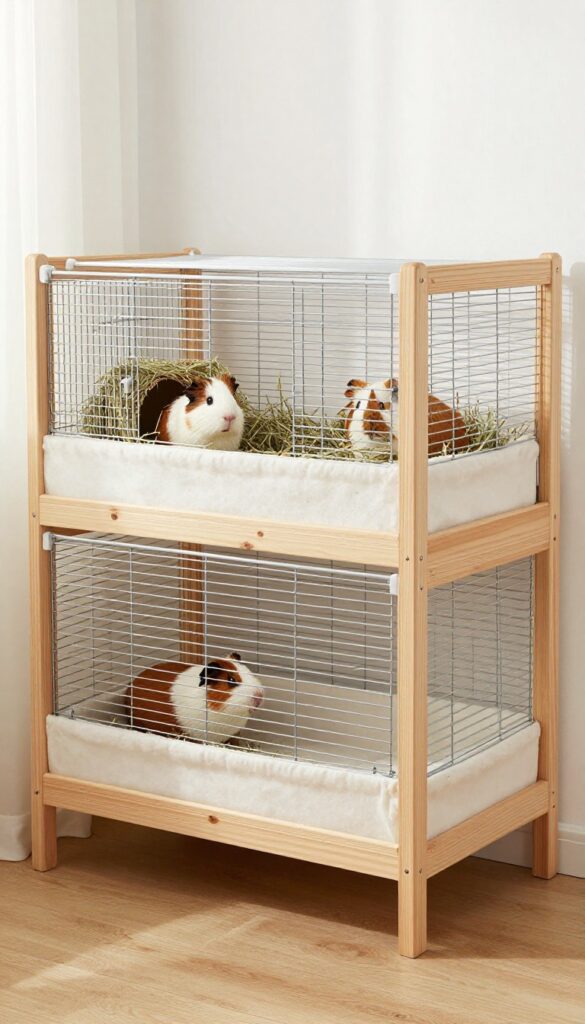
Maximize your bedroom’s vertical space by placing your guinea pig’s cage under a loft bed. This setup frees up floor area while keeping your pets close and safe.
A loft bed creates an ideal spot for a guinea pig cage, provided you follow key safety and comfort guidelines. Ensure at least 2 feet of clearance between the cage top and the bed frame for proper ventilation and easy access. Use a shallow cage (under 12 inches tall) to avoid head bumps when sitting up on the bed.
A secure lid is essential—guinea pigs can jump and may injure themselves if they escape.
- Choose a cage with a solid bottom and wire or mesh lid for ventilation and security.
- Line the cage with fleece or paper-based bedding for comfort and easy cleaning.
- Provide a hideout, hay rack, water bottle, and food bowl within easy reach.
- Place the cage away from direct drafts and ensure the area is well-lit but not in direct sunlight.
- Use chew-safe toys and tunnels to keep your guinea pigs entertained.
Always check that the loft bed is sturdy and the cage is fully supported. Avoid placing heavy items on the bed above the cage area.
Multi-Level Cage with Ramps
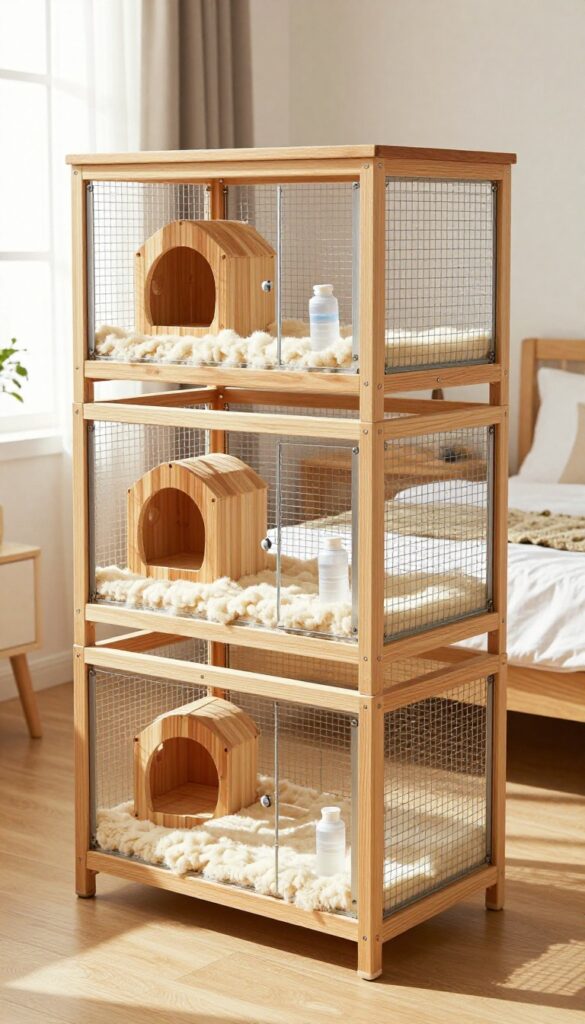
A multi-level cage is a smart way to increase your guinea pig’s living space without taking up more floor area in your small bedroom corner. By stacking levels vertically, you give your pets more room to explore while keeping the footprint compact.
When choosing or building a multi-level cage, prioritize safety. Guinea pigs are not natural climbers, so ramps must be gentle—no steeper than 30 degrees—and have solid sides to prevent falls. Avoid wire ramps, which can hurt delicate feet; instead, use ramps with a solid surface covered in fleece or a non-slip material.
Key considerations for a multi-level cage
- Place food and water on the lower level to ensure easy access and prevent your guinea pigs from having to climb when hungry or thirsty.
- Each level should have at least one hideout (like a cozy igloo or wooden house) and soft bedding (fleece liners or paper-based bedding) to encourage use of all levels.
- Ensure the cage has good ventilation—open sides or mesh panels help air circulate between levels.
- Use chew-safe ramps and platforms; avoid plastic if your guinea pigs are prone to chewing. Opt for wood or coated metal.
- Make sure the cage is easy to clean: removable trays or access doors on each level save time.
A well-designed multi-level cage can turn a small corner into a vertical playground. Just remember that floor space is still critical—each level should meet minimum size requirements (at least 7.5 square feet total for two guinea pigs, with each level contributing to that total). With careful planning, your guinea pigs will enjoy a spacious, enriching home without dominating your bedroom.
Corner Hutch with Outdoor Run Access
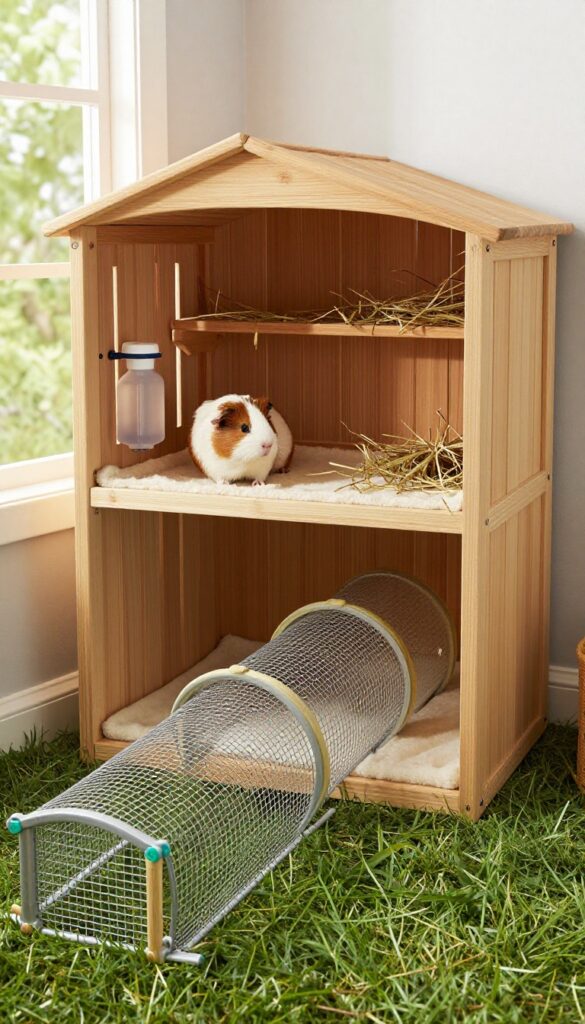
For guinea pig owners in mild climates, a corner hutch connected to an outdoor run offers the best of both worlds: a cozy indoor base and safe outdoor exploration. This setup keeps the cage tucked into a bedroom corner while providing extra roaming space outside.
Choose a wooden corner hutch with a solid, waterproof floor and good ventilation. The hutch should be large enough to house your guinea pigs comfortably indoors, with a separate sleeping area and room for food, water, and hideouts. Attach a secure tunnel that leads to a predator‑proof outdoor run.
The run must have a solid bottom or be placed on grass with buried wire mesh to prevent digging escapes.
- Use a hutch with a solid floor and good ventilation to prevent moisture buildup.
- Ensure the outdoor run is fully enclosed with sturdy wire mesh and a lockable door.
- Provide shade and shelter in the run; bring the hutch inside at night or during bad weather.
- Line the hutch with fleece liners or paper bedding for easy cleaning.
- Add a hay rack, water bottle, and hideouts inside the hutch for comfort.
This setup works best in temperate climates where temperatures stay between 60–75°F. Always supervise outdoor time and never leave guinea pigs unattended for long periods. The corner placement keeps the hutch accessible while the tunnel adds enrichment and encourages natural foraging behavior.
DIY Tabletop Cage on a Low Desk
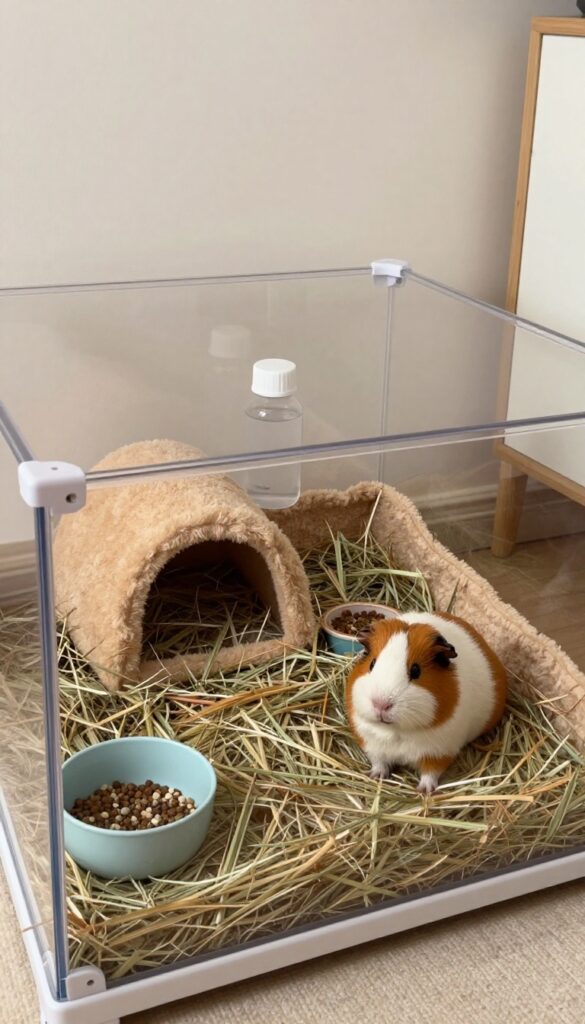
A low desk or sturdy table can become the perfect platform for a guinea pig cage, elevating it off the floor for better airflow and easier access. This setup works well in a corner where floor space is limited, and the area underneath can be used for storage.
Choose a desk that is low enough for your guinea pigs to see you at eye level, but high enough to keep the cage away from drafts and cold floors. The desk surface must be waterproof—use a protective mat or liner if needed. Leave enough room underneath for storing hay, bedding, and supplies, making the most of your vertical space.
- Ensure the cage has a solid bottom or a leak-proof liner to protect the desk surface.
- Provide at least 7.5 square feet of floor space (per two guinea pigs) inside the cage.
- Add a soft fleece liner or bedding, a hideout, a hay rack, and a water bottle.
- Keep the cage on a stable, level desk that can support its weight.
- Allow easy access for daily cleaning and interaction.
This elevated cage keeps your guinea pigs safe from household pets and drafts, while the desk underneath offers a tidy storage solution for your pet supplies. It’s a practical, space-saving idea that blends into a small bedroom corner without sacrificing your guinea pigs’ comfort.
Add a Soft Bedding Section in the Cage
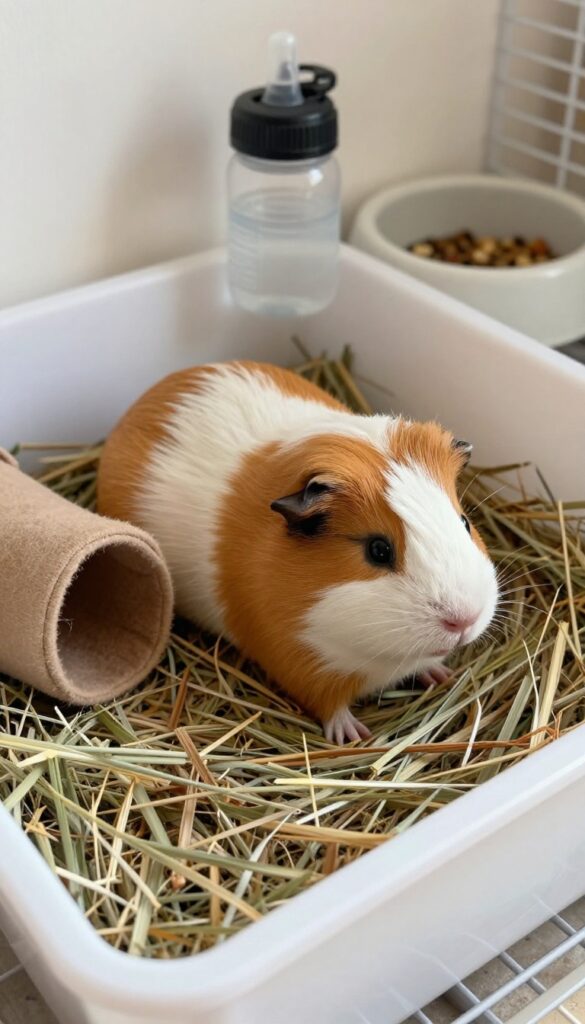
Guinea pigs love cozy, soft areas where they can burrow and rest. A dedicated soft bedding section within the cage not only keeps your pets comfortable but also makes cleaning easier by separating the sleeping area from the main living space.
To create a soft bedding zone, use a low-sided plastic tray or a fleece-lined corner of the cage. Fill it with a thick layer of paper-based bedding, soft hay, or fleece liners. This area should be kept clean and dry, with daily spot-cleaning to remove soiled bedding.
Place a hideout or tunnel nearby so your guinea pigs feel secure while resting.
- Use a small, shallow litter box or a custom fleece pad to define the soft area.
- Choose absorbent bedding like kiln-dried pine shavings, aspen, or paper pellets.
- Add a soft fleece forest or a snuggle sack for extra comfort.
- Position the bedding section away from the food and water to keep it dry.
Avoid using cedar shavings or dusty bedding, as these can cause respiratory issues in guinea pigs.
Foldable or Modular Cage for Flexible Space
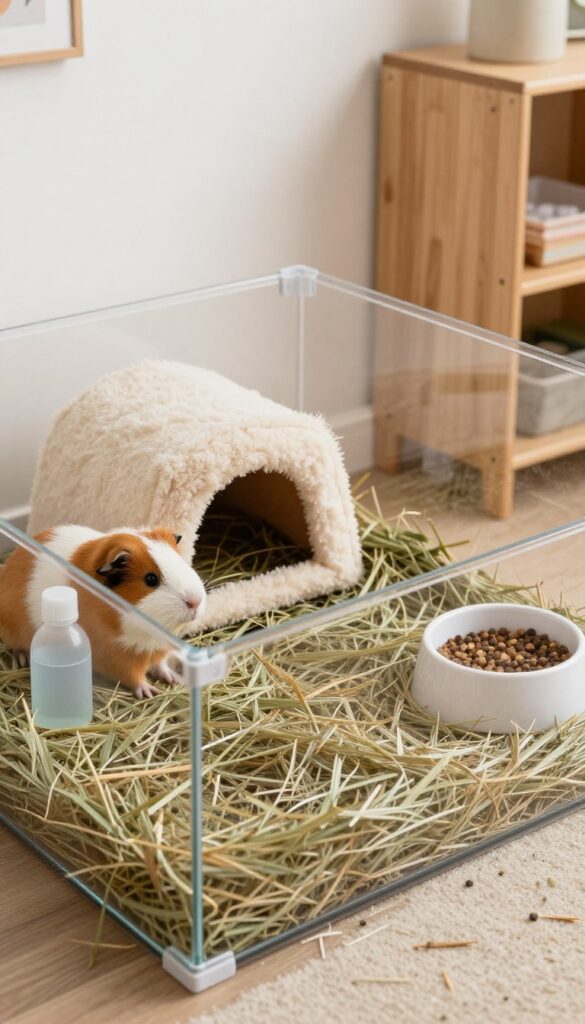
When your bedroom corner needs to multitask, a foldable or modular cage offers the ultimate flexibility. These enclosures can be expanded for playtime or collapsed to reclaim floor space, making them perfect for temporary setups or small rooms where every square inch counts.
Foldable cages are typically made from lightweight materials like canvas, mesh, or reinforced fabric stretched over a collapsible frame. They can be set up in minutes and folded flat for storage. Modular cages, on the other hand, use interlocking panels (often plastic or wire) that you can reconfigure into different shapes and sizes.
Both options allow you to adjust the cage footprint based on your current needs.
Key Considerations
- Choose a foldable cage with a solid, leak-proof base to contain bedding and prevent messes on your floor.
- Ensure the mesh or canvas sides are chew-resistant and escape-proof — guinea pigs are surprisingly good at finding weak spots.
- For modular cages, opt for panels with small enough gaps (no more than 1.5 inches) to prevent heads from getting stuck.
- Include essential habitat features: a soft fleece liner or bedding, a hideout, a hay rack, a water bottle, and a food bowl.
- Place the cage in a well-ventilated area away from direct sunlight and drafts. Foldable cages often have mesh tops that allow airflow.
- If you need to collapse the cage regularly, look for designs with quick-release mechanisms or foldable frames that don’t require tools.
A modular cage can be expanded into an L-shape to fit a corner perfectly, or you can add an extra section for floor time. Some modular systems even allow you to attach a small outdoor run (supervised only). Just remember that guinea pigs need a minimum of 7.5 square feet of floor space per pig (more is better), so even a foldable cage should meet that requirement.
Corner Cage with Clear Panels for Visibility
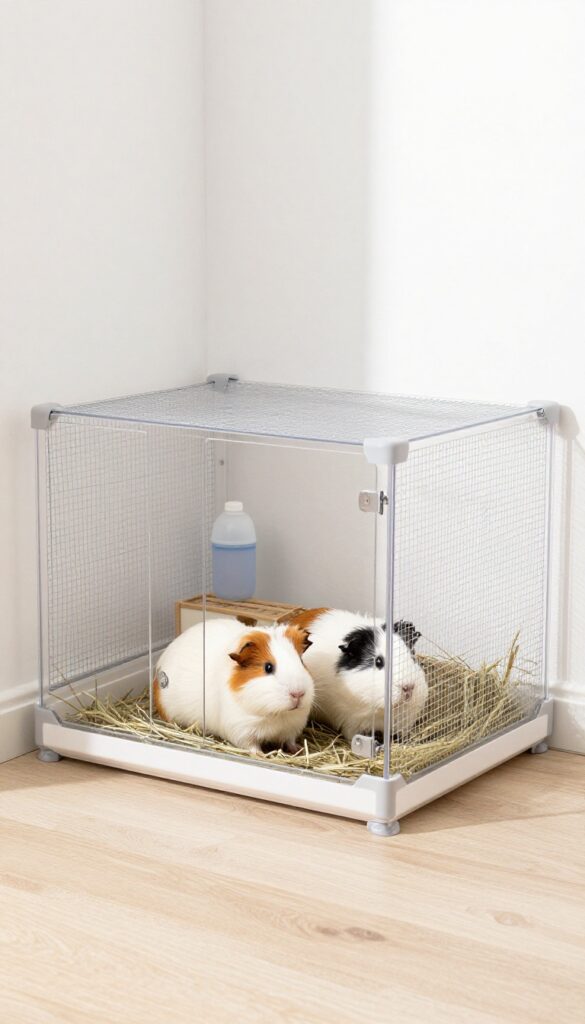
If you want to keep an eye on your guinea pigs without feeling like the cage dominates the room, clear panels are a smart choice. Acrylic or glass fronts let you see your pets clearly while maintaining an open, airy feel in a small bedroom corner.
Clear panels work best on the front of the cage, while the sides and top use mesh or wire for ventilation. Acrylic is lighter and safer than glass, especially in a bedroom where bumps or knocks might happen. The transparent front also makes it easy to spot-check your guinea pigs’ health and behavior throughout the day.
- Use clear acrylic or glass panels on the front for a modern, open look.
- Ensure proper ventilation with mesh sides or a mesh top to prevent humidity buildup.
- Acrylic is lighter and shatter-resistant, making it safer than glass in a bedroom.
- Include a fleece liner or paper bedding for easy cleaning and comfort.
- Add a hideout, hay rack, and water bottle inside for a complete habitat.
For a practical setup, place the cage in a corner where the clear front faces the room. This way, you can enjoy watching your guinea pigs without the cage feeling bulky. Remember to provide at least 7.5 square feet of floor space for one guinea pig (more for pairs), and keep the cage away from direct sunlight or drafts.
Corner Cage with Hanging Hay Rack and Toys
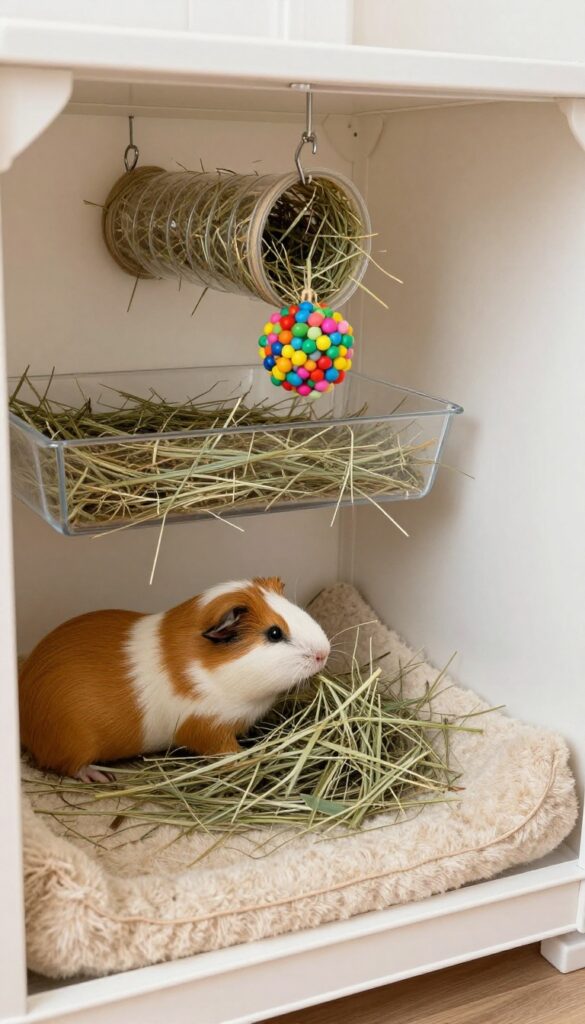
Make the most of vertical space inside your guinea pig cage by adding hanging hay racks and toys. This setup keeps the floor area clear for running while providing enrichment at eye level.
Attach a hanging hay rack to the cage wall using suction cups or clip-on accessories. Fill it with fresh hay daily so your guinea pigs can nibble without the hay getting soiled on the bedding. Above the rack, hang a few lightweight toys like a crinkle tunnel or a chew ball on sturdy hooks.
- Use only pet-safe, non-toxic hanging accessories designed for small animals.
- Rotate toys every few days to keep your guinea pigs curious and active.
- Ensure all hanging items are securely attached and won’t fall into the cage.
- Keep the hay rack at a height your guinea pigs can easily reach while standing on their hind legs.
Inside the cage, maintain a soft fleece liner or paper bedding for comfort. Place a hideout on one side and a water bottle on the opposite wall. The hanging hay rack and toys add vertical interest without taking up precious floor space, making this setup ideal for a small bedroom corner.
Corner Cage with Soundproofing Panels
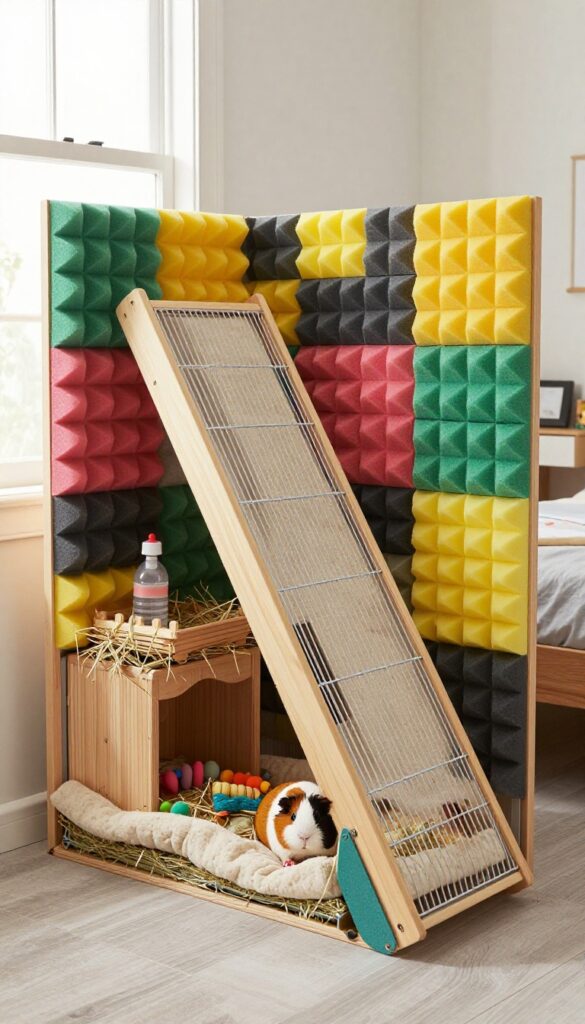
If your bedroom walls amplify every squeak and rustle, a corner cage with soundproofing panels can help keep things quiet without compromising your guinea pigs’ comfort.
Attach soundproofing foam panels to the wall behind the cage to absorb noise from squeaks, movement, and hay rustling. This is especially helpful in small bedrooms where the cage sits close to your bed or desk. Choose panels made from non-toxic, chew-resistant materials, and always mount them outside the cage so your guinea pigs cannot reach them.
Inside the enclosure, maintain at least 7.5 square feet of floor space, use fleece or paper bedding, and provide a hideout, hay rack, water bottle, and chew toys. Ensure good ventilation by leaving the cage front open or using a mesh lid. The panels should not block airflow or make the cage feel enclosed.
Clean the panels periodically to prevent dust buildup.
Key Points
- Use non-toxic, chew-resistant soundproofing foam panels attached to the wall behind the cage.
- Place panels outside the cage to prevent ingestion or chewing.
- Maintain proper ventilation and easy access for cleaning.
- Include standard cage essentials: bedding, hideout, hay rack, water bottle, and chew-safe enrichment.
FAQ
What is the minimum cage size for two guinea pigs?
The minimum recommended size for two guinea pigs is 7.5 square feet (e.g., 30″ x 36″), but 10.5 square feet or more is ideal for their well-being.
Can I use a wire-bottom cage for guinea pigs?
No, wire bottoms can hurt guinea pigs’ feet. Use solid floors with soft bedding like fleece or paper-based bedding.
How often should I clean a guinea pig cage?
Spot clean daily and do a full bedding change every 4-7 days, depending on the number of guinea pigs and type of bedding.
Is it safe to place a guinea pig cage near a window?
Avoid direct sunlight and drafts. A corner away from windows is best to maintain a stable temperature.
What bedding is best for guinea pigs?
Fleece liners are popular for easy cleaning, but paper-based bedding is also safe. Avoid cedar or pine shavings due to respiratory risks.
Conclusion
With these 10 guinea pig cage setup ideas, you can create a comfortable and stimulating home for your pets even in the smallest bedroom corner. Remember to prioritize floor space, ventilation, and enrichment.
Your guinea pigs will thank you with happy squeaks and popcorns!

I’m Pallab Kishore, the owner of Little Pets Realm — an animal lover and pet care enthusiast sharing easy tips, healthy recipes, and honest advice to help every small pet live a happy, healthy, tail-wagging life.