Last updated on August 19th, 2026 at 04:19 pm
Creating a dedicated room for your guinea pigs can greatly improve cleanliness and their quality of life.
This article presents 12 practical ideas to help you design a space that is easy to clean, odor-free, and enjoyable for both you and your pets.
Use a Waterproof Flooring Base
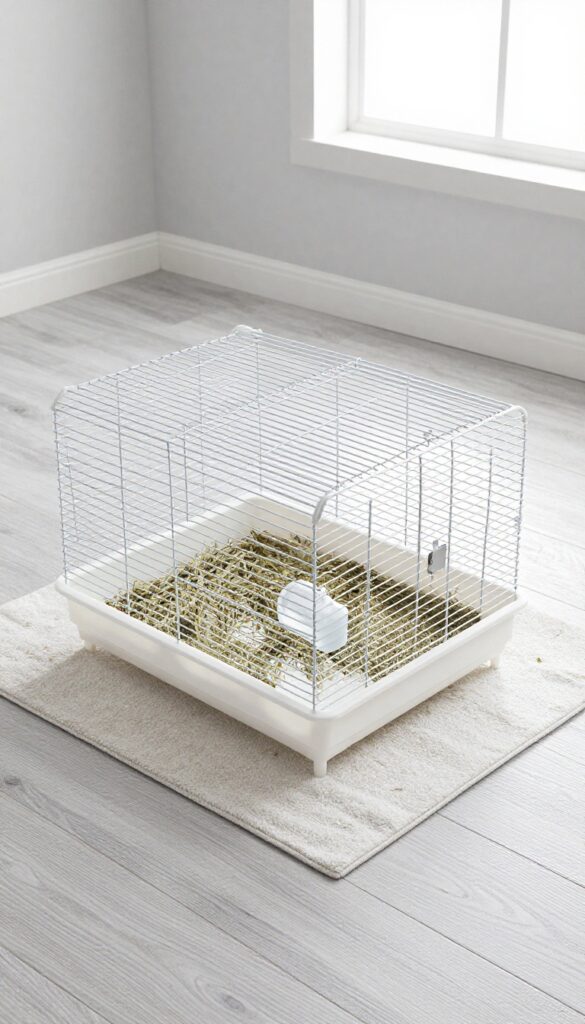
The foundation of a clean guinea pig room starts with the floor. Guinea pigs are messy—they spill water, kick out bedding, and have accidents. Waterproof flooring protects your subfloor from moisture damage and makes cleanup effortless.
Choose a flooring material that is impervious to liquids and easy to sanitize. Avoid porous surfaces like untreated wood or carpet, which absorb odors and stains. Here are the best options:
- Vinyl sheet flooring: Seamless, durable, and easy to wipe down. It comes in various patterns to match your decor.
- Linoleum: A natural, antimicrobial option that resists water and scratches. It’s also biodegradable.
- Washable rugs: If you prefer a softer feel, use machine-washable rugs with a waterproof backing. They can be tossed in the laundry when soiled.
Install the flooring before setting up the cage. For extra protection, consider using a waterproof underlayment. This simple upgrade saves hours of scrubbing and keeps the room fresh.
Install a Large, Easy-to-Clean Cage
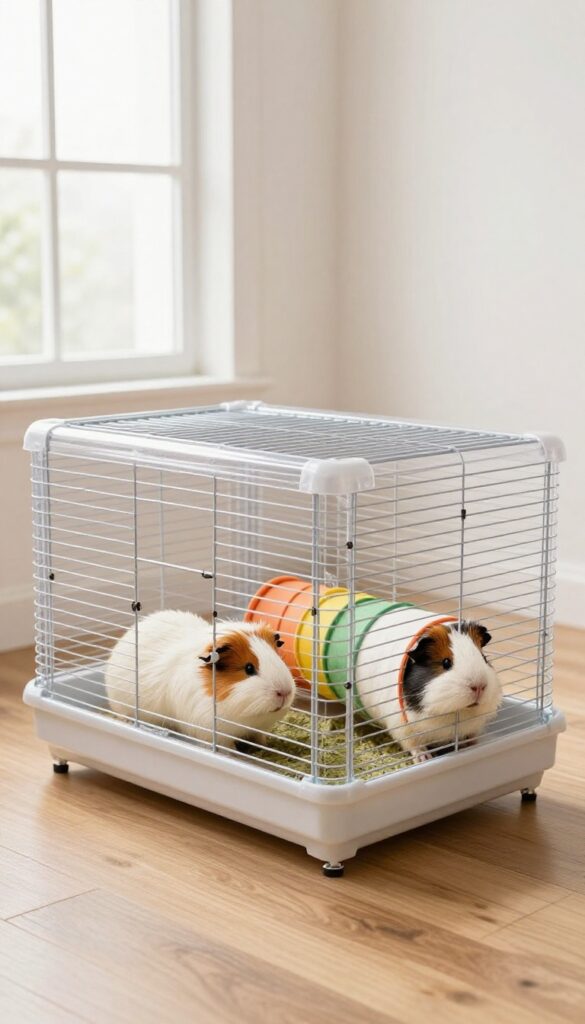
The cage is the centerpiece of your guinea pig room, so choosing one that’s spacious and simple to maintain is essential for cleanliness. A large cage with smooth surfaces and good ventilation makes daily cleaning quick and helps prevent odors.
Opt for a C&C (cube and coroplast) cage or a large plastic base cage. These designs offer plenty of floor space for your guinea pigs to exercise and explore, while the smooth, non-porous surfaces wipe down easily. Avoid small cages or aquariums, as they trap moisture and ammonia, leading to respiratory issues and unpleasant smells.
- C&C cages: Customizable size, easy to expand, coroplast base is waterproof and simple to wipe clean.
- Large plastic base cages: Often come with wire tops, smooth plastic bottoms that can be scrubbed or hosed off.
- Ensure proper ventilation: Wire sides or mesh tops allow airflow, reducing humidity and odor buildup.
When setting up your cage, place it in a well-ventilated area of the room, away from direct drafts or heat sources. A large, easy-to-clean cage not only keeps your guinea pigs healthy but also makes your cleaning routine more efficient, letting you spend more time enjoying your pets.
Add a Dedicated Hay Storage Area
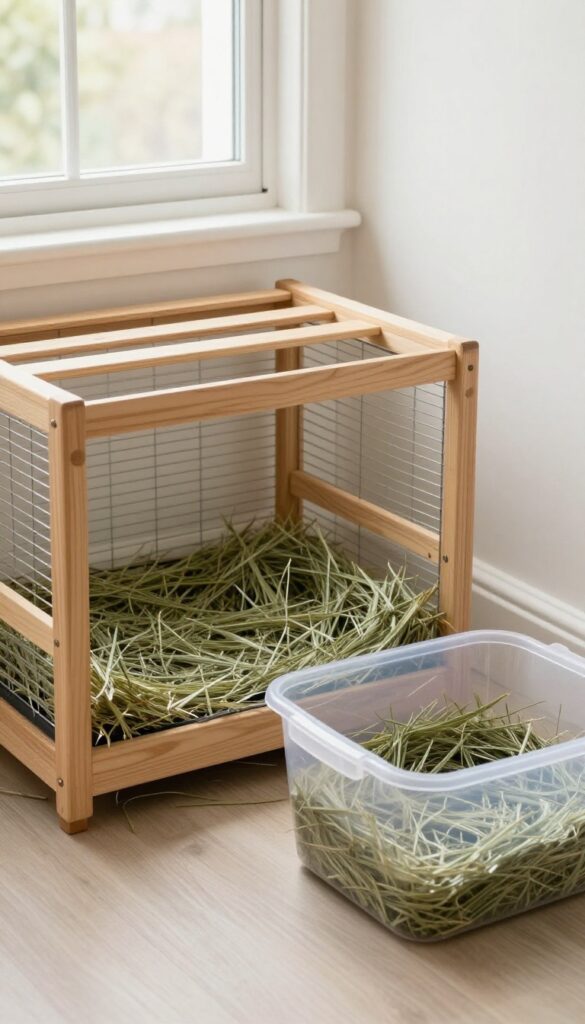
Hay is a staple in a guinea pig’s diet, but loose hay scattered on the floor creates mess and waste. A dedicated hay storage area keeps hay off the ground, reduces cleanup time, and ensures your pets always have fresh hay within reach.
The key is to choose a storage solution that is both accessible for your guinea pigs and easy for you to clean. Here are a few effective options:
Hay Storage Ideas
- Use a hay rack attached to the cage wall to keep hay elevated and reduce soiling.
- Place a large bin or tote near the cage for bulk hay storage, and refill the rack as needed.
- Consider a hay box or feeder that doubles as a cozy hideout, encouraging natural foraging behavior.
Whichever method you choose, make sure the storage area is dry and well-ventilated. Damp hay can quickly mold and harm your guinea pigs’ respiratory health. A clean, organized hay station not only keeps the room tidier but also saves hay and money in the long run.
Use Washable Fleece Liners
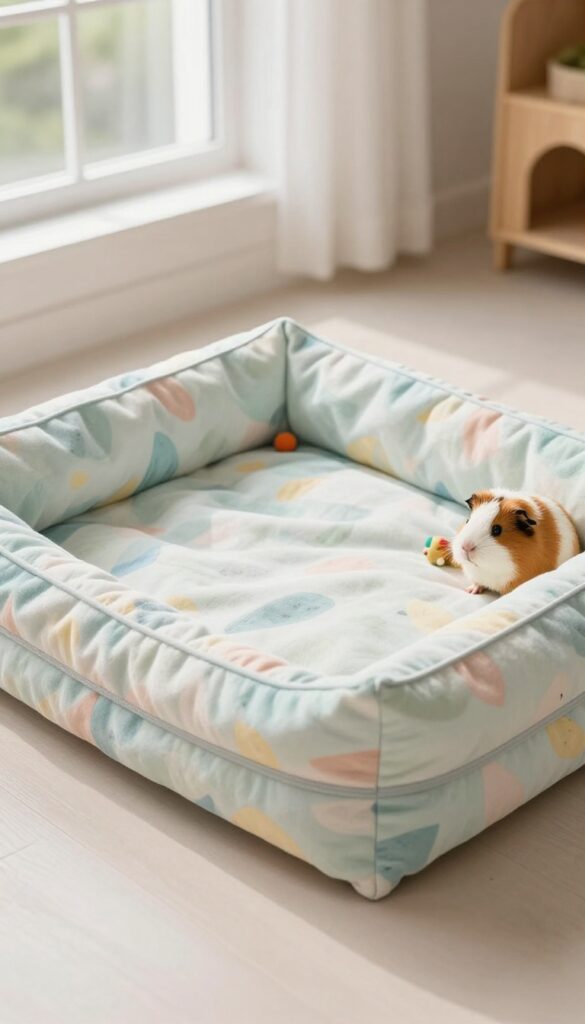
Fleece liners are a game-changer for keeping a guinea pig room clean. They replace messy, dusty bedding with a soft, reusable surface that’s gentle on your pets’ feet and easy to maintain.
Unlike traditional wood shavings or paper bedding, fleece liners are washable and highly absorbent when paired with a proper absorbent layer underneath. They help control odor and reduce dust, which is better for guinea pigs’ respiratory health.
- Reusable and absorbent – saves money and reduces waste
- Easy to launder – simply shake off solids and toss in the washing machine
- Soft on guinea pig feet – prevents bumblefoot and irritation
To set up, place a layer of absorbent material (like U-Haul pads or towel) under the fleece. Spot-clean daily and do a full wash every few days. Having multiple sets makes rotation easy.
This system keeps the room fresh and your guinea pigs comfortable.
Incorporate a Litter Training Area
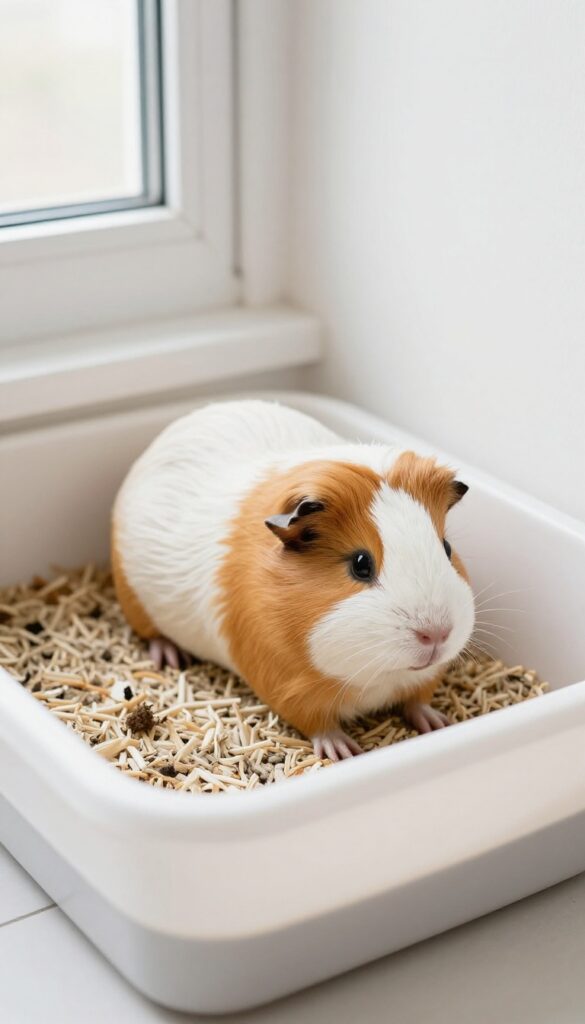
Litter training your guinea pig simplifies daily cleaning and keeps their room fresher. With a dedicated spot for bathroom habits, you can quickly remove waste without disrupting the entire cage.
Guinea pigs often choose a specific corner for elimination. Place a small litter box in that corner to catch most of the mess. Use paper-based litter, which is safe, absorbent, and dust-free.
Avoid clay or clumping cat litter, as these can cause respiratory issues or digestive blockages if ingested.
Key Tips
- Position litter boxes in corners where guinea pigs naturally go.
- Use paper-based or aspen litter—never clay or clumping litter.
- Clean the litter box daily to control odor and maintain hygiene.
Set Up a Cleaning Station
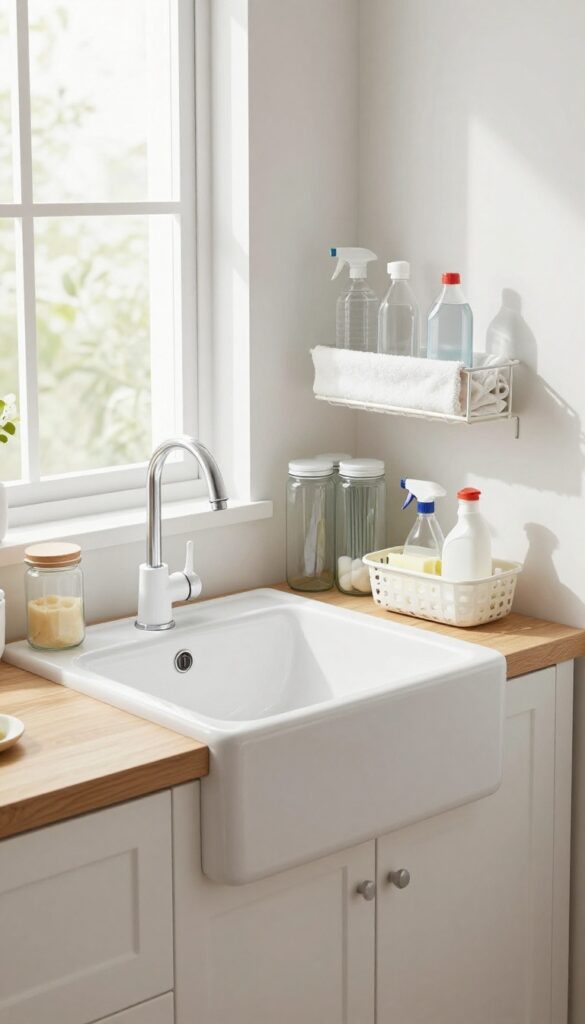
A dedicated cleaning station keeps the mess out of your kitchen and streamlines daily maintenance. By having a specific spot for washing accessories and storing supplies, you can maintain a hygienic guinea pig room with minimal cross-contamination.
Designate a corner of the room or a utility area for a small sink or wash tub. This can be a utility sink, a large plastic tub on a sturdy table, or even a repurposed baby bathtub. Having a dedicated washing area means you never have to use the kitchen sink for pet items, reducing the risk of spreading bacteria to food preparation surfaces.
Key Elements of a Cleaning Station
- A wash tub or small sink deep enough to soak water bottles, bowls, and fleece liners.
- Storage shelves or cabinets for cleaning supplies like vinegar, mild dish soap, scrub brushes, and gloves.
- A drying rack or area for washed items to air dry completely before reuse.
- A trash bin for soiled bedding and hay waste, ideally with a lid to contain odors.
- Easy-to-clean surfaces such as tile, linoleum, or sealed concrete that can be wiped down quickly.
By keeping all cleaning tasks confined to this station, you prevent hay dust and debris from spreading throughout the room. It also makes it easier to stick to a regular cleaning routine, as everything you need is within arm’s reach.
Use Air Purifiers for Odor Control
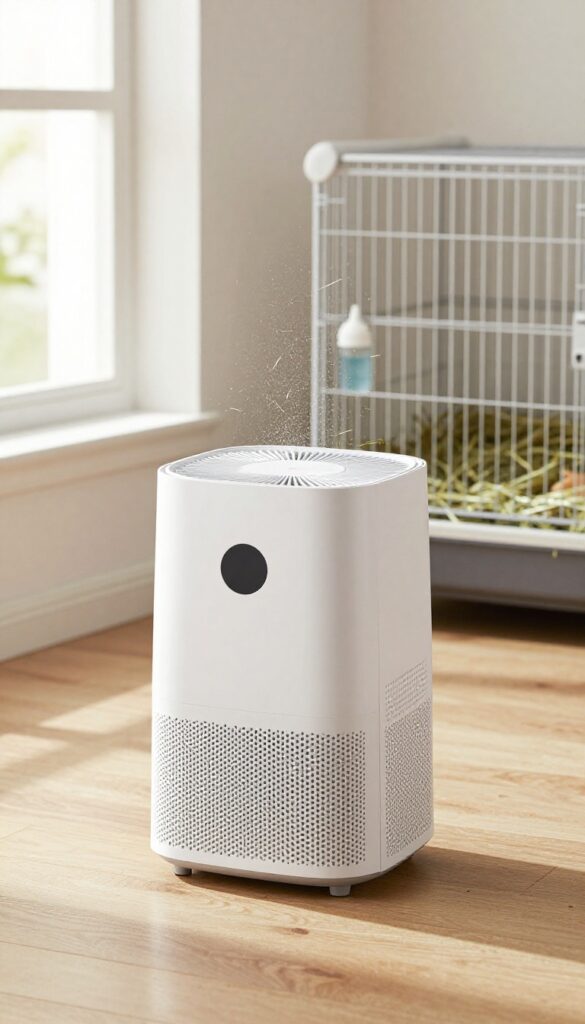
Guinea pigs produce hay dust and ammonia from urine, which can affect air quality in a closed room. A dedicated air purifier helps keep the environment fresh and reduces respiratory irritants for both pets and humans.
Choose a purifier with a HEPA filter to capture fine hay dust and dander. Activated carbon filters help neutralize odors. Place the unit away from the cage to avoid drafts that could stress your guinea pigs, but within the same room for effective air circulation.
Key considerations for a guinea pig room
- HEPA filter recommended for trapping dust and allergens
- Carbon filter layer for odor absorption
- Place at least 3 feet from the cage to avoid direct airflow
- Avoid ozone generators, which can harm small pets’ sensitive lungs
- Run continuously or on a timer during high-activity hours
Regularly clean or replace filters according to the manufacturer’s instructions to maintain efficiency. An air purifier is a simple addition that supports a cleaner, more comfortable guinea pig room.
Design a Safe Play Area
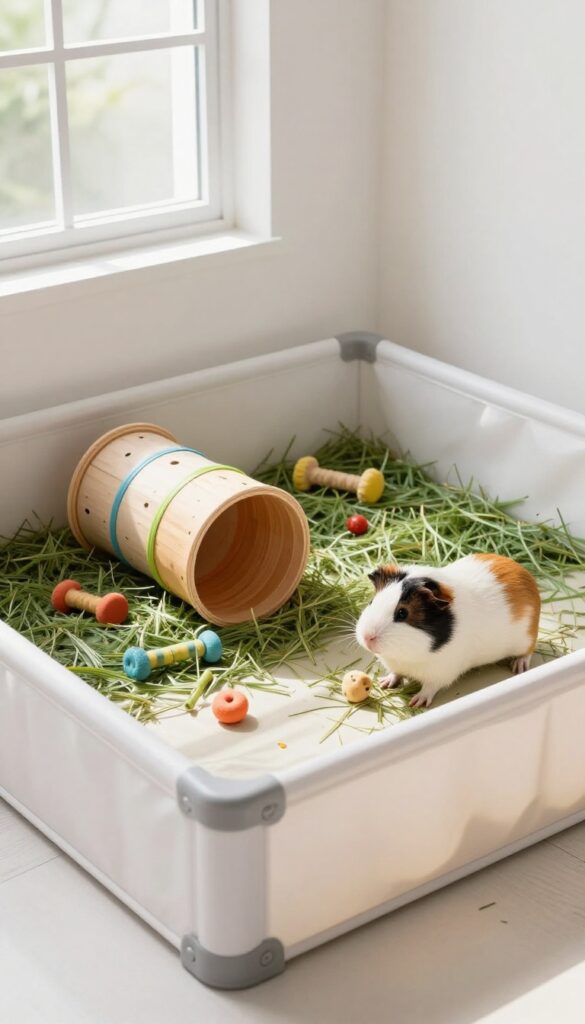
A dedicated play area allows your guinea pigs to exercise and explore safely without risking injury or mess in the rest of the room. The key is to create an enclosed space that is easy to clean and supervise.
Instead of letting your guinea pigs roam freely around the room—which can lead to accidents, chewing on wires, or hiding in hard-to-reach spots—set up a contained play zone. Puppy playpens or modular grid panels work well because they are portable, expandable, and have smooth surfaces that are simple to wipe down. Place the play area on a waterproof mat or washable rug to protect your floor from urine and hay scraps.
Add a few hideouts, tunnels, and chew toys to keep them entertained. Always supervise playtime and keep fresh hay and water available.
Key points for a clean play area
- Use puppy playpens or grid panels to create a secure boundary.
- Line the floor with a waterproof, easy-to-clean mat or washable rug.
- Include hideouts and toys for enrichment, but avoid items that are hard to sanitize.
- Keep play sessions supervised and limit duration to prevent accidents.
Organize Supplies with Clear Bins
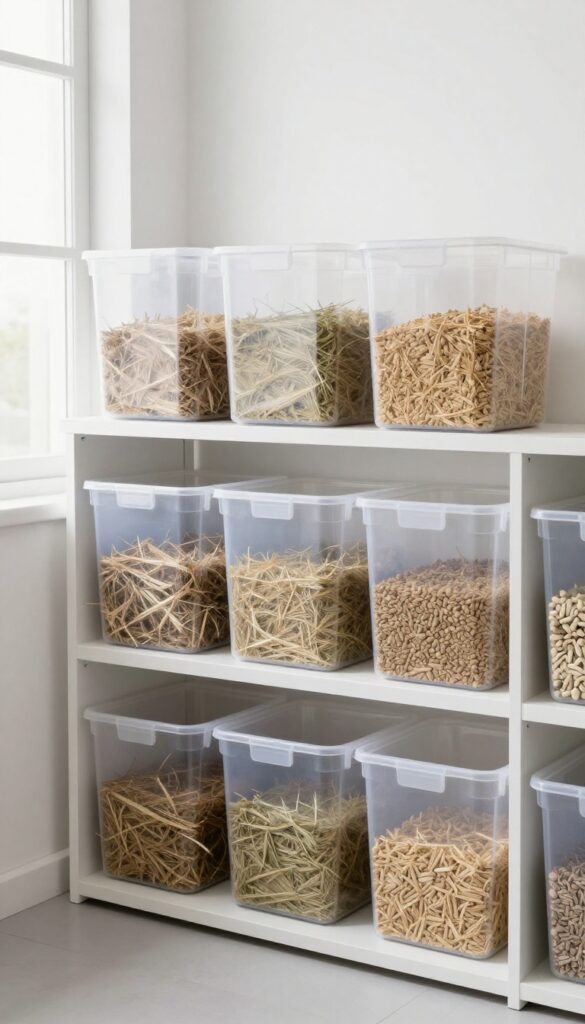
Keeping guinea pig supplies tidy is essential for a clean room. Clear bins let you see everything at a glance, making daily care easier and preventing clutter that can harbor dust and pests.
Choose stackable clear bins to maximize vertical space and keep your guinea pig room organized. They protect hay, pellets, bedding, and toys from moisture and pests while allowing quick visual inventory.
Key benefits
- See contents at a glance without opening every bin
- Stackable design saves floor space
- Label each bin for easy access and quick restocking
Avoid cardboard boxes, which can attract pests and absorb odors. Instead, opt for durable plastic bins with tight-fitting lids. Organize by category—hay, pellets, bedding, treats, and cleaning supplies—and label clearly.
This system keeps your guinea pig room clean, efficient, and stress-free.
Install Easy-to-Clean Wall Protection
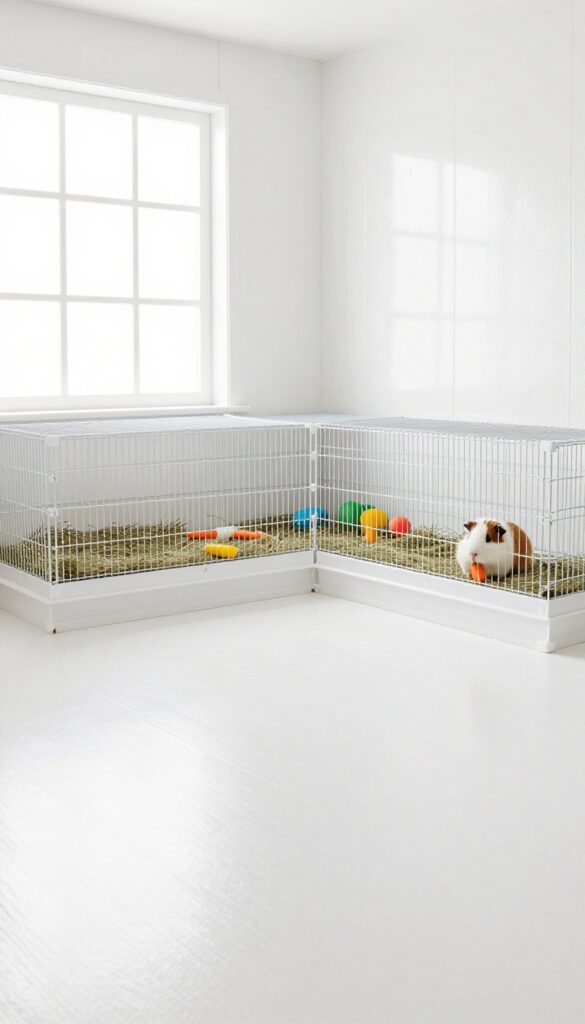
Guinea pigs can be messy, and urine spray or hay dust can damage walls over time. Installing easy-to-clean wall protection keeps your guinea pig room looking fresh and prevents odors from seeping into the walls.
The key is to choose materials that are non-porous and easy to wipe down. Here are some practical options:
- Washable paint: Use a satin or semi-gloss finish that can be wiped clean with a damp cloth. Avoid matte finishes that absorb moisture and odors.
- Wall panels: Consider PVC or acrylic panels that are waterproof and easy to spray down. They are especially useful behind the cage area.
- Painted plywood or MDF: For a DIY approach, seal plywood with a waterproof primer and paint for a durable, wipeable surface.
Whatever option you choose, ensure it is securely attached and has no sharp edges. This simple upgrade will make daily cleaning much easier and protect your walls for years.
Create a Quarantine or Sick Bay Area
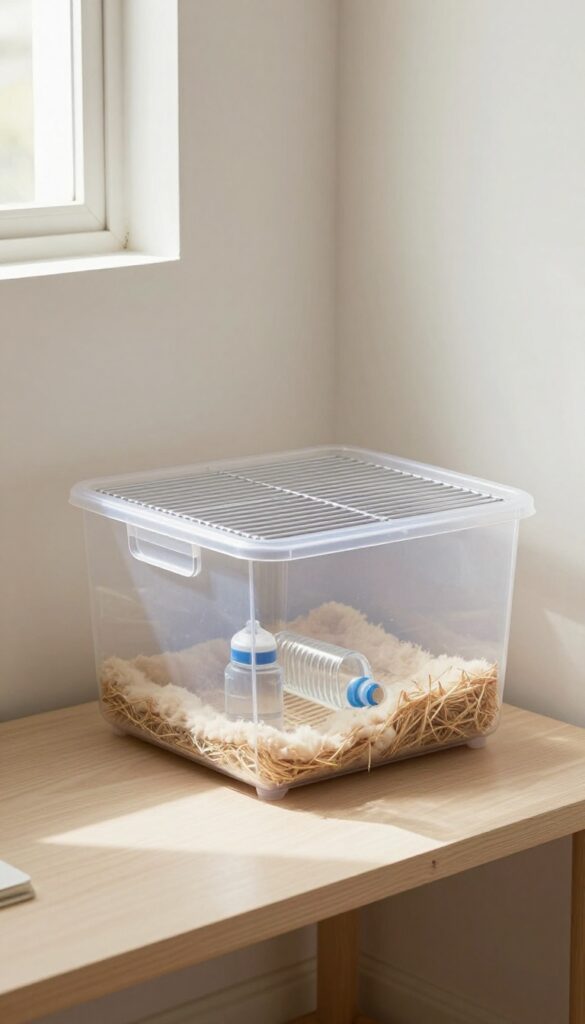
A separate quarantine cage is essential for maintaining a healthy guinea pig room. This dedicated space allows you to isolate new arrivals or sick pigs without risking the health of your existing herd.
Set up a small, easy-to-disinfect cage in a separate part of the room or a different room entirely. Use a simple plastic bin or a small pet cage with solid walls to minimize airborne particles. Keep this area stocked with its own food, water, and bedding supplies to avoid cross-contamination.
Why a Quarantine Area Matters
- Prevents spread of contagious illnesses like respiratory infections or mites
- Allows you to monitor new guinea pigs for signs of illness before introducing them to the group
- Provides a calm, low-stress recovery space for sick or injured pigs
Clean the quarantine cage frequently—daily spot cleaning and a full disinfection between occupants. Use a pet-safe disinfectant and let the cage dry completely before adding fresh bedding. This simple setup is a key part of any responsible guinea pig room for a clean pet-friendly space.
Implement a Daily Cleaning Routine
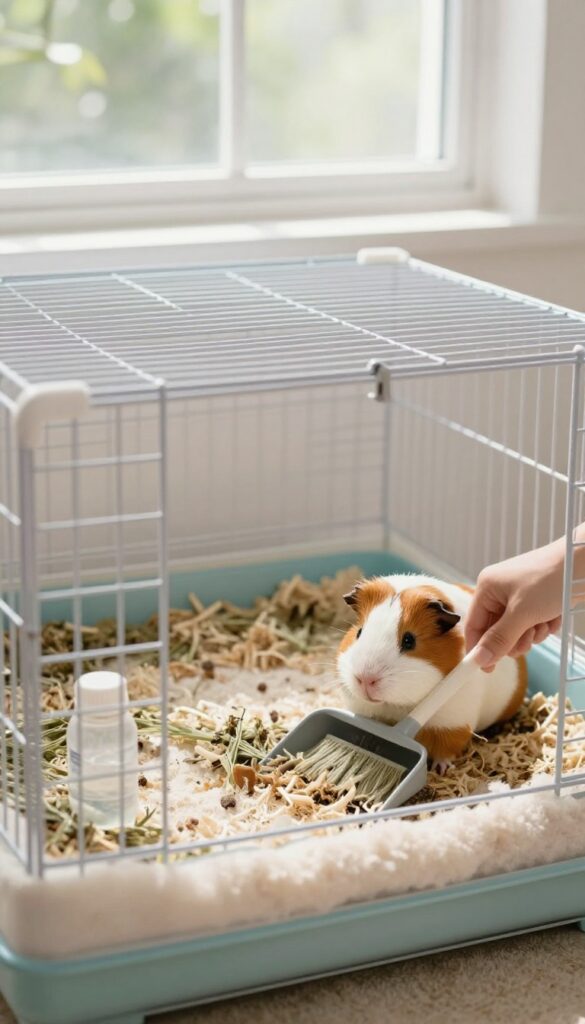
A consistent cleaning routine is the backbone of a clean, healthy guinea pig room. Daily spot cleaning prevents odors and bacteria buildup, while a weekly deep clean keeps the entire space fresh.
Start each day by removing soiled bedding, uneaten fresh food, and any wet spots. Use a small scoop or dustpan for quick cleanup. Wipe down cage bars, shelves, and hideouts with a pet-safe disinfectant.
Refill water bottles and hay racks. This daily maintenance takes only 10–15 minutes but dramatically reduces ammonia buildup and keeps your guinea pigs comfortable.
- Spot clean soiled bedding and droppings every morning
- Wipe down surfaces with a vinegar-water solution or pet-safe cleaner
- Remove and replace uneaten vegetables and fruits
- Check and refill water bottles, cleaning nozzles if needed
Once a week, perform a full clean: remove all bedding, wash fleece liners and accessories, disinfect the cage and room surfaces, and replace with fresh bedding. A routine prevents mess from piling up and keeps the room smelling pleasant without harsh chemicals.
FAQ
What is the best flooring for a guinea pig room?
Waterproof flooring like vinyl, linoleum, or washable rugs is ideal because it protects against urine and is easy to clean.
How often should I clean the guinea pig room?
Daily spot cleaning of soiled bedding and wiping surfaces is recommended, with a full deep clean weekly.
Can I use an air purifier in the guinea pig room?
Yes, a HEPA air purifier can help reduce hay dust and odors, but avoid ozone generators as they can harm guinea pigs.
What type of bedding is easiest to keep clean?
Washable fleece liners are reusable and absorbent, making them easy to launder and maintain cleanliness.
Conclusion
By implementing these 12 ideas, you can create a guinea pig room that is both functional and hygienic. A clean environment promotes better health for your pets and makes maintenance easier for you.
Start with a few changes and gradually build your ideal space.

I’m Pallab Kishore, the owner of Little Pets Realm — an animal lover and pet care enthusiast sharing easy tips, healthy recipes, and honest advice to help every small pet live a happy, healthy, tail-wagging life.