Last updated on August 19th, 2026 at 04:19 pm
Outdoor housing for guinea pigs can be a great way to give them fresh air and room to roam. But it comes with challenges—especially keeping them cool and protected. You need a setup that offers ample shade, secure walls, and enough space for zoomies and hideouts.
Not every outdoor cage has to break the bank or require advanced carpentry skills. Some ideas are simple weekend projects, while others are ready-made solutions you can order online. The key is matching the design to your climate, yard size, and your guinea pigs' personality.
Below are 13 outdoor cage ideas that prioritize shade and space. Each one is realistic, with an honest look at effort and cost.
1. Classic Wooden Hutch with a Shaded Run
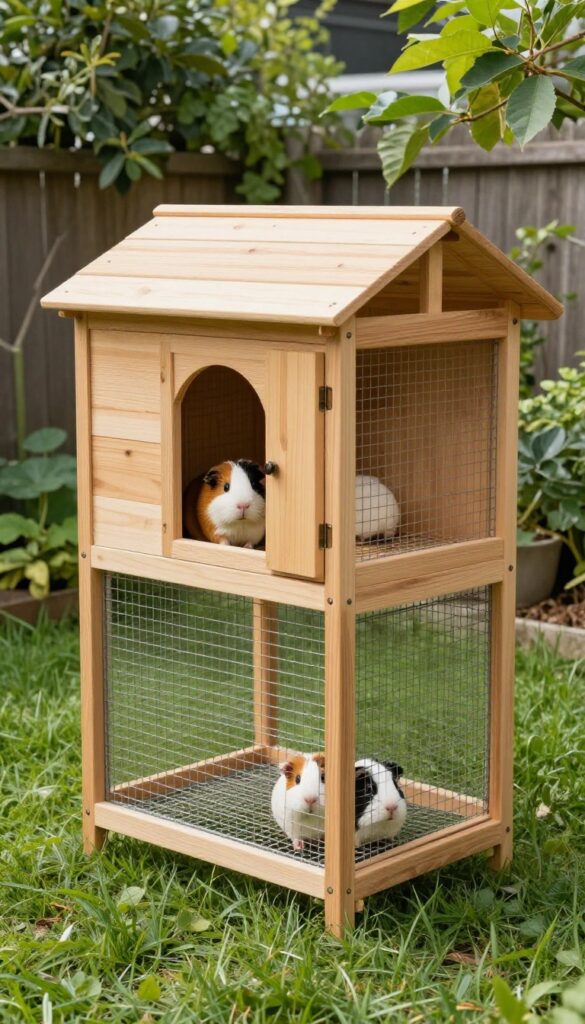
A traditional raised hutch attached to a wire-floor run is a go-to for many guinea pig owners. The hutch sits off the ground, keeping your pets safe from dampness and some predators, while the run gives them room to stretch their legs. A solid roof over both sections provides essential shade, making this setup work well in moderate climates.
This design is popular because it's straightforward to build or buy. You can find pre-made kits or plans online, and the materials are easy to source. The raised hutch also makes cleaning simpler since you can access it without bending too much.
Just make sure the run has a secure latch and the wire mesh is small enough to keep out snakes and rodents.
Why It Works For Shade
The solid roof is the star here. It blocks direct sunlight for most of the day, keeping the interior cooler. In hot weather, you can add a reflective tarp on top for extra heat deflection.
Space Considerations
A standard hutch plus run combo gives about 8 to 12 square feet of space, which is good for a pair of guinea pigs. For more pigs, you can extend the run lengthwise or add a second level.
Diy Vs. Store-bought
Building your own lets you customize dimensions and use weather-resistant wood like cedar or pressure-treated pine. Store-bought options are faster but often use thinner wood, so check for durability.
2. PVC Pipe and Shade Cloth Tunnel Cage
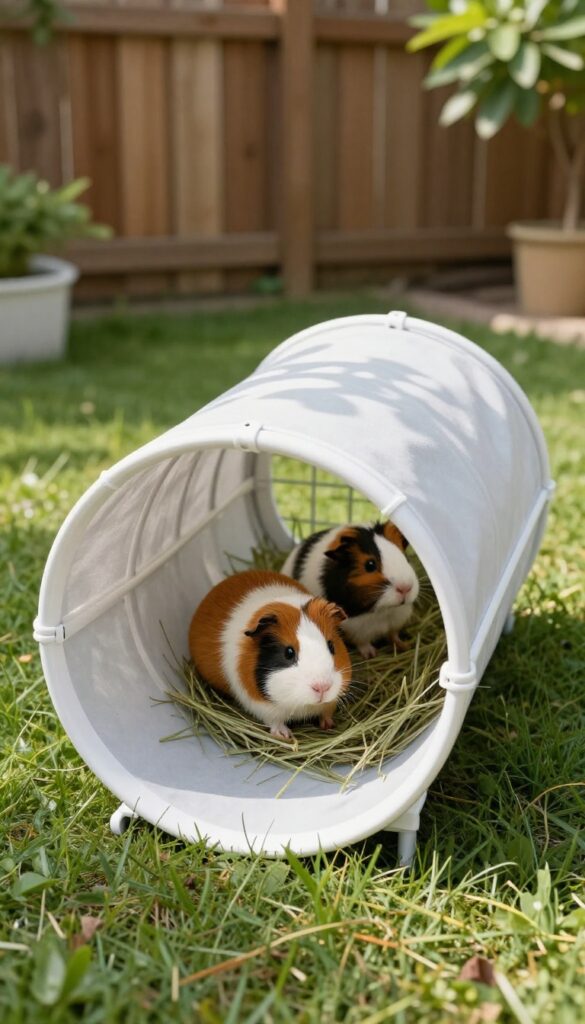
PVC pipes and shade cloth make a surprisingly sturdy and lightweight outdoor cage. The frame snaps together without tools, and the cloth provides filtered sunlight and excellent airflow. This design is especially good for hot climates where metal cages can turn into ovens.
A PVC pipe frame keeps the cage portable and easy to modify. You can build it in any shape—rectangle, L-shape, or even a long tunnel. Shade cloth blocks up to 90% of UV rays while letting breezes pass through.
The floor can be a simple tarp or a fitted liner, and the whole setup can be taken apart for storage.
Materials And Cost
You'll need PVC pipes (1-inch diameter works well), corner joints, shade cloth (70-90% shade rating), zip ties, and a ground cover. Total cost is around $40-80, depending on size. PVC is cheap and easy to cut with a handsaw.
Assembly Tips
Build the frame on a flat surface. Connect pipes with joints to form a box or tunnel shape. Drape shade cloth over the top and sides, then secure it with zip ties every 6-8 inches.
Leave one side open for access or add a flap door.
Pros And Cons
Pros: lightweight, portable, affordable, great ventilation, UV protection. Cons: not chew-proof (guinea pigs may nibble PVC), shade cloth can tear if snagged, and the frame may need anchoring in windy areas.
3. Repurposed Bookshelf Turned Outdoor Condo
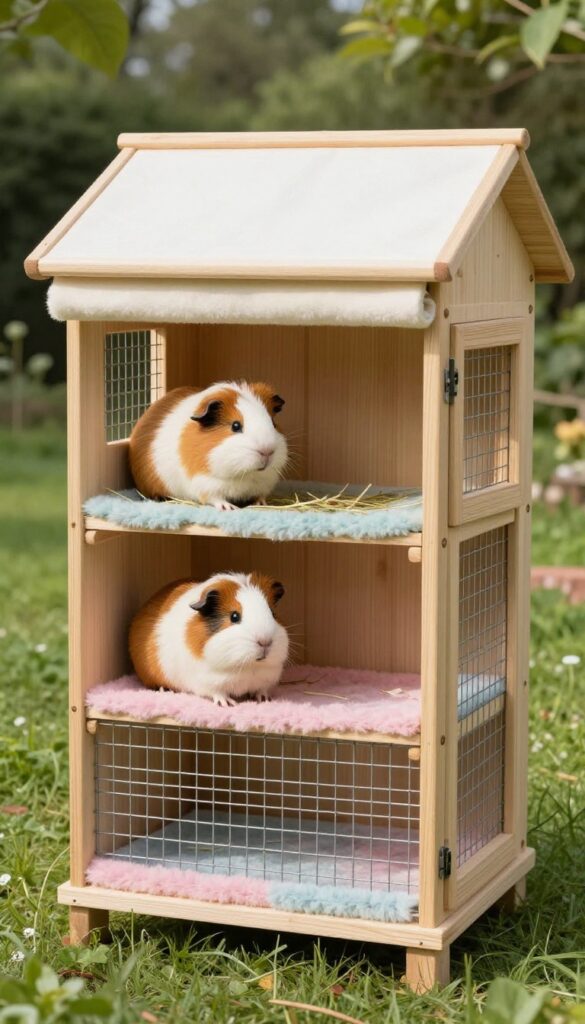
An old bookshelf can become a stylish and functional multi-level guinea pig condo for your yard. With a few modifications—adding mesh doors and a shaded top—you get a budget-friendly cage that fits neatly into small spaces. It's a weekend project that turns discarded furniture into a cozy outdoor home.
This idea works best with a sturdy wooden or metal bookshelf that has adjustable shelves. Remove any backing to allow airflow, then attach hardware cloth or wire mesh to the front and sides for security. Add a hinged door on one side for easy access.
A shade cloth or wooden roof on top keeps the interior cool and protects from rain. Line each shelf with fleece or bedding, and your guinea pigs will have a vertical playground.
Choosing The Right Bookshelf
Look for a bookshelf with deep shelves (at least 12 inches) and a solid frame. Avoid particleboard that can warp outdoors. A width of 30–36 inches gives enough room for two guinea pigs per level.
Make sure the shelf spacing allows your pets to stand upright without hitting their heads.
Adding Shade And Weather Protection
The top shelf should have a solid cover or a shade cloth with at least 80% UV blockage. You can also attach a waterproof tarp over the roof for rainy days. Position the bookshelf in a spot that gets morning sun but afternoon shade, or use a patio umbrella for extra coverage.
Ventilation And Safety
Drill small holes in the sides or back for cross-ventilation. Secure all mesh with staples or screws, and check for sharp edges. Use a latch on the door to prevent escapes.
Elevate the bookshelf on bricks or casters to keep it off damp ground and improve airflow.
4. Dog Exercise Pen with a Canopy Top
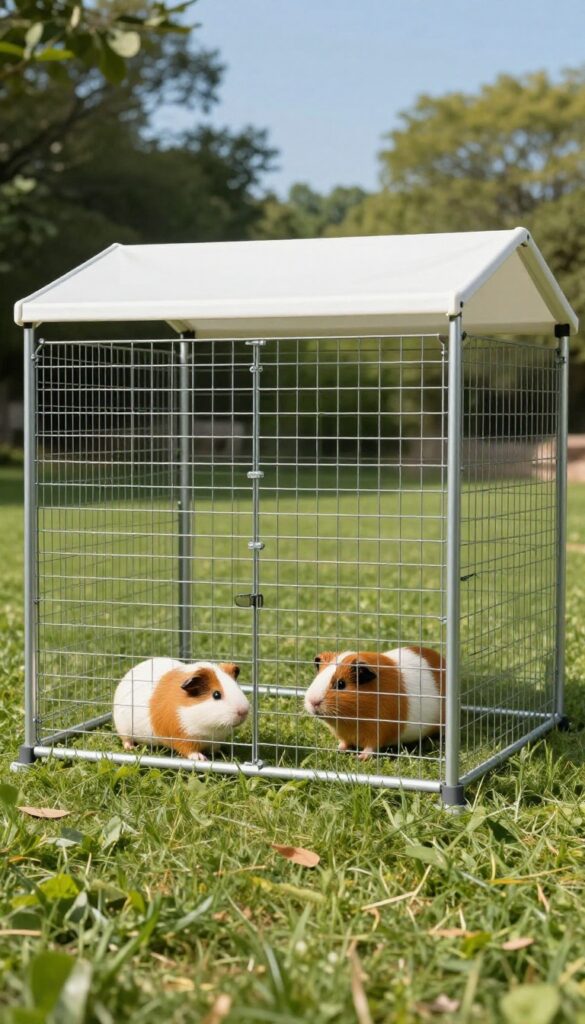
A metal dog exercise pen is one of the easiest ways to create a spacious outdoor guinea pig enclosure. Set it up on grass, add a fitted canopy or tarp overhead, and you have a secure, shaded run in minutes. The best part?
It's portable, so you can move it to fresh grass whenever needed.
Dog exercise pens are typically 24 to 48 inches tall and come in various panel configurations. For guinea pigs, a 4-panel or 6-panel pen gives plenty of room for running and exploring. The metal construction is sturdy enough to keep out small predators, and the open top allows you to drape a canopy or shade cloth for sun protection.
Just make sure the spacing between bars is narrow enough (around 1-2 inches) so guinea pigs can't squeeze through. If the gaps are too wide, you can line the bottom with hardware cloth or cardboard.
Setting Up The Canopy
A fitted canopy top is ideal, but a simple tarp or shade cloth works too. Use bungee cords or zip ties to secure it to the pen's top edge. Make sure the cover extends a few inches past the sides to block low-angle sun.
For extra ventilation, leave a small gap on one side or use a mesh shade cloth that allows airflow.
Ground Safety And Comfort
Place the pen on grass for a soft, natural surface that guinea pigs love to graze on. To prevent digging out, press the bottom of the pen firmly into the ground or use landscape staples to anchor it. If your yard has uneven terrain, you can lay down a tarp or old blanket underneath for a flat floor.
Move the pen every few days to avoid overgrazing and to give the grass time to recover.
Predator Proofing Tips
While the metal pen deters most small predators, you can add extra security by placing a second layer of hardware cloth around the bottom foot of the pen. If you have hawks or owls in your area, a solid top (like a plywood sheet with ventilation holes) might be safer than a mesh canopy. Always supervise outdoor time and bring guinea pigs inside at night.
5. Cinder Block and Wire Mesh Permanent Enclosure
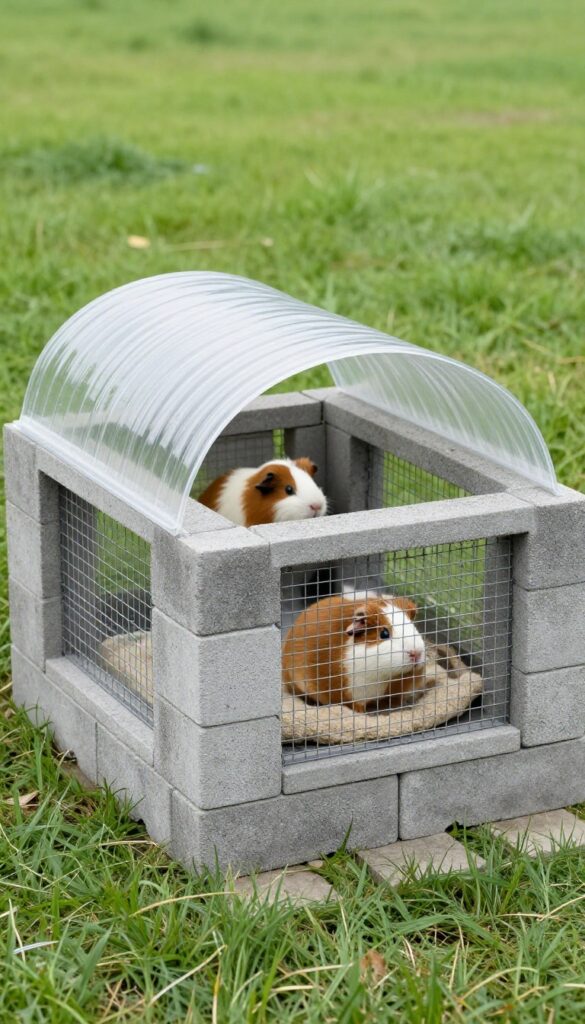
If you want a cage that can handle wind, rain, and curious predators year after year, cinder blocks and wire mesh are a rock-solid combo. This design uses concrete blocks as walls and heavy-duty wire mesh for ventilation, topped with corrugated plastic for lasting shade. It’s not a quick weekend project, but the payoff is a permanent outdoor home that barely needs maintenance.
The walls are built by stacking cinder blocks in a rectangle or L-shape, leaving gaps for wire mesh panels. Use hardware cloth (1/2-inch or smaller) to keep out snakes and rodents. The roof is corrugated plastic or polycarbonate sheets, sloped for rain runoff.
Add a solid floor of pavers or concrete to prevent digging. This cage is heavy, stable, and can be as large as your yard allows.
Why Cinder Blocks Work
Cinder blocks are cheap, durable, and easy to stack without mortar for a temporary feel, or you can mortar them for a permanent structure. They provide excellent insulation against heat and cold, and their weight keeps the cage grounded even in strong winds.
Ventilation And Shade Tips
Cut wire mesh panels to fit into the block openings, securing them with zip ties or screws. For shade, corrugated plastic is lightweight and blocks UV rays. Paint the roof white or use reflective material to keep the interior cooler.
Safety And Comfort
Smooth any rough edges on the blocks with sandpaper or cover them with duct tape. Provide a soft floor of fleece or straw over the pavers. Add hidey houses and tunnels to make the space feel cozy despite the industrial look.
6. Greenhouse Conversion with Ventilation Panels
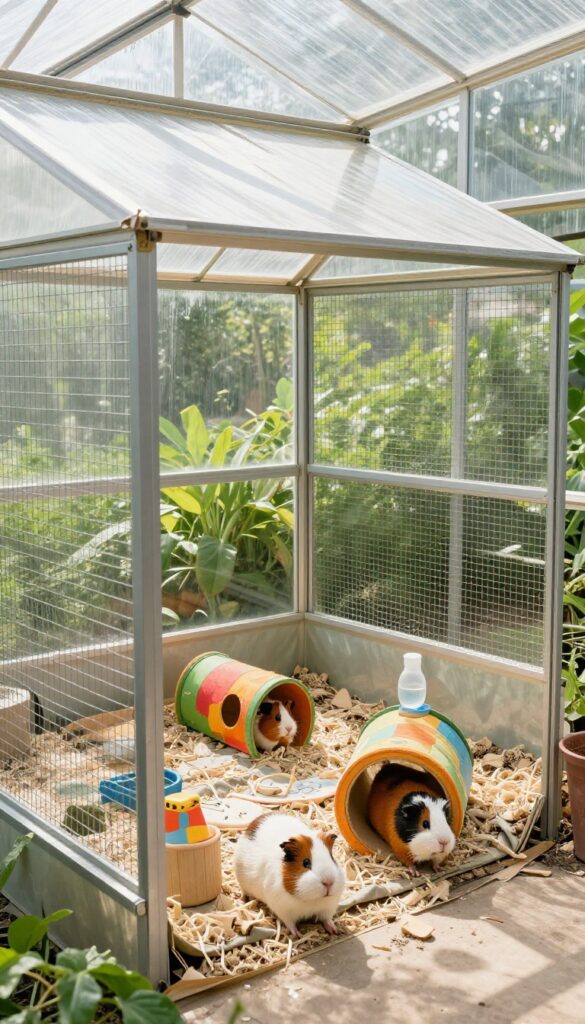
A small greenhouse can be turned into a dream guinea pig mansion with just a few modifications. The clear walls let in natural light, while mesh windows and a shaded roof keep temperatures comfortable. This setup works especially well in cooler climates, where the greenhouse traps warmth on chilly days, but it also stays cool in summer when you open the ventilation panels.
Start with a small greenhouse kit or a used one from a garden center. Replace some of the solid panels with wire mesh to create cross-ventilation. Add a shade cloth over the roof to block direct sun.
Inside, set up hideys, tunnels, and a water bottle. The floor should be lined with a waterproof tarp and soft bedding. This enclosure is spacious, secure, and gives your pigs a view of the outdoors.
Ventilation Is Key
Guinea pigs need fresh air, especially in a greenhouse. Cut out two opposite side panels and replace them with fine wire mesh. This creates a breeze and prevents overheating.
In hot weather, open the door and any built-in roof vents as well.
Shade And Temperature Control
Even with vents, a greenhouse can get too hot. Drape a 70% shade cloth over the roof and secure it with clips. Place the greenhouse in a spot that gets morning sun but afternoon shade.
Add a thermometer inside to monitor temps—aim for 65–75°F.
Predator-proofing
Greenhouse frames are usually aluminum or plastic, which isn't chew-proof. Cover any exposed edges with metal flashing. Use hardware cloth on all mesh openings, and bury the bottom edge a few inches into the ground to stop diggers.
7. Pallet Wood Cage with a Living Roof
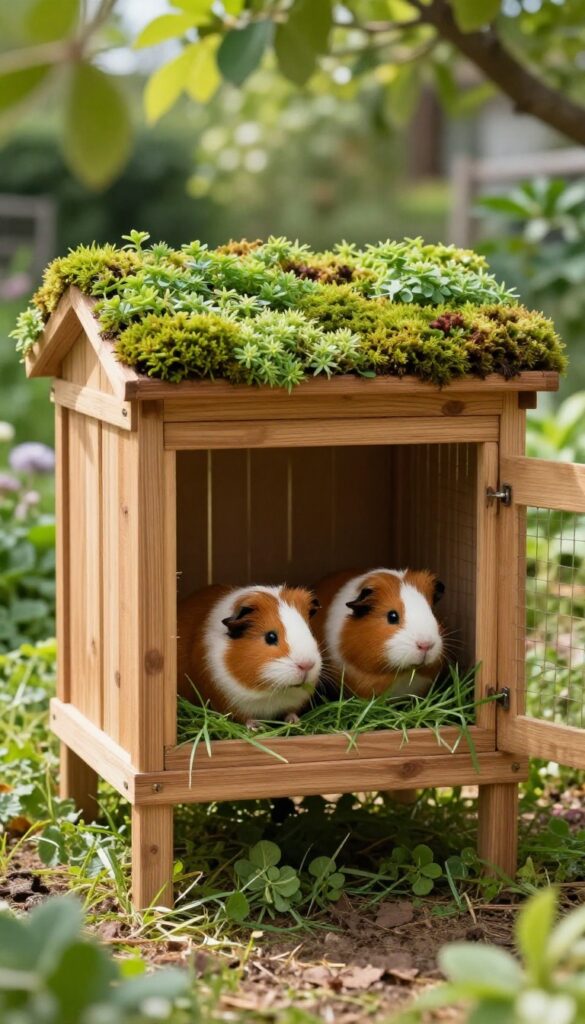
A pallet wood cage topped with a living roof is as eco-friendly as it gets. The green roof—planted with sedum or grass—naturally insulates the interior and provides a cool, shaded retreat for your guinea pigs. This design takes some carpentry know-how, but the result is a sturdy, attractive enclosure that blends into your garden.
Building this cage starts with sourcing untreated pallets. Disassemble them carefully to avoid splintered wood, then construct a frame with solid walls and a secure base. The roof needs a waterproof membrane and a shallow tray to hold soil and plants.
Sedum is a great choice because it's low-maintenance and drought-tolerant. The living roof not only looks amazing but also helps regulate temperature inside the cage, keeping it cooler in summer and warmer in cooler weather.
Why A Living Roof Works
The plants absorb sunlight and provide evaporative cooling, which can lower the temperature inside the cage by several degrees. They also add a natural aesthetic that blends into your yard. Plus, the soil layer acts as extra insulation, making the cage more comfortable year-round.
Building Tips
Make sure the roof structure is strong enough to support the weight of wet soil. Use a liner to prevent water damage to the wood. Choose shallow-rooted plants like sedum, moss, or creeping thyme.
Water the roof regularly, but ensure proper drainage so it doesn't become waterlogged.
Safety Considerations
Only use pallets marked with HT (heat treated) to avoid chemical residues. Sand down rough edges and seal the wood with a pet-safe finish. Ensure the cage has a solid floor or a wire bottom with a tray to prevent digging out.
The living roof should be inaccessible to the guinea pigs—they shouldn't be able to jump up and nibble the plants.
8. Large Pop-Up Pet Tent with Mesh Panels
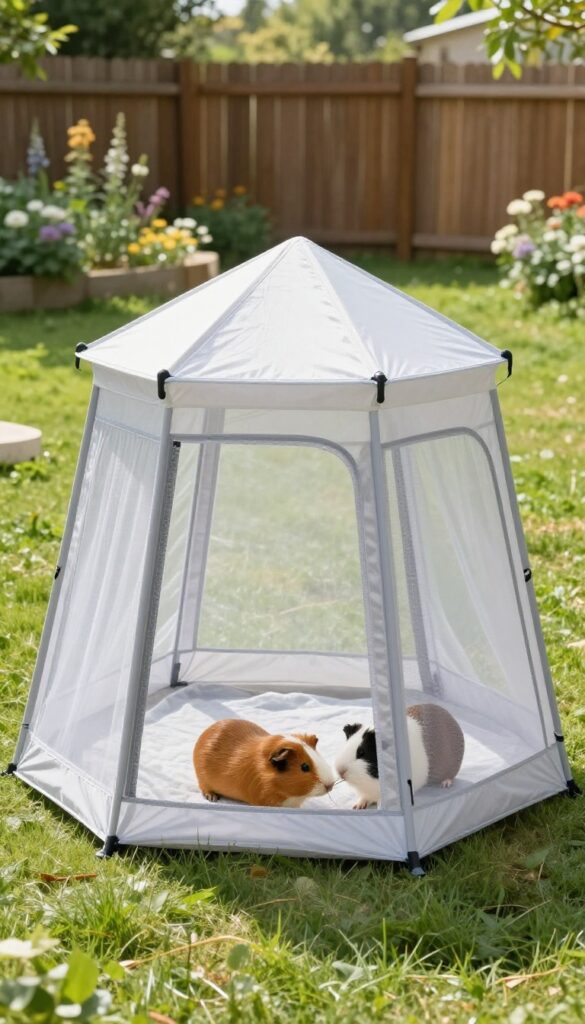
Pop-up tents aren't just for camping—they can be a quick and spacious outdoor guinea pig enclosure. These tents are designed for pets, with mesh sides for airflow and a UV-blocking roof that keeps the sun off. They set up in seconds and fold flat for storage, making them perfect for temporary or occasional use.
A pop-up pet tent gives your guinea pigs a roomy, shaded area without any tools or construction. The mesh panels let in plenty of fresh air while keeping bugs out, and the UV-blocking roof protects from direct sun. It's lightweight and portable, so you can move it around the yard or pack it away when not in use.
Just make sure the tent has a floor or you add a sturdy base to prevent escapes.
Why It Works For Guinea Pigs
Guinea pigs need good ventilation and protection from heat. The mesh sides provide constant airflow, and the UV roof cuts down on glare and temperature. The tent's large interior gives them room to run, popcorning, and explore.
It's also easy to supervise them since you can see through the mesh.
Setup And Safety Tips
Set up the tent on a flat, grassy area away from direct afternoon sun. Weigh down the corners with bricks or sandbags so it doesn't shift in wind. Add a fleece liner or old towels on the floor for comfort.
Always check for small tears in the mesh, and never leave guinea pigs unattended for long periods.
Best Uses And Limitations
This is a great option for playtime, travel, or as a temporary summer home. It's not built for year-round outdoor living—the fabric can degrade in harsh weather. But for a few hours of supervised outdoor fun, it's hard to beat.
Plus, it folds flat, so it won't clutter your garage.
9. Custom L-Shaped Cage Under a Patio Overhang
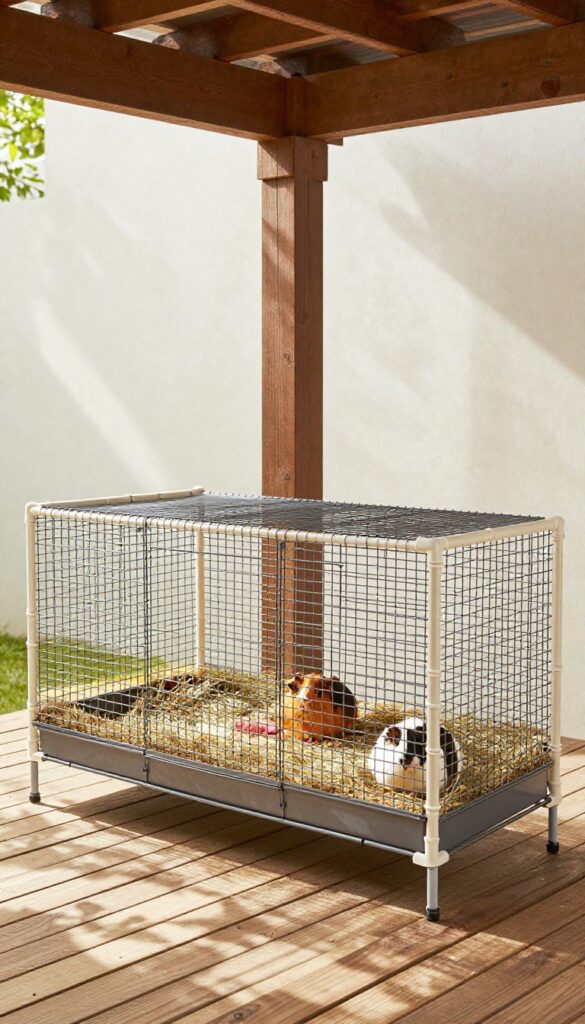
If your patio has an overhang, you already have built-in shade. Why not use that covered area for a guinea pig cage? An L-shaped enclosure fits neatly into a corner, wrapping around a post or wall, and gives your pigs plenty of room to explore while staying cool and dry.
Building an L-shaped cage is straightforward with wire grid cubes or hardware cloth and PVC pipes. The overhang protects against direct sun and light rain, so you don't need a separate roof. Just make sure the cage is elevated off the ground for airflow and to keep out pests.
Add a solid floor or a tray for easy cleaning.
Maximizing Corner Space
An L-shape uses corner space that often goes wasted. You can fit a larger cage than a rectangle in the same footprint. Measure your patio corner and build grids to match.
Leave a gap between the cage and the wall for air circulation.
Shade And Weather Protection
The overhang does most of the work, but if the sun shifts, add a shade cloth on the exposed sides. In heavy rain, you might need a clear vinyl curtain on the open side to block splashes. Check that the floor stays dry.
Access And Maintenance
Make one side a door or use a lid that lifts. Since the cage is under cover, you can leave bedding and hay inside without worrying about rain. Spot clean daily and do a full clean weekly.
10. Raised Garden Bed Conversion with Hardware Cloth
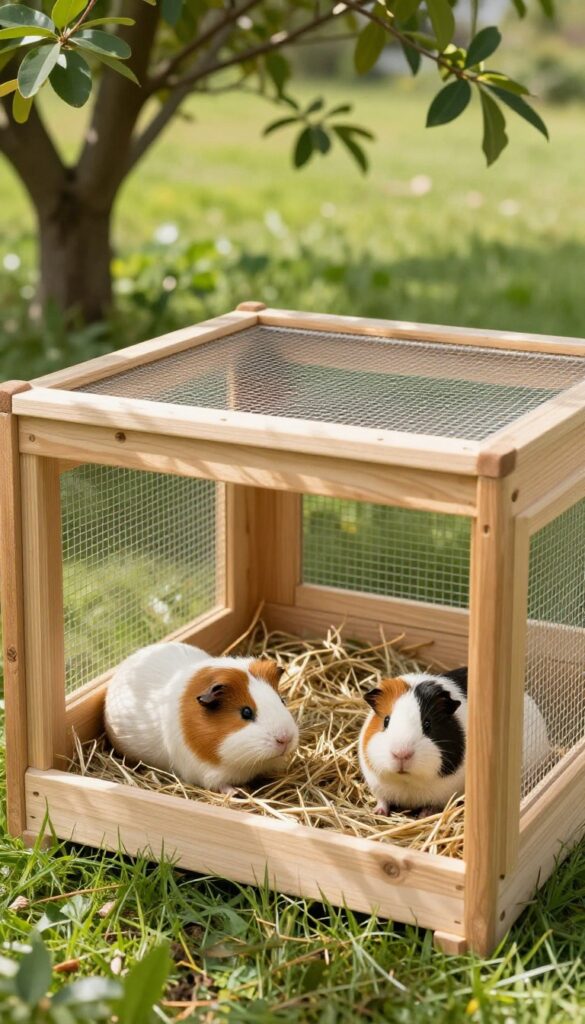
A raised garden bed can become an instant guinea pig paradise with just a few tweaks. The wooden walls offer natural shade, while the deep base lets your pigs dig and burrow to their hearts' content. Adding a hardware cloth lid keeps them safe from predators and prevents escape attempts.
This conversion is a budget-friendly option if you already have a raised bed or can pick one up secondhand. The key is to ensure the bed is large enough—at least 8 square feet for two guinea pigs—and made from untreated wood. Cedar and pine are safe choices, but avoid pressure-treated lumber.
Building The Lid
Measure the top of the bed and build a wooden frame that fits snugly. Staple or screw hardware cloth (1/2-inch mesh) over the frame. Attach hinges to one side so you can lift the lid for easy access.
Add a latch to keep it secure.
Digging Enrichment
Fill the bed with a thick layer of paper-based bedding or hay, at least 6 inches deep. Guinea pigs love to tunnel and dig, so this setup gives them plenty of opportunities. You can also hide veggies or treats in the bedding to encourage natural foraging.
Shade And Ventilation
The raised bed's walls provide consistent shade throughout the day. For extra airflow, cut a few small windows in the sides and cover them with hardware cloth. Place the bed in a spot that gets morning sun but afternoon shade to keep temperatures comfortable.
11. Portable Chicken Tractor with Shade Panels
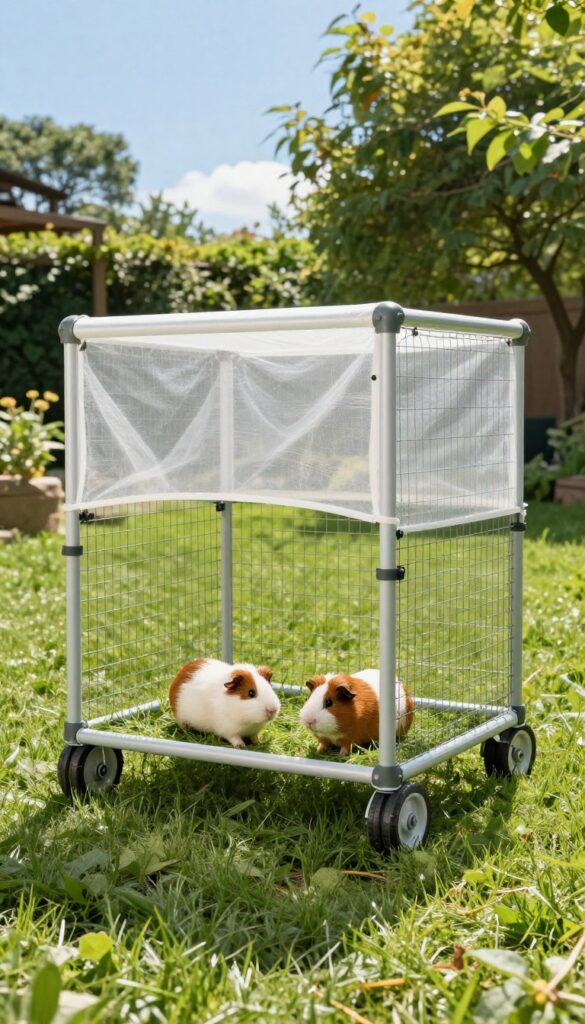
If you want a setup that gives your guinea pigs fresh grass every day without a permanent structure, a portable chicken tractor is a clever solution. These lightweight, bottomless pens are easy to move, and by adding shade cloth panels, you create a cool, airy space that keeps your pets comfortable during supervised outdoor time.
A chicken tractor is essentially a movable pen with no floor, so guinea pigs can graze directly on the grass. The key is to attach shade cloth to the top and sides that get direct sun, ensuring plenty of airflow while blocking harmful UV rays. Because the pen is lightweight, you can shift it to a new patch of grass daily, giving your pets fresh greens and preventing the area from getting muddy or overgrazed.
Choosing The Right Tractor
Look for a chicken tractor made from light materials like PVC pipe or thin wood framing with wire mesh. It should be tall enough for guinea pigs to stand up and wide enough for them to run short distances. A typical size is 4 feet by 2 feet by 1.
5 feet tall. Make sure the mesh openings are small enough to keep out predators and prevent escapes.
Adding Shade Cloth
Use UV-resistant shade cloth (70-80% blockage) and attach it with zip ties or clips to the top and sun-facing sides. Leave one side open for ventilation. You can also add a small tarp over part of the roof for extra rain protection.
The shade cloth should be easy to remove for washing or when you want more sun.
Daily Moving Routine
Each morning, lift the tractor and slide it to a fresh grassy spot. Ensure the ground is level and free of toxic plants. Provide a hidey house or tunnel inside for security, and always supervise your guinea pigs while they're out.
Move the tractor to a shaded area during the hottest part of the day if needed.
12. Two-Story Bunny Cage with a Shaded Lower Level
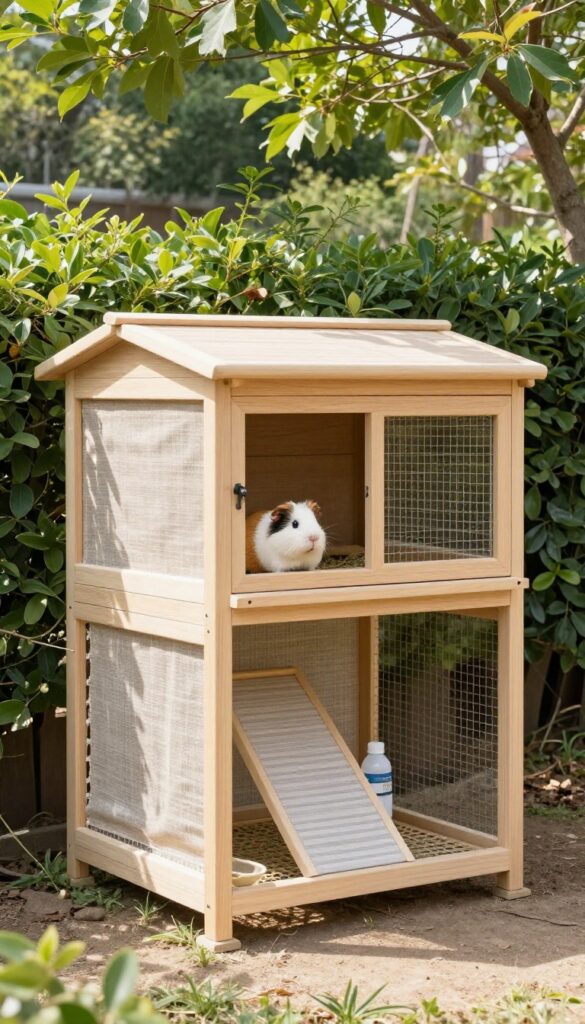
A prefab two-story rabbit cage can be a surprisingly good fit for guinea pigs with a few tweaks. The key is making sure the lower level stays shaded and cool, since that's where they'll hang out most during hot days. This setup gives them vertical space to explore without sacrificing comfort.
Start with a standard two-story rabbit hutch that has a solid roof and a ramp connecting the levels. Place it in a spot that gets morning sun but afternoon shade—or add a shade cloth over the top. The upper level can get warm, so focus on keeping the lower level well ventilated and cool.
Add a hideout or two down there so they feel secure. The ramp and platforms encourage exercise, but make sure the ramp isn't too steep for guinea pigs; you can add grip strips if needed.
Choosing The Right Hutch
Look for a hutch with a solid floor on the lower level (not wire) and a wide ramp. Avoid models with tiny doors or low ceilings. The lower level should be at least 8 inches tall so guinea pigs can stand up.
A removable tray makes cleaning easier.
Shade And Cooling Tricks
If the hutch doesn't come with a solid roof, add a waterproof cover or shade cloth. You can also place frozen water bottles wrapped in towels on the lower level during heat waves. Keep the hutch off the ground slightly to improve airflow underneath.
Safety Check
Make sure the ramp has side rails to prevent falls. Check that the upper level doesn't get too hot—if it does, block access during peak sun. Secure all doors with latches, as guinea pigs can be surprisingly good at escaping.
13. DIY Mesh Cube Shelf Cage with a Tarp Roof
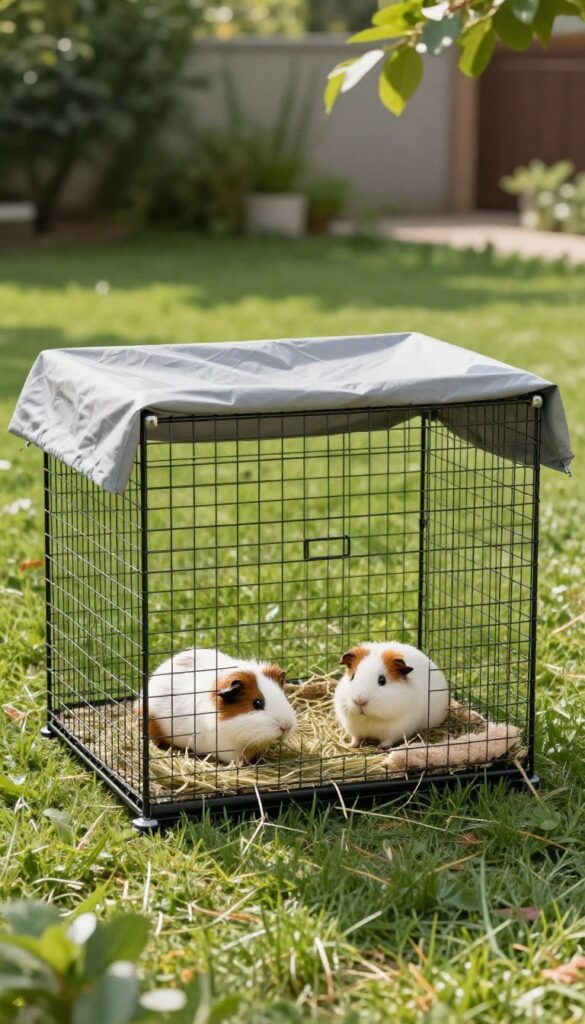
Wire cube shelving panels are a favorite for DIY pet projects because they're cheap, easy to work with, and incredibly versatile. For an outdoor guinea pig cage, you can build a large cube-shaped enclosure and simply drape a tarp over the top for shade. The result is a spacious, airy, and customizable setup that costs a fraction of store-bought alternatives.
Start by connecting wire cube panels (typically 14-inch squares) with zip ties to form a large cube or rectangular box. Leave one side as a door or make the top removable for easy access. The mesh sides provide excellent ventilation, and the grid pattern allows your guinea pigs to climb a bit if they're adventurous.
Once the structure is assembled, throw a heavy-duty tarp over the top and secure it with bungee cords or clips. The tarp blocks direct sun and creates a cool, shaded interior. For extra protection, you can add a second tarp on one side to block wind or rain.
Customizable Size And Shape
The beauty of cube panels is that you can build any size or shape. Need a 2×4-foot cage? Just connect more panels.
Want a two-story setup? Stack panels and add a ramp. You can even make a long, narrow run along a fence line.
The panels are lightweight, so you can rearrange or expand the cage as needed.
Tarp Tips For Shade And Weather Protection
Choose a light-colored tarp to reflect heat, and make sure it's securely fastened so it doesn't flap in the wind. For extra insulation, place a layer of cardboard or a reflective blanket under the tarp. If you live in a rainy area, angle the tarp so water runs off to the side rather than pooling on top.
Cost And Effort
A pack of 20 cube panels costs around $20–$30, and a tarp is another $10–$15. Zip ties are cheap. Assembly takes about an hour with no tools required.
This is one of the most budget-friendly options on the list, and you can easily disassemble it for storage.
FAQ
How much space do outdoor guinea pigs need?
At minimum, two guinea pigs need about 7. 5 square feet of floor space, but 10-12 square feet is better. Outdoor cages should be larger to allow for exercise and separate hide areas.
What is the best material for outdoor guinea pig cage shade?
Shade cloth (70-90% UV block) is lightweight and breathable. Corrugated plastic or wood roofs also work well. Avoid metal roofs that get too hot.
Can guinea pigs stay outside overnight?
Only if temperatures stay between 60-75°F and the cage is predator-proof. Most owners bring them indoors at night for safety and temperature control.
How do I protect outdoor guinea pigs from predators?
Use sturdy wire mesh (1/2 inch or smaller), secure all openings with locks, and consider a solid roof. Bury the mesh a few inches underground to prevent digging predators.
Do outdoor guinea pigs need bedding?
Yes, even outdoor cages need soft bedding like fleece or paper-based bedding. Avoid cedar or pine shavings. Provide a sheltered area with extra bedding for warmth.
Conclusion
Your guinea pigs will love having a safe outdoor space to explore. Start with one idea that fits your yard and budget, then tweak it as you go.
A little shade and plenty of room make all the difference for happy, healthy cavies.

I’m Pallab Kishore, the owner of Little Pets Realm — an animal lover and pet care enthusiast sharing easy tips, healthy recipes, and honest advice to help every small pet live a happy, healthy, tail-wagging life.