Last updated on August 19th, 2026 at 04:19 pm
Letting your guinea pigs enjoy fresh air and sunshine doesn't mean risking their safety. These 10 outdoor cage ideas are designed to keep predators out, prevent escapes, and provide plenty of shade and ventilation.
From quick pop-up playpens to permanent backyard setups, each option balances security with comfort. You'll find solutions that work whether you're on a tight budget or ready to build something custom.
No matter your space or skill level, there's a practical way to give your piggies a safe outdoor adventure.
1. Portable Pop-Up Playpen
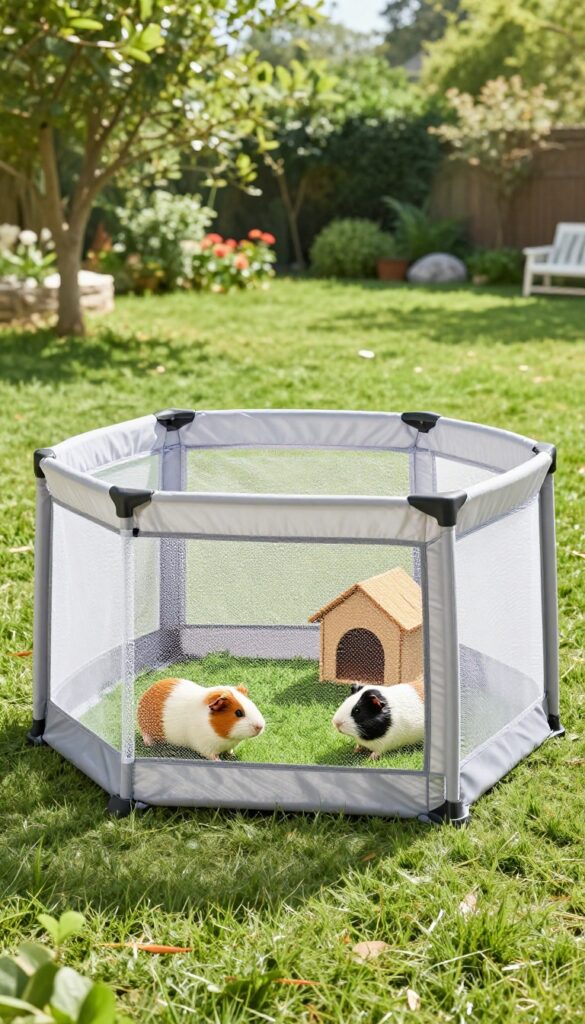
A portable pop-up playpen is the easiest way to give your guinea pigs a taste of the outdoors without any permanent setup. These lightweight pens fold flat for storage and can be set up in seconds on any patch of grass. They're perfect for supervised play sessions when you want to keep an eye on your piggies while they explore.
Look for a playpen with a mesh top to block birds of prey and other predators. A waterproof bottom is also essential to keep the grass dry and your guinea pigs comfortable. Many models come with a carrying case, making it simple to take the pen to the park or a friend's yard.
Just remember that these pens are not chew-proof, so always supervise your pets.
What To Look For
Choose a pen with a sturdy frame and fine mesh that predators can't tear. A zippered top adds an extra layer of security. The bottom should be waterproof and easy to clean—some even have a removable tray.
Setting Up Safely
Place the pen on flat, level ground away from garden chemicals or toxic plants. Provide a hidey house or tunnel so your guinea pigs can retreat if they feel nervous. Always bring fresh water and a shady spot if the sun is strong.
Best Uses
Use a pop-up playpen for short, supervised outings—30 minutes to an hour is plenty. It's also great for introducing your guinea pigs to new textures like grass or dirt. Just be ready to pack up quickly if the weather turns.
2. DIY Wooden Run with Wire Lid
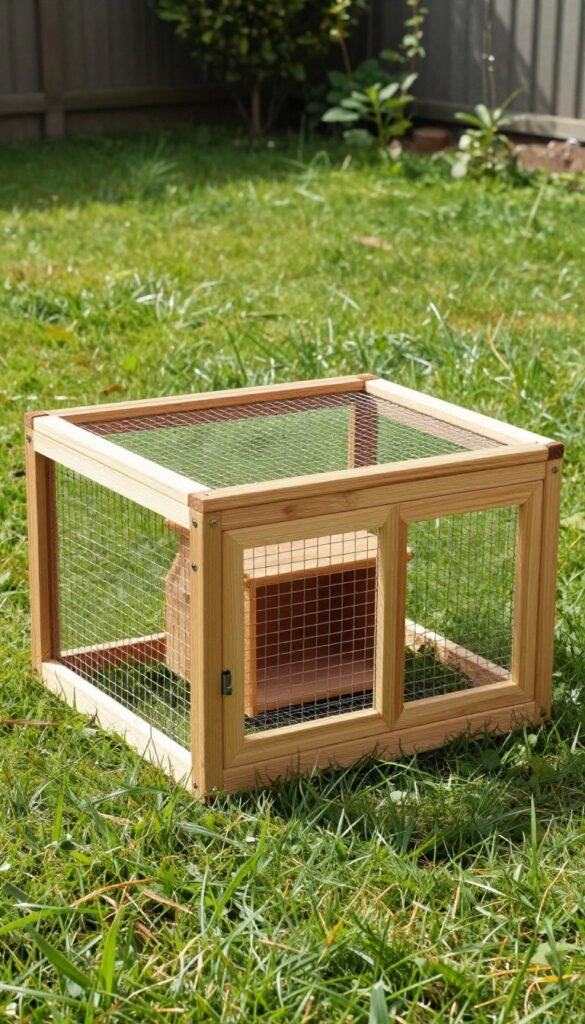
A wooden run gives your guinea pigs a permanent outdoor spot that feels secure and spacious. This design uses untreated pine and hardware cloth to create a sturdy frame that won't tip over or shift. The hinged lid makes it easy to reach in for feeding, cleaning, or playtime.
You can customize the size to fit your yard, and the wire top keeps out raccoons, hawks, and other curious critters. It's a weekend project that pays off with years of safe outdoor fun.
Build a simple rectangular frame from 2×4 lumber, then cover the sides and top with hardware cloth. Use a hinged lid for easy access. Add a latch to keep the lid secure.
Place the run on grass or a concrete slab, and provide a hidey house for shade.
Materials You'll Need
Untreated pine boards (2x4s for the frame, 1x4s for trim), 1/2-inch hardware cloth, exterior screws, hinges, a latch, and a staple gun. Avoid treated wood—it can be toxic to guinea pigs if chewed.
Assembly Tips
Cut the frame to your desired size—at least 8 square feet for two piggies. Attach hardware cloth to the inside of the frame so there are no sharp edges. Build the lid separately and attach hinges to the back.
Add a hook or latch to the front.
Placement And Maintenance
Set the run on a flat, shaded area. Move it periodically to fresh grass if you want them to graze. Hose it down weekly and check for loose staples or rust.
Store indoors during winter to extend its life.
3. C&C Grid Outdoor Enclosure
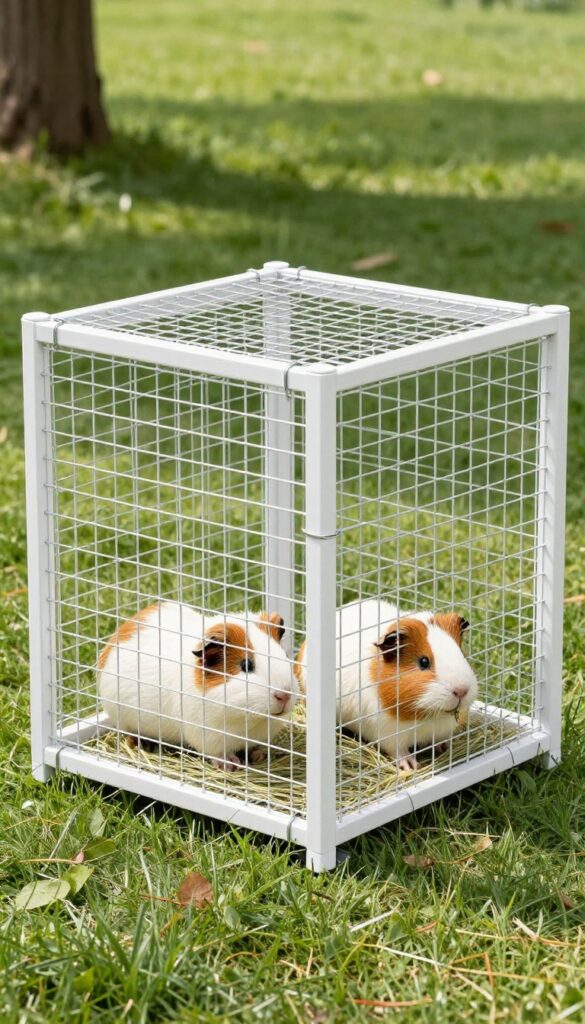
C&C (cube and coroplast) cages aren't just for indoors. With a few tweaks, you can build a sturdy outdoor pen that's fully customizable. The best part?
It breaks down in minutes if you need to move or store it. That makes it a top choice for renters or anyone who wants a flexible setup.
Start with standard cube grids and a coroplast base cut to your desired size. For outdoor use, reinforce all corners with zip ties—they hold up better than connectors. Stake the grid panels into the ground using garden staples or tent pegs so nothing shifts.
Add a wire mesh lid if you have climbing predators or curious dogs. The whole thing can be assembled in under an hour and disassembled just as fast.
Why It Works For Renters
This enclosure doesn't require digging, pouring concrete, or any permanent changes to your yard. When it's time to move, just snip the zip ties, fold the grids, and roll up the coroplast. It all fits in a car trunk.
No landlord complaints, no deposit deductions.
Customize The Size And Shape
You're not stuck with one layout. Add more grids to make it longer, or stack them for higher walls. Coroplast comes in large sheets, so you can cut the base to any dimensions.
A 2×4 grid pen gives plenty of room for two piggies, and you can expand later if needed.
Weatherproofing Tips
Coroplast can warp in direct sun, so place the pen in partial shade. If rain is in the forecast, tilt the base slightly so water runs off. You can also add a small tarp over part of the pen for extra shelter.
Just make sure there's airflow to prevent overheating.
4. Repurposed Kiddie Pool with Netting
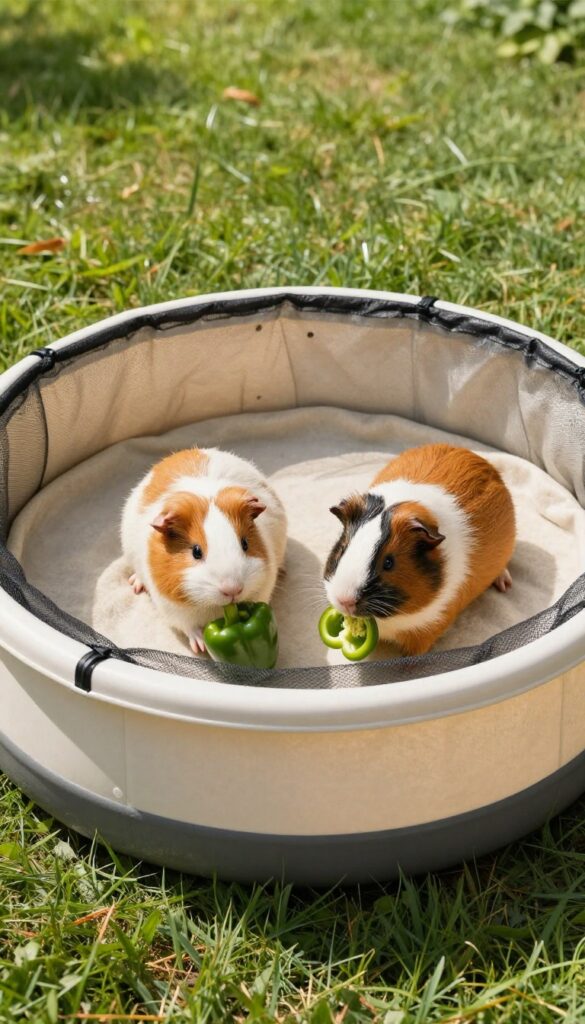
A plastic kiddie pool is one of the easiest and cheapest ways to create an outdoor guinea pig enclosure. Just drop it on the grass, line it with soft fleece or towels, and cover the top with bird netting or a mesh lid. The high walls keep piggies in, and the mesh keeps predators out.
Plus, cleanup is a breeze—just hose it down.
This setup is perfect for temporary play sessions or supervised backyard time. It’s lightweight and portable, so you can move it to follow the shade. The smooth plastic walls are easy to wipe clean, and the soft lining gives your guinea pigs a comfy surface to run on.
Just make sure the netting is secured tightly to prevent any escape attempts.
Why It Works
Kiddie pools are designed to hold water, so they’re sturdy and leak-proof. The high sides prevent guinea pigs from jumping out, and the smooth surface is easy to sanitize. Bird netting or a custom mesh lid adds overhead protection from hawks, cats, and other threats.
Setup Tips
Choose a pool that’s at least 12 inches deep. Line the bottom with a layer of fleece or old towels for traction and comfort. Secure the netting with clamps or bungee cords around the rim.
Place the pool in a shaded area to avoid overheating, and always supervise your guinea pigs while they’re outside.
Cleaning And Storage
After each use, remove the lining and shake off debris. Wipe down the pool with a pet-safe disinfectant or a vinegar-water solution. Let it dry in the sun before storing.
When not in use, the pool collapses flat or nests inside another pool for easy storage.
5. Raised Garden Bed Conversion
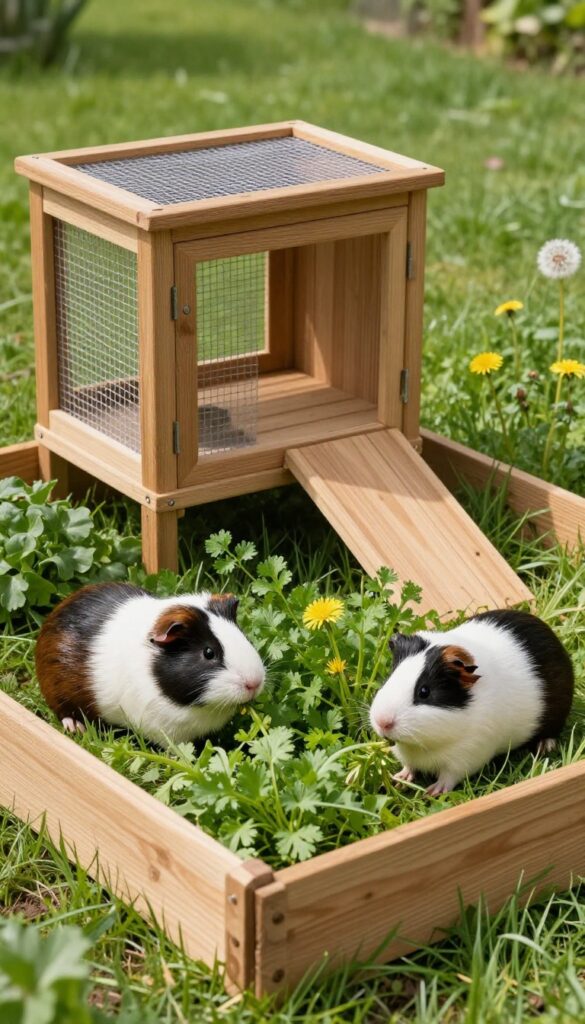
If you have an old raised garden bed sitting empty, you're already halfway to a fantastic guinea pig enclosure. These sturdy wooden frames are built to last, and their high sides make them naturally escape-proof. Plus, they're elevated off the ground, which helps keep the space dry and discourages digging predators.
Converting a raised bed into a guinea pig garden is a weekend project that pays off in fresh air and happy piggies. You'll get a permanent outdoor home that blends right into your backyard landscaping.
Start by removing any old plants and checking the wood for splinters or loose nails. Line the bottom with hardware cloth to block burrowing animals, then add a layer of cardboard and fill with organic soil. Sow a pet-safe grass seed mix or plant guinea pig favorites like parsley, cilantro, and dandelion greens.
The pigs will love nibbling on the fresh growth, and the high walls keep them safely contained. Make sure to add a mesh lid if you have hawks or raccoons in your area. A hinged lid makes it easy to reach in for cleaning and feeding.
You can also attach a small ramp so the piggies can easily move between the soil and a sheltered corner.
Choosing The Right Bed
Look for a raised bed at least 12 inches deep so the soil doesn't dry out too fast. Cedar and redwood are naturally rot-resistant, but avoid pressure-treated lumber since the chemicals can harm guinea pigs. If your bed is too large, you can divide it into two sections with a wire partition to rotate the grazing area.
Adding Shade And Shelter
Guinea pigs overheat easily, so place the bed in partial shade or attach a shade cloth over part of the enclosure. Add a small wooden hideout or a overturned plastic crate with a door cut out so they have a cool, dark place to retreat. A shallow dish of fresh water should always be available.
Maintenance Tips
Let the grass grow to about 4 inches before letting the pigs graze, then move them to a different section every few days to prevent overgrazing. Water the soil regularly to keep the grass lush, and spot-clean droppings daily. Every few months, turn the soil and reseed to keep the garden healthy.
6. PVC Pipe and Shade Cloth Run
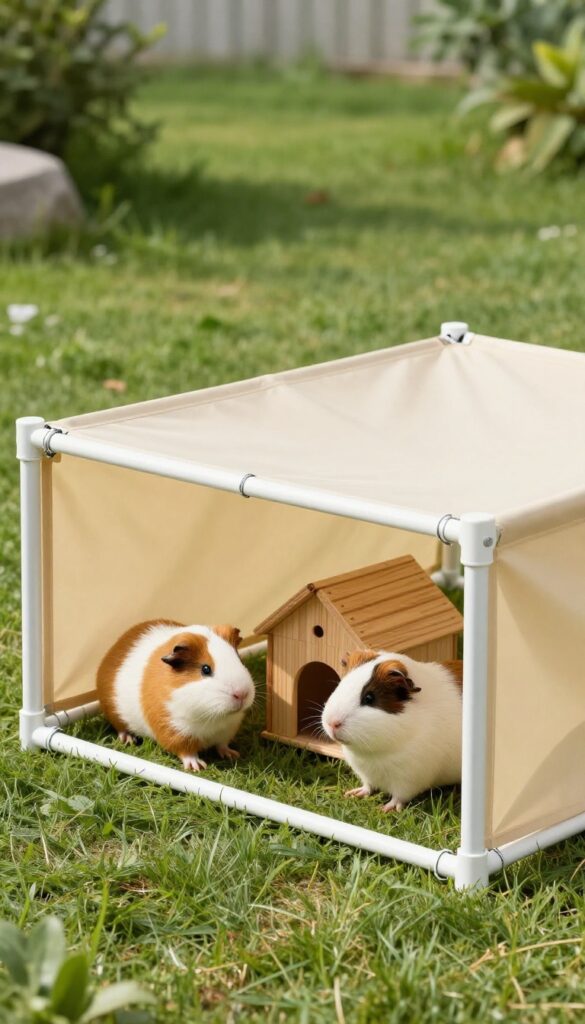
PVC pipes and shade cloth make an excellent lightweight run that's easy to move around your yard. The frame snaps together without tools, and the fabric blocks harsh sun while letting air flow through. This is a great option if you live somewhere hot and need to keep your piggies cool during outdoor time.
The whole thing can be taken apart and stored flat when not in use.
Start by cutting PVC pipes to your desired dimensions and connecting them with elbow and tee joints to form a rectangular frame. Drape shade cloth over the top and secure it with zip ties or bungee cords. For the floor, you can use a piece of outdoor carpet or simply place the run on grass.
Make sure the shade cloth extends a few inches down the sides to block low-angle sun and provide extra privacy. Add a small hidey house or tunnel inside for your guinea pigs to retreat to if they feel exposed.
Why It Works So Well
The shade cloth blocks up to 90% of UV rays while still letting in fresh air and light. PVC is lightweight, so you can pick up the whole run and move it to a new patch of grass every day. The open design also makes it easy to spot your guinea pigs and check on them from a distance.
Assembly Tips
Use 1-inch diameter PVC for a sturdy frame that won't wobble. Dry-fit all the pieces first, then mark where they connect so you can glue them later if you want a permanent setup. For extra stability, drive short stakes into the ground at each corner and attach the frame with zip ties.
Safety And Maintenance
Check the shade cloth regularly for tears or loose edges that could become chew hazards. Wash the cloth with mild soap and water every few weeks to remove dust and droppings. Store the PVC frame indoors during winter to prevent UV damage and cracking.
7. Modified Dog Exercise Pen
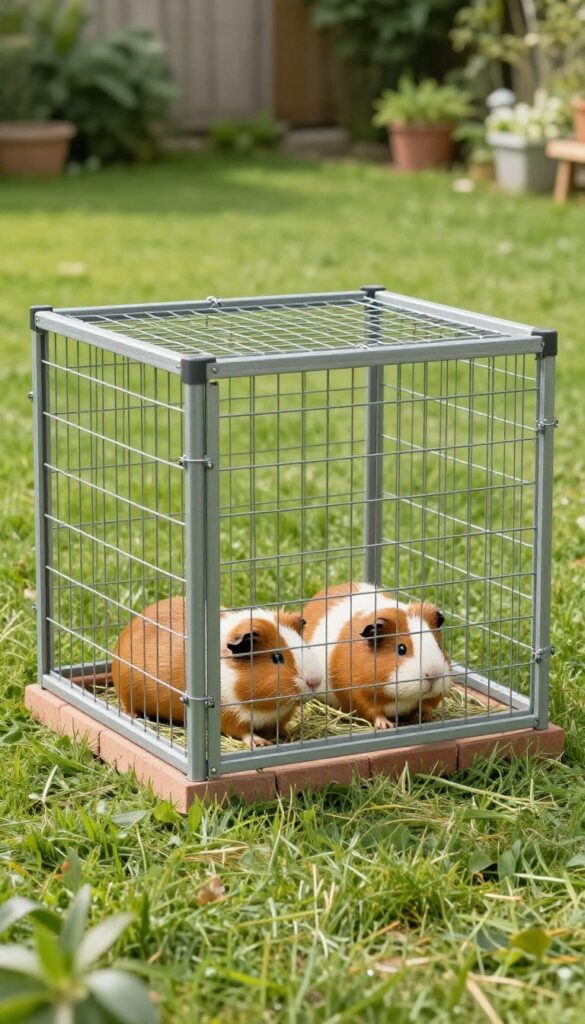
Dog exercise pens are surprisingly easy to turn into safe guinea pig enclosures. They're sturdy, spacious, and usually fold flat for storage. With a couple of simple modifications, you can make one predator-proof and escape-proof in under an hour.
Start with a metal or heavy-duty plastic pen. Attach a wire mesh top using zip ties to keep out hawks, raccoons, and cats. Then bury the bottom edge about 3–4 inches into the ground or line it with bricks to prevent digging.
The result is a large, secure play area that's quick to set up and easy to move.
Choosing The Right Pen
Look for a pen at least 24 inches tall with narrow bar spacing (under 2 inches). Avoid pens with sharp edges or large gaps where a piggy could squeeze through. A 36-inch diameter or larger gives plenty of room for running and exploring.
Adding A Secure Top
Use hardware cloth or chicken wire to create a lid. Cut it to size and attach with zip ties or carabiners so you can remove it for cleaning. Make sure the top is taut and secured at multiple points so predators can't lift it.
Ground Security Tips
If you don't want to bury the pen, lay heavy pavers or bricks along the inside bottom edge. This stops piggies from pushing the pen outward and digging out. For extra safety, place the pen on concrete or a wooden base.
8. Custom Shed or Hutch with Attached Run
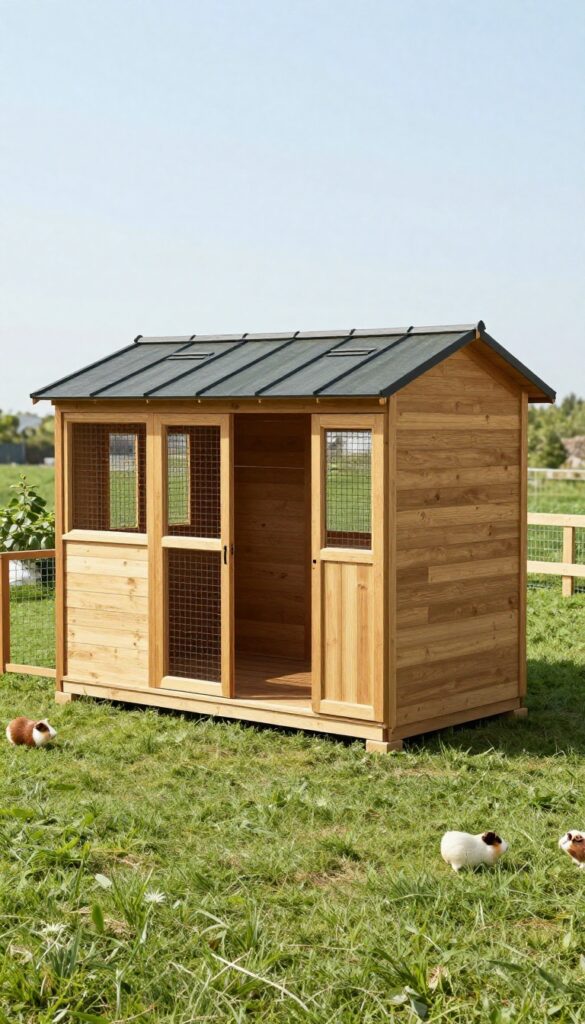
A small garden shed or a large wooden hutch paired with a connected outdoor run gives your guinea pigs a permanent home base in the backyard. This setup works great if you have the space and want a sturdy, all-weather solution that keeps your piggies safe day and night. Because guinea pigs are sensitive to temperature extremes, a shed or hutch needs proper insulation and ventilation.
With a little planning, you can create a cozy indoor area for sleeping and hiding, plus a secure run for grazing and exploring.
A custom shed or hutch with an attached run is one of the most durable and spacious outdoor options. It gives your guinea pigs a permanent home with a sheltered area for sleeping and eating, plus a connected outdoor space for exercise. The key is to make sure the structure is well-ventilated in summer and insulated enough for cooler months.
Use predator-proof wire mesh on all openings, and install strong latches that raccoons or dogs can't open. Elevate the hutch slightly to prevent flooding, and add a waterproof roof to keep the interior dry. With a little DIY effort, you can build a setup that lasts for years and keeps your piggies happy and safe.
Insulation And Ventilation
Guinea pigs are sensitive to heat and cold, so your shed or hutch needs good airflow without drafts. Add small vents near the roof covered with mesh, and use insulated panels or double walls to keep temperatures stable. In hot climates, consider a small fan or shade cloth over the run.
Predator-proofing
Predators like raccoons, foxes, and even neighborhood dogs can be a threat. Use heavy-duty wire mesh (1/2 inch or smaller) on all windows and the run. Install secure locks—carabiners or padlocks work well—and check regularly for weak spots.
A solid floor or a wire bottom with a tray prevents digging predators from getting in.
Easy Cleaning And Access
Make daily cleaning simple by including a large access door or a removable roof. Use a washable liner or tray in the hutch area, and consider a drain or sloped floor so you can hose it out. Keep the run on grass or a concrete pad with proper drainage to avoid muddy spots.
9. Greenhouse Guinea Pig Paradise
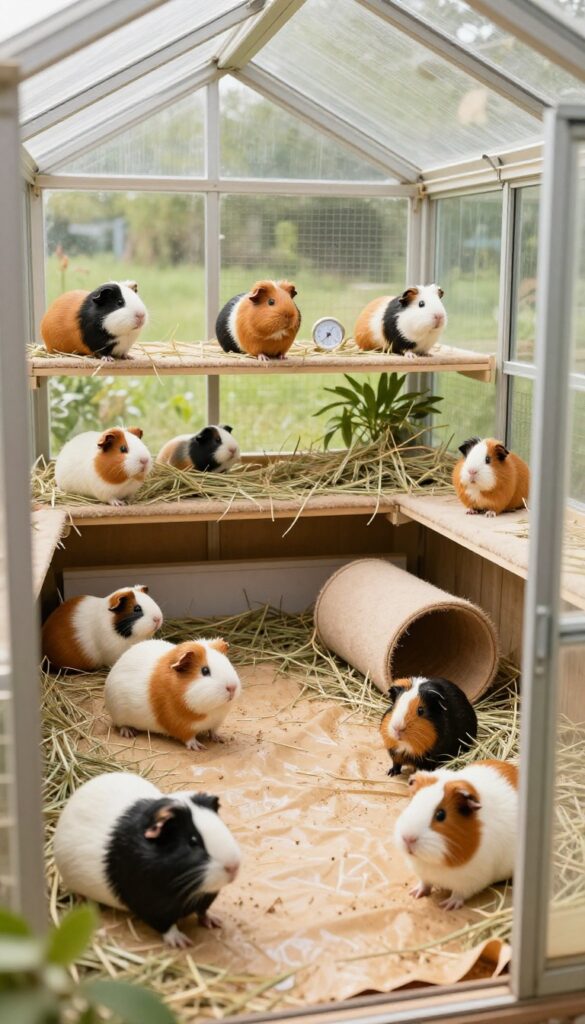
A small greenhouse can become a dream outdoor space for guinea pigs. The clear walls let in sunlight while keeping the temperature stable, so your piggies stay warm on cooler days and don't overheat in direct sun. With a few simple additions, a greenhouse turns into a safe, engaging environment that works year-round.
Guinea pigs love a greenhouse because it mimics their natural habitat: bright, sheltered, and full of hiding spots. The structure protects them from wind and rain, and you can control ventilation by opening panels or propping the door. Place shelves at different heights to create levels for hay storage and cozy hideouts.
Just make sure the greenhouse is predator-proof—use hardware cloth over any gaps and secure the door with a latch.
Ventilation And Temperature Control
A greenhouse can heat up fast, so add mesh ventilation panels near the top and bottom. This creates airflow without drafts. On hot days, open the door partially and place a shade cloth over part of the roof.
Keep a thermometer inside to monitor temps—aim for 65–75°F.
Shelves For Fun And Function
Use sturdy shelves to hold hay, tunnels, and small hideouts. Guinea pigs enjoy climbing onto low platforms, and shelves keep food off the floor. Make sure any shelf is no more than 6 inches off the ground to prevent falls.
Cover wire shelves with fleece or solid panels for comfort.
Bedding And Flooring
Line the greenhouse floor with a waterproof tarp, then add layers of fleece or paper bedding. This makes cleaning easy and keeps the space dry. Avoid soil or grass floors—they can harbor parasites and get muddy.
Refresh bedding weekly to prevent ammonia buildup.
10. Underground Fortress with Tunnel Access
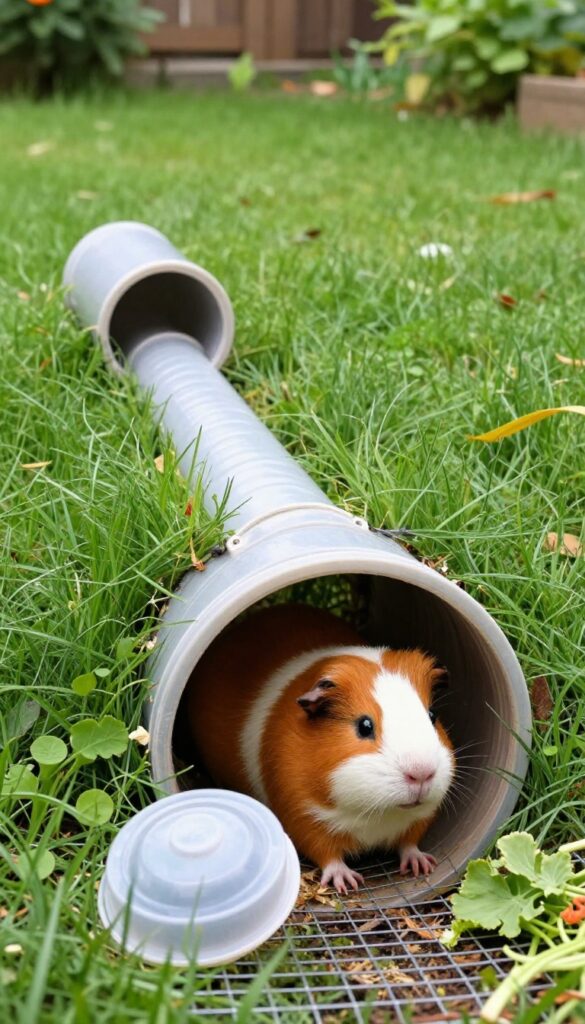
Burrowing is in a guinea pig's DNA, so why not build them a backyard bunker that taps into that instinct? This setup uses a buried plastic bin or preformed pond liner as a cool, dark hideout, connected by tunnels to a surface-level run. Your piggies get the thrill of exploring underground while staying safe from heat and predators.
Start by digging a hole deep enough to sink a large plastic storage bin or a preformed pond liner. Make sure the lid is removable for cleaning but secure when closed. Cut entry holes in the side of the bin and attach flexible PVC pipes or corrugated drainage tubing as tunnels.
Lead the tunnels up to a wire-covered surface run so your guinea pigs can pop in and out at will. Line the bottom of the bin with soft bedding and check for drainage to avoid moisture buildup. This setup stays naturally cool in summer and gives your pets a private retreat that feels just like a wild burrow.
Choosing The Right Container
A 50-gallon or larger plastic storage bin works well, but a preformed pond liner is even more durable and has a more natural shape. Avoid metal or treated wood that could leach chemicals. Make sure the container is deep enough for your guinea pigs to stand upright inside.
Tunnel Materials And Safety
Use 4-inch diameter PVC pipes or flexible corrugated drainage tubing. Smooth any rough edges with sandpaper or a file. Keep tunnels short (3-4 feet max) so your pigs don't get stuck and you can easily clean them.
Secure the tunnel ends with wire mesh to prevent escapes.
Ventilation And Temperature Control
Drill small ventilation holes near the top of the buried bin, but keep them covered with hardware cloth to block predators. In hot weather, place the bin in a shaded spot or add a frozen water bottle wrapped in a towel inside. Check the temperature regularly—the underground space should stay 10-15°F cooler than the surface.
FAQ
How much outdoor space do guinea pigs need?
Aim for at least 8 square feet per pair, but bigger is always better. Outdoor runs should allow for running, popcorning, and separate areas for eating and hiding.
Can guinea pigs stay outside overnight?
It's not recommended unless you have a fully predator-proof, insulated shelter. Temperature drops, drafts, and nocturnal predators pose serious risks. Always bring them indoors at night.
What is the best flooring for an outdoor guinea pig cage?
Grass is ideal for supervised play, but for permanent setups, use solid flooring like coroplast or linoleum covered with fleece. Avoid wire bottoms—they hurt guinea pig feet.
How do I protect my guinea pigs from predators outdoors?
Use hardware cloth (not chicken wire) for walls and tops. Bury the edges at least 6 inches deep. Always supervise or use a secure lid.
Never leave them unattended for long.
Do guinea pigs need shade and water outdoors?
Absolutely. Provide a shaded area and a water bottle or bowl that won't tip. Check water frequently in hot weather.
Guinea pigs overheat easily, so keep them cool.
Conclusion
Outdoor playtime is one of the best gifts you can give your guinea pigs. The fresh air, natural light, and extra space boost their happiness and health. Each of these ideas can be tailored to your backyard and your piggies' personality.
Start small with a simple playpen, or go all out with a custom run. The key is safety, comfort, and enrichment. Your cavies will thank you with happy squeaks and endless zoomies.

I’m Pallab Kishore, the owner of Little Pets Realm — an animal lover and pet care enthusiast sharing easy tips, healthy recipes, and honest advice to help every small pet live a happy, healthy, tail-wagging life.