Last updated on August 19th, 2026 at 04:19 pm
Standard cages often fail to provide the fresh air and space guinea pigs crave. Outdoor enclosures solve that, but they need to be safe from predators, weather, and escape attempts. Whether you have a sprawling yard or a tiny patio, these 12 ideas offer practical, secure ways to let your piggies enjoy the outdoors.
From repurposed sandboxes to custom A-frames, each design tackles real-world challenges like ventilation, shade, and easy cleaning. You'll find budget-friendly DIY options alongside ready-made solutions that prioritize your pets' safety and comfort.
No matter your skill level or space constraints, there's a setup here that balances fresh air with peace of mind. Get ready to transform your outdoor area into a guinea pig paradise.
1. The Classic Wooden Hutch with a Run
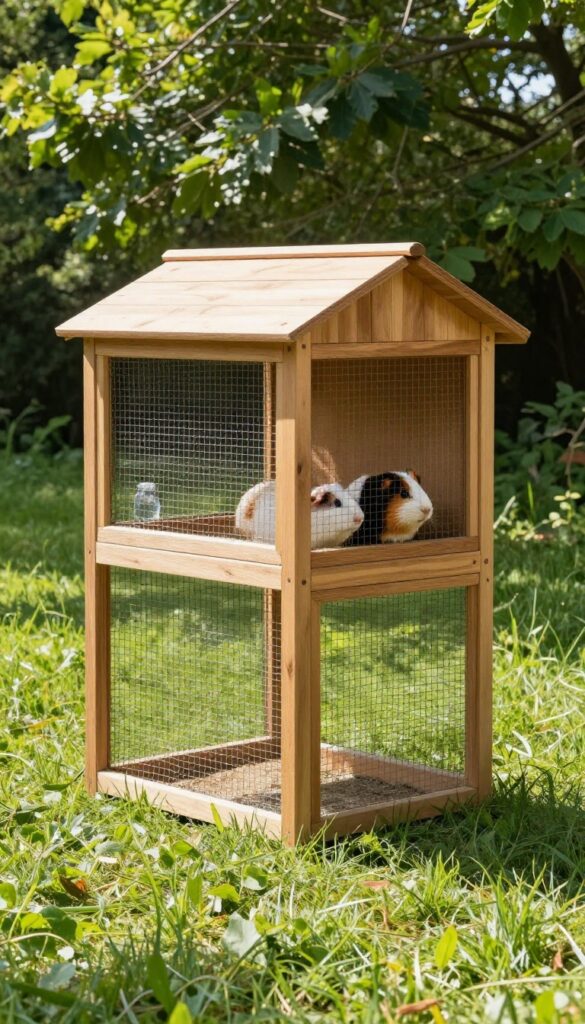
A raised wooden hutch attached to a fenced run gives guinea pigs a dry, shaded sleeping area plus room to roam. Use hardware cloth instead of chicken wire to keep out predators. This setup is a time-tested favorite because it separates the cozy den from the grazing zone, making cleaning and feeding straightforward.
The hutch provides shelter from rain and direct sun, while the run lets your piggies enjoy fresh grass and exercise. Position the run on a flat, well-drained spot to avoid muddy paws. For extra security, add a lockable latch and bury the hardware cloth a few inches into the ground to deter digging predators.
Why Hardware Cloth Matters
Chicken wire may keep guinea pigs in, but it won't stop raccoons or foxes. Hardware cloth with ½-inch mesh is strong enough to resist chewing and clawing. It also allows good airflow and visibility.
Placement Tips For Comfort
Set the hutch in a spot with morning sun and afternoon shade. Avoid low areas where water pools. If you can, face the run toward a fence or hedge to give your pigs a sense of security.
Easy Cleaning Routine
A removable tray in the hutch makes daily spot-cleaning a breeze. For the run, simply move it to fresh grass every few days. This prevents odor buildup and keeps your pigs healthy.
2. Portable Pop-Up Playpen for Supervised Grazing
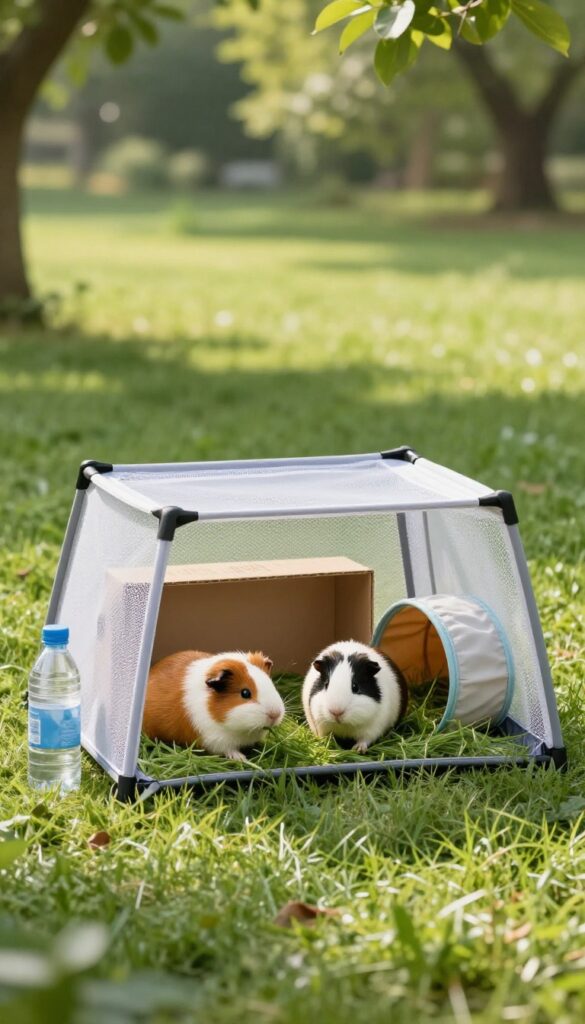
Not every outdoor space is set up for a permanent cage. A portable pop-up playpen lets you take the fresh air to your guinea pigs instead of the other way around. These lightweight enclosures fold flat for storage and set up in seconds on any patch of grass.
The key is supervision. Guinea pigs can't be left alone in a pop-up pen because the mesh sides won't stop a determined dog or hawk. But when you're sitting right there, it's a fantastic way to let them nibble real grass and soak up sunshine.
Always include a small hideout like a cardboard box or fabric tunnel so they can retreat if they feel exposed.
Choosing The Right Size
Look for a playpen at least 4 square feet for two guinea pigs. Taller sides (12 inches or more) help prevent escapes, but some piggies are jumpers, so keep an eye on them. Mesh tops add extra security if you're stepping away briefly.
Daily Grass Rotation
Move the pen to a fresh patch each day to give your lawn a break and provide new grazing. Avoid areas treated with pesticides or fertilizers. A quick hand-check for sharp objects or toxic plants before each use keeps your piggies safe.
Weather And Comfort
Pop-up pens offer little shade, so set up in a spot with natural cover from a tree or umbrella. On hot days, bring a frozen water bottle wrapped in a towel for them to lean against. Never leave them out in direct sun for more than 20 minutes.
3. Repurposed Children’s Sandbox with Mesh Lid
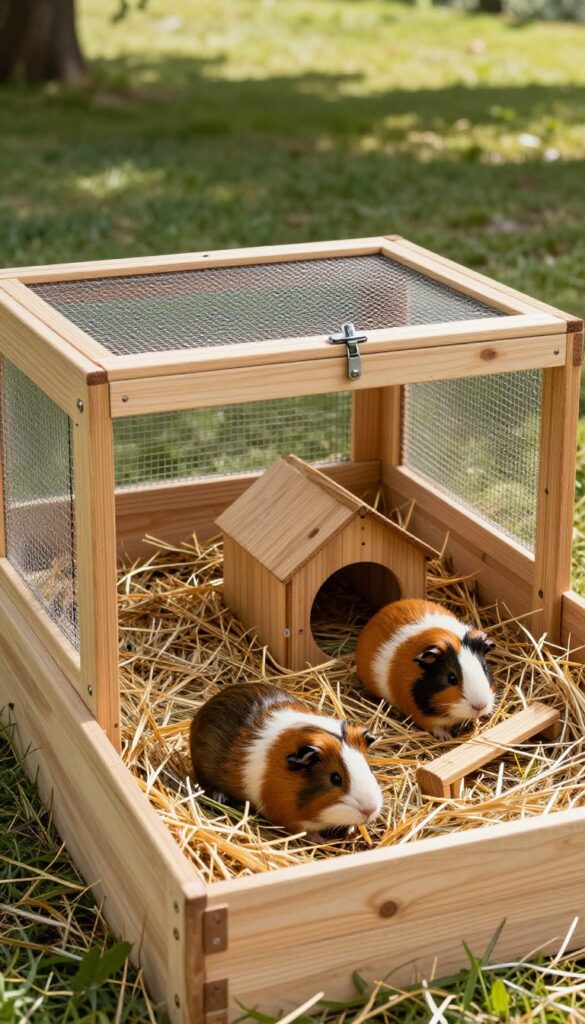
That old sandbox taking up space in the backyard? It can become a roomy outdoor guinea pig enclosure with a few simple tweaks. The solid walls provide wind protection and keep bedding contained, while a hinged mesh lid keeps predators out and lets sunlight in.
Fill the bottom with hay or grass for digging—your piggies will love it.
Start by cleaning the sandbox thoroughly to remove any leftover sand, debris, or sharp edges. If the wood is rough, sand it down and apply a pet-safe sealant to prevent splinters and weather damage. Cut a piece of hardware cloth or welded wire mesh to fit the top, then attach it to a wooden frame with hinges so you can easily open it for cleaning and playtime.
Secure the lid with a latch to keep raccoons and other critters from lifting it. For the base, lay down a thick layer of hay or pesticide-free grass sod—guinea pigs love to burrow and forage. Add a small hidey house or tunnel for extra enrichment.
Place the sandbox in a shaded area or add a sunshade to prevent overheating.
Why It Works
The solid sides block wind and drafts, which is important for guinea pigs sensitive to temperature changes. The mesh lid allows ample airflow and sunlight while keeping out cats, hawks, and other threats. Plus, the deep base gives your piggies plenty of room to dig and explore.
Setup Tips
Choose a sandbox at least 2 feet by 3 feet for two guinea pigs. Make sure the mesh has 1/2-inch openings or smaller—anything larger can let in snakes or small predators. Use a latch that’s easy for you but tough for animals.
Check the sandbox regularly for rot or damage, especially if it’s made of untreated wood.
Maintenance & Safety
Replace the hay or grass bedding every few days to keep it clean and dry. Spot-clean daily by removing soiled areas. In hot weather, ensure the enclosure stays shaded and provide a frozen water bottle wrapped in a towel for cooling.
Bring your guinea pigs indoors at night or when temperatures drop below 60°F.
4. DIY C&C Cage with Weatherproof Cover
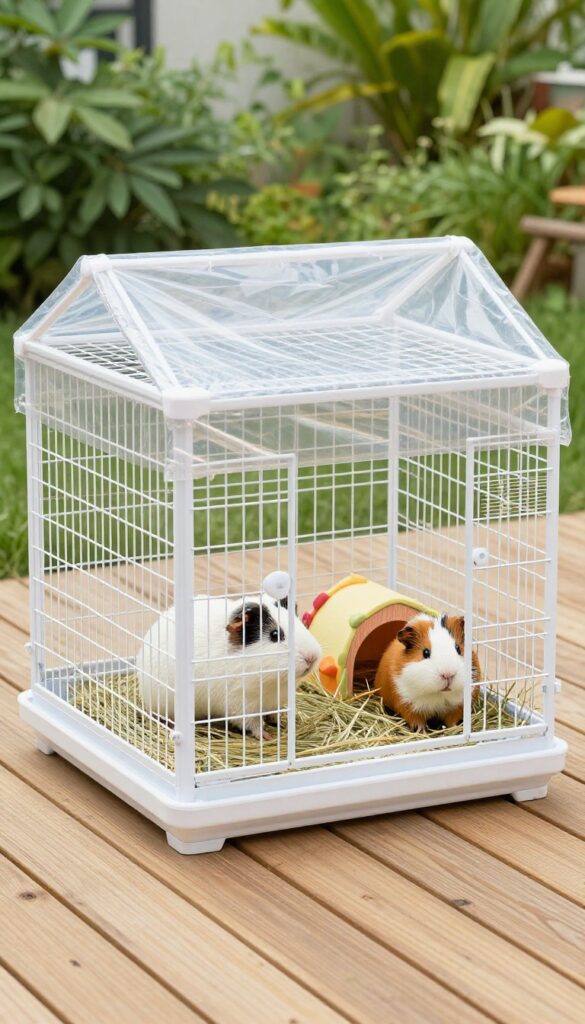
Cube-and-coroplast (C&C) cages are a favorite among guinea pig owners for their spaciousness and customizability. Taking that design outdoors is easier than you think, especially if you have a patio or deck. The trick is adding a weatherproof cover that keeps your piggies dry and shaded while still letting fresh air circulate.
This setup gives you the best of both worlds: a large, open play area with protection from sudden rain or harsh sun.
Building an outdoor C&C cage starts with the same grid panels and coroplast base you'd use indoors, but you'll want to reinforce the structure to handle wind and curious predators. Use zip ties to secure the grids together firmly, and consider adding a wooden frame around the base for extra stability. The cover is key—a clear tarp or coroplast roof sloped slightly to let rain run off works great.
Leave the sides open for ventilation, but you can add mesh panels if bugs or small critters are a concern. Place the cage on a level surface, and you've got a safe, airy outdoor home.
Materials You'll Need
Standard C&C grids (at least 2×4 for two guinea pigs), coroplast sheets for the base and roof, clear tarp or heavy-duty clear plastic sheeting, zip ties, and optional wooden stakes or a frame to anchor the cage. For the roof, you can use coroplast cut to size and attached with zip ties, or a clear tarp stretched over the top.
Assembly Tips
Build the cage on a flat surface like a patio or deck. Connect grids with zip ties at every joint for sturdiness. Cut the coroplast base to fit inside the grids, then attach the roof panels at a slight angle so water runs off.
Leave a gap of a few inches between the roof and the top of the grids for airflow. Weigh down the roof with bricks or use bungee cords to secure it in windy weather.
Safety And Comfort
Check the cage daily for sharp edges or loose zip ties. Provide a hidey house or shaded area inside, as the clear roof can still let in some light. Make sure the cage isn't in direct sun all day—partial shade is ideal.
If temperatures climb above 80°F, bring the cage indoors or add extra shade cloth.
5. Elevated Rabbit Hutch with Ramp and Run
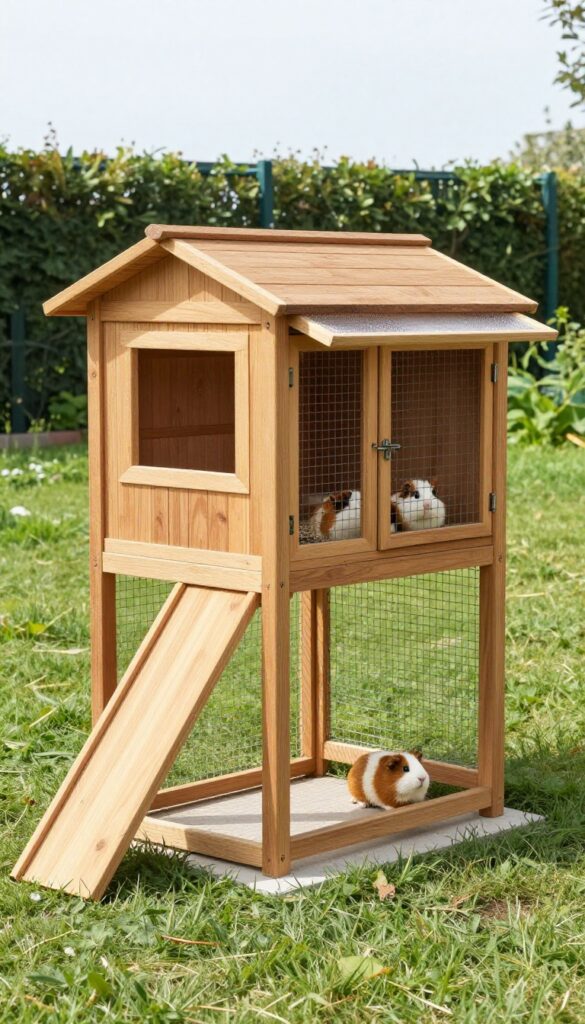
A two-story hutch with a ramp gives guinea pigs vertical space to explore, which they really enjoy. Place the run on concrete or pavers to prevent digging out, and add a shade cloth in summer to keep things cool. This setup works great for yards where you want a permanent but flexible outdoor home.
The elevated design keeps the sleeping area dry and well-ventilated, while the ramp encourages exercise. The run below offers plenty of room for grazing and popcorning. Just make sure the ramp has gentle slopes and grip strips so tiny feet don't slip.
Choosing The Right Hutch
Look for a hutch with solid flooring in the upper level (no wire mesh) to protect guinea pig feet. The ramp should be wide enough for two pigs to pass. A removable tray makes cleaning much easier.
Run Flooring And Security
Concrete or paving slabs are ideal under the run because guinea pigs can't dig through them. If you use grass, rotate the run every few days to prevent mud and overgrazing. Add a lockable door and predator-proof wire mesh (1/2 inch or smaller).
Weather Protection Tips
Attach a shade cloth or tarpaulin over part of the run during hot months. In winter, move the hutch to a sheltered spot or insulate the sleeping area with hay. Always ensure there's a dry, draft-free zone inside.
6. Greenhouse Conversion for Year-Round Outdoors
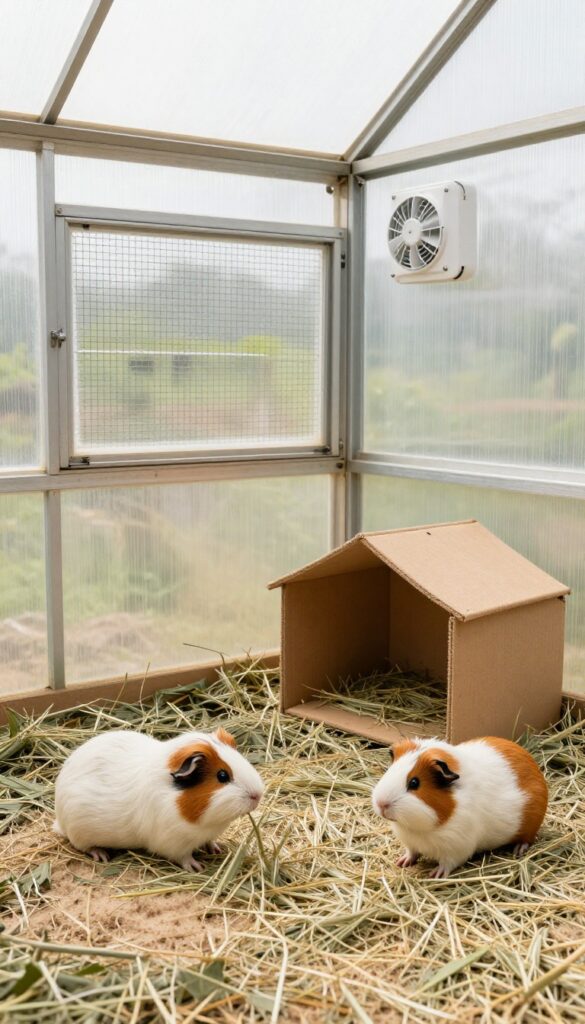
A small greenhouse can become a dream outdoor space for guinea pigs, offering protection from predators and harsh weather while letting in plenty of natural light. The key is to modify it for proper ventilation and temperature control, so your piggies stay comfortable and safe.
Greenhouses are naturally bright and warm, which is great for cold months but risky in summer. With a few tweaks, you can create a stable environment that works year-round. Start with a small polycarbonate or glass greenhouse, then add mesh windows and a fan to prevent overheating.
Ventilation Is Everything
Guinea pigs can overheat quickly, so install mesh panels or replace some glass with wire mesh. Add a low-speed fan to keep air moving without creating a draft. Automatic vent openers can also help regulate temperature.
Shade And Temperature Control
Even with ventilation, direct sun can turn a greenhouse into an oven. Use shade cloth on the roof or place the greenhouse under a tree. In winter, add a small insulated hidey house and monitor temps with a thermometer.
Flooring And Cleaning
Line the floor with washable liners or fleece over a waterproof base. A slight slope or drain hole makes hosing down easy. Keep a designated digging box with soil or hay so they can burrow naturally.
7. PVC Pipe Frame Enclosure with Shade Cloth
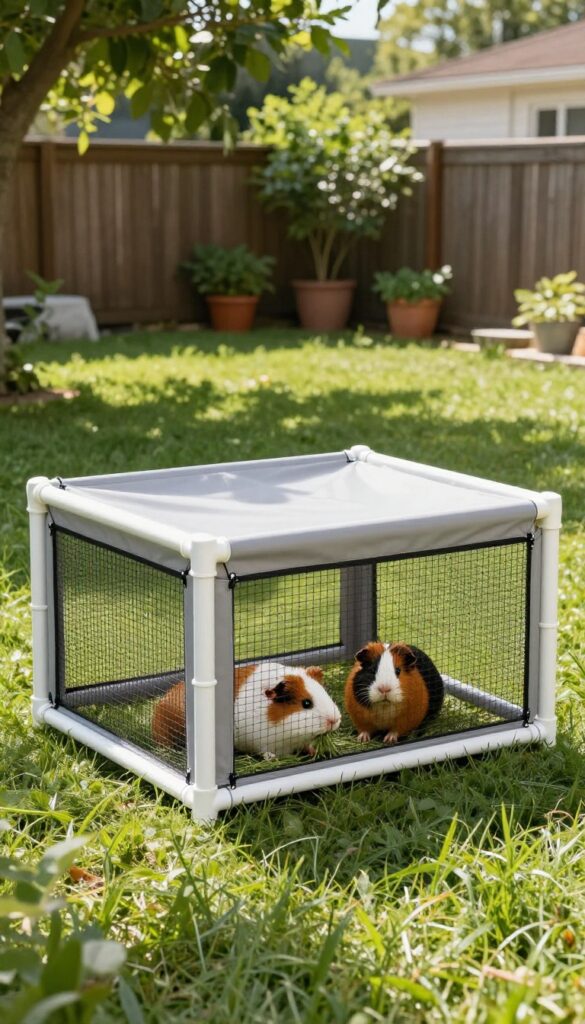
PVC pipes are cheap, lightweight, and easy to work with, making them a great material for a modular outdoor guinea pig cage. You can build a sturdy frame that’s simple to assemble, disassemble, and move around your yard. Cover it with shade cloth and mesh to keep your piggies cool and safe from predators.
This design is all about flexibility. You can make the frame any size you want, and it’s perfect for renters or anyone who wants a temporary setup. The shade cloth provides essential sun protection, while the mesh keeps out curious critters.
Plus, when not in use, the whole thing collapses flat for easy storage.
What You’ll Need
Gather PVC pipes, corner joints, a pipe cutter, shade cloth, hardware mesh, zip ties, and scissors. Choose 1-inch diameter pipes for stability. You’ll also need a flat, level spot in your yard.
Building The Frame
Cut the PVC pipes to your desired lengths and connect them with corner joints to form a rectangular box. Make sure the frame is tall enough for your guinea pigs to stand up (at least 12 inches). Use extra crossbars on top to support the shade cloth.
Attaching The Covering
Drape shade cloth over the top and sides, then secure it with zip ties. For the lower walls, attach hardware mesh with zip ties to prevent digging and chewing. Leave one side partially open for access, or create a door with a hinged PVC frame.
Placement And Maintenance
Set the enclosure on grass or a tarp. Move it to fresh grass every few days for grazing. The PVC won’t rust, so it’s fine in light rain, but bring your piggies inside during heavy storms.
Hose off the frame and cloth as needed.
8. Dog Exercise Pen with Custom Roof
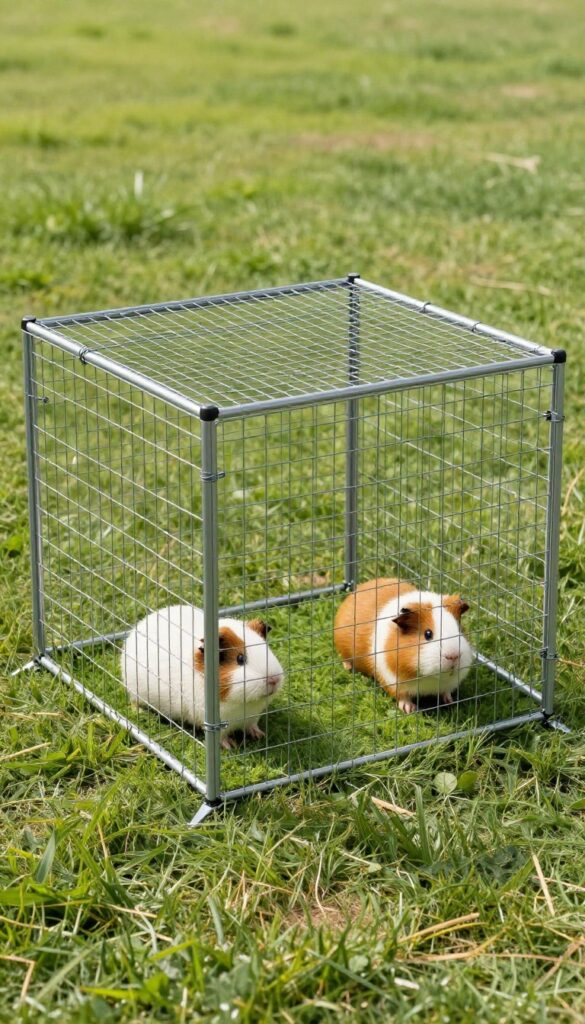
A metal dog pen is one of the easiest ways to create a sturdy outdoor enclosure. These pens are built to contain energetic dogs, so they’re more than strong enough for guinea pigs. The trick is adding a roof and anchoring everything down so your piggies stay safe from predators and weather.
Start with a metal dog exercise pen that has vertical bars spaced closely enough to prevent escape. Most pens come in sections that can be arranged into a circle, square, or rectangle. Attach a wire or mesh roof using zip ties or small carabiners—hardware cloth works great because it’s strong and rust-resistant.
Stake the bottom of the panels into the ground using tent stakes or garden staples to keep the pen from tipping over in wind or when your guinea pigs push against the sides. Line the floor with washable fleece liners or natural grass mats for comfort and easy cleanup.
Why A Dog Pen Works
Dog pens are designed to be portable and modular, so you can easily move them to fresh grass or shade. They’re also tall enough to stand in and clean without bending over. The metal construction holds up to sun and rain better than wood or plastic.
Roof Options
You can buy a ready-made mesh top or build one from PVC pipe and hardware cloth. Another option is to drape a lightweight tarp over the top for shade, but make sure it’s secured tightly so it doesn’t flap and scare your piggies. Leave some open mesh for ventilation.
Ground Anchoring Tips
Use heavy-duty ground stakes at every panel joint. If your pen is on a patio or deck, weigh down the bottom with bricks or heavy pavers instead. Check the stakes weekly, especially after rain, to make sure they haven’t loosened.
9. Under-Deck or Patio Enclosure
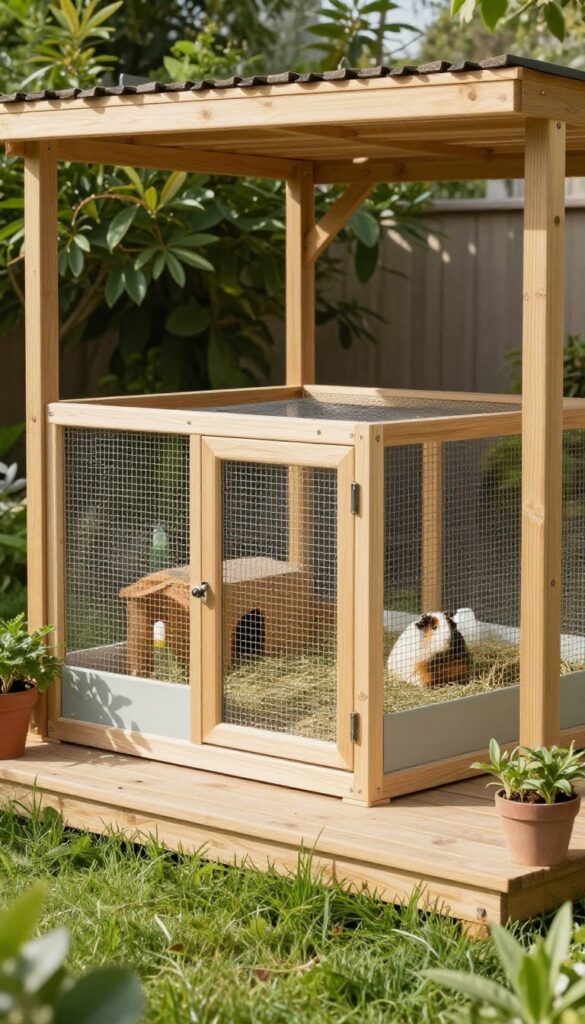
If you have a deck or covered patio, the space beneath it is prime real estate for a guinea pig cage. The overhead structure provides built-in shade and rain protection, so you don't have to worry about sunburn or soaked bedding. With some mesh and a few tools, you can turn that unused area into a secure, permanent outdoor home for your piggies.
An under-deck enclosure makes great use of otherwise wasted space. The solid roof above keeps the cage cool in summer and dry during showers. You just need to attach sturdy mesh around the sides to block predators like raccoons and hawks.
Make sure the floor is solid or lined with a waterproof base to prevent digging out. This setup is especially good for larger herds because you can customize the size to fit the available area.
Easy Access For Cleaning
Install a hinged door or a removable panel so you can reach in for daily spot cleaning and food refills. If the space is low, consider a sliding tray system that lets you pull out soiled bedding without crawling inside.
Ventilation Matters
Even with a roof, airflow is key to preventing ammonia buildup. Use mesh on at least two opposite sides to create cross-ventilation. If the area feels stuffy, add a small battery-powered fan for extra circulation.
10. Modified Rabbit Tractor for Rotational Grazing
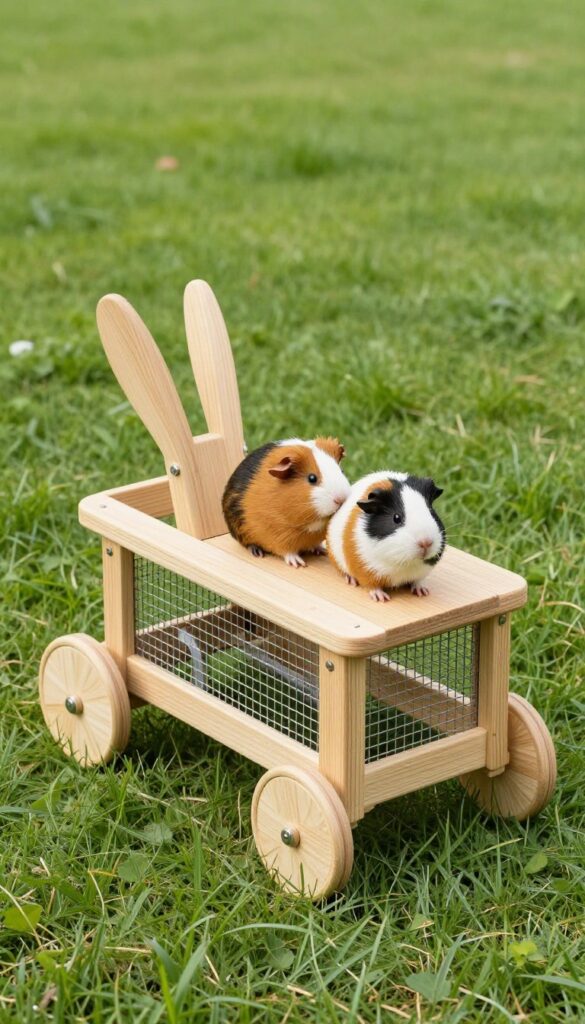
Rabbit tractors are bottomless movable pens typically used for chickens or rabbits, but they work great for guinea pigs too. The idea is simple: place the tractor on a patch of grass, let your piggies graze and explore, then move it to a fresh spot the next day. This rotational grazing keeps the grass healthy and prevents waste from piling up.
A modified rabbit tractor gives guinea pigs safe access to fresh grass every day. The key is making sure the wire spacing is narrow enough (no more than 1 inch) to keep predators out and piggies in. You'll also want a solid top to provide shade and protect from rain or birds of prey.
Moving the tractor daily isn't just good for the lawn—it also keeps your guinea pigs from living in their own mess, which reduces smell and health risks.
Choosing The Right Tractor Design
Look for a tractor that's at least 2 feet tall so guinea pigs can stand up and popcorn. The frame can be wood or PVC, but make sure it's lightweight enough to drag or lift. Some designs have a handle on one end for easier pulling.
Avoid tractors with large gaps at the bottom—guinea pigs can squeeze through surprisingly small spaces.
Daily Moving Routine
Set a schedule to move the tractor every 24 hours. This gives the grass time to recover and prevents parasites from building up. Choose a spot with fresh, pesticide-free grass.
In hot weather, move it to a shaded area or add a cover. Always check for holes or loose wire before placing your piggies inside.
Predator Proofing Essentials
Even in a tractor, guinea pigs need protection. Use hardware cloth with ½-inch openings for the sides and top. Bury the bottom edge a few inches into the ground or add a skirt of wire to stop diggers.
Lock the door securely—raccoons and dogs can figure out simple latches.
11. Large Plastic Storage Bin with Mesh Top
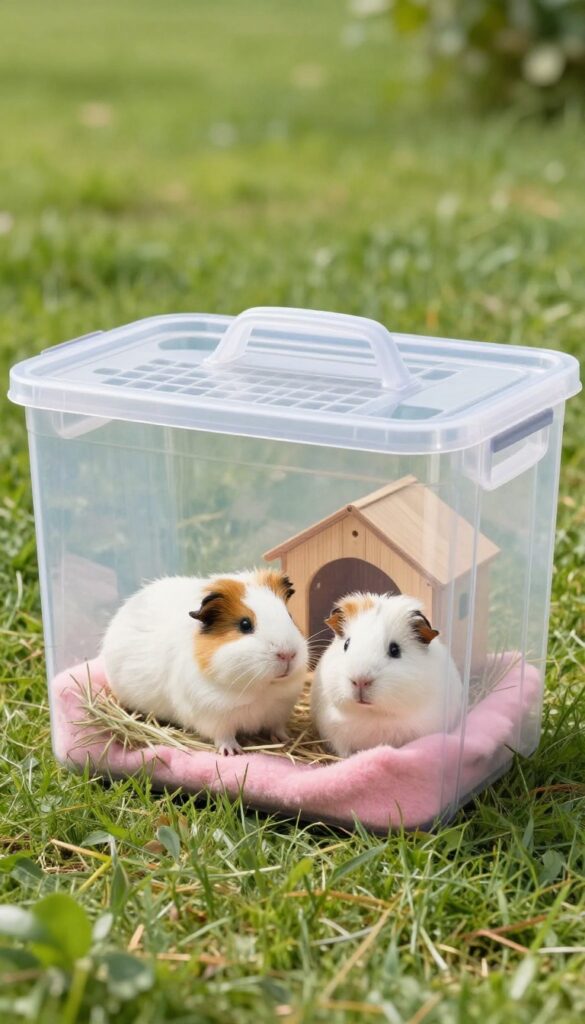
A large plastic storage bin can double as a lightweight, portable outdoor cage. By cutting out the lid and replacing it with mesh, you create a secure, well-ventilated space that's easy to move around the yard. This setup is perfect for short, supervised play sessions where you want your guinea pigs to enjoy fresh air without the risk of escape or predator attacks.
Drill a few drainage holes in the bottom to prevent moisture buildup, then add a soft layer of fleece or bedding. The solid sides offer protection from wind and drafts, while the mesh top keeps out curious cats or birds. Keep the bin in a shaded spot to avoid overheating, and always supervise your guinea pigs during use.
Why This Works
Plastic bins are affordable, easy to clean, and widely available. The solid walls block wind and provide a sense of security, while the mesh lid ensures good airflow. Plus, you can quickly carry the whole cage indoors if the weather turns.
Setting It Up
Choose a bin with at least 12-inch tall sides to prevent jumping. Cut a large rectangle out of the lid, leaving a 2-inch border for strength. Attach hardware cloth or sturdy mesh with zip ties, making sure there are no sharp edges.
Add a layer of fleece or paper bedding, and toss in some hay and hideys.
Best Uses
This is a great option for apartment dwellers with a balcony or for taking guinea pigs to a park for a short outing. It's not meant for all-day use, but it gives them a safe taste of the outdoors.
12. Custom-Built A-Frame Shelter with Attached Run
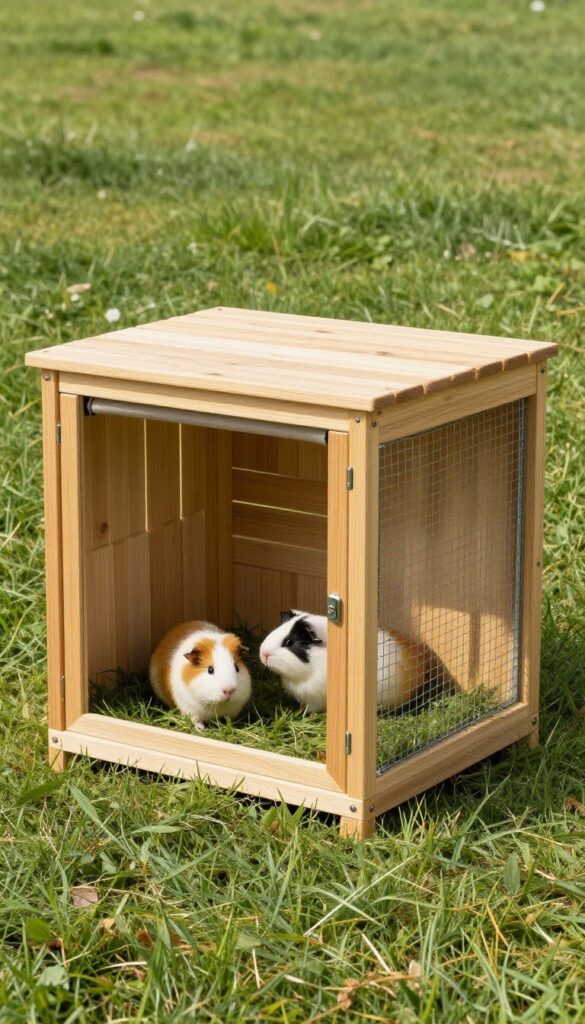
Building your own A-frame structure gives you total control over size, materials, and layout. This design combines a cozy, shaded hideout with a spacious attached run, so your guinea pigs can enjoy fresh air while staying safe from predators and weather. It's a rewarding weekend project that looks great in any yard.
Start by choosing a level, well-drained spot. Build the A-frame from weather-treated wood and cover it with hardware cloth—not chicken wire, which predators can tear. The frame should be tall enough for you to reach inside easily.
Attach a large run using the same materials, and add a solid roof or shade cloth over part of the run for extra protection. Include a secure latch on the run door, and consider a hinged roof panel for easy access to clean the shelter.
Materials And Safety
Use pressure-treated lumber or cedar for the frame, and galvanized hardware cloth with 1/2-inch mesh for walls and roof. Avoid treated wood that contains copper azole if your guinea pigs might chew it—seal any exposed wood with pet-safe paint or liner. Ensure all edges are smooth and fasteners are recessed to prevent injuries.
Placement And Drainage
Position the A-frame on a slight slope or add a gravel base to prevent water pooling inside. The run should sit on grass or soil for natural foraging, but you can line it with a tarp and bedding for easier cleaning. If the area is windy, anchor the structure with stakes or heavy stones.
Daily Use And Maintenance
Lift the run daily to let your guinea pigs graze on fresh grass, but supervise to prevent escapes. Spot-clean the shelter every day and do a deep clean weekly. Check the hardware cloth regularly for tears or rust, and replace any damaged sections immediately.
FAQ
Is it safe to keep guinea pigs outside full-time?
Guinea pigs are sensitive to temperature extremes. Outdoor housing is best for supervised daytime use or in mild climates with a well-insulated, predator-proof hutch. Bring them indoors at night or during bad weather.
What temperature range is safe for outdoor guinea pigs?
Guinea pigs are comfortable between 60°F and 75°F (15°C–24°C). Avoid temperatures above 80°F (27°C) or below 50°F (10°C) for extended periods. Always provide shade and ventilation.
How do I protect my guinea pigs from predators outdoors?
Use 1/2-inch or smaller hardware cloth (not chicken wire) on all sides and top. Secure the cage to the ground or a solid base. Never leave guinea pigs unattended in a flimsy enclosure.
Can I use chicken wire for an outdoor guinea pig cage?
Chicken wire is too weak—predators like raccoons can tear through it. Use welded wire mesh or hardware cloth with small openings to keep both predators and guinea pigs safe.
Do outdoor guinea pigs need a hideout?
Yes, guinea pigs need a dark, enclosed space to feel secure. Provide a wooden or plastic hideout inside the cage, and ensure it stays dry and well-ventilated.
Conclusion
Your guinea pigs will thrive with fresh air and sunshine, but safety always comes first. Start with one outdoor cage idea that fits your space and climate, then adjust as needed.
A well-planned setup means happier, healthier pets and more fun for you.

I’m Pallab Kishore, the owner of Little Pets Realm — an animal lover and pet care enthusiast sharing easy tips, healthy recipes, and honest advice to help every small pet live a happy, healthy, tail-wagging life.