Last updated on August 19th, 2026 at 04:19 pm
Your guinea pig's habitat should be a playground of cozy hideouts and hay-filled nooks that spark natural foraging and burrowing instincts. From fleece forests to cardboard castles, these 13 ideas blend fun and function to keep your piggies active and content.
Each setup prioritizes easy cleaning and your pet's safety while turning their cage into a lively retreat.
Whether you're a DIY enthusiast or prefer store-bought solutions, you'll find inspiration that fits your space and budget.
1. Cozy Corner with a Fleece Forest
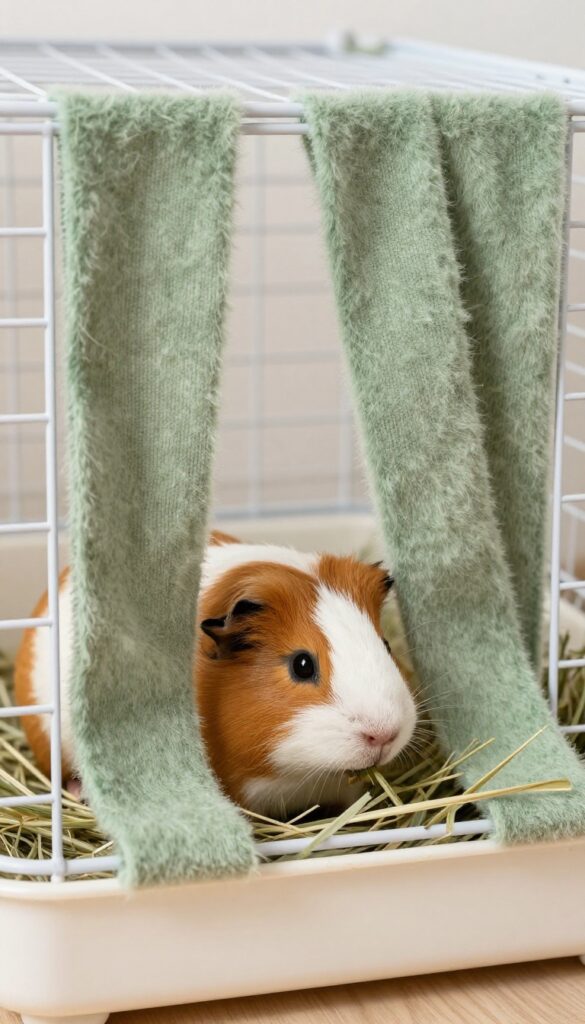
Transform a quiet corner of the cage into a soft, interactive hideout that doubles as a hay station. Fleece strips hanging from the top create a gentle, swaying forest that guinea pigs love to explore. Place a low-sided hay bin or a pile of fresh hay right underneath, so they can munch while nestled in the fabric.
This idea works best in a corner where the fleece can hang freely without blocking ventilation. Use pet-safe fleece cut into strips about 2 inches wide and 12 to 18 inches long. Tie them securely to the cage bars or a sturdy grid at the top.
Make sure the strips don't touch the floor to avoid entanglement. The hay bin below should be shallow and stable, like a ceramic dish or a small cardboard box with the front cut low. Replace hay daily and wash the fleece strips weekly to keep everything fresh.
Why Guinea Pigs Love It
The fleece mimics tall grass, triggering natural burrowing and hiding instincts. Guinea pigs feel safe weaving through the strips, and having hay right below encourages foraging. The soft texture is gentle on their feet and adds a cozy, den-like feel.
Setup Tips For Safety
Use only anti-pill fleece to prevent loose threads. Avoid loops or knots that could catch a paw. Check that strips are long enough to reach near the hay but not puddle on the floor.
Secure everything tightly so nothing falls into the cage.
Cleaning And Maintenance
Shake out the fleece strips daily to remove hay debris. Wash them in a pet-safe detergent every week. The hay bin should be emptied and wiped down daily to prevent mold.
Rotate the fleece forest location occasionally to keep the novelty alive.
2. Tunnel Town with Hay Stashes
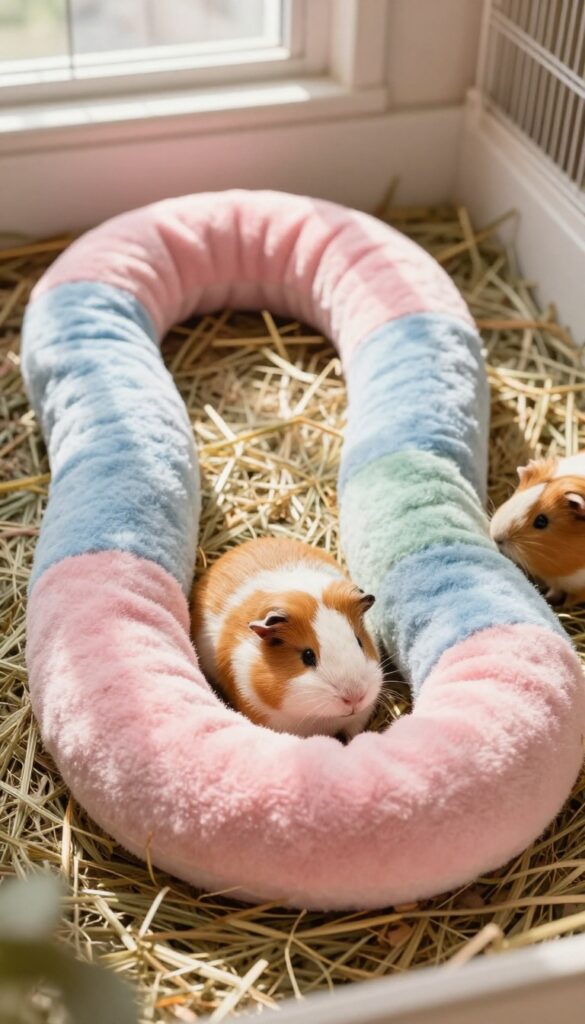
Guinea pigs love to explore tunnels, and adding hay stashes turns their hideout into a rewarding adventure. By connecting multiple tunnels made from fleece or plastic, you create a mini network where your pigs can burrow, hide, and forage. Tuck small piles of hay at tunnel junctions so your pigs discover tasty surprises as they navigate their little town.
This setup encourages natural foraging and exercise while keeping hay accessible in a fun, interactive way. Choose tunnels that are wide enough for your guinea pigs to pass through comfortably, and secure them together with connectors or by overlapping openings. Place the tunnel town in a low-traffic area of the cage to reduce stress.
Choosing The Right Tunnels
Fleece tunnels are soft and washable, while plastic tunnels are sturdy and easy to clean. Look for tunnels with a diameter of at least 8 inches to accommodate adult guinea pigs. Avoid tunnels with small openings or sharp edges.
Setting Up Hay Stashes
Use small hay piles or hay cubes tucked inside the tunnels at junctions. This encourages your pigs to explore and forage. Replace hay daily to keep it fresh and prevent mold.
You can also add a few pellets or dried herbs for extra variety.
Arranging The Tunnel Network
Connect 3–4 tunnels in a simple loop or T-shape. Use cardboard boxes or tunnel connectors to link them. Leave an open end for easy entry and exit.
Make sure the tunnels are stable and won't tip over when your pigs run through.
3. Lofted Hideout with Hay Rack Below
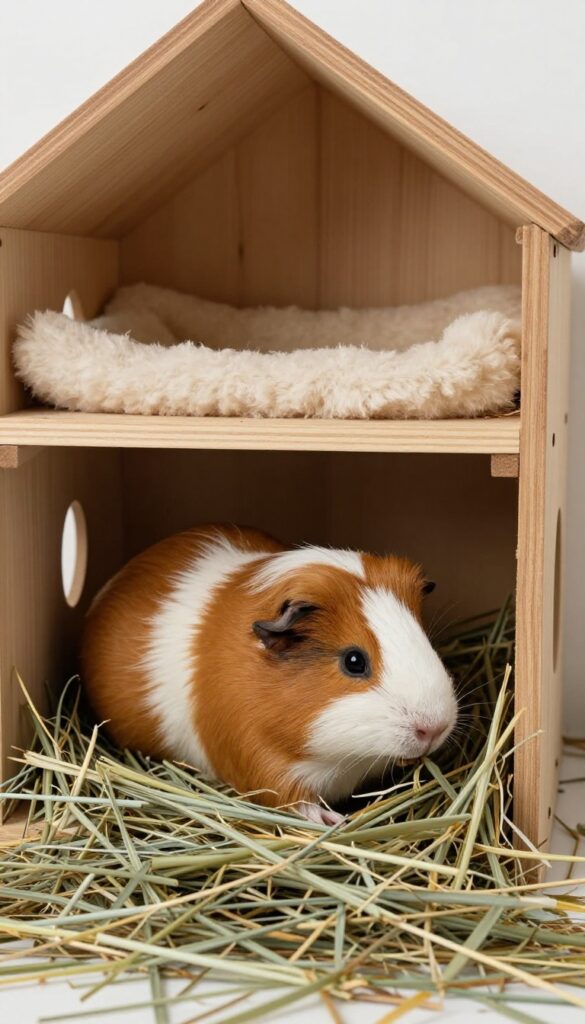
Vertical space is often underused in guinea pig cages, but a lofted hideout changes that. By placing a cozy shelter on an upper level and a hay rack directly beneath, you create two functional zones in one compact footprint. Your piggies get a private perch to retreat to, plus a dedicated munching spot that stays cleaner and more organized.
This setup works especially well in multi-level cages or converted storage cubes. The hideout on top can be a simple wooden house or a fabric tent, while the hay rack below keeps hay off the bedding and reduces waste. Guinea pigs naturally gravitate toward the lower level for eating and the upper for resting, mimicking their instinct to seek high ground for safety.
Choosing The Right Loft
Look for a loft with a solid floor or a ramp that's gentle on little feet. Avoid wire floors that can cause bumblefoot. A wooden or plastic platform with low sides works best, and you can line it with a soft fleece pad for extra comfort.
Hay Rack Placement
Position the hay rack so it's easy to access from below but not so low that hay spills everywhere. A corner rack or a DIY PVC pipe feeder keeps hay contained. Refill from the top or side without disturbing the hideout above.
Cleaning And Maintenance
Since hay can get messy, choose a hay rack that's easy to remove and wash. Spot-clean the loft daily and do a full bedding change weekly. The separation of hideout and hay area actually makes cleaning faster because messes stay concentrated.
4. Cuddle Cup Hay Station
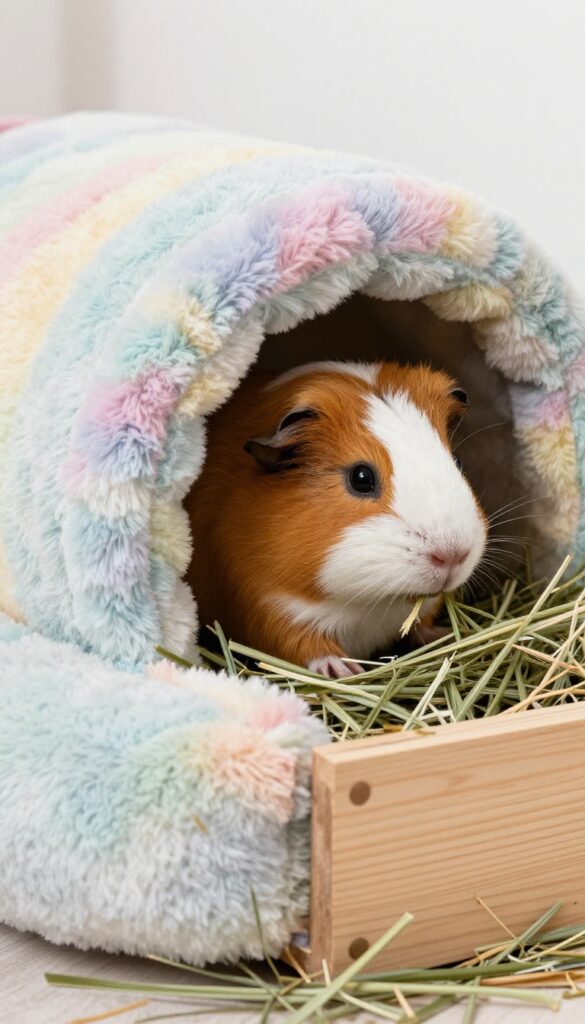
Sometimes the best setup is the simplest: a soft, cozy bed placed right next to a hay feeder. Your guinea pigs can lounge in comfort while reaching for a bite without moving far. This idea is perfect for older or less active piggies who appreciate a little extra cushioning.
A cuddle cup or fleece bed provides a warm, secure spot for your guinea pig to rest. Position it so the hay feeder is within easy reach—your pet can nibble without leaving the comfy bed. This setup encourages relaxation and reduces the effort needed to access hay, which is especially helpful for senior or disabled guinea pigs.
Choosing The Right Cuddle Cup
Look for a cuddle cup with high, padded sides that your guinea pig can lean against or burrow into. Fleece or soft microfiber materials are easy to clean and gentle on paws. Avoid cups with loose threads or small parts that could be chewed off.
Hay Feeder Placement
Attach a small hay feeder or rack directly next to the cuddle cup, at a height your guinea pig can comfortably reach. A hanging hay bag or a clip-on tray works well. Make sure the feeder doesn't tip over when your piggy pulls at the hay.
Cleaning And Maintenance
Spot-clean the cuddle cup daily to remove stray hay and droppings. Wash the fleece bed weekly in hot water with pet-safe detergent. Hay feeders should be emptied and wiped out every few days to prevent mold or dust buildup.
5. DIY Cardboard Castle with Hay Moats
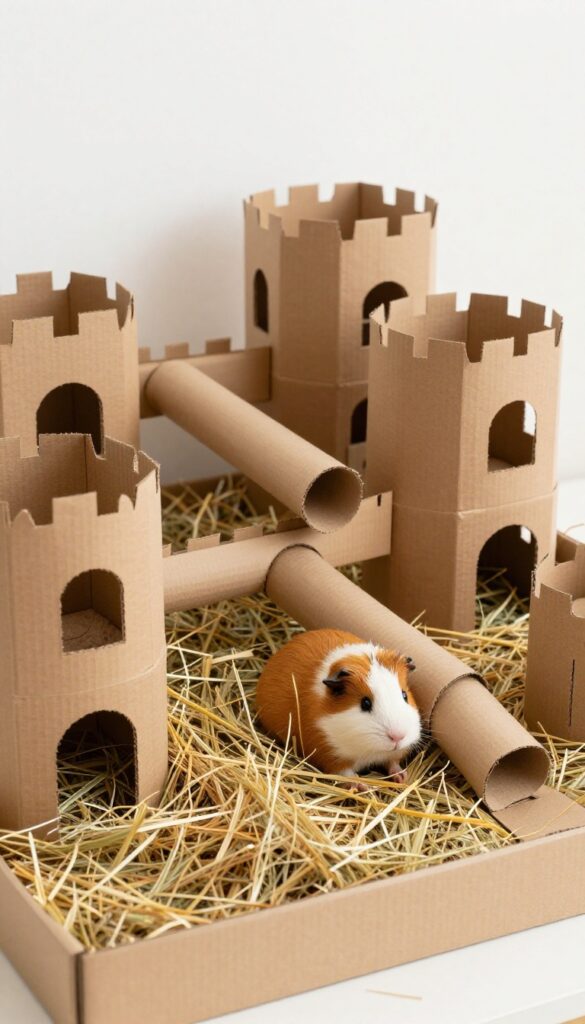
Turn your guinea pig's cage into a medieval kingdom with a cardboard castle surrounded by hay-filled moats. This setup taps into their love for hiding, exploring, and nibbling, all while being budget-friendly and fully customizable. Plus, it's a fun weekend project that lets you get creative with boxes and tubes.
Start by collecting sturdy cardboard boxes of various sizes—shipping boxes, tissue boxes, or even cereal boxes work well. Cut out doors and windows to create multiple rooms, and connect them with tunnels made from paper towel rolls or wrapped cardboard strips. Use pet-safe glue or tape to secure the structure.
Place the castle on a flat, clean surface inside the cage, then surround it with shallow trays or lids filled with loose hay. Your piggies can burrow into the castle's rooms and munch on the hay moats at their leisure.
Room-by-room Design
Give each room a purpose: a dark bedroom with a soft fleece scrap, a dining area with a small hay pile, and a lookout tower with a low perch. Cut multiple entrances so your guinea pigs can zoom in and out without feeling trapped.
Hay Moat Maintenance
Use shallow, wide containers like baking trays or plastic lids for the moats. Refill with fresh hay daily and spot-clean any soiled hay. The moats double as foraging stations, encouraging natural grazing behavior.
Safety And Rotation
Cardboard is safe for chewing but can get soggy from urine. Check the castle every few days for dampness or mold, and replace boxes as needed. Rotate the layout weekly to keep the environment stimulating.
6. Under-Bed Hideout with Hay Pile
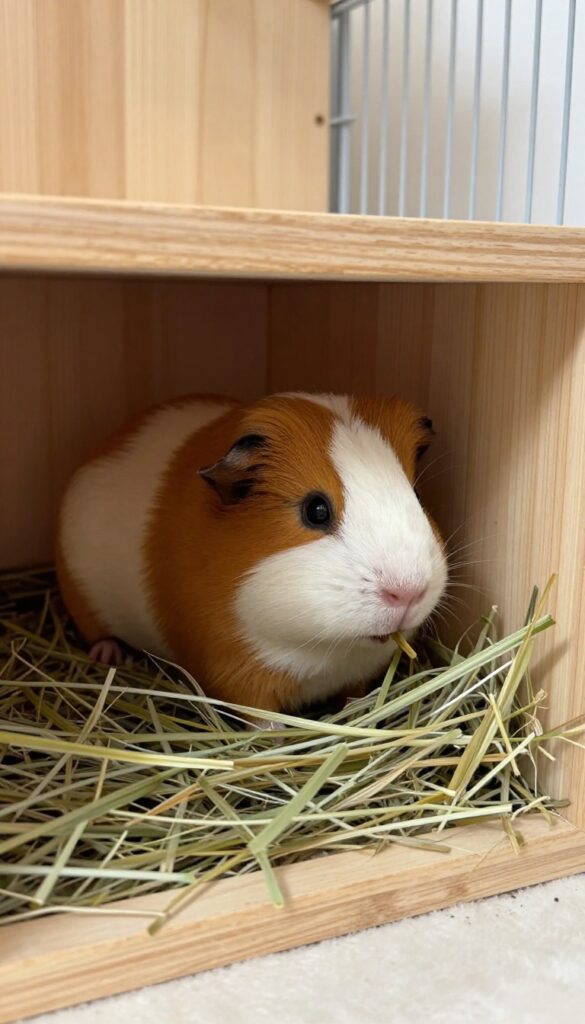
Give your guinea pig a cozy, den-like spot where they can munch and hide at the same time. An under-bed hideout sits low to the cage floor, making it feel secure and cave-like. By piling hay right at the entrance, you encourage natural foraging behavior—they can grab a bite without fully leaving cover.
This setup works especially well for shy piggies who like to eat in private. The hideout should be low enough that they can easily step in and out, with a wide opening for quick escapes. Use a wooden or plastic hideout with a removable top for easy cleaning, and place it in a quiet corner of the cage.
Choosing The Right Hideout
Go for a low-profile hideout made from safe, chewable materials like untreated wood or sturdy plastic. Avoid anything with sharp edges or small openings. A hideout with a flat top can double as a sitting area, but the key is that it sits flush with the cage floor so hay doesn't get trapped underneath.
Hay Placement Tips
Pile fresh hay generously just inside the entrance, creating a small mound that spills out slightly. This invites your guinea pig to nibble while staying partially hidden. Replace the hay daily to keep it clean and appetizing.
You can also tuck a few favorite herbs or veggies into the pile for a fun surprise.
Cleaning And Maintenance
Because hay and hideouts can get messy, choose a hideout with a smooth interior that wipes clean easily. Lift the hideout daily to remove soiled hay and spot-clean the area. A weekly deep clean with pet-safe disinfectant keeps the space fresh and odor-free.
7. Hay-Filled Igloo
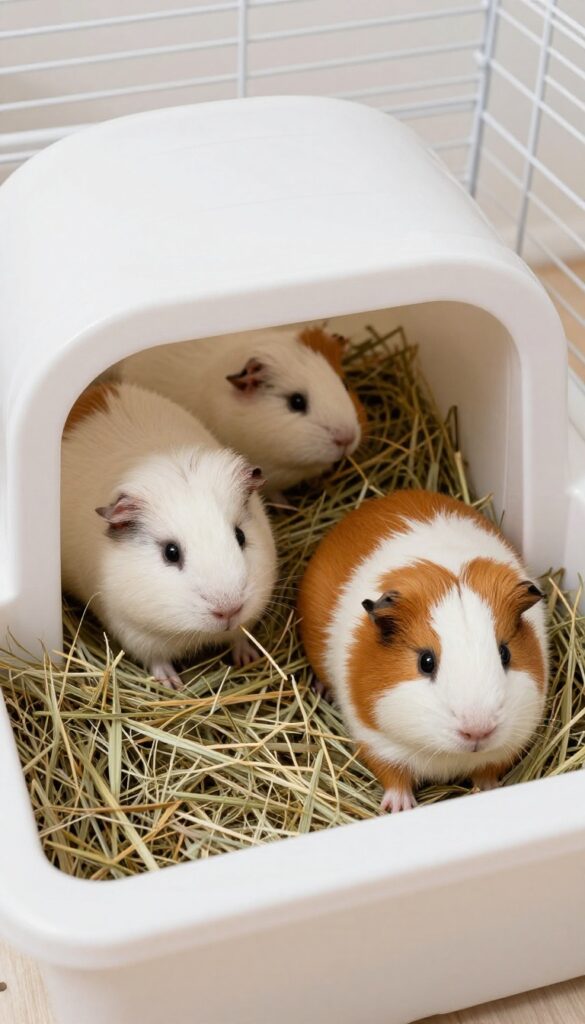
Plastic igloos are a classic hideout, but they become even better when you fill them halfway with loose hay. Your guinea pigs will burrow inside, munch on the hay, and feel completely secure. It turns a simple shelter into a cozy dining nook where they can eat and hide at the same time.
This setup is incredibly easy to maintain. Just scoop out old hay daily and refill with fresh. The igloo keeps hay contained, reducing mess in the rest of the cage.
Plus, the enclosed space encourages natural foraging behavior, keeping your piggies entertained for hours.
Why It Works
Guinea pigs are prey animals, so they love having a roof over their heads while they eat. The igloo provides that security, and the hay satisfies their need to graze constantly. It's a win-win for comfort and nutrition.
Setup Tips
Choose a large igloo so multiple piggies can fit inside. Fill it only halfway to leave room for them to move around. Use soft, dust-extracted hay to prevent respiratory issues.
Place the igloo in a quiet corner of the cage for added coziness.
8. Multi-Level Hay Loft
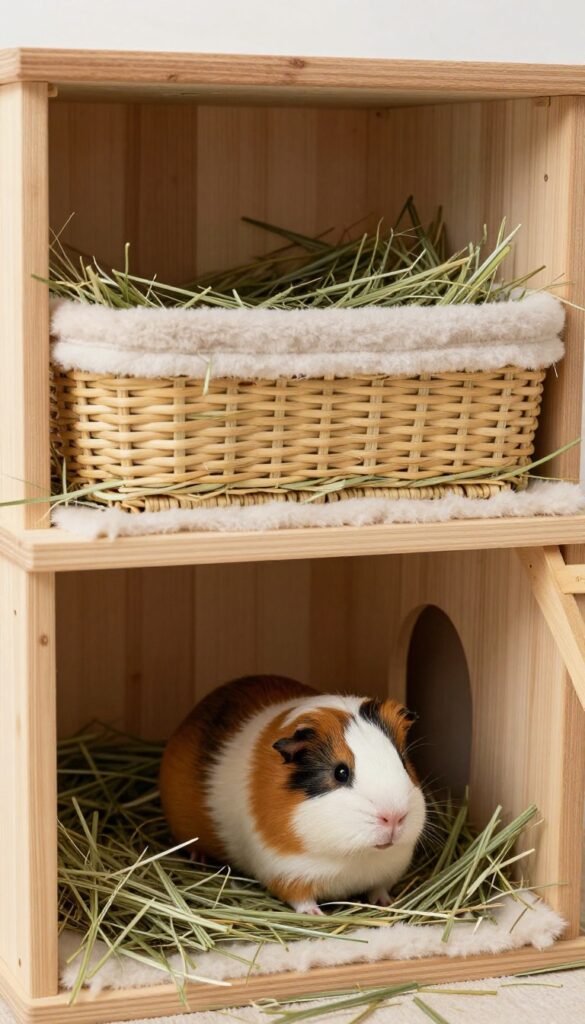
A multi-level hay loft turns your guinea pig's cage into a vertical playground. By adding a second level with a ramp, you create separate zones for eating and hiding. The upper level holds a large hay rack, while the lower level offers a cozy hideout.
Guinea pigs love climbing up for fresh hay and then retreating down to feel safe.
This design maximizes floor space and encourages natural climbing behavior. The ramp should be gentle and have grip strips to prevent slips. Place the hay rack securely on the upper level to avoid tipping.
Below, position a hideout like a wooden house or fleece cave so your piggy can dash down after grabbing a mouthful.
Building The Loft
Use a sturdy wire grid or a wooden platform that can support your guinea pig's weight. Attach it at least 8 inches above the cage floor to give enough headroom below. Cover the platform with a soft fleece liner or a washable mat for comfort.
Ramp Safety
The ramp should have a gentle slope (around 30 degrees) and include traction strips or carpet. Ensure the ramp is securely attached at both ends to prevent wobbling. Guinea pigs are cautious climbers, so a stable ramp encourages use.
Hay Rack Placement
Choose a large hay rack that holds enough hay for a day. Position it at the far end of the upper level so your guinea pig has to climb up to reach it. This encourages exercise and foraging.
Place a litter tray underneath to catch dropped hay.
9. Corner Hay Bin with Fleece Cover
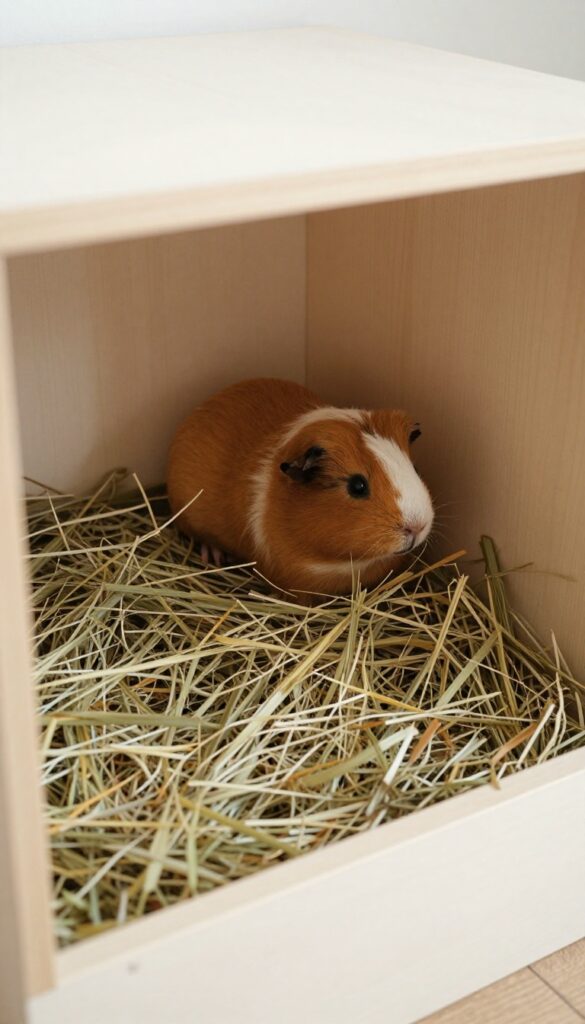
A corner litter box filled with hay is a great way to offer a dedicated munching zone, but adding a fleece drape takes it to the next level. Drape a piece of fleece over one side to create a semi-covered hideout where your piggies can nibble in privacy. This setup is super easy to clean and gives them that cozy, den-like feel they love.
This idea combines a hay feeder with a hideout in one compact corner unit. The fleece cover provides a sense of security while they eat, and the litter box contains mess. It's perfect for smaller cages where space is tight.
Why It Works
Guinea pigs are prey animals, so they feel safer when they can hide while eating. The fleece drape mimics a burrow entrance, encouraging natural foraging behavior. Plus, the corner placement uses otherwise wasted space.
Setup Tips
Use a low-sided corner litter box so it's easy to hop in and out. Secure the fleece with binder clips or sew a simple sleeve that slips over the box edge. Replace the fleece regularly to keep it fresh.
Cleaning And Maintenance
Spot-clean the hay daily and shake out the fleece cover. Wash the fleece weekly with unscented detergent. The litter box can be wiped down or rinsed as needed.
10. PVC Pipe Tunnel with Hay End-Cap
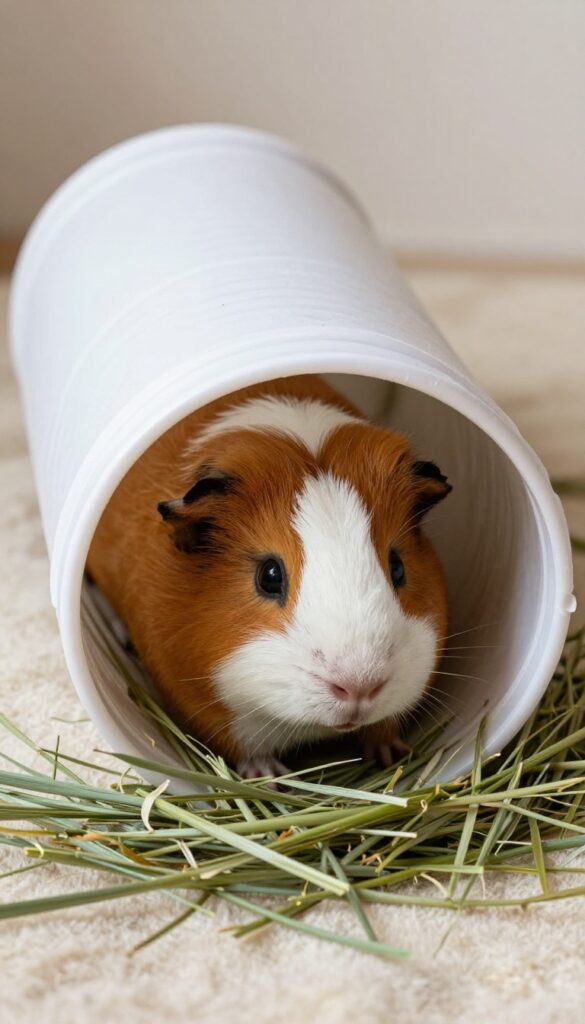
A wide PVC pipe makes an excellent tunnel for guinea pigs who love to zoom and hide. By capping one end with a hay-filled sock or small hay bag, you turn a simple tube into a foraging challenge. Your piggies will push through the hay to exit, getting extra fiber and mental stimulation.
This setup is cheap, easy to clean, and endlessly reusable. The tunnel provides a dark, secure run, while the hay end-cap satisfies their urge to burrow and nibble. Just make sure the pipe is wide enough (at least 6 inches in diameter) so even your chunkiest guinea pig can pass through comfortably.
Choosing The Right Pipe
Use a 6- to 8-inch diameter PVC pipe, available at any hardware store. Cut it to about 12–18 inches long. Sand the cut edges smooth to prevent injuries.
You can also use a flexible dryer vent hose for a bendable tunnel, but PVC is easier to clean.
Making The Hay End-cap
Take a clean tube sock or a small cotton bag, stuff it loosely with fresh hay, and tie the open end around the pipe's exit. Alternatively, use a small hay bag with a drawstring. Make sure the hay is packed just enough that your guinea pig has to push a bit to get through.
Placement And Maintenance
Position the tunnel on a flat, stable part of the cage. Check the hay daily and replace it when soiled or flattened. The PVC pipe can be wiped clean with vinegar water.
Rotate the tunnel's position every few days to keep things interesting.
11. Hanging Hay Sack with Platform Hideout
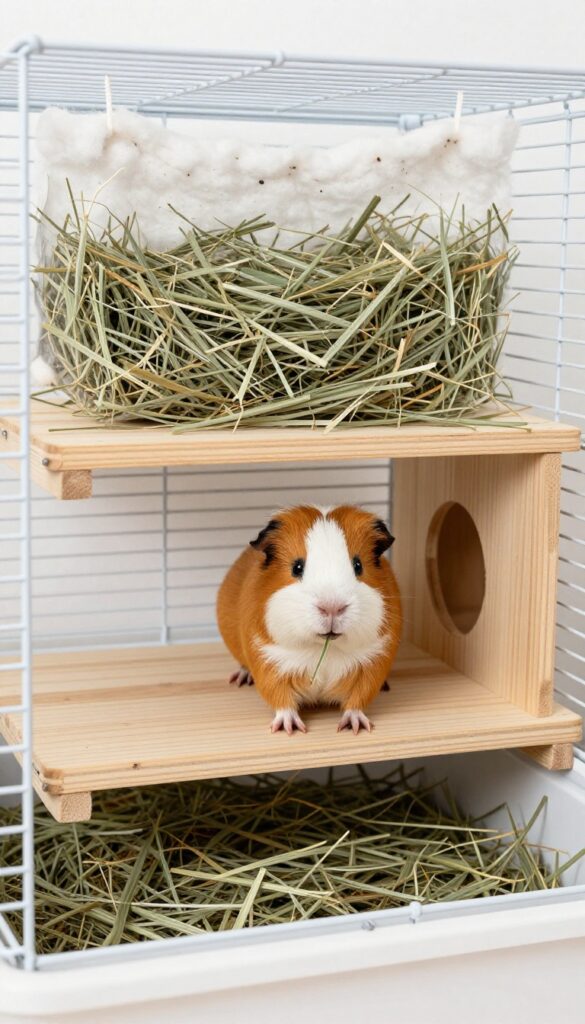
Hanging a hay sack from the cage top saves floor space and keeps hay off the bedding. Pair it with a flat platform and a small hideout below so your guinea pig can stand up to munch, then hop down to a cozy spot. This setup mimics natural foraging and gives them a fun vertical element.
The hanging hay sack encourages your piggy to stretch and nibble, which is great for digestion and prevents boredom. The platform below gives them a stable place to stand, and the hideout offers a quick retreat. Use a sturdy fabric sack or a wire hay rack designed for hanging.
Place the platform at a height they can easily jump onto, and add a soft fleece pad or a small wooden house underneath.
Choosing The Hay Sack
Look for a breathable sack made of cotton or mesh that you can refill easily. Avoid plastic or sharp edges. A sack with a wide opening makes stuffing hay simple.
You can also repurpose a small fabric bag by cutting a hole and hanging it with zip ties.
Platform And Hideout Setup
Use a flat wooden or plastic platform with a low lip to prevent falls. Place a small igloo, a fleece cave, or a cardboard box underneath. Make sure the hideout is roomy enough for them to turn around.
Secure the platform with cage clips or suction cups if needed.
Placement Tips
Hang the sack near the platform so hay falls onto it, not the cage floor. Position it away from water bottles to keep hay dry. Rotate the location occasionally to keep things interesting.
This works well in a corner or along a long side of the cage.
12. Divided Cage with Hay Bar
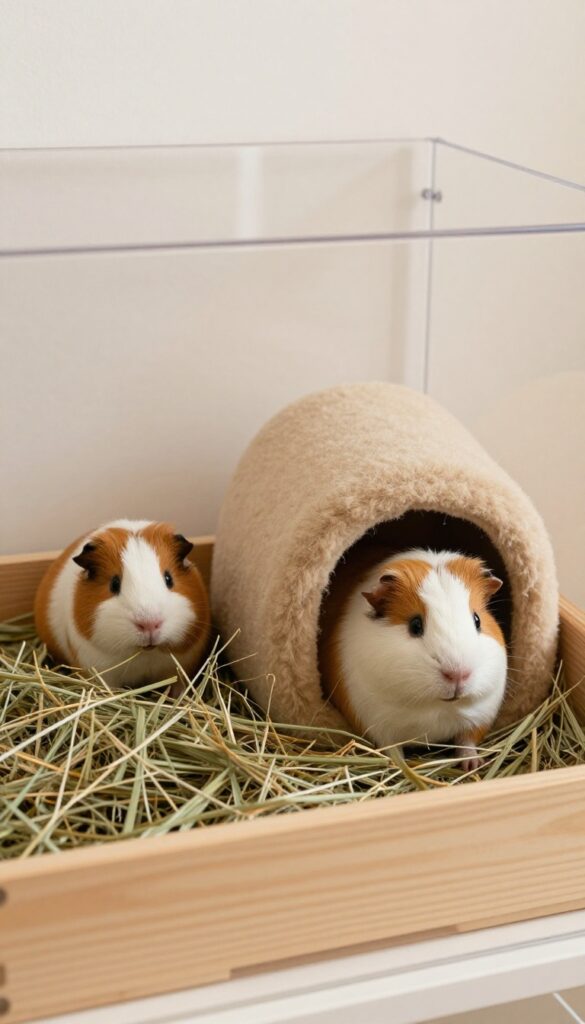
A cage divider isn't just for separating fighting piggies—it can create a dedicated hay bar that keeps the main living area cleaner. By partitioning off a small section solely for hay, you give your guinea pigs a clear eating zone while preserving the rest of the cage for sleeping, playing, and exploring. Add a hideout on the other side, and they'll have a perfect balance of munch and nap spots.
Start by measuring your cage and purchasing a sturdy wire or acrylic divider that fits snugly. Leave a small opening (about 6–8 inches wide) so your guinea pigs can easily move between the hay area and the main side. On the hay side, place a shallow litter box or a low-sided bin and fill it generously with fresh timothy hay.
On the opposite side, put a cozy hideout like a fleece cave or a wooden house. Your piggies will learn to hop over to the hay bar when they're hungry and retreat to their hideout when they want privacy. This setup also makes spot-cleaning easier—just scoop out soiled hay from the designated zone without disturbing the rest of the cage.
Choosing The Right Divider
Look for a divider that is at least 8 inches tall to prevent hay from spilling over. Wire grids work well because they allow airflow and visibility, but make sure the gaps are small enough that guinea pigs can't get stuck. If you have a C&C cage, you can use extra grids and connectors to create a permanent partition.
For plastic-bottom cages, adjustable acrylic panels with suction cups are a good option.
Hay Bar Maintenance Tips
Refill the hay bar daily and remove any wet or soiled hay to prevent mold. Because the hay is contained, you'll use less bedding overall. Every few days, wipe down the divider with a pet-safe cleaner to keep it fresh.
If your guinea pigs start sleeping in the hay bar, add a small fleece pad to encourage them to use the hideout instead.
Hideout Placement For Maximum Coziness
Place the hideout as far from the hay bar as possible to create distinct zones. A two-door hideout works great because it gives an escape route. You can also add a second, smaller hideout near the divider for piggies who like to eat and then immediately hide.
Make sure the hideout is well-ventilated and easy to clean.
13. Outdoor Run with Hay Hut
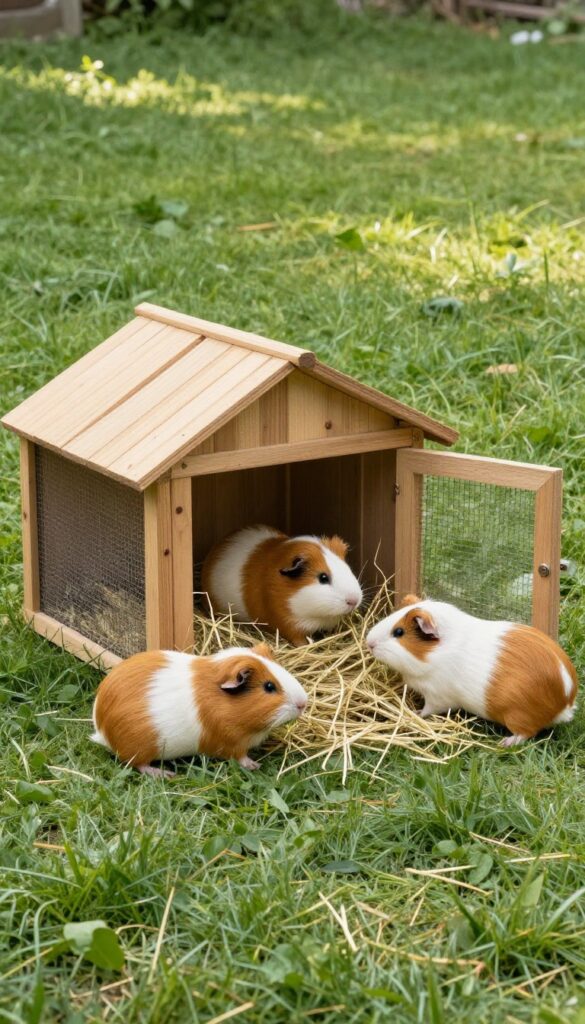
When the weather is nice, nothing beats letting your guinea pigs enjoy some fresh air and sunshine. A portable outdoor run with a dedicated hay hut gives them a safe space to graze, explore, and retreat when they need a break. This setup is perfect for supervised playtime on the grass, combining enrichment with the comfort of a familiar hay-filled hideout.
Choose a sturdy, collapsible run with a secure lid to protect against predators. Place a wooden or cardboard hut inside and fill it generously with fresh hay. The hay serves as both food and bedding, encouraging natural foraging and burrowing.
Keep the run on level grass and always supervise your piggies to ensure they stay safe from pests or escape attempts.
Setting Up The Run
Pick a run that's at least 8 square feet for two guinea pigs. Make sure the mesh is small enough to keep out snakes and other small predators. Position it in a shaded area to prevent overheating, and bring fresh water in a heavy bowl that won't tip over.
The Hay Hut Advantage
A wooden hut with a removable roof makes refilling hay easy. The hut provides a dark, cozy retreat that mimics a burrow. Guinea pigs will nibble the hay, sleep on it, and even use it as a bathroom spot—just replace the hay after each outdoor session to keep things clean.
Supervision And Safety Tips
Never leave guinea pigs unattended in an outdoor run. Check for toxic plants or pesticides in the grass beforehand. Limit outdoor time to 30–60 minutes to avoid stress, and always have a carrier ready to bring them inside quickly if needed.
FAQ
How many hideouts should a guinea pig have?
At least one per pig, plus one extra. Guinea pigs feel safer when they have options, especially if they don't get along perfectly.
Can I use cardboard boxes as hideouts?
Yes, but replace them when soiled. Cardboard is safe and fun, but it absorbs urine and can get smelly quickly.
How often should I change the hay in their habitat?
Daily. Guinea pigs need fresh hay at all times, and stale or soiled hay can cause respiratory issues.
What's the best material for hideouts?
Fleece, wood, and plastic are all good. Avoid cedar or pine shavings as bedding inside hideouts because they can be harmful.
Should the hay area be separate from the sleeping area?
Not necessarily. Many guinea pigs like to eat where they sleep. Just keep it clean to prevent ammonia buildup.
Conclusion
Your guinea pigs deserve a habitat that feels like home, not just a cage. Whether you start with a cozy hideout or a dedicated hay area, small upgrades make a big difference.
Pick one idea that fits your space and your pets' personality, then build from there. A thoughtful setup keeps them active, safe, and happy—and you'll love watching them enjoy it.

I’m Pallab Kishore, the owner of Little Pets Realm — an animal lover and pet care enthusiast sharing easy tips, healthy recipes, and honest advice to help every small pet live a happy, healthy, tail-wagging life.