
Last updated on August 19th, 2026 at 04:15 pm
A backyard dog run gives your pup freedom to explore without you worrying about escapes or hazards. But not all fences are created equal when it comes to containing an energetic dog.
The right fence keeps your dog safe, withstands weather and wear, and still looks good in your yard. You need something that handles digging, jumping, and chewing while fitting your budget and style.
Whether you have a small yard or acres of land, these 10 fence ideas solve real problems like escape artists, muddy paws, and maintenance headaches. Let's look at practical options that work for real dogs and real homeowners.
1. Chain Link with Privacy Slats
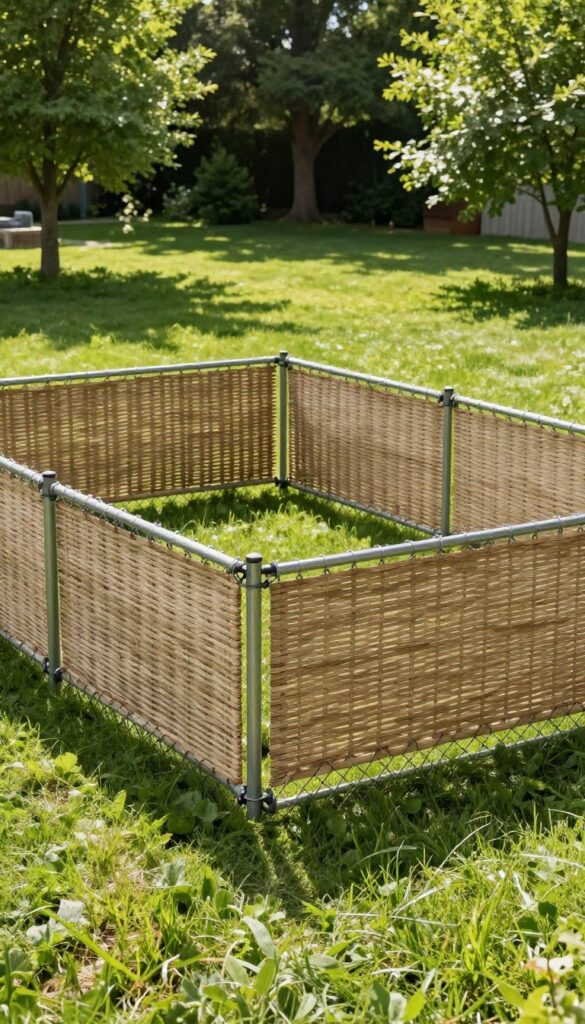
Chain link fencing is one of the most affordable and durable options for a dog run, but the open weave can overstimulate your dog. Every passing squirrel, neighbor, or delivery truck becomes a trigger. Adding privacy slats transforms chain link into a calm, enclosed space that blocks visual distractions and reduces wind.
Privacy slats slide right into the chain link mesh, creating a solid barrier that still lets air flow through. This combo is budget-friendly, easy to install, and much harder for dogs to climb or dig under than solid wood or vinyl.
Why Privacy Slats Work For Dogs
Dogs that bark or lunge at the fence often react to what they see. Privacy slats block their view of triggers without making the run feel like a cage. The slats also reduce wind, which can make the space more comfortable in cold or breezy weather.
Installation Tips
You don't need special tools. Most slats weave through the chain link in a few hours. Choose vinyl slats for longevity—they won't rot or fade quickly.
For extra security, run a tension wire along the bottom to prevent digging.
Cost And Maintenance
Chain link with slats costs less than wood or vinyl fencing. Slats are easy to replace if one gets damaged. Hose down the fence occasionally to keep it clean.
This setup lasts 15–20 years with minimal upkeep.
2. Wood Privacy Fence with Dig-Proof Footer
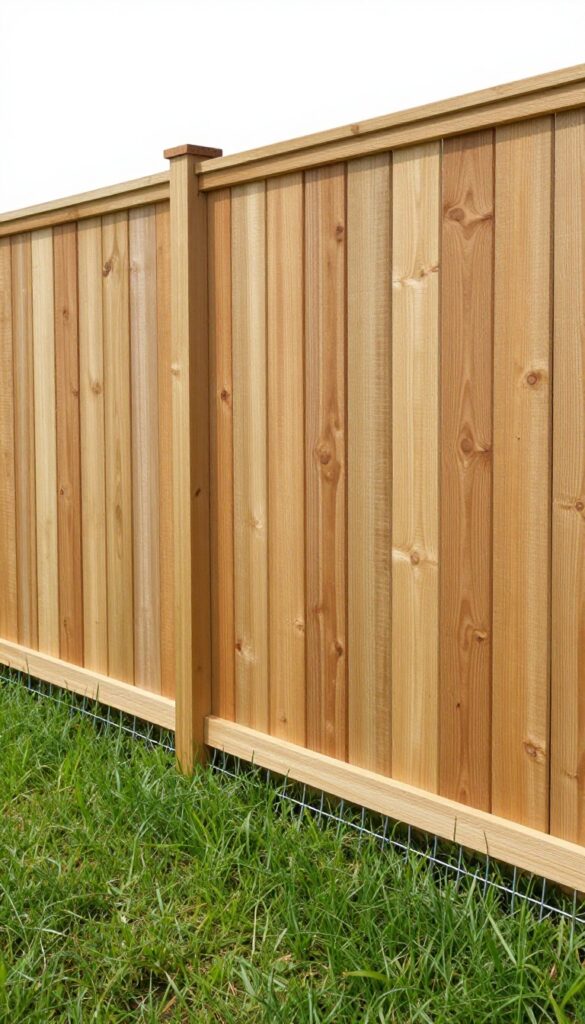
A solid wood fence is a classic choice for dog owners who want total privacy and a clean look. But if your dog loves to dig, a standard wood fence won't cut it. You need a dig-proof footer to keep them from tunneling out.
The key is installing an L-shaped footer or burying wire mesh at the base of the fence. This stops escape attempts while keeping the fence looking neat. Combine it with pressure-treated wood for durability, and you have a fence that's both secure and stylish.
Why A Footer Matters
Dogs dig for many reasons: boredom, prey drive, or just to cool off. A footer creates a physical barrier underground that prevents them from digging under the fence. Without it, even a tall fence can be useless against a determined digger.
How To Build The Footer
The most common method is to attach a strip of galvanized wire mesh to the bottom of the fence and bury it in an L-shape, extending outward into the dog run. Alternatively, you can pour a concrete footer that extends below ground. Both options are effective and long-lasting.
Wood Selection And Maintenance
Choose pressure-treated pine or cedar for rot resistance. Apply a weatherproof stain or sealant every couple of years to keep the wood looking good. Avoid using treated lumber with high chemical content if your dog tends to chew on the fence.
3. Welded Wire Mesh on Steel Posts
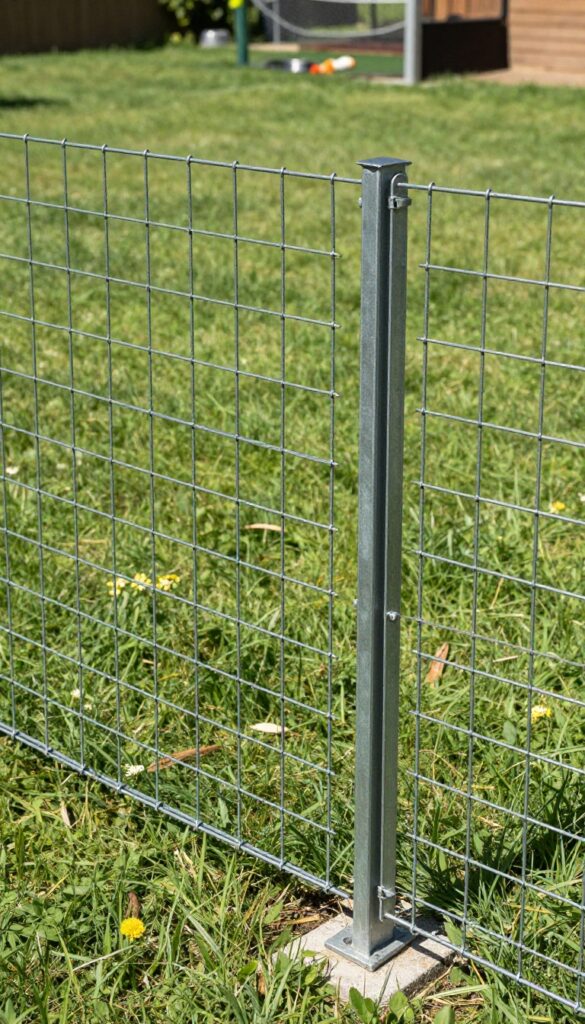
Some dogs treat fences like a personal challenge. If yours is a determined chewer or a skilled climber, standard wood or chain link won't last long. Welded wire mesh attached to steel posts offers a nearly indestructible solution that stands up to the toughest escape artists.
This combination gives you a low-profile barrier that lets your dog see the world without being able to break through. It's a practical choice for high-energy breeds that need both containment and visibility.
Welded wire mesh is made from thick, galvanized steel wires welded at every intersection, creating a rigid grid that resists bending and breaking. When attached to heavy-duty steel posts, the entire fence becomes incredibly strong. Dogs can't chew through it, and the smooth surface makes climbing nearly impossible.
The open design allows airflow and visibility, which can reduce frustration for dogs that like to watch their surroundings. It also doesn't block sunlight, so your dog run stays bright and dry. Installation requires some tools and effort, but once in place, this fence requires very little maintenance.
Choose a mesh size that prevents paws or noses from getting stuck—typically 2×4 inches or smaller for small breeds. For extra durability, opt for a heavier gauge wire and galvanized coating to prevent rust.
Why It Works For Escape Artists
Welded wire mesh is rigid, so it won't sag or create gaps like chain link can over time. The small openings make it hard for dogs to get a foothold for climbing. Steel posts set in concrete provide a solid anchor that can't be pushed over or dug under easily.
Installation Tips
Set steel posts at least 2 feet deep in concrete for maximum stability. Use tension wire along the top and bottom to keep the mesh tight. Attach the mesh with heavy-duty fence clips or wire ties every 12 inches.
Consider burying the bottom edge 6–12 inches underground to prevent digging.
Cost And Maintenance
This is a mid-range option—more expensive than chain link but less than ornamental metal. Expect to pay $10–$20 per linear foot for materials. Maintenance is minimal: occasional hosing to remove dirt and checking for loose connections.
Rust-resistant coatings mean it can last 20 years or more.
4. Vinyl Fence with Reinforced Rails
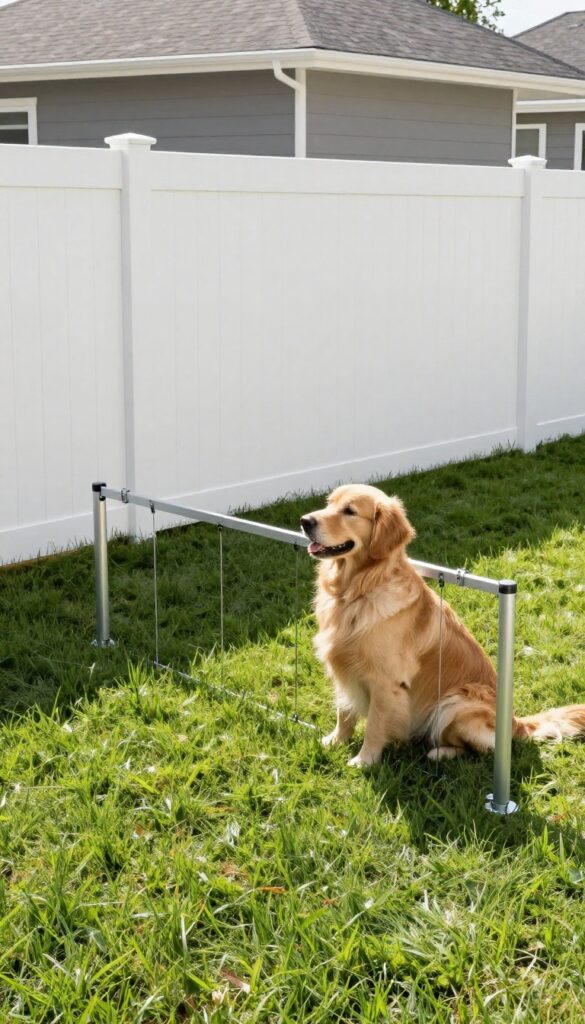
Vinyl fencing offers a clean, low-maintenance look that many homeowners love. But standard vinyl can crack under pressure from a determined dog leaning or jumping. Reinforced rails and thicker pickets solve that problem, giving you the best of both worlds: a great-looking fence that can handle rambunctious pups.
Reinforced vinyl fences use heavier-gauge aluminum or steel inserts inside the rails, plus thicker pickets that resist cracking. This makes them much stronger than standard vinyl without sacrificing the classic appearance. They're also resistant to rot, insects, and weather, so you won't need to paint or stain them.
The upfront cost is higher than chain link or basic wood, but the long-term savings on maintenance often make up for it.
Why Standard Vinyl Fails For Dogs
Standard vinyl fences are designed for privacy, not for containing active dogs. The hollow rails can snap when a dog leans against them repeatedly, and the pickets may crack if your pup tries to squeeze through or chew. Reinforced models address these weak points, making the fence much more durable.
Installation Tips For Maximum Strength
For a reinforced vinyl fence to perform well, proper installation is key. Set posts in concrete at least 24 inches deep, and use brackets to secure the rails. Consider adding a tension wire at the bottom to prevent digging.
Some manufacturers offer specific dog-containment packages with extra bracing.
Cost Vs. Longevity
Expect to pay $25–$40 per linear foot installed for a reinforced vinyl fence. That's more than chain link or basic wood, but the fence will last 20–30 years with no painting or staining. Over time, the lower maintenance costs can offset the higher initial investment.
5. Cattle Panel Arch with Climbing Vines
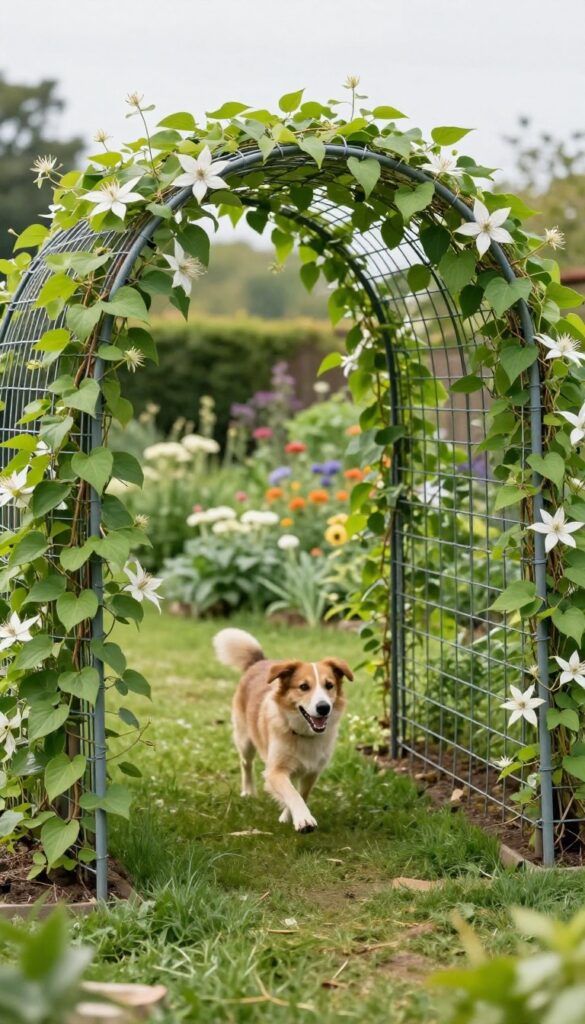
Cattle panels are heavy-duty wire grids typically used for livestock, but they make fantastic, affordable fencing for dog runs. When bent into an arch, they create a tunnel-like structure that dogs love to race through. Adding climbing vines transforms the utilitarian look into a living, shaded feature that blends into your garden.
This idea works especially well for active dogs who enjoy running and exploring. The arch gives them a clear pathway and a sense of adventure, while the vines soften the industrial feel and provide natural shade during hot months.
How To Build The Arch
Start with 16-foot cattle panels, which are about 4 feet tall. Bend each panel into a U-shape and anchor the ends in the ground using metal stakes or concrete footings. Space the arches every 4 to 6 feet along your desired path.
Connect them with zip ties or wire for stability. The result is a sturdy, curved tunnel that can withstand weather and enthusiastic dogs.
Best Vines For The Job
Choose fast-growing, non-toxic climbers like clematis, honeysuckle, or jasmine. These vines add greenery quickly and produce flowers that attract pollinators. Avoid invasive species like English ivy, which can damage the panels over time.
Plant the vines at the base of each arch and train them upward using garden twine.
Maintenance Tips
Check the panels annually for rust or loose connections, especially after heavy rain or snow. Prune the vines in early spring to keep growth under control and prevent them from becoming too heavy. If your dog is a digger, bury the bottom of the panels a few inches underground or add a gravel base to discourage escape attempts.
6. Split Rail with Deer Netting
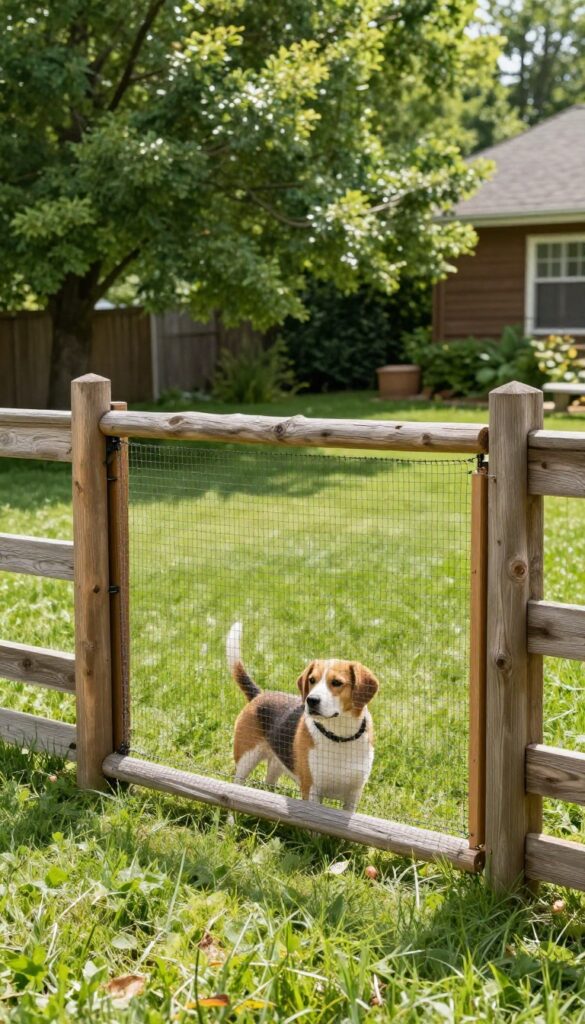
Split rail fences bring that classic farmhouse charm, but they're not exactly dog-proof on their own. The gaps between rails are wide enough for most dogs to slip through, especially smaller breeds. Adding deer netting solves that problem without ruining the open, airy look.
Deer netting is lightweight, inexpensive, and easy to staple or zip-tie to the back of the rails. It creates a nearly invisible barrier that stops your dog from squeezing through while letting you see the yard beyond. This combo works especially well for medium or small dogs that don't jump or climb.
Installation Tips
Staple the netting to the inside of the fence so it's hidden from view. Use heavy-duty staples or zip ties every 12 inches to keep it tight. Leave a few inches of slack at the bottom so you can bury it slightly or weigh it down with rocks to prevent digging escapes.
Best Dog Breeds For This Setup
This fence works great for calm, low-jumping breeds like Beagles, Corgis, and Shih Tzus. It's not ideal for powerful diggers or agile climbers like Huskies or Terriers. If your dog is a jumper, consider adding a top rail or extra height.
Maintenance And Longevity
Deer netting can degrade in direct sunlight after a few seasons. Check it annually for tears or sagging. Replace it as needed—it's cheap and easy to swap out.
The split rails themselves will last for decades with minimal care.
7. Picket Fence with Close Spacing
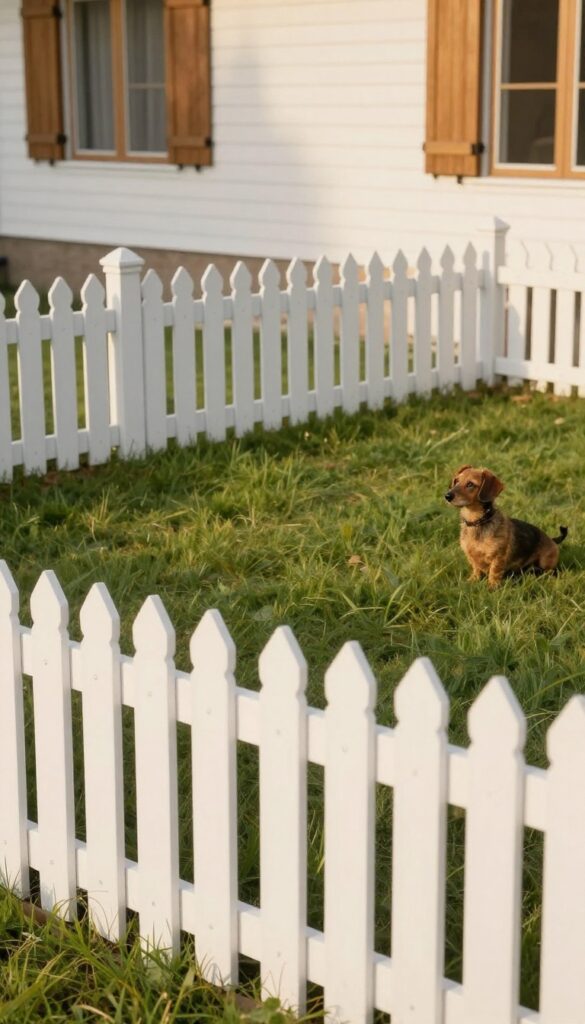
A classic picket fence brings that timeless American charm to your yard, but standard spacing won't cut it for most dogs. By narrowing the gaps to 3 inches or less, you get a fence that's both adorable and functional. This style works especially well for small breeds or dogs that don't jump, offering a friendly look that blends with any home.
Picket fences are often seen as decorative, but with a few tweaks they become practical dog containment. The key is the spacing between pickets—standard gaps can be 4 to 6 inches, which is plenty of room for a determined pup to squeeze through. Narrowing it to 3 inches or less solves that problem while keeping the classic aesthetic.
This fence type is also easy to paint or stain to match your house, and repairs are straightforward if a picket gets damaged.
Spacing And Height Considerations
For small dogs like terriers or dachshunds, 3-inch gaps are usually enough. If you have a very tiny breed, you may need to go even tighter—2. 5 inches is safe.
Height matters too: a standard 4-foot picket fence works for most small to medium dogs, but if your dog is a jumper, consider adding a top rail or extending the height to 5 feet. Always measure your dog's head width and jumping ability before finalizing.
Materials And Maintenance
Cedar or pressure-treated pine are popular choices for picket fences because they resist rot and insects. Vinyl pickets are another option—they never need painting and are easy to clean with a hose. Whichever material you choose, check for splinters or sharp edges that could hurt your dog.
A yearly coat of sealant or paint will keep wood looking fresh and prevent weather damage.
Best Dogs For This Fence
Picket fences with close spacing are ideal for small breeds, senior dogs, or pups that don't have a strong prey drive. They're not recommended for large, powerful dogs that might push through or chew the wood. Breeds like Beagles, Corgis, and French Bulldogs do well.
If your dog is a digger, add a buried wire or concrete footer at the base to prevent escape.
8. Gabion Wall Fence
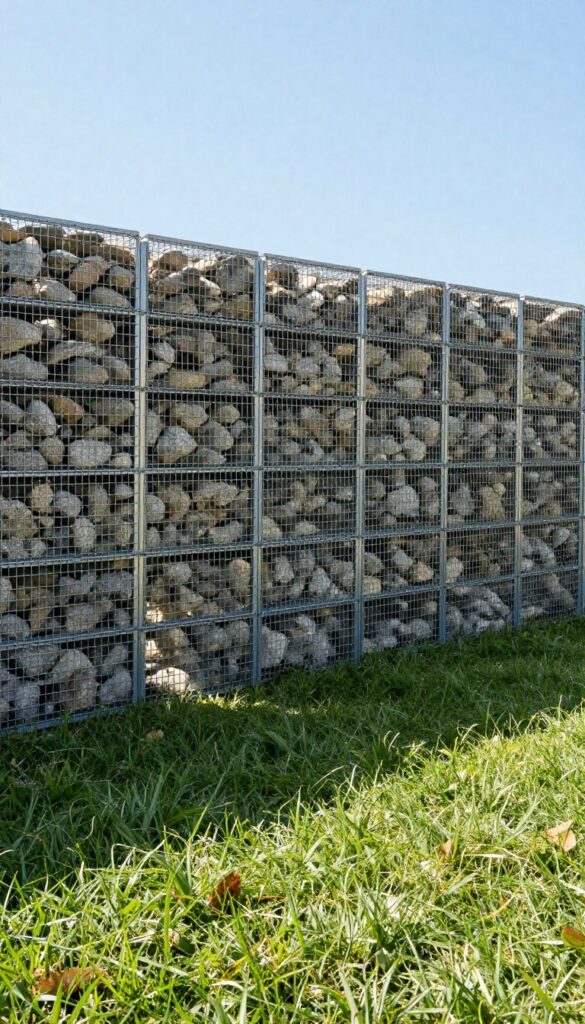
Gabion walls are wire cages filled with stone—extremely sturdy and chew-proof. They absorb sound, look modern, and double as a retaining wall if your yard has slopes. This is a fence that doesn't just contain your dog; it becomes a permanent, heavy-duty landscape feature.
Gabion fences are built to last. The wire mesh is typically galvanized or coated to resist rust, and the stone fill can be locally sourced to match your yard's aesthetic. Because they're so heavy and solid, even the most determined digger or jumper won't get through.
Plus, the gaps between stones allow airflow and light, so your dog run stays open and airy.
Why Gabion Works For Dogs
Dogs that love to chew or scratch will find nothing to grip on a gabion wall. The stones are too hard to damage, and the wire mesh is tough enough to withstand repeated abuse. It's also a great sound barrier—if your dog barks at neighbors, the stone absorbs noise better than wood or vinyl.
Installation Tips
You'll need a solid foundation, especially if the wall is tall or on a slope. Dig a trench, add compacted gravel, and set the cages on top. Fill them with stone (river rock, crushed granite, or even recycled concrete) and secure the lids.
For extra stability, anchor the cages with rebar stakes driven into the ground.
Design Flexibility
Gabion walls can be straight, curved, or tiered. You can mix stone colors or add decorative elements like embedded glass or metal accents. They also pair well with other materials—use a gabion base with a wooden top rail for a softer look.
The industrial-modern style fits contemporary homes and rustic settings alike.
9. Living Fence (Hedge or Bamboo)

A living fence turns your dog run into a green, natural retreat. Dense hedges or clumping bamboo create a visual barrier that blocks your dog's view of distractions, reducing barking and excitement. It's an eco-friendly choice that also provides shade, wind protection, and noise reduction.
Living fences take time to establish, but once mature, they offer a durable, self-repairing boundary. Dogs can't dig under or chew through thick hedges like arborvitae or privet. Clumping bamboo is non-invasive and grows fast, creating a dense screen within a couple of years.
Just be sure to choose non-toxic plants—avoid yew, oleander, and sago palm, which are harmful to dogs.
Best Plants For Dog Runs
Arborvitae, boxwood, and privet are top choices for hedges—they're dense, tough, and grow well in most climates. For bamboo, look for clumping varieties like Bambusa or Fargesia. They stay contained and won't spread into your neighbor's yard.
Always check with your local extension office to confirm the plants are dog-safe.
Installation And Maintenance Tips
Plant hedges in a double row for extra thickness, spacing them according to mature width. Water regularly for the first year until established. Trim once or twice a year to keep them dense and at your desired height.
Bamboo needs less pruning but benefits from thinning old canes each spring.
Pros And Cons Of A Living Fence
Pros: natural look, eco-friendly, provides shade and windbreak, reduces noise, self-repairing. Cons: takes 1-3 years to fill in, requires regular watering and pruning, may attract pests like aphids, and some dogs may still try to push through gaps. Overall, it's a beautiful, long-term solution for patient homeowners.
10. Electric Fence with Visible Boundary
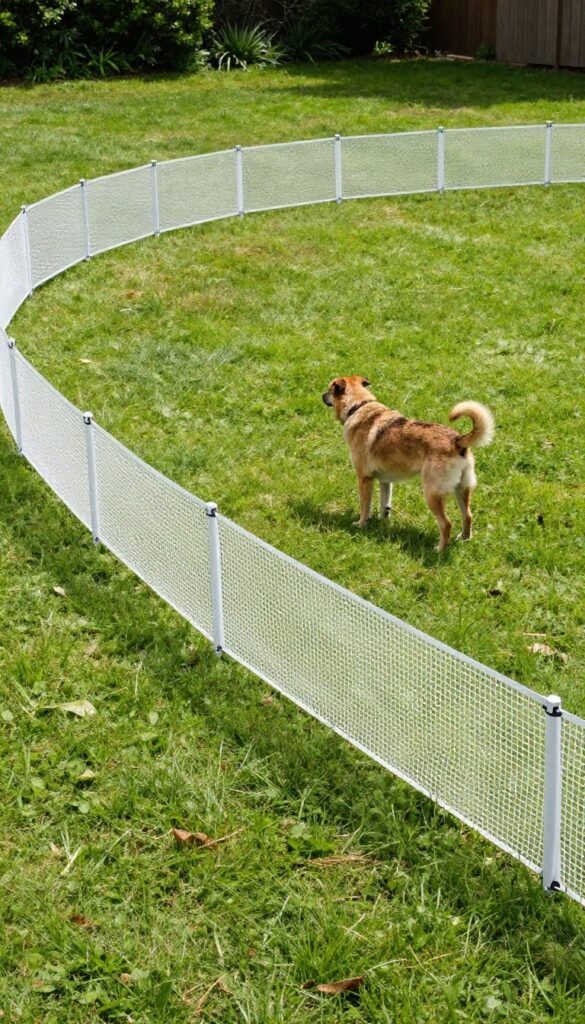
Combining an underground electric fence with a visible above-ground barrier gives you the best of both worlds: effective training and a clear physical cue for your dog. This setup is ideal for large properties where a full perimeter fence would be too expensive, yet you still want reliable containment without constant supervision.
An underground electric fence paired with a low visible wire or mesh creates a boundary that dogs quickly learn to respect. The visible barrier provides a constant reminder, while the electric correction reinforces the lesson. This hybrid approach reduces the chance of your dog bolting through the boundary, especially during exciting moments like spotting a squirrel.
It's also a flexible solution that can be installed along irregular property lines or around gardens and sensitive areas.
How The Visible Boundary Helps
The above-ground component—often a low fence or single strand of wire—gives your dog a clear visual marker. Dogs that are visual learners benefit from seeing where the line is, which reduces accidental corrections. This visible cue also helps visitors and other animals understand the boundary, making the system more effective overall.
Installation Tips For Best Results
Install the visible barrier at a height your dog can easily see, typically 12 to 18 inches off the ground. Use lightweight materials like plastic mesh or thin wire that won't harm your dog if they run into it. Bury the electric wire just below the surface, following the same path as the visible fence, and test the system with your dog on a leash before letting them roam free.
Cost And Maintenance Considerations
This combination is one of the most cost-effective options for large areas, often costing a fraction of traditional fencing. Maintenance is minimal—check the visible barrier for damage after storms and keep the electric collar's battery charged. Flags or markers along the boundary can help during the training phase and be removed once your dog is reliable.
FAQ
What is the best fence height for a dog run?
For most dogs, 4 to 6 feet is sufficient. Large or athletic breeds may need 6 feet or more to prevent jumping.
How do I stop my dog from digging under the fence?
Bury the bottom of the fence 6–12 inches deep, or use an L-shaped footer or concrete barrier along the base.
Can I use chicken wire for a dog run?
Chicken wire is too flimsy for most dogs. Use welded wire or hardware cloth with smaller gauge for durability.
What is the most low-maintenance fence material?
Vinyl and aluminum require little upkeep. Wood needs staining or sealing, while chain link may rust over time.
Should I put a roof on my dog run?
A roof or partial cover provides shade and rain protection, and prevents climbing escapes. It's recommended for hot climates or active dogs.
Conclusion
Choosing the right fence for your dog run depends on your dog's size, energy level, and your yard's layout. The best solution balances security, durability, and aesthetics so both you and your pup enjoy the space.
Start with the biggest problem your dog presents—digging, jumping, or chewing—and pick a fence that addresses it directly. With these ideas, you can create a safe, stylish run that gives your dog freedom and you peace of mind.

I’m Pallab Kishore, the owner of Little Pets Realm — an animal lover and pet care enthusiast sharing easy tips, healthy recipes, and honest advice to help every small pet live a happy, healthy, tail-wagging life.