
Last updated on August 19th, 2026 at 04:15 pm
Fall is the perfect time to get outside with your dog. The heat of summer has faded, and the crisp air invites longer walks and more playful adventures.
But training doesn't have to be a chore—it can be a fun way to bond and burn off energy. Whether you have a puppy or a senior dog, these 13 activities will help you make the most of the season.
They're designed to be practical, engaging, and easy to adapt to your dog's skill level. So grab a handful of treats and head outside—your dog will thank you.
1. Leaf Pile Hide and Seek
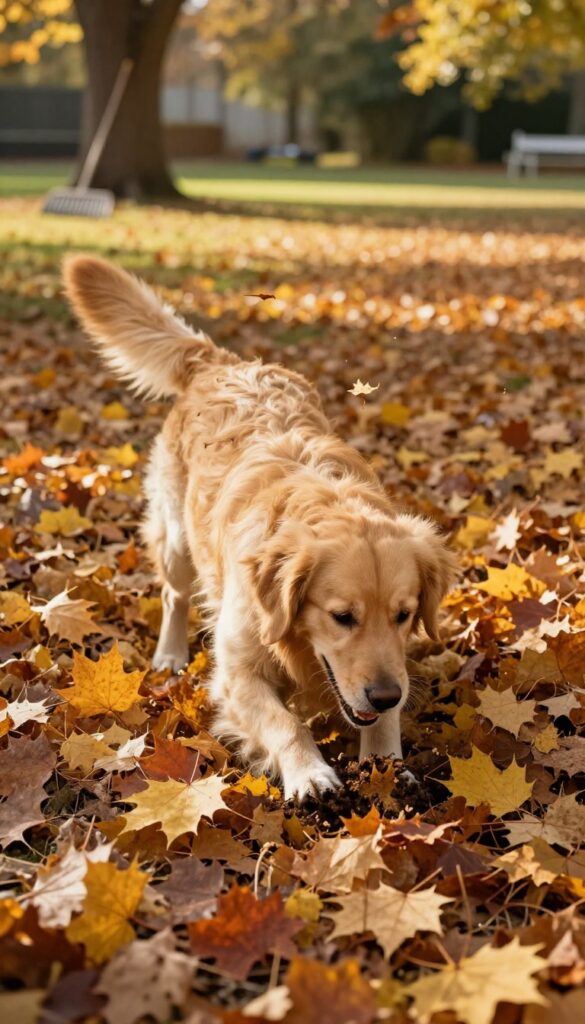
There's something magical about a fresh pile of leaves, and your dog probably agrees. This game turns that natural curiosity into a focused training session that exercises both body and brain. It's simple to set up, requires almost no equipment, and works for dogs of all ages and energy levels.
Start by raking a generous pile of leaves in your yard or a safe outdoor area. Make sure the leaves are dry and free of sticks or debris that could hurt your dog's paws. Then, hide a few high-value treats or your dog's favorite toy just beneath the surface.
Let your dog watch you hide the first one, then encourage them to 'find it! ' As they catch on, you can hide items deeper or while they're not looking.
Why It Works
This game taps into your dog's natural foraging instincts. Sniffing and digging through leaves is mentally stimulating and can tire them out faster than a long walk. It also builds confidence, especially for shy or nervous dogs, as they learn to trust their nose and solve a fun puzzle.
How To Make It Easier Or Harder
For beginners, keep the treats visible on top of the leaves or barely covered. For advanced dogs, bury treats deeper, use smaller piles, or hide multiple items at once. You can also add a 'sit' or 'stay' before releasing them to work on impulse control.
Safety Tips
Always supervise your dog during this activity. Avoid using leaves that have been treated with chemicals or that contain mold. Keep the session short—10 to 15 minutes is plenty—and always end on a positive note with a successful find.
2. Pumpkin Patch Obedience
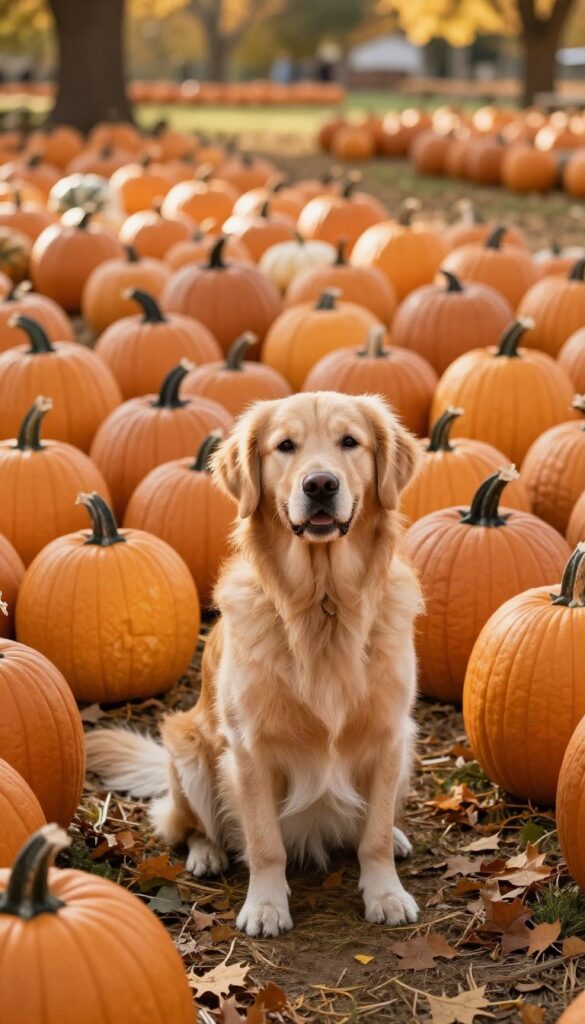
A pumpkin patch isn't just for photo ops—it's a training goldmine. The bright orange gourds, unfamiliar scents, and open space create the perfect distraction-filled environment to proof your dog's obedience. Whether you visit a real patch or set up a few pumpkins in your backyard, this activity turns a festive outing into a focused training session.
Start with a quick warm-up away from the pumpkins to get your dog in the zone. Then move closer and practice basic commands like sit, stay, and come, gradually increasing the difficulty as your dog succeeds. The key is to keep sessions short and positive, rewarding heavily for correct responses despite the tempting distractions.
Setting Up Your Own Patch
No need to travel far—you can create a mini pumpkin patch at home. Arrange a few pumpkins of various sizes in a circle or line. Use a long leash to give your dog room to explore but maintain control.
This setup is perfect for practicing stays while you walk around the pumpkins, or for calling your dog away from a particularly interesting gourd.
Progressive Distraction Training
Start with your dog on a leash at a distance where they can focus. Ask for a sit or down, then gradually move closer to the pumpkins. If your dog breaks the stay, calmly return them to position without scolding.
Increase the challenge by tossing a treat near a pumpkin and asking for a 'leave it' before allowing them to take it. This builds impulse control in a fun, seasonal way.
Turning It Into A Game
Once your dog masters the basics, turn the patch into a game of hide-and-seek. Place treats or a favorite toy near a pumpkin and practice 'find it' or 'go to your mat' cues. You can also use the pumpkins as obstacles for a mini agility course—weave between them, jump over a low one (if safe), or practice 'around' and 'through' commands.
The novelty keeps your dog engaged and eager to learn.
3. Cool Weather Fetch Variations
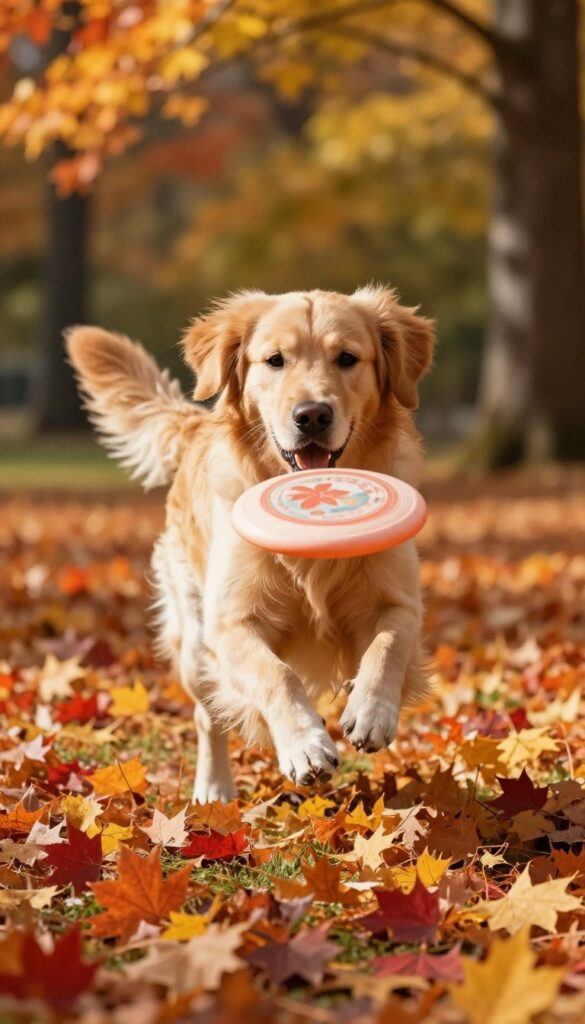
Fetch is a classic, but it can get stale if you're doing the same throw every day. The cooler autumn air makes it easier for your dog to run longer without overheating, so it's the perfect time to mix things up. These fetch variations keep the game fresh and sharpen your dog's retrieval skills at the same time.
Spice up fetch with different rules. Try rolling the ball downhill, throwing it into a pile of leaves, or using a frisbee. The cooler weather means less panting, so you can play longer and work on retrieval skills.
Downhill Rolling
Find a gentle slope and roll the ball down instead of throwing it. This changes the ball's speed and bounce, making your dog track it more carefully. It's a great way to build focus and improve their ability to follow moving objects.
Leaf Pile Toss
Rake up a big pile of leaves and toss the ball or a treat toy into it. Your dog will have to sniff and dig to find it, turning fetch into a mini nose-work game. This is excellent for mental stimulation and works well for dogs that love to use their nose.
Frisbee Focus
If you usually stick to balls, try a soft frisbee. The different flight path and catching motion work different muscles and coordination. Start with short, low throws and reward your dog for catching it mid-air.
It's a fun way to build confidence and agility.
4. Scent Work on Trails
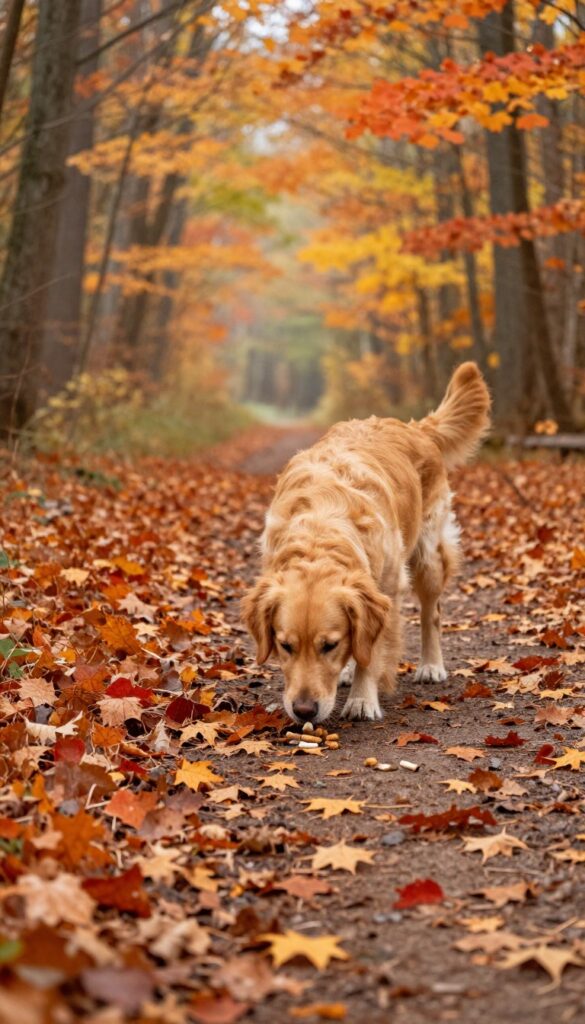
A fall trail isn't just a feast for your eyes—it's a buffet of smells for your dog. The damp earth and fallen leaves hold scents longer, making it the perfect time to turn a regular hike into a nose-first adventure. Scent work taps into your dog's natural instincts, providing mental stimulation that can be just as tiring as a long run.
Start simple: scatter a few high-value treats along a short stretch of trail and let your dog discover them. As they get the hang of it, you can hide treats under leaves or behind rocks. For a bigger challenge, try laying a short scent trail with a treat-drag line or a piece of fabric with a familiar scent.
This builds your dog's confidence and focus, and it's a fantastic way to turn a routine walk into a game.
Start With A Simple Scatter
Begin on a quiet section of trail where you can control the environment. Toss a handful of treats into the grass or leaves and let your dog sniff them out. This is an easy win that gets them excited about using their nose.
Keep the area small at first, then gradually increase the search area as your dog gets more skilled.
Introduce A Scent Trail
Once your dog is confident with scattered treats, you can introduce a more structured scent trail. Use a small piece of fabric or a cotton swab with a drop of essential oil (like lavender or birch) as the target scent. Drag it along the ground for a few feet, then hide it at the end.
Encourage your dog to follow the trail with a 'find it' cue. This is a more advanced exercise that really engages their brain.
Make It A Game Of Hide And Seek
For a fun twist, have a friend or family member hold your dog while you hide behind a tree or a large rock. Then call your dog and let them use their nose to find you. This reinforces the bond between you and your dog while also practicing recall.
It's a great confidence builder, especially for shy or anxious dogs.
5. Agility Drills with Natural Obstacles
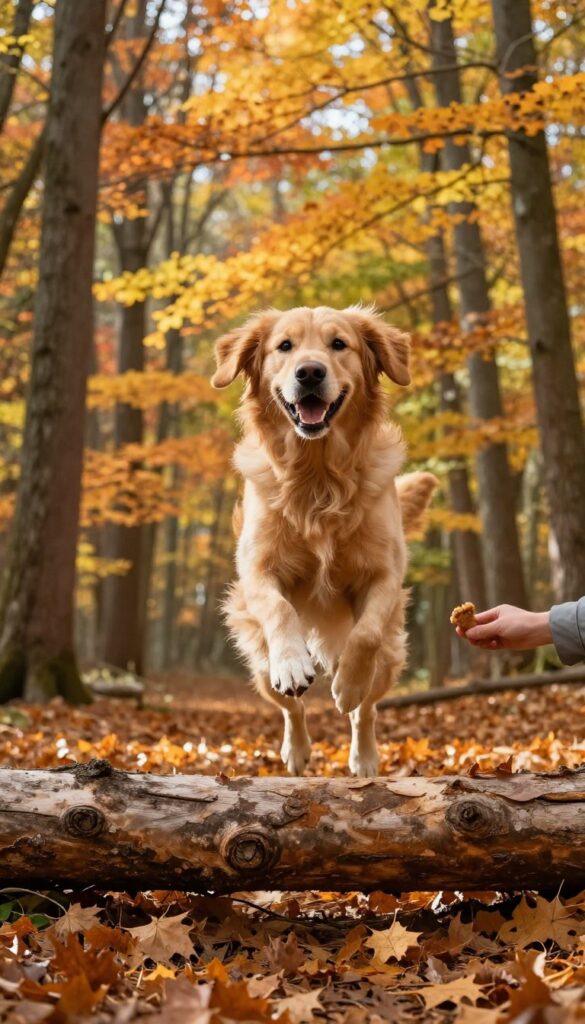
Who needs fancy equipment when the forest floor is your playground? Natural obstacles like logs, rocks, and low branches can turn a simple walk into an engaging agility session. These drills not only boost coordination but also strengthen your dog's listening skills—all while enjoying the autumn scenery.
Start by scouting a safe area with a variety of natural features. Look for fallen logs your dog can hop over, sturdy branches to duck under, and flat rocks to weave around. Begin with a single obstacle, using treats to guide your dog through the motion.
Once they're confident, link several obstacles into a mini course, giving a command like "over" or "under" before each one. Keep sessions short and upbeat, ending with a game of tug or a treat reward to leave a positive impression.
Setting Up Your Course
Choose a location with varied terrain, like a wooded trail or a park with natural features. Ensure the area is free of hazards like sharp branches or slippery moss. Start with 3-4 obstacles spaced a few feet apart, and adjust the difficulty based on your dog's size and fitness.
For example, a small log can be a jump for a small dog, while a larger log might be a platform for a bigger dog.
Teaching The Basics
Use a clicker or a marker word like "yes" to signal correct behavior. Lure your dog over a low log with a treat, saying "over" as they hop. For going under, hold a treat low and guide them beneath a branch, saying "under.
" Practice each skill separately before combining them. Keep training sessions to 5-10 minutes to maintain focus.
Building A Mini Course
Once your dog understands a few commands, arrange obstacles in a sequence. For example: over a log, under a branch, around a rock, and through a gap between bushes. Use hand signals and verbal cues to guide your dog, and gradually increase the speed as they improve.
Always end on a high note with praise or a treat.
Safety And Adaptations
Check the area for hidden hazards like holes or loose rocks. For puppies or senior dogs, keep obstacles low and simple. You can also use fallen leaves to mark a path or create a soft landing zone.
If your dog is hesitant, break the course into smaller parts and reward each success. Never force your dog over an obstacle—build confidence with patience.
6. Recall Games in Open Fields
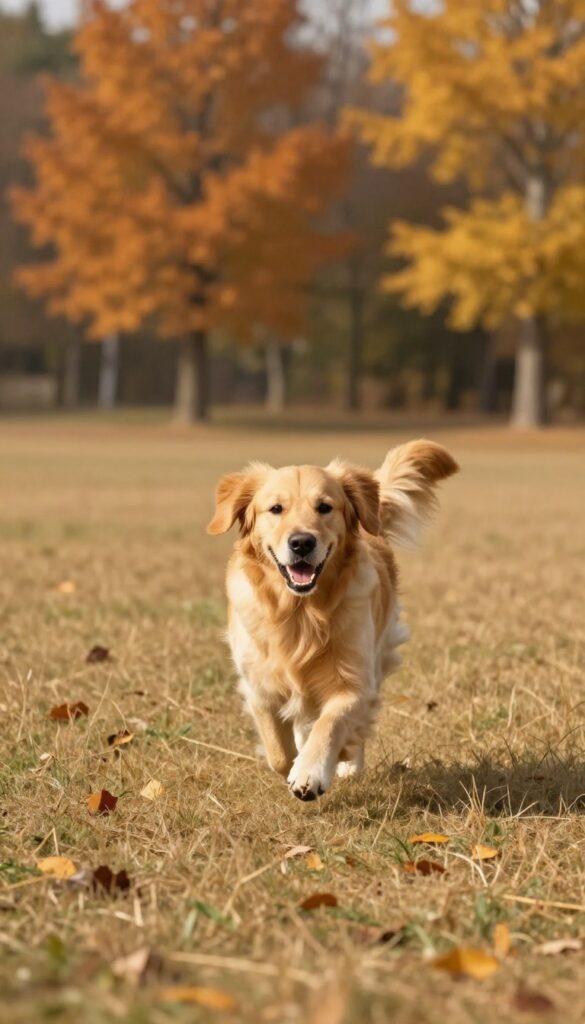
A reliable recall is one of the most important skills your dog can have, and fall’s mild weather makes it the perfect time to practice. Open fields with shorter grass or even harvested cornfields provide a safe, distraction-friendly space to play games that strengthen your dog’s response to their name. The key is to make coming back to you the most exciting option—far better than any sniff or squirrel.
Start with a long line to ensure safety while your dog builds confidence. The goal isn’t just to get a response—it’s to make that response automatic, even when something more interesting is happening. Use high-value treats or a favorite toy to reward every return, and keep sessions short and upbeat.
Ping-pong Recall
Grab a friend or family member and stand about 20–30 feet apart. Take turns calling your dog back and forth, rewarding each arrival with a treat or a quick game of tug. This game teaches your dog that coming when called leads to good things, and it’s a great workout for both of you.
Start with minimal distance and increase it as your dog gets more reliable.
Hide-and-seek In The Field
Once your dog is comfortable with basic recall, add a layer of fun by hiding behind a tree, a bush, or even a tall patch of grass. Call your dog’s name and let them find you. This turns recall into a game of discovery, which builds their focus and reinforces that checking in with you is always rewarding.
It’s also a fantastic way to build a stronger bond.
7. Tug-of-War with a Twist
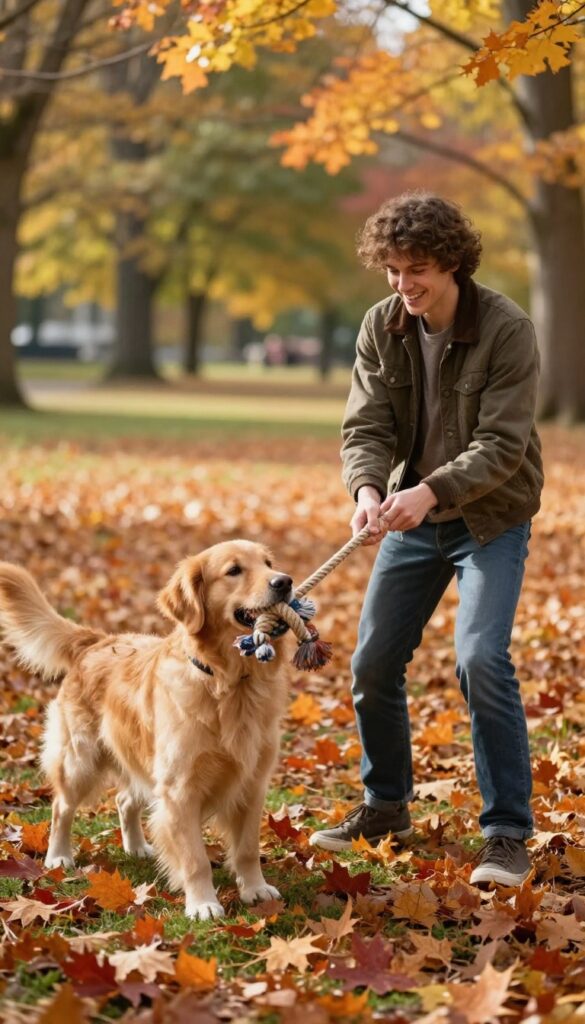
Tug-of-war often gets a bad rap, but when played with rules, it's a fantastic training tool. The cooler fall air means your dog won't overheat as quickly, so you can extend play sessions and sneak in extra learning. This version of tug adds a layer of impulse control.
You're not just playing—you're teaching your dog to listen even when excited. That's a skill that pays off in real-world situations.
Set Up The Game
Use a long rope toy or a flirt pole—something with give. Start in your yard or a quiet park. The goal is to make the rules clear from the first tug.
Before you begin, decide on your cues. 'Take it' means grab the toy, and 'drop it' means let go. Keep treats handy to reward the release.
Teach 'drop It' And 'take It'
Begin by offering the toy and saying 'take it' in a happy tone. Let your dog grab it and tug for a few seconds. Then, hold a treat near their nose and say 'drop it. ' When they release, mark it with a 'yes' and give the treat.
Repeat this sequence, gradually increasing the tug time before asking for a drop. This builds patience and reinforces that letting go leads to something good.
Add Rules For Impulse Control
Once your dog understands the basics, add more rules. For example, ask for a 'sit' before you start each round. Or, during the game, pause and ask for a 'down' before resuming.
This turns a simple game into a focused training session. Your dog learns to control their excitement and listen even when their prey drive is high. Keep sessions short—five to ten minutes is plenty—and always end on a positive note.
8. Trick Training on the Go
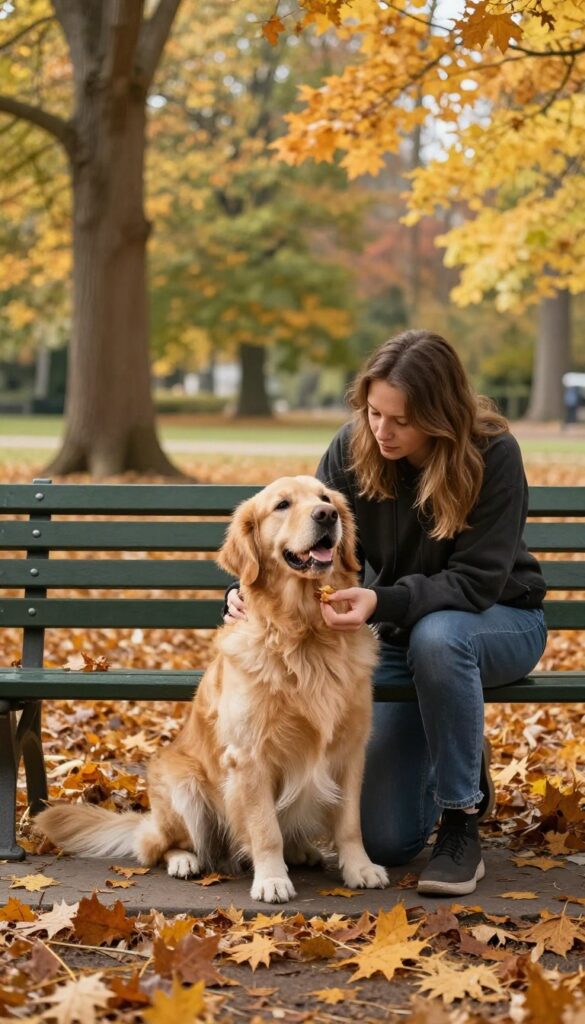
Who says trick training has to happen in the living room? Fall's crisp weather and colorful scenery make the perfect backdrop for teaching your dog new moves while you're out and about. You can turn any park bench, patch of grass, or quiet trail into a training session that feels more like play than work.
The key is to keep sessions short and fun. Five minutes of focused training during a walk is plenty, and the changing environment gives your dog valuable practice at listening to you amid distractions. Plus, you'll both get some exercise and fresh air.
Use Park Benches As Props
Park benches aren't just for people. They're perfect for teaching 'jump up' or 'sit pretty. ' Start with a low bench and guide your dog onto it with a treat. Reward any attempt, then shape the behavior over time.
For 'sit pretty, ' have your dog sit in front of the bench and place their front paws on the seat, encouraging them to balance. Always check that the bench is stable and safe.
Practice Spins And Twists On Grass
Grass provides a soft, forgiving surface for tricks like 'spin' and 'twist. ' Use a treat to lure your dog in a circle, saying 'spin' as they turn. For 'twist, ' go the opposite direction. The novelty of being outdoors can make these tricks more exciting, and the grass is easier on their joints than pavement.
Keep Sessions Short And Sweet
Dogs learn best in short bursts, especially when there are new smells and sights around. Aim for 3-5 minutes of training at a time, then let your dog sniff and explore as a reward. This keeps the experience positive and prevents frustration.
You can do several mini-sessions during one walk.
Embrace Fall Distractions
Falling leaves, rustling sounds, and other dogs in the distance are all distractions that make training more realistic. Use these as opportunities to practice focus. Ask for a trick when your dog is slightly distracted, and reward generously for getting it right.
Over time, your dog will learn to listen even when the world is exciting.
9. Hiking with a Purpose
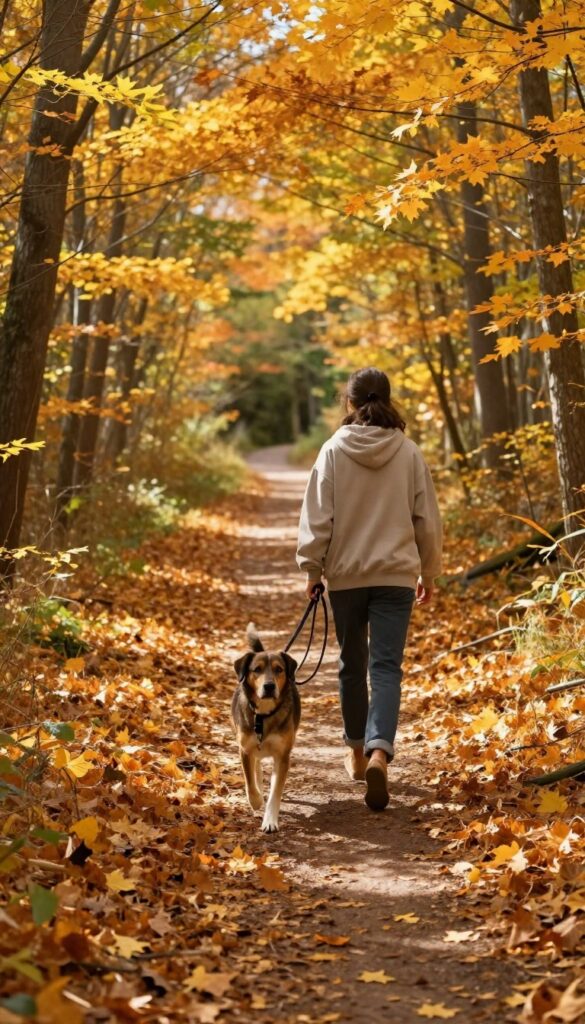
A fall hike is more than just a walk in the woods—it's a moving classroom. The trails are quieter, the air is crisp, and every turn offers a new chance to practice focus and obedience. Instead of letting your dog pull you along, turn the hike into a training session that feels like an adventure.
Pick a trail with varied terrain and moderate traffic. Before you start, do a few warm-up commands like sit and down to get your dog in the right headspace. Then, as you walk, use the environment as your training partner.
Each bend, intersection, or wildlife sighting becomes a lesson in impulse control and leash manners.
Heeling On Narrow Paths
On single-track trails, practice loose-leash walking by keeping your dog beside you. Stop often and ask for a sit before continuing. This reinforces that staying close leads to forward movement.
Use a high-value treat to reward check-ins with you, especially when distractions like squirrels or leaves appear.
Stop-and-go At Intersections
Trail junctions are perfect for teaching your dog to wait. Approach the crossing, say 'stop, ' and have your dog sit. Then, look both ways and choose a direction.
This builds impulse control and teaches your dog that you decide the route, not them. It's a simple exercise that transfers well to street crossings back home.
Ignore Wildlife And Distractions
Fall brings deer, birds, and other critters. Use these moments to practice 'leave it' or 'watch me. ' When your dog notices a deer, calmly say 'leave it' and reward them for looking back at you. With repetition, your dog learns that ignoring wildlife earns treats, making hikes safer and more enjoyable.
10. Water Retrieval (If Safe)
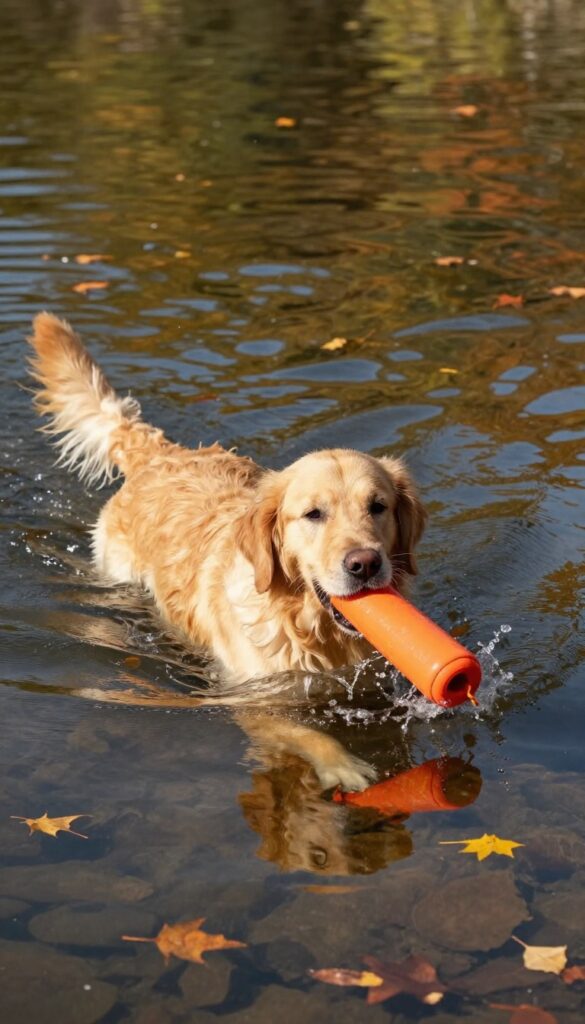
Before the water turns icy, a calm lake or slow-moving pond can be a fantastic training arena. If your dog is a confident swimmer and the conditions are safe, water retrieves add a refreshing twist to the fetch command. It’s a full-body workout that also sharpens focus, since the environment is full of new smells and distractions.
Start with a floating toy that’s easy for your dog to spot, like a bright orange bumper or a buoyant ball. Toss it a short distance first, and reward your dog with praise and a treat when they bring it back. Keep sessions short—10 to 15 minutes is plenty—and always watch for signs of fatigue or cold.
A life jacket is a smart idea, especially for breeds with short legs or low body fat.
Pick The Right Spot
Look for a spot with a gentle slope and no strong current. Avoid areas with heavy boat traffic, algae blooms, or sharp rocks. Check the water temperature—if it’s too cold for you, it’s likely too cold for your dog.
A quiet, shallow cove is ideal for beginners.
Build A Solid Fetch Foundation
If your dog’s fetch is shaky on land, practice in a fenced yard first. Use a consistent cue like “fetch” and “drop it. ” Once they’re reliable, move to the water. Start with very short tosses into the shallows, then gradually increase the distance as your dog gains confidence.
Safety First
Always supervise your dog around water, even if they’re a strong swimmer. Rinse off your dog with fresh water afterward to remove any lake bacteria or chemicals. Watch for signs of cold like shivering or slowed movement, and end the session if your dog seems uncomfortable.
Keep a towel and a warm blanket in the car for the ride home.
11. Backyard Obstacle Course
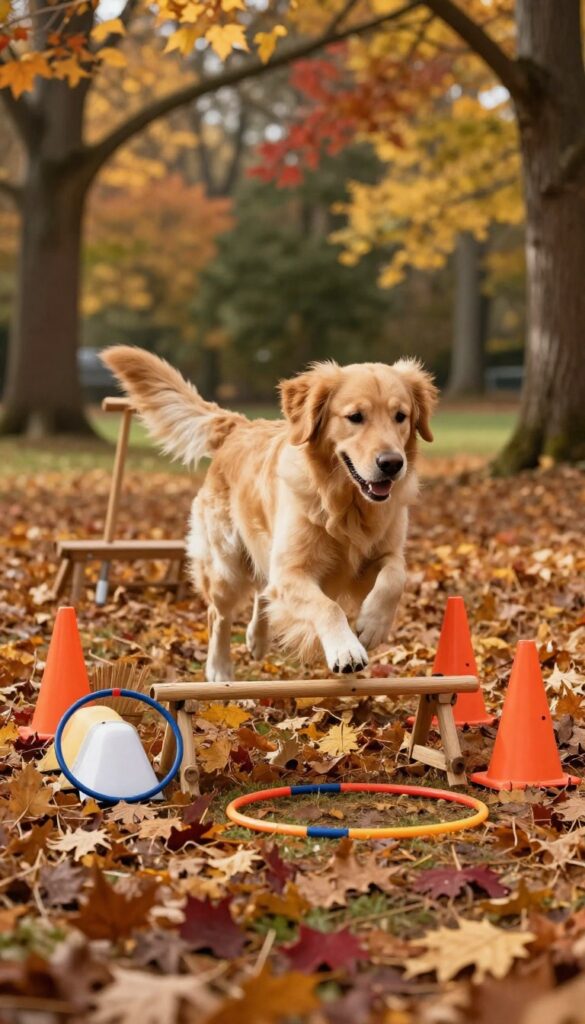
Transform your yard into a mini agility arena with everyday items. An obstacle course is a fantastic way to build your dog's confidence and coordination while sharpening your cue-giving skills. The best part?
You don't need fancy equipment—just a little creativity and space.
Setting up a backyard obstacle course is simpler than you think. Start with items you already have: cones for weaving, a hula hoop for jumping through, and chairs for going around or under. Arrange them in a loop so your dog can follow a clear path.
Use treats or a toy to guide them through each obstacle, rewarding every successful attempt. This activity not only burns physical energy but also engages their mind, making it a perfect fall afternoon project.
Build It With What You Have
You don't need expensive agility gear. Use traffic cones, PVC pipes, or even empty plant pots for weaving poles. A hula hoop can be held upright or placed on the ground for your dog to step through.
Chairs with space underneath make great tunnels, and a broomstick resting on two low stools becomes a jump. Get creative and repurpose household items to create a course that challenges your dog without breaking the bank.
Teach One Obstacle At A Time
Introduce each obstacle separately before combining them. Start with a simple weave through cones, then add a jump, and finally a tunnel. Use a treat to lure your dog through each movement, and say a cue like 'over' or 'through' as they complete it.
Practice a few times until they're comfortable, then string the obstacles together. This step-by-step approach prevents confusion and keeps training positive.
Turn It Into A Fun Game
Once your dog masters the course, make it a game. Time them and see if they can beat their best, or have them follow you as you run the course together. You can also set up a 'sit-stay' at the start, then release them to run the course for a big reward at the end.
The key is to keep it playful and upbeat—your dog will love the challenge and the chance to work with you.
12. Nighttime Flashlight Games
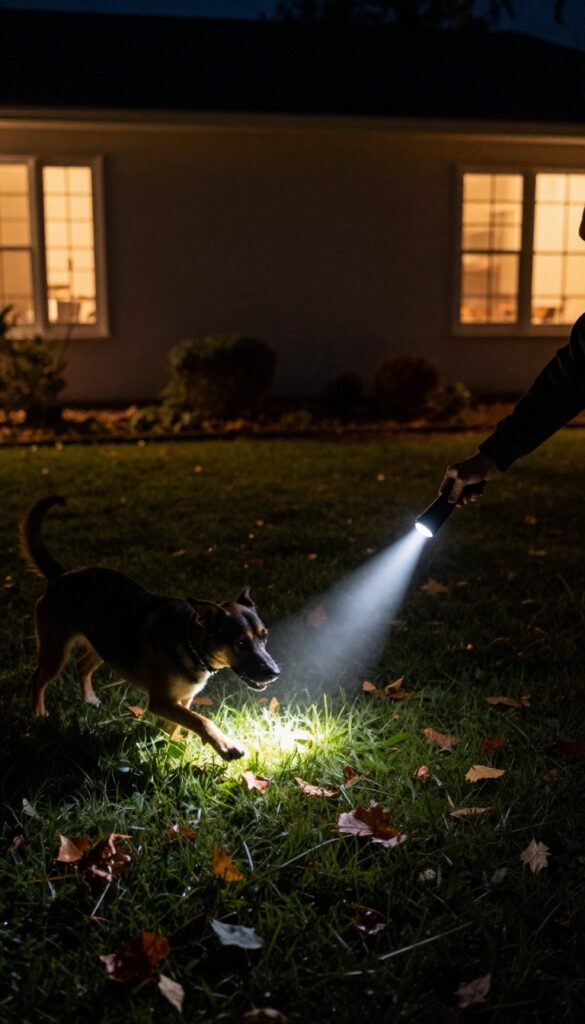
When the sun sets earlier, your training sessions don't have to end. Nighttime flashlight games turn the dark into a fun, focused training opportunity. The beam becomes a moving target that taps into your dog's natural prey drive, while also building focus and obedience.
It's a simple way to add variety to your fall routine without needing extra gear.
Flashlight games are surprisingly versatile. You can use them for impulse control, recall, or just a good old-fashioned chase. The key is to keep sessions short and positive, so your dog stays engaged and doesn't get frustrated.
Start in a familiar, safe area like your backyard, then gradually add distractions as your dog gets the hang of it.
Chase The Beam
Start by moving the flashlight beam in slow, wide circles on the ground. Encourage your dog to chase it with an excited 'get it! ' Once they touch the light, mark and reward with a treat. Keep the movement unpredictable but not frantic—you want your dog to think, not just react.
This builds coordination and burns off extra energy before bedtime.
Find It With Light
Shine the flashlight on a treat or toy placed a few feet away, then say 'find it! ' as your dog investigates. Gradually increase the distance and hide the item behind obstacles. This turns a simple game into a scent and sight challenge, reinforcing your dog's recall and problem-solving skills.
It's perfect for rainy evenings when you need a quick indoor workout.
Flashlight Recall
Use the flashlight as a visual cue for recall. Shine it in a specific direction and call your dog to you. When they arrive, reward generously.
Over time, your dog will learn that the beam means 'come here, ' which is handy for off-leash areas or just getting their attention from across the yard. Mix up the directions to keep it interesting.
13. Seasonal Photo Shoot Training
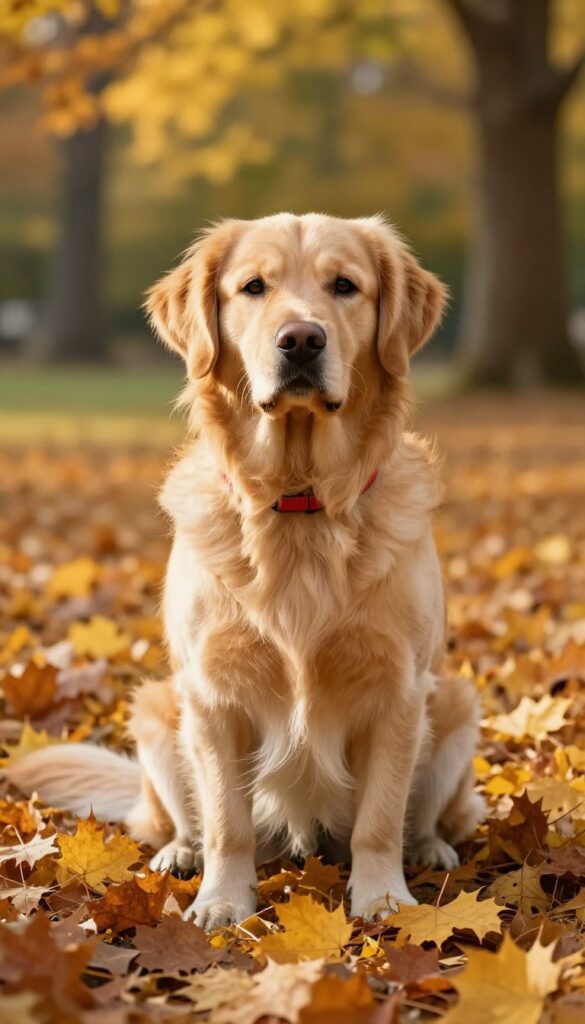
A fall photo shoot doubles as a low-pressure training session. The colorful leaves and soft golden light create a perfect backdrop for practicing commands like 'sit', 'stay', and 'look at me'. You'll capture stunning images while reinforcing good behavior—without your dog even realizing they're working.
Set up a mini photo session in your yard or a favorite park. Use a camera or smartphone, and keep treats handy. Start with basic commands: ask for a 'sit' and reward when they hold it.
Then move to 'stay' while you step back for a wider shot. Finally, use a treat near your lens to get that perfect 'look at me' pose. Each command is a training opportunity, and the photos are your reward.
Why It Works
Photo sessions naturally require short bursts of focus. Dogs learn to hold a position while you adjust your camera or move around. This builds impulse control and patience.
Plus, the excitement of being outdoors and the promise of treats keep them engaged. It's a win-win: you get great pictures, and your dog sharpens their obedience skills.
Setting Up For Success
Choose a location with good lighting, like a spot with dappled shade or a field with golden hour sun. Bring high-value treats and a favorite toy for quick rewards. Keep sessions short—10 to 15 minutes max—to prevent boredom.
If your dog gets restless, take a break and play a quick game of fetch before resuming.
Creative Commands To Practice
Beyond the basics, try 'down' for a low-angle shot, or 'wait' at a distance for a candid walking photo. You can also practice 'leave it' if your dog gets distracted by falling leaves. Each command adds variety to your training and keeps your dog thinking.
The photos become a visual diary of your progress together.
FAQ
What if my dog doesn't like the cold?
Start with short sessions and gradually increase the time. Use a dog coat or sweater if needed, and always watch for signs of discomfort. Many dogs enjoy the cool weather once they get moving.
How do I keep my dog focused during outdoor training?
Use high-value treats and keep sessions short. Start in a low-distraction area and gradually add more distractions. The novelty of fall smells can be exciting, so be patient and consistent.
Are these activities suitable for puppies?
Yes, but adjust the difficulty and duration. Puppies have shorter attention spans and need more breaks. Focus on basic commands and fun games that build confidence.
What if my dog is not food motivated?
Use toys or praise as rewards. Some dogs prefer a game of tug or a favorite ball. Find what motivates your dog and use that to reinforce good behavior.
How often should I do these activities?
Aim for at least 10-15 minutes of training a day, but you can do more if your dog enjoys it. The key is consistency, not length. Mix up the activities to keep things interesting.
Conclusion
Fall is a wonderful time to strengthen your bond with your dog while keeping them active and mentally sharp. These 13 activities are just a starting point—feel free to adapt them to your dog's personality and your surroundings. The most important thing is to have fun and enjoy the season together.
With a little creativity, every walk or trip to the park can become a training opportunity. So get out there and make some memories with your furry friend!

I’m Pallab Kishore, the owner of Little Pets Realm — an animal lover and pet care enthusiast sharing easy tips, healthy recipes, and honest advice to help every small pet live a happy, healthy, tail-wagging life.