
Your dog's mental energy needs an outlet, and a tired pup is often the result of a good puzzle session. These eight DIY toys turn everyday items into brain games that challenge your dog's problem-solving skills. No need for expensive gear—just a few household objects and some treats will keep your furry friend engaged and happy.
From muffin tins to cardboard boxes, each idea taps into your dog's natural instincts to sniff, shred, and explore. You can set most of them up in under five minutes, and they're easy to clean or swap out to prevent boredom.
Whether you're crate training or just need a quiet afternoon, these puzzles deliver. Ready to give your dog a smarter playtime?
1. Muffin Tin Magic
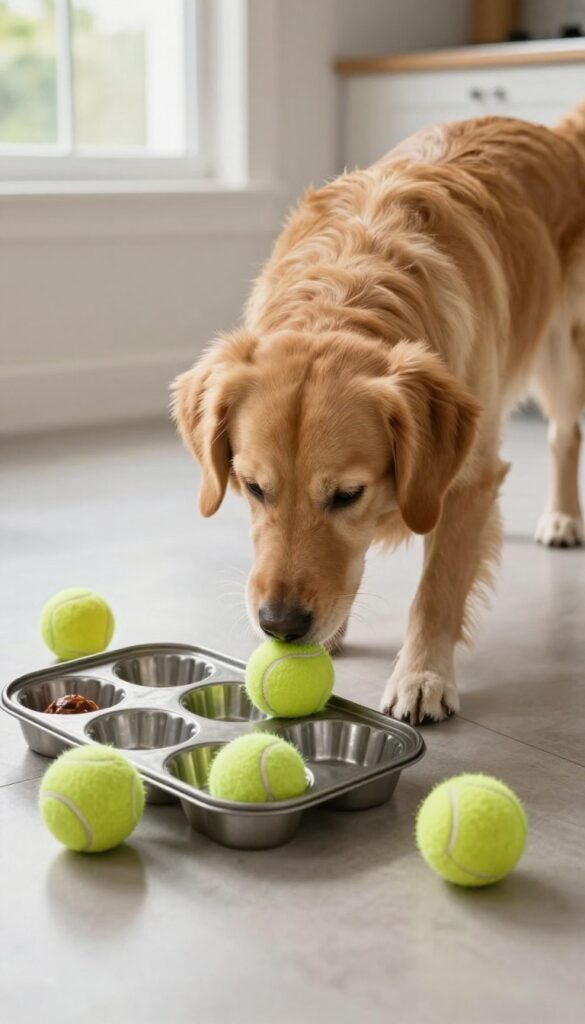
Grab a standard muffin tin and a handful of tennis balls. Place a treat in each cup, then cover them with the balls. Your dog will need to nudge or paw the balls out to get to the snacks.
It’s a simple setup that turns snack time into a fun challenge.
The beauty of this puzzle is its versatility. You can adjust difficulty by using different sized balls or leaving some cups uncovered. Dogs love the game of discovery, and it keeps them busy for a good while.
Why It Works
This puzzle taps into your dog’s natural foraging instincts. The act of moving the balls to find hidden treats provides both mental stimulation and a bit of physical activity. It’s a low-effort way to tire out a curious pup.
Best For
Best for medium to large dogs with a moderate prey drive. It works well in apartments or small spaces because it stays contained in the tin. Also great for rainy days when outdoor time is limited.
Practical Tip
Use a sturdy muffin tin that won’t tip over easily. If your dog is a heavy pawer, place the tin inside a shallow baking sheet for stability. For easy cleanup, choose treats that don’t leave greasy residue.
Budget-Friendly Option
No muffin tin? Use a cardboard egg carton instead. Place treats in the cups and cover with small toys or crumpled paper.
It’s just as effective and completely free.
2. Towel Twist Treat Roll
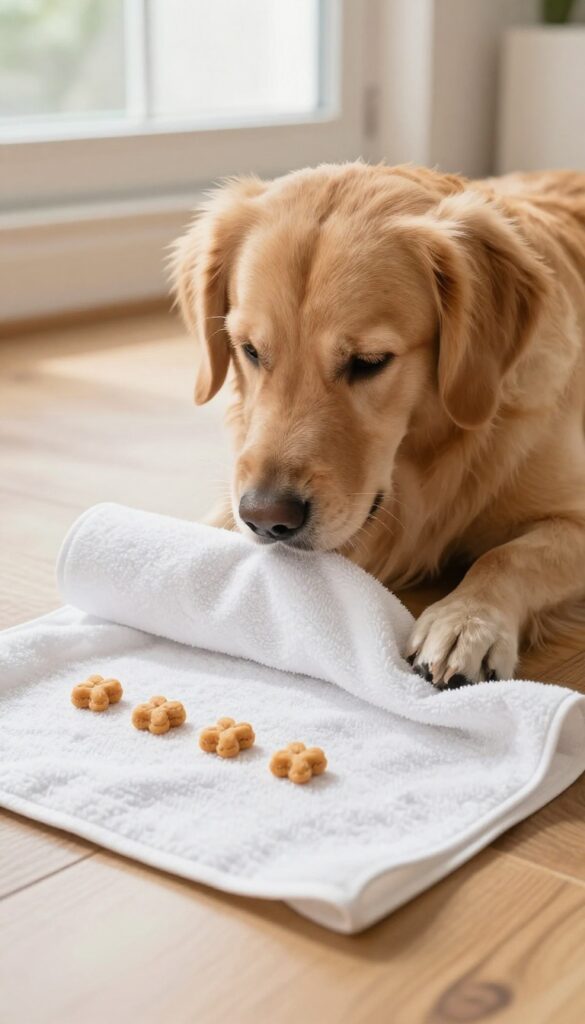
A simple kitchen towel becomes a sniff-and-shred puzzle that taps into your dog's natural foraging instincts. Just scatter a few treats along the towel, roll it up, and tie a loose knot. Your dog will spend happy minutes unrolling and sniffing out every last crumb.
It's a zero-cost activity that works for any breed and any home.
Why It Works
Dogs rely heavily on their sense of smell, and this toy encourages them to use their nose to locate hidden treats. The unrolling action also provides light mental stimulation and mimics the satisfaction of shredding without the mess of destroyed toys. Plus, the towel can be washed and reused endlessly.
Best For
Perfect for dogs who love to sniff and nuzzle, especially breeds with strong scent drives like Beagles, Basset Hounds, or Terriers. It's also great for puppies who are learning to focus, and for senior dogs who need a gentle, low-impact puzzle.
Practical Tip
Use a thin, absorbent kitchen towel that's easy for your dog to grip with their paws. Tie the knot loosely so it comes undone with a few tugs. Supervise the first few sessions to make sure your dog doesn't ingest the fabric.
Wash the towel regularly to keep it fresh.
Budget-Friendly Option
If you don't have a kitchen towel, an old t-shirt or a hand towel works just as well. Even a clean sock can be tied into a mini treat roll for small dogs. The key is using a fabric that holds its shape but is soft enough to be safe.
3. Egg Carton Foraging Box
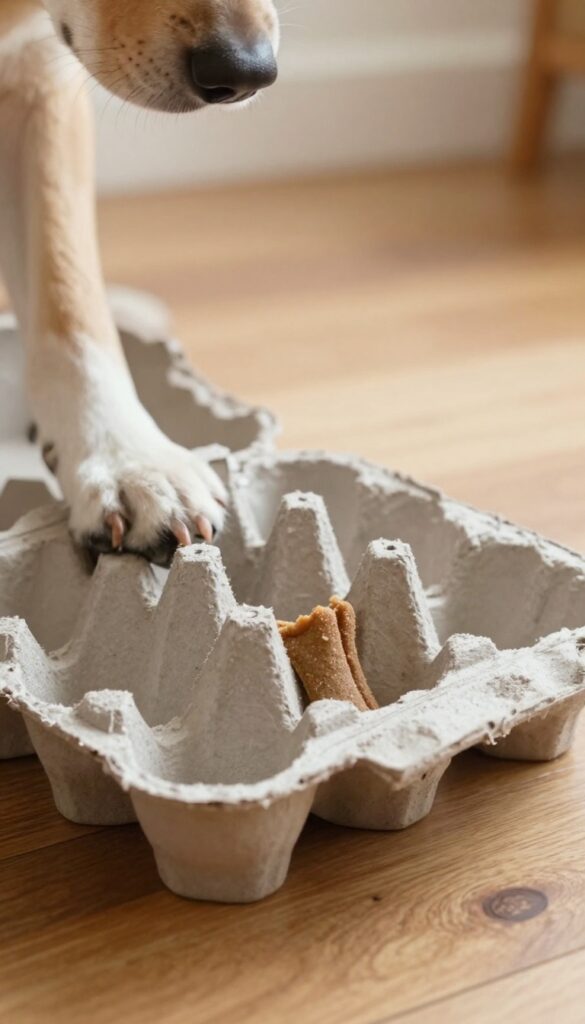
An empty egg carton is one of the easiest puzzle toys you can make. Simply place a few treats inside, close the lid, and let your dog figure out how to nose or paw it open. For an extra challenge, add crumpled paper or a towel on top to make your pup work a little harder.
It’s a quick, no-cost way to engage their natural foraging instincts.
Why It Works
Dogs are natural foragers, and this toy mimics the effort of finding food in the wild. The act of nudging, scratching, and tearing into the carton provides mental stimulation that can tire them out faster than a walk. Plus, the unpredictability of where the treats are hidden keeps them coming back for more.
Best For
This puzzle is great for dogs who love to sniff and use their nose, especially small to medium breeds. It’s also perfect for apartment dwellers since it’s quiet and doesn’t take up much space. Just supervise to prevent your dog from eating the cardboard.
Practical Tip
Use a cardboard egg carton (not foam) to make it safer if your dog decides to chew. Start with the carton loosely closed, then gradually make it tighter as your dog gets the hang of it. For easy cleanup, place the carton on a towel or in a shallow box to catch scattered treats.
Budget-Friendly Option
If you don’t have an egg carton, a small cardboard box with crumpled paper works just as well. You can also use a muffin tin with treats under tennis balls for a similar foraging challenge.
4. Bottle Spinner Toy
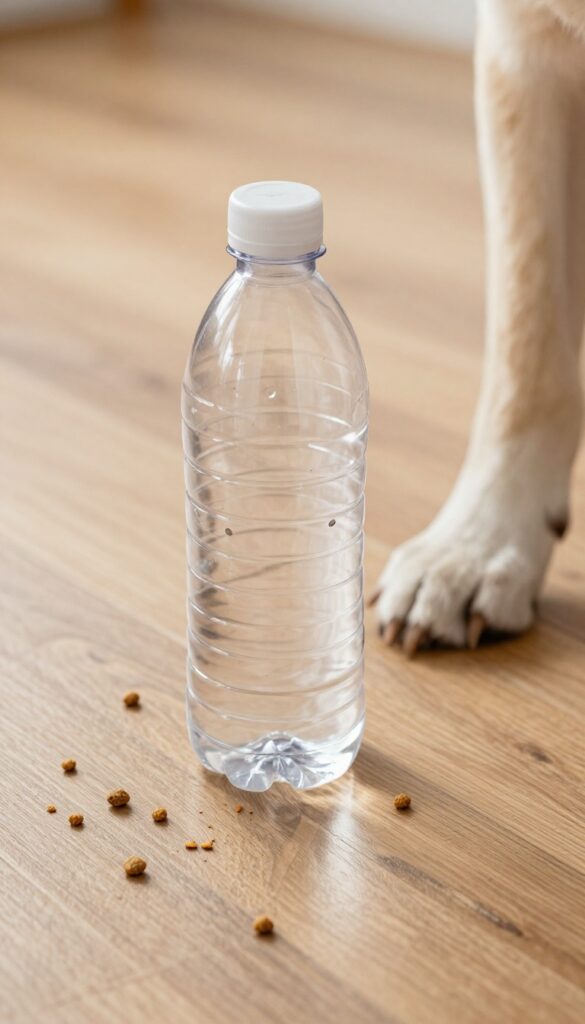
Turn an empty plastic water bottle into a spinning treat dispenser that rewards your dog's nudges and rolls. Simply poke a few holes in the sides, drop in some kibble or small treats, and let your pup figure out how to make them fall out. It's a quick DIY that uses something you'd normally recycle, and dogs love the unpredictable way treats tumble out as the bottle rotates.
Why It Works
The bottle's light weight and round shape make it easy for dogs to bat around, and the random drop of treats keeps them engaged. It taps into their natural foraging instincts without being too frustrating, so it's a great confidence builder for dogs new to puzzles.
Best For
This toy is ideal for dogs who enjoy pushing and pawing at objects, especially medium to large breeds that can easily roll a standard water bottle. It's also perfect for apartment dwellers since it's quiet and doesn't require much space.
Practical Tip
Always supervise play with plastic bottles to prevent chewing and ingestion of pieces. Remove the cap and any labels, and use a bottle with thick walls to avoid sharp edges. Replace the bottle once it shows signs of wear.
Budget-Friendly Option
Instead of a plastic bottle, you can use an empty cardboard paper towel roll with holes punched in it. It's quieter and more eco-friendly, though it won't last as long.
5. Snuffle Mat from a Rubber Mat
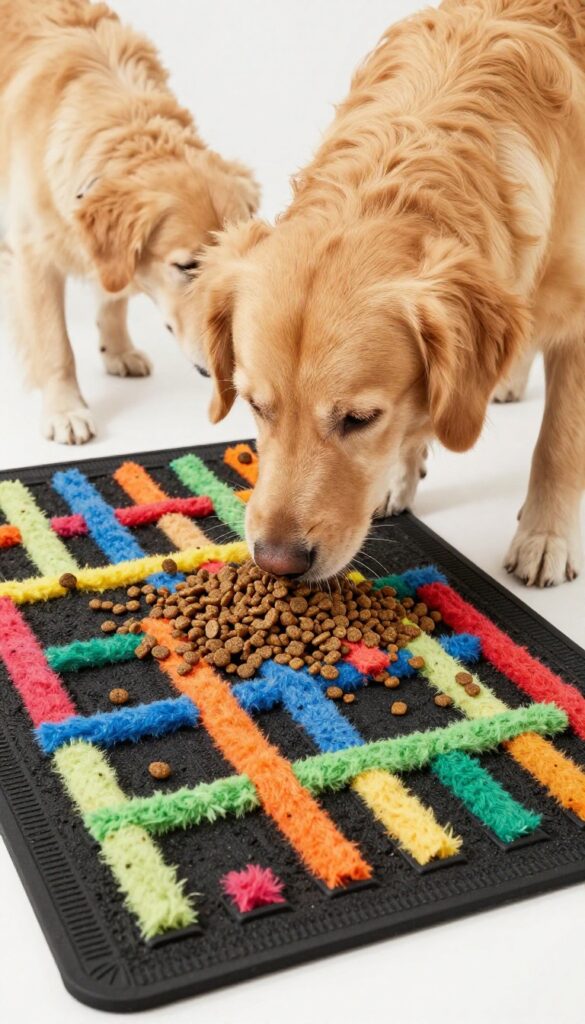
A snuffle mat made from a rubber sink mat and fleece strips gives your dog a chance to forage for kibble just like they would in the grass. It's a simple project that takes about 20 minutes and costs next to nothing. Dogs love the challenge of sniffing out every last piece of food hidden in the fleece strands.
Why It Works
Nose work taps into a dog's natural scavenging instincts, which is mentally tiring and calming. By hiding food in the fleece, you force your dog to use their sense of smell rather than just sight, providing a satisfying brain workout. Many owners report their dog settles down quickly after a session.
Best For
This toy is perfect for high-energy breeds like Labradors, Beagles, or Terriers that need mental stimulation. It also works great for shy or anxious dogs who prefer a calm, independent activity. Small apartments or homes without a yard are ideal settings since the mat is compact and mess-free.
Practical Tip
Choose a rubber mat with small holes so the fleece strips stay secure. Wash the mat and fleece separately in cold water on a gentle cycle, then air dry. Supervise your dog the first few times to make sure they don't chew on the mat or pull out strips.
Budget-Friendly Option
If you don't have a rubber sink mat, use a plastic needlepoint canvas or a sturdy cardboard box with slits cut in the lid. Fleece can be replaced with old t-shirts or cotton rags cut into strips.
6. Cardboard Box Puzzle
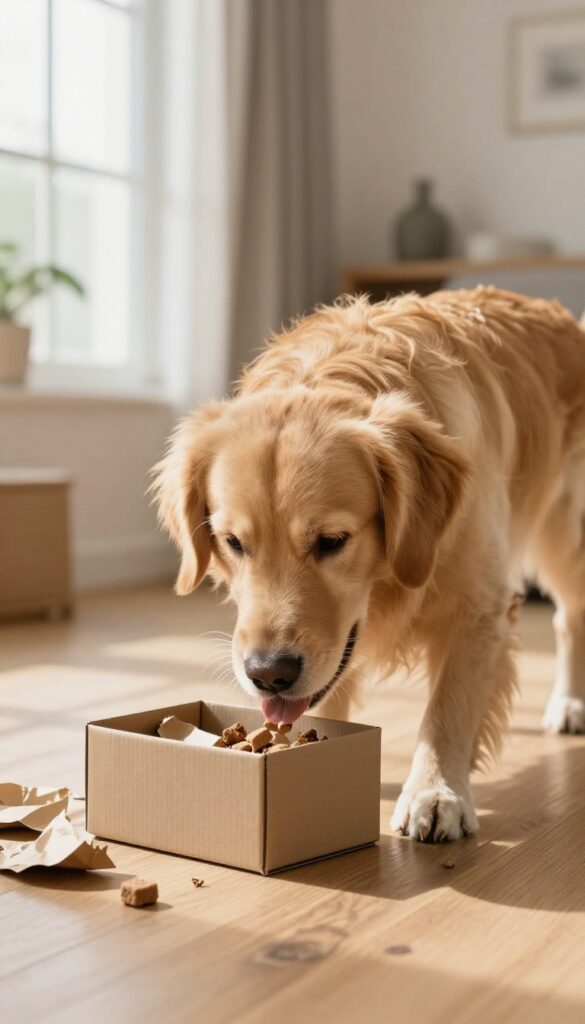
Sometimes the simplest toys are the most engaging. A cardboard box filled with crumpled paper or fabric scraps turns into a treasure hunt for your dog. They get to use their nose and paws to rip and root through the layers to find hidden treats.
It's a great way to repurpose packaging that would otherwise go in the recycling bin, and dogs love the challenge of tearing into something new.
Why It Works
Dogs are natural foragers and shredders. This puzzle taps into those instincts by requiring them to work through multiple layers of material to reach the reward. The process of sniffing, digging, and tearing provides both mental stimulation and a satisfying physical outlet.
Best For
This puzzle is perfect for dogs who love to shred and are comfortable with moderate destruction. It works well for supervised play in any home setting, from apartments to houses with yards. Best for medium to large breeds that enjoy a good tear, but small dogs can participate too if the box is sized appropriately.
Practical Tip
Start with a small box and a single layer of crumpled paper to keep it easy. Use non-toxic, treat-safe materials like plain cardboard or clean fabric scraps. Always supervise your dog to prevent them from swallowing large pieces.
Remove any tape, staples, or labels before giving the box to your dog.
Budget-Friendly Option
No cardboard box? Try a paper grocery bag or a small shipping envelope. You can also use an old towel or t-shirt knotted around treats for a similar foraging experience.
7. PVC Pipe Treat Dispenser
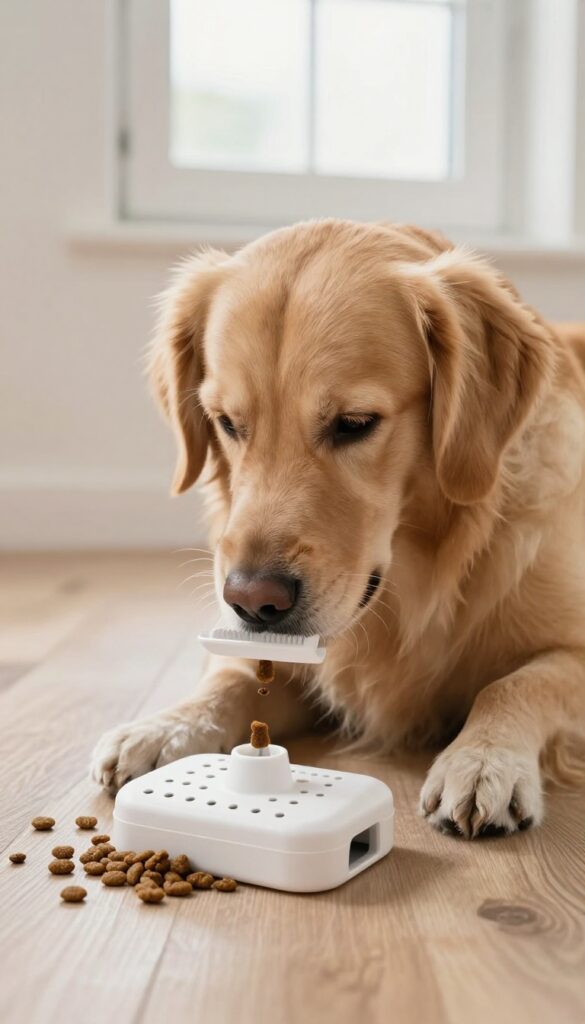
A length of PVC pipe can become a durable, adjustable puzzle that keeps your dog busy for minutes. Drill a few holes, cap one end, and drop in some treats—your dog will roll it around to make the goodies fall out. It’s a simple concept that delivers big on mental stimulation.
Why It Works
The rolling motion and the sound of treats rattling inside tap into your dog’s natural curiosity and persistence. They have to figure out the right angle and speed to release the treats, which builds problem-solving skills and keeps them engaged.
Best For
Medium to large dogs who love to nudge and paw at objects. It’s especially great for heavy chewers because PVC is tough and won’t break easily. Also works well for dogs that get bored with softer puzzle toys.
Practical Tip
Use a 3- to 4-inch diameter pipe for most dogs—smaller breeds might need a 2-inch pipe. Drill holes just big enough for kibble to fall through (about 1/2 inch). Cap one end securely with a PVC cap, and leave the other end open for easy refilling.
You can increase difficulty by drilling smaller holes or adding more treats inside.
Budget-Friendly Option
No PVC pipe? Use a sturdy cardboard tube from wrapping paper or a paper towel roll. Poke holes with a pencil, fold one end closed, and let your dog roll it.
It won’t last as long, but it’s a free alternative.
8. Ice Block Treasure Hunt
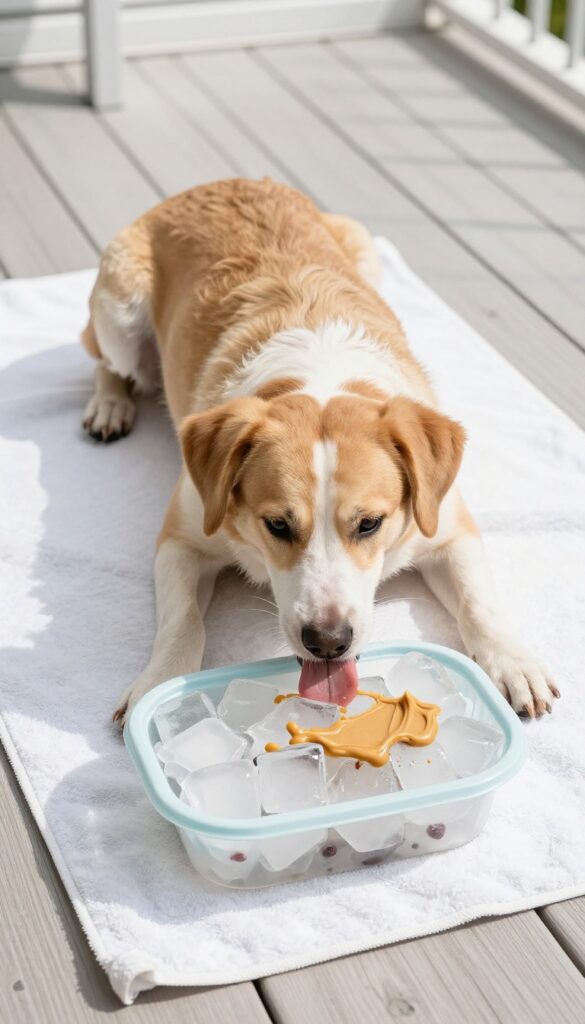
When the temperature climbs, this frozen puzzle doubles as a cooling activity. Freeze treats, kibble, or a smear of peanut butter into a block of ice, then let your dog work to release the goodies. It's a slow, satisfying challenge that also helps keep your pup hydrated.
Why It Works
Licking and pawing at the ice encourages slow feeding and mental focus, which can calm an anxious dog. The melting process releases scents and flavors gradually, keeping your dog engaged longer than a bowl of treats.
Best For
Dogs who love to lick or need a calming activity, especially during hot weather. Great for apartment dwellers with limited space, as it can be used in a crate, on a towel, or outside on a patio.
Practical Tip
Use a shallow container like a plastic tub or silicone mold so the ice block is easy to handle. Always supervise to prevent choking on large pieces, and offer it on a towel or in a bowl to protect floors from melting water.
Budget-Friendly Option
Repurpose an old yogurt container or takeout tub as your mold. No need for special ice trays—any freezer-safe container works.
FAQ
Are DIY puzzle toys safe for all dogs?
Most are safe with supervision. Avoid small parts that could be swallowed, and remove any toy if it starts breaking apart.
How often should I give my dog puzzle toys?
A few times a week is great. Rotate toys to keep them novel and interesting. Always supervise the first few uses.
What if my dog gets frustrated and gives up?
Start with easy versions—fewer treats, simpler setups. Gradually increase difficulty as your dog gains confidence.
Can I use these toys for puppies?
Yes, but choose larger items to prevent choking. Supervise closely and avoid toys with sharp edges or small parts.
How do I clean DIY puzzle toys?
Wash fabric toys in the washing machine. Wipe down plastic or metal toys with soap and water. Let everything dry completely.
Conclusion
You don't need a pile of store-bought toys to keep your dog's mind sharp. These DIY puzzles use things you already have around the house, so you can start enriching playtime today without any extra cost or hassle. Pick one that matches your pup's energy level and give it a try—you might be surprised how quickly they figure it out.
A mentally tired dog is a calm, happy dog. Rotate a few of these puzzles each week to keep things fresh, and you'll both enjoy smarter playtime that strengthens your bond without breaking the bank.

I’m Pallab Kishore, the owner of Little Pets Realm — an animal lover and pet care enthusiast sharing easy tips, healthy recipes, and honest advice to help every small pet live a happy, healthy, tail-wagging life.