
Your dog's crate corner or favorite spot in the living room can double as a mini enrichment zone without any fancy gear. A few items from your kitchen or recycling bin are all you need to turn a quiet afternoon into a fun mental workout.
Brain games aren't just about burning energy—they build confidence and problem-solving skills. Plus, they're a lifesaver when the weather keeps you indoors or you need a few minutes of calm.
These nine ideas are simple, safe, and designed for real homes. No special tools, no expensive toys, just clever ways to challenge your dog using things you already have.
1. The Muffin Tin Puzzle
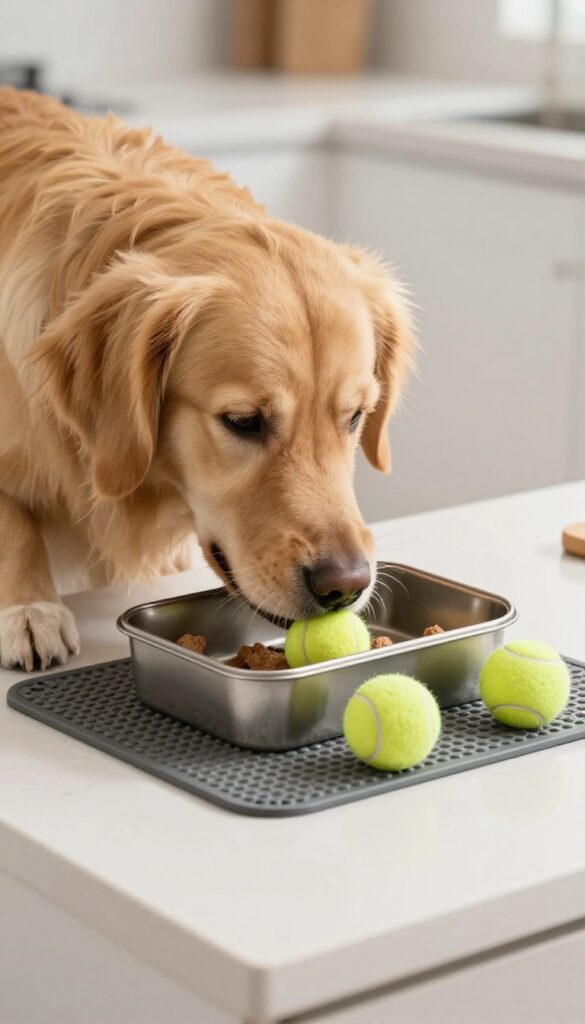
A muffin tin and a few tennis balls can turn snack time into a rewarding challenge. This classic DIY puzzle is one of the easiest ways to introduce your dog to problem-solving games. It’s quick to set up, requires no special skills, and most dogs figure it out with a little encouragement.
Why It Works
Dogs use their noses and paws to lift the balls, which taps into natural foraging instincts. The mental effort of figuring out which cups hold treats keeps them engaged, and the simple mechanics build confidence. It’s low-key but surprisingly effective for burning mental energy.
Best For
Perfect for beginners or shy dogs who need a gentle start with puzzles. Also great for apartment dwellers because it’s quiet and mess-free. Use a mini muffin tin for small breeds or puppies.
Practical Tip
Use a standard 12-cup metal muffin tin and tennis balls that fit snugly but aren’t too tight. Place it on a non-slip mat to keep it from sliding. Start with just two or three treats so your dog doesn’t get overwhelmed, and always supervise to prevent chewing on the tin.
Budget-Friendly Option
No tennis balls? Use crumpled paper balls or large wadded-up socks instead. A silicone muffin pan works too and is quieter.
If you don’t have a muffin tin, an empty egg carton with treats tucked inside is a similar low-cost alternative.
2. Towel Roll-Up Treat Dispenser
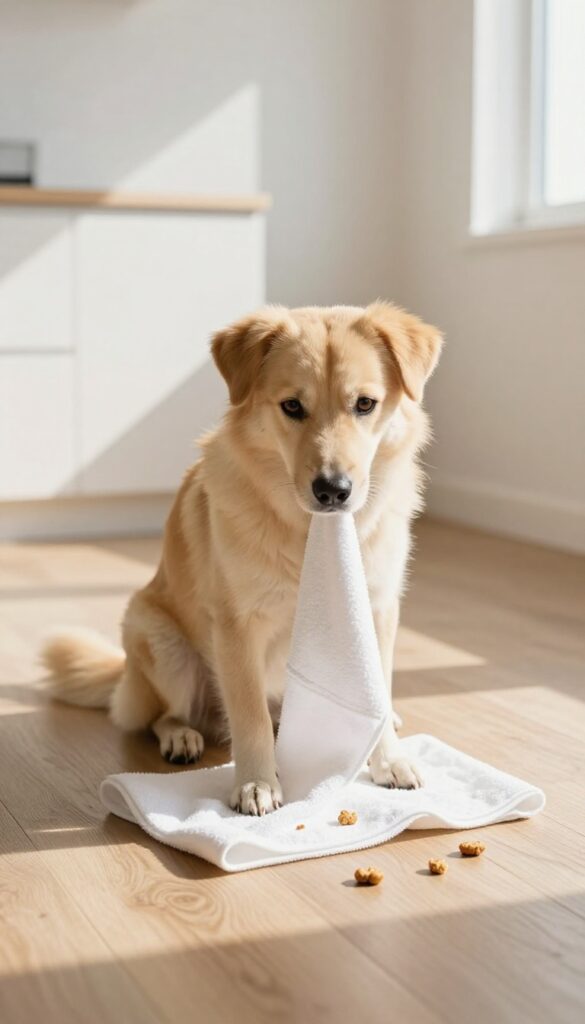
Sometimes the simplest toys are the most engaging. A plain kitchen towel becomes a puzzle your dog has to work through, which taps into natural foraging instincts. This game is easy to set up, quick to clean, and keeps dogs busy for several minutes as they figure out how to unroll the towel.
Why It Works
Dogs love using their noses and paws to solve problems. The act of unrolling a towel mimics foraging behavior and provides mental stimulation that tires them out faster than physical exercise alone. Plus, the unpredictable treat placement keeps them curious.
Best For
This game works well for dogs who enjoy sniffing and digging, and it's great for apartment dwellers because it's quiet and contained. It's also a good option for rainy days or when you need a low-energy activity that still challenges your pup.
Practical Tip
Use a thin kitchen towel that's easy for your dog to manipulate. Avoid towels with loose threads or fringe that could be chewed off. Supervise the first few plays to make sure your dog is unrolling rather than shredding.
If your dog is a shredder, switch to a fleece blanket or old t-shirt instead.
Budget-Friendly Option
If you don't have a kitchen towel, an old t-shirt or a hand towel works just as well. You can also use a clean sock—just knot the end and hide treats inside.
3. Cardboard Box Dig Pit
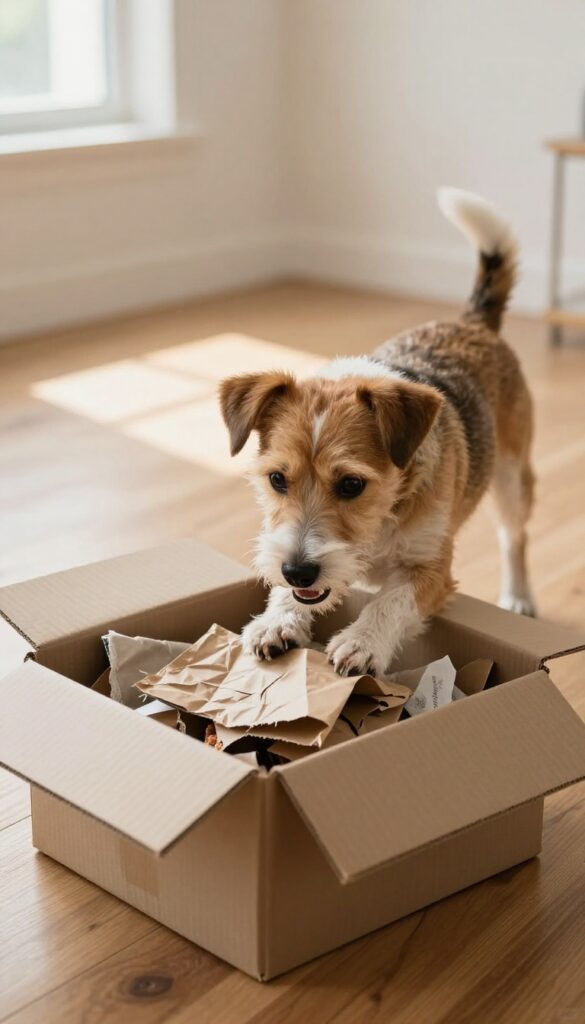
Digging is a natural instinct for many dogs, and a cardboard box filled with shreddable materials gives them a legal outlet. This game is incredibly simple to set up and can keep your dog occupied for a good chunk of time. It's also a great way to repurpose boxes from online deliveries before they hit the recycling bin.
Why It Works
Dogs love to dig and sniff, and this game taps into both instincts. The crumpled paper and fabric create a satisfying texture to paw through, while hidden treats reward their foraging efforts. It's a low-impact mental workout that can tire out even high-energy dogs without needing much space.
Best For
This game is ideal for dogs who love to dig or use their noses, from terriers to hounds. It works well in apartments or homes with limited outdoor space, since the mess stays contained in the box. Supervised play is best, especially for puppies or dogs who tend to eat everything.
Practical Tip
Use a shallow box so your dog can easily reach the bottom. Crumple packing paper, newspaper, or old t-shirts into strips, and scatter a few treats or kibble throughout. Place the box on a washable floor or a towel for easy cleanup, and remove any tape or staples first.
Budget-Friendly Option
If you don't have packing paper, use junk mail, paper grocery bags, or even dry leaves from outside. Just avoid glossy paper or anything with ink that might transfer. Old socks or fleece scraps also work well and can be reused.
4. Bottle Flip Challenge
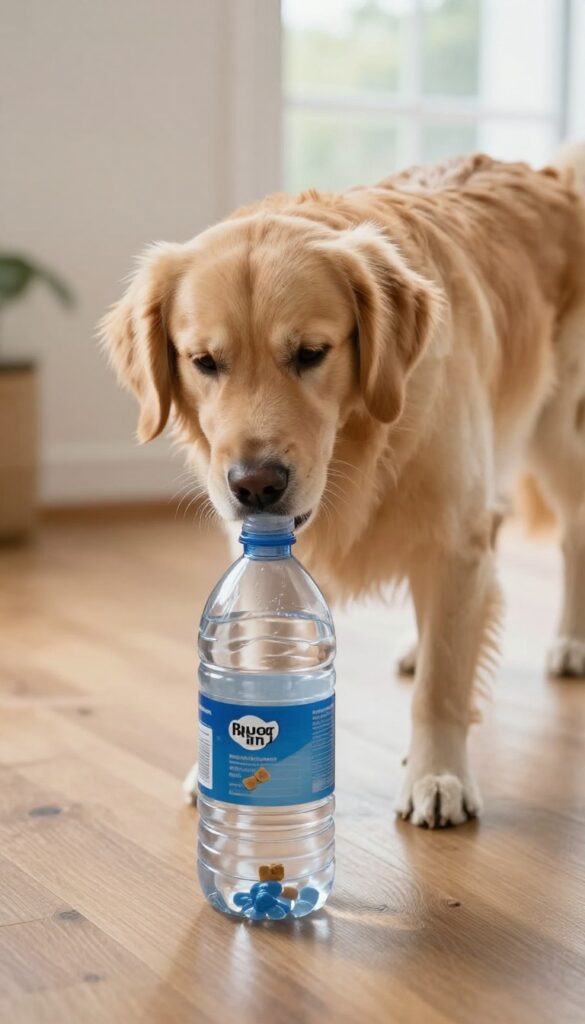
Some dogs love a puzzle that moves. The Bottle Flip Challenge turns a simple plastic bottle into a treat-dispensing toy that your dog has to bat, nudge, and flip to get the reward. It's a great way to engage their natural curiosity and persistence without any complicated setup.
What makes this game so effective is the unpredictability. Every flip sends treats tumbling out in a different spot, keeping your dog guessing and focused. Plus, it's endlessly adjustable—loosen or tighten the cap to change the difficulty.
Dog owners appreciate how quick and cheap it is to set up. Just grab an empty water bottle, drop in a few treats, and you're ready to go. It's a fantastic way to entertain a bored pup during a rainy afternoon or while you're on a work call.
Why It Works
The bottle's rolling and tipping motion taps into your dog's instinct to manipulate objects to get food. It also encourages problem-solving as they figure out the exact angle and force needed to release the treats. The unpredictability keeps them engaged longer than a static puzzle.
Best For
This game is perfect for dogs who enjoy interactive play and have moderate patience. It works well for medium to large breeds that can easily bat a bottle, but small dogs can also play with a smaller bottle (like a 500ml size). Avoid it for aggressive chewers who might try to eat the plastic.
Practical Tip
Always remove the cap and label first to prevent choking and make the bottle easier to flip. Start with the cap off for easy success, then screw it on loosely for a harder challenge. Supervise the first few tries to ensure your dog nudges rather than crushes the bottle.
Clean the bottle between uses to avoid sticky residue.
Budget-Friendly Option
If you don't have a plastic bottle, a small cardboard tube (like from a paper towel roll) works similarly. Fold one end closed, drop treats inside, and let your dog paw it open. It's less durable but fully recyclable.
5. Egg Carton Treasure Hunt
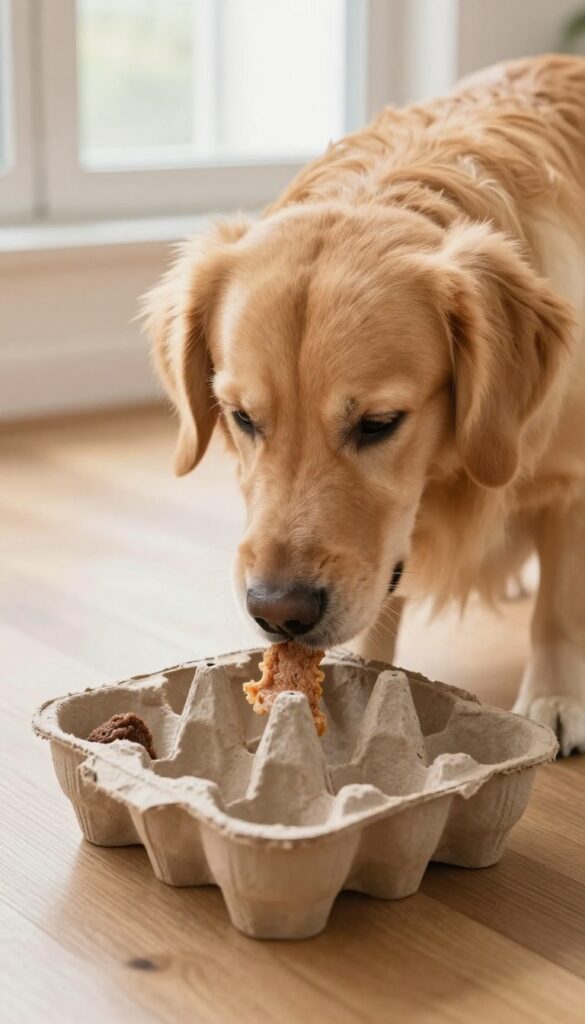
An empty egg carton can become a fun puzzle in seconds. Simply drop a few treats into random compartments, close the lid, and let your dog figure out how to open it. The cardboard material is soft enough that determined noses and paws can easily pry it open, but tough enough to provide a satisfying challenge.
This game taps into your dog's natural foraging instincts. The rustling sound and the mystery of which compartment holds the prize keep them engaged. It's a low-cost, low-mess activity that works well for dogs who enjoy using their nose and paws to solve problems.
Why It Works
The egg carton's compartments create a simple hiding game that encourages your dog to sniff, nudge, and scratch. The unpredictability of where the treats are hidden keeps them interested, and the cardboard provides a satisfying texture to work with. It's a great way to practice patience and problem-solving in a calm, focused activity.
Best For
This game is perfect for dogs who are food-motivated and enjoy a gentle mental challenge. It's especially good for small to medium breeds, or for any dog that likes to nudge and paw at objects. It works well in apartments or small spaces since it's quiet and contained.
Practical Tip
Start with the carton unsecured so your dog learns the game easily. Once they get the hang of it, add a rubber band around the carton to increase difficulty. You can also place the carton under a lightweight towel to add an extra layer of hiding.
Always supervise to ensure your dog doesn't eat the cardboard.
Budget-Friendly Option
Instead of a cardboard egg carton, you can use a clean, empty plastic egg carton (like the clear takeout kind). It adds a different texture and sound, and some dogs find it easier to open. You can also use a small cardboard box with compartments, like a cupcake box.
6. Sock Hide-and-Seek
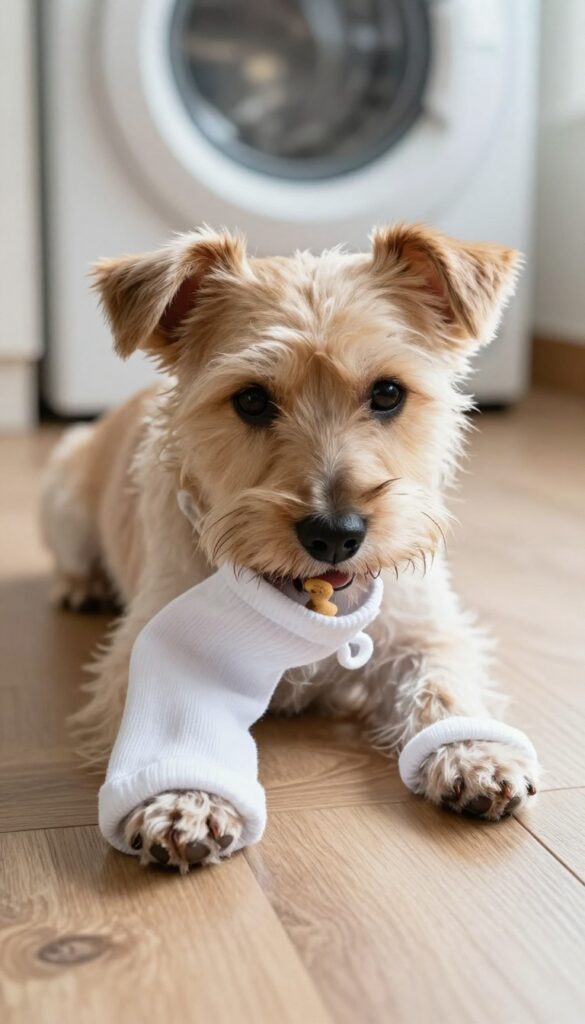
Ever notice how a single sock can disappear in your laundry, only to become your dog's favorite treasure? That same missing sock can turn into an engaging brain game that taps into your dog's natural hunting instincts.
By hiding treats inside and tying a loose knot, you create a simple puzzle that requires patience and problem-solving. The scent of the treats mixed with the familiar fabric smell makes it a multi-sensory challenge that dogs love to figure out.
Why It Works
This game combines scent work, problem-solving, and fine motor skills. Dogs must use their nose to locate the sock, then their paws and mouth to untie the knot—all while focusing on a rewarding goal. It's a low-effort activity that provides mental stimulation without taking up space.
Best For
Sock Hide-and-Seek is ideal for dogs who enjoy sniffing and working with their paws, especially smaller breeds or those new to puzzle games. It's also great for apartment living since it's quiet and contained. Supervised play is recommended to prevent swallowing fabric.
Practical Tip
Use a clean, worn sock (your scent adds familiarity) and drop in a few small, soft treats. Tie a loose, single knot—not too tight—so your dog can undo it easily. Start by showing the sock and letting them sniff, then hide it under a cushion or in a laundry pile.
Always supervise and remove the sock if it starts to fray.
Budget-Friendly Option
If you don't have a spare sock, an empty toilet paper roll works too. Fold the ends inward to seal treats inside, then let your dog figure out how to open it. It's just as engaging and even easier to replace.
7. Paper Towel Tube Puzzle
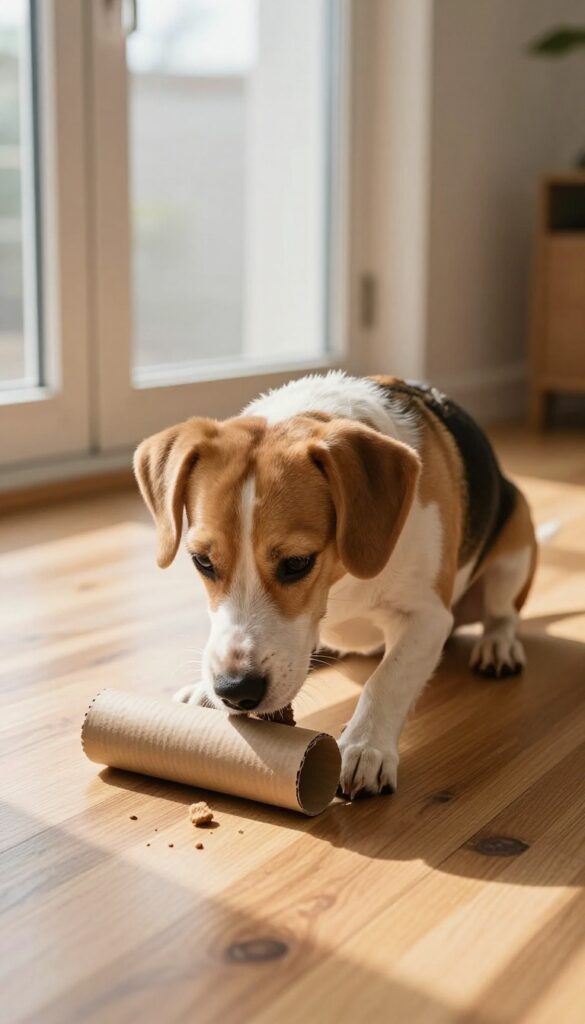
Cardboard tubes from paper towels or wrapping paper are perfect for a quick, engaging puzzle. Fold one end shut, drop a few treats inside, then fold the other end closed. Your dog will have to figure out how to open the ends or chew through the tube to get the reward.
For a longer activity, make several tubes and scatter them around the room.
Why It Works
This puzzle taps into your dog's natural foraging instincts and problem-solving skills. The crinkly sound and the challenge of accessing the treats keep them engaged, and the variety of ways to solve it—rolling, pawing, or gnawing—suits different learning styles.
Best For
This is great for dogs who enjoy a bit of destruction in a controlled way, and it works well in any home. It's especially good for small to medium breeds that can easily manipulate the tubes, but large dogs will enjoy it too (just watch for faster chewing).
Practical Tip
Use tubes from paper towel rolls, wrapping paper, or even toilet paper rolls for smaller treats. Always supervise your dog to ensure they don't swallow large pieces of cardboard. For a cleaner option, you can tape the ends closed instead of folding, but make sure the tape isn't easily ingested.
Budget-Friendly Option
If you don't have cardboard tubes, you can use empty plastic water bottles (remove the cap and ring) or a small cardboard box with holes cut in it. Both provide a similar challenge with items you'd normally recycle.
8. Ice Cube Treat Bounty
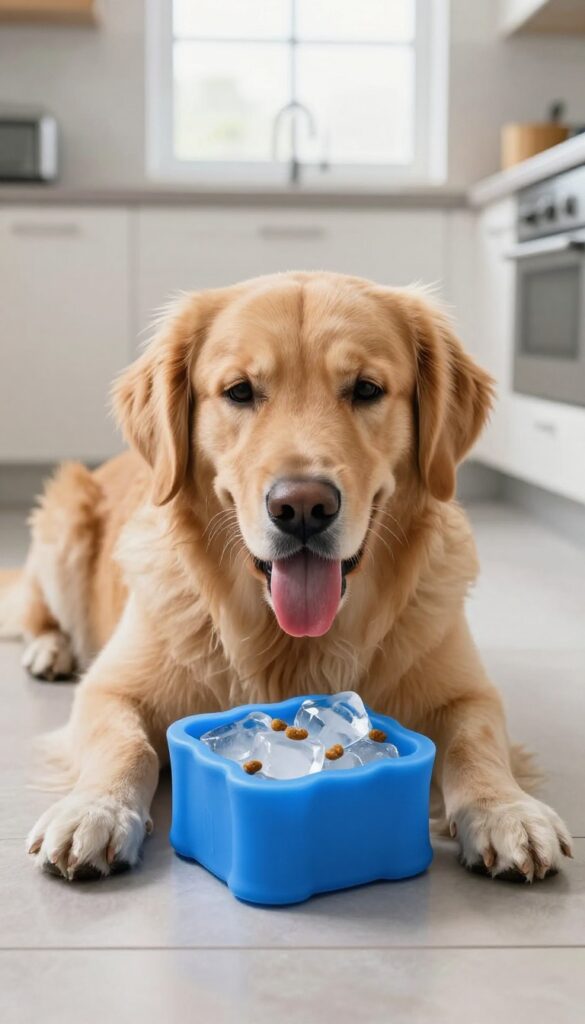
When the temperature climbs or your dog needs a calming activity, frozen treats come to the rescue. Ice Cube Treat Bounty turns plain ice cubes into a rewarding challenge that keeps dogs busy for minutes. Simply freeze a few treats or kibble in an ice cube tray with water or low-sodium broth, then pop them out and let your dog work to release the goodies.
It's a simple, mess-free brain game that doubles as a refreshing snack.
Why It Works
Licking and chewing at the ice cube encourages slow, focused behavior, which naturally calms anxious or high-energy dogs. The delayed gratification of melting ice builds patience and problem-solving skills, while the cold soothes teething puppies or hot pups after a walk.
Best For
This game is perfect for dogs who love food puzzles or need a quiet activity during summer afternoons. It's also great for puppies teething, senior dogs with joint issues who still want mental stimulation, or any dog that tends to gulp treats too fast.
Practical Tip
Use silicone ice cube trays with large, easy-to-grip shapes (like bones or paws) to make it easier for your dog to hold and lick. Always supervise to prevent choking on large chunks, and consider using low-sodium broth instead of water for extra flavor. Store extra cubes in a freezer bag so you always have one ready.
Budget-Friendly Option
If you don't have an ice cube tray, freeze the mixture in a shallow plastic container, then break it into smaller pieces. You can also use a silicone muffin pan for giant cubes that last longer.
9. The Cup Game
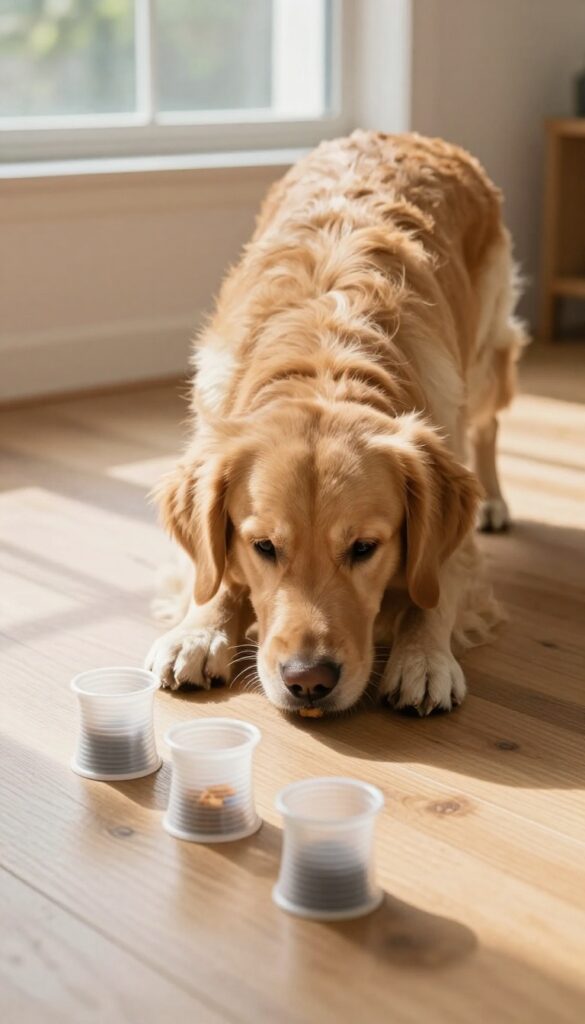
Dogs love using their noses, and this classic shell game taps right into that natural instinct. It’s a simple way to strengthen your bond while giving your pup a rewarding mental challenge. Plus, it’s endlessly customizable—once they master three cups, you can add more or use different containers to keep things fresh.
Why It Works
This game engages your dog’s sense of smell and problem-solving skills. They have to focus, remember which cup hides the treat, and use their nose to confirm. It’s a low-impact activity that builds confidence and provides a satisfying payoff.
Best For
Perfect for dogs who are food-motivated and enjoy sniffing games. Great for apartments or small spaces since it doesn’t require much room. Works well for all ages, from puppies to seniors, as long as they can comfortably sniff and paw at cups.
Practical Tip
Use lightweight plastic cups so your dog can easily tip them over. Start with just two cups and a visible treat to teach the game. Keep sessions short—3 to 5 rounds—to avoid frustration.
Always supervise to prevent chewing on the cups.
Budget-Friendly Option
No plastic cups? Use empty yogurt containers, small cardboard boxes, or even clean tin cans with the lids removed. Just make sure there are no sharp edges.
FAQ
How long should a brain game session last?
Aim for 10 to 15 minutes per session, or until your dog loses interest. Mental stimulation can be tiring, so watch for signs of frustration or fatigue and end on a positive note.
Are these games safe for puppies?
Yes, but supervise closely and avoid small parts that could be swallowed. Use larger items and softer treats for puppies, and remove any damaged pieces immediately.
What if my dog destroys the cardboard or plastic?
That's normal! Just supervise and remove any small or sharp pieces. If your dog is a heavy chewer, opt for sturdier items like thick cardboard or hard plastic bottles, and replace them when worn.
Can I use these games for multiple dogs?
Absolutely, but set up separate stations to avoid resource guarding. Each dog should have their own puzzle, and you can increase the difficulty by hiding treats in different spots.
How often should I rotate the games?
Rotate every few days to keep things novel. Dogs get bored with repetition, so having a few games in your rotation keeps their brain engaged and excited.
Conclusion
These nine brain games prove that keeping your dog mentally sharp doesn't require a trip to the pet store. Start with the one that matches your pup's current energy level—maybe the muffin tin game for a beginner or the shell game for a more experienced puzzler. Rotate a few options each week to keep things fresh.
Your dog gets the mental workout they need, and you get to watch them problem-solve with growing confidence. That's a win for both of you.

I’m Pallab Kishore, the owner of Little Pets Realm — an animal lover and pet care enthusiast sharing easy tips, healthy recipes, and honest advice to help every small pet live a happy, healthy, tail-wagging life.