
Last updated on August 19th, 2026 at 04:14 pm
A well-trained puppy who happily settles in their crate is a game-changer. No more frantic barking when you leave the room, no more chewed-up shoes while you're busy. Crate training, when done patiently and positively, gives your puppy a den they love—and gives you peace of mind.
The secret isn't about locking your pup away. It's about building trust and making the crate a rewarding place to be.
These ten steps walk you through the process from start to finish, so you can avoid common pitfalls and set your puppy up for success. Whether you're starting with a brand-new puppy or retraining an older dog, the principles are the same.
1. Choose the Right Crate and Location
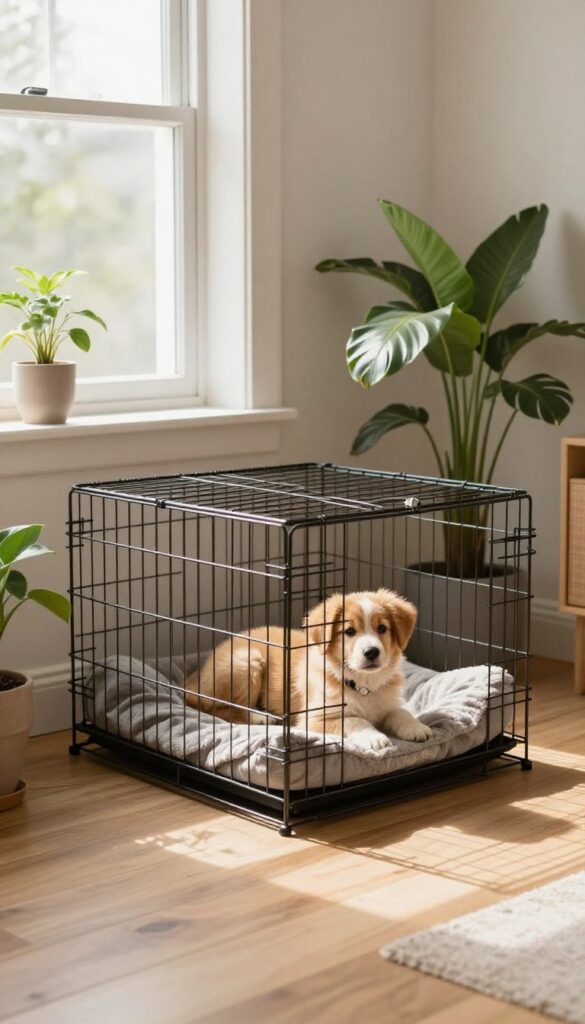
Before you even bring your puppy home, think about where the crate will live and which size makes sense. A crate that's too big or tucked away in a lonely corner can set you up for a rough start. Getting these two details right from day one makes every later step easier.
The right crate feels like a cozy den, not a cage. The right spot makes your puppy feel included, not isolated. Here's how to nail both.
Size Matters: Not Too Big, Not Too Small
Your puppy needs enough room to stand up, turn around, and lie down comfortably. If the crate is too large, they'll naturally pick one corner as a bathroom and sleep in the other. That defeats the whole purpose of house training.
If you're raising a large-breed puppy, buy a crate that fits their adult size and use a divider to shrink the space as they grow. That way you get one crate for life without giving them too much room early on.
Location: Where Your Puppy Feels Safe
Place the crate in a family area like the living room or kitchen, where your puppy can see you and feel part of the action. Avoid high-traffic zones right in the middle of the room, and keep it away from loud appliances or drafts. The goal is a calm corner where your puppy can watch you without being stepped on or overwhelmed.
You can always move the crate to your bedroom at night if that helps your puppy sleep better.
Make It Inviting From The Start
Once the crate is in place, add a soft bed or blanket, but skip anything too plush if your puppy is a chewer. A couple of safe toys and a treat or two can make the space feel rewarding. Keep the door open at first and let your puppy explore on their own terms.
This isn't about trapping them—it's about making them want to go in.
2. Make the Crate Irresistible with Comfort and Treats
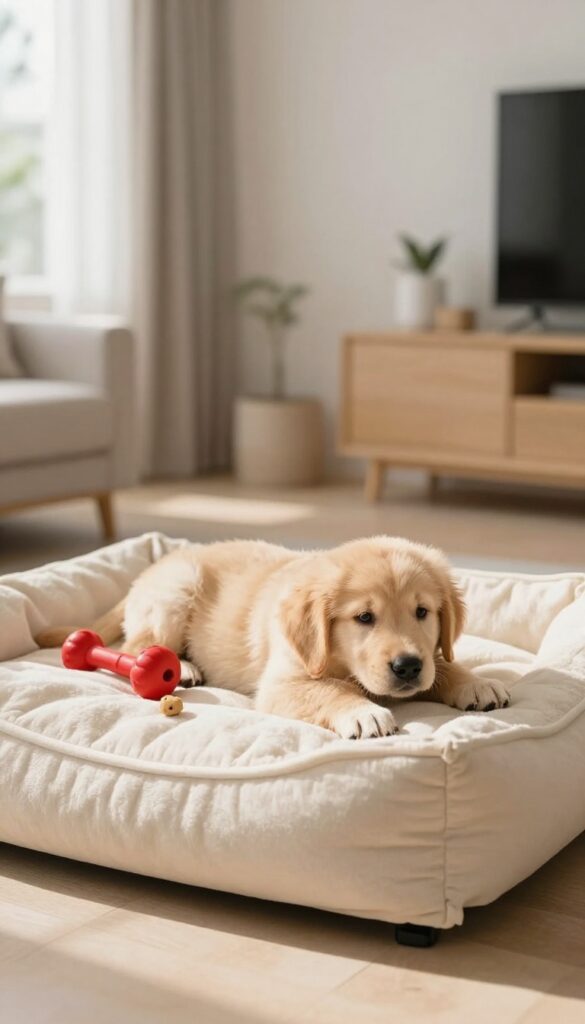
The crate should feel like a cozy den, not a cage. Start by adding a soft bed or a familiar blanket that smells like you. Then, toss in a few high-value treats or a stuffed Kong to create a positive association.
Leave the door open and let your puppy explore at their own pace—no forcing, no closing the door yet.
This step is all about making the crate a place your puppy wants to be. By pairing the crate with comfort and rewards, you're building a positive emotional connection that will make all future steps easier.
Choose The Right Comfort Items
Pick a bed that's easy to clean and fits snugly in the crate. A blanket or towel with your scent can be especially soothing. Avoid anything too bulky that might overwhelm the space or become a chew toy.
Use High-value Treats Strategically
Reserve special treats like small pieces of chicken, cheese, or a stuffed Kong for crate time. This makes the crate a special place. Place treats near the entrance first, then deeper inside as your puppy gets more comfortable.
Let Your Puppy Set The Pace
Keep the door open and let your puppy come and go freely. If they step inside, praise them calmly. If they only sniff and back away, that's okay.
Never push or lure them in—let curiosity win.
Make It A Game
Toss a treat inside and let your puppy chase it in. Then toss another treat out and let them come back out. This back-and-forth builds a fun association and helps your puppy see the crate as a source of good things.
3. Feed Meals Inside the Crate
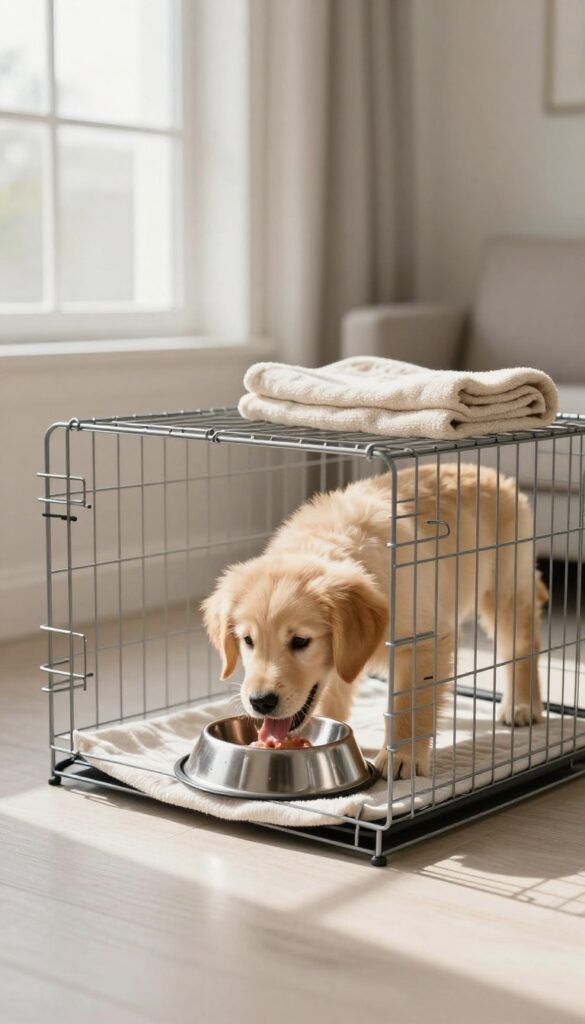
Mealtime is a golden opportunity to build positive associations with the crate. Puppies are highly motivated by food, and using it strategically can turn the crate into their favorite spot. By gradually moving their bowl deeper inside, you're teaching them that the crate is where good things happen.
Start by placing the food bowl just inside the crate door, with the door open. Let your puppy eat comfortably while you sit nearby. Over the next several days, inch the bowl a little further back each meal.
By the end of the week, your puppy will be happily eating at the back of the crate, feeling secure and content.
Why This Works
Dogs naturally avoid soiling where they eat, so feeding in the crate supports house training. It also releases feel-good hormones during meals, which helps your puppy associate the crate with safety and pleasure. This simple routine builds trust without any pressure.
How To Start
Begin with the bowl at the front edge, just inside the door. If your puppy is hesitant, toss a few kibble pieces near the bowl to encourage them. Keep the door open and let them come and go freely.
Gradually move the bowl back over several days, always letting your puppy set the pace.
Common Mistakes To Avoid
Don't close the door while your puppy eats—that can create anxiety. Also, avoid leaving uneaten food in the crate, as it can attract bugs or cause messes. If your puppy refuses to eat inside, take a step back and try again later with a tastier treat or a shorter duration.
4. Practice Short, Positive Crate Sessions
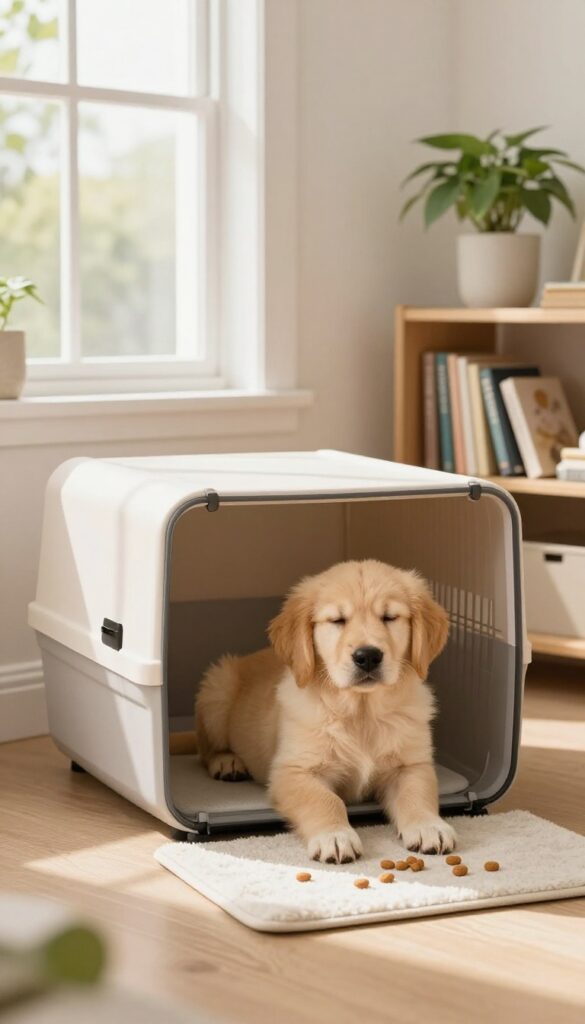
Once your puppy is happily eating inside the crate, it's time to build on that positive association. The goal here is to teach your pup that being closed in is no big deal—and that good things happen when they're in there. Start with just a few minutes at a time, and always keep the mood upbeat.
Short, positive crate sessions are the foundation of a confident, relaxed puppy. By gradually increasing the time your pup spends inside with the door closed, you're showing them that the crate is a safe, comfortable place—not a punishment. The key is to move at your puppy's pace, never rushing or forcing it.
Start With The Door Closed For Just A Minute
After your puppy is comfortable eating with the door open, try closing it while they're still distracted. Toss a treat or a favorite toy inside, then gently close the door. Stay right there, talking calmly or even sitting nearby.
Keep the first few sessions to under a minute, then open the door and let them come out on their own. This teaches them that being closed in is temporary and nothing to worry about.
Gradually Increase The Time
Once your puppy is fine with a minute or two, slowly extend the time. Add a few seconds or a minute each session, but never jump ahead too quickly. Watch your puppy's body language—if they start whining or scratching, you've gone too fast.
Back up a step and try again later. The goal is to build their tolerance gradually, so they learn to settle and relax on their own.
Always End On A Positive Note
End every crate session before your puppy gets restless or upset. If they're calm and quiet, that's the perfect moment to open the door and let them out. Reward them with a treat and some praise.
This way, your puppy learns that being quiet in the crate leads to good things. Ending on a positive note prevents negative associations and keeps the crate a happy place.
5. Use a Calm Cue Word
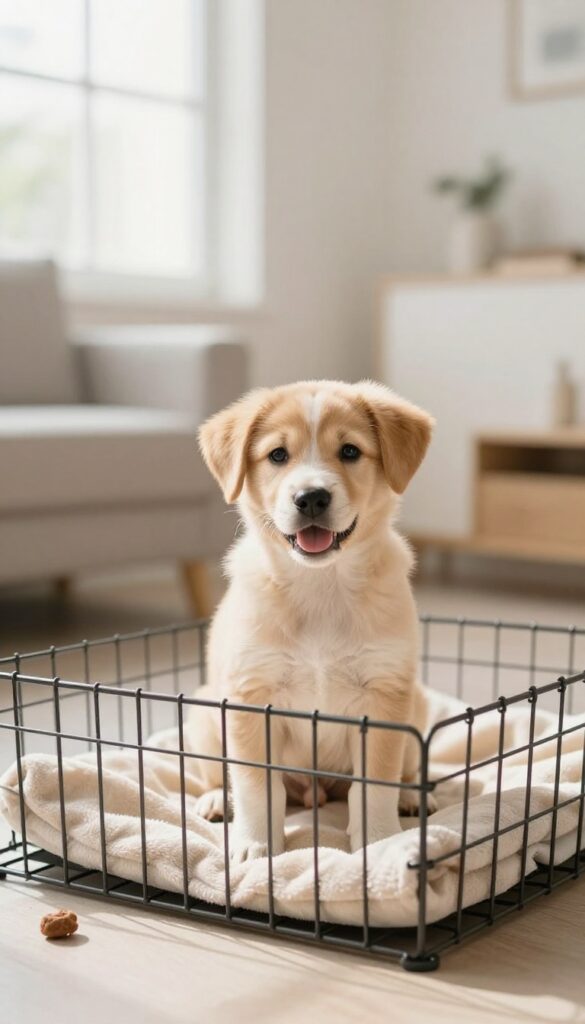
A simple word can make a big difference in crate training. By pairing a cue like 'kennel' with the act of entering the crate, you give your puppy a clear signal that it's time to settle down. This helps them understand what you're asking for and makes the whole process smoother.
Pick a cue word that feels natural to you, like 'kennel, ' 'crate, ' or 'bed. ' Say it in a cheerful, upbeat tone right before you toss a treat inside. When your puppy walks in, praise them warmly and let them enjoy the treat. Repeat this every time they go in, and soon they'll associate the word with a positive experience.
Choose Your Cue
The best cue is short, distinct, and easy to say consistently. Avoid words you use in other contexts, like 'house' or 'go. ' Stick with one word and use it every single time. Your puppy will learn faster when the cue is always the same.
Pair It With A Treat
Toss a high-value treat inside the crate just as you say the cue. This creates a strong link between the word and the reward. Make sure the treat is something special, like a small piece of chicken or cheese, so your puppy gets excited about going in.
Practice In Short Sessions
Keep practice sessions brief and fun. A few repetitions a day are plenty. Say the cue, toss the treat, and let your puppy come out after a moment.
Gradually increase the time they stay inside, but always end on a positive note.
Use A Calm Tone
While the cue should be cheerful, your overall tone should stay calm and reassuring. Puppies pick up on your energy, so a relaxed voice helps them feel safe. Avoid sounding demanding or excited—just a friendly, steady tone works best.
6. Gradually Increase Alone Time
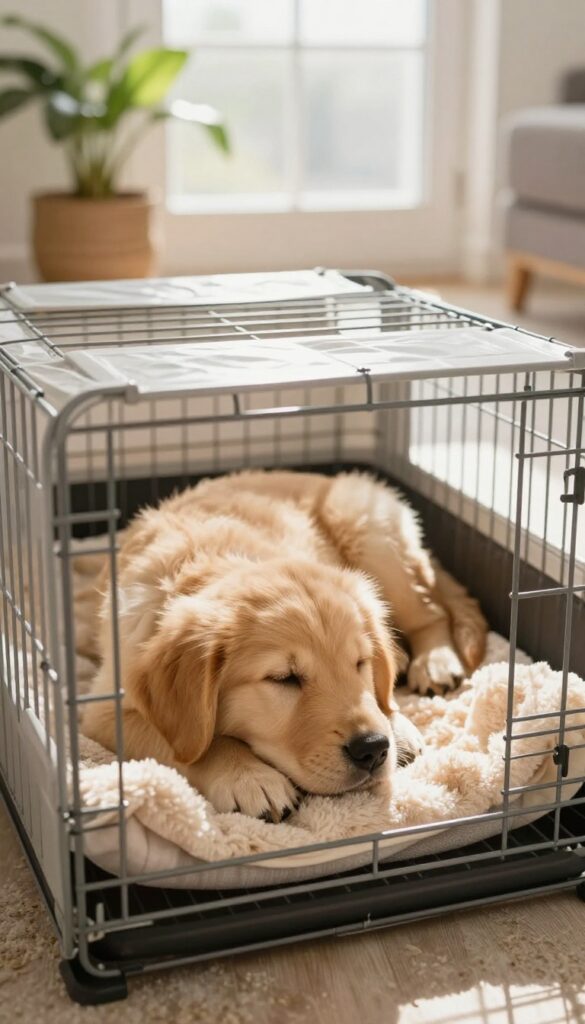
Once your puppy is comfortable with the crate door closed and you nearby, it's time to stretch those solo muscles. The goal is to teach your pup that being alone in the crate is totally normal and safe—not something to panic about. This step is all about baby steps and consistency.
Start by leaving the room for just a minute or two while your puppy is settled inside. Then come back, stay calm, and let them out when they're quiet. Slowly build up the time you're away, but always keep sessions short enough that your puppy stays relaxed.
If you push too far, you'll see signs of stress like whining, pacing, or scratching—that's your cue to dial it back.
Start With Short Absences
Begin by stepping into another room for 30 seconds to a minute. Keep your departure and return low-key—no big goodbyes or excited greetings. This helps your puppy learn that being alone isn't a big deal.
Gradually extend the time to 5, 10, then 20 minutes, always watching for signs of anxiety.
Use A Cue Word For Departures
Pick a simple word like 'home' or 'settle' that you say just before closing the crate door. Say it in a cheerful tone, give a treat, and leave. Over time, your puppy will associate that word with calm alone time.
This cue makes departures predictable and less stressful for your pup.
Practice At Different Times Of Day
Don't only practice when you're heading out the door. Do short crate sessions during the day while you're home—like when you're cooking or working. This helps your puppy see the crate as a normal place to hang out, not just a signal that you're leaving.
Vary the timing so your pup doesn't get anxious about specific routines.
Watch For Stress Signals
Pay attention to your puppy's body language. Whining, barking, drooling, or trying to dig out are red flags. If you notice these, you've moved too fast.
Take a step back and shorten the alone time until your puppy is comfortable again. Patience is key—rushing this step can lead to setbacks.
7. Establish a Crate Schedule
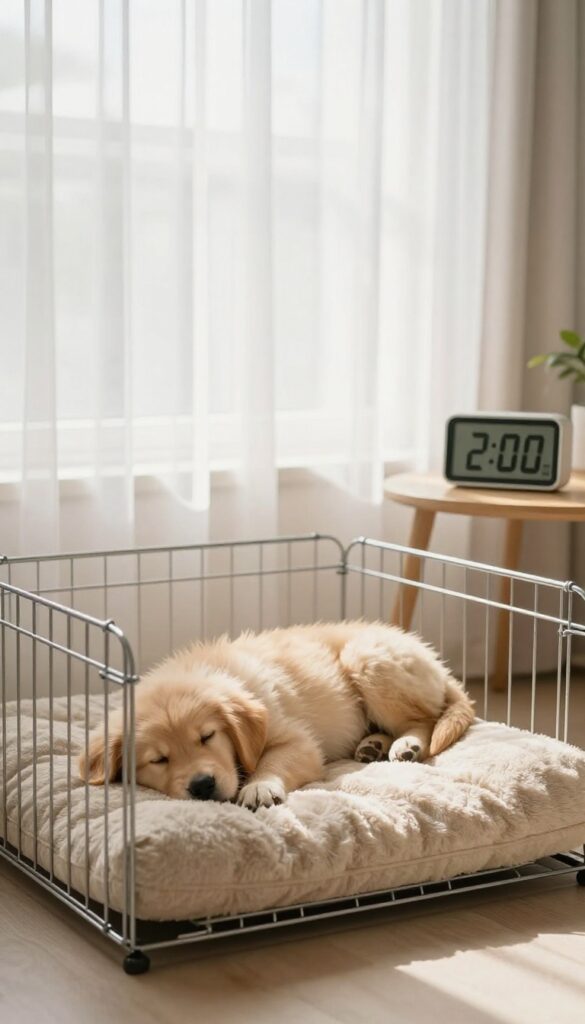
Dogs are creatures of habit, and puppies especially thrive on a predictable daily rhythm. When you set consistent times for crate use, your puppy learns to anticipate when it's time to settle in, which reduces stress and makes the crate feel like a natural part of the day. A schedule also helps you manage potty training, because you can align crate time with your puppy's natural elimination patterns.
Building a schedule around the crate helps your puppy feel secure and prevents the 'will I be left? ' anxiety that leads to barking or whining. Consistency is key—try to stick to the same times for naps, meals, and bedtime, even on weekends. This doesn't mean being rigid to the minute, but keeping a general flow helps your puppy's internal clock sync with the crate.
Match Crate Time To Natural Rhythms
Puppies need a lot of sleep—up to 18-20 hours a day. Use the crate for naps after playtime or meals, when they're naturally tired. Put them in for a short nap, and they'll learn to associate the crate with rest.
Also, schedule meals at the same times each day, and use the crate for a short quiet period right after eating, which helps with digestion and gives you a predictable potty window.
Create A Daily Routine That Works
A typical schedule might look like: morning potty, breakfast, playtime, then crate time while you work or do chores. Midday, another potty break, a short training session, then another crate nap. Evening brings dinner, a walk, and some family time, followed by a final potty and bedtime in the crate.
You can adjust based on your puppy's age and needs, but the goal is to have a rhythm that your puppy can rely on.
Be Consistent, But Flexible
Life happens, and sometimes your schedule will shift. That's okay. The important thing is to keep the general pattern as steady as possible.
If you have to skip a nap or move meal time, try to keep the crate sessions close to the usual times. Your puppy will adapt, but consistency helps them feel secure and reduces anxiety.
8. Handle Whining and Barking with Patience
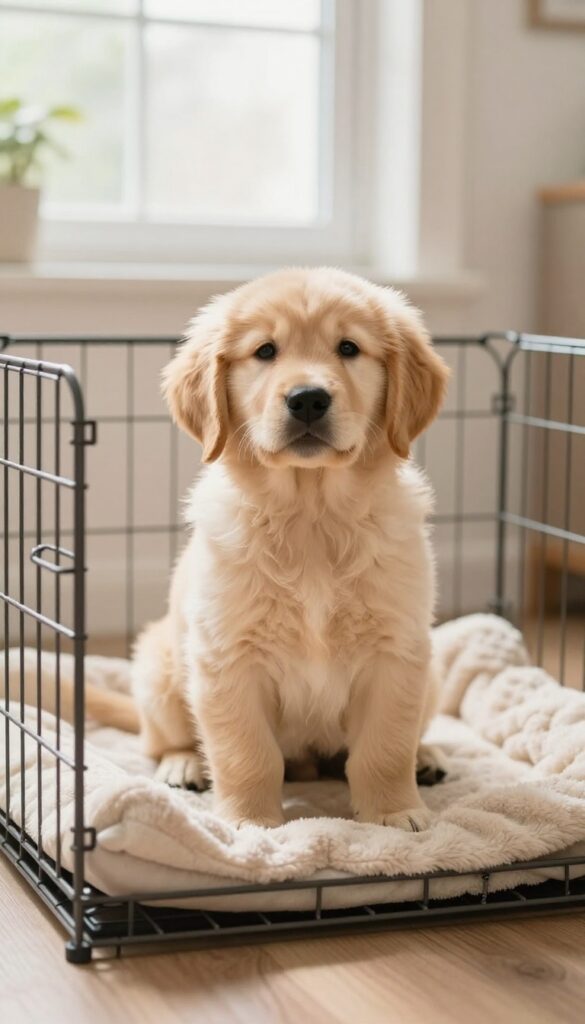
Whining and barking are part of the crate training journey, but how you respond makes all the difference. The goal is to teach your puppy that quiet, calm behavior is what earns them freedom. Reacting too quickly can accidentally reinforce the noise, turning the crate into a frustrating game of 'bark to get out. '
When your puppy whines, resist the urge to open the door right away. Wait for a brief pause in the noise, even if it's just a second, then let them out. This small delay teaches them that being quiet works, not making a fuss.
Consistency matters—every time you give in to whining, you're telling them that noise gets results.
Why Immediate Release Backfires
If you let your puppy out the second they whine, they learn that whining is the quickest way to escape. That's the opposite of what you want. Instead, they need to understand that the crate is a calm place, and calm behavior is what opens the door.
It's a simple equation: quiet gets freedom, noise gets ignored.
The 'wait For Quiet' Technique
Start by standing near the crate. When your puppy whines, wait—don't talk, don't make eye contact. The moment they pause, even for a second, say 'good' and open the door.
As they get better, gradually increase the required quiet time. This builds patience and teaches self-control, which pays off in all areas of training.
When To Investigate Vs. Ignore
Not all whining is the same. If your puppy is whining because they need a potty break, take them out immediately—but keep it boring. No play, just business.
If they're whining for attention or because they're bored, ignore it until they settle. You'll learn to tell the difference, and your puppy will learn that whining doesn't get them what they want.
Using Distraction To Break The Cycle
Sometimes a little distraction can prevent whining before it starts. Toss a chew toy or a treat into the crate before you close the door. This gives them something positive to focus on.
If they start whining later, a quick 'quiet' cue or a gentle shake of a treat bag can redirect them. Just be careful not to reward the whining itself—only reward the calm.
9. Avoid Using the Crate as Punishment
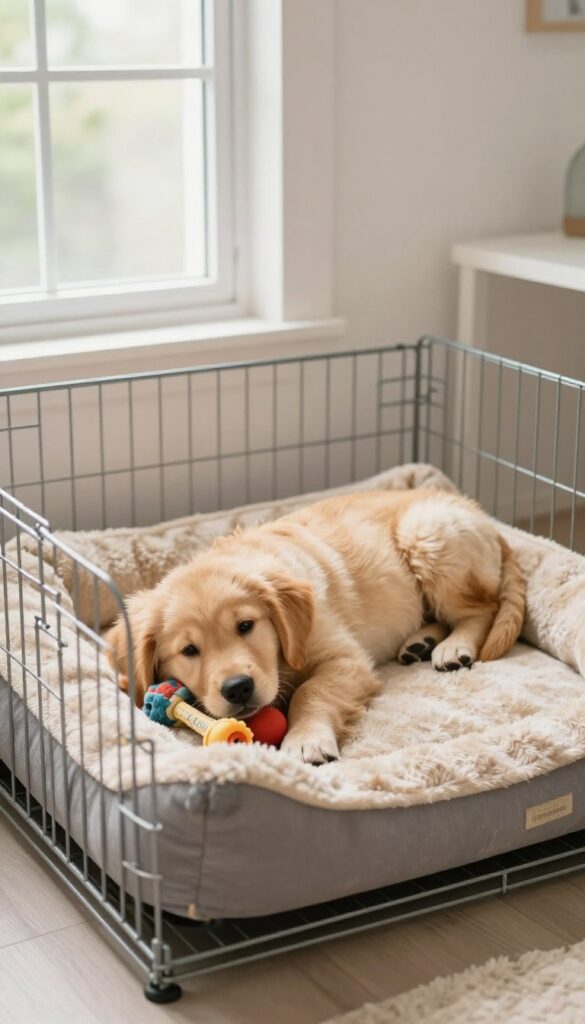
It can be tempting to send a misbehaving puppy to their crate for a time-out. But that move can undo all the positive progress you've made. The crate should feel like a safe retreat, not a jail cell.
When you use the crate as punishment, your puppy starts to associate it with negative feelings. That makes them less willing to settle down inside, and it can trigger anxiety or resistance. Instead, keep the crate a purely positive space and use other methods to correct unwanted behavior.
Think of the crate as your puppy's personal den—a place where they can relax and feel secure. If you banish them there when they're in trouble, they'll start to dread it. That defeats the whole purpose of crate training.
Instead, when your puppy does something wrong, correct them in the moment with a firm 'no' and then redirect their attention to something appropriate. For example, if they're chewing on a shoe, say 'no, ' take the shoe away, and hand them a chew toy. This teaches them what's acceptable without making the crate a bad place.
By never using the crate as punishment, you keep it a haven. Your puppy will be more willing to go in on their own, and they'll feel calm and content when they're inside. That's the foundation of a happy, well-adjusted dog.
Why Punishment Backfires
When you use the crate as a time-out, your puppy learns to associate being inside with negative emotions. They might start to whine, bark, or try to escape. This can lead to anxiety and make it much harder to get them to settle down.
Punishment in general can damage the trust between you and your puppy. They need to see you as a source of safety and guidance, not someone who locks them away when they're upset. Keeping the crate positive helps build that trust.
Better Ways To Correct Behavior
Instead of using the crate, try a brief 'no' followed by redirecting your puppy to a desired behavior. For example, if they're jumping on guests, say 'no, ' then ask them to sit and reward them for doing so. You can also use a short time-out in a boring, safe area like a bathroom or a hallway, but only for a minute or two.
This removes them from the situation without making the crate feel negative. The key is to keep the crate completely separate from any correction.
Keeping The Crate A Happy Place
To reinforce the positive association, make the crate a place where good things happen. Give your puppy treats, meals, and special toys only inside the crate. You can also practice short, positive sessions where you close the door for a few seconds while they're relaxed and then open it again.
Never force your puppy into the crate or slam the door. Let them enter on their own, and reward them for doing so. Over time, they'll see the crate as their own cozy spot, not a punishment zone.
10. Troubleshoot Common Crate Training Problems
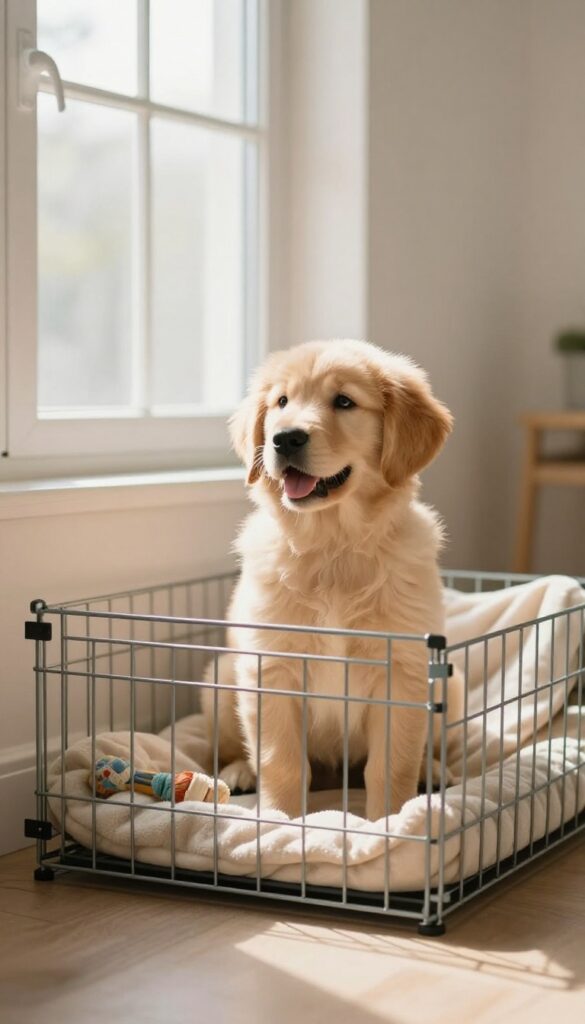
Even with a solid plan, you'll hit a snag or two. Maybe your puppy suddenly refuses to go in, or they start barking at night. Don't panic—these are normal bumps in the road.
The key is to stay patient and tweak your approach.
When your puppy resists the crate, it's usually a sign that you've moved too fast. Back up a step and go slower. Revisit the earlier steps: toss treats inside, feed meals near the crate, and leave the door open so they can explore on their own terms.
Also, check the crate environment. Make sure it's not too hot or cold, and consider covering it with a light blanket to create a den-like feel. If accidents happen, clean thoroughly with an enzymatic cleaner and adjust your schedule to prevent future mishaps.
Remember, most problems are temporary—stay consistent and your puppy will get back on track.
When Your Puppy Refuses To Enter
If your puppy plants their paws and won't go in, don't force it. Instead, go back to basics. Toss high-value treats inside so they associate the crate with good things.
Leave the door open and let them come and go freely. You can also try feeding meals near the crate, gradually moving the bowl inside. Patience is key—never push or drag them in, as that will only increase their fear.
Dealing With Nighttime Whining
Nighttime whining is common, especially in the first few nights. Make sure your puppy has had a potty break right before bed, and keep the crate in your bedroom so they feel less isolated. If they whine, wait a few minutes to see if they settle.
If not, take them out for a quick potty break, but keep it boring—no playtime. Put them back and ignore further whining. Consistency helps them learn that night is for sleeping.
Handling Accidents In The Crate
Accidents happen, but they shouldn't be a regular thing. If your puppy has an accident, clean it thoroughly with an enzymatic cleaner to remove all traces of odor. Then, adjust your schedule.
Puppies usually need a potty break every few hours, so set a timer. Also, make sure the crate isn't too big—if it's too spacious, they may use one corner as a bathroom. Use a divider to create a snug space.
When Your Puppy Barks Or Howls
Barking and howling can be frustrating, but remember that your puppy is communicating. They might be bored, anxious, or need to go out. Ensure they've had enough exercise and mental stimulation before crating.
If the barking continues, try covering the crate with a blanket to reduce visual stimulation. Never reward barking by letting them out immediately—wait for a quiet moment, then release. This teaches them that calm behavior gets them out.
FAQ
How long can a puppy stay in a crate?
A general rule is one hour per month of age, plus one. So a 3-month-old puppy can handle about 4 hours max, but always let them out for potty breaks more frequently.
Should I put a pee pad inside the crate?
No. Puppies naturally avoid soiling their sleeping area. A pee pad encourages them to go inside.
Instead, take them out frequently and use the crate for short periods only.
What if my puppy cries at night in the crate?
Make sure they've had a potty break and some exercise before bed. Place the crate near your bed so they can see you. Ignore mild whining, but if they seem distressed, take them out for a quick potty break and then return them.
Can I crate train an older dog?
Yes, with patience. Older dogs may need more time to adjust. Follow the same gradual steps, and consider using extra-high-value treats and making the crate extra cozy.
How do I stop my puppy from barking in the crate?
Barking often means they want attention or need to go out. Wait for a pause in barking, then reward with quiet. If barking continues, try covering the crate or playing soft music to muffle outside sounds.
Conclusion
Crate training isn't just about confinement—it's about giving your puppy a safe, cozy space they love. By following these 10 steps, you're building trust and calmness that will last a lifetime. Start slow, stay consistent, and let your pup set the pace.
Before you know it, the crate will be their favorite spot, and you'll both enjoy a more relaxed home. Stick with it, and enjoy the peace of mind that comes with a well-adjusted dog.

I’m Pallab Kishore, the owner of Little Pets Realm — an animal lover and pet care enthusiast sharing easy tips, healthy recipes, and honest advice to help every small pet live a happy, healthy, tail-wagging life.