
Last updated on August 19th, 2026 at 04:15 pm
Your dog deserves a cool escape when the summer heat hits. A dedicated pool area can turn your backyard into their personal water park.
But you don't need a massive budget or a professional landscaper to make it happen. Whether you have a small patio or a sprawling lawn, there's a dog-friendly pool setup that fits your space and style.
From simple kiddie pools to elaborate splash zones, these ideas are practical, affordable, and built for fun. Let's dive into 13 backyard dog pool area ideas that will have your pup splashing all season long.
1. The Classic Kiddie Pool Upgrade
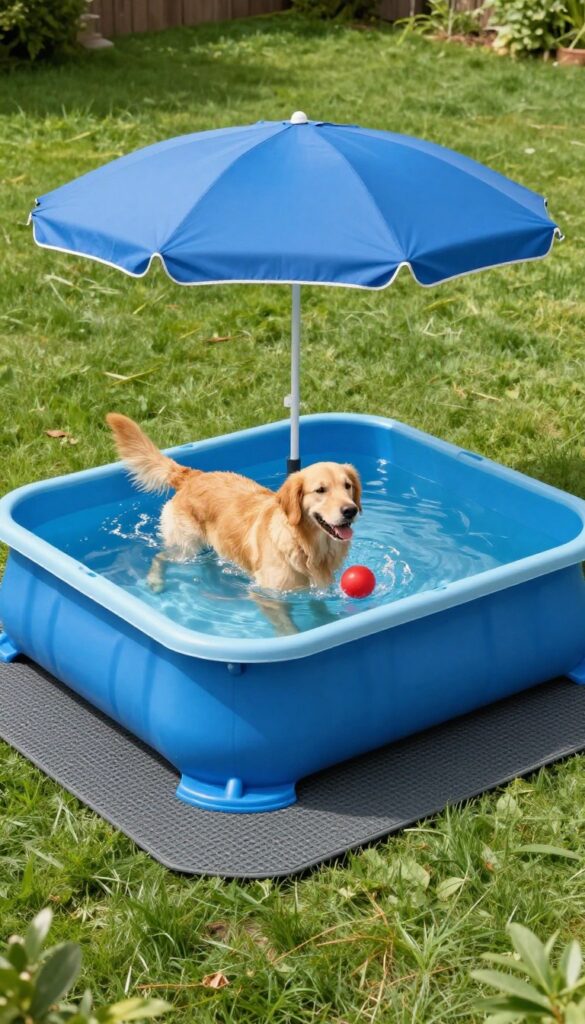
You don't have to overthink it. A basic kiddie pool is still one of the best ways to cool off your dog, and with a few simple upgrades, it can feel like a custom-built splash zone. The key is making it safe, comfortable, and fun for your pup without spending a fortune.
Start with a sturdy plastic kiddie pool—look for one with thick walls that won't crack easily. Place it on a level spot in your yard, then add a non-slip mat underneath to prevent sliding when your dog jumps in and out. A small shade umbrella anchored nearby gives your pup a place to rest between dips, and floating toys like rubber balls or squeaky rings keep them entertained.
That's really all it takes to turn a ten-dollar pool into a backyard favorite.
Choose The Right Pool
Not all kiddie pools are dog-proof. Avoid inflatable ones—they pop too easily. Instead, go for a hard plastic model with a smooth interior.
Look for a diameter of at least 4 feet so medium to large dogs can stretch out. If you have a giant breed, consider a galvanized steel stock tank—it's tougher and holds more water.
Safety First: Non-slip And Shade
Wet paws on grass or concrete can lead to slips. A rubber or foam mat under the pool gives traction and protects the lawn underneath. For shade, use a cantilever umbrella or a simple beach umbrella stuck into a weighted base.
Position it so the pool gets afternoon shade—that's when the sun is harshest.
Add Some Splash Toys
Floating toys make the pool more engaging. Choose toys that are easy to clean and don't absorb water, like hard rubber or silicone. Avoid toys with squeakers that can trap water and grow mold.
A few floating balls or a floating rope toy will keep your dog paddling and playing for hours.
2. DIY Splash Pad from PVC Pipe
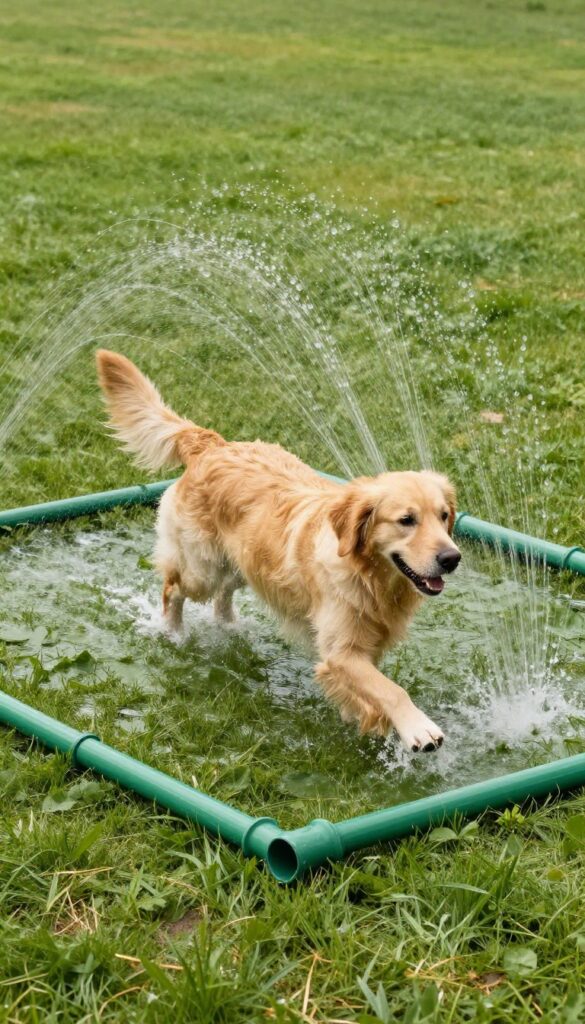
A PVC splash pad is one of the simplest and most entertaining water features you can build for your dog. It costs under $20, takes about an hour to assemble, and creates a gentle spray that dogs love to chase and bite. The best part?
You can customize the size and shape to fit your yard perfectly.
Building a PVC splash pad is straightforward. You'll need a few feet of 1/2-inch PVC pipe, four elbow joints, a T-joint, and a hose adapter. Arrange the pipes into a square or rectangle, drill small holes along the top every few inches, and connect the hose.
Turn on the water, and you've got an instant splash zone. For extra stability, stake the frame into the ground or weigh it down with a few bricks.
Choosing The Right Location
Pick a flat spot on grass or dirt so the water can drain naturally. Avoid concrete or decking, as it can get slippery and cause paw injuries. If you must place it on a hard surface, lay down a rubber mat or outdoor rug underneath for traction.
Customizing The Spray Pattern
Drill smaller holes for a fine mist or larger ones for more forceful streams. You can also angle some holes upward for a higher spray. For extra fun, add a second T-joint in the middle to create a cross shape with more spray points.
Safety And Maintenance Tips
Always supervise your dog around the splash pad, especially if they're heavy chewers. PVC can crack if bitten. Drain and dry the pad after each use to prevent mold.
Store it indoors during winter to extend its life.
3. Inflatable Dog Pool with Built-in Shade
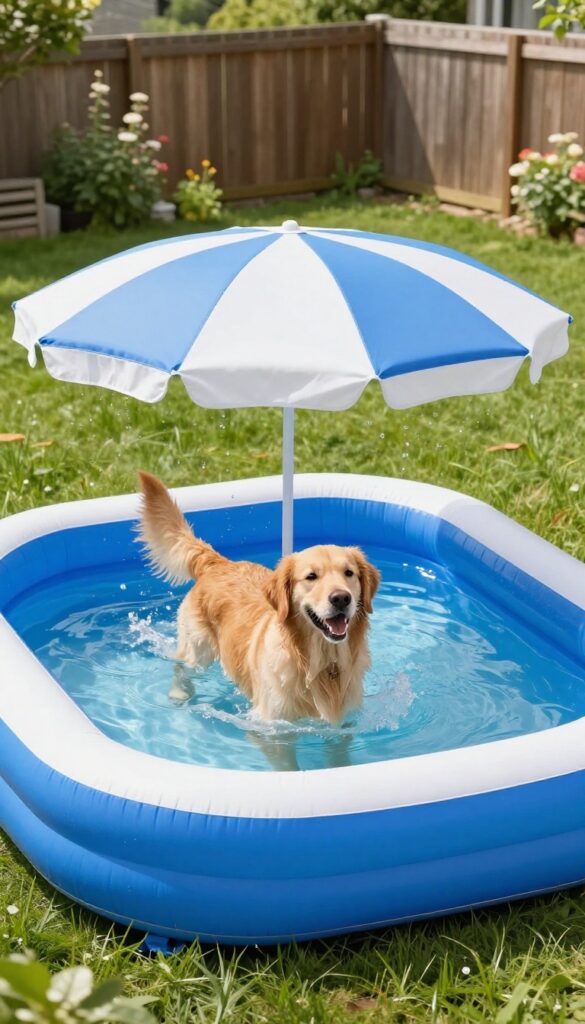
Not all pools require permanent installation. An inflatable dog pool with a built-in shade canopy offers a portable, affordable solution that keeps your pup cool and sun-safe. These pools are designed specifically for dogs, with durable materials and easy setup.
You can move them around the yard or take them on trips. The shade feature is a game-changer—it keeps the water temperature down and gives your dog a protected spot to lounge.
Why Built-in Shade Matters
Dogs can overheat quickly, especially when playing in direct sun. A canopy or attached shade sail blocks harmful UV rays and creates a cooler microclimate inside the pool. This means longer, safer play sessions.
Some models include a removable sunshade that adjusts to the sun's angle, so you can keep your dog comfortable all day.
Choosing The Right Size And Material
Look for puncture-resistant PVC or reinforced vinyl—these hold up to enthusiastic claws. Measure your dog from nose to tail and add a few inches for splashing room. A 48-inch diameter works well for medium breeds, while larger dogs may need a 60-inch pool.
Check the weight capacity too; some inflatable pools support up to 150 pounds.
Setup And Maintenance Tips
Inflate the pool on a flat, debris-free surface to prevent punctures. Use a pump for faster setup. Add water up to the recommended fill line—usually 6–8 inches.
Change the water daily to keep it clean and algae-free. When not in use, deflate and store in a cool, dry place. A splash of dog-safe disinfectant can help prevent odors.
4. Stock Tank Pool for Large Breeds
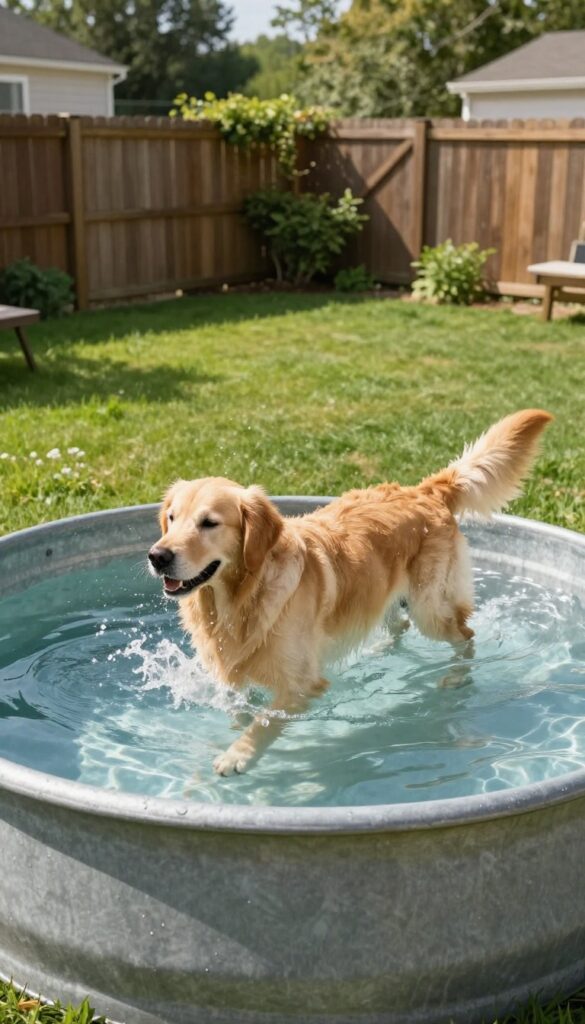
Big dogs need big pools, and a galvanized stock tank delivers. Originally designed for livestock watering, these heavy-duty tanks are deep, wide, and tough enough to withstand enthusiastic splashing. They're also surprisingly affordable compared to preformed plastic pools.
A stock tank pool is a no-fuss solution that looks right at home in any backyard. The metal construction stays cool in the sun, and the smooth interior is gentle on paws. Add a simple ramp or set of steps, and your large breed will have easy access without struggling to climb in and out.
Setting up a stock tank pool is straightforward. Choose a level spot on grass or gravel, fill it with a garden hose, and you're done. For extra comfort, place a rubber mat underneath to prevent the metal from scratching your lawn.
The tank's depth—typically 2 feet—gives big dogs enough water to submerge their bodies without being too deep for safety. Just keep an eye on water temperature on very hot days, as metal can heat up if left in direct sun all afternoon.
Choosing The Right Size
Stock tanks come in various diameters, from 2 feet to 8 feet. For a single large breed like a Labrador or German Shepherd, a 4-foot tank works well. If you have multiple big dogs or want room for them to paddle around, go with a 6-foot or larger.
Measure your yard space and your dog's size before buying.
Adding A Ramp Or Steps
Big dogs can struggle to lift themselves over a tall metal rim. A simple wooden ramp covered with outdoor carpet gives them traction and a gentle slope. Alternatively, use plastic pet steps designed for pools.
Place the ramp at a shallow angle so even senior dogs can climb out easily.
Maintenance Tips
Change the water every couple of days to keep it fresh and clean. A pool skimmer net helps remove leaves and fur. In winter, drain and store the tank upside down to prevent rust.
A quick scrub with a mild soap and rinse keeps algae at bay.
5. Raised Dog Pool with Deck
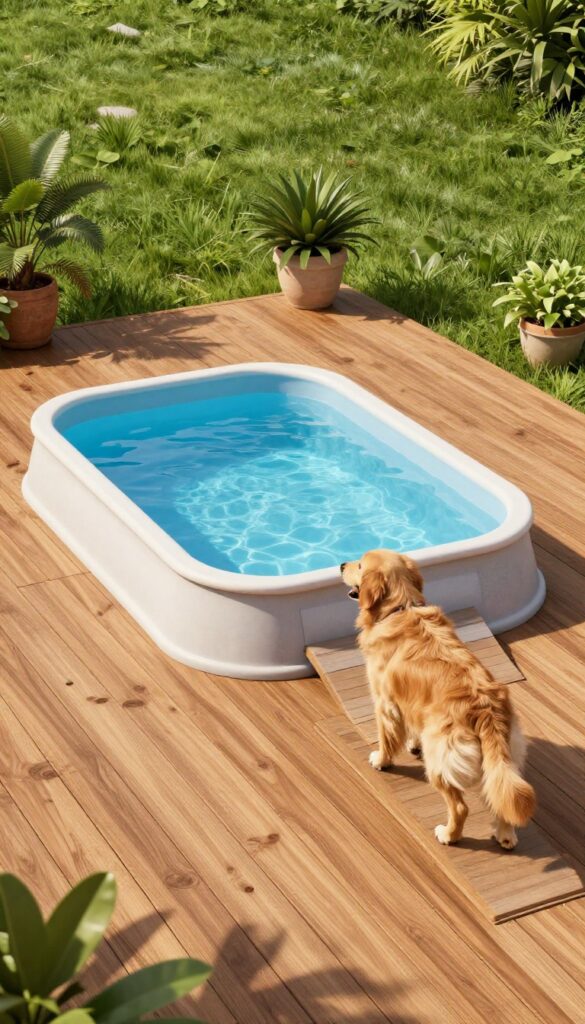
A raised dog pool with a deck is a game-changer if you want to keep your yard from turning into a muddy mess. By elevating the pool off the ground, water stays contained and your grass stays green. Plus, the deck gives your dog a stylish spot to lounge between dips.
Building a low wooden deck with a built-in pool insert is easier than it sounds. You can use a preformed plastic kiddie pool or a custom liner, then frame it with pressure-treated lumber. The key is to make the deck low enough for easy dog access—about 6 to 12 inches off the ground works well.
Add a ramp or wide steps so even senior dogs can climb in and out without trouble.
Why Go Raised?
A raised pool keeps water from pooling on your lawn, which means less mud and fewer dead grass patches. It also reduces the amount of debris that falls into the water, so you'll spend less time cleaning. Plus, the deck surface gives your dog a dry place to shake off before running into the house.
Simple Diy Build
Start by building a basic wooden frame that matches the size of your pool insert. Use weather-resistant screws and seal the wood with a pet-safe waterproofing stain. Drop the pool into the frame and secure it with trim pieces.
For drainage, drill a small hole at the lowest point and plug it with a rubber stopper—just pull it when you need to empty the pool.
Styling Your Deck
Paint or stain the deck to match your outdoor furniture. Add a few potted plants or a small umbrella for shade. You can even attach a hose hookup nearby for easy filling.
Keep the deck surface textured (like with grip tape or outdoor carpet) to prevent slipping when wet.
6. Gravel and Pool Combo Zone
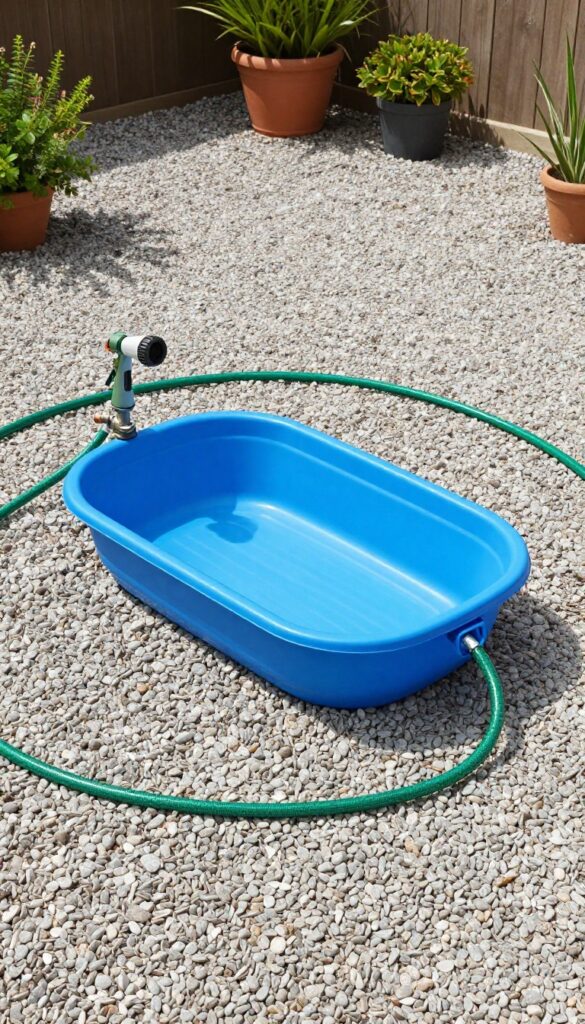
Pea gravel isn't just for pathways—it's a smart surface solution for a dog pool area. The gravel drains quickly, so you won't end up with a muddy mess after every splash session. Pair it with a small pool and a dedicated hose station, and you've got a low-maintenance setup that keeps your yard clean and your pup cool.
This idea works especially well if your dog loves to dig or if your yard tends to get swampy after rain. The gravel acts like a natural drainage bed, letting water soak away instead of pooling. Plus, it's comfortable on paws and easy to refresh by raking or hosing off debris.
Why Pea Gravel Works
Pea gravel has smooth, rounded edges that are gentle on dog paws. Its porous nature allows water to drain through quickly, so the area dries fast after use. This prevents mud formation and keeps the space tidy.
You can also top it up or replace it easily if needed.
Setting Up The Zone
Start by leveling a patch of ground and laying down a weed barrier. Spread a 2-3 inch layer of pea gravel over the area. Place a durable kiddie pool or a small stock tank on top.
Install a hose station nearby—either a simple spigot or a hose holder with a spray nozzle—for quick refills and rinsing.
Maintenance Tips
Rake the gravel occasionally to keep it even and remove leaves or debris. Flush the area with a hose every few weeks to wash away dirt. If your dog brings in mud from the yard, a quick spray will clean the gravel surface.
Replace the pool water daily to keep it fresh.
7. Shaded Lounging Area Next to the Pool
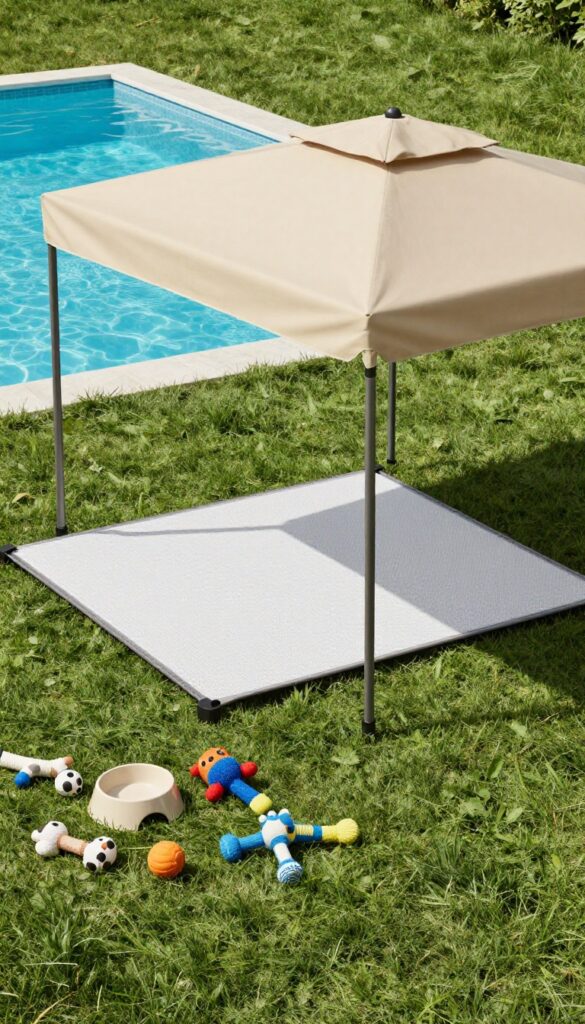
After a good splash session, your dog needs a cozy spot to dry off and cool down without baking in the sun. A shaded lounging area right next to the pool gives them that perfect transition zone. It keeps your pup comfortable and prevents overheating, so playtime can last longer.
Pick The Right Shade Structure
A canopy is quick and portable, great if you want flexibility. A pergola adds a permanent, stylish touch and can support climbing plants for extra shade. Shade sails are a budget-friendly option that covers a large area and looks modern.
Choose based on your yard size and how permanent you want the setup.
Make The Lounging Area Dog-friendly
Use a cooling mat or raised cot so air circulates underneath. Avoid materials that trap heat like dark concrete or metal. Add a water bowl and maybe a few toys so your dog can relax or play nearby.
Keep the area clean with easy-to-wipe surfaces or removable covers.
Position For Maximum Comfort
Place the shade so it catches the afternoon sun, which is the hottest part of the day. If possible, orient it so your dog can watch you while resting. A little distance from the pool edge prevents splashes from soaking the lounging area, but close enough for quick dips.
8. Floating Dog Bed or Raft
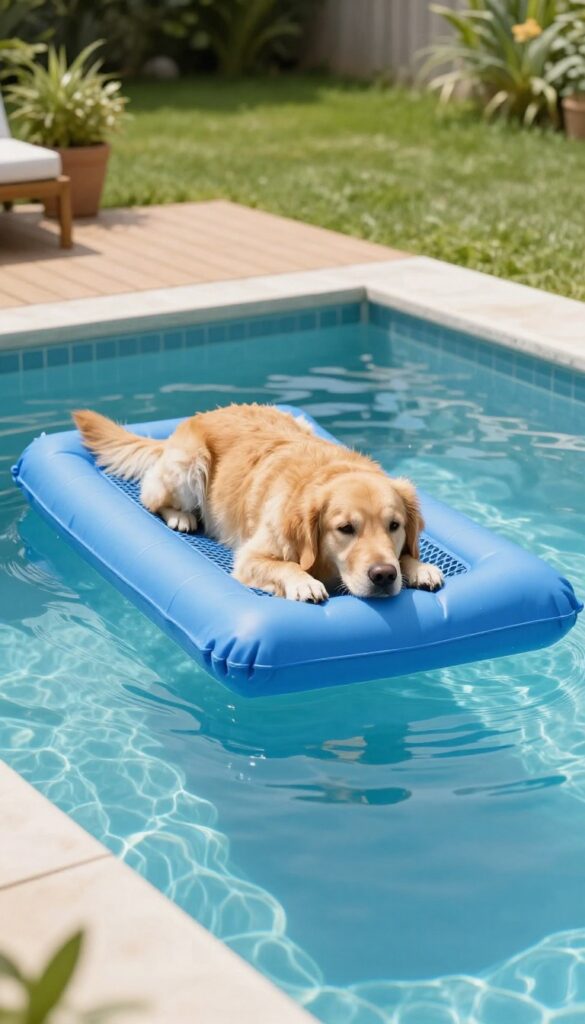
Some dogs just want to float. If your pup prefers lounging over splashing, a floating dog bed or raft turns the pool into their personal relaxation zone. These buoyant platforms let dogs rest on the water while staying cool, perfect for shallow, supervised sessions.
They're especially great for older dogs or breeds that tire easily but still want to be part of the action.
Choosing The Right Float
Look for a floating bed made from durable, puncture-resistant material like heavy-duty PVC or nylon. Some are designed with mesh centers so water drains through, keeping the surface from getting slippery. Make sure the float has enough buoyancy to support your dog's weight without tipping.
For smaller dogs, a simple foam raft works well; larger breeds need a sturdier platform with reinforced edges.
Safety First
Always supervise your dog on a floating bed, especially if they're not strong swimmers. Introduce the float gradually in shallow water, and let your dog get comfortable stepping onto it. Avoid leaving the float in the pool when not in use, as dogs might try to climb on unsupervised.
If your dog seems nervous, don't force it—some pups prefer solid ground.
Adding Comfort And Fun
Attach a floating toy or a chew-friendly bumper to the raft to encourage your dog to stay onboard. You can also anchor the float near the pool's edge with a light rope so it doesn't drift into deeper water. Some floating beds come with removable cushions for extra comfort, but these need to be rinsed and dried to prevent mold.
9. Pool with a Splash-Proof Water Dispenser
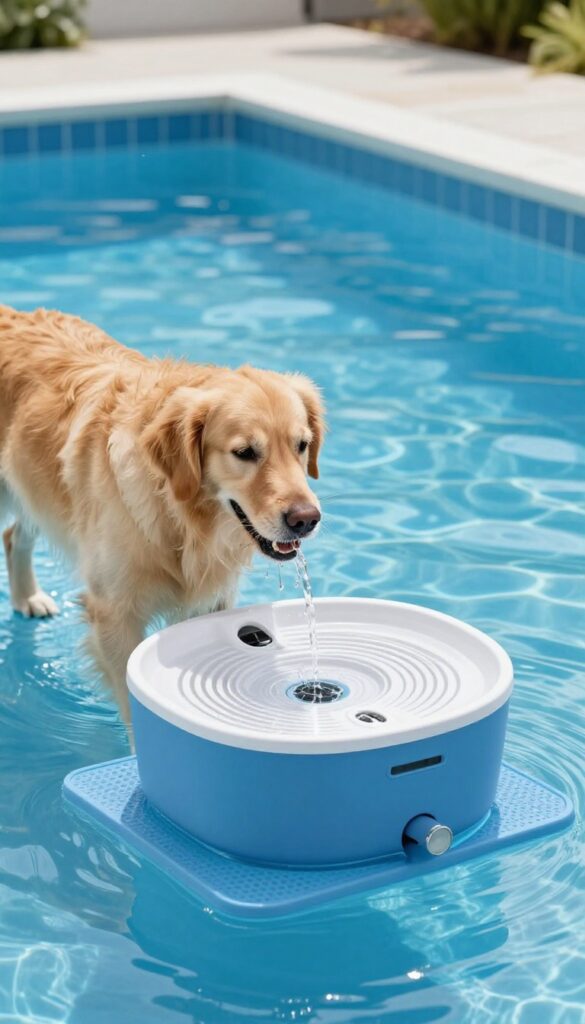
Dogs love pool water, but that chlorine or salt isn't great for their stomach. A dedicated water station nearby solves the problem and keeps them hydrated the healthy way. A splash-proof dispenser or pet fountain near the pool area gives your dog constant access to fresh water.
It's a simple upgrade that makes a big difference in their comfort and safety.
Why A Separate Water Source Matters
Pool chemicals can upset your dog's stomach or cause dehydration if they drink too much. A clean water station encourages them to drink from the right source. Plus, it keeps the pool cleaner by reducing the amount of doggy drool and debris.
Best Types Of Water Dispensers For Pool Areas
Look for a heavy-duty, tip-proof design that can handle wet paws and excited splashes. Automatic pet fountains with filters are great because they circulate and aerate the water, keeping it fresh. Or go with a simple gravity-fed waterer that you can refill easily.
Placement Tips For Maximum Use
Set the dispenser on a non-slip mat in a shaded spot near the pool exit. That way, your dog can grab a drink right after swimming without tracking water everywhere. Keep it a few feet from the pool edge to avoid splashes contaminating the fresh water.
10. Tiled Mosaic Dog Pool
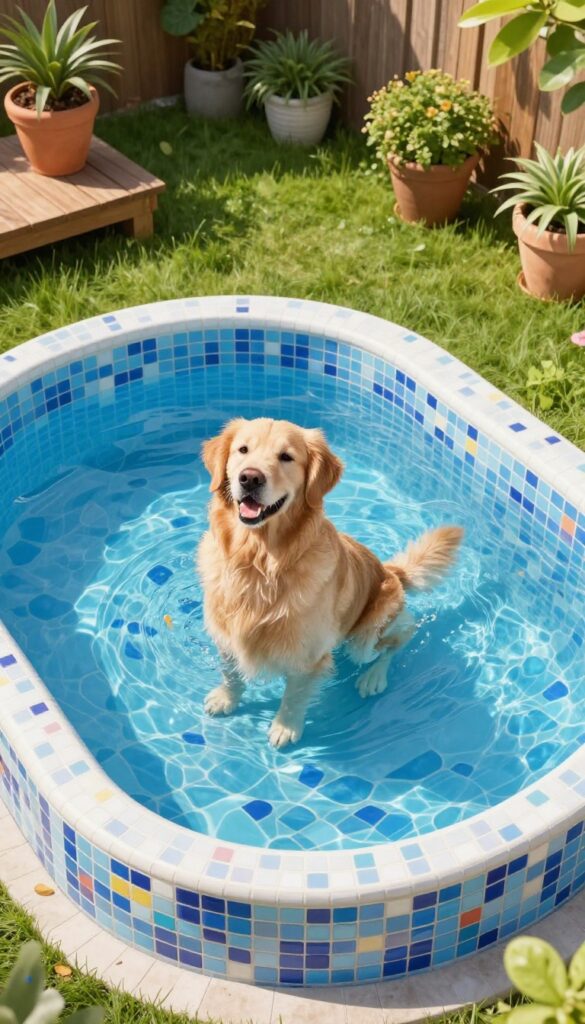
If you're ready for a permanent upgrade, a tiled mosaic dog pool is a stunning and functional addition to your backyard. This isn't a flimsy plastic tub—it's a custom-built oasis that adds value to your home and endless joy for your pup. The key is to design it with your dog's safety and your maintenance sanity in mind.
Building a tiled dog pool requires some planning, but the result is a durable, easy-to-clean feature that looks beautiful. Start by choosing a location with good drainage and sunlight. Excavate a shallow basin—no more than 18 inches deep for most dogs—and line it with concrete or a pre-formed shell.
Then, apply non-slip mosaic tiles to the interior. These tiles come in endless colors and patterns, so you can match your patio or create a playful design. Don't forget a drainage system: a simple floor drain or a sloped bottom leading to a gravel pit will make cleaning a breeze.
A small pump and filter can keep the water fresh, or you can drain and refill as needed.
Why Non-slip Tiles Matter
Dogs scramble in and out of pools, and wet surfaces get slippery fast. Non-slip tiles with a textured finish (like pebble or matte) give your pup secure footing. Avoid glossy or smooth tiles—they're a slip hazard.
Test a few samples before committing.
Drainage And Cleaning
Standing water breeds bacteria and algae. Install a drain at the lowest point of the pool, connected to a dry well or your yard's drainage system. For easy cleaning, add a hose bib nearby so you can spray down the tiles after each use.
A skimmer net helps remove leaves and fur.
Design Ideas For Mosaic Patterns
Get creative with tile patterns: paw prints, bone shapes, or a simple blue wave. Use contrasting colors to define the shallow end. Or keep it elegant with earth tones that blend into the landscape.
The mosaic can be a focal point or subtle—your call.
11. Pool with a Built-in Sprinkler System
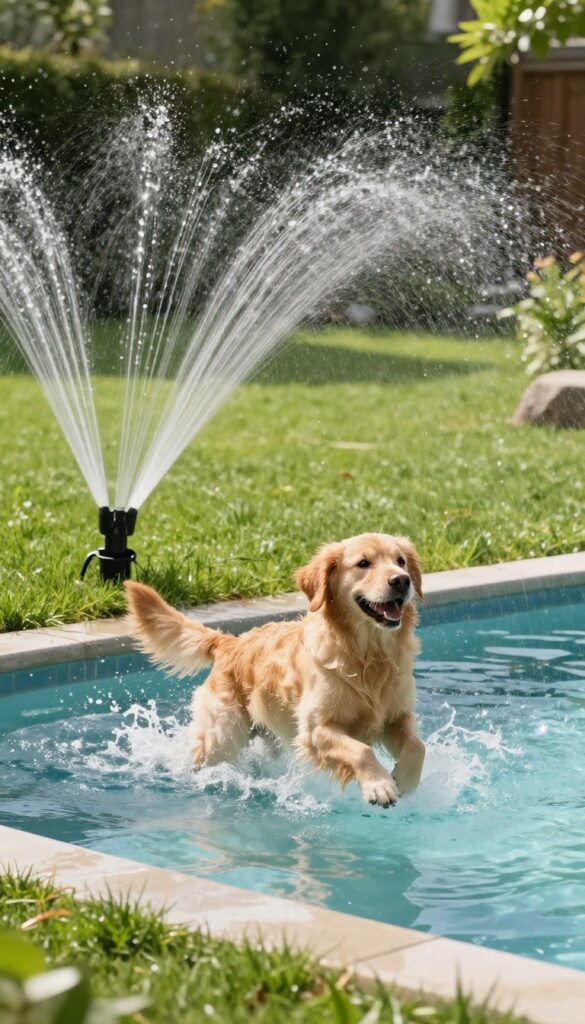
A pool with a built-in sprinkler system takes the fun factor up several notches. Instead of just splashing around, your dog gets an interactive water experience that keeps them entertained for hours. The sprinkler can be activated by a timer or a motion sensor, so the water bursts surprise your pup just when they least expect it.
This setup is perfect for energetic dogs who love chasing and pouncing on moving water.
How It Works
The system typically includes a small pump or a direct tap connection that feeds water to one or more sprinkler heads placed around the pool perimeter. A timer lets you schedule play sessions, while a motion sensor triggers the sprinkler when your dog approaches. Some models even have adjustable spray patterns and intensity, so you can customize the experience for your dog's size and play style.
Benefits For Your Dog
The surprise bursts of water stimulate your dog's natural prey drive and provide excellent mental enrichment. It's also a great way to encourage exercise without you having to throw a ball endlessly. The intermittent water action keeps dogs engaged and helps them cool down gradually, reducing the risk of overheating.
Installation Tips
You can buy a standalone sprinkler attachment that clips onto the pool edge, or go with a more permanent setup that integrates into your existing irrigation system. For the DIY route, a simple garden hose with a timer and a sprinkler head works fine. Just make sure the water is clean and the pressure is low enough not to startle your dog.
Position the sprinkler so it sprays into the pool area, not away from it, to keep the splash zone contained.
12. Portable Dog Pool for Travel
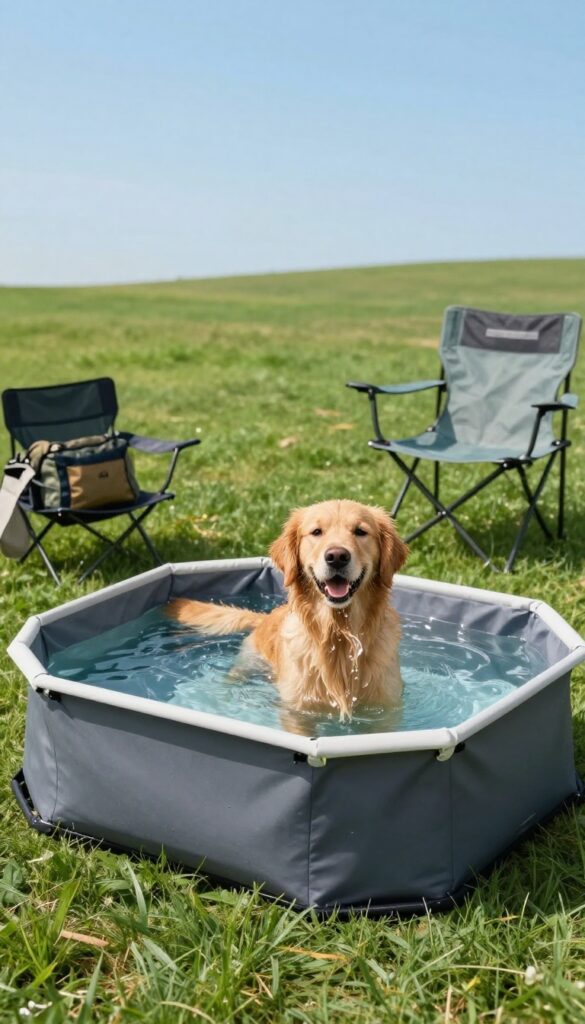
Not every dog pool needs to be a permanent fixture. A portable option lets you take the fun wherever you go, whether that's a weekend camping trip or just chasing the shade across your yard. These collapsible fabric pools are lightweight, easy to pack, and surprisingly durable.
A portable dog pool is a game-changer for active pet parents. It folds flat when empty, so you can stash it in the trunk or a closet without sacrificing space. Set it up in minutes—just unfold, fill with water, and watch your pup dive in.
When playtime's over, drain it and wipe it down. No heavy lifting or complicated storage required.
Why Collapsible Works Best
Fabric pools with reinforced PVC or rubber bottoms hold up to claws and rough play. They come in various sizes, from small splash pools for terriers to larger options for retrievers. The best part?
They pack down to the size of a large pizza box, making them ideal for road trips or apartment balconies.
Follow The Shade All Day
One major advantage of a portable pool is mobility. As the sun moves, you can drag the empty pool to a shadier spot and refill it. This keeps the water cooler and your dog more comfortable.
Some pools even come with a drain plug, so you don't have to tip the whole thing over to empty it.
Travel-friendly Tips
Pack a small pump or use a bucket to fill the pool if you're camping without a hose. Bring a microfiber towel to dry the pool before folding it up—this prevents mildew. And always check the ground for sharp rocks or sticks before setting up to avoid punctures.
13. Pool Area with Artificial Turf Surround
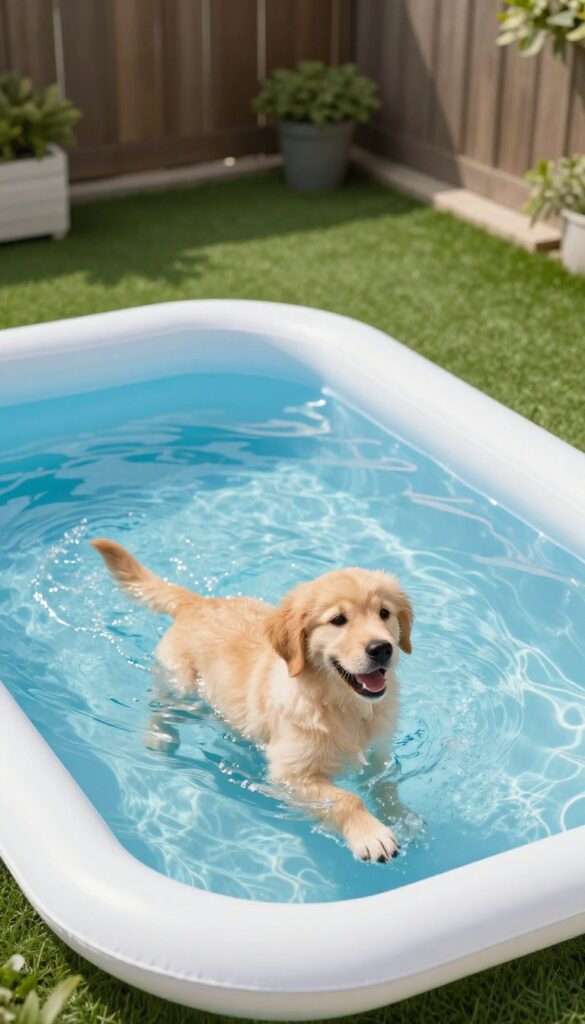
Artificial turf around the pool is a game-changer for dog owners. It keeps paws clean, eliminates mud, and dries quickly after a splash session. Plus, it looks great and requires almost no maintenance.
Laying artificial turf around your dog's pool creates a soft, clean surface that's kind to paws and easy to rinse off. Unlike natural grass, it won't turn into a muddy mess when wet. You can hose it down to remove dirt and pet hair, and it drains quickly so your pup stays comfortable.
It's also durable enough to handle running and digging without wearing out. Pair it with a small pool for a tidy, low-maintenance splash zone that stays green all year.
Why Artificial Turf Works
Real grass gets muddy and patchy from constant wetness and dog traffic. Artificial turf stays green and clean no matter how much your pup splashes. It's also non-toxic and safe for pets, with no pesticides or fertilizers needed.
Installation Tips
Choose a turf with good drainage and a soft pile height (around 1. 5 to 2 inches). Install it over a compacted base of crushed stone or sand to prevent pooling.
Make sure the turf is securely anchored at the edges so your dog can't lift it.
Maintenance Made Simple
Rinse the turf with a hose after muddy play to keep it fresh. Use a pet-safe enzyme cleaner for any accidents. Brush the fibers occasionally to keep them upright and remove debris.
That's all it takes to keep the area looking new.
FAQ
What is the best type of pool for a backyard dog area?
It depends on your dog's size and your space. For small dogs, a sturdy kiddie pool works great. Large breeds do well with stock tanks or inflatable pools designed for dogs.
Permanent tiled pools are best for long-term use.
How do I keep the pool water clean for my dog?
Change the water daily if using a small pool. For larger pools, use a pet-safe water filter or add a small pump. Rinse your dog before they enter to reduce dirt and debris.
Can I use a regular swimming pool for my dog?
Yes, but supervise closely. Dogs can tire quickly, so provide a ramp or steps for easy exit. Also, rinse your dog after swimming to remove chlorine or salt.
What safety measures should I take for a dog pool area?
Always supervise your dog. Use non-slip surfaces, provide shade and fresh water, and ensure the pool is not too deep. For inflatable pools, check for punctures regularly.
How can I prevent my yard from getting muddy around the pool?
Place the pool on gravel, artificial turf, or a deck. You can also use a tarp underneath with drainage holes. A splash mat around the pool helps contain water.
Conclusion
Turning your backyard into a dog-friendly oasis doesn't require a full renovation. Start with one idea that fits your space and your pup's personality, whether it's a splash pad for hot days or a shaded lounge for lazy afternoons. Small changes like adding non-slip mats or a sturdy fence can make a big difference in safety and enjoyment.
Your dog will thank you with endless tail wags. The best backyard setups grow with your needs. Pick a project you can tackle this weekend, then add another next season.

I’m Pallab Kishore, the owner of Little Pets Realm — an animal lover and pet care enthusiast sharing easy tips, healthy recipes, and honest advice to help every small pet live a happy, healthy, tail-wagging life.