Last updated on August 19th, 2026 at 04:19 pm
Guinea pigs are curious, active pets that need mental and physical stimulation to stay happy and healthy.
Providing a variety of toys for chewing, hiding, and play can prevent boredom and promote natural behaviors.
Here are 11 safe, vet-approved toy ideas that will keep your guinea pig entertained and enriched.
Willow Balls for Safe Chewing
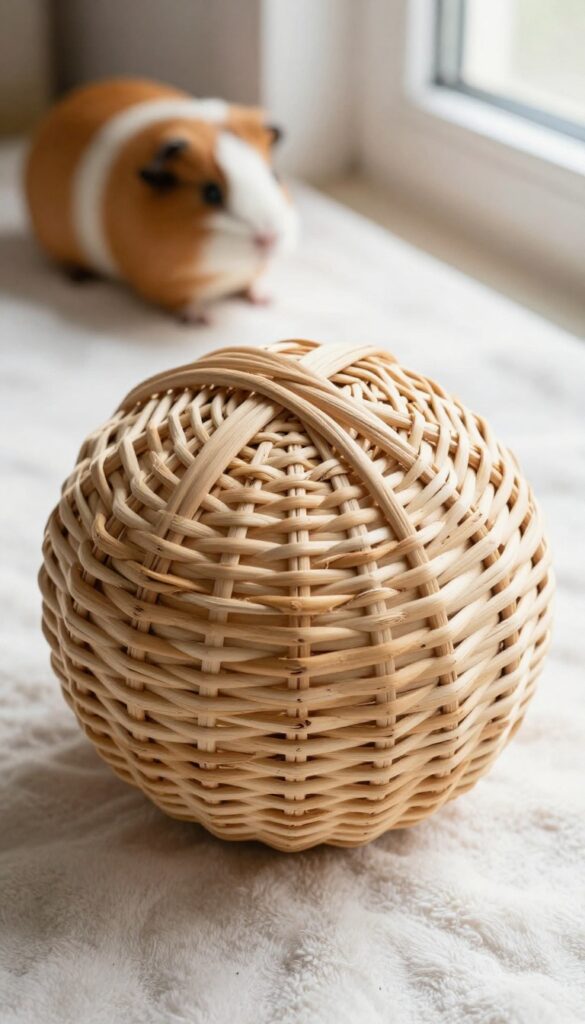
Willow balls are a top choice for satisfying your guinea pig’s natural chewing instincts while promoting dental health. These natural, digestible toys are made from untreated willow, making them safe for your pet to gnaw on.
Guinea pigs have open-rooted teeth that grow continuously, so they need safe items to chew on to keep them at a healthy length. Willow balls are perfect for this—they’re tough enough to provide resistance but soft enough to be gnawed without harming teeth. As your guinea pig chews, the willow fibers help wear down teeth naturally, reducing the risk of dental problems.
- Willow balls are natural, digestible, and satisfy chewing instincts.
- They help wear down constantly growing teeth.
- Choose untreated, pesticide-free willow balls.
When selecting willow balls, avoid any that are painted, dyed, or treated with chemicals, as these can be toxic. Stick with plain, natural willow balls from pet stores or online retailers specializing in small animal supplies. You can offer them as standalone toys or hang them in the cage for extra fun.
Replace them once they become soiled or too chewed down.
Cardboard Tunnels for Hiding and Exploring
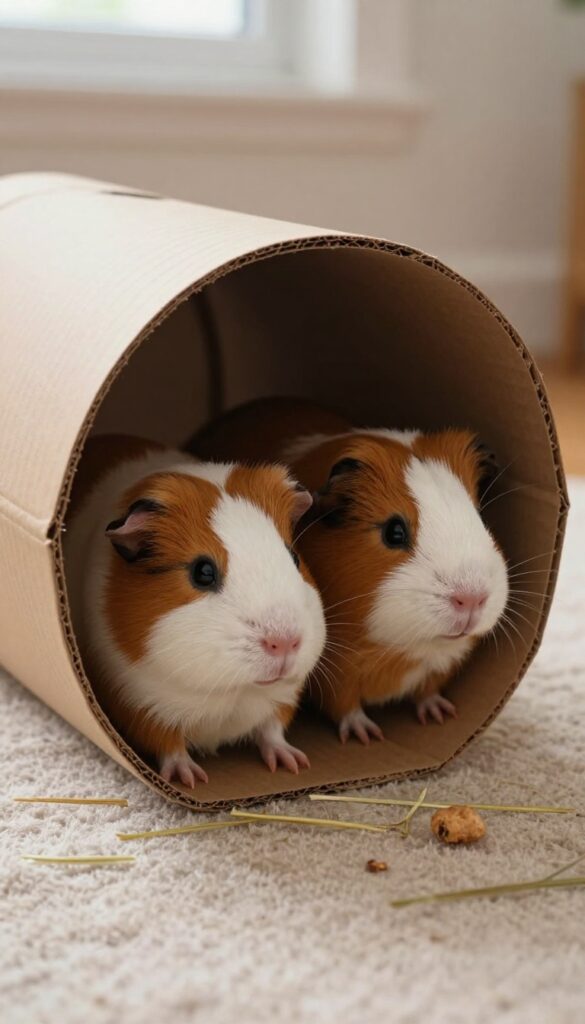
Cardboard tunnels tap into your guinea pig’s natural instinct to hide and explore. They’re cheap, easy to replace, and provide endless entertainment.
Guinea pigs are prey animals, so they feel safest when they have places to duck into. A simple cardboard tunnel gives them that security while encouraging movement and curiosity. You can buy tunnels at pet stores or make your own from sturdy cardboard tubes, like those from wrapping paper or shipping boxes.
Just cut them to a length your piggy can run through comfortably.
Safety tips
- Remove any tape, staples, or labels before giving the tunnel to your pet.
- Avoid tunnels with small openings that could trap your guinea pig.
- Replace tunnels once they become soiled or chewed to the point of falling apart.
Because cardboard is biodegradable and safe to chew, tunnels double as a chewing toy. Your guinea pig will gnaw on the edges, which helps keep their teeth healthy. For extra fun, place a few treats or a handful of hay inside the tunnel to encourage foraging.
Hay Stuffed Toys for Foraging Fun
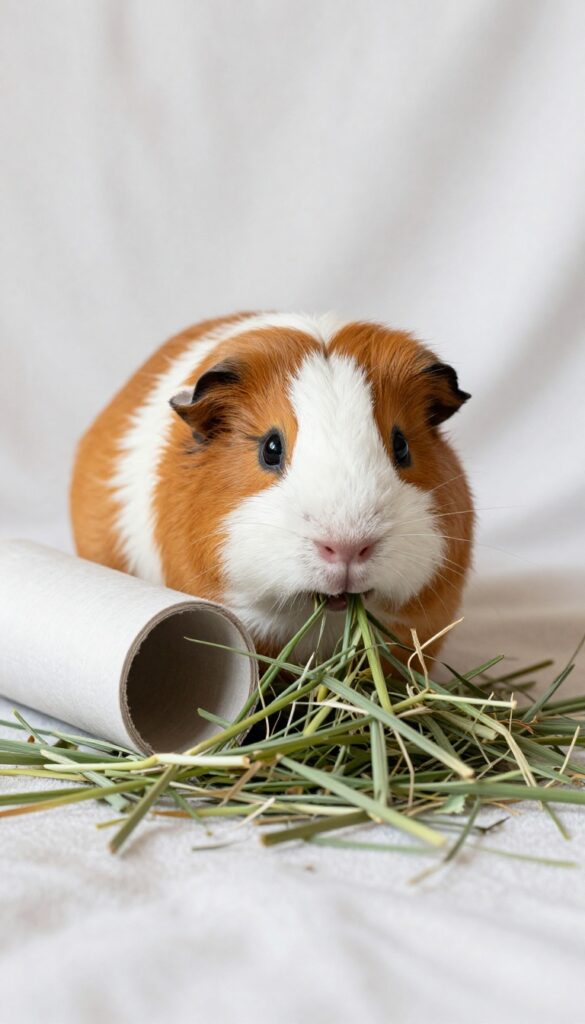
Guinea pigs are natural foragers, and hay stuffed toys tap into that instinct while providing hours of entertainment. These simple DIY toys encourage your pet to work for their food, stimulating their mind and satisfying their need to chew.
To make a hay stuffed toy, take a plain toilet paper roll or a small cardboard box and tightly pack it with fresh, unscented hay. Your guinea pig will enjoy pulling the hay out piece by piece, mimicking the foraging behavior they would exhibit in the wild. This activity not only keeps them busy but also helps wear down their continuously growing teeth.
Key Tips for Hay Stuffed Toys
- Use only plain, unscented hay – avoid any flavored or treated hay products.
- Choose cardboard rolls or boxes without glue, tape, or ink (remove any labels).
- Replace the hay daily to keep it fresh and encourage repeated foraging.
- Supervise the first few times to ensure your guinea pig doesn’t try to eat the cardboard in large pieces.
Hay stuffed toys are a fantastic way to combine chewing, hiding, and happy play into one simple enrichment activity. They are cost-effective, easy to make, and can be customized with different types of hay or by adding a few safe herbs inside for extra variety.
Wooden Chew Sticks for Dental Health
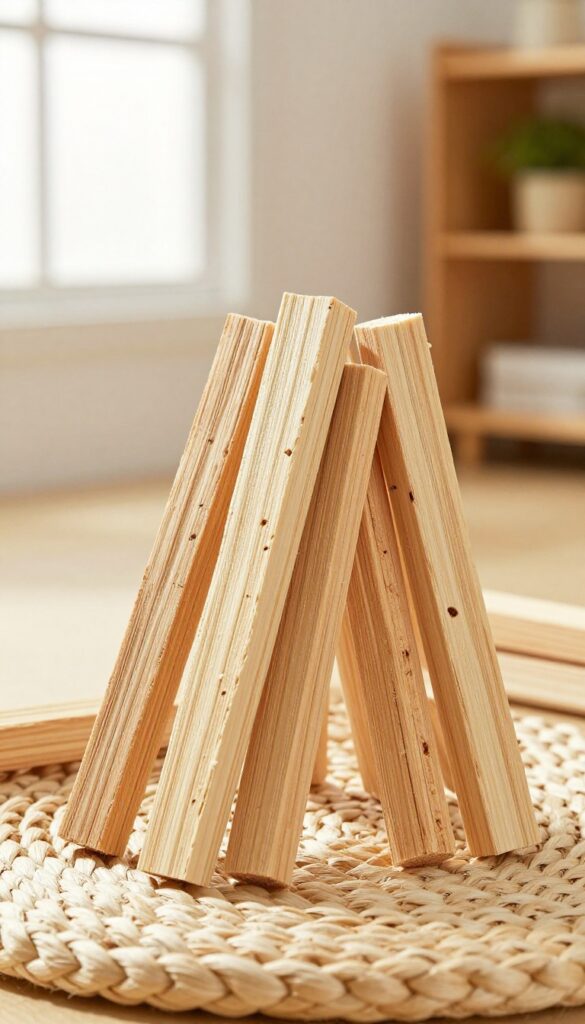
Wooden chew sticks are a classic guinea pig toy that supports dental health while satisfying the natural urge to gnaw.
Choose sticks made from untreated applewood or birch—these are safe, durable, and appealing to guinea pigs. Chewing on these sticks helps wear down continuously growing teeth, preventing painful overgrowth and dental problems. Avoid cedar or pine, as their oils can be toxic to small pets.
Never offer treated or painted wood, which may contain harmful chemicals.
Quick Tips
- Offer a variety of thicknesses to challenge different chewing strengths.
- Replace sticks once they become soiled or splintered.
- Place them near favorite resting spots to encourage use.
Fleece Hideaways for Cozy Hiding
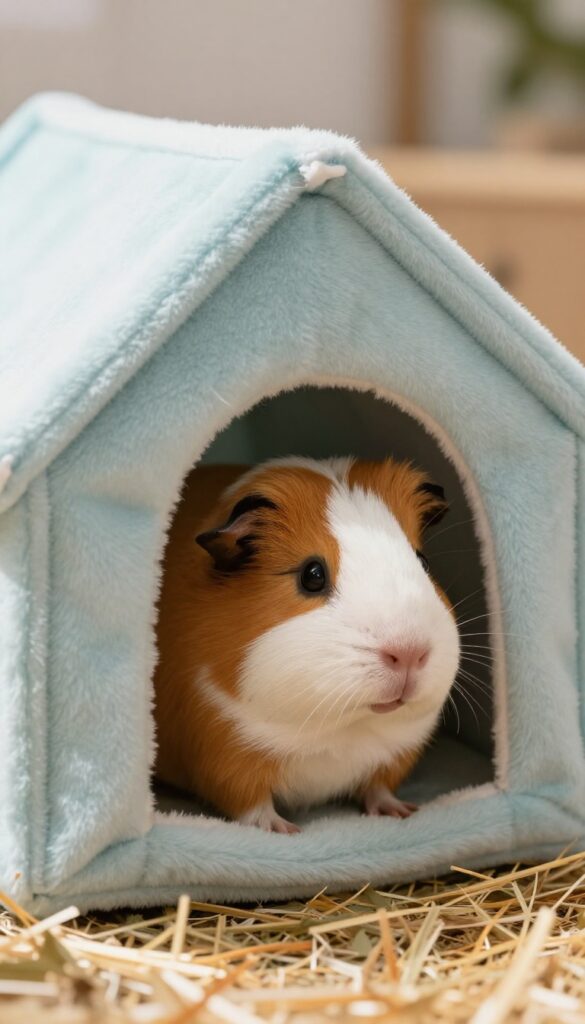
Fleece hideaways provide soft, warm, and secure spots for guinea pigs to retreat and feel safe. These cozy structures are a favorite among small pets and are easy to maintain.
Fleece tunnels or tents offer a gentle, breathable environment that keeps your guinea pig comfortable while satisfying their natural instinct to hide. Unlike plastic hides, fleece is quiet and doesn’t trap moisture, reducing the risk of respiratory issues.
- Fleece hideaways are machine washable, making them a hygienic and reusable option for long-term use.
- Always check for loose threads or frayed edges that could entangle your guinea pig’s paws or toes.
- Choose fleece with a tight weave to prevent snagging, and avoid materials that shed or pill easily.
Place fleece hideaways in quiet corners of the enclosure to create a den-like atmosphere. Your guinea pig will appreciate having a private space to nap or de-stress, especially in multi-pet households.
Paper Bags for Crinkly Fun
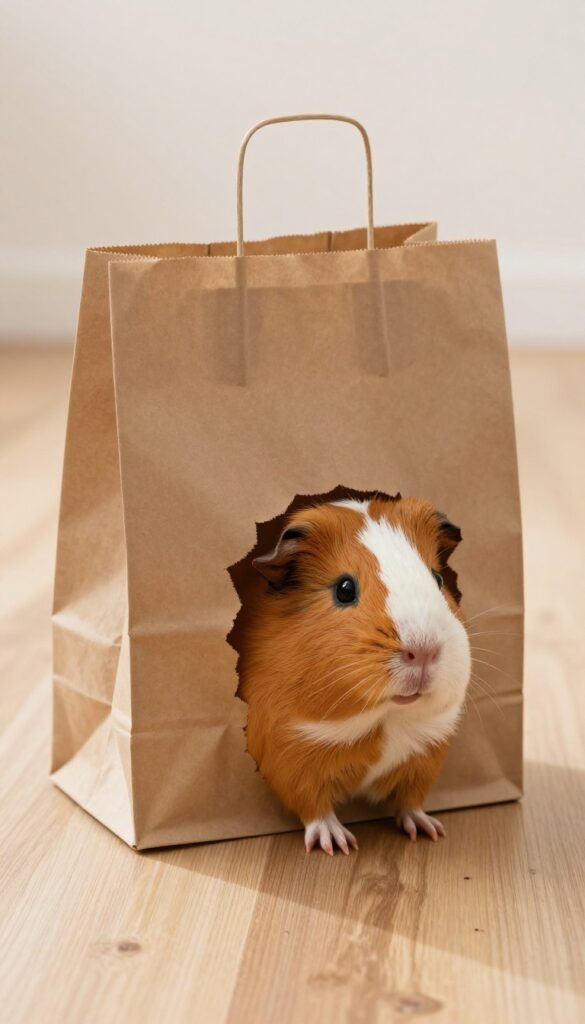
Plain brown paper bags are a simple yet engaging toy for guinea pigs. The crinkly sound and texture stimulate their curiosity and encourage natural behaviors like hiding, shredding, and exploring.
A plain brown paper bag can provide hours of entertainment. Guinea pigs love to burrow inside, chew the edges, and pounce on the crinkling material. The sound alone often triggers playful zoomies.
Key Tips for Paper Bag Toys
- Use only plain, unprinted brown paper bags to avoid toxic inks or dyes.
- Remove any handles, staples, or glue before giving the bag to your guinea pig.
- Cut a few small holes in the sides for extra peek-a-boo fun.
- Replace the bag once it becomes soiled or excessively shredded.
Safety First
Never use glossy, printed, or colored paper bags, as the chemicals can be harmful if ingested. Stick to simple, untreated kraft paper.
Treat Balls for Active Play
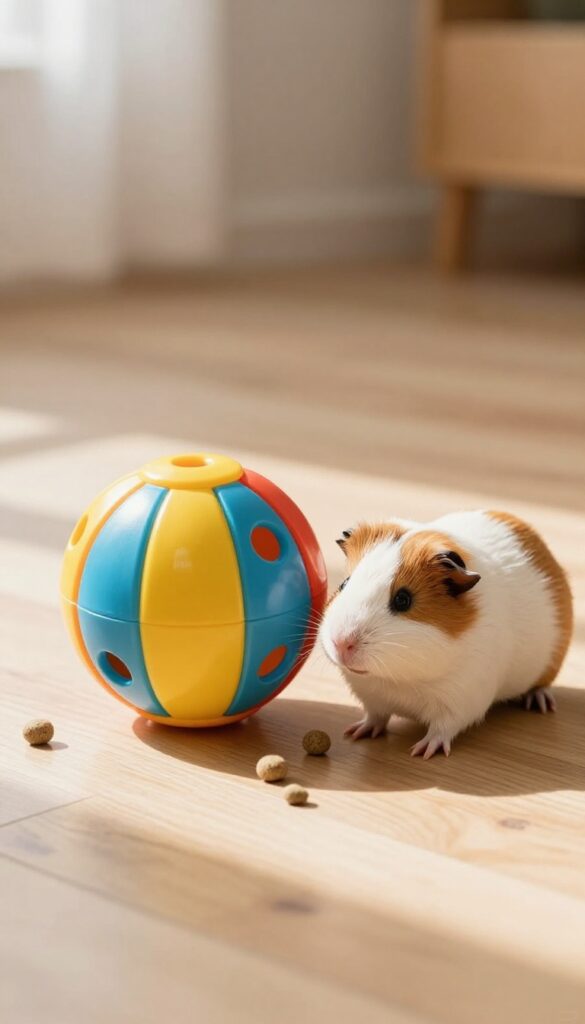
Treat balls combine feeding time with exercise, turning mealtime into a fun puzzle that keeps your guinea pig moving and thinking.
These small, lightweight balls are designed to hold pellets or hay. As your guinea pig pushes or rolls the ball, treats fall out through openings, rewarding their effort. This encourages natural foraging behavior and provides both physical activity and mental stimulation.
- Choose a treat ball with openings large enough to prevent a guinea pig’s foot or head from getting trapped – at least 2 inches in diameter.
- Avoid balls with small parts that could be chewed off and ingested, such as plastic clips or bells.
- Start by placing the ball on the floor with a few treats inside to show your pet how it works.
Always supervise first use to ensure your guinea pig interacts safely. A properly sized treat ball is a wonderful addition to your Guinea Pig Toy for Chewing, Hiding, and Happy Play collection.
Lava Ledge for Climbing and Chewing
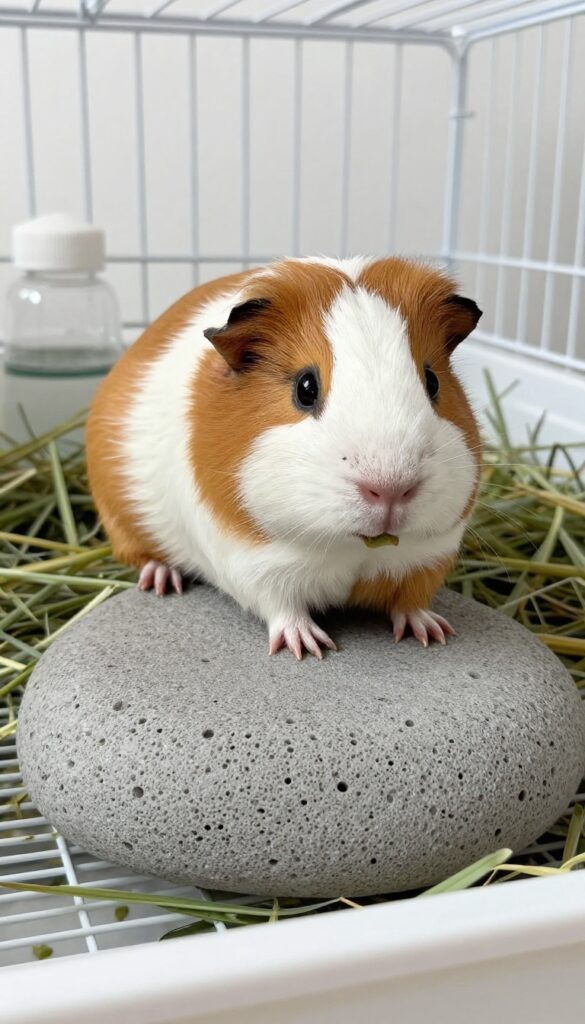
A lava ledge is a versatile addition to any guinea pig cage, serving both as a climbing platform and a chew toy. Made from pumice stone, it offers a safe, textured surface that naturally wears down your pet’s teeth while encouraging active play.
Lava ledges attach securely to cage bars with included hardware, creating a sturdy perch for your guinea pig to hop onto. The rough pumice material is gentle enough for their paws but abrasive enough to help keep teeth trimmed. As they climb and gnaw, they get both physical exercise and dental care.
Key Benefits
- Provides a safe climbing surface that satisfies natural instincts
- Pumice stone acts as a chew toy to help maintain dental health
- Easy to install and remove for cleaning
- Durable and long-lasting, even with heavy chewing
Safety Tip
Always check the ledge for sharp edges before installing. If any rough spots appear, smooth them with a file or replace the ledge. Ensure it is attached firmly so it doesn’t wobble or fall.
Hay Pockets for Hiding Treats
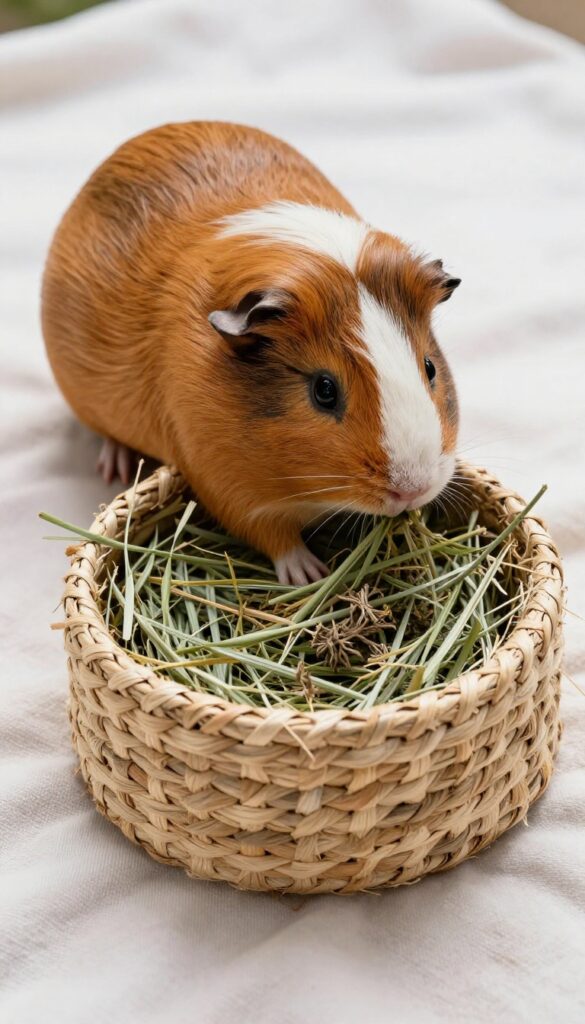
Hay pockets are small fabric or woven pouches that you can fill with hay and herbs, turning snack time into a fun foraging challenge. They tap into your guinea pig’s natural instinct to search for food, keeping them mentally stimulated and physically active.
These pockets encourage your guinea pig to work for their treats by digging and nibbling through the hay to find hidden goodies. The foraging activity helps prevent boredom and promotes natural hiding behavior.
Key Points
- Look for pockets made from safe, non-toxic materials like natural cotton or woven seagrass.
- Avoid pockets with small parts, buttons, or toxic dyes that could be chewed off and swallowed.
- Fill with fresh hay and a sprinkle of dried herbs or a few pellets to increase interest.
- Rotate the pockets with other toys to keep the enrichment fresh.
DIY Toilet Paper Roll Puzzles
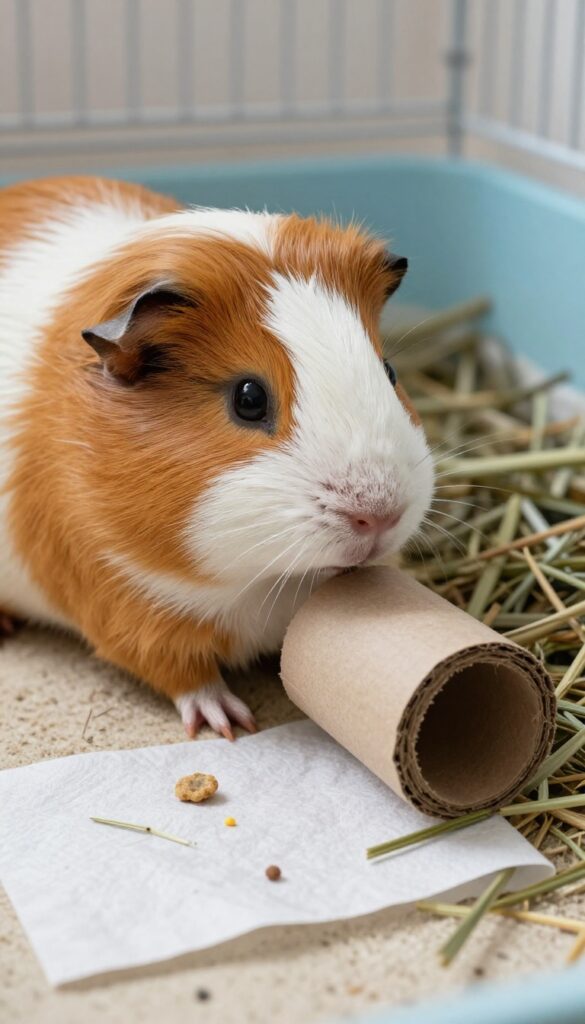
Toilet paper rolls can be transformed into simple puzzle toys that encourage your guinea pig to forage and work for their treats. This DIY project is quick, cost-effective, and uses materials you already have at home.
To make a toilet paper roll puzzle, fold one end of a plain cardboard roll closed, fill it with a few small treats or hay, then fold the other end shut. Your guinea pig will enjoy figuring out how to open the roll to get to the goodies inside. You can also create multiple rolls and hide them around their enclosure for extra exploration.
Safety Tips
- Use only plain cardboard rolls with no adhesive, labels, or residue.
- Avoid rolls that have been in contact with cleaning products or chemicals.
- Supervise play initially to ensure your guinea pig doesn’t ingest large pieces of cardboard.
- Replace rolls once they become soiled or heavily chewed.
This simple enrichment taps into your guinea pig’s natural foraging instincts and provides mental stimulation. It’s a great way to use up those empty toilet paper rolls while keeping your pet entertained.
Tunnels and Bridges for Active Play
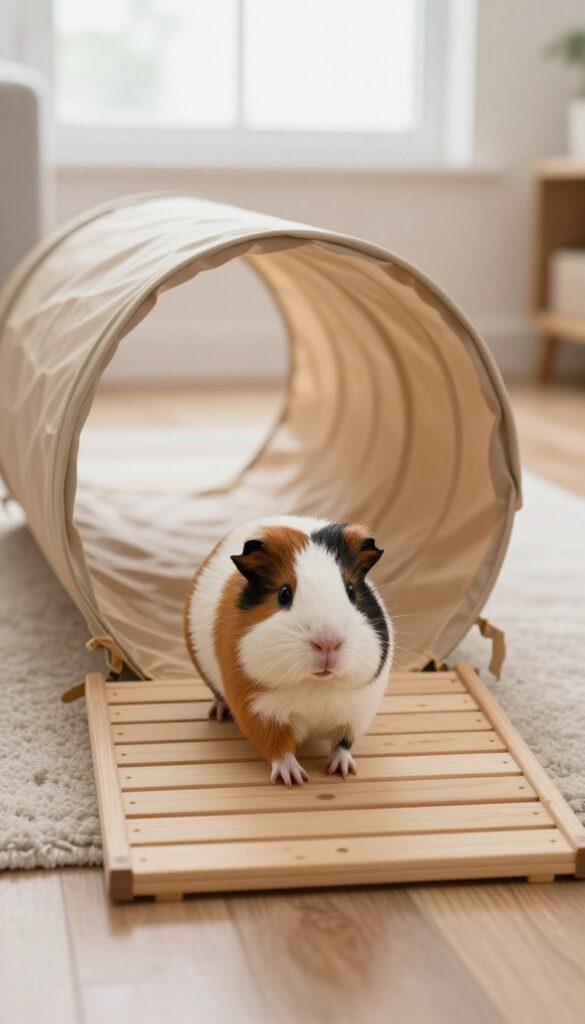
Tunnels and bridges add vertical and horizontal variety to your guinea pig’s play area, encouraging natural behaviors like running, climbing, and exploring. These structures are especially great for active pigs who need more than just a flat space to roam.
Plastic or fabric tunnels and wooden bridges are popular choices that can be connected to create a mini obstacle course. When selecting a tunnel, make sure it’s wide enough for your guinea pig to turn around comfortably—at least 8 inches in diameter. Avoid tunnels with small diameters or sharp edges that could cause injury.
Bridges should have a gentle slope and a non-slip surface to prevent falls.
Key Points
- Plastic or fabric tunnels and wooden bridges encourage running and climbing.
- Ensure tunnels are wide enough for guinea pigs to turn around.
- Supervise play to prevent accidents.
Always supervise your guinea pig during playtime with tunnels and bridges to ensure they don’t get stuck or fall. These toys provide excellent exercise and mental stimulation, helping to keep your pet happy and healthy.
FAQ
Are all chew toys safe for guinea pigs?
No, only toys made from untreated, non-toxic materials like willow, applewood, and cardboard are safe. Avoid plastic, painted wood, or items with small parts that could be ingested.
How often should I rotate guinea pig toys?
Rotate toys every few days to maintain novelty and interest. Replace worn or soiled toys immediately.
Can guinea pigs play with cat toys?
Only if they are made from safe materials and have no small parts. Avoid toys with bells, feathers, or catnip, which can be harmful.
Do guinea pigs need hiding spots?
Yes, hiding spots are essential for guinea pigs to feel secure. Provide at least one hideaway per pig, such as tunnels, fleece tents, or cardboard boxes.
How can I make DIY toys for my guinea pig?
Use safe materials like cardboard, untreated wood, and paper. Examples include toilet paper rolls stuffed with hay, paper bags, and cardboard tunnels.
Conclusion
Providing a variety of toys for chewing, hiding, and active play is key to keeping your guinea pig happy and healthy. Rotate toys regularly, supervise play, and always prioritize safety.
With these 11 ideas, you can create an enriching environment that stimulates your guinea pig’s natural instincts.

I’m Pallab Kishore, the owner of Little Pets Realm — an animal lover and pet care enthusiast sharing easy tips, healthy recipes, and honest advice to help every small pet live a happy, healthy, tail-wagging life.