Last updated on August 19th, 2026 at 04:19 pm
Living in a small home or flat doesn’t mean you can’t give your guinea pigs a wonderful, spacious habitat.
With a bit of creativity and smart planning, you can maximize every square inch.
Here are 10 practical ideas to help you set up a guinea pig room that works for both you and your pets.
Use a Multi-Level Cage to Maximize Vertical Space
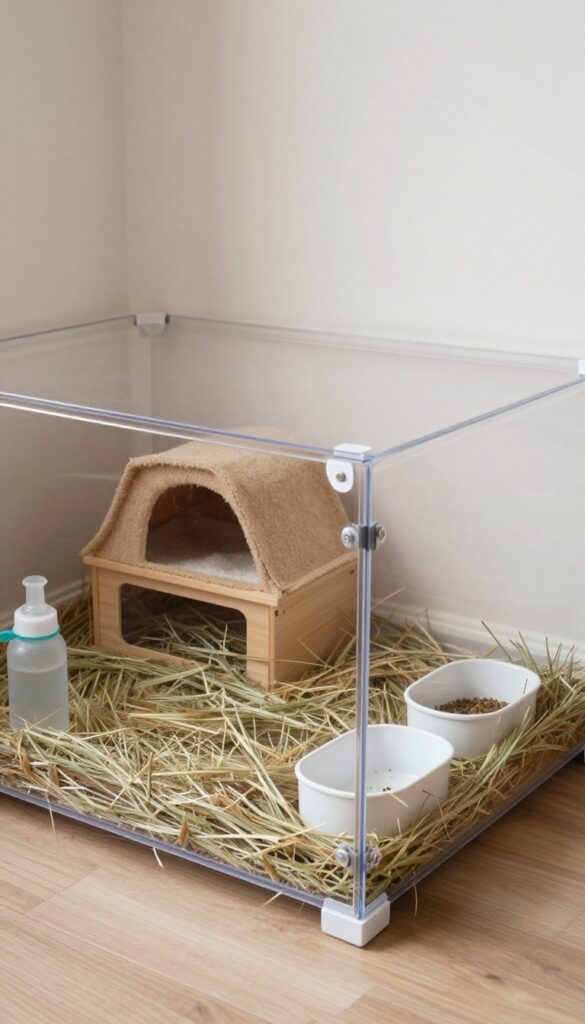
In a small home or flat, floor space is precious. A multi-level cage lets you double or even triple the usable area for your guinea pigs without taking up more floor space. These cages stack living areas vertically, giving your pets room to explore, exercise, and rest—all within a compact footprint.
When choosing a multi-level cage, prioritize safety. Guinea pigs are not as agile as cats or rabbits, so ramps must be gentle and have solid sides to prevent falls. Opt for ramps with a slope of 30 degrees or less and a textured surface for grip.
Some cages include removable ramps that can be repositioned to create a custom layout.
Key Considerations
- Choose a cage with solid plastic floors on each level to prevent foot injuries (wire floors are harmful).
- Ensure the vertical spacing between levels is at least 8–10 inches so guinea pigs can sit upright comfortably.
- Look for cages with wide, secure doors for easy cleaning and interaction.
- Avoid cages with steep drops between levels; use shallow platforms or add soft landing pads.
Multi-level cages are especially useful in small rooms where you can place the cage against a wall or in a corner. They also make great use of vertical space in alcoves or under a window. Just remember to provide a hideout on each level so your guinea pigs feel safe.
Opt for a C&C Cage Customized to Your Room Layout
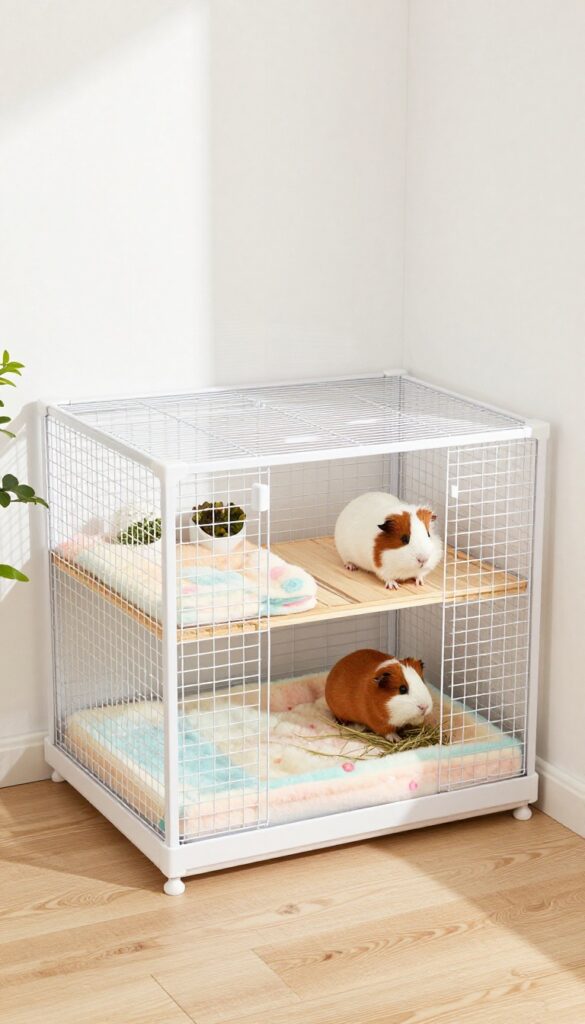
When floor space is tight, a one-size-fits-all cage rarely works. That’s where C&C (cube and coroplast) cages shine—they’re completely modular, so you can build a cage that fits your exact room shape, whether it’s a corner, under a desk, or along a narrow wall.
C&C cages consist of wire grid cubes and a coroplast base that you cut to size. This means you can create any shape—L-shaped, rectangular, or even a narrow run that tucks into an alcove. You’re not limited to standard pet store dimensions.
- Fit into corners, under desks, or along walls to use dead space
- Easily expand or reconfigure as your space or herd grows
- Coroplast base is waterproof and simple to clean
For a small flat, consider an L-shaped cage that wraps around a corner, leaving the center of the room open. Or build a long, narrow cage along a wall under a window. The grids are inexpensive and available online, and you can customize the height with extra levels if you have vertical space.
Incorporate Under-Bed Storage for the Cage
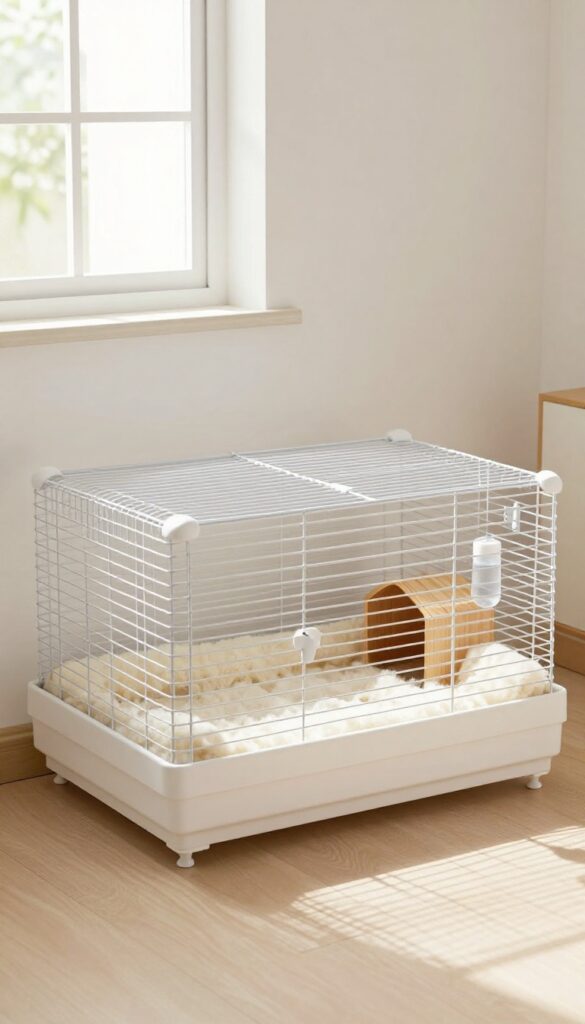
If floor space is limited, the area under your bed can become a prime spot for your guinea pig’s home. With a low-profile cage, you can turn unused space into a cozy habitat without sacrificing your living area.
Choose a cage that is low enough to slide under your bed frame while still providing enough height for your guinea pigs to stand on their hind legs. Many C&C cage kits offer customizable heights, or you can build a custom cage using storage cubes and coroplast. Ensure the cage is on a sturdy, flat surface and that the bed frame allows for easy access for daily cleaning and interaction.
- Use a low-profile cage that fits under a standard bed frame (typically 6-8 inches clearance).
- Ensure the cage has good ventilation—avoid solid sides; opt for wire grids or mesh.
- Protect the cage from dust and drafts by placing a dust cover over the bed box spring or using a fitted sheet underneath.
- Make sure you can easily reach the cage for spot cleaning, feeding, and socializing.
This setup works best in a bedroom where the bed is not used as a primary seating area. Keep in mind that guinea pigs are most active during dawn and dusk, so the under-bed location should be in a quiet, low-traffic area. With proper planning, an under-bed cage can be a space-saving solution that keeps your guinea pig safe and comfortable.
Use Wall-Mounted Shelves for Supplies and Decor
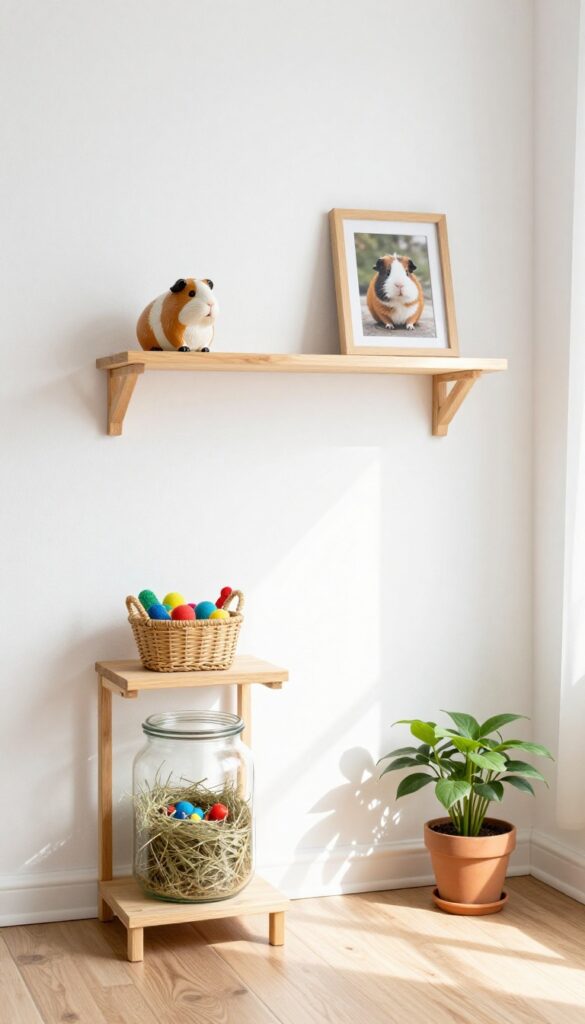
When floor space is at a premium, look up. Wall-mounted shelves are a smart way to store guinea pig supplies without sacrificing valuable floor area. They keep hay, bedding, toys, and treats organized and within easy reach while adding a decorative touch to the room.
Install sturdy shelves high enough that your guinea pigs cannot jump or climb onto them. Avoid placing shelves directly above the cage where items could fall in. Use brackets rated for the weight you plan to store—hay bales and bags of bedding can be heavy.
- Store hay, bedding, and toys on shelves to free up floor space
- Install shelves out of guinea pig reach to prevent climbing
- Add guinea pig-themed decor like small figurines or framed photos to make the room cozy
Always secure shelves to wall studs or use heavy-duty drywall anchors. Falling objects can injure guinea pigs or damage the cage.
Create a Playpen Area That Doubles as a Room Divider
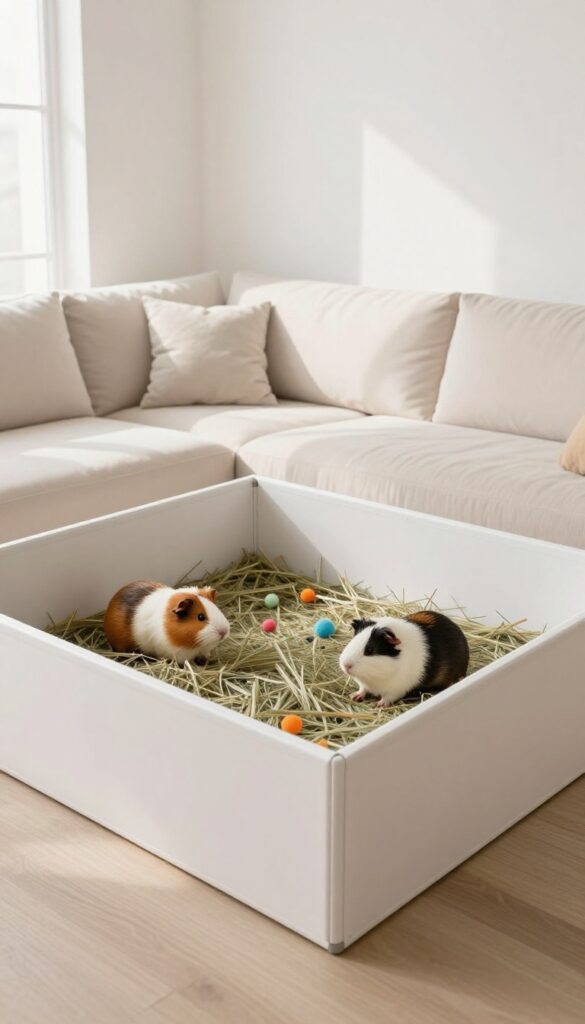
In a small flat, every piece of furniture should earn its keep. A foldable or modular playpen can do double duty: it gives your guinea pigs a safe space for floor time while visually separating your living area from their zone.
Choose a playpen with solid panels or narrow gaps (less than 1 inch) to prevent escapes. Modular grids with connectors are ideal because you can shape them to fit your room’s layout—L-shaped, square, or even a curved divider. Place the pen against a wall or between your sofa and dining area to create a clear boundary without building a permanent wall.
- Foldable playpens can be collapsed and stored under a bed or behind a wardrobe when not in use.
- Look for models with a waterproof base to protect your flooring from spills and accidents.
- Add a soft fleece liner or washable mat inside for comfort and easy cleanup.
This setup gives your guinea pigs several hours of supervised exercise without needing a separate room. It also keeps their hay, toys, and hideouts contained, so your living space stays tidy. When guests come over, simply fold the pen away and reclaim your floor plan.
Choose a Cage with Built-In Storage Drawers
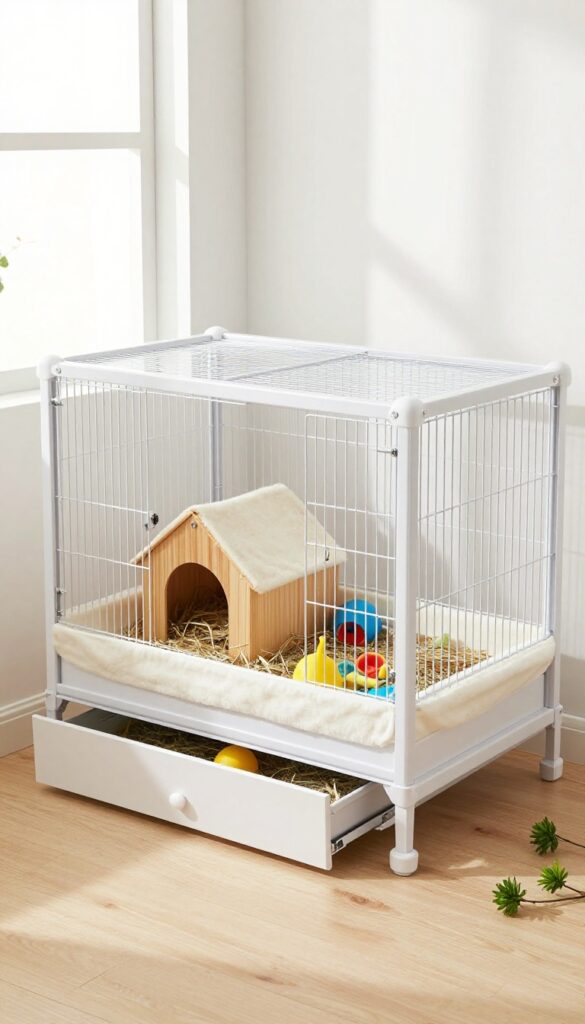
When floor space is limited, every piece of furniture should earn its keep. A guinea pig cage with integrated storage drawers is a smart solution that combines habitat and organization in one unit.
Some cages come with pull-out drawers underneath the main living area, perfect for stashing hay, bedding, food, and toys. This eliminates the need for a separate storage cabinet or shelving unit, freeing up valuable floor space.
- Drawers keep supplies organized and within easy reach during cage cleaning.
- Reduces clutter by consolidating pet items into one piece of furniture.
- Available in various sizes to fit small flats or shared rooms.
Look for cages with smooth-gliding, secure drawers that your guinea pig cannot access. Avoid models with gaps or loose mechanisms that could trap curious paws. With a cage like this, you maintain a tidy, compact setup without sacrificing your guinea pig’s comfort.
Use a Corner Cage to Utilize Dead Space
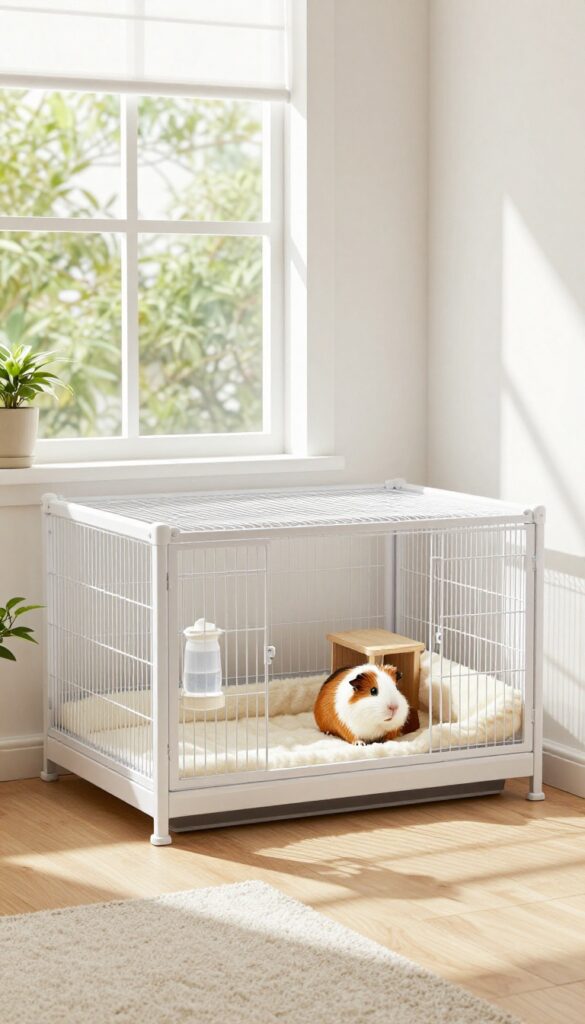
Corners are often wasted in small rooms, but a corner cage turns that dead space into a functional guinea pig home without eating into your floor plan.
Corner cages are designed to fit snugly into room corners, making use of areas that would otherwise remain empty. They come in triangular or L-shaped configurations that can hold two guinea pigs comfortably while leaving the center of the room open for other activities.
Benefits of a Corner Cage
- Frees up floor space by tucking into a corner
- Creates a cozy, den-like feel for your guinea pigs
- Available in sizes that meet minimum requirements (at least 7.5 sq ft for two guinea pigs)
When choosing a corner cage, make sure it provides at least 7.5 square feet of floor space for two guinea pigs, and ideally 10.5 square feet or more. Avoid cages that are too small due to their shape—triangular designs can sometimes reduce usable area, so check the actual dimensions. Place the cage in a low-traffic corner away from drafts and direct sunlight.
Incorporate a Hay Rack and Water Bottle on the Cage Wall
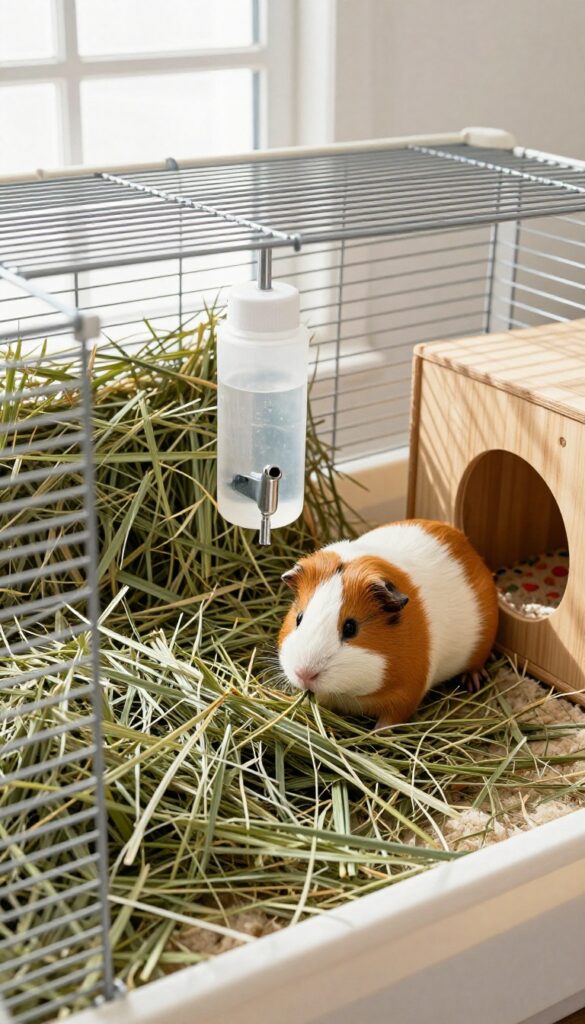
Wall-mounted feeding accessories are a smart way to save precious floor space while keeping your guinea pig’s food fresh and clean. By attaching a hay rack and water bottle directly to the cage walls, you free up room for tunnels, hideouts, and more floor time.
In a small home or flat, every inch counts. Wall-mounted hay racks and water bottles eliminate the need for bulky bowls or floor-standing dispensers, giving your guinea pig more room to roam. Plus, they help reduce mess—hay stays contained in the rack rather than scattered across the bedding, and water bottles prevent spills that can dampen the cage.
- Space-saving: Frees up floor area for other essentials like hideouts and play tunnels.
- Mess reduction: Hay racks keep hay off the ground, and water bottles eliminate bowl tipping.
- Freshness: Hay stays dry and clean, reducing waste and encouraging your guinea pig to eat more.
- Chew-proof materials: Look for racks made of metal or hard plastic that can withstand gnawing.
When choosing a water bottle, avoid models with ball bearings that can leak or get stuck. Opt for a sipper tube bottle with a reliable valve. For hay racks, ensure the openings are large enough for your guinea pig to pull hay out easily but not so large that they can get their head stuck.
Attach both securely to the cage bars at a comfortable height for your pet.
Use a Rolling Cart for a Mobile Guinea Pig Station
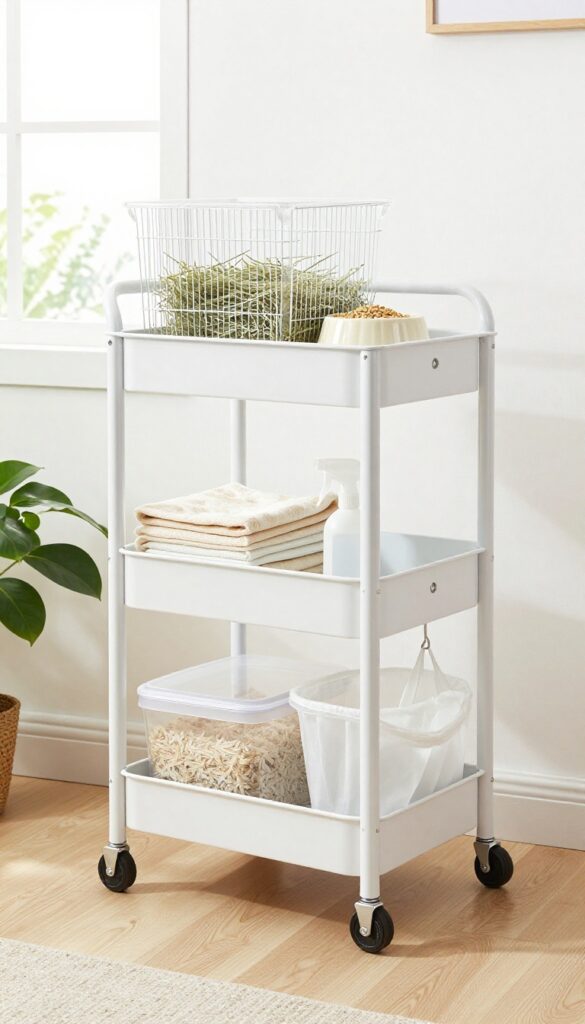
In a small flat, every square inch is precious. A rolling cart lets you keep all your guinea pig supplies organized and easily accessible, while also being movable when you need to reclaim floor space.
A standard utility cart with three shelves can hold hay, bedding, food, cleaning supplies, and even extra toys. When you need to vacuum or rearrange the room, simply roll the cart to a corner or into a closet. This flexibility is a game-changer for small homes where permanent storage isn’t an option.
- Choose a cart with locking wheels to prevent accidental rolling.
- Use clear bins or baskets on the shelves to keep items dust-free and visible.
- Dedicate one shelf to daily-use items like hay and pellets for quick access.
- Hang a small trash bag or bin on the side for easy cleanup.
Look for a cart that fits your space—narrow carts work well in tight hallways or beside the cage. Metal or sturdy plastic carts are easy to wipe clean. This station keeps your guinea pig area tidy and makes care routines more efficient, even in the smallest flats.
Design a Multi-Purpose Room with a Guinea Pig Zone
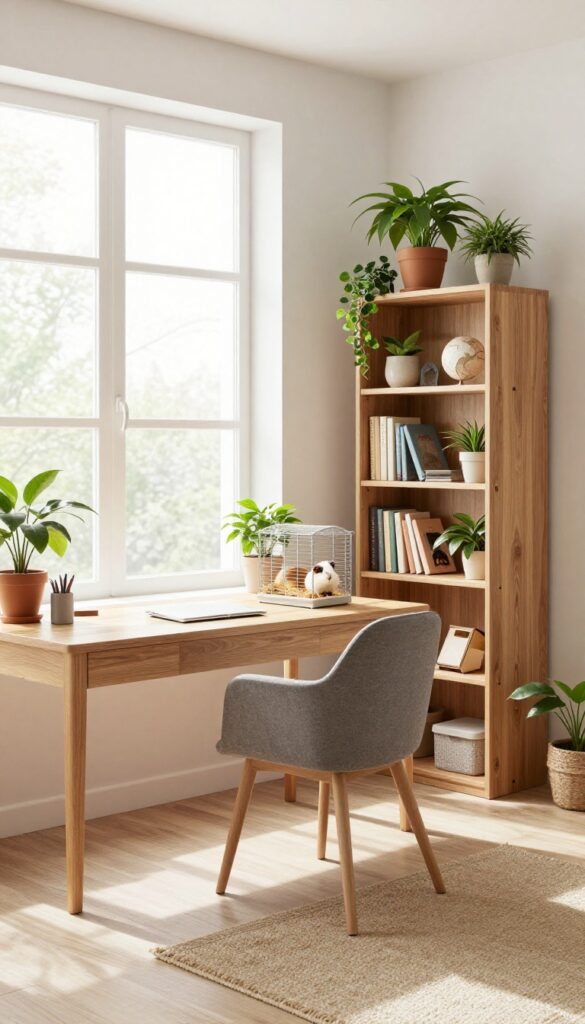
If you live in a small flat, every square meter counts. Instead of dedicating an entire room to your guinea pigs, combine their habitat with another function—like a home office, reading nook, or hobby corner. This approach saves space while giving your pets a quiet, dedicated area.
Start by choosing a low-traffic corner of the room, away from doors and walkways. Use a bookshelf, room divider, or even a tall plant to visually separate the guinea pig zone from the rest of the space. This helps your pets feel secure and reduces noise from your activities.
- Place the cage against a wall that doesn’t get direct sunlight or sit near radiators or air conditioning vents.
- Use a desk or table with a lower shelf to hold the cage, keeping it off the floor and freeing up space underneath for storage.
- Incorporate a small rug or mat under the cage to catch hay and mess, making cleanup easier.
- Keep a small storage caddy nearby for hay, pellets, and cleaning supplies so everything is within reach.
By blending the guinea pig area into a multi-purpose room, you maintain a functional living space without sacrificing your pets’ comfort. The key is to keep their zone quiet, clean, and visually separate—so both you and your guinea pigs can enjoy the room.
FAQ
What is the minimum cage size for two guinea pigs?
The minimum recommended size for two guinea pigs is 7.5 square feet (e.g., 30″ x 36″), but larger is always better. In small spaces, consider multi-level cages to add floor space without increasing footprint.
Can guinea pigs live in a bedroom?
Yes, but ensure the room is well-ventilated, quiet, and not too warm or cold. Avoid placing the cage near drafts, direct sunlight, or loud noises. Guinea pigs are sensitive to temperature extremes.
How can I reduce odor in a small room?
Use absorbent bedding like fleece or paper-based products, spot-clean daily, and do a full cage clean weekly. A small air purifier with a HEPA filter can also help keep the air fresh.
Is it okay to keep guinea pigs in a cage under a desk?
Yes, as long as the cage is large enough, has good ventilation, and is not in a high-traffic area. Ensure the desk does not block airflow or light.
Conclusion
With these 10 ideas, you can create a comfortable and functional guinea pig habitat even in the smallest of spaces. Remember to prioritize your guinea pigs’ needs for space, ventilation, and enrichment.
A well-planned setup will keep both you and your pets happy.

I’m Pallab Kishore, the owner of Little Pets Realm — an animal lover and pet care enthusiast sharing easy tips, healthy recipes, and honest advice to help every small pet live a happy, healthy, tail-wagging life.