
Dog toys have a way of multiplying, don't they? One minute you have a tidy basket, the next you're tripping over squeaky bones and frayed ropes scattered across the living room.
These ten play room ideas focus on smart storage that keeps toys contained without sacrificing style or function. From built-in bins with cushioned tops to a toy library with a check-out system, each idea helps you reclaim your space while making playtime easier for your pup.
No more stepping on squeakers—just a clean, organized room that works for both of you.
1. Built-In Toy Bins with Cushioned Tops
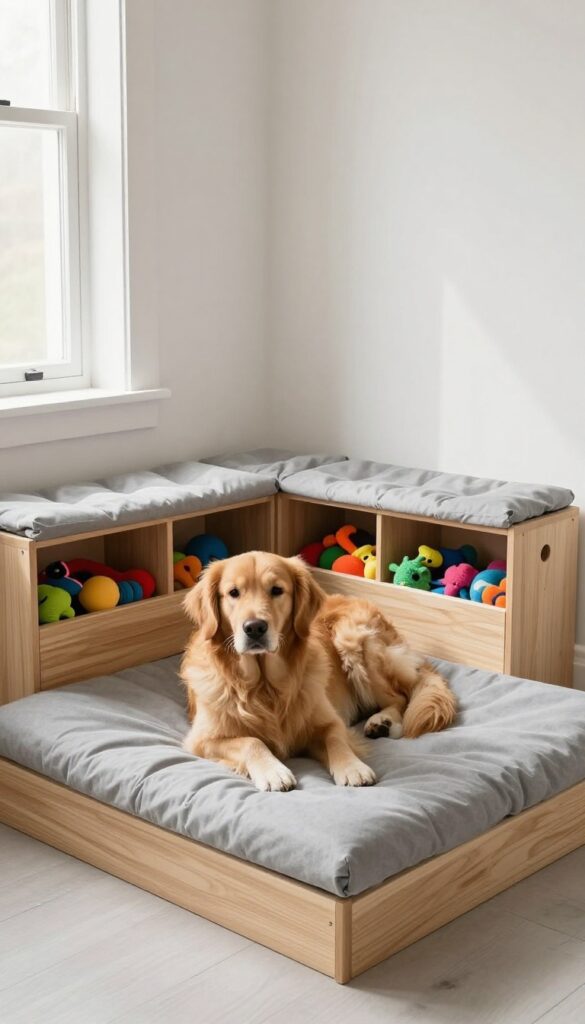
Imagine a spot where your dog can lounge and you can stash toys in one graceful move. That's the magic of built-in bins with cushioned tops. These low, open bins sit against a wall, topped with a padded cushion that invites your pup to hop up and relax.
You simply toss toys into the bins below, keeping the floor clear and the room tidy. It's a dual-purpose solution that dog owners love because it combines comfort and storage without extra furniture cluttering the space.
Why It Works
The open bins make it easy for you to drop toys in quickly, and the cushion gives your dog a designated perch to watch the household action. Since the bins are low and accessible, even small or senior dogs can use the top without jumping too high. The design keeps toys contained but visible, so your dog can still see and choose their favorites without scattering everything across the room.
Best For
This idea works wonderfully for homes with a dedicated playroom or a corner of the living room that can handle built-in cabinetry. It's especially great for medium to large breeds that enjoy having a lookout spot, but it can be adapted for smaller dogs with a lower cushion height. If you have multiple dogs, the spacious top gives them room to share or take turns.
Practical Tip
Choose a cushion fabric that's durable and easy to wipe clean, like outdoor-grade canvas or microfiber. Make sure the bins are deep enough to hold a variety of toy sizes, and consider adding a subtle lip to keep toys from rolling out. For safety, round any sharp corners and secure the unit to the wall if it's tall or top-heavy.
Budget-Friendly Option
If built-ins aren't in your budget, use a low, sturdy bookshelf or a cube storage unit turned on its side. Add a custom cushion from a craft store or repurpose a floor pillow on top. You can even use fabric bins inside the cubbies for a cohesive look.
2. Wall-Mounted Toy Organizers
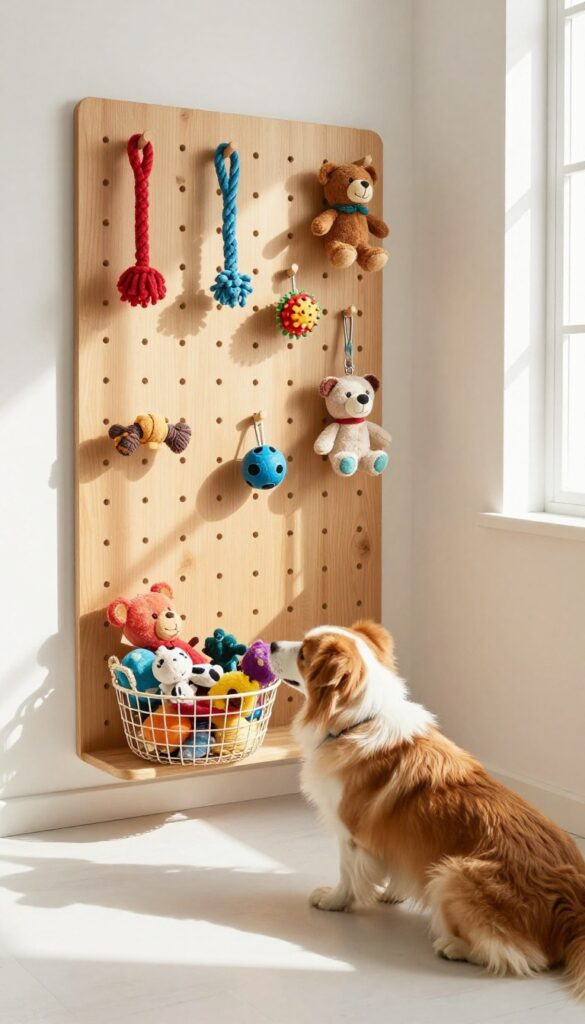
Pegboards and wall grids aren't just for garages and craft rooms. Mount one in your dog's play area, and suddenly every rope, ball, and plush toy has a visible home. The key is using baskets and hooks designed to hold dog toys of various shapes and sizes.
This setup keeps the floor clear and makes it easy for your pup to grab a toy whenever playtime strikes.
Why It Works
By going vertical, you free up valuable floor space and eliminate toy clutter. Dogs can see their favorite toys at eye level, which encourages independent play and makes cleanup a breeze. Plus, the open storage allows toys to air out between uses, reducing odors and bacteria buildup.
Best For
Small spaces like apartments, mudrooms, or corners of a living room where floor space is limited. It's also ideal for dogs who like to choose their own toy, since everything is visible and accessible. Works well for all breeds, especially those who love to grab and go.
Practical Tip
Install the pegboard or grid at your dog's shoulder height so they can easily pull toys off hooks. Use heavy-duty hooks for ropes and large balls, and wire baskets for plush toys or smaller items. Avoid placing it near food bowls to keep toys clean and dry.
Budget-Friendly Option
A simple wooden pegboard from a hardware store costs under $20. Paint it to match your room, then add command hooks and small baskets from a dollar store. You can also repurpose a shoe organizer or a hanging jewelry grid for a similar effect.
3. Toy Rotation Station with Clear Bins
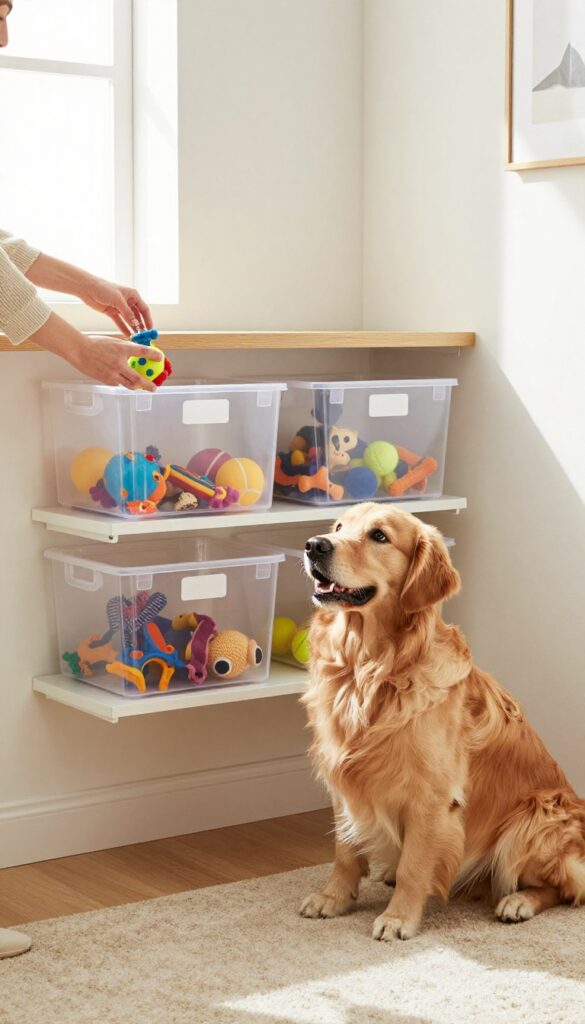
Clear bins aren't just for your pantry—they're a game-changer for dog toy storage. A dedicated shelf with labeled bins lets you sort toys by type (squeaky, chewy, fetch) and rotate them weekly. Your dog stays excited because each week brings a "new" toy from the stash, and you stay sane because everything has a home.
The transparency means you can spot the missing squeaker without dumping the whole bin.
Why It Works
Dogs get bored with the same toys, but buying new ones weekly is expensive. Rotating toys keeps novelty alive without extra cost. Clear bins make it easy to grab the right toy fast, and labeling helps everyone in the household put things back where they belong.
Best For
Multi-dog households where toys get mixed up, or dogs that lose interest in toys quickly. Also great for small spaces where you need to see everything at a glance.
Practical Tip
Use shallow bins so dogs can't dive in headfirst. Place the shelf at dog height for easy access, but secure it to the wall to prevent tipping. Rotate toys every 7–10 days—wash the outgoing batch in hot soapy water before storing.
Budget-Friendly Option
Skip fancy storage bins and reuse clean shoeboxes or plastic takeout containers. Cut a hole in the lid for a peek-through view, or just label with masking tape.
4. Under-Bed Toy Storage for Small Spaces
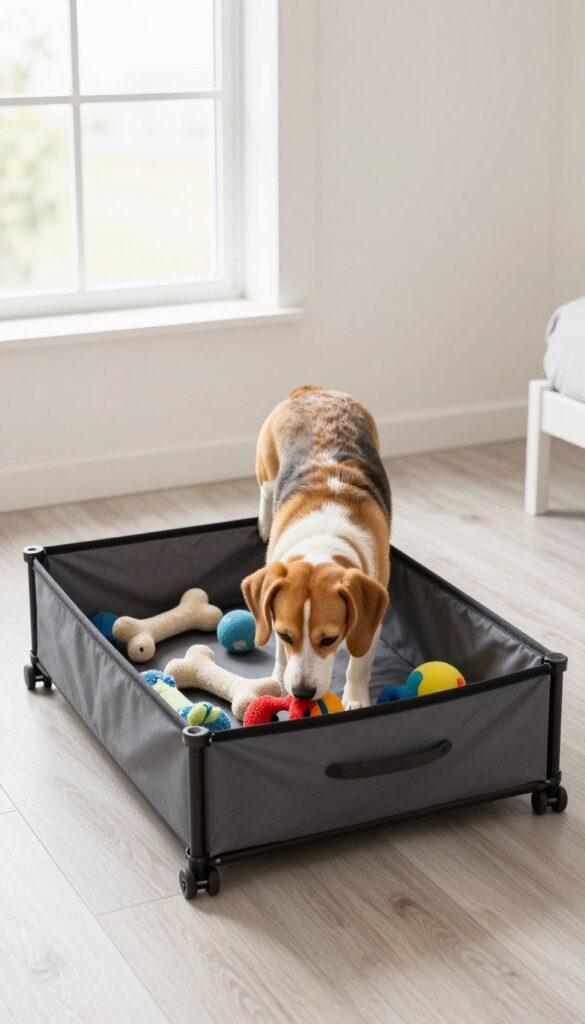
When floor space is tight, look under the bed. Low rolling bins slide neatly beneath furniture, giving your dog easy access to toys while keeping them out of sight when not in use. It's a simple solution that turns wasted space into a functional toy drawer.
Why It Works
The bins are low enough for most dogs to nudge open and pull out a toy, yet shallow enough to slide back under with a quick push. You get hidden storage without sacrificing square footage—perfect for apartments or bedrooms where every inch counts.
Best For
Ideal for small homes, apartments, or any room where you can't spare floor space for a dedicated toy bin. Works great for small to medium dogs who can reach into low bins; larger breeds may need a slightly taller rolling container.
Practical Tip
Choose bins with wheels or smooth glides so they move easily on carpet or hardwood. Add a soft liner inside to muffle noise when your dog digs for toys. Keep the lid off or use a lightweight flap so your pup can help themselves.
Budget-Friendly Option
Skip the fancy bins and repurpose an old under-bed storage box. If it doesn't have wheels, stick small furniture sliders underneath so it glides smoothly.
5. Toy Hammock in a Corner
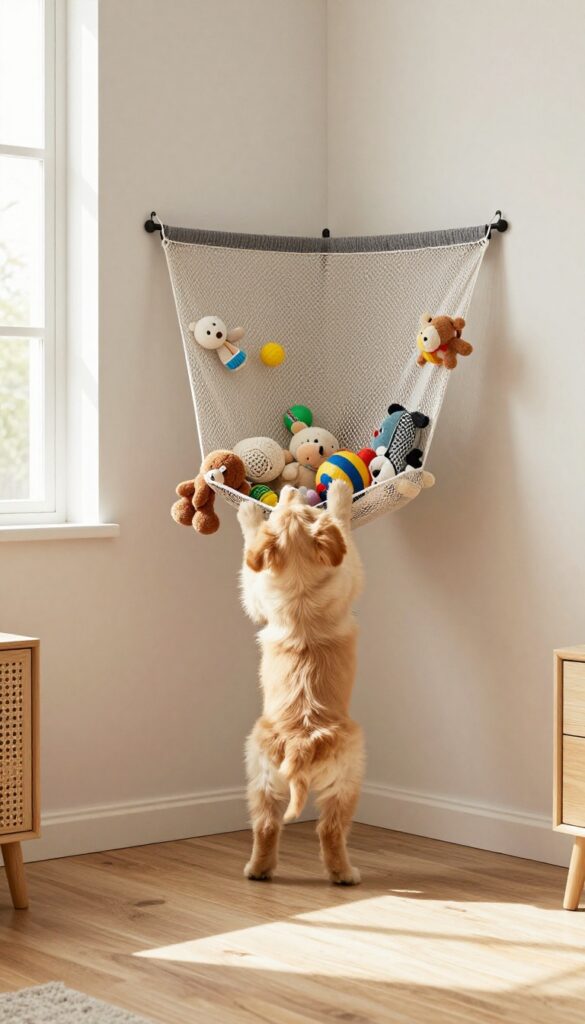
Corner spaces often go unused, but they're perfect for a toy hammock. Hang a mesh or fabric hammock in an empty corner to hold soft toys, plush squeakers, and small balls. It keeps toys off the floor, easy to grab, and adds a playful look to the room.
Dogs can pull toys out whenever they want and you can toss them back in seconds. No more digging through a bin or stepping on hidden toys. The hammock also lets toys air out, reducing odors.
Dog owners love how simple and effective this is. It uses vertical space, keeps things tidy, and makes playtime feel organized without much effort.
Why It Works
A corner hammock keeps toys visible and accessible, so your dog can grab what they want without dumping a basket. The open mesh allows air circulation, helping plush toys dry faster and stay fresher. It also prevents toys from scattering across the floor, reducing clutter and tripping hazards.
Best For
This works great for small to medium dogs that love plush toys and soft balls. It's ideal for apartments, small playrooms, or any room with an unused corner. Also suits multi-dog households where toys need to be shared without a mess.
Practical Tip
Use a mesh hammock for easy cleaning—just toss it in the wash. Install corner hooks or adhesive anchors rated for the weight of your dog's toys. Keep the hammock low enough that your dog can reach toys without jumping, but high enough to stay out of the way.
Budget-Friendly Option
Repurpose a mesh laundry bag or a piece of sturdy fabric with grommets. Attach it to two hooks in the corner using zip ties or carabiners. Costs under $10 and works just as well.
6. Multi-Functional Ottoman with Toy Storage
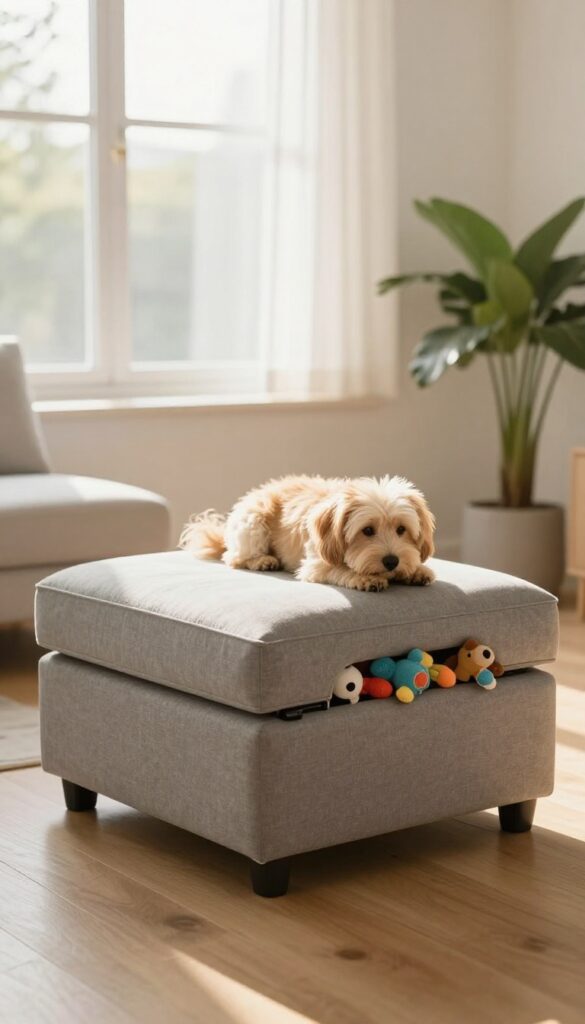
An ottoman that doubles as a toy bin is the ultimate space-saving hack. You get a comfy footrest, an extra seat, and a hidden storage spot all in one piece of furniture. The best part?
When guests come over, you just toss the toys inside and close the lid—instant tidy.
Why It Works
Because it hides the clutter without adding extra furniture. The ottoman blends into your existing decor, so your dog's toys aren't taking over the room. Plus, the lid makes it easy for your pup to access toys when you're ready to play, and just as easy to stash them away.
Best For
Small living rooms, apartments, or any home where floor space is precious. It's also great for dogs who like to nap near their toys—the cushioned top becomes a cozy spot for them to curl up.
Practical Tip
Look for an ottoman with a removable, washable cover—dogs bring dirt and drool. A dark or patterned fabric hides fur and stains better than light colors. Make sure the hinge is sturdy and won't pinch little noses.
Budget-Friendly Option
Use a large storage cube with a flat cushion on top. Or repurpose an old trunk or chest by adding a foam pad and fabric cover. You get the same function for a fraction of the cost.
7. Crate with Attached Toy Caddy
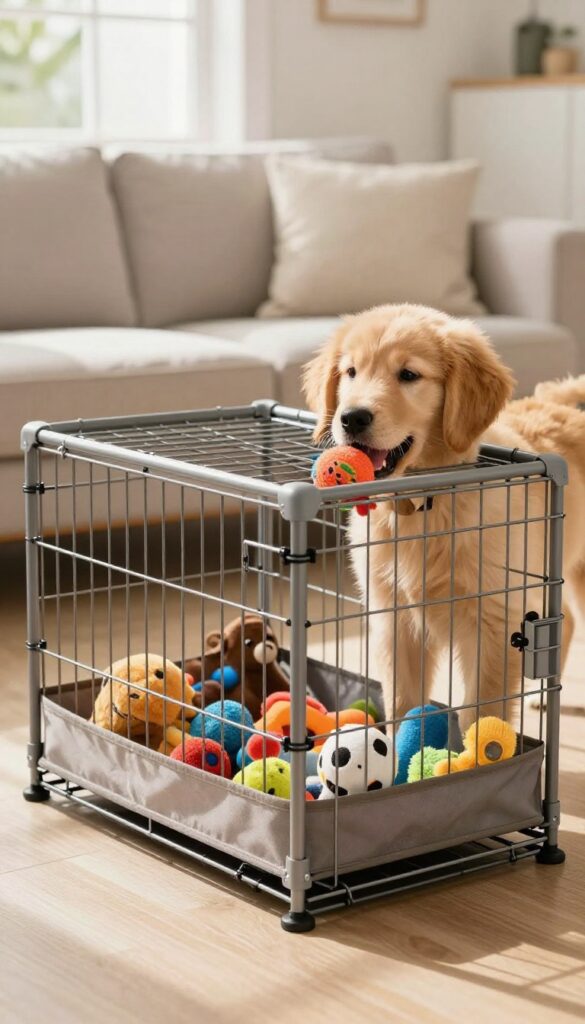
Your dog's crate is already a cozy den, so why not make it a toy station too? Attaching a small caddy or basket to the side keeps a few favorite toys right where your pup can grab them. It's a simple add-on that cuts down on clutter and makes the crate area feel more intentional.
Why It Works
The caddy keeps toys off the floor and out from underfoot, while still giving your dog easy access. It also encourages your pup to engage with toys near their crate, which can make crate time feel more like playtime and less like confinement.
Best For
This setup works great for dogs who spend time in their crate throughout the day, especially puppies or dogs that like to have a toy nearby for comfort. It's also perfect for small spaces where every inch of floor space counts.
Practical Tip
Choose a caddy that attaches securely with hooks or straps so it doesn't tip over when your dog pulls a toy out. Look for one with a wide, stable base or one that hangs flat against the crate. Clean the caddy weekly by wiping it down or tossing it in the wash if it's fabric.
Budget-Friendly Option
No need to buy a special caddy—repurpose a small plastic bin or a sturdy fabric basket and attach it to the crate with zip ties or carabiners. You can even use an old shoe organizer pocket cut and tied to the side.
8. Toy Washing Station in the Mudroom
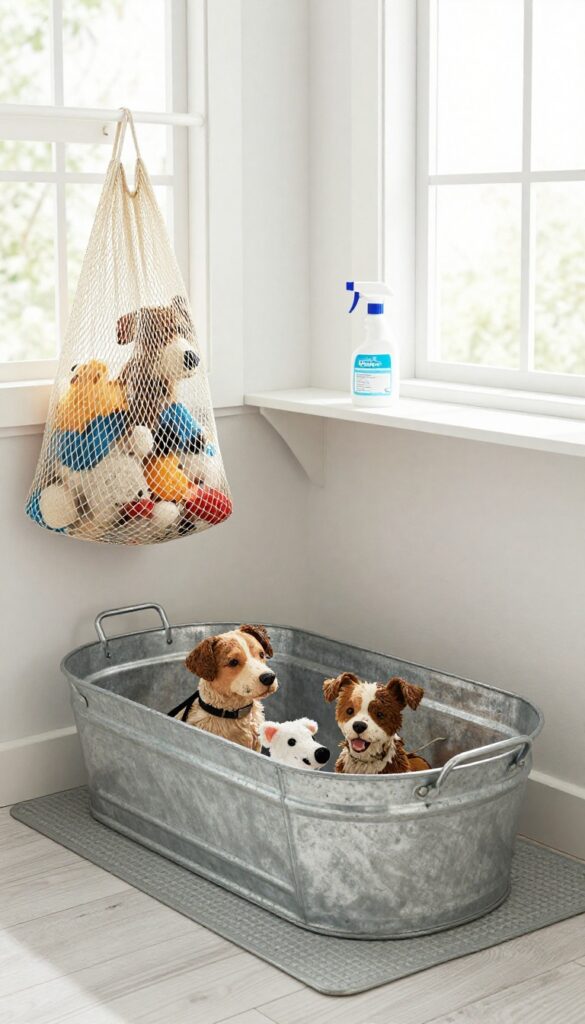
Mudrooms and laundry rooms are natural drop zones for dirty dog toys. A dedicated washing station keeps grime contained and makes cleanup a no-brainer.
Set up a small plastic tub or bin where you can toss slobbery, muddy toys before they hit the floor. Add a mesh laundry bag for machine-washable items, and you'll always know which toys are ready for a spin cycle.
It's a simple system that saves your floors and your sanity, especially during rainy seasons or after muddy park trips.
Why It Works
Dirty toys spread dirt, bacteria, and odors throughout your home. By corralling them in one washable spot, you stop the mess before it starts. The mesh bag lets you toss the whole load in the washer without hunting for stray toys under furniture.
Best For
Active dogs who love outdoor play and owners who prefer low-effort cleaning routines. Perfect for homes with a mudroom or laundry area near the back door, but works in a bathroom or utility closet too.
Practical Tip
Use a sturdy, non-porous bin like a galvanized metal tub or a heavy-duty plastic tote. Line it with a washable rubber mat for easy rinsing. Keep a bottle of pet-safe disinfectant spray nearby for quick wipe-downs between washes.
Budget-Friendly Option
Skip the fancy bin and use a repurposed plastic dishpan or a small laundry basket. A cheap mesh lingerie bag works just as well as a branded pet toy wash bag.
9. Interactive Toy Wall with Puzzle Feeders
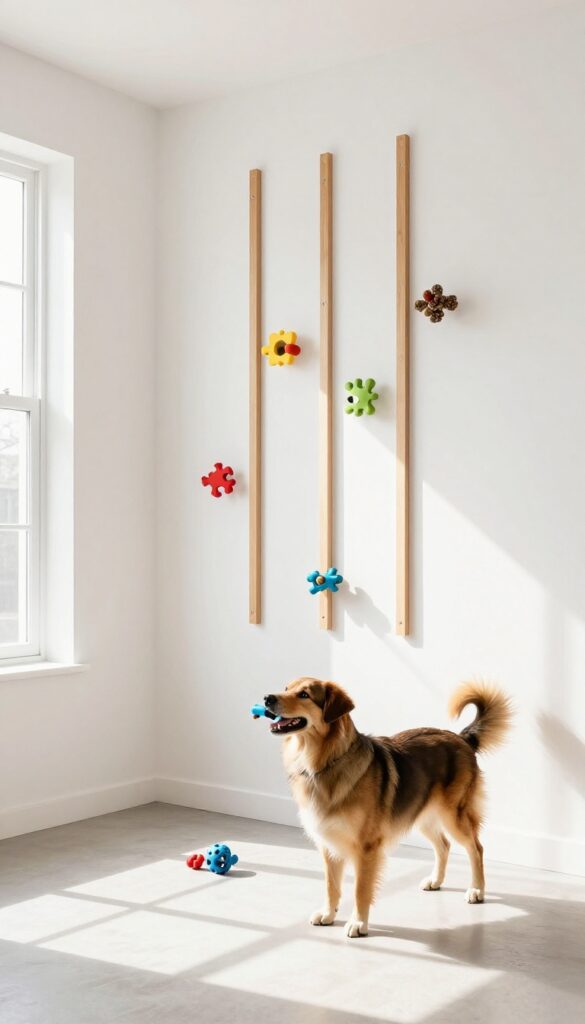
Turn a blank wall into a mental playground for your dog. By mounting puzzle feeders and treat-dispensing toys on a low board or directly onto the wall, you create a vertical enrichment station that saves floor space and keeps your pup engaged. Rotating the toys every few days keeps things fresh and challenging, so your dog never gets bored.
This setup works especially well in small playrooms or corners where floor space is limited. It also gives high-energy dogs a productive outlet for their problem-solving skills, reducing destructive behavior around the house.
Dog owners love how easy it is to swap out puzzles and clean the wall-mounted board. It's a simple DIY project that adds a ton of value to your dog's daily routine without cluttering the room.
Why It Works
Dogs need mental stimulation just as much as physical exercise, and an interactive toy wall delivers exactly that. By presenting puzzles at eye level, you encourage your dog to use their nose and paws in a focused way, which tires them out faster than a simple game of fetch. The wall-mounted design also keeps toys off the floor, making cleanup a breeze and preventing toys from getting lost under furniture.
Best For
This idea is perfect for apartment dwellers or anyone with limited floor space who still wants to provide plenty of enrichment. It's also great for high-energy breeds like Border Collies, Australian Shepherds, or Terriers that thrive on problem-solving tasks. If your dog tends to get bored with toys quickly, the ability to rotate puzzles will keep them interested and engaged.
Practical Tip
Use a low wooden board or a pegboard as the base, and attach it securely to the wall studs. Mount puzzle feeders and treat-dispensing toys using hooks, clips, or Velcro strips so they're easy to swap out. Make sure all attachments are safe and won't come loose during play.
Wipe down the board and toys weekly with pet-safe cleaner to keep things hygienic.
Budget-Friendly Option
Skip the expensive store-bought puzzle boards and make your own using a scrap piece of plywood and some inexpensive hardware. You can attach simple items like muffin tins, PVC pipes, or plastic bottles with holes cut in them to create DIY puzzle feeders. This custom approach costs under $20 and can be tailored to your dog's skill level.
10. Toy Library with Check-Out System
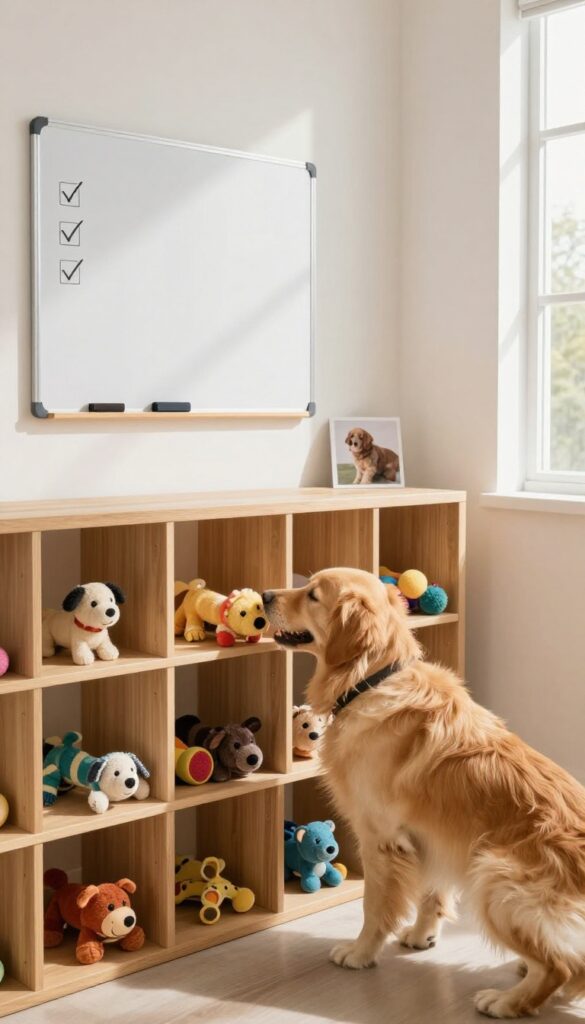
Make toy time feel like a special event with a toy library. Set up a small shelf with individual toy slots and a simple check-out system using a dry-erase board. Your dog can 'choose' a toy by pointing or sniffing, which adds a fun interactive element while keeping everything tidy.
Families love how this turns cleanup into a game and stops toys from piling up everywhere.
Why It Works
The check-out system creates a clear one-in-one-out rule, so toys don't scatter. Plus, the novelty of 'borrowing' a toy keeps dogs more engaged with each one, reducing boredom and destructive chewing.
Best For
Great for families with kids who can help manage the board, and for dogs who love mental stimulation. Works well in a dedicated playroom or a corner of the living room where you can mount the shelf.
Practical Tip
Use shallow cubbies or small bins so each toy has its own spot. Keep the dry-erase board at a height where kids can reach it, and include a photo of each toy next to its name for non-readers. Wipe the board clean weekly to keep it fresh.
Budget-Friendly Option
Skip the custom shelf and use a over-the-door shoe organizer with clear pockets. Label each pocket with a toy name, and use a magnetic whiteboard on the fridge as the check-out board.
FAQ
How do I stop my dog from destroying toy storage bins?
Choose sturdy bins made of heavy-duty plastic or metal. Avoid flimsy fabric bins that dogs can chew through. You can also spray the bins with a pet-safe bitter apple deterrent.
What's the best way to clean dog toys regularly?
For plush toys, machine wash on gentle cycle and air dry. Rubber and plastic toys can be washed in the dishwasher (top rack) or with warm soapy water. Rope toys can be boiled to sanitize.
How many toys should I keep in rotation?
Keep 5 to 7 toys out at a time. Rotate them every week or two to keep your dog engaged. Store the rest in a closed bin out of sight.
Can I use a regular bookshelf for dog toy storage?
Yes, but anchor it to the wall for safety. Use bins or baskets on the shelves to keep toys contained. Avoid shelves that are too high for your dog to reach.
How do I keep toys from getting lost under furniture?
Use furniture risers to lift couches and beds a few inches. Place a toy barrier (like a pool noodle cut in half) under the front edge to block toys from rolling underneath.
Conclusion
Your dog's playroom doesn't need to be perfect—just practical. Pick one or two ideas that solve your biggest toy clutter challenge, like a wall-mounted bin or a rotation system.
Small changes make cleanup easier and playtime more fun for both of you. Start simple, adjust as your pup's habits change, and enjoy a space that works for real life.

I’m Pallab Kishore, the owner of Little Pets Realm — an animal lover and pet care enthusiast sharing easy tips, healthy recipes, and honest advice to help every small pet live a happy, healthy, tail-wagging life.